EP070 - LIVE AN ADVENTURE - TOM MCCLELLAND
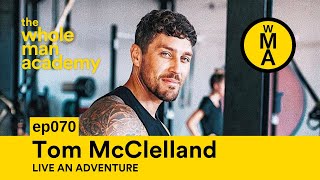
This YouTube podcast episode (EP070) features Anthony Astbury interviewing Tom McClelland (age 39), a fitness entrepreneur who has lived in London, Utah, New York and Bali and created pop-up boxing studios. The interview covers Tom's lifestyle changes, struggles and recovery after a soft-tissue sarcoma diagnosis (surgery, and a 10-year follow-up schedule), his period of depression and suicide ideation, coping strategies (travel, walking, movement), his role as a Technogym ambassador and work on a Technogym bench/platform, and a charity challenge in which he walked 75 miles (completed in ~19 hours) to raise funds (≈£1,600) for a men's mental-health group (Human). Practical topics include lockdown training motivation, home equipment, building muscle slowly, and plans to expand online coaching.
Questions this video answers
Episode 70.
39.
Soft-tissue sarcoma (diagnosed after removal of a lump previously thought benign).
Chest X-ray and checks every three months for the first two years, then every six months until five years, then yearly (10+ years total monitoring).
75 miles, completed in about 19 hours on the successful attempt.
So this is the whole Man Academy podcast. Hopefully. This is episode 70. My guest today is Tom McClelland. I've written a beautiful intro. He's a fitness expert. He's created Pop up boxing studios. He's lived in the US in Bali, in London, on a canal boat. He's been involved in multiple gyms and wellness businesses. He's battled cancer. He's a techno gym ambassador. He's trained a whole host of amazing humans all over the world. And he's a man who I think has lived a life of adventure. Tom, how are you? Where are you, mate?
Wow, that sounded really good.
Thank you.
I'm doing well. I'm up in the Lake District at the moment. Just getting away from London, really. Getting some space from the big smoke.
Yeah.
And how is it. Because you're. I know. You know, we just said intro. You've traveled around a lot, so you've had your time in Bali, you've had your time in the States and now up there. So I guess it's a quieter piece of life.
Yeah. Well, you know, it's funny because when I first moved to America, I moved to somewhere really kind of different to what I knew. I knew I grew up in London, you know, like central London. And, you know, so I only ever knew. I mean, obviously we go outside of London and go on holidays and stuff, but I only really knew the concrete jungle.
Yeah.
And then I moved to the mountains in Utah, and, you know, I was living on a mountain. Walk out the back door and kind of straight up, you know, in the winter, ski, snowboarding, and then in summer, just hiking, mountain biking, and sort of everything was so different to me. And then, funnily enough, I started missing the city and missing that kind of lifestyle. So I moved to New York.
Yeah.
You know, and New York's so much like London that I felt instantly at home there. And, you know, so I go through these phases in my life where, you know, and then when I moved to Bali, Bali is a very slow pace. I mean, there is a hectic side to it, but there's, you know, a very slow pace to it. And so I love that. And I fell in love with it. And funnily enough, since I've been back, I've been back in London, and I've not really been enjoying the kind of faster pace. And when everything started to open up again, yeah, I got the feeling that there was sort of really only one thing to do, and that was to go out and drink and, you know, and that was kind of the Invites I was getting were mainly that. So, you know, I'm just sort of past that point, I think, in my life. So I decided that it'd be better to go somewhere a little more rural, so to speak.
Do you think that's part of. It's so funny with the different guys that we interview on the whole Mountain Academy podcast, And I'd say the average age of the guy is probably about the same. Our listeners, there's something like between 35 and 40 or 30 to 40. And you go through your phases of life where you're looking for the partying. And, you know, for me, it was partying and it was girls and it was late nights and nightclubs, and then suddenly you go through a slightly different phase. I think I'm a few years old, 42, and you're what, mid?
39.
Right. So I'm a couple years ahead of you on that one. But do you think that's part of phases of life? Because were you before that you. Were you more of a party animal?
I know. I don't think so. I started the partying really young.
Yeah.
I don't know. I grew up in London, so it was sort of, you know, 15, 16. You were already trying to get the fake ID, trying to sneak into clubs.
Yeah.
You know, 17, 18. I was already kind of pretty well, you know, versed in the nightclub life. And then. And then I, you know, up into my 20s, I was. I was going out a lot. And I think when I moved to America, I was starting to slow down a little bit. But you see, when I hit America, I was 24, and I'd been kind of partying since I was 16. And then I met a load of Americans who were the same age as me, but they don't. Only legally allowed to be. To be able to drink for three years.
Yes, of course, forgetting that.
So. So they were really going for it. And I was at this point where I'd been going for, you know, 10, eight years or something, and I was like, I can't do this anymore. So it's kind of ebbed and flowed, really. But. Because I've always been in the fitness industry and. And being interested in working out, you know, that's always been, you know, in the back of my mind when it's come to a big weekend or it's been.
Yeah.
You know, to something, you know, someone wanted to carry on the party, and I've been like, ah, you know what? I got the gym on Monday. I'm bowing out.
You know, what were Your mates, like, I can totally understand what that's like because I had that when I worked in the city. It was really hard because, don't get me wrong, I really enjoyed partying and drinking and, you know, everything that goes with it. But I used to have that cutoff point where, because I was training really hard and especially for. I was doing obstacle course races, especially in my kind of 30s, and, you know, trying to attain a really. A fit body and a good physique in whatever I viewed that as. But it'd be really hard then because some of your mates didn't give a toss about that. So they'd be like, right, let's, let's carry on. And they were like, you know, I've. I've had my feel, but I'm going to head off because I want to be at the gym tomorrow.
Yeah. Do you know what's really funny? When I first started getting into training when I was sort of in my teens, and I mean, I mean gym training, not other stuff like boxing and things that I did growing up sports wise. But I mean, when I got into gym training when I was sort of 17, I used. My mates used to make fun of me about it. They always used to call me Swollen and like meathead and stuff like that, you know, beefcake and all this stuff that we. All these names that were. Because I was the really the only one doing it. There were a couple of people in my friendship group that were. But don't get me wrong, at that stage, I mean, this is back in, you know, early 2000, and when I look back on how the industry's changed and the understanding of exercise has changed at that point, really, you know, the idea of a healthy lunch was like a jacket potato with beans and tuna.
Yeah.
You know, and that was pretty much it. But, you know, I remember the first gym I was ever working at, we used to go to the pub. In fact, there was a pub in the gym in a Sporter in Wandsworth. Right. There was like a gym, a pub, like kind of cafe. You know, you could go and get a beer after work on the roundabout. We used to go and get McDonald's and then drink in the pub next to the, you know, next to the. To the gym. So there was a different understanding of it, you know, although we, you know, I trained because I enjoyed it. I think that was the thing about it at the time and why I've got such a different understanding of it now is I didn't train to be healthy. Yeah, Trained because I liked It, I enjoyed it, I trained because, you know, it made me feel a certain way. And the health aspect of it at that time never really registered.
You know, isn't that one of the things just said there is so important now is how going to the gym or doing, you know, fill in the, fill in the blank of gym or whatever exercise it is. But that's one of the big things that people have missed out on so much in the last. Whatever you want to call it, a year, you know, 14 months of lockdown and people, people forget. We're still technically in lockdown. So, you know, people are, oh, it's finished. You know, it hasn't yet. You know, you know, I've said last year, this, this is going to run and run for various reasons, but that's one of the big things that a lot of the guys have said about is missing the gym or their, you know, big golf or whatever it was. And I just wanted for you, what's that been like yourself, because forgetting whether you're coaching other people, but for you. And this is going to lead me onto your. The, the techno gym bench that I saw on your Instagram. But how did you find the motivation yourself to train if you didn't have a gym to go to for that time?
Well, I mean, it's funny because when the, when it, when this all happened, I was actually in Bali, and when the world went into lockdown, we were kind of living in this parallel universe where there was no coronavirus. It was weird. Everything remained open for a period of time. And so when I was in the gym, in my own gym out there training and, you know, had access to everything, all of my mates and all the people I knew in fitness back home were all switching to home workouts.
Yeah.
And then when I returned in August, the gyms had opened up again, so I was sort of back into the gym again. So it was really only from the third lockdown or second lockdown, I can't remember which one it was. In January or just, just for Christmas? Just when Boris canceled Christmas.
Right, Boris.
That's when. The second. That one, that lockdown, when they closed the gym. So I sort of didn't have access to gym equipment from January through till whenever. They just opened up the gyms. Right. And so I had some stuff. I had a few things, some weights and some available bits. But it was so hard for me. I really lacked motivation. It was just something about taking myself out into the garden with a skipping rope and 30 kgs on a barbell that just was really hard for me. And I'm not sort of ashamed to admit that because I was giving motivation to other people at the time to try and get them to train and train at home. And I was really struggling.
You know, that's been one of the common things when I talk to guys about it because, you know, we've never had to face that before because throughout doesn't matter what age you are, through your life, the gyms, or you've had access to everything. And it's interesting to see guys like yourself. And I found that. And there are different guys who are all in different sectors who are, who found it really difficult to like find the motivation because also when you're at home, it's just not the same as like now if you're going to the gym, you make sure you, for most of us, you probably make sure you look fairly presentable and you put the gym clothes on and you go to the gym and you work out and then you go home. But when it's at home, there's the other distractions. And it feels a bit like I used to have a routine pre gym, you know, maybe having an espresso and or you know, you put your stuff on, you'd have the music you want, you drive to the gym, workout, go home, and that's it. Whereas when at home you'd be like, you didn't have that. I know there's blurred lines between it.
Do you know what? I can't tell you the amount of times that I've not wanted to go to the gym and but when I'm there, I kind of have to do it right, because there's been one time in my life that I've walked into a gym, gone over. I walked into a gym, I did my warm ups, I went up to the bar to sort of just do some hanging exercises and kind of mobilize my shoulders a little bit. And I hung there for about 10 seconds and I went, fuck this, I'm going home. I just didn't have it in me that, that was one time. And I remember it really well. Other than that I'll get in the gym and even if I don't want to be there. So every inch of me is telling me to pack it in and go home. I'll just jump on a bike and start pedaling or, you know, get on a treadmill and start moving a little bit. And as soon as I feel the blood flowing around my body, I seem to get this click where I go, right, let's just get something done, whatever. Yeah, but with the home gym thing, it was like, I'll be sitting on the sofa and I'll think, well, I've got to go outside, it's cold, it's wet, I've got to go outside, I've got to get warmed up, I've got to go through the motions. And I just found every excuse in the book. Not just not step outside. I'll go in the morning, you know, the sun will be out in the morning. I'll just do it in the morning, it's fine. And I had to fight, I had to really fight with myself to get outside. So usually I just go outside and start skipping rope. And then as soon as I started sweating, I think, right, let's just do a quick 10 minute unwrap of something and then call it good.
You know, I think that's been the rise of, you know, the different people I've interviewed or just guys I've talked to that, you know, they felt, some of them, especially when you're at home, like, guilty working out for a whole hour at home. So they end up trying to do a, you know, a tabata workout or something, short, sharp, that kind of, you know, gets the blood flowing. But they felt like that out. Whereas when you travel to the gym, you're not going to do, you're not going to travel to the gym and do a 15 minute workout and then go home because it just seemed like it was pointless.
Yeah. And you know, it's so funny when you. But the thing I did realize actually about having workout, doing workouts at home was how, how, how much less time it took out of your day. Because, you know, going to the gym includes usually traveling to the gym, then your time in the gym and then, you know, showering, changing afterwards and then getting home from the gym. So, you know, going to the gym for an hour can actually be two and a half hours if you want it to. I mean, it can be a push, but two hours, you know, sometimes for me. Whereas at home you kind of get up, you're in your, you know, you know, you just throw your gym clothes on, you don't really have to shower for, you know, don't have to shower first really. I mean, who does before the gym anyway? But you know, you can just go in what you've got on and then get the workout done and you can be out of there in 40 minutes, you know, in the shower.
It's a lack of equipment as well, isn't it? And I know I wrote down Because I saw your videos about the. I know you're a techno gym ambassador.
Yeah.
And I saw the, the techno gym bench that you were unpacking, which looked pretty cool.
Yeah.
I just wanted to. How, firstly, how did you get to becoming a technogym kind of ambassador? And tell us quickly about. It's not, it's not an advert for the bench because it's just. I always love these things because you look and you're like, ah, that's a good idea.
Yeah, yeah. Do you know, it's so funny, really, because it's just funny how things happen in the world. And I'm working on something at the moment that is just completely about, you know, everything happening for a reason and listening to people's stories of where one thing hasn't gone right for them and then something else has come in and replaced that in such a perfect kind of symbiotic way. And you're just like, okay, so, you know, that didn't happen. And that was awful because it didn't happen. But because of that, this happened. But literally I came back from Bali. The plan was never to come back from Bali. I was, I was going to stay out there for a long period of time. I bought into a gym out there. So I invested in the gym that I was working at and, you know, we were going to open a second location. I mean, we were really, we were doing really well, you know, really busy, really getting popular and tourism was just going up and up and up in Bali. And so in. When we had to close the gym down just because there was no one there, I mean, we had. When all this started happening, there was a mass exodus from, from Bali and we were just really short on business. So we thought, well, let's shut the doors. Let's not, let's not lose money. Let's just close the doors. We've already got the lease paid for another three years. So let's just close the doors, shut everything off, and then just open up when this is all over. Right. But we just never expected it to be so long. And it's only just now that the Indonesian government are talking about letting travel resume to Bali. So we would have never, we would have never lasted. And we've unfortunately, sad to say that we've just accepted an offer and sold up on the gym, which, you know, is bittersweet, but I won't get into that. So I just decided to come back to London. I had to get some cancer checkups. That was one of the reasons I came back.
Tell us about that quickly, because I was going to jump into that. But, you know, the important thing, I think one of the lessons from reading your very good Instagram post, by the way, is, and what I like about your Instagram post is that they've. I would say, if people can post things where they've actually got some value in it, not just any old, you know, every five minutes of their life. I know you spoke on there about having cancer and what a shock it is because you're, you're still a young guy, or we are young guys, hopefully still. Tell us a quick bit about that.
I'd say, you know, that's such a big part of the story, really. It was such a monumental time in my life and whenever I'm talking about this, I always say I never expected it to happen. But whoever expects cancer to happen, I mean, even if you're a 40 a day smoker and a heavy drinker, you still don't expect it to happen. You know the risks, you know the dangers, but you don't expect it to happen to you. So it sort of really came out of left field and, and the type of cancer and where it was was really bizarre. But, yeah, I just, I, I had a pain in my arm right here for about five years and every time I went to see doctors, this is when I was living in America. Yeah, when I went to see doctors, they, they just told me, oh, you know, you've got an injury, it's probably from working out, it's probably from boxing, whatever. Of course I just believed them because, you know, it would make sense that that's what it would be.
Yeah.
So I just ignored it. I didn't ignore it because I knew it was there because it was so painful, but I just worked around it. I used to just put on a, like a, you know, an elbow support wrap thing whenever I trained, and that was it. And so it wasn't until I came back to the UK in about 2016 that I started to take advantage of the NHS and, and, you know, because in the, in the US, I'd always had to pay my, you know, insurance and if I went into a, you know, to get surgery done on, it would still would have cost me an arm and a leg, but, yeah, it would have cost me a fortune. So. So, yeah, so when I came back, I, I went to see a doctor and the doctor went through and looked at some of the previous X rays and they did some more X rays and then they did some ultrasounds and eventually they sort of found this. This lump. But they still didn't think it was anything bad. He said it was maybe like a nerve cell tumor or something. But not, you know, benign.
Yeah.
And, you know, it could just be. But where it was, the placement of it was insane because it was actually wrapped around my radial nerve, which is the nerve that runs all the way down from the top of your arm all the way up to your shoulder. And so that was just. I mean, the pain was intense. If you can imagine, when you knock your funny bone on the wall, that pain. Well, because it was sort of surface level where this nerve was and where this tumor was, I couldn't feel it. But if I ran my hand down my arm like this, it used to send this electric shock through my body. And if I knocked it on something, I mean, it would buckle me, and I. I've got a pretty high pain threshold, right. And I'd. I'd be in the middle of the street, and someone would walk past me and bump into my arm, and I'd be like, hell. And I dropped out to my knees. I'm like, oh. And it was just this, you know, juddering pain. And then my arm would be stiff for a couple of days. So when I went to see doctors, they just said, right, let's, you know, let's take whatever it is out and we'll have a look at it, see what it is. So even after they removed it, the doctor sent me on my way, and he said, you're all right. Like, this is just a benign, you know, fatty tumor. It's in a really awful place, but it's gone. I think he called it a schwannoma, which is I've never heard of before. Anyway, I kind of went on about my recovery process. It wasn't a huge recovery, but it was probably about four weeks of not really doing any upper body lifting. And I actually came up to the Lake District about four weeks after that because on the Monday, they'd said to me I could go back into the gym. So I caught getting a weekend away, just doing some hiking. This was probably about September 2018. And then I got a phone call from the doctor, and it was really cryptic, and they were like, oh, we need you to come back in. We need you to do some X rays, checkups. And I just thought, well, good. Okay. You know, and so my mind was, you know, completely focused on that. I couldn't. I couldn't sit, you know, I couldn't think about anything else. So I just came back and I went in for the Appointment and. Yeah, sat down with the doctor. And when I went into the office, it was just so weird because there was a doctor and then there was a macmillan cancer nurse with her badge on, you know, so that was my, like first my eyes just went there. I was like, hey. And yeah, so they told me that I had a soft tissue sarcoma, which is actually one of the most aggressive types of cancer. And so it was like all systems go and, you know, get me in for another surgery. They wanted to open up the original surgery site and then take out like a larger area of the muscle and tissue to make sure that all of the margins were gone. And then I had to have chest X rays to make sure that it wasn't. That it hasn't metastasized.
Yeah.
And then I had to, you know, and so they rushed me back into another surgery and then this whole, you know, it was just a whirlwind. But the day that they told me, I was just, it was just the weirdest feeling. I was in. I went to London because I was actually living down in Brighton at the time. I was living down in Hove. And so I'd got on, I'd gone to Victoria and the, and the, the hospital. The doctor I went to see was like way up by Great Portland Street. And I just walked back to the station and. Right. You know, to this day, I don't remember that walk. Yeah, I was just like, I don't remember after they said you got cancer. I don't remember anything. I just don't remember the conversation I had with the doctor. I don't remember what he was telling me. I don't remember anything. I just went into. So, you know, after the surgery and everything, I was, it was just about going through recovery again. I had to, I couldn't do anything. Upper body. They'd taken out quite a considerable amount of muscle and tissue from that part of my arm just here. And so I had to, you know, spend about four weeks without doing any upper body. And then after I went back for the, to the, to the sort of follow up appointment, this was the part that was the hardest for me to take. This was the hardest thing for me. This was, was when they told me what was next. Right. And it wasn't that I had to go in for more treatment. It wasn't. I had anything else to do with the actual cancer. It was that I had to get checkups for the next 10 years of my life on a three monthly basis or two years. And then after two years, every six months. And then if after five years, it goes to every year, and then after 10 years, so 20, 28, they'll go, you're good.
Yeah.
And that, that those checkups are, you know, like a chest X ray and a blood test and like, you know, and so the thought of that was the hardest thing for me. That was, you know, that was. What really hit me is that because.
Trying to think how, because who knows how our brains work these days. But whether you kind of think that when the treatment's over and supposedly it's gone, you hope that it's just gone. But then when they're kind of saying, oh, but it could come back, you're like, great. So that's the, it's the little kind of knock on the back of the door all the times that you've got remembering about it.
And you know, if someone says to you, oh, it might come back, but we'll check you up in two years time, you think that's okay. You know, they're obviously being pretty relaxed about it, but when they say to you, we need you to come in every three months to make sure that this thing hasn't metastasized into your lungs, it's terrifying. Like that, that feeling is, is undescribable. It's like, it's like a sentence. You know, they go like, it's like you've got probation officer to check into every three months. You could, you know, your life, you want your life to move forward, but then you know that you've got to, like, move forward living with this.
Yeah.
Thing. And, and that was, yeah, it was, it was incredibly hard to.
How did you, how did you cope with that? Because again, you know, you're a guy that's, you know, I was going to say young, but, you know, I mean, we consider ourselves young and a pretty healthy lifestyle. And not necessarily that cancer is to do with lifestyle because of what our bodies are like. But what was that like for you after that? Because it's not like you can just be like, right, I'll just carry on with my life and forget about it.
Yeah. It didn't, I didn't take it well, to be honest. I tried to. You know, I've always, I've just, I've always worked for myself. Right. Like, you know, for as long as I can remember, I've worked for myself. I've never had a boss. Really.
Yeah.
And I'm a doer. Like, if I don't have, you know, if the source of income that I have isn't Quite enough. I will find an idea or do something else. If it's a business I want to start, if it's a, you know, something I want to launch, I just go for it. I've always been that way. You know, I was raised by an incredibly hard working woman and she kind of instilled that in me. And so as soon as this happened, I was like, right, let's get back to work. You know, I've got this pop up gym thing that I'm doing. Yes, boxing gym. And I was planning on doing like a retreat in May of 2019. It was going to be like a boxing retreat on a farm with, you know, like I set up the whole rig inside of this big barn and I had everything booked out, I had everything ready to go and. But the whole time I had this sort of very, you know, this underlying feeling that something was just going to go really wrong and, and it just crept in and in and in and I just, I was just having a really hard time. I, you know, I couldn't. I know now I knew quite soon after it's all happened, but I knew I sunk into a depression.
Yeah.
And it was so weird because I was just numb and void of any feeling of anything that was going on in my life. My mind was only on this cancer thing and having to live with it. And I just, I just sunk into this really dark place. And you know, I've spoken quite publicly about this now, but the dark that, you know, I was in a really dark place. I mean, I was suicidal for probably three months. And, and this wasn't sort of like sporadic feelings, this was every day I was sort of, you know, I was living down in Hove and I was just getting the train into London and every day I think, oh, I, you know, I'm gonna jump, jump off that building or I'm gonna throw myself in front of that train or whatever and. But I just sort of, I just fought the feeling as much as I could until I got home in the evening. And then I would, you know, do whatever I could do to get to sleep and then wake up in the morning and just face it for another day.
Isn't that. I always think it's interesting when you speak to people that have had to face this adversity because always wonder for people whether there's a moment where, and it sounds hard to say, like you've snapped out of it. I don't mean as in people should just snap out of it, but, you know, sometimes people have that one moment where they're like. And then things changed. And then I realized that, you know, I needed to maybe work on being more fulfilled in life, which would help me. I just wonder if there was anything there that kind of sparked it for you, that changed it from feeling like that to kind of moving on, a more positive mindset.
I couldn't really pinpoint it, but I did wake up one day and think, I can't do this anymore. I can't live like this anymore. And that was actually why I went to Bali.
Yeah.
Okay.
I felt like I had a lot of pressure to get my gym up and running again. You know, in the short time that I had that pop up going, I'd sort of built a bit of a following and, you know, I'd had to cancel the retreat because I just knew I couldn't do it. But I felt a lot of pressure to kind of get things moving again. I think the pressure was put on by myself. I mean, I know it was. There was no one else pressuring. Yeah. I wanted to get back into business again. I wanted to get back into work. So I had a lot of pressure on myself. And one day I just thought, you know, I need to get away from this way of thinking. I need to get away to a different place. So, I mean, I think it was on the 11th of May. I sat down with my mum and I said, I just need to go somewhere, I need to go away. And we were chatting and I said, I think I'm going to go to Bali. She was like, well, go do it. And I booked a flight. This was on a Tuesday. I booked a flight for the Thursday.
That's a plan of action. I like it.
Yeah, I just went. So that was it, you know, I had to get away. And as soon as I landed there, I woke up the following. I got there late at night and I woke up the following morning. I walked down to the beach and I just went, right, I've got to stay here. I felt. I just felt so good inside. I felt something had shifted and I was like, right, I'm gonna stay here until I feel better, you know. And so it was just. That was it really. That was, you know, everything. It went full in, full into action of just healing mode, you know, that's.
You know, we just said about, you know, being a man of action. And it might sound like a throwaway comment, but I think that's one of the most important things because for so many people, they struggle to get out of their comfort zone.
Yeah.
If they want something, call it Better in life or something different in life, procrastination takes hold and they buy some courses or they, you know, watch some more YouTube videos, and you're like, you got to fucking do something at some point. You got, you know, you got to press the button and actually go and do something. So, you know, be it jobs, scenery, relationships, people that you hang around with, whatever it is.
Yeah.
And I'm under no illusion that I'm, you know, I had the luxury of being able to book a flight to Bali and go away for an extended period of time.
Yeah.
Because of the work I've done in the past. It's not, you know, but I'm not. I wouldn't say lucky in that respect, but, you know, I've worked really hard and, you know, and I was. I'm not under the illusion. I'm not sort of oblivious to that. When I say to people, they go, well, I couldn't have just gone to Bali. Well, no, you couldn't, but you could have done something else. So you can do. There are other things that you can do to break free of that kind of mindset that you're in and make that shift. But you're right. You have to be. It has to be action. You can't sit on it. You can't sit and think about what you want to do.
Just have a think about it for a couple more weeks.
Yeah, yeah. I'll, you know, I'll start on Monday. I'll do it, you know, I'll do this tomorrow. It has to. You have to get it done.
Yeah.
And that is. Sometimes it just. It just takes stepping outside your comfort zone and doing. And even if that doesn't feel right at first, you know, at least giving it a chance. You know, if it didn't work, it doesn't. If that whole trip to Bali had done nothing, I'd have had no regrets over it.
At least you tried.
At least I tried. Yeah.
Yeah.
Well, actually, that kind of leads me on to. I could sense we could talk for hours about this stuff, but it brings me on to, like, guys and going back to the gym now who often, a lot of them had a lot of time off. And, you know, when you talk to people who are the guys through the whole man academy, and I'm like, you know, just. Just do something, even if it's not enjoying the gym. But I just wonder for yourself, with. With the guys that are going back to the gym now, a lot of them are. Are trying to build muscle. And, you know, you've worked in all the different kind of fields of this. There's one of what kind of. Firstly, what kind of things should guys be doing that want to pack on a bit of muscle? And it always makes me laugh because often when you hear women talk about doing weights and I say, oh, I don't want to get too bulky. You're like, have you got any idea how hard it is to put muscle on?
This is a daily battle for me, my friend. Honestly, every. Not every, but most. Most of the women that I've trained in my life or have come into my gym have had that same fear. And I get it, right, because, you know, if you see the media that's forced down into a woman's face now, it is bad for a guy, right? You know, this is something I've talked about a lot that, you know, we are faced every day with these kind of images of how your body should look, but for women, it's even more so. And so they have this image of this kind of slim, slender figure, and then pair that with real bad education and trainers on Instagram who don't know what they're talking about, who basically will say, like, oh, you drink a protein shake and that will give you muscles. Right? They don't understand the. You know, and this isn't to say, oh, you're stupid, you don't understand. This is literally saying, you don't understand because you're not given the right information.
Misinformed.
Misinformed. Yeah. And so, yeah, the amount of women I've had to tell, you know, to explain this to getting muscle. Gaining muscle is probably one of the hardest things, I should say. Gaining muscle and maintaining muscle mass is probably one of the hardest things to do. You know, and this is. I always get. No, no. Every time I start lifting, I get really big shoulders. I think when I say, do you get them right after the workout? Right, Immediately? Yeah, yeah, I do. Yeah. Well, that's because they're full of blood. You know, those muscles are pumped at that time. Yeah. Give it 24 hours and it'll be gone. You know, it doesn't just. It's. It's a pump. It's like, you know, this is what's happened. This is your muscles, you know, full of blood. Full of blood and water. So, yeah, it's. It's a petal. But, you know, for guys as well, at the moment, I think there's no doubt that, like, people lost a lot of strength, a lot of size. And. And so my main thing has just been. And also to myself, I Can say this because I went into the gym, I went in first day, I'm like, deadlifts, I've got to do deadlifts. I haven't, I love deadlifts. Right. And I've got a really like, you know, I've got a solid deadlift. And I, and I missed him so much and I was like, I've got to get back into deadlifts. I walked in, I set a bar up, I put on like 160kg and I started. And I'm like, I'm like, Tom, don't be an idiot here, right? Like, you haven't lifted any weight in five months, maybe a little longer. Take that weight off. You know, I, it just, I, I had to slow myself down. But that's been what I've been, you know, that's what I've been saying. The process, such a slow process of building muscle. It's such a slow process of getting strong.
Yeah.
Just you've got to be in it for the long run and you know, and, and, and not trying to go for a six or eight week transformation, it's just, it's not gonna happen. You know, you can change your body.
Yeah.
In eight weeks. Stop.
It goes, you know.
Yeah, exactly. Yeah. And I'll just go. Going back. Actually, it's funny because with the Techno Gym thing we were talking about before, you know, I left Bali with the plan of going back to Bali and while I was back here, I got the call from Techno Gym about doing some work with them. And this was something, you know, I can't really talk about it yet because it's not been released, but it's for a platform that they're doing and I went out to Italy for a week and filmed a load of workouts and, and then after that they contacted me and asked if I'd be interested in continuing my work with them. And so part of what I'm doing at the moment as an ambassador is promoting the product that I am kind of featured on within this platform and that is the Techno Gym bench and the technogym tools, which is the dumbbells, the kettlebells, and all that kind of stuff. And so I, what I'm trying to do is, I'm with that is I'm trying to show people that it's great having a gym membership, but there's still a huge advantage to having stuff at home.
Yeah.
Because you might be going to the gym for, you know, three, four sessions a week, but having a decent bit of kit or some decent dumbbells kettlebell, some bands at home means that you can do other things on top of that, you can keep your training going. There's never going to be that day where you go, you know what, I just can't get to the gym today. It's a two hour round trip. Like I was saying before, you know, I've got to get there. Well, you've got your stuff at home. You've got 45 minutes. Just bang out a quick workout.
Yeah.
And so it's not taking people away from the gym, it's. It's kind of, it's giving them something else. It's adding to their program by having this kit at home.
You know, isn't that so important? Because fun enough, we're not far off releasing one of our online course and that's all about energizing men. So not, you know, it's about fitness, it's about nutrition, it's about mindset, it's about morning routine. So we're trying to, you know, give them simple, actionable things to do. But one of them was about the excuses. And often it's, I haven't got the time, haven't got any equipment, I don't know what to do, I can't afford gym membership. If you can help people get away and knock away enough of their excuses, and if one of them is being having some good quality equipment at home and some, you know, some idea of just some basic workouts, then you're like, okay, well, those excuses have all gone now.
Yeah. You know, it's funny because I know a lot of pts out there will, will argue with me on this, but I've been doing this for 20 years, so come at me. Yeah, but we're salespeople, right? If you are not a salesperson, as a personal trainer, how are you going to get clients? How are you going to. You've got to sell yourself as a trainer. You've got to sell yourself for what you do. So now if you're doing a sales course, learning how to sell, you know, home insurance or whatever, they literally will give you a book with an excuse and then a response to that excuse.
Right.
And so I feel like I've just got, you know, when, when someone, someone says, oh, I can't get in shape. And I'll be like, all right, come at me, tell me why I don't have any time. You don't have 30 minutes a day.
Yeah.
How much TVs you watch?
Yeah, yeah, exactly. So there is, there's an, you got, there's loads of excuses. But there's an answer for everything, really, when it comes to training. And, and I promote training for mental health beyond anything else. There is a, you know, there is a huge byproduct that comes with that. But it's, you know, you know, even during the time where I was struggling to work out myself and during times of depression where the gym was. Even the. I mean, at that point, the gym wasn't really giving me what I needed it to give to me.
Yeah.
But I knew that some kind of movement would help. And for me at that time was just walking.
Yeah.
Just getting out and moving.
Oh. I mean, I think the reason that I'm sitting here right now having this conversation is because I went out walking every single day, whatever the weather during that time. I'd. I'd go out and walk 30,000, 40,000 steps in a day just round London, just. And it was the only thing that kept my mind in that right place, you know, and, and so, and that's the same. It's all movement, right? It's, it's, it's keeping your body moving active. If I sat down on the sofa for six hours of a day, that would be it.
You know, that's one of the things about, you know, we say about doing the simple things for, for guys, you know, again, that's another excuse when you say about. With the weather, people go, it's raining outside. And I can't remember who it was that said to me, there's no such thing as the wrong weather. It's the wrong, you know, stuff you're wearing, if you know what I mean, the wrong gear.
Yeah, yeah, yeah.
And for us in the countryside, it's so easy sometimes when it's a bit colder up here than it is in London, but it could be raining. But even with our little kids, my partner will be like, well, if we just wrap them up warm, if they're outside for half an hour, so what, it's raining or something like that. At least they're not just inside all the time. And that's one of the big things for people working from home now. You know, a lot of the guys listening who, maybe they've ventured back to the office and I'm like, go back to the office. Because it's very good for you to get out and, you know, firstly to work away, but also the socializing side of it. But so many people seem to go from working from home, being bed, maybe shower, breakfast, laptop all day, eat lunch, you know, in front of the telly, then and Then watch the telly. And I was like, for fuck's sake. Like, try and get out for, even if it's a lunchtime, for 20 minutes and just walk if you can do nothing else.
Our brains are not made to go through a routine like that. If you think about, like, the, you know, the functionality of your brain and you're taking in exactly the same pieces of your environment all day long, you're seeing the same walls, the same four walls and the same computer screen and only looking outside a window. And then you're expecting your brain to kind of develop and grow and give you the feedback that you need. And your brain is not going to give you healthy, positive feedback if you're feeding it, like the same dark, dingy environment all day long. Your brain needs that kind of stimulation. It needs to get outside, it needs to see things, it needs to work. Your brain needs to work as much as anything. And if you're just going through the motions at work every day, you can't tell me your brain's working because most of the time it's not. Right. Like, you know, I've never done an office job, but I can imagine that, like, if you're, you know, just plugging in numbers all day long, you think that your brain's working, but realistically it's not. Your brain works when it gets stimulated with nature and sounds and, you know, that's what you need. That's what you need.
It is a stimulation, isn't it? And that's, you know, I still know I've spoke about this before, I've spoken this in front of companies when I've done talks, but I never knew a level of boredom like it. When I was working in the city and, for example, on a Friday, your job was to make as much money as you could, but sometimes you had a rough limit of, let's say you'd made 10 grand in one day or 20 grand, but you might have made that on the first trade you did with a client that day. And therefore you were pretty much like, you know, I'm hungover. It's Friday. We used to start at 7 o' clock in the morning, so by 5 past 7, you might have made loads of money. And you literally sit there then till 5 o' clock with nothing to do all day.
Yeah.
People would be like, oh, great, because you're getting paid loads of money and you're like, it was so fucking boring.
Yeah.
You would literally be out of your mind with boredom.
Yeah.
And lead. Run out of things to even look at, on the Internet because you were.
So bored and there's. And then you don't have the incentive to kind of push yourself. Even money doesn't really incentivize you at that point. You know, it's such a weird thing. And, you know, like, even when you're working in offices, I think because of the way that we go through routine, even if you're getting up, walking to the train station, you're getting on the train, you're going into work, you go into the office, you have lunch, you might go for a few drinks or go to the gym after, and then you go home. That routine, while it is good to have a routine, if you're not stopping and like, you know, smelling the roses and having a look around you and taking yourself outside of that in your brain, it just becomes painful. It's like boring. It's. It's the same thing every day. I don't take any days for granted. If I'm walking outside, I am not looking at my phone, I'm looking around. I take in everything, all the, all the sounds and all of the people's faces and everything that comes around me. I mean, you know, that's what I've got. I'm trying to give that back. I know how much that stimulation in my brain helps me and keeps me alive. So I have to do. Keeps me sane. I'm a bit crazy, I'm a bit mad.
But, you know, some of the best people are. To be honest, I'm very much. If you can get around people, you can have fun with that, have a similar, mildly stupid sense of humor, then you know, you're on the right track, to be honest.
Yeah, definitely. That's right.
And I was going to ask you again. I never need to do too much research on people because you can just look through their Instagram. I would say it gives you a window to the soul. But there was two questions there. One was, we're going to come on to your walking 75 miles in a day and how it used the word failed because the weather. But for you going through all this, who have you. Who do you kind of speak to as a guy growing up? Is it your group of mates? Have you had any kind of, you know, mentorship from people that have really helped?
No. I mean, there's been people along the way. I can honestly say this, and, you know, and I don't say this with any kind of, you know, I'm not saying this is anything bad against my friends. I grew up, you know, I have A friendship group in London that is, you know, these are friends that I've had since I was a teenager.
Yeah.
And we've, we've all kind of gone in different paths. Most of them have kids. I don't have any kids. They're married as well. Some of them have done really well financially. Grown massive businesses and you know, I'm really, I'm so impressed by that and where they've come from. But I had, I left London because I never felt at home there. And so it was, it wasn't until I went to America and you know, specifically New York that I started meeting people that I was like looking up to and going, oh shit. Like you're, you know, you're someone that I want to learn from and you're someone that I really, you know, believe can teach me something. And so that's really where it all started for me. But it wasn't until I went to Bali, I think, right. And started to meet people who were really open minded and really kind of all about, you know, I say this kind of list in the loosest term possible but like finding themselves, you know, because as cheesy as that sounds, finding yourself is like actually understanding yourself and who you are and what you're meant to be doing on this planet. And before that I met people with such sort of superficial visions of what, of why they were here on this planet. And then suddenly I met all these people who kind of realized that I think their potential of and what they wanted to give back and how much an impact they wanted to make while they were on this planet.
Yeah.
It really got me into that way of thinking and tapped into my, into a different mindset and made me, you know, search for who I actually was and what I actually wanted to do.
The big questions in life.
Yeah, ask the big questions.
I love that.
Big questions before I'm telling you, we're.
Not even talked to, are we? As a, you know, as you're growing up, no one takes your side. And you know, I believe that when you're at school, it's Basically, it's a 12 years of indoctrination, to be honest. And you know, how to be a worker, how to work for someone else.
Yeah.
There's that old saying, you know, you know, you follow your dream or you'll work for someone that follow their dream. So, you know, and that was me. 20 years of working for someone else and you know, making lots of money for someone else. Before you were like, hold on a minute, I'm not sure if this is where I want to go in life. And those questions, some of the stuff we try and put to the guys through the whole Man Academy is just dropping a little question being like, what comes up for you? Because most people go, I don't know, I'm so busy, I haven't got time to think about it.
Yeah, yeah. And, you know, I saw my pet. My mum was. She. She was incredible. She invented something called an egg cracker and separator, like back in the 90s.
Right.
And she, you know, and. And that kind of didn't work out. It didn't. It didn't. And then, you know, she was just. She was always going after something herself. She was. I think she was sort of selling children's books for a while with, you know, and then she was doing something else and then she went into. Into working in a school and. But she was just one of those people. I don't think I even. I, you know, she wanted to. She wanted to create something for herself. My dad always had his own business. It wasn't wildly successful, but he always had his own business. And, you know, and I thought that that's what gave me that mindset, I think, of working for myself and wanting to create my own. My own income myself and not have to give that money to other people or work for other people. But that's not to say that I think that's a bad thing. I don't think that everyone should just drop what they're doing and walk out on their job, but it's about when you're doing something. You know, you could be working a 9 to 5 and that could just be your job because that's your finance, you know, that's your financial stability and that's fine. But you've got to do. You've got to enjoy it, whatever it is. You've got to enjoy what it is when you're doing and then. And then have something on the side that you can, you know, that makes an impact or you're actually trying to put your, you know, put yourself into something or towards something that's going to give you something back.
Lights a bit of a fire in you.
Yeah. Lights fire. And you. Gives you some. I think. Yeah, it just gives you something back or someone else something back.
Yeah, that's a good point. And we, you know, the whole Mountain Academy has evolved as we've gone on because we've learned more about what. What we want to provide for guys and help guys with. But one of them was about how important it is to a. Be hopefully fulfilled in life. But, you know, if you haven't necessarily. You don't have to absolutely love your job. And, you know, that doesn't mean that people should necessarily leave. But do you have a side adventure? Is there something else that, you know, keeps you up late because you love doing it. You know, be a sport or you're trying to become insanely strong or you're doing something to kind of just light. Yeah. Light a fire in people. Have a bit of motivation to do it.
You know, it's so funny because I've had conversations with people. I think some people do have different mindsets and different ways of thinking. I've met people in my life who are perfectly happy going through that routine every single day, doing the same job every single day, going home, playing video games, not going to the gym or going to the gym and. And then waiting for the weekend to come around. You know, I know people are in their 40s that still live in that way and they're perfectly happy. And honestly, I do believe they're perfectly happy. You know, I've asked them, are you okay? Are you really okay? And they're like, yeah, I'm good. I'm really good. Like, I'm happy. You know what? That's fine.
Yeah.
But if you're. If you feel as though something's lacking in your life, then that's where you have to make a change. If you're getting the feeling that something's not right, it's not sitting right with you, then you've got to make a change. You've got to take action.
Yeah.
You know, going back to the walk. I did actually complete that walk. I did it again. And because I didn't know if you'd just seen the story or the.
I saw it went tits up first time because the weather. So for people listening, I mean, it's a. If you give a quick explanation of what the. What the point of the walk was as opposed. They think you just are out walking 75 miles to the fun of it.
But, yeah.
Yeah. So I obviously, as I said earlier, I. I think walking saved my life. And so in a weird way, in a weird sort of twisted way, this was kind of an ode to that.
Yeah.
And so I sat down and I thought. And this was back in kind of August. I was planning on going back to Bali probably towards the end of last year. And so I wasn't really picking up any extra work while I was in the uk. I was doing some bits here and there, but I wasn't really trying to get into anything that was too time consuming because I knew that if I had to go back, I would have had to drop it. And, you know, I don't like leaving things kind of, you know, open. So I thought, well, what else can I do with my time? And that the thought came to my mind that I would do something for a charity. And so I've been using Human, which is a men's group that meet every Monday night at 6:30pm GMT. And it's basically just an open conversation. You don't have to talk, you can just show up. It's a zoom call that can be anywhere from like 20 to 60 people in this group and they open a topic of conversation and you can comment on that if you want, or you can just sit there and listen to other people's stories.
Yeah.
So I've been using that for a while and it's been really helpful for me. So I thought, well, I'm going to do something and raise some money for them. And so I was reading through some statistics, statistics, and one of the statistics was that 75% of all suicides across the UK and the US were male suicides. 75%. And so I thought, well, I'm going to walk 75 miles.
Yeah.
How hard can that be? I did the like, you know, I knew people that. I know people, sorry, that have done ultra marathons, 100 mile runs and stuff like that. Those people train for that. So don't get me wrong, they're up training, you know, consistently doing, you know, crazy amounts of mileage and, you know, I was just a walker. I can walk, I know I can walk quite far. I've done some pretty big distances, but I didn't really think about 75 miles. I was just like, well, if I'm walking roughly three and a half to four miles an hour, then this, you know, it'll take me about 18 hours. With stops it will take me about 20. So. So the aim was to walk 75 miles in under 24 hours. And so I, the first time around, literally no training, I just set myself a room and then set off in the morning at like 2am, hoping to finish the following. Well, the same day. Yeah, sorry. By about 11, 10 or 11 a night. And I just went off walking and literally as soon as I walked out the door it started raining and. And then I was. My route took me from. I was living in angel in Islington at the time. It took me along to the river, all the way on the river, out to Richmond park, around Richmond park out. You know, then. Then to go further. And then I got down onto the riverbank and the river was flooded. You know, sometimes it comes up, but. So I was going to walk on the pathway, but then I had to go up onto the road. And then, anyway, the whole thing just. I was. It was going so slowly. There was no way that I was going to complete you in time. So I got 42 miles and then I called it a day.
Yeah.
And then, you know, I was like, okay, I'll do it again. I'll do it again next week. But then we went into another lockdown. And then I went out to Italy for work and then I had some other work come my way and everything just got in the way. And, you know, then the following. It went to the end of the year and then it was January and I was still thinking about. It was really weighing on my mind because people had donated to this cause. And like I said before, I don't like leaving things open. I hate when I haven't closed the book on something. So I just. I just went literally on a Monday, posted something on my Instagram, like, right, this is it. I'm doing it on Wednesday. So I was down in Hove at this point and I was living. I'd moved back down to Hove and because of lockdown, it kind of stuck to being in one area.
Yeah.
So I had to stay literally in the same area. So I just walked along the seafront from kind of Shoreham to. People might not know where that is, but, you know, it's probably. I walked from like Shoreham down to the end of Brighton, which is probably about 7 miles, and then back and then back and back. And it was. And I did it. And it was the most painful thing I've ever done in my entire life. The last five miles, I was just in a complete zone. It was about 11 o' clock at night. I didn't. I thought about. Afterwards. I didn't even get my phone out because I was just like. I was like a zombie. My knees were wrecked, my hands were full of blood because, like, you don't think about walking with your hands by your side for that period of time. But, like, my hands were just. I couldn't really bend my fingers. And it was. Yeah, it was awful, but it was, you know, I finished it and I managed to finish in 19 hours. So 75 miles in 19 hours.
That's a fine effort.
What's that?
It's a fine effort.
Yeah, it was.
Realized what? You know, even Just the walking, you know, when people do long distance stuff, don't realize the impact on your hips, knees, hands, you know, everything. Chafing.
Oh yeah, I couldn't walk for two days. I was, my hips and my knees were so, so jacked that when I, yeah, I was, I spent the whole of the next day just laying out on the sofa and then the day after that, I mean I was still having trouble getting out of bed. You know, talk about doms. But that was, that was really challenging. But it was incredible. And I raised, you know, I think close to 1600 pounds for human and you know, they're a very small charity so you know, you know exactly where that money goes, which is great. And yeah, hopefully I did my bit.
You know, made a difference. That's the important thing.
Hope so. Yeah.
For you.
What's that?
What's next for you? What's next on the life plan?
Wow. I mean you'd think that I'd know this but I don't really know. I've got this work with Techno gym which is keeping me pretty busy. I'm going to be doing more filming this year and sort of working with them to provide educational content for their products and also, you know, doing videos and social media content as an ambassador for Technogym. But the main thing for me is to, I'm trying to bring my focus back towards doing online coaching with, you know, online training. I've done it for a few years and that's just providing people with, with programs and then constant support.
Yeah.
And you know, through those programs which, you know, I have clients in Canada and in the US and in the UK and all over the world and so I'm looking to expand that because I'm kind of at the point now where I've done the, you know, living in New York, training, 40 to 50 sessions a week, like you know, doing just non stop training and I'm, you know, turning 40 next year and, and that's not where I want to be. I want to try to build this kind of online business and, and yeah, who knows? I mean I've got a couple of things in the pipeline that, that might, that might happen in Bali as well. Some other business opportunities.
Isn't that nice? Sometimes when you haven't got anything, you know, haven't got the whole life plan and like you said before, you never know sometimes when things come up, just when you need them.
Hey, you know, it's so funny, I had this conversation with one of my best friends. He, him and his brother created A incredible business, interior design business. And we had this conversation where, you know, it was. It was one of those where, you know, he's like, oh, you know, you've got so much freedom to do whatever you want because he's got this business that's based in London and all of their work is London. He's. Is in London. Sorry. He's also got a wife and three kids, and. And I was like, yeah, but I kind of. I envy your life in a way, you know, because you've got that stability and you've got the family and you've got, you know, a nice house and all that stuff. And so, you know, we said at the beginning, like, someone's always got something that you want, and then you've got something that they want. And so I think for me, it's just being happy with where I am at the moment and trying to. It's been tough. You know, I definitely don't wake up every day in a great mood and I have to work on myself constantly. I've got to, you know, kind of. There's been challenges and there's been stuff that's kind of kicking me while I'm down, but I'm just, you know, I'm just moving on, keeping. Just keeping. Keeping myself happy at the moment. That's the main. That's like my main goal right now is just keeping myself happy and doing. And doing things that I enjoy.
Isn't that one of the important things, though? Doing stuff you enjoy? You know, I'm not saying that every moment of your life can necessarily. You know, sometimes we have to do things we don't enjoy because it's part of life, necessarily. But, you know, that's. That's one of the big things we say here at the whole man Academy is, you know, be around the people that you have fun with and you enjoy spending your time with. And quite frankly, if you've got people that you don't enjoy spending time with, then get rid of them, because they're just gonna. They're gonna drain your energy and do the stuff that you enjoy, be it gym or reading or spending time with your mates or whatever. You know, it's been hard over the last year for people, and I'm very much. Now, the government done a brilliant job at scaring the. Out of people. And, you know, it's. It's proven that they've used psychological techniques to try and hammer home a message. But unfortunately, you know, it's very easy to scare people. It's very easy, or it's very hard to, you know, unscare them. And, you know, people need to get out, start, especially whilst the weather's good, you know, get some vitamin D, get out and have fun again, you know.
Because a lot, it's so important we don't put enough emphasis. You know, neuroplasticity is, you know, something that, you know, a word that a lot of people don't understand. But it's, it's literally, you know, to put it in the simplest way, it's like playtime, right? It's, it's, it's doing things that, you know, force your brain to function in a kind of like, you know, a movable way. So whether it being going out and throwing a ball with your friends or doing, you know, picking up, skateboarding in your 40s or whatever it might be. But, but it's about, but the main thing is it's like having fun and moving in a way that your body enjoys. And so you've got to find that way because these, it's the, you know, neuroplasticity, plasticity has been linked to, you know, recovering, you know, brain injuries and like, you know, very in depth stuff. I mean, I would implore anyone to research and look more into it because it's literally the art of playing and enjoying yourself. And, and I think that's the thing is I don't ever want to get old. I never, you know, I don't think of myself like, turning 39 for me is never like, oh, I'm getting old. I think I feel young. I feel, I still feel, you know, a little bit stupid. I like having a laugh with my mates. I'm not, you know, it's very easy to grow up too much. And, you know, sometimes when I look at people on Instagram with the gym and everyone's just so, like, serious about. And I think, God, you're missing the point here. You should be going into the gym and having fun. It shouldn't be about, like, right, beast mode switched on, angry. It should be like, yes, let's have it. Let's have fun with this. Let's enjoy ourselves. Let's, let's, you know, let's get back something from this that's bigger than just growing muscle or bigger than getting stronger. Let's get something that's actually got more longevity than that, you know, and that is happiness. Right?
Yeah, that's, that is one of the big things we try and put across is, you know, do stuff you enjoy in life, get, get around the right people. And when I was first. When I was first asked about the whole man Academy, one of the biggest values was, like, having fun. Because I just got to stage, like, if it's not fun, like all the people I interview, it's good fun. I enjoy it. As opposed to thinking, oh, man, it's like, you know, I've spoken to you for an hour today, and it's. It's a. You find it's good content, but actually you really enjoy the conversation. And that's why, for a lot of the guys, I'm like. Like you said, is working out what. What you enjoy and maybe doing more of it, to be honest.
That's it. You know, what's the quote? It's a roomy quote, and I love it. And it's whatever lifts the corners of your mouth. Trust that. And I just think it's so true.
Yeah.
Because if it makes you smile, then that adds value to your life.
Yeah.
And you've got to do more of it. Right. In a safe way.
You know, unless it's someone else's wife.
Make sure. Yeah. Like, if. Don't take my word for it on that. But, you know, in a safe way.
Yeah.
No, I agree. And I think that's one of the things with the podcast is, you know, guys often, you know, we've got guys from all around, different countries, around the world now that listen to it. And I would say you might listen to an hour's podcast, and there might be one thing that you remember from it that's a quote or a golden nugget or, you know, one guy said, I just enjoy listening to podcasts because it's quite good fun. And I was like, I'll take that.
Take.
Be honest. But.
Six hours driving up here.
Yeah.
Sorry to. It made me think so much. I just. I just drive, you know, driving six hours up to the Lake District, I had the Peter Crouch podcast on the whole time, and I just. I just love it. Like, they're just talking absolute crap. And, you know, then. Then the occasional, you know, football subject or whatever it might. Might be. But I just love that people can have these conversations, these open conversations, and then allow other people to listen in.
Yeah.
Because I felt like I'll have conversations with people, clients in private, and I'll think, I wish we recorded that. It was so good. And you said so many things there that were just brilliant, you know, like, that people should hear. You can never emulate that again in a natural way. So, you know, to be able to sit here and have a conversation with you and you know, talk about these things is the best way to get the message across, I think.
Yeah, the importance of guys talking. And I'll drop in one last funny little story which is I interviewed Neil Mellor, who is the ex Liverpool footballer, a few weeks ago and he. So he obviously used to play with Peter Crouch. You see where this is going. And what was his story? Something like that. For one of the evenings, Peter Crouch had to stay at his house. Obviously Peter Crouch is what, 6 foot 7 or something and he had to sleep in Neil Miller's spare bed. So he said, I came in the morning. You know, literally it's not just someone's feet are at the end of the bed, it's their whole legs are hanging over the end. I said, one day, one day. I tried to get Peter Gratch on the podcast, but make sure he screwed up. But. Right, I'm going to let you, let you go, squire. But just to say I appreciate all your, all your time and your, and your funny stories as well. And for the guys listening if they wanted to, obviously I'll put your details in. So if any of the guys want to reach out and want to get themselves in some proper fucking shape, then I'll tell them to hit you up basically and see if you're available.
Definitely, yeah. I've got sort of limited spots at the moment, but I am going to be taking on a group of guys who are our age is what I'm looking for to get strong. People that may be, have understood fitness for some time, but have just, you know, are doing the wrong things. You know, following a, a guy on Insta who's 20 years old and is doing, you know, aerobic backflip burpees and then, you know, not understanding that you, if you can't do a bodyweight squat and a good plank, you shouldn't be doing burpees at all. Yeah, but that's just the, you know, so I want to get people strong and enjoying fitness and realizing that age doesn't have anything to do with it. Your joints might be a bit sore, you might have a few injuries here and there, but you can still get strong, you can still enjoy exercise, you can still do it injury free and you can still be fit. I mean, I feel better now at 39 years old than I did when I was 29 years old, you know, with, with the, with other parts of my life that, you know, took up time obviously being a factor in that. But in terms of, you know, physically, mentally, I feel 10 times stronger than I did, then that's what.
That's what all the guys, I'm guessing, that listen, like, that's what. That's where I want to get to.
You don't. I'm not unique. I just, you know, I. I get up and I train because I enjoy it and I do it every day in some way, shape or form. And when I say training, I don't mean lifting weights, I don't mean doing, you know, a massive workout every single day. I just do some movement every single day, keep my body moving, you know, get my knee up.
The consistency, isn't it? Well, when you come to have any more space or you're going to launch that, let us know. And if you want us to, we can always put it on the whole Man Academy letter, because you've got basically a long list of men who are pretty much all the same age who are looking to do life better. So it could be useful.
I appreciate it. I'd love to be a part of it.
All right, Tom? Right, well, I'll let you go, squire, and hopefully we will speak to you soon.
Definitely. Great chatting.
Cheers, mate.










