EP071 - YES YOU CAN - AARON CLARKE
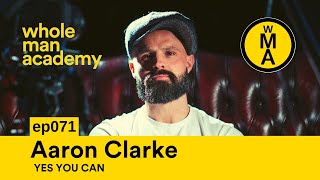
Episode 71 of the Man Academy podcast: host Anthony Astbury interviews Aaron Clarke (entrepreneur, tattoo-studio owner, author) about his business journey, personal development, mental-health struggles, writing a book, fatherhood, and plans to run men’s development events. The conversation mixes practical business details (two studios, ~12 artists) with reflections on conditioning, purpose, coaching, and the value of in-person men’s gatherings.
So this is the whole Man Academy podcast, episode 71. My guest today is Aaron Clark. I've written a sexy bio for him, which is Aaron's an entrepreneur, multiple business owner and author of an excellent book development coach, mental health ambassador, family man, father of two boys and an outstanding beard. Took me hours to write that. Aaron, how are you? Where are you, mate?
Yeah, very good, thank you, Anthony. I'm in Colchester in Essex. Well, actually, I'm sort of on the border of Suffolk, a lovely part of the country, and I'm good. I'm excited to do this.
Well, we just said before we start recording that we've got a lot to get through, including entrepreneurship. But just for the guys that are listening, to start with, I know you're a businessman, but tell us about your business, which is you've got two different tattoo studios, so just tell us a little bit about that first.
Sure, yeah. So I create about sort of 10 years ago, I actually got into tattooing myself. It became a bit of a passion. I, at the time, I actually had a stonemasons business. That's what I was previously. I found tattooing. I thought, you know what, let's. Let's give this thing a go. I enjoyed it. Time didn't matter. And as a. You basically, when you love something, what I realized is you do it a lot. And I did it a lot. And through that repetition, I got good. And slowly the business grew. I formed one studio here in Culture Essex. We started taking advantage of social media then because it was around sort of eight, nine years ago, and tattoo studios weren't really using social media, so. So we started taking good professional pictures of our tattoos. I mean, our slogan is changing perceptions. The business model is around kind of getting rid of that stigma that is attached to tattoo and bringing it more into the professional side and for it to be more seen as an art. And we've kind of done that with our studio. So the coaches studio, for example, has six private booths and we've had all sorts of people in there, you know, even rocket scientists, which is super cool. And then, you know, through. Through growing the business, actually tattooing Gate, it was. It was pretty awesome for me because I was able to sort of learn and earn at the same time. And I'd be tattooing from anywhere from four to actually one time, 13 hours a day. And what I'd actually do is I'd listen to audiobooks while I was tattooing and some weeks I was consuming five or six books a week.
Yeah, the course of.
Yeah, over the course of sort of seven or eight years, I actually consumed a lot of information and I kind of obsessed with self development. And as a result of that, we systemized the business. I moved to Spain. It was quite. I'm sort of going off on a tangent here.
It's quite wherever you want.
Well, that's kind of what happened. I learned a lot of information in self development and in business and I applied it. We systemized the business. I became financially free. At the age of 33, I moved to Spain, which was super cool. Marbella, there's a whole sort of story around that as well. But essentially, after a year, I kind of. That's where I wrote my book. Yeah, I lacked purpose. I got a bit lost because it was the dream, I thought, you know, growing up, that's what I thought I wanted. You know, two kids, the family scene, live in Spain, don't have to work, you know, what more could you want? And that's when the life taught me, actually, no, that's not the case. And so I seeked. I seek more purpose and meaning, basically. So I came back and that's when I said, right, a tattoo studio, that's great, but I wanted more. If it was just about the money, I could have just opened more tattoo studios. I said, no, this has got to be about building a brand. I want a brand. I want to build a culture, I want to use what I've learned. Basically the question was, yeah, if I'm going to have purpose and meaning in life, how can I do that within my sector? How can I introduce the self development part? And that was like, right, use it, build the brand. Because a brand, whether it's in tattooing, clothing, you name it, you know, there's so much scope.
Yeah.
So that's what we done. We come back to the uk, we planted ourselves in a different position based on the headspace we wanted and what we'd learned. We set up the second studio in Suffolk just before lockdown started. But it is what it is and, you know, we're doing great. We've got sort of 12 artists and a total of sort of 16 people under the umbrella of the company at the moment. And it's a passion of mine and we're growing it and it's very welcome at the minute because human connection is what we're all craving, I believe.
Oh, definitely. And, you know, I've literally just been speaking about that with a podcast I recorded earlier where, you know, myself and the guests were talking about how much you miss or people have been missing you Know if they're working from home, the gyms are closed, the pubs were closed. All these stupid things that have stopped people getting out and integrating into society and having those connections. It's so important to get all those back again.
What was it like for you?
Because I wonder, coming back from Spain, was it hard? Because I guess, had you told people that you're going out there then to say, well, actually we're coming back again? Was that an easy thing for you?
Yes, actually it was. I didn't feel defeated or anything like that. I think going to Spain was, was pretty awesome because we sold the house, we gave it all. Our intention was to live there. Yeah, but what it, what it done for me, what, what, what was so powerful and beneficial was it allowed me to create a new environment for myself. I designed my own environment around what I realized I needed to be optimum, you know, and I needed the winter sun, not so much the summer sun. I found that difficult, but I needed the winter sun. I need. I'd sort of old friendships and that didn't particularly serve me. Some toxic relationships that were pulling me back into the bucket, so to speak. You know, it allowed me to redesign my life based on who I am now, not who I was. And, you know, we integrated all these things. I'd walk every day, I'd meditate every day, go to the gym every day. We spent time with our kids. And that was awesome. It just gave me that headspace to chapterise my life, which I literally did in the book, and then say, right, okay, now I have a different awareness going forward. I've got the, you know, I'm not drifting about life. I'm going into life with absolute intention of what I want to achieve. And so coming back wasn't sort of a giving in, it was. It was actually going forward. Spain gave us that chance to process, evaluate, reflect, and then decide what do we want to do? Do we want to stay in Spain, do we want this lifestyle or. And the answer was no. You know, there's something in me too. Passion, you know, 33. I'm not just gonna do that every day. And I'm sure there is a place for that. Not for me right now. I've got too much juice and too much energy to give back, you know.
Isn'T that important though. I think it's. We talk a lot here at Whole Man Academy about personal fulfillment and sometimes I think people can think, oh, if I had more money than I could just do nothing. And you're like, actually what you often find Is you might get that at one point and then you'd be like, is this it? This isn't what I was expecting. Because you're not making, I know you, unless you're maybe a bit lazy, you're not making any impact in, in the world. And then you come back and I know you got into personal development, which for me was a, was a, a huge turning point in my life as well. But you start to get around people that are doing really well in life because they're helping other people.
Absolutely. And I think it all comes back to that. And I think I was blessed, but I was also, you know, driven to it. I found that way through struggle to find that out. You know, I took chances and things. I got hurt along the way. I certainly struggled with my health and my mental health at times. But through that struggle, I was able to almost, if you will, without sounding arrogant, get to a peak where you could kind of see for once you could see what it was all about. You could see this big wheel turning. You could see how people can just drift. And it's very easy, easy to get lost in life. And I was, I was fortunate enough to have that education and experience, to be in a position where I had that I didn't need to do anything. And actually, when you're faced with that, and I found this in so many things in life, when you finally get what you think you want, all of a sudden that you're actually, you know, and if you're not careful, it can lead to a depression or very. No. So you set up the next goal. Life is never done, you know, there is no end destination. And that again, for me, you know, goes back to that self development thing. When you learn these principles, I would call them, I mean, Tony Robbins, I imagine you've heard of Tony Robbins, you're into him a little bit or whatever, I don't know. But he talks about it. It's a human need, a human need to continually grow. So if we kind of deny that, that's usually when we find ourselves actually suffering. If we sort of, you know, get in this place of comfort, you know, good wage, good life, good, good, good, actually leaves us somewhere lost and confused. And that's because you, you've mastered that part of your life. You, sorry, mate, you got to grow again.
Yeah, it's time to move. Do you know, as you were saying that, I was thinking one of the things we say is the danger of a man feeling like he's sleepwalking through life. And you know, that is that thing of even when you tick all the boxes that you think need to be ticked, and then you're like, oh, is that, you know, what, what else am I doing? And I wonder always about, like, the conditioning as we're younger as well, and the labels we put on ourselves or the labels we're given. And I know in your bio you'd said, like, when you're young, you were told you are, like, dyslexic, hyperactive, etc.
Yeah.
And I wonder if you. How did you manage to grow out of that, to be, you know, the confident man that you are these days?
Well, I think it never stops, I think, because that conditioning is so powerful. I mean, I was even reading a bit more Wim Hof's book last night. Wim Hof, the Iceman, if anyone heard of him. Great book. And he was saying that our conditioning potentially even goes back to our ancestors and can be genetic. It can be in our DNA. So, but let me not confuse it too much. So powerful, you know, let's just talk about the life we know from. You know, for most. Some people never gain a sense of awareness about their conditioning. But for most of us, it goes on for a long time before we even gain that awareness that we have even been conditioned, we by our environment, by our parents, by our culture, by the country, by our school. We are conditioned by all these things. The things we see, the things we hear, experiences that we've had. And then, of course, the meanings that we give them essentially create the framework of our life and the way we see it. So, you know, conditioning is huge. And for me, it's a. It's a constant, ongoing process because that, that, that, that. That leverage of condition I've had in my life versus awareness and working on it is so greater. I have to continually go in there, remind myself, work on my awareness so I can interrupt the program, so to speak, when that old conditioning starts to seep in. Old thought processes, negative thoughts, things like that. But, you know, the greatest tool, in my opinion, is that awareness. Because until I become aware of my behavior, the way I was living, I had, you just can't stop them. So you're caught in that loop and it's breaking that pattern. So conditioning. Oh, my God, I could talk for. I'm so passionate about conditioning. It's, it's, it's, it's. I think the reason I'm passionate about it is because for a lot of people, they don't even know it's happening. And of course, that can lead to A great sense of mental ill health through hopelessness, because so many good people are trying so hard to make a change, to improve, and in a cyclic motion, they work harder, faster, longer, and they just get more and more run down. Because actually, actually that's not going to take you there. It's visiting the programs that you have installed in your mind from growing up, looking at redesigning them, and of course, getting in touch with yourself very much to know what you even want to redesign them with, what you actually really want to do.
Yeah. Because it's one thing knowing you want to redesign them, but what do you, you know, it's like, what do you actually want?
For sure. And that is such a deep and difficult question. I think to get to that answer takes a great deal of effort because. And that's what I essentially done to a degree and still continually try to do is take time out of the wheel. Because if you're constantly in that wheel, with the social media and everything, constantly reminding you of who you've become, not who you are, it's hard to break that pattern. If every day you've got, if you, if every day you're the funny guy and every day you'll say, oh, you're, you know, you become the butt of the joke. And every day that happens, how are you going to get up off the ground until you break that? Until you realize that's happening? You take a definite, you know, deliberate action to change that, to recondition who you are and go and do the deep work, get rid of the old condition, the old patterns, the old behaviors, the old comfort zones. You really can't get to the depths of who you are and your purpose and your real beliefs and values and all that stuff.
Yeah. And that, you know what? There's. There's a lot of keywords you've dropped in there, which I like, and some of them I've got on my notes to talk to you about. But, you know, when we said fulfillment, but, like, purpose as well, it is one of those things that we spoke on last week's podcast with Tom McLennan about. You know, you're not, you're not taught this stuff when you're growing up. And it doesn't have to be as a child, but even as in your teens or your early years, you know, most of us guys who are in our 30s and 40s, you know, basically went through the system of going to school and ended up being some kind of employee or that's what you were kind of driven towards. But at no Point. When you were learning all this different stuff, did anybody talk about, you know, what do you want your purpose to be in life and how might you be fulfilled? You're like, I don't know. I don't know what that is.
Absolutely. It used to be one of the most frustrating questions on all the. I've done so many courses. I've done more courses you can shake a stick at in self development and retreats and books and that question. What? I don't know what my purpose is. You know, stop going on about my purpose. It really does take time. Some people are very fortunate. They just know. They're just very in touch and in tune. But you hit on a great point there, Anthony. And I learned this on a fairly recent men's retreat I went on. And I think one of the things missing for men in particular is peers and elders, you know, for a lot of men. And I include myself in this. My dad wasn't around. Yeah, my dad wasn't around when I was growing up. And most, a lot of men are brought up by the mother. And we lack that direction and sense of what it is to be a man. And, you know, it's been lost. It's been very, very lost. And this goes back, actually for hundreds of years. But more so as we've got to this sort of modern age, we're very lost because the modern man, to a degree, needs to know himself. He needs to evolve. And there's not many elders, certainly in my life, you know, I seek elders and I absolutely recommend that to anybody seek elders, because there's a lot we can learn. And there's another reason why we drift. You know, I think we're all on a. On a. On a journey of. Of purpose. And maybe that's to find your purpose, but it is difficult. I think we. We have to seek it. And sadly, you know, for men, one of the struggles is finding a good role model. Do you think?
And I'll tell you why that's a. It's a really good point, is, you know, I'd written down talking to you about personal development, and you said, I mean, Tony Robbins is a great example. So I've. I've basically done pretty much all of the Tony Robbins stuff. I've been to Miami and done Date with Destiny. I've done, you know, the Firewalk in the uk. I've been to Life Mastery for two weeks and stayed at the Ritz in Spain, which is awesome. And one of the big things there was, I got around primarily older guys who were really successful. It doesn't have to be the monetary sense of it, but they just knew where they were going in life, and I just hadn't been surrounded by that, and it was. I couldn't have lapped it up anymore, to be honest. Yeah.
Yeah. It's so powerful. Right. And there's something that's so, you know, warming. Something about an older guy who just kind of knows himself. He has that experience in life because, you know, no matter how old you are, some people look at me maybe, who are younger and see this man with a beard and. But inside, I'm still a little boy. Everybody still has that little boy and that little girl inside them, Right?
Yeah.
We deny it sometimes, but it's there and we all experience it. And I think, of course, at certain times in life, we all sometimes just crave that nurturing like a little boy would of direction and a role model.
Yeah.
So, yeah, it's. I mean, it's so powerful. It's so powerful to be. Because we're all influenced.
Yeah.
Regularly, whether we know it or not, it comes down to that conditioning. A lot of conditioning is unconscious on a daily basis. Something is influencing us to behave or do something in a certain way. And if you can be influenced by an older guy who's been there, done that, and learn from him, well, in my opinion, that's how we grow in a positive, impactful way.
Yeah, no, that's. It's so important with, you know, primarily the guys that are listening to the podcast, I can see by the analytics are, you know, between, let's say, 30 and 40, give or take a few, either side. But some of the guys that come onto our whole Mountain Academy zoom calls are Those guys in there, 50s, 60s, and often I'll get emails from them just saying, have you. Have you thought about doing this? Or maybe look at this a different way? And I've learned, instead of. When I was younger, I'd have probably been like, I don't want to be told what to do. Now I'm like, what. What am I going to learn from these guys? Some of them got huge businesses, or some of them are just guys living a, you know, a fairly normal life. But some of the stuff you can glean from these guys who, like yourself, if you've started five businesses, quite frankly, it doesn't matter if they've succeeded or not. But the amount of stuff you have learned from, often the failures, you learn more from those than the success.
100%. I mean, I just couldn't agree more. For me and I'm huge on this. You know, people. People are obsessed with money, and money's great, of course, you know, it does a lot of things, but it doesn't lead to what people think it leads to. It is not the big answer. People looking forward to happiness.
Yeah.
But the self development, the self improvement, because it's not, as you said, with the businesses, it doesn't matter if it fails or succeeds. It's really all about who you become. It's who you become from doing it. And if I lost everything, I could still die in peace knowing that the person I become, the wisdom and the experience that I continue to put on board and experiences I have in my life, that's what it's about at the time when I'm having a really crap one and business is bad or whatever, I might say different. But ultimately, no matter how low I go in a hole because it happens, because that's part of my mental health and part of the reality of being in business and living outside your comfort zone. When I get back up, I'm always grateful for the experience, good or bad, because it taught me something. And then you become an interesting person and you can join in many conversations and have input because you've had experience.
Yeah.
It's such a gift, in my opinion.
I'm going to try and not get the quote wrong, but when David Gandhi and I were talking on the podcast that he was on, and one of the big things is he said, it's the adventure of trying to achieve what I want to achieve. And as you say, there's a saying, it's about the journey, and it's about what you find out about yourself when things do go well, when things go badly. I was talking about it fun enough this morning because in the last year where I've had to, you know, record podcasts, edit podcasts, sort out different equipment, all the different things, sometimes I've wanted to throw my computer out the window, but I've learned so much about it. And you just go at the time. You know, it's like you in the middle of a storm, you don't realize it's going to be a sunny day again one day when it's when you're in the eye of the storm. But we've all had it where those moments where sometimes you can, as you say, you know, sometimes your worst day can be your best day, but you might not realize it for another 10 years.
Yeah, 100%. And I think that's where growth happens. You're just in the process of Growth at that point. Yeah, like, you know, and that's the thing, just for awareness. I'm getting closer to realizing when I'm in growth stage because I start doing crazy stuff. You know, the anxiety kicks in and the resistance, you know, my head starts playing tricks on me. Do you really want to do this? Are you sure you want to do that? What you sign yourself up to the resistance, for my mind and body to keep me where I am is crazy. But to be able to see it play out almost from an observatory perspective, I find super interesting. Because our mind can trick us like that. I mean, again, you know, I'm sure you would. You would know all that, right, about trying to keep us safe. So, you know, it's all about the growth. That's everything in my opinion. You know, the money, all that stuff, you can't take it with you. So at the end of the day, when we're gone, really all that matters, in my opinion, is the life you live, the chances you took and feeling life.
That's the thing. I think one of the many kind of light messages we try and put across to the whole man academy guys on the E letter or through the podcast etc, is about, you know, finding what you enjoy in life and not putting too much pressure on yourself to achieve, you know, because what one person's success is another person's failure, to be honest, but just finding in life, trying to get to a level of your own personal fulfillment. And if you can, you know, it doesn't matter what, there's always going to be someone doing better than you or worse than you and has got a bigger house, a smaller house, bigger car, better watch, etc. But finding that where you're content, that on your deathbed you can look back and go, wow, what a life. Not fuck, I wish I'd have. I wish I'd have done this, I wish I'd have done that. I'll give you no one says, I.
Wish I'd have worked more. Absolutely. And I think it's that comparison, isn't it? I think the world is geared up to encourage that more, to make us constantly compare. And let's be sort of brutally honest, really. The bulk of society points success in the direction of the financial element. And the trouble is, I think a lot of people are not finding that out until they get there. And then they've potentially given up years, they've given up their health to get there, and then they have the realization. Maybe they still don't even have the realization, they're just miserable and then of course, on the other, the other way to look at it is some people will waste, waste. They'll live their whole lives trying to get there and maybe never get there. And I completely agree with you. I think there will be. I think there is and there could be. We could all benefit from a movement in that direction of realizing it's not about money, it's about impact, it's about purpose. It's about us being our best selves. It's not about comparing, saying, oh well, blimey, he can do 20 press ups, I can only do 10. You know what? If you only did eight yesterday, then you're winning and recognizing and acknowledging those wins and getting back to the sort of primal and old ways of living without this whole tick box system of. Because it's all for everybody else anyway.
For a lot of it. Everybody else's benefit.
Yeah. I mean, that's how I used to live. And to a degree, of course, I still live like that. It's the conditioning, but I'm aware of it. I very much had to have the Rolex on my wrist.
Yeah.
And I say, why? You know, and I love it. And I will have a Rolex again one day. I'm glad I sold the bloody thing. It's made a fortune. Point was, I wanted that because of what it said about me. It was, it could secretly say people, oh, I'm successful. And that in itself then made me feel better about myself and a place I had to get to was already feeling good about myself with the not needing to show them the Rolex. Like, I've got value right here. I don't need to show you my value. I'm valuable as I am. I'm good enough and so is everybody else. And, you know, the system's getting us a little bit like that where I believe that a lot of people just inherently think they're not good enough. And a lot of people are on a mission to prove that actually they are. And of course, I also feel that people are sinking in that because the minute they feel like they've achieved, they look over there and Dave's got a plane with three women standing around it. So they're like, oh, you know, I want that exactly. You know, and it's just so.
It's so funny because you touched on several points there of the danger for guys have always. Now, there's nothing wrong with, like we say, wanting nice things but feeling under pressure that you have to have them to, you know, bring your level of self worth up. And that's what, you know that the years I spent working in the city, you know, I'm still good friends with a lot of the guys in the city, but what you were in danger of becoming, when you're all around each other, it's who's got the nicer watch, car, house, girlfriend, body, you know, whatever, one of those. And, and it was around the time when I left the city and I was like, it just didn't, didn't work for me anymore. And I had lots of nice suits and some nice watches and actually now I wear a. I've got a Casio watch which probably cost me about 35 quid. And I used to worry about what I remember I went in to BMW showroom and bought a brand new BMW Z4, you know, basically full cash and drove it off the forecourt and, you know, that was a great day. But then within the next day or two for me, it was like when I was driving around then I'd scratch the alloys, then someone scratched the car and it. And it caused me stress and it was like, it was lovely to have, but I realized I didn't need it, you know, it was, it was a good toy to have, but actually when I, when I got rid of it, it was part of me was a bit of a relief, to be honest, because it caused me, caused me stress.
That's the thing, right? It's something else to worry about. Yeah. And you're right though, because I also think it is important to highlight, actually it's about not needing it. I think it's great to still have goals, to enjoy things. I enjoy quality things. I appreciate people have taken the time to. I love branding. I think it's awesome. People create experiences through branding and I have a great appreciation for quality and the time that goes into make quality, whether that be a car or watch clothing, but not to need it is such a, that's such an empowering place. To want it because you want it, not because you need it is so, so different, you know, and.
It takes the weight off, to be honest, which I always say is one of those important things. But now hold on one second because someone's about to ring my doorbell. So it's the chicken food.
The chicken food.
Oh, yes, we've got seven chickens. So it's 20 kilograms of chicken food just arrived, so never mind, we'll cut that about. Well, one of the things I wanted to talk to you about was. I'm going to, I'm going to talk to you about your book and I know we touched on it earlier, but tell us what it was like for you actually writing it, because I know we get asked quite a lot here. Not that I've written a book, but when people are talking about something they want to do in life, often it's one of the common things. Oh, I know someone's been thinking of writing a book, and I don't think it's. I don't think it's as hard as people think it is because often they forget how much value that they're standing on. You know, we'll say you're on a mountain of value, but you can't see the mountain because you're standing on it. So what was it like for you, from the process of saying it? I'm gonna write a book to actually going, it's done. Let's get it. Let's get it out there.
Yeah, well, I mean, I completely agree with you. I think everyone. Everyone has got a book in them because everyone has an experience and something to offer. I think the difference is that people don't believe that their experience is valuable enough. And I think one of the other problems is unless they think it's going to sell to 10 million people, they don't bother. And actually. So my experience was very frustrating. You know, writing a book actually is simple. You just write a book, we make it difficult, our minds make it difficult. All the little voice in our head, the consistency, the getting it to the end is what's difficult. But it's not. It's just processes. So my frustration was, yeah, you know, I'm not particularly academic. I do struggle to concentrate. I found that massively frustrating. I didn't know where to start. I'm quite chaotic. And honestly, again, the resistance. Some days, you know, I'd be crying on the keyboard. Some days I just didn't write nothing. Some days I'd spend all morning just messing around. Before I got to it, you were just like me. Oh, the procrastination was unbelievable. And that was the thing about doing it, you know, it was to keep coming back, not giving up. And the big one. The big one was battling with the ego. And what got me through it was saying to myself, you know, because you'd have those days, oh, who cares? Anyway, who wants to read this? There's no one. You know, there's people out there made more money than you. There's people who've done this more than you. There's people that are famous who's going to read your book? And that's the ego that's all ego, which actually became content because I had to say to myself, aaron, stop worrying about if anyone. If no one buys the book. So what?
Yeah, why you want?
I'm writing the book because it's a big challenge to me because when I die I can say, do you know what? I've done something that's really, really difficult for me, something that no one have ever predicted. That Aaron, the person who struggled at school with like, pretty much zero formal education, wrote a book. That's why I'm doing it. If one person reads this book and get something from it, brilliant. And as long as I led with that, my ego would calm down and I'd get through it. And I was really challenged one day as well. I had a phone call, I was in Spain. And again, like the old conditioned friend who knew me from school, what are you doing, mate? I was like, actually, I'm writing a book, mate. And he went, aaron, mate, let me just stop you there. And I went, yeah, go on. He went, mate, you've not done enough to write a book, mate. You're not there, mate. Just like, what are you? What are you doing? And I thought I was a little bit beaten, but inside I was like, this is a prime example why people don't write books. This is a prime example why you, mate, are not going to write a book.
Yeah, I love it. From a pal.
This is it. You know what I mean? And it's like, this is what, you know, like the frenemies, that secret try and hold us back probably subconsciously. And it's things like this that stop us doing these things because we make out we're not good enough or it's got to sell to a million people. And again, if you just, what's the purpose? Why are you doing it? Who are you doing it for? That's how I got through it, you know? I love that story. Yeah, it was. It was a great. A great experience to me as well, because it was all based on my personal experiences and how I developed myself, how I changed my attitude, how I reconditioned myself, my life journey and chapterized it. And I'm just a working class guy. And I thought, you know what? Here's a book for working class people. Because as I say, all those books I listened to, which were awesome, most of them were people like Richard Branson, you know, people who'd made it mega successful and I just didn't resonate with them. They helped me fantasize and idealize and dream. But. But I was like, oh, come on, you know, the way they just say, just go and do this. Just go 10x your business. It's like, get real. This is not real help for people who are still living in a limited belief system.
I was thinking with that. It's about sometimes you. That's why I think it's great having a coach because you need them in the trenches with you as you're trying to, you know, claw your way back out instead of, you know, it's easy. Sometimes it's easy being given all the, you know, the toolkit to do it, but it's having the accountability of someone saying, bill, I was writing a book. If you've got like a coach that each week's guy, where's your fucking homework? Where's. Where's what you've written? Yeah. Like, it's having someone to push you, encourage you and, you know, just give you that bit of extra motivation.
Yeah. To support you. I couldn't agree more. I think, you know, again, I always say this to people, you know, look at the most successful people, but you look at successful people, athletes, people who have made it to the top of their field or their game, are surrounded by coaches. Coaches for nutrition, coaches for their body, coaches for their mind life, coaches, therapists, massage people, you know, they surrender. Because as humans, to be honest, when we know ourselves, we know, you know what, I'm bound to have an off day. I'm bound to have doubt, I'm bound to need picking up. And I agree with you wholeheartedly that fundamentally, that's the biggest thing a coach would do. Actually, the best coaches don't necessarily mentor, don't necessarily tell you what to do, even though that helps most of us kind of know what to do. We could certainly find out. They get out of you and then they encourage you to go and do it, because then you really evolve.
Yeah.
Rather than just doing somewhat what someone says, which is, again, at the end of the day, no right or wrong, you get there how you get there, but we all need to kick up the ass. No doubt.
I definitely think. And actually, I was going to say one of the things you reminded me of when you were saying about like, you know, frenemies or friends that kind of don't really understand maybe even where you're trying to go with what you're doing. So they just don't get it. I remember working in the city and there was a. And I'd started studying life coaching because I'd started going to the Tony Robbins stuff and I just thought it was really you know, I could have read hundreds of books on it because it was so interesting.
Yes.
And behind me there was an older, older guy who, you know, was doing well in life, if you want to call it that, you know, spending 200 hours a month sitting at his desk. But he was. I overheard his conversation with. He's like, oh, you know, some guy he knew. He's like, oh, look at this guy.
Look at his website.
He started working as a life coach. He's like, you know, what a load of rubbish. It was a bit like, I wanted to say, do you even know what he does? And I guarantee I could see that guy was doing well. And what I wanted to say to him, but I could be bothered to get into the conversation, was, I bet that guy doesn't have to ask permission to go on holiday. Whereas we sat at that desk and when you went, can I have a week off? The company might say, no, because he's off and he's off and he's off. And that was one of the flags for me of like, hold on a minute. I mean, my mid-30s, you know, I've got money in the bank and I've got all the bits that I think I still have to ask permission if I can go on holiday. This doesn't work for me for sure.
And it's funny you say that because, you know, I like to say. I like to. I like that I'm in a place now where I can see these triggers of people and you talk about this guy and why he's saying that, and it's quite obvious that actually he's triggered by it. It's quite obvious that he wishes he had that. Because the simple question is, why is he so opinionated? If not, if it doesn't bother him, if something hasn't hit a nerve, why does he feel the need to even talk about it?
Yeah.
You know, it's triggers for people. And I think you're right. I think for me, that's the goal, is life on your terms. If people, you know, we want fulfillment, life on your terms is fulfillment. That doesn't mean happiness. I mean, you're going to live every day happily, but you're living purposeful, doing the things you want to do because you want to do them. And that can be a job. That can be a job working for a company that has the mission that you believe in and therefore you feel purposeful because you turn up and you give your bit of that. For me, I don't work well with other people because I'm Too arrogant to think I can do it better, frankly. That was why.
One of the big things about I don't think which one I went on of that Tony Robbins event. And again, I've been to product self lots of different things. And it's great because it's not necessarily what you learn, it's the people that you meet as well. Yeah, for sure. But a common denominator or common theme of the people I found was that they were financially free. And that meant they had system, you know, had a system in place through whatever business they had or they'd worked hard to build up enough so they were getting, you know, regular income from things. And therefore, it's not to say they never had to work, but they had the financial freedom. And I just think that when I started hanging around with those people, I was like, I've got money, but I haven't got freedom because if I don't go to work, I don't get paid. And that doesn't help. So I just wonder for yourself, when did you have the realization that financial freedom for you was something that would be a bit of a game changer?
I've struggled with financial freedom because I was so conditioned. Again, it's that conditioning. I was so conditioned to work hard. It was built into me. My, you know, what I did see on my dad, that's one of the problems with my dad issue. He was never around. He was always at work.
Right. Okay.
And it was that.
What was his career?
He actually used to be a floor layer.
Okay.
So he would physically work hard with his hands, you know, so that's what I thought. That's what you do, you know, if you don't, you know. So I certainly wasn't. He's, you know, sort of encouraged into education because it was just already assumed. And that's where my conditioning started earlier, that Aaron just wouldn't follow an academic role. He is a long story. Actually. He fell down a manhole, smashed his leg up and become an osteopath and went right the other way. Point is, he just started working again. So all his life, I respect him for this. Don't get me wrong. He's worked hard, but as a result, we don't have a relationship. And so, you know, I think it's kind of. I've actually lost my train of thought. Oh, yeah, the financial freedom because of that. I think it was one of my big, big pushes. At the age of 21, I set up my own first business because I always knew I wanted kids. Always know I Used to dream about having kids from a young age. I wanted two kids, but I did not want to be the dad that wasn't there. Yeah, I was, you know, so passionate about this because it's a big part of my life, a big part of my scars that I still deal with. And as a result, you know, I work hard and since we had children, we were fortunate enough to have children, I have been the dad that can be there all the time. And priceless is priceless. The funny thing was, like, again, you think you want what you want, right? I never forget this. We rocked up to Spain. My Bayer, we've made it. We sold the house. We've got money in the bank. I ain't got to work. The business is as passive you can get it. Apart from the odd problem here and there on a phone call. We've got money coming in. Like I said, I'm not a millionaire at this point, right? But money's coming in. I've got a good life, you know. Good life. Got my two kids, they were 2 and 3 at that age. Like, this is the one about, I don't know, two weeks in, I was pulling the rest of my hair out, thinking, I can't spend another day, every day with my kids. It's doing my head in. It does. This is not. I didn't forget. I was walking across this bridge in San Pedro, one child under this arm, the other child under this arm. They were kicking, screaming, having a tantrum. I said to my missus, we've got to put him in some sort of like, daycare. I was trying to be the perfect dad. I was trying to live that fantasy and ideology that I dreamt of. We'll move to Spain, I'll spend all day with my kids and we'll, you know, the picture was just walking hand in hand and laughing and. No, not a chance, you know, so it was quite a rude awakening. And actually it just. As I say, it just gives you a different perspective and it gives you more time to bloody dwell on it. So if you're not careful, you can waste that time. You can. You can get depressed because if you're. It's a very hot. It's a rude awakening, you know, and you're not thanked for it by a lot of people either, you know, a lot of my friends again, because I was. I was a tradesman, I was a stonemason. And so my friends were plasterers and bricklayers and all this stuff. They were so envious. The fact I didn't have to do bug rule all day.
Yeah.
And I was constantly sniped at and I was different. Right. I was just, I was always different. And so, as I say, quite a harsh reality. All of a sudden. You've got time, you're on your own, you're isolated. Not many people get you. You've now got to make decisions. And that's where and why I believe you see a lot of people sabotage their behavior because the minute you start standing out, you start to see this behavior around you, in your friendships, in your family, even. It just in general. And, and I think subconsciously, people almost weigh up. Oh, I don't like this being different. I'm on my own. If I just lessen off. If I, like wind myself down, I'm more accepted.
Yeah.
And I'm, you know, because it is, isn't it? It's herd manta mentality. We want to be part of society.
So we, we.
We don't play to our strengths. We, we, yeah, we hide in our own shadow. And so it was difficult, actually, because I in, you know, I'm not particularly extroverted and I've always struggled with confidence. And so it was super hard as well to almost be the lone wolf as such, because my natural. Yeah, my natural go to is to actually, I really want to hide. But I had to like, no, this is me. I've got to do this. I've got to face it, you know?
Yeah. That just makes me laugh when you're saying about how it's often people think, oh, especially as a dad, I know that I used to sit and think, I'd love to not have a job and just look after the kids and fucking hell, it just, it does my head in. Now, don't get wrong. I love some time with my kids, but also when you're trying to work from home. And I've had this a lot with some of the guys who, you know, are part of the whole man academy or different friends. You don't have that. I'm out at work and then I'm coming home and I'm home and daddy's here. It's. Well, Daddy's here all the time and, you know, you don't get a chance to have a break from each other. And maybe kids don't need a break from you, but you, I definitely think that you need a break from your kids. That's given me a newfound respect for, like, my partner because I get to. Today, for example, I've got up, I've done a coaching session. You know, I've had a share on my own. I've managed to go to lieu of my own. Instead of having children knocking on the door, I'll have had a great hour's chat to you, a great chat to someone else about man stuff. And then I'll lock myself in my office and edit the podcast for three hours. But she's just got the kids hanging off all the time. And it's exactly as you say. I'm like, be careful what you wish for. Because now if you said to me, would you like her to, you know, Emma's a nutritionist, but would you like her to be the one that's the total bread ring. And you just sit home with the kids. I was like, it would drive me fucking insane having to deal with that.
100% agree, 100% agree. And I think, you know, I start to go the other way. That's the thing. I was all like, yeah, you know, I work because I want to, not because I have to. And you know what I'd like? Get me to an office. I need an office. I need a place to go, you know, because it messes you up. Like, without structure, you just dilly dally around again. I drifted for a long time again, because what was my life about? What do I do? My time, you know, and you really. It goes pretty quick, actually, between those sort of hours of 9 till 3 and then the kids are home and. And then you feel the pressure to. Because it's like, you know, it's like every day actually, as you say, the kids come home. I feel, you know, you can't. I can't concentrate properly anyway, because every now and then they're knocking on the door, daddy, Daddy. You know, and I love it, to be fair, I do love it. But it's hard because you feel guilty. I feel guilty if I'm with them because I should be pushing ahead with my purpose and doing that stuff. But then if I'm in the office pushing ahead my purpose, I feel guilty because I'm like, yeah, but they're growing up fast and I can't get that time back. And, you know, you just can't. You can't win. It's the most impossible job, isn't it?
I know that. You know that the guys that listen to this, especially in the last year where a lot of men were forced to work from home. So there's a difference between, you know, I chose to work from home, but the difference to me was that especially when Hudson's nursery was closed, usually he should have been out at nursery and. Or at play dates and at these different things. And of course, when all that got shut down, they were just around all the time and. But then you've got some guys that we know who have been forced to work from home and are working in a. I'm lucky. I've got a small office that is a dedicated office, but some guys haven't got that luxury. And maybe their partner was at home and they're trying to maintain a professional stance on zoom calls, phone calls or just working. And you've got the kids making a noise in the background and you can't expect the kids to be quiet because it's their fucking house.
Yeah. What about yourself? Have you.
Have you found that?
I mean, I'm fortunate, you know, in my wife. She's also a nutritionist, actually. She'd done a qualification while we were in Spain because she needed new purpose. And, you know, she's super. She's just awesome. And we have a. We have a good relationship. We help each other. If I'm doing something, she usually accommodates and she'll take the kids out or whatever. So. And I've got an office and. Or I could go to one of the studios at different times. You know, I can find space, or I'll just be honest and say to people, you know, I can't do it, but I'm not having to do a job at set hours. So I completely agree with you and I'm very aware of how blessed I am. I'm very aware of how hard it has and probably still is for people who are just forced into these very squished situations. And it must be very, very difficult on people's mental health right now. Like, there's no two ways about it.
Well, I've got. Well, that leads on to one of my questions about. For you, you know, the whole man academy is all about not just talking about mental health all the time, because like it or not, it switches a lot of men off. Whereas if you're talking about fulfillment and purpose, that is a much more sexy prospect to listen to, to consume, than just say, we're a mental health podcast. Because I wouldn't have listened to it. So if I wouldn't listen to my own podcast, I've got fucking two hopes, haven't I? Basically. But one of the things there was when you are talking about mental health was about who do you talk to in life? You know, And I would say there's a difference between. I'm not saying that people should be, you know, on Social media all the time, telling everybody their woes. If they want to, fine, but that's not for me. But if you're struggling in life, I would say, you know, you've got to speak to someone because otherwise it's like the pressure builds up and then, you know, people have their own coping mechanism and some of those are a lot worse than others. So for yourself, you know, you've faced different challenges. Have you had either one friend or. I know you obviously said you didn't have a great relationship with your dad. So have you had anybody in particular that you've kind of spoke to over the years?
So, for me personally is therapists.
Right.
I've also. I've seen more therapists you can shake a stick at. I'm about to start seeing a therapist again soon. I've seen psychotherapists, counselors, life coaches, CBT therapists, you name it. Because, you know, I do and have battled with. I was diagnosed with depression at the age of 18. I've battled it ever since. Ups and downs, highs and lows. You know, my mind torments me. It's a gift and a curse at the same time.
Yeah.
And it is therapists because, you know, I'm not, I haven't been in the past the sort of person to open up and openly talk to people. And, you know, because I'm human. We all have battles. Every. I used to think it was just me, but the older I've got, the more people I talk to everybody. Everybody has something and, you know, you touched upon it and you're right. Actually, I had this conversation because I've been doing some work with the 12th man, which is a great campaign for raising awareness for the stigma that's attached to specifically men's mental health as well. And I agree with you, people don't want to hear that. Men are not going to queue up to come to something to talk about mental health. If you told me there's going to be a load of beers there and the football's on, you'll get them there and then you got to sneak it in. But I think I would just say this. And because this is passionate, this is a real passion to me because I have struggled and I know there's people struggling. So if anyone's thinking, oh, mental health, I don't want to hear that. I'm switching off. Just give me like a couple of minutes.
Bear with me.
Because it's that stigma. The minute we hear mental health, most people think, you know, depression or something like that. But I think the stigma we need to deal with is mental health is just mental health, like physical health. We take care, if we don't take care of our physical health, we get physically ill, we get overweight or we get joint pain or whatever. Mental health is the same thing. And if we don't start talking about it as just mental health as something we have to look after, it will be mental ill health which could turn into depression or something. So it's just something we need to talk about. We need, basically we need to have a moan, right? If you're struggling at home and the Mrs. And the kids, da da da da, every now and then you need to get out and have a moan with your mate or if it's, if you know, a bit lower than that, maybe a professional, because that's what we need to do. And it's a strong belief of mine. The reason we're seeing this more in men is because we don't talk so much. We keep it to ourselves. We see it as a sign of weakness or some do. But women, my God, they get together and you can't stop them talking. So they're constantly offloading to each other. They're getting it out. And it is something that's just crucial in my opinion. If you, you want to be optimum, you've got to take care of this because this is, controls everything. You want a good body, sort this out first because if you ain't thinking straight, you ain't going to go and get that body. Yeah, everything starts with a mindset. So yeah, mindset, sexier mindset, fulfillment, achieving. But you ain't gonna do none of that unless you take care of the health of this thing. Basically nurture it, feed it, take care of it. You know.
I've only, I can't remember who it was, but I've only found pretty much one person that didn't think that the whole man academy was a good idea. And what I meant was, you know, getting guys together to talk. But I said that getting guys together to talk for me wasn't enough because it's a bit like with personal development, you're like, you know what, what's next? Well actually is it about fulfillment? You know, if things aren't going right for the moment, what can you do? Because if you can just wallow in self pity, but that's going to be an ever increasing circle and like yourself knowing the more you start to say, well I'm going to, maybe I'm going to read a book on personal development or being healthier or getting your finances up straight or being a better dad or whatever it is. It's about kind of, you know, that continually moving forward and working on yourself. And I have so many guys that are like, now, you know, even just listening to the podcasts, it's getting even if they're not talking, because they're not, you know, they're only consuming it, but they're hearing guys like us talk about the fact that things do go a bit shit in life and it does drive you nuts when the kids are banging on the fucking office door, when you're trying to concentrate and, you know, things often go not the way you want, but it's about how you internalize that issue and. And basically come out fighting, to be honest.
Yeah. 100%. It's being proactive. It's doing something to help yourself.
Yeah.
Other than. Other than, like, you say, old ways, you know, that's how I used to comfort drink, you know, drink drugs, all that stuff. And it actually just makes it worse. It's finding new ways, you know, because otherwise the situation just gets worse and worse and it is more people talking, being vulnerable, talking, being honest. Because again, you know. Oh, I'm always say, always in my circles previously, I was always the sort of the first one, you know, Aaron's. Oh, Aaron's a bloody. Aaron's a pescatarian now, is he? Oh, God. Not going. The lads. The lads like stag dudes. There's 20 blokes and all day long. Oh, like, jokes about me not eating all the time, but. And this is what's so interesting, it's the herd mentality then. Then, you know, you get sort of 9, 10 o', clock, had a few beers, and one by one they come over to me and they go, so why are you doing that then? Like, what's, what's the benefits? I have been thinking about it. Hold on a minute. Two hours ago, you was like giving it to me over there. Do you know? So, you know, we all want to do it and I think it's that male ego which we all battle with, every human does, but it's getting in our own way, in my opinion.
That's why I think so many men also have missed, you know, for this last. Let's just call it a year of those times when you are out with your. With your mates and, you know, us as the example we'd had. Some people don't realize, but, you know, we'd had 12 actual events in London where guys came along and the biggest one was at, you know, Gedes and Hawks down, Savile Rowland, David Gandhi and a panel. We had 65 guys in the room who, you know, had either dressed up or not bothered. We didn't give it. I don't give a shit what you wear, but as long as you're there enjoying yourself. And we'd had a couple of Whole Man Academy dinners where guys just, you know, so relaxed, get together, burgers, beers or whatever, you want to be honest, but you know, you just got together with a mixture of guys and then this all happened where you couldn't get together. So it was pretty frustrating because you were moving in the right direction of you made new connections, had a laugh and, you know, you got to hear guys like yourself who have got a good story to tell and that became frustrating that we couldn't do that. And it's not the same online, is it? You know, it's a bit like sex. It's not the same when it's online, to be honest. Allegedly.
Yeah. Do you know what, though? And it's funny you said, because I've been watching from the sidelines where I've been watching what you're doing and I love those events that I see. You know, I could see the vibe, I could see the connection. I think that's awesome. And I've been from the sidelines applauding you. I think it's great, actually. Eldridge Cook, you probably know Eldridge, he come along to one, he thinks, great guy. He was also telling me, telling me about it as well. And I just think it's so necessary. But I would also say it's quite anxiety provoking, actual in person connections for men. And maybe the virtual thing gives people a place to start to get to know. Because again, for someone like myself, who, I mean, I would certainly do that now, I would still find it massively anxiety provoking to go to an event. But years ago, I don't think I could have just gone from the situation I was in to an event and perhaps having the virtual stepping stone where I can sort of hide a little bit and not have any awkwardness. Yeah. Allows me that chance to feel the vibe, get to see what the situation is and then feel more confident about going to the event. I get what you're saying 100%. I mean, we're so in desperate need for that human connection.
Yeah. Oh. I mean, even for me, I'm lucky that with a podcast, if you think this is, you know, 71 podcasts now of sometimes, you know, two and a half hours of conversation and it basically started just as lockdown happened. So I've been so lucky to make new connections and have a laugh with other guys around the world now through, through this. Whereas, you know, if you just said to me two years ago, you'll have this podcast that is being listened to by men in, you know, it's way over 35 countries now and it might only be a few people from that country, but I'm like, how cool is that, that, you know, people would give us their time to listen to. And it's finding the right, the right team around you. Which leads me on to my last one. I'm going to mention two words and you're going to discuss it. Rick Cooper.
Ah, yes, the big man.
Tell us about your relationship with him and what you're doing at the moment.
Yeah, so Rick, I met Rick at a men's retreat just before, before Christmas. Awesome, awesome retreat. Full of. There was a lot of rugby players there, there was a lot of testosterone. But what a great, great retreat that was, you know, from. Again, we held men's circles, a place for men to come to be open. They slowly sort of, it was, it was awesome. And I really, I connected really well with, with Rick Cooper. He's an ex pro rugby player, ex Great Britain athlete. He's a firefighter. I mean, the guy is, he, he's the essence of, of resilience. What he's been through. You got to hear his story. Absolutely. I think you've got, I mean, the guy, he's got so much to give. He's got such a big heart and he's so passionate about helping people. He's, he's a real leader. You know, just to spend time in his company, you're like, wow, do you know what? I feel safe with this guy. This guy, you know, he's, he's just a leader. And you feel it, you feel his passion for wanting to help people. We connected really well on the retreat. We both had a passion for wanting to help people and we both sort of supported and helped each other. We vibed off each other. We said, well, how can we do that? And that's when we started, you know, coming up with ideas. And we created Way of the warriors, which is something that we're, we're going to sort of slowly build because we both got other commitments. But it's something that's actually a passion that we can sort of build, which is ultimately sort of a personal, self development centered sort of structure where we help people basically. You know, we help people learn tools. I Think our sort of niche is to be more warrior. I mean there's a million between us. We've got a big tall bag and we've got some experience and knowledge. But I think a lot of people would like to, you know, get hold of themselves a bit more, take more action, have more self belief, build more confidence and break free of their own sort of fears. And that's kind of our, our passion really.
I think that's great because it's funny actually. I was, I was finishing off recording some content for an online course that we're about to release. But one of the bits on it was about how for men, you know, society seems to be driving the manliness out of a lot of men and you know, the, the lack of, in the old days when you had that, firstly the men getting together like we did up to, up to a year ago. But things like fighting and things like, you know, being okay mentioning the word masculine, then you have various people that dedicate the whole time to saying that anything to do with masculinity is a bad thing. And I'm like, unfortunately for us, especially bringing up kids at the moment, I think it's quite important they understand that masculine isn't a negative thing. And you know, femininity and masculinity are both very, very important. And that's when I, when I saw the stuff of you and Rick, I was like, these guys look like my kind of guys, you know. So what's your plan with that going forward? Is it live events or is it online stuff or.
We've been doing some online stuff but I think to make real impact we want to do in person events. In person, experience centered, immersive events. You know, sort of the Tony Robbins type stuff. Yeah, you would understand that, you know, where they're very impactful. You put some through an experience which actually creates change there and then, you know, so you give them the psychology along with the experience for the ultimate sort of sticking power to really increase the change factor, the transformation.
Well, you just said there like about, you know, in person because I know with other personal development stuff, you know, even Tony Robbins, it's. For me, you can't create the same atmosphere online than you can when, you know, when you've got 5, 10,000 people in a room as opposed to these people are just in their own little bedroom sitting on a computer screen. Well, you try and get the energy up. When you know, we were in. The first one we went to was at the Excel Centre in London and Emma came with me because it's great. She's completely into that as well. But I think on the Saturday night we were at the Excel Centre from maybe seven or eight o' clock in the morning and it went on until one o' clock on the Sunday morning and Tony Robbins was there with like water pistols and probably still about 5,000 people there partying. And you're like trying. It's not often what you're learning. It's the. Again, it's the people you hang around with and experiences you have that drum these things home to you. So, I mean, exactly the same as you. As soon as we can, there will be some kind of whole man academy get together just to get things going again. But it sounds like you and I could, at some point we'll be crossing paths and maybe if there's an event and you want to come and talk about what you're doing, it's always good to cross streams on this stuff.
Oh, I'd absolutely love that. Yeah, 100%. As I said, this is my passion. You know, it's just, it's self development is something that's so, so, you know, it's helped my life. I don't even. I don't know where I'd be without it. And I'm just so passionate to want it, to want to give that back. And, you know, like, like you say yourself, when I connect with people like yourself, time just doesn't exist. We could talk forever. I'm so passionate about it and being able to, you know, that moment, you perhaps just listen to somebody or whatever, you give somebody a tool or a nugget of information you've learned is just the one for me. So I would absolutely love that. That would be great.
Yeah. No, it sounds like a plan. And that's why I hope, I would wager I was right about the last one. I would wager this won't be the last lockdown, let's put it that way. Because good old Boris likes his lockdowns. I hope not. Because the effect that. I'll always be very outspoken against him because the effect on mental health for men, women, children, you know, everybody is considerable. And that's why I think, you know, online is great. But yeah, anything that anybody I speak to that's trying to do retreats or events and stuff like that, I'm like, I'll support them as much as I can because we know the power of getting together. And it's like, us too, we could spend all night on this, but if you're out for a night out Together, it's could be dangerous, but that's another story for sure.
Yeah, well, it's real, isn't it? I think that's the thing. This is all, this is all good stuff, but it's just not real and it's just not. It's like, it's just not really getting to that scratching that itch properly, is it? You know, like people need it, we need it. It's a human need. Again, Tony Robbins talks about that, isn't it? Human connection. We need that stuff.
There's our message to guys is get out and get out and enjoy yourself and get to some events if you can, to be honest. Well, I will let you go because I'm sure you've got a busy day ahead and I'm gonna, I'm gonna ask you also to send us a good photo of yourself so we can use it for our social media assets, which is always funny because some of you are like, oh, fuck, I don't know what photo? And I'm like, if not, I pick one. And what are you doing for the rest of the afternoon?
Actually, I think the kids are swimming.
Good.
I'm back swimming again because we was hoping to go on holiday, which again, we've had to move it, but, you know, we want to get them back swimming. So I think I'm going to go along tonight and be part of that.
Sounds like it sounds like a plan. Well, on that bombshell, I will let you disappear off into the distance, but I appreciate firstly you taking the time today to chat to myself and obviously all the guys that we listening for the whole man academy and also for the work you're doing because again, it's about finding people that want to, you know, for us it's helping men do life better, but just having a bit of a positive impact on the world, basically.
Yeah. Awesome. And I love what you're doing as well, Andy. Hopefully we will. Hopefully we'll meet again.
Lovely. Well, appreciate your time and hopefully we'll. We'll see you back on the podcast again at some point.
Great stuff. Thanks, Anthony. Cheers.










