EP076 - ED DRAPER - MILLIONS ARE WATCHING | WHOLE MAN ACADEMY
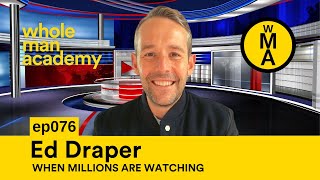
Ed Draper, Sky Sports presenter and podcast host, talks about his career in broadcasting and the practical challenges of irregular shifts. He emphasizes how small regular movement, sleep, time outdoors, and friendships shape long-term health, and reflects on balancing parenting with work.
Questions this video answers
Sports science and English at Loughborough University.
Sky Sports (Sky Sports News).
Cheltenham Wellbeing Festival.
He says he 'just turned 40.'
Thrombophlebitis (a clot-related condition affecting his left knee area).
So this is the whole Man Academy podcast, episode 76. My guest today is, I'm pleased to say, my friend Ed Draper, who also happens to be a Sky Sports presenter, journalist, podcast host, ambassador for the Cheltenham Wellbeing Festival and a dad and a football lover, which we're going to get into first. So, Ed, how are you and where are you, mate?
I'm very well. I'm very happy after that long list of my skills, kind of almost feel like you're kind of my promoter there. So that's fantastic. I am in my spare room probably like a lot of people. I've actually been going into work at Sky Sports throughout the pandemic, but have been doing the podcast, which I kind of vowed I was always going to do in person for the most part from the spare room. So I got a little set up now here, but yeah, I'm in the spare room come office. I'm sure like a lot of us have been, but yeah, I'm good, I'm good. It's good to be here and reunite and hopefully we'll do it again in person soon like we did last year. We saw each other.
I was going to say it was, what's it, January last year, I think, when we all, you know, yourself, myself and James golden, our friend spoke at, spoke at kind of an all men's event up in the, up in the countryside, which was. Which was the company's first ever men's event, which kind of was nice for all of us. And who'd have thought that it had been a year before we got got back to these kind of events. But, well, let's jump into. I always like to be topical and I always like to record podcasts very close to release, which means sometimes you're in the danger of not having one because someone cancels, but also it means it's very current. So let's talk very briefly about the football at the moment, which we know, you know England and now got Germany. So this is going to go out on Friday. England got Germany next. Is it Wednesday? I think it is Tuesday.
Tuesday, 5. 5pm Our time, I think in the UK.
So what's it like? Because weren't you at Wembley very recently with a footy?
Yeah, I was really excited actually. I've been inside Wembley broadcasting for Matchroom Boxing when Anthony Joshua fought Alexander Povekin and that was a previous career highlight. But for Sky Sports News, on Tuesday, prior to the Czech Republic game, I was actually at Wembley 4 till 7 on air in the build up, which might seem Bizarre, because obviously as a broadcast you want to be live when the game's on. But obviously on Sky Sports News, people are watching ITV for the main coverage. So that was a great slot to have because people were tuning into us for team news build up and just being there. And there was only 22,000 in the stadium versus the 80,000 plus capacity. But there was people milling around. It was quite genteel, I think, relatively, because England had already qualified, but it was just fantastic. That was a real kind of cool career highlight because for me, some of those defining moments where I wanted to get into sports journalism were as a heartbroken kid of 8, 9 and Italia 90, and then Euro 96 with my mates, get my nan to buy his beers and watch the games against West Germany in 96 and we lost, course, course the positive memories of the Netherlands and then the 98 heartache where I'd sort of snuck into a pub to watch that one. And he's sort of like these England tournaments sort of chart your evolution, I think, as a. As a boy and a young man through. And obviously it's usually been punctuated by despair and gloom and then that wave of anticipation and excitement. So for me, yeah, marking that was a real career highlight to be at a major tournament because I think, bizarrely, although a Manchester United fan and love football, love playing it, I think playing is my favorite thing. I think the international tournaments really captured my imagination as a kid.
Yeah. Yeah. I think it's. I always think back to those even was it Mexico 86 and. And I've actually got. I've got kind of the T shirt memorabilia from some of the World cup things. And you do remember as a kid, those are your real times. And that's why I know you said about the fans being back, it's so important. I know when I interviewed Neil Mellor, what was it, three, three, four months ago now, the ex Liverpool player, for those that don't know. But he was saying how when he was speaking to other footballers, how they were desperate to get fans back because it's just not the same when you're, you know, they score a goal and you just get. Because it might as well just be us playing an empty stadium.
Yeah.
So yourself with. I wanted to talk first about getting into the presenting side of it. I know you, you weren't. Didn't go straight into that because you studied sports science at Loughborough, wasn't it?
Yes, that's absolutely right. I mean, I think like a lot of people, I wanted to be a sports person. Would love to be in a footballer. And I kind of probably regret, in a sense, I don't think I would have made an elite level player, but I regretted my teen years, maybe not focusing as much as I could have done. Could I have made it to League 2 or something like that? That would have been fantastic to achieve that. But when that sort of ship had sailed, I think the next best thing I always looked at was sports journalism. My favorite topics were English and sport at school, but then I wanted to kind of just give myself a generic undergraduate. So I did sports science and English at Loughborough, which was basically one of the only places you could do what I like. So you could do sports science with everything at Loughborough, anything you want, you can combine it with sports science. At Loughborough, sports science and maths, engineering, whatever you want to be. Drama, you can mix it up. So Loughborough is just kind of a sports science university that you can, you can marry with other things. And then played football, coach football there, did a little bit of writing for the magazine and then went on to do sports journalism. Because while I was at university, in the summers I was going out to the United States to coach football, kids camps, stuff like that in Ohio, which was. Which was good fun. But they actually said to me, there's a journalism school out here if you're looking to get into, which is really good. So I went over there on a scholarship and cut my teeth in a way, doing a master's in the States, but then covering American football for. I remember a Friday night show called Gridiron Glory on local tv, WOUB tv.
I just said that. Do you know anything about it?
No, I didn't. And it was kamikaze, because I did. I mean, a little bit. I'd followed it a little bit on Channel 4 and Stuff, I think, as a kid, but it was not the, you know, all the routes, as they say in the US that you have to, you know, kind of unpick. And we had to go out and film the first half and then come back and spit out kind of commentary of the highlights on set with the anchor. They would call it the anchor, we call it the presenter. And I just remember I was trying to read my notes. I just dried up completely midway through the first hit that I ever did, live on that. And it was just. That was actually a really good experience because you dive straight into the deep end and everything else has been relatively easier since, particularly coming back to the UK after that and working my way through BBC local radio and some digital outlets before getting to Sky. So I think that was actually quite a good way around to do it. And obviously the Americans thought it's hilarious. At one point I did what they call play by play commentary on baseball because everyone else was away and there was people in Those days, it's 2005, 6. It was like transistor radios they're walking around with on their ears. Let's just cracking up listening to this English guy trying to make sense of the baseball. So it was actually a really good experience then coming back and, and you know, doing sports I was more familiar with like rugby and football and cricket was, was relatively easy.
I just wonder what is that like? Because I know, funny, I was just writing some of the blurb of what we talk about, but I know even for me in, in this kind of doing live things and I'm doing talks for, for companies that live and you have that sometimes you have a. What you're saying and you have a little voice in your head at the same time because you, you're mindful if you've said something wrong or whatever. But I'm not doing it to huge audiences. So I just wonder what it's like for yourself when there are, you know, millions of people watching and you're, you know, the spotlight's on you. What's that like?
It's strange. I was talking to my wife about this. I actually quite enjoy and she's. Because she's an introvert, she doesn't think, she's thought that. I love public speaking things that I haven't done. I always get the anxiety. I think a lot of people get that anxiety. But in terms of TV and radio, as someone who had, I would say, very busy mind, I quite like the centering effect of being live because it means that I can't think about a million different things. I have to sit still for a bit. I'm someone who likes to move around a lot as a person. I don't, you know, physically and psychologically. I don't like to kind of sit and sort of do focus. You know, the idea of sitting at a laptop for nine hours to just focus on something would be very difficult for me. But in those moments when you're live, you have to be concentrated and actually at Sky Sports you almost more so because you've got a voice in your head. You have someone who's a director who's telling you what to do, telling everyone else what to do, where the camera shots are going to be. You have a director's assistant who's counting down to say the end of an interview segment from a player or whatever, or counting down to the next junction that you have to talk to for commercial break. So there's a lot going on. So actually bizarrely in that chaos I find a bit of peace, which is quite strange, I think in the. But it's. The people are very different and as you get older you realize that we all appreciate different things. But it was. Yeah, there is that sense that sometimes you do have a sort of third person in there where you're thinking, if I was watching me. Particularly if you, if you're working your way up because, you know, if you work in YouTube and things now, people can be their own bosses. But when you've got bosses to impress, I suppose there's a part of you thinking, oh, what would that boss like? Or this like or, you know. So I think there is sometimes that. But the best times are probably when you're. You're not really autocue when you're ad libbing because then you're in sort of state the sort of flow, as they say, a little bit and just trying to update the sport. But it's. Yeah, it's an interesting one actually, because I don't. I think as an extrovert, I think you still get that anxiety about public speaking that introverts get. But I think you probably get more from it when you do it. You feel more of a sort of rush. So it's a different, maybe a different experience just from people I speak to and how they experience different things.
Yeah, I think that's important for guys listening just in general life as well as those that sometimes are expected to do presentations. It might only be to a few people, but I know quite a few public speakers or people that are in the public eye that say they're actually shitting themselves before they go on and. Or people that are singing and stuff, but once they get on there, that stops. So it is a good reminder that, you know, it doesn't matter who you're watching on telly, the likelihood is that beforehand they get some kind of jitters, something going on. I was going to ask you what about. I mentioned to one or two of the people who we were having on the pod this week and I always say, what questions would you like me to ask? And one of them was about have you had any epic fails where you have kind of, as you said, you've dried up whilst you're on Sky Sports or just said completely the wrong thing?
Well, that was. Yeah, to cut My teeth. That was an epic fail with. With. With that. In terms of being on WOUB TV in southeast Ohio. Then there was a time when I used to. Sometimes you pick up phrases in life and you might actually. A relative of mine's a doctor. He didn't know how to spell neck. He's been spelling neck, K, N, E, C, K, which is quite funny throughout all these years, because he felt it. He thought it was off the same route as knee and things like that and knowledge. So he'd be doing it, which is hilarious. But there was another time when I used a phrase that wasn't really sure what it was. But we're at the V Fest in Chelmsford, Essex, for Absolute Radio. It was Virgin Radio and I joined. It was Absolute Radio. After that. I was doing the sport on the Christian o' Connell Breakfast show and I said something like, yeah, someone handed to me and I was like, yeah, great, we're all three sheets to the wind here. And then there's a consternation, everyone thought, because that's apparently means drunk. But I thought it meant just like, you know, flying high, buzzing on the atmosphere. So I said that. And then apparently there was a lot of feeling like, why it's seven in the morning. Why is this guy. Why is everyone drunk? Of course, yeah, probably the fact you're at a festival probably was actually feasible in a sense, that people might have wondered about that. But there was. It was that. I'm just trying to think of epic fails. I mean, there's. There's things you get wrong that you just kick yourself about. Like facts, you say, or as you say, when you're in free flow of conversation, you might say the wrong team, the wrong name. There's one recently, actually, where there's a tease and it was scripted to break and it was something about Harry Kane, but for some reason, I said Harry Redknapp. And I think that must be a mental tick of just the fact I've said Harry Redknapp throughout my career so many times. Yeah, there must be an automatic, automatic, automatic kind of like, connection. But then everyone was like, you go on Twitter and someone's like, what are you talking about? Harry Redknapp? Or, you know, the England captain, Harry Redknapp.
That's half the fun of it, though. And I just wonder. The other question was, and you touch on it, about just that thing of having someone in your ear. Because that, for a lot of people must be like, wow, that must be really. I guess it's like a lot of things, you get used to it. But I just wonder what that like for you, especially when you started trying to listen to that and present at the same time.
I think it's really fatiguing because I think it is repetition like most things in life, I think, you know, we have different aptitudes but we can get better at things. I think you become quite selective in what you hear and you almost have an active hearing sort of part your brain and a sort of passive one and you kind of pick up on the things that are relevant to you that aren't about the cameras that are more specific to what you're doing next and what you. Who you need to speak to, what link you need to read when the breaks coming up, et cetera, et cetera. So is there one more question for this guest before you move on? So you kind of learn those key things but it is an evolution. Yeah, I think at the start it's very fatiguing. I think mentally it can be very tiring to hear that and I think there is actually it's interesting you get to a point where to do a lot of late shifts and early. It's never kind of not fatiguing. It's always a good workout for your brain but you reach a level where you can deal with it. But I think it's still after you've been live for a number of hours because you get commercial breaks but you still kind of set so you don't really feel relaxed per se in those breaks. So I think it's. You still feel a kind of mental weariness afterwards, which is interesting. Yeah, yeah, it's interesting.
You've obviously been reading my notes because what I wrote about next was about you. I know you often had those early mornings where you're having to. From. From Cheltenham and then commute to. Is the Sky Sports studio in. Is it near Gatwick or am I just making that up?
No, it's near Heathrow, West London. I've got close. Yeah, no, because I used to live in Twicklam and I moved out actually it's is typical kind of way life turns out. I was doing rugby reporting on Pitch Cypher sky then sky lost the rights to BT and then I got a job that I sort of coveted for a while but bizarrely happened when I'd moved out of London was Sky Sports News which is centered in the studio 99% of the time. And I have had different. My brother's lived in Isleworth near to the studio so I've stayed at his House my aunt's in Ealing as well so I can mix it up. Yeah there is, there are times when you have to leave Cheltenham at 3am to be there at half four or something like that which it's difficult but I mean I guess the roads are empty unless they close the motorways which anyone who gets up early or works late knows that they have a kind of habit the highway agency of closing things impromptu which can be tricky when you're bleary eyed and not knowing where you're going but yeah so that can be challenging I think and we work different shifts, some people have set patterns but a lot of us work varieties and I think it's funny when I mean we'll get onto health and wellbeing but I think that is something that I've realized that I've been able to maintain exercise and things like that not to an elite level but just for my own maintenance and well being and I think the sleep, I hadn't realized until the last couple of years how integral that is to health and wellbeing because I think it's a cumulative effect like lots of things in life, isn't it? If you, if you don't monitor it and don't try and get extra sleep where you can you realize that you get to a mind state and a physical state where you sort of down the hill and you don't realize how you got there but it's something that I've been aware of Matthew Walker we've talked about, I know you and I about his, his research and I think it's University of Berkeley into sleep and how important it is and foundation for all health so you can do that. All the rest of it's kind of window dressing if you're not getting that right. So I've been, I've been increasingly aware of that and trying to kind of get it right but it's tricky. My wife can sleep whenever she wants. It's interesting people are different but if I have an early shift I find it very hard to go to sleep. I think naturally I sleep around 11, half 11 and I find it difficult to waver too much.
Yeah and I think that's an important point. I know from people that I've either done kind of when I speak about morning routine and things and you go back to everybody's different and you know, you can't tell everybody they should go to bed at 10 o' clock because some people just aren't made that way And I'll kind of call it a Night owl and other people like my partner Emma can be up at 5 o' clock pretty much without any hassle as other people find that really difficult. So that's always one of those things we say to guys that are trying to get their health, their wellness, their mindset, all sorts. Remember that what works for your mate might not work for you. Something that they're eating or drinking or doing doesn't necessarily mean it's going to be your. And I know you said I was looking through. I always do a bit of research about your instinct that physical and mental health intrinsically interlinked and you know, it might take people a while to kind of, kind of ponder on that one. But it is that thing of your mindset and your, you know, doing your exercise, your fitness and how do you keep all that going yourself?
Well, I sort of have been very individual. It's interesting you say that I think certainly just on the sort of collective well being thing I think yeah, because everything you read about self development I'm interested in that. Listen to Tony Robbins. Different people, they'll often say to you start with a routine and if you don't have a routine so for example a job like mine, it's different shifts, different times, very hard because then you sort of like that makes you feel almost more anxious because you're like well should I get up at 5 in the morning? Of course you shouldn't because you've got in at 2 in the morning so why would you get up at 5? It's like, you know, that's nonsense because what they never say is if you're getting up at five in the morning to do meditation, press ups and all this kind of stuff, you should probably be going to bed at 9 or 10 so it's whether you know, and getting a good night's sleep. So it's things like that that are factoring. It was actually bizarre timing actually I just move this microphone. I've been reading this book Move, which is by Caroline Williams who's I think a scientist or a science journalist speaking to scientists and just talking about the effects of and the actual scientific physiological connections between the brain and body and how we think there's a feedback loop currently constantly between the body and mind and the mind is sort of like just a control center but actually a lot of it is dictated to by the, by the body and the state of the body. So for me it's being, you know, I like to do maybe three cardiovascular things a week. If it's a couple of jogs And a swim or three jogs, maybe 20, 25 minutes, half an hour, just fit them in where I can again be realistic. And I try and do some kettlebells a couple of times a week. But I also know that if I am tired, if I've got up at three in the morning and had a few hours a night, don't try and do any heavy weights or anything because you probably pull something and go for. Sometimes a long walk is actually better for you to just clear the air and clear the cobwebs. So I try and exercise a few times a week. I try and think about longevity. I've got a lot of friends who exercise sporadically and then run two marathons in a weekend or something and then a bedridden for about two weeks afterwards. So, yeah, I try and think long term. I just turned 40, I try and think, can I be mobile and doing things till I'm 80? And there's cool stuff about cardiovascular. You only need to be out of breath like for 10 minutes on three separate occasions in the week or you don't have to do these sort of mammoth. Which I think being a bloke, I think there's a lot of machismo. Sometimes we get tempted into these things, which is cool because some people get a huge psychological benefit from achieving those things. But I think over the long course, I think little and often is always served me well with exercise.
Yeah, and that's. It's a bit like when you go back to eating healthily and you say, you know, one salad isn't going to make you healthy but if you're consistent with these different things, I would say it's like the compound decisions, isn't it? Yeah, you know, that, that kind of exercise. And I know again, I spoke about this yesterday to a group of people about finding what you enjoy because I know you like tennis and you know, if it's playing five side football and these things. So it's so important for me when you're looking at the kind of overall picture of how someone's trying to stay healthy in their mind and their body is on the physical side of it is finding what you enjoy and not, you know, you don't, you don't want to have to be like, oh, I don't like doing this, but I have to do like, listen, you know, if it's dancing, do it, whatever it is. I do stuff with the kids where you're out in the garden running around as well. So it kind of tires them out as well. Yeah, you said about, you know, getting outside, how important it is you feel for like the. What's the word? Like the health boosting effects of just being outside.
Yeah, massively. I mean, the research into that is great, I suppose. And I don't, you know, we shouldn't live the lifestyle of cavemen because people point out to me they live till 35. So you don't have to be too kind of, you know, evangelical about trying to be caveman lifestyle, but you think human beings are designed. And actually it's been a big factor the last year, hasn't it, when a lot of people around the world have had to stay indoors or being told to stay indoors is. We forget, I think psychologically, daylight in the morning gets a serotonin, makes us feel good. Being outdoors tunes us into mother Nature, which is calming and relaxing. Typically, even in a city, we'll see trees, parks, bushes, whatever we might encounter. So it just makes us feel connected, for me anyway, at least. And again, I don't want to kind of, I guess, prescribe it exactly like you've been talking about for everyone individually, but I also think it's a big thing. Vitamin D is a huge thing. Vitamin D3 in particular, what we get from the sun, we can take supplementation, but a lot of people don't take supplementation. So through the winter months we have to do that because if we're going out with just our little face poking out from a raincoat and, you know, in England it's gray for about four months, so you're not actually getting much UV light anyway, so you have to take supplements in the. In the winter. But I think there's research, actually. Dr. Ranulph Crook, who is part of the Cheltenham Wellbeing Festival, he's a GP locally but runs an optimal health clinic. So there is some suggestion you can stock up on vitamin D over the summer months. So if you get out in your shorts and T shirt over the summer and get some of the sun where you can. If you're working from home at the moment, can you pop into the garden, take a call, whatever it might be and just be aware of that. And it's specific as well, because we talk a lot about race and race doesn't exist. But obviously the difference, what we're talking about often is melanin in skin, and if you've got darker skin in particular, you will need more sun exposure relative to someone with less melanin in their skin. So there's important health benefits to be to being outside, in my opinion, it's Just getting some fresh air, isn't it as well? It just feels right and it's often allied to movement. So I suppose you get a double whammy.
That's one of the important points about, you know, I know quite a few people now that are working from home and my, my discussion with them and kind of pointing out is that a lot of people then don't have, if you, if you don't have the commute, you don't, you know, either walk to the station or walking around the office. And you're walking maybe at lunchtime to get something. A lot of people are going from bed to, you know, box room, a laptop, which probably isn't in the right place and it's affecting your neck and then you've got it where you're just eating dinner at home and you're not going for those walks. I'm trying to say to people, like you said, even if it's a phone call or one of the guys we're doing coaching with, if you're on Zoom, say like he's got a peloton bike, put your computer, if you can on and just, just tick over on the bike so you're getting some exercise. It's all these little things and I know it's that thing of, you know, being in this, let's call it modern world where it is not encouraging us to get out and do the movement and be particularly physical. And I wonder when you're in the studio because I guess you're in there for, is it long shifts that you do and therefore do you kind of feel like you need to get up and shake it around a bit?
Yeah, I do actually. I mean, it's funny, my father in law and family members always said to me that I never sit still for very long when I'm sort of people's houses. I'll get up and move around and things like that. And actually, yeah, commercial breaks, there's a few guys, Tony Wrighton, who's got a podcast called Zestology, he's one of the fellow presenters. He goes and does like stretches on the kind of little fence rail we've got there. But I tend to just move up and walk around, just talk to people around the office. Because you've got a studio that's situated in the heart of an office where people have got their computers sort of banked behind you. So you can wander off. You get a 3 minute, 4 minute commercial break depending on how much advertising we've got that particular month. And then, yeah, I like to do that, I do think it makes me feel just generally mobile, because that's the thing is people's lives, the modern life is you can't just sort of go out and wander around the hills if you've got a job to do, but you can constantly get up. And maybe it's the catalyst is having your office in a spare room upstairs and then you walk downstairs to get a cup of tea, walk back up during the day, just. Just little things and popping out the shops. If you can pick your kids up, you know, pick them up from school, if you can walk, great. You know, we're lucky that that's. But that sort of decisions you start to make in life, you don't think about the headlines, which are, for us, we can move further out Cheltenham, get a bigger house, but actually, could we then walk to school? How much time would I spend in the car versus at the moment? I spend a lot of time getting to work. Do I want to spend more time? And it's all those factors of your life, I suppose, you start to think the little things mount up, those cumulative, cumulative effects. And it's things like moving. Actually, because I had thrombophlebitis three years ago, I played football in a game and then went on holiday and I got sort of swollen. It wasn't a bad clock, but the inside of my left knee. And from that point on I got very conscious of if you're sitting in a car for two hours when you get out, even if it's one or two in the morning when you get home, do you know, get on the exercise bike, do 5, 10 minutes just to get the blood stopped pooling or go for a walk or whatever it might be. I've noticed that is a huge thing for how you feel after you've been cramped in a car, for example, which a lot of people may be, because I know that public transport is down at the moment, people are taking to roads. I think we're now 104% in the UK of previous capacity of traffic before the pandemic. So people are certainly driving a lot.
Well, also, it's the flying. I know for years I didn't really understand much about things like compression socks and how important they were. And I noticed they got very popular with. Not necessarily for the blood flow, but for people doing running as well, with the sleeves and kind of the. Across your calves as well. So it's something that I. I'm always one of these people that I can't look too deeply into science things because I just glaze over. So I just need someone to tell me is it effective or not? And then I'll go from there. But I know you said about fireside football and one of the things that even you mentioned earlier, I used to find and I've discussed recently was things like football and stuff like you say, whatever else is going on in your life, usually when you're playing that you forget about all those things. When I was in my 20s, I think at the time I was splitting up with a girlfriend. It was a painful kind of break. But I realized for that 90 minutes plus, you know, like the difficult thing you were going through, that challenge had disappeared because you were just playing on football.
Yeah. It's so mentally such a big break. Tennis to latter extent, but I'm not very good tennis player. But football in particular, I don't care what level it level it is, particularly five aside, I had this indoor game that is yet to be resurrected because of the restrictions, but it was, it was indoors and you went in goal for 10 minutes of the 5 minutes every half hour you were in goal and then you played out outfield for the rest of the hour, but just intense. The ball never went out of play. So it's literally like your mind is on this thing. You're just chasing it around. And for me, and I have tried meditation, I do a little bit of mindfulness, actually do a little bit of my daughter actually to help her get to sleep in the evening. But I do find that in terms of switching on my focus on that moment, you're not thinking about earlier on, you're not thinking about later on tomorrow, what you've got. You're just thinking about that game. And also there's a physical challenge of moving your body. You're competing, which I think's good. A little bit of contact. You like that as a man. We like a little bit of that contact and physicality. And you're also just. Yeah, I think. And when you come out of it, you feel physically exhausted but mentally refreshed. I mean, I don't know if you. You find that with it. That's why.
And that's what I missed. You know, I wasn't playing football. It's funny, I moved away to the countryside and then basically stopped playing football because I was. I was working at weekends and stuff, but that's what I used to find I loved. And then I started doing Monday night five side football. And yeah, it was that thing you'd come off the pitch and you'd be. Doesn't matter what weather it was, you'd be sweating because you'd be non stop. And also it was that competition, you know, I'm now 42, be 43 in a couple of weeks time, but I was competing against lads that played in the first team of one of the local team and they were in their twenties. But what I realized also was it was I was always very fast at running anyway, so I hadn't particularly lost that. But when I was younger I didn't appreciate those things that now I came off and I was like, wow. I really enjoyed challenging myself and, and having a plan and kind of putting yourself through your paces and you'd come back, have dinner and you'd really feel like you'd earned it.
Yeah, absolutely. Yeah. You'd really sort of enjoy that food and that relaxation afterwards. What's interesting, I think about when we talk about developing ourselves and trying to get better in life, I think they'd say that learning something new, is it good. And I've tried to do a little bit of boxing training actually through a former colleague of mine, Johnny Nelson, remotely during the pandemic. He's got a program, so I've done a bit of that and try to learn punches and combinations and so that's a different thing. Psychologically it's been a good challenge, but actually with football and tennis and ball games, I feel like it's never the same thing. So every game is different. So in a way you're always learning and having to adapt. So your experience helps because you've seen certain patterns before. But I think there's always, you're always challenged by, I think whatever level you are, as we're seeing in the, in the Euros at the moment, that, you know, an underdog can be a bigger team and there's, there's different puzzles to, to solve all the time, which I find psychologically is refreshing.
Well, that was, talking of fireside football, one of the big things that I saw there and then with these things being stopped for, you know, basically a year and a half and I've spoken a lot about this, is the importance of guys that, the socializing so, you know, forgetting the health benefits and what have you, that thing of actually being with a group of guys. And I know last Wednesday I was down in Winchester for a mastermind event for. There was a seven or eight of us guys there and not only did we have a really powerful day of kind of business decisions and coaching each other, but we had such a great laugh and, you know, took the piss out of each other and talked about sport and talked about all random stuff. And one of the guys said that he hadn't been to anything like that for a year and a half. And he's like, it was so good to just get out and have that kind of that feeling of guys getting together. And it's about friendships, I think as well. I just wonder for you it must be great fun in the studio, but also for this last year and a half of not having so much of that around.
Yeah, I mean we sort of. We kind of went on a go slow first three months of March to June 2020 because sport was effectively suspended until the Premier League project Restart. Although in fairness, the UFC in the States was kind of a pioneer and some people thought that was controversial, but they got back up and running pretty quickly.
And then the Premier League stadiums, wasn't it?
Yeah, yeah, it took part. Yeah, yeah. I mean, the States is very different according to what part of America you're in. It's very different than the uk, Although I know there's been a little bit of nuance with Nicola Sturgeon in Scotland and what she likes to do about two days later after the England, just to mix it up. But it's. Yeah, so that was a different period. We're on in the studio alone, we're doing half hour recorded segments. There's less people in the office that's gradually increased. It's nowhere near full capacity in terms of all the office workers. People who can work from home still are working from home. And that's been interesting from a production perspective. They've been able to do a lot technically from home now with high speed Internet and things, which is. Which is kind of cool where we are, but it's. Yeah, I think it's a big thing. The social thing is I've turned 40 a couple of weeks ago and I suppose it's a period of analysis and I've spoken to a couple of my friends who work more conventional hours than me, but dads with young children as well, and they've talked about missing that friendship component. And it's something again, cumulatively like your fitness or your health that you kind of miss out over a period of years and you sort of put things ahead of it like work or family, which I'm not saying you shouldn't put family ahead of it. Of course there are times when you should, but there's that balance. Yeah, that balance, that importance for your health. I think something when we talk about gender, I think is really important. I would never ever suggest that men were superior to women in any way. In fact it's kind of, I'm still learning off my six year old daughter. So kind of, you know, she's, she's a lot more fully formed human being than I am. I'm this sort of blunt, blunt instrument that's trying to kind of understand women through my wife and my daughter. But actually there is a difference in the way and I was speaking to Leanne Sanderson who is a former former England footballer. She's a Sky Sports analyst, Arsenal legend, played for Juventus most recently. She's a striker. She got into football through her dad and she said it was such an illuminating thing to be around him and his friends and said I was just shocked because they would just hammer each other constantly. But then it taunted on her that actually these are the people he really likes because he trusts them with that kind of connectivity. And actually if you don't have those friends because we keep saying let's talk about things actually for a guy, sometimes you need to go and play football and then take the mickey of each other in the pub afterwards having a pint. And that actually is more fulfilling and enlivening than going and speaking to, you know, quote unquote, psychologist, shrink or whatever in a room with a, with the glasses on and a notepad. For me sometimes because you know, your friends closest to you will just bring you down and actually for me that's a really nice thing because if I've got any inflated ego about what I do for a living or anything, they'll just completely destroy that. The people that know you since your kids and then people you meet subsequently as well, you have, you start to, when you start to get that kind of mickey taking, that's when you start to feel comfortable. It's a nice place to be. I think it's a. And it seems to be very different. Like I can't imagine my wife is like that with me actually. It's funny we interact like that now but I don't see it with her friends, how they interact.
I always think it's, you know, I've been best mates with, with Tom, my, my mate since I met him when I was in my kind of mid teens. So you know, over 25 years now. And I realized with, with really good friends you can say whatever you want.
Yeah.
And not have to filter what you're saying or think, oh, I'm not sure how they're going to take it. And, and yeah, that's one of the things from even with the whole man academy, you know, bringing the guys together through the, the then 12 events in London and then the 17 events we've done online was actually you had some, you know, some guys came alone to other guys came with a group of guys. And it was those friendships that when, when we didn't have those events, that's what I'd get guys missing saying, when are you going to do another one? Because it was just, it was good fun. So it doesn't have to be deep and meaningful all the time. You know, we always want to have, hence the podcast. You have guys like yourself who are, you know, at the top of their game in certain fields and you want people to learn from them. But yeah, just that thing of getting guys together and getting back with your mates is, you know, we. What's the word? We're pack animals.
Yeah, yeah, absolutely. I mean, it was interesting as a kid, looking back that we always had at school sort of 10 or 15 friends, which is strange. My wife was three or four friends. I think that's anthropologically that's quite consistent that men tend to have bigger friends groups where maybe you have the less intimate. You have your best friend, maybe, but you have that bigger group of banter. And maybe that's why we all become loudmouths. And I don't know, it's always sort of like you're trying to get attention so you're always talking and things like that. But it's. Yeah, it's something. And particularly it is something that I say to people in my line of work. Two biggest drawbacks A, first of all, love my job, get to speak about sport for a living, which is what I did as a kid. And in lots of ways I'm still a kid because I'm doing that. So it's fantastic. But don't get to play as much sport, organized sport as I would like. Hence I have to do the running and things like that because everyone plays sport in the evenings and weekends when typically I'm working. So this is a Thursday. I'll be working Friday through Tuesday now in the evenings predominantly up to 11 o' clock midnight. So where's the window to meet other people? If I'm going to spend some time with my family as well, that's very, very tricky to do that. And men typically are lousy at meeting for a coffee or something. That was really interested in that. That's slowly starting, I think as we get to our 40s. Maybe it doesn't have to be Jaeger bombs to make it a social Occasion. So it's, it's changed that dynamic. But the sport. So playing sports difficult and socializing becomes difficult. So that's the two things that I find. And I see people who build routine and things in their life and they have certain days which if I have a weekend off, it's like, oh, it's a Saturday, you can relax, whereas I have a weekday off. There's a little bit thing. Or should I be doing something productive or should I just chill because everyone else is working? So there's a rub there sometimes.
I tell you what, that's a really interesting point as well. There's a few tangents here, but often, let's say you're coaching someone that says they don't like their job and they want to do something else, and they have this dream of doing something. And often you say to them, well, you know, I want you to kind of put yourself in that. In that job and understand or speak to someone that does that. Because, for example, we like working weekends and. Or late nights. I'm sure there'd be some. I used to. If I could rewind my life back, I'd probably want to go into what you're doing because I wouldn't have been good enough to be a professional sportsman, but to talk about it all the time, watch it be fantastic. But then you have people realize, oh, would I actually want to work weekends and late nights and not maybe not be there at the weekends? And that's always one of those things. Like, you know, that's why it's great talking to someone like you, because in different fields you can speak to people and you'd be like, I've always thought that I'd be good at that. And then you realize that's not what some people could do. So how was that for you when you start had to work those weekends? And how do you juggle the family life?
Well, I think when I was a single guy, it was. It was very comfortable in a sense, because I was living in London, I was working at BBC London. So even though I was working, I'd work a Saturday, go to a game, then I'd go out with my mates in the evening and get up and I had that energy and I had no commitment. So I just wake up 10 minutes before I had to leave the flat, go up to work on BBC London on a Sunday as well, or whatever it might be. So it was comfortable. Then I got into a relationship with my wife and it was. She's my girlfriend and she moved into with me in London. But it was like I was also trying to run a softball Sundays company and Sunday we're organizing softball games on Clapham Common at the time with a good friend of mine. And it's like she was like, when am I supposed to actually see you? Because you work all the time nights and then, you know, I'm working in the day and then you're, you're, you know, organizing other stuff on the weekends. So that became a tension where I had to be aware of it. And I think since becoming a dad and actually the early years of becoming a dad, my daughter was preschool age. It was actually quite good. Although she would twist my arm all the time and not go to nursery because she knew I was off. So she knew nursery wasn't mandatory. So it was like, you know, the kind of the tears at the floodgates at the gates of the nursery. So I'd end up taking her home or going to the park or something. But. So she played me pretty well. But it was, it was that time. I think now when she's gone to school there is a tension because obviously she's off on the weekend, not around during the day. So I think there's a tricky tension there. So I do have to manage that and I have to use my holiday almost to kind of structure that. So I'll put weekends off, not particularly for anything. And that's something that a positive of the last year is I've realized when you have time off, I don't have to do anything. It's quite cool because I've got relatives in Newcastle, my brother's married at Geordie in Surrey, sort of the other end of the country. So you can spend your time off diving around too much and actually just booking time off for normal family things and just to be there on weekends can be good.
And how do you. Because it sounds like you've got like a lot of people that are listening to this have, you know, let's call it a busy life. And how do you find time for yourself? Is it through sport? Is it through. I know we could talk a bit about like either meditation or things like that. What works for you?
Well, part of the thing I've worked on actually, when my daughter was young, my wife and daughter would come down sometimes to London on the weekends and we'd sort of stay there. But actually, period, that was first time my life I'd really been alone. I was one of four boys and I was the oldest and had. So I had my mum and dad and had three younger Brothers. And the house was pandemonium. We'd all have friends over the weekend, so we like, we had this big house and there'd be like 30 people in our house on the weekend. And it's sort of like I was used to this sort of noise and energy and I suppose, yeah, that's for me, has been a big thing actually in terms of self development because my wife needs alone time to recharge because she was the youngest of two but was five years younger, had a very quiet, different upbringing. So for me, that period has actually been just getting used to being alone. So actually that's never been something I found particularly appealing. But actually I've had to do it and I do see now. And for all the mums who ever listen to it, probably won't be many mums listen to it. But I realized that oftentimes the relationship you have with a baby is much more intense than my relationship. Even now, my daughter looks to my wife for a certain level of intense care that I don't have to do. So I do appreciate that. I don't quite empathize with that need to have a complete break. But, yeah, I think it probably is things like jogging, exercise. I think sometimes for me, it's actually making sense in my diary because it's different every week and looking at it and actually now I'm starting to talk about it with my wife a little bit. She's like, okay, well, you want to use this as a day off because you don't have these cultural signposts that say, this is a day off Saturday. It's Sunday. You have to decide, right? So Wednesday. But I'm not going to organize anything sort of work like on that Wednesday isn't that difficult.
And I say that because I know for myself when I went from a Monday to Friday, yes, I did sometimes work weekends with clients. But, you know, weekends you were off. You know, not nine out of ten weekends you were off. And then suddenly when I started working for myself and I was working a bit the weekends, if someone said, you know, should we go out for lunch on a Tuesday off, like, no, I'm working, it's a work day. I can say, no, it's okay to have like an afternoon or a day off on a Tuesday. Found really alien to me.
It does because you. But you surrounded aren't. You got people driving to work, you can hear them, see them doing it. You've got people on the radio saying, yeah, I'm off to work. Texting into the, you know, it's just like you suddenly counterculture kind of feeling. And it is. It is different, actually. I think it is. And I've got my daughter going to school, so I can walk her to school. And then you come back and think, well, what shall I. What should I do now? So it's a tricky thing. You sort of have to think, well, I'll go for a swim or I'll do something and not see that as sort of idling. That's actually productive. That's what people do. They need to have a recharge and a rest. So you have to. But it is, yes, psychologically, it's interesting how much those cultural things are ingrained. I often played sport over the weekends as a kid, so I wasn't like weekends was sort of sit on the couch or whatever it was, but it was, yeah, different. And every day had a feeling, I suppose, Monday to Sunday. Whereas you have to create your feeling. I think, you know, everyone knows what a Sunday feels like. People kind of have an idea of a Monday and a Friday. That excitement of finishing on a Friday. It's different because you. You don't get the highs. And I suppose I don't get the highs and lows as much as other people because I don't have a. Particularly because I enjoy the job I do. But I don't have the. The. The sort of Friday feed. And I don't have the Sunday night, Monday morning feeling either because my shifts are sort of randomly allocated over seven days. So it's.
That's a dip. Dip.
Different thing.
That's really interesting one saying about, you know, what's the feeling of the different days? I know with a guy I was doing coaching with who he was professional guy working Monday to Friday and basically we took. He wasn't particularly happy with the way that arrangement was. This was pre lockdown, 1, 2, 3, 4, 5, 6, 7, 8, 9 or whatever we were. We were started on. But we got him to start working from home on a Wednesday. So he had a bit of a Friday feeling on a Tuesday. And he even said that he didn't have that Monday morning feeling so much because he knew he only had Monday and Tuesday at work. And then Wednesday he had a bit more. And yeah, it's one of the things that most people don't think about what feeling they're gonna apportion to a weekday. You said about. And we know we said, we talk about being a father. What was it like when you became a dad? Because it's so easy to be. And I know some of the guys listening to this have been on our Zoom calls and said they were quite selfish. You know, there's nothing wrong with that when you were single guy, because you could get up and do whatever you wanted, but suddenly you've got one, two. You know, we've got two kids that are like, well, dad, Daddy, we want you to play with us, so you need to sort this stuff out. So what was it like for you?
It was amazing. We wanted to be a dad for a long time and it'd be difficult to conceive, actually, for us. Well, for my wife and for us, I guess. But it's something I've inspired for a long time. I was one of four. I was one of the big family. It looks like it's probably going to have one daughter, but she's amazing and the moment she was born was miraculous. But, yeah, there's a lot of. It felt like, I think, being dumped into cold water, sort of unable to find your breath. What I tried to do, you try and swim back to find the life that you had before and trying to kind of fit that in. But actually, you have to realize that, no, that's changed. It's a new life now and it's a journey and it changes all the time with them and you have to basically adapt. And I think that's difficult because I was, what, 32, 33, which I know isn't that old by modern standards, becoming a dad, but actually I had enough time as an adult working to formulate my own lifestyle and actually, like you say, quite indulgent. And in a sense, I think if I had kids at 22, I might be more adaptable because I was used to change. But I think you're less used to change as you get into your late 20s, 30s, because you form a pattern. And for me it was like, wow, this is so, so different. You feel like as a man, I felt, and I'm not a practical guy anyway, but I felt like suddenly completely out of my depth. My wife was, you know, completely devoted to this ball of energy and crying and it was like, what am I supposed to do? So basically what I could do was walk. Walk around in the buggy as often as I could, just round the block and get her to sleep because she didn't like sleeping in the. In the cot. But it was, yeah, really humbling experience because she didn't really have a clue. I didn't have the level of emotional dexterity at that time to sort of understand what my wife was going through, to really help her in terms of. And I think talking to blokes, actually, since when you have those big, huge events, you realize that a bit of knowledge from some older men would have helped about how women approach things, how men approach things. Because when your wife's saying, oh, this is not right, this is not right, you know, my family members doing this, or you always want to solve it, whereas. Because it's like, here's a problem, how do I fix it? But then you realize your wife doesn't want advice, she just wants you to listen.
Yeah.
So it's like, but if you go to a bloke, oh, what car should I get? Because I'm doing, you know, 40,000 miles a year and what's good on fuel and etc. They'll give you an answer. Yeah. But if you go to. If you say, like, you know, wow, I don't know how you should do that, how should handle your mum, you should do this or do that, or, you know, it's sort of like, it's kind of. Well. And you also have no idea, really, you're just spitballing. So it's. But you don't. The whole point is you don't need to offer these solutions. But I think it's. It was an interesting. Because you're kind of in it and a bystander when you're a dad. I think it's a strange one.
Yeah, that's an important point because. And also, I know different guys I spoke to, if their wife maybe was or wasn't breastfeeding, if they were breastfeeding, then you're. Maybe you feel slightly more redundant because the baby just wants mummy and wants boobs and. Which reminds me of my teens, 20s and 30s. But whereas if you were bottle feeding, then overnight you were more in the game because you could do that side of it. And also it was about that. I know with guys that I've said before, sometimes some of the guys felt pressured to say that the day their baby was born was the best day of their life. As I said for me, and I've said many times, it wasn't the best time of my life because I was knackered, I was anxious, you know, you worried for the baby's health, your partner's health, etc. I just wonder for you, is it one of those, where did you. Because I felt an overwhelming sense of love towards my children as soon as they arrived. And I just wonder for you, did you have one of those moments or was it kind of everything that you expected it to be?
Yeah, it was actually. I found it certainly, especially initially and still to this day in lots of ways very liberating because I think there is a vainglorious element to go into broadcasting. I think that's my reason for getting into it is love of sport and enjoyment of communication. But I think there's a sort of, you know, there is a self centered aspect to it because you do. Again, for my partner I've sacrificed. She's had to watch me work, weekends, et cetera. So it's been a different thing for her, not going to family events with her, things like that. So it's a very centralized thing. But then actually realizing you don't matter in a way and this is the focus now, this is the person you have to put all your energy into and look after and make sure. And actually your feelings or your preferences don't really matter that much. Is a big. Especially for mums. My wife breastfed but she had an emergency Caesarean. It was actually very difficult. She found breastfeeding a certain complications and she ended up. We ended up doing a little bit of both. But that was a difficult thing because I knew the health benefits of breastfeeding because of studying sports science, my dad being a doctor, nutritionist. But it took someone actually sort of on the periphery of the family who's my brother in law, just say no, come on, let's go get some formula and just balance it out. And that took. And I regret that in a way that I didn't have that foresight. But yeah, it was, it was a very traumatic event because it was sort of stretched over a couple of days and. But even I remember being selfish was. I remember saying like how I hadn't been given a cup of tea, almost like I was sort of like my wife was sort of having this gas and all this stuff. And I remember because there's a Jamaican midwife, elderly lady who started and she was very, very kind of relaxed and then basically the midwife changed. It wasn't a very good. It was an inexperienced midwife and the Jamaican lady had got me a cup of tea and sort of, you know, it was a different. But it's sort of like you're so selfish. It's interesting because the Cheltenham Wellbeing Festival, I think it's directed this message to women but one of the slogans was self care is not selfish. But again, it's like we like binary slogans and things but in a way you realize there's a lot of the things you did virtuously before aren't as virtuous when you become a parent. So going to the gym for two hours in the morning and two hours in the evening isn't virtuous when your wife's at home with a baby. So it's like you do suddenly learn, learn there is a balance. And that's where maybe jogging and things that are easy come in because you can put your shoes on, go for 20 minutes and come back.
Yeah, that's one of those big things where, you know, when, when, when you become a dad, you do have to change everything that, you know, for me had to change most of the things that you were doing. But you do learn a lot and you. And you adapt, which is always one of the things we say through the whole man academy is as best you can adapt to your environment is what's the saying? Adapt or die, basically. Well, one of the. One of the last questions we'll get onto if I let you get on with your day was about when you're interviewing people, are there any of those people that you've interviewed who I know you feel either slightly starstruck by or you feel nervous about because you've. I mean, I really enjoyed the talk we did with Johnny Nelson because he is, for me, watch boxing since I was a kid. That's quite funny being on a discussion with him as well. But I just wonder what it's like for you when you're interviewing these people.
Well, yeah, I think definitely interviewing people is a big thing. I think for me it's surreal because I started watching Sky Sports News, I think started in 98, when I was about 16, 17, and I think at that time a lot of the broadcasters have still been there to this day, like Mike Wedderburn, Julian. So that was quite a surreal moment to watch these people for the decades and then actually be working alongside them. And there's people still younger than me, a generation younger than me, who are now working there. So as presenters, so it's a different experience. But that was. I'm trying to think of people who have really starstruck me a strange one. And it wasn't starstruck per se, but my two. My best friends are Everton fans. So having David Moyes on set one year was really. Yeah. But was really strange because I was thinking we used to talk about Moisey all the time and stuff and then he's like sat there and you think that's a clash of worlds. He's just this normal Scottish guy who sat on the set and actually that was quite funny then My mates messaged me, said, oh, Moisey's on there. And that was just a strange, a strange, strange one. I'm trying to think who the heroes I have never interviewed say Paul Gascoigne would be a hero from childhood. Have I done, I think maybe like Dwight York I think I've spoken to but haven't interviewed. So a lot of the Manchester United legends potentially would be, would be up there. But yeah, just bizarrely you might see, you know, Roy Keane in passing at sky or something like that. That is very surreal because he was an icon growing up at Manchester United.
Because this is why I ask about the questioning because it's also that thing of if you, you know, I know you shouldn't necessarily put anybody on a pedestal, but there's some people who you might interview who you have more interest in. I know you don't want to make a tit of yourself basically and I know I've interviewed some people where if they're an expert in something, you don't want to say the wrong thing and you know, make yourself look like an idiot. But someone like Roy Keane, you, I kind of feel like you'd have. Because he's quite deadpan and he doesn't take suffer forwards gladly, what have you. Even, even when he's on live tv, he just kind of, he just says it as it is. So I just wonder what that's like when you're entering those kind of people.
Well, I think you try and keep open ended questions so you don't try and get them leading eager questions that kind of presume us that a position or a fact or something like that. That's not a fact. I think they'll jump on those sometimes and just say yes or no and then it's over. So I think open like, you know, how could Manchester United do better or something, something like that. Just try and keep it as generic as possible. We do have often if we're on Sky Sports News because it's sort of non stop, you have loose kind of templates of what people have drafted as possible questions. But then within that I think a big factor is then your, then your key thing is listening and not following. Doing a Ron Burgundy anchorman, just reading what the questions are because actually they may have answered it, they may have already intimated that they're not interested in that line of questioning. So if you start doing that. So I think and that goes to doing a podcast, it's good experience for that listening. And again in your wider life, you know, I think as A broadcaster. I always maybe like talking when I was younger. I try and listen more now to people and I realized that, particularly my personal life, that's actually important at home is to listen to people, and I think that's a big factor. But, yeah, it can be. I just try and keep it simple because I. You know, we have to cover every sport of Sky Sports News, including the American sports now. So you try and just ask questions that almost applicable across sports, rather than get too esoteric with the wicked, the wicket lords or whatever it might be, or, you know, because you think I played a little bit of cricket, I don't know the deeds. That's such a sort of esoteric kind of, you know, geeky sport to a certain extent. It's hard to try and delve into that world because you. Once you get exposed, it's. It's just embarrassing. I think it's embarrassing to pretend to be an aficionado or something. You're not. Yeah.
So, you know, if you're watching and you think they don't. They don't know what they're talking about.
Yeah, yeah.
Well, I'm glad we've said that we'll play tennis at some point. And I'm glad what I was gonna say was that you weren't very good at tennis because I. I like to think I'm good, but I haven't played for such a long time. So perhaps when we get our diaries together, we'll have to have a game and have a coffee afterwards and a chat, basically.
Yeah, that'd be fantastic. Yeah. I'm going to sort of double backhand or any complicated grips. I just try to hit it over the net. And usually I sort of normal summers, I usually get kind of up to a certain level and then I'm rubbish again by the next year. But it's just hitting. I just like hitting it, actually. Because if I play a match, you tense up and you start dollying that second serve over the net and just it all becomes a bit like who hits the net first and who makes the mistake first.
That's when the pressure comes in, isn't it? Because I've seen that where, you know, you can be knocking the ball backs forwards and playing some great forehand, you know, volleys and backhands and this. That putting spin on it. And then when you suddenly play a game and you're thinking about it, suddenly you start, you know, you kind of tense up and the pressure gets to you, so. Well, no, we'll let that. We'll let the Viewers know what the outcome of our knockout definitely plan for the rest of today.
Rest of today. I've actually. I'm going to go for a quick walk with my wife and then I've got a driver's speed awareness course, so. So luckily I actually, I've been to one or two over the past 15 years. I haven't actually managed to get any points on my license, so I've done quite well. But I have to. But I actually quite enjoyed going to them in person when I was in London, when I was in Cheltenham, but now they're on, they're on the magic of teams, which is basically like zoom. So I'm not sure how that's going to be. I'm going to be sat still listening to the same presentation, so we'll see how that goes. But, yeah, that's it. And then I think, yeah, tonight, I'm not sure, just my sort of last evening off for a while, so probably just try and relax and try and put a little one to bed. She'll want her mum to do it, but I'll make. I'll pile in there.
Yeah, just. I know you mean to get a bit of time for yourself before the, for the fun starts and then your last prediction is, how far do you think England will go in the old tournament?
Well, Germany rears up so many psychological sort of scars from childhood, but I looked to the Hungary game last night and I thought if there is a chance to beat Germany in a major tournament, this has to be it. So I feel like we can get through there and I believe there's a pathway where you end up with someone like Wales in the semi if Wales can win through. So I think the pathway isn't too traumatic, but I may have got that wrong trying to read the UEFA website, but I believe, I think we should get at least the semi finals. Maybe the final would be actually just great, wouldn't it be? It'd be a new thing to get to that final frontier.
Yeah, I'll. I'll predict that we'll go out to Germany because I, you know, you know what we're like. But on that bombshell, I'll let you head off, but as always, I appreciate all of your time and it's been good. I've sat next to you at events and you're a very knowledgeable guy. So perhaps at some point we'll have to do a bit of a round robin with James Goldin on the podcast as well.
Yeah, that'd be great. Akathefitnesspro James Golden. Yeah. He's always good on lots of different things and he's pragmatic about whatever your goal is and you realize that in life is that everyone's different. And his fitness tips usually revolve around what your. Your ambitions are. But that's good. Psychology is interesting about England and that national psyche, because I was. I was just in disbelief that France are unbeaten in six trips to Germany. Four wins, two defeats. I mean, I know they've got great squad at the moment, but it just shows you, doesn't it? Maybe the Germans aren't as invincible as we make them out to be, but it's in our DNA now. That's the problem.
I was just gonna say it's all in your head base, isn't it? But, yeah, we will see. And also ask you what your prediction was. I think England will lose probably like 2 nil or something like that. So if you give us a prediction, then we'll. We'll see how you get on.
I think England will win one nil.
I'm going to say one nil. Ed's going for one nil. I'm going for a two nil loss. Positive mental attitude.
I can't go by much after the basis of beating Czech Republic 1 nil and Croatia 1 nil. I can't go too wide. I don't think it'd be like the Netherlands at €96.
Yeah, it's not a lot to go on, but. Right, well, I appreciate all your time, my friend, and hopefully we will speak to you soon.
Cheers, buddy. Thank you, Anthony.










