EP082 - MAN BEHIND THE DECKS - DJ MARK KNIGHT | WHOLE MAN ACADEMY
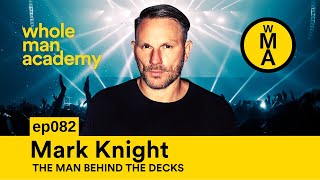
DJ Mark Knight built Toolroom Records from a shed studio after selling his house, turning a construction-worker background into an international career. He runs the label with family, created an academy modeled on football talent pipelines, and now focuses on building income streams that let him tour less and spend more time with his kids.
Whole Man Academy. Because the world needs strong men. Whole Man Academy is changing the game for men around the world. It's for guys who want to live an epic life of fun and adventure. No matter what we believe, deep down, all men want to go on their own hero's journey to becoming resilient, confident, fearless and fulfilled. Listening to be inspired by guys who don't settle for living a life of mediocrity. This is your call to action, action and call to adventure.
Are you ready?
So this is the Whole Man Academy podcast. I don't even know what episode it is. It doesn't really matter. My guest today is Mark Knight. We're going to go through so many things, but he's international DJ producer, award winner, head honcho at Tour and Records. He's a dad, probably most importantly, still a football player. And we're going to talk about DJing, unsurprisingly, entrepreneurship, performance, juggling life, fatherhood and fitness. So, Mark, how are you and where are you, mate?
Good, ant, I'm really well.
Good to. Good to catch up with you. And one thing you did mention, he was a longtime friend with your good self since school. Yes. Yeah, I'm good, man. Really well, I'm in the office as I am Monday to Friday, generally joking that between the studio. So I'm in Maidstone today at Torum HQ and all things are good.
That's what I like to hear. Well, I know you said just as we start recording, you've done your shoulder in, so what did you do? Because that's not ideal for a dj.
No, I don't know what I've done either.
It's one of those ones you can't. I couldn't pin it on a specific moment. I was just training and probably lifting a bit too much. Just twinge the muscles. That's quite crowded and see the physio this morning get a little bit of a movement back in it.
But I'm all good, mate.
Yes, it's the left arm, so I can still do a lot of pointing. I'm good. DJing arms is all good, but we've got no problems.
That's the important bit. Well, let me take you back and you and I, you know my best mate, Tom Van der Peer, as you well know as well. This is a very quick story which is I remember and I want to talk about how it all started for you, but I don't know what year it was that we were out in Maidstone on a night out and I think you were DJing at the source of sound in Tunbridge.
Right. God, that was going back, if I recall.
You said to me and Tom, I've got. No one else wants to come over with me. You know, I'll get you guys in, but will you come over with me whilst I'm DJing? And the next time I saw you properly DJing was in Pasha in Ibiza in front of I don't know how many thousands of people with, you know, with that entire club bouncing. And that always shows me the brilliant transition of getting started in something and then, you know, you see, you know, Pasha in Ibiza is one of the, I'd say, pinnacles of. Of maybe DJing. Maybe we'll talk about that. But so for you, how did it all start going from being a normal guy from Maidstone to then getting on that DJ path?
I'm just still a normal guy from Maidstone.
That's.
That bit has never changed. I don't know, I just had a bit of an epiphany, really, at work. I was working the building industry and I remember working on one job and I remember it being so cold, I.
Couldn'T pick up my trowel.
And I was like, I actually want to do something else. As much as I love the building industry and I love all the crack and I love my friends, I work together, I love it. But I feel I could be and do something bigger and better, and that's no slight to the construction industry or whatever. I just felt that I could do something. I mean, I always wanted to be a professional footballer, much like yourself. I'm still hoping that was always the dream. But that never happened, of course. And always loved music. Always obsessed with music. Buying music, even before DJing was a thing, you know, I was kind of.
One of the old ones out of.
School who was mad about buying records and talking about records and playing records. And this was before DJing was even a notion.
It wasn't.
They weren't. It wasn't recognized in the same context as it is today. And I got into going out and music, and I was like, well, I'm buying music. And hang on, this DJing thing, I could do this. And I practiced and practiced. I thought, wow, this. All the things are kind of. All the stars are aligning here. Music I love buying, I love playing it to people and showing my taste in music. And this all kind of happened about the same time as, you know, having this epiphany at work about wanting to do something else.
I thought, well, go for it.
No one's Going to stop you. No one's going to stop you. And I'm very driven. If I'm going to do something, I want to do it to the absolute best of my ability. And I did. And I just went for it. Huge amounts of sacrifice. Missed everyone's birthday for 20 years to.
The point where people did bother inviting me to things and I would turn up.
But I was so focused on taking this notion, this idea, as far as it could possibly go, and nothing or no one was going to stop me. And the rest is history, really.
So when did you.
But here's always the interesting thing when guys have gone out on their own and I'm, you know, I've talked to different guys from different sectors around the world who, who are living their own version of, I call it an epic life. But at what point did you realize, okay, DJing is a goer for me to be a career as opposed to, you know, I'm sure we all know enough guys who kind of do a bit of DJing at weekends for extra money.
Yeah, you have to take that plunge. You take an assess, risk, situate, you know, you take an overview where you are financially. I think that's the dictator of what you can and can't do. Can you afford to live life, you know, by the medium of music? And I was balancing the both. I had this job and I had a boss who was like, so understanding.
I was doing.
We were building cable networks and I would spend most of the day in the studio and whenever he called, I'd run outside into the street as if I was on the phone. He knew I was in the studio.
I got away with murder for about two years.
So productions were going well. I was DJing, DJing at the weekend locally. But I got to this point, I thought, well, if I got rid of this, if I got rid of the day job and went full plunge into my dream, how is it going to look like financially? Is it sustainable? Is it doable? And the reality was it was, but it was a big risk. And about that time as well, my wife wanted to go back to college, university. She'd never had the opportunity to really fulfill her dreams in education. So she wanted to go back to uni. And we said, well, look, let's sell the house. Because we had a house, we lived in Annerley in South London, and we were on top third property at that stage, so it wasn't like we were kids. And we'd done well through the sale of various houses. So we had some money in the house and we said, well look, let's sell the house, you go back to your mum's, I'll go back to my mum's and let's split whatever we've got and use it to fulfill what we want to do. And she used the money, went to university and did really well through that. And I used the money to build a studio outside my parents house which was in a shed which we kept the tools in. We used to call it the tool room. And do you mind if I commandeer the shed, this brick shed, and build a studio in it? And he's like, yeah, that's fine. So moved all the tools and whatnot out, built a studio and hence the name Talk Room Records. Because that's where it comes from, that's where it emanates, it has a soul, it has a meaning. And that's what I did. I used every penny that I had I'd amassed with the sale of housing and money that I'd accrued in life thus far and invested it into this dream, into this vision of what I wanted to be and what I wanted to do. And I sat down with my dad at the time and my brother who was a car salesman at the time and said, look, he just got laid off because he got caught drink driving. My dad had retired, we all sat around, I just left this job and I was like, right, I'm going for it now. And we sat down, we said look, why don't we do something? You know, that's the ultimate family aspiration in my eyes. That's the ultimate family goal, is to work together on a passion project. And we sat down and said, look, okay, I want to start a label because I've been releasing music on other people's labels with not great success, you know, quite underwhelmed with their performance, you know, they couldn't run a bar, let alone a record label. I thought I could do this better myself, I know I could do this better myself. And if I'm controlling my destiny, you know, that puts me on the front foot. If I could control all aspects of what I do, then that puts me in good stead because I've only got two answers to myself then. So with the money that from the sale of the house and my dad being retired, my brother not being in work, I said look, come let's start a record label, let's call it Torham Records because it means something to us. And we sat and wrote a business plan, a five year plan, you know, we didn't have delusions of grandeur. It was a very measured approach and my dad was really good at bringing that side of it because he'd been in business for 5,55 years and he was actually in the music industry when he was young. He was a drummer, he was in a band, so he knew a bit about music, music industry and he worked for booking agents. So he'd been there, he'd lived it a little bit. Yeah, a bit out of date, but he, you know, he lived that world. And we sat down and we sketched out a plan of what we wanted to be. Who are our rivals? Who did we aspire to be? Like Defective and Subliminal and Strictly Rhythm, all these labels at the time, that's where we want to be. Let's. Let's go for it. And that's the choice we made.
And thank God we did.
I think that's such a cool thing if you can have that kind of family connection. And for me, I've spoke to a couple of guys who have done that with limited success or some with failure because sometimes it just doesn't quite work out. But I was going to say, actually, I guess for you having your. Because I was going to ask you, when you start a business, and we've got plenty of guys who listen to this who either want to start a business or, or have started one, the hard thing about business is you have to become a man of all abilities because it's not just you being a DJ or someone doing their actual job. You have to be able to cover all the things. So would you say that your dad having that kind of extra business now really helped you?
Well, that was always our usp. That's where we were strong. Because I wasn't trying to be jack of all trades. I said, Stuart ran the business side of it, I run the creative, you know, so we, we didn't try and wear each other's hats. He didn't want to sit in a studio and make a record till three in the morning.
I didn't want to do a double.
Taxation form for Portugal. So we both knew what our skill sets were and what we, our responsibilities were in this vision and the growth of the business. And my dad sat across the top of that and would help in terms of direction and cash flow and setting up basic business principles that we've always adhered to and to be 20 years, which we are next year in the music industry as record label is quite unique because it's pretty cowboy in our industry, but we always based it on good business principles. And that's why people constantly come back to us, because we run it like a business. You know, we have a good balance of all of those facets. You know, we have people doing the right people doing the right jobs. You know, always, always kind of a align it to a football team. You know, it's no good having a football team with 11 center forwards. Yeah, you need to get the right players on the pitch, playing in the right positions. And if you understand that from the beginning and you bring on people that support all of those positions, you know, you get a good right back, you get a good centre back, you get all of these people, then you can build a team. And if you have a vision and you're passionate about that vision, then people will follow you. Basically, if they believe in you, they will follow you. You know, if you're driven enough and you're passionate enough about what you do, and it's built on good financial acumen, then you. For me, that's the trick, because trying to do all of those things is impossible. It's about, you know, individually, you can be good, you can be very, very, very good. As a team, you can be unstoppable. And that's the chance. That's the trick is motivating and building a team under your vision and your.
Your guidance.
And that's what we always did. If I had to try and do all of those things, I wouldn't be where I am today now, because I can't do all those things to their full extent, the right way in one day. It's impossible. So my advice to you was, you know, whatever walk of life you are in, or whatever the business vision you have, build a team around you, invest in people, because it will pay dividends, and it will give you the chance.
To do the thing that you're best at.
And that's what we did. And that's why we, you know, we.
Had the success we've had that.
I mean, it's always interesting neither the more, you know, we're up to, what, past 80 episodes of podcasts now? And there's always starting to see common themes. I would say there's a book in here somewhere, but common themes between guys saying we will come on to kind of fitness and health and stuff, but, you know, surrounding yourself with those right people that can do the right jobs. And I've seen even myself with the whole man academy, you know, I'm editing podcasts, I'm doing this. We've got an online course, we've got all this stuff And I was trying to learn, I want to kind of know roughly how everything works. But now I've learned to outsource and say, you know, we've got a guy in India who will just know what I want and takes care of some of the stuff, instead of me sitting there going, fucking hell, how do I move this picture around to wherever and as you say, stick with the good stuff. Well, here's a big question for you, and I always think most people are never going to experience this, but what's it like when you are DJing in one of the, Call it super clubs or stadiums up in front of thousands of people? Because I'm wondering with. I always think, with the pressure to perform, is that. Do you ever have it where you're kind of thinking, you know, it's your job to get everybody bouncing, so what's that like?
Well, my granddad was a pain and he said to me, mark, he said, life is 80% preparation and 20% execution. Now, if you're well prepped enough for any situation, you walk into it and you'll breeze through it because you know what to expect. You're prepared, you're mentally in the right place to walk and go, know what I'm doing, good at, what I'm doing.
And I'm just going to smash this.
And that's the approach I've always taken of always taking the time out to really know what I want to achieve in that space when I go into a club. You know, the challenge with DJing is about reading the situation in the room, the atmosphere in the room, and make it, and adjusting it accordingly to where you want it to be.
Yeah.
And a lot of that comes through experience. And I've spent years, like you said, playing in club. I remember playing in Gables on a Tuesday night was this pub in Maidstone and you were playing to five people.
Now, if you put one wrong record on, they're just going to go because it's like, well, I'm going to go now, because you put the wrong record on.
And you constantly have to think about that and adjust every single record you could play. When I played to 50,000 people, they're not going anywhere because they bought a ticket, it was really expensive, and 50,000 people, they're not going to leave. But there is a challenge within it. Make 50,000 the energy required to make 50,000 people move, as opposed to 5. And that comes through experience. I've had lots of experience and I practice a lot. I do a lot of preparation before I go into any Situation, like, my granddad would do it. He was a decorator. You know, the preparation before putting up wallpaper was key because if you got the walls right, the wallpaper would just fly up, you know, if he didn't, it'd be a nightmare. And that really stuck. Stuck with me forever. And I was like, you're right, Granddad. That's how you go into things. If you're prepared for things and nerves and all that, they don't come into it because you know what you're doing, you know what you're doing, you're confident, you practiced, you just go in and do your thing. So I never become overwhelmed by it or flustered or phased by it because I had the confidence in my own ability. I've done the hours, I've done the practice, I've done the groundwork, you know, wasn't an overnight success with me. I spent many years playing at those crappy gigs where you were playing to five people. But that taught me how to dj.
That taught me, if I can keep.
These five people to stay, then keep 50,000 people say, piece of piss.
I asked that also, because I remember watching one of the documentaries on Avicii and how he basically didn't. He did from. From what I took from it, you know, he. He wanted to just really be in the studio creating and, like, the thousands of people and that kind of the attention, the pressure, and I always think that's one of the things, you know, even like a footballer, it's different to playing on a Sunday morning in front of 500 people, to taking a penalty at Wembley in front of 70,000.
Yeah, but look how many penalties they take beforehand. So they just walk up to go.
Know what I'm doing?
Taking a thousand penalties in training. I'm just going to do what I do in training. And the situation and the ambience affect you because you're focused on what you're going to do and you're just going to smash it in the bottom, bottom left to the goal.
And.
And that's it. And that, you know, and it's having all doing all that preparation that allows you when you get into the moment, big deal. It's another day in the office.
So that's a. That's a good point. Again, for people always trying to, you know, put across these things, it is about preparation. And I wondered also if you. I mean, out of all the places you've DJed in the world, I'm not going to say, like, what's your favorite one particularly? But do you have one or two that you're like, Joe, if you're going back there, like Ibiza, that you're like, these are the ones I feel like I'm playing at home.
Well, I have this very weird arrangement, if that's the right word, with Bulgaria or relationship probably is a better word. I've been playing there for about the last 15 years and the first gig I ever went to play there, my flight was delayed to. I got there at 4 o' clock in the morning and everyone waited for me to turn up. Wow, this is great. Four o'. Clock. They haven't all gone home thinking, oh, he's not going to turn up. So and we played and I played till about 10 o' clock in the morning and it was brilliant. And it sowed this seed of like. Well, he stuck with it. He came over and still did it, smashed it. We finished at 10 o' clock in the morning and I worked with the same promoter and it grew and it grew and it grew and it got to the point it was so ridiculous. I think we did a gig in this football stadium once, like 30,000 people. And unfortunately, really sadly, we did an after party and someone died crushed trying to get into the after party. So the government said to me, that's it. Now you've got to scale back the events. You can't do anything more than 8,000 people and you can only come once a year. So I have this real affinity and it's terrible that happened to this guy.
But with Bulgaria, because they, I don't.
Know, we just grew this relationship from nothing to this point of absolute ridiculousness.
So that's a very great album. I love playing there.
I love playing in the States. The States is a great place to play. You know, American people are generally very enthusiastic, full and full of party favors and away they go. And as an entertainer, you know, that's you buzz off the energy and atmosphere room. And people are very, very passionate about there and they're very open minded musically, which is really, really, really refreshing. So I suppose if I had to pull two places out of the world that I love playing, that's not in the uk, I'd say Bulgaria and the States. Yeah.
No. Well, I know I'm heading down all big. Well, in December, me and Tom are coming down to the Source by Maidstone, which is another epic, epic venue.
Playing your own backyard, that should be a lot of fun.
I was gonna say that's for me when I. It's so funny because I knew when I'd be talking to You. Then I happened to see on your Instagram stories that it was in December playing down there. So I said to Tom, come on. Like, we haven't. And that's one of the things I miss as you get older, is you have less opportunities, especially now we live in the country, to go to big nights out. So, you know, it's one of those things I've been lucky enough to experience, you know, going to Ushuaia, going to Pasha in Ibiza. One of the big clubs for me I went to was underneath the Fontainebleau in Miami. Like Liv, we saw Cedric Gervais play there, and they had. It was like a circus, you know, when it was just an absolute, like, ridiculous night. And it's hard to replicate those kind of things. And I was going to ask you on that, what's it like going from DJing in a live crowd to then working on the radio when you are just, you know, you're on your own or, you know, with a couple people in studio?
They're just two completely different things. I mean, yeah, the live thing is one thing, and it's the highs and lows and that and managing all of that kind of psychologically.
And the radio is another thing.
You know, it is a different challenge when you're basically talking to yourself. It's a bit weird. It's very weird. It is very weird. And even when I listen to radio shows, it's a real art to it. But again, it's preparation for me. If I prepare, I've got to go and do two radio shows straight after this. But prep I put into it, when I come to do it, there's no sweat. So for me, it's all about preparation. You know, it's about if, you know, if someone puts 15 hours in, I'll put 16 hours in, you know, and if I can't beat you with talent, I'll just beat you with pure energy. And work ethic. And work ethic, you know, and that's the. That's the kind of. That's the approach I've adopted since. Since I chose to go into this. And it's worked well for me.
I know there's that saying where, you know, people that have reached a high level of their career and people say, oh, you know, he's really lucky. And, you know, I remember that saying, you know, the harder I work, the luckier I seem to get. And I think that's good. Good one.
Yeah. You just. It's just graft. There's no luck. You make your own luck. You make your own opportunities. No one will do it for you. It won't fall out of the sky. That's bullshit. Yep. If you want it and you give off enough energy that you want, you'll make it happen. Because only you will stop you from making it happen. No one's gonna say, right, sorry about that, Mark. It can't be. Superstar dj, that's not. Sorry about that. That doesn't happen. It doesn't happen. What happens is you like, well, can I bother? Can I be bothered to put in enough commitment to get to that point? Can I sacrifice all the things in life I need to sacrifice to get to that point? Yeah. No, I don't want to do that. And thus it doesn't happen.
Yeah, doesn't happen. And that's a big thing. I see, again, from talking to different guys, you know, guys in the Special Forces, is that you all got to start somewhere. And on that. Funny, I was talking to someone on earlier this week saying that we had you on the podcast, and I was like, you know, ask a couple of people what kind of questions would they like to ask? And one of them was, if you've decided now you're going to do a new album, where does your creativity come from? Is it kind of like, right, Tuesday, nine o', clock, I'm going to sit down and write a new album, or is it coming over? The tracks are coming to you over. When you're flying or you're driving or you're doing whatever.
Yeah, it's all of that.
You're constantly soaking up inspiration all the time. When they hear things on the radio. You're at a gig, you hear something. It's all of these things that trigger you, that gets stored in the back of your brain. I write all this stuff down. Shazam stuff. I have, you know, lists of ideas and make notes all the time. If I hear something, oh, that would work. The chords on that are really good, the strings in that are really good. And I write these things down again so that when I come to it, I've got this whole palette of inspiration that I've kind of documented. And then I thought, okay, right, let's do that, that, that, that and that.
But it's.
Yeah, inspiration comes all the time. And, you know, whether you're in a lift in a hotel, hotel's great. I mean, you have these soundtracks that people and hotel groups put a lot of time and money into curating the sound of a hotel. And some of them could be really inspiring, you know, like, hell, that's a Great track. I've never heard that. I said, I sitting the whole day by the pool, just shazam things. Oh, that's good. Or in Litz or in shops, you know, you don't ever switch off to soaking in your sponge of inspiration all the time.
I always find that interesting with. Because you can't kind of. You can't decide to be creative necessarily. I think for some people, you know, it's. It's. It's either in you or it's not. And I remember many, many years ago, I was in the studio with the. The band called Let Loose. If you remember, they. They were number two with. What was it crazy for you for like 19 weeks or something ridiculous. And I remember talking to them in the studio. I was only like 16, 17, but for them it was the same thing of like, you know, you're taking inspiration from all these little things around you. And for now, because you've got the. And if people don't know, you've got the Torah kind of academy as well. So I wondered your transition from. Was that always your vision to be able to kind of, you know, take young DJ or. It doesn't have to be young, but people that want to DJ and kind of help them have a step up as well. I'd really like teaching DJ and releasing their records for them.
I mean, it was always based around the football model. Again, everything usually relates back to football. Clubs have been doing this for years and years and years. It's a great way of finding new talent. And you know, on the way you're selling people your knowledge. I mean, a lot of football academies now are paid for. Kids pay to go there, they're paid to coach. And if they're good enough, they get taken on. It's the same principle. Teach people the sound of touring. And that comes over years afforded the opportunity to actually do that comes from years and years of consistency. The biggest accolade you can have as a brand, as a music brand is for someone to say, I've written a record. It sounds very tall. In the same way as you might hear a record on the radio and go, oh, that sounds very Motown. Now that sounds is associated with that label. And that comes from years and years of consistency and the quality threshold. They do not drop at any time and they build sound. But you say, oh, that sounds very Motown. People write records and say, I've written. It sounds very tall. Now once you get to that point, that then affords you the opportunity to then sell people the process of making that sound. Because It's a very defined thing. It's a thing. It's not the generalisms of making music. I mean, you could go online now and there's so many YouTube videos, you can learn anything. But can you learn specifics of how to make a tour record? Yeah. Well, no. You have to come to us and if you like the sound and you want to make the sound, you're obviously interested in our brand and what we do, and therefore you're on our radar. And if you're great and there's so much good talent we've found through the academy, we then could go on to manage them as artists and then release their music. So it's based on the same principles of football club. If you're a good footballer and you like the style of, you know, you want to play that Man City play, they've got a very specific style of play. You like that, Then you go to their academy and if you're good, they'll pick, oh, you're very good, you can come and play for us or, yeah, you're very good. But we're going to sell you and sell you onto there and we'll take 20%, thank you very much. So it's a business and it's a great pool of finding talent. So it's multifaceted in that respect and it's a great arm of what we do. It's a pool of all new talent that's coming up and it's an opportunity to then, if we find, return to monetize them. Because at the end of the day, we're running a business and we found duax, Maxine and Wheats that have come through the academy, who now we manage from our management company and we take 20% of what they do in all walks of music. But we would have only discovered them, we wouldn't have found them if it wasn't for the academy. And not only that, it's a great way of giving people the inside tack of how to make the sound that we spent years developing. Talk to people by bona fide artists within the genre. It's not taught to you by another guy who's interested in music and doing a little bit of music being taught by people who have been at the very top of their game as DJ producer Dean Ramirez and Ben, remember, and Ben Keane and these people. BK was one of the biggest hard dance DJ slash producers in the world. Dean Ramirez, same thing. One of the biggest DJs producers in the world who are now teaching you the inside info on how to make the sound room. So it's a big part of what we do and it's growing at an enormous rate of. In fact, we've literally just done a deal with Brighton University. We're the first music brand to actually have a degree. I'm getting this right, a degree course that you can study at Brighton University and how to make the Salutorial. We're just about to scale that out to all the universities in the country.
So isn't that cool?
It's pretty cool. I never thought we'd be doing that, but, yeah, it's the thing that I'm massively passionate about, and that is consistency of quality threshold, making sure that every marker we leave is the highest it can possibly be, you know, because that's our legacy. That's what we've done. That's what we're going to leave in youth culture. All of these records, these markers, and.
If they're not as good as they.
Can be, let's not release them. But what we've done, you know, having done that for 16, 17 years before we started the academy, then, like, okay, well, we can. We can monetize this thing that we built, this. This kind of. This sound, and hence the academy.
Well, I wondered also from that, because I think a great business model. I don't mean. It means that you don't have to do any work and you still get paid, but it's not a bad situation to be in. But, you know, for yourself, DJing, you know, around the world takes a lot of time and you've got family and, you know, it's late nights and none of us are getting any younger. So I wanted. For you, it's also that thing of. Well, you just said the word legacy. And two, two or three podcasts ago, we spoke to a guy who helps guys kind of transform their body and mind out in Dubai, and he spoke about legacy. And it is that thing of. For you, I guess, you know, if you're just a dj, then it's up to you to keep, you know, you're trading time for money, the weekends, in theory, traveling somewhere and staying overnight and having late nights. And now you're creating something where you can say, do you know, if I don't want to DJ for however long, then I'm, you know, I'm still feeding the family.
Yeah, well, that's it. I mean, you know, you have to be realistic of exactly that. Your career, I mean, it's in music. No, you know, no one lasts. No one's at the top of their Game forever and ever. You know, it's like Oasis aren't still number one every week. Every time they put a record out. It's a super, super competitive space. And the thing that always worried me getting into this was the thing from a really early age I recognized was that if I get into it, how do I get out of it? Because the money and the fame and all the stuff that comes with it, you know, that's quite a lot to drop. Yeah, the same bit I couldn't give a shit about Andre. I don't mean nothing to me. Like we said, I'm just a normal bloke from Mason. That bit will never change. But the financial element of it and the money you can earn, how do you segue out of that in a very tactful way and still have a life and still doing the thing that you want to still be involved in, music? And these are all the companies we built a publishing company and the record label, sensitively, I mean that, you know, I can still keep running that. You talk about businesses that make money where you do sleep, you know, the catalog sits online. Making my money now, now, now, now. People stream downloading it while we're talking, you know, thousands and thousands of streams, millions of streams are within this conversation. And that's building up a catalog and it's building up a portfolio of enough of those businesses that allow you to get to a point in life where you think, well, sort of done now. I've achieved all the things I want to do. I have a different set of priorities in life. I mean, for the last. Crikey, since Rupert was four, I've only DJed two weekends a month. And the plan just pre Covid was to go to one weekend a month. And then Covid then didn't tour for 18 months, which was brilliant. I have to say, I really enjoyed every minute being with him and not having to run away at the weekends at all. But, yeah, I've had to put a little bit in this year, from June all the way through to Christmas, but after that, it's one weekend a month because it suits me. Now where I am in life, I can earn enough money in that one weekend and all the other businesses that I have associated with. It means I have enough salary to live the lifestyle I want. That's, you know, taking years of planning and working three times as hard to build businesses up alongside touring and artistic element of what I do to then get to a point and go, well, I can do less of that. I don't have to Be the other side of the world this weekend. I don't have to be in Japan this week and I don't have to be in LA this weekend. I can be at home at football with roots. I was going to say, you know, I'd have to balance everything because that, that is, that is the key word here is balance. It's getting right, that's true success.
Well, you've. Next on my list of questions was the words juggling and work life balance. Because I know again, going back to DJing, you know, people might see it, oh yeah, I want to be a dj. And you're like, yeah, but you start off as you say, maybe doing, maybe working Thursday night, Friday night, Saturday night, and trying to cram all the traveling as well. So how do you manage to. Or how, especially when you were traveling more, how did you manage to stay, you know, physically well, mentally well, when you were doing a lot of the late nights as well as the traveling.
I think surrounding myself with.
Level headed.
People and having this business, a family business, now there's no room for being frustrated. Superstar Wally don't know if I was in Sao Paulo on Friday night, on Saturday night I'll be in the office at 9am on Monday morning without foul because I'm the boss as well. If I set that tone, then if I can do it and I've been in Sao Paulo on Saturday night, then you can do it, you can be in the office and it sets the right tone. And I've always had that discipline and those people around me to live like that, I mean, look, don't get me wrong, you know, it's. You're fighting with fire, playing with fire. Every weekend I'm in the nightclub industry, you know, and you all know what goes on in nightclubs. It happens. And when you're the point of focus, it's even more accented, it's even more focused and you know, trying to keep a balance of all of that, you know, being partying to a degree, making sure you're fun and you are because people warm to that, they want that, they want you to be, you're the center of attention, you're the party star, you know, and if you're stone cold sober and you're just, you know, you're not a vibey at all, then how do you expect everyone else to be? So it's finding the balance of that, finding the balance of discipline going, okay, I could do a bit of that. But I know to switch off, get the flight back home, get in the office, Monday morning, set the tone again and we go again. And that was all. I mean, I, you know, that was, that was fairly straightforward all the time. I didn't have a family gets even more complicated when you have kids because your focus is, well, oh, that's great, but I don't care. I just care about him. So that becomes another layer of complexity. And obviously I forego a lot of live because to be with Rupert and it is, that's the biggest challenge I have, you know, because essentially the two things do not interact. They're like oil and water. To be a DJ and live that lifestyle and be a dad, they don't mix. You know, it takes a lot of dedication, discipline and structure to make them work because they are the two opposite ends of the spectrum. And that's the biggest challenge. And running a business in between of all that and being an artist is a lot of hats to wear. And it's difficult, I'm not going to lie. It is very difficult, very challenging.
But I don't find any of it of a chore.
I love all of it, so I make all of it work.
That's the important bit. And I was gonna read you something I saw on your Instagram you wrote a while ago, which is now comes the hardest part of my job. Leaving my family, who are my whole world to go on tour. I ain't gonna lie, it rips me apart, leaving this little dude. And probably if I'd have read that five years ago, before I was a dad, I probably wouldn't have understood it. And it wouldn't.
No.
But now we've got our two little ones and the house seem quiet when they're not around for one day, let alone if you were away for, you know, a longer period of time. So I guess for you that's been, you know, having suddenly becoming a dad must have been a life changing experience. More than a guy that lives, you know, in a 9 to 5 job.
I think, you know, it's one of the. And you probably know yourself. Oh, it changes night over life. Change your life overnight. It doesn't because you're a bloke and you're set in your ways and you do things that you, how you do it. Got to change this stuff. And it gradually cross fades into. Hang on, that means way less than this guy. This is what it's all about. So it takes a while. When they're very young, it's all about mum. You know, there's not a great deal you can do initially. I mean, I actually did A gig on the night that Rupert was born. I know. Well, it was a night, it was two weeks late. I was supposed to do Glastonbury and a bunch of stuff, cancel all of that. And then he came two weeks later and I had this one gig and I was like, I've got. It was only in Southend. So he was born Saturday afternoon, spent the afternoon with him, went and did the gig in Southend on Saturday night, come back, went back, picked him up 8 o' clock Monday morning. And it's been like that since day one.
Like I was in Southend on Saturday, funnily enough.
Well, I mean, I think that last time I played there with. But, for example, this weekend, and it's never changed. I'm playing in Finland on Saturday, on Saturday night. So I'll take your football training Saturday morning, spend the day with him, get the last flight to Finland, get there for about 11 o', clock, do the gig, get a 7am flight back, land at 9, bit of football with him on Saturday morning at 10 o' clock kickoff. And it's never changed, you know, it's. It's. You just make it work through sheer effort and go, well, I want to make all of this work. I can do all of these things.
It means I don't get a lot.
Of sleep at the weekends. I don't get any sleep. But.
But isn't it important that you enjoy that? I mean, I can only go back to, you know, I have many stories of when I worked in the city, but often people that didn't do the job I did wouldn't understand that. You might fly out to Amsterdam just for lunch and then you'd fly home again. Or you'd fly out into Paris in the evening. You'd go to a hotel, drop your stuff off, probably sounds familiar to you. Then you go to a restaurant, then to a nightclub till three or four in the morning. You'd get the seven o' clock flight back from Paris or Munich or wherever and you'd go straight to your desk and you'd carry on working.
Yeah, that's the last 20 years. Yeah. Yeah.
And it, I, I found, you know, when I was. It was easier when I was younger and that's why as I started to want to moodwalk out of the city, more and more of that, it was because I wasn't enjoying it, but that, like you said, you end up losing sleep. And did you find your focus change also on trying to live a slightly healthier lifestyle as well, like less drinking when you were DJing?
Yeah, I mean, I've always. I've always been pretty good at measuring that. You know, just getting that in the right. Right amounts that I pick and choose my moments, you know, when I know that I've got. I can have a big night.
Yeah, I'll let my hair down, you.
Know, like, for example, this weekend, I won't drink. Saturday, I might have one or two beers because I need to be back on the plane 7am and we've got to kick off at half 10 on Sunday morning. I want to be in it, and I want to, you know, as much as I'm going to be tired, I'm not going to be hungover, so. Because I want to be in the moment for Rupert, I want to be there. I want to be, because that's my biggest passion. He's his football. You know, he's doing phenomenally well. He actually starts with Crystal palace on Friday. He's been called up to the Academy. So his first game for them Friday. Yeah, that's going to go through the roof. And the track. So DJ will be even less now. It'd be like, we'll be playing Man United on Saturdays, will be up there. And so I want to be in the moment for him. And it is. Yeah, it's a huge amount of energy required to get through all of that and make all those things happen, but it is doable. And, you know, the fact that you're driven by passion and all of it means you get through all of it. It's not a problem with people. So, yeah, just do it. I'm like, well, just do it because I want to do it. Yeah, if you want to do it, I wouldn't do it, but that's such a big thing.
I think, you know, we. We talk about. You can talk about mindset and stuff, but one of. One of the big things for me is like, living with freedom and trying to find your own level of fulfillment. And I see view you're living with freedom because, you know, you. You, if you can create a life where you can do pretty much what you want to do, but then it all comes down to fulfillment. And we know plenty of people that are living and to use a want of a better term, but a quiet life of desperation because they get stuck in a job where they get paid quite well, and then you're like, yeah, but if I leave the job and do what I really want to do, I won't have the same lifestyle. And that, like you said earlier on, is one of those kind of big things for guys And I just wondered for you, going through all these kind of the ups and downs. I know you've got Stuart, your brother and your dad. Have you had anybody else that particularly? Or is it group of mates that you talk to when things. Because nothing ever goes completely right all the time when things don't quite go.
Well, Mainly my wife.
I'm pretty.
I'm quite private about that.
I don't like to be.
Look, I get things wrong and think, you know, as I say, you're playing with fire every weekend, going to nightclub. There's occasions, you know, it pops out at the wrong time. You're like, shit. You know, I've got caught up in something I probably shouldn't have got caught up in. And, you know, But I'm pretty private about that, about, you know, and I'll give myself a little talking to her and go, look, you know what's right. You know what's wrong here. Come on, just get yourself back on track or. My wife. My wife's very good. She knows this. She knows, you know, the journey I've been through with it all. Because there's enormous, enormous mental pressures that come with it. I mean, most people I know who I started with have gone, well, gone out of the CH street. It's too much, because it is. It's insanely hardcore. It's. You know, it's. You've got to really go into this understanding because you are, as I keep using this term, playing with fire all the time. It's. It's incredibly cutthroat. It's incredibly competitive because there's enormous, enormous mental pressures that come with it. I mean, most people I know who I started with have gone, well, gone out of sy. Too much, because it is. It's insanely hardcore. It's. You know, it's. You've got to really go into this understanding because you are, as I keep using this term, playing with fire all the time. It's. It's incredibly cutthroat. It's incredibly competitive. And the whole thing is kind of founded on all the wrong principles, really. You know, even just the way we tour as DJs. You know, if you. If you can imagine, like, on the logistics side of it, it's just a joke. And we don't tour in cycles, like bands. Bands tour in cycles. You know, imagine sitting down with Oasis and say to them, right, lads, going on tour 20 years straight, no weekends off, and there's no logistical plan to it. We'll be playing all over the world, ad hoc. Who's In. No one would sign up to that. No one would sign up to that. But DJs like, right, if I can physically, can I get between Bogota and Lithuania? Yes, of course I can. Well, I'll do it. Right, do. All right, let's do that. And you do that every single week. Yeah. So the whole thing is, you know, is founded on really ridiculous principles. And the more you play, the more in demand you are, the less pay. You know, it's all after that base. And then you throw loads and loads of drugs in there and drink and whatnot and you wonder why so many could go wrong with mental problems. You know, it's ridiculous. We constantly in our industry having these things, you know, these talks and seminars about mental health. The whole thing's founded on ridiculous fucking principles. It won't work, it will fail. I mean, I've been very lucky, as I said. I've been surrounded by friends and family and I am pretty strong willed when it comes to stuff like that. And I know, I know to pick and choose my battles at the right time and I'm a bit of a machine, so I just kind of get through it. But yeah, it's a very interesting industry and something if you're thinking about going into, you know, you should be going to your eyes wide open.
Yeah, I guess that comes back to the. The academy part is again having, you know, it's not just kind of someone steering the right direction, but having a. Pretty much a whole company behind you.
Yeah.
And actually that led me on to one of my other questions was what's it like when you have a. And I mean this, this is totally my question, but you know, when you're like have a residency in somewhere like let's say in Ibiza for the season, would you have then, would that mean that you'd signed to play like every Friday night for, you know, whatever, 10 weeks or something like that. And if so for you, would you then stay there the whole time or would you fly back and forwards and.
Oh God, yeah, coming. You know, as I say, because I run a business, it's day. There's no staying anywhere. I mean, it's weird. I've been to Croatia, I shit you not, 30 times, and I've never stayed more than a day.
Right, yeah.
That goes to show you, you know, that that's what it's like. As beautiful as that place is, I'm on to the next or I'm back in the. I need to be back in the office. So I've only. I've never Lived the kind of DJ like I'm going to stay and hang out for a week and I've never done that. But now it's paying dividend or paid like for example, it really paid dividends in lockdown where I was like, well, okay, I'll still have a job Monday to Friday and I still have a very good salary where everyone else, like I need to DJ now because there's no money and people tend to, you know, you generally live to your means, don't you? And so I, you know, having spent all that time running two businesses, really paid dividends and paying dividends now because I don't have to put so much emphasis on life, you know, I'm getting to the point. Next year, well, I will just DJ one weekend a month because I love it, it's fun and it gets me out of the house for one week. It's a good hobby, the old woman. But no, it's done more on that basis than is a need to talk all the time. So I've never, never hung out or never done any of that. I mean, sometimes I wish I had. I wish I avowed of those kind of opportunities. I'm going to take you there to see this and do this. But that all those things will come for me in life when I'm retired at 55 and not go do all of that at my own pace, not knowing that I've got to go and get a fucking flight, play somewhere. That's all banked me. I've been fortunate enough to see all these amazing places. I've been everywhere in the world 50 times and built up a little picture and know the places I want to go back to and the ones I'm not too bothered going Back to.
Not DJ'd in the Cotswolds yet, but.
Not yet working up to, working towards that.
Well, hopefully you're gonna, you're gonna book me soon.
Yeah, the, the, the Redline pub just next door to us. They've got a little, couple of speakers and stuff. But I wanted to ask you. I know I've got two questions left because I'm mindful of your time, but I'm always interested with guys in different sectors about, about money. And I just wanted to. For you because let's say you're, you know, rewind you back however many years to the point where you're starting to play at the super clubs and, and they say to you, do you. Do they come to you and they say to you, we'll pay you, let's just Call it like ten grand for the night. And do you go back and go, no, no, I want 20. And you barter or would they have like a set structure?
No, it's that. Yeah, I mean, yeah, it's exactly that. They'll offer you X amount to play and then your agent and just, you know, beats them up. But I've never, I've never been one to be overly aggressive with that because I find that, you know, long term relationships pay dividends. You know, I've always, I've always had this kind of slow and steady trajectory. My whole career it's never been, you know. You talked about Avicii earlier. I actually played with him the first time he ever did a gig. We did this big event in Holland and he'd never played before. He made a few records. He was, he was a producer, he wasn't a DJ. And then someone will give you 100 grand to come and play and also. And you're a dj. He had no idea what he was doing. I mean, yes, he could mix records together but I remember him starting and this massive big intro and then made a big deal and he just started the record for from bar one, just like 30 seconds of beats and all this kind of atmosphere that been built up beforehand. Right. Because he didn't know, you know, if you're going to start that many, you need to start the record here because you'll follow the energy you'll maintain. So he had this kind of trajectory of his career like that and he couldn't deal with it because he'd gone from making records in his bedroom to being a global megastar. I've never got to the size of it. I'd never want to, you know, I never want to make things as commercial and as obvious to get to that position because I prefer integrity to fame.
But that comes at a price.
But I've always had this kind of slow and steady build in my career and my fees gone with that. So I've never been overly aggressive on that because I felt, well, that we've all got to make money. There's no point in me taking all the money out of this gig. So you can't do another one because that's short sighted. My diary is generally you can cookie cutter from one year to the next, play for the same people year in, year out. Because we come friends. I like playing there. You base your fee realistically, I mean, it's still ridiculous money putting records on. You know, you have to kind of remind yourself of that and give yourself a Levelhead is, you know, when you get caught up in these things, like, hang on, I'm just putting records on, it's not that big a deal. I'm not saving people's lives here. I'm not doing open heart surgery, I'm just playing MP3s. So you have to remind yourself a bit about that. And I think that for me has paid dividends because people come back and book me year in, year out.
So that's such an interesting point though, because I don't know if I was listening to Mark Devlin, who's a dj, who was talking about. He's done a lot of kind of work on the history of DJs and etc etc, and he was saying that of course DJ ends up a bit of a godlike figure because let's face it, you might be, you know, you're standing on the altar, as it were, with 50,000 people clapping when you clap and doing whatever. And that must be a strange feeling.
It is, but I don't, it doesn't. It's not a big deal to me. It's work, you know, I don't, I'm not caught up in that at all. You know, I'd rather be playing football with my mates tonight than. That means more to me. Like if I scored tonight, it would mean more to me because I don't score that often. And as you well know.
Yeah, we were never goal scorers, were. We were, we were solid midfielders and defenders.
Exactly. Someone's got a greater player. So that means more to me than all of that. I've never got caught up in any of that. It's, you know, it's a byproduct. I still find it weird, you know, I, I used to go out back in the day where DJ would be in the corner. You didn't know where the DJ was. I said, why the are you looking at me? Look, there's loads of amazing women in here. I was here, I'd be looking at them, not at some middle aged dude stood up there dancing about, you know, so I still don't get that thing, you know, but people do. And that's what it's become. But it does, it's not a big deal to me.
No, it's always, again, this is why it's good when, I mean, when we spoke to David Gandhi, I had messages afterwards where people said, well, actually when he spoke at one of our events at Gibson Hawks, and yet people kind of say, yes, he's, you know, he's got a very high profile and he's million followers and he's front covers and stuff, but he's just underneath that all a normal guy who still goes shopping and, you know, does, does the normal.
Why would you be. You know, and that's, that's the trick that, that's. Once you lose sight of that, then I think it starts to go wrong. You know, once you lose sight, it's just your job, you know, there's people in life that are far more worthy of that who get no recognition. Doctors and nurses. You should be clapping them fuckers, not me. Putting recognition. Don't worry about that.
Well, last question about football is. And again, you know, we, we knew each other through school, but then we played for the same football team and somewhere I've got, you know, a picture of me, you and Mark Hatcher and Smithy and, and all the lads are nobby and people like that, I think playing, playing at. Up in somewhere random where we kind of obviously put on a brilliant display. But has that been one of the things you've maintained, managing to play football throughout your kind of DJing career as well?
Well, for about 20, about 18 years I've stopped. Stopped playing. And then where we live now, which is lurst. My son started playing when he was four and all the dads become really good friends and we just started playing on a. On a Monday night, we just started playing friendly. We started playing together. I've got goals on South Circular and I got back into it. Oh my God, why did I stop playing football? I love it. I mean, it's, you know, it means more to me than anything. I mean, I'm obsessed with it now. I would literally play every night and then I caught up with some mates around in Maidstone that I used to play against. She used to play for the rows and all the, all the. And I started playing with Robbie Hayward. Do you remember? Yes. Yeah. We said, right, let's start a touring team. So we started a touring team and we've got some really good players in actually, and we play in the Kent Bets League, right. And we've had great success. I think we only ever lost about four times in six years. And now, I mean, I'm like, I'm obsessed with it. I mean, like, why did I ever stop. Stop playing football? Because, I mean, I had to, I had to stop playing football to get to the point, you know, I wanted to. I could be playing a hunting on Saturday afternoon because I'd be in Paraguay.
That's a good excuse.
It was impossible. But you know, with the with the growth of midweek football, five aside and six aside, and I'm like, my God, why did I stop? And why did I. But I had to be that focused and the timing was right and I got back into it and, you know, it's everything now between Rupert playing and myself. I think every night in our house, someone is playing football. Rupert plays five times a week, I play three times a week. So it's brilliant. I mean, it's, you know, I think. And what you get from that, you know, being around the guys and team sport and the camaraderie, it's gold. You know, it's. I can't. You can't undervalue what that teaches you in life. Team sport. It's. It's what? It's. Everything I know, everything I know and everything I'm based on is team sport, football. And you let that go. Well, why do I let that go? That's. That is everything to me. You know, every time I do hold a meeting here in the boardroom, all the analogies are based around football. So, yeah, it's a huge part of my life and it gives me. Yeah, gives me a real mental clarity and focus. Things outside of work. I love it, Absolutely love it to bits.
That's a good reminder. Also, I would say, for. It doesn't matter where a guy is listening to the podcast. And again, we always say we kind of had guys from about 40 different countries listening, so they could have all different kind of, you know, been all different circumstances. But I found that as well. When I moved up here, I'd stopped playing football. I didn't know anybody else around the area and. And I missed the pissing around and talking bollocks with your mates. And not just the physical side of it, but the competition as well.
It can't undervalue what that. What that gives you in life, you know, that just the buzz of winning or scoring or playing well with the lads and all, you can't get that through anything else in life. And it's having a compliment of all of those things, because that reboots. I mean, even if I have a really big weekend away, I play Monday night, it's like, right, reboots me. Because you can sit there in your own self, picking on, fucking tired of hungover and you're feeling a bit crap. Go and play Monday night Sweat it out, bash it out, reboot the endorphins Tuesday morning, it's all right let's have it go again.
So, yeah, it pays a big part.
In my life and, yeah, and I'll play until I literally can't walk anymore. Yeah.
I always say to people, I could have played football, you know, even when I lived down in Maidstone and you know, I had a sister, so she gave absolutely no fucking interest in football at all. But I would have like 10 footballs in the garden and the goal and I'd spend hours out there. And you're like, now if someone said, oh, we're doing a 24 hour footballathon, I'd be like, right, I'll get my boots. Where are we? Where are we going?
It's brilliant. I mean, yeah, I absolutely love it, love it to pitch. And I kind of gutted I stopped playing for so long, but in some ways it kind of saved my joints a little bit. I can still keep playing. I haven't had an extra 15, 18 years worth of wear on my knees, so paying dividends now.
And I nearly said you don't have to wear a strap on, but I.
Meant strapped up, so it's a whole different thing.
That's a different podcast. On that bombshell, I'm going to say, I know you've got a lot to get on with and a dodgy shoulder so you can go and stretch it out a bit. Just to say, firstly, I will hopefully see you in, in a couple of weeks time down in Maidstone. Secondly, thanks for creating some epic tracks because I've listened to them in the gym when you're on holiday. You know, I've been to Brixton Academy to see you play. I've been to Passion Ibiza, so I, I've had some big nights out from it, basically.
Well, look, man, well done to you. What you do with the, with the whole Man Academy. That's really cool, mate. Congrats. And I'll see you for a beer in a couple of weeks time.
Sounds like a plan. All right, Mark, I'll catch you soon.
Good, mate.
Thanks for listening. Remember to sign up to our game Changing weekly E Letter that's read by men around the world. Sign up@homeacademy.com forward/movement. Until next time.










