EP085 - PRESSURE AND PRO GOLF - LOUIS HARRINGTON | WHOLE MAN ACADEMY
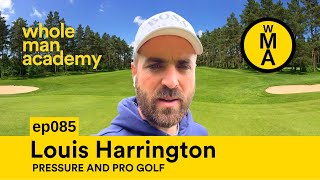
This is a YouTube video titled "EP085 - PRESSURE AND PRO GOLF - LOUIS HARRINGTON | WHOLE MAN ACADEMY" featuring an English-language podcast episode from November 25, 2021. The episode is hosted by Anthony Astbury and features Lewis Harrington, a professional golfer and coach. The discussion covers Lewis's journey in professional golf, the pressures and challenges he faced including addiction and alcoholism, his path to sobriety, and the development of his Clear Cut program aimed at helping others. The conversation also touches on mental health, coping mechanisms, and personal growth within the context of sports and life challenges.
Whole Man Academy because the world needs strong men. Whole Man Academy is changing the game for men around the world. It's for guys who want to live an epic life of fun and adventure. No matter what we believe, deep down, all men want to go on their own hero's journey to becoming resilient, confident, fearless and fulfilled. Listening to be inspired by guys who don't settle for living a life of mediocrity. This is your call to action action and call to adventure.
Are you ready? This is the Whole Man Academy podcast, episode 85. My guest today, and I've checked, his name is Lewis Harrington. Some people might call him Louis, but I'm going for Lewis. Pro golfer, pro coach. He's the man that's behind the Clear Cut Program which we're going to get into. We're going to talk unsurprisingly about the world of professional golf. Pressure, addiction, supporting sports professionalisms in a journey beyond mindset. What is all that about the Clear Cut Program and fatherhood. So mate, how are you? And then where are you?
I'm good, mate. Firstly, thanks for, for having me on and a pleasure, pleasure to meet you. So I'm based southeast of the country and where am I? Where does that question take me? Takes me to where am I? On this journey which has been sort of three, three years now, which I'm sure we'll get onto, but added life changing experience in regards to removing alcohol in my life that led me to find, yeah, find a real purpose and reborn. Yeah. I mean it's interesting. Russell Brand describes the transition he went to of like a death of a form of, of a former him and that I can fully relate to because that's what it feels like when I see old things now of where things were and feel it as well. I still, still feel it. Still feel what that, that felt like back then. Yeah, it's, yeah, it's radical.
Well, that's why it's funny. We've never really covered, we've covered all sorts of topics on the whole Man Academy but never really gotten too much into addiction or you know, alcoholism and we'll, we'll come on to that especially because I'm actually meeting a client later who I'm playing tennis with and he really realized that it was alcohol that was his big thing. He had to cut out and you know, he managed it and it wasn't easy because we know for some people it's harder maybe than others, but it transformed his life because you know, he was healthier, he woke up with more Of a clearer head. He saved money, he stopped doing stupid fucking things that he woke up in the morning and thought how did I do that? Or how did I end up here? So yes, we will come to that, but let's jump into the golf to start with. What I want to know is, I mean, going back to your story, you know, at what age did you realize that you weren't just like, you know, golf wasn't just fun for you, but you were actually had a real talent for it.
So I played all sport and that was probably the more I understand was the go to thing. That was the escape really the place where I could, I could me, I think. And I was fortunate to be naturally good, I guess, yeah, naturally good at majority of sports. So I played football to reasonable level, probably just short of the county standard, but district and school and club. And so that was where everything went and I guess followed in my dad's footsteps. I was always bought into that quite early. And then we had a manager one season that just, I wouldn't say got things wrong, but he got us all wrong at a pivotal point where we were all changed at sort of 14, I think. And pretty much the end of that season everyone went off and didn't want to come back basically. So over that time it was a sort of crossover and my dad had played golf, my granddad had done a little and a few of the other people at school that weren't in that football setup were doing it anyway. So I just started playing a little bit and within probably 12 months I was a member at a club, a local golf club and was doing all right like without really even thinking too much about it. So I got a first handicap of 18 at probably that time, 14, 15 maybe and roll forward another year at sort of 16. I did come down to a four handicap and was then looking at where. What other golf courses can I play, there's other junior events, there's other things. And then started competing in that. So I'd say sort of that 16. So football finished, that took over and I loved everything to do with it and again just found it. I did find it easy, but I. There was a challenge. There was always somewhere to move to with it.
Can you briefly explain something that doesn't. I mean I, I laugh because I never used to really understand what handicap was in golf and I lied once and said what my handicap was and I basically made me sound a lot better because I'm shit at golf. So can you explain something that doesn't understand in a Nutshell, what, you know, what is a handicap in golf?
So the easiest way to describe it is that it's basically how many shots head start I would give someone and there's not many. This is the great thing, I guess with golf there's not many sports you can do that with. You couldn't go and gave a game of football at any level and someone starts 5 nil up. Snooker is another one where sometimes in practice and certain leagues they'll give someone a certain start depending on their ability. So I play Ronnie o' Sullivan and he has a hundred start or more and we may be able to have a game sort of thing. So ultimately, yeah, it's ultimately what the handicap does and then obviously the better you get, the lower that comes down. So a maximum used to be 28 shots. So I could give you a 28 shot head start. It's now gone up. I think for men it might go up to 36 and for women it was higher. But yeah, hopefully that explains it, mate.
I wish I'd have known that when I lied. I was at a course in course in Spain and yeah, they were like, oh, it was people at a villa close to us. Oh, do you want to play? And I was, I think I was only in my 20s, but I was like, yeah, what handicap are you? And I was like about 12 and I think I went round in about 120, you know, like I hit some cars in the car park and stuff. So hopefully you telling that might help someone not make the same mistake that, that, that I did. So at what point did you go then from. Because again there's the difference of again being good at golf and it being a weekend thing to being like, actually I could, you know, I could go on to become a, you know, this to do as natural living.
So go down to say the four handicap which allowed me to. Now I'm playing almost without a handicap. So now it was just person for person, shot for shot sort of thing. And started to then play with some of the better players in the county and in the region. And I was like, had a couple of victories or won a couple of events and I was like, okay, this guy's handicapped because you could go lower than zero. So this guy's handicapped plus two, plus three and take the handicaps away and I can compete and this guy's over the county, moving on to play for the national squads and different things. And I was like, okay. The interesting thing with that is it depends what golf course you play at as well. The more Difficult your golf course is, the easier it will normally be to bring your handicap down, the easier your golf course is. Everyone will do well and it's more difficult to do so. So we was at a course where that was difficult perhaps to do that. And I was like, getting to 17, 16, school switch over as well. So then I've got a college. And then I was like, hang on a minute, I can do this as a career. Like, I can go to college, I can. There wasn't so much talk as there is now of going to another country. Like it's a big thing now to go to the US and in golf and have opportunities within colleges over there. But there was an opportunity to go to Surrey, in Guildford, and I went to a golf college, which got me out of school, started A levels, didn't get on with them at all. We were under promise that we'd be treated more like an adult and that didn't happen. And yes, I went to college, which again was a learning experience, but still playing golf with studies alongside it. And again, I felt I could compete, but the handicap system was always getting in the way for me. I was frustrated with that. And then roll forward to 18, I'm like, if you turn professional, which anyone can do, you lose handicap. So everyone's, everyone's equal. And then also alongside that, you can join the pga, which is Professional Golfers association, which will do like a three year foundation degree, I think it comes under, of which you can go and work at a golf club or be affiliated to a golf club, work there and go through this. So that was then the transition into I turned professional, join a golf club, still with the ambition to play the game full time and play in European tours and, you know, high stages in the world. That was the ambition at the time.
So what was it like when you went from, you know, playing in, let's say clubs in the UK to then, as you say, doing a bit more traveling and playing abroad. And I'm guessing, you know, the pressure increases on you a bit when you've got top professionals around you and there's a bit of prize money involved.
It's a funny thing we often talk about. So a lot of the work now we do is gravitated back towards golf. But what happens? So Thursday I was saying this, I think two or three times yesterday, but Thursday I'm an amateur golfer and I turn professional and Friday I'm a professional golfer. What changes when ultimately the truth is nothing changes, the golf course don't change, I don't change. But now, all of a sudden, everything external changes. So now I have to fit into a particular mold, or I think I do. I have to do things differently, all sorts of things differently. I've now got many more questions geared around that. From family, from friends, from other people you're turning up with. The comparison kicks in more than ever. You're looking down lines of going like, why is he doing that? Should I be doing more of that? And if I'm really honest at that point, and this probably drives me to do what I do now, I was lost. I had no idea what was going on. The pressures are going up elsewhere when the reality is they aren't. But for me, internally, I feel that unaware almost. So I struggled. The worst thing that happened to me, ironically, was the second event, pretty much I played in. I won as a professional, right? My dad was caddying. Big, big moment. One round Chart Hills Golf Club, and he'd got in touch with the papers and it was back page of the paper. Like, I can't. The headline was like, is this King Louis III or something like that? And I'm like, this is it. Yeah, we're way on route with that. And ultimately that was the worst thing that could have happened at that time, really.
Kind of too much too soon in that respect.
I just didn't. I couldn't deal with the failure. The relationship I probably had with failure wasn't good. So then. Which we'll get on to. I quickly then started going off in other tangents at any given opportunity to try and feel better, really, because majority.
What about the money side of it as well? Because I'm always interested. I was talking to Mark Knight, the dj, a couple of weeks ago. He was saying about, like, for him, he always kind of got to set his own fees and the bigger he got. But I guess for you, as a young golfer, you're trying to maybe win one or two competitions to bung some money in the bank to give you a nice buffer. So, you know, because I guess when you're playing golf to enjoy it, you enjoy it. But suddenly when it's like, if I can get a little bit higher up the board, you can lock in another X amount of thousands completely.
And you're absolutely right. And again, it's the sort of, I guess, the outside perception of what that brings. And it does. However, knowing what I know now, having the conversations I do now, it can't happen. That is any form of financial thought process going on is another thing you're carrying that others aren't so what I mean by that is, unconsciously, it was a big thing for me, so my parents would. Would support me. I had a few other people along the way that would support me. And you're looking at, let's say, a Europro event, which is like League two of football, Division two of football, conference, ish, something like that. You're looking to go away for a week and probably spend, if you did it, really cheap, five to six hundred quid, but. But realistically, a little bit more than that, with entry fees, hotels and everything like that. And when you look at the prize breakdown, first prize you'll win £10,000, second prize you'll win £5,000. Third prize, you'll win two and a half.
You've got to be top three or top five to even break even out.
Of a field of £156 normally, most weeks.
Yeah. Pressure, yeah.
So. But. But again, it's got to. What we try and work on now is the fact that if that's what you want to do with the finances have got to come out, the results have got to come out, how long are you willing to put yourself through it and find a way? And then ultimately you do find that people are willing to support that journey. Many people like golf and then many people are willing to back people financially if they believe in them, knowing that in five years time, if this kicks off, then I can support you and be part of that journey as well.
It's a big ask, isn't it? Or, sorry, it's a big commitment. I only know that from a guy I used to work with, I mean, literally at a golf club down in Kent, and he, at the time held, I think, the course record, but he was a chef at the golf club and he was brilliant. But he could have got, in theory, with his abilities, you could go on. But he was like, I just can't. I don't have the, you know, the dedication and you've got to put money and it's got to be something you really want to do. And he was like, I'm just really good at it, but I'm quite happy doing what I'm doing and it's a lot less pressure. And I was like, wow, that's quite refreshing completely.
And again, it's like, how do you transition? There's so many stories like that now. And the question you'd probably ask at that time is, is that the perception you have of what it is? So it's going to be this incredible pressure. People are going to now want more And. And that's not for everyone. I get that.
Yeah.
But ultimately, what we're trying to do now is get people back to what that was. Rory McIlroy, for example, I've just seen this morning, he's started on fire. He won last week at a breakdown at the Ryder Cup.
Right. You've come onto something. You must be reading my notes, because, you know, I. I'd seen your clip, you know, of him on. I mean, it was on Sky, I think, wasn't it? But it was on your Instagram, where he kind of broke down in front of the camera. And again, for some people that don't follow golf, they'd be like, what the fuck are you guys talking about? So what was the very brief kind of background to why he had suddenly become very emotional on camera?
I think. I mean, I say we'll never know the full story, not knowing, but from the outside, looking in the. Rory McClure. He had ridiculous success from a young age, an incredibly young age. Like, you know, we're talking. Tiger woods is possibly the only one that's ever, you know, been in that category with everything that goes with that, and had always had that success and probably encountered. Well, how old is he now? He's a little. I think he's a little younger than me. So we're talking at least, like, 20 years of being at the pinnacle and probably encountered his first real slump. But not just a week or two. We're talking six, seven, eight, nine months, maybe longer. And the pain within that, you could tell, started to really take over. So I was fortunate enough to go. I don't live far from the Open at. Where the Open was at Royal St George's this year. I'd got there to the practice round. He was playing a practice round with Darren Clark. I think, at the time and any other time I'd seen Rory McIlroy. He bounced everywhere he went. You know, the walk, the mannerism. But this was slumped body down, like, just things that you didn't associate with him as an individual. So it was funny. Then you obviously. You monitor that and look at that closely. And then obviously, on the biggest stage in the Ryder cup, he played awful, like he'd never played ever before. So the pain was at its highest, I think. And then you. I was. I was egging him on for more of what he was sharing in regards to his emotion, because that's probably the first time he's ever, ever done that. And you just felt there was a huge release of. I'm. I'm just Me, I'm just Rory McIlroy. My identity, yes, is any of everyone else's mind is on this, you know, superstar. Yeah. Fake character that everyone looks at, but I'm just me. And ironically, as he releases that emotion, which I can relate to and many of us can. I'm sure you can, as you go through that journey of releasing that properly, there's no coincidence that a week later, give or take, he goes and wins, plays as he does. He started this tournament now. Fantastic. And even his interviews, now he's sharing the truth. There's no robotic nature to it. Lighter, 100%.
See, that's one of the big things about, you know, I remember being interviewed on podcasts probably about a year and a half ago, and I spoke about, you know, when. When we encourage guys to get together to talk or, you know, even if it's with coaching or have you. It's not that you're saying that all guys must be blurting out everything that's going on, but you're like, if you're feeling a buildup of pressure on your shoulders, then either you go to a coping mechanism of alcohol, porn, eating too much, being violent, you know, gaming, whatever you want to call it, or somehow you need to release that pressure because otherwise the pressure builds up. And we know that there's a, you know, a pretty disastrous end result. And that was what I wondered with him where that. That was his final kind of, you know, letting off that steam or the.
Outlet to be like, completely, completely. And I think. I think he shared somewhere else between that. That point where it was like, I'm going to have time out. And we see that a lot now. Ed Sheeran, for example, will just go like, I'm just having time out. That's it. I'm just having 12. So he must have learned that. I would imagine from a young age that that's important to me. I need to do that. That's part of me to reset, to deal with what's going on as much as I can do what I can. But I think, and I certainly don't, I've experienced on a real minute level, but I just don't think anyone really, unless you've lived that can. Can get close to what that's like. Yeah, you can have. We talk mindset and things. You can. You can have the strongest mindset in the world. You can, you know, be the most dedicated in the world. But at times that's going to crack and there's times where it's going to get too much and and that's what we saw. And that as you say, release, let.
It out and yeah, reminder, I guess, you know, a lot of people that, you know, you people don't stay at the top of their game forever. And often it's, you know, sometimes it's a really, they might not see at the time, but sometimes their worst day is their best day of when things, because when things are going well, it's really. Life's so easy, isn't it? You know, we all know when things are, when you're winning or what have you, you're relaxed or what have you, but it's when the old saying, like when the going gets tough, but when the, when it's not happening for you. I remember listening to a story when I was at a Tony Robbins event where he was talking about coaching Andre Agassi. And Andre Agassi had been at the top of his game and then had. And when he was, I think Tony Robbins charges like a million pound a year to meet once a month or something like that. But he said to Andre Agassi, okay, so what's going on and what are you doing? He's like, well, my performances have dipped. But you know, I realize it's, it's the way I'm twisting my wrist as I'm serving, so I'm really working on that. And he's like, okay, but at the top of your game, when you were winning Wimbledon, were you thinking about your wrist at that point? And he's like, well, no. So you know, what makes you think that just focusing on that is going to be it? You know, it's not as easy as just that single thing. It's an all encompass. I remember thinking, yeah, that's quite interesting. But that's coping mechanisms, isn't it? Well, let's talk about that now. I mean, at what point now, me being from the city, I knew enough guys who used alcohol and nights out or smoking as their kind of coping mechanisms, either in the office or after, you know, as a release. So with yourself, at what point was it that you went from being someone that is, you know, having a few drinks or what have you to then thinking, okay, this isn't just drinking, this is a problem.
It's funny because now it was always a problem, right? It was always a problem. And anything negative, anything that halted any progress that I would make would all revolve around that. And for example, from a young age, and I understand it more now, you know, it's a culture we come into and I'd be Lying if I'm not scared that my children go into that culture. But that's my child and two stepchildren going to that culture and many others. But daily I have to let that go because that's the way the world is. But for me, again, a little lost, really, of many things or with lacking many tools, I would say I 17, got my driving, passed my driving test and I'd already really started going out weekends. For some reason, I'd always managed to be friends with the right people. So we'd be jumping cues in nightclubs and, you know, I'm 15, 16. There's a. I went. We went to Birmingham at 16 years old, I think, to watch a football game at Villa park and I'd gone out in the evening and we. And somehow I'd managed to get smuggled into a Spearmint Rhinos strip club there at 16.
And I'm like, this is in a sweet shot.
This is unreal. Yeah, this is what it's all about, you know, this was. But again, just. Just lost, really, of. Of any real direction of what. What to do, what not to do. So, of course, indulge. And quite quickly, I. I'd been out, was I 17 or 18? Probably? Yeah, still 17. I'd been out and got in the car and drove home, smashed the car on the side of the thing of the road. I had a couple of people in the car and got done drink driving, as I rightly should, in the cell overnight. And that, at the time, cost me my job, cost me all sorts of relationship, basically, and started a real deep depression, which I was unsure of what that was, but then started taking antidepressants very early on, Roll forward two years. I'd moved out to Spain and then come back, got my license back and done the same thing again.
Right.
So by 21, I'd had two drink driving offences and I wasn't just a little over the limit either. So, again, you'd think I'd learned my lesson, of which I had learned my lesson to not drink with dix amounts of alcohol and get in the car the second time facing like a prison sentence. I shit myself in regards to that, as much as it's an interesting feeling I often go back to. It almost felt like it was an escape at that time. I remember sitting there the second time, about to go into the court and that was almost an escape for me, that if they'd have said, you're going to prison.
Yeah, yeah. And I guess, see, this is what I find interesting, you know, we've all done. Well, I say we all as if it's a real generalization because I've done some really stupid stuff in my time and you know, I've woken up on New Year's Day and looked out and been like, oh, my car's outside. I wonder who drove us home. And you're like that, that'd be me. And then you realize you left your keys in the ignition for two days as well. And you know, and it's not that you consciously thought I would do this, but when you've had X amount of beers and shots and what have you, you know, it's like you need someone on your shoulder to tap you and go not, you know, don't, don't do this. But that's one of those things is I've seen for some people that maybe, you know, even subconsciously it's like that they kind of, you know, it's some kind of escape or they want to get caught because it takes them out.
Of their environment from the outside looking in. And on reflection now, yeah, I was crying out for help in all sorts of different ways. I would, I'd be the joker in the pack. Regardless of whether I was driving or not. I would always be trying to entertain other people. You know, all of these things which I now understand. And ultimately I can now look back, which is difficult, but I can now look back with gratitude to go. If I had not have been through them then, you know, I may have, I may have been five other of my friends that were considering it didn't because of what I did. And I had to, to be that person to go through that, that experience. And look, bearing in mind I was trying to play professional golf at the same time as well.
Yeah, that doesn't help.
The shame attached to that like was profound. You know, I was, I was back page of the paper again. The local paper for the. I remember for the obviously completely opposite. So yes, on, on a real minute scale in like a village format to what the world fame looks like. I'd experienced both side in the local paper being that side one from back page and then on the front page, you know, so.
So how did you stop drinking? Because there's a difference between going, right, I'll stop and actually thinking I want to stop, but I don't know, you know, how to basically.
Yeah. So I stumbled that journey. I was on my. I started. I'd been prescribed antidepressants and I just accepted it. You know, one of the things I remember saying, don't drink with these antidepressants or it's not recommended. And then other people that were taking them would say, you know, so this is. You'll be all right, just don't know, the usual, just have one or two, which that doesn't happen. Yeah, non existent for many of us. So like, what am I there, 20, 21 and I'm 33 years. 33. So like 12 years I did that for up, down, ins, out, upside down in bushes, you know, one of the worst parts of that I remember, which is still a struggle, but I remember my partner at the time and my daughter like coming out to try and find me one day and I was upside down in a bush at God knows when and she was 3, 3 years old or whatever. And that was, that was accepted really, that that was who I was.
Yeah.
And you know, that was just part of it is I remember many people would always say, he's a good lad, but a loose cannon sort of thing. He's a good lad deep down, but it could go AWOL sort of thing. So like it was, it was known. And again now you understand the shame that's attached with all of that stuff is like no way out. So just over becoming three years and then the December of 2019, I think. Yeah, 2019, it would be 2019. 20, yeah. Anyway, three. It'd be three years this year. End of this year, I played in a golf event in Spain. My parents live in Spain. We'd done what was the normal. I played golf and we'd gone out till 4 or 5 o' clock in the morning with an 8 o' clock tee off the following day, which wasn't, as I say, that was the norm. You know, you felt like you'd let yourself down if you hadn't done that or. I certainly did. Like, what time did you get in? It was a competition to see where that was and obviously just felt like shit throughout that whole round of golf, as you normally did. You'd get to the end of that round and normally the first thing would be who you know, can we have a beer quick? Who's going to have that quick enough? Get back into that state. Let's get back in there as quickly as we can. We didn't. I went home, slept and we met for a curry that night in the local curry house in Spain. And again thing that the more I read realize now these things were aligned at that given time. And it was like a table. I don't know many of us 20 odd, but it was a table for 18 in this restaurant. I was late. So we were on the table for two, me and a friend of mine who also ironically, was feeling as I was feeling. I didn't know at the time they're all getting on there. Our parents were on another table because as I say, they live in Spain. They had come along as well. And this lad looked. A friend of mine looked across at me at the table and he's like, I can't do this anymore. Not the normal hungover, I can't do this anymore until tomorrow night. This is like, I can't do this anymore. And he looked across at our parents who, no disrespect whatsoever to them. They're all drinking, you know, 30, 40 years old. He's like, I just don't want to be doing that.
Yeah.
I was like, no, neither do I. And we had a sort of genuine conversation. And he had said, I think he was working in the city at the time. He said, I keep seeing this thing, one year no beer. It's called one year no beer. You have to pay to do it. And I was like, what? You have to pay to join this thing for like stop drinking. So I was like, okay, so I'm going to do it. He said, and if you, if you do it, it's 90 days. Like a challenge. 90 day challenge. If you do it, I'll pay for you. So. Because I was inquisitive as to why I would pay to stop drinking.
Yeah.
And that was it, mate. So yeah, January the first of whatever that was 20, 2020 or 2019, I think. Yeah, 90 days started of which I have a lot to thank for that one year no beer process, really. Just pure accountability.
That's the important thing. And I mean interested in this because, you know, for different guys who have got their own, I mean it sounds very much like some of the, the city things of going out after work or at lunchtime, having lots to drink, then carrying on after work. And then we would go to a club until 2 or 3 or 4 in the morning. Sometimes you wouldn't go back home. You'd go straight back to your desk. You would sleep at your desk or under your desk for an hour or two and then all the automatic lights would come on at maybe six in the morning because some other guys, the markets opened and you know, you might have the odd person who. Snorting coke in the toilets or having a gallon of coffee. I was usually slightly more healthy than that. But you realize that it was like, this can't go on. And some guys had that where one day they were like, I'm not doing anymore. Whereas other guys, you knew maybe they were never gonna have that moment, as you said, where you like, okay, I'm.
Gonna do it completely. And I think again, learning what I've learned now about myself, I think we're all just different in regards to where that switch lies and where that. Where that self. Self control to a certain degree, but where that lies and ultimately with what or how I was. And I guess what I didn't have throughout my childhood, different things had led me to all the experiences I'd had, I should say had led me to just have no switch whatsoever. And I think many people can relate to that. But it's tough to say that in an environment like you're saying an office to go like, I'm out of control here. Something bad's going to happen.
Yeah. And I think that there's a rise of. I mean, funny we. I didn't realize until just before we got chatting that, that I was having a look at your Instagram and I realized that you'd, you knew and had been through Drew Broughton's kind of, you know, is it six, seven week course boot camp.
Yes.
Yeah, yeah, boot camp. And you probably don't know, but Drew came to. Came to one or two of our events, the whole Mountain Academy events up in London. I think it was one where David Gandy spoke and Drew came along with Simon Mundy or was BBC but the host of don't tell Me the Score podcast. And Simon came along and actually Simon, I interviewed him at another event for the whole Man Academy. So it's funny how it's interlinked and I'll hopefully get Drew on here at some point. But firstly, how did you. For those that don't know, Drew is an ex professional footballer who now really should be known as the Fear Coach. And he helps guys kind of, I would say, break through some of the barriers that are holding them back to achieve greatness. Maybe I should write that one down. But yeah. So how did you first get in touch with him? Or did you know him from a long time ago and what was it like working with him?
So that was again, just came at the right time, I guess. I'd been sober, I'd stopped drinking for 12, 18 months and things had started to move in the right direction for me obviously that we'd had this lockdown and the world had stopped, which was great for me at that particular time. And I was sort of finding my way around of how that was going to be and what my life was going to look like. And I think I said to you earlier, we walk into like this dark room with a torch of just load of different boxes of like, okay, we'll give that a go. Let's see where that takes us. Genuinely moving in the right direction.
Yeah.
And his content had started to stand out to me and it. And it was in a negative way to start with in regards to like, I can't believe this guy is speaking like this.
Like, how did you be triggered?
Massively. And it really, like, it got me. I'm like, I just. But I was fascinated. I couldn't work out like, what was drawing me to this and roll forward, you know, it was the truth. It was like holding a mirror up in so many different, different ways of which I was still blocked to, I guess, at that time. So, yes, I was fortunate enough. I'd seen these boot camps coming up. I'm like, shall I, shan't I? Finances were okay, but a little tight. And I was always reluctant to invest again, knowing what I know. Reluctant to invest any money in myself ever. Like, why would I do that? Like, isn't that. That's never going to do anything. Whereas now I look at it completely the opposite. Yeah. And enrolled in the boot camp, which I'd always. Again, I was fascinated with his story. He sent his book across as well. So I was sort of flicking through that before we started. And when, if I'm really honest, when I first went in, I'm like, I'm unsure. It's got to be a good thing. Something's drawn to me. You know, he's a. He's a good guy. Recognize what he's saying. There's going to be, you know, 10 of us in this group. I'm going to build some good connections. I'm sure it gets me a little uncomfortable myself. Yeah, yeah, let's. If I feel like that, let's normally assign to do it. And I did. And we worked through fear, vulnerability, you know, the word surrender, which runs in a different direction of like, what are you talking about? Get me to the church. So like, all of this was like mind blowing for me. And I'm just fortunate that now I've been able to go through that process myself and then relay that in my own work because, yeah, it's ultimately what I believe.
What changed for me that perfectly brings us on to the Clear Cut program. And I'm just like, someone's walking up the driveway with a parcel and they're going to ring the Doorbell. So hold on one second.
No worries, no worries.
There's probably some chicken feed. Yeah, I was interviewing someone the other week and the guy just kept ringing the doorbell and I, you know, leave the stuff on the step just like, I just go. And he's like, anyway, okay, so let's talk about the Clear Cut program. Because, you know, I, I'm looking at it, I find it really interesting and for me, what I love about this stuff is that guys want some structure and guys want some accountability and something to focus on, something to work on. I mean, we've got our own six week course that we launched a couple of months ago now and trying to think how many, like we had a couple of hundred guys go through and it is on mindset, Sleep, biohacks, Fitness, nutrition, and we try and cover all the, all the basics, but so many that, you know, the feedback we got was that we try and keep it fairly simple. But it's good to have some structure to work on things as opposed to just trying to think I've got to do it all myself. So talk to me about the Clear Cut program, the first kind of idea of it and now once you kind of launched it and put it out there.
So I did add this book, mate. I started when I. So I named like brand, whatever we want to call it and I still don't know where it is. It gravitates back to, of the sharing experience and that's. I just literally sat there in them first 90 days of stopping drinking, like writing down. I just, I want to help other people in any way possible by sharing my own experiences. That was purely what I'd written down. So that was where that started. And I was like, where does this go? I've got no idea, literally no clue what to do. And that's why I started just sharing a bit on Instagram and I was like, this is moving in directions. And then again, things align. One of the boxes I'd been searching around for, there was a guy that we did a little bit of work within or educated me more in online business, how you would go about that, which there was an investment to do. I was like, oh no, I'm spending money on myself again. Am I going to do that? Which I did. We spent a couple of months together and he's like, tell me what you want to do. And I was like, not sure. Yeah, I've got this. Is it going to go anywhere? I have no idea. And he was really, really helpful. Again, just grateful for his input because he was like Tell me about yourself. Tell me what you think. It looked like we went through it all. And he's like, okay, so you've got to link the golf. Can you do this? And he's like, what about if you did this? And he had his own, like, online program that had, like, these. I'm trying to think what it was called now, but all the letters meant something, so. Yeah, so each letter meant something. So it was going through it. It was like, C was clarity. L was lessons, whatever it might have been.
Yeah.
So he said, go away and just put something down like that, like, link it to golf or whatever. Can you? Can't you? And that's what I come up with. And I had no idea what that looked like. He's like, okay, I could do it for six weeks. Have a look around. Could do it for eight weeks. It went. Just went for it. Eight weeks.
Yep.
Let's name it this. Put a small presentation together of what I think it would encounter. Absolutely shit myself. The first time someone come on and said that, it was a guy from America, outside of sport, ironically.
Yeah.
I didn't notice until halfway through, like, high up in the Walt Disney Company, I'm like, what is going on? I'm sitting here in the end of my shed, like, what have we got today? Yeah. And presented this through mate of like. And I'm thinking, that, shit, he's not going to like that, like. But anyway, I've done it, Next one will be better. And got to the end and he went, that's great. How much is it? Yeah, I hadn't even really even thought about really where I was going to pitch that. And I was nervous. I'd seen around what sort of prices people were charging and I was like, how does like 5 and 500 quid sound like for that? And he's like, yep, that's great. He's in America. I've got no idea how I'm going to charge him now, because in dollars. How am I going to do this?
So you're like, I meant a thousand.
So you're like, okay. Like, let's get. And I'm come back. I'm like, okay, how do I do that? So again, I had some more assistance. I can get an online thing. I can send him an invoice. That messed up a couple of times. I'm thinking, he's definitely going to pull out of this now. Anyway. Roll forward 18 months. We speak every week. And that was the kickstart of that. So the actual kickstart was away from sport really? Because people relating to the alcohol journey, the antidepressants, the mental health struggles, the suicidal experience, all of this, people were like, hang on a minute, like, I feel like that, but I've got no one to talk to about it and then understands completely. And that's, that's changed hugely, mate, over that period. As much as the framework is still there, there's lots of additions, lots of things that have come out and what I find is like, exactly like you rightly said, I think, mate, that most people that I encounter that I work best with want some form of structure, but also the ability to go, do you know what, we're going to put that to one side today and we're just going to chat. That's where I sit. And again, it goes against like, if we're talking about the online business stuff, it goes against that. How can I make this rigid? That's the price. Go through it, you know, don't get attached, you know, do that and, and focus on the financial side of things. And I still can't get there. And you know what? I don't, I'm now at the point where I don't want to get there, which is cool because I can shut that off and go, this is me. Yeah, it's tough. So it's not going to be for everyone, but we are going to have to form some form of connection and it's going to have to be long term. It's not just eight weeks.
And yes, that you've just said something really important there, which was again, you know, it is not for everyone. And you know, this is what I had a saying a while ago. You know, life isn't a competition to see how many people you can keep happy. And you know, I learned that with the whole man academy where for their own reasons, some of the people that were first involved in it were like, oh, you've got to appeal to all men. I was like, how's that going to work? Because what's your wording like to an 18 year old guy compared to a 40 year old father of two and a man in his 60s who's about to retire? It's not, it's completely different. So like for us it was like, okay, well who are the guys that I understand most hopefully are guys in their 30s, 40s, you know, who maybe have a professional, maybe they've got kids and they're, you know, trying to live their own, what their version of epic life. But what does that look like and who's helping them with it? A Lot of guys would go, I don't know.
It takes a long time, though, mate, that process, doesn't it? Because every. I remember in that. That period of, like, writing for ages and really sitting down, like, who is. Who would be your ideal person to work with? And that's often thrown around, isn't it, in, like, find that and then build from that. But that took ages. Ages of like, it could be this person, it could be that, and then how am I going to know? Just try it and do it and see what happens. And yeah, eventually you do start to find that and then you get the moment. I've probably just had it then, where you're like, I know exactly what you're on about. Because I'm closer. Would I say I'm there? Yes.
And also I find, you know, just because you are, because some people worry about all being in a very niche. But I would say if you've got a niche, then that helps you with your, you know, your target market, your marketing, the language you use, the images you use and the content. But it's not to say that other people don't go, hey, I like what you're doing. I mean, I always say with our podcast, you know, 25% of our listeners are female. Yeah, we call the whole man academy, and it's men talking about men stuff. And you've got 25% of the audience female. So, you know, I mean, I remember talking to the London sock company guys who've helped us and kindly given me some lovely socks as well over the course of the period. But I remember when I first went into their offices and they were like, I can't remember what percentage, but it was a large percentage of. Considering it was men's socks at the time. And they were like, you know, a large percentage of our customers are female. Why is that? Because men don't often spend, you know, more than a few quid on socks, but women will buy them as a gift, a Christmas, a birthday or whatever, or buy them as a subscription. So are they advertising men's socks to men or women? Well, it's something to think about, isn't it?
Completely. Yeah, completely, mate. And as you say, it's the. Again, what if I knew what I know now, just going back to that. What am I scared of? Because that's what it'll always come back to. What am I. I'm scared of the fact that if I go and say that that's my person, that someone's going to come on and not be that person and say, they don't want to do it.
Yeah.
And that was the truth. It goes back to, like you say, how long have I spent in my life trying to just mold myself and please every single person and go, yeah, I can do that. I can do that. Yeah, I'll do that. I'll do that. And it's hard, but it was a breakthrough to go, no, it's okay. No, you're not for me and I'm not for you, and that's okay. No judgment at all.
Yeah.
Now that's all you.
And that is about the no judgment and that kind of fun of links onto. I was reading some of the questions that you had. I think it was on your website, but. And it was the questions of, is it only me that feels like this, you know, how can I change things? But the last question for me was a really good one, which is, what am I missing to allow me to progress? And that's a great one because often people will talk about what's not working and what they want to do and what have you. Okay, well, let's be. If you're working with someone as a coach, like, okay, well, let's actually have some tangible action points here. What is it that you don't have that if you did have, you could progress? And often people I say go, well, I don't know. Okay, well, if you did know, what would it be? And they'll be like, well, actually, let's say accountability or a clear action plan. And you're like, right, let's grab a pen and paper.
Let's start that process.
Yes. I mean, do you find that with. I mean, not just with yourself, but it's sometimes it's one of those trying to think. Who called it once, like, a beautiful question of, you know, it's something really simple. But you asking that to, let's say, young golf pro that's trying to work with you, what are you. What are you missing that would allow you to progress, like, completely?
And I think this. Do you know, this journey of, like, where, you know, you say it's brilliant that to have a conversation with yourself and so many other people that you gravitated towards in this sector of, like, trying to understand ourselves and trying to understand what life is to us.
Yeah.
Is the power in the questions is like, is, is it? Isn't it? It's game changing. And I roll back to game. You try everything. These different things. I remember hearing a podcast. Was that Walking with James Clear and Michael Gervais? I think it was sports psychologist in The US and James clear, obviously, you know, from atomic habits. And there was this one bit in there where he's like, I just sat down for, like, however long I did and just wrote every day on what do I want? Like, wherever it went, I'd like. Then I would start to have sections as what do I want at home? What do I want? You know, through my business? What do I want through here? And I was like, okay, again, just intrigue. Sounds interesting. So I'd shared that with. I was fortunate enough to build a relationship with a professional footballer at the time. And we would talk every week. He was having his ale cold struggles. And I was like, look, we've heard this and we often try and, like, be accountable for each other and help each other. And he's like, let's try this. So 1st of January, we did that for. The aim was to do that for a year, but we probably did that for six months. And if I'm honest, as I'm saying this now, should go back to that on a daily basis. But it started all over the place. I'm like, I don't know, like. And then you start to form patterns and you then start to form, like, genuine. You write something, you're like, wow, didn't know I wanted that clarity. Yeah. And then a week later, all of a sudden, you're like, oh, did I really want that? And you write it again. And yeah. So I think the power of questions has been. I've experienced, like, phenomenal success in myself from the right people, but I now am so reluctant to offer any advice. And I literally, I'm like, as soon as I go in to say something, I'm like, whoa, whoa, whoa, whoa. There's a question I can ask to get this so you understand it. And yeah, that's again, you fight like, if I get this program, this is right, it's going to go to everyone. But the truth is, I don't want it to go to everyone because I want to be able to ask you questions because that's how you're going to understand through my own experience.
That's really funny. You sound about, like, wanting it to go to everyone. I remember when I first started working as, say, working as coach, like doing practice coaching sessions. I reached out to loads of people I knew and was like, listen, I don't want to practice on you because I know you, but can you find someone that I can practice on? I remember this girl saying to me that she wanted to kind of launch a career and start helping people, and I Was like, you know, she wanted to be a coach as well. And I was like, so who do you want to coach? And she's, I just want to help people. I said, great, like, great enthusiast. Who do you want to help? I want to help everybody. I was like, how much pressure do you think you're putting your shoulders? And I picked Tony Robbins as the example because she knew. I said, do you think Tony Robbins needs your help as a, you know. And she was like, well, no, probably not him. I was like, okay, so let's just.
Let'S just kind of narrow this down.
And narrow it down a bit. And at the end, she was like, God, really feel a bit lighter because I'm not, you know, I haven't. I'm not trying to save the world. The world doesn't want to be saved. You know, concentrate on the few people and there's a thousand true fans model, which is that really important, you know, if could you find a thousand people in your niche that you can really help and serve by whatever your, you know, whatever your specialty is, and you could also make a great living. But you're not trying to have, you know, a million followers and all the, you know, a huge company and you're like, how much pressure, less do you think that is in your shoulders than trying to be some massive, you know, brand and company? Because the fun can go out of it at some point. But. So, okay, last. Last question for you. So I'm mindful of your time, is what was it like when you became a dad?
When I became a dad, in amongst all of what was going on, it was a big moment in regards to. It gave. It probably gave me some time to. To try and live like what I would perceive a more normal life. So it was like I stepped out of that life I was living myself, not what was going on around me. To go, hang on a minute, there's someone else who now depends on you, like down rather than up. So now the pressure is different. So it gave me a little bit of purpose at that time to go. Probably what process I've been through without alcohol to go. Right, come on, what's important now? Unfortunately, at that, looking back, my move was to earn more money. Yeah, that's how I was. Like, that's going to be important. I'm going to have to go and do that. And for a period of time I did. And then that obviously then just was a matter of time before it all. I'm not dealing with any of the root causes. A matter of time before it all came back. So, yeah, it's been tough. More recently, mate, when you. When I've. There's been a lot of guilt attached to what went on, but I'm out the back end of that now. Again, with gratitude, to have made that switch now to go, like, at least the last two and a half years have moved in the right direction. It still gets me emotionally, that now it's huge. Probably the biggest change.
That's change from the guys that I've interviewed and some of the guys through the whole man academy, you know, for most of them, becoming a dad, especially for the first time, you know, makes them maybe look at themselves and be like, okay, well, now I'm responsible for someone else, you know, and a little person and little people need you, you know, 24 7. And maybe for some of them, it makes them kind of tame their ways a little bit. And I certainly grew up, I started driving slower.
Absolutely.
It's all these little things. And also one of the big things I saw before I was a dad, we've got two little boys now. But my best mate, I remember him coming out to mine when I lived down in Kent, and we'd go out on a Saturday night sporadically because once he was a dad, and we'd obviously get completely smashed, because that's what you should do on a good night out, apparently. And the next day I'd want him to fuck off because I just want to fumigate the house and I want to go to the gym stuff. And he'd be like, just laying on the sofa, scratching and just festering. And I'd say, like, what are you doing? And he'd be like, can I just. Can I stay a little bit late? Can I stay till like one or two and then go in the afternoon? No. And now I realize it's because when you go back home and you're hungover, your partner will be like, you can look after the kids now. And one of the hardest things when you're hungover is dealing with little people who don't care about noise.
And I think that's. You rightly say that, man. And I think that's when the guilt. When you. It's brutal, mate. That's what I found. It's brutal. When I removed the drink. The truth just surfaces over and over and becomes more and more, like, painful. And like I say, the guilt kicks in to go, was I. That was me. I was doing all of that. I was this, I was that. And there's certain traits and things like that are Better, but that she will share in her own, like, insecurities, anxieties. And I'm like, man, please don't, like, please don't say that. And ultimately I'll have to accept that it could have been through where I have been in that journey. But yeah, I can smile now because I know the change that has given her the two stepchildren as well. But obviously they were later in life for that. But I know the change. So now I have accountability through the roof. To the point like a couple of weeks ago, I'd order a non alcoholic beer just again, you still. I still. Some of them I like. But most of the time you do that just to have one and fit in still to just, yeah, push the questions to one side. And she comes running over and is like, alcohol free. Please tell me that's not. And I'm like, that's nearly three years down the line. So if that doesn't send a message, good little reminder. Yeah. So every time that. And it still does occasionally, where you think I could really do with one now, that's like, bang, hit you square in the face.
Like, it's really impressive to hear you say because again, I know, you know, enough people who either have tried to stop drinking or whatever their, you know, their advice is, their addiction is and have either conquered it, but then have gone back to it and then kind of the, the regression makes their guilt even worse because it's like, oh, I know I should be doing, but I'm not. But then you do. That's why it's important to speak to people like yourself and the guy I'm playing tennis with this afternoon who, you know, I think it's two years now and it just seems like I look back and it's like I was such a prick some of the time because I was doing this stuff. And here's one thing I found for me. I mean, I drink now and again, but a few months ago, I remember I'd had a few drinks on, you know, it was in the summertime and you busted open the, the, the drinks a bit earlier on and it was something with my little boy where he said to Emma, my partner, something like, it was a bit like, what's daddy doing? And because I think I'd been drinking and I'd had a few drinks and I was, you know, messing around, but I probably couldn't quite speak properly because you'd slurred your words and how do you explain to your little child if they said, okay, explain to your child why you're drunk. Why are you drinking, Daddy?
Because.
And you feel, like, pathetic. Well, because I need this alcohol that makes my brain go funny, that I can't quite walk properly and I feel shit tomorrow. Why are you doing that?
The moment, I think the moment like you say there, the moment you have that like, moment where you're like, hang on a minute. And kid, look, kids ask great questions, don't they? Try and keep that. That's the one thing. Now, like I said to you previously, try and encourage that as much as possible. Don't lose that questioning, don't lose that authenticity that you've obviously got in abundance and then that's gradually sucked out of you as we go through. But if that question comes in and you can't find an answer, then, yeah, there's a time to probably investigate or certainly be curious as to where that takes you. Because ultimately if you ask anyone and I obviously, I get challenged a lot of why you don't drink. If you just turn the question back as to why do you drink? Like you. All sorts of random answers. Because very. I've never had a good one. I've never had a good one. I've never had one that comes back and you think, oh, fair enough. That's a decent answer. Most of the time. Well, it's just be with the lads, it's just escape. It's just the done thing. Yeah.
What you see also, I've talked about this with clients also, if we're working on their, on their kind of lifestyle is the social conditioning from a young age of celebration means beer or, you know, or champagne or alcohol. Just like birthdays mean cake. And now. And people see that as even like grandparents would see buying their, their grandchildren sweets and cakes and what have you as I'm treating them. And you go, well, actually, you know, if you want to be honest and Bruce about it, you're actually harming your, your, the thing that you loved. Yeah, I find it amazing. You know, Friday, people are stressed. I want to go for a beer. People are celebrating. Go for some Prosecco or champagne. I'm going on holiday, I'm gonna have a beer before I go. Etc. And it's really interesting. That's another podcast for us. Maybe some other day as we should do one with Mr. Rick Cooper.
100%. That is another one. We could talk for hours on that. We've got there with smoking. We've got there with smoking, haven't we really? Now someone's smoking now. It's like, what are you doing? It's the opposite, isn't it? It's now like, what are you doing smoking? Why would you do that? And kids are the same. Kids are like, oh, that's disgusting.
Disgusting.
Yeah. You know that We, We. I say we've got there. We're getting closer. You know, you can't even go in there and buy something, really, without knowing what, you know, blank packaging and all this. I don't think we'll ever get there with.
With boozing.
Yeah, I don't. That's a huge, huge.
With all the ridiculous restrictions that the. Our government that love us are putting. That's another bombshell in itself. Another. Another podcast. But look, I'm going to let you go. I know you've got a head off and you've got a busy day, but firstly, I appreciate. It's good to talk to you. And for me, it's always interesting to talk to guys who will be honest about how their journey is, but also that you're kind of moving in the right direction, basically.
I really appreciate it, man. As always on any of these conversations. It's been a while since I've shared anything. You now feel like you've scratched the surface now you feel like there's loads more in there. So I, I appreciate your time. Keep. Keep doing what you're doing and I'm sure we'll. We'll catch up very soon.
Perfect. All right, matey, I'll speak to you soon.
Take care. Thanks, buddy.
Thanks for listening. Remember to sign up to our game changing weekly E letter that's read by men around the world. Sign up@homeanacademy.com forward/movement. Until next time.










