EP086 - SIDE ADVENTURE TIME - JONNY GARRETT | WHOLE MAN ACADEMY
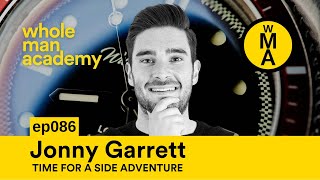
Johnny Garrett left banking to start William Wood Watches, a British brand that upcycles firefighting materials like brass helmets and fire hose into luxury watches and donates to firefighter charities. He bootstrapped the company debt-free through a Kickstarter campaign and navigates Swiss and Japanese manufacturing while building a team and targeting both gift buyers and male wearers.
Questions this video answers
25
£25,000
Raised over £25,000 in less than seven days
Swiss Sellita SW200 and Japanese Seiko NH35 (long waiting lists)
Over £50,000
Whole Man Academy. Because the world needs strong men. Wholeman Academy is changing the game for men around the world. It's for guys who want to live an epic life of fun and adventure. No matter what we believe, deep down, all men want to go on their own hero's journey to becoming resilient, confident, fearless and fulfilled. Listening to be inspired by guys who don't settle for living a life of mediocrity. This is your call to action and call to adventure.
Are you ready?
Okay, guys, before we jump into the podcast, remember if you haven't already, to subscribe to our game changing weekly E letter that goes out to hundreds of men around the world. You can get there on the show notes below or it's www.polemanacademy.com. lovely stuff. Right, let's jump in. Okay, so this is the Whole Man Academy podcast, episode 86. My guest today is Johnny Garrett, the founder and CEO of William Wood Watches. What is that? It's a British sustainable luxury watch brand that creates unique timepieces made from upcycled rescue service materials. I stole that, so I didn't get it wrong. It was also entrepreneur of the year. In 2018, we're going to talk side adventures watches, male health, entrepreneurship and who knows what else. So, mate, how are you and where are you?
I am very good, thank you. Thanks for having me on the podcast. I am in Streatham Hill, so I've lived around Balham, Streatham Hill for the last seven years. Love it down here. But I was just saying you might hear the odd ambulance, so please start going past. So just ignore that it's real life.
And how are you at the moment? I mean, we recorded this on a Friday midday. What's going on in your world?
Yeah, very good. Life is good. I have full responsibility over my diary now, which I'm sure we'll talk about a lot more. But yeah, the cool thing is now I have the ability to be able to do what I want on a daily basis. And me too. I want. So, just got back from the gym, actually had a really good session there. Walk back through Tooting Common, which is a beautiful route back home. Listened to a few podcasts as well. So it's been a nice day so far.
Well, isn't that. I mean, this is one of the big things we talk about here at the whole Man Academy is finding your own level of fulfillment, but also living with freedom. You know, some people are cut out to work for someone else maybe and quite happy to turn up, do the job, go home get paid and not have to worry about it. And other people, other guys that we see through the whole man academy are like, you know, I need a bit more freedom than that. And that we're going to get onto that. But that's what I see with you and that's why I think it's really interesting to talk to. Well, two things. First, for the guys that are listening, firstly, probably two years ago you kindly wrote one of our E letters, which was about Willingwood watches and about your own journey. So some of the guys will definitely be like, oh, hold on a minute. I remember that I had a couple of messages last night from guys on Instagram who were like, oh, hold on a minute. Putting two together. So we're going to get on to obviously the business and watches, but take us back to pre www, not World Wrestling, but to your kind of journey because you were working in a bank in a city. So tell us a quick bit about that. What was your background?
Yeah, sure. So my background, as you say, was definitely the corporate world. So you might be able to tell by my accent by now. I'm from the Northeast, born and raised in a place called Hexham, about 20 miles west of Newcastle. And really I left Hexham seven years ago. And that was first and foremost because in the Northeast, really there's a very, very finite opportunity up there to step outside the normal realms. I mean, a lot of my mates work in agriculture, farming the land or the work in laboring positions. But I always knew if I was going to leave the Northeast rather than just jumping to somewhere like Newcastle, Leeds, I wanted to go down to London effectively. So I spent the last six and a half years in Lloyds bank where I worked my way up to an associate director position surrounded by really great people in the team. But what you said there and really like, literally is exactly the feelings that I was going through, where you were closing deals, you were working on for like months and there was just no sense of fulfillment or value add. And the first, I guess, three years I was quite naive and I really went hard in the corporate world and to be fair, I progressed pretty far in that space of time. But you realize quickly. Anyway, I think you'll probably agree with this that I just couldn't get that sense of value creation and fulfillment. And there was always this little itch and this little voice probably for since my early teens, saying that one day you will run a business which will be your main business for the rest of your life and it will not feel like a job and it hasn't ever since I've been doing what I've been doing, which is really cool.
Isn't that important? The if you can get paid well for doing something you love, then you've kind of hit the jackpot, to be honest. So at what point for you? Because I was reading about your story and I know you wrote some of it in the E letter about trying to transition but also starting a business whilst you are still working. So what was it like for you? Because when you're in that corporate job, it is really hard to have the time and the energy and the brain space to hold down a position that requires a fair amount of energy and kind of try and launch something new.
Yeah. I mean productivity and time management is so, so key. I think the one thing that people say that they don't have is time. They feel like they haven't got the time to be able to juggle all of these things at once. So I just had to make sure that as soon as I had the idea and I acted upon it, that my days were literally like a sort of military regiment. And I felt as well that if one thing slipped and I'm leaning more towards sort of, I don't know, exercise or listening to podcasts and other things would slip in the day. So I just sort of found that over that sort of five year period of growing the brand whilst holding down the job, I made sure that I had a, or created a bit of a bulletproof mindset to make sure that I could manage both of them. Now there's a friend of mine and I'm so, so impressed with people who do just quit the corporate job straight away and go, I'm going to do my own business now. Because his motto is get alone and leave home. And I was thinking, bloody hell, that's brave. That is. And the way that I've done it, I'm so, so thankful that I did it that way because it means that I'm now in a position where by no sense of the word am I worried or concerned. I've taken the leap and it just feels like something that I probably should have done a few years earlier. Actually.
It's hard, isn't it? Because I've speak to different guys who are in different positions and some I would say if they're looking to start a, call it a side adventure, side hustle, another business or something else. For some of them, if they hate their job so much, then maybe they do need to kind of pull the trigger and literally just get out and get on with it. But for other people, I think it is great if you can, you know, do it side by side so that even if you can start having some money coming in, because it's very hard to go from a. From a normal salary that just gets paid in. And let's face it, when you work in a bank or in a one of those environments, sometimes you can actually do nothing all day and you're still going to get paid. You know, it's surprising how many people hide in the office if they're hungover or what have you. And then suddenly when you work for yourself, it's like, well, no one's paying you money because it's up to you.
Exactly. And I think people call it the golden handcuffs, especially when you working in finance or law, those kind of positions. As you say, it's quite easy to be able to hide behind other individuals or people in the team in an office environment. If you're not feeling good that day, it doesn't really matter because in a month's time, you're going to get a salary again and you're going to get some form of bonus, really, at the end of the end of the year as well. Whereas the cool thing is when you're obviously doing it by yourself every single day, the responsibility of what you do is in your hands. And this is why it's felt nice, the transition. Because the time. The transition has almost felt sort of effortless because it's something that I've been spinning so many plates at once. So when you just have the one plate, the progression is crazy.
I'll tell you why I'm impressed also.
So how old.
How old were you when you started William Wood Watches?
I started William Wood Watches at the age of 25. It was actually Boxing Day five years ago this year. Okay. I've just turned 30 in August.
So what happened on Boxing Day?
Oh, my God. So Boxing Day was Boxing Day, really, and was my awakening. And I think the thing is, you never really know where your inspiration's gonna come from. So I was back home in Hexham, and believe it or not, the idea for William Wood Watches came in my local Wetherspoons, in my local village. Of course, that's where all the great ideas come from. Absolutely. And I was speaking to a mate and he was telling me about a crowdfunding platform called Kickstarter. Now, five years ago, certainly I hadn't heard of Kickstarter and knew what it was. I always knew that I would love to run a brand. I'VE always been interested in the craftsmanship that goes into luxury items. So I thought that if I was to set up a luxury brand, here's me thinking that I wouldn't need a lot of capital. So I just thought it wasn't possible. But then when we had that conversation over a beer, it was almost like fireworks were going off in my head and I couldn't get it out of my head all that day. And I actually went home and as a bloke, you don't really show your emotions that much, but I went back to my family house, sat around the kitchen table about midnight and just burst into tears because the emotion was so. It was so much that imagine spending the last sort of 10 plus years of your life having this voice in your head saying, you have to take, you have to take that risk, you've got to do something. And then it's almost like the crescendo came together at once. And for me to be moved so much emotionally, I just knew at that stage that I had to take action. And from, from then on, really that's, that's how, how the brand grew.
Well, let's talk about the Kickstarter, because for me, I'm always interested, especially because you started a business pretty much about 15 years before I did. So I wonder what I would have been like at 25. I was too busy chasing girls and going to the gym and that's about. And watching football. That's all of my life. Pretty much that was the important stuff for me. So I'm always impressed when you meet a sharp young guy who I consider young to have started that business to also get the concept of like Kickstarters and how that could actually work for you.
Yeah, I mean, I think a lot of that has been maturity, which has been sort of drilled into me by having a career in finance. So I actually left school, I left high school and went straight into working full time. So I was, I started an estate agent and then I moved into banking with Santander and then to Lloyds Bank. And I think by the very fact that you have to be giving financial advice to people of all ages, you're dealing with people coming into a bank branch who maybe have just lost a family member, you're registering a death certificate, you've got somebody at the other end of the spectrum who's 18 years old, you've got to open up a student current account, you've got to look at debt consolidation loans, you literally have to age, probably from a mindset standpoint BY at least 10 years. Yeah. And I think that allowed me to advance and be intuitive and look for other things. So I've been reading self development books from as early as I can remember. I've listened to podcasts. It's something that I'm actually really, really passionate about and it was just a matter of time when it would come. And looking back, 25 is a young age, but. But mentally I felt probably maybe more wiser than I guess your average 25 year old might look or feel.
I don't know if you know who Daniel Priestley is, who's the CEO of Dent and he was on the podcast and he kind of Dent take people with great ideas or businesses and help them kind of expand as it were. But one of his talks he was doing was about that the average age of a starting entrepreneur is actually 40. I think it was basically 40, 41, 42. So you were well ahead of the curve there. I was pretty much spot on the average age.
But.
So what about with a Kickstarter? I mean for guys I have a brief idea, a bit rough idea, but for guys that are like, okay, I've heard the word Kickstarter, but don't really get how you even go about it. How did it work for you?
Yeah. So the reason Kickstarter is pretty impressive to be fair, because it's very different to a business like Crowd Cube, which you may have heard of. You don't have to give any equity away in your business, which is how crowdcube normally do it, where you may give, I don't know, 0.1% in shares in exchange for some kind of investment. All you're doing is you are pulling together a concept page which shows the first collection or the first book or the first film, or the first video game that you want to bring to the world. It'll have a lovely promotional video, the journey, a bit about the founder, what your vision is and there are different pledge levels and a customer can basically go onto Kickstarter and they can pre order a product, but the money that they're giving you is the startup capital that you need to place your first mass production order. Yeah. So I needed to raise £25,000 to build 500 watches and for eight months worked on pulling everything together. The idea, getting, testing, sampling, finding desires, designers flying out to Basel in Switzerland to find people who could actually produce the watches. And then eight months later, after all that hard work, you press this big green button that says go live on Kickstarter. There's a 30 day funding period. And you just hope like hell that you're gonna. You're gonna get the funding. And thankfully, we raised over 25 grand in less than seven days, so we made it.
So did you find sat there refreshing, you know, hitting the refresh button every 10 minutes for a while?
All the time? Yeah, yeah. Literally all the time, waiting for another pledge? Ding, ding, ding.
Yeah, I think that's great because also it's the reminder that it's the eight months beforehand. It's not like you were like, oh, hey, I've got this idea, I'll put it on Kickstarter. And Suddenly you've got 25 grand plus in your account. It is the eight months and the risks you take in that. And I know, I was reading what you'd said about. I knew in order to get myself out of bed every day, I would have to dedicate my brand to something or someone who inspired me. So tell the guys that are listening about, you know, why watches and why kind of the link with the fire brigade.
Sure, yeah. So William Wood obviously isn't me. That's the name of my late grandfather. He served in the British Fire service for over 25 years. He was a massive role model in my life and he inspired a lot of the colleagues that he worked with as well. So what makes us very, very unique is the fact that we make all of our watches from genuine upcycled firefighting materials. For example, we take an original 1920s British brass firefighters helmet, we take it into Hatton Gardens in London and the jewellery district, we put it in a kiln, melt it down and put it inside our watch cases. We take fire hose from all of the different regions around the UK in different colours. We've got yellow fire hose from the West Midlands, red from the London Fire Brigade, blue from my grandfather's fire region, Tynen Weir, green from the British Armed Forces Fire and Defence Unit, and we chop it up, we repurpose it and we make it into our watch straps. We also take fire kit, which firefighters wear actually in live fires, and we cut that up, repurpose it and also put that into our watch straps as well. So it's a very, very unique concept. And a big, big part of what we do is also giving back as well. And this year alone, we're donating over £50,000 to international firefighting charities. Really, really pumped to get that figure higher. But as an independent watchmaker in Britain, to be making donations of that amount in less than five years is great. We're at the stage now where we have about 1% of the overall British watchmaking market. So the value of the market is about £100 million. That was talked about by KPMG on a report recently and we just broke seven figures for the first time this year in revenue. So we're getting there. Yeah.
What a nice feeling. And I guess for you, I don't know how many people you got in your team, but I'm guessing you kind of start off as pretty much yourself with the concepts and idea and then how did you slowly start to add, assuming you've got more than just yourself running it? Because the bigger the business, the bigger the team generally. How did you then start to bring in people that you liked, that you trusted and that had a vision? Because it must be hard when it's just your idea to then kind of let someone else have the reins in some different kind of areas.
Yeah, the team and the building of the team is one of the hardest parts because you need to try and find people who are actually as passionate as you. Because at the end of the day, it's a very story led brand aunt, isn't it? And it's got my granddad's name on it. It's special to me, my family, and not even just firefighters, but international rescue service workers. So you have to find somebody who has that passion. And the first hire that I made, interestingly, was the associate director at Lloyds bank for the miners, Glencore Traffee Noble. And she, she left the bank when traveling a bit. But we massively hit it off and kept in touch ever since. And for the last 18 months, maybe even two years now, she's been our head of marketing and PR at Williamwood watches. So that was our first hire. And everyone else from then really has been through meeting people in person and having that real connection and seeing that sort of eyes light up when we tell them about what we've achieved, but what we're looking to achieve in our vision.
Interestingly, we spoke just before we pressed record about, you know, a lot of people now are doing stuff online as we are. You know, we're not sitting in the same room and we're not talking in that respect. But how important do you find it actually getting in front of someone, especially if you're going to employ them, you're going to pay the money to take care of part of your baby. Basically.
Yeah, it's everything. I think, I think I would never want to leave somebody to do the recruitment process. I think you have to be there in person. I think really in the first few years of building a brand, the brand itself, the founder, is an extension of the brand and you need to make sure that you're completely bought into the values, the culture, everything that we're trying to deliver on. And I think if you, the eyes of the founder and the person who's actually built it, there is a high chance that you're probably not going to hire the right kind of people. And it's difficult to find good people, it really is. But when you find them, it's so easy to see somebody who actually cares. And the way that we run the business, I run it very much like a family office. It's like one big family. We. Something which is important to me is we don't have investors, we don't have any debt, and it's just all about reinvesting sustainable growth and a long term vision. Hopefully I'll be around here for the next, I don't know, 50 years doing it. Yeah.
I'll tell you that's one of the interesting things because I'm staggered by how many companies are built on debt.
Yes.
I mean, start with I'm a big lover of football. When you look at the top clubs and you realize how you know a huge amount of them, if not all of them are in a huge amount of debt and so, so many big companies. So was that one of the kind of big things for you? Because then you're, you're totally in control, aren't you? And not indebted literally to someone else too. So you can decide how, where, when it all goes.
Exactly. It wasn't just a big thing, it was an enormous thing and still is to this day. I would love to be able to continue growing the business, having full autonomy over everything that we do, full creative autonomy, full recruitment autonomy, design autonomy. And the challenge that I have is even if I was to give away 1% equity in the business, I don't ever want what I'm doing to feel like a job. And I think if I do that, I'll be waking up potentially and feeling like I'm on somebody else's agenda. An example is at the start of the year, me and my girlfriend worked from Mexico for six months. We left the uk, we worked remotely. Now if I had turned around to investors and said, oh, do you know what, we're just going to travel around Mexico, we're going to take your two or three million pounds and we're going to grow the business. Now the funny thing is the business grew exponentially. But trying to tell an Investor, that would have been quite a difficult story.
I think there's plenty of good lessons for guys in here who either are considering starting a business or maybe already have, because, again, it's, you know, you can continue to learn. And that's one of the things I saw with the whole Man Academy. When we started, we, the team kind of grew, and what we realized quickly was that not everybody had the same vision. And it's a bit like, I mean, going back to last week's golf podcast with Lou Harrington, if you hit a golf ball a tiny, tiny percentage wrong, it might not seem that big a deal to start with, but the further along it goes, the bigger you're going to see the gap from where it should be going. And that's what I saw was I had this vision of exactly what the whole Man Academy could be. After going to personal development conferences and spending years in the city and understanding the niche of professional men who want to do life better. And then you have to realize that other people, it didn't mean their idea wasn't good, but it wasn't the same one. And otherwise, you are going in different directions. So for you, when, you know, the whole Man Academy is all about getting guys together to talk as one of their big things, who did you have to talk to? Because I'm assuming, you know, it's a fair amount of pressure to put on yourself when you're leaving a job which is, you know, fairly. You could just do it with your eyes closed, basically, to then go out and say, okay, I'm leaving that behind and I am finally going to take the kind of.
The push. Yeah, I mean, it's your immediate community, isn't it? It's your sort of wolf pack. It's who you want to surround yourself with, who's going to be your biggest supporters. And it's an interesting point because the first eight months of growing the business, I didn't even tell my parents or my sister that I was doing it. So literally, I turned around on the 31st of August at the end of the Kickstarter campaign in 2017, and just called my parents and went, mom, dad, I've raised 25 grand. I'm doing a watch business in dedication to Granda. Hope you support it. Because sometimes. Because. And they were probably thinking, bloody hell, I'm glad, because I thought you were. You were losing the plot. Because it seemed like I was hibernating. But I think the moral of that story is sometimes your closest family or friends can be your biggest critics because they're just trying to look out for you and I didn't want any conscious or subconscious negative decision making. So the people that I lent on immediately was my girlfriend who's been the biggest supporter. We've been together seven years. She's really like a co founder. The amount of, I guess, crap that she has to put up with and me talking about watches all the time, which is brilliant and immediate. People in my friendship circle, I've got a few friends that I send a lot of sort of voice messages back and forth with that we talk to daily. It's really important. So there's a guy called Will Woodhams which is quite ironic if you think about his name, William Wood Watches and he's been a huge advocate of the brand and I think there's something helpful about even speaking to somebody who's just a bit wiser, older, maturer. He was the head of marketing and PR for a company called this is Mission and is now the CEO of a luxury bookmaker called Fitzstares and he supported the brand for at least three or four years now. And we can bounce ideas off each other all the time.
Oh, that's, that's priceless. And as you just said, you know, it comes down to some level of mentorship and whether it be, say someone that's just been there and done it or someone that is older than you and say older and wiser. And I was going to say, I know the guys at London Stock company were helping us. You know, I was going in there probably once every. Well, I was having a chat with them once a month and going through some ideas with him and I still really in touch with Ryan and I think you had a. Wasn't you introduced by David Gandhi? Introduced to Ryan?
Yeah, absolutely, yeah. Ryan's a great lad and so, so is Dave. What they're building there is superb.
Yes.
And yeah, so every now and then when, when we're available, we'll, we'll pin each other down, we'll have a catch up and we'll just share some stories really, because it's literally like a wilderness out there running a brand. You're constantly trying to work out how do you get more eyes on your brand whilst making sure that you actually have a healthy bottom line. As you know, it's not all about turnover, it's about the bottom line and there's so many ways that you can do it and marketing is never ending. So the sharing stories with people like Ryan is really helpful and he's been a huge supporter of ours and I love what they do as well, to be fair.
Yes. Yeah, I do have their socks on at the moment. And he was kind of sent me a big box of them a couple of months ago. I actually sent him a picture saying that one of them, I'd worn them out so much that, you know, it was a little nudge to remind him. But one of the things when I met Ryan as well was again it was around speaking to someone that just gave you some new ideas and, or thought provoking stuff. And I remember, and this is what I was going to ask you about it when I was sitting in Ryan's or the London Stock company office, he was saying that of course, you know, with the marketing a lot, a high percentage of their customers are actually women because they're buying the luxury socks for their men. And I wondered for yourself because, you know, because your watches aren't 10 or 20,000 pounds and therefore that's what I like about them. More accessible to the, the everyday man who may get those as a present. So how do you kind of go about saying, okay, am I marketing to a man and using his language and images or am I actually thinking about a percentage are actually going to be female.
We have a similar demographic therefore to London Stock company. Absolutely right. It's normally wives, partners, girlfriends of watch enthusiasts, firefighters, rescue service workers who are purchased the watches as a gift for somebody else, birthday present, passing out parade retirement gifts. Which means it's quite, it's quite difficult then because if you have a finite budget, you have to work out how you can really target both audiences. So we do it, we do it in a few different ways. I mean, that being said, obviously the people who are wearing our watches are sort of 90 plus percent men. Our watches are unisex. But we are, we're planning on releasing what we call a feminine line which is going to have a smaller dial to it. But really it's about tapping into the different audiences and thinking about, well, where do they absorb their marketing material from? How do they actually take it in? It may be that we look at groups of wives of firefighters or wives of military or rescue service workers or just tapping into female outlets or publications within the age range of the people who are buying for us. So this is the thing with marketing and I sometimes feel as well that you get to the stage where your brand is, you know, you've got a brilliant product, a story, it gives back in some way, it's got upcycling. So sometimes you feel that you become more of a marketing entity than the actual brand itself. Because it's just about how do we get more people to know about what we're doing? Because we know it's so great. And it's the same with Ryan.
Yeah, yeah, that is interesting because. And I, you know, we spoke about branding, I think, two weeks ago on the podcast. Very much about that, because it does make you think even it's easier, I guess, to track who's seeing your stuff now if you're advertising a line. Because if you go back to, let's say, for example, where I live, you could advertise in the. In the Cotswold Life or Cotswold Times or what have you, but you don't actually know how many people have looked at your advert and whether it's of any use to them at all. Whereas at least now I know you've got, you know, there's stuff on. If you're advertising on Instagram or Facebook or wherever, you can actually see how many clicks you got, what your click through rate is. So did you have to learn about that part of it yourself or did you outsource that?
Yeah, I mean, when you start the brand, you have to learn everything. It's insane. Like, you're the accountant, the treasurer, the designer, the founder, the PR person. It's bonkers. And I remember I bought a course off an E learning website called Udemy, where it just said, like, how do you set up paid Facebook ads? And I just studied that. How do you do. How do you make your SEO better on Google? How do you. How do you work Google banner ads? And you just have to do it all yourself. Now, I'm not going to say I was good at it. It certainly appeared on some people's feeds.
These are honest.
Yeah, exactly. But the sooner that you can outsource that to the professionals, then it was a game changer. Now, there is also another interesting point, though, because, yes, we are in a digital world where you can now track a lot of the analytical data, but I think brands miss the people who don't go onto social, who don't go onto Facebook. We have people, some of our customers are over the age of 80 and we'll try and pay us by check. Yeah.
They're not TikTok, are they?
Yeah, no, no, yeah, exactly. Yeah. So how do you reach those people? And we have ideas. Like in 2023, we want to get a fire engine, we want to convert it. The shutters will lift up with glass and watches behind them. Be called Billy, which was the name of my granddad and we're going to drive it around the UK to regional cities, your Newcastle, Leeds, Bradfords, your Watfords, open to Glasgow and Cardiff and go to the people and actually set up in a marketplace in the center and show the watches and bring firefighters down to raise money for firefighting charities. Because I think so many times luxury brands just think, oh well it's all about London, New York, Dubai, Sydney, Hong Kong. And it's like well no, there are so many people out there. And I guess coming from the north, you sort of think through the mentality of a lot of the publications out there because there are also people who appreciate brands all over the world.
Isn't that again another important one? It's about not just doing the obvious but things like saying, well what could we do? Could we as you say, get a fire engine and redesign it and take that out on the road to all these different places and how much more memorable that's going to be then scrolling on Instagram. And even for us with the whole man Academy, you know, that's one of the reasons why I realized just doing the simple dinners in London which we got like next oil it would have been last night by the time this goes out. But it's something where you haven't got to, people haven't got a pay to come along, people haven't got to make a big sacrifice of time or et cetera. It's like listen, it's another Homeland Academy dinner where you can just do something different of just meeting for beers and not have know you not have to be selling tickets for it and doing all this stuff. So yeah, that's another one of things I think of where speaking to guys like yourself, you never know what little ideas or things are going to, going to come up. Well, let's talk about because when you wrote an E letter you spoke about the importance of a strong daily routine.
Yeah.
Especially when you're, you're starting off with things. So what kind of things work for you to help with mind and body?
For me, I think you have to win the morning, right. And there's a constant debate, isn't there, of people who think, who are maybe not morning people and they'll work until after midnight or the early, or the early hours of the next day. But God, I think you have to get up early just by even getting up, even before 7am I don't know, 6:45, 6:30. The amount you can do productivity wise by checking your emails or scheduling emails to get sent out. I found it's really Powerful to be the first email that drops into somebody's inbox. Whether it be, I don't know, a journalist, a PR consultant, a retailer, straight away they think that this person's on it. And actually you can be quite clever with that. You can just schedule your emails to go out at 6:00am yes. But yeah, for me it's about winning the morning. So I like to get emails done straight away in the morning. I then like to go to the gym.
I have a.
Fitness has always been something which has been a huge sort of consistent feature of my life. Yeah. Also love to run. I've never been able to do yoga or meditation, but whenever I run I feel like that is my meditative state. Like some of my most creative ideas come to me when I go on a run. I'll get back home by about late morning and then I can work on my emails again. Again, it's all about a good diet as well. Good fats, actually looking after yourself, fueling your body.
Yeah.
And just making sure that you're as productive as possible. I mean, tasks and lists are so, so important for me, every day I feel like there is a task to do because I think it can sometimes be quite overwhelming for people. I've got a few friends who go through procrastination and I think sometimes it's good just to have easily manageable chunks. Bit like the analogy that you said earlier about driving the golf ball. If you have two parallel lines running side by side with each other and you just do something small every day, you may not see the progress in the first one or two weeks, but if you move it out by one degree, that one degree will become so quite, quite a major conversion. 6:12, 18 months down the line. It's just. It's just little things, really.
Yeah, that's. I was actually speaking this morning to a guy I'm doing coaching with and we've totally transformed his, say, morning routine and the way he kind of is fueling himself and all the. All the different things. And it is literally like the 1% things. I know the British Olympic teams used to be very much about. You know, I think it's the cycling team. You know, can you improve everything by 1% and then you add all that up and see how much of a difference it makes. Well, well, I laugh about the fitness because you were up very close to where I live a couple of weeks ago for the coming. Is it the British. The kind of firefighters fitness challenge or.
Yeah, yeah, the British Firefighter Challenge. Yeah. Which is nuts out of Anywhere in the world that it could have been. I spotted you, like, as I was talking to a customer, and I thought, is that. And then. And then we didn't get the chance.
To speak, but yeah, yeah, well, it's. It's. It's comedy because we were watching the firefighters, and for those that wouldn't know, and let's face it, most of them won't. It's kind of a challenge. It's one firefighter against each other, and they have to kind of run up all the steps and then pull up some hose, then come down and hammer something and carry a kind of, you know, a weighted body, roll up a hose, all these different things. It's like a mini obstacle course. And the fitness competitive man inside me, like everything else, I can't help but go. I want to have a go at that. And it's not because. It's not because I think I could do better. Then you just think, I just want to have a go. And I know you said that. Is it. When they called towards the end of this Saturday evening, when they finished, your team had a go. So what was that like?
It was way harder than you think. Like, because obviously you think, oh, yeah, I train a lot. Like, surely I can just run up some. Some stairs and pull fire hose up. It was. It was so, so difficult. And the dummy, by the way, weighs 70 kilograms, right. Oh, my God, your calves are burning by the time you do it. But, yeah, it was. It was tough, and it was cool because. So we had an exhibition stand there, and the hosts of the event let us take to the course with all of the. All of the team. With our William Wood, we probably didn't have the right attire for it as well. We just had, like, black polos on and black jeans. Yeah. Not the best, but also they have, I think, an extra 30 pounds of firefighting equipment. And when you compete in the States, sometimes you actually wear the mask as well. So imagine breathing through the mask while doing all of that at the same time. But this is the cool thing about firefighting. You have to be in shape all year round.
Yes.
Like in a fire station, they're doing drills maybe two, sometimes three times a day. And this is why I really respect. Out of all of the rescue services, firefighters are just really are superheroes.
Yeah. I must admit, you know, we had. We grew up with friends whose husband was a. Was a career fireman. And as a kid, you're like, yeah, I'd love to do that. And actually, when you realize it's a. It's a pretty, you know, not just that you've got to maintain your own level of fitness, but to state the obvious, you're putting your life on the line now and again. It's not all just going to fairs and waving at kids who think you're five And Sam, so how about yourself with going forwards? Because I wonder if someone said to you now, how much do you want to sell the business? What would your answer be?
I have no want to sell the business at this moment in time because this is the thing I've learned over the years to never say never. You never know what's going to happen, you never know how. I mean, let's be honest, running a watch business, your biggest investment is inventory. Yeah. So whenever you're reordering with the workshop, you're like, how much? Oh my God. So you can feel like you're doing well at some stages in the air and then, and then it's up and down. And if there was problems in supply chain, if a global pandemic comes around and starts to interrupt getting your hands on certain components. Yeah, it can make it, it can make it more difficult and challenging.
Did you find that affected at all? Because again, you know, you're not just producing a watch but it's made up of some much more kind of interesting parts with the story. So trying to bring all that together, have you had any issues with that? Because to say the obvious, if you've got any issues that then you've got nothing to sell.
Yeah, yeah. The hardest thing was actually the movements. So getting the hands on the movements. Everybody wanted to purchase the movements that we do. We've got a, a Swiss made Selleta movement, SW200 that was so, so difficult to get our hands on. We also have a Japan Seiko NH35 movement that was about a six month waiting list. So all of a sudden you are now having to place orders six months in advance, which obviously can be a drain in working capital. But it therefore just means that you have to be very certain that you can sell the watches. We're in quite a privileged position where because the watches are so unique, normally when we place an order they're all sold out before they arrive. Because people pre order the watches. Yes. Now as we evolve as a business, it'd be nice to be stocked in everything and just go, do you know What? Let's have 300 watches in stock right now of all five collections. But the investment that that takes takes time, but we will get there. It's just, I'm Going to use our own capital to chip away at it rather than bringing in a private equity company like a BlackRock to go, okay, here's some deep pockets and firepower, off you go. But we want a 4x or a 5x return on our investment in 2 or 3 years time. Enjoy it. Yeah, no pressure.
Just thinking, no pressure because that is the thing it goes back to. As soon as someone's got their hand in the pot, as it were, then it's not just down to you. And I guess that's important for you also because it's because of kind of starting the company because you've got your grandfather in the history that you've got. It's not like you've just started a company selling something that you don't really care about, but you're just there to make money and sell it. So that's why it was interesting to ask people, only because many years ago I spoke to a lady who is a really great business coach and I was talking about starting businesses and she said for a lot of people I would say my first question is, are you starting a business to sell it or to make it a lifelong thing? And the answer to that often shapes the way that they think about it. So yeah, it's always interesting to say, okay, what's your price? Because some people say, oh yeah, you know, 5, 10 million or something and I can go to the Bahamas and do nothing. How difficult it would be for you if you, if you hadn't had this, would you have stayed in the city, do you think.
So? Funnily enough, when I first met my girlfriend, I was planning on going back to Newcastle, right. And it wasn't until we started going out and meeting people and building up friendship groups that I realized that London is a fantastic city. Has London been the perfect incubator for the brand? Hell yeah. Like if I was trying to build a British luxury watch company in Newcastle, at the rate of which we built it, it would have been difficult, it would have been hard to find your designers, your social media people to create concepts, even to just meet journalists. I mean in London you've got some of the top watch journalists on your doorstep and I can just run into the city and meet them. Yeah. The question though, that you said, there is something that I think about all the time because, because what is really that if we just talk this through, what is William Wood watches without the grandson running it, can it resonate to the masses? And this is something that, as I say, I've had, I've Thought about a lot. And I listen to a podcast with Joe Malone. Joe Malone, Yes. She, she, she got sick, didn't she? And she, she realized that she had, she had cancer and she was told that it was terminal, but she actually recovered from it and she sold Jo Malone and she said it was like selling a baby. She said it was one of the most traumatic things she's ever been through in her life. And she wishes now that she hadn't done it and she's gone and set up something else. And I think this is the challenge, really. It's making sure that. Because the other thing is the identity part and making sure that you don't become part of the business. Johnny Garrett is something completely different. You have your own life, but it can become quite sort of all encompassing really. And I think William would watch us can go as far as we want to take it. That, that's, that's, that's really the, the conclusion. There could be a fire station converted into a watch shop in all these countries around the world where you can come in, you can see watchmaking in action. Out of all of the watch brands in the world, there's been astronaut watches with Amiga, there's been military watches, there's been racing watch.
Yeah, I was going to say racing watches as one of the ones that came to my mind and I guess for you also it is part of your baby. And I remember meeting Liz Earl at an event probably two years ago now and I, you know, then kind of understood more about the fact that she'd sold her brand and I guess it would be like me saying someone else, oh, yeah, I won't do the whole Man Academy and someone else do it. And you're like, oh, oh, no, that's. So, yeah, it's always interesting to say what's next? Do you think you've got another. If someone said to you, look, Willingwood Watches is ticking over really nicely and you know, so you're still part of it, but you've got the ability now to go and start another business. Do you have another business idea that something else that you go, do you know what? That's something I would move into.
So I've got business hobbies, but not business ideas. So areas where I'd like to take capital from William Wood and maybe look to. Because actually I'm really into cars. And the funny thing is it would be amazing to own your own, I don't know, vintage refurbishing car company or your own supercar company one day. But ultimately I see this as being the main thing that I want to keep doing, but just reinvesting in other hobbies, whether it be property or something along those kind of lines. Because I've got a lot of respect for serial entrepreneurs, but as a serial entrepreneur, I think if you're in the game where you are quite comfortable raising money, constantly debt flipping it, having an exit plan, that's cool and I've got massive respect for people that can do that. And the other thing is as well is I think that Wayroot brings with it sometimes a bit of a. It sort of ticks the ego box as well. Because if you can get a brand that can be on the side of double decker buses all around London in tubes, you've got the deepest marketing pockets ever. And then there's me there just trying to sort of slowly, sustainably grow the business. And sometimes you're like, God, that would be awesome. But then at the same time I don't envy what they have because I have complete autonomy over everything that I do.
Yeah, yeah, that's. And again, we'll go back to. I think that's one of the, the big things. I know a couple of guys that do own businesses but they own now a percentage and therefore you have people to answer to. And then you feel a bit like when you worked in the City and your head of your desk then went to his senior and said, has he or hasn't he made enough money? If not, why not? And you know why, why weren't you at your desk at this point? So, yeah, it's always, it's always an interesting one. So my last question on this is, and I always find this interesting, I was told when I first started working the City and we started earning at that time very small bonuses, but someone took me aside and said, listen, whatever bonus you get, go and spend 10% of it on yourself. Just spend it on whatever you want. And the rest, you know, either invest it or put it in the bank. Because we know put in the bank isn't investing. But what about yourself? Have you said, you know what, there's a point where I'm going to treat myself to this, that. Or are you just kind of continue plowing the money back in at the moment?
Yeah, my, my relationship with personal possessions and money has definitely matured. Let's say when I was in my early 20s, I think I would have put money as a, as a much higher status than I do now. I look at what I've done now, I look at the lifestyle that I have now really And I'm renting. We haven't got a property, I don't have a car because I live in London. It feels quite liberating actually. We're planning on going away again in January. We're going to start in Switzerland and again look to build the business remotely from there. Now if you'd asked that question to the early 20 year old me and I looked at the cash balance which is in the business account now, I might have made some different decisions about what I would have purchased. But I'm listening to Jimmy Carr's book at the minute and he says there is nothing in the mall that you can buy which you will still want to have in five years time. It's true. Like you look around at the personal possessions that you have and in the past I guess there'll be purchases that we've all made where you purchase it. You think it's going to be amazing. And the day after you're like, why did I buy that?
Yeah, there's that old saying of, I think it was some of the personal development events where some of the guys there had, you know, multiple, multiple millions or tens of millions of pounds and they said things like buying a boat or a supercar. You know, the best day is when you buy and then when you sell it because the rest of it in between you enjoy it for a little time. And in fact that's the letter that I sent out today had said in it about like being Black Friday is the day that we're recording this on how all of us can be suckered into buying things we don't really need at the time. And for me it was about, you know, you show me the man and what he's about as opposed to what, you know, what kind of car he's driving around in. But now. So what's the plan for rest of today?
Plan for rest of the day. I've got a phone call which I'm going to be having with a PR contact that we have a few more emails to send out. We are planning a one of a kind charity watch with a podcast in the UK called Scottish Watches. So they're one of the biggest watch podcasts in the uk. They're going to be doing a charity auction where all the British watch companies come together to create a one of a kind watch that gets auctioned off and all of the proceeds goes to Megan's cancer charity. So we're going to be sitting down with the designer thinking about ideas for this one of a kind watch. We've Got some really, really cool concepts and it's probably what the rest of the afternoon is going to look like.
I love it. Sounds like it's living life with adventure as I say, instead of, you know, enough guys that have been or still doing something they find monotonous and want to do something else but either haven't quite got the idea or are finding challenges in their mental block of like, you know, I need big amount of capital to start and all these things. So that's why it's really interesting. Talk to yourself. So if people want to get in touch with you or ask you any more questions or about the watches, what's the best place to get hold of you?
Yeah. So they can follow us Williamwood Watches on Instagram all one word or they should visit our website. On there you'll see our vision. They should have a look at the vision to convert fire station into our head office and that's williamwood watches.com and from there they can, they can contact us by email.
I like it. Go and have a look at the watches guys. Because I was trying to. I've always been one of these people that I'm really like most people selectively watches and some, you know, I used to sit near guys that, that spent a lot of money on watches and others that didn't care at all and I was having a good look through. So I'm going to let you know which one I like the most as if my opinion is particularly important. Large watch connoisseur but. Right, well I'll let you go. I appreciate all your time and hopefully I will speak to you soon.
Great. Okay, thanks for having me on and speak soon.
Thanks for listening. Remember to sign up to our game changing weekly letter that's read by men around the world. Sign up at homeanacademy.com forward/movement until next time.










