EP087 - JOSH PALMER - FIGHTING FOR LIFE | WHOLE MAN ACADEMY
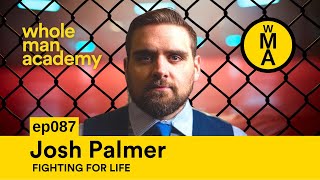
Episode 87 of the Whole Man Academy podcast (recorded December 2021) features Anthony Astbury interviewing Josh Palmer — an architect, martial-arts presenter, and Brazilian jiu jitsu black belt living in New Jersey. The conversation covers why Josh moved to the U.S. (marriage/immigration), his coaching training, how he entered presenting for Cage Warriors and Karate Combat (including the TV/visual effects format of Karate Combat), his long-term jiu jitsu practice (black belt after ~11.5 years; first-degree promotion recently), major weight loss (from about 322 lb / 146 kg, losing roughly 130–140 lb over time) and changing nutrition strategies, experiences of fatherhood (son Parker), views and experience with firearms in the U.S., travel constraints during COVID, and current training/competition plans.
Questions this video answers
Episode 87
In New Jersey, just outside Philadelphia (USA).
About 322 lb (≈146 kg).
About 11.5 years
He received his first-degree on his black belt recently (one degree).
Whole Man Academy. Because the world needs strong men. Whole Man Academy is changing the game for men around the world. It's for guys who want to live an epic life of fun and adventure. No matter what we believe, deep down, all men want to go on their own hero's journey to becoming resilient, confident, fearless and fulfilled. Listening to be inspired by guys who don't settle for living a life of mediocrity. This is your call to action and call to adventure.
Are you ready? Okay, so this is the Whole Man Academy podcast, episode 87. My guest today is Josh Palmer. We're going to go through a few bits, but he's an architect by day. He's also a black belt, karate combat and cage warriors presenter. He's also lost a shitload of weight. We're also going to talk about guns, being a dad and plenty of other stuff. Oh, and coaching as well. So, mate, how are you and where are you?
I'm doing very well, thank you, Anthony. I'm. I am currently in my house in New Jersey or I say New Jersey, I'm just outside Philadelphia. So, yeah, it's a typical, typical winter's afternoon at the moment.
Any snow?
Not yet. We were supposed to get a first dusting this week, but really we get hit with snow around January so we'll probably get a good couple of drifts of three or four feet in January.
Okay, so it's coming. It's just, I was going to say seasonal. I think we've established that weather is fairly seasonal. There's no flash there.
It's rough here with the weather. I mean, it's nice to have seasons but you know, we'll hit 37, 38 or higher in the summer, it's humid and then around January time, yeah, we'll get the three feet of snow.
So yeah, it's an interesting trying to get used that because over in this country and for those that are going to realize that Josh is from the UK and moved moonwalked out there, but we don't really have that and we haven't had much snow at all. So I could actually do with a little bit of snow just to keep the kids quiet for a bit. But now let's, let's jump into firstly how we met, which was, I'm thinking maybe about six, seven years ago now at the Coaching Academy, I want to say.
Yeah, I want to say, yeah, it was either 6 or 7.
Seems like a long, long time ago now. So what took you to the, to the Coaching Academy?
Essentially I had, I had a Bit of a hiatus from a lot of the extracurricular kind of stuff that I was doing alongside of my job. A lot of the sports presenting that I was doing at the time. Those promotions went on hiatus for a little bit. So I was like, wow, I've got to do something else to fill my time. What's actually, what's a productive use of my time? And it happened that around the same time my boss in my day job had been employing the services of a business coach and we'd gone on several kind of, you know, team building experiences with him. And I found it very interesting. So I thought, well, you know what, that's probably a reasonable, reasonable use of my time. That's productive. So that's really how I ended up doing that and meeting you.
Yeah, I do recall us sitting on stage working on different things. And actually I know a couple of the guys that listen to this that either are working in coaching or are thinking of moving into it. And I often get questions myself. I mean, A, because I've been through all of that and B, because I do professional coaching, you get guys reaching out, saying what should I do and where should I go? One of the big things for me, I get the frustration that there's a lot of quick online stuff now. And one of the big things that I'm sure you had to do as well with the coaching academy, they made you actually do live coaching sessions. And I had to do, I think 30 with people and then you had to do them with an instructor listening in, which really made you bum twitch because suddenly the pressure's on when someone's listening to you.
Yeah, the, the, the, the getting used to coaching people directly was, was not too bad. But yeah, as you say, the recorded ones where they join the call and sit there, you know, watching the whole thing was, yeah, it was, was definitely interesting. I mean, you know, I had mixed success with those, those training ones because the hard part is obviously finding appropriate people who want to buy into the concept in the first place, as you well know. But you know, I had one guy who just, he ended up quitting his job as a result of it. Yeah, he's a full time professional musician now. Makes his living in music, which is what he always wanted to do. And he was a computer programmer, you know, so. Yeah, it's nuts.
That's always interesting when, for people that don't realize, yeah, you, you had to kind of find, say five or six kind of people to, I don't know, test, test your abilities on and practice on and the big thing there was not finding people that you already knew because it's just not, you know, it just doesn't work when it's people already know. So, yeah, I was lucky that my partner, Emma, reached out to a load of her friends and none of them I actually knew particularly at all and asked which of those wanted kind of free coaching for a couple of months. And I got about 15 messages back. So I was like, no, not a couple, but, well, let's, let's jump into. I mean, we've got so much to get through. But let's go into for me first, like, why you moved out to the States and then we'll get on to the karate combat and cage warriors. So what, what took you out to the States in the first place?
Easy answer. Got married. There's not a whole lot more to it than that. I mean, you know, I met my wife in the uk, she was doing a master's degree down in London. And yeah, we just, you know, when it came down to it, we had to kind of make a decision over where we were going to end up. And, you know, it was easier career wise for me to, you know, jet off across the pond and pivot a little bit than it was for her, you know, because she would have had to find a job that gave her, you know, a visa and stuff in the uk. And that's tremendously difficult. So we went through that whole year long immigration process to move to the us.
What was it like for you, though? Because it's not, it's not a short trip back home, is it? So, you know, you're. If you're friends and family.
Yeah, it's being completely honest over time. It's set in the. Hang on a minute. What have I done with regards specifically to my family? You know, sort of as my parents get a little bit older, they're not that old yet. But, you know, as I've had a son and as my twin brother has had two sons, sort of, you know, you wish they were growing up nearer to each other. You wish you could just, you know, nip over and see your parents for a weekend. I mean, at the end of the day, if I have to, I can be there in 12 hours. You know, I can drive to the airport, there'll be a flight going every night, you know, and it's six hours back to Heathrow.
Yeah.
So it's not, it's not insurmountable if there's ever an actual problem. But, you know, it's obviously not as easy as if they were an hour down the road.
And what's it like having a twin.
Better now? Look, I'm sure everybody's different. Growing up with the twin, for me, was torturous at times. He was. He was. Yeah, he was very evil to me. Well, you know, you know, we. We've grown a lot closer as we grow older, but we are very, very different, right. Just in terms of personality and physical stature and everything else, but we're closer, closer now, which is great, you know.
Yeah, I have a sister, but I also. I'd love to have had a brother as well, but ideally one that you. You get on with, you can borrow money from as you grow a bit older. But now, so let's get onto the. Let's say, I mean, we can talk about fighting, but karate combat and Cage warriors and the presenting side of things. Because for me, funny enough, when I put on Instagram that we were talking to, obviously some of the guys already know you because you've been part of the whole mad Academy for a couple of years now of joining. Joining the events. But how did you get into the presenting, not only to do it for a little bit, but, you know, doing it in front of millions of people for two. I mean, karate combat is huge, isn't it? And it's got like a million followers on Instagram. Is Cage warriors the biggest kind of MMA in Europe, is that right?
It's one of. Yeah, alongside KSW and Bellator. So, yeah, they're up there.
What got you into that? I mean, having a. We call it a side adventure, because you have a normal job, if you want to call it a normal job that you have to juggle alongside. So how did you get into the presenting and then get to the level you are at now?
So I got into it by virtue of the fact I was at a local domestic event down in Southend, of all places in the uk, and I bought a ticket and I was there spectating and, you know, I was training as part of the club. I was at the time, we had a couple of teammates on the card. So I went down port ticket, went down to support them. And I was talking to the guy who was commentating beforehand, who we knew through a mutual friend, and I made a comment about one of the fights later on that I was looking forward to, and he said, oh, hang on a minute, which was a very strange thing to say, went away, came back and said, oh, do you want to commentate with me? Because you seem to know what you're talking about. And that Was, you know, and that was literally. Yeah. So I went and I ended up spending the entire event sitting caveside commentating on the fights, which, you know, at the time, considering how long I'd been involved and everything was. Was kind of odd. I think I was just, you know, A, I was very lucky, but B, because perhaps a little bit more academic generally than an articulate, perhaps than a lot of people who are involved at the time, I just kind of was able to sound like I knew what I was talking about, and I did that. And then I emailed the promoter afterwards and said, hey, you know what? I had a good time. Can I come do it again? He's like, yeah, of course it's free. What am I going to do? So I've got to pay you. So did it for free. And then it was like, hey, can you. Can you throw me 50 quid for my petrol?
Yeah, travel.
Yeah. And then it just kind of went from there and then I got paid and then I got commissioned by other people and, you know, it snowballed from there. And that was what, 12 years ago now? Something like that. So, yeah, real kind of right place, right time, seize opportunity, but happen to put the work in along the way kind of thing.
That's what I was just wondering because, you know, often you. The more and more guys that I speak to in, you know, doing what they love, sometimes it is a bit of luck and right place, right time, but you do have to put the work in yourself. And I know you do a lot of. A lot of traveling, so how much of your kind of year does it take up now, now that you've reached that level of karate combat? And I'll just say I loved. I've been watching some of the clips on Karate Combat on Instagram and it just takes you back to the 80s. And so I've kind of binge watched a bit of that.
Yeah, Karate combat's very different to anything else I've done. Um, which. Which I can talk about more in a minute. Um, it. It's fantastic. But it. It honestly varies. It depends on how active the promotions are. You know, before the pre. Pandemic. Post pandemic. You know, before the pandemic, Maybe I do 20 weekends a year.
Right.
Which is, you know, doable. It's different when you have a family and that kind of thing, you start picking and choosing. Okay. Which is, you know, because some of them, even then, they're not financially particularly worth your time, but, you know, you make a bit and you have a good time. It's different to the ones where it's like, okay, well, legitimately, this is a income I don't want to lose, and I need to respect. And there's a level of professionalism and preparation that comes along with that. So, you know, now with the family and everything, I basically only take work that makes sense, you know, and I want to do. Which is fine. So, yeah.
So let's talk about karate combat. And again, I urge people that haven't seen it. I mean, the. The link will be in the show notes, but to go and have a look. I mean, any man will enjoy having a. Have a look at some of the flying kicks and punches. So, difference between karate combat and cage warriors. I mean, for you, how did you get into karate combat? Because that seems to be the bigger one of the two.
Yeah, it is at the. It is at the moment. And it's weird because it's the newest promotion out of any that I work for. But there's three main sports that I. I tend to do broadcasting in, and my role in those has changed over time.
Right.
But there's grappling, so Brazilian jiu jitsu and submission grappling, which is, incidentally, what my primary sport is that I practice this then obviously mixed martial arts, which is primarily at the moment, cage warriors, and that's broadcast on UFC Fight Pass. And then there's now karate, which, considering I've never studied karate, is. Is quite. It's quite interesting. But I got into karate combat because I randomly got a DM on Instagram one day from the president of the league, who said, hey, I really like your work on one of the grappling shows that I do. It helps that, you know, he's a black belt in jiu jitsu as well. And, you know, he basically said, hey, I like your work. Are you interested in auditioning for us? And I was like, sure. I've never auditioned for anybody, you know, but. And. And he filled me in on some of the details. And, you know, he said, look, it's. Go watch, you know, some of it, because it was. The format we have now is very different. It's much more refined than the format they had at the time. And that's been a journey with us all over the last couple of seasons, which has been great. But he said, you know, hey, it's. It's headed up by Bus Rutten, who is an absolute legend in martial arts in general, you know, and a legitimate celebrity star. Then, you know, do you want the chance to commentate with him here? Here's a fight, record some audio for it, send it back to us, we'll play it to the, you know, the, the board who make the decision and we'll let you know. So I did that and yeah, about a week later I got a call saying, do you want to commentate?
Excellent.
And at the time I was under the impression it was a live event.
Right.
In the same format as everything else that we've done because up to that point they'd been doing live events. And then it actually transpired that, well, no, we're making this for an episodic release on television. So we record a bunch of episodes at once and we do it on a 300 degree green screen on a soundstage and you're going to be in costume and we digitally use the Unreal Engine from Unreal Games and Unreal Tournament, that sort of thing to digitally superimpose, you know, all of these environments that you fit the aesthetic for with your costume. And you know, there's all these extras there who are dressed up, you know, as characters around the edge of this, this pit that the athletes fight him. Oh, and by the way, there's a Stargate that they come through. We then do we then have a VXF how a VFX house doing all the graphics for. And I'm just like, is this what is insane? This is insane. Yeah. And the first one was, was quite an experience. And you know, we filmed. I've been involved for two seasons now. I came in partway through season two when they removed their previous presenters who were much more well known than me, and hired myself and a couple of my friends actually, who I work with on other shows to all come along and join. And we did season two. That was great. We filmed season three in 2020, early 2021, that was released over the summer. And we're going to kick off the new year very early on in 2022, filming season four.
I like it. I think it's, I think I said when I was chatting to you, it takes me back to the 80s and a bit of, a bit of Karate Kid and the simulation of stuff.
Yeah, the entire premise of the show originally was how can we basically make it a real life computer game. So, you know, because it was a new sport and they're kind of doing what they want, they could try stuff out along the way and nothing was ever really set in stone. So, you know, one of the events that they did there was a live event before I joined for the actual broadcast of it. They superimposed Sort of, you know, like fireball graphics and stuff over the punches and like neon, you know, do you know what I mean? All the sort of the video games. Exactly. The whole point was that it was a real life street fighter.
Okay.
We even had. In season two, we even had a character select screen. So when the fighters would get chosen, they would get chosen from a select screen and it would be like, you do me. And that was the entire premise. And then that sort of evolved in the last season, you know, that we did some time travel because. Why not? Yeah. And the biggest difference for me with this show, apart from getting used to the fact we're shooting it for tv, so that in itself is different, is there's a lot more comedic pieces to Camera Bus. Is there to be Bass, who is a very outgoing, exuberant, interesting character, and I'm there to play the kind of more straight edge.
Straight guy.
Yeah, they're just kind of, you know, the. The run of the mill guy to bounce, you know, for his zaniness to bounce off effectively. So filming a lot of these little. These little bits, some of which have some amazing graphics and things added afterwards. I mean, there's one from season two where he finds, you know, I'm talking and I'm trying to concentrate on doing the presentation and he's teleporting around.
Yeah, yeah.
So we shot that in like five or six different segments where he randomly goes and runs and stands somewhere else and. And you know, they.
Especially someone that doesn't. Doesn't understand what that would like. I wasn't expecting that. So I was like, oh, there's Josh and there's this guy talking next year. And then he starts fiddling about and then teleports off to the corner of the screen. You're like, what the fuck's going on here?
Yeah, the really interesting thing we did at the end of season three was we. We actually did a legitimate kind of two and a half, three minute intro piece which we shot the bulk of. And this was with George St. Pierre and Leo Tomuchida and Robin Black and Bass and myself. And we shot the bulk of it, Bas and myself, in a abandoned parking garage in the middle of a certain central European country at half past one in the morning with like neon lights mounted, you know, commanded the car parking area mounted, neon lights everywhere. Then we had to shoot this bit where I fall through a portal and faceplant the concrete. And yeah, it was. It was very odd because we shot it as though you were shooting an actual movie. So every shot you know, you did seven or eight times from three or four different camera angles. And really unique experience for me, having only ever done live presentation before, because.
I guess then if you go on to kind of cage warriors and that is say more the MMA mixed martial arts, which is a bit more. How can I put it? It must seem very run of the mill when you're just sitting there and talking. But I mean, which one? Because mma in my head, not knowing huge about it, but has become an enormous sport. I mean, not just in the uk, but obviously primarily in the us with the fights out there where you see, you know, huge stadiums packed with it. And that one, for me, I guess most people know Conor McGregor as the. As the main kind of guy that has brought it to the fore for a lot of people. But with MMA in this country, is it. Is it a hugely growing sport as much as anything else?
Yeah, absolutely. It has been for a long time. Right. Ironically, I don't compensate for cage warriors in the UK anymore.
Right.
It's now just for their US arm, which is fine by me because it's kind of west coast outdoor in California. You know, it's like at the moment, all the shows we do are on the bay in San Diego with boats in the background and stuff is fantastic. But yeah, the shows in the uk, you know, they've. They've grown leaps and bounds, and I think happily we're past the days now where I have to explain it to people as cage fighting, which is how I used to have to explain it to everybody.
Yeah, it's a lot more.
Yeah, it was the easiest way to get the point across quickly as to what it was.
Yeah, just tell me, tell me. And what about for you with the actual presenting side? I know I've interviewed different guys like Ed Draper, who's a Sky Sports presenter, and for you, obviously, in the us, he's a huge kind of audience. So do you know kind of what the biggest audience or rough kind of numbers that your presentee is going out to?
Entirely depends, because I don't know if there's any way that amalgamates everything because there's so many different broadcast platforms that things are on. You know, I mean, for instance, the last season of Karate Combat was on CBS Sports. Was. Was the broadcast, but at the same time, you know, it was also streamed on Twitch and on Facebook and on YouTube. And, you know, there are episodes of Karate combat that on YouTube alone are up to one point something views. Yeah, but you know, with the metrics behind, for instance, UFC fight Pass or any of those other streaming platforms, they're kept very close to their chest. I presume that the promoters know and UFC fight Pass themselves knows, but that's about it. Yeah, we don't really made party to it.
What about the nerves? Do you ever have that where you're, you know, you're kind of just about to go on air and then you're thinking, okay, I've got a bit of a dry throat here.
Not anymore. Not for quite a long time. I used to do this, and I was very upfront about this. I used to do this thing where I would be standing there and they do the count, whether, like, five, four, you know, three, two, one. And I would look at the door and I would go wonder what would happen if I just ran out that door right now. Like, as we've got two seconds left on air. Yeah, but no, I don't.
Public speakers. I know.
Yeah, I don't. Don't really get nerves anymore. The only time it gets a little bit hectic is if there's something's gone wrong in rehearsals or we're flying by the seat of our pants a little bit with the rundown, so don't necessarily know, you know, or we've had equipment failures, which you've got to work around as well. They're rare, but they happen, you know, so you do it. You do enough live tv, something's going to happen. Yes, but the reality is, as long as people at home don't really notice this, then who cares?
Just smile through it. All right, well, let's talk. We're still on about fighting, but, yeah, for those that don't know, you recently achieved your black belt. So for you, tell us about how you even kind of got started with fighting and how many years it's got you to this stage. Because. And I'll add to that is because, as some people won't know, but you will hopefully talk about, is at one point, you lost a huge amount of weight, which must have been a big part of kind of the fighting and the weight loss at the same time.
Yeah, I mean, it was kind of everything. I mean, so I trained Brazilian jiu jitsu, which, if anyone doesn't know, is essentially a grappling art, the whole goal of which is to take somebody, put them on the ground, and then either choke or strangle them unconscious, or break any joint you can by hyperextension or over rotation or whatever you want to do.
Nice.
And, yeah, you know, it's fun. It's basically like, you know, wrestling with Your friends when you were kids only, you know, you're actually doing it with some technique now. So I got into it because I saw a very early mixed martial arts event. I saw one of the very early UFCS, and this was 14 and a half years ago now when I actually got into it. So it would have been about 16 years ago that I saw this event. And the commentators at the time said, oh, well, this is jiu jitsu. It's great if you're a weaker person, but you're smart because it's a thinking man's combat sport. And I was like, well, I think I'm smart, but I'm definitely weak because I've been bullied a lot, and I was very heavy at the time. I was about £322, which is just over 23 stone, right?
Yep.
146 kilos, something like that. And. And I basically was still carrying around a lot of this stress over having been bullied when I was a kid. And I, you know, just decided, you know what, that sounds like something I want to have a go at. So I ended up going along and just basically getting stuck into it with everything I had. And overall, I lost about 140, 130 pounds. It fluctuates up and down depending on whether I'm competing or not.
Yeah.
And that's. That's how I got into it. Yeah. And it's just a lot of time after that, a lot of time on the mat. And I got a. I got a black belt in jiu jitsu, in Brazilian jiu jitsu, three years ago. So then I got my first degree on my black belt last week. That's it.
First degree. Yep.
Yeah. So you get.
What was that like? Because. So is that a couple of years it's taken you. Where do you. Because of my lack of knowledge of this, if you're going from black belt to then to where you've just got to. What kind of. What do you need to do to get to that stage? Is it just honing technique?
So. So once. To get up to a black belt is primarily about competency. I mean, different. You know, there's no real criteria that's set in stone, but luckily the sport is young and polices itself well enough that there is a still a maintainable standard. Generally, you know, it takes most people well over 10 years to get to a black belt stage in Brazilian jiu jitsu, and that's because we keep the standard very high. Yeah, I'm sure it will get watered down a little bit. As the art gets busier and bigger. But generally the standard is very high. So that took me 11 and a half years to get a black belt. And then after that point, it's purely time served in rank. So as long as you're still in the sport, you know, it's purely just. It's an indication of how long you've been a black belt, as opposed to the fact that you are good enough to be a black belt.
And how often did you have. And this is the thing about kind of consistency and dedication, because no one gets to the top without putting in, you know, solid hours, day after day, week after week, month after month, year after year. So on average, what kind of amount of time did you train to kind of get or not just get to the stage at now, but also because whilst you were losing weight, I'm guessing, must have been hard to start with because, you know, the bigger you are and the more you're doing, the more tired you get. So did you find it was one of those where, you know, the harder you train, the more weight you lost? And also, talk to us about nutrition.
Well, ironically, I didn't lose a lot of weight. I lost an initial bump of weight quite quickly just because I was doing so much more physical activity. And generally at my absolute peak between lifting and training, I was, you know, doing, I don't know, 10 sessions a week, something like that, which is like, literally pro athlete levels of time. Doesn't mean I was being as efficient as I could have been with those sessions. But, you know. But then, you know, there were times when I was wrapping up one of my postgraduate degrees and I was down to training twice a week, you know, just because of the workload. But generally I've been very consistent of, you know, four times a week for the best part of 10 years. Overall, I've pretty much never taken longer than two or three weeks off. The only time I've had time off was for injury.
I was going to ask injuries, because, let's face it, it's, you know, a.
Combat sport and, yeah, they happen. There's no getting around that. If you're training hard and you're, you know, competing and you are actually competing against people, stuff will get tweaked every now and then. Touch wood. I've been quite lucky. I've only had to have one surgery as a result of an injury and I exacerbated the problem myself by deciding to jump out of a helicopter going skiing after. Yeah, I blew my knee out, blew money out, and I was Like, I don't want to go and get this sorted. I've got. I've got a snowboarding trip in, in like, you know, four weeks. So I was like, I'll try and rehab it myself. And then I got up on the slope and, yeah, I jumped out of this helicopter and I hit the slope and it went very wrong. Luckily, that was the last day, though, so I. I got my snowboarding trip in and then I had to. Had to get the surgery done, which, you know, wasn't too bad.
It's a classic, though. I've got to have some knee surgery, but just jump a helicopter. Why not? I mean, it seems the obvious thing.
Well, yeah.
Next question was also about. Because I always find it interesting with people that have lost a considerable amount of weight, because I was think losing weight. I mean, technically losing weight is easy, but it's putting in the work and being dedicated and having the, the discipline. I mean, that's. That's the big thing because, you know, if you're like, oh, yeah, I'm losing weight a couple of days a week, and then it all goes wrong at the weekends, it becomes a lot harder. So what about you with the food? I mean, how much of a change was it for you with losing weight to actually kind of change your diet?
Really hard? So, yeah, so what I was. What I was going to say originally, and then I got slightly off topic was I lost an initial, I think 30 or 40 pounds, something like that. But then I hit this kind of plateau and I literally couldn't. I couldn't beat it. And I'm like, I don't know what I'm doing wrong. And the reality was that, like, I was training on a Friday night and going home and eating a large, flipping Domino's takeaway pizza, you know, so that was tough, you know, And. And then I worked out a form of nutrition at the time, which worked for me in that context. And that was something that was very low carb, a bit more ketogenic, you know, and this is. I know, 10 years ago now when that really kicked. It more than that, when that kicked in. Did that for the longest, for a while. But then, you know, the thing that people never really touch on with dieting is that your kind of needs and what works for you does change over time. You know, I can't. I cut another 30 pounds off over the summer because during my. The pandemic and my wife's pregnancy and, you know, my gym was closed.
Yeah.
So I just went back to lifting weights for a bit. You know, I couldn't, couldn't really roll any jiu jitsu. So along with we were just kind of eating whatever, especially when the kid was born, you know, I put a bit back on, which as long as you arrest the, the rise fairly quickly is not too bad. So I knocked like 30 pounds off over the summer, but I did it with the exact opposite of what I'd done originally.
Right.
You know, I pretty high carb and I really low fat, but I just calorie counted, which is something that I'd never got along with before. It had always been horrible for me. I had spiraled out of control whenever I tried to do it. But at this time in my life, with this particular set of circumstances, it worked for me.
Yeah.
So, you know, you've got to kind of appreciate the stuff works for different people and for you yourself will change over time.
Yeah, I mean, we always say, you know, guys through, go through different phases and I think also it depends on like where you live and what the weather is sometimes because, you know, if you got, you've got sunny, sunny weather around you, it feels a lot easier to get out and move and, you know, get up early than it does like in the UK at the moment. It's dark until, you know, pretty much 7:45 and it's dark again at half past four. So, yeah, it's always one of those things that I think the weather can have a big effect on it. I mean, not. People use it as an excuse to overeat, but yeah, the time you get up and the other thing you said about is being a dad, so let's get into that because I know myself having two boys who are pretty much only what, two and a half and four and a half, that. That's been the biggest change to my life and biggest challenge because you stop being able to be the selfish single guy and you have other people depending on you. So what's it been like with little Parker?
It's been a roller coaster, man. As you say, you know, the things that you, you know, I, I can't train as much as I wanted to train before. You know, I was training six days a week and now I'm down to. Down to four. Or, you know, you can't just go out for dinner with a wife because, you know, you just, you know, things change. I've been very honest when people have asked me that when Parker was born, I didn't have that immediate kind of, you know, when I was holding, even when I was holding him in the delivery Room.
Yeah.
I wasn't like, oh, my God, this is amazing. I feel this incredible bond when he got out of what I call the potato stage, you know, when. When they're not really that cognizant of what's going on, they just wake sleepy kind of thing.
I call it slug stage.
Yeah, right. Yeah. Potato stage. Slug stage. When he got out of that. And, like. And, okay. The first time he smiled at me and all of that. All of a sudden it's like, okay, I'm melting. I get it. You know, and it's been. It's been amazing ever since. I mean, we're very lucky. He's a very happy child generally. But it's made me way more emotional about stuff than I ever thought was possible. Not that, you know, I like everybody. I had my moments of. Of kind of emotion before, but, you know, if I see. If I see something concerning, let's say, something bad happening to a child in the news, and there's been some, you know, it's the U.S. the news has some horrific stories. Every so often, I just find myself, like, breaking down crying, and I'm just like, this is ridiculous. Like this. It's not ridiculous, but it's. It's human empathy. But. But, yeah, it's. It's made me, you know, definitely, I get it now. And all those times when people like, oh, if anyone ever touched my kids, I'm like, I get it. Totally didn't get it before. Get it now.
It's such an interesting point because I even saw that myself, like, with my sister, who's got boys who are kind of 11 and 14 now. And I would find that, you know, like you say, if there was something on the news, she would get really upset about it. And I'd think, like, what are you going on about? And like, you say, maybe it's. Until you have kids and what you do, you know, I think you see your child in that story and. And it's like there's a switch inside you. And I agree. And I think it's. It's funny. It's one of those things where, you know, different guys. I spoke to some, and I had a overwhelming sense of love very, very, you know, very soon after the birth of our first one. But our second one, because it's the second one, I didn't have that sudden rush of it. Maybe because you're like, well, I've been here and I've done that. But it's very interesting how you do have to change your life and your level of as we said being beautifully selfish suddenly changes. What about sleep for you? How's it been with Parker and sleeping?
I learned that I am an absolute pussy when it comes to sleep deprivation. My wife's a trooper, absolute trooper. I am really. Like, I. I'd never felt the need to sleep a lot, a lot before, but I'd always appreciated the effect that sleep had on recovery from training.
Yeah.
And also on. On weight loss as well. You know, you start getting that cortisol build up because you're not sleeping. That's another thing that makes, you know, eating right and staying on track very, very hard. Yeah, I suck at it, quite frankly. Luckily, Parker's park is pretty good. He's teething at the moment, so it's been a little bit disrupted, but generally he's been very good and that's been a saving grace. But, yeah, if I have to get up for 45 minutes in the middle of the night, I'm not a happy person.
This is the thing. It's. You know, often some people can be really lucky with kids that sleep a lot. Others don't. Ours were terrible and still are. So that's been an interesting one. And sometimes I get asked, how do you, you know, have you navigated what is two years pretty much without having a full night's sleep? And what I say to that is, that's why it's even more important for me to live as healthy a lifestyle as I can to negate and try and, you know, overcome the sleepless nights of being woken up five, six, seven, eight times a night. It was at some point.
Yeah.
And a lot of that would be that you'd think, right, you know, you'd have kind of forgotten. It's funny how our brain works, because by the, the by that evening, you'd forgotten how many times you'd be woken up and you'd be like, right, tomorrow I'm getting up, I'm going to get into the gym early, I'm going to get this done, blah, blah, blah. And then you get woken up five times and when your alarm goes off at half five or six, you're like, fuck this, I can't, you know, I've got to go back to bed. So at least you say it's not been too bad for you. What would be the thoughts on more. More kids at some point?
Yeah, no, we will. We will have a second kid and then it will happen all over again and it'll probably get worse. Yeah, it's not been. Yeah, it's not been too bad. I Mean, overall, I just. Yeah, I just, I suck at it. My wife's great. That's. That's pretty much what I can sum it up as.
Fair enough. I like it. Well, let's, let's move on to guns because I know we spoke before, I mean, with you moving out to the States that, you know, being able to have a gun out there and I guess going. Having lessons at a firing range. Had you ever fired guns before, dealt with guns at all before in the uk?
Yes, I had. Family were all farmers, so families had shotguns. I'd shot before at school as well. But it's a, it's a topic that I get asked. I wasn't really sure what you wanted to know about it in this discussion, to be honest, but it's a topic that I do get asked by.
A.
Lot of people back home because firearm usage is generally a lot more restricted and a lot less desired.
Yeah. Yeah. And that's the thing. Yeah.
You know, by, by folks back home and certainly I had not really desired it all that much and, and I moved here and my perspective changed a little bit. I still have. I'm in a very weird spot when it comes to firearms here because I generally don't believe that people should be able to walk around with them, but I don't really have a problem with owning them at home. You know, I think people get too wrapped up in a fantasy of using them in some form of defense scenario. Whereas the reality is if you've got decent set of cameras, decent set of locks, you've got a couple of dogs like I have. Statistically, nobody's coming near this house, you know, So I got into shooting here because I enjoy it from a natural extension of all the other combat sports I do. You know, it's a natural extension of something else that is a Marshall like skill set in that it's a perishable skill. Requires good body control, good, good movement control, good breathing control, that kind of thing. Haven't been able to explore it as fully as I would like to yet, but, you know, that will come with time. I got plenty of plenty of time. So I do enjoy going to the range once a month and, you know, keeping stuff ticking over. But again, the pandemic put a little bit of a damper on that because ammunition prices traveled and gun ownership in the US soared unbelievably. If you thought it was high before, really, okay, during the pandemic, it was, you know, I mean, I live in a state which requires you to seek a permit for Every handgun. And to get initial firearms ID registered.
Yeah.
Which is a lot of hoops to jump through, which I'm fine with. I think everybody should have to do them. But a lot of hoops to jump through for firearm ownership. And I remember talking to the officers, the local police department who deal with all this, because I train a lot of these guys in jiu jitsu as well, and they were basically saying we got a year's worth of, you know, they were getting a year's worth of applications in a month.
Wow. Okay.
Right. So, you know, having the potential for at least the idea that civil unrest could happen, you know, obviously played right into the hands of the stock price of all the firearms manufacturers.
Yes. Everybody loaded up well. And this is one of the things, because, you know, I've lined up a couple of different interviews with guys in the States, American guys in the States, as opposed to a Brit abroad on.
Holiday, and technically American as well.
I know you've got your. You've got that sorted out as well. But, you know, for them, so much of a big part of their life, even as growing up, is about going to the range and having guns. And like, for us guys in the uk, I mean, I grew up with a shotgun because we had a farm, but I, you know, didn't. It didn't really come out of the case.
Right, Exactly. Never does.
That's it. So for those guys, you know, going to the range at weekends, I always find it interesting because it's just not part of the kind of the culture over here. But, yeah, it's not to say that I wouldn't happily have a gun because especially, it's funny, as you say, when you've got kids, I do anything to protect my kids. So it's surprising how interested in it.
The way I've. The way I've sort of shifted my perspective slightly is, you know, I live in a very safe area, pretty affluent, general, you know, area. There isn't a high crime rate whatsoever. However, there are parts of this country that have a horrendously high crime rate, and you perhaps genuinely are at risk of having to ward off a home invasion for whatever reason. You know, I. I just. You got to have a different perspective of some of these other people. Some of these other people live in, you know, the US is vast. There's nowhere in the UK where you're really that far away from civilization. A town, a police station. There's areas of this country where you are hours away. Yeah, right. Quite literally, you know, there are legitimately predators who will eat you here? Nobody's. Nobody's going for a walk in, you know, the Shropshire countryside and coming across a black bear. Yes. You know.
Yeah, it's another consideration, actually.
There are very real considerations here outside of the whole tyrannical government argument thing, which they love. But.
But, yeah.
So, you know, I, I enjoy it as a sport. I'm happy I can do it. But, you know, I think the US is a little bit off the deep end on some of it.
Yes, yes. I think a lot of places have gone off the deep end in the last couple of months actually. But. Well, also my last question for you is, when are you back in the uk? Because I know, I think we missed you last time because usually flying, flying in and out, but when are you back?
Not till sometime next year. So there's no, no plans. It's been a bit of a palaver with traveling, as you can imagine. You know, as much as I'm used to flying, the constraints of the last couple of years have been, you know, I mean, I think I've. I've still flown 50, 000 miles in the last year. Wow.
Yeah.
Like that. But I'm through, I don't know, 70 plus Covid tests and, and that sort of thing now. Yeah.
Done with that.
Yeah. Yeah. It's not. Now that the US has opened the borders back up, I saw an instant, you know, instantly all the planes were full.
Yeah.
Again. And you know, when I'm flying for work, it's, it's fine. You just kind of get on with it when you're flying for, you know, family and stuff, it's a bit more hassle. I mean, we took Parker, you know, to the UK a few weeks ago for the first time.
Yeah. What was that like flying?
You know what? He was really good. Yeah, he was great.
Yeah.
You just gotta allow a lot more time, you know, and if you don't get flustered with anything that happens then, then it's easier. I generally don't, you know, I travel so much that there's not a whole lot that can happen where I can't be like, you know, solvable. There's no real unknowns in flying for me.
So the fun of traveling with kids comes more so when they're mobile. And you're fun. Yes, real good fun where you're, you know, we even had, I think a four hour flight where Hudson was sitting just in between us and I think Emma was, was pregnant with Bowie, but, you know, he'd already fallen asleep in the taxi on the Way there. So he wasn't going to have a sleep on the flight. Got four hours to entertain a child in a, you know, 30 centimeter space. And that was an interesting if. If things are sent to test your mindset and your ability to stay calm, that is up there with the best of them.
You know, that's the beauty of Jiu Jitsu. They can't put you in anywhere. You got a, you know, 250 pound guy on top of you trying to twist your head off your shoulders. Everything else is pretty straightforward really. I mean, Parker was, you know, coming back from the UK is always a day, it's a night flight going, day flight coming back. So the day flight, for some reason the plane and the route you're on was eight hours, which is unusual for London to New York, but it was eight hours of him being awake and, and sleeping a little bit here and there. But thankfully it was, you know, it was okay.
Relatively painless. All right, well, look, well, last question. What are you up to? Or this afternoon, I should say for you, Is it, is it training? Did you get to the gym today?
Did not go to the gym today. Might try and get to the gym now. Got to work around, got to work around the wife coming back from work and I'm going to pick the little man up from daycare. Yeah, but no, I got a good training session in yesterday. Today I'm trying to lift some weights again, but as you mentioned earlier, you know, it's what, minus two outside now and my weightlifting apparatus is in my garage. Just not insulated, cold. It's very, very hard to get used to putting a couple hundred pounds on your back and squatting when it's that cold. So I will, yeah, I will try and cease being a wimp and go put myself through it. But, but no, I've been, I've been training very well. I'm gonna compete again in Jiu Jitsu early in the new year.
Yep.
So really it's just trying to make sure the weight stays down for that. And you know, I, I work on tightening up some stuff that I'm playing with in, in Jiu Jitsu. And that's the nice thing, you know, is been doing it 14 and a half years still. Recently discovered some new stuff where I'm like, how did I not know that that's something I do.
Always learning.
Yeah, let's play with it. And as long as you can always keep, keep learning. It doesn't, you know, peaks and troughs with everything. But, you know, you keep showing up you keep finding new stuff.
So that's the message. Keep, keep turning up, keep working and be prepared to, be prepared to learn. Well, I'm going to let you go because I know we've already taken up an hour of your time. So I appreciate the talk as well. And this will go out straight away tomorrow morning. So it'll be fresh delivery for the guys listening. And then, as always, say if and when you're in the UK next, then at some point, I'll try and come and find you for a man hug.
We'll actually catch up.
All right, Josh, I'll speak to you soon.
No worries. Good to see you, mate.
Thanks for listening. Remember to sign up to our game changing weekly updates E letter that's read by men around the world. Sign up@homeanacademy.com forward slash movement. Until next time.










