EP091 - LIFE IN THE MARKETS - BLADES WILLIAMSON | WHOLE MAN ACADEMY
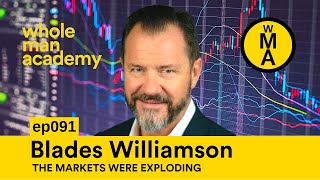
This is a YouTube video titled "EP091 - LIFE IN THE MARKETS - BLADES WILLIAMSON | WHOLE MAN ACADEMY" featuring a podcast episode from the Whole Man Academy series. The content is a detailed English conversation recorded in January 2022 between Anthony Astbury, the host, and his guest Blades Williamson, a former city broker. They discuss Blades' extensive career in financial markets, including his early days, experiences in London, New York, and Tokyo, the culture and lifestyle of market broking, challenges faced, and reflections on personal growth and fear. The conversation also touches on themes of camaraderie, ambition, and the changing nature of the financial industry over several decades.
Whole Man Academy. Because the world needs strong men. Whole Man Academy is changing the game for men around the world. It's for guys who want to live an epic life of fun and adventure. No matter what we believe, deep down, all men want to go on their own hero's journey to becoming resilient, confident, fearless and fulfilled. Listening to be inspired by guys who don't settle for living a life of mediocrity. This is your call to action, action and call to adventure.
Are you ready?
Okay, so this is the Whole Man Academy podcast, episode 91. My guest today is Blaise Williamson, former city broker. We're going to talk financial markets. This guy has lived life with adventure and he's been on my list of people to talk to for a very long time. Mate, how are you and where are you?
I'm good, mate, thank you. Thank you for inviting me along to the podcast. I don't feel worthy if I'm being honest, but I've seen some of your other guests, Navy Seals and the ilks of that. But I presently am. I'm fantastic. I am presently in my house, which is in Los Angeles, California.
Lovely. So slightly different from working in the, in the city or your upbringings. Well, first question was, well, this is one of the big things about why, you know, written down about you'd lived in, you know, lived and worked in London and New York and, you know, Louisiana and Tokyo and what have you. So really lived a life and adventure. But first question was during. I always talk to a few of the guys that are part of the whole academy about who I'm interviewing. And one of them was like, where do you get the name Blades from? What a cool name.
And I was like, it's actually my middle name.
Okay.
Yeah, it's a family, I don't know, supposedly a bit of Scottish Viking stuff going on there. Years ago, I think one of my great great grandmothers was Shad by a Viking and I inherited the name from there.
You know, got that on Ancestry.com.
Yeah. So all the. It's funny you say that because I asked about my name because all my brothers have the middle name Blades as well. And, you know, I started getting sort of, it was sort of mid teens, I think it became, it's almost a thing where it was like people were making fun of me with my name and if I'm being honest, my middle name. And if I'm being honest, once I got into sports and got especially got into the markets, you know, it wasn't from a business point of view. It wasn't the worst name to have, as you know, from the markets. You know, nicknames are thrown around like, you know.
Yeah.
You know.
Yeah, people love, love the nickname.
Yeah. My first day in the markets when I was 18, one of the guys said to me, you know, who are you? You know, sort of thing, you know, it was your first day at work. Yeah, it's 1979, you know.
Yeah.
And who are you? And know I'm Guy, but a lot of people call me Blaze. He just turned around and he said, listen mate, just call yourself Blaze because you're gonna get a nickname and you might not like it, so go buy Blaze. And it kind of, you know, from there and it was just Blaze to the point where, to be honest with you, you know, my mum would call up the office and say, is Guy there? And there's no one works here called Guy. And me, I worked about 20 years.
You know, that's the joy.
Yeah. But then I got my, my brothers, I got my brother's jobs. You know, one of the benefits of being in the market back in those days, you know, the. It was quite incestuous, wasn't it? And I was able to get my brothers both jobs in the markets. And so one of them became my middle brother who worked in the futures for quite a long time. He became Blades Jr. And my little brother, who's six' four pound 250 was little Blades. So then the Junior got cut off and the Little gets cut off. And so there's all these Blades running around the financial markets in different areas of the world.
And what about the brothers remain in the markets as long as you did?
My little brother did. My little brother almost. I think he was close and he only. Amazing. He, you know, he just, he only worked for one company. You know, he was there for 30 odd years and the same company and, you know, blessed. You know, we were very lucky.
Yeah, that's very impressive if people have stayed at the same. I mean, I started at Glencore when I was 18, which was a real baptism of fire. So I didn't have a fucking clue what I was doing. But you know, some of the people. Yeah, and well, I, it didn't get any better for me, but some people, you know, were still there and I was thinking I worked at all the different companies at Spectrum, gfi, did ship broking, all the different stuff, but those people that stayed at one company, I was like, for me sometimes could have missed out on so many different experiences of going to different countries and kind of, you Know, either that or meeting different people. But now you kind of work through the ranks whilst going, let's say, you know, around the world with the different markets. And you are high yield cash and credit derivatives broker, emerging market repo broker. Which one of those did you enjoy most? Which role?
So I started off in the. I started off in the early, sorry, late 70s, 1979, you know, I always like to top it. I actually worked in five different decades in the market. Started off in the 70s, yeah. And I started off in foreign exchange. And the truth of the matter is, if you were on a good foreign exchange desk back in the 80s and, you know, early 90s, before technology hitting, it was a rush, you know, it was open outcry. The reality was, is if you were on a good desk, you know, you didn't stop shouting, you know, from 7, 7, 15 in the morning until 5 o'. Clock. You know, I would regularly go home on a Friday night and, you know, I'd, you know, there was, there were guys who had that, you know, had to have that George Michael surgery, you know, with the, with the voice, vocal cords and stuff. Oh, I'm serious. Guys lose their voices and it was, it was a rush. It was such a buzz, you know. Emerging emerging market bonds in the mid-90s, during the Russian crisis, during. When the. I was in the markets one day when some of the Russian bonds were trading at $0.98 on the dollar and at the end of the day they were trading at 30 cents on the dollar. It was just insanity. A lot of fun, you know, a lot of fun. And people ask me, do you miss the markets? And I don't miss the markets. I got out in 2014 just when it sort of all gone sour. Technology really kicked in. Things like credit derivatives are taking it in the seat of the pants. We were the reason why for the 2008 crash and all that kind of stuff, which wasn't quite true. And yeah, people ask me, do you miss the markets? And I say, I missed those, you know, the markets back in the 80s and 90s.
Yeah, good days.
You know, credit derivatives in, you know, 2007, 2008, it was fantastic. It really was, it was, it was a buzz.
I guess that was one of the.
Problems, you know, it was, you know, you, you, you had that high during the day and.
Yeah, that was one of the things.
We do in the evenings. Right.
Well, I was going to say it's. How do you. It's a bit like when I talk to footballers and, you know, when I spoke to Neil Miller, you know, how do you replicate scoring a winning goal at Anfield or, you know, wherever you are, and then when that's all over, how do you get that kind of high again? And that's when people say, you know, when you venture out of a night, those are your options. But if you take us back to, as you say, because you were a young guy from Kent and you kind of started the markets, as you say, as a teenager, and then you went straight out to New York. Was that in 79 and what was that like?
Yeah, I mean, so it's one of those things where it's all a bit mad, really, when you look back at it and you wonder why. I ended up with a few sort of issues, you know, like, no shit, no. So, yeah, no, I got in the markets when I was 18. I played a bit of rugby, although the guys actually played rugby, will probably dispute that, but. And I was very lucky. One of the gents at my club took a liking to me and, you know, kind of said, what are you gonna do when you leave school? And I didn't have a clo, you know, and a few maybe go to university and play a bit rugby or, you know, but that wasn't really a thing back then, you know, and he said, I think you should come up to the market.
So.
And the reason I want to say this, because I want to. His name was actually. I'm not going to mention too many names during this. I don't want to incriminate too many people. Jesus. But his name was Vern Williman and, you know, I didn't know it at the time, but he was very senior at bank of America. And basically he just called up a man called Derek Tullett of, you know, the Tullett and Tokyo fame. And the reason I'm saying this is Derek passed away last week.
Right, okay.
Yeah. And he was an icon in the market, you know, he really was, you know, he led the way for so many people and he got a lot of people wealthy. Derek gave a lot of people a chance and a lot of working class boys, lower middle class boys like me, a chance that would have never ever, you know. You know, you forget sort of the 60s and the 70s, you know, the city was pretty exclusive to public schoolboys and that ilk. And, you know, boys from South London certainly weren't getting a chance. People like Derek gave us a chance. So I just wanted to say that. So, yeah, 18 markets were exploding. If you could drink and count to 10, you were in. I'd inherited my mother's family's drinking skills and both a blessing and a curse and the drinking skills. And I could barely. And I could just about count to 10, you know, CSE grade, you know, mathematics in school. And actually I'm not doing myself any favorite, you know, I got, I did the A levels and all that saw me A levels. But yeah, and I was in the market literally like a year, you know, and the market was exploding and la da da. And they said, oh, you know, do you want to go to New York? And, you know, I just turned 19. I go, yeah, I'll go to New York. Why not?
Why not?
And, you know, grew up watching Kojak and Taxi with my mum and yeah, oh yeah, I love to go to New York. And so there was, you know, I was in New York City, 1981, I think it was, you know, living, you know, in the Upper east side in a company paid apartment, company credit card and, you know, it was just crazy, crazy.
That thing with the expenses I know we're going to get onto, which I found interesting. But what was it like for you when you first went out there? Because again, I'm guessing, had you traveled abroad at all before you rocked up.
In New York travel? I was a world traveler. I've been to Benidorm two times. Benidorm I think I went to, you know, I think we went on rugby tour to Amsterdam and France and a few places like that. But no, definitely not. We were very lucky. As young kids we went to, we had family vacations in North Wales in the Tallybank Caravan park and went up to see my dad's mum up in Sunderland playing football on Roca Park Beach, 55 degrees and sunny, where everyone would be half naked.
Yeah. So it's a slight difference from New York. And that's why I think, I know you said about, you know, obviously working in London, New York and like being in LA and Tokyo, that's one of the big things, if people can travel is just broadening your horizons because that, you know, just gives you that chance to experience things that when you're living in, be it Kent or wherever, you're just never going to get to. But so question here is with the film Wolf of Wall street, which I know a lot of people who don't know about the markets will have watched that and have understood some of it because I still had guys say to me, I was that all ridiculous? And I was like, no, there was, you know, there was some crazy times and it wasn't just the, the Money, it was the drugs, it was the, the high. And I wondered for you how much of the enjoyment was the camaraderie of other men. Because I know I miss that part of working on a broking floor. I don't miss the half past five alarm calls and the late nights and that shit. But having that group of guys around you, I found was, was, was great fun. So what about yourself?
First of all, thank you for asking that question in that vertical with regards to Wall Street. I thought you're going somewhere else there for a second. We can go down that path. But no, 1,000%. Listen, I don't mind admitting that since I retired from the markets, struggled is probably too severe a word, but yeah, it really is. And listen, I'm not comparing it to professional football or, you know, the basketball players out here, whatever, where they stop and all of a sudden. But it does, it stops, you know, and I was very fortunate. We were very fortunate. We bought a place out here during the crash in, you know, 2012 or whatever. Yeah, real estate was still somewhat sensible. And so, yeah, my daughter finished school in London in 2014. She was coming to a college out here in America. And so we came out and you know, you're off that, you're in the office and all. You're, you're obsessing, aren't you? You know, and we all. You've done it, right, you're obsessing. You were like thinking, I want to move to Cotswolds, I want to have a farm, I want to have pigs, you know, I'm at the desk, I want to, I want to get to the beach in la. I'm going to go paddle surfing in the morning, I'm going to work out in the afternoon, smoke cigars, you know, in the evenings, you know, and you get out there and all of a sudden you go from, you know, and if you include entertaining. We were working serious hours, weren't we? People talk about 50, 60 hour week. I'm like, no man, I was doing 50 hours a week plus going out three nights a week.
Yeah.
One o' clock in the morning, you know. And so you go from that sort of 60 hour, 70 hour week to all of sudden you stop and your mates aren't there, you know, you're not, you don't have that banch on the desk, you don't have that, as you said, camaraderie.
Yeah.
And no, I remember coming on, it's like sort of a perfect day, you know, I'd been down to the ocean, I'D been paddle boarding. You know, a couple of girls come past in bikinis. Morning Blaze, you know, it's life is good as a turtle goes underneath your paddle board, like, perfect. And, you know, as I'm putting the ball back on the top of the car, I'm like, I just realized I've been in my head the whole time, you know, And I went home and said to my wife, I've got to do something. I'm going nuts.
Yeah.
She was like, thank God for that, you know, because she went from never seeing me, God bless her, to, you know, me asking where we're going for lunch. Yeah, yeah, I know I'm going for lunch. Where are you going for lunch? You know, like, it is a strange.
Feeling and it's that also, I know again, you know, talking to either guys that have been in the forces or sportsmen, where it is that, you know, what, what next for you. But I wonder, going back to the young guy, how could you explain to someone that hasn't got a clue what your average day was in the office? Because like you say, it's early mornings, and for a lot of them, they probably think, what do you actually do all day? Which is a good question. I used to wonder sometimes what I did all day. But how would you describe your kind of average day as a broker?
Well, you know, obviously it changed through different decades, you know, and, you know, that's. Be careful how I say some of this. But, you know, the reality is, you know, what used to happen in the broking floors in the 80s would get you arrested now, you know, not because at the time you were doing anything legal, you weren't doing war for Wall street legal stuff. But the reality was, you know, back in the 80s, you know, and to a certain extent, early 90s, you know, the liquidity in the markets was provided by us, the brokers. And that's how you were sort of graded whether or not you were, you know, really top tier. Listen, I was never a top tier broker, but, you know, I got a game, you know, I was in the team sheet each week. But, you know, whether or not you're a good broker, you know, and, you know, the brokers provided the liquidity. I say you'd come in the morning, get a slight feel for the market where it is, and go, all right, here we go. And you would make up the first price.
Yeah, it's always a fun thing to do.
You know, you'd make up the first price and go from there. And it's. Yeah, it's I think it's one of those things, you know, my daughters, you know, went to colleges out here and a lot of times they said, dad, will you speak to, you know, you know, Trevor? What? Do you speak to Philip? He's in, you know, he's a business major. And you know, I tell them old stories and they just, they're like, wow, what? What? You know, and it was just, it was just different times and we weren't doing anything wrong because everyone was doing it. Yeah, everyone was doing it, I guess, at the time. But obviously, you know, you get in and there was that sort of morning moment where you had your coffee and, and you know, you would try to get runs out of your account. Yeah. Morning, you know, morning, Frank. Morning, Dan. Morning, you know, morning, Timmy. And you know what, have you got anything? Can you start me off today? And there was, you know, a lot of sort of low grade begging going on.
Yes.
And obviously that's where the entertaining came in. If you'd entertain the guy out the night before, you know, there was a good chance, you know, if he liked you, he was going to light you up and start you off and off you went. But once again, different, you know, different times for the different markets. And obviously when the screens came in, you had to get the screen going and when it was voice, you just needed that price that you could vocalize all your accounts.
Yeah, it did go to.
It was just rinse and repeat though. There was nothing, nothing too complicated about it. At the end of the day, it was two numbers. I don't care what. I worked in an array of markets, but from a broker's point of view, at the end of the day it was two numbers. Getting those two numbers and getting someone to buy or sell in those two numbers.
Trying to explain to people. Because I started off or one of my longest kind of role was actually doing carbon emission broking. And I didn't have a fucking clue what it was about. And, and I never did in the eight or nine years I did it. But my point was you don't have to know a lot about the product. You need to know about the guys who want to trade it and the numbers. And it was about relationships. I was like, no one's here to test me on how much technical detail I can give you on carbon emissions. But if they know you know their book and you know they know you're going to look after them, then they'll treat you well. Did you actually have much interest in the actual kind of the financial markets and the technicalities because I used to be a bit jealous of some of the guys I worked with who were really interested in it and I just couldn't give a shit. So I wonder, did you, you know, did you just, as you say, it was just more the numbers to you or were some of the markets a real actual interest to you?
No, some of them, since I've got out of the markets, yeah, I've got other markets, there are interest to me at the time it was just, I remember I went from foreign exchange, which, listen, at the end of the day a 15 year old can understand foreign exchange. And I went from foreign exchange into emerging market bonds. I did emerging market bonds and all of a sudden you got Brazil debt, you got this debt. And Peruvian and Russian and different tranches and all that. And I completely psyched myself out. I'm like, I went to secondary, you know, secondary Modern in Ortons and King. I can't deal with this stuff, you know, my score was so good, they knocked it down. I can't deal with this stuff. And you know, I quickly reminded myself it's, you know, it was two numbers and off you went. You know, one of the best bits of advice I ever got as a young man was from someone in London and, you know, whether it was the Financial Times, the Wall Street Journal, you know, if you're coming in on the tube or subway in the morning, you know, buy that and just read the headlines. You know, you read the headlines and that way, you know, if Timmy from Goldman said, you know, la di da la de da. Oh yeah, yeah. And you espouse eloquently these seven words that you read in the Financial Times that morning and you'd sound somewhat coherent, somewhat intelligent, which in my case was always quite difficult. But.
It'S a good reminder though that, you know, I knew plenty of guys, as I'm sure you did, that were in it because they, maybe they didn't exactly know what else they were going to do. They got an opportunity because they thought they might make some good money. But you didn't have to be the best and most knowledgeable person. Actually it was about your ability to be a good people person. And that's for me, when we used to do interviews for desks, I'd be like, my. One of my rules is like, would I want to sit next to the guy and would I want to go out for a beer with him? Because they can be as clever as they want, but if they're boring as fuck, then you're just like, this isn't this isn't going to last very long. So for you, did you ever. Were you ever ahead of your desks? And therefore, because when you're ahead of the desk, you're not just being a broker, you're actually managing the desk as well.
Yeah, yeah, I ran quite a few desks. I was in especially. I kind of. I got back from Tokyo in 86 and I was put in charge of my first desk. And I think I was 25 or something, I don't know. And then proceeded to, you know, listen, I will probably touch on it later, but I was quite ambitious as a young man and, you know, that's what kept my drinking, my partying somewhat in control for the, you know, for quite a long time. Yeah, you know, I was quite driven, ambitious. I wanted to run des and. Yeah, absolutely. You go from that process where you're looking to hire people, you're looking to make the desk better, and, you know, personalities were, you know, were key. And the great thing about the markets was that you had, you know, you had to fit those different personalities in. You know, you couldn't have a bunch of. Just a bunch of wide boys, you know, you couldn't have a bunch of guys, you know, all right, mate, you know, and you had to sort of mix it up. And it was. Yeah, it was kind of a bit of an art to, you know, to put the pieces together. Pieces, the puzzles together correctly and. And no. I ran the graduate program in New York at one of my companies for a while. And when I got back to gfi, I helped out for a while. And yeah, it is. You look for personalities. But obviously the market evolved as well. The market evolved and I think back in the early 80s, and I might be doing myself and a lot of the other guys injustice. There was a lot of us who were uneducated. I'll leave it at that. But we're quite good at what we did and we got away with it. But I think sort of in the mid-90s, especially from 2000 on, to even get a chance on the trading floor, you had to have gone to university in America. You had to go to the right university. You can't go to Staten Island Tech and get a job. And, you know, it changed. It changed. And Which I think. And listen, because of the nature of the market now, what I'm going to say is irrelevant. But some of the. Forget about brokers. Some of the best traders I saw were guys from Bay Ridge, Brooklyn. Dippy, my mate, Dippy, Bay Ridge, Brooklyn, my mate, Kevin Dennis, who died in 9 11, you know, who's, you know, he was working for Edco London when He was like 16 years old, you know, at 23 or 24, he was probably, you know, biggest spot cable trader in the world. And you know, and they just had that sense, you know, they had that sense of what was going on and they, they were driven, you know, they were so driven. They hadn't, you know, they didn't come from anything. Yeah. And they were driven and hungry. Hungry. And you know, listen, you know, you only had to go down to the futures floor in London or the foreign exchange markets, you know, when I'm in the money markets and, you know, half the lads came from loud and the other half came from, you know, Bermondsey or Bromley. And it was, we were very, very lucky to have. I'm very grateful and I'm totally aware, you know, if it was present day markets. So, you know, I wouldn't even, I'd be in Lewisham somewhere in the back office, you know, and that's a shame. That's a shame, you know. It is, yeah.
The game certainly has changed. And that was one you touched on earlier when kind of you felt like technology was taking over. And that was exactly the same when with three or four years before I left the carbon emissions market, I could tell that the volumes we were doing were going down and the volumes that the exchange were doing were going up. And you knew at some point that, you know, we'd go to somewhere close to zero. So I was already looking at how to pull the, for the ripcord. But one of the big things for me was about I didn't want to get into anything that I went into, but I was excited by the thought of making money, which, let's face it, is, is a big draw for a lot of people. So for yourself, starting at that young age, at what point did you feel like. Not just like, I'm making some good money here, but I wanted to also talk about treating yourself because I got told very early on when you get a bonus, spend 10% of it on yourself, you know, whatever you want and save the rest. Which I'm not saying I did that, but what was it like for you? Because that's at a young age to start earning, I guess, you know, not just the basic salary, but the bonuses as well.
Yeah. So, yeah, the reality was, is when I first started making, you know, when I was 19 in New York, you know, I was making, you know, you know, good money, you know, for them. Yeah, for Then, you know, it was, you know, and you got to realize, you know, back in. Back in the early 80s, we were making more than professional footballers.
Can you remember what your first ever salary was?
Yeah, I can. £2,000, right?
Yep.
I'll tell you a funny story. £2,000. And I've been doing it for about two months. I was doing short date cable and they used to have, you know, they used to have in lunches. So in the office there was a, you know, a kitchen and they had these invite their clients, you know, for in lunches. So, you know, the junior on the desk was, you know, had what they called the barrel back then, you know, so you would go out from 1130 to 1230. So I've gone out with this guy from 1130 to 1230. His name was. His nickname was Somersault Sibley, because after a couple of drinks, he'd go all over the place, you know, he just couldn't. He just poor, bless him, he just couldn't drink. He couldn't drink for life. So me and Somersault have gone down the pub, 11:30, 12:30. And this is how insane it was. If you knew you were doing the, you know, the afternoon shift and you were doing the Barrel, you go running down the pub, the Sugarloaf in the Mansion House, you go running down. Literally, you'd see at 11:30, guys would be running down the stairs. I'm not making this up. Down the pub. And it wasn't uncommon to literally have five pints. I'm 18, it's ridiculous. So Somersault's got on it. So we've gone back and he had just come from a market where without getting too technical, the prices were reversed. And it was one of those stages where I just had start grasping it, you know, And I'm like, he started doing some trades and stuff and I'm like, I think he's doing them the wrong way round. And I'm so full of fear, you know, just terrified, terrified. And I've had to call up. So I decided to call up the office upstairs and said, jonesy, I think he's doing the trades wrong way. And he's gone, blades, I hope for your sake you're right, but I hope for our sake you're wrong. And he came down and I was right anyway, so they had to let him go. And the following day, I've got a few lines and stuff. So Jonesy's come up to me and he's gone. He goes, how much are you making? I said, two grand. And he was like, he starts laughing, you know, and you know, he turns around and he says, well I see, well, I'm going to give you five grand. And I was like a deer in the headlights. I was like, it's like so much money at the time it wasn't even funny, you know, I'm like, no, what's going on here? And he thought, he thought I was like a little bit upset. It was only five, you know, and he goes, I'll give you six, you know, so yeah, and then you go to New York. But in answer to your question is that, yeah, you know, especially early on you had the cars and stuff. And you know, when I was in la, I won't lie to you, when I was in la, in New York, the company paid for so much, you know, they were very generous on their expense accounts once again, something that you wouldn't get away with now. And you know, they paid for the apartment in la, but we managed to piss most of it away, if I'm being honest, you know, going up, you know, as a sort of a 20 year old, you know, driving up to Vegas for the weekend and you know, going down to San Diego, going out of Mexico and let's go to San Fran. And yeah, we managed to piss it most of the way, especially back in.
Those days, I guess also being out there, like you say, when you've got Vegas and places like that, I mean even in London there's plenty of opportunities to spunk money left, right and center. And that's why I laugh because I saw today that the, well now former CEO of Credit Suisse, he's only been there for nine months, but he's been let go for one or two various COVID protocol issues. But also I think I read that he'd used the private jet to go the company private jet to go to Mauritius, which is always, always just makes me laugh because there was so much, even in my day of people with, you know, there was so much money coming in, but often there was so much money coming out. So that was one of those big things. I find it interesting to talk money, not always about the figures, but that there was so much thrown about. And my example was, I remember I moved from one job to the other and it was exactly the same role basically. And they said, what, what salary do you want? And I didn't know what I wanted, so I just doubled what I was on and thought, who knows? And they were like, okay, great. And you're like what? And you're like, okay, so Have I been undervaluing myself, you know, or am I happy that I've got. Got that and you can't wait to go and give your mum a call and let her know that you've just. Just doubled your salary. So, because. Because often people in, I say normal jobs, you know, they might get a small percent pay rise each year and that's what they expected and they're happy with it. And for me, I'll be like that. Like, you know, often in these, when you're in the city, I've seen people, you know, go from 250 to half a million basic salaries in banks, and the banks don't bat an eyelid. So it's always interesting to talk about the money. But what was the first thing you treated yourself to that you'd consider a big expense? Like, would it be a car or watch or something?
Well, you know, I think, you know, especially in the 80s and, you know, especially before casual, you know, I think, you know, the market started to go down here when they introduced casual, you know, casual. I was one of the first in New York, Mickey went casual, you know, all the time. Yeah, but, yeah, you know, you'd spend money. We used to get dressed up, you know, you spend money on suits, fancy tie, fancy watches. Thank God I've still got some of the watches. You know, some of those watches have been some of the best investments I made. And I got married quite young, mate, you know, I got married kids quite young, you know, I was married when I was 26, first daughter, you know, you know, my daughter's in their 30s, you know, and I got married young and, you know, so my first traits were, you know, we had some nice houses through the years and, you know, I remember, you know, I came back from Tokyo and New York and, you know, we had the first kid and the second one's on the way and you get the house in, you know, the suburbs in New York and, you know, you think, oh my God, how am I ever going to. It was a lead weight, you know, lead weight around you and buying this big house that you probably shouldn't be getting, that you got lucky with eventually because the markets went up, you know, real estate wise. But so, yeah, you know, sort of houses and stuff were my thing. I as crazy as I was ant, you know, with my drinking and some of my other stuff later on in life, later on in my career, I was quite sensible with my money when I was younger and, you know, if there are, I don't know what your age demographic is. That be serious here for one second is that. Yeah, I was like, so one of those guys that started mutual funds when I was in my 20s and stuff and you know, got the whole life insurance and it was all a bit boring really. But I definitely made up for that boringness with the, you know, my craziness. Craziness, you know, entertaining and partying in the evening. So I was, I was very much a Jekyll and Hyde, you know, I really was. And, and which is sort of, I'm sure some of your listeners might get. I was confused about myself for the longest time. I didn't, just didn't know who I was, you know, because I had a sensibility to start investing when I was, you know, in my 20s, you know, and being quite sensible with my money. Yeah. But at the same time, you know, once I put, you know, that first drink in me on a Tuesday night or whatever it might be, you know, I just couldn't stop. So I confused myself. You know, I didn't. I was like, what's going on here? Just couldn't understand it for the longest time.
That was one of the things. I know when we spoke the other night, kind of have a pre. Chat and we said about at some point for me and you felt like you were wearing a bit of a. I know, a bit of a mask as a man because maybe you didn't know quite where you were trying to fit in or if you were trying to prove things to people. But with that. I know you said previously that, you know, sometimes you had that, that moment where you dreaded on the way into work. So when the bell went or when the markets opened, you switched on. But that time in between, and I know not just myself but plenty of guys that had that. I had a real sense of dread in the last couple of years of me going in. I still hate being on the train. And there'd be one bit of graffiti on the wall as I came into London Bridge. When I saw that, it's like it signaled the. Some level of sickness in my stomach. I just, I just can't do this any longer. But what about yourself? Because you in the markets for so long, at what point did you think, I'm not sure if I actually want to be doing this all the time?
Well, I, you know, same as that graffiti analogy you gave, you know, as a trainee, as an 18 year old, you know, I remember, you know, getting the train up from Wilmington and I get to New Cross. I think he should stop at New Cross back in those days. And just thinking, I want to get out of train, I want to go home. I don't want to do this. I can't do this. I'm shit, I'm not good enough for this. I'll never be able to get this. And I'm not lying. And it never went away. It never went away. You know, I did it for 34 years. Apparently, I was half decent at it. You know, when my contract was up, there was always, you know, some opportunities. So, you know, apparently maybe I did know what I was doing, but I just felt. Yeah, I think they call it the imposter syndrome. I never, ever got over that. I never, you know, whether it was, you know, I share this and, you know, it's that fear, isn't it? I share this in some of my AA meetings, that fear. And it never went away. And, you know, whether it was getting out of a subway in New York, walking to the office, obviously the tube in London, getting out of the car in LA or whatever in Tokyo, you know, that walk up to the office and then getting up in the elevator, I was just so full of fear. And, you know, you talk about Tom Hardy and all these guys doing, you know, method acting. Fuck me. I was doing method acting in, you know, in the 80s, in the elevator, I'd literally try to psych. I'm not making this up, unfortunately, I would psych myself up. And it was one of those things, you know, I was, you know, in our markets, the bell didn't actually go off, did it? But, you know, when the bell went off and the shit started going on, I was fine. Yeah, I was straight there. You know, I was in it. And that fear went away. But, yeah, it's been a constant in my life. You know, I remember playing, you know, sports when I was younger. I'm not good enough. I'm good. I should be playing. Why did I get picked? Yeah, you know, and fear. Fear's been, you know, I realized it was maybe a big part of, you know, why I abused, you know, alcohol and other things.
Well, fears. I mean, fear is so debilitating. I mean, look at, you know, that the media drive fear every day, and that scares people. And, you know, I see that from that side. But when I was working in the city, I felt the same where I was, especially in one or two of the roles when I was new. So you were frightened to make a mistake because it was going to cost money. Frightened to say the wrong thing. And that meant that you weren't being the real version of you because you couldn't relax. And I, I remember sitting in one role where I didn't want to do it any longer and trying to make myself as I didn't realize at the time, but trying to make yourself as small as possible at the desk, hoping that the phone didn't ring and no one, no one would ask you a question. But apparently that doesn't make a good broker, especially when you're earning more than a lot of people.
No.
Well, let's talk about coping mechanisms because, you know, we could talk, you know, the late nights, alcohol, drugs, all that stuff generally for me got rolled into one. It was dangled in my face very early on. I mean, I remember going to a party in, in kind of in West London as a fairly young pup and there was like bowls of cocaine on the table and I didn't have a clue what I would do with it. And I remember, I think I sniffed a little bit of it and thought I knew what I was doing and then just completely lost control of the entire evening. And that was the first time for me that I was like exposed to anything kind of that was out of the ordinary for me of 12 Smyrna Vice and 12 pints on a Saturday night. So what about yourself?
So it's one of those, it's one of those things, isn't it? Is that, you know, I always. The partying, the drinking, you know, just for the listeners, you know, I've been clean and sober for over 15 years now. And it's one of the things I share is that the ironic thing for me is that, you know, the drinking in a roundabout way, you know, kind of provided my family with a, for the longest time with a very, very nice lifestyle, nice houses, good schools. You know, I was lucky enough to send my daughters to the fancy schools in London and fancy universities in America and you know, traveled and, And a large part of that was down to the fact where I was out entertaining the evenings, drinking and making relationships. So for the longest time that whole thing worked for me. It worked for me. It was a means to the end. And if I'm being honest and I share this when I do shares in aa, because the reality is that I wasn't one of these guys who, you know, had a drink or did, you know, did my first drug and it was all went pear shaped. It wasn't the case at all. It wasn't? No, I had a handle on it. Listen, a handle is too strong a way to put it. But you know, it definitely, it didn't go pear Shape, straight. I wasn't under Charing Cross Bridge, you know, two weeks later, and, you know, I forged a career around it. And I don't know if I'm asking you a question here, but basically, you know, with me, it was fun. Until it wasn't.
Yeah.
And it became purgatory. I couldn't stop. Einstein, right? Einstein. You know, the, you know, insanity, you know, expecting a different. Yeah, Expecting a different result, right? You know, you go out on Tuesday, yeah, And you spend the whole weekend, whole weekend. I'm not getting up to that next week. I'm not going to do it next week, you know. And listen, near the end, I couldn't even make Monday. I was out Monday night, you know. But, you know, come Tuesday, you know, one of the lads, hey, Blaze, if I see a quick one, you know, I was always amazed at those guys, you know, some of the Essex boys, you know, Loudon or the Chislehurst boys, you know, oh, we catch the 604. I never fucking called the 604 in my life, you know, I'm not even close. Yeah, yeah, I'm going to catch the 604. I'm having two after. I'm two, honey. And, you know, I tell people, you know, my wife called me up and say, you know, are you coming home tonight? I've cooked, you know, I've cooked pork chops and, you know, and I said, I'm coming home. I'd have passed one of those CSI Miami lie detector tests. Yeah, of course I am, yeah. I pass the test, you know, I'm coming home, you know, just. I was leaving Rodders, or someone goes, oh, Blaze, you fancy quick one. Yes, great idea. I will have two of them. I'll leave, you know, next thing I know, it's 2 o' clock in the morning and I'm fucking, you know, I've done it again. Powerless. That's what they call it, right? Powerless.
It's, it's, it's one of those. I saw so much of it and I was the same where I couldn't. I would never go for one or two drinks. For me, I was either out, out or I wasn't there, wasn't there was. There's no point in having two drinks because if I wasn't drinking, I was at the gym because I knew if I, you know, the nights that I did go and hit things hard, if I complemented that with healthy eating and, you know, as much gym action as I could in between, that it kind of kept a level balance. But, yeah, those times, you'd be like, oh no, yeah, I'm just going to, going to pop out after work. And then suddenly it's three o' clock in the morning and you're in Movida or somewhere dancing with a 700 pound bottle of champagne or something thinking how the fuck have I got to here? And then you've got to hand your expenses in the next day and explain how you got that.
So, yeah, I mean the, you know, when I came, I was in New York and in 2003 I got asked to go to GFI London. You know, went to the London office and I worked on this very, very successful but absolutely balmy, like legendary desk. And it was like I was almost like one of the sensible ones. I mean, I'll leave it at that. It was just. But these guys, you know, in terms of broken skills and they were good and they dominated their market. We dominated the market at the time. And they would go out lunchtimes and there'd be literally three of us, you know, like have an eight man desk. There'd be like three of us left at lunchtime. And I think I got a bit of credit for being like disciplined and you know, like sensible for not going down lunch. But I knew what I was like, I knew if I went down I ain't coming back, you know, so it wasn't like I was like, oh, look at me, I'm such a hard working broker. I just knew, you know, my limitations, my liabilities.
Yeah.
And exactly what you said, you know, you put, you know, put, put two in me then that's what confused me for the longest time and that, you know, how can I, I'm not an alcoholic, you know, I'm not an addict. You know, look at my, without sounding, you know, I'm gonna sound like a twat head but you know, look, look, you know, I've got a car, look at the house, the kids go to the, you know, the right schools. And you know, look at, this isn't what an alcoholic addict looks like. And you know, it's not the case at all. And I would confuse myself because regularly at weekends I wouldn't, I wasn't that drinker, you know, I had to go have a drink every day. Yeah, you know, I was binge, you know, I would, you know, you know, I would regularly go Saturdays and Sundays. Not regularly. That's pushing it. But you know, it wasn't unusual for me to go Saturdays and Sundays without having a drink.
Yeah.
Don't get me. Come Monday or Tuesday I was gagging for it, you know, and near the end, as I mentioned before, that sort of Tuesday drink, you know, I almost had to go out Monday nights and you know, it's funny you mentioned my vida. I remember it was right near the end for me, you know, it was. The party was over and the. Any joy I had from drinking had long gone. I was in purgatory, Hated myself so depressed and, you know, literally couldn't look myself in the mirror. And we're in movedo and I was in movido with. You might know him, Emma. You used to work Roscoe. Good looking northern lad and fantastic broke, a great guy. And we're in moviedo. And I turned around over Roscoe and you know, I'm 46, right? I got. Fucking hell, Roscoe. I think I'm the oldest geezer in here, but I'm the oldest geezer in here tonight. And he's gone. Blaze, you've been the oldest geezer in here for the last 10 years, you know, and it was just, it wasn't any romance or chillness or coolness. Had long gone, had to become quite, quite pathetic really.
That's where I wonder if you had any nights where they say you literally just didn't even go home because you just go straight back to the office. And, you know, we had enough of those where, you know, you either just. You came into office and maybe tried to attempt to go to sleep under your desk or in your chair for like an hour, you know, or whatever, but of course the automatic lights came on and then you basically had a massive load of coffee and you know, you were buzzing for a few hours whilst it got busy. But then for me it was. The afternoons would be painful because you'd be. You just wanted to go home and maybe there was nothing going on in the market. So I would say for me, the boredom used to catch me sometimes as well, because you might do a great deal in the morning and make loads of money, so you didn't have to really try for the rest of the day. But you'd sit there and you had to stay there till 5 o'. Clock. So did you ever have that where it was a level of boredom as well?
Yeah, I mean, obviously, you know, you get some of those Facebook, you know, I don't answer them, but you see. Did you ever go out at night and go straight to work? It's like, duh, you know, you know, but you know, obviously some of those crazy situations where on a Friday afternoon in the office where, you know, once again, I'm Sure. Some of the guys would just, you know, recoil from the hot flame now if they even thought about it. It's just like, you know, half the guys asleep under the desk and just. Yeah, the boredom, you know, I think, you know, that's why you always wanted the markets to be busy, didn't you, when there were some down times and obviously some desk, you know, just the instrument you were doing, you know, meant that you weren't shouting and screaming the whole time. And, you know, I wasn't too sure what the question was, if I'm being honest now. But no, you know, boredom, you know, listen, I mean, I think some of the young lads who work in the markets now would just. That's when half the desk would go down the pub if nothing was going on, you know, it was like, you know, what are we doing? Let's go down the pub.
What about expenses? Because expenses was always one of those where, you know, I had some issues sometimes when you rolled in the next morning and you had, you know, like a toilet roll type receipt, and you're like, where. Where was this? And who are you with? So I always love hearing about comedy of people's, like, large expenses the next. Did you have any one of those where you come in and you're like, I've got a enormous bill here and I'm gonna have to put this one through?
Yeah, I. You know, I think there was a lot of things in the market so, like, back then that, you know, upper management could get away with. And, you know, it was turning a blind eye to maybe some of the expense accounts. It was turning a blind eye to maybe some of the things that were really going on in the evenings. And the reality is that back in our day, back in my day, is that if. And it sounds so crass, but if you were making good money for the company, it got signed. Certain stories that might come out were just unheard, you know. You didn't say, what. No, whatever. I don't want to know. And he's had a good morning today. Leave him alone, you know, See how much business he's done with Citibank today. Yeah, you know, leave him alone, you know, and that was very much the case. I mean, funny enough, when I came back in 2003, I won't mention his name because I don't want to embarrass him, but my top five brokers I ever worked with, the guy was just borderline genius. And when he was on form, you know, but he loved, you know, he loved to drink as much As I did. And definitely pushed the envelope. And he definitely pushed the envelope with vacations. You know, he had a house in America and would go back on his golf trips and his gambling trips. And. Yeah, he pulls me into the office. We briefly, before my wife and kids came over, because my kids are still in. Had to finish school and in New York. And so we were living together. We were drinking together like seven days a week. We were both nutty as each other. And he goes, I want to have a chat with you later. I was like, what are you talking about? Let's have a chat. No, no, no, that's serious. And he's one of the bosses, but he never used. He never used his office. You know, he thought that was for, you know, the sort of. Sort of. No, I'm a guy who sits on the desk sort of boss. And so he said, well, let's go in the office. And he goes. He goes to me, you're killing me. I said, what do you mean, I'm killing you? We were doing really well in the markets, and the couple accounts that he'd given me, I was doing quite well with. And I said, what are you killing me? We're making loads of money here. He goes, no, no, not that. You're making me look bad. And I said, what do you mean you make look bad? He says, I need you to start spending more on expenses and take more vacation. And by the way, I was spending minimum £10,000amonth. This is 2003. I'll spend minimum £10,000amonth. That's before, you know, Chelsea tickets, Elton John tickets, you know, flights to Ibiza, you know, it wasn't like I was, you know, spending 400 quid a month or whatever. Yeah, and. Yeah, that was it, you know, and as long as you, you know, were creaming it, I guess is the best way to put it for the company, a blind eye was taken. But obviously, you know, when companies started to go public, you know, more and more, that kind of changed overnight almost where. And rightly so, you know, rightly so. You had to have, why are you going out with this guy?
And, yeah, the fun went out of it. I felt at that point, for me, because it became very kind of regimented. And, you know, the bank said, you can't spend this on these people and you have to have receipts for everything. But I remember reading about one of the guys who'd actually, you know, paid for his client's extension on his house in expenses, and, you know, tried to put that through. But as you say, if someone's giving you thousands or millions of pounds in revenue, then you're not going to say no. So I know plenty of guys who had that. Where the next morning you wake up and you open your wallet and you're like, shit, where did this come from? And you slope up to your boss and like, I was out with whoever last night. And they're like, well, you go, oh, yeah, yeah, yeah, fair enough. But now, question. What was it like for you when you became a dad? How did life change?
So you're asking me a question. I need to be honest with the viewers where I have a hard time remembering what I have for breakfast these days. So you're asking me something in. You know, My oldest daughter's 32, 33. And, you know, I was. It's funny, right? I am. I. I've been married 34, 35 years. I might get a clip over the end of the minute and for not know exactly what it is, but. And I've been with my. And I dated my wife for, you know, I met her in Redondo beach in California in, like, in 1982, I think it was 83. I can't remember. Yeah. And I knew I liked her. You know, she was different. You know what I mean? It was the early 80s where pre AIDS were, you know, especially in America, where, you know, you met a bird in a bar and you had the English accent in the American Express card that the company was paying for, you know. You know. You know, for years I thought I looked like Brad Pitt, but I realized it was just the fact I had a slight English accent and a company credit card it had nothing to do with. But, you know, and, yeah, I just knew, you know, I was in a lie. I like this bird, you know, and we've been dating maybe like two months or whatever, and, you know, she remembers this, and I turned around to her and said, you know, can I ask a question? She said, yeah, yeah, yeah. She was. God knows what she thought I was going to ask. And I said, do you want kids? And she said, yeah, I do. I was like, oh, good.
Yeah.
And. Because, you know, I knew that even back then, I knew she was the one. You know, as young as I was, she'd have told me, I don't want kids. I would have moved on, you know, and it's something I always wanted, and I. It is. It's everything, man. You know, the relationship I have with my daughters. My middle daughter's visiting from Boca with her boyfriend now. My eldest daughter, who Was living in New York near Manhattan. Pre Covid her fiance have just moved out to la and my youngest daughter is in San Francisco. And it's everything, isn't it? You know, it's one of those things until you have kids you can't express it as I am not now eloquently. And I think, you know, with me, with the kids is that, you know, I look back in horror, massive regret. You know, there were times when as many times I was out entertaining, there was times I was out because I was just out and you know, my wife kept the family together. She, you know, she had that stability for the family when I, you know, wasn't around and you know, for. So I'm going all over the place here. I just want to be honest with everyone, that's all. You know, I, you know, I became a bit of a weekend, you know, that weekend sort of parachute dad where I'd coach all the teams and I desperately trying to make up for being away all week, you know, and it's one of the blessings of being, getting sober. Without a doubt, it's the greatest blessing for me. Number one is, you know, my wife, you know, we're still together and you know, she stuck by me. Would have been a lot easier maybe for her to leave me. She saw something in me that I didn't see, didn't know she saw something in me as a father and be forever grateful for that for her and you know, the relationship we're having. My daughters now I got sober just in time. I got sober in 2006. I think my oldest was 14, 15, 15 maybe. Yeah. And you know, it was just that stage where they, you know, didn't know exactly, always at all the time and, and I wasn't one of those, you know, guys that, you know, they never saw me and I got home so late and because I didn't get shit faced at weekends and stuff, they never really saw me drunk.
Yeah.
And. But I'm so grateful for getting sober when I did because you know, the relationship I have with all my family members, my brothers, my, my mum, my mum, my relationship, my mum, you know, definitely got better, you know and it's, yeah, listen, you know, you know, when my daughters went to university, you know, you know, I got a few, I got phone calls from them, you know, dad, I'm drinking too much, what should I do? And you know, it's unbelievable, you know, that they will call me.
Yeah.
You know, obviously 17 years ago, you're the last fucking. I'd be the Last fucking person anyone would want to. It's.
That's nice though.
It's a journey, you know, Like I look, as I said, I look back in horror.
Yeah.
You know, things I did. And some of the things that's, that's.
One of the things with, you know, often get asked about do I miss working the city. And again, I miss some of it. But I realized, you know, I used to get the 607 train every morning, so I would never have seen my kids in the morning. And I used to get home, you know, either at 6ish, if you, if you left work on time or you'd be out with clients a couple of nights a week. And then of course you'd be, you know, I'd be through at the weekends with clients or you go skiing with them, or you'd go to football matches, which took up a whole of a day or a Sunday. And I realize now, you know, I pretty much have breakfast, lunch and dinner with my kids every single day, give or give or take. And I realize if I'd worked in the city, I would hardly have seen them.
Yeah, yeah, it's, it is, It's a catch 22. Yeah, you know, it really is. And you know, with myself, I just, I didn't know any better, you know, and to be fair, you know, I could see someone who never works in the city or, you know, someone who's, you know, maybe has the occasional sherry at Christmas, thinking, what's going on here? What's this all about? This is like growth. And it's one of those things that, because everyone else around you is doing it and you know, everyone, you know, that thirst for success, that thirst for money, and it's just everyone else is doing it and you just. And you know, from 18 on, that's all I knew. Yeah, you don't know any different. And you know, and it's one of those things where, you know, I remember, I think it was late 90s. And I know now it was a nervous breakdown. I had a nervous breakdown. I didn't know what it was at the time and to the point where I couldn't pick up a phone. You know, I just freaking for like two weeks, I just, I was a mess. And I'm just thinking, I've got to get out of the market, I've got to quit, I need to get out of the markets. This is ridiculous. I'm killing myself, what am I doing? And all of a sudden you realize, got the mortgage to pay, credit cards, bills, the kids have got to Go to the school and it just becomes on that roller coaster that you just can't get off, and it's so hard. Someone like yourself, I'll give you so much. Listen, I didn't get out. I got out when I was 50 and, you know, I had a good run. You know, someone like yourself for your massive respect, you know, for having the intelligence, the gumption and the weather, all to get out, you know, I think.
Some of that also, you know, I think I was lucky with the timing. If I'd have been, you know, we didn't have kids until I was. Was I 30? I can't even do my sons now. But, you know, in my late 30s, so I wonder what I would have been like. So I would say I had a more level head at that point and I'd, you know, grown up a little bit. But I'm not sure if I'd have had kids in my 20s, how I'd have been able to juggle, you know, trying to keep family happy, see kids and that kind of thing, plus juggle your own health because, you know, in between all that, you've got to take care of yourself. And that was probably coming on to my last question for you is, you know, since you left working as a broker, I know obviously you'd stop drinking as well, but how did you take care of yourself kind of physically and mentally?
So, you know, it's one of those things. Right. And don't worry, I'm not going to go away. I ate, you know, Alcoholic Anonymous on you. But, you know, it's one of those things you first get in. We call it the program, you know, you know, I didn't go to rehab. You know, I started attending 12 step fellowship meetings. You know, if you're something, I like saying, you know, if anyone, you know, would like to contact me and, you know, you know, what I did and, you know, get, get any kind of advice on if they just had enough with the drinking and everything else and the drugs, you know, I definitely, I'm here to help. Yeah. But, you know, it's the, you know, they call it, it's a part of the book, you know, alcohol. Alcohol is just a symptom, you know, and, you know, what we don't realize is that, you know, whether it's alcohol, whether it's coke, whether it's gambling, whether it's women, whether it's shopping, whether it's, you know, whatever, you know, your addiction might be, you know, we're trying to, you know, we're trying to mask and we wear these masks, aren't we? You know, it's either fear, anxiety, depression, and we're trying to change the way we feel. And so you get into the program, and first of all, you know, you want to. You just. You just don't want to do what you've been doing. You just want to give it up. How do I stop? And after about a year, you stop. And, you know, you kind of, you know, every time you go past the pub, you're not judged, and you go in and, you know, think, there's a. There's a change, there's a mental change. And, you know, you're not obsessing. It's obsession, right? You know, that sort of, you know, oh, who's going down? Who's. You know, we used to joke about it, you know, like, you know, like, Thursday, oh, who's going out tonight? You know, and, you know, thought it was all camaraderie, but reality, it was obsession. You know, you're obsessing about going out on the Thursday, getting on it, you know, getting up to, you know, creating carnage and. But there's so much more to it, you know, and, you know, simple principles in life, you know, being honest, you know, just being there for people, you know, actually listening, you know. You know, I remember like, you know, being at the water cooler or the coffee thing and, you know, like, you know, saying to, you know, you meet someone who's on another desk, oh, mate, how's it going? How's the family? You know, but bollocks. You know, you don't care about the family. You know, it's just idle chat and you're not listening. You know, you're always thinking about what I'm going to say next. It's all about me, right? You know, what's in it for me? And, you know, that just changed your perception. You know, the change. The, you know, the way you, you know, work the principles in life and just being a better person, you know, you know, just being a better person. Someone that, you know, people can trust, love, rely on. And it's. Yeah, for me, listen, it's. It's been a gift. Sobriety for me has been a gift spiritually. I am what they call in the program, originally an agnostic. I didn't come running into the God is everything kind of thing. And I was like, oh, dear, what's going on here? It's a God of your own understanding. I have a God of my own understanding now, funny enough. It's my sort of New Year's thing. Is I'm trying to sort of. What's the right word to use? Increase my spirituality is definitely the wrong way to put it. That's my secondary modern education, literature. But yeah, I'm trying to, you know, expand my spirituality. Meditating. I've always, you know, you know, I was the, you know, I was always the fittest piss head out there. You know, I would, you know, for years I would, you know, I do Ironmans and marathons and, you know, ultramarathons and say, look, I can't be an alcoholic, I can't be an addict. Look, I just ran 50 miles.
Look what I can do.
Yeah, I can do, you know, and so, yeah, exercise is huge for me. You know, it's, it releases those endorphins that I need and. Yeah, and I found if I'm, you know, once again, I found that since I've been, you know, retired, you know, I had some interest in sort of the recovery field for a little bit and been out of that now for about two years, I guess. And I think we all need a purpose. Anth, you know, I'm 60 years old and listen, you know, financially we're going to be fine. And you know, I joke around, I could be Bill Gates and have financial fear, you know, but. So I'm terrible. But I think we all need a purpose, you know, and, you know, it's so having a purpose and just, just, I'm just, I'm just very grateful, you know, I'm just, I know I use that word a lot. I'm just very grateful I got sober when I did and. But at the same time, as I said before, you know, for those, you know, those years in the 80s and 90s, I had a lot of fun as well. You know, it wasn't, it all. Wasn't all dark. Wasn't all dark. And by the way, you started off with the war for Wall street and just for everyone's record, they wouldn't have even got a game with us. They wouldn't have even been on the substitutes bench.
Yeah.
You know, so. But what's he doing now? He's a life coach now. Yeah, he makes loads of money on YouTube being a life coach.
That's it. Does his motivational talks and stuff like that and teaches people. So it just shows you can all reinvent yourself at, at some point. But no, that's why I find it really interesting to talk to you because, you know, for me it's like I fell into being a. Well, a young trader and then a broker and enjoyed Quite a lot of it, but realized, you know, early on that it wasn't something I could do for. For many a year. But like you said, it was a lot of fun. And that's one of my highest values, is fun. If it's not fun these days, I. I'm not. Not really getting involved in it. So often people say, what's it like? And I'm like, yeah, most of the time it was good fun, you know, making money, the camaraderie, you know, once I'd got in the door, that was all right. But someone suggested maybe I've replaced all the podcasts, replace what I was missing in the city with podcasts, because now I get to speak to interesting men around the world, but I get to do it without getting up at half past five every morning, to be honest. But. And what's your plans for rest of today?
Rest of today is, yeah, my daughter's in town, I might have a lunch. I went for a run this morning and, yeah, I'm doing some sort of side work for a friend of mine. So I've got a little. A few things to do this afternoon, so that's nice. And yeah, it's, you know, 65 and sunny here in LA, so we'll take that. Lunch is good. It's funny, you know, you know, coming from, obviously, you know, South London, Orton, when I first moved out here, me and my wife and we were dating in the 80s and lived on the beach, you know, you know, wake up the weekends, you know, what do you want to do today? And, you know, it'd be January, maybe 70 degrees. Let's go to the beach.
Yeah.
You know, because, like, you know, as an Englishman, you think this is going to be the last sunny day ever. And, you know, it's every day.
Could do with a bit of that now. I mean, today up in the Cotswolds, it was like minus three last night. And the most exciting thing that happened today was that there's a mole in our garden. So, you know, the chickens are all over it. It's very different from working in the city, to be honest. But, well, I'm gonna let you go. It's a lot more relaxed, I'll put it that way.
As we said before, you know, the city isn't the city. You know, it's not. You know, some of the younger lads I used to work with, they're still doing it. And, you know, for every one guy I speak to who's, you know, doing all right, the other nine are hanging on, you know, It's.
Yeah, that's a really good point.
The glory days have changed, obviously. They're moving into different verticals now.
So, yeah, that's same for me. Some of the guys I still know that I may be sitting at the same desk that I left, you know, five years ago, and they'd been on that desk a long time. And do you know, the sad thing is because they, all of them, most of them want to do something else, but they don't know what to do or they're tied into the money and the lifestyle, which I totally understand. You know, I had to make some massive changes when I left instead of spunking money at the Fontainebleau in Miami on, you know, on holidays and stuff like that, to tone it down a little bit. Well, a little bit. But, yeah, that's. That's one of the big things. So I always say to guys, if they're listening out there and, you know, their job's not for them, you know, changes can be made. You don't have to tell your boss to stick it and walk out. You can make a plan and kind of move, walk out of your job slowly, if you know, if that's possible. But that's, that's, that's one for another podcast. But, Blades, I'm going to say I'm going to let you moonwalk off into the distance because I know you've got stuff to do, but I appreciate your time. I love all your stories and hopefully.
One day I thought you're going to ask me some of my stories and I was going to be somewhat reluctant because I don't want to incriminate anyone, but thank you for not asking me.
Some of the stories so I could in a court of law. But hopefully one day in the future I'll get to see you and come give you a man hug at some point.
Lovely, mate. Yeah, and lots of love to Emma. God bless you, mate.
I will pass it on. Cheers, mate.
Thanks for listening. Remember to sign up to our game changing weekly E Letter that's read by men around the world. Sign up at homeanacademy. Com Movement until next time.










