EP093 - JOE RODONIS - FITNESS AND LONGEVITY | WHOLE MAN ACADEMY
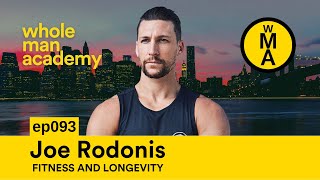
Episode 093: host Anthony Astbury interviews Joe Radonis (fitness coach, Tone House head coach, and model). Conversation covers Joe’s background (finance career, modeling in Cape Town and with David Gandy, family loss), the Tone House training community and Turf Wars event, training philosophy (simplicity, mastering core lifts, team-driven conditioning), actionable nutrition/supplement advice (creatine, protein powder, beet powder, emphasis on food first and supplement quality), and mindset themes around patience, gratitude, and longevity in training.
Okay, guys, before we jump into the podcast with Joe, as always, reminder to click the link in the show notes, unless I've forgotten it, to subscribe to our game changing weekly E letter goes out to guys around the world on a Tuesday and every Friday. Thought provoking content to help you do life better, right? Here we go. Whole Man Academy.
Because the world needs strong men, Wholeman.
Academy is changing the game for men around the world.
It's for guys who want to live an epic life of fun and adventure.
No matter what we believe, deep down.
All men want to go on their own hero's journey to becoming resilient, confident, fearless and fulfilled. Listening to be inspired by guys who.
Don'T settle for living a life of mediocrity.
This is your call to action and call to adventure.
Are you ready? Okay. So this is the Whole Man Academy podcast episode. I think it's 93, could be 94. I've lost track these days. My guest today, coming all the way from New York City, is Joe Radonis. He's the head coach of Tone House. We're going to talk about that. He's also a model. Big strapping lad. We're going to talk men's health, fitness, mindset, mistakes men make, and most importantly, burritos. Now, Joe, how are you? And we know you're from New York. You're there. So is that where you are at the moment?
Yeah, I'm in, I'm in Dumbo, which is part of Brooklyn, just across the water by the Brooklyn Bridge right now. So, yeah, coming out of New York.
I mean, Preston, I'm trying to kind of spread the podcast a bit around the world. Last week we interviewed guys from Australia and we've got guys from all these, you know, week before it was Nicaragua. So we're kind of trying to delve into the mindset of guys all around the world. But before we jump into all the questions, I know when we spoke on Instagram, you'd actually worked at some point in, was it in South Africa with David Gandhi?
Yeah, man, it was a cool experience for me. I don't know if David remembers it or not, but I, I had a chance to talk with him for a little while and I had just quit my job, my corporate job, to go to South Africa. Like, I took this huge leap of faith and I was the day before that job happened, true story, I was about to leave Cape Town, I was about to go back home, and I elected to extend my visa. And with no job secured, by the way, I was just like I don't know. I have a feeling I'm going to stay. And the next day I got a call being like, hey, you're going to go on set with David Gandy. And I was like, what are you talking about right now? Like, this guy was absolute. I think he is, for a lot of people in the industry, like, was like an idol, right? Like, you look up to this guy. You know, I was always taking inspiration from. Because I love how he carries himself too. So to be on set, it was almost like a surreal experience to me. And he was one of the best people I've ever met. Like, so personable, helped me out with some good advice. Like, sat down, had a great conversation, and it was just cool. Watch. I. I did like nothing in that shoot, by the way. I was like completely in the background, right? Like, nobody cares. But watching him do his thing was really cool. It was awesome.
We're going to get onto the modeling because I always think it's one of those. So my sister was a model for years and was out in New York and Tokyo and a few different places. And I went to castings and I always found it amazing that I'd be in a room with. I mean, it sounds terrible. I'd be in a room with like 50 beautiful women and. And, you know, 49 of them were going to get told, you're not right for this, and, you know, kind of sent away. So, yeah, we'll talk about that because I find that really interesting. Well, let's talk. I mean, the majority of what we talk about is men's health and fitness, but just give the guys a background. Because you had a degree in finance and I was reading where you spent time in the field of nuclear medicine. And I'll be honest, I haven't got a fucking clue what that is. So can you honestly is the best policy.
Dude, I didn't know either before I got into it, to be honest with you. Yeah, I got my degree in finance and like, you know, when I had graduated college, I thought I was going to go into investment banking, you know, kind of like everybody else, you know, going for the money. But it was not my personality at all. So I get into sales and yeah, nuclear medicine was a fun field. It's really just diagnostic imaging. So it's similar to an MRI scan. But this instead of just getting an image of the tissue, this will image, like the organ and how it functions. So you can like target. I mean, you put a radioactive isotope and you attach it in a pharmacy to like a. A biological component so that it can go to the organ you want. So if you want it to trace the heart, right, you match it to something that can follow the heart. So you get an injection. You have this isotope that goes in it kind of lights up the heart, and then you can see it be. But you have it for. You know, you have it for every organ, right? Kidneys, livers, brain. Right. You can do imaging. So it helps for staging. Right. Of, like, if you have heart disease, instead of operating on the heart, you can see how blood flow is going through the heart, and then you can go do what you need to for treatment.
Interesting. And this is why I always love doing these podcasts, because I would say, apart from picking a few random topics, you. When you delve into kind of someone's past, you never know what stuff you're going to come up with or what kind of random tangent you're going to go off at. So I've. I've learned something, and hopefully the guys have already by going, all right, okay, that's something new to me. But so you. Was it right, you originally from Chicago, but you then you moved to New York?
Yeah, yeah, I was in Chicago. It was. It was a mix of things. Grew up in Palatine, Illinois, and I just wanted to leave after high school. I had this, like, urge to kind of just experience new things. So not too far away from home, but I went to school in Indiana, so I went out of state a little bit. And then I got actually a job back in Chicago with Cardinal Health was my first company, but I stayed with that company for 10 years. They started to move me around, so I was pursuing these things. They're such a large company that there were so many opportunities. So went to Columbus, Ohio, for about two and a half years. That was where they were headquartered. And when I was there, I got to network to try to get into sales, which was what led me to nuclear medicine. And that opportunity led me to Charlotte, North Carolina. So I was there for six years, six, seven years. And when I was in Charlotte, that's when things completely changed. Like, I'm doing the sales job. I'm getting into management. I'm 10 years in. And before New York happened, there was a series of events that happened with my father passing away, my grandfather passing away really close to each other in time. That that year was very transformative. And I ended up taking a leap of faith. I was kind of in modeling, but I was presented an opportunity in modeling to go internationally. They were like, you know, you can go to Cape Town for their summer season, if you want to do this. And I remember talking to some of my mentors and they were like, you know what? This is a once in a lifetime opportunity. You might want to experience this. They were like, this sales job will always be here. But if you have like these types of opportunities happening, like, even if it's for just three months, like, it could be one of the cooler three months of your life. Like, go do it, see what happens. And ultimately, after Cape Town, that was six months, there was a process to get to New York, but I pretty much took a shot in the dark. I was like, look, Cape Town was fun, but let's see if we can keep this going before I go back to a normal job. Let's just see what happens. And I submitted to agencies in New York. One took me, and that's all I needed. I came, I moved, and I just kind of built, you know, from there.
I find it so interesting because also to touch on. I know funny, later on in the, in my notes, I always like to talk to guys about either fatherhood of them becoming a dad, or their relationship with their father. Because it's such an interesting, you know, the more I learn about men and fatherhood on both sides of it is. Is such a. I know it can take you off in different tangents. So with your, with your dad, when he passed away, did you. Was it a sudden thing or did you have time to. You know, when people have a long term illness, they have time to actually kind of compartmentalize it, but if someone has a heart attack and dies quickly, they're gone. And it's like, what. What's that all about?
Yeah, it was kind of both because he had a brain tumor. So he had it for about 10 years. Yeah. And he was functioning with it. We had it kind of under control, but it was also inoperable. So we had one of the best surgeons, brain surgeons and doctors for this specific type of tumor, working with him. But we knew that there was nothing that could be done. It was just one of those things you had to live with. So they were managing it, but the way he passed away was very sudden. It was the slow decline. I think he had brain surgery that last year before he passed. And ever since that surgery, he wasn't really the same. There was like kind of a decline where he wasn't really acting himself. But there was just one day that honestly, he just didn't wake up. And it was because of. He had an accident. He just had a fall. And it turned out that he had a brain stem bleed. So it was actually in the morning. My mom found him. We didn't even realize what happened. And by the time he got to the doctor, like, I got a phone call. I was in Charlotte and this was in Chicago. And immediately when I got the phone call, I was in shock, to be honest. I didn't. I didn't almost know what to do. I thought it was surreal. And I was on set, actually, for a modeling job, and somebody. I hung up the phone, and she's, like, asking me what happened, like, this person on set, and I say, well, this is what happened. She's like, you gotta go. And I was like, such in paralysis that I was like, holy crap, I gotta. Actually, yeah, I need to leave. Like, I almost didn't even think, like, this was happening. So it was a bit of a shock at the time.
It's a very. I was talking about it on one of the previous podcasts because also, for a lot of us, we're. You know, I don't know how you teach people how to kind of navigate when either parents die or, you know, relatives or something, but, you know, sometimes it can be such a shock, and some people really don't recover from it for a while, but it is a bit like life, you know, it's how you kind of bounce back from this stuff. And what was your relationship like with your father?
It was strong. I mean, me and my dad had a really tight relationship. He was a huge, huge role model for me. So we, you know, he was my baseball coach, he was my football coach. He was like. He changed, actually. So he was in construction. He did construction for a living, and he was working for a company. And then when. When I was growing up and starting to get more into baseball, he ended up starting his own company, mainly for the reason to be able to have more control of his schedule. So, like, he kind of took a leap to do his own work, and he was able to spend more time, like, with us. That was, like, the whole reason for doing it, which I thought was really cool.
Yeah.
So he taught us a ton, man, his work ethic was incredible. And so we've just carried so much from him, my brother and I, learning from him.
Well, so that's my next question, because I always think with, you know, I've got a sister who's two years older than me, and she's probably. She probably knows more about you than anybody else in the world, which is quite worrying, to be honest. Some. Some of the things she knows.
But.
But I always said I wish I'd had a brother as well, just because some of my mates that did have brothers, I was like, you know, they were playing sport together and they was kind of spending a lot of time play fighting. So what's your relationship like with your brother?
It's tight. Me and my brother, I mean, that's my best friend in the world, so it's funny. So I have a podcast too, called the Athlete's Pursuit, and for the first episode of this year, I had him on. Last night, we were just chatting. So we bounce. We almost, like, consult each other. Like anything going on in life, just daily basis. It's almost like we have many therapy sessions where we're checking in with each other's perspectives, mentalities. We're keeping each other in check. So big decisions, like career changes or, you know, risks that we're trying to take, relationships, you name it. Like, we're always chatting with each other to make sure that we're, like, in a balanced place making decisions and just navigating life together. I mean, that. That dude is by far the. My best friend in the world. So, yeah, incredibly tight.
That is A, it's cool to hear that. And B, I mean, the whole man academy's big thing is about how important it is for guys to get together to talk, which, you know, until lockdowns happened, you know, we'd had 12 plus events in London and, you know, David Gandhi had spoken at one of them, which was our biggest event. We had like 65 guys in the room. But I always think it's great. Yeah. If you've got a brother or someone who you can be, like, bounce those ideas off. Especially as, you know, we all know you've got the challenges of life going up and down. Well, let's. Let's jump into kind of where you are now. Talk. Well, tell me about Tone House, because I. I was looking at the website and, you know, looking at a lot of your. To get more of a picture of yourself. And I love great gyms. So tell me about Tone House and how you ended up being a head coach there.
It's a special place, man. I don't think that there is a gym like it in the world. Uh, I really mean that it's. So the premise of it is an athletic performance studio. I mean, really how it started was Alonzo Wilson is the founder and he's still a coach and very much involved with Townhouse heavily. Um, he was a football player. Right. So he was a linebacker, I believe, in college. Um, Brian Kelly who's the now head coach of lsu, was of Notre Dame, was his coach back in the day. So his whole thing was the people that were in the best shape of their lives, we're not doing it alone. Right. So it was always team inspired and team motivated. So you have this huge community around you, because if you're feeling low on energy, well, then somebody on the team's gonna be able to raise you up and vice versa. Right. But you're also, if you're not feeling, like, working out, it's almost like you get in that room and you got so many people involved that you can't let this team down. Right. So there's a huge. It's like. It's like, screw your feelings. This ain't about, you know, we feel good today. It's like we're getting it done, right.
And then it looks like it's your motivation.
Yeah, it is, man. It's like this energy that just becomes so addicting, and you just help each other in every way possible. So it's. It's a mix of conditioning, group classes, athletic conditioning, and then athletic weightlifting. So you have those two separate classes. We separate them for a reason. Not combining. It's not cross training. Right. And, yeah, it's been. It's been voted, like, the hardest workout in America, know, a couple years in a row, you know, so it can be an intimidating place, but it is an amazing facility.
I saw when I was reading about it, one of the things you said was that you fell in love with the community in the team atmosphere. Community is so, so important because I know some guys that. And I felt that when I used to go to the gym in London, that you kind of just went with your headphones on or, you know, whatever. You worked out, you focused on what you're doing and you went home. But actually, what maybe you. They. They failed to create was the. The feeling of community, which I think is quite priceless. And it looks like it's a lot of fun when you're at that gym as well.
Yeah, it's a great time. Like every. Like this morning, like, I'm having a blast. And it's kind of one of those things you learn. Like, even this morning, I woke up, you know, it's a little bit early, like 6am Wake up, right. Still a little tired. So, like, if it was left to my own devices. And my brother and I talked about this last night because he cheered at University of Kentucky, and so he was talking about this energy of camaraderie that as soon As I walk in that gym, I'm, like, energized. Like, I was tired a minute ago. You come in, and I'm like, oh, shoot, here we go. Let's get. Let's get to work. You know, and you kind of get out of your head. You get out of thinking and just in. In the zone, which is the trouble with working out alone. You're kind of left to your own devices, you know, you're left to feel your emotions. And so there's always that voice in your head that goes like, ah, it's enough. I did enough today. That's cool. You can slow it down. You're fine. Right? But when you have all these people around you, it's like, you don't even think about that. You're just not thinking. You're just doing. You know, which I think is where great things come from.
So that having that, you know, having someone push you, I just don't think. I'm not saying that not everybody can, but for most people, you just cannot push yourself as hard as on your own as you could with someone else. You know, you and I are at the gym, and I'm like, I think I've done enough. And you're like, fuck that. You've got one more at least in you, and then suddenly done three more or something. That's where the. That's where the support comes in. Well, I know. I was watching the events you did. I saw the one in 2019 that the whole group was doing, which, you know, reminded me of a version of a CrossFit Games type. I don't know. It just looked like a really, really cool event. So can you tell the guys about what that is? Because that looked awesome.
Yeah, that. We call it Turf Wars. So that's. Yeah, that's our tone House competition, which has certainly taken legs, and we had to postpone it last year because of, obviously, the pandemic. Right. But we're bringing it back this June, so we're thrilled about it. I think the whole community is. But it's a chance to, like, train and lock in and then, like, see how you stack up against, you know, the whole community. So, you know, whether you're incredibly competitive or just want to go in and have a good time, like, everybody's welcome for it, you know? So we go in. We kind of go in heats. We have a men's division, you have a women's division. Right. But it's a mixture of all these different conditioning events. So fastest sprint, fastest double sprint. We do things like Gallops runners. These are like some signature kind of moves. We do a thousand meter row, but you basically have these events and you stack up points at the end to see who's gonna take home the prize, so. But it's fun, man.
I was just gonna say it looks from a. From a. I've always been a guy who, when I say I'm competitive, I don't mean that I have to win. I don't really care. But I always wanted to just test myself, you know? And in fact, we had a guy on the podcast a couple of weeks ago who, Johnny has got his own watch company. But the watch is, long story short, backstory of his grandfather was a firefighter. And the watches are made from a lot of bits taken from, you know, replica fire stuff and hoses. But he was up near me and they had the kind of fittest fireman games or something like that in the uk And I was there watching and I was just like, I just want to have a go. Because. Not that I was pretending I was going to be as fit as these guys, but it just looks like a great challenge to just test yourself.
Yeah, man.
And I don't think people should ever stop testing themselves because that's where. That's where the fun. Fun kind of comes in.
Yeah, it's something too. Like, when I work with people, even individually with, like, private training, you always have to anchor your training to something because like, otherwise, it's like we're just training. We're just kind of going through the motions. Right. Like, we've all been there, where you're just kind of going through maintenance mode. You're working out to work out, and it's as much fun. Yeah, yeah. It's more fun to be like, yo, in six months, I got this event to go for. So, like, I really want to do well. And, like, you know who. It's not the Olympics. You're not a pro athlete. Who cares. So, like, if you get first, you get 20th. Does it matter? It doesn't really matter. Right. But it's like, it's for you. It's like just a really great way to just see what you're capable of, man, you know, and kind of surprise yourself at times while you do it.
That is. That's a really important point. I totally agree. And I laugh because about anchoring yourself to something and, you know, we call it just even if you said it's goal setting. I remember at one of our first homeowner academy events, we had a panel and I said, when we Were talking about fitness. I said, you know, everybody in the room, if you want to kind of get more into your training, basically as you said, anchor it to something. Be a beach holiday coming up, be a tournament, be it a race, a run, you know, or you're building muscle or something. One of the guys said, oh, but that puts too much pressure on people. How about just going to the gym to enjoy it? And I was like going to the gym to enjoy it. No one woke up in the morning, was like, oh fuck man, I can't wait to get up at 5:30 to get to just to enjoy it.
It.
I needed something to spur me on, you know, to finish. And I did. I came out to Ohio because I did the obstacle course racing world championships, so represented the country. But, but the important thing was I was in my age group, so they had the elite races, but I was like in my mid-30s, so I'm never going to compete with the 22 year olds who are pros. So. So I did it in the age group and I wondered when I was watching the video of you with the turf wars, do they split it into age group or is it just male, female? Go for it.
Yeah, so. So the results are broken up into like ages, but you compete just men and women. So we'll separate it out. Men compete and then women compete. Right. But then, yeah, the rewards will go out like an overall winner, then event winners and then broken up by age group winners.
It looks, it looks good. I'm going to try and share some of it on the whole Man Academy Instagram or on our E letter. But funny, I always love it when guys seem to have been reading my notes because one of the next things I had writt was the gallop exercise, which, which I've not seen before and I'm not even sure how to explain it, but it looks really hard. It remind me of a turbo version of like when I say a burpee, what I mean is I remember listening to a guy. Who was it? It was Tai Lopez. I don't know if you even know who he is, but anyway, I know he is. Yeah, yeah. And. And Steve, who's a guy who's on the podcast, kind of hangs out with him and he's in London and, and I remember him saying, you know, for most guys, if you're trying, if you've got no money and no space and no knowledge, even if you just did like 50 burpees every morning or something like that, you know, you'll start to get in shape and Seeing the gallop stuff, how would you explain to someone who hasn't seen it, how do you even start with doing it?
It's a. Well, it's a pretty dynamic movement. How I would best explain it is that it's like a full body conditioning movement. So it's really. To break it down simply. It's like moving from your feet and jumping to your hands and repeating. Like, that's really what it is. It's like hands to feet, hands to feet, hands to feet. It's almost like an even bear crawl, you know, if you will. Right. You're jumping off of two feet, landing on two hands, and it's just a transfer of power. So, Alonzo. So it's. It's been around, I think it's called in some places, like, I know in Canada, they call it gorillas, you know, Cause it looks pretty primal. But Tone, House and Alonzo like, really made it like, it's one of our famous moves. So we really, like, do this routinely. It's a sports specific move. Like, I think in football, it kind of simulates, you know, blocking or putting your hands together and staying even, squaring up with your defense or offense. Right. And using full power, like full body. Right. You're using your legs to power through to the hands. And that's really what it is because you're jumping from hands using. Right. Your posterior chain, using a lot of power, a lot of explosiveness. But then you're also getting a transfer where the weight then goes to your shoulders into your upper body, and you're almost using your lats to pull through. So it's like a really cool dynamic movement. And it requires a lot of mobility.
Yeah.
So it's a lot of hip mobility. So as you train and you kind of do the squat work that we do, or some of the weightlifting work that we do, you tend to find that you get a little bit more mobile, and then over time, your gallop gets more explosive and a little bit easier, more effortless through the time. But when you're first starting out, it can feel a little restrictive, mainly especially for men, because they hit mobility more than anything.
Especially for guys that sit. Like, I used to sit at a desk for 200 hours a month.
Right.
That's why I laugh, because I was like, I'd love to. You know, the next whole Man Academy event, you know, I show guys what it's like and get them to have a go. But then we'd probably end up with a lawsuit with some injuries. So perhaps I'll leave That one I was reading about, like, your, say, training philosophy. And one of the things, you know, which I thought was cool was like, keep it simple, like, master the basics. So for guys listening, who I would guess, you know, I mean, guys listen to the podcast from over 40 different countries, but I would wager that most of them go to the gym or do some kind of fitness, and if not, go and do some fucking fitness. So what about yourself, like, with keeping it simple and master the basics, what are the things the guy should be doing?
I. So there's always tons of answers for this, right? Like, my personal philosophy with it kind of matches more what you would see, like in a. In like a team weight room, right? Or like a professional sports, like, locker or a gym, right? Cause that's. That's really what Tone House is modeling after. And I've learned a lot from Alonzo Wilson on this where who's the founder again, that simplicity is everything. So we. I lift in the way of having your main lifts, which would be squat, bench, deadlift, right? Even, like overhead presses and that. That's your. Your core movements. And then below that, you have accessory lifts, which are things that support those main lifts, right? So for bench press, you think about, all right, chest tricep, right? Lat, like, that's what's supporting. So if my bench press needs improvement, well, I should probably be doing some tricep extensions to obviously grow there, right? Should be doing some dumbbell trespasses to grow there. And that's for higher reps, right? So you can build more endurance, volume, things like that. But that's what I mean by the basics. We're doing things that are leading to those, like, three core movements too often in the gym.
So.
So look, it gets redundant. It gets repetitive, right? Cause I'm not doing anything crazy. Like, if I were to film some of my workouts, you'd be like, that is boring. This dude just did a hundred tricep extensions. Yeah, right? It's nothing fancy at all, right? This dude just did goblet squats, like, a hundred times, right? There's just something going on with social media where you see so much variety and you see, like, these crazy movements, like squatting on bosu balls or, like, doing backflips off of stuff or like plyo variations and like this rolling out to here and this and this and this. Bands are attached to everything, right? Bicep curls with bands and blah. And I'm like, you don't need any of that. Like, do a bicep curl, like Master those basics, like bands and stuff shouldn't be introduced for these movements until you're far advanced and only done in appropriate ways. So conditioning workouts can tend to have a little bit more variation, right? Because you need a little bit more like, hey, we're going to bounce from this to this. But they're still focused. But the lifting is, man, you stick to the basics and you just hammer, hammer, hammer. How can you get better at a squat if you're not squatting, right? So it's just, it's just about that. And you keep. Where the, where the fun is with those types of lifts is more pushing, more weight and hitting, muscle failure and seeing what you're capable of within that lift. And that's where you get into mental games, head games, you know, and even form and just like checking in with your body routinely.
It's all these different things, isn't it, that a guy needs to kind of consider? And I know one of the things you'd said was, which I find so important is surround yourself with the best or kind of control your environment.
Got to.
And we said about, even if you've got a, if you don't enjoy exercising, find some people around you that, that do that motivate you, but also make sure you're doing it in the right way. Because I've seen that where, when I used to go to the gym a lot, especially in the city where guys would be, I'd give them 10 out of 10 for trying, but you'd be looking, thinking they're going to hurt themselves or something like that. So how much don't you think is making sure they're doing the, say that the basic moves right and getting around.
The right people, it's, it's, it's probably everything. I mean, where people make mistakes with lifting is going too hard too soon and it's like ego lifting, right? So it's how you get hurt, man. I mean, that's the only way you get hurt in weightlifting is if you are not ready for a certain amount of weight. But you think like, hey, I can do this. But nobody cares how much you can lift if you can't do it with proper form, right? Like partial reps don't count. Nobody's impressed with it. You shouldn't be either. Plus, what benefit does it do, right? So work on full range of motion with things. Take your time. I always advise people to lighten the weight and go more for depth and good range with your lifts and make sure that it feels good. Then the weight naturally Will come. Like, how could it not, right? You've mastered the lift. And I want to give you some examples, too, because this was front of mind with my brother. We were talking about this with Kentucky, the simplicity of training. He had three days a week of weightlifting as a team. Three days, right? This kid went from 190 pounds to, I think, 230 pounds in a year with three days of lifting a week. That's it. Right now they're doing, right, three times. And on Monday, he was just saying, power cleans and bench. Two movements, two for an hour. Power cleans for 30, bench for 30, nothing else. And when I'm programming, too, it's like, here's four movements that I'm doing today, right? And everybody, you know, if you look on, you know, magazine publications or, like, too much, even with influence, I think there's like, here's these eight to 10 workouts I'm doing in a session. You're spreading out too much, right? It goes back to focus. Like, I want to master these things.
Yeah.
You know, and that's what.
For guys who. I'm not used to read Men's Health every. You know, I basically could have written my own Men's Health after about four years because I read it cover to cover. But what I then found was sometimes you'd go, you know, what's the latest exercise that you should be doing? Instead of going back to, you know, as you say, let's. Let's keep it simple. And the other thing you said was, focus on the long game. And so how old are you, Joe?
I'm 36.
You're 36, so I'm 43. And, you know, I've noticed that I certainly. I sometimes ache more these days than I did in my 20s and 30s. You know, we've got. We've got two young kids, and their sleep has been. It's a technical term, but their sleep's been fucking terrible. So we were getting woken up five, six, seven, eight times a night. And a little one who's two and a half has only slept through the night maybe four or five times in two and a half years. So it's.
Wow.
As. As you know, then it's about, you know, you could have someone to go, right? You know, you've got to hit the gym, do this. But some mornings you wake up and you're like, I just haven't got it in me because you've only had, like, three or four hours of sleep. So work with clients who are juggling, you know, kids. I bet you know, busy office work, everything else that goes with it as well.
Well, it's somewhat about, like, meeting people where they are to a degree. Right. And then building from there. So sometimes the hardest part is just like finding the time and creating a routine and a habit. Right. Because you need to carve out that time in your life and kind of get used to that. And that does take some time, especially if you haven't had that before. And then with a busy schedule, you're now, like, adding this. I always prefer to start slow and like, hey, let's. Let's work together a couple times a week. Right. Let's work on basic movements. And I'm always checking in with people on if they're. If they're over training or not optimized right now. It's not a time to go PR on squat. Right. So. Right. So I'd rather work on a foundational level where it's like, hey, let's at least master body weight stuff. Let's at least get your body moving so you're shaking it out and building momentum. Because something happens. If you just, like, kind of keep this in a realm that you can achieve in the beginning and build it up, give yourself time and something. Because life changes, life's going to change. So you might have some free time, open up. And then all of a sudden, all right, I can dedicate a little bit more time to this. And I think if you stick with it, there tends to be. I noticed a shift in even how people view this and where it fits into their life, because I think there's benefit to this, that your mindset, your energy, just how you feel, your mood and your productivity generally starts to improve when you have a good training routine in place and once you sign it start to correlate those two, it becomes a little bit more easier to fit it into your schedule and to dedicate more time to it because I think you realize how beneficial it is to the other aspects of your life.
You know, there is a lot to take in, isn't there? Because I guess it also depends on, as you say, like, if a guy's traveling or, you know, if he's a, say a young dad or say he's a dad who's got young kids. Because, yeah, I'd love to exercise every day, but I say it's having the time in between, you know, keeping the family ticking over and everything else. And I was going to ask you about. With the nutrition, in fact, we had. You saw my Instagram. I always love to put ask A couple of people who know who I'm going to interview another guy interestingly called Joe. So it makes it easy to remember was asking about, with, with guys that are going to the gym, what kind of supplements do you often see them taking? So it's not necessarily you saying you should have this and that because I know every guy is different. But what are the kind of common ones that you see guys taking that get some good results with?
I only promote two and I only take two. I only talk about two personally. And that's, that's creatine and that's protein powder.
Right.
That, that's really it. The only third that I would maybe throw in there is something called like, like Beet Elite is a great company and that's really just beat up beet powder. That's it.
What is it?
Beets beats just straight up beets. It's just beaten to a powder. So it's more, a little bit more concentrated. But there's, there's. It's been studied pretty well where again, it's just a vegetable. Right. So it's. I would, I have a hard time even calling it a supplement, but because it's condensed or concentrated, you can see a lot of improvement with like your red blood cell circulation. So it helps open up your lungs a little bit more. So like your cardio capacity kind of opens up before you go into a workout. Yeah, but creatine is something I take on the regular. That is the most researched, heavily researched supplement on the market. So we interviewed on the podcast one at the time, the dietitian for the New York Giants, the football team here, he was talking about the benefits of creatine and he made the statement that he's like, even if you are not lifting and working out, I would even have my mother take creatine because there's even cognitive benefits. So there's links to brain health and brain function. Plus you're already taking creatine. If you eat meat, you're getting creatine. This is just. You're going to add more so that it does help with your lifts. I think there's some weird myths around it that are completely not true. Like you get bloated, you retain about a water weight. You're going to look like did not experience any of that at all. You just kind of have a little bit more in the tank when you lift, you know, so it helps maximize some strength. But yeah, that's it. It's simple.
That's interesting. I, I remember many years ago when I think I First heard about creatine and we'll get on to the quality of supplements as well. And I don't pretend I'm an expert in it, but my partner is a naturopathic nutritionist, so she, you know, has studied this stuff for a long time and she would get frustrated when people are like, you say, oh, are you taking something like, yeah, I'm taking this, this, this, this, this. And you're like, what the. Do you know how. Yeah, like you're rattling around and then you realize that a lot of them are just taking the crappy stuff that's off the high street, which you end up with expensive we instead of actually getting much benefit. So can you talk to guys about the importance of, of quality of supplement as opposed to just more. More isn't always better.
Yeah, well, I think you gotta remember that in the priority list of things with nutrition that food comes first. I mean, like, you gotta get real food first and just know how to fuel your body properly and hydrate. Any supplements were designed literally as a supplement to supplement your diet. Right. So it's not meant to fix the problem and so you can't address it. Right. You should be first and foremost trying to address a deficiency with food. It's just that if you have something with your body that creates a deficiency that is installed with food, then you go to the supplements. Right. So that's very important to remember. And then the quality aspect, when I was learning about this, it was shocking. Like there, there is not an FDA regulating the supplement industry. Yeah, right. So these quality tests and stuff, it is up to the company itself. So there was some alarming stuff with some protein suppliers where you found like, I think like trace of fiberglass, like in the, in the protein. You're like, what are we doing? Yeah, right.
So that'd be fine in your body.
Yeah, it's fine.
Yeah.
Like somebody said, like, oh, yeah, like, you know, what they put in yoga mats is like in some of protein powders. I'm like, what are you talking about? So there's one company that I mess with, like one company alone, and that's Thorne Health. That's the only company that I get supplements from. Like their quality testing is, is second to none. And I know they supply like they're in the States, but I'm pretty sure, I think they're, you know, a national, a national brand, but I know they're based here in the U.S. oh, I.
Think it's interesting because. Yeah, that's. You'll laugh because, you know, going back to the days when I worked with loads and loads and loads of guys in the city. I remember one, one guy who was really overweight and came in and he bought like about 50 quids worth of maxi muscle, you know, protein stuff and protein bars. And I was like, what, what are you doing? He's like, right, I'm gonna, you know, I'm gonna start hitting the gym. And I was like, you realize that's all just chemicals and sugar you've got there. And he was like, no, no, I've got these, I've got these protein bars. And he was eating like, you know, three or four protein bars a day, but he was forgetting to go to the gym unfortunately. You know, he was going like once a week. And I was like, okay, look like, you know like you say supplements might be a good additional something depending on, but actually you have to put in the work of eating good nutritional food. We will say eat real food, you know, living food for me, you know, I love a steak, I love good quality meat as opposed to the shitty processed stuff. We're lucky we live out where we can have organic, you know, or grass fed beef. Grass finished. We always eat as much organic stuff as we can. We've got our own chicken, so we eat loads of organic eggs.
But amazing.
That's why I found a lot of guys were just fueling with rubbish. And where do you stop? Because the problem is, firstly, rubbish is usually cheap.
Sure, yeah, it's true for most people.
So how do you kind of educate the guy to say, you know, try and cook for yourself and educate yourself a bit more?
Uh, yeah, well, I think it just comes down to like, you know, what, what result do you want? You want to do this the right way? Um, you know, I, I've done it all too right. Like I've learned this and made the mistakes. Yeah, some of that is a refinement process, man. Because I, I have been guilty of, especially when I was young, like 18, you know, I was taking those supplements that say like hydroxy cut, it's going to cut you up. And pre workout I need to do this to get jazzed up. And it's like you do not need to do all that stuff. You just say, you know, just kind of make some mistakes. But and eating protein bars and stuff, you don't get enough energy. I mean like it's, it's a good, hey, if I'm in a pinch and I can't get food, then it's better than not getting something right. So you get some energy. But it's like a last resort, like a protein bar to me, in my mind is a candy bar with more protein. So I'm not trying to live off that. Right. And then to me, there's just a correlation. For me, that happens that if I value performance and progress in the gym and I'm putting my time in there. Yeah, I hate wasting time. I hate wasting time and energy. So then I need to make sure that I'm giving myself resources to be able to improve in the work that I'm doing. So just no excuses, man. Like, if you want something, you have to find a way for it to fit. Otherwise you can't complain. I just, I hate the whole I'm not getting results, but you're not willing to change your routines. You know, if you want it, you want it, bottom line, you're gonna find a way to get it done.
Excuses are free, and there's lots of them around. So that's. That's often the. That's the problem. And I used to. I was really dedicated, but because I had something. When I was training for obstacle course races, I had my vision. I had a race every three weeks or something like that, and world championships and UK Championships. So that gave me the focus. And actually, when I was younger, I had a collapsed lung, so I had a spontaneous pneumothorax, which was. Which was lovely. And I had to have a pleurectomy, which means that my left lung is always inflated. So they stuck it to the inner lining of my chest wall, which is a really, really interesting thing. But when I came back from that, I couldn't exercise for, like, six months. I wasn't allowed to do anything at all, which was really painful because it'd be like me telling you, oh, no, Joe, no exercise for six months. You're like, that's gonna go. I'm gonna go mad. But when I got back into it, I had a newfound appreciation for it as well. You know, gratitude for football as well as that. But I did the same. I made all the same mistakes. I was chucking money at the next thing, I was having thermabowl, which is the super strength green tea capsules that made your heart rate go up. And I'd sit at my desk, like, sweating under my arms. People like, what's wrong with you? Fucking hell. But you were just basically having, like, 65 espressos in a capsule.
Yeah, dude.
But what have you been? Some of the most challenging stuff because you're, you know, you've got a great physique. You look Strong. You look mobile. What is the stuff you found kind of difficult? Has it been, you know, finding the time? Is it the progress? Is it anything else that's kind of. Sometimes you find frustrating?
Just patience, right? I think it's just patience because it results. Yeah. You want this stuff now, which. Which I understand. And for me, too. Me too. Like, I'm like, yo, I want to mute it now so, like, you can feed off that. Like, I'm. I'm definitely a pusher. Like, my personality is like, let's go, let's go, let's go, let's go. So you just got to keep it in check, though. So, like, that's great. When you're doing the work and when you want to, like, really dig in and maximize your reps and your time in the gym, you can have that energy, but you also have to balance it with an understanding of, like, this isn't going to happen in a week. Like, let's string. Like, I always tell my clients, like, string good days together. Just string good days together. You know, just like, in a workplace. You know, when they, like, in. In, like, those warehouses where they say, like, you know, 40 days without an accident. Right. Like, I try to do the same thing with, like, days in the gym. So, like, I'm trying to string them together, and then you get more momentum. So if I have, like, two good days in a row when I'm starting out, and then, like, oh, man, I took two days off. Well, all right, now let's see if I can string three together, four together. Right. But then you gotta balance with recovery. Cause we go back to longevity.
Yeah.
I'm not trying to get injured. So the hardest part has just been, like, that patience and setting the ego aside and not worrying about all the time, the weight you're lifting, and trusting more the process of it. Because I want to do. In my mind, I'm doing this for another 40 years. So there's a rush and a sense of urgency in the work, but it's balanced with an understanding of, yo, if I don't kill it this week, it's cool. I got 40 years to go. Right. So we're gonna get this addressed like it will happen. And I want to. I want to go back to what you said, too, about, like, the gratitude with the gym.
Yeah.
With having. With having, like, an injury. Because I had that happen in the pandemic where my teammates laugh at me because, like, I fractured my rib.
Right. How did you do that?
I fractured my ribbon slipping in the bathtub of all Places, Anthony, is what happened. It's a long story. People are making fun of me because they were like, Joe was doing TikTok dances in the bathroom and slipped. And that's not what happened. It's not what happened, but I slipped and I fractured a rib. So for two months, I mean, we're in lockdown as well, and I couldn't move. I literally couldn't raise my arm. So I lost a bunch of weight. But I remember coming back and being, like, so hungry for it and feeling so, like, anchored in gratitude of how I was able to move and the weights that I was able to push and just being like, dude, you cannot take this for granted. Like, all of this has to be anchored in a sense of gratitude and even humility, because one, it can be taken away like that. So if you get in the best state of your life, it can be gone literally today. And then two, just, like, to be able to move like this and to do workouts like, this is a blessing. Like, so many people would die to be able to train and be able to move and feel their body that way. So you got to treat each day like that, you know, and it makes more workouts, you know, it kind of makes it more fun, the whole process.
It's a good reminder to. I said in the podcast a few weeks ago, you know, sometimes your worst day can be your best day, and you might not notice it, you might not know it at the time. You know, when you're in the eye of a storm, you're not like, hey, this is. My house has blown down. This is brilliant. But it might be that, you know, years later, you know, sometimes your worst day can be your best day, and you might not notice it, you might not know it at the time. You know, when you're in the eye of a storm, you're not like, hey, this is. My house has blown down. This is fucking brilliant. But it might be that, you know, years later, and that's how I felt with my collapsed lung, that I, you know, I loved football, but, wow, when I went back on that pitch, it was like, it was Christmas for me. And actually, I. It's to show it. I won, like, player of the year and players player year that year because I was putting in maximum effort every game because I was like, I nearly had it taken away from me.
Yeah.
You know, like, you say, even we're going to the gym. You know, if you love that kind of stuff, don't take it for granted, because if, say, if you, you know, you get an Injury or I know something like a rotator cuff. You tear that and then you're. Yeah, you can't do anything for a while. You'll be like, I missed that stuff. But yeah, the other question was, was, was about. And again, the other Joe asked me, you know when guys have a bit of stubborn belly fat that they can't get rid of? And he was like, what, what? Apart from having some liposuction, what, what things could a guy do? What, what would you say? Options.
Options. Well, it's always going to be different for each person. But I'll. But I'll. But I'll tell you how I personally address it. I up and more explosive movements. Um, so food is obviously going to be important. But talking about the workout first, um, I always default to, I'm going to lift heavier, um, and maybe incorporate more drop sets. Which means, you know, like you kind of go into volume training a little bit. Right. So higher repetition with heavy weight. Right. So you're kind of mixing the two. Yeah, conditioning. I get more explosive. So I'm like, I'm not just doing steady weight, steady state cardio, which, which is great. There's a place for it, no doubt. But I'm like, let's go sprint intervals. Right. Like 50 yard sprints down and back, like fast and powerful movements.
Yeah.
And that's like when you look at physique differences, that's like the difference between a marathon runner and a sprinter. You see how they carry muscle different. And I always default to like that sprinter. Like I still want to be strong and powerful. So it's like a lot of sled pushes still. So you're still moving heavy weight, but you're doing it for a longer work capacity. And when you string those together again, stringing good days together, consistency is everything. I think you start to get momentum that way, then it translates to the kitchen. So like the conditioning workouts at Tone House always kick my butt into gear. Like if I'm feeling like a little stagnant, it like shocks you. It's like a wake up call that generates like, I think it just accelerates even your appetite and your food. And you, when you're, I think doing good habits like that, you crave healthier food too, at least I find. So then you match consistent eating. I'm a fan of, you know, eat small meals consistently, not just huge big meals a few times a day. Like try to eat, you know, maybe smaller bites more consistently. And I think you find the metabolism just kind of keeps working and you're just Kind of burning, you know, fat. But the. The stringing good days together like that and that momentum, like, you got to let your body get used and understand your body has to know that this is work that I will be doing. So your body will start to pick up and match the demands that you're kind of placing on it. But you got to be patient in that process.
And you just said patient. And that's the thing, isn't it? It's one of those where it's consistent work over time and like you say, mixing things up a bit. I think that's where. When I was training for obstacle course races, I liked it because you needed to be able to run 15 or 20 miles, but you needed to be able to climb over walls, carry sandbags, throw things, and do everything. So I used to try and really, you know, you do a certain bit of training, and then you'd completely mix it up and do some interval stuff just so that you had a bit of power on it. And also it kept it interesting. But you've just jumped on the topic. When we talk about food, let's talk about burritos, because I wondered for you what, you know, every food, I guess a lot of different foods. You can make a healthier version or a dirty version, as it were. So what kind of stuff do you like eating? And is it mainly burritos? Use your big. Your big thing.
I'm dead serious. I eat a lot of burritos, man. Like, it is very well known at Tone House, like, how much I eat burritos, and my dietitian turned me on to it. I think it's like the perfect, perfect food because you have. If you do it the right way, you have your carbs in there. You got your rice, you got your protein, you got your beans. You can put vegetables in there with lettuce, tomatoes, right? Healthy salsas. And then you throw in chicken or steak or whatever protein you need. Like, you have everything you need in there. I am definitely not afraid of carbs. Like, you freaking need them to fuel your workouts. So feed your muscles for recovery, get your energy right for conditioning workouts, or else you can't maximize your workouts. So to me, it's like just everything in there. I love chipotle burritos. I get them a lot. But there's also a very healthy place near our studio that does. Like a turkey. Like a turkey burrito. But I'll make them at home, you know, just make little wraps, you know, but it's a. It's a Nice little way to just. That's gonna get everything you need.
The prep side of it as well, you know, for people trying to eat healthier is sometimes, you know, I often say to people, if you can find something that is easy and quick and healthy to prepare, but it can stop you making bad food choices when you're rushed for time in the office or on the go. And yeah, you know, things like, like a burrito, at least you can prep it and wrap it up and take it with you. And then it's normal. When you get really fucking hungry, you're not like, oh, shit, I'm going to eating some sandwich that's loaded with, you know, crappy E numbers and fat and God knows what else. So what about for you? What's your. I hate calling cheap food because I think if you have a good balance to what you're eating, then you're fine. But, you know, for me, I do love when I supposedly eat good quality chocolate, but I do love a bit of chocolate now and again. I have a sweet tooth. So what about yourself?
No doubt. So, yeah, dude, no doubt. I do that for sure. My girlfriend and I have just created something that we call Refeed Fridays. So. So during the week, I try to stay kind of on point, right? So I'm eating a little bit more consistently high protein, you know, generally healthier right now. That said, I'll tell you, like, if I have a cravings for something, I just. I have it. Like, I just address it, right? I think deprivation just leads to rebellion with it, which is something, you know, the dietitian I work with, Ryan Turner, says all the time restriction leads to rebellion. So on Fridays, we call it like a refeed night. And we just eat whatever, honestly, kind of whatever we want. Like, we've gotten burgers and pizza. We've gotten like Chinese food, wings, you know, barbecue. You just. You just eat to your heart's content, man. But even with that said, there's almost still like a priority in my mind of, like, it still has to be like high protein to me. So I'm not just eating slop to eat slop. Like, I still want it to be beneficial. So I'm getting a burger. Like, I mean, we're getting. I'm getting a ton of protein with it, right? It's not like the dirtiest burger you can imagine. So it's still somewhat in line. Like, even tacos, like, all this stuff still serves a purpose. And I think when you're eating lean or very healthy, it's even just good for like the soul. Like, you almost need, like, this check in to just feel good. Like that food makes you happy. It just makes you happy.
Yeah. So she goes back.
Yeah, it's like soul food. And it goes back to my point of, if I'm doing this for 40 years, I'm not gonna restrict myself with like six meals a day of the smallest portion so that I can just be completely miserable forever. You know, you gotta have fun like that.
Do you know who. Do you know who Greg Plitt is?
Greg Plitt.
So he was.
Yeah, yeah, he passed away, didn't you? Yeah, that's right.
Which is. It's not a funny story, but it was because I was doing a podcast and the guys I was talking to, who are all fitness trainers in the uk, and we were talking about Greg Plitt. And then I was like, yeah, you realize he's dead? And they were like, what? And I was like, he got run over by a train, didn't he? He was doing as you do. I was like, lesson there is don't try and outrun the train. But I remember when I started watching his YouTube videos, I mean, this is, you know, probably 10 plus years ago, and I went through a phase where I was just only eating. Like, I wouldn't eat anything that wasn't really good for me. So my saying was, like, what would Greg do? You know, if someone was like, oh, I want some donuts and stuff? And I was like, what would Greg do? Greg would say, no. So it was really boring. And then I found myself, like, binging on, you know, because I'd stopped myself from having any of that stuff for probably about six or seven or eight weeks.
Yeah.
And then it was like I. My lid flipped and I had to eat as much crap as I could in a short amount of time. And, you know, was. Was ill for a while. So. Yeah, I like what you said. There was like, you know, if you stop yourself and you restrict yourself from having all this stuff, then at some point you'll be desperate for it.
Yeah. And then that's not why people quit. Like, I mean, you just burn out. You stop because you're like, this isn't sustainable. And if you're following a diet, I mean, it's probably not like that's why people quit. So it's like, match it to your lifestyle and so that it is a sustainable thing. Again, you just. There's not an absolute approach to this. So once again, you kind of balance it out with. All right, but if I want a certain result, you gotta understand that there's still a science to this. Right. So one plus one equals two in this stuff. So you can't just eat like an asshole and have donuts every day and expect to be just completely ripped. Right. Like, there's still a balance to it. So I just have certain rules. Like, during the week, I try to. When I can control it, I control it. And. But when I'm out with friends and, like, I want to have some fun, then I allow myself to do that.
Yeah. You know, well, that leads me on then to beautifully on to, like, when you're doing modeling, because I know you've done stuff like Under Armour and Garmin is it. And, you know, different companies. So how would things change for you? Because I know, like, when I was. When I interviewed David Gandhi or when I spoke to him, and obviously he's like, you know, when you've got a shoot coming up, then you. You kind of, you know, he's at the gym a lot more. And you're trying to obviously kind of reduce your body fat a little bit as well, depending on what you're doing. So what was it like for yourself? Because, you know, does your. Does your training change because you're trying to have, you know, look leaner?
It. I have done that in the past where, like, my diet has changed, like, the week leading up to it. These days, honestly, I. I don't like my lifestyle, just matches it so well. And then also, I've been doing it for. I've been doing it for a while too, where, like, the way I did it before almost felt like a chore and restrictive a little bit, where I had to, like, prepare for this stuff and I don't know, it just didn't really feel great. So I got to a point, oh, well, also, I was, like, really considered, like, too big at the time for modeling. Like, I've always been more muscular and this is the biggest I've ever been. Now, like, I think when I was in South Africa, I was like £185, 190. I'm like 230 now.
Yeah.
And so I even got to a point where I was like, I no longer care what these brands think, if I'm too big or, like, I live a healthy lifestyle, I know who I am, I like what I'm doing. So if it doesn't line up, I even got to a point of like, I really don't care. I've had more success that way for me personally, in the fitness space because I like putting on muscle. So a lot of Preparing for shoots and stuff. I'm kind of, I'm always lean year round. I try to keep like a lean physique and low body fat and you know, I'm in the, I'm doing two a days and, and stuff training five, six, seven days a week anyways. And always like, I just love the process. So I'm doing this regardless, you know, I like it.
And I always find these conversations interesting because even when I spoke to David, you know, it depends what shoot you're doing and if you're keeping yourself in good condition. I, I think it might be an urban myth, but I remember I was doing, I was doing a thing where I was in Cosmo, Cosmopolitan magazine for modeling like many years ago as a one off thing for, for jupe, which is, you know, the aftershave and the men's what have you. And I think I'd read in Men's Health and maybe it does that like if you drink some red wine just before you kind of have the shoot, it doesn't. I remember being in London and the girl I was had come to support me at the time. I was like every. All the guys that were backstage were like doing press ups and you know, kind of trying to get their body pumped. And I was like, can you go to bar and get me a drink? And she's like, sorry, what? I was like, go and get me a large glass of red wine. And she's like, are you joking? I was like, no, go and get me a large glass of red wine. So she, she came back and all the other guys are standing there drinking their water and I was like.
I.
Felt a bit drunk after, but so I wondered, have you ever heard of that one? Or am I just imagining it?
Oh yeah, no, that's real, man. Yeah, that's real. I mean that's.
What does it do?
It's dehydration, man.
Right?
It's dehydration. So like. Because that's what I listened to David's episode on this and what he does and what he talked about is like a bodybuilder technique and like I might do something like that, right? Like a way to tighten up. Sometimes it's by accident. So like if you go out and drink and then like, you know, the next morning you look like really lean. You're like, what the hell is good, right? But then you start drinking some water throughout the day and what happens? You get a little bloated, right? You're like, oh shit, where'd that go? That's essentially what that is, I think what bodybuilders do. I might get this a little wrong, but I think leading into a competition and a lot of. A lot of advice for nutrition is kind of based off bodybuilders, which is not always the right way to go. It's. It's an approach. It's not always the way. They will, as the week goes on, start with a bunch of water, like say a gallon a day, and they'll slowly decrease the water they intake leading up to, say, if the competition on Saturday, their carbs will be low and then they'll start to increase the carbs. Right. So you're decreasing water, increasing carbs. So by the time the thing comes up, you're dehydrated and you're ramping up. Carbo, like clean carbohydrates, like a lot of sweet potatoes.
Yeah.
So it feeds your muscles. So the muscles kind of pop, like 3D, almost like photoshoppy. And then your skin is so, like, sucked in because there's no water in your system. So it's just like this suction kind of like feeling. So that's why, like, the definition really, like, comes out, but not sustainable. That'll last, like for. That's like a day at most, right?
Yeah, yeah, no, that's. There was a. I'm trying to think. I saw on Instagram the other day, there was a really great post where they had a guy who had a big muscly guy, had amazing physique, and they showed how he came in and just took his shirt off in normal light. And then they said, right. They let him like, exercise for like 20 minutes with some weights. They changed the lighting. He. He shaved his chest a bit. They sprayed some water on, and maybe he was dehydrated. And suddenly he went from, you know, looking total cover model from before. And you realize so much of it when you see cover models on thing is an illusion, because it can. It's not that they aren't in great shape, but if you just get the lighting right with the abs and what have you, it can. And the veins popping, it can be totally different.
Yeah, dude, you. You learn that big time. I mean, like, I. I see that in myself, like every day. Like the before I left versus the after I left, like the pump. Right. That we talk about that Arnold talks about a lot. Like, it's a real thing.
Yeah.
And then, yeah, of course, like the light and the dynamic lights, like, does everything. Like, you can. You can have light coming right at you that flushes out your muscles. So you just look flat. And then literally same guy, change the lighting to be backlit and you have a toy. You see everything. You're like, oh, man, you look ripped. So it's all about angles and perspective. Sometimes, man, it's good to talk about.
That because, you know, it's easy for people, especially with this, the selective sharing of like Instagram and we talk of social media, but Instagram that, you know, often as I say, you, you'll see a one shot of someone and be like, wow, hell, they're in amazing shape. And you're like, okay, but they're not as ripped as maybe, you know, they're not. They don't look like that all the time. It is the lighting. And actually David spoke about that, our event, when he said, you know, as he got older, he'd see guys on Instagram and he said, even for me, I'd be like, fucking hell, those guys are in great shape. And we had guys in the audience be like, oh, my God, if David. You know, it's good to hear David say that. Even he compares himself sometimes to other guys, because that's just what guys do.
Sure. I think I just. It's just a human condition, I think, man, we're always kind of comparing. I've been guilty of it for sure. It's just kind of keeping yourself in balance because. Yeah, I mean, being in peak shape and stuff like that. Right. Like, I've been in my best shape. Like, I, I have felt it. But to stay at that level and even to stay at like low body fat percentage, it's not really great for you. It's not great. Like there's a healthy balance. I think if you get to 6% body fat, which is like, you would be just shredded up looking great. But if you get to 5%, like, you're almost at like organ failure. Right. Like, your body needs this, so it gets painful and then there's. There's side effects to that. Like you're a little bit more moody, your libido drops, like you're not as energized. So the sustainability of that is not great. So you can say lean, but, you know, 8, 10%, 12%, like these are healthy ranges, you know, and then you can go up and down, fluctuate within a healthy, within a healthy range. It's not always about being, you know, completely ripped all the time.
Especially if, I know, well, New York's got, you know, a cold season as much as the UK have, whereas if you're in other hot places, maybe you're on the beach this whole time. But I know plenty of guys in the uk and it's like, you know, from probably October to March, you're. You're just in the gym covered up all the time anyway, so you can kind of, you know, maybe say, let yourself go, but maybe you can indulge a little bit more on certain things, and then you can. You get to summertime when you might be. Have to take your. Take your shirt off or something. Also with modeling, what was it like when you first started? Because it's like anything when you first start, you're like, don't know what I'm doing. And I don't want to look silly. So what have some of the jobs been, like, where you've actually had to think, can someone just point me in the right direction?
Yeah, I definitely felt that way. I got started when I was in. So I'm doing corporate sales, and I was doing this, like, on the side. So I was. I just started in Charlotte, North Carolina, you know, and I got started so late in the game, dude. I think it was like 27 years old or something like that, which is pretty late. So I was just doing for fun. And I definitely was asking a lot of questions to people. I was like, how does this business work? Like, how can I navigate? There is no business book on this. There is nobody that really advises you on this. It is. And I'm studying finance, so there is a roadmap. And in my sales career, it was, like, very laid out. It was like, all right, if you do this and you achieve this, then this is your next promotion, Then this, then this and this. You kind of have this roadmap. And with this, it was like the wild West. It's like, all right, this person got this job because of this reason. This one got it for this reason. This one got it because of the agency they're with. This one got it because they have this many followers on Instagram, this one. And it was just, like, sporadic. Like, nothing made sense. So some of it to me was just a learning curve of more finding my lane of what I like to do, like, who am I? And just being that. Because in the beginning, I was making the mistake of doing what others were doing and trying to get photos of, like, oh, that guy got a great photo of this. So let me do that. And then I started to look more for inspiration, but find my way of doing it of like, yo, this is your style. This is your identity. This is what you like and what I'm comfortable with in my Own skin. But then there's a letting go. I learned to like, let go of. If I don't book jobs while doing this, I am fully at peace with that because I'm more valuing like who I am growing into. So then when brands come based on who I am, it all lines. It's like, I know you're booking me because of what I'm putting out, because it's authentic, some of that. I got advice from David Gandy directly because we had a talk in South Africa about the industry and we were talking about how social media changed everything. Right. Especially he saw the transition, right. And it has changed the game. The world that we're in now is very different than when, when David was starting out. This social media stuff has made it more. You're almost your own agency, right. Like brands are reaching out to me directly, you know, and then you're going through an agency where, as in the past, you know, I think David would tell you early in his career that it was, you know, they were going to the agency and booking based off just your portfolio. But it's much more than that now.
It does feel like the game has changed in the last, you know, for me, I didn't grow up with social media and none of us did anything from 30 upwards, really. So it's really been in the last 10 years or something like that. And yeah, you know, previously when I spoke to David, you'd, you'd find companies that were always contacting you saying, we'll just give you free stuff if you promote our product. And you're like, well, no, actually it's a business. So, you know, free staff isn't going to pay my mortgage, buy my, my food this week. So free stuff's all very nice, but actually at some point you have to pay for it. And even with the whole man academy, especially having David as the ambassador, you know, we had some people contact you and they're like, oh yeah, can you get David to promote this? And. And you're like, no, it doesn't work. It doesn't work like that. But, but that's how the games change. Also for, for body shape. Because I know when David started, you know, he kind of broke the mold of. It was very asexual. The men were very slim. And I'm trying to think what, what word to describe them, but they weren't men with muscle. They reminded me of a boy's figure as opposed to a man's.
Yeah, yeah, that's why, that's why I like, honestly related to Like David. That's why I really more looked up to him for examples and inspiration, because I read his story. I remember reading some of his interviews before. Before I met him, where I was like, man, we kind of have some things in common. Like, he's taller, right? I'm six three. I think he's around the same. Around the same, right?
Yeah, I think he's six three, six four. Yeah.
And we're about the same stature. So I remember him being, like, the bigger guy that gets into, like, Dolce and some of these fashion brands. And I was like, all right, so if I'm going to follow a route, it's going to be more similar to this because I've always been considered bigger.
Yeah.
So you just lean into, like, who you are. And some of this is so out of your control, man. Like, I learned that, like, a lot is out of your control. And what happened, like, this is a true story, too. Like, the two years ago, right before the pandemic, I actually dropped all my agencies. I stopped modeling. So for a small period, there was. I was with an agency in New York, an agency in South Africa, and an agency in North Carolina, and I basically called it quits with all of them because we were getting booked for jobs that didn't match who I was. I was like, guys, I'm gonna keep training. I'm gonna get bigger and bigger. I'm going down this route. This makes me happy. I'm leaning into fitness. So they were like, you're too big for these campaigns. You're too bad. Like, we can't submit you. I'm like, then don't, because I'm gonna do this. And. And this is who I am. And img, you know, came to me, and I was talking to, you know, my manager Charles now, and we were talking about this, and he goes, what are you trying to do? And I told him. I was like, look, man, I'm gonna get bigger. Like, you know, I'm not fitting into, like, all these sample size suits. Like, I mean, he was like. He was like, great, great, because I want to bring you on for fitness. I want you to be a fitness brand. Like, you know, speak your message. Let's do this. And I'm like, all right, awesome. Like, I can work with that, you know, so, like, don't feel like I'm fitting the mold. Like, I feel like I'm able to just be who I am and let things line as they line up as they should.
Isn't that important, though, to not be trying to, like, you say, not trying to fit the mold, where I think, especially with social media, it's so easy to, you know, assume that other people have the perfect life and the perfect physique and the perfect relationship and car and blah, blah, blah. And you're like, yeah, do you know, what you get shown, you know, isn't. Isn't quite what. What real life is about. So, yeah, good. It's. It's another one of those messages for guys don't feel like you have to fit the mold. You know, sometimes going out and being a bit more authentic can actually reap rewards, even if it's. It's further down the line. But now, look, I know I've already kept you going for. For over an hour, and I know you've got stuff to do, so. Joe, I appreciate all your time and all your knowledge as well. It's great to, you know, reach out to guys from across the pond. And I always say, hopefully at some point I'll. I'll meet up for you for. For a manhunt or something.
Yeah, man, that'd be amazing. That'd be amazing. We'll have you in for a workout, bud.
Yeah, I'll bring it. I'll bring a sick bag with me, but. Right, well, I will let you go and I will speak to you soon. Joe, I appreciate your time.
Thanks, Anthony. Cheers. Thanks for listening. Remember to sign up to our game changing weekly E letter that's read by men around the world. Sign up@wholemanacademy.com forward slash movement. Until next time.










