EP095 - MAKE YOUR DAY A TEN - CRAIG CASALETTO | WHOLE MAN ACADEMY
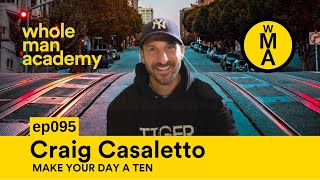
Craig Casaletto, a retired police detective turned men's coach, talks about leaving law enforcement after 15 years to focus on coaching and podcasting. He shares how to show up for your partner, build accountability in fitness, and what he learned about leadership from detective work.
Whole Man Academy. Because the world needs strong men. Whole Man Academy is changing the game for men around the world. It's for guys who want to live an epic life of fun and adventure. No matter what we believe, deep down, all men want to go on their own hero's journey to becoming resilient, confident, fearless and fulfilled. Listening to be inspired by guys who don't settle for living a life of mediocrity. This is your call to action action and call to adventure.
Are you ready? Okay. So this is the Whole Man Academy podcast, episode 95, racing up towards 100. My guest today's Craig Casaletto. I've actually pronounced his name right, double checked it just in case. He's a men's coach, podcaster, interestingly, retired police detective. And he's also pretty funny on Instagram. So, Craig, how are you and where are you, mate?
I'm doing great, Anthony. I'm in Southern California, Orange county, just below Los Angeles.
Now this is why, I mean, the last few weeks we've reached out to guys around the world. You know, we've had guys in Nicaragua, and next week it's Australia. And for yourself it's in the States. And this is what I'm enjoying, is finding guys from around the world that have their own kind of take on, you know, what's going on in the world with men, what their challenges are and what they can do about it. And I saw you on Instagram and I was like, hey, who's this dude? I love his stuff. So we'll come on to that. But you've got an interesting story about being a retired police detective. So I wanted to ask you first because clearly what you're doing now is a world away from being a police detective. So how's that for you?
You know what, it's very refreshing and it's very challenging. So it was refreshing in the aspect of changing careers, but it was challenging in the respect of taking a leap. Like, typically, like, I left the job a little bit early, probably earlier than 99% of the people that do the job, because I had an opportunity to come. I used to live on the east coast in New York, moved out completely to the west coast with my family. And it was like one of those things that you typically in that position don't do. And it was just like the right time. I made a life that like, I took a complete massive risk and just said, you know, let's do it. And that was the difficult part about it. But I wanted to continue that path somehow, some way which kind of led me to where I'm at now.
So at what point was. I mean, how long were you in the police for?
15 years.
15 years. So at what age did you go into the police and what was that like as a youngster?
It was. So I got into it in my twenties and it was. That's what I wanted to do. Like, I did not want to work a 9 to 5 job. I didn't see that. I knew I wasn't going to be some major mobile millionaire being a police officer, but I knew I was going to be able to move the needle when it came to service and help. And I felt like I was really, really good at that. And I wanted to make a difference. And I know it sounds cliche, but I really believe it. And I do still believe it. And, you know, I realized, like, you go into the profession wanting to make a change, and in the end the profession really changes you.
Right.
And I felt like the profession really changed who I was. I mean, you definitely see people at their worst. You become a master at of intervention and handling crisis and helping people when they're at their lowest. And I found a lot of, like. And you get a ton of training surrounding that. And I kind of felt like I really, really enjoyed that aspect, but there was a lot of, like, negativity. There was a lot of pressure and stress that surrounds that career that I got to a point in my life where I was like, I have young kids, and I was like, I really want to spend more time with my kids and focus on family. And I had an opportunity to do that.
Yeah, that's a big one. I think for a lot of guys, when they do have a family or they're about to, and suddenly you're like, is what I'm doing going to allow me time to spend with the family and that quality time. Okay, well, see, this is why I find it interesting because for us, I mean, the guys that listen to podcasts, it's around the world, but for us guys in the. In the uk, you never have to think about firearms and stuff. So when you were in the police force, I'm assuming, were you armed and therefore, what was that like?
Yeah, so in the beginning it was like, I thought it was the coolest thing. I don't know if it was just a mentality that I had. I'm like, wow, this is awesome. Like, I get to carry a gun and I have all this authority and. And you're wearing this uniform. And I thought it was the coolest thing. But at the time, it was the mind of a 20 something year old. And as I started to mature with the job, the more I actually didn't want to have it. I obviously knew that there was a need for it, a massive need for it to protect other people and myself. But I also realized like, I didn't want to have anything to do with it. The last thing I wanted to do is have to use it. Right. Because there's so much that goes through your head from a mental standpoint of like, if I have to use this thing, there's one, I've, I've, I've come across something's pretty significant. And two, there's a lot of things that beyond the incident, you know, happen. Like, you know, you may be taken off your job for a while until they investigate what happened. And there's a lot of like, like, oh my God, what did I do wrong? Even if you were in the right, it's just, there's just so many different things that go through your head. So in the beginning it was cool. As I matured, it became more of like, I would rally, really not want it.
It's really interesting because again, if you've never really dealt with firearms, never had to carry one, then you never have to think about if you need to use it. And I find that really interesting because again, in this country we don't have to. One of the guys that was on the podcast a while ago is an English guy who's moved out to the States and for him it felt strange to start with. When everybody around you's got a gun. I mean it might be locked in the home, but to then be carrying one day to day must be an interesting experience. And did you have, obviously with all the training, but did you enjoy the training? Because, uh, I mean I've, I've used shotguns before and I must say it's certainly, you know, the, the training of it and the practicing with it certainly gave you an adrenaline rush.
Yeah, definitely love the training. Especially when you have the opportunity to shoot different types of guns and you have an appreciation for the difference between a handgun, a rifle, a shotgun, a semi automatic rifle, all these different things. Like that is exciting. I love that stuff is great. But also too like kind of on a side note, you really kind of have an appreciation for like what a firearm really is and what it can do. Like, and it's just the audio sound, it makes the feeling, the physical feeling behind the recoil of a gun, especially a shotgun, like, and you really are like, wow, like you to feel that it's one thing to talk about it, but to actually be able to have that in your hands and actually feel the energy coming off of that and the hearing the sounds of it is, is pretty intense.
That comes funny if I talked to a guy today who's been on the podcast before and one of the big things we would talk about is, is how men release frustration, anger or just get, you know, be it through sport, boxing or something like that. And, and I guess, you know, I've seen some great videos of guys in the States where they go to the firing range and you know, they let off steam. I mean, pardon the pun, they let off a load of bullets. But yeah, it's an interesting one. So what else do you do to kind of alleviate just the general day to day of going on? Is it, is it sport? I know we're going to talk about your podcast in NFL as well, but what kind of stuff works for you?
Yeah, so it's, it's sports, it's completely staying active. So I'm a pretty active guy when it comes to being outside. I live in an area that's pretty much the weather's great all year round. So it affords me the opportunity to do that, whether it be running, hiking, anything, active weights. The one thing I do like about, like, if I find myself struggling, if I find myself in having some brain fog or having some. I need to get some clarity around, like whether it's creating content or whether it's creating structure around coaching calls or trying to figure out how I could help someone, you know, running seems to be a big thing for me because it creates this kind of like high, this kind of feeling that I can clear my head. It's like sometimes, like when you're, when you're in the car, you're in the shower, you have these grand thoughts like, oh my God, I gotta write that down. You never have a pad or pen right next to you that you could do it. But like, when I'm out for a run, I think about things. I come up with really good things as far as content and ideas on how to help. And for me, that's kind of my go to.
Isn't it important to have that go to thing? All the different guys, I've interviewed so many of them, when you ask what works for them, it might be something different. But the common one is being physical is exercise activity. And that's one of the big things you will say to guys is it doesn't have to be going to the Gym, doing weights or it doesn't have to be sitting legs crossed, doing meditation on top of a mountain. It could just be getting out in the back garden and you know, throwing a basketball around or doing something just to kind of. It also forces you to get out, doesn't it? Because so many people at the moment are addicted to mobile phones and, and sitting online. So yeah, the big thing is about getting out. But so you said, and I was reading with your bio where it said, you know, you've helped kind of men lead, learn and find success in a lot in a fast paced and stressful environment where what did you learn from the forces or say the forces from being in the police force about like leadership? Because I guess as you're young, you've got a lot of people above you, but then as you kind of go through the ranks a little bit more, you've got people that then you're teaching.
Yeah. You know, and one of the things is I've been really blessed with the opportunity to lead and given that opportunity to lead. And I've learned from some really great people in my profession from when I first started to, when I started to have some time working on the force and getting more experience. But you know, I think the biggest thing too is, is like you got to really want to do it. And I think what happens is, is that I think you just have to be able to define what leadership is. I think everybody has an idea and a lot of people will tell you, hey, this is what leadership is. But sometimes I find like, and those are big things, but I find sometimes leadership is the small things. It's like, you know, getting to work on time or just doing things like presenting yourself in the right way, making yourself, making sure that you look good and that you take care of yourself and leadership. And not to go off a tangent here, but leadership has to do with taking care of yourself. I know a lot of men are so focused on helping and protecting and doing things for other people and their families that it also comes part, it also comes full circle for them. They got to take care of yourself and that's leadership. So I think once I understood really and had kind of examples of what leadership was, it allowed me to help other guys become leaders. And I think that was probably one of the best things that worked for me.
And that's the thing is about setting an example to others. And I think one of the things I find frustrating now over the last two years where so many people have been forced to work from home. And I think there's like most things in life, there's good and bad points for working from home. Maybe it gives you some flexibility to less commuting, but what it stopped you doing is actually being in the work environment where you're either leading other people. Because I look back to when I was a youngster, if I'd been working from home, I'd have hated it because I loved being in the office for the majority of time around older guys who you learned from. And my worries that, you know, especially younger guys, they, they miss out on that kind of interaction if, if people are kind of kept away from each other and it becomes a contactless society, which is always a worry. But well, let's get onto your Instagram, because that's the reason we say we met. But you know, that's the reason I remember seeing a couple of videos. I was like, this guy, he makes me laugh. And it good, it's good stuff. It's not just, you know, mindless content. It is really good kind of nuggets of, of interesting kind of wisdom. So what inspired you to get onto Instagram to start doing those videos?
Well, you know, a great question and I think one of the biggest things was I felt like there was a void in the men's like self help community when it comes to just a different approach to helping men. Like everything I would go to, I would look up accounts on Instagram or I check out YouTube or some things and I wouldn't. The majority of things that I would find would be guys who were super successful, mainly entrepreneurs who would be taking pictures or taking videos of them in their massive mansions, in front of their jets and their massive awesome cars and all this stuff with stacks of cash and saying, hey, listen, you need to do this, you need to do this, you need to do this. And this is the secret sauce for how I got here. So you need to follow this blueprint. And I didn't identify with that. I didn't see myself as that type of guy. I didn't identify because I kind of feel like success is different for everyone. The definition of success is different for everyone. So I kind of felt like there's got to be a better way. And I'm like, well, I'm going to do something about this. Like I'm doing something about it. So I started this thing called Odd man up. And it's a, it's a play off of Odd Man Out. It's just in this time, it's Odd Man. The Odd man gets pushed up is we're Going to help that odd man move up as opposed to out. Yeah. And the thing was, is just I started to create this content around two things. It's about laughing and it's about learning. Because men's self development, we talk about a lot of like serious stuff but it's very rigid, it's very gritty, it's very serious. And I think like there's not that fun aspect and I think if we can incorporate more of that like fun, light hearted aspect but still have a positive takeaway from that, I think that would just like nail it. And that's kind of what I want to accomplish with this.
I think, I think you are nailing it. And that's, that was one of the big things for me that, that I kind of took from my first impression of your, your Instagram videos was because that's always been something important for me. That's like I always want any interaction that a guy has with the whole man academy to be, to go away, feel like it was quite good fun as opposed to too serious. I think that hopefully keeps people coming back and enjoying the content. So yeah, I was, I found myself laughing. That's when I created a reel and put it on our Instagram. Like one or two of the guys like who's this guy? I was like, just, just we've got on the podcast so let's just, let's just back up. But so let's talk about. To start with, I mean you have been doing a podcast which was, was, was the White Tiger and then the name changed the next, the next season podcast, wasn't it? That was with I'll pronounce his name wrong. Is it Asante Cleveland, a former NFL guy?
Yes.
Tell me about that and your journey of podcasting. Because for me it started like you know, two years ago and I took a course and I've done the whole lot myself, which I've loved, being control. But I listened to what videos and I really liked it. So tell me about that.
Yeah, so it started off just being a solo project for me. It started with the White Tiger podcast and it was my way to bridge a gap between police work and service like and what I'm doing now or like what I was trying to figure out what to do now. Cause like transition's really hard and I kind of felt like this filled a void for me and it was allowing me to help and still like I did in police work, but kind of in a different capacity. And that's kind of really what birthed it. And halfway through this thing, I wound up interviewing my co host, Asante, wound up having a mutual friend that connected us. I'm a big sports fan. I love football. Like, I love States football. And we connected. And he was on the, He. He was on the podcast. He actually announced his retirement. We. Which was, which was pretty awesome for him to do on the podcast. Scoot. And I knew. I was like, you know what? I have something going on with this guy. Like, we have a good connection. Like, we gotta keep this going. And I asked him, I said, hey, listen, would you be interested in continuing to do this? He's like, absolutely. And that's kind of really where the ball started, like, massively rolling for us in regards to the podcast, because we started interviewing and had access to just like, people who were very famous in the industry, like in the sports industry. We had an opportunity to interview some guys down at the super bowl in Miami a few years ago. Olympians, NFL athletes, entrepreneurs. And it's been a pretty amazing ride.
I love it. And that's where I literally talked about this earlier with the chap who had a podcast. But I said, because he was asking for me, you know, what, what's it been like? And I said, it's exploded my network of guys who. And as you say, it doesn't have to be network of like, really successful rich guys. It's guys that are living life on their own terms or doing something really cool. And, you know, now, like, that's what I love about podcast is for me, I learn from all the guys I talk to. But also that's. I would say podcast saved my life, as it were. Not I was like, as in I was going to end my life. But when I was working in the city, my partner kept saying, hey, you should listen to podcasts. I was like, I'm too busy. I'm too busy to listen to podcast. No, don't give me advice. And then turns out she was right. And, you know, I started listening to them. And that got me interested in the kind of the personal development space. And that kind of leads me on for you, of. I mean, in the States, there's. There's some huge names like Tony Robbins in the personal development space, which I know isn't just for men. It's, you know, for men and women. But for you, is there anybody that you, as you've grown up or that you've kind of, you know, found you've followed that has really kind of helped you on the course you're on now.
You know, So I think Tony Robbins is awesome. I've actually been to some of his events and they're great and I've learned some life changing things. But you know, to be honest with you, it's going to be kind of crazy. Like when I look back at this coaching journey and I look or I look forward to this coaching journey and kind of look back at how the odd man up started, there were some stuff that hadn't have anything to do with coaching that I got inspiration from. There was a couple of accounts like I love to golf and there's a guy out there that I follow like on TikTok and he's also on Instagram and he's funny. I think he's, he's a comedian, but he's also a golf professional. He would go out there and just have. I would, I would laugh watching these videos and then I would learn. I would be, I'd take away a cool golf tip. I'm like, oh, that's cool. I'm going to do that next time I'm on the course. And I'm like, I got to do this. Like, I have to incorporate because this is totally me. Like, I totally resonate with what this guy's saying. I got to do this in some capacity. And there's another guy that's out there that does it too. And he kind of gives out like just fun facts, but he also kind of incorporates some entertaining fun into it. And I'm like, this is. I'm inspired. I like, it's enough to get me to like, somehow, some way I'm going to help men with this blueprint. And that's kind of where the inspiration came from for me.
Doesn't it show though, like, for anybody listening that, you know, the inspiration, you never know when it's going to come or who it's going to come from because you can kind of search for it. But then you might just listen to a two minute clip or. I mean, last night I was, I was on a zoom call with a big group of people and this guy said this one thing and I was like, whoa, what? And I wrote it down and it was something really, you know, it was really powerful for me. And that's why I said to people, you know, for guys, if they're at least getting involved in listening to different podcasts or, you know, immersing myself in that world, you never know when there's going to be that golden nugget of something coming up. Now, I'm going to ask a very technical question here, and it might struggle with this. But what is an NFL tight end? What is that? I know obviously NFL is, but what position is a tight end?
So a tight end is kind of a hybrid player. And basically the way a tight ends. Primary job. Well, he has two primary jobs to block pass rushers, trying to get to your quarterback.
Right.
And he's also has another function where he comes off and he catch. He's a catcher. So he's both a blocker and a catcher. And that's kind of like his primary. He has two primary roles.
See, I'm learning because it's funny. I'm not. I'm generalizing here by saying all English guys. But I mean, I don't even know the rules of rugby. So to try and watch American football, I'm just like, let's just get a touchdown, forget all the rest of it. So I'm. Yeah, that's a good start. That's it. I'm getting there. But one of the things I loved. And again, I was talking about you at lunch today because the guy who I was talking with said what he'd realized with his partner is that one of his big roles is essentially. But if you can keep your partner happy, I don't mean just by doing anything, but, you know, like, if you can have a harmonious relationship and support each other, it can be really powerful. And one of your videos said, how can I make your day a 10 with your partner? So, I mean, obviously the guy listening to me, like, what's he talking about? So can you talk a bit about that? Because I thought that was brilliant.
Yeah. So I think one of the things guys, like often struggle with is like, how can I be a better husband or a better partner or better or whatever. And, you know, I think it's just a lot of times we don't ask our significant other what they want. Like, we assumptions, like we assume, like, all right, we know what they want. We've been married for how many years? We've been together for how long? Like, I know exactly what she wants, but she doesn't respond to me. I don't get it. It's like, well, you gotta sometimes have the courage just to go up and ask, hey, what is it that you need that I could do to help you? And sometimes something so simple and that's. This is just like life. Sometimes we, like, overcomplicate things. And the simplest things are the ones that knock it out of the park in baseball terms. Every time. Like, it. It's literally like we just have to go out there and Just ask. And I think what happens is by. By approaching your significant other every day and saying, hey, listen, how can I make your day a 10? It does a couple things. One, it shows that you're concerned and that you actually care. And two, it facilitates communication, right? It's like, hey, listen, I do communicate. I do think about, like, you. And I want to. I want to. I want to try to make your day at 10, make it easier for you. And I think a lot of times. And I can't speak for all women. I think I can speak for at least my wife, but I could say that that's all they want. Like, I think a lot of times women just want you to notice that they're dealing with a lot of stuff and they're playing a lot of different roles and that sometimes they need help, you know, and that's all it takes. And I guarantee you, if you can go and tell your significant other, like, how can I make your day a 10? That's gonna. That's better than any gift, anything you could get your spouse. I'm guaranteeing it right here on this podcast. I'm guaranteeing it with, hands down, better your relationship.
I totally agree. Um, and I'll tell you why I love it. Literally, when I watched that video and I was writing it down earlier, it took me back to a few years ago. I mean, no more than five years ago. So I didn't even. I still worked in the city, but I listened to a guy who was in his 30s, or no, it must be 40s. But he said one of the big things he'd learned was when his partner was talking and asking him to do something or whatever, he'd re. He'd say back to her, what I'm hearing you say is this. You know, what I'm hearing you say is that you want us to go to your sisters for the weekend, he said. Because often I'd say that, and she'd go, that's not what I said at all. What I was saying was this. And it was one of those things I think I said a few times in the heat of arguments where I'd be like, whoa, whoa, whoa, whoa. What I'm hearing you tell me is that you want me to do this? And they'd be like, no, we wouldn't do this. And I wonder, like, following that on by saying every morning, what can I do to make your day a 10? Because surely that's going to open up some communication as well.
Yeah, well, questions are huge. I mean, as a podcaster, Someone that interviews people. Like, we all have the tendency to want to just, like, tell, but we have to really ask. And like, if you get into the habit of asking, you're going to find out conversations are really, really good, especially when they're with your spouse. I mean, that's huge. Another tip that I got to tell you, Anthony, I think it would work for any, for anyone listening who has a spouse who's in a relationship. Like, there are going to be two times or two scenarios that happen when, when your spouse needs help. Like is they're going through a tough time or whatever the case may be, they're going to either want you to provide a solution or they're just going to want you to be an ear for them to listen to. So I usually tell, like my wife, I'll say, listen, is this a fix it time or is this a feel it time? Because if it's a feel it time, then I'm just here to listen. I'm not going to give you any guidance. I'm not going to say anything. I'm not going to make any suggestions. Just, I just want to list, sit here and listen to what you have to say. And it's great because that's what they want. That's what they need just to vent or they need to kind of get some stuff off their shoulders, and that's the role you're playing for them at that time. And then there's the fix it role. Like, hey, is this a fix it or feel it role? This is a fix it role. Okay? So after you listen to what they say, then you say, hey, listen, you know what? Based on what I'm hearing, maybe this will work for you. Not telling, but making a suggestion like suggesting, hey, and then it's going to be up to them that either take that suggestion or move on to something else.
I think that's so important because men generally seem to maybe good at or like to fix things. And I've even found myself, and I know some of my friends, when I've talked about it, or guys on the podcast, halfway through your partners telling you what the problem is, you're like, yeah, what you need to do is this. And they'll be like, they don't even, they're not even looking for a solution. They just wanted to explain to you what's, what's happening. So, man, it's, it's, it's golden nuggets everywhere. So again, if guys are thinking, what did he say? It's, it's, you know, ask a Partner, how can I make your day a 10? And I mean, I know with Emma, she'll probably just fall over and like, she'll faint or something and think that, yeah, you'd be like, who's. Where's Anthony? What have we done with him? So the other one was about, I mean, about being in shape. And again, you know, a big thing for me is about for guys, just generally life, you know, exercising ideally outdoors if you can, but exercising regularly for something that you enjoy I think is so important. But I know you'd written the other one about finding someone to hold you accountable because it's easy to skip stuff. So talk to us a little bit about that. Like, what. What have you. What have you done? Training wise, it's worked for you and how have you stayed accountable?
Yeah, so for me, it's about consistency. It's about developing good habits. And I think the key to anything, whether it be working out or anything, is just like, not breaking the chain. Like, literally just finding something that works for you and just continue to do it. And it doesn't have to be massive, but just something that you can do consistently. And I think developing habits around get physical fitness, working out and doing it and make it. It's not enjoyable for everybody. I don't think everyone gets up and says, yeah, I want to just want to do this. But you know what, it's sometimes our expectations, we have to kind of like reel them back. I think we don't have to do massive things. It's just getting out there and doing things that we can do consistently has definitely worked for me, and accountability is a really big part of that. Like, for me, especially in the coaching aspect, for the longest time, like, I never really understood the value of having a coach or having that person that's going to hold you accountable because if you need to, have that person that's going to push you. Because it's one thing to be able to look yourself in the mirror and say no, but it's harder to look at someone else and say no. And I think by having that accountability, if you don't, like, it's a really good thing to start automatically, just moving the needle really quickly, find that person.
I think that is so important. And I wish someone had maybe told me that when I was, like, in my 20s, because, you know, I always think that you can't push yourself like someone else will. And that's why even with our mentorship program we started a couple of weeks ago for guys and one of the first guys that signed up, he's still doing the same stuff he could have done. But now I want on a Monday morning, an email saying, what are you going to do for the week? And on a Friday, I want an email saying what he did and if he didn't, why didn't he? And how can he address it next week? And suddenly he was like, fucking hell. That gives me the motivation because it's easy to make excuses when it's just looking at yourself in the mirror, oh, I'm too tired or I can't. But when someone else is like, well, you sat watching sport for two hours and you're telling me you didn't get time to do something. So, yeah, the accountability, I think, is. Is really powerful either in, you know, in work or even in, like, you know, projects that you're doing or in the fitness side as well. And that's why, as you said, I mean, you look at all the top teams in the world, every team has a top coach because they are cracking the whip and making sure that people are doing what they're being told. So, yeah, for guys that. Listening, if you haven't, you know, even if it's just a mate to be accountable or is checking in with, I think that's important. But. But one of the things that I find with guys is they find that like. Like, you know, change sometimes can be hard because you've actually got to do something. But I know you wrote every great beginning starts with change, so talk to us a little bit about that.
Yeah, so. Well, the first thing I'd like to ask is, why do you think that men don't want change?
Yeah.
Like, what is it? Like? I think if you really kind of like, reverse engineer it, like, what is it about change that you don't want? Like, is. And for most men, I think it's probably because, well, it's going to make me do something I haven't done before. It's going to push me out of my comfort zone and I just don't feel good about that. Like, I think when you start looking at change is a good thing and it's going to move you in the direction that you would really want to go to. Like, then you kind of embrace it and you kind of be like, you know what? I want change. And granted, like, there's a. I mean, a lot of change is difficult and, you know, especially massive change when you make, like, you make big moves, like, you make big career moves, you make big physical moves, all these different things. Like. But I think it's understanding Your relationship with change and then having the ability to want it as opposed to push it away.
Yeah, it's important because one of the common things I see with guys is either they would like to change their career, and maybe they're stuck. You know, maybe they're in their. In their 30s or 40s. So. And that was similar to me. You know, in your 20s, you really quite enjoyed your career. And then mid-30s, you were like, I'm kind of getting done with this. But it can be scary when you're either on your own or you're making that change. And a lot of people around you think you're, you know, think you're mad for leaving, but that's one of the things I've seen. And I don't know if you, you know, with. With yourself and friends is getting to that. And again, it's called midlife crisis, but I prefer to think there's just. We have, you know, phases of our life. And, yeah, a lot of guys I know have been resistant to change because you do have to get out of your comfort zone. But that's where the growth happens is when you're kind of getting out of your comfort zone and actually kind of. Well, as long as you don't get into the panic zone, you're fine. But what about yourself? What would you say is the most challenging thing you've done? Was it actually leaving the force?
Yeah. So that was big for me, just because I thought it was going to be the most difficult thing I had to do. I had a lot of stress and anxiety and a lot of things going on, because no one's really ever done that, at least where I was working. And for me to be able to gather up the strength to do it, I was, like, putting a lot of pressure on myself. You know what the funny part was is that in reality, when I actually did do it, like, it was probably one of the easier things I had to do. It was very relieving, and that was difficult. And moving, like, moving cross country from the east coast of the States to the west coast was really hard because I left the job, had no idea what I was going to do next. Um, and as a provider to your family, you taking on a different role, more of, like, now a traditional secondary role, it's really difficult. Like, mentally, it's really difficult. And then trying to figure out what that next stage is for you. Knowing that you want more, but trying to figure out what that more is, and going through that void of, like, not knowing. Really difficult. So, yeah, I Think it's like, probably those are the two biggest things I think that stick out for me.
And did you have. I'm guessing it's going to be yes, but kind of the full support of your family, because that often I see is one of the big things, is that, you know, if you can have the backing of everyone, it makes things a lot easier than if you're trying to make a change. But you know that. And understandably, families can often try and just. They want you to keep doing what you're doing to stay safe, if that makes sense. So what was it like? Kind of. Did the families fully understand what you wanted to do?
Yeah, not only did they understand, but they were in full support. And for me, I kind of look at it even the bigger picture, like, that's the part of being in a good relationship, a good, healthy relationship is understanding. Like, you know, I got you, like, I got your back. Like, whatever you need will make it work. It's not going to be easy. But you know what? You're the most important thing to me. Your health, your mental health, your physical health is important. I support you. And I'm. Fortunately for me, I had that. And I would. I tell men, just, hey, listen, find those things in your relationship. You know, those are the things that are really going to make you grateful for what you have.
Yeah, a bit of gratitude. As Tony Robbins says, the attitude is gratitude, which always helps. And I wonder for yourself, one of the other videos we're going to get on to talking about fatherhood, but one of your videos was stop living vicariously through your kids, which I laughed at so much because in our kids at two and a half and four and a half, and I love football, therefore, I'd be like, yeah. And it's like I felt I was trying to push them into watching football. And I'd even realize my language is like, oh, look, football's on. You love football, don't you? And they'd be like, yeah. And Emma would say to me, just because you like, it doesn't mean they have to. Maybe they like rugby. And I'm like, whoa, whoa, whoa, whoa, whoa. So, yeah, to me, about living precariously, your kids. Yeah.
Yeah. So I've really. I think that really resonated with me being involved in sports. Like, I have kids that play sports.
How old are your kids?
My kids are nine and seven.
Okay. Yeah.
So they're involved in sports and they. I see parents, you know, and I help out coaching on the field, too. So I see parents, like, literally living through their kids. Like, this is their life 2.0. Like, they're there. Here's another opportunity for them to be, like, a star on the field through their kids. And there's constant, like, coaching. It's. And it's hard to be a parent and a coach. It really, really is hard to do that. It's a. If you can master that, man, you blow me away. Like, it's really, really hard. But, yeah, it's just like one of those things where, you know, you gotta let your kids live their own life. Right. They're gonna have interests that may be different from yours. They may have come from you physically in some capacity, but they have their own. They're gonna have their own interests. And maybe those interests will align with the things that you find valuable or that you enjoy, but there may be a situation that they're not. And I think by forcing kids into doing things that they don't enjoy, I think eventually, especially as they start getting older, it builds resentment. And I think as a parent, that's probably. For me, it's the last thing I want to have is my kids. Like, hey, dad, like, dad was such a dick because he just, like, pushed me to do this and didn't want to. Now I'm totally going to rebel and do everything he doesn't want me to do.
Yes.
Right. Yeah. And it's just like, one of those things where just. I think it's just something for parents, dads and stuff just to be aware of. It's like. And you know what? By supporting their kids, by supporting your kids doing what they want to do, that's going to pay massive dividends, not just in the moment with your kids, but especially as they get older.
Yeah, it's a really interesting one. The more guys I speak to about their relationships with their fathers, and, you know, for some guys, their father wasn't around, and for some he was. But that wasn't a good thing because he wasn't a very nice person or, you know, didn't know how to show love. So I always find then it's the relationship with them. When you. When you have kids, are you taking the baggage of what happened with you and a father into that relationship, which generally means, like, how you deal with it. So I wonder if you. What was it like when you became a dad? Because it's a. It's a. It sure is a shock to. I mean, it's a great experience, but it sure is a shock to the system.
Yeah, it's amazing. Life. It's a life Changer, no doubt. In many, many ways, my priorities changed. My definition of success changed. Like, just my mindset changed. Yeah, it's just. It was amazing. And I think my sole goal and just to keep things, like, super simple was just to give them just the best life I could possibly give them. Like, to do whatever it is in my capacity to just give them a really good life and to teach them good sound things, like good sound practices. And I think one of the biggest things nowadays, I think that's lacking for kids, which I kind of focus a lot on my kids, whether it be in sports or at home, is just your mindset. It's like kids, when you talk about kids, like, no one talks about mindset. And now, like, the kids are unbelievably impressionable. Like, they're being taught when you're not teaching them. When they're on their phone or they're on their iPad or they're on their computer, they're being taught right. And there's a lot of negativity out there. And you really have to make a point to teach your kids mindfulness and to develop a powerful mindset. And you can do it at a young age. Just the way you communicate with them and the information that you funnel to them is majorly important.
Well, I think that's so important. And we are learning ourselves because realizing that being a parent shouldn't be how you've been taught, it shouldn't be like, oh, the best way to parent is because that's the way it's always been done. Or that's how it was done to me. So it's like we're trying to use the phrase, like, unlearn what we know. Because sometimes I say stuff to our kids and I know my friends do the same where you're telling them what to do. And then our kids, especially our eldest one, is really, like, loves to ask Chris, like, why? Why have I got to do that? And you're like, because. And you haven't even got an answer because I've said so. And you're like, hold on a minute. Like, what's that teaching someone? You'll teach them not to question things. And if there's one thing I've learned in the last two years, it's people should be questioning everything that's. That's going on around them and questioning authority. And why, why are you putting these rules in place? So I wondered for you, because you said about phones and stuff. I see so many people and I've been guilty of it, like, being Addicted to phones and social media. And sometimes you're standing there and you're like, oh, I'm scrolling. What was I doing? Like, 10 minutes later. So how have you addressed that a. With yourself and also with your kids? Because they're just coming to the age now, aren't they, of your iPads and TikToks, Instagram and all the. All the kind of the brainwave stuff that comes in.
Yeah. So I'll start with myself. So one of the biggest things that I've used to kind of curtail, like, my getting lost in the feed, so to speak, is understanding what social media is doing for me. Like. Like defining, like, okay, so I'm using social media, Instagram, or whatever, whatever the platform is, as a tool, right. So if I'm building a house or I'm building something, I'm going to have my tool belt of tools that I need to do to accomplish that. And if I can look at Instagram as a tool, it definitely keeps me on there for what I need to be on there for. And then when I'm done, it gets me off of it. Right. Cause I'm done doing whatever I need to do to build whatever it is I wanted to build for that day. And I think that has helped me tremendously. There are times I get lost in the entertainment factor of social media, because you definitely can get, oh, that's funny. And especially me, like, I'm all up for something funny. Like, this is great.
And they know what you like, don't they? The algorithms know what you like. They're going to give you more of it.
Like, listen, just from this conversation, my phone's going to pop up something that we talked about. Like, just somehow, some way it works that way. But it's just like, yes, I focus on using as a tool. And I think that works for me probably 90% of the time. And for my kids, it's just about earning, right? It's like, if you want time on this, you have to earn the time on that.
Right.
It's like getting an allowance, like you're doing some work. It's like, if you want to do that and it's going to be during these designated times, and the early, earlier, I think that you could start this, the better. Because when you. Because the kids don't know. Like, if you start building these habits in this structure early. And I think structure is just massively great for kids. It's all massively great for adults. Like, if you could start that early, it's going to make things easier. Later. Right. So it's like it's get your kids into the habit of being like, okay, if I want to do this then I'm going to have to do A, B, C and D to do to jump on the iPad and stuff like that. And as parents we're so busy that sometimes that's pushed away. It's like I don't have time to go and do that. Like let me tell you, like the upfront work will pay off.
Yeah.
In the back for the back end. Because you want, it'll, it'll self regulate itself because they're gonna know what the expectations are.
It's such a minefield at the moment because it's. Thankfully we've, we've made sure we don't do it. But it's like sometimes when you're out and you'll see people just put their kids in front of, especially look in front of something on the, on you know, on their iPad or something. And I totally get it because sometimes as a parent, you know, you just need like some, some your own brain space and unfortunately, you know, parking something a child in front of a screen isn't always the best thing. But I get it why some people do it. But it's surprising how for as the kids are getting older and then of course you've got computer games and kids just sitting in their, in their bedrooms playing computer games all the time and you forget when, you know, when I mean, how old are you, Craig?
I'm in my 40s, late 40s.
So I'm 43. I had to think about it then. But you know, when I was a kid you didn't have any of this stuff. So you were outside playing football or doing whatever come rain or shine. And now I know people that kids would just be like, I don't even need to look outside. I'd happily just be on the, on the computer. So it's, it's trying to find that balance, isn't it? Between not saying you can't look at anything at all because then as you said, then they rebel. But being mindful of kind of spending too much time in it. And I've found with, with social media that it's like if I could, if I didn't use it for the whole man academy, I'd, I'd quite like to just delete it and you know, your life would be a lot easier. But now talking about social media, one of the big things we had with our kind of events and following was, you know, just a good group of guys who were on our Instagram. And that's how we reached out to a lot of guys. And the big thing was about guys getting together to talk to kind of alleviate pressure and learn from each other. So what about yourself going through life? Have you had a particular best friend or, you know, a father son relationship or when you're in the forces, was it something to do with people there that you found was helpful for you to just share what's going on in your life and talk to.
Yeah. You know what's kind of crazy? I never really had that, and I think the only person I had that with this is kind of crazy is my mother.
Right? Yeah.
She was my go to person in life and we were able to share things, not just kind of like on a motherly son level, but also kind of like just to, hey, I want to talk about this thing I'm dealing with. Like, help me. She was my. I remember as I got older and I was living on my own, like, I would be on the phone with my mom every day and we would be talking about, hey, mom, this is what's going on.
How.
And she would give me advice and I would. Crazy as it sounds like I'm a young guy, I would be giving her advice. You know, we'd be talking back and forth about like this stuff and it was like. But I never really had it. Even. Even the police department, like, it's a very alpha environment. And sometimes expressing yourself is a sign of weakness and a sign of weakness that someone could point to and say, I can't rely on that person because they said this, because I can't do that. I can't. I don't want to be associated with that person because they said this. And what they said was just like, hey, I need help, or this is stressing me out. And that's why there's a lot of alcoholism, there's a lot of divorce. There's a lot of stuff that. That revolves within that industry because you have a. Guys that are dealing with like some really difficult things and they're told not to talk about it.
I did wonder, because it's not, you know, if you work as a, say, normal job, as it were, you're not seeing domestic abuse and dead bodies and, you know, children being abused and all these different things and stuff going on. So that must be so much more intense when you're in the, you know, in the police force.
Yeah, 1,000%. You see it a lot and you just try to. And a lot of the times I think you're given resources, but in the end, it really comes down to you. And things get negative really quickly. And when you're in a negative space, it's hard to be positive. It's hard to take the next step to want to go and try to get yourself to be positive because your environment is negative. And I think it's almost kind of like a virus. Like, you see a lot of everyone sees negative things and deals with negative things. They don't express it. They become negative. You're around those negative people for the majority of your time. You're spending more time at work than you are at home. And you turn out to be all like, wow, I am a complainer. Wow, I am negative. Like, how did that happen? It's like, well, because that's been your environment for the last 15, 20 years, right? So. And then when you finally, like, realize it, like, you step out of that. When I stepped out of that, I'm like, oh, my God. Like, I was a complainer. Like, I was like, negative. I was like, I'm like, how's my. How am I still married? Like, I should have been divorced a long time ago. Like, my wife, God bless her soul, like, she put up my shit for I can't tell you how long. Like, I can't believe she still has me around, right? And that's like, I'm blessed. But it's just like, you kind of like, you know, you rub your eyes and you're like, oh, my God, now I want to do something. Now I need to. To get myself positive and need to get myself in a better place.
Yeah. And. And that's really important point about, you know, who you're hanging around with. And, you know, I found that if, especially when I worked in the city to start with, you know, you were different, different person around different people. Because sometimes some people I call like a mood hoover that kind of just sucked your energy away was actually, you know, I learned so much as I was leaving about, as you say, the people you surround yourself with are probably going to dictate your actions. You know, if you're hanging around with five guys that go to the gym and. And don't drink and eat healthily, you'll probably be the sixth one. But if you're hanging around with guys that eat pizza every night and, you know, are drinking heavily and stuff, you are going to be that person. So, yeah, another reminder to guys listening. It's like, you know, sometimes you have to look at who you're hanging around with and think, is this the Right person to kind of take me in the direction I want to go and talking about directions. Where do you want to take it with Odd Man Up?
I want to continue doing what I'm doing with I man up as far as the fun and learn and laugh and learn aspect. And I just want to be able to give back to people. The coaching aspect of. I have all this experience through police work in this training, I've been coaching people. Like, I find it just amazing to be able to give back and help guys just be better, just. Just be better in whatever aspect of their life. So Odd man up is really kind of the foundation for a bigger kind of movement for me when it comes to helping men. A lot of that is going to be through coaching and just working with guys to hit their goals. Like my. My success. When it comes my success, backtrack a little bit. I think a lot of people focus on words like me and I. And I kind of like adverse to that. I like kind of focus on. It's not about me, it's about you. Like, how can I help you? Let's talk about your successes, not my successes. And that's kind of like the essence of what the Odd man up is. It's like helping those people who don't identify with the status quo when it comes to men's development. Helping them, like, move up, get better, be better dads, be more confident, be more likable, you know, have better relationships with their spouse. And I'm excited, man. I've loved this journey from the beginning. I have a ton of fun. Doing these videos is just like kind of like the icebreaker and then even more so. Connecting with guys on a bigger level, one on one, and helping them move the needle in their life.
Well, that's what I mean, you know, hence the reason why we even have connected and talking is, you know, bothering to make the videos which are fun and engaging means that someone like myself, if I backtrack. There was a. A guy called Max Wright who's, I think based in Chicago, who's a one kind of crypto expert. And I interviewed him probably about six months ago, and I'm pretty sure he doesn't. He's not doing his YouTube channel for the money because he was buying bitcoin when it was in dollars as opposed to in thousands. But what he said to me was, being online creates opportunities because people find you that might not have ever found you, and then they want to do a joint venture with you, or they want to interview you, or they've Got some idea or you know, or they want to consult with you. So that's what I would see is with our podcast and with what you've done as well, making that effort. You never know what else is going to come of it or who's watching. So I really like that. And the other question for you is with, with, with the videos you do, where do you get, do you have like a list of content in your head or is it like sometimes you're like, right, what should we talk about today?
No. So I pre plan all that stuff. I have like what I call pillars of content and they surround the things that I believe or I feel that men probably need the most help in like those areas of your life. And for me it surrounds career, relationships and mindset. Those are like the three big pillars for me. And I try to create content around those things. You know, mindset's pretty broad, so there's a lot of things you could fit into mindset, but I usually stick to those pillars. Mindset ones seem to come out or seem to be kind of in demand more than the others just because I feel like that's what we struggle with the most. Yeah, and I'm really super passionate about that. But yeah, that's kind of where I get my inspiration from, I think.
And also the mindset leads onto everything else, doesn't it? So, you know, whatever else you're doing, if you've got the right mindset, it's probably going to be more achievable or easier. If you've got the wrong mindset, then as you say, you might be in a negative place. And that it's really important you said that because that's what I've tried to impart on the, you know, the people that listen to the whole man academy is, I think when we started some people thought it should all just be like, just mental health. And I was like, no, mental health is just a segment of the man. You know, your relationships and career and fitness and health and fatherhood and business and all these different things make up all of us. And if one of those bits goes downhill, then maybe the others will suffer. So that's why I liked with your videos because you can kind of dip in and out and it might not mean that you're thinking, oh, I think I'll look for some relationship advice. But then you, you, you watch a quick one minute video where you'll say about how can I, you know, show up as a 10? And you're like, you know, that's, that's Good stuff, but. And what about, like, events? Would you consider now that things are saying a bit more normal? I'm not sure if the world's ever normal, but could you see yourself doing it where you're having events for men and bringing them all in together?
Yeah, absolutely. That's. And I think that's important especially for. For guys to get together, feel comfortable with the people that they're around and be able to communicate and to express themselves and have conversations that they may not be comfortable with having in other places and knowing that it's going to be done in a group that men can identify with. And Anthony, to be honest, what you're doing is massively important. Massively important. To be part of the whole man academy is just to be part of a group of people that are going to move you forward, that are going to listen to what you have to say, that have your best interests in mind and that's so important about what you do. You know, we need more of that and I think guys have. Don't have that many resources when it comes to that, or the resources that they find are not ones they identify with.
Yes.
Or two may not necessarily have their best interest in mind is number one, you know, so, yeah, yeah. Applaud you, Anthony, for what you're doing. I appreciate that.
And that's. I mean, that's one of the big things that I loved when we started, you know, we've had. I can't remember if it's 12 or 13 events were in London and, you know, plenty of the guys listening to this will have come to one or all of them, plus the dinners. But the biggest event we did, we had like 65 guys in the room and it was a really lovely. It was down Savile Row, which is one of the kind of prestigious roads down in West London. But it was. One of the most common things I heard was guys saying there isn't much else around like this or there is and it's a bit like a therapy group and it's a bit shit. Whereas I want it to be a cool, aspirational event for men. And even today I spoke to someone who's interested in me doing some talks for their huge company. And what they were saying was that there's so much stuff for women, but there's hardly anything for men. So that's why they said, oh, we saw what you were doing and we kind of like the way you're presenting yourself and it's quite relaxed and you try and be amusing as well as Opposed to being too serious. And that got me thinking because so many companies, you know, a lot of wellness companies, it is 90 based around women. And therefore you look for the guys in like, what is out there. So I wanted for you, apart from, let's say, apart from Tony Robbins as example, what would be the other personal development guys, not necessarily American that you even can name that you think has been kind of beneficial to your life or some input from them?
You know what I. The first thing that comes to mind is like, are you a big book reader? Do you read a lot of books?
I have a lot of books on my bookshelf. I haven't read them all day.
All right. So one of the biggest things that I've kind of like really kind of been able to wrap my head around is like, is stoicism. Like how, like there's so many things you can learn from stoicism. And there's a great book out there by Ryan Holiday, it's called the Daily Stoic Every Day. It's a shame, short blip, but it's some great advice based on stoicism. But it's a super easy read. It's daily. So it's that consistency component again of getting your mind right. And I've learned a ton from that. And you know, it's just like. And I'm kind of like an oddball in a way because, like, I know it's the traditional thing is like there's certain people that people go to for like that life changing advice, Tony Robbins being one of them. You know, here in the States, you know, you have a lot of like alpha guys that are like former Navy Seals and stuff like that, which is awesome and great.
Yeah.
But like, they may not necessarily be those group of people that you identify with and I do and don't. So I kind of like find the inspiration and things that really kind of make me want to move forward and get motivated from different sources. And I think that's like books could be books, certain books, certain people on like the golf person I told you about before, Like, I think that's probably my main resources. I don't think there's really one. I think Tony Robbins has been huge. I really enjoyed watching him, but I can't really say specifically anybody else, which.
In a way I was. It just shows that as opposed to reading off, you know, 10 different names, there is still more than enough space for guys to find their own niche in this kind of market. And that's why, I mean, it was probably over a year And a half ago, I asked a couple of guys who had actually been to Tony Robbins events with out in Miami and in Tenerife, what have you. And I was like, okay, name me the top five personal development platforms for men in the uk. And they were like, I can't think of any. And I was like, well, there is a market for it, because you look at most of the guys could name the American ones, but there was hardly anything in the uk and that's where it was trying to. What's the word? Like, amalgamate. You know, what we're doing is bringing guys together, but then trying to make them aspirational events. But that's why I find it interesting because even as you said with the daily stoke with. Was it Ryan Holiday? Yeah, I'm pretty sure I've heard several guys on our E Letter when we talk about what books do you like, have all said that book is a belter for them. So if there's nothing else that someone's taken away from today, it would be like, go and check out that book. Try and buy it somewhere other than Amazon. But, you know, go and go and buy that book and work your way through it. Important there, because I said, work your way through it, because I don't know about you, but I've done it. I've bought books and I've just not even read them. And then you're like, why have I bought that and not read it? Because I've just gone and bought another book and another book and another book. So, you know, we call it shelf development.
And you know what, Anthony? I'll challenge you even one step further. It's not even just reading the book. It's like taking action on what you read. I know people who've read thousands of books, but my first question is, so what have you done since you've read the book? I just read the book. I'm like, well, that's great. I mean, you're just checking off the books that you read. Like, hey, I read. Just put a post out. I read a thousand book this month. I'm like, well, that's great, but what'd you do with the information? And to be honest, it's like, it's funny, but, like, a lot of guys haven't done anything with it. It's like, oh, I think they just want to be there. Like, hey, I'm going on this podcast. We're having this conversation. I just want to be at the ready with a book I read. Like, I got to tell him I read this book or I read this book, it's like, well, that's great, that's awesome. And I know that the person's a really great author and I've read their book too. Like, what'd you take away from it? Or like, what are you doing with it? And that's the key. It's like, listen, I would tell you, don't even waste your time reading any books unless you're going to do something with the information. Take action with it. If you're listening to the whole Man Academy podcast and you get something away from it, take action from it. Like, all right, that's great information. I really resonate with that person, said, all right, now do something with it. I read this great book, now do something with it. I heard Tony Robbins say something, now do something with it. I heard Jordan Peterson say something. They'll do something with it. Like, do something with it. Like, all I'm saying is like, take that action. Because we were like creatures of just like soaking up information. But like, unless we do something with it, it's not going to help us.
Yeah. And I, I know I was guilty of that in the past where it was kind of just good entertainment. You're like, right, I'm going to watch this hour long thing from, you know, someone doing a great talk. And then when you finish, you'd be like, right, I'll head out now. And you're like, oh, that was great. And maybe at some point in your life you'll take action on it, but at the time you're like, okay, you feel like you're taking action by just watching it, but then you don't do anything about it. So, yeah, another, another one for guys is actually do something about it. As I've said before, it was a guy called Peter Sage who I hope to have on the podcast one day. But he said knowing and not doing is the same as not knowing.
Yeah.
And I, and I like that one. But now, what time is it? What time is it out there?
It is 8:47.
AM 8:47. So what's your plan after this?
I am going to get some work done. I, I got to get some work done. I got to follow up on some emails and you know how it goes. It's like, you know, you're doing the housekeeping stuff.
Yeah.
So it keeps you away from, I always used to say, like, especially when I was in police work, it's like work would keep you away from the stuff that you really wanted to do. It's like, work just gets in the way. But you got. The key is if you're asking yourself that, if you said that to yourself, find something that you're passionate about and it'll all be enjoyable.
That's, that's so important to finish. Because, you know, I always try to say people, you haven't got to necessarily, like, absolutely love what you do, but if you can find something that you enjoy doing and you know, that will help those times when you are staying up late or getting up early. And I would say the whole man academy, like, it's loads of work. I love doing it. So if I'm staying up till late working on something, I'm not like, oh, man, I've got to do this. I'm like, hey, this is, this is, you know, it's worthy of my time. So, yeah, find for any guy out there, find something that's worthy of your time and then do, do more of it and get, get around the right people. As I feel with you, Craig, I know if we, if we were living close to each other, I'd be like, whether you like it or not, we're hanging out. You know, if I had something, let's, let's do it.
Hey, you know, it's interesting. I do want to say this one thing, Anthony. Like, I think guys do get caught up in two things that are really important. I know I struggle with it a lot. It's like pursuing something that you're passionate about and then pursuing something that's practical. And I think what happens is, is that, like, people, like, pursue the practical, practical thing and passion will come out of that or pursue the passion thing, you know, because that's ultimately what's going to win the long game. And I think really it's about both. But I think the most important thing is, like, don't forget the passionate side. I think we often discredit. We undervalue, like, what we're capable of doing. We undervalue our credentials. And we don't spend enough time, like, really focusing on the things that we're passionate about when, when it comes to career and it comes about, like, your goals and your legacy and all these different things. So if you're going to take one thing away from anything, just focus on what you're passionate about. Don't let anyone else dictate what you need to be doing other than yourself.
Yeah. And sometimes I love what you just said. Sometimes I say to people, go back and listen to what he just said again. Because often people will go, yep. And you're like, okay, even if you pause this and hit the back 15 or back 30, listen to it again and then just like let it wash over you as opposed to just skipping onto the next thing, so. Well, look, Craig, I appreciate a it's early in the morning for you and you've got stuff to do, but I firstly appreciate your videos because I find them really funny. And secondly, it's really good to kind of spend an hour chatting together. And I always say at some point, I hope that I'll be either over there or you'll be over here and we can give each other a man hug.
Yeah, that would be awesome. Thank you so much for that. And thank you for being part of your movement, your whole man academy movement. I really, really appreciate it. It's been a.
An honor. It's a pleasure. We'll speak to you soon.
You got it. Thank you. Cheers. Thanks for listening. Remember to sign up to our game changing weekly E letter that's read by men around the world. Sign up at homeanacademy.com forward/movement until next time.










