EP096 - PAUL MINORS - A LIFE ON YOUR TERMS | WHOLE MAN ACADEMY
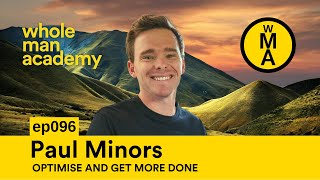
Episode 96 of the Whole Man Academy podcast (host Anthony Astbury) interviews Paul Minors, a New Zealand–based productivity blogger and consultant. Paul describes how Tim Ferriss's The 4-Hour Workweek inspired him to buy his name domain and start blogging in 2012, how he repackaged a free seven-day email course into a small paid ebook (first sale 25 April 2015), and how niching into Asana and Pipedrive consulting funded his transition to full-time self-employment (quit job in 2016). The conversation covers morning routines (wakes ~5:30, inbox-zero, midday walk, occasional meditation), balancing family and remote work (three-year-old, second child due in June), fitness (from running to CrossFit; half marathon 1:29:55), mentorship and community, content and list-building strategies (about 20–25k email subscribers), and Paul’s bitcoin-only investment stance (started 2017, dollar-cost averaging). Tone is practical and encouraging, aimed at men seeking autonomy and personal development.
Whole Man Academy. Because the world needs strong men. Whole Man Academy is changing the game for men around the world. It's for guys who want to live an epic life of fun and adventure. No matter what we believe, deep down, all men want to go on their own hero's journey to becoming resilient, confident, fearless and fulfilled. Listening to be inspired by guys who don't settle for living a life of mediocrity. This is your call to action. Action and call to adventure.
Are you ready?
Okay. So this is the Whole Man Academy podcast, episode 96. My guest today is Paul Miners. What is he? Productivity blogger, Virtual consultant, Father. I talk of him as a man of action and a man of freedom because of what he's done in his life. So firstly, how are you and where are you?
Yeah, thanks for having me on the show, Anthony. So I'm doing pretty good today, can't complain. And I'm calling in from Auckland, New Zealand. So it's Wednesday morning here. I'm coming to you from the future.
Yeah, I mean I was trying to think whether it was. I'm still getting my time zones worked out and you know, where I've been interviewing more guys from around the world. The fun of trying to make sure that someone's, you know, I've got the right time zones. But you just talked about it's early morning there. We're going to get onto the productivity because I shared one of your blog post today on our E Letter which was about the importance or how, how powerful it could be to get up early to get stuff done, you know, to be productive. But let me just take you back firstly to, because I think you've got a great story back to like 2012 where you said that you read like the four hour work week by Tim Ferriss. And then In September of 2012 I was reading where you said you bought a domain name and you started blogging and this is the important thing from where you are now started blogging about nothing in particular. Random ideas mostly. And you said, you know, have a look at the early post their crap. So what got you into that to start with to even buy a domain and kind of, you know, want to take this path.
Yeah, great question. It's, it's actually crazy thinking it must be. Yeah, like 10 years. You've actually made me realize, wow, it's been like 10 years this year. So. No, I mean, I mean at the time I was at university in fact, so it must have been early 2012. Yeah, I think I read the four hour workweek for the first time I was studying business and majoring in marketing and entrepreneurship at university. And so I was always, that was with the end goal in mind of trying to work for myself, just be, run my own company. And then at the time actually I wanted to run like a, like a big business. I wanted to do like, you know, obviously social media was booming and lots of money going into tech so I thought I'd do something kind of like have a big company. And I read the four Hour Workweek and that really opened my eyes to this idea of running like a lifestyle business. You know, one where you don't have to work ridiculous hours, you don't even have to make much money. Like what Tim Ferriss talks about is like if you actually plan out what you want to do, like how you want to spend your time, what you want to have, like if you want to have a house or a car, like what are the things that you want and, and, and, and kind of plan the costs related to those. He actually breaks down that the things you want and how you want to spend your time probably doesn't cost as much as you think and, and running a lifestyle. And so this really opened my ideas to running a lifestyle business. And since then I've read the four Hour Workweek every couple of years just as a refresher. And so yeah, I'd read the book. How the, how the blog came about is I was actually having a dinner with kind of a mentor at the time who said he just, we were just having a dinner. It was really just a passing comment. He just said, oh you guys, my friend was there as well. He was kind of a bit of a mentor to both of us. He said you guys need to buy your name, you know Paul miners.com it's just everyone should have their own name as a domain. So anyone listening today or watching if you don't have your name.com, try and get it because you just never know what you might want to do. So it was a really kind of just like fleeting passing comment and I thought okay, yeah, let's go and see if it's available. And it was. And so I just grabbed it and I thought well okay, let me just start blogging and just figuring out WordPress just as a bit of a side project hobby really. And so I was talking about some random stuff but then I started gravitating towards productivity because it was a topic that I was interested in and I thought, well, maybe there's some way I could monetize this passion this skill that I have and be sort of an authority around productivity. And productivity was interesting to me because at the time I was finishing up university and it was really where I was starting to experiment with and test different productivity habits, time blocking on my calendar. And so that was when I was testing all these different ideas and I naturally started working out how can I be more efficient? Because at university it was when a moment for me when you really had to be more disciplined with how you spent your time. Like compared to being at school where you've got a timetable and the teachers are kind of chasing you in terms of getting assignments handed in and stuff at university, I don't know how it compares. In the uk, I imagine it's similar, but you're very much on your own. Nobody's chasing you to come to class, nobody's going to bother you to get the assignment done. And if you don't kind of hold yourself accountable, nobody else is. So it was this kind of time in my life where I kind of really realizing the importance of being self sufficient, being disciplined with my time and that then turned into sort of the productivity blog. But yeah, that's kind of how it all got started. Really?
Yeah, I think it's great because I know you're reading the numbers. I mean, how many people roughly have you got your email list now?
I think I've got about 25,000 ish, 20 to 25,000 subscribers. I actually used to have a lot more, but I've actually culled that back just cleaning my list of coldest subscribers, you know, inactive subscribers. So about 25,000 now.
Yeah, I'm interested in all this because I was so green to all of this stuff for my years of working as an employee and you know, I turned up, did my job, went home and that was it. So suddenly when I was thrust into the world of the whole man academy setting up, you know, and you've got subscribers and you've got, you know, now and again you get an odd unsubscriber and it's funny, you might get five subscribers in a day, but you have the one subscriber and you feel the pain of the one unsubscribe. What did I do? What did I say? Yeah, I find that interesting. But again, for guys listening, you know that thing where you said I just got started and you know, you were randomly talking about stuff, not necessarily having a clear plan and then, you know, years and years later you say grew up, you know, 25, 35,000 or whatever. But what I laughed at and I loved was you said in February 2015 you started working on a paid online course, which is a six week productivity program. You said you hosted a webinar, which was basically a total flop. Only six people came to it and it was drawing board. And again, it's a great reminder that I'm sure you learned a lot from it, but for whatever reason it didn't work. But this was the cool bit when you said 25th of April 2015, basically you made your first online sale. So what was that like? Because I remember the first time I did, I think it was the 24th of July last year. And your email comes in and says somebody's bought your course and you're like, fuck. Like, yes.
It was very much a, yeah, a fuck moment. Because it was. What I'd done is I'd made an email course called the seven day Productivity Plan, which was kind of like a lead magnet on my website. You can instead of just, you know, sign up to my newsletter, I came up with a seven day program. You're going to get an email a day for seven days with some basic tips and things. And that was just a free email course.
Hmm.
And at the end, on day seven, I said, if you want to buy an ebook of this course, here's the link, you can go and do that. And it was really funny because it's like I'm literally selling something to somebody that they've already had the benefit of.
Yes.
Which. So that was kind of an interesting moment. It's like they've already done the seven day plan. I literally just repackaged it and said, right, I've just put it into an ebook for you. So if you don't want to search through your emails and go and find them, you've got the ebook. And I think maybe there was an audio. Actually I can't even remember if I had the audiobook at the time. Might have come later. And so I just repackaged that existing content and I can't remember the pricing at the time. I think it must have been around 10 to $15. Pretty, you know, on the low end. Pretty. Pretty cheap and reasonable. And it was a Saturday morning, the PayPal notification. I think I'd set this up maybe on the Friday or a few days before, but the PayPal notification came in on my phone. So and so has paid you? I think it was 999 actually. So and so has paid you 999. And I couldn't believe it. And so yeah, I ran into the bedroom to Tell my wife. And I was like, oh look, somebody bought my course. And it was this realization that like I created something out of thin air. Literally just ideas in my head I turned into an email course and an e book and it was digital. I wasn't selling a physical product. And that was something. A big takeaway from the four hour workweek is a great. If you're looking for an idea, like information knowledge is a really great thing to try and sell because you're not shipping any physical goods. You don't really have to deal with returns. Your margin is a lot higher. So I'd sold this 999 ebook. I pay a PayPal fee of what, 2.9% or something. The rest is pure profit. So it's this digital thing I've just shipped. I'd never talked to that customer. I'd never had a one on one. They just signed up to my email, they'd enjoyed the course, they bought the ebook. So I'd never had a one on one interaction. And now I had received money. And so it was this great like moment of validation that, look, you can do this, like you, you can do this. Now somebody's giving you money. Now you just need to like, work out how to make it better and get more. So it was great, great validation. And after years of, you know, trying different things and, and it was just a really, a really positive memory that I still look back on really fondly, but a really important moment. Yeah.
And that's what I was wondering was because sometimes, you know, on, on one level someone would look and say, oh, well, you know, it's only one product that you've sold for, you know, 10, 10 bucks. But sometimes it gives you the belief. I remember listening to an Internet marketing guy many, many years ago and he said he'd created something on, I don't know, let's call it Minecraft. But it was some computer game where he kind of, just like you said, he'd said he'd recorded his top seven tips on how to complete it and you know, put it on one of the, on the systems. And I think six months later he woke up and he got an email saying, you know, you've just been credited $7. And that was what sparked him to be like, like you just said, okay, well now I've got the belief that it can happen. I say, how can I scale it, do more, do it better, et cetera. So it's a. Yeah, I think because a lot of people have this vision of, you know, the word passive Income, which is great because you know, you do, you know, you might be asleep or you might be skiing or you might be at the gym and there could be this income, but people often forget there's often a lot of hard work beforehand to get it. So where have you taken because going through to productivity, how have you taken that where you've properly monetized being kind of extremely good at productivity.
Yeah. So after that sale, it wasn't until 2016 that I really earned enough to, to quit my job. And that was the goal is I just want to earn enough from this little side project to replace my salary because I was just getting pretty frustrated with my, my job and really just wanted to be out on my own. And at the time I was focusing more on products and that, chasing that kind of passive income. You know, I'd seen um, people making courses and digital products and making a lot of money that way. But what I, what I learned, I mean through that six week program that we mentioned, it completely flopped. It's really hard to like develop a course and build an audience and get that reach that you need to make a good income that way. So I thought, what can I do in the meantime? Just to hit that target monthly income figure that, that income that I need to quit my job, what can I do? And I thought, well, maybe there's some consulting I can do and maybe there's some services I can help people with. And I actually thought back to, well, I thought about what are the skills that I have. And I thought back to an experience in this marketing role that I had at E commerce website I was working at here in New Zealand where we set up Asana for the business. Asana is a project management tool. We tried a few different project management tools. We hadn't really had much success with any of them. I found Asana and being the natural productivity geek that I am, I figured out how to use it and I trained everyone on how to use it and about 50, 50 person team kind of switched over to using it. The owner of the business then paid me a bonus. He said, this has been so good, you know, paid me a bonus. So that was again some really good validation that like what you did was really valuable. And so that was actually, that was actually back in like 2013, 14 maybe. And so back into 2016, I thought back to that experience and thought, okay, well you know, I had this really good experience at my job. Maybe other businesses would be willing to pay for support with a tool like Asana. So I niched down so instead of just being like a productivity expert and just like, let me help you with productivity, which is quite generic, quite, quite hard to stand out that way. I thought, I'm going to be an Asana consultant, I'm going to help people with Asana. And so I started marketing myself that way, making videos on YouTube. I started, I put myself as an expert on a few directory websites and that and then I quickly started getting booked and getting inquiries and so I then set up Google Ads to get more exposure, let me get people searching on Google and get in front of people. And so I really just doubled down on it. I then started doing the same with pipedrive, which is a CRM that I was using at my a new job at the time. And so I thought, let me help people with this CRM. So really just specializing in those two tools, Asana and pipedrive, I just sort of started this sort of consulting arm to my business and that helped me then get enough of an income to justify quitting my job and doing what I wanted to do full time. And so that's kind of still what I do today. I mean, the model has changed a lot. I don't do as much one on one now. We have courses and group coaching and things that we do and there are some one on ones. I have a few contractors that help me as well. So it's a lot more scalable now. But that was how we transition. How I transitioned was by really niching down into a few specific areas that I could, could help people on.
Isn't it important when people talk about niching down? Because I think even when we started the whole man Academy, it was very much some people said, oh, we're trying to appeal to all men. And you're like, well, you know, trying to appeal to all men means different wording and different language and different images and you know, different feel for it. And yeah, I guess it's one of the big things, as you said, going just to say, right, I'm on the Asana kind of train and doing it that way is interesting. And I just want a few with because a lot of guys, I speak to you through the whole man Academy want to transition out of their 9 to 5 job and do something that they actually like. So do you see that yourself where a lot of people, that's their goal is either starting a side hustle or being able to make enough money to at least cover their salary?
Yeah, I think everyone's different. I think a lot of people, yeah, want to work for themselves. It's not for everyone. I mean, I remember having a lot of them. I don't know if I want to use the word anxiety. I didn't suffer from anxiety, but definitely a lot of. Maybe a better word would be like imposter syndrome.
Right.
You know, this is where you sort of doubt your abilities. And for the first few years, like I would say probably two years after I quit my job, I had this imposter syndrome where I was like, look, I'm just on a lucky streak here. This is all going to come to an end. And I was just kind of telling myself, like, you're getting customers and leads right now, but that's going to dry up. There's no way this can continue. And so I was kind of constantly planning for the worst and trying to save up enough so I had some Runway just in case. And I think that it's just a part of the journey, really. Part of the switch in terms of going from like a safe salary job where you get a guaranteed paycheck every week to now, oh, you're on your own, like, it's up to you to make the money. And so that imposter syndrome for you. Yeah, yeah. I mean, so it's not for everyone if you're, if you are a bit more risk adverse, if you want to, if you need that guaranteed, that security. There's nothing wrong with a job.
Yeah.
I'm just someone that I'm happy to take on a bit of that uncertainty, a bit of that risk in exchange for more freedom over my time and how I work and I get to work on what I want. So. Yeah, absolutely. If you, if you're willing to kind of take that leap, if you're happy dealing with a bit of uncertainty and taking a risk. Yeah, I think it's a great lifestyle if you can make it work.
I was thinking it's, you know, if someone's got that burning desire, you've got to try and you've got to try it because if you don't and then you get that bit older and you always wonder what if? So whether it's, you know, I always find it interesting because some people will say, you know, you should just, you know, quit your job and get. And you're just like, okay, sometimes maybe like you say, maybe you build up six months salary or six months, you know, worth of salary so that when you leave you've got a bit of a buffer before you go into. But was it for you, a lot of it about. I know obviously you've got a Family now as well. But was it. So you have that freedom to travel and you know, and I use the word freedom because for me I realize that's very important. In my now 40s, my 30s, I started. So was it about being able to travel yourself as well?
Travel sure was definitely part of it. I mean in doing that sort of Tim Ferriss four hour workweek exercise, like what do you want to do? Travel is definitely up there. And actually at the start of 2017, so right after I quit my job, we went traveling for five months.
Right.
And actually that was a really nice way to transition to doing my own thing. So definitely travel and, and that really helped really light this fire underneath me of like, look, look what this is helping enabling me to do. Like if I can work for myself, I can, I can travel, I can work from anywhere. So yeah, travel was definitely part of it. But for me the, the biggest motivator was just having complete control over my time.
Yeah.
And you know, in the few jobs that I'd had before, it was, I'd always been frustrated when I would have like an idea of like this is, you know, working in marketing. Here's something I think we should do. And if I ever face like pushback in terms of, you know, corporate bureaucracy, like, oh, we need to get that signed off or like these other people need to give their opinions. That always frustrated me when I would have an idea I believed in, I thought it was really good and then it would get shut down by the powers that be. And so that was just like I just want to be able to have control of my time, execute on my ideas, do work that I enjoy. That really was the bigger motivator is just having that kind of personal freedom and independence to do what I wanted. Yeah, that's so important.
I think from different guys either know who still work back in the city when I was there for a long time and or guys that I talked to you through the whole man academy is yeah, some are quite happy being an employee and doing their Monday to Friday and other guys have that feeling of they want the freedom to be able to. And again it's not just to travel, but kind of work when you want and not have to answer to anybody. And I remember, I think I was in my mid-30s and I wanted to go on holiday and I had to ask permission at work and, and yeah, the desk said well no, because he's off and he's off and you have to be here. I remember thinking like, I don't how old I was maybe 35. I was like, I'm 35 and I have to ask permission if I can go on holiday. And it was a no. And that was like a little red flag for me. But talking about productivity, you know, early mornings are one of those big things which I find so important for people because if you start for me, if you start your day right, hopefully the rest of it will kind of follow. So talk to me about your, you know, has it evolved but your general kind of morning routine.
Yeah, I mean, firstly I would say, I mean I'm an early, early morning person, love getting up early, think it's a great way to start the day. And yeah, there are lots of blog posts and articles you can read about how Tim Cook and all these big successful people, whatever that means, get up early to start their day. But at the end of the day you have to do what works for you. So just because I'm a morning person and it works for me. If you prefer starting your day at 10 o' clock and working more in the afternoon and later, that's fine. The whole thing, productivity is so personal. It's about finding what tools, what systems, what habits and routines work for you. So in terms of my routine, my routine is pretty, pretty simple, pretty, pretty boring actually. I wake up usually about 5:30. I hit the snooze on my watch a couple of times just to ease into the day. I get up, I shower, I have breakfast and now I'm working from home at the moment. I used to work from co working spaces a lot over the years, but I am home at the moment and so then I just get to work and usually I'm starting my day getting through my inbox, my email. With the time zone difference to a lot of my clients who are in the us they've already started their day. So I like to get into my inbox first and deal with any inquiries and just kind of get inbox to zero, get it to zero every single morning. And then I can start working on some of the tasks and other things that I have. I break up my day with some. I always go for a walk in the middle of the day, which at the moment is challenging because it's really hot at the moment. So it's usually about 25, 30 degrees when I want to go for a walk. But it's still, it's still really important because I'll like getting that fresh air and having that reset throughout the day. In the morning I will often, although I'm not super disciplined at this, I will Often meditate in the morning for just 10 minutes. That, that's a nice way to start the day. So no, like my, my routine is pretty, pretty simple. I used to do a few more little, little exercises, some journaling and things. But nowadays it's, it's very simple. Pretty boring really.
I guess in a way it's quite, it's quite good to hear when people say. Because in a way that makes it more achievable than when people have over things. And I know I've read things, you know, miracle Morning and I've.
Yeah, that was a big one for me.
Yeah. And those have all been great. But I remember thinking that I was going to do the miracle morning stuff and that was also just after we'd had a little baby. Therefore I was having very, you know, I mean still am sleepless nights. But I'd set those intentions. Tomorrow I'm going to get up and I'm going to journal, meditate, exercise. Yeah, this. And then my alarm would go off and I'd have only had like three or four hours sleep. I couldn't, you know, like I couldn't face getting all those things done. So yeah, the big thing was, is as you say, trying to find what works for you.
Yeah. And if I could, if I could just jump on that because I read the Miracle Morning and I did it for a little while and it was really good for that point in my life where I didn't have. We have a three year old boy now but back then didn't have any and we're expecting another one by the way, having another boy in June but back then was working full time, didn't have any kids and I was very heavily focused. Like my entire day was focused on. Even when I was at work, I was daydreaming about how do I start, how do I get my business going. So for me at the time the Miracle morning was, was good because it was, it motivated me and it really gave me that drive to get my business off the ground. So doing the meditation, the affirmations, the visualization was. I definitely recommend. It was really good at that time in my life. Now I. It's not that I don't need that. I could still benefit from meditating and journaling and visualizing and doing affirmations every morning. I would still get value from that. But I don't need it as much anymore because of my kind of where I am. I've got my business off the ground. I'm well established, I've got my family.
Yeah.
So at this stage of my life, it's not as important to me. I guess I'd rather just have a little bit of extra sleep. And so I think it's about part of productivity as well. And looking at these routines, you've got to sort of do what fits for you at your. Based on the season of your life right now. And like you said, not putting unnecessary pressure on yourself, like with meditating and journaling. I mean, I do these things, but I have no, I put zero expectation on myself. I. Some people want to meditate every day or read every day or journal every day. And my, my approach with all of those things is I'll do it when I feel like it's.
Yeah.
Like if I. And I'll. I will notice, like if I'm getting distracted during the day or I'm just feeling a bit like, unfocused, I'll go, right, I need to meditate a bit more. And I'll maybe be a little bit more deliberate and intensive with my meditation for a week or two.
Yeah.
And same. Same with journaling. But that, that's. I set the bar really low. I don't have any expectations to do it every day because I think that almost makes it unachievable and that pressure gets too much. And so that's my philosophy is I'll do it when I feel like it or when I. When I acknowledge that I need that in my life right now.
I think that's good to hear because. Yes. And I've done it myself where I'm like, right, I'm doing this and then like three days later I've forgotten one of the things or two of the things, or I've run out of time and you kind of end up. You're not even present when you're doing the other things because you're thinking, I've missed them out. So, yes, always good for guys to hear that. It's, you know, you got to adapt it to whatever kind of phase of life you're in. And I want to say for you, one of the biggest things, to state the obvious in the last two years has been people being forced to work from home. Now, it's not to say that some people didn't before, but for a lot of people, they would never have decided to work from home, especially if you've got kids, dogs, delivery drivers. For some guys we saw had that family and they found it really hard to have peace and quiet because your family shouldn't have to be quiet at home because it's their Home. Then we saw some guys who lived on their own. I'm like, I'm really lonely because you're not, you know, you're not in the office. So how have you worked that balance? Because I loved being in the office when I was with 300 other guys, because we spent a lot of time pissing around, obviously. So I do miss that kind of part of it, which is why I think I've replaced it with the podcast, Talking to Men around the World.
But how about yourself?
How was that kind of integrating that into your life?
Yeah, it's not been without its challenges. I mean, when we first. I've always done a little bit of work from home. I mean, when I started working for myself, I. I started working from a. From co working spaces. Partly for that. Definitely same as you for that social aspect, like just being around other people, being able to talk to other people, running businesses who are maybe going through or have gone through some of the same challenges as me. So I really, really have enjoyed that. I mean, when lockdown started, gosh, we're two years into this now, so our little boy, Jay, my wife wasn't working at the time because he was still pretty young, so she was looking after him a lot. He then started kindy, or I guess what you call, like daycare or. Yeah, you know. Yeah. So going to kindy. And that. That was actually after our lockdowns, he started kindy. So then when. When the new lockdown kicked in, my wife was then working part time because she'd taken on some work. And so she was working part time, but we no longer had kidneys. So of course, that was then a real challenge was when the two of us were working. Hayley, my wife, only part time, but still had plenty to do during the day. And so that was the challenge is how do we juggle this? So it just meant the two of us communicating really well. We use, like, a shared calendar so we can each see when what each of us are doing. And we just try and use that calendar to kind of schedule some times. And I would even block in times for, like, where I wasn't going to take appointments or calls so that I could give my wife a break so that she could do some work. So often, because I start my day early in the afternoon, when I've kind of done the majority of my work, I would take a break, go and look after our boy Jay, take him for a walk, while Hayley could do some work. So just kind of working as a team and planning our time so that Each of us had an opportunity to do what we wanted, was kind of how we dealt with it, really. Now I'm working from home full time. I'm actually really enjoying working from home at the moment. Again, partly just because of the season of life that I'm in right now. You know, we have one boy, my wife's actually pregnant with another one. It's actually really nice at the moment being at home. Jay's at kindy four days a week. So it's actually really nice because it's some time that my wife and I get to ourselves without. Even though we're actually both. I'm working full time, Hayley's working part time. We still get to like after this today we will go and get a coffee together.
Yeah.
And it's just like a little bit of time together. Even though we're kind of both working, it's a little bit of time where it's just us and we can just. And we don't have Jay at our. On our hips or, you know, playing with us throughout the day. So that's, that's really nice at the moment. So actually I'm really enjoying working at home right now and also just being around to help Hayley while she's pregnant and, you know, things are a bit tougher. So, yeah, it's just kind of vibrant.
And you said the second baby's due in June, was it?
Yeah, yeah, a day before my birthday, actually.
Yeah. I mean, I was talking with a kind of mentoring client yesterday and their baby's due in two months time and that's gonna be their first. So he was kind of asking me, you know, what changes when you're a dad? And I was like, pretty much everything because, you know, you. Especially for the first few weeks, it's such a. Well, the baby sleeps a lot. You know, you're trying to be there for your partner and you've got family come around and everything. I know the second one, it's sometimes it's like you've done it once. So you kind of have been there, done that. But. But that, that'd be interesting one. But let me ask you about. I know you're into your fitness as well and done CrossFit.
Yeah.
In 2015 you read Unbreakable Runner and yeah, that's. That sparked something because I remember reading that, you know, quite a few years ago because I was doing a lot of obstacle course racing and that's what I loved. But what I realized, thankfully, very quickly was you didn't have to do loads of Long distance training to be good at it. So can you tell me what you kind of got out the book? Because a lot of people, you know, I recommend it to some people, but most might be like, oh, what do we mean? Unbreakable Runner.
Yeah. So at the time I was doing a lot of running and I had done my first half marathon, which I'd done really well at. I was aiming to do a half marathon in about 140, 145. Like when I was doing my training, I kind of realized this is a good goal to go for. Started the race and I was tracking my pace using the running. What was the app? I can't remember. Some running app on my phone and it was calling out my pace. And I realized, like, I'm doing pretty well here. Like I actually think I could try and break an hour 30 and had a really great race. And yeah, I came in. I think my final time was 1:29:55, so five seconds under 1:30. I think I was the last runner in under an hour and a half, which I was really happy with. So I came out of that race off with a big high, like great run. Okay. Next year gonna do a full marathon, actually. Then a few months later did Tough Mudder. You know, the, the obstacle. Yeah, of course. The obstacle course race. Yeah, I think, I think that was about a half marathon. It was like 20, 20Ks with obviously loads of obstacles thrown in. And unfortunately right before the race I lost my keys and so I completely missed. I was running around trying to find them and I completely missed the warmup. So I kind of started the race pretty cold and it's obviously a pretty, pretty grueling race, like not great terrain. And I kind of hurt my knee during that race. So I was trying to recover from that and while training for a full marathon. And I found, I found this book. How I actually found Unbreakable Runner was through the Tim Ferriss podcast. I listened to a great interview with the author, Brian McKenzie. He was interviewed with Laird Hamilton, who's the big wave surfer, and his wife, Gabby Reese. And so it's a three, three way interview and they talked about just a lot of fitness and. But Brian talked about how you can use CrossFit training to condition your body for long distance runs without having to go out and pound the pavement for three hours. You can use CrossFit. So I thought, okay, that sounds interesting. So I picked up the book, looked at his programs. He then in the book says, go and try a CrossFit on ramp course. Just to get familiar with some of the movements. So I thought, okay, I'll do that. Googled, found the local CrossFit gym, started the on ramp program, the induction and basically just fell in love with CrossFit. Like really I was going to do it just as a temporary thing, like I'm just going to try a couple of classes, but very quickly realized this is so much more fun than running and the community. What's that?
Sorry, Kind of, you know, community of being around. It's a very community.
It's. You're not having to go out and pound the pavement for hours.
The.
I mean you work hard for 10, 20 minutes and then you're done. And so just got hooked on the on CrossFit and the community. I mean most, most CrossFit gyms have really good communities. Ours is like magic. Like we. I've got some of my best friends are my CrossFit friends. We go camping during the summers. Last this weekend just gone. We spent time up at my friend's house in a couple of hours north. Like just our CrossFit friends are CrossFit family. We're so tight. That's like such a great benefit of being in that community. But no, so that's, that's how it all got started was literally through this motivation to get better at running and then just fell in love with CrossFit.
Yeah, I think it's so important. I know we've on different podcasts when we've spoken to kind of guys that strength and conditioning coaches or just fitness coaches, etc. And they will say, you know, find what you enjoy. So, you know, some people love going for long runs, but it was just before we moved out of London that my partner had joined a CrossFit gym or had done for about a year and she loved it because it was that, you know, going there and having the camaraderie, having some competition as well, because a lot of people aren't necessarily pushing themselves because they haven't got. They're not, they're not competing. And a few weeks ago I went down to a CrossFit gym down in the south of England and it's probably the first time I had competition when we were working out for years and I, you know, ended up literally on the floor, you know, couldn't move when I finished, I'd put that much effort in. But I took me back to. I was like, yeah, that's what happens when you have competition. You push yourself beyond what you think you can. Yeah, I'm always saying to People, you know, even if it's the races, sign up for something but don't assume you have to do like you say, pounding the pavements over and over again. Do that, do the strength stuff and do some kind of interval stuff and then you don't injure yourself as much. Now something you'd written about was self improvement and you just said about mentorship as well and we're very big on that here we have a mentorship program. We don't call it life coaching because I think that's a crap term. But what about yourself? As you've kind of, as you've gone through your business career, who have you had around you that you've kind of been able to go to just to sometimes check if you're doing the right thing or to talk to?
Yeah, definitely. One of the people that's been with me well the whole time really is my best friend Chuck here in New Zealand. He's a friend that I actually met back at school. We'd had great success working together in, we did the Young Enterprise Scheme. I think you have that in the uk. So this business competition, we actually together we represented New Zealand in an international case competition and we won that. So we became great friends through that program and we were both doing, doing the same degree at Auckland University. So we just became really good friends through, through the end of school and into university. He's the same as me, very sort of just wants to run his own business. So he came out of university, started a couple of businesses and so very similar mindset. So it's, he's been an important figure because he's always somebody I've been able to lean on and just share this is what I'm doing, he can share what he's doing, we can bounce ideas off each other. So just being around like minded people who are kind of going through the same things as you is really is really useful. The co working space is great because you come into contact again with people who are maybe a few years ahead of you. You know, maybe they have a similar business and they've gone through some of the challenges that you're going through and they can say, look, here's what I learned. These are the mistakes to avoid. So that's why I think just going to co working spaces and networking events and things like that, just trying to find those people who are, they don't have to do exactly the same but if they've got some lessons that they can share that help you to avoid mistakes or fast track your learning that's always been really good. I did a mentor program here for a couple of years, New Zealand business mentors, and just had a guy that, you know, met with every, every kind of quarter really just like checked in. And I would say, like, these are the, these are the sort of challenges I'm going through right now and just being someone who was. Is older and has loads of life experience that he can lean on. I mean, I think that's the common thread with all of these things, isn't it? It's just finding people who have experience with what you're going through, whether it's a mentor, a friend, people you meet at a networking event, just tapping into those people that can share their experiences. That's what I found to be most useful.
That's good to hear because I think maybe some guys are kind of embarrassed to ask for and he's not asking for help as such. It's something, it's just advice. But I don't know if you know who Daniel Priestley is, but he'd written a couple of different books on being a key post of influence and creating digital assets, etc. I remember him kind of saying, you know, often there's guys who are older in business will actually enjoy helping someone, but, you know, you've got to reach out to them to start with and find, you know, find someone that's maybe doing what you want to do. So, yeah, just reminder to guys to, you know, I would say to people, just reach out to someone and if they say no, they say no. But you never know. You might kind of be taken under the wing of someone that's doing.
Yeah, I think most people, you know, if it's a business owner or someone like a business owner who you want to be a mentor, like, chances are they've gone through what you're dealing with and they, they sympathize with those early days and not knowing what you're doing and having that imposter syndrome. Like I talked about earlier, that was something I talked about with my mentor. So they've probably gone through what you're going through and know what that feels like. So they're probably more than willing to say, yeah, like, I'd love to help you. And that's what, when people approach me now, I'm like, sure, I'll help you, because, like, I know what it's like and if I can help in some way, that's, you know, that's a good.
One to move on to. I put on Instagram about if people had any Questions to have a look at your website, what have you. One of the guys, James said about how would you best build an audience as an email audience at the moment? You know what, what would be a couple of ideas you could have. And actually that's useful for us as well because we're, you know, I'm still learning from all these different people of how to not just build an email list because you want to have the right people on there.
Yeah, for me, like just producing good content and being helpful has always been like the best strategy. So, you know, content comes in many different forms. So obviously I started with my blog. I then did a podcast or I do a podcast as well because I've written a blog post. It's not, it's, it's a very small amount of additional work to like turn on a microphone and turn my blog post into a podcast. So that way if you're, if you like reading, you can read. If you like listening in the gym or the, in the car, you can listen to the podcast. And then now YouTube is really big for me. Like, I get a lot of my consulting clients through YouTube. I produce screen share videos about Asana and Pipedrive. So whatever the medium, whatever the channel that you like or, you know, obviously YouTube lends itself really well to the type of business that I have because I'm consulting on software. Whatever medium or channel you works for you just make it a regular practice to produce good quality, regular content. Some people have some concern around. Well, I don't want to give away too much advice because then people aren't going to pay me for my service or product. And I found that the opposite is true. The more you kind of give away, I mean, sure, you want to keep some secrets and some of the best bits back, but by being really generous with your, your content and giving real good value, people will, that's the first thing. They're not going to sign up to your newsletter unless you've, you've delivered some value. Like I won't sign up to a newsletter unless I kind of know that, okay, this person, I've watched some videos, I know they know what they're talking about. So that's my biggest tip is produce good content, be helpful and then just point people in the direction of your newsletter. Generally, I think it's good to have some kind of magna instead of just saying sign up to my, get my updates, which is a very unexciting call to action. I think it's, it's good to have some kind of like, you know, sign up and get my free training series or my free ebook or whatever it might be that's a bit more interesting than just updates.
It's all these little things, again, that I've got several friends that are either starting businesses or building them. And, you know, no one's taught you this stuff when you're at school. And especially, you know, I was 36, 37 before I had to even think of this stuff. So you've not grown up with it. It's kind of the other thing you can do. What I found is get lost in watching YouTube videos, you know, with people that are giving you tips and advice. And, you know, two hours have gone by and you haven't actually done any work. You've just watched more advice. So, you know, the old paralysis of analysis. But what would you.
What about for yourself, actually, if I, If I could just jump on that? Because again, it kind of goes back to what we talked about earlier seasons. Like, when I was in those early days, I was doing my miracle morning. I was really focused on getting my business off the ground. I was consuming a lot of content as well. Things like the Fizzle Podcast, which is this great podcast that helps, you know, kind of information businesses, you know, like, like, like ours, sort of develop your email list, get. Get an audience. And so I was listening to that. I was listening to Pat Flynn, smart, passive income. Gary. Gary V. Just for the hype and the hustle. Now, now I. I don't listen to that stuff nearly as much. Again, a bit like the miracle morning. Not because I don't think it's not valuable. It's just that in that season of my life where I was at, it was really important at the time to be learning a lot. But you're right, you have to translate that into action and actually be doing stuff. And I think, yeah, if you're not careful, you end up just consuming content because it feels productive. It's like, yeah, I'm learning all this stuff. I'm educating myself, and it's. You're kind of tricking yourself, but actually you need to turn that into results and translate that into action and execute. So now I'm not really going through that as much because my business is off the ground. I'm up and running now. My time is better spent learning about other things. Like, we can talk about bitcoin soon. Like, I'm actually interested in these things because it's helping me to invest my income into other areas that's more appropriate for the season of life. I'm in right now. So just wanted to add that on the back of what you said.
It's good. It's all these little things that I always say with podcasts that there's lots of little golden nuggets and one you could have, let's say you've got a thousand guys listen to it. You've got some that might listen to something early on and be like, hey, that's really useful. And then there might be something in the last five minutes that comes up that someone finds, well go then. Let's talk about crypto. Let's talk about bitcoin because I mean it's such a big thing. I first heard about it when I worked in the city. Didn't have a clue about it like most people didn't. And one of our clients had bought like 100 grands worth of it when it was, you know, that's, that's seven or eight years ago. So he was an early, early adopter as it were. But it was only really about two years ago that I properly got interested in and actually started kind of investing in it. So what about yourself? Where was your crypto, John? Where did your crypto journey start?
So it started in 2017. Again my friend Chuck, who I mentioned earlier, he'd been into it and him and another friend, we actually went out for dinner and they kind of orange pilled me, so to speak. Orange pill is if you're not sure the reference, it's reference from the Matrix, the red and the blue pill and the orange pill is the bitcoin pill. So you orange pill someone, you get them into bitcoin. So they taught me a lot about how it works and what it's about and how it's different to other cryptocurrencies. So I got started in 2017 right before the big run up from like 2 or 3k up to went up to about 19k that year. So I got started then and basically since then I've just been dollar cost averaging my way in like weekly payments and I definitely find that's the best way to get in. Don't worry too much about the price. Like if you believe in the long term value of bitcoin, don't worry too much about the price it is going up. So some people try and play the market and get in when it's really low, but you end up missing opportunities. I think dollar cost averaging your way in with regular payments is the best way. I do sometimes make additional payments with when the market is down, but that's how I got started. And you'll notice I've only mentioned bitcoin. To this day, I only hold bitcoin. We can talk about that if you want. But, yeah, I guess you'd call me like a bitcoin maximalist. I'm not really interested in any other cryptocurrencies.
Oh, I find it interesting. And, you know, I was talking about this earlier with my partner because what I find, I love and also find so frustrating is you can listen to three different experts who all in their own right, sound like they know exactly what they're talking about. And we'll say that bitcoin is going to half a million or more. And I'm like, great. That would not surprise me at all. One will say bitcoin's going to zero and the government are going to crush it and etc. And you're like, that's. It's also, you know, could happen. Who knows? These days, especially in the last two years, you know, nobody rules anything out. Then you have someone else say, privacy coins are the way forward, like Monero. Because ultimately people wake up to the fact that the governments are, you know, slowly they're overreaching on the ability to control us. And I mean, look at what's going on in Canada at the moment with the truckers. You know, whether you. Whether people agree with what they're doing or not, that eyebrows should be raised when they're having their bank accounts frozen.
Yeah.
Trying to, you know, do the same to their cryptocurrency. Because you're like, hey, when was this about a virus? You know, three weeks to flatten the curve. And now you're. And now you're freezing people's bank accounts. So that's why I find it, you know, even for yourself, I find it so interesting to have different takes on it because honestly, I invested in it, it. Because I believe in it, but nothing would surprise me these days.
Yeah, here's my take and kind of why I'm bitcoin only. And I'll preface this by saying, look, I'm not an expert. I don't market myself as a bitcoin expert. I'm literally just regurgitating what I've learned after. I mean, I've been learning about it now for five years, so I feel like I know a little bit, but I just want to, I guess, put that disclaimer out there. But what I understand about it is what problem does bitcoin solve? Or cryptocurrency? What problem does it solve? Some people think, well, it's faster. It's quicker than regular payments. And that's actually one of the ways people sometimes attack Bitcoin is they say Bitcoin's old, it's slow. This one is quicker and cheaper. Actually, if you think about it, most people don't have a problem with the speed of their money. When you buy a coffee or you buy anything really, you're not sitting there waiting for the payment to go through, are you? You use a credit card or a debit card and you pay and you get the coffee. So the speed of the money is not the problem. I don't think the main problem that cryptocurrency or bitcoin solves is who controls the money. Because all fiat currencies, normal currencies like the New Zealand dollar, the euro, the US dollar, all of them are controlled by a central bank. And that central bank, that small group of people at the bank, they get to decide the rules about how that currency works. They get to create more of it. Like during times of stimulus, when stimulus is needed, like Covid or now the war with Russia and Ukraine, we're probably going to see a lot more money printing and that's going to have an impact on inflation. It's going to erode your purchasing power. Because if they suddenly create more money, that amount that I've saved is now worth less. It's a smaller portion of the total pie. So my purchasing power goes down. So that I believe is the problem with money is that it's controlled by people. So then bitcoin comes along and says, well, it's basically a protocol, it's a technology that says these are the rules. And through proof of work we're getting a bit technical. But through the proof of work that backs Bitcoin, this is the miners that consume a lot of power. That protects the network and means the network can run without any central authority controlling it. A lot of other cryptocurrencies use a different consensus mechanism, which is proof of stake. So they don't use power to achieve consensus in the network. People stake their coins. So let's just take Ethereum for example. They're actually switching to proof of stake with Ethereum 2.0. And so in a proof of stake system you stake your coins and the people who stake their coins, they get more votes or control over the network. And Ethereum and a lot of altcoins have been pre mined. So venture capitalists and the owners of these cryptocurrencies actually control the majority of the piece of. And so they're Doing all the staking, they're getting the benefit. And so in my mind, people can dispute me, they can debate me on this. In my mind, they haven't solved the fundamental problem, which is that money is controlled by people. Because now if you buy Ethereum or some other altcoin, instead of buying the New Zealand dollar or the US dollar that's controlled by a government, you're just buying another cryptocurrency that's controlled by another group of people who have, who have created it. So I don't think that's why I am much more bullish on Bitcoin. It's why I want to hold my wealth in Bitcoin, because I know that that system, the rules of the game, cannot be changed. Ethereum's changed its monetary policy multiple times. I know with Bitcoin the policy cannot change, it has a fixed supply and that's where I want to put my wealth because I know that that system cannot be tampered with.
I think it's so interesting and even as you're talking, it kind of, I'll find out, you know, I learned something and that's why it's great to talk to different people. I interviewed a guy called Max Wright who's got a big cryptocurrency channel and you know, he felt like, I mean, he's massively down the rabbit hole of the, how controlled the banking system is and how rigged it is and etc, etc. So yeah, that's why it's always good to talk to different guys. And I enjoy now getting around people that are even interested in crypto because, because I found that those people may be a little bit more awake to how the world works and they understand that there is another way and just putting your money in your bank isn't the only option.
I had a great expression the other day because with investments, this is not just bitcoin, people often tell you only invest what you're willing to lose. And I heard this expression, which is only keep in the bank what you're willing to lose. And it was after this, Canada froze the funds. It's like, well, if you leave money in the bank, there's a central authority who can shut you down and say you can't spend your money.
Well, I wanted to ask you, Paul, with have your banks stopped you from transferring money to crypto exchanges? Because we saw over here, even my dad had it where like Barclays and I think TSB and maybe NatWest or it was basically, this is what will make people laugh if they think about it for a minute. They said, we are, you know, we're protecting your money for you because we don't want you to lose your money. Therefore we're stopping you from transferring it to crypto exchanges. And you say, but you don't mind me transferring it to betting sites and you don't mind me transferring it. If I buy the lottery, which is millions to one, the lot is I'm going to lose all that money. So at what point have you started caring about how I spend my money? Or is it competition for you?
Yeah. Or even look at meta. Facebook, which is now meta. Their stock tanked. Was it 25% or something ridiculous the other day? And this is an established company that, you know, publicly traded company and you know, people want to protect you from Bitcoin because that's volatile. Well, look what happened to meta. I mean, look at Amazon. I heard this on a podcast the other day. So I'm just again repeating what I've heard. But I think the Amazon stock, guess how many times Amazon stock decreased 50% over 50% from its inception to where we are today. Any ideas?
I would. Because your brain would be like, oh, hardly any. But then I bet it's actually loaded.
It's actually been like over five times. Amazon's stock has cut 50%. It's actually reduced 80% twice, which is kind of similar to what we've seen in bitcoin. You have these big pullbacks in the price, but volatility is the price you pay for the risk for that huge potential upside. So you have to take a very long term view. You have to take a very long term view with it. But no, to come back to your question, I haven't had any issues here in New Zealand. I have heard that in the UK with the exchange that I use here in New Zealand, it's a New Zealand exchange. The only thing they say is you do have to use a bank account in your personal name. You can't use a company account or I guess like an account under a trust or something. And so I'm very thankful that I never set up a business account. I just have, have. It's technically a personal bank account which I use for my business. So I'm glad I never set up a business bank account for that reason. Don't take that as advice. You need to check with your accountant, if that's okay. It is here because then I can transfer funds from my business, which is under my personal account, it's under a personal account into Bitcoin. So no, I've, I've never had any issues. But I mean, I look at that and I just interpret that as, look, the banks are probably seeing the writing on the wall a little bit in terms of they stand to lose. Because with bitcoin or crypto, you can be your own bank. With Bitcoin you hold the keys, you hold the funds, you don't have to use them as a custodian. I mean, for what it's worth, I think banks should be looking at what services they can provide on top of bitcoin because we see services now like Leden and Blockfi, where you can actually deposit crypto and they can hold that as collateral and you can get a loan against that. Or they're paying, they're paying savings, they're paying like 9% interest on Bitcoin deposits. So that's what I think. Banks should be looking at this as a massive opportunity. But I think they're probably seeing it more as a big threat, which is why they're trying to stop you.
Well, Joe, what I mean, I know I'll pull it up in a minute with the interview because I'm sure you've got stuff to do, but, but what I found really interesting was in this country, I know there's like a limit on if banks collapse, they'll say, I think it's, let's say 85,000, assuming the people have got 85,000 in their bank account. And then I ask people, well, if the bank, you know, let's say it's Barclays, if they collapsed, then I say, you'll get your, at least your 85,000 is protected. And they say, yeah, okay, where does that money come from? And they say, well, I don't know. And I say, well, it's a pool of money that all the other banks and institutions pay into. So it gives you that protection money. Okay, great. I said, but what if all the other banks collapse as well? Then there's no one to pay into the pool, therefore there's no money coming back. People go, oh, so what happened then? Say, well, you're fucked and you won't have any money left. And then it gets interesting.
I kind of look at it right now as like the world is a crazy place right now. It is insane. Like we've got Covid been happening for the last two years, which has resulted in massive amounts of stimulus. Like all over the world, the us, Europe, New Zealand, everyone's been printing money like crazy to prop up the economy because politicians are short sighted. They want to Just get reelected. They can't handle the idea of a recession so they have to keep the economy going. And that results in, like we talked about earlier, massive inflation which we're seeing now. And the result is we, the people, our purchasing power gets eroded. So and then we've got, you know, war with Russia and Ukraine kicking off. You've got social unrest, you've got protests handling everywhere there is a revolution coming. There's, you know, if you've read the book, like the fourth Turning this idea that the economy and kind of go, not just the economy but like the political sphere and just social dynamics go through these big like 80 year cycles where you go through like post war.
Post World War II.
You go through this spring and summer, this booming middle class. But then people get greedy and complacent and then you get into sort of autumn, winter where there's more social unrest, which is kind of the phase that we're in right now. And I do think we're probably, things are probably going to get a little bit worse before they get better. But all that to say the world is this very uncertain place right now. And for me, one of the reasons I like bitcoin is that I can take the money from my business and my savings and I can just opt out of that craziness. I can literally remove my money from the economy because everything else that you can invest in, like property, stocks, bonds, everything is kind of influenced by the economy. And yeah, okay to it, yes, bitcoin is as well. But the great thing about bitcoin is like its policy is fixed like we talked about earlier. It cannot be changed. It's got this fixed supply of 21 million coins. The rules, the supply schedule, all of that is fixed in stone. And no amount of lobbying power, no number of, of politicians can change that. So I like putting my money into that because it's a great way of just opting out of the economy and going, look, I don't like this craziness. I'm just going to use technology and maths and this amazing network of computers around the world to protect my wealth.
I like it. And I think for guys listening, I know some of the guys, because I get messages, are interested in crypto and have got involved. Others are like, I'm totally clueless. I don't know where to start. But I was thinking of the more people you listen to who talk about it, the more you're going to build up your own idea. And then if you're going to put money into it or any other kind of coins. Therefore, you can. What's your, you know, what's your appetite for risk? Are you going to diversify into precious metals and et cetera, et cetera? So it sounds like there's another crypto podcast in there somewhere, but I'm going to let you go, so I appreciate all your time. What's your plan? Straight after this, you say, might go for a quick.
Can we get coffee? Yeah, we're gonna go. My wife and I are gonna go get a coffee and then just come home and get into some work for the rest of the day.
Yeah, lovely stuff. And what's the best if. If guys wanted to get hold of you, just head straight to your website.
Yeah, my website, Paulminers.com I'm on Twitter @Paulminers and YouTube. Just type in my name there as well.
Lovely. Right, well, I'm gonna let you go. I appreciate all your time. And I always say hopefully at some point in the future we will. We will cross paths for a. For a Manhattan hug. Yeah. For the guys listening, reach out to Paul if you've got any questions or want to work with him and we will catch you soon.
Thank you.
All right. Thanks, Paul. Cheers, Ed.
Thanks for listening. Remember to sign up to our game changing weekly E letter that's read by men around the world. Sign up@wholemanacademy.com forward slash movement. Until next time.










