EP099 - THE APEX OF MAN - JAY REYNOLDS | WHOLE MAN ACADEMY
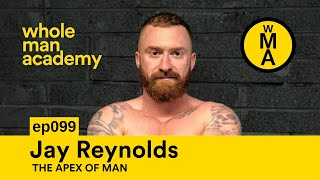
Podcast episode (Whole Man Academy Ep.99)—host Anthony Astbury interviews Jay Reynolds, a strength-conditioning coach who shares his journey from a troubled, substance-using youth to disciplined coach. Key content: Jay's school and injury history, rock-bottom moments and recovery, influences from Special Forces literature (Jocko Willink, David Goggins, UK operators), and the rationale behind his Apex Predator course. The course emphasizes hybrid athleticism (strength, speed, endurance), hormone and micronutrient optimization (test panels, fixing low testosterone and deficiencies), and lifestyle shifts (independence, discipline, getting into nature). Broader themes include concerns about declining male health metrics (testosterone, fertility, grip strength), fatherless homes and leadership vacuums, and dietary defense of red meat for micronutrients. Episode closes with course CTA and host sign-up link.
Whole Man Academy. Because the world needs strong men. Whole Man Academy is changing the game for men around the world. It's for guys who want to live an epic life of fun and adventure. No matter what we believe, deep down, all men want to go on their own hero's journey to becoming resilient, confident, fearless and fulfilled. Listening to be inspired by guys who don't settle for living a life of mediocrity. This is your call to action action and call to adventure.
Are you ready? Okay. So this is the Whole Man Academy podcast, episode 99. My guest today is Jay Reyns. I've even asked him what I should introduce him as because he says he's a strength conditioning coach and personal trainer. But I think he's a lot more than that. And he's also now part of the Whole Man Academy team, which we'll come into. But Jay, first of all, how are you and where are you, brother?
I am very well and I'm in Wicklow in Ireland, so just, just the next county south of Dublin.
Good. And I've never been to Ireland, which is quite embarrassing seeing as I've, you know, I've been living here for like what, 43 years and I still haven't managed to make it over there. But what's it like when you come to the uk? I mean, apart from drinking Guinness and stuff like that, which we try to, we try to pretend we're kind of down with the Irish. But what's it like when you come over here?
Well, the Guinness doesn't travel well anywhere. I mean, even sometimes I was, I was, I was on one of the islands in, in Ireland recently and the Guinness was horrible. So it's not just, you know, it's not, it's not the whole of Ireland that, that has the good Guinness. It's only very specific parts. But yeah, whenever I go over to, to England, you know, I'm usually going to kind of go into major cities. I know there's, there's, there's a lot of lovely cor. The countryside in England, which is, you know, kind of where I would like to go. But anytime I need to, I, I need to go over to England or for whatever reason and it's usually the major city. So, you know, I'm not a big fan of major cities. Just, just. It's a personality thing, you know, hustle and bustle, loads of people around, lots of noise, all that type of stuff. I'd rather be sitting in the field with a couple of cows, you know. But it is what it is so.
Well, we're gonna, we're gonna get into that because I, you know, you and I were introduced through a mutual friend and he, he felt like so much of your message of how you feel kind of, you know, that the life that hopefully men should be leading or living would resonate with what we're trying to do here at the whole man Academy and maybe bring back some clarity to masculinity as well. And it's always an interesting one because people have their own views in it. But tell us a little bit about your background of growing up and kind of, kind of brings you to where you are now, helping guys with the strength, conditioning, etc.
Well, through my childhood I was not very academic and not very well behaved. You know, I was always in trouble in school, even from a very, very, very young age. It wasn't something that, you know, happened as a teenager. It was going back as far as, you know, I think I was five or six, you know, getting in trouble, parents actually being called in, stuff like that. And it was just that carried on all through my, my schooling. So just school, it wasn't for me. It wasn't necessarily, you know, a bad kid. I never bullied anyone, anything like that. I just want to have fun. I just wanted to have a laugh. I just wanted to, you know, make jokes and had no interest. And I wasn't the only one. But yeah, that went all the way up through my troops to what we call primary school, which is kind of from kind of 4 till about 11 years of age and then secondary school, which is kind of 11, 12 to about 17 or so. And it got, you know, progressively worse in secondary school then. I was just always in trouble, always in attention, always suspended. Many, many times. I got expelled twice from the same, from the same school, which has to be some sort of a record. It's good effort, but yeah, I hope that record still stands. But yeah, it just wasn't, it wasn't for me. That's not to say I was, you know, I wasn't stupid or anything. That just wasn't interest. But anyway, so I left school at about 16, straight into work. I worked for my uncle who had, you know, kind of a fruit and veg business, stuff like that. It was just kind of a natural progression. Yeah, even when I was in school I used to work for him, you know, on, on holidays and Christmas and all that type of stuff. But I worked for him for probably the best part of 10 years. But it wasn't anything that I had any passion For I wanted to do it was just a natural progression. It was only meant to last a couple of months until, you know, I found something that I wanted to do. Even when I was in school, you know, I always wanted to be an athlete or a professional footballer or something like that. Now it didn't happen. I just, you know, whether I wasn't good enough or I got. I got some really bad injuries as well.
Yeah.
But my plan was, even if I didn't kind of make it to be in the kind of, you know, physical training, maybe coaching, all that type of realm, I knew I didn't want to be sitting in an office or, you know, some. Anything similar like that, or working in Tesco's or anything. I just want to be.
So what was it like when you left school?
And so when I left school, I kind of, you know, I don't want to say I was lost, you know, but it was just. Didn't know kind of what direction I wanted to go in. Now, keep in mind that I left school, you know, quite early for most people. You know, I left school at the earliest legal age. So I left school at 16.
Yeah.
But then, you know, at that age, as, you know, a young lad, and I just gotten a really bad injury, which just put an end to my kind of hopes and dreams of becoming, you know, professional athlete. Maybe I just wasn't good enough anyway. But I've got a really, really bad injury.
Yeah.
I broke my. I brought my leg, I broke my ankle, I tore all my ligaments all in one go. How do you do that? Just a tackle. A tackle in. In playing. Playing football. Just a tackle.
Wow.
Ridiculous tackle. It was a nightmare. And I had many, many, many, many surgeries. I was absolutely butchered. Many, many surgeries. And I still have loads of steel plates and rods and screws and everything in there, so it's never been the same since. So I wasn't playing sports then as much. I was 16, 17, earning, you know, a few quid when I was working. So, you know, it's most people at most lads at my age and, you know, the drink starts coming in, girls that come in. And I actually started a bit late because the football actually kept me away from all that. You know, a lot of my mates who. A lot of my mates who, you know, weren't athletic and didn't do any sports, they already had a long drinking career already underway. You know what I mean?
Yeah.
Like, they started that. I don't know what it's like over and over in England, but You know, here we start at kind of 13, 14.
Yeah.
But so, yeah, girls started to come in, drinks started to come in. And then, you know, that's really just not why. Because I was in that. I was in that. Kind of in that culture in them circles. And then, you know, it was just drinking all the time. And then that led to just being. Doing loads of drugs all the time, all the drugs you get my hands on. And I was just like that for. I wasn't the only one. It was just a circus that we were in. And it was like that for maybe kind of seven, eight years, you know, best part of the decade anyway until, you know, and made no real progress in my life. So it was like. It was after my. My mid-20s, and I could kind of feel, you know, turkey kind of creeping up. And, you know, I was living at home, you know, living at home. My mother. My father wasn't around, you know, even as a. As a. As a. As a kid. He was. He was a musician, so he wasn't around. And he used to work, you know, nine months, ten months away.
Yeah.
Sometimes a year away at a time, you know, might seem for a week or whatever. And then my parents split up, you know, when I was very, very young. So I know, kind of father figure from about, you know, eight or nine years old, all the way up, so frantic. Where was I?
Like, So, I mean, you were saying about your, you know, the drinking and the drugs and what have you. But do you feel like the figure kind of, you know, made that worse because you didn't have someone there to kind of either guide you or say what?
Yeah, well, I've been thinking, you know, I've been thinking about this. You know, just, you know, I'm. You know, I did. I do think about that type of stuff a lot and just kind of think about, hell, my life maybe would have been different. So the way I look at it is, you know, I was getting in trouble in school. Was that because, you know, maybe I didn't have the kind of discipline at home or maybe even the fear of coming home with, you know, a detention or a suspension or an expulsion or something like that. You know, maybe things might have been different if, you know, I had a kind of a, you know, father figure or a strong. Even a strong male figure at home, whoever that may be. Maybe, you know, a bigger brother. I don't have any bigger brothers, but, you know, I kind of. I kind of often think about that, you know, maybe would. Maybe it wouldn't have made a Difference, I don't know. But yeah, I had thought about that. Pretty sure I don't know everyone to get any answers about that. But yeah, I just, I was, I, you know, as I said, I was drinking heavily, you know, doing a lot of drugs. Like everyone that they hung around with, you know, I was still working at the time, but you know, just living for the weekend and just going on two, three day vendors and all this type of stuff. But then I got to an age where I was kind of, kind of just got sick of it and you know, just, just felt like, and looked like, and I could just see where this was going because, you know, you know, I know a couple of lads who are a few years older than me and you know, I was looking at them and you know, I was kind of thinking, do I want to be that age and you know, living like they're living? Which is essentially the same as, as how I was living. You know, I was living like, you know, I was living like an 18, 19 year old who, you know, just goes on the piss all the time. But it wasn't 18 and 19. You know, there's a difference there. When you're, you know, heading towards 30, you know, I know Jordan Peterson says like, you can be an idiot when you're 20, but when you, when you, you can't when you're 30, then it's not, it's not that funny anymore.
You know what I mean?
Nobody expects anything for 20 year old because you're only young and you're a kid. But when you're 30, you're not young and you're not a kid. You know what I mean? So I was kind of thinking, if I don't change this, I'm going nowhere. And I was always the kind of person that maybe I was just delusional, but I had these, you know, these hopes and dreams of, you know, having an amazing life or whatever. But then I started to kind of analyze things. I think I thought, how am I ever gonna help me ever supposed to get to that place if I'm doing what I'm doing? My, my actions do not line up to my, you know, expectations or hopes and dreams or whatever. So, you know, it was just, I don't know if there was one single rock bottom moment. But it was just, you know, heavy sessions after heavy sessions and just seeing myself and literally not even, not, not, you know, metaphorically, but literally seeing myself in the mirror and just seeing, you know, the state of me and I was just so out of shape and you Know, I'd always been a kind of fit kid or whatever, but I just looked like, I felt like I was always pissed off. And, you know, without kind of making light of, you know, depression, I was just down and just felt all the time. And I was living at home. Living at home. But my mother had no money. Like, I literally. I remember I tried to screenshot my banking app. It had 0.00 at one stage. They don't, they don't let you screenshot it for security reasons. But I just, I said, I'm gonna let this be a catalyst of, of change, you know, so good idea that that did happen. And I said I have to change what I'm doing here because I'm just. I'm gonna end up being a, a loser deadbeat. You know, I'm gonna be living at home and I'm 30 years of age. And we have this thing now in our culture where, you know, it's kind of called Peter Pan syndrome or whatever. I'm sure you've heard of it. But, you know, lads, maybe lads and girls, but I'm talking about men here, is that, you know, they're being kind of almost encouraged to live at home, like up till 30 plus. I mean, legally, you're a full grown. Like, you're an adult when you're 18.
Yeah.
And you still have guys living at home with their mom or with their mom and dad or whatever. You know, at 30 years of age, you know, it's just not a good way to go. It's not. I don't believe it's. It's, you know, it's not good for the head. It's not good for the, you know, whatever you want to call it, the, the. The soul, like, you know, a man needs to be independent. You can't be independent if you're, you know, still loving living under your father's mom's still changing. I've said this a couple. Absolutely. And like, even silly things, but maybe it's not silly, but like, you know, bringing girls home and, you know, you're sneaking them into your fucking. Your ma's house. You know what I mean? Tell them not, not to wake your weight, but not to wake your mind. What the am I doing here? I'm a fully grown man. Yeah, but, yeah, that's just. I've said this to people. Not trying to, not trying to preach to anyone, but just kind of whatever in conversation. And some of the arguments is, you know, it's expensive. I said, well, it's always expensive to move out and it's never going to get any cheaper. So what's the options? You want to live at home forever or just, you know, be resourceful, make it happen, go and live with one or two or three or house share or.
Yeah.
Yeah, exactly. Otherwise you know, you're just preserving yourself to live in that home forever and just, it's, it's, it's, there's no independence there. And I believe, I'm not trying to anyone but I believe that you can't be, you can't be a man unless you have your independence.
You know, that is one of the big things about like you said, actually living at home for longer. It also, I think subconsciously you're never going to grow up whilst you're still living at home now. You know, if you've had to move home because you've had an issue and it's a short term thing, fine. But if people are just like, yeah, then you're just like, you know, how can you have confidence in yourself if you're living at home and doing that? And I wondered a few of them was around that time when you, as you said, you looked in the mirror and thought I feel like shit, I look like shit, et cetera. Like that, that catalyst for you to kind of go on your own kind of. We call it Hero's Journey. Because I know you've written that your training is aimed at being as strong as you can, but also as fast and as fit and as durable. Because you said it'd be useless for you to be super strong and unable to run five or 10 miles. But also if you could run for hours, but it was weak as a 12 year old girl, that would be pointless as well. So how did you start? Was it just through inspiration from other people or just your own mindset of saying I've had enough, it's time to kind of make something happen?
Yeah, I mean there was a few things, I don't know if there was one rock bottom but there was a, there is, there was one funny one and I had somehow gotten a date with a, with a, with a girl, right and she was very good looking girl and I said right, I'm go out and get, you know, get a nice, get a nice shirt or get a nice top or whatever, a nice jumper or whatever. So I went to River Island I'm sure, you know, and I was in, trying on some, some, some shirts or whatever and because I wanted to, you know, look in decent shape, I wanted to get a shirt that you know, was a fitted Shirt so medium or that was too big and then I went to small, then that was too big and I was like going forward, hell man, I'm gonna have to try on an extra small. The only shirt that fit me was like an extra small. And I go, I'm the mortified, you know what I mean? Like that should fit a 12 year old boy or something. So it was, it was, I think it was that next, it was probably that next weekend, next day maybe that I said, right, I'm just gonna, I, I, so I'm going to go all in on this because you know, you know yourself, if you just dabble in something, you never really get anywhere. You know what I mean? I mean people talk about, you know, you have had the balance and that sounds great, but balance, you know, kind of almost by definition you're not going to get anywhere. You need to kind of go all in on something and if you want to, you know, kind of get there. So I went all in and I hired a coach and then that kind of snowballed from there and then I went and I got my own coaching, you know, qualification. I went back to the college, college courses and stuff like that and I just kind of grew from there really. And then, then I, you know, I kind of, I knew like, this is what I want, this is what I want to do. And now kind of knew it was, I wanted to do something like that for years, as I said, but it just, for whatever happened, I got comfortable in other jobs and I went through other jobs which is, you know, shitty jobs, I know no passion for. And I spent, you know, I spent around the kind of time of the recession, I spent time on the doll and all this type of stuff. So it was just a big blob of the best part of 10 years of just nothing. So I said, I've got catching up to do. So in order to kind of make up the ground, I'm gonna have to really go all in on this. And then the training just kind of evolves, you know, I kind of didn't really, I didn't know what I wanted to do. I just know, I just knew that I needed to put on some muscle and I wanted to get lean. I wanted to look like somebody who worked out and somebody who was strong. Now I never, I was never drawn towards the whole bodybuilding thing. Not that there's anything wrong with it for anybody, but it's just not, you know, it's not my style because I was always growing up playing sports. I would have kind of been more attracted to maybe cross city. Stylish, stylish stuff. You know, it's just high intensity, there's a lot of different movements. You know, it's just really, really, really tough workouts now. I did a tiny bit of CrossFit, but, you know, it's not something I've done for a long, long time. But it's just, it's more, you know, kind of all around athletic and that's just something, something I enjoy. Yeah. So that's kind of how the training, it evolves. Like I said, I wanted to be kind of hybrid or whatever. So, you know, be strong but also be fast, but also be able to run, run long distances. And I noticed there's a, you know, quite a, a lot of guys doing that now. It's kind of whatever you call functional. I know that word has been bastardized now in the fitness industry, but you know, being able, being actually able to, to function, it's, you know what it.
The first time I saw the photos of you, I know our friend John who introduced us said that, you know, your look reminded him of someone that had been in the Special Forces or that, that kind of, you know, that mindset, that training, and that was very much myself. When I was doing the obstacle course racing, I used to say that my training was to try and make me look and be capable of doing, like you said, you know, carrying sandbags, you know, climbing up ropes, swimming across lakes, running to the top of mountains and not just being, you know, capable of doing one thing. And I know you said you'd kind of enjoyed, you know, reading books written by people who have real stories to tell and have this important thing, have been through shit and have achieved great things in your life. So I guess you kind of therefore was interested in Special Forces. So what kind of guys was it that you started listening to or kind of paying more attention to?
So there's obviously the, the guys in the, in the States, the likes of kind of Jocko Willink, you know, David Goggins. Then you've got the guys over in England and you know, Ant Middleton, you know, Billy Billingham and them guys. And it's actually because Ireland have our own kind of special forces unit, which is the Irish Army Ranger Wing. But they're notoriously hard to find, to find anything out about. You know, there's only one or two books about that coming out in the last, you know, couple of years and we have our own version of the SAS who Dares Wins. But I think, you know, the reason I Kind of, I'm fascinated by that type of stuff is because it's, you know, I wanted to learn about discipline. Now we kind of think, you know, sometimes I overthink things, but I think maybe, you know, because I was looking for kind of a, you know, male role model or whatever you want to call it. You know, I knew that I needed to be disciplined in order to get what I wanted to say to fitness. But out of life in general, I thought, you know, who better to learn from then the military and then, you know, who are the elite of the military. So you know, went right to the, to the best sources I could find. So yeah, there's a lot of other lessons in them books. I mean you've got discipline, you've got organization is, you obviously have resilience. So, you know, it's all there. And yeah, like I said, I like reading stuff from people who actually have story to tell because you know, in the day and age that we live in, you know, everyone's a fucking, everyone's an expert. But you know, are they really? There's only very few who have, you know, actually been true. You know, you get guys who are, you know, write books on, on discipline and writing books on resilience, but they haven't been true anything, you know what I mean? Whereas if you've been to, if you've been to war, you know, there's not much, there's not much else in terms of, you know, resilience and just, you know, hardship, mental and physical and emotional hardship. And that's so, you know, they're, they're, they're, they're the real deal.
It's, it is interesting because, and I think back to, you know, I've interviewed, I think three, either three or four guys now who've all been in, you know, they were airborne soldiers or special Forces. One of them was a Royal Marine by 17. And, and I find it so interesting because yeah, you can talk about being resilient when you've got a desk job and you get up at 5:13, you and it's dark and you go to the gym. Like I would be like, oh yeah, I'm resilient. And then you're like, yeah, were you on the enemy fire or were you, you know, hiding in the ditch for two days and you're like, no, no, but sometimes my coffee was cold when it turned up at my desk, you know, and I was, yeah, I took.
It, I took, took a 30 second shower like, you know, was freedom, you know, I get that look, I'VE posted a few things as well myself. And I'm. No, you know, I wasn't in the army, funny enough, when I said when I started to get my together, I went to try and enroll for the army because I just thought, you know, that that'd be something that, that I love because I. I love now I think I'd love it. You know, I've never been there, but I love anything that's really, you know, structured. You know, I love, you know, being, you know, organized and disciplined, and I love the hard, you know, physicality of it. And so I went to try and roll, but, you know, I was actually too old. First time in my life, I've actually been too old for anything. So that went. That went out the window. So.
So, yeah, isn't that. So how old would. Were you when you went to do it? So how old would you need it to have been?
I can't remember exactly the age, but I think it's like, I could be wrong, but I think it's 26 or 27 or something like that. It was only after a few years of trying to get my together and, you know, I got super, super, super fit. And, you know, it just was in really good shape. And I just, you know, that'd be. I thought that'd be a great challenge. And I just thought, you know, that'd be a great story to tell my future kids and, you know, have the picture on the mantelpiece and, you know, to have said that you have, you know, served your country in some capacity, I think it'd be a great kind of, you know, checkbox for a man to be able to say, but, you know, it wasn't meant to be.
So unfortunately, therefore, I realized I've missed my chance as well. So I was obviously ready to sign up and get my head shaved, but I guess I just have to stay at home with the chickens and kind of deal with that and my. And my 32nd cold showers.
But I was just going to say that I'm doing the cold shower. So it's the same thing.
Yeah, exactly. It's just the same. It's just. Well, let's talk about. Because. Yeah, so you were introduced to me through a mutual friend, and what he saw was that our online course, which was about giving a guy more energy, would be beautifully complimented for the guys that wanted to take the next step to really kind of optimize their body and call it getting lean, call it getting shredded, whatever it is, and having that kind of, you know, might say warrior Physique. And it's called the Apex Predator course. And apex meaning the guy that strives to be at his peak, hence the term apex. But give us kind of a, you know, give us a kind of a rundown of why you created the course and what kind of stuff a guy would get out of it.
Well, as you said, it's in the, it's in the realm of optimization. You know, I mean, beginners are going to get. Will get a lot from this course, but so will intermediate and advanced. I know that's kind of a, you know what, you know, it suits everybody, but because it's based on, you know, human biology, you know, everybody can get something for it. So the beginners will, you know, they'll start to see unbelievable results in terms of if you're coming from nothing to doing this, you know, the results are going to be night and day. But then if you're, you know, if you're a seasoned athlete, this is, you know, gonna skyrocket your, your, your, your athletic performance. And where it kind of came about was that when I started to get my, you know, my shit together, you know, I started to go to the gym and I knew nothing at this, at this stage, you know, I was just, I was just going and doing, you know, kind of the generic stuff what I thought I should do, which is not a bad, you know, not a bad place to start. You know, you want to start somewhere and get momentum. But it went, you know, I was training for a while and you know, it was couple of years anyway and you know, I'm not gonna lie, I did see some results. You know, I'd lost, you know, the little beer belly and I was feeling generally better, but I still wasn't feeling, I wasn't feeling great. And an example was that when I was in work and it was about like it was lunchtime, it was 12 or 1 o' clock in the day. I was falling asleep in traffic lights. I remember I just met, I just, and it wasn't, I wasn't like on the piss in the weekend or any other type of stuff. You know, everything was as, you know, as I should have been doing. But I was just kind of thinking something, not something, something isn't right here. You know, I was, you know, kind of generally young guy. I'm not 50, 60, 70 years of age. I was falling asleep at, at lunchtime during the day. And so whatever, I started to, you know, do more research and read more stuff because I became very interested in this and it became, you know, an obsession for. For a long time. But I kind of quickly found out that, you know, what I was doing. While it was way better than your standard Western American, whatever type of diet, drinking and smoking, there was still a lot of work to do in terms of optimization because. And I'm not sure if, you know, because what I'm trying to say is that I may have destroyed my body through seven, eight years of just eating it hard. Sometimes I'd have two, you know, fast food twice a day, drinking, smoking, everything I said, taking loads of drugs, all this type of stuff. So I may have destroyed my body because when I started to, you know, find out, find out about, you know, hormone optimization and good health, digestion and all that more kind of complex stuff, which you don't really get in a kind of beginner's course or whatever because it is slightly higher level. You know, it's not just your, you know, calories in versus calories out, which, you know, obviously has its place. Weight loss is calories in, calories out. I'm not denying that. But, you know, tested. I got a full kind of hormone panel done, full nutrient profile done, just a full kind of, what do you call it, like an mot, Like a car test, where you just put a car into the diagnostics and it all comes up, you get a result. So we got that done and there was a lot of red flags there. There was really low, certain nutrients that were really, really low. And, you know, I was doing my best to eat healthy foods. You know, your, you know, your vegetables get my protein in and all this type of stuff. But also hormones. Testosterone is really, really low. And, you know, there was a. There was some inflammation there. And it could have been one thing or it could have been an accumulation of these things. I don't know. But from then, then, from then I went on to try to, you know, optimize things. So specific nutrients and specific foods for specific reasons, you know, to get my testosterone up. Because, like I said, I was. I was kind of somewhere probably around 30 years of age, which is, you know, you should be pretty much at your prime, right? You know, So I was low in testosterone. Now, like I said, that might have been genetic or it might have been the fact that I was a piss head for the best part of 10 years, who knows? But, you know, that's one of the reasons why, you know, no matter how hard I trained, because I genuinely loved hard training. You know, sometimes I was training twice a day, which probably wasn't. It wasn't a good thing Looking back in hindsight, but nothing I was doing, I was raising my calories, you know, trying to pump the weights and it got to a point where I just couldn't break through anymore and I wasn't putting on any sort of noticeable or substantial amount of muscle. Now like I said, I'm not a bodybuilder now, but I remember looking at myself in the mirror, you know, being very kind of honest or self critical. I just didn't look like somebody who'd been training for a few years. You know, I look like somebody who just walked into a gym pretty much.
Yeah.
But so then I, you know, went on a kind of mission or journey or whatever you want to call it to try and get my testosterone up and you know, kind of bring my, the little bits of kind of systemic inflammation down and then optimizing things like insulin sensitivity, all that type of stuff. I know this might be a bit high level for some people, but, you know, I started to really see proper results that, you know, and what was funny was what was required in order for me to do that was so against the kind of the mainstream type of advice or conventional wisdom.
Yeah.
And it was kind of a bit. That doesn't sound, that, that doesn't sound right. You know, it sounds totally against what I've learned for the past couple of years. But then I kind of, you know, had to step in, into my own head and say, right, well what you've been doing hasn't gotten the results that you want, so you need to change something. So he said, right, you know, I'm just gonna go again, I'll go all in on this and see what happens. And look, if it doesn't work well, then I can just go back to what I was doing. Yeah, so I did, I went all in and you know, I changed my diet totally to what it was. And it was, you know, like I said, it was healthy. It was your kind of, your, your general kind of health fitness type diet. And it was without sounding, you know, without, I don't sound like I'm lying, but it was within a matter of weeks where I started to really see some, some, some changes. Now it didn't blow up in a matter of couple of weeks, but I started to feel much better. Energy levels went through the roof, which then made my training a lot better. I started to get stronger. Whereas before I just, no matter what type of kind of, you know, periodization I did or rep range I did or any of that type of stuff, I just couldn't break through it joints were a big thing. You know, he's getting niggly injuries. But I just thought, well, you know, it's just part and parcel of the game. It's part and parcel of training. But, you know, I now know that that can be, you know, a sign of some little bits of inflammation or whatever in there. So it just, I turned from where I was. I just, everything just skyrocketed. Performance went through the roof, strength went through the roof. You know, even my, my kind of anaerobic capacity, my cardiovascular, my recovery got much quicker, which then allowed me to train more often or at a higher level.
Yeah.
But funnily enough, now I train less than I did back then and I'm getting better results. So it is, it is true. It's truly in the realm of optimization. You know, it's like I said, it's not just your kind of calories in versus calories out. You know, like I said, calories do count. Before anybody kind of shouts at me or whatever, you know, there's no getting around that. But it's in the realm of optimization. And I think, you know, because I did it with myself, which is, you know, n equals 1. It's only 1, 1 example. But then I started to do it with, you know, clients. I started to deal with, you know, online clients, in person clients. And the results were the same, if not better in some, in some, in some ways, you know, because not everybody has the kind of the, the, the discipline. You know, it was super, super distant because I loved it. So it was kind of easy for me. You know, I love training and I loved it, the diet, what I was doing. So I thought, well, that's, it's well and good for me to get these results, but what about somebody else?
Yeah, and you know, somebody who has.
You know, full time, full time job, families busy and just doesn't have the same enthusiasm for training or diet as I do. And the results were the same, like I said, if not better. In some ways. We had guys who have always been kind of chubby guys, you know, carrying, carrying a little bit of extra timber. Never in their wildest dreams they think that they'd ever have a six pack. And you know, within a matter of, I think it was kind of about 13, 14 weeks, you could bring a guy from who was, you know, like I said, always chubby throughout his childhood to now, you know, has a six pack and has the definite, the defined shoulders and all this type of stuff. Looks like a guy who's been training for years. So there's you know, it's been, we have repeated the process as well, which means that, you know, there is something to it. You know, it does, it does work. So, yeah, it's been good.
I seen some, I mean, we've, you know, because we'd been put together, I did kind of the obvious thing of having a look to see what results you'd got and, you know, you've shown me the results of some of the guys. And what it linked to me was also, it's not just about having a six pack. It's about the confidence it gives you in being proud of your own body. And I remember talking, well, I'm trying to think who it was I was talking to, who said the amount of guys who don't feel comfortable like taking their top off, if they, you know, let's say we're at the beach or they're swimming with their kids and what have you. And that's what I see with a lot of guys, especially as they get past their 20s, into their 30s and 40s, that might be sitting at a desk for eight or 10 hours a day, you know, and not quite eating the right things. And the frustration for me is when they're kind of making some effort, but then they're being led down the wrong path by the, you know, the magazines that they read and what have you. So I always think it's great when you've got, like, you have the examples. And one of the things you said, which I totally resonated with, you said it's sad. It's a sad thing for a man to go through his life without ever experiencing his true physical peak. What a waste. And that's what I get as well, because I think so many men are now just, especially when they reach their 30s, 40s and above, just settle for where they are, but they're probably not pushing themselves and challenging himself. So how do you kind of help a guy try to get towards his true physical peak?
Yeah, well, it is, you know, I think it's a very sad thing because, you know, obviously the younger you are, the better chance you have of being in great shape because everything is or should be, you know, just firing on all cylinders or whatever. And just as people get older, natural progression, a natural maybe regression or whatever, but, you know, things start to slow down and it does, does get harder. It's not impossible. And, you know, I'm a testament to that. You know, I'm. I'm 35 years of age and better, in better shape than the most lads 2025 years of age, you know, and I didn't, it didn't happen for me until, you know, later on. And I'm doing it with other guys as well. But yeah, I mean, there. I think that's why I think this approach, and I'm, I kind of, I, I don't like to call it my approach because it's not necessarily, necessarily something like, I'm not a researcher, I'm not a scientist, not in a lab doing all this. What I've done is just tried loads of things over the years, tried to go to the best experts that I could find. You know, I've hired them, I've worked with them, I've paid a lot of money to work with these guys, you know, sat through hours of seminars, podcasts and in person seminars and all this type of stuff and just pieced it together and trying to just mash all the best stuff together. So it's not necessarily my method. It's, you know, just, I kind of just mashed it all together. But that's what I think really works well for especially I don't want to cut because none of us are, none of us on this. You know, me, I'm not old. You're not old. And none of the guys I trained would be, consider themselves old, you know. Yeah, but we're not 18, 19 anymore.
Well, that's a good, that's a good reminder. Just because so many guys that may be listening to this, it might be that in your 20s, you, you're not that interested in the kind of your body composition, but like you said, with energy levels linking to as much anything else, it's a good reminder that you don't have to be 20s, you know, in your 20s to be able to achieve this. It can be guys that are in their 30s and 40s who make these changes. And, you know, yes, you have to put in some hard work, unsurprisingly, but it is achievable.
Yeah, absolutely. And, you know, so many, so many guys are struggling badly now because just the way the world has gone, you know, and it's not a, there's no violins here or whatever. You know, obviously the times we live in now are great, the technology and convenience and all that type of stuff. But there is negatives that come with that and that's obvious in what we're seeing. You know, obesity, you know, all the health problems, you know, all the even things like the depression and the suicide and all this type of stuff. It just, it doesn't, you know, it didn't make sense. I kind of started to think about it and I thought that, you know, we live in these times that are just, you know, kind of unbelievable when, when you think of, you know, all through history and history was always, you know, mostly a struggle and now we live in these times with just, you know, such convenience and technology and everything. They click the finger and this, you know, we don't have to go hunter food and all this type of stuff. So everything, everything is so easy and everything's so great and you've central heaton and we've cars and everything. But yet, especially in the male population, pression and suicide has never been higher. So how does that make sense that we have all this great stuff that we never had? All these convenience that, you know, people would have killed for down through history. They were more depressed, more suicidal than ever. It just, something is going wrong here. And it's just because I love anthropology and I love evolution, you know, evolutionary biology and evolutionary psychology as well. But it just, it's kind of obvious when you know, all that stuff, it just, it's not the natural state for a man or humans in general to be living it, to be sitting down in that same punched over position for eight hours a day. Like I've seen it in some guys that I know. Like I knew them from, I knew them from school and they were, you know, full of life and you know, full of bulls and whatever. And they had, you know, all these, some of them have great dreams and they great potential. Maybe they were great with their, you know, metal worker woodwork or whatever. And you see them now, 15, 20 years later, their life in the soul has been sucked out because they're just working in these jobs that they think they like, but it's obvious that they don't because they hate Mondays and all this type of stuff. I know we're getting off in a different kind of.
Oh, you're right, we're going down the right track. Yep.
Yeah, but yeah, it's just, it's kind of sad to see. But of course, you know, they're getting the wage packet, they get the benefits. So it's kind of like, you know, I can't turn it down. But you know, kind of like, well, how much are you willing to kind of sell your, your kind of soul for? Because you know, you know, the younger you are, the better kind of it is to go and do something you love. I suppose. Yeah, no, I know that's a totally separate tangent to what we're talking about. But it all Kind of ties in together. But like I said, there's a lot of guys who are. Who are struggling. And, you know, there is guys, obviously, who, who say that, you know, they want to get their. Together and that's all well and good, and then, you know, they go and they try some stuff and it just doesn't work for them or they can't make it work. You know, everybody has different kind of, you know, kind of dietary preferences, and everybody's coming from different backgrounds. You know, I've seen guys who, you know, come. Who have never been in gym and can walk past the gym and put on five kilos of muscle. You know, they're just genetically, whether it's their parents, you know, maybe they're just. They're genetic, their testosterone just genetically high. And then I've seen guys who have done everything they can possibly do, bar take anabolic steroids, and they just cannot, for the life of them, put on a. A kilo of muscle, you know, which.
Must be so frustrating.
Yeah, I mean, you get the. Some of the. Some of the hardest work. Guys look the shittest. You know what I mean? Which is. Which is kind of. I don't know if that's Murphy's Law or whatever, but, you know, that's why I kind of. I like, obviously I like my approach. That's why I do it. But, you know, it kind of. It gets into things a bit deeper as opposed to just, you know, giving somebody a calorie and a macro plan and kind of off you go.
Yeah.
You know, like I said, it can work for a lot of people, but it depends on your history. I don't know, it didn't really work for me in terms of, you know, the results that I wanted. It was better than what I was doing, of course, but anything is better than that, you know. But, you know, there is a lot of guys who are struggling. I mean, there's a. Testosterone. Testosterone is declining at a rate never before seen in history. That's a statistical fact. That's not something I've made up.
Yeah.
And fertility has. Has declined by 50% in the last 50 years. Basics, basic strength, like even grip strength, which is a good marker of. Of, you know, all our body strength and even longevity in life, you know, that has gone way down as well. So while we have all these convenience, all these technology, you know, it has a major negative effect as well. You know, like, like I said, we're seeing that testosterone, fertility, suicide, depression, all that stuff. So there's a lot going wrong.
You said about Testosterone. And, you know, I've learned more and more about that. I mean, I couldn't believe the declining rates in testosterone. When I first saw it, I kind of felt like I needed to, to double check it. And my partner Emma had kind of spoken about it and written about it as well. And you just can't believe, you know, it's not like it's a little bit of a change. As you said, it's a massive percentage drop. And it is by design, because it is our lifestyles. You know, it's what people are eating, it's what they're drinking, it's the, what they're surrounding themselves with. And also you'd say the sedentary lifestyle. But what about yourself with your food? Because I know, you know, food is such a big part of our life. And it's always sad when I now see men that think they're saving the world by saying, oh, I'm not going to eat any meat and I'll just eat vegetables. And I'm like, well, you'll end up with health problems, likely because you'll be missing, missing out on important stuff. Now I see on your Instagram that you'll be sharing the love of, you know, a good quality steak, just like I would. I used to eat a nice, good steak and some kind of eggs in the morning and some spinach for breakfast or something like that. So how much of it is for you, the kind of the diet that you're having as well?
Well, obviously diet is a huge, huge, you know, because like I said, when I got that kind of test done, there was, you know, there was deficiencies there, there was, you know, B12, vitamin D, I can't even remember now. There was Z. There's, there's, there's, if you go like, if you kind of put all your, your, your bias, your biases, your bias, biases or whatever aside, and, you know, get purely objective about it, you know, and only, you know, look at food in terms of nutrients. Forget where the actual food comes from. So look at it in terms of nutrients that will guide you in the right path. Because when we talk about, you talk about red meat there people always talk, talk about superfoods. You know, you see this term kind of thrown around, superfood with a picture of like goji berry or kale or something like that. Now that looks good on an Instagram. But if you go, okay, well, in terms of nutrients, because we're talking, we're gonna, you know, define what actually makes a food a superfood, surely We've got to talk about nutrients. There's kind of nothing really else to talk about. You can talk about bioavailability, which kind of just means, you know, of those nutrients, how many you know of, you know, of those nutrients, can we absorb them? But if you're talking about nutrients, micronutrients, vitamins and minerals, which are kind of the pillars for health, nothing comes close to red meat. Now, that goes totally against today's conventional wisdom, but not conventional wisdom in terms of the last million years of evolution. You know, nothing comes close in terms of micronutrients for red meat. A human being can live on red meat alone, nothing else, because everything is in there and not just survive, but actually thrive. You can't do that on any, any other field. So. And people think, you know, you know, I don't know people, we get the arguments. Not often, but I do get them, that, you know, you hate animals and stuff like that. That's just totally. But I can't remember what I was going to say in terms of, like, red meat. Human beings have been eating red meat since dawn of mankind, even before we were, you know, Homo sapiens. What was before? Homo habilis or Homo erectus or whatever. But we've been eating red meat since then. And by avoiding red. By avoiding red meat, you are actively avoiding all of the most important micronutrients that the human body needs. So again, this is not an ideology. This is not my opinion. This is scientific fact. If you get objective and you look at all the micronutrients in, in foods and the micronutrients that a human being needs, you know, like I said, zinc, iron, all the essential amino acids. There's a million different. Well, it's not a million, but there's a lot of different micronutrients. Everything is in there. So by avoiding it, you're saying, I'm gonna try and be as healthy as I can by avoiding the most healthy food that we have on the planet. It just doesn't make sense. Yeah, and that's where the kind of, the vegan, you know, the vegan kind of thing just doesn't add up.
Yeah.
Now, I'm not here to. I'm not here to bash anyone. I used to. I used to bash people because I used to be. Get real wound up about it, but now, you know, not so much, but just from an objective point of view, I get the argument. They get the vegan argument, the moral argument. And it's a, you know, it's a, it's a, it's A. What's the word? It's a likable argument. Now it doesn't hold water in terms of, you know, animal welfare and stuff like that. That's a talk for another day. But in terms of health, because you're starting to see these, the vegan thing take off a bit more now. It's not taken off nearly as much as people think it is. It's still a tiny, tiny, tiny percent of the population. But there, you know, there's a lot of people who are, you know, obviously invested in whatever trying to push this on.
Well, there's a big, there's a big push for it. There's a lot of money involved in it, isn't there?
Yeah.
You see the companies now that are trying to. It always makes me laugh when, when these companies are trying to replicate meat by basically creating a synthetic version of it and then people end up eating it and actually they're just desperate to eat the real thing. But they're, you know, trying to feel like they're saving the planet and you're like, you know, if you're not eating real food, there's going to be some consequences.
Of course, because like, you know, the human body has been evolved over hundreds of thousands of millions of years. You know, only in the last, only since really the beginning of the 1900s have ultra processed foods started to come in. So, you know, that's like, I don't know, that's like giving your dog rat poison or something. It's just not meant to be in that body, you know, the. But it's where it's like, it's like putting toilet bleach in your car. You know, just because, you know, you can put it, just, just because you can put it in doesn't mean it should go in. You know, it doesn't have all the, doesn't have all the properties that it needs in order to, to, to, to make the engine work, you know, and this is obvious what we're seeing, you know, and I suppose most people aren't going to see it because it's not in the mainstream. But if you're in the kind of industry and you're, you know, you're, you like this type of stuff, this, it's very easy to see. You know, there's million different studies out there and you know, when you see the studies about red meat causing cancer and causing all types of stuff and they put it on the headlines, when you delve deeper into these, into these studies, they're just ridiculous. They're, they're they're just, they're, they're nonsense. You know, they're not scientific at all. You know, they don't hold any, any real credible water in any sort of scientific regard at all. But, you know, most people are going to see that because they're not going to kind of get in and check it out. And that's understandable. But, you know, people, it's in the mainstream.
So we wrote about, against, we wrote about this the other day because, you know, so much of what people eat or think or how they act is, is created by what they're consuming and be it magazines and programs, what have you. And I, I do wonder, even in this last kind of year or two where you look around the, the, the, the people you're taking orders from, and I remember you'd written on your Instagram, the price of greatness is responsibility. As I feel it's selfish to be weak because if you can't look after yourself, then someone else has to do it. And I know you, you touched on that earlier, but I see that with, with so many men now looking at leaders around the world and, you know, taking orders and you wonder whether testosterone levels have affected because you look around and go, where are the real strong leaders? And therefore that relates to me down to the young, young men of today in their teens and their 20s. Like, who do they have to look up to to say, that's who I want to follow in the footsteps of?
Yeah, I mean, you know, I'm not an expert in, in politics or anything like that, but, you know, it's very, very obvious that there's very, very weak leadership at the top. And a really easy example is of this, is that I've never heard any one of these politicians come out and said, you know, that was either our fault or that was my fault, I made a mistake. And that's this, that's the first thing of leadership is taking, taking ownership of, is taking ownership of more, more, more. So the bad stuff that happens if you're leading a team and you know something good happens, you put that ownership on the team. You, you know, you don't take ownership of that win. You give it to the team.
Yeah.
If something bad happens, you take owner of that leadership. You know, the book stops with you. It's like, you know, a coach, coach on a football team. You know, if results aren't going the right way, a good manager, a good coach will step up and he'll take ownership for that. And I, I've never, like I said, not I'm not an expert in politics and I try to avoid it as much as I can because it's all just nonsense. But, you know, I haven't heard any, especially I don't know where it's like in other areas of the world, but in the Western kind of world, Western countries, you know, there's, there's always going to be mistakes made, and it'd be stupid to expect somebody to never make mistakes, especially in such a high position, which obviously would be a hard position for anybody. But I've never heard of them, of any, any of them, you know, whether it's a president, the prime minister, or even our own kind of T shirt, whatever, come out and said, you know, what we up there, you know, that was, we made the wrong call or we made the wrong call, this is what we're going to do to fix it, you know, and ever not leading any, you know, their, their people or whatever you want to call them in the right direction, you know, it's. They always pass the book. I've seen this a few times and they've actually, they've been. I know a question. Yeah. I mean, it doesn't even have to be, you know, you know, a prime prime minister or whatever, even ahead of, of a certain, certain, what's the word? It's not a, you know, we have the, the health, the something, the nhs, what it is in Ireland. But there was a big, there was a big, a big up, a big scandal. And on the face of it, it looked like it was just, you know, the leader, the leader, which is a guy called Tony Houlihan, he made a wrong decision, whether he, you know, he knowingly made it or he, you know, he made it by mistake, whatever. But it came out and he was asked because a lot of people suffered. It was, it was something to do with female smear tests or something. And people, you know, people died and women died. And the reporter asked, do you, do you, you know, apologize for, for this? And even if it wasn't his fault, even if he didn't make that decision, but somebody down the chain made that decision, he should have took ownership for it because he was the, was the, was the head at the time, you know, and whatever, he should have took ownership. But look, you know, I'm not a, I'm not a politician, I'm not a CEO, whatever, but this is kind of just, this is just what I see. But you're right with what you say in terms of, you know, kids growing up nowadays, who have they got to kind of look up to. Who have they got to emulate? Especially the kids growing up with. Without a father at home, you know.
Yeah.
Because I, again, I love all this type of stuff, and it's not just because of how I grew up. Well, maybe there's. I don't know. But I'm fascinated by it anyway, of the role of the father in the home. You know, I'm watching, I'm reading a lot of stuff for the guy called Warren. Warren Farrell. I think he's a Ph.D. Dr. Warren Farrell.
Right.
And he talks a lot about this. And he was, he was a staunch feminist back in the day. You know, he was elected to the National Organization of Women in America three times in a row. The only, Only male ever to be on that, that board. But now he is kind of really researching the effects of fatherless. Fatherless homes.
Yeah.
And it's just. It's mind blowing, you know, I mean, the statistics are huge. A kid who grows up with no, especially a boy who grows up with no father in the home. I don't know what the numbers are, but it's silly. Numbers are way more likely to be incarcerated, in jail, drug problems, just way less chance of success. School problems.
Yeah.
You know, young pregnancies, homeless, alcoholism, all this type of stuff. So it's crazy. So there's a. There is a lack of strong male leadership. And it's obvious what we're seeing as well, we're seeing this huge thing against men, you know, which is, you know, it's. Not everyone loses when that happens. You know, when you demonize, you're demonizing men as a whole. You know, we're not talking about that because. Because they're not talking about bad men. They're talking about men as a whole. Demonize man as a whole. Everybody loses. Men lose, women lose, and then the children lose as well.
That's a really good point. I mean, a couple of points that we could go off on there, but I know the talk. I was on a panel of men at a all women's event, like two weeks ago or three weeks ago now. And, you know, we spoke about the importance of male leadership and, and that you can have just how important it is for guys, especially young ones, to have either mentors or if that father figure isn't around, some, Some strong leadership. And I know I've said before in the podcast, you know, some of my friends by their own admittance will be like they felt because they didn't have a. They either didn't have a dad around or they did have a dad around and he was fucking useless and therefore they didn't have that kind of guiding arm around them. And. And several of those then thankfully, a bit later in life, found a mentor through their gym or through boxing. Boxing or business or what have you. So that's always one of the big things for me. I'm lucky that my dad was, you know, is still around and was great for me and has always helped me. But there's a lot of the guys I see who found that. That quite hard. But now I want to talk about immune system, because I know you'd said in your. One of your Instagram stories, you know, don't be another obsessive compulsive germaphobe, like, get. Get some mud on your hands. And even we encourage our kids to get out and get in the dirt because it's so important. So, you know, what's your thoughts on that at the moment?
Yeah, well, I mean, that's just really basic kind of, I don't know. Biology is the right term. Like, I'm not an expert at that type of stuff. But, you know, if you just. If you watch kids, they will naturally, you know, just pick up dirt and this will be going on for again. Because I. I wanted. Whenever I talk about something, I want to know that there is at least some truth to it, because somebody can come in and go, you know, that's bollocks, and here's why. And then I haven't got a leg. I haven't got a leg to stand on, you know, so before I kind of make a claim or whatever, I do a little bit of research at least. But, you know, this is any kind of. What's the. Don't know if it's a virologist or whatever, but I remember reading and listening to a guy and he was saying, this is just. This is basic stuff because the children, they pick up, up, you know, now they don't do this consciously, but they pick up the dirt and the muck because it's all the microbiomes or the microorganisms in the muck, in the duck in the muck and the dirt. And they have to be exposed to that stuff in order for the immune system to be able to then, you know, grow and adapt. You know, because it's like if you put, if you put a kid, you're wrapping cups, not cotton mold and cling film and put them in a surgical room that's disinfectant and then let him out into real world, well, then a common cold is Going to just kill him, you know, because he hasn't built up the, the immune system. And that's why, you know, kids do that. I remember to this, you know, obviously immunity came up through the whole pandemic. But I remember going for a walk and I seen a mother and a child and the child was picking up, just picking up rocks. I think it was a little boy, I mean, three, four or five years of age. And he was picking up rocks and throwing them around, whatever, and the, the mother runs over to him, put that, put them down, put them dirty rocks down. And you know, she's wiping his hands with all this type of stuff. And I just thought, hell, like you are setting him up for failure.
You know, this is, this is such a big thing where, you know, unfortunately people end up up, you know, sanitizing their kids within an inch of their life. And they realized that, you know, even during the two years of lockdown or a year and a half or whatever, it was the importance of not just kids, but people being around others. So, you know, germs can circulate and that's how your immune system develops and stays strong and builds as opposed to being like, right, I'll just stay in and sanitize my balls every day. And you know, and then when I go out, they think they're going to be fine. So it's another one for. It's a bit like grounding. I always encourage guys, firstly to get out into nature, secondly to embrace the dirt and you know, get your shoes and socks off. And if it's any woodland or on the ground or whatever it is, you know, don't always have. I read a study, God, it was about six, seven months ago, didn't bother to look into it, but I found it very interesting where they said that the correlation between increased illnesses and the development of rubber soled shoes in America. And again, I just found that really interesting and it's not like it would be a huge surprise that suddenly you're disconnected from the earth. So yeah, it's something, something we'll cover. But. All right, well, I've got two questions to, to tie you up with, to last one, which number one is what's the craziest night out you've ever had?
I can't remember what the craziest night out. My God, there's, there's still, there's so many. I've. I don't know because I don't know who's going to watch this, you know, I mean, don't know what to Say now all my mates, most of my mates would know, but yeah, I had a few good ones in, in, in Manchester actually. A few good ones. I used to go over to watch the football and whatever. We were in a nightclub and I don't know if this is the best one, but it's a funny story. We went, me and one of my mates were over there and we were in a nightclub, whatever and we're drinking till. Must have been two or three in the morning, but place is closed but we wanted to keep going so we went to a policeman and we were saying, is there any place still open? He goes, yeah, yeah, down there, lads down there, just straight, straight down onto the left hand side. So anyway, went down, went in. We're standing there looking around and it was staunch gay bar, you know, the gayest of the gay bar, right? So I said that policeman knew what, knew what he was doing. So we're down there anyway, the two of us, you know, we're just, just awkward, you know, because I've never been in a gay bar before but it was the only place open anyway, so the two of us standing there and we must have been, we must have looked really, really awkward because out of place a couple, a couple of girls came over to us and whatever they were chat, we're chatting away and we were kind of like, we were going, you know, how'd you know that we're not gay? And she goes, it's obvious that you're not gay. Look at you, you're just, you're just standing there like nearly back to back asking like, you know, because like again, you didn't know. And I don't, I'm not trying to offend anyone but I remember going, I need to go to the toilet, man, I need to go toilet. You know, I'm not going to my own because I know what the folk happened around in them areas, you know. So it's just a funny one but I had a couple of, another couple of Manchester as well where we were going back to the. Going over with a gang of lads and we're going back to the hotel room. Then after we're all walking down the corridor and then one a door opens to a room and then there's some woman standing there in like suspenders and a corset and she must. We were about mid-20s and she was probably 40, mid-40s. But I went, she called us in anyway, so I went in and. And then her husband was, I mean we had a lot of points on board so I Didn't give up bollocks in the state. So I went in and I didn't know what was going to happen, what was meant to happen anyway, because I, you know, thought she might have a little bottle of wine there or something. So I went there and her husband is sitting there stark naked on the bed. And anyway, he wanted me to give her one, but I didn't know what was going on. I've never been in that position before.
It's one of these just like not. This is.
I was just too weird. Like it was just her. I would be like grand happy days. But husband sitting there. He's big enough lad as well. Yeah, we torture. Now he's got.
This is why I love talking to guys about, you know, what their random nights out. Because it's usually the most random nights are the most fun ones because you can't plan a really good night out, you know. And all of mine have been ones where you've woken up somewhere and you're like, how have I got here? And this wasn't what I intended to do. So it's. Yeah, it's always good on. The more of these guys I speak to on podcast, the more interesting stories come up. But. Well, I'm gonna. I'm let you go because I've already taken up an hour of your time. But yeah, what we're obviously going to have soon is the course of going on our email list for any of the guys. And at some point we want to sort out where you can be doing some group coaching as well. So for the guys that are listening, look out for that on our E letter. And what's your plan for the rest of the evening?
Plan for the rest of the evening now is just to just cook some dinner, get organized and just kind of ready for tomorrow then, you know, that's all. That's all I do, you know, don't live a very. Not definitely not extravagant anyway, but you know, or you know, just organized and so I'm gonna cook a nice big steak now as as usual, every single night. You know, there's no limit to the amount of red meat that. That like that I can eat. So it's not, it's not a. That's something I hear as well. You know, if I want to. I think we should all stop eating, you know, more. I think we should all stop eating red meat. Well, again, you know why, you know, you're just, you're avoiding all of the. The best foods you can eat. But no, I think that's what I'M going to do for the rest of the night.
I think that's fair enough and as a, as a proper meat eater myself I would find it very hard to to or I'd find it impossible to give that up. But what I always say is I know we haven't met in person yet but at some point I'm sure we will and I think the best thing to do at that point will be to go and find someone that does a really good grass fed steak and and some spinach and mushrooms and eggs or something and tuck into it basically but and also have a man hug as we always say. But Jay, I appreciate all your time and we will speak to you soon on the pod.
Happy days. Thanks Ant. Thanks for having me.
Thank you mate.
Thanks for listening. Remember to sign up to our game changing weekly E letter that's read by men around the world. Sign up@wholemanacademy.com forward/movement until next time.










