EP100 - MICHAEL LAROCQUE - A LEADING MAN | WHOLE MAN ACADEMY
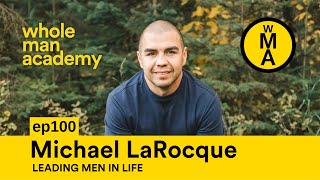
This is a YouTube video titled "EP100 - MICHAEL LAROCQUE - A LEADING MAN | WHOLE MAN ACADEMY" containing an English podcast episode recorded in March 2022. The episode features a conversation between Anthony Astbury, the host of the Whole Man Academy podcast, and Michael Larrocque, a mentor and relationship expert. They discuss Michael's personal journey from a construction career and struggles with alcohol to personal development, spirituality, emotional vulnerability, fatherhood, and men's mental health. The discussion also touches on indigenous spirituality practices such as smudging and the importance of male support groups.
Whole Man Academy because the world needs strong men. Whole Man Academy is changing the game for men around the world. It's for guys who want to live an epic life of fun and adventure. No matter what we believe, deep down, all men want to go on their own hero's journey to becoming resilient, confident, fearless and fulfilled. Listening to be inspired by guys who don't settle for living a life of mediocrity. This is your call to action. Action and call to adventure.
Are you ready? Okay. So this is the Whole Man Academy podcast, episode 100. My guest today is Michael Larock. Again, I've checked to pronounce change of a name so I don't fuck it up. I would say he's an inspiring character, but also he's a mentor, relationship expert. Plenty more in between. A father used to be in construction. We've got so much to cover, but let's start off with the usual questions and Michael, how are you and where are you?
Oh, I'm doing great, man. This is, this is awesome. It's great to get back in touch with you and especially the accent. So I spent a few years in London. That's how we kind of got to know and get to know each other. So during this episode people might. I'll start to slowly get my mates back and a few other things. But no, it's really good. I'm in Canada right now. I'm in Alberta, Canada some more and call it central, I suppose and. But no, man, feel good. Feel really good. It's, it's mid afternoon. I'm not like you late at night, so I'm good.
Yeah, it's just got, I mean, I know we're into, you know, the, the evenings are moving back so I've just put the chickens away and it was just before 7:00, but it feels so good just when it moves past about five or six o' clock for it to be light and also with so many people. I know where it's been sunny in the UK for the last couple of days, everybody's mood has changed. You know, it's funny how that can, that can affect things. And you know, we talk more about personal development but something sometimes so simple as being in a, you know, a better, a warmer, brighter, sunny environment can have a big effect on. But let's start off with how we kind of met because we weren't entirely sure when we realized that you were part of the summit that I went to in London, which is what, probably five, six years ago now for London real Which now has become one of the biggest podcasts in the world. So talk to me about how you got involved in that, because I'm always interested.
Yeah, no, 100%. So, like you said, London Real with Brian Rose and Early Days. He started doing a lot of lives and different things like that, just on his Facebook or YouTube lives and stuff. And again, that was Early Days in that stuff. It's not like it is now. And I was really just following with him, asking him questions on there, and we just got some good banter. And I was in London at the time and I worked for a company called Gym Box in London. So I was very fortunate. I got to move to all the kind of trendy hotspots in all the different boroughs and I worked at Old street and his studio was in Old street, not too far from where the gym was. So just ended up hooking up with him and spending some time there. He ended up training at the gym. So we'd meet up there a little bit and just got really into it. And then I got into his first program. It was his life accelerator. That's what it was, right? Yes, Business accelerator. Sorry, Business accelerator. Yeah. So I got into that and then. Then we met at the summit. He actually had me up on stage. We were talking with my wife and yeah, the rest was kind of history from there.
And I always think it's interesting because one of the big things I've missed about the last two years with our freedoms being taken away, was going to those type of events. Because I always say, you know, it's not just about what you learn whilst you're there, it's about who you meet. And that was a great example because, you know, I remember Brad Burton was there, Chris Eubank was there and gave a really powerful talk. And, you know, I made some good connections in the crowds. And that's what I think people have really missed, you know, from the guys I talked to have missed in the last couple of years. Even for us, you know, our events were much smaller scale. But our biggest event we had was it's about 65 men in the room. And, you know, that was pretty decent. And again, you made some really good connections and met people from different walks of life, different kind of, you know, business sectors. So I always encourage people to get back out to all these things. But let's get onto yourself now. I know in your kind of. In your bio, you had like 20 years experience in the construction industry and, you know, won awards for leadership, etc. Were kind of managing these really big, big projects. So tell me a little bit about that to start with.
Yeah, it was one of those interesting things where I always tell people it was a summer job that didn't end is what I tell people. And it's like I didn't know if that's what I wanted to do, but I had no direction as a kid, right? Or as a, like all through high school, things like that. It was just kind of like, well, this is what I'm doing. I played a lot of ice hockey. I was, I was very heavily into rodeo. I used to race horses, things like that, right. So that was just part of life. I grew up on a small farm. It was like, oh, this is what I'm gonna do, right. And school really was not on my radar. I wasn't exactly the, the, the brightest student, we'll say. So again, you're just like construction seemed to be what most guys would go into if you weren't doing that, you're welding or you're doing some other thing, right? So did construction because I equated a lot to growing up on a small farm because you just always have to problem solve. There's not like this big bucket of money where things will come out of or anything like that, right? It's like, you gotta fix it. You have to get things done, right? So I excelled extremely fast at construction. It was just like second nature, just, okay, we'll do this, this and this. And went through my apprenticeship, got my journeyman ticket and then like shortly, actually even before I was a journeyman, it was just stood out enough, I suppose that, okay, now you're going to run this job. Started with smaller projects, right? Couple million dollar projects, big concrete, all that kind of fun stuff. But started there and they just kept working its way up and then ended up with these really high profile jobs that I was on site. I was a site superintendent at extremely young ages. Like I started at 23, I believe, as a site superintendent. So it used to be funny, people would always come to site, right? Whether it's delivery or whatever it was. And yeah, we're looking for the boss. It was like, that's me, I'm the boss.
That's me.
Yeah. So it was. No, no, really, who's the boss? So it was, it was quite interesting. But at the same time, I grew so fast in that, right? Like, yeah, so many problems, you had to make decisions. Again, I say that to men all the time. Like everyone wants to be the boss till they have to make a decision. So it was great. Being that person, you just have to make those calls. Sometimes it works, sometimes they don't. But at least you made those calls, right? So doing that kind of hit the glass ceiling in that, to be honest, we. That was. I think I was 29 and I was really looking in the mirror just like, is this, this is it? Like, this is life. I'm gonna.
Yeah.
You know, I didn't, I felt I didn't have the smarts to move into the office to do more of the project management roles. So I was like, okay, well, this is it, I suppose. Like, just get comfortable for the next 40 years and this is gonna be it. I mean, money was fine and everything like that. Like, it would take you right into retirement. You'd be okay. But at the same time that was happening. I was a terrible husband. I was again, typical builder. Right. I was drinking, I don't know what you would call it, a lot. Four or five times a week. Right. And weekends were just almost a write off because I would use that as my coping method or my mechanism to relieve the stress because I was fairly stressed out. Right. On the surface I looked like I was cool and calm, but I would just drink it all away to not have to worry about it. So we're going through all that and then this happened and my wife, and she was finally fed up with all the patterns all the same, you know, oh, babe, I won't, I'll be home in an hour. Not coming home. Or like, you know, she was just done with that whole scenario. Like, you could write a, you could set your watch to it. Like my patterns of it, right? So she finally wanted to pull the pin and have a divorce, get a divorce. And I was okay with that. I came to terms with it and I was like, okay, well, you know, I'm obviously not the greatest husband and I love you. Like it was always love there. So I was like, okay, we can get a divorce. We'll split things up. We didn't have kids yet. We're just, it'll be fine. And we came to that decision then we gave it three months to just make sure that everyone, like, you know, vehicles and everything was taken care of. And in that three months, it was kind of like you had to let go to realize what you had. And my wife was doing a lot of self development work at that time. She was seeing a few people and how to coach. And then I finally realized, like, you know, like, I have to, I have to either get on board or get out of her way because she was Doing some big things, right. So I started doing my own work, slowly chipping away. It wasn't definitely not an overnight turn, but started chipping away. Actually ended up going to aa, some for, for alcohol for a while and realized, you know, I learned a lot in those meetings. And so I did that and then my wife was, we were like, okay, well let's, let's give this some time. Let's, let's not get a divorce right away. Let's, let's see what this turns into. And then she said, well, we got to do something different though. We got to get out of these, where we're at, your job, all these things. So that's when we sold everything. We moved it into, got a 20 foot sea can, moved things into that and sold everything else. Sold. I had a motorbike, sold my truck, sold everything. And then that's when we moved to London. So we had two one way tickets, three bags and a one week at Airbnb. And we're like, okay, here we go. And had two year visas and ended up making it work. It was just so many synchronicities while I was in London to end up with a job I had. It was a commission based sales job, so didn't have to live like a traveler. So I mean we had the second year. We're there. My condo was right on, right on the Thames, right at Wandsworth roundabout. I mean it was just, it was beautiful. Right. So had such a blast there and I turned like 360 while I was there and it was, it was amazing. And then. Yeah, I mean there's so much more to that story, I guess. But let's. Did you want to carry on with that or.
I always think there's so many different parts to break down. But I wondered for you when, when you said you started chipping away at doing your own kind of. I call it the inner work. You know, there's the inner work and the outer work. Is it outer work for me is the, is the kind of the body and you know, fitness and etc. Inner work being your kind of mindset. But where did you even start with that? Apart from let's say aa, but was there any particular, you know, like posterior development people or someone that you started kind of, you know, connecting with them by reading or books or anything like that to get to?
Yeah, so I dove, I dove headfirst into YouTube. So I, I took the, I took, I was just chipping away and like I said, I did kind of the bare minimum of getting into it and dipping my toe in. I was like, this. I don't want. Like, I'm a country boy, freaking rodeo, all this stuff, right? I was like, I'm not doing. I'm not this. Because my wife always talked like, we got to go counseling. We got counseling. I'm like, no, counseling's the last thing I'm doing. If I got to work on my relationship, I don't want to be in this relationship. That was my mindset. Little do I know, now you have to, right? But dumped into YouTube. And I found. Because I was very into fitness at that time, too, I was really into CrossFit. Just that was kind of the. My role, right? So, yeah, my drinking didn't really catch up to me because I was working it off with CrossFit, so I was kind of like, I didn't have this big beer belly or nothing, So I was able to maintain. But Craig Plitt, I don't know if you ever heard of that guy.
Greg Plitt. Yeah, yeah, yeah.
So he was amazing. And I would always just listen to his. He's got some good hitters, right? Just motivational videos. And then he ended up having his own workouts and doing his whole own thing. So kind of fell into that for a while. And then actually, I was in London. He passed away, which is pretty crazy. I still listen to all his stuff. Well, I. I do 50 burbies a night, and I always listen to his stuff. Just have it blasted on.
It's really funny you say, say his name, because I think two of the last three podcast guests, you know, were used to look at his stuff, and one of them was, you know, inspired by the stuff he did as well. Both. Both stateside. So it's really funny how the more people you speak to, even though he's not alive anymore, that guy had a real. I think that was kind of before YouTube had exploded so much. There's so many different options now. But I was the same. He was so inspiring that. Fucking hell. If you were like, oh, I can't be asked for the gym today. You put that on. Five minutes later, you were like, I'm off. I'm gone. I'm going. I'm gonna, you know, I'm gonna do whatever I need to do. So it's a good reminder for people, you know, if you're lacking motivation sometimes, just find someone and, like, be on their coattails.
Absolutely. Him or CT Fletcher is a really good one for working out. If you, you know, after that, you listen to it and you don't Work out. You're like, oh man, I'm the biggest pussy around. I gotta go lift something.
Because it is that, you know, I see most of the problem, especially with, I mean, with lockdowns for the last two years. You know, some of the guys I've interviewed found it really hard, especially when gyms were sharp because, you know, you were doing it at home on your own. Just wasn't the same as going to the gym. And maybe, you know, maybe you go into the gym and you have a focused mindset, whereas at home there's a lot of distractions. And that's where I saw guys struggle. And for me, I kept saying to people, like, if you are at home, then try and find something on online or, you know, whatever it is and kind of work through that stuff because often it's free as well, so there's no excuses there. But so this is why I find it interesting because as you say, you kind of flipped from, you know, the drinking and in construction etc to, you know, maybe it taking the. The near divorce for you to kind of flip around. And what was it like for Laura, your partner at that time?
So again, she. She was making some big strides. She was changing. She actually got a. Here in central Alberta in Canada, there's a big oil field. Right. So she actually ended up getting a job in the oil field to save up as much money as she could. She was making really good money for, call it eight months or something like that.
Yeah.
To. To just have a little bit of a nest egg so that she could get on to a new life. Right. And set up something else for her. And she. We talk about it all the time on our show and all with our own stuff of so many patterns. And she realized she was very codependent. She was trying to fix me and needed me and, you know, that whole scenario. Right. But looking back at it and the conversations we have now, like, I mean, man, there was night she would cry herself to sleep and things, right. While I was out drunk or I had a really bad problem of, you know, blacking out. So I half the time didn't know where I was anyway. Right. So looking back on it now, obviously that's what we had to go through and that. That was my journey and that's what I had to do. But, man, there was a lot of devastation in the wake of that. So it was. It was pretty bad. But like I say, Laura, she was a rock. She stayed with me that whole time, but to her own detriment for a little while. I Think she probably would have been far better off without me, but she. She stuck it out, and here we are now.
So I tell you why I find that so interesting. When. When I was out in Miami at one of the Tony Robbins events, which was, what, Date with Destiny, they had the big thing there about with partners, whether you need them or you want them. And. And I found that so interesting because I found a lot of people that were so attached to their partner, they, you know, and called them their other half, which is a kind of, you know, general saying. But for a lot of people, you realize that, you know, then your partner left you or something. A lot of people, their whole identity was built around being that couple. And I said, like, with my partner Emma, you know, I want her, but I don't need her. And some of my friends thought that was a bit of a weird thing to say. But it comes down to mindset of saying, you know, I love her and, you know, she's the mother of my two boys and et cetera, et cetera, and I'm sure we'll spend the rest of our life together, but I think I am strong enough mentally to be able to cope on my own. So it's an interesting one for people to get around is that the needs and the wants and you can, you know, you can apply that to a lot of things in life. You know, I know some people that need a, you know, expensive car and a big house and, you know, to put everything on Instagram, and actually, maybe they don't need those things. It's not quite as important as they. They make out. But let me ask you. I know when I was looking to. I love looking through people's stuff because it's a window to their soul for, you know, Instagram and websites. And one of the things that he'd moved on to was kind of, you know, very much why we got in touch with each other as well, was talking about men. And for you, it was teaching men how to take charge of their lives by learning to lead themselves. And I know that was kind of broken down into physically, mentally, emotionally, and spiritually. And I think the hardest one of those is the spiritually myself, because maybe agree, hopefully by nodding and the eyebrows you like. He's got it. Because I think physically there's so many great options around, and it's kind of quite. I'm not saying it's easy, but it's quite obvious what you. What you do. And then mentally it gets a bit harder, and then emotionally harder, and then spiritually so let's start at the hardest one. Spiritually. Where do you start? Because it's such a can of worms if you said to a guy, right, we're gonna, we're gonna help you, you know, bring up your level of spirituality. You're like, go on in. How do we start?
Me being a good Catholic boy, to be like, okay, well, and then. But no, it's. So some people, when I talk about spirituality, that's where it automatically goes like, well, no, I was. And that's how I was. I grew up Catholic, uber Catholic. I was almost a lot of resentment to it because my mom. I don't know what you know about. I'm. I'm Native American, so I'm. I'm an Indian. I guess we call them Indians, but there's so many different terms. But so being aboriginal, my mom went through that whole. I don't know if you heard of any of it, but like the whole residential school systems and the different. Different Catholic. Catholic. No, it's just horrendous things they went through with. With just abuse and neglect and the different things that happened. Right. But with all that being said, she's still uber Catholic, which I still can't get my head around, but I think it just. That's the way it was beat into them.
Yeah.
And I used to have to go to mass every day, so there was a five o' clock mass with you to make me so mad when I was growing up like a little kid because it was at the same time Simpsons was on the cartoons. I was like, oh, I miss the Simpsons. So I. Anyway, so that was like one thing of it. But anyway, so, yeah, so there's. You can get really into. Into church, I guess, is one way to go. Spirituality. But then like I just said, being aboriginal, I really falling into now on the spiritual side of things, knowing, getting back into like more of a creator, knowing, like the higher power. Getting into more of that with my son. We do a lot of smudging. So like, we'll smudge, we'll say some prayers. But just knowing there's a higher power, it doesn't have to be, you know, up, down, Neil, bread, wine, all that stuff. Right. It doesn't have to be.
But can you explain what smudging is to people that might go, what the he talking about? Because I'll let you explain and then I'll say afterwards why I just smile when you say that? Because I only heard this term a couple of weeks ago, so.
Oh, okay. Yeah. No, it's amazing. My Wife. We. When we moved around to different places, like if we moved into a different apartment or house or something, she would smudge like sage, right. To get away with any bad spirits. So it was like getting rid of. Smudging all the rooms. But for. For myself and my son, we actually just. On my desk here, we got a smudge bowl and then we use some sweet grass. So sweet grass is just another. Smells beautiful. But you burn that and it's. And you use a smoke and that's where him and I will. We'll sit and we'll. We'll use a smoke and kind of wash it over our face. Our. I use it over my mouth and I'll say a little prayer of, you know, speaking good things, speaking to help other men. We'll put it on our hearts to have an open heart, have a strong heart. We'll put it over a body because him and I are very into jiu jitsu and fighting and combat. So we'll put it over our bodies for, you know, making sure we're strong and protect ourselves. Different things, right. And say different prayers actually. And I smudge it over because that's the world I live in now over my computer because, you know, to thank the technology for helping us help other men and do different things. Right. So it was more. It's just a bit of another catalyst to help with prayer. And that's where. That's where my son and I sit with prayer. With smudging. It has so many different. So many people do different things with it. But those would be the two examples that.
That we use and because again, I only laugh because yeah, I'd not heard that term until.
Yeah.
A couple of weeks ago. And then the further down different rabbit holes of spirituality and. Etc. Etc, and how the world works, you know, because two years ago I thought I had a real handle on how the world works. And it turns out I didn't have a fucking. And now I would say I've done a lot more work on it and I have a much better idea. But you know, my partner Emma would come home and I'd be like, what are you doing? And she'd be wafting this stuff around. Stop it. And she'd be like, you know, learning about this and about smudging and stuff. And I'm like, you're going to set the fire alarm off? Get out of the way. And now I realize that it's. But if a guy again, he's like, what is that? What is it actually supposed to do for us?
I Use it as more of a cleansing so it cleanses away. And like I say, I use it as a really good. So it cleanses, it cleans everything off. And then we use it as a catalyst almost to set some intentions with it. And just using the smoke and the smell. And it's funny enough when it's beautiful in my office because then I have that. It's always kind of lingering, that smell, right? It's almost like an incense. So you smell that and it hits something in me and it's like, okay, you know, I remember those prayers or those prayers hidden in my subconscious. Like, okay, here we're here to do good, right?
Yeah, I like it. Again, one of the things about the podcast is I want to make sure, you know, now we're up to like 100 podcasts. I think we've established the guys listing that it's not just going to be about, you know, getting strong and eating the right things. Every week on Morning Routine, it's about starting to go down different avenues. And that's why, you know, a few weeks ago we had a Maori warrior on and we spoke about certain aspects of things there. You know, many, many months ago, we had Jamie Tpenney Matthews on, who talked about shamanism a little bit and ayahuasca. And it just. It's just. I don't want it to be, oh, yeah, I've heard this every week it's the same stuff from a different guy. That's why I find it so interesting for you to talk about smudging, because I wouldn't want to touch it because I'd probably get it completely wrong. But so. And that's the thing with spirituality. It's like for me, I didn't grow up particularly caring about it, had no interest in it at all. So really into my late 30s, 40s now, I've trying to piece together. What I start to realize is that most people, there is no definitive answer. And you can speak to different people that have different opinions. And I think these days, the more opinions you can take in and make your own mind up, the better it gets. So, okay, what about emotionally then? Where do you start? Because guys, you know, for many years, which is why the whole Man Academy was started, often lock up all their emotions and unfortunately, they wait until there's like a so much on their shoulders that then they either end up taking their own life or going to the coping mechanisms of getting pissed or doing this, that and the other. So what about yourself with helping guys emotionally?
So emotionally, there's so much there, right? And you just nailed it. I mean, there's just. It's a whole other bag, but you nailed it. Like, especially growing up, it was like, don't cry. You'll be all right. And, you know, scrape your knee. It's like, don't worry. Put some dirt on it. You'll be fine. And most people, or most men I talk to, myself included, we just never. I never had that out for. For emotions, right? I was always. It was like, don't cry. You didn't want to take up anyone's time. I remember I had not a big family, but I had three other siblings, right? So. And mom and dad were working lots and growing the farm. And just like, you didn't. You weren't sitting there talking about your feelings too much, right? And so that. It just wasn't. It wasn't on our radar. And then that became. My coping mechanism was just hide it behind booze and things like that. So now talking with men is to be. To be vulnerable, but to be vulnerable from a state of empowerment, like strength, Right? Strength. Like, I'm extremely vulnerable. I'm an open book. Like, I say we can talk for hours on this stuff, but I was just talking to a guy yesterday about it is we have to find more. We're so far removed from hunting tribes or from just being together with other men. And that's, again, that's what I love about what you're doing and myself and so many guys are doing is making sure that there's groups of men together to come together, and they can talk about these things, because we'll talk about it maybe a little bit more in relationships, but that's not what your wife is for. That's not what your girlfriend's for. She's. She's there to help, you know, do different things, and we'll get on with that. But you're not gonna beat her down with the mundane things because that just kills your polarity in your relationship. That'll kill the sex. That'll kill everything, right? And you won't look like a man in her eyes. So you're not gonna sit there and bitch and moan to her and. And go over all the little minutia pieces in your life. But if you can talk to cement, especially older men, again, being an aboriginal man, we used to always go to our elders, but that's kind of gone away too, with this newer generation. But you talk to men that have been there, that have done that, and everything seems so big in your head or in my head. It seemed like, oh, no, these problems are ending. But you talk to another man, he's like, oh, yeah, I remember this. That. And he'll tell you different outcomes and different scenarios, and you can learn from his mistakes or learn from what he did, right? And then you can. You can carry on. But back to the emotional side is just really being vulnerable. Open up. But you got to make sure that you create that container to open up in. You don't want to just be vulnerable and blabbing to everybody and. And sounding like, you know, woe is me and you're being the victim. Once you have that safe container to really be vulnerable, then you can open up and. And talk about your feelings, right? And men, it's okay to have feelings. We all have emotions, but we just never learned how to express them. So it's great to be around these other men. And being in these circles with men is. Or even just groups, you don't call them circles. You don't have to make it anything official. But just being in these groups of men listening to other men talk to you as well, or listen to other men talk to each other, you can do a lot of work within that. You'll see yourself within any of their stories. Because most of our problems, there are a handful of problems that we all deal with. We just have our own little nuance on it. So you listen to these other men talk and solve different issues, and it's like, oh, okay, I can go at it this way. And you don't necessarily have to, you know, be in the thick of it or every time you talk to guys, it's not like a wine fest or you don't have to start crying every time and all these different things, right? But there's. There's a lot of work and just being emotional and being open, and there's so much strength in that. And that's what I really. That's what I talk to a lot of men about now, is strength in that and ownership of it. Come from it. From a place of strength and confidence. But being emotional, and it's like, man, you're like a magnet. People want to be around you. People want to hear what you're saying, and you're not just hiding off in the corner.
I think it's so interesting because I don't even think for myself, Maybe in my mid-30s, I would have been ready to hear that because we all go through phase of our life and, you know, that's why I saw so much in the city was obviously, if you'd have tried to be slightly vulnerable, you'd have had the piss taken out of you. And you probably still will do. And again, like you said, that's because you haven't selected the right kind of container to. To do it in. And even I had lunch a day with a guy and I was telling him something that kind of I was finding quite challenging at the moment. And he has gone through it as well. And we both kind of were like, all right. It was really good to hear his take on it and my take on it, which exactly why the events with the whole man academy were important, because it was about. You had some really strong male kind of role models again. You had your fighters and your ex soldiers and sports stars that people assume, maybe assume, oh, life isn't difficult for them, or they don't go through struggles and feel stress and etc. And when they would, you know, be vulnerable. And even David Gandhi, when he spoke, you know, said various things about kind of, you know, what, where his mind had been at. People were like, fucking hell, wow. Like, I thought it was just me. And you're like, no, no, no, no. So the more people can talk, like you say, in the right space, the more it kind of really helps people realize that, you know, it isn't just you. And everybody has all these different types of problems.
It is. And another point to that is really having ownership in all of it. So if I own all that stuff I talk about now, I own being a shitty husband, I owned being an alcoholic, I owned all these other array of not great qualities that I had, right? But I own them. And when I talk about them now, you can't use that against me as like, oh, hey, you dumb alcoholics. Like, oh, yeah, I am like, can I help you with something with that? Right? Or like, there's different outcomes to it. So owning that and really feeling it, Mm. People can't use that against you. And I think that was partially of why I was hiding before, right? I was ashamed of a lot of what I've done or ashamed of what I was. And. And then once you finally just look inside and be like, okay, that was me. That doesn't have to be me forever. I can change. But I can use all that as examples and as. As learnings to help other people get away from that or they still have to go through it. You can talk about this stuff all day, but until you live some of it, I mean, you know, you gotta go through it. But maybe I can help someone get through it faster with not so Much heartache, maybe not hurting other people. Like, it's. There's just so much behind it.
You just. Funny you said something there about, you know, hurting other people, because I know where you kind of had the sentence, like, showing up as the man that their partner and family needs to be. Because it is finding that balance, isn't it? Between. With. With guys. Either I do mentoring with or even kind of just guys you're talking through, like how their life is going. It is trying to find that balance between having someone to talk to and like you say, not your. Not necessarily family and especially not your partner, but someone to talk to who is maybe outside of that family unit because they can look on it from a fresh view, as opposed to being someone that's kind of, you know, interwoven into it. But isn't that so important? I literally just have finished writing an E letter, which goes out on Friday, because I see that if you do your research, you'll see there's coming food shortages around the world with the way things are going, and so many different people have started to realize that's going to be a problem. And I said, you know, that is going to be a great example of. As a man, I feel like you should be providing for your family. And if you go out and there's fuck all food, then that's going to be an interesting one to try and, you know, kind of compartmentalize yourself. So what about yourself? We're providing for the family because we're going to get onto fatherhood in a minute. But when you suddenly became a dad, it's like your priorities change.
Oh, absolutely. Right. And that was my big thing. So I grew up with my mom. She was. She was. Both my parents were alcoholics, but I didn't see my dad. I had older parents. I didn't see that in my dad. Sorry. He. He kind of got through that as. As he got older. And I didn't see it.
Yeah.
But with my mom, I was almost like her. I was the baby in the family. So she kind of drugged me around to. To go around with her. Right. And in Canada, here in the Legion, like, where they. She would drink at the Legion and you could have your kids in the bar, which is really awesome. So I was. I was my mom's drinking buddy almost. And it was like. It was just. I seen so much. Right. And obviously I live that life, too. And I was like, okay. So I went through that, and then I went through it as an adult, but I was like, I'm not dragging My son through this, like I am. This generational shit is stopping here.
Yeah.
So my. My line in the sand with that was one night after a golf. A golf tournament. I came home and this was. This was only like four years ago, something like that. And that was the last time I got kind of blacked out drunk. And lucky enough, my son. I got drug home. Someone brought me home and da, da, da, da. But my son was in bed and he didn't see me, thank God. Right. And I made that. My wife, obviously was not happy, and we had that whole talk and things like that, but because she thought that that side was done right. So we went. That opened up another can of worms, but we got through it a lot faster and. And I knew where she was coming from, and she knew where I was coming from, but I made sure, like, I. I had a lot of looks in the mirror that. That week, and it was like, hey, my son has never seen me like that. He's never, ever, ever gonna see me like that. So that was literally the line and sand, and that was it. And he. He never will have to see me like that. So. So providing.
Yeah. Does that. So because alcohol is such a. We are indoctrinated to have alcohol as such a big part of our lives. You know, we celebrate, we have champagne or we have beers when you've done a big deal or, you know, etc, etc. When things are shitty, I want to go to the pub to have a beer or wine or etc. You know, it's. It's at the end of the week, people go for a beer after work or drink. It's so much a part of our life, and for so many people, it would be really hard to give it up. And I would find it hard. I had about three weeks. I don't drink a lot, but I had three weeks where I didn't have the alcohol and didn't really matter, but I still had those pangs on like a Thursday or Friday night where usually I might have had like a gin and tonic with Emma or, you know, I don't drink beer much anymore, but sometimes just one where to suddenly not have it you like. And those nights out, I mean, we had multiple men on the podcast at different times talking about, you know, especially one of the guys that spoke about being a city broker, how, you know, you just wouldn't even go home. You would just drink with clients. You had to drink with clients. That was the culture.
And.
And it's. It's funny how many guys have found it, you know, maybe they get into their 40s and you're like, I'm not saying they're never going to drink again, but they realize that this isn't kind of serving them.
No, I'm very fortunate in the sense of maybe it is just an age thing, or with fatherhood as well. Like, I can still have a few beers and be okay. Yeah, it's not like it touched my lips and all hell breaks loose, but. So I'm pretty fortunate where I can still have a sociable drink and be an or a guy. Right? But it's when you get to that, like, too far, and then it's like, oh, God, it's over. Right? So. But now I. I know. And that was my line in the sand. And then I just won't cross that with. With my son and future kids. Right? My boy's pregnant now, so I got another one.
Okay.
So they don't need to see that. Would.
You know what? And I know I had this discussion because I think I mentioned it on the podcast. A couple of months ago, I had a similar moment where whilst Emma was still pregnant with our second child, Bowie, we went to a wedding. And it was like all couples at the wedding and all the men on the table were either their wives were either pregnant or were then breastfeeding or trying to get pregnant. So basically, we all had a designated driver. So we all, you know, just hit it hard. None of us had been out to some of that and just got completely smashed. And, you know, it was a really funny night. That's the problem, isn't it often if it doesn't go completely too far, it is. It seemed like a real good, fun night, but I was so hungover the next day. And when you try and explain that to your child, I mean, you know, only months ago, Hudson said to me, because I had a few drinks and just felt a bit shitty the next morning, and he said something so funny like, you know, why don't you feel well? And I was like, oh, I just. I had too much alcohol last night because I'm trying to be honest with him. And he's like, well, you know what? What does that do? Then I was like, well, it, you know, I listed all the negative things. And he's like, why'd you do that? And I felt really stupid. Because you're like, what? It just makes you sound ridiculous to be like, oh, I feel shit. The next day. I don't want to go out. The light is hurting my eyes. I want to go back to bed. Etc. Etc. Probably spent like 50 quid on it. And he's like, why'd you do that then? And you're like, don't ask me tough questions, son.
You nailed it. We just went for a walk yesterday. We're picking garbage around our neighborhood. I bought my son one of those little picker upper things and we're picking up cigarette butts. He's like, why do people smoke? And then I was trying to explain it to him. Like there's really like. I mean when you're doing it, you can usually. Even when you're addicted to nicotine, you can't explain that nuance. Right. So it's like, yeah, I don't know, son. So, yeah, no, you nail there just so much conditioning in us. Right?
Yeah, it's. And no, I've learned more and more and more about it. And again there's, there's multiple avenues to go down with that. But, but I'll save that one for another day. So I know one of the big things and, and with. Is it Laura, your partner?
Yeah.
Yes. So you said you've got another baby on the way. When is the new baby due?
End of June. Okay. Sooner or later.
Yeah. I feel having child number one, I'm not saying it was easy, but child number two became much more challenging for us because you've only got one pair of hands and just as the, as the older one is growing up a little bit, then you go through it all with the younger ones. So it's a really, really interesting time. But I know I wanted to talk about the way you'd said a three pillar process of body, relationships and mind.
Before I went off on a tangent, you had a really good question about providing and maybe I wanted to touch. Yeah. Touch base on that. So funny enough, I don't know if you can see behind me. I got a. There's a deer, there's deer skull there. I just got it the other day. Took a while. It has to go through this whole process. You skin the. Skin the head and it actually goes into a big vat of beetles and they eat away at it and they.
Clean it all up.
So anyway, got that back. But back to providing. So I tell this to people all the time is you nailed it. Were like food shortages, things are going to happen. And I was like, you know, you know what? You got to be prepared and you got to be strong. You gotta be able to lift weights, you gotta be able to fight at some, some level. Men, I can't remember the status. It's like it's something ridiculous like 800 times they over. They overestimate their ability to fight if they haven't been in a fight. Right. Like they're just like, you know, I'll just punch them. And it's like it doesn't work that way. Yeah. So it's really quite funny. See but you gotta have some sort of protection or whatever it is because people are gonna start knocking on your door and not being real friendly and there's only so many police, cops, whatever you want to call it around and you're gonna have to start protecting yourself and fending for yourself and providing. So that deer, my son and I, we eat, we eat the sausage every morning with eggs and then we go fishing quite a bit as well. So right now it's winter time so we do ice fishing and you know, make jerky out of that and we, we do it together. Right. So just teaching them some of these things and it's so, it's so it's so awesome to do. And I keep telling him he's, he's five years old now, but just keep telling him like these skills. Like he really enjoys it because he's with his dad and we're having fun doing things but. And we're with his cousins too. I do a lot with my brother in law so it's, it's really fun. But these skills are gonna set you so far apart as a man and like when you're old enough to have to like to get to choose who you want to be your wife and get to choose different things in life, like you're gonna be able to do whatever you want. Like you're gonna have your, your avenues, your doors won't be shut. You can do. You're gonna be able to provide and protect so many people that you know you can. This opens up the whole world to you. So it's very important those things.
Kids aren't taught this stuff these days. And it's so good kind of hearing you say that because I follow several guys on, you know, social media who. There's a guy in the States called Ryan Mishler who is the order of man. He's. And you know what the other day. So he's got his son, I'm guessing he's a teenager. He was on Instagram, he put a thing of him. They, they'd killed a deer and skinned it and then were cooking the meat. And Instagram I think deleted his post because it was, it could be upsetting to people. And you're like I mean the censorship has gone bonkers these days and it, it kind of sounds dramatic, but it worries me because so much of what goes on in the world now gets reported and then deleted that people don't even realize. And when you talk to people, they go, well, I didn't, oh, I didn't know about that. But it just shows that so many men, and me included, I grew up on a farm, but we never really killed animals because it's too easy for it to be just put on the plate from the supermarket. So trying to teach, I mean a lot of men could do with just going on their own course on, you know, survival and learning about that, let alone teaching kids. But did you learn that from your father or from other men around or just kind of self. I was trying to think of what they're self teaching, if that's even a word.
I was very fortunate. So growing up, obviously growing up on that smaller farm, my dad, I talk a little bit about that. My dad, we didn't have a real emotional relationship because I, he was older and just a different generation. But I worked a lot with him and hung out with him. So I learned a lot from osmosis. We didn't have those, I always say those romantic talks, I didn't regard those romantic talks with him, but that's one thing he's passed on. He's been gone for quite a few years now and I wish I had that with him, but trying to really instill that with my own son now. But so I learned quite a bit from him. Not really on the hunting side of things, but just life growing up the farm where we had a lot of pigs on our farm, cows and chickens and different things, but learning a lot about just butchering and different stuff from him and well, not even learning it, but just being around that. Right. So it wasn't a big deal. But then now with my brother I, I hunt a lot with my brother in law and fish and he's call it for the last decade. He really dove in head first with the whole hunting side of things. And he's, he's one of those guys that, you know, if he gets it, he'll just dive straight in and go all in, which is great. And just learning from him, get to go with him, learn a lot of lessons from him, teaching me how to, you know, cut up the deer properly and do different things and hunting. So learning a lot from him and then getting to pass that on out to my son and then when my son's old enough, just him and I will go together. Right. And, and on and on. So following that chain. So definitely a lot of different mentors in my life, but it doesn't just have to be the dad. Right. Like I say, my brother in law is a huge mentor. A lot of my friends growing up, they've really into that whole outdoorsman side of things. So I mean you can learn a lot from them too.
Yeah.
But it's just to be open to it and pick it up and especially at this age, right. Like I'm coming on 38 in a few, in a few weeks and it's to have that open mindset or that learning mindset still of not just being closed off of this is all I know in life and this is all I'm going to do. So to be really open to just anything. And again, I feel combat sports open that up to a lot to me like at a young age, just because it humbles you so fast. Right. You're like, oh no, there's always learning to do so you do that. And then now with hunting and fishing and different things, it's just to be open and be a sponge and take it all in.
You said about the jiu jitsu and I had that on my list. I mean, so I wish I'd have done martial arts when I was younger because so many men that I admire for different things have all in some way or another been doing martial arts and said how grounding it was for them and again how, you know, it kind of helps calm you down because you have to learn how to kind of harness what you're doing and there'll always be someone that's going to put you on your ass. And you know, it's only. Was it an episode or two ago, we interviewed Greg Wootton who was the two time Muay Thai, you know, world fighting champion. But as he said, he got knocked out a couple of times and one of them I think was in front of his family. So there's nothing like, you know, getting knocked out in front of your family to kind of, you know, literally, pardon the pun, but bring you back down to earth.
There's so. Yeah, there's so much in that. Right. And so much humility. Sorry to cut you off. Yeah, it's to go without because boxing was a big thing in my life right. In my 20s and it was always like, you know, bar fights or different things happen and just happen so fast. But getting into boxing and then, you know, having a fight book, six weeks out, knowing who you're going to fight, watching some videos, maybe even of them and like the whole mindset of like talking yourself into the fight. I'm the strongest person around to like, oh, what am I doing? I'm gonna get beat up. All that back and forth, right? And then funny enough, that story of I had one fight, it was, had a like after party all planned. I still went to it, but I mean had a party at the bar, all my friend, like a lot of friends there, my wife, everybody. And yeah, you get beat up, it takes a little bit too, like you think you're gonna win, you always want to win. But yeah, get beat up and then it's still, it's still a big, it was still fun. But at the same time you just learn so much in that, right? And, and it takes away a lot of that needing to prove yourself, needing to, you know, that big chest up or pumped up chest when there's a group of men around, it's like, no, no, I don't want to fight you. Like, I don't want to break my hand. You're tough, don't worry about it. You're, you're stuck. Like, I don't want to fight you, right?
It's, it's an interesting one because I learned that years and years ago from a girl I worked with. She was, I think it was a second Dan, black belt in karate. And I don't understand how the Dan's work, but I know that's a fairly significant what have you. And her partner, Dave was a fourth Dan, I believe, and he'd represented the, the UK at like the Commonwealth Games or something. But he was quite, you know, he's a bit shorter than me and fairly stocky. But what I mean is you, when you went out with him, I realized in my young age you'd think, oh, how cool. Because he could basically beat anybody up and then he'd say no, because firstly, you don't know when you're out in an uncontrolled environment that, that guy over there I could probably handle myself with, but his mate could be over there behind you with a knife or a bottle. And you know, in real life you don't know what's going to happen. And he said, you know, for him it was more about, he knew how to defend himself. So it wasn't about attacking someone, it was about defending himself. I remember having to have that go in my head because for me I was like, oh yeah, cool, we can beat people up. And now I realize that all the guys that I know that have Done. Martial arts are all really quite well centered. Is that how it felt for you?
100% that like I said, that's the last thing you want to do. You know, you're going to be okay. No matter who it is, you'll be okay. You can figure something out or generally be okay. I should say, like you said, someone could have a bottle or a knife or gun or something and then changes the rules a little bit, but you know what to do. And that's, that's generally it, right? And usually it's not fight. You just, you'll be able to get away from that situation, get it, just get away from it because it's, there's nothing good will come of it or people know you're a fighter and then what happens if you really beat that guy up or he falls and he hits his head and then you're in all kinds of trouble, right? And it's like, oh, he was a trade fighter. So then all of a sudden you're up for assault or something silly. So there's really no good way around it. It's just to be that quiet cool and just know that you're going to be okay. And then it's just that aura about you that generally you can diffuse that situation so fast anyway that you don't have to, you don't have to be part of all that ruckus anymore.
That is one of those things again, I wish I'd have done when I was younger. But we are looking with if Hudson wants to our say, eldest who's four and a half, we're looking at. It's hard when you live out in the country because you know, when you're in a major city, there's so many options for. I mean, you could basically do any fucking class you want. You know, you could do a cupcaking class as well as jiu jitsu and you know, whatever you want. But around here it's a bit more difficult to find the right thing. But we will, as he gets to his, you know, maybe five or six say if you want to, we'll, we'll, you know, take you along to a jiu jitsu class or something so that you can just learn to just, I think as you're growing up, be, you know, be sure of yourself so that if something happens you can kind of deal with it. So that's another big one. So we've talked about the three pillar process of body, relationship and mind. I wonder if you just talk a little bit about the three pillar process. How you work through it with people.
Yeah, absolutely. So I kind of like yourself. I start with the body because that's where most people have the biggest issues. Right. Body and self I call it. I kind of wrap it together, but just working out, that's the easy one, simple one and you nailed it. There's so much stuff on the Internet for free and you can do so much with it. Right. It just move your body. You can do so many full body workouts with no weights or you could have a full day. I'm very fortunate. My basement, I got like the whole sauna and yeah. Weights and all that fun stuff. Right. So I'm very lucky that way. But you don't need all that you can do, you can do TRX and just have fun with that. Right. So doing that, I talk about habits with that, what that looks like, spending the way you spend your time, what you're eating, what you're putting in your body, again, you're onto that. Sleep is a really big one. Because when I did come back, I don't want to get too off topic, but when I came back from London, I went through a myriad of things. I, I tried to keep the big city life going. So I moved us out to Vancouver, my pregnant wife and tried to sell cars out there. I've never sold cars a day in my life. Try that out there. And so that was interesting. I learned to learn a lot of lessons in that year. But then came back here, got back into construction and then got an opportunity to move into the office. So I said I was never smart enough to have an office job or to be a project manager. But I ended up getting this job and went through a lot of mental, mental things with that job of not feeling worthy enough for it. A lot of imposter syndrome. Because everyone I went to, everyone I worked with was like, you know, four year degrees and all these different things. And I was like, I barely passed high school, right. So I was like, how am I doing this? And being extremely successful at it. Yeah, that's where I got these awards and these different things. And it's like I had to really look in the mirror, be like, okay, there's people do things differently and, and you're just go at things a little different. Right. And know people a little better. So anyway, so with all that, my sleep was terrible when I was doing that because I was, I was worried so much, so much anxiety that I'd stay up late at night watching videos and just doing not productive things, but thinking that was my Alone time. Right. That I was like, okay, I can decompress, go to bed at 2 in the morning, but have to wake up at 6 and then, you know, face the whole world with another set of problems. And it's like, how am I? You're not. You're no good to anybody. Right. It's no good to my wife. I was no good to my son.
Yeah.
My work was. I was feeling. I wasn't good at it. So sleep is very important. What else? Actually got a little bit of a list here. And then like I said, self defense, some sort of combat sport, whatever that looks like. So you talked about getting your son into jiu jitsu with that being said, like, go with him as much as you can. And I mean, even myself, I coach, I help coach now with my son, just with the little guys and stuff, just the way timing works out. I can't go to full classes all the time now. So it's a great way just to even just be around it and still be part of it. But that's a great way. And then like I said when my past was boxing, but I mean, there's so many different things that people can get into. But again, it goes with fitness. It'll help your body, helps your stamina, helps everything. Right. And then we can talk later on. But it makes your sex better, makes your life better, makes everything better, makes sleep better because you're tired, you actually want to sleep. And then, and then the other part with self and body was just like your hobbies. Right. We got to have a hobby of some sort, something to look forward to, something that lights us up.
Yeah.
Most men really don't like their job. Right. So just to have something that you can go to and have a hobby.
For, that's so important. And I would say people haven't got to necessarily, you know, love their job, but at least like it because, you know, we do. See. And again, I talk to guys, they'll get emails from that we send the E letter to or through social media, what have you. And that was. There's a few common things. One of them is people's, you know, guys career. And it is often that they similar to myself. It's not that they didn't like it when they started, but maybe you just go through a phase where you're like, no 10 years doing the same thing. And then one day, like you said, you're just like, is this it? Like is this? And you want to do something else. But maybe you're, you could say you're limiting beliefs a lot, and I won't be good enough for this. And, and I talked about this. It was probably a week ago. There was a guy who was inquiring about mentoring and we discussed our careers. And I said, you know, for eight of the years, I was really fucking good at what I was doing. And then I changed roles and suddenly I was completely out my comfort zone and I felt like a shadow of my former self because I didn't have the confidence to know what I was talking about. I suddenly felt like, shit, someone's going to ask me a question and I don't know what I'm doing. So it's an interesting one. What about yourself then, with guys that you work with? Do you see that a lot? The commonality of careers being one of the big kind of grinding points?
Absolutely. Like I said, there's only a few, few problems. We just all have our different nuance on it. So a lot of men is career just really not not having a passion for it. A lot of guys were like, myself, or they just fell into it after school or even if they went to uni, like, they just fell into this job is all they could get, but they had to pay student loads. And it just snowballed, right? And it's like, well, now I have a corner office and I don't even. Fuck, I don't even know what I do half the time. I'm just here, right? Like. And then it's just killing them slowly, right? And it just, it's terrible. And I lived that too. I 100 lived it. The money is great, right? When you're like, I was well over six figures for a lot of my life and it's just like, well, awesome. But at the same time, it's like, I'm not like, I'm driving a Ferrari and it's not making me happy, so what am I doing? Like, you're still just paying bills, right? So you had. You have to find something. But again, career is a big one. And then generally body is another big one, where guys just feel like the shell, especially at this age, right? You start hitting 30, 35, 40, and they start looking in the mirror like, man, this is like, what happened? Yeah. And I used to have the talk with myself because I fluctuate every now and then. And it was like, okay, I can get back, you know, gain 20 pounds. Like, oh, that's easy. I can. I know what to do. I can do that. But then all of a sudden it's like, oh, like there's a Point of no return. It's like, oh, God. So a lot of men with their bodies are just like, I just feel like a shell of myself and I don't. I have no energy and. And stuff like that. Right. So lose a lot of passion. And obviously then with me, anyway, with what I do a lot of relationship stuff of just like, I talk about passion. It's just, I have a roommate now is all they end up with. Right? And I know all about that as well. But that's where so many men get stuck is like, you know, I. I can't. She doesn't want to have sex. Then it's like, okay, let's. Let's reverse engineer that. Then you get. You end up your back and you're like, well, you're sitting on the couch playing a video game with a big gut hanging over, like, I wouldn't want to fuck you either. Like, it's just like. You know what I mean? It's just like, what. What do you expect? What are you bringing to the table, man? And it's just nothing. Right? So, yeah, it's. It's tough.
It really is that. So one of the big things I know years ago we did a questionnaire and a lot of. I say a lot, I'm trying to think how many professional men completed it. And I was really surprised that one of the big things that came up was body confidence. And that's what we've then seen as guys are getting to, you know, I'm 44 nearly. But as. As we're getting to that age where also, you know, people maybe have less time to train because they've got kids and career having that seems to be often the first thing. Or actually nutrition is the first thing I see that seems to go downhill. And then you've got sleep and then you've got the workouts. But it is hard also mentally, because I know my 20s, when I didn't have anybody else to report to, and yes, I had a girlfriend on and off here and there, but the point is, I had a lot of time for myself, is that I could hit the gym five days a week, eat whatever I wanted, when I wanted, etc. And then suddenly. Yeah, when you're juggling kids and being, you know, running your own business and lack of sleep, it suddenly became a lot more challenging. How did you find it when. Especially when you had kids or your first child?
Yeah, well, I was always trying to find the excuse after a while. Right. Like, I knew. So the sleep. I knew I wasn't getting Good sleep. But I was like, oh, yeah, whatever I was, I used to be able to power through this. And so sleep was a big one. I was always trying to find the pill or the easy way out of it. Right. So I even. I was feeling so bad there. Call it three years ago, four years ago. And I wouldn't get tested because I was like, okay, maybe I can just have low testosterone, take some trt, perk me right back up, and I'll be fine. And then I get the results back. It's like my testosterone was through the roof, but so was my estrogen. My estrogen was through the roof, too, because my cortisol was all up.
Yeah.
Because of all the stress I was under. Right. But all the stress that I was putting on myself and then not sleeping properly and. And it was just like a vicious cycle. But again, I wanted that easy out where it's like, okay, I could just take some steroids and I'll be right back up where I need to be.
Just give me a pill.
Yeah. That's all it was. Right. And that's what's. That's what we all look for. A lot of people look for with everything. And we see that so much in relationships now, too. Right. So that's where I really got stuck was a big one with that. Just with the whole trying to find the easy way out. And then just my whole body, my rhythms, everything was just so out of whack that I was no good to anybody.
And you just said, being no good to anybody. That's what we say. It's so important to look after yourself first because there's the old saying of put your oxygen mask on before you try and help other people. But that's what I try and say to guys and even for myself, a reminder that, you know, if you're not taking care of yourself, then it's very hard to take care of other people because at some point you'll be ill. You know, you'll end up being so tired you can't, you know, eat the right things. And it kind of is a. Is a vicious kind of cycle. But you also said there about, like, with relationships, and it's a really interesting one to cover is. Is like sex life for men as they get older, when you do have partners and you also have juggling all the other things. That was one of the things I saw with guys is that it's the first thing to be like, yeah, in your 20s, when you first met, you were doing it like, weekly, and then suddenly, you know, You've got kids, and maybe your partner feels uncomfortable about her body for a while, which is understandable, etc. Etc. And then suddenly being okay with it just being like, oh, well, yeah, like it's a monthly thing. And I wonder whether some of that is to do with, you know, the declining testosterone, which we've talked about nearly every podcast in the last few weeks. The guys have mentioned it. The declining testosterone levels is. Is dramatic. And that's one of those things that, you know, lifting heavy weights and eating the right things. But also, you know, a man is born. Part of it is to kind of, you know, not just create babies, but also the passionate side of having a partner. So where do you even start with trying to get a guy to. Is it to take care of himself first so that he can have more sex with his partner?
Well, that. No, you nailed it. Right? But with men, it's always like they use sex to show love, right? And then women. What is it they. Men show love with sex, and then women love and sex.
I can't remember.
Yeah, I should know that. But anyway, so most men, it's like, I just want sex, right? And this is how I show you. Love you. But with most women, they need to feel safe, and most women don't feel safe with these men. Right. If my. If your woman feels safe, like you're gonna have the sex will be there. That's not. That's not. That's really not an issue. But most women don't feel safe because most men are, you know, berating their women with their problems, like the little mundane problems that you should be going to a mentor to or to another man or to a men's group with.
Yeah.
So then she doesn't feel safe with your direction, your purpose, your. Your leadership. She has no confidence in that. So right away she has to go into her masculine, so she's out of her feminine. So she doesn't feel like having sex either. Right? Or not with you, maybe, but. But so, yeah, so their. That's gone. And then again, if your body is kind of shot, she doesn't feel protected. She doesn't feel safe. Because, you know, like, if someone does come, like, I mean, what are you gonna do? Right? Like, lay in front of them kind of thing. Right, so. Exactly right. So, I mean, there's that. There's just so many issues around it, right? So once you get. Once you can open up a little bit emotionally, but for most people, myself included, that I've seen that you have to. You have to be okay with yourself, you have to be okay with your body. You have to have some confidence. You have to have that, that self awareness. Once you have that, then you can open up emotionally to your woman. And then once you have, once you have that emotional and that proper communication and listening when you know how to listen properly to your woman. Once you have that, the sex will be there. But we always, we forget that because then, like I say, we just want to have sex right away. But your woman's so unsafe, so stuck in her masculine that she cannot feel. She doesn't feel sexy. She doesn't feel like in her feminine, she can't flow. She can't just, you know, dance. She can't just be who she wants to be, right? Because she's always has to be hyper vigilant of, oh, I got these kids I got to take care of. I got to make sure everyone's fed. I gotta make sure we're still warm. Which is your job as. Your job as the man. Right? But we kind of put that off to the woman and then all of a sudden she's. She's all out of whack. But when she's in her like, radiant essence and she's in her feminine, when she can just be who she wants to be and let's just creative and, you know, if you can, if you can really be a man, you can watch it for a while of. You'll see a shift in your woman. Like, she'll be dancing out of nowhere. She'll be dressing a little differently. She'll just carry herself differently. And then, I mean, then she wants to have sex. You're that man. And it's gonna really spark things up.
It's so interesting because again, I always think this is another podcast in itself.
I'm.
I'm sure, I hope that you will come on again, because I don't. I think we could, we could pinpoint several different avenues to go down with all of this stuff because it is so interesting. But it should make, and even for myself, it should make a guy at least look at his relationship and think, if it's not working how I want it to, what am I bringing? I mean, you said, what am I bringing to the table? And if you're not being confident in your body, I mean, one of the big things actually is about the use of antidepressants and how people are so happy to just dole them out to people. You know, you go to the doctors. I'm not saying all doctors do this, but, you know, some of the Guys I've dealt with who are like, you go to Dr. And say, things are a bit shit at the moment, I'm not feeling. And they've got 10 minutes or 15 minutes with you, what you expect them to do. And they give you some antidepressants or they give you a prescription, which they probably get paid for as well, and suddenly you're dependent on it. And what I then noticed was some of the guys I spoke to then said they had a problem, like even getting an erection or whilst they're having sex. It was like they felt numb because they were on the drugs. And that's only going to. That's not going to help them. That's going to fuck their head even more. So then they're thinking more about, is it working? Is it going to work? Can I feel anything than actually being in the moment? So maybe, maybe podcasts will have to want antidepressants as well and the effects that can have on it. But there's. There's so much to. To go down. So now listen, I know I definitely think we've got more than just one podcast in us. If you're. If you'll come back on the show at some point, which, which I'd love, but for you, kind of going forward, I just wanted to, you know, what do you want to be remembered for? Is it the kind of the. The Michael that's working with people and helping them kind of, you know, say, I hate the term level up, but, like, transform their lives a little bit?
Yeah, I think so. There's a couple. I. It's funny enough you say that, right? I ponder that every now and then because, you know, you just start thinking of your mentality and just what do you want to be when you. When you leave the world, right? And do you want to, like, can I be remembered? And I want people to be talking to me like, I'm Craig Plitt, right? Like, the man's been gone for six, seven years and everyone still uses him as motivation and for just someone to look up to, right? So I want to keep that. But there's a couple things with it. So one was with younger. With the younger generation of, you can be whatever you want to. Like, oh, man, that sounds so bad. You want. You can be whatever you want to be, right? Without having to have. You know, I didn't go to university, I didn't do all these different things. But if you work hard, you use your head, you just learn to problem solve, learn to make decisions, be confident. You can do anything, which Again, sounds so. There you go. Tony Robbins, bumper sticker, whatever you want to call it. But it's so true. I lived it. And I get to say that now. And I don't. It's not just a cliche for me that, you know, I. A lot of situations I ended up in, I had no business being in. In. On paper, I should say.
Yeah.
Like I. I had no business being in those situations, but there I was and I always got to be in them and I got to excel in them. So just having that. And like I say, the world's your oyster on that side. But. But as far as men and what I want to be remembered now with all this work that we're doing with my wife is again, mainly for the kids, of creating those relationships that you're extremely open and honest with your partner, with your wife, with your woman, with your girlfriend. And it's like, it's reciprocal because you're both doing the work and you're just listening and having some really deep conversations with your wife, but actually listening and quit trying to solve problems and inject all your stuff into it. Just literally listen to her.
Yeah, I've got a solution for this. Yeah.
Yeah. Just let her unwind and let her be. And then, I mean, honestly, if you listen, have a good communication session and you're really good listening, like, odds are. I'm not saying it's a magic pill, but you're probably gonna have some good sex after that, right? Like, there's so many, so many nuances to that, but just for having a solid relationship so that the kids can grow up in that house, like our house is. I fucking love being here. Like, I mean, it's so. And it's relaxing and people come here and like our in laws and stuff, right? They come here to come here and just relax and be. And just chill out and laugh and have fun and. And just be those people, right? Because everything's open. Everything's like, we're talking and having fun, meaningful conversations. Not just, you know, oh, the weather today. And that's it, right? Like, it's. No, we're talking, we're. We're getting deep. So I want to be remembered for that and being like being a man, but being extremely open. Like, I'll come give you the biggest hug if I could, right? Like just being extremely emotional, being open, but at the same time being able to protect, to provide.
I love it. I think it's such an important message because the. The way. Maybe it's not how ex. I wanted the Whole man academy to start out because I didn't quite know what it wanted to be. But once I got my direction, I realized that, you know, for a man to have people to listen to who want to protect their family, provide for them and being okay doing manly things and not feeling like you have to kind of people please all the time is, is kind of one of those messages. So you know, doing things like hunting, doing things like fighting, etc. It doesn't have to be a bad thing. It can be a good thing also to release the tension. But. Well, last question. And again, what we enjoy on the podcast is asking people random questions about things and often it is one of these. What's the craziest night out you've ever had?
Back to my alcoholic days, half of I don't remember to be honest. I always say that 90, 95% of my good times were when I was drunk, 99% of my bad times because I was drunk. So yeah, I usually self imposed but honestly most, most the best times I had were just dust ups with buddies like sitting around just having a blast. Growing up in, I grew up in northern Saskatchewan so like I grew up kind of like north in, in Canada that we just go out and have bush parties, right? Just have like just a wild crazy time and just do do wild fun stuff. And honestly those are the best times of just being around more guys like my age just like laughing, doing stupid stupid things but just laughing, having fun and, and nothing too serious, right? And no one getting hurt or nothing like that but just having, just having a blast.
The unplanned nights out of you know, the common thing between guys and I was that is, you know, I've done it where you've gone away someone you've had an amazing night out and then you've gone back to the same place the next year and you've tried to recreate it and you just can't because you know, you can't kind of have the same energy and the randomness of the people you're going to kind of meet or what you're going to do. So yeah, it's always interesting to hear what people have been up to and then what's your plan for the rest of today?
Today I funny enough. Hang on, give me one second. So I do a lot of like bookmarking, right. So a.m p.m. so p.m. i do a lot of bookmarking with you know, some meditation and I do 50 burpees every night too. So just a. You should probably do them in the Morning. But for some reason my system likes them at night. But yeah. And then I make a to do list for the next day. So I have, I have a bit of editing to do on some. Some podcast work for. For Laura and I and then actually still got to work out. So I got squats day which is going to be tons of fun.
Yeah.
And I'm putting together some a master class on actually emotional kind of emotional intelligence, emotional awareness for in relationships. So I got some bit more framework to do around that.
Some good stuff. And. And if guys want to reach out to you, what's the best way to connect with you?
Probably the easiest and best way would just be on Instagram. The revive couple.
Yeah.
And then we have our link tree on there. There's different links to. To in the bio that you can get to me, get to Laura, get to us as a couple. We have a lot of different offers or offerings and like I say, live in those stories a lot on Instagram and YouTube as well. But again, everything's the revive couple. Good.
I'll make sure I put the links in the show notes so that guys. And also it might not just be for the guys that are listening or watching. I mean 20, about 25% of our audience is female, even though it's the whole man Academy podcast and it's men talking to men. So it turns out that women want to understand more about men and what's going on in our often empty minds. So it's interesting to know that the women are out there. So maybe some of those want to get in touch. But I always say, I know you're a long way away, but hopefully at some point we will things we've met before bringing very briefly. But hopefully we'll meet each other again at some point for a proper man hug. And I hope that this won't be the last time you come on the old the podcast because I really, really enjoyed talking to you.
No, the same way. Definitely reciprocate that feeling. And. And I was talking to Laura earlier. She said definitely reach out to him. Make sure you're on. Make sure you can come on to ours as well and maybe bring on your partner and she can give us some insight to what it's like being around this whole mad academy.
That could be dangerous.
Yeah. So we'll see what that all looks like. So that could go either way. Exactly. But yeah, no, it's fun. Right. And again with men's groups and stuff, I miss that. Right. Like the hugs. And here in Canada we start to open up a bit. So we have had a few in person meetings and it's really great to just get in there and, and talk and feel the energy of everybody again. Right.
So no, it's, it's prices and hopefully we'll, we'll have another couple of whole Man Academy dinners and stuff. And that is, as you say, that's when the magic happens, when you all get together. But. Right, well, I'll let you go. I'm going to moonwalk off. I appreciate all your time and we will speak to you soon.
Awesome. Thank you.
Thank you, mate.
Thanks for listening. Remember to sign up to our game changing weekly E Letter that's read by men around the world. Sign up@wholemanacademy.com movement until next time.










