EP104 - ELITE MAN - JUSTIN STENSTROM | WHOLE MAN ACADEMY
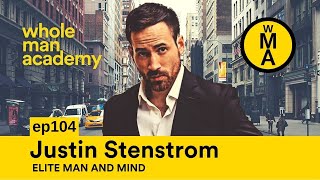
Podcast episode (Whole Man Academy, Ep.104) — host interviews Justin Stenstrom (Elite Man podcast founder). Conversation covers Justin’s podcast origin (from dating advice to broader male-focused topics), guest highlights (Wim Hof, Anthony William, Grant Cardone, Jocko Willink), men’s health and natural healing (Justin’s chronic illness, viruses, heavy metals, recovery), fitness and nutrition routines, masculinity/family dynamics, social media/cashless-society concerns, and testosterone decline. Tone: conversational, practical, men’s personal-development focus.
Okay guys, before we jump into this week's podcast, remember as always to subscribe a to the podcast on YouTube or iTunes or where else are we anchor Spotify, wherever you're listening and consuming our content. Also to subscribe to our game changing weekly E letter for men that goes route are Tuesdays and Fridays at 10am UK time to guys all around the world. Just hit the show notes below or www.wholemanacademy.com Movement to get our lovely E letter right. Let's jump in.
Holeman Academy because the world needs strong men. Wholeman Academy is changing the game for men around the world. It's for guys who want to live an epic life of fun and adventure. No matter what we believe, deep down, all men want to go on their own hero's journey to becoming resilient, confident, fearless and fulfilled. Listen in to be inspired by guys. We don't settle for living a life of meaning mediocrity. This is your call to action and call to adventure. Are you ready?
Okay, so this is the whole Man Academy podcast, episode 104. My guest today, all the way from the States, is Justin Stenstrom, the host the Elite man podcast. He's the founder of Elite Man Nutrition, Elite man magazine. He's an author, entrepreneur, speaker and plenty more. We're going to get into all of this, what it takes to be a man, and what's life like out there at the moment. So, mate, how are you and exactly where are you?
I appreciate you having me on, man. I'm doing great and coming from Boston right now, which I would guess is probably similar to your weather right now. We're up and down, but today's a little rainy, kind of cold. But I think in like two days it's going to be like 90 degrees. It's going to be beach day. So, you know, we have the goods and the bads over here. Just like you guys.
That's pretty. I mean, you know everything in the uk, if it gets too cold, everything stops. And if it gets too hot, everything melts. It's embarrassing. You know, the train stop, if there's leaves on the line and stuff. And the more I traveled around the world, I realized how crap the UK was at dealing with any hot or cold weather. And I was going to ask you, have you been to the UK at all?
Actually, no, I haven't been to Europe, believe it or not. So yeah, it's definitely on the bucket list.
Yeah. And if you did come over here, do you have anywhere? That's why it's always Interesting to talk to guys, you know, especially from the States. I spoke to Joe Rodonis a while ago who's based in New York and, and Steve, who's in or just outside of New York actually. And it's just interesting to talk to guys from the States because, you know, a lot of the guys in states aren't desperate to necessarily kind of get out because it's so big. Whereas over here, you know, we can, I can fly to various European cities in, in an hour or two or something like that. Whereas when I went to. Where did we start off? We did, we did like Peru and place like that, but then we came over and did like LA, Alcatraz, Yosemite, etc. Etc. And you realize what an enormous place the US is compared to the tidy little island.
It's true. 100 and it's kind of cool in a way. You guys get to like, you know, hop around from country to country. We just basically do state to state, which is very similar, but I think a lot of, a lot different in a lot of ways. You guys have more differences in culture between, you know, countries obviously than we would with states. But US is so massive. Like you said, you can go, you know, six, seven hour plane ride to LA and it's a totally different land out there. And then you go halfway between, that's the Midwest, you know, all the fields and the country folk and all that stuff. And then you go down south and they have a completely different way of speaking English and they're more hospitable and there's nicer, everything's slower. I went to Atlanta about five years ago for a conference and it literally took me three and a half hours of being in Staples to grab something that I had already ordered the day before and I would just go into there and pick it up. But everybody was just slow and like taking their time. I was in there for like three hours. So I mean, that's always a little frustrating from. Come from someone up north or everything's quick, you know, you know, everybody around here, we go fast. But I did like, you know how sweet people are down there and you know, Southern hospitality is real. So you go anywhere in the United States, you're going to get a little bit different culture, a little bit different customs and, you know, people and stuff. So it's really cool.
Yeah.
But yeah, I would, I would actually like to go to UK at some point Ireland because I'm, you know, I have heritage from Ireland. Yeah, it's funny that you mentioned Peru. I've Been to Peru, because I. My mother's side is actually from Peru. She came from Peru. I've been there and a few other places around, like, you know, islands and stuff.
Yeah, I think that's one of the big things, you know, especially in these last two years, where it stopped people from traveling. For me, I always say life should be a set of experiences knitted together, you know, going and trying to travel or do, do, you know, adventures and experiences. And, you know, so many people have been stopped from flying around the world in these last two years, which I know, you know, for some people, you might not, you know, like for us, just as we had kids or our first child, we went traveling just before then because we had no mortgage, no jobs, you know, no ties at all. But that's one of the big things I've kind of missed is even just getting away to some, you know, even if you're going to Spain or somewhere, just to go and chill out for a bit and have some proper weather. But let's get into. The main reason I first found you was, you know, the whole man academy is all about getting guys together to talk and helping them find their own version of an epic life. And I remember listening to. I can't remember, it was a long time ago, one of your podcasts and being like, I like this guy. You know, he's talking sense. And I noticed, you know, a couple of different guys that you had on. I know it's not just guys you have on the podcast, but the, you know, Wim Hof and people like that. Some really, really good names. So take me back to how you even got to start the podcast, because I'm so interested in this.
Well, believe it or not, a few people even know this, but the podcast actually started as more of like a dating podcast for men, like a dating advice podcast. So, yeah, that was the ancient days. I don't even know when I started. It's probably like seven years ago or so. And I was just kind of like, you know, helping guys out with confidence issues and stuff like that. And I was like, oh, let me try this podcast thing. I heard a few podcasts. They're fairly kind of new at the time, too. There was only a few, like, real big ones. And Joe. This was before, like, Joe Rogan was even big. I mean, he had his podcast, but it wasn't really like, what it is today, and people didn't really know him. Tim Ferriss, I think, had just started his around that time, and I was like, let me try this out. And I started, you know, dabbling with it a little bit. And the dating thing, I think I did, like, maybe 15 episodes of the dating advice stuff. And then, like, after a while, I'm like, all right, this is kind of getting old. I'm, you know, as you know, I cover a lot of things in the podcast now. I'm, like, thinking of all these different topics I wanted to cover, and I'm like, you know, dating is cool and everything, and, you know, I was single back then, and it was good, and. But at the same time, I'm like, this is pretty boring for me as, like, the host. I can't keep talking about the same shit. So I slowly started getting, like, different guys on and different, you know, backgrounds and stuff. And, you know, after that, it just, like, totally had a rebrand of it until, like, Elite man, instead of just, like, a dating focus, it was Elite man, where you're covering all these different things. Health, fitness, business goals, leadership, confidence, all these things. And from there, it really just took off. I started getting all these good guests and, you know, the Wim Hofs of the World and all these other guys we've had on the show. And it's just been a. It's been a long. It's been a lot of work and a long, like, journey to get to the point where we're at today. But it's been really. It's been fun because it's been a great way to meet people, connect with different people. A lot of these people you look up to for years. You're, like, now talking to them for hour two, three hours. I had Anthony William on my show, and he's like, my number one health guy. And I was reading all this stuff and following all his books and doing his diets and everything, and then I got to end up talking to this guy for three hours one day a few years ago, and it was really cool. You couldn't pay this guy, actually. He won't even take consultations of 20, $50,000. He won't even take any money to do consultations because he's so busy. He's working with billionaires and celebrities. But here I am on my podcast, and I talked to the guy for three hours for free. I mean, it's incredible. Yeah, it really is priceless. And then, you know, I'm actually kind of friends with them. He gave me his number and stuff. We talk every once in a while, you know, so it's just cool, like, the ability to connect with people and meet these, like, you know, people that are really changing the world in a lot of ways. And all of a sudden you get access to them and you get to, like, connect with them and make your own little impact on the world. And, you know, we've done good things with the podcast, but that's really just the beginning. There's a lot more things coming up that. That I think it's kind of propelled me into doing.
Oh, do you know what? You nailed it there. That's one of the big things when I get asked, you know, we're episode 104 now and be going for kind of like two years. So it was a kind of March 2020. But, you know, one of the things I say is that my network has kind of exploded in that time with 100 guys that you could now reach out to. And I was writing about it for our E Letter. We send out every kind of Tuesday and Friday to girls, to guys all around the world, actually. But funny thing is, about a quarter of our readers or listeners are actually female, which is, you know, with a whole man Academy podcast needs men talking to men about men's stuff.
Yeah.
But a quarter of the listeners are female, which is great. Interesting one, but that is exactly the same for us. I actually wrote about it today, which goes out tomorrow. Like, when. When I'm doing mentoring with a guy, I'm like, I haven't got the answers. You know, no one has. But if I don't know it and I can't help you, I now have all these different men from, you know, crypto experts and business and entrepreneurs and footballers and marry warriors and special force, you know, all these different guys that you could just email, be like, hey, I've got this issue direct and you could give me some advice on it. And it's like us now, you know, now we've connected. You never know where the next step is. At some point further down the line, where you happen to be in London or something like that, and there's. And there's some connections. But I was going to ask you with the podcast, was there ever an episode where kind of you saw a sudden spike in views, downloads, interest that kind of really helped, or was it just a gradual process?
I mean, there was. Yeah, there was definitely a bunch of those ones. Like, if I had, you know, and not everybody does actually, maybe like half the people will do it, will actually, like, share it. Like, if you have a big guest come on, and you always want people to share the podcast just to get the word out anyways, whether they're big or Small or have a bigger small audience. But, you know, there was definitely a few, like some of the. I remember, like Dr. John Gray when he shared it, I believe Ty Ballinger, the guy who's the truth of cancer, the truth about cancer, when he shared his. When Anthony Williams shared the podcast that we did. I mean, these guys have like million followers on Facebook and Instagram and newsletters, email lists, like, you know, million follower email list. So when they put it on the email list, I mean, you get a big spike in views and stuff and watch and downloads. But yeah, you know, it's. It's funny because, like, when you're in the beginning of the stages, you're like, all right, if I just have this one guest on, he's going to change the whole outcome of it. You're going to go viral. And that does happen every. You know, if you're real lucky, it happens to someone and people put up a stupid TikTok video and they go viral. Next thing you know, look at, like, the stupid island boys. You know, they have that ridiculous video and all of a sudden they're celebrities overnight. And so it does happen. Like, people go viral, and a lot of people go viral for a lot of bad reasons. But from what I found, in my experience, most people, especially in the podcast world, you're not going to blow up from, like, having a big name guest. Even if it's huge, you're most likely not going to blow up from that. But you will get spikes. And those spikes over time do add up, like, you know, a little spike here, a little spike there, and then consistently staying with it and doing it every week, you're eventually just going to continue to grow, like a rising tide type of thing. But from my experience, I haven't had like, just one guest, like, blow up the show. It just doesn't happen.
It's so interesting to hear and I've enjoyed talking to, you know, different guys who run either little podcasts or some that are much bigger because you get kind of that similar story. They say there might be one, but it often depends on if the guest has got a big following and if they share it. And I think our biggest one was with David Gandhi, who's kind of the international kind of model who has got about a million followers on Instagram. So when he shared it on there, we kind of very quickly went to something like 30,000 views or wherever it was, which was like your graph goes.
Yeah, the straight line up, and then.
Two weeks later it comes back down. Right. So, no, it's Good to talk about and talking about guests, because some of the guys like Grant Cardone, who, you know, I've kind of followed, I mean, for quite a few years, I think, from when I started going to. I was in Miami at one of the Tony Robbins events with Date With Destiny quite a few years ago, which is awesome. And I think I kind of found Grant Cardone around that time, maybe starting to. Him, what was he like to kind of a deal with? And B, what was it like to interview him? Because do you ever get nervous about talking to these guys?
I'll be honest, I did in the beginning. Not anymore. Like, you're all even with this. With this interview right here, you know, like, every time you step on them, every time you step on the mic and you go live, you're always going to feel like a little bit of something just because you're like, all right, people are watching this. But. But as you do it more and more, you don't even notice it anymore. So it's just like, yeah, I don't. Maybe I was a little nervous for that, but I don't think so. Especially now. I mean, I've had some really big names on the past year or two, and it's like, I talk to them the same way I talk to anybody else. Like, I go out for a conversation, I say hi. I mean, I talk to them the same exact way. In the very beginning, though, you're nervous because you have no credibility. You're like, all right, if this interview tanks, then, you know, people are going to hate me and I'm never going to go and the show's going to tank. So you're, like, worried about it. But as you go on and you get more established and more credibility, you don't care about that and you don't get as nervous. And also, you could. You could do that right now. Like, if you just start a new podcast and you have the mindset like, all right, this is just a regular guy. Grant Cardone is just regular dude. If you have that mindset right away, you can just flip the switch and not care, not get nervous. But a lot of people need time to kind of establish themselves and build that credibility, to feel confident about it. But Grant Cardone was a great guy. I actually didn't really know much about him when I interviewed him. I just knew he was, like, a big name. And I'm like, oh, he seems interesting. I didn't read his books or nothing, but I had him on the show and I actually loved him. I know I looked At a couple of his interviews and stuff, I knew he was very controversial, very outgoing, and kind of like, in your face. Am I kind of trying to prepare myself for that? And I actually thought he was going to kind of be a dick on the interview. So I'm like, all right, I'm kind of ready for him to be a dick. But I was talking to him and five minutes into the show, I'm like, this guy's awesome. He's funny, he's very engaging, he's super interesting. He's a little like all over the place with stuff, but I like that. I mean, it just makes him more interesting to me. And then after I had him on the show, I kind of looked at his stuff more and more and I watched that show he did. I forget what it was called, like 90 Day Billion 90 Day Millionaire or something where he has like 90 days to make a million bucks. And I was just gonna, like, I was checking it out on like, you know, like, oh, let me see what this is about. Someone Facebook recommended it or something. And next thing you know, I'm like, binge watching. I never watch shows like that, but I ended up like, binge watching this the next like three or four days. And it was because of Grant. He's so interesting. He's so smart, the way he thinks, and he's a hustler. And it's like, wow, this guy's inspiring that he can do all these things and just make it happen. And I think they gave these guys a hundred bucks to start off and they had to create a million dollar business in 90 days. And he ended up doing. Actually, I will spoil it because here's the spoiler alert. If you don't want to hear, if you want to watch the show, it's coming right now. I'm going to spoil it for you. If you want to watch this boat. If you want to watch the show, skip over the next 30 seconds, but here's a spoiler alert. He actually, instead of doing the million dollars, he creates like a $5 million business within 90 days. So totally blows it out of the water. The other two competitors on the show who weren't really as good, they barely did a million. And I think they kind of over assessed the businesses that they created. If you watch the show, I think you'll come up with the same conclusion. But long story short, the guy's incredible. I' a big fan of his. I know he can kind of say things that are stupid sometimes, and he has a few bad interviews here and there. But overall I think he's a great guy.
I think it's so interesting. And I always say now, you know, with the, with the rise of like YouTube and Instagram, etc. That you know, you can immerse yourself, let's say you're interested in business, you don't ever have to meet the person, but you can immerse yourself in their books, in their videos, in their podcasts and what have you. And with him, yeah, sometimes you'll like a lot of guys you might listen to an hour, but there'll be that one thing that he says, or for me, it's like the way he acts. He's very bolshy and doesn't give a fuck. And I think a lot of people, especially guys could sometimes do with a bit of that rubbing off on them and not worrying what everybody else is saying and doing. But I wonder with the elite, man, I mean that's again going back to with the whole man academy. We started off with it just getting guys together to talk and kind of. It was never a pure plan of where we were going to go with it. And then I was like, right, let's do events and we held 12 events in London and then we started the podcast and etc. But I wonder with you when you move into work with men, I know you've got a good knowledge of nutrition as well. So had you. Was your background in nutrition or, you know, to have got that decent level to be able to talk about that stuff as well as everything else?
Yeah, my background was in, was in dating and just being good with my background was in communication and communicating and being an effective communicator and reading people's body language and you know, using psychological principles and social principles to really benefit myself and then to teach others how to do the same, whether that's with women or in, you know, business or whatever, in group settings to just be more effective, an effective communicator. And socially that was my. And I just, that was all self taught, you know, and everything nowadays can be self taught and everything for me, for the last, what is it, 2020, for the last like 15 years has been self taught. Yeah, you know, there's definitely a place for education and you know, university and for some people I think it's very overrated though. But you know, these things are all self taught. And so the health thing for me was really just another thing. It's been a progression, it's been a series of things in my life where it was like, all right, this thing's popping up. I have to figure this out. And then I'll dive into it for two, three years, figure it out, and the next thing comes up, it's like, all right, I got to figure this out. Two, three years. I got to do. So. It just was another progression that came up in my life. I had a chronic disease five years ago that really popped up and changed my life, and I had to figure out how to fix that. I mean, my brain was literally atrophying, and I was having incredible migraines all the time, and I couldn't even shut the door without getting a migraine. Slamming the door shut would give me a migraine for a week. Playing pool at billiards, if I, like, hit the ball, hit the cue ball, that the sensation of that cue hitting the ball traveling up my arm would lead into the brain stem and give me a migraine for two weeks. I had to stop playing billiards for years.
What was it? What was cool?
It was, well, so, you know, working with Anthony and doing all that and reading all this stuff, and I went to. Here's the thing. I went to a million doctors and spent three years and thousands of dollars trying to figure this out, and nobody could come up with a solution that would help me. You know, I'd see a little bit of benefit here, a little bit there, but. But then it would come back, and nothing was permanent. Nothing could actually reverse what was going on. I had. I used to box. I used to, you know, fight. I did it for a few years, and I had a lot of fights. There was definitely some. There was, like, some cte. Like damage to the brain. I. I think. And by the way, I did, you know, three, four MRIs, went to all the. I'm in Boston, too. We are supposed to have the best doctors in the world. I went to the best doctors in the world. Neurologists, all these things. Neuroscientists I talked to, but nobody could figure out exactly what it was. And I ended up reading Anthony's book one day, and the next thing you know, I'm learning all about these viruses and about these heavy metals that get lodged in the brain from birth. Actually, just at birth, you get passed down from your mother. You get a lot of their. The metals that are in their system. And viruses as well. So even. So, everybody's walking around viruses. Epstein Barr, cytomegalovirus, herpes, 1, 2. There's multiple variations of it. Shingles, all types of viruses. Everyone has dormant viruses in them. And also heavy metals. Mercury, aluminum, cadmium, lead, mercury, mercury and aluminum are the two big ones. Mercury is the number one. You know, it's super toxic to your. To your cells, especially your brain, neurologically.
People with. In. In here.
Yeah. Dental amalgams. Yeah, yeah, the fillings there. So you can't even just pull those out either, because then the mercury gets, like, released, and it could be even more dangerous. So as bad as it is to have them slowly release into your system over time, you know, it's. It's actually probably safer to just keep them there than to pull them out and then you get a whole burst of mercury. It can be very dangerous. But anyway, so in my situation, it was like I had these different things going on. I had the brain damage, and it wasn't like, you know, I was like, severely brain damaged, but I had decent brain damage from the boxing. I also had adrenal fatigue. I also had the main culprit, which was shingles and Epstein Barr, dormant in the system that had become activated. And these viruses, they travel up and down the nerve. So I had these. These like. That was where the pain was coming from was these nerves that was super inflamed over the years of, you know, poor nutrition and, and the damage itself and the adrenal fatigue. These nerves are super activated and. And inflamed. So any type of little thing I was sensitive to, and it would cause this cascade of. Of inflammation that would lead into the brain and cause these migraines and sleep issues and all types of weird symptoms. You know, I like to say. I don't like to say, but it's true. I had symptoms that is similar to early Parkinson's. And I had something called rbd, which is REM behavioral disorder, where you act out, like, violent sleep episodes and you can, like, hit yourself and punch and kick and all kinds and that. People that get that, 90, 95% of them get Parkinson's within 10 to 15 years. And I was getting this like five years ago.
Yeah.
So super scary. I mean, you know, I wake up one day and I punch myself in the face, like, viciously. I'm like, what the hell was that? And I'm like, whatever, it's probably nothing. And then like two days later, I do the same thing, and I start doing Google searches and I'm reading all these studies and this and that, and I'm like, holy shit, this isn't good. And so. So anyways, it was a combination of the. Of the damage from boxing. It was a combination of just being having stress for numbers of years. You Know, wearing me down. And it was the viruses that had become activated, which are really the main culprits causing all these weird, like, neural issues and. And nerve problems that are, you know, leading up and down the body and leading in the brain stem and et cetera. And then it was also heavy metals, mercury. I was actually a big tuna fish eater for years. Like, I'd have a tuna sandwich every single day for probably 10 years. Yeah. So a tune is one of the worst foods you can have when it comes to heavy metals. So I had a lot of, like, mercury stuck in the brain. And mercury won't just go out by itself. It sits there. You really got to pull it out with something like cilantro or wild blueberries or something like that. It takes a combination of things to really get it out of the system. And it takes time, too. It doesn't just automatically come out a week after you start eating these foods. It takes, you know, six months, a year, two, three years to do it all. So it was the metals, too, and it was. They were like pockets in your brain. So people that have Parkinson's, they have heavy metals on the. Which part of the brain is it? Oh, they have. They have heavy metals most. Mostly on the brainstem. Like the beginning of the spinal cord meets the brain. It's like, right there. That's a lot of where the pockets of it will accumulate. People with Alzheimer's disease will have a lot of mercury, a lot of aluminum on the temporal areas, which is why it affects memory. And then you have some of the other variations. Like, not every Parkinson's is the same as, you know, the next guy's Parkinson's, rv, Alzheimer's is the same. And then you have all these other ones, like multiple system atrophy. And you got the cte and you got, you know, Mississippi is another one, too. Als. All these things are all heavy metal related. And it's just a matter of really, like, how much heavy metals you have in your system, which ones are they, and where are they located? Where do they, like, kind of divot and stay in there in your brain? And so a lot of these things can be healed up when you do a combination of these. Of this diet and these protocols and these supplements. And that's what it took me to do. It took me two years of really doing this hardcore before I was able to kind of reverse it and go back to where I was. But it took me five years of trying a bunch of stuff that didn't work. And even years before that, where I Kind of knew there was a problem going on. I just didn't really address it. But five years of really doing all this stuff before I was able to do it.
And I find it so interesting because the more I understand about our health system worldwide is that so much of it is, a, it's a business, but B, sticking a plaster over something instead of actually going to the root cause. I mean, I listened to some of your podcasts with Ty Bollinger and you know, with cancer, you know, it is a big business and yeah, there's a lot of money to be made when people go on their treatment pathway and, you know, often they're very quick to cut bits out the body that have got a growth, a tumor or something instead of actually saying, well, how can we treat it? So it's. I know. You mean it is one of those where, like, for you, I'm sure that some of the other doctors, you realize that, you know, they, they're running a business, but also maybe they won't even attempt to think about the more natural remedies for things.
Yeah, it's sad. It's, you know, the, the US Especially is, you know, it leads the world in so many different categories, but certainly in health and medicine, I think we spend the most medicine, we definitely do spend the most on medicine, but have like the worst results as far as all the developed nations in the world. So we spend the most, but are in last place. And, you know, it just goes to show you, because we're so pharmaceutical based, it's, it's, you know, throw a drug at this, throw a drug at that. And yeah, drugs certainly have a place, but most of these drugs aren't needed, they're not necessary. And a lot of these conditions, a lot of these issues, in fact, pretty much all of them can be reversed. When you go the natural course. The thing is, the natural course takes a little bit longer because it's more gentle on the body. Instead of throwing like a hardcore drug addict, you know, you go easy on the body. The body, you know, works with the nutrient or the herb or the vitamin or whatever it is, and it slowly is able to heal it. Because that's really what it's all about, is having the body train itself again to heal itself. So you're like reconditioning the body to understand what the best protocol is for it to heal itself. Because the body wants to heal. It wants to be in homeostasis, it wants to be healthy, the cells want to be healthy. You just got to feed it the right Components to be at its best, and then it will heal itself. But a lot of these drugs actually hinder the immune system, hinder the body from healing itself, work against it. And they put like a, like you said, it was like a band aid or plaster on this thing to make it seem like things are okay, but deep down, you know, that wound is just getting worse.
Yeah, it's, you know, we, we try and cover a lot of topics on the whole man academy with the E letter. And again, you know, you kind of said about that we talk about finance to health, fitness, nutrition, mindset, all the different things. But that's what I'm trying to impart knowledge on guys to say, like, you've got to go and do some of your own research. Don't just go to the doctor and say, can I have a pill for everything? And expect it just to clear up. And actually on that, even on when you talk about guys with fitness and nutrition and we talk a lot about fitness on there, I wonder for yourself what your general kind of fitness level is and also your regime or training regime. Because the more guys I've learned from, I realized sometimes it's best to try and concentrate on the basics and not be too technical with things and find out what you enjoy. So I wonder what yourself kind of what works for you?
Yeah, that's a great question. And so for me, I mean, I actually had a background too as a personal trainer. So I did that for like three years. And I know all the exercises, all the, you know, supersets and this, the Tabata and you know, the high intensity ones and the higher volume ones, the one set reps, all that. I mean, I've just tried everything under the, you know, CrossFit even. I did that for a few months as like a, you know, experiment, but I've done it all. And at the end of the day right now, I just go back to the basics of. I mean. Cause I'm a busy guy. I know you're a busy guy. I don't want to spend hours and hours in the gym. I don't have that type of time. I want to get the most effect with the least amount of work. And for me personally, it's like, all right, four, four times a week at the gym is great. That's all I need. I'm in there for probably 45 minutes a session, maybe an hour sometimes. Uh, I'll typically do some like a little bit of core work at the end of, Of a, you know, full work of. Of end of whatever body Part I'm working, if I'm doing a chest day, if I'm doing a back day, if I'm doing, you know, leg day, I'll throw in some abs at the end of it and maybe a little bit of cardio, I'll get with, you know, whatever else is in the equation there. But I'm. I find that I'm actually pretty healthy and I get basically the same results I get today as, you know, 10 years ago when I was training, you know, two. Two hours a day in the gym and just, you know, having protein shakes before, after, throughout the day, doing all these things. Like, I might have been a tiny bit bigger.
Yeah.
Or a tiny bit more ripped, but that also could have more to do with the fact that I'm 10 years older and, you know, my testosterone levels aren't quite as high and this and that.
We're going to get onto testosterone. Yes, good.
But honestly, I've noticed I get basically identical results as I do now with a lot less work than I did 10 years ago. And I have a lot more time to do all these other things I'm doing, like this interview and, you know, some of the other things I actually enjoy as opposed to sitting in the gym being miserable. And I also feel like it's easier for me to maintain this type of regimen as opposed to being hardcore all the time, which is what I was for years, by the way. And when I was boxing, I was six hours a day. I would train for that. So, I mean, it's like I had that in my system. I could do that if I really wanted to. I also have another. I also have a life. I mean, I have things I also want to do besides, you know, working out. But that's. So that's like my fitness regimen. And then, you know, of course, the health part is. Is even more important, really. It's. It's, you know, the celery juice in the morning and then the heavy metal shakes I have every day with the wild blueberries and everything. And I try to have, like one meal of meat a day, and then the rest of it's like a lot of fruits and veggies, and that's basically the rundown of it and. And all. And supplements in between all that time, because I do have supplements throughout the day like vitamin C and, you know, some of the basics.
Yeah, zinc and things like that as well.
Zinc, multivitamin. I take lemon balm, I take B complex, ashwagandha, all those, you know, really good ones for your system.
It's funny you're listing them. We have a or two different online courses, but one of them is basically about helping a guy have more energy to do all the cool shit he wants to do in life. Because, you know, you're like, if you want to do all this stuff, but you're like tired all the time, you're not going to get. And we go through a lot of supplements on that because for most guys, they're just, you're just not educated on it. And, you know, you'll get like, for example, like Men's Health magazine or something. We'll do the odd article, but they're probably being paid by the people that they're promoting anyway, so it's not going to be the best quality.
Yeah.
You know, everything's a business and everything's got a dollar sign in front of it. So, yeah, that's the other thing with guys. What we saw was some of them that we would talk to would feel like, you know, you said protein shakes. Sometimes I say to people, you've got to actually work out as well, you know, like, you can't just have your protein shakes. And I worked with a guy once, he was, he was a big guy, but I mean, he was, he was overweight and he was like, right, fuck it, I'm gonna, I'm gonna get big. And I was like, great. Like, that's. If that's the motivation that's gonna drive you on. So he came the next day and he had like brand new, like 100 pound trainers. Okay. And then a big thing of like maxi muscle, you know, protein shake, which is just full of sugar and then all the protein bars. And I was like, wow, you're really going for it. But then after a couple of weeks, he realized he was only going to the gym like once a week, but every day he was eating three or four of these protein bars, thinking that that was going to be the thing. And I was like, mate, you've eaten like 25 tablespoons of sugar today, you know, just on your protein bars. So it's, I would say it's trying to educate yourself. But talking of fitness, I know you into Jocko Willing as well.
Yeah.
And here's someone I remember listening to the London Real Podcast. If you do or don't know the London Real Podcast.
Yeah, I like him. I forget his name, but he's a good guy.
Yes, it seems like it.
I haven't seen him in a while though. When Covid first came out, he was doing a lot of good episodes with COVID And then I kind of, you know, stopped watching him. But I liked what he was saying.
So he, he basically launched a kind of a defi academy. So he's primarily kind of. I wonder whether for him also, because he's been doing it for, you know, a long time and he's followed the similar path to me. You know, he was Wall street then he was London. He worked for my competitor as a broker and then left. And his studios were literally one, one or two roads away from my office. I've met Brian. I went through his podcast course, been to some of his events. And you're right, you know, the biggest thing for me was that he introduced me to loads of thought provoking content that I would never have found. And some of it you might not agree with and something you did, but at least you went away being like, oh yeah, that's interesting. I'd never have thought of that. Jocko Willink was one of those I listened to and I was like, I fucking love this guy. What was that like for you?
You kind of similar to Grant Cardone. I mean, I didn't really think he was a dick like I thought Grant Cardone was, but I did see like some of his interview stuff. He's always, he's, he's serious. Like he's a very, I mean discipline is this big thing. He's a very disciplined, serious man. I think he cracked his smile like maybe once the whole interview. It was a good hour or so, but, but he's a good guy. Like he's, he's a really good guy and he's got a lot of good ideas. He's the type of guy you want having your back. He's the type of guy you want like, you know, alongside of you as you're, as you're fighting a battle. I mean, you can imagine he's a big strong guy anyways, but more so that his, his mindset is very tough. He's, you know, he's, he's a go getter, he's very disciplined. He knows what he wants, he goes after it. And he's also, he does it in a good way though. I think he's a very respectful man. I think he's a very genuine guy.
Yeah.
And he's very serious about what he wants. But, but he's also respectful in the same sense. And I like him. I think I agree with most of the things he says. You know, he's conservative type of guy. He doesn't really talk about politics a lot, but you know, you can tell some of his things that, you know, some of the things he believes in are certainly conservative based. And I think overall he's a great man.
Well, that's, that's been the. One of the biggest things I've seen the change in these last two years is, you know, you can't have an opinion on something because, you know, whether it, whether you're. And I never really understood much about politics. I mean, even in this country, I just didn't give a about it when I was younger. And it's probably only in the last few years that I started to, you know, just look around and pay more attention to it. But that's why, yeah, the podcasts, I like listening to people. I think in life you need to surround yourself with people that at least challenge you because if everybody just says yes, yes, yes all the time, you know, you're not really getting kind of any real criticism. But yeah, definitely with a podcast I'd listen to people who I deliberately, slightly disagreed with, but then it would challenge your thinking. But, you know, we said during 2020, and I remember writing about like the Trump and Biden elections and the comedy that that ended up being. But like, you know, over here, even in this country, I remember writing on our E Letter saying, I guaranteed if I'd have written I was pro, one side, you will have some. The other side can't just say, oh, fair enough. It's like, and, and it's so black and white these days with so much stuff that I know. You know, there's that old saying like we can disagree and still be friends. And I think a lot of people have forgotten that. And what about yourself? Because also with your podcast, you know, what we're trying to impart is also it's okay to be a man's man and be strong and dependable and, you know, preside over your family and protect them and etc. Have you found any kind of negative feedback on any of the stuff that you've said, especially about masculinity?
Yeah, yeah, I definitely have. You know, it kind of comes with the territory nowadays. And, you know, there's always some, some backlash about being a pro man type of guy. And it's not even like, you know, pro man because that sort of implies you're, you're anti woman, which is totally, you know, the opposite of what I am. But it's like, you know, all we're doing here is really talking about men and, and giving them a place where they can have support because there's not Really a lot of play and there's a lot more coming up now, but, you know, even seven, six, seven five years ago, there wasn't a ton of it. And I do feel like some of those groups that are like, or have been historically like pro man, a lot of them can, you know, stray into the, you know, territories of being anti woman. But it's like something I've totally been conscious about avoiding because it's not what we're about. But, but we do need a place. We need more places where guys can have support and they can go for answers and they can go to talk about the problems that they're dealing with and they're facing as a man. And I do feel society in general been attacking men and the role that man has in society over the last few decades. And you know, you kind of see it all over the news nowadays anyways, but it's like a lot of men are being attacked simply because they want to be men. They're not allowed to be dominant anymore or to be the head of the household or, you know, to be the earners or the providers, like you mentioned. And it's like, you know, traditionally speaking, this is, you know, for hundreds of thousands of years, this is how humanity worked. Man was the leader of the family, man went out, got the food, they provided for the family, that protected the family. I mean, that's just the dynamic of human nature. And so, like, to try to think, to think we can change that all within like a couple of years just because, like, we want to, like, oh, that's not, you know, right. It's, you know, women are equal and, you know, there's no difference between a man and a woman. It's just bullshit. There is a difference between a man and a woman. Men have their qualities, Women have their qualities. Women are incredibly great with their, with their feminine qualities and we love that. But men are also incredibly great with their masculine qualities and we love that and we should love that and celebrate that. And I think a lot more men need to hear that and, and figure out that, all right, it's okay for me to stand up and be more vocal and, and take charge and be more dominant in life is so important.
I think, especially for, for the younger guys who are growing up, who seem to be growing up in a snowflake society. And, you know, that's over much as I'm guessing in the States. And I think the media has a big, big part to play in that because it can perhaps be quite confusing. But, you know, there's Two things that. One is, especially, even as young kids growing up, there's no programs they watch where there's a proper male role model. In fact, like, you know, the kids over here might watch, let's say, Peppa Pig, where the daddy's a big fat idiot. And you look at Family Guy, I think, where the guy's douche. And there's a couple of other examples.
Which are probably Homer Simpson.
Yeah. I mean, classic example, where they're not growing up with the dad that is, you know, talk straight down the line and is. But is respectful, but he's a bit of a warrior. It's kind of like, dad's a clown and I treat him however the fuck I want. Another one of that was. I was talking on a panel event a couple of weeks ago, and it's a. It's a personal development. How can I put it? Like company, but purely for women. And they invited me and three other men in to a panel event so they could ask us any question they wanted because they were trying to understand men better, which is about as funny as us trying to understand women. It's just possible. But it was really interesting because, you know, they wrote out maybe 60 different questions. And we sat for an hour up on stage and all these women asked us these questions. And it showed you how much for them, they wanted to understand what we were thinking about this situation where men are feeling kind of slightly persecuted to be a man and a real man. And one of the women at the end, one of the last questions was, if you could have the ears of every woman in the world, what would you tell her? And my answer was, be okay embracing your femininity. You know, like, we're not here as your enemy. We're all here to kind of work together. And as you say, mum has her qualities. Mum energy. And that energy is completely different. And one of the women stood up and burst into tears, and she said, you've didn't say exactly what she said. You've healed a wound that I've carried for years. Because I think for some women, they're trying to bring masculinity into their. I don't know, the Persona. And it's. It goes against everything they've got. So I just wondered for you whether you see that over there.
Yeah, 100%. And I actually interviewed John Gray, as I mentioned earlier, the guy who wrote Men Are From Mars, Women are from Venus.
Yeah, yeah.
Incredible. And I've actually had him on the show, like, three times. He's a super intelligent guy, and he's actually another guy who's like so interesting because he knows he's so knowledgeable in so many different areas. Like he's like a super genius in health too, as opposed, you know, also alongside being the relationship guy and you know, business guy, he's just very, very intelligent. But one of the things he talks about, and he gets a lot of flack for it too. Even though a lot of women love this guy. Some women will give them a lot of shit for it. But it's like, you know, as soon as you introduced women into being into the workforce in like the 50s, 60s, after that era, the whole dynamic of family relationships started to change. Where you made, you made women want to have to go out and work 40 plus hours and become part of the providing family. Whereas opposed to the women staying home and being the nurturer and the caretaker. Yeah, the women was now put into the workforce and forced to work just as much as the father was. Now obviously the children suffered for that because the parents weren't home. And then slowly this developed into like the daycare babies. But also there's the dynamic between the wife and the husband changed as well, where the woman was always out thinking she had to be more like the masculine provider. And the man was feminized slightly because she became more of this masculine provider and he became less of the provider and less of that man that he was supposed to be where he was the provider. So this dynamic just kind of evolved in the last few decades and you see where it is today. Not like there's anything wrong at all with women joining the workforce and wanting to improve themselves and better themselves. But when it comes to a family and it comes to a family dynamic, things do change where women shouldn't be working as much if they want to focus more on the family if they have a newborn. There was a CEO, I think it was Yahoo or something like that. There was this female CEO a few years ago and they were talking, they were celebrating all in the news about how she's such a hard worker and she just had a newborn and you know, a week before. I'm kind of, you know, mixing up the timelines here, but it's essentially, you know, a week before she just had a newborn baby and she's already back at work working 90 hours a week at, you know, Yahoo, whatever company was. And it's like there's something wrong with that. You know, I'm all about, you know, having women work hard if they want to and they're go getters and this and that.
Yeah.
But when you just had a newborn child, you should be at home with that child taking, you know, months off to nurture that child and take care of that baby and be, you know, the mother and, and the wife that you signed up to be. Not to see, like, what's more important, your family or the profits that Yahoo's making. At that point, you're really prioritizing the profits. You're prioritizing money over family. And there's something inherently wrong with that. And I see it over and over again with how the dynamics of family have been changing over the last few decades. And I think it is a big problem, especially when you see this younger generation, the snowflake generation, as you called it, that are coming up, these Gen Z's, even the millennials, but the Gen Z's as well, where it's like a lot of these people didn't have the mother around or they didn't have two. They didn't. And a lot of, you know, different topic, but also a lot of these, especially in like the black community in America, they didn't have a father around. And that's a big problem when you're talking about raising a child. If you don't have a mother around to nurture or if you don't have a father around to give the discipline and structure, you end up having these babies that grow up to be, you know, have troublesome adults.
It's a lot of problems that there's multiple things, like kind of ways we could go that. I always said that a couple of my friends who would happily admit that they were a bit kind of, you know, a man I'm talking about, that were had various issues there growing up, like they either didn't know their dad because he was never around, or they knew his dad and he was a complete bastard. So therefore they would have done better off not learning because he was terrible. And it's interesting how you could see the, the pattern of those guys would often be the ones that then of a night out would end up in fights with people and were angry and had that anger that I'd be like, what are you doing? Like, yeah. And they just couldn't. Couldn't handle it. The other thing was, like you said, like, the, you know, the breakup of the family unit, which has slowly been happening. I remember, I think it's the director of Trading Places, the film where he said that, you know, women had been encouraged to go out to work because, of course, there was only one taxpayer being the man. Whereas Once women were going out to work as well. Now you've got two people paying tax.
Ah, that's a good point.
And, and I believe it was Rockefellers who were the ones that said that they would, they would bring that in. Plus, as you said then you create what. It was a term in this country, but I don't know if you have it. So it's called a latchkey kid, which meant you came home from school and mummy and daddy weren't there because they were both working. So you had to put your hand in your letterbox and the key would be dangling down on the latch, your key, and open the door and let yourself in instead of coming home to mum with, you know, maybe some food on the table and a cuddle and, you know, something like that. So that's what we saw over here was that, you know, big increase in, as you say, kids growing up with disjointed families. Which is sad, I think, but whether that's changing or not, I don't know. But that's. I like talking about it on the podcast because often people. I see the other reason being that we're so driven to assume that, you know, having more is better and therefore people will sacrifice not having as much money so they can spend time with their family and they'd rather have nice cars and a big house to be able to put it on Instagram, but sacrifice time with their kids.
It's incredible, man. It's really, it's priority. I think it's a lot of the brainwashing that goes on for years that these people have where they can't really snap out of, like, you know, they see it all the time. They want, you know, on it, especially now more than ever on Instagram, Facebook, you know, Snapchat. Oh, all these people around me have all these nice things, these celebrities, these, you know, friends of mine just got a brand new car, they got this, they got that. They're going, they're flying here, they're going to the vacations and it, it's a brainwashing in a sense that goes on where they think that they need that. They think that that's what they need to, to be happy.
Yeah.
And they forget about their kid, you know, and, or, you know, they're, they're working so hard and, and they're doing stuff and, and the kids on, you know, the other side of the room on his phone the whole time because the parent isn't giving him any attention anyways. So it's like. And you see it all the time these kids walking around with cell phones on, it's like, where's the parent here? And I know most of these people are good people, like, they're good parents, but. But they're just not paying enough attention to the child and giving that child the attention that they need to really be involved in their life.
That, that lack of connectivity, if that's the right word. And I was going to ask him, next question is going to go on to, you know, what your relationship is with social media. But great example, when I was traveling to London last week, because I'm an hour and a half out of London, my partner's parents live in central London, so I can stay at theirs whenever I need time out. So I went on the, on the train, just a short journey, and I was sitting there with my phone in my pocket and I counted because I was doing a talk on loneliness and connectivity that day to a big kind of media company. So I was looking around to see my inspiration and I counted 12 people in a row. And I've got this as my, as my prop, but 12 people in a row sitting on the train all like this.
Yeah, it's unbelievable.
And it was just, it was kind of weird because you're like, our trains now have got very long and a lot of them don't have kind of breaks necessarily in them, so you can have long seats. And it was just kind of scary because you look and you're like, you know, 15 years ago you'd have never have seen that. And maybe people read the paper or people might even talk to each other, but it literally was, you know, and no wonder that people are feeling lonely. Lack of connectivity, you know. I spoke at the event. Obviously affects mental health. Why is the biggest thing in prison the biggest punishment they can give you is sitting a cell? Yeah, isolation. So I just wondered, what's your kind of relationship like with social media? Because I see you don't put much on your Instagram and I, I use the whole man academy for hours and I put the odd thing on my personal one, but that stopped me from spending hours just getting sucked down that rabbit hole.
Yeah. So, yeah, I mean, I post infrequently. You probably noticed. I'll go on one time a week and I'll post a few things that day and then I'll kind of disappear for a couple days and then I'll come back on a week later, whatever. 3. I go on a few times a week. But I do try to limit it as much as I can and maybe One day when I blow up and have millions of followers, I'll just have someone entirely take over it and do it for me. That's kind of the goal, honestly, because they can just constantly post and I don't have to be involved with it all the time. But I generally like to try to avoid the phone as much as I can, especially social media. It's just, there's a lot of negative that comes with, there's obviously a lot of good that comes with it and you can build a brand and all those things, which is why I actually use it. But I'll be quite honest, I'd be happy if I could have the business and then just go off and kind of disappear from social media for a month at a time, two months at a time, and just kind of like, like almost cleanse myself from all the distraction of the social media. Like I'd be so happy to just, you know, not even post about stuff and then just have somebody else do it for me and that's it. But you know, there comes a lot of good with it. There, you know, definitely is a lot of good things that come with it as far as getting your, your name out, your, your voice out, your message out. But you know, I try to avoid it as much as I can because I do know the pitfalls of it and the fact that like, you know, you're talking about it earlier, you looked around there all in a row. They had their eyes on their phone and it's like, it kind of seems like a Twilight Zone episode. Like you woke up in this like new world and it's like, what the hell? What the hell is wrong with these people? Like, am I the only sane person here? Why is everyone obsessed with this machine that they're sticking their face into for hours at a time? And then you look around and it's like, you know, the adults are doing it, the, the grandparents are doing it now the kids are all doing it. This five, six year old kids everywhere you look that are stuck to this machine and it's like nobody's actually living in the real world anymore. And it's scary.
It is. And that's, I mean, that's one of the things I spoke about was, you know, we're being pushed towards a, I call it a contactless society. And only in the last week, one of the supermarkets, one of the big chains, you know, they've already been slowly implementing, you know, checkouts that are the automatic without, without someone there. Yeah, the automated ones. But I saw where today it was Reported that certain places you won't, you'll be able to, they'll start doing like facial recognition so you can pay with that or fingerprints instead of even a debit or credit card. Which means cash disappears as well.
Yeah, it's not good.
Which is not good. And it's so funny because I can talk to some people and I always say, you know, I've done lots of research or I say lots. It's probably five years ago I started reading books on. On that they will take cash away and it will mean that you're completely controllable because you won't be able to have your own. You can never touch your own money. And I spoke to a lady a couple of months ago and she said, oh, it'd be great when there's no cash because you know, cash is dirty and what have you. And I probably gave about 10 examples of why cash is still important. And she was like, yeah, I've never thought of that. And I said, well most people won't. But you know, even for kids, how do you teach them value of money when you. It's just a tap on a card or a fingerprint or a eyeball.
Yeah.
Compared to actually having cold hard cash. So I was going to ask you, that's why it's interesting. Talk to guys around the world. You know, we're seeing. Even our local garden center is like we would not take cash. We just will not, full stop. So I wondered for you there, is it the same or is it kind of do people fight back from that?
Well, yeah, they're actually starting to do that a little bit. I can see it. They're starting to, to wean it out of society. And you know, I got a target right next to my complex over here. And just a few weeks ago they have all like the self checkouts which is what I actually like to go to because I kind of just go in, zip in and zip out. I don't want to like stand in line and like if there's a self checkout open, which there usually is, I just run in and do it quick and leave. Yeah, yeah, it's convenient and you know, I don't have to scan my eyeball. I just ring things up and I put my money in and that's it. And actually I like to use cash, you know, sometimes when I'm there. But I noticed that all the self checkouts now are only credit card. You can only do credit card on them now and they leave you one. There's like one cash register open with the lady, you know, scanning your stuff and she's all the way in, like the corner over there, and there's like five people in line because, you know, they, they don't want to, like ring it in themselves. So they just wanted to go for that reason, you know, assuming, but that there's always like five people in that line. So it's way faster to go to the self checkout. But now it's like, all right, my only option to use cash, if I want to use cash, is to wait in line for 10 minutes, 15 minutes, or I can just use a credit card. So that's what they're doing. They're making you kind of choose this faster, simpler way, and that's the credit card. And eventually that lady isn't going to be there in a year or two and it's just going to be all credit card.
It's quite scary. I mean, I remember listening to. I think it was Peter Diamantes, if I pronounced his name correctly. He was at the Tony Robbins event. I mean, that was five, six years ago. And he spoke about, you know, investments were very wise in that whether you agreed with that it was a good thing for society to have the contactless society. But he was discussing the fact that you'll, you know, at one point you'll be in an Uber or a driverless car because there'll be no actual drive. You know, you won't be driving a car. And of course it'll know all your details because you had to have them all in line to be able to get the car. And as you drive past a shop, or it will advertise exactly to you because it knows that you were looking at this stuff on your phone earlier. Or you walk in a shop and it will be like, you know, the facial recognition will say, oh, there's Justin. Justin was looking at some boxing gloves earlier. There's flash up. There's a 40% flash sale on. And you'll be like, whoa. And it was just like, wow, the world's never been more connected. But also the world is going to be very connected soon and it's more safe for my kids. You know, our boys are nearly three, nearly five, and I don't think they'll ever drive a car, you know.
Yeah, you're right.
Which again, you know, as a say, as a man, I'm not saying women don't enjoy it, but, you know, a lot of men love cars and it's one of those things that. Who hasn't enjoyed tearing around some shitty car to start with, and trying to buy something, a convertible or something like that.
Yeah, yeah, yeah. I mean, you know, and there's something to be said about that too. It's the same kind of argument is the cashless society where they can control everything because it's all computerized and, you know, there's, I think it's for nefarious purposes, you know, whether you want to go down that road or not. But I do believe that they're getting rid of the cash for nefarious purposes. The people in power who make a lot of these decisions behind the scenes. But they can also do like the social credit score, you ever heard of that? Where it's like, all right, if you go against, like what we believe in, you know, the people in power, we can cut off your money supply because you don't have cash anymore. We don't accept cash, we accept these credit cards, these numbers that we give out. Especially now with the times in America where things are collapsing economically. Inflation's through the roof. High as it's been in over 40 years.
What percentage is your inflation at the moment? I'll tell you why, because I think.
It was over 8%. It's going up and up.
They reported 9% yesterday over in the UK, which is absolute bollocks. It's much higher than that. But what they. They've manipulated the previous data or the way they collect the data and present it so they can say, oh, it's not as high.
And you're like, yeah, I know. Clearly it's more than that. I mean, you go to the grocery store, I'm paying double what I paid last year. Two years ago, probably two years ago, you go to the grocery store, you're paying literally double what you paid two years ago. That's not an 8%, 9% increase, that's double. Yeah, yeah, exactly.
I mean, what about a great example? And again, that's why it's good to talk to you over there. I was going to ask about, you know, fuel and for example, with us with oil, our house is oil fired. Heating to fill up our tank three months ago would have cost me £450. We just had to do the same. It's £1,000. So yeah, see, there you go. Double the price in three.
Incredible.
In two or three months, electricity has gone from £80amonth to £180amonth.
Wow.
Like that. I wondered if that's similar to what you're getting in the States, those kinds.
Yeah, totally, totally. And you know, gas prices were like four right? Now they're like 460 something I just saw a couple minutes ago. You know, two years ago it was in the twos. It was like low twos, like 210, 215. Now it's like 460. And you're like, what the hell? Yeah. And you're. And they just keep going up and up. And it's like, oh, well, there's no gas problem. And you know, we don't need to, to open up the pipeline and drill our own gas. We'll just keep, we'll figure it out. It's like, yeah, we'll figure it out. We'll figure it out. It's like you guys aren't figuring shit out. It's just getting worse and worse. And it's getting worse and worse globally.
And the poor will hurt first, weren't they?
The what?
Poor people will hurt first?
Oh, yeah. These billionaires and the people in Wall street and all these execs and the people who bribe a lot of these politicians before they get into office and they pay them off while they're in office to pass bills in their favor. Those guys ain't hur. They don't care if gas is 20 bucks a gallon because they have so much money. It's the people.
That's it.
Yeah, exactly. It's the hard working people, the poor people, the middle class people that have to actually suffer when they don't have that extra thousand dollars, two thousand, five thousand, ten thousand dollars at the end of the year that they had before that they were relying on for certain bills to be paid. Those are the people who are suffering, man.
It's a crazy time. And you know what, on that, I know what I wanted to touch. I appreciate. I've already gone over the time I told you I'd be with you. One last question was about testosterone levels because, you know, we've spoken a bit with different guys and it's really interesting because I'm guessing you're going to know a lot about it. And it's funny when I speak to other guys who do, but you speak to the man on the street and they don't even know that testosterone levels have even declined in 50 years, let alone halved. And you know, the graph is, is like that. So I just wonder if you could kind of talk from your experience on that.
Well, yeah, I mean, testosterone levels have, have dramatically declined in the last few decades. And a lot of that is actually kind of similar to a lot of the things we've touched on in today's episode Believe it or not, you get more testosterone production when you do something manly. Like when you're with your, your spouse, your girlfriend, your wife, and you, you know, have sex with her, for instance, your testosterone levels will spike the next few days when you're, like, taking care of her or like, you stand up for yourself. Like, say you go out and like, there's a confrontation and like, you know, you speak up and like, you're the man in that situation and you handle it. Your testosterone levels rise. The same thing with women. Her oxytocin levels rise. Her estrogen levels rise when she does, like, feminine things, when she's more nurturing, when she's more caring, when, you know, when she kisses you, her oxytocin levels go up. Estrogen levels go up. When you kiss a woman, you actually, your testosterone levels go up as well as a man. So it's like. And, you know, doing things outside, manly things like chopping wood, hunting, playing sports, building things with your hands, fixing the car. Any and all these things actually increase your testosterone levels as a man. Any of the physical and the physically challenging things. Well, your testosterone as a man. And it's, it's. These levels have declined because everyone's becoming more feminized. Men are becoming more feminized, as we talked about, and they're doing less and less, quote, unquote, manly things. But it's those manly things that keep those testosterone levels high. And it's, you know, the physical work and the actual labor and the building things with your hands that actually increase your testosterone levels throughout the day and throughout the weeks and years. And everyone's sitting at home, you know, being keyboard warriors or going into the office, being sedentary. Yeah. Or like we talked about being on your phone all day. Their testosterone levels are crashing. So it's getting back to a lot of these things that we talked about traditionally of being more outside and being more physical and having a sport. I recommend a martial art, you know, jiu jitsu, wrestling, boxing even, you know, if you can do it safely. But, you know, something physical like that, where you're testing yourself, where you're competing against other men, all of these things will bring that testosterone level up naturally. And a lot of these guys are missing it these days. That's why their testosterone levels are like, you know, that of. Of women 50 years ago. It's. It's joke.
Well, and that's the interesting thing I know, you know, the more so my partner is a naturopathic nutritionist, so she's been down these rabbit Holes of how it's, you know, how it's by design that it's happening for, for many years. And I kind of took more interest in it in the last few years. And also the levels of estrogen for men and our environment. I know, you know, when you look around most people's home, if you've got carpet, it's got like chemicals in it, the paint's got crap chemicals, the food in it, you know, artificial light, the clothes are, you know, not real. All these different things. Looking at screens all day and it fucking your sleep up and then you're having crap sleep and that affects your testosterone levels. And it is literally like, it's like you look around and people are in a bubble of, I was thinking like a bubble that's keeping them down. Because for men, often my frustration is when a man's really trying his best but he's ill informed. So therefore he's, he's trying to do his best to, you know, be healthy etc, but he's being given shit advice via the magazines and the doctors and what have you. Which is why podcasts like yourself and what I try and do at least gives him a fighting chance of kind of coming, you know, making a comeback, especially in his, I know in his 40s and 50s, but. Well, I'm going to let you go. So I appreciate your time and we've already gone on for your, for your hour and also I know we tried to get a podcast going a while ago, but I'm so pleased to speak to you because for me it's about connecting to guys with similar mindsets all around the world. And it was over a year ago, or at least I wrote a long list of guys and you were one of the people on that list. Like, you know, at some point I will connect with Justin and sit down for an hour of man chat. So I appreciate you and your time. What's your plan for the rest of today?
Thanks man, I'm honored, man, I appreciate it. My plan the rest of the day is just, I got some videos to shoot, a couple things I gotta write up and you know, take it easy. But, but yeah, I appreciate, man, it's, it's been a fantastic time with you and let me just leave a couple quick little tips because you mentioned a lot of good things with the, with the testosterone thing, a lot of environmental things and toxins and you know, the plastics that get in your system that produce more estrogen as a man and lower your testosterone levels. Nettle leaf is incredible for your hormones as A man balancing those out, including testosterone. Ashwagandha is also incredible. I love that. Take it every day. And then if you really want. Dr. John Gray recommends Tongkat Ali to actually boost the testosterone levels itself. So that's like independent of hormones.
Never heard of that. What is it?
Yeah, Tonka Ali to. It's like Tong T O T O N G C, K A T. And then Ali, like Muhammad Ali. Tongkat Ali. Yeah, yeah. That one's for testosterone. But, you know, you take all these things in combination. You have the right diet, the right nutrition, you'll be. And then be more active, as we talked about. Reduce some of these environmental problems. You'll be able to boost that testosterone up pretty easily. And naturally. Naturally, too, as opposed to doing hormone replacement, which is really not healthy in the long run. But, yeah, man, I really appreciate your time. It was a great chat and, you know, I'm happy we went over the time because it was a good talk and these are valuable.
No, I appreciate it. Well, hopefully I always say to guys, one day we'll meet and give you a. Give you a man hug and either see you over in the States, see you over in London. So you'll always be welcome to come over and have a coffee and a chat at some point.
Same to you, man. Let me know if you're ever in Boston.
Lovely. Thank you, mate. Cheers, Justin.
All right, man. Take care. Bye.
Thanks for listening. Remember to sign up to our game changing weekly E Letter that's read by men around the world. Sign up@homeanacademy.com forward/movement. Until next time.










