EP105 - SIMON MUNDIE - SPORT AND BEYOND | WHOLE MAN ACADEMY
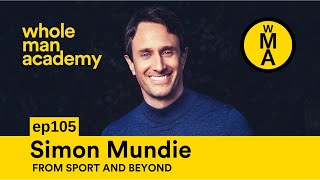
This is a YouTube video titled "EP105 - SIMON MUNDIE - SPORT AND BEYOND | WHOLE MAN ACADEMY" published in June 2022. It features a podcast-style interview hosted by David Gandhi with guest Simon Mundie, a sports reporter and podcast host. The discussion covers topics including Simon's podcast journey, notable guests like Ronnie O'Sullivan and Ric Flair, the impact of podcasts on networking, masculinity, spirituality, and deeper life lessons beyond sports. The content is a long-form interview focused on personal growth, sports, and broader life insights.
Okay guys, before we jump into this week's podcast, remember as always to subscribe a to the podcast on YouTube or iTunes or where else are we anchor Spotify wherever you're listening and consuming our content. Also to subscribe to our game changing weekly E letter for men that goes route are Tuesdays and Fridays at 10am UK time to guys all around the world. Just hit the show notes below or www.wholemanacademy.com Movement to get our lovely E letter right.
Let's jump in Hole Man Academy. Because the world needs strong men, Wholeman Academy is changing the game for men around the world. It's for guys who want to live an epic life of fun and adventure. No matter what we believe, deep down, all men want to go on their own hero's journey to becoming resilient, confident, fearless and fulfilled. Listening to be inspired by guys who don't settle for living a life of mediocrity. This is your call to action and call to adventure. Are you ready?
Okay, so this is the Whole Man Academy podcast, episode 105. My guest today is Simon Mundy behind the mic again, as he always is for his work. He's the host of Life Lessons from Sport and beyond podcast. He's a roving reporter, motivational speaker, event host and a lover of tennis. He's also a man that's been to some Whole Man Academy events, which marks him out from anybody else. So, mate, how are you and where are you?
What a lovely introduction. Just the 105. I'm very good, thank you. Delighted to see you. Enjoyed chatting to you at length before we even hit record, which is always a good sign, I think. And I'm sat in my office slash spare bedroom where I spend most of my days trying to type my book. And yeah, that's it. Here I am.
We're going to get on to that. Because of a man of kind of many talents. I always think writing a book is something that a lot of the guys that I've interviewed from all around the world, you know, if they haven't written a book, it's one of their things. They're like, I'd like to write a book. Which I think, yeah, is always, I think it always sounds easier than it is. And maybe the content is easy, but it's doing all the other stuff, getting it published and presented nicely. But I just want to take you back to the first time that we met briefly was at Geese and hawks. It was 2019 when you came along with Drew Broughton to the David Gandhi homebound Academy event, I call it David Gandhi just sets it apart from others. So what was it like for you when you came to that? Because it's so rare for a lot of guys, They've been to events where it's just a big group of guys getting together to talk about stuff.
What was it like? For me, I couldn't take my eyes off David. What a handsome swine. No, I enjoyed it. You know, I mean, in a way, it feels like a lifetime ago because obviously so much has just changed between now and then. But I think the intention is a really lovely one because as we know, men talking about the sort of things you enjoy talking about, about, well, being about mental health, being vulnerable essentially, you know, is a rarity. So I think anything like that, where.
You.
Are treading new ground, I think is very welcome. So, you know, from that point of view, I really enjoyed it. I remember there was another guy on the panel. In fact, I think he was hosting it. You'll know who I mean. He used to edit a magazine, Robin.
Yeah, Robin. Sweething back.
Robin. Lovely fella. Really like Robin. He was. Yeah, he's a really cool guy. And obviously I think he had a really interesting story. So if you're listening Robin, shout out to you in particular, because he made an impression on me. But, yeah, that would be my impression. I think anything where you speak about those kind of subjects, for me, is really valuable.
Yeah, no, it's. And it's funny with, you know, when the events had to stop because of lockdowns and stuff, I had so many guys who, you know, sometimes you. Maybe with a podcast, you never know who's listening or who's taking value from stuff, necessarily, and how much impact is, because one person could listen to it and be, like, really interesting. Another person could go, that one golden nugget that Simon said, or a guest. I'm going to implement that. And it makes a big difference. And I was surprised how many guys messaged me saying, like, when you do more events, because I want to, you know, I want to come or I want to talk, I want to do contribute. And I was like, at some point we'll get some more going on, but events take a fucking long time to organize.
But then, can I just say something on that?
Yeah.
When you were saying that, I'm not surprised that there is this appetite for it. Right. And what an image came in my. Flashed across my mind just as you were saying that when I moved to where I live now, which is Worcester park in Surrey. And. Well, actually, it's on the border of Surrey to be.
Sounds good.
Yeah. And a good friend of mine came down and we went to a few of the local pubs and there was one that's a football pub, and you know what I mean by that, right? And we went in on a Saturday afternoon and there were a group of lads in there who are, you know, probably a decade younger than us, and they were all on their phones and they were all like, watching the football. Right. And I've been very lucky. I consider myself very lucky in that I've never hung around just with blokes. I've always had girl mates. Right. And for me, girls, women are a fundamental part of any social scene. But what I've realized is there are a lot of guys who don't get that right. And so I couldn't help but observe this group of guys. There was. It was almost like they were squishing things down into this very narrow band of how to be right. And so. But obviously. And that, I think, is what masculinity has been like for a long time for a lot of people is this kind of very narrow band of what's acceptable. But actually underneath that, whether people are conscious of it or not or not, there's this huge appetite to expand into, you know, a far more deep and wide expression of just being so, you know, And I think events like yours and the whole man academy really does that. So, yeah, I'm not surprised at all there's a huge appetite for those kind of events because I really think it serves a need.
And I mean, we'll come on to podcasts in a minute, but that was one of the big things for me. I wanted events and content and a letter podcast all to be like, thought provoking. So not all just how to get stronger and how to get. But, you know, we will touch on spirituality as well, because I'm so clueless on that. And I'm trying to, you know, I'm trying to delve deeper in it to understand. But yourself. There's so many topics, we will say, that make up a man, you know, segments of a man that you can. There's. There's never a shortage of good content. But talking of content, you then. I remember we then met in London for a coffee and had a chat. But then you came to our event at Soho. No, at South Place Hotel, and I interviewed you there and we spoke about some of your guests, which we'll get onto. But I remember again there, one of the guys messaged me who was at that event when I Put some on Instagram. I was like, I really enjoyed that event because it was just, you know, you're listening to you talking about some of your guests, and that's what I thought today, not only talk to you, but hearing some of the classic. I mean, Ric Flair is going to be one we're going to have to talk about.
What a legend. Love, Ricardo.
Well, let's get into podcasts. So where was your first idea for starting off the podcast? Because it wasn't the life lessons before it had a different name, but let's talk about kind of just the podcast, where it came from for you.
Yes. So its name originally was Don't Tell Me the Score, which my wife, who's the creative one in the family, came up with. And so the reason it was called that was for a long time I was a sports reporter for the BBC. Started out on Radio 1, which was a lot of fun, covered all the big events. I mean, in terms of a sports broadcasting job, it's of kind. Kind of on radio, at least the best one, because it's the only one where you cover everything. Everyone tends to have a specialty on other subjects, whereas I just went to everything. World Cup, Ashes, Wimbledon, you know, and then stuff I found boring, like. Anyway, I won't tell you what anyone important is listening. Don't want to shut off future opportunity. Yes. But, you know, and I really enjoyed it. But over time, what I found was that I found it to be a little bit shallow because I would just be talking about results, scores, football managers saying nothing, and then the odd, you know, doping or FIFA doing something naughty. So it's scandals. Right. And me personally, I've been interested in deeper things, like, as per the podcast, life's bigger questions, we say. Yeah, And I've always thought the sport is a really, actually a good way of getting into those things. And the formative idea or the first idea that I had, well, first of all, I had this just that overall thing of, like, look, sport is covered in a really shallow way and it could be a lot deeper. And if you take any sports reporter, generally speaking, you could take one out and replace them another, and they sound exactly the same. They haven't been trained that way. It just happens. Right. God knows how. But I've always thought, you know, sport is a good metaphor for life, whether it be, for me, the pure joy I get from watching tennis and the presence of it through to the fact that sport is a great uniform and can bring people together. I mean, it can separate people as well, bring people Together, like music. I don't think there are any music and sport, the two things. But then the formative idea actually was around tribalism because, you know, everyone has to have a football team. And you'll get these sort of office emails. Be like, oh, please welcome Brett to the. Brett to the office. He's a Tottenham fan, but don't hold that against him, you know, and it's like, oh, my God. And so this ridiculous, you know, the tribalism of football that's at times very destructive, but also kind of encouraged, you know. And I think even people have pretend to support football teams to sort of fit into this, right.
I had clients that would pretend because they. They were European guys who didn't really know anything, so they just.
Arsenal, who do you support? Yeah, yeah, Well, I pretended. So when I started a radio, I wasn't a football fan and I was like, I'm a sports, but I've got to support someone. And I knew enough about Chelsea, so I pretended to be a Chelsea fan for two years. So this. So I. This, this was a long time ago, but so, you know, it was. I understood it firsthand. But at the time, you know, there was. It was obviously sort of Brexit brewing and there was a lot of tribalism in America with the Republicans and the Democrats. And I just thought that the tribalism of football was a really good way into the. The phenomenon of tribalism more broadly that is. Has manifest even more since then. Social media, I mean, it's everywhere, right? Even Covid's, like a tribal war. Everything is. So, yeah, that was my idea and I really wanted to do something about that. And then. Yeah, and then I just made it happen by sort of pushing and going straight to the decision makers in the BBC. I kind of didn't expect to get the opportunity, but, yeah, I just was like, shit or bust, basically. And they were like, what do you want? I was like a podcast. And they went, all right. And then. Yeah, so sorry, just to answer your question, yeah, don't tell me. The score was to differentiate it from the rest of the sports coverage, right? Because if you think about normal sports report, you talk about the score. So the whole point was, I'm not talking about the score because it was due to go on the Today program on Radio 4, but didn't end up happening, so I stuck with the name. And actually it was kind of counterproductive, but that was the genesis of it. Does that make sense?
Yeah, and it does. And I enjoyed plenty of your podcasts. I remember maybe it was around the time that we met that I'd listened to the ones in Ronnie o'. Sullivan. That was a great one where I found myself listening to it. I don't mean the whole lot again, but, you know, because I think that's great with some podcasts where you could go back and there's lots of really interesting stuff.
But I wonder for you, because when.
You first started, did you have like a list of potential guests that you were like, okay, these would be the good ones. And if so, what was it like when you got a yes from one of the. Of the. For you, one of the big guests?
I didn't have a list to start with. I had subjects to start with. In fact, I had. My initial intention was not to approach big names at all, really. It was, it was about. It was going to be more psychologists, neuroscientists, interesting people. But then I quickly realized, actually, no, let's get some big names in. And yeah, I started pitching and actually I would say, I mean, I got some big ones. Pretty. In fact, I think my second guest was Dame Kelly Holmes. She's Colonel Dame Kelly Holmes. So. So I had some quite good guests from pretty early on. Andy Puddicom from Headspace, Steve Peters, I had on early. But the first one that really ticked the box in the kind of, oh, this is. I wasn't expecting this, and this is cool. Was Ronnie. Right. And I'd been trying to get hold of Ronnie for a long time and then. And I'd sort of emailed up, phoned, and then his agent kind of called me out of the blue. I think on a. Maybe on a Thursday or Friday was like, look, I'm just going back over some stuff and I know you want to chat to Ronnie and yeah, we can make it happen. Can you get to Essex tomorrow morning? Which is like Saturday morning? Yeah. And I was like, yeah, great. So I went and I stayed in this hotel in Essex and Ronnie came to meet me at like 9:30 on a Saturday morning in a T shirt and it was great. Yeah, that was the first one. Yeah.
For guys that might not know who to talk about Ronnie Salem, can we safely say he's the best snooker player world by a country mile?
Well, I think, I think he's generally accepted now to be the greatest of all time. So he's matched. He just matched Stephen Hendry's record of world championships with seven this year. And he's won the most ranking tasks. But he's, he's often compared to Roger Federer. He's got that Kind of, you know, the natural flair that you look at and think, wow, there's inspiration and genius behind what he does. So I think even Henry acknowledges he's the greatest to have ever potted a ball.
And then what's it like for you when. Because after speaking to different guys that have podcasts. And again, the guy last week I interviewed spoke to Wim Hof, Jocko Willink. You know, a real grass.
What a nutter.
Yeah, I mean, it's just.
I think I said about six words.
But anyway, I just think it's so interesting because that's what I love about podcasts. It can suddenly, you know, catapult you into a room or into a conversation with someone that you would otherwise never have spoken to. And I wanted like, do you still get. Or did you then get nervous going into it?
No, no, because I think I. First of all, I've been interviewing yeah, quote unquote, big names or, you know, special people for a long time. I mean, I interviewed Usain Bolt at Old Trafford on the pitch before a Man United match in about 2008.
What was that like?
So that was fine as well.
Yeah, I just dropped that in. And you can't just move on from that.
Oh yeah, Andy Murray, 2007 on seticource. Anyway, so, yeah, no, I. So I'm used to it. But I do think that I understand that, you know, a person's just a person and it's easy to conceptualize them as different, as extraordinary, as special, but they're not like, they may be good at something that happens to be valued by society, for example, kicking a ball, but that doesn't make them, you know, any different than you or me. And I think if you can have that in understanding and just sort of let go and relax into it, you know, it's no different than talking to anyone.
What about I saw always makes me laugh. The picture of you with Roy Keane where we were at airport and he just kind of is completely non plus. And I know that wasn't you necessarily ink thing, but have you ever had that where. Because I've had, you know, after 105 podcasts, I've had one or two of those where about 20 minutes in, I'm thinking, this isn't like, this isn't. Hasn't got the right feeling. Whereas others now has gone like. Like, I haven't. So I just wanted for you and that just made me laugh. But have you had anywhere either you didn't particularly like them or they just weren't in a great Mood. And you think that.
Yes, Just quickly on Roy. Yeah, I met him at Schiphol Airport in the Netherlands before the Europa league final in 2013. Definitely one of the most terrifying moments of my life. I sort of went up to him. It's like, obviously I'm a Man United fan, you know, huge fan, you know, can I get a photo? Genuinely, it was like being looked at by a great white shark. He didn't once acknowledge me. He didn't smile. He just looked at me like, with the look of, I'm going to chew your face off any second. So get down, did the self and then got out of there. And it became a Twitter thing, actually, because apparently he's done it to loads of people. So that made me feel better. But, yeah, terrifying guy. Okay. In answer your question, yes. So I. I get approached by quite a few people to come on the podcast as well as me trying to come on or get people to come up. And what it's shown me, actually, is that the importance of listening to your intuition. Because when I have ignored my intuition and had someone on who, you know, my gut has been saying, don't get this person on, it's invariably been right. So there's been. There's been one or two that I've just been sat there going, oh, my God, what are you on about? Right, so. And then it. So that's. That's one side and then the other side. Actually, there's only one I can think of of someone who's very, very well known, who was incredibly precious and just acted like a. A knob, in short, and, like, threw a tantrum and. But like I said, to come back to my earlier point of, you know, understanding that someone's just, you know, a person's just a person. It didn't bother me at all. I was just like, well, you're a dick. See you later. You know, it was just. They just act, you know, and that's the problem, I think having smoke blown up your ass for half your life, you lose touch of reality. And see, when you've got an agent, you know, around you who's sort of facilitating that, that was certainly the case. So, yeah, I'd say two, two extremes. There's only one like that of a, you know, diva esque who believed their own height, it's like, no, don't, you know, get over yourself. And then the other ones are just people who are essentially, you know, I don't particularly. They were perfectly pleasant, but I was like, bloody hell.
Like, what are you like, mate?
Yeah, I'm a bit like, yeah, I won't be putting this out. I'm not going to tell you, but I won't be putting this out.
Well, actually, I was going to ask you, have you ever. Now I haven't, but I got close to it. Have you ever, you know, recorded a podcast? Because it's very hard imagine like if we'd done this interview now and then like two weeks later you messaged me, hey, mate, when's that going out? And I'm like, not sure. She'd be like, oh, he hates me then. So have you managed to like, how do you do that if you're going to avoid putting one out?
So I have, yeah. I have not put a few out, actually. Not loads probably. Probably like a hand's worth one or two. I just laid low and, and let it blow over and just assumed it, you know, it became obvious that that was going to happen sooner or later. Yeah. Others I've, yeah, I've, I've, you know, had. And this is actually is the far better approach is I've had the hard conversation and said, look, I'm not gonna put this out for XYZ reason. It's not my fault. It's the bosses. Exactly. The BBC or whatever, you know, that's my problem.
I haven't got anybody above me.
So it's like, yeah, I, I have, I have done that and obviously it's never a fun conversation to have, but sometimes you just got to do it well.
So I asked, I said on Instagram and I do this sporadically. Like I tell people who I'm about to interview and say if you've got a question. And it was a long winded question from a guy called Dan who's followed the whole man at Ken, folks. But I'll shorten it to. His point was how do you say no to people that ask you to? Like, you know, they say, oh, can I be on the podcast? How do you go back and say no?
I just say no. I just say, you know, in the nicest way possible. I just go, you know, I've had a few even this week, you know, hi. Yeah, right. You know, I'm really appreciate you getting in touch. I will definitely keep, you know, keep you in mind if something comes up. But, you know, right now this isn't quite right. But done.
Fair enough.
Oh, listen, I think there's, I think having being able to, you know, being able to say no and not feel bad about it. Yeah. Or, or accept feeling a little bit uncomfortable. Ball. And then Getting over is such an important thing in life. Right? Like, you know, you can apply in any sphere of life. You know, I apply it in my, in my marriage. Like, I think having uncomfortable conversations is one of the most important skills you can have. Like, the ability to ride through discomfort, you know, is fundamental and it becomes easier as well. So, yeah, I would say you just got, obviously like, you know, it sells shit sandwich, isn't it? Like, dress it up nice. But yeah, just, just, just. Yeah, you've got to be honest about it.
I love it. Well, that leads me on to, I mean, I said we, we were going to mention him, Ric Flair. And there's a man you're never going to say no to. Imagine going, oh, no, it doesn't really work for me. But I mean, for those, again, that don't know. But you know, I grew up watching WWF as it was before it was wwe and you know, you, Hulk Hogan's and Ultimate Warrior and the Undertakers and Ric Flair was one of those that was, was old then. I mean, Christ. So I just. He was 70 when he was wrestling then, I'm sure. So tell us a bit about what that was. Like, I just, I remember I saw you with him. I was like, what the fuck is Simon doing with Ric Flair?
Yeah, well, okay, first of all, I've got to admit I didn't watch wrestling growing up, so I didn't know who he was. So I got approached by someone saying, like, do you want Ric Flair? Because I, I knew some of the guys at WWE who actually as sound as you like. And anyway, so I, I went again to my wife and I was like, I, I don't even remember how I said it or why I said it. I wouldn't normally say, like, do you know this guy? So I don't know how it came up, but I mentioned to her that I've, you know, been offered Ric Flair. She was like, her eyes just went zing. Like she had watched it with her brother and was like, you have to do Ric Flair. And then obviously, like, I'm quite meticulous with my research and I fell in love with him like within minutes. Like, in fact, for months afterwards. I might do it once I get off this. I just was obsessed with watching, you know, Ric Flair's best bits or just watching, you know, the highlight, the compilations of him going woo, woo, woo. He honestly, if you want to laugh, just look up Ric Flair's best fits. The guy is unreal. So, yeah, and then once I realized he was a really big deal, big Deal. But you know, or was a, a very well known, very famous in his day. Anyway. Yeah, had him into the BBC. He was hilarious, mate. Like, he was, he was absolutely bonkers lovable, incredibly sensitive, like, so we were laughing. He cried obviously because he had his tragedy with his son who died from I think drugs overdose and we spoke about and he cried during it. So he's, he's, he was incredibly sensitive and like a really sweet guy underneath all the, the sort of the polish and the bluff and the bluster, but absolutely hilarious as well. Came out and was like flirting with people in the BBC office who are about a quarter of his age. Like, ridiculous guy, you know. And obviously, thing is, my podcast, it tends to be about the kind of life lessons which is hence the, hence that why I changed the name to it. And he was, I wouldn't say he was hugely deep on them, but he was, he was hilarious.
Like, he was entertainment.
Oh my God, I do what one of the nicest guys as well. Like we swapped numbers, text him a few times and he would always reply and yeah, like, like we've been in touch feet. I could text him now I'm confident, be like, hey, Rick, how you could be like, hey, you guy. He's a lovely guy, really.
Do you know what, you just hit on something there that, you know, spoke to different guys on podcast. One of the big things that a podcast has done for me and I guess expand your network as well, because you can then like you say, you know, if I'd have said to you however many months ago it was, but, oh, you know, you'll be able to just text Ric Flair and you'll be like, what? I mean, what are you going to do?
Rick who?
Rick who? But I love that thing of when I was trying to describe the other day to someone, for me, you know, you've got, you've got footballers, you've got Maori warriors in New Zealand, you've got entrepreneurs, you've got broadcasters, stuff that, you know, 100 plus guys that before you might have known some, but you've actually sat down and had a proper, good, maybe longer than one hour conversation with. And I guess for you that is it like network for you as well for work and everything explodes.
Yeah. And you know, that's certainly not the reason you do it, but I think you're absolutely right. And I think because you can't have a, it's not, you can't do small talk on podcasts, you know, it's not like, or even have a three minute, like You've got to go deep. Like that's the beauty of podcasts, is sort of baring your soul a bit and that means you connect. Someone gave quite a nice analogy about podcasts and the growth of podcasts and said, you know, it's the modern day campfire from, you know, back in when we were cavemen. And so I think it's that process of connecting that means, you know, once you, once you've connected with someone truly once, that connection is always there to a degree. And so, yeah, like it's been great on that front as well as in terms of the people I've had on. Actually it's been a lot of my listeners as well because like, like I may, I made a sort of commitment early on to reply to everyone who got in touch with me. Took up a lot of time.
Yeah, the bigger you get.
Yeah. And you know, I had, I had more time back in the day to do that. But as a result, you know, there's one or two that spring to mind. Like guys would write me, like, and women as well. Like just really long, like knew my podcast material better than me and I prefer talking than typing, as I say. And so rather than type out a two page essay in reply, I'll just send a two liner, just like, let's just have a chat. And then would invariably end up chatting for about an hour and a half and become sort of nice to them. And then particularly you mentioned the spiritual earlier and that's an aspect of spiritual and I don't mean to sound wanky with that, that comes up quite often with the podcast. People have noticed that. So people who are interested in this particular outlook way of looking at things. So it's drawn to me a group of people who have a similar interest. And that's been a really lovely benefit that I wasn't expecting, not that I was expecting anything. So, yes, it's twofold. Both guests, you know, some of whom were like my heroes growing up. Yeah. You know, and that, that is cool because obviously a part of you is still like, ah. But then also the listeners as well. So. Yeah, yeah, the network on a number of levels has been a really lovely side effect.
That's a good point actually because. Yeah, I know. I mean it's not just the, as you say, not just the guests because sometimes, yeah, I'll get a message from a guy, sometimes it's just because they found the golden nugget or they've applied something or one of the nice ones was that the guy shared something. We'd Said with his son, who was having a really difficult time. And again, it's. Sometimes they might take something out of it themselves or they might have learned it and passed that on to someone. And you never know what your, you know, what effect or impact you're having. And actually on that.
Just real quick on that. Very quick. I promise I won't. It is. I think that's absolutely right. It's so lovely to, you know, when someone gets in touch and says, oh, you're having a positive impact on me, or this interview's had, or just this point or whatever it may be. It's such a. It's such a. And often they'll start the email with, you may not have time to. I'm sorry for getting in touch with. And you're like, no, no, this. This couldn't be. You couldn't get a nicer message than that. And like I said to come back to my earlier point about, like, people are just people, right? It's not. I think some people. There's nothing I. Or there are a few things I dislike more than people who look up and suck up to people above them and, you know, like the old classic, treat the waiter like a wanker, right? Bollocks. So for me, it's like, no, everyone's the same, right? We just lose sight of that because of status and various other things, right? So I think, you know, when someone does get in touch, it's a really beautiful thing and it's really important, I think, to reciprocate that, you know, across the board.
I think that's. And we talk about the spirituality side, which I've got under the name of the guy that we're going to talk about next. That's next topic is how do you go deeper with the podcast, as it were? Because that's what I find again, we could talk about strength conditioning and morning routine and stuff every day, and that's great. But at some point you're like, okay, give me a little bit more. But I'm going to say the name Frank Bruno.
What a lovely fellow.
Frank, I've done something that you haven't, which is I was in a sauna with Frank Bruno a while ago. Leave it there I was at Champney's and there I was on my own, sitting in the sauna and pretty much just kind of looking down at the floor and then all the door kind of opened and I kind of. Even without looking up, I was like, fucking hell. Like, that's a big fella. And there's Frank Bruno just in his, I think he had red or blue Speedos on and that was it. And he walked in and again, I wasn't, you know, I wasn't planning on looking up much anyway, so I was just like, oh, there's a big unit there. And he sat down and then, I can't remember if it was me or him, went, hot in here, isn't it? And then he did his laugh.
I hope it was him.
And he laughed and I was like, there's no way you can mistake that laugh for anyone else. I was like, that's fucking Frank, Bruno. I was like, hello, Frank. And because he'd been, I know he'd had pneumonia and he'd had been in Banbury hospital, which is 10 minutes from me, and I spoke to him very briefly, but I just found that so funny because Frank, for me was a ata, you know, complete legend. I remember sitting up silly o' clock in the morning watching him fighting Tyson and whoever else he was fighting, you know, as, as a kid. So, yeah, for me it was funny to not only meet him, but be in the sauna. And then you've got a limited shelf life because it was very hot in there. But I wonder for you because he seemed like such a lovely guy as well.
Very lovely, yeah. Just a sweet, sweet man. Yeah. I mean, I don't think actually there's. There's much more to say about him than, than that. Like, yeah, just, you know, he came out with a really nice thing, actually, which is the same as what I've been saying about people are just people. It's like, I think he just phrased it as, you know, don't pretend your shit don't stink. I think that was, that was how he framed it, but absolutely right. And so I think he. There is no, there's no Persona, there's no heirs or graces, there's no front. You know, he, Frank is the same in the sauna as he was on the podcast as he was on tv. And that's, I think, why he's, it's, you know, so loved, I think, you know, whatever you're like, authenticity is, is just a very likable thing.
Isn't that important. I mean, you know, far more famous people or high profile people than myself. But like when I first met David Gandhi and, you know, in my view, he's probably been on, I think you could safely say he's been in more front covers than any other man in the world. And, you know, he's got his million followers and I met him at the event. But then once we started whatsapping each other, it was just about chickens and cars and our kids and just general shit like that. And that, that was what was nice because, you know, people go, what's he like? I was like, he's just really nice. I mean, I'm seeing him on Monday night because he's speaking at an event near me which is all about cars and cars and coffee. So we're going up to see that. But isn't that nice when you can meet people and they haven't got any sights? Whereas I know some people that aren't famous have got nothing to be particularly proud of, who are complete assholes. So it's always good. Okay, let's talk about going deeper on podcast.
Just real quick. Let me just answer that because I think that's a really important point. Point is, and I mentioned we were chatting before we started recording, is that for me, it's, it's actually quite tragic. Understandable, but tragic. When someone believes that they are special on account of something, for example, how they can kick a ball or hit a ball or run fast or whatever, right, that makes them special. And it is, it's a load of bollocks. And the people I admire, I really admire are people who have, are either doing impressive things or have done impressive things and have seen through that. And two people spring to mind. So Joss Butler, who is at the height of his powers, you know, it's just like been smashing it in the ipl, just such a normal bloke and no heirs or graces about him. And I think that is just really commendable and something I really admire. And then Johnny Wilkinson, who had to go through, I mean, he always had the humility, but he kind of acknowledges that it was a little bit affected because there was a slight self importance underneath it. I mean, very complex. But, but, but he's gone through this whole process and he now is like, in fact, he said very clearly, yes, by all means, try and achieve your potential and be all you can be, but never think it makes you any, anything better or worse than anyone else. And for me, and I know we want to come on to the deeper stuff, the spiritual stuff, but the key understanding is like, if you take a load of babies or toddlers, it's obvious that none of them are better than the other and they don't think so. But it's only as we get older that we start to add these concepts and better and worse and special and not special. And it's whether you, when you believe that about yourself or, or about someone else, you're in a bit of trouble.
I love it. And this is where it gets interesting because probably like yourself, you can interview sports stars, but then sometimes when you get on to the like, deeper psychology and the mindset of things and maybe bringing on experts on that side is where you have, you know, slightly deeper conversations where you're like, the more I listen to, the more I realize I haven't got a clue, you know, the less I realize I know. And even with like, you know, Jordan Peterson, when I've listened to some of his stuff, all different kind of people, I love the thought provoking stuff which the podcast give me. So one of the ones on that actually was the chap whose name I can't remember now. But you taped your mouth.
Oh, yeah, yeah. Oh, God, what is his name? James Nestor. James Nestor. That's it, yeah. So, I mean, I still take my mouth every night, by the way.
So I was going to ask, because I'll tell you why, when you're talking about things like spirituality as. And this is going to sound like there's two different things here, but I like to look at things now as doing things differently. So taping your mouth is one of those things that I find like my partner does it and she keeps trying to make me do it if I snore and stuff. And I remember you did it with him.
Yes.
Yeah. And she's teaching the kids to do it as well. I mean, I just think it's great.
There we go. Change. Honestly, I can't sleep without it. It's transformed the quality of my sleep. I had sleep apnea without, even though the doctor said it's impossible because I'm not fat. But I did.
That's an interesting one. And that's why I like to talk about these different topics. Because the reason I brought up the mouth taping is being happy to try new things and do things different and think differently. Because if you tell the average person I'm going to put tape on, they're like, I'm a fucking idiot. What are you talking about? But you're like, okay, let's try it. Let's see, See what's going on. So I wonder with you how far, you know, where do you take the podcast with spirituality? Because, like, I've never been certainly religious, but I like listening to people that are. Because I like each of them will give their own version of what they think the world is like and where the world is going, where you go when you die. And for me, I like to think that, you know, at the moment we're just experiencing some consciousness in a human suit. And then when we die, we go to something else. But I just want a few. Like how deep and who do you talk to when you go into that state stuff?
Yeah, so this is what I'm really interested in and it's interesting. So you said we're just experiencing consciousness in a human suit. So I would say we're not experience conscious. We are consciousness.
Right.
Yeah. And I'll just run you through a quick. Should we do a quick thought experiment? Okay, so just, just have a quick ponder of this. Have. Have you ever experienced something that isn't one of these things? Okay, Right. A thought. So including images, memories, any kind of thought. Okay. Beliefs. So thought, a sensation. So right now, the feeling of your bottom on the chair, the feeling of your feet, the feeling of your hair. You know, basically the feeling of your body, sensations, feelings. So for example, let's say sadness, happiness, anxiety, excitement, etc. And perceptions. So that your five sense organs. So seeing, hearing, tasting, smelling, touching. Have you ever experienced anything that does not fall into one of those categories?
It's tough, isn't it? Because you're like. Your brain says, yeah, I must be able to think of something. Then even in my head, I was like, okay, love. There's like, no, no, that's.
That's a feeling feeling.
So I'm gonna have to say, depends.
How you define love.
Yeah, I'm gonna have to say no. Even as I ran through, it's like my brain was like.
And you go, nope. Yeah. So first of all, five points for getting the answer correct. Yes. So everything you ever we experience falls into those categories. Right. A thought, a feeling, a sensation of perception. Now just part that to one side. Right. I know roughly how old you are. I won't give away because you've probably got a showbiz age in a real age, but I know.
Happy birthday.
Let's just say, have you been present throughout your life? So when you were five? No, you haven't.
What I mean is you could say two.
That is the you that is talking to me now. That is hearing these words. Yeah. That is seeing this thing. Was. Is that the same you when you were 25 and 15 and 5? Has there been a continuity?
Because my obvious answer is, well, of course it's me because I'm in my body. But then I know I'm such a different person that it's like if you met me as 20 compared to 30 compared to 30. I am completely the different people. And I might not have even. I'm not saying I wouldn't have liked the person, but I would have been like, fuck's sake, what are you doing?
Okay, no, I understand that and I think this. But I would suggest that the person you're referring to there is found in your thinking and perhaps in your feeling as well. So let me just go back to my initial thing. So thoughts, feelings, sensation, perceptions. Has any one thought, one feeling, one sensation and one perception remain throughout the entirety of your life like anyone thought, anyone believe, anyone feeling, happiness, sadness?
Well, one was. I've always been scared of death.
Okay. Two minutes ago when we were talking, were you scared of death?
No.
Okay, so. Okay, so that belief comes and goes. Yep. Okay. Okay. So is it fair to say that every thought, feeling, sensation and perception you've ever had has come and gone? Yes. Okay. But you don't come and go with them. Fair. Yep. So if you're not a thought, a feeling, a sensation and a perception, what are you?
This is tough.
And this is why I love these things.
Because you could sit there and you probably could spend a couple of hours trying to.
The mind would just go round and round and round and round. Right. Because the mind can't know it. Right. Let me ask you this. When you have a thought, do you think it or do you hear it?
I would say I hear it in my head.
Okay, so it pops up. Yeah. Okay, here's another one. Do you choose your thoughts or do they occur to you?
Your thoughts just come in and you can't control them, then it's up to you what you do with them or how you react to them. Because it's like rage. Great example. You know, we've got kids. I'm usually a very calm person, but I have never lost my shit so much as when we had two little boys who have no off switch. You know, and they don't care and they shouldn't do, but they have no concept of what they're doing. When it makes you late break, something costs money. Fuck something up and I'll react. And then I'm like, no, no, I'm able to bring myself back in, whereas before I was like that. But yeah, you just cannot control the thoughts coming in.
No, but. But yet that's where most people find their identity is in their thoughts. But if you ask someone who they are, they'll go, well, I'm a. I'm a guy. I do this for a job. I married this person, you know, I believe this. I support this football team. So they're getting it from their thoughts. Right. But, like, is it your thoughts that are hearing what I'm saying and seeing what I'm saying and is aware of the. The, you know, the feeling of your bottom on the chair? No. There is something that is aware of everything. Right. And everything. So every thought, every feeling, every sensation, every perception, you're aware of it. Right. Okay. So you could surmise it. I'll cut it short because I don't want to go on too long, but we are that which is aware. In other words, we are awareness. In other words, we are consciousness. Right. And so we are. We. It's like we are aware of our body, we are aware of our mind, we are aware of the world. And a good way to think about it is that, like, when you go to sleep at night, have you had a. Can you remember a recent dream you had?
Yeah, I dreamt that a rattlesnake was chasing my young son.
Okay. So there's you in the dream, the rattlesnake, which, let's say, represents the world, and your son, which represents another. Right. And then. And then you wake up and you realize, oh, God, no, that wasn't the case, actually. I was. I was the mind in which these were appearing. Right. So the same could be true of our experience now is that, you know, there are thoughts appearing, there are sensations appearing, there are perceptions appearing, seeing, hearing, but they're appearing in awareness. And we are that awareness. We're not what appears that comes and goes within that awareness. And, yeah, that's pretty. When you start getting your head around that, I think your experience of reality and the implications of that are very profound. But it's actually very simple to get your head around it or not get your head around it, because it's not something I think that your mind can understand. But right now, you can hear my voice, and you can feel you're aware of the sound of my voice. You're aware of your bottom on the chair, you're aware of the sight of me. So the common denominator is being aware. That is who we are, not the thoughts we're aware of. God, I love it.
And this is why I would say with the podcast that I want to have more guests on that sometimes stump you with what they say or ask a question, you're like, I don't know. I've never thought about it. And one of the big things I look at with that is for our own upbringing of our education through schooling as well. I mean, we're home educating our two boys, so they're not going to. But you know, no one teaches you for most about any of this stuff as a young boy, as a young man, or even as a middle aged man. And that's why I love it when I got so excited and he fell off my chair. But when you can listen to these podcasts and just be like, you don't have to have the answer, just sit and be like, yeah, like. And then if you do get it, what does that create in your actions that you take? You know, if you, if you're not scared of what's after life, are you a bit more flamboyant with your, you know, your, your actions or your risk taking or something like that? So how do you think it's affected you with understanding more about the psychology of life?
Yeah, it's a really good question. I would say that first of, it's not, I would say it's not necessarily psychology. Yeah. Because psychology's like thinking and I think there's a nice quote from Einstein which is like a problem can't be solved at the level at which was created.
Yeah.
Now, like, for example, you think about when we get anxious, it tends to be when we're thinking about the future. And then what the psychology tries to do is go, okay, well think differently. So what you're doing is you're laying more thinking on more thinking as opposed to just standing back and going, oh, it's thought. And the content of thought doesn't really matter. You know, you can have a thought going, I'm wonderful. And we all know someone who's got high self esteem who doesn't necessarily warrant it or I'm fucking awful and vice versa, if you know what I mean. And so the content of thought doesn't matter. So I would just, just say that about psychology. I wouldn't say it is psychology actually, because if you understand that a thought is just a thought, psychology almost becomes irrelevant. And not to knock psychologists, but. So how's it changed me? Well, I think I came to all this stuff through the classic kind of self improvement, self help path where I had insecurities and issues and traumas and stuff like that. And I, and I was seeking a respite from my suffering and, and I think I believed. Well, I know, I believe that I needed to fix myself to a certain degree. And you know, psychology is great at that.
Right.
Like, you know, get in front of the mirror and do some affirmations or, you know, do this, do that, and Change this, change that. And it's like, no, no, no, no, no. It's understanding that. No, no, we condition in a certain way and actually know behind that or rather preceding that or underneath that, the, the self, the real you doesn't need fixing. Like, it's fine. And so. And I think that's been the really interesting journey for me is like, wanting to fix myself and then recognizing that there's nothing to fix. Now, that doesn't mean that you can't. Your behavior can't get better. You can always be like, kinder, better at listening, more loving, blah, blah, blah, all those things, right? That's fine, but those aren't. That's not who you are. That's like, stuff you do, you know. So how's it affected me, first of all? Yeah, I've stopped the kind of, you know, I'm not trying to fix myself or improve myself. Like, that's just gone. I think I. I'm very content actually, just being at home with my cats, doing fuck all, you know, I think. And if I go for a walk around London, like, let's. After I've done a Today program, just bringing attention or being aware of awareness. So being aware of being aware, like, you can almost be like a trippy experience. It's like your experience of reality, it is quite different. And yet I would say in terms of how I live my life, I'm very interested in kind of unraveling the patterns that we all have, let's say dysfunctional patterns or karma. You could say it in another way. And like, so when uncomfortable thoughts or feelings come up, rather than resist them, like, just try and welcome. Not even try, welcome them, get out of the way and allow them to be and, like, flush themselves out of my system or become interested in them. And. And then I would say on top of that, I've really let go of having a plan or, you know, I still sort of set goals and try and achieve things, but at the same time as well, I try and just like, get in sync with life. One of my. One of my really deep guests said, it's really nice. It's like the goals you write down on a piece of paper. A load of bollocks, right? It's just your ego talking shit, actually. It's about, you know, letting life operate through you, right? So you're kind of like, surrender. And the way to that is, is through intuition, is to listen to your intuition. And I mentioned about the guests I have on my podcast. There's just a certain knowing of, like, I Don't want this guy or this will be really good. And it's like, you know, learning to trust that more and more. And, you know, just. Just have faith. And I don't mean like religious faith, because I'm not talking about religion here, but. But just. Just a kind of surrendering to life because we like to think we're in control and we can plan what will happen in, you know, five years. Or if I do this and then that, then I'll get this. And it's like, no, no, life doesn't work like that. You know, like, you and I could both drop dead tonight. Yeah. We just don't know, right? So it's like, it's a surrendering to what is. And a really. Just as a final point on this, a really a simple way of. If some people listening are thinking, who is this twat talking bollocks, right? Think of it this way.
It's me.
Yeah, Think of it this way. Right? Are you beating your heart right now? No. Are you doing your digestion right now? No. Okay, so what makes you think that you're thinking your thoughts? I know you haven't said this, but this is just a way of looking at it, right? It's not. It's the same life that is beating your heart, right? You are that life. And yet we like to. We like to think that we're this kind of self in our head and we can control the way things are going. And it's like, no, no, no, no, no. Right? It's all happening of its own accord. And the more you can get in line with that and the more you can get in sync with that, the less resistance you have, the more present you are, the more you surrender. And actually, the more synchronicities and things tends, in my experience, tend to line up and actually life just becomes more joyful because you stop sort of struggling and trying to control things outside of you to make yourself feel better inside, which does not work.
Isn't that important sometimes, like you say, kind of surrendering to. I mean, not saying that knowing everything will be okay. Because, you know, if you're standing in front of a train coming towards you and saying it'll be okay, then there's going to be a problem. But I know for myself, especially when you're working for yourself or working on your own, sometimes you can get lost in your own thoughts of trying to achieve more or do more. And actually, sometimes I have to take my foot off the gas a bit and just be like, you can't always force Everything. Because it's like with us, you know, I've spoken to some guys on a podcast, then they'll message me often, say, oh, by the way, I know whoever, I'm going to introduce you to them. Well, you can't force that. You just have to kind of. It just comes. So always find that, especially with kids. I mean, you know, when you have kids, it is a game changer. And I always ask guys about, you know, fatherhood. Like, you know, what's fatherhood to you?
It's a sacred responsibility and it's a really beautiful thing. And again, I would say it's. It's a sort of surrendering and it's. It's beautiful because it has sort of purpose built into it. Yeah. And you know, it's an opportunity to express, you know, love, which is a recognition of the fact that on a. The deepest level, we're all one gone off peace. But. But you know that that is what love is, right? It's like, you know, that's why we love orgasming, because in that moment, you know, you know, the boundary between you and your lover disappears. Right. And so to bring that to kids, it's just, it's. It's. Yeah, it's just an expression of love, I guess. And it's beautiful for. Bloody frustrating and, you know, like, really tiring. But. But just a beautiful. A beautiful responsibility is the way I say it. But I think. I think that the danger can come with kids is when you start seeing them as an extension of yourself, even though on. On one level they are yourself. On another level, it's like, no, you know, they all. It's like you're your custodians for a brief period and actually what you want to do is, is to allow them to grow how they are meant to grow. And, you know, you're basically giving them your love to set them free and like, be free of you. And you don't, you know, that's quite hard because as, you know, like when they're little, they like, they need you and that's nice, right? And they love you and they want cuddles and, you know, and then bang, that fucking goes, you know, And I think it's accepting that and embracing that and doing it, you know, without. Without an expectation of anything in return. And I think that's. That's the most beautiful part of it, actually.
I think it's, you know, the more guys I've spoke to of different ages who've had kids, and for some of them, they would say, you know, it's such a hard time because maybe, you know, we had especially out. Our youngest one basically has only just started sleeping through the night and he's nearly three. It was just over a thousand nights where you hadn't had more than in those thousand nights roughly. Probably had three or four full nights sleep. And then you'd come down the morning and you'd have all these plans the night before to be like, right, I'm gonna get in the gym and I'm gonna do this and do that and you know, the next morning the only thing you could do is inject coffee in your eye. Yeah, I mean, that is it.
And I'm dreadful on low sleep as well, by the way.
And you. And I know also from the. Not that I'm an expert, but the guys I spoke to you how much of a big impact it has, you know, on your well being. Even a night or two of shite sleep, let alone cumulative effects.
Very quick example, right, So I went out to see my wife's auntie last night, right. We haven't seen her in a couple of years. Anyway, it was up about half an hour drive from here. She's over from New York. Anyway, it got to about 10 o' clock and I'm looking at the clock going, I'm normally in bed now.
Yeah.
And so I'm like, you know, I can feel the kind of frustration rising. By about 10:30, I'm making eyes on my wife across the table like, right, let's get out of here. Right. Anyway, so we got home probably about 20 past 11. And then rap and Adan and Djokovic are playing. I thought, I've got it, you know, the nights had gone us. I've got to at least see the end of the fourth set. Yeah. So I got to bed about 20 to midnight, so a good, you know, hour and a half plus later than normal. And I've been trying to write my book today and me have I been like, it's been a slob like. And I can, you know, I feel I. I've had more negative thoughts, which is fine. Like, I haven't got no problem with that. Like definitely being a bit, bit more Mardi and just, you know, like, you know, when you're looking for a word and you know what it is but you can't find it, you know that, you know that sensation, half an hour staring at my screen like that.
That is the prime thing though. So many people I know with, you know, sleep deprivation can. Can be recorded as levels of like drunk driving Your. Your inability to judge distances. And I felt I was more clumsy and also in a worse mood because you're just knackered, of course. But, you know, to take it back to the kids, that is one of those things that I know someone always said, you know, when your kids are asleep, they're always beautiful. But. But that's been a good test for, I think, a lot of guys, especially in these last two years with lockdowns. You know, some guys haven't had kids, but have been alone in their apartment and actually felt lonely. And I know you did a talk on that or were hosting an event. Was it two weeks ago on the Mental Health Week, as I was in London. And some guys like me, have got kids and during lockdowns, found it really hard. They're trying to do podcasts or just concentrate. And obviously, kids shouldn't be quiet. I mean, that's not, you know, kids should be noisy and enjoy themselves. Not. You go, oh, you gotta be quiet. But that's been a real. A challenge for plenty of the guys. And I laugh only because I can hear the two boys outside, both with their toolkits, banging and crashing around, which. Which if the microphone's working. But now listen, I know I've already taken up an hour and a bit.
Of your grass is always greener, though, innit?
Yeah, I just have one night a week where I just stay in a hotel.
Dreamy. Dreamy. Oh, yeah. One night I'd have a night a week without my wife and kids.
That would be.
Ideally on a Friday. That would be beautiful.
Let's get somewhere with bunk beds and we'll be.
We'll. We'll have a sports night.
But look, as always, I know it's the second time I've interviewed and the third time that we've kind of, you know, spent time connecting, but I love spending my time with you. I have such a laugh.
And you, and you.
It's been a pleasure. And it's one of the things for guys out there always, you know, listen to your podcast. I always suggest listening to people's podcasts because you never know what golden nuggets you're going to get. And the next time we have a whole mad academy event, hopefully, if you happen to be available, you'll be more than all in.
All in. Yeah, we'll talk. We'll walk people through how they're not their body and mind real.
It could be a long longer than an hour. But I'll let you go. I will speak to you soon.
Listen, it's been a real pleasure.
Thank you for having me.
Lovely to see you again. Cheers.
Thanks for listening. Remember to sign up to our game changing weekly E letter that's read by men around the world. Sign up@homeacademy.com forward/movement. Until next time.










