EP108 - ROSS ANDERSON - HUMAN OPTIMISATION | WHOLE MAN ACADEMY
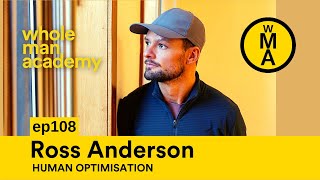
Ross Anderson, a wellbeing consultant and speaker known as the Motivator Dude, talks about his journey from a troubled youth to helping others. He discusses mental health struggles, public speaking, and the science of sleep and human optimization.
Okay guys, before we jump in, you know the drill by now. If you haven't subscribed already, hit the link in our show notes to get. Our weekly letter goes out to hundreds of men all around the world with game changing psychology to help you do life better. Right? Once you've done that, let's jump in.
Hole Man Academy. Because the world needs strong men, Wholeman Academy is changing the game for men around the world. It's for guys who want to live an epic life of fun and adventure. No matter what we believe, deep down, all men want to go on their own hero's journey to becoming resilient, confident, fearless and fulfilled. Listening to be inspired by guys who don't settle for living a life of mediocrity. This is your call to action and call to adventure. Are you ready?
Okay. So this is the Whole Man Academy podcast, episode 108. My guest today, I'm excited to speak to him is Ross Anderson, also known as the Motivator Dude. We're going to come on to that. We could give you some labels. We love labels these days. Speaker, psychologist, consultant, specializes in wellbeing sciences and human optimization, which is a word which we use a lot here at the Whole Man Academy. So, mate, how are you and where are you?
I'm good. I'm in Glasgow. I'm warm. I just had a lovely warm bath, no candles, sadly. And as I was saying to you, unfortunately, no Enya. And it was nice. I use the bath as like a sauna when generally my little girl comes in early on a Friday evening. So rather than going to the sauna, I just pop the little temperature gauge into the bath and make sure I'm operating a particular temperature. Sounds a bit scientific. And I sat for 30 minutes, so increases BDNF, but also relaxes you at the same time.
But you know what I mean, there's so many. You know when I was like researching and I was. I don't pretend I do like deep research on people. I love to skim if they've got Instagram because that kind of window to their soul, you know, have a look at their website, see what common words come up. And I realized with you and I said before we start recording, we're not short of things to talk about because there's. You've got many strings to your bow. But I wanted to talk first. Let's jump into something I noticed you did, which was your TED Talk. Now, I think for a lot of people in maybe kind of the wellbeing space, a TED Talk is I'm not necessarily saying it's a pinnacle of their career, but it's something they all aspire to, maybe deliver. So what was that like for you?
Disastrous. I despise watching it back and I'll tell you why. And by the way, it wasn't just to clarify, it wasn't like the big TED stage.
They do the smaller ones.
They do the smaller ones. So it was the University of Glasgow's TEDx, which is kind of a tear down. And that's not to say that I didn't have the opportunity to go and speak at the TEDX Glasgow about three years ago, which I did. It just didn't work out. Timing because I had some major opportunities with Dale and you know, and then ended up becoming their national ambassador for mental health and wellbeing. So that paid off thankfully. But the reason that was disastrous was because at that time, so this was about four years ago and you can watch online and I hate to watch it, it's painful and I'll tell you why. So irrespective of it not being the big ted, it was big for me because it still had that label of TedX. And at that time, although I'd spoken in front of rooms of 100 and 200, this was 450 people and it was the first time I ever felt like I was a real speaker. What I mean by that is you get your mic and you have a dressing room and you have a name badge and you know, what would you like for lunch and all that sort of stuff. And it was a lovely experience. And there was some big, big speakers there as well. So what happened was I was due, I was billed to be the FIF speaker, if I remember correctly. However, and you get to know everyone, everyone else that you know, you go there, you do some prep, they get to know you, the team get to know you, you get to know the other speakers. So I was built to go fifth and then there was a problem. Speaker number one was in a car accident and because I was, I guess you could say the most at least seemed to be the most confident socially, at the most loose, most relaxed. They said, oh, Ross will go first.
Great.
Without me, without even asking me, Ross will go first. Just assuming. And they were like, Ross, you're going first, you're up in 10 now, I'm sure you've been on stage, whether it be, you know, running your events, maybe you've not done a lot of keynotes, but, you know, you need to prep yourself. I need to change my state you know, I need to do some state shifting exercises to get rid of that negative, stressful energy that we all go through. Because, you know, as much as I've spoken in front of tens of thousands of people, have spoken multiple times, still get nervous. Doesn't matter.
It's a process as well, isn't it?
Yeah, there is a process and I like to visualize, I like to bounce around, I like to do affirmations, different things to get into the right headspace so I can deliver value anyway, so I go on stage. And the way Ted operate is they'll have your main. You have three screens. So you have your main screen that you can see, so the audience are looking at you and you've your slides behind you, but you have your main screen which has your notes.
Right.
Have another screen which shows the slides behind you, and then you have another screen that shows the next slide so that you can, you know, enabling you to be in a flow state. Yeah, but the clicker was broken. So every time I was clicking to see my notes to trigger, you know, my memories and recall the information because I was so nervous. And it was, for me, it was a big, A big deal. I was clicking like three, four times and it wasn't working. And the team noticed this and they were trying to fix this, but as you know, you know, there's only a certain amount of stress that you can handle in situations like that. So the start of the talk was really, really off. And it was the first time that any of my friends and family had ever come to see me speak.
Right.
And it was just a surge of stress. And I, you know, I muscled my way through it, I managed my way through it, but it was not my best showing. And I think if I think of, you know, maybe a listener goes and looks up that talk to me like, oh, that, that's not that bad, and it isn't that bad, but it was how I felt. And I know now what I'm capable of. But yeah, it was, it was an awkward experience. So rather than me leave, rather than me leaving feeling elated and all hyper and excited and, you know, ready to take on more challenges of gargantuan proportions. That wasn't the case. I left feeling deflated, down under, confident. It took me a while. It almost gave me. I remember it was like someone took depression and injected it into my arm. Yeah. And I felt, I felt because I put. Take my reputation seriously, so I put my all into this. And there was so much preparation that goes into an 18 minute TED talk, yes. And I had to talk. Nailed. And then all these problems just came up and I wasn't equipped for that. Now if that happened, I'd be like, oh, forget it. But I was trying to. I don't talk from memory as such now. Well, I do, but what I mean by that is I talk more in visions and I never know what I'm going to see. But irrespective of that now, I perform better. Whereas back then it was more. I was trying to memorize word for word, which is very different.
As you said it, I felt the, you know, I haven't spoken in front. I think the biggest credit I spoke to in front of is like 150. That was at Barclays, at Canary Wharf. But still, it's those moments when something goes wrong, you want to be channeled into what you're supposed to do, not thinking in your back of your mind. So I, I understand that.
That's by the way, I. So I'd like to tell you quickly about my very first experience doing a big talk. So I'd only spoken in front of maybe three. Three talks. I delivered three or four talks for mental health charities and like a friend's volunteer group at university. And then I was asked along to speak at school.
Right.
Knowing what I know now about preparation and speaking on stage, keynote speaking, what I agreed to do was just. It was. It was not a good idea. It was very dangerous. So what I mean by that is they said, would you give back to back keynotes, three 45 minute keynotes with short breaks in between. I thought, I can boss this, I can ace this, I'll be able to do that. And then I had a workshop at the end of the day and it was in front of 1,000 people. So going from speaking in front of 10, 20 to a thousand people. And by the way, we're talking school kids here. Yeah. You know, who don't really filter their words. So it was teachers, students and staff, but predominantly school kids for the age of 14 to 18. And what happened was I had these three speeches ready to rock. It was the same speech back to back. And I remember the week before, I'm going up and I'm on stage and I'm prepping, I'm speaking to the janitor and I've got the music set up and the slides and everything got to the day and. And it. I didn't forecast for how long it would take for the kids to get seated. So I thought, oh, they'll come from class, they'll be seated in five minutes, you know, a couple of minutes just to sell themselves and off I'll go. But it took them 20 minutes to get seated. And the whole time I'm thinking, shit, what. How do I cut this? How. What chapter does get to? How do I manage? And I stood on stage, everyone looking at me, and I choked. It was like the. You know, the scene from 8 Mile. He's joking. And I stood and my hand was shaking. I was on stage and it was like the longest minute of my life. And my voice was all over the place. It was, you know, it was croaking. And I managed to get. It was horrible. It was not a nice experience. And I was terrified. I left stage, I ran to the toilet. I didn't know if I was going to shut myself or be sick. Yeah. And I had to gather myself. And I knew that I had the. In that moment, I could have left. Yeah. But, you know, I knew that I was in this situation where I was so focused on being better and realizing more of myself compared to my past life, when I didn't have those opportunities. I didn't have those opportunities to say yes or no. And there was nothing like that. So I thought, you know, you know, govern your. Your bitch mind here and get back on that stage. And I managed that. I muscled through the next one and I got that. I recalled all from memory, word by word. And then the third one, I got a standard ovation. So I always wonder, always reflect and think, if I only done one speech that day, would I ever have continued doing what would I be where I'm.
At right now, Isn't that. It's so interesting, because I know it's a bit like, you know, getting back on the horse, but I think anybody that does a decent amount of speaking is going to have one where, like you say, you know, there's a curveball thrown at you, be it tech or whatever. And I know I've had it where I've done the zoom ones, where you're just looking at, basically, and you think, I wonder if anybody's there. I wonder if the feed got cut after half an hour. I'm just talking to myself. But I wonder with you. I mean, that must feel like a world away, talking in front of that many people to kind of, you know, your upbringing. So I just wonder if you could give the guys listening, even kind of a quick potted history of, like, how you got to where you are. Because I know it wasn't all smooth sailing, to state the obvious.
Yeah. So I guess it it starts, the problems start when I was about 4, so. So mom and dad split up. And dad was in and out my life for a period of time until I was about 14. And what he would do was, you know, he'd say, come back in, son. I love you. Off. Come back in, son. Reject, you know, come back. And that was his way for a while. And it pained me. And he would be absent and then present, absent and present. But I didn't really know how much it was affecting me. I had a lot of. Daddy filled me. Those experiences filled me with a lot of confusion, anger and rage. I acted up in school, got into.
A lot of fights.
I was putting a behaviors card. I have rheumatism. I have arthritis in my right hand because I've injured it 16 times through breaks, fractures and dislocations. So if you could get a better picture of my hand, it's all over the place. All my bones in the center of my hand are fused together. It's a mess. I can't write for long periods of time. When I eventually got to university, I had sought the help of a scribe. So anyway, digress. But I got into a lot of trouble and I was very emotionally reactive. And I never really realized my academic potential at school. Big part of that is because of the way the educational system is set up. You know, less than 5% of our global western curriculum is dedicated to health well being and personal development. So it's no wonder then that we get in our 20s, 30s, 40s and 50s and we're all a bit messed up. So I can put part of the blame on the institution. And then I think the rest of it comes down to my upbringing and my environment. You know, raised with a raised single parent, impoverished family, mom who worked three jobs. Bit of a cliche in many respects, but that was the way of it. Speaking factually. And I was investigated in high school for selling and smoking cannabis and almost expelled. And again, I left school at 17. I bounced around from unfulfilling job to unfulfilling job. And that's my drug dealing and drug taking intensified to the point where. And 19, I take my first overdose. It wasn't that I wanted to end my life. It wasn't an intentional overdose. It was the result of living a toxic life. And Magaluf, I take my first overdose at 19, my second at 22. And then in between that period, I experienced a load of challenges. I'm diagnosed with panic disorder. So for your listeners, that's a very intense, acute form of anxiety. Where you may have multiple panic attacks every single day. So a panic attack can feel like you're having a heart attack, right? And I was having multiple of those every single day. And by the way, I had a Persona. I created this new Ross to survive in my environment, you know, selling drugs. There was a point where I was making close to £10,000amonth selling drugs. You know, I remember at 19, my mother threw me out. The house she caught me with had this shed at the back garden and I used to do a bit of construction work. So I'd constructed this shed so that you could lift a piece of concrete up and there's a carpet and, you know, it was invisible almost. And there was a chest. And in that chest there was at times kilos of cannabis, kilos of soft black, which is a sort of form of cannabis, thousands of ecstasy, you know, ounces of cocaine, you know, I was all in. I even sold cigarettes and counterfeit clothing and false fake Ray Ban sunglasses. You know, you name it, I did.
It with one thing. Does it?
Yeah, exactly. And so, coming back to this point about that Persona, you can imagine, you know, I wasn't the Ross I was supposed to be. I was this other guy. And by the way, I'm a baby face guy, I'm a softy and I'm five foot nine. So it doesn't really match that Persona and what I'm speaking about. But the only place at that time in my life when I was dealing with this anxiety that I felt safe was crying in my mother's arms or strapped up to a heart monitor in the back of an ambulance. So I was very vulnerable, but at the same time pretending to be this other guy to survive in this environment. And then the autoimmune issues kicked in. I lost friends to heroin, crime, suicide, and I take a second overdose. And you'd think things couldn't get much worse for me. Then my lawyer turns and tells me, you know, you're looking at two years in jail for this. And I was terrified because multiple offences from the age of 15, 16, had compounded over time. And I'd used. Yep, I'd used all my get out of jail free cards. And here I am, faced with this sentence of two years in jail. And I sought the advice of two, three, I believe, lawyers. And they all said the same, look, there isn't much I can do, we can do for you. You know, you've already laid your bed, pack your bags. And so I was already starting to make some positive shifts in my life before the event took place. That was the straw that broke the camel's back. And not because I just wanted to. I just. I broke up with this girl. I was consistently going back and forth with this girl. You know, she. My life was chaotic. She was bulimic, she was addicted to drugs, as was I. I was trying to pull myself away from that world. Her mum and dad were swingers. The dad was abusive, he beat the mother, he beat the daughter. You know, there's all sorts of stuff going on. My mum got married to an ex SAS soldier who had PTSD issues and he was an alcoholic and he didn't like me. You know, there's only room for one alpha in the house. So we fought like cat and dog, or should I say he kicked the shit out of me. So there was loads of stuff going on. Wasn't a very nice existence. I could go on and on and on and tell you about loads of other things, but I don't want to play the whole woe is me thing too much. But, yeah, I mean, fast forward to the court case and I'm standing in front of the magistrate. Court starts at nine, I'm the last person to be seen at four, and all my family are there, bags are packed, and the magistrate calls me up, you know, Ross Anderson approach. And as she's talking about all the circumstances, I'm off in the distance thinking, you know, how the hell did I get here? Yeah, how did I get to this point? And I'm thinking, you know, was because of XYZ external thing was because I was raised in a single parent, impoverished family. Was it because, you know, my dad left and rejected me was because I didn't have any positive male mentors. Was it because of the drugs, XYZ external thing? And then I realized it wasn't necessarily because of those external things. It was, I was living my life in temple. You know, I was never really up until that point, fully switched on, self aware, conscious, cognizant. Call it what you want, you know, life was happening to me versus for me stuck in that passenger seat. And as I'm having this realization, the magistrate's voice kind of snaps me back into reality and she says three words that me know in my family anticipate hearing. She says, fortunately this time. And in that moment, you know, it wasn't obviously I had this second chance, this big opportunity, but it wasn't like a big X Factor moment, you know, there wasn't any Katy Perry music or confetti bursts, you know, it was quite sobering. But it was exactly what I needed and there was consequences. Community service, tag, probation, putting a list, wasn't allowed to work with vulnerable adults and kids, denied access to America, loads of stuff but it was far better than the alternative. And I was certain that I was going to jail. But unbeknownst to me that year, so there's 14 months before the court case came about and in that year I had applied to go to college because. Not because I needed to, because I wanted to, I was on that path, I wanted to change. And I met what I would call my three Mr. Miyagi's. To you Anthony, they will just be college lecturers. But to me, you know, if you know the storyline of the Karate Kid, Daniel's son has these self limiting thoughts and Mr. Miyagi, the wise mentor helps him transition, transcend those self limiting thoughts. And at the time I'm thinking why should I be studying psychology and philosophy and the likes these academic topics Because I'm just some idiot for the back arsenal where and they helped me overcome that and I rose to the top 5% of the class, applied to go to university. I'm granted five unconditionals. I accept to go to Glasgow University. At the time it was recognized as number four in the UK for neuroscience and psychology. I'm all excited but the joy was short lived. I'm at Glasgow University for one month and then that court case happened. So it was a very all over the place time in my life. But ultimately you know, after that decision was made. Oh, and I was going to mention that those three Mr. Miyagi's, my college lecturer, unbeknownst to me at the time, had written three individual letters to the magistrate talking about who I was and the potential that I had shown and that they believed that that is I was, I was capable of a lot and, and you know, and that was a game changer for me. And she, you know, must have read those letters and it must have resonated with her or they must have resonated with her and she gave me a second chance, you know, and I grasped it and I, you know, I'm a firm believer that when you don't have any belief in yourself, you have to lean into someone else's belief in you and trusted in them. I did that and I moved forward and I don't have the power of foresight so I had no idea that I would be where I'm at now. But what I had conviction with was the thought that I could be a little bit better or as we say in Scotland, a wee bit better. And I carried that belief consistently and went on a 10 year mission to learn as much as I possibly could about how to navigate this life as best I could. Then I think that's where it gets.
That'S where it gets exciting. On the, you know, on the life story of whoever will play you. That is the moment the Rocky montage comes in. Because suddenly, I don't know if it was it called like a fuck it moment where you're like, right, you know, I'm. Because at some point I know when I was out in Miami, I say with Tony Robbins at an event and he was standing in front of me, he was telling someone, he kind of plucked out the crowd, you know that we all know that, you know, you can make a decision like that and then everything can change. I just wonder for you, at what point did you kind of realize that your career was going to be in, let's call it, well being as opposed to anything else?
So the way it happened for me was I was in Glasgow University, I was studying neuroscience, positive psychology, psychological disorders, evolutionary psychology and sleep psychology. So I started immersing myself in that and luckily for me, the neuroscience and psychology building was right next to the microbiology building. And so I was fascinated by that too. And I took an extra. So on the summer holidays I wanted to study physiology as well. So I just immersed myself in all these things. But I think what I was doing was I wasn't just studying it from a book, I wasn't just studying it academically, I was living it, I was trying these things out, I was being the human guinea pig and I'm still that to this very day. And I was growing rapidly, I was changing rapidly for the better. I was still working through my own stuff, I was changing rapidly for the better. And then what happened was I realized that that knowledge had such a profound effect on me and I started to ponder curiously, could it help other people in the same way? And that's when I started to open up about my own experiences, thoughts, philosophies. And that was when I was about 27, so I was going to my honour year and what I would do is you. So Glasgow University's library, at the very top of the building, there's these rooms that you can hire out, it's about five levels and they were always booked out. And if you knew you'd be very lucky to get one for two hours, you could get one for a two hour slot. So what I would do at the very Start of the week is I would galvanize all my friends and I would say, right, you go in there with your library card and you book out 8 to 9 or 8 to 10, sorry, I'll go out and book 10 to 12. Martin, can you get it? Martin was my best friend. Can you get in and get 12 to 2? Jennifer, can you get and get. And I would go in there for 8 hours and 10 hours, 12 hours sometimes and do my studies. And then after my studies were finished, I would sit and I had these big whiteboards and I was just sitting. I would think about, read books and then I'd watch YouTube videos and I would think about what I wanted to do with my life. And we were doing this module at the time called professional skills and there was a section in it called self awareness. Sorry, it was a section in it all about self awareness. And I didn't really know what self awareness was even then, really. And you know, everyone in the year, you know, they spent maybe a day on that section, I spent six weeks on that section. And I engaged in this exercise and I would call the exercise this is your life. So our lecturer encouraged us to go back through our lives. So at the time I was 27, you were, you were to go through your life in five year increments and look at all the kind of positives which were visually depicted on a peak. So let's say you have a line. The positives were all on a peak at the top of the line and the negatives were all sort of an inverse peak at the bottom, if that makes sense. Almost like a graph. And I was going through and I was learning more about myself and I was putting two and two together and you know, when you look at two of the most common psychological disorders known to man, anxiety and depression. When people go for therapy, what often happens is that they don't know how they got to where they were. They can't really articulate how they got to where they're at in terms of how they're experiencing this much anxiety and depression. And so I was like, wow, I'm putting two together, I'm making sense, I can reflect, I'm gaining insight. And it just got the ball rolling. And I was thinking about the professional aspects of my life or where I wanted to go. I knew I didn't want to get into academia like my friend, because to be honest, I love intellectualizing with academics, but they over intellectualize and I had this entrepreneurial spirit, believe it or not. I almost went off on a different Path at university I was working selling trainers for Nike and I was also working as a topless butler. But I loved it and I ended up almost running the organization, facilitating events, making sure that all the girls were having a great experience. And I was one of the only butlers who didn't drink or didn't take drugs or didn't take steroids. I was all about service and I've always been about service. I love servicing people, I love, take that out of context. I love helping people have a good time I guess is what I'm saying. Adding value, I love that. And I had the entrepreneurial spirit there. But really I wanted to do something with wellbeing Sciences, Human optimization. I always felt like I wanted to be the me that I never had. So I had all these painful experiences. I didn't have the people there to help me or the individual they had helped me, the wise mentor, the Mr. Nyagi and all scenarios of life. When I was having experienced autoimmune issues, mental health issues. You know, when I was starting my business I wanted to be that for other people. So that's when I went on that more purposeful path. I left university, I wanted to be a psychologist, I wanted to be a consultant, a well being sciences consultant. I just didn't know how. So I just tried everything and anything. First I went and you know, I've done a thing called the Screw the motivational dude as you said, that was my alias name, Respect for me, not by me. And I'd done the motivational dude Screw the Nut to all across Scotland and all these different schools and enjoyed it. But it wasn't a very sustainable business model because schools don't pay very well.
At some point bills have to be paid.
Exactly. And then I started working with athletes and I didn't like it because a lot of them had egos. And then I got into the corporate field and I've done loads of different work, particularly with Dell. And long story short, they loved the value that I was adding and I was working for nothing really. I wasn't even asking for travel expenditures, sundries, nothing. You know, I've done a lot for free, added so much value. But I was passionate. And then what happened was I have this meeting and I was supposed to meet with two women from the Glasgow site. I end up meeting up with four women from senior ranking individuals asked to give a big introduction. At the end of that meeting they asked me to be the national ambassador for mental health and wellbeing. A week later I meet Michael Dell name drop. The 37th richest man in the world. It was an experience, it felt like meeting Obama or something like that, whereby I wasn't allowed to have my phone, social media blackout and ultimately that label of Dell's national ambassador for mental health and wellbeing that was worth its weight in gold and opened up many doors. And again, the whole corporate thing I've been doing now for about four years and I've learned a lot and I think these are other people's words, not mine. People have told me that you've been able, Ross, to achieve in four years what it takes some people 10, 20, 30 years, but some people do even achieve. And I wondered why and I reflected on that and I think it just all boils down to me being a people person, me giving a shit, me want to create results and me being all about mastering my craft and loving what I do deeply. I would do it all day, every day. And my ultimate goal is just to write books and do self funded research. So I'll shut up now because I went off on one. But that's how that, I mean there's loads more to the story and how I became a consultant, but that's the kind of whistle stop to the word.
That came to my mind. There was relentless. And I realized in this space you can't play at it if you're going to get anywhere. It doesn't just happen overnight. For most people it's not necessarily about luck. Sometimes it could be, you know, some people, but ultimately you also got to be able to kind of walk the talk and perform and help people. And that's why when I was looking at your stuff, you know, I always find, you know, I look at lots of different people and not everybody can resonate with you, if that makes sense.
Yeah. And nor should they because everyone's different, everyone has different drives.
That's it, We've all got that different. And for me, I always think it's. I like things to be. When I say kept simple, I mean to put in terms that I think that me in the city could have just sat and listened to, not have to sit and kind of be like, I don't understand what that word means. I like it when it's, let's say a people person.
That's a sign of wisdom as well, being able to simplify everything you're saying and not over complicating things. Yeah.
Because otherwise, and this is one of the things I think is important, otherwise you know, you can come out with the highly technical stuff. But if A lot of people, it goes over their head, then they won't implement it. And then it was fucking waste of time. Because, you know, there's old saying, you know, knowing and not doing is the same as not knowing.
You know, at the start of the session I mentioned I was in the bath. And the reason I do that is because it produces bdnf. And I could really sound smart by saying, you know, it's a 20 quid word, brain derived neurotrophic factor. But really, if you're looking for the simple terminology, it's miracle growth, the brain. And the reason is because, you know, in the 1970s they had these brain cells preserved in a petri dish. They sprinkle some BDNF on it and it causes the brains, the brain cells to propagate and grow, hence neurogenesis. So, you know, it's all about, yes, given the scientific stuff and the intelligence and stuff, but breaking it down in simple components so that people can understand it. Because ultimately that's my goal, is for people to play an active role in their health, well being and their potential. And simple is great.
Well, let's talk about sleep quickly because I know, you know, with the whole man academy, you know, we've got guys in multiple countries, I think it's about 45, 46 different countries that guys listen. But you know, I try and find, you know, a common, common thing there is. It's important for you to sleep well and being either someone that, you know, some of the guys will be professional guys who might be still partying or working late and burning the candle, looking at screens a lot, or some like us, you know, say young dad, I'm not young, but I'm, I'm only a guy with kids in their three to five years and bed at half past.
Nine and one of their sleep has.
Been terrible, you know, and I've said it on the podcast, but I mean, it's over. Bowie's. Yeah, three, not even three will be in September. But he's only slept through the night three or four times in his entire life.
Right.
And that can, you know, that can, yeah.
Affects you. It certainly does.
I'm only 22, but I look a.
Lot older for you.
Like, where does it start when you talk to people about sleep?
Because there's so many different angles to.
Go down for a guy.
Okay. So my passion for sleep started when in third year, I was introduced to sleep. It was how I was introduced to sleep science or sleep psychology. You can use those terms interchangeably. I had this Lecture. This American lady called Dr. Stephanie Biello, she's the dean of Glasgow University's bio neuroscience department. And most lecturers throw loads of theory at you, but right off the bat she has a room about 50, 60 students and she turns us into human guinea pigs. So she puts us through. And by the way, that time my sleep was not good, it was broken. I was waking up five, six times a night. It was all over the place. You know, you look at the power of regularity, regularity with your sleep, wake cycles and your circadian rhythm and the importance of that 24 hour cycle, and mine was all over the place. Some nights I'd be up to one, some nights I'd be going to bed at 10, some nights would be three. It was all over the place as you could, as you would imagine as a university student, but it was really affecting me and I had, you know, I had some autoimmune issues at that time as well, low level stuff, and it was exacerbating those two. So what happened was she put us through this test for about three weeks and we had to follow all these particular parameters, you know, some of the more common ones. So wake up the morning, expose ourselves to light, which is because, you know, and your eye, you've got your optic nerve and when light comes through that optic nerve, it travels through and interacts with your sort of master regulator, which is another fancy sending word, your suprachiasmatic nuclei, the scn, and that controls a lot of stuff in relation to your sleep. I think of it as like, you know, Homer Simpson is little nuclear power plant, pressing all these buttons. And that's why, because when you do that, light comes in through your eye, travels through your optic nerve, hits the suprachiasmatic nuclei and your brain produces, your brain influences your body to produce hormonally, daytime, daytime hormones versus nighttime hormones, and it starts to regulate that. And so she was encouraged us to expose herself to light, to exercise at regular times during the day. You know, there's various things you want to be doing. It's when you wake up, when you expose yourself to light, when you eat your first meal, when you exercise, when you eat your last meal and when you go to bed at night and all these sorts of things, those key questions and key indicators. And she had us follow all these parameters. And within about two or three weeks, 90% of the cohort was sleeping like babies. You know, they had improved their energy, mood and mojo. And I just became fascinated by the science. And she started then telling us about you know, the glymphatic system. Are you aware of the glymphatic system, Anthony?
I've heard of it. This is what I love, is when you talk to people and you can say, could you explain it in the most basic terms? So anybody listening will be like, I get it, yeah.
So the most basic term. So most of us have heard of the lymphatic system, or at least we kind of know what it is. You get unwell, your lymph nodes swollen under your armpit, you're growing your throat underneath your chin. So the glymphatic system is like the cousin of the lymphatic system. And the lymphatic system is a network of, of nodules and tissue that are present throughout the body, which basically works to detoxify the body. And there's 10 times more lymph fluid in the body than there is blood and a pre grip. And to make that system function optimally, a prerequisite of that is you need to move, you know, stagnation. That's why they say sitting as the new smoking. So you go to the gym, you set for an hour, that's, you know, it's good. But if you set for the rest of the day, then you're going to be deactivating your lymphatic system. You can encourage lymphedema, you can cause cancer cells to propagate, so on and so forth. So anyway, that's the lymphatic system, but the cousin of that is the glymphatic system. And I like to think of it as like the Kananagi. Can you remember Kaminagi? The Kaminagi. So those, those two women that cleaned up the houses or, or better yet, for your non UK listeners, it's like the bin man, like a rubbish man of the brain. So you know, the lymphatic system stops at your neck, but what about your most expensive real estate? You know, you know this thing encased in your bony cortex, your brain, you know, because that controls everything and without it you're mush, you're nothing, you cease to exist. And so the glymphatic system, what's interesting about it is when you go to sleep at night, it activates, so it starts to hoover effectively at night. So the cleaning course at night. And interestingly, your brain cells within your brain shrink up to 60%. Now that's a kin to, you know, when you're in the sitting room or the living room and let's say you're, you know, a family member or your wife or you yourself are actually hoovering and someone lifts up their leg so that you can get into all the little nooks and crannies, you can get into all the tight spaces to what? To cleanse all that resid. And they say that wakefulness is low level brain damage and sleep is the recuperative solution. I'll say that again. Wakefulness is low level brain damage and sleep is the recuperative solution. So when we're awake and right now you and I are talking, it's expensive, energetically expensive for our brains to do so. We interact with people, we engage in reflection and tasks and such. We use our executive functions, memory recall, all these sorts of things that creates neurotoxic residue and that builds up and amasses throughout the day. But sleep is the recompense solution. What happens is when we sleep, the brain cells shrink. There's this liquid and interstitial fluid that is washed throughout the brain, which captures all this neurotoxic residue and releases it and cleanses it through your spinal cord system. And so you get this kind of cleansing effect. And that's why they say like cognitive decline and Alzheimer's and Parkinson's can start as early as your 20s. Because what's happened is we're not cleansing or detoxifying this neurotoxic residue. It's building up. What then happens is so each of your neurons fire in a linear manner, in a straight manner. And this neurotoxic residue causes a buildup of taques and beta amyloid plaques. Should I say beta amyloid plaques and tangles Effectively, that's like the equivalent of your cell firing linearly versus it being tangled up like stray pubic hair. How a stray pubic hair looks in a bathtub. You know, it's all kind of curled up. It goes from a straight firing linear signal to cuddled up up, misfiring, dies and it degrades and dies. But sleep is a recuperative solution for that. So that's just one reason why, you know, you want to be. If you're dealing with brain fog, memory issues, cognitive impairment, or you want to just optimize. And it's also been associated correlate with, you know, mental health issues, exacerbation, maybe not causally, but exacerbation of mental health issues. So, you know, sleep is fascinating. Then, you know, there's all sorts of other studies out there. There's studies that fascinate me by Michael Prather. He's a Californian Researcher, I have some contact with him and he was able to showcase that even so there's an inverse relationship that cause with sleep and your immunity. And so what happens is so when you, when you're asleep improves when it goes up. So say like 7 to 9 hours. When your sleep increases, so does the robustness of your immune system. However, when those, the number, the duration of sleep, the hours of sleep, quantity of sleep decreases, your immune system depreciates. And what I mean by that depreciation is. So they've looked at the sweet spot for sleep is seven to nine hours, depending on what you've been doing throughout the day. Physical exercise, mentally demanding job, how much I've eaten, those sorts of things. The sweet spot is seven to nine hours. When you drop below seven hours, that's where we see objective impairments occur physiologically and psychologically. And when it pertains to the immune system, your natural color cells start to decrease and your natural color cells, or NK cells as they're known, they're like your, you know, think of the movie, save a private ride, you know, they're like your guys on the front, like, you know, fending off threats from infections and diseases and cancerous cells every single day right now as we speak, which is mad to even consider under the threshold of conscious awareness. This is what's going on. And it makes sense because we know subjectively that when we're younger, or maybe not even we're younger, but right now, if we were to go hard and we were to hammer it and we were to drink a lot of alcohol for 3, 4, 5 days, impair our sleep, stay up, you know, our sleep week cycles are all over the place. We're eating inflammatory foods. What happens? Well, your holiday is not refreshing and restorative. You come back and you could get sick, you get unwell, that's often what happens. Or you get sick actually on holiday when the adrenaline subsides. Again, another reason why sleep is important. And I just find it fascinating that right now you mentioned something about your. No, I'm wrong, I picked you up wrong. But what I was going to say was earlier on, before we started this podcast, we were talking about our father in law. So my father in law, Fraser, who I love, I'll try not to get emotional, he's one of my best friends. He, for his 50th birthday was that got diagnosed with a rare form of lymphoma five months ago. Now he is the type of guy who, you know, there's areas in the, areas in the west of Scotland, where I'm from, whereby, you know, the life expectancy is, you know, 60 if you're lucky. And the reason for that is because the way we live our lives and the cultural conditioning that goes on. But Fraser is your typical, you know, overweight, metabolically unfit, sugar loving, beer drinking male. Yeah, he's basically the perfect, he creates within him the perfect conditions for disease. So it's no surprise that disease manifested itself. In fact, I'm surprised it didn't happen earlier. So anyway, the reason I'm mentioning this is because he's got this rare form of lymphoma and you know, the NHS are notoriously slow at the best of times. So for those who are listening again from outside of the uk, the NHS is our health system. They are notoriously slow and because as a result of the pandemic, it's made them even slower, particularly, you know, with getting back to people dealing with being in compromised states such as cancer, which is life threatening situation, they're slow, slower than ever before. So knowing that and knowing what I know about wellbeing sciences and human optimization, I said, Fraser, I need to sit you down and say this lovingly and I want to inform you with all this information. Anyway, long story short, I informed them. We created this free phase program which factored, you know, factored in sleep science, optimizing his sleep, optimizing his immunity, looking at his movement, getting him in saunas. We've done loads of different stuff, cyclical fasting, ketogenic diet, monk fasting, blood work, blood work analysis, all sorts of stuff. Because that's something that I do as well as blood work interpretation. Anyway, long story short, five months later, he's lost 26 pounds, he's fasting regularly, his energy has returned, he's old vibrant self again. He's down to, I think he's lost like 4 or 5 inches off his waist. But more importantly, he went to the doctors, he done follow up scans, he doesn't even need, need chemotherapy anymore, and he might not even need radiotherapy. The cancer which was clearly visible is now almost invisible.
I think it's, it's so interesting. I mean, the more I learn about, I mean my partner's a naturopathic nutritionist and she's been studying, you know, this stuff for over 10 years and going on at me about it. But you know, in my view, the more I know, the more I realize that, you know, so much of the disease around is actually caused by the inflammation and lifestyle and stress. But unfortunately you can't make money out of that. So they'd rather, the pharmaceutical companies would rather just give it to lots of different labels and pump people full of drugs. But I love that when someone's like, you know what? I've fucking done something about it with your help. And guess what? I'm not saying everything, you know, disappeared. But you've seen Mark's changing.
You said something, oh, Mark had changed.
He's his old self again, but he's a different man.
Yep. And by the way, that he actually in that time, and we know that cancer, if you look at Otto Warburg, Otto Warburg's research, he won the equivalent of the Nobel Prize, or maybe he did win a Nobel Prize, something to that effect back in, you know, 50s or something that. Either way, that research showcased that, you know, sugar fueled cancer. And I just want to say this though, however, but fortunately, fasting and ketogenic diets and reduced caloric intake and such things, the type of cancer that Fraser has, lymphoma, is very responsive to fasting. Other cancers are as responsive. They are responsive, but not as responsive. And so I just want to make that caveat just in case anyone's listening and thinking, I'm not going to contact my doctor, maybe in a compromised situation. I work in combination. I have affiliations with a private clinic. I'm educated in this space and we also work in tandem with the gp. So I'm not against. I'm not like one of these people who's like, I hate the system. Look, the system is what it is and it is a bad system. And there is a lot of, you know, they should be called conspiracy theories because the system is against us in many ways. However, that is a system and I'm not one for fighting against that because I think in a sense it's wasted energy. I'm all about like one point of focus. How can I help the individual? What do we know? Let's look under the threshold of conscious awareness. You know, I just thought it was important to make that caveat that, you know, lymphoma is particularly responsive to certain treatments.
I think it's so important though, to show that, you know, you don't have to just rely on a pharmaceutical intervention for everything can be like you say, but you know what? It takes hard work and it takes dedication. It takes doing the right things. I think for me, one of the big frustrations is if people are making the effort to make a change, but doing the wrong thing, you know, they're running up the wrong path even though they're Making the effort. On the, on the flip of that as well, I know you'd written about like mental training and you'd said most people don't even know what mental training is. And I think that a lot of illness could be, what's the word, you know, avoided. If people had better mental training to be like, well, I won't eat all this shit, I won't smoke, I will exercise more, you know, I won't get so stressed.
I agree wholeheartedly. You know, if you look at the root of all we experience, it's our thoughts. Yeah. And people think, you know, people think about things like, you know, the secret and the secret took a lot of shit because, you know, ask believing you shall receive. But they didn't give any substance, they didn't explain the science of that. And there is science to explain it. And that's why I say, you know, thoughts are the root of all we experience. Thoughts become things. What I mean, what do I mean by that is, you know, one thought can create an emotion, it can create a cascading of emotions which can then influence your behaviors, how you act, what you do. And those actions, will they influence your results? And those results that become themes of your life. And so if you want to change the themes of your life and what's going on in your results, then you have to start with the root of all we experience. You know, to change the visible world, you have to change the invisible world. And that's why. And mental training was a game changer for me. I'm not someone who is trying to appear perfect here. You know, part of mind that one of the biggest keys to me being able to go on this journey and continue to evolve and progress was mental training. Everything is psychological and there's a lot of spiritual as well. And by spiritual I mean things that are a lot of people don't resonate with that word. This is why I'm giving a definition, because I didn't at the time when I first encountered that word. Spiritual just means anything that's non tangible. So hope, faith, gratitude, optimism, those sorts of things. But coming back to mental training. Yeah. You know, if I'm on stage and I say, you know, ask the room, who in here does mental training, does some form of physical training, even speed walking or something like that, yoga, running, CrossFit, everybody's hands up, you know, because no one uses Ubers 24, 7 or can levitate. So everyone does some form of physical training. But then if I ask a follow up question of mental training, maybe maybe 5% of people put their hand up and that's everywhere and anywhere I ask that question. The big problem is, is that no one even knows what it is to mentally train. So how therefore can they engage with it? You know, and mental training is just like physical training in the sense that, you know, there's certain exercises, when it pertains to physical training, that you can engage with to create corresponding physical benefits. I'm simplifying here. But yeah, if you want to get strong, you lift heavy stuff. If you want to become more flexible, you work in your mobility and you do your stretches. And if you want to build your endurance, you run place over long distances. Again, I'm simplifying. But there's certain exercises that we know that we can engage with to create those correspondent physical benefits. However, it's the same. There's a lot of parallels with mental training, but it's just that people don't know the specific exercises to create the corresponding mental benefits. You know, these empowering states like hope, faith, resilience, more love, more calmness, more contentment, to make their highs higher, more sustained, and their lows less low and less often, you know, to be able to shift, shift their state. And you can do that by learning, you know, about mental training. For me, mental training, just for everyone listening is like imagine umbrella, that's the umbrella term. And then below that are all the different practices. So evolutionary psychology is atopic state shifting. You know, memory, there's, there's others, there's tons of stoicism, philosophy of the main, and then there's practices attached those exercises attach those practices. And underneath that framework of mental training, if that makes sense and you know, to understand it, is to really be able to change your life. You know, and by the way, when it comes to, when I said earlier on your thoughts influencing your feelings, and your feelings influence your actions, and your actions influence your results. My neuroscience lecturer at university gave me a different definition of feelings of that word feelings. You know, we think of that word feelings in quite a shallow way. So thoughts, feelings, kind of use those words interchangeably, but we don't really think about it beyond, you know, how we use in everyday life quite shallowly. But Professor Kerry Kilbourne told me, and this was again a game changing shift, that emotions and feelings are measurable neurological factors. They can be tracked, traced, hacked for you by you in service of improving your life. So they are measurable neurological factors that can be tracked, traced, hacked, influenced for you by you. And, you know, if you put those two things Together, your thoughts influence your feelings, your emotions. Your emotions influence how you act. Your actions dictate your results. And the themes of your life and those emotions are measurable neurological factors. Think about the secret you know, ask, believe you shall receive. Where's the substance? There's the substance, you know, you think, I thought you're laying a new neural trace in your brain. You take action in that, like just like tarmac and a road asphalt, you know, it becomes strengthened and strengthened. You add more and more layers to it. And that's how, that's, you know, think of the Greek word plastos. It means, you know, to mold a new you. And that's where the word neurogenesis comes from. You know, you're, you're generating a new you. You're molding. Sorry, neuroplasticity. Should they say plastos molding a new you. So, yeah, the power of mental training is significant and there's so many different forms.
I love these conversations because I'm trying to think who it was. I mean, I spoke to ages ago.
Who was it I spoke to.
And it was about trying to explain to people what's the word looking for? Like, you know, where someone's experience of the world is coming from. And I think it was, it's going to come to me. It was but said similar to you, like, let's say you were in a crowd, you said, like, where is your experience in the world coming from? And some people would be like, well, from them and what they're doing to me, what have you.
You.
And you're like this, let's bring it in a little bit more and think more about, you know, as you said, because I feel like some people like prisoners in their own mind because of.
You know, I used to be, I used to be like that and now there's nothing more that there's nothing I love to do more than be in my mind. Yeah, that's a weird change.
I like, this is why the podcast I love because it's always like thought provoking content. And you know, the big thing is I, I learn from the men I speak to. And sometimes it can be that someone might listen to an hour or whatever and they might only take one golden nugget away. But that can be the thing that they really, that really helps them. And one of the things I was going to ask you about was because the big thing about that is, I mean, most adults don't get, you know, wouldn't understand what mental training is. So there's no fucking chance for the kids, because none of us were taught as, as youngsters any of this at all in the first place. And I know you touched on, I think you said it was less than. Was it 5% of the curriculum.
Global Western curriculum is dedicated to health, well being and self improvement.
Yeah, I mean they're too busy at the moment poking woke agendas down their throats to actually, you know, deal with anything else.
You know what's interesting, Anthony? So I don't want to bring this up too much, but you know, because people might feel hard done to. But there is a system and it is against us. And by us, what I mean is sort of your average man, woman, working class, middle class. And what I mean by this with respect to that global Western curriculum, 5%, you know, the system is broken. An interesting exercise to engage in is to look at your common curriculum of your average public school today. The stuff that we experienced. Religious education, home economics, pay, you'll take your 50 pence into school and making an apple tart. Sorry. You know, and your pe, which I think has great value, but there's not enough of that. It should be mandated every morning in school, in my opinion. And there's a load of other classes that just aren't relevant. But there are other classes that are missing from that curriculum. They're not embedded in that. And it's been that way for the longest time, you know, for us, for your parents, for their parents. But if you put our curriculum side by side to a private schools curriculum, I've worked with school, public schools and private schools, they get access to wellbeing sciences, they get access to entrepreneurial skills, which involves confidence, debating skills, how to start a business, how to grow a business, Economics, economics, physics, how to handle money. And they get speakers like me because they have higher budgets. So how is that fair? It's just an exercise that I feel is interesting. And the global Western curriculum, when I say that, I mean global working class, middle class, western curriculum, it's very different for, you know, the bourgeoisie, proletariat, the uppers and the lowers. Yeah, if you want to call it that. And that's how they end. That's how they end up running the country. Yeah.
No, I think it's so interesting because, you know, we can't expect the majority of our workforce to be able to take care of themselves if they haven't been given the tools. And that's why I hope that like you can, you know, going into schools and. Or even youngsters being able to have access to podcasts. And things like that these days they can if they want to, they can absorb their own time and make their own mistakes and what have you.
And that's powerful in my opinion because I talk about, you know, that Miyagi effect that I experienced. Your mentors don't always have to be at close proximity. You know, Tony Robbins, you mentioned Tony Robbins. He is fast. You know, that man is special man and he taught me, you know, it's not about your resourcefulness. You mentioned the word relentless earlier on. It's not about your resourcefulness. It' the resources. I have no silver spoons. You know, I was hit with all the spoons. You know, my mother is psychologically unstable, has been suicidal, has depression. You know, multiple of my family members are either, you know, dead before 56, they're sick, they are, you're, they're on the door, you know, taking advantage of the system, scramping and scraping for low hanging fruit. You know, I wasn't exposed to these sorts of messages. But it's about your resourcefulness. It's not about your resources. I never had money, I wasn't, I wasn't giving, you know, I didn't have any inheritance, I wasn't taught any of these messages. And you know, I think that, you know, I utilize people at Brendan Burchard in the early stages and Tony Robbins and Jack Canfield and people like these and other experts through books. No, you can have a conversation with someone who's 2,000 years old. Aristotle, you know, a fascinating guy who lived in an era where there wasn't as many distractions, which means they're more likely to pursue a passion, their craft. And you're going to pick up a lot from those individuals. So, you know, you can buy a book for 6, 10 pounds, 15 pounds and you can immerse yourself in that. So there are really no excuses.
You're right. I think that's.
You are your own obstacles, as the saying goes.
That is an important one to remember because, you know, I see now, now I was, I was in this bracket. I used to watch football all the time. I don't know, I love football, playing it, watching it, you know, etc.
Etc.
But when you think back, you know, my weekends, especially when I lived on my own, was, you know, probably on a Thursday, Friday I'd be out in the city or on a date. So Saturday I'd go up, go to the gym or go to football. And then you'd come home, you'd watch football highlights, you'd watch Match of the Day and Then Sunday you'd probably get up and watch, you know, football highlights that you might have already watched. But watching again, just think, and then you watch two games and then, you know, then you probably play FIFA. I was like, fuck me. I wasted so much of my time. I, yeah, I could have been doing much more important stuff. So that's why now, you know, I just, we all go through phases, I think, of our life and as men, you know, 20s for me was partying 30s. I started to grow up and look around in my, you know, mid to late 30s. I really feel like I grew up a lot very quickly and now I just, I don't ever watch the news. I never ever buy newspapers. And we don't watch terrestrial TV at all. Why would we need a TV license? And I just. And I don't mean you have to consume all the time, but I do stuff that enlightens and enriches me instead of watching the news and the fear and the propaganda. And that's one of the things I was going to ask for you because often guys will say to me, well, let's talk about motivation, as it were. How do I stay motivated? And I was like, well, you know, let's ask Ross his thoughts. Because motivation, I guess is another fleeting feeling, isn't it?
Yeah. And so I could talk all day about this, about motivation and the psychology of what drives us. But I feel that for me, Sample of one. And I think it's relevant to most people, to be honest. Now people talk about, you want to be able to get to the position where you're tap dancing your way to work or whatever you classify as work now to be able to do that. I think it all comes down to self awareness. And what is self awareness? You know, for me, the deeper you go, the more you know, the more you know about yourself, the self, the quicker and further you will grow. And self awareness is, I mean, intimate knowledge. I mean a love affair with, with wanting to know and knowing about you, you know, what are you not just like a SWOT analysis, like basic entrepreneurial shit, like, no, strengths, weaknesses, opportunity. Yeah, I am talking about your strengths and your weaknesses. I'm talking about, you know, but what I mean by strengths and weaknesses is this. So in positive psychology. Positive psychology is an interesting topic. Psychology for the last few hundred years has been a disease model. How do we get people from a negative place back to baseline? Positive psychology comes along, says hold my beer and we've got some other. We've got another focus here. What about +3, +9 +99. What about helping individuals realize the potential, Live happier, healthier, more successful and fulfilling lives. And they, they talk about, so happiness. Let's look at happiness. I know we're talking about motivation, but there's, you know, there's some overlap. Yeah, so you get happiness and the common culture. A lot of people associate happiness with the raw sense pleasures. You know, masturbation, let's just call it how it is. Right. Masturbation, drugs, pharmaceutical, illegal coffee, ice cream, plain FIFA as you mentioned, you know, buying that wee pug dog, focusing on what work tops you want. And I'm not saying those things are bad, honestly, because I do some of those things. Maybe too much some of those things. But what I mean by that is according to positive psychology, that should be the cherry on the cake. Some of those things shouldn't make up all this shouldn't be how we fulfill all a happiness quotient. They should be 5 or 10%. But the other two factors that make up a happy, meaningful life, people don't know about. And number one is your strengths. Knowing what they are and engaging with them daily. And by the way, when I'm talking about strengths, what I mean by this is, this is when it comes back to the self awareness piece, your strengths are a combination of what you were born with and what you've experienced throughout your life. These things coalesce and coming together to create, call it your core genius, unique strengths. You can't have mine, Anthony, and I certainly can't have yours. And every one of us has multiple strengths based on what we're exposed to and what we've experienced through life. Now, we may not know that. Most of us don't. And sadly some of us never get to know that because we don't know how. We don't understand the concept of self awareness. We don't know how to penetrate deep, and we don't understand the quality of journaling, pondering, self reflection and quality questions. So if a happy life, you know, to lead a happy life, there's three components. One is that hedonic Hollywood lifestyle, raw sense pleasures. And that's fine ice cream, nice bowl of vanilla ice cream, chocolate, whatever. But that should only be 5%. Then you've got strengths, which is knowing your high strengths and engaging with these daily. And then you've got to live the meaningful life. It's knowing your high strengths, engaging with these daily, but in service of something greater than you. So there's tests that you can do and let me touch on those. So for example, a Couple of my high strengths, social intelligence. Now, you know, and by the way, strengths are not, we put the bottom third of a cv. So social intelligence, you know, the ability to build relationships effortlessly, to feel confident and competent in any type of social situation. Why is that the case for me? And by the way, that could be the case for someone else. But it's also important how you justify that is your core strength. Now, again, coming back to these things, it's what you're born with and what you've been exposed to over the years. So I was born with a gregarious nature. I was a cute baby, call it how it is. I got a lot of attention and that attention was generally positive. So I wasn't then afraid of people. And also I was raised in a family where there was an open door policy. So my grandmother was like, you know, bring everyone in. My mother was the same, bring everyone in. You know, you don't. If you can't stay at this young man's house, then they can come and have a sleepover with you and play FIFA, that type of thing, Right. So that was just the way of my family. They're like a Scottish, Irish, Italian family. And, and that was useful for me because I was then always around about different people and growing up I got myself into loads of different tricky situations. So I've been, I've wore different hats, I've been, I've been a stripper and a topless butler. I've been a drug dealer, I've been a drug addict. I've met the 37th richest man in the world, Michael Dell. I'm now a consultant. I was a semi professional athlete at one point. I've attempted to break world records. Not only have I taken, you know, not only have I seen people take care of themselves and, you know, sat next to people taking heroin, but I've taken it. So. And I've been all these different situations. I've had my lights punched in, I've been at parties, I've spoken on stage in front of tens of thousands. So I've been in so many different situations, involved with so many different sex of society, that gives me a strength. But by the way, that strength took me a long time to figure out because often your highest strength is the one that you can't see, but there's clues everywhere. For years, my grandmother would say to me, ross, when she was talking about me to other people, Ross could speak to Tom, the devil. So Tom is a nickname for someone called Thomas in Scotland. Tam and the Devil. Tam the Devil, it's just a way of saying he can speak to anyone, anyone from anywhere. And I didn't realize that, you know, I'm in a queue and you know, I'm talking to this old lady and you know, we're best friends after three minutes, you know, I can meet, I can engage and I'm in a flow state and I love that. So by the way, I just got there, my little girl I think has been put down. So my wife was at the window there just saying five minutes kind of thing. Let me wrap up this point, Anthony. So for anyone who's wanting to go deeper into self awareness, which I would encourage them to do so to be able to gain an insight into their strengths and then live a more engaged life. Because ultimately when you understand yourself and you know what you want and what you love to do, that's when you become motivated every single day to go up and do it no matter what, in spite of the challenges and setbacks. Because you're not always going to feel motivated. That's a misdoubt and that's a complete misconception. But you're going to feel more motivated than the average person. Because I love doing what I do. You know, I would do it If I had £10 million to the bank, this is what I'd be doing. Yeah, right. I don't sadly, but this is what I'd be doing. But you know, you can only do so much of something all the time. But I am very motivated and highly motivated. So quite quickly jump onto authentic happiness.org this is. I've done so many psychometric tests, but this is the most profound and most significant one I've ever done in my life. Authentic happiness.org It's Martin Seligman, the founding father of Positive Psychology's website. You go on there and take the signature strength test or the authentic strength test or the core strength test. There's a dropdown for surveys that will be there. It's about 20 minutes, 30 minutes. And what I would encourage listeners to do, and you also, Anthony, if you've never done this, is to take the test. It will give you probably five to seven your core strengths. Then go and find one or two people who you trust and ask them what you know. There's 24 character strengths. Show them the list and say what, what three of these or five of these do you feel best embodies me. And you have to do it with people you trust because some people, especially when younger, will laugh at you and judge you and you don't want that in this space. So let's say it's your wife and your best friend and you might be able to help them do that exercise. So you think about what your strengths are before you do the test. You do the test, you get this objective data set, you ask two or three other people and then you start to look for patterns. And maybe, let's say it's curiosity, our appreciation of beauty and excellence, or, or gratitude or like resourceful intelligence, boldness. And then what you start to do is you go there into the field of life and you start to experiment and you start to say, oh, when I did that, think about when time stops you in a flow state. For example, was I utilizing one of my signature strengths Test when you embodied excellence, think about, oh, was I actually engaging with one of my strengths there? And it takes some time, but it's a worthwhile endeavor because then you've got all these data sets and you're engaging with them in life. For example, you know, how can I exercise my love of social intelligence? Well, it helps me with networking. You know, how am I able to, you know, get in a situation where I'm talking to the ufc? Part of that is, you know, relentlessness, but part of it is social intelligence, understanding how to talk to people, because I've been doing that and I know now that it's a strength and so I can engage with that strength and utilize it in my favour, not just, you know, to progress my career, but for happiness and fulfillment. So hopefully I've synthesized that enough there, I tell you.
Why, as you were saying, I was thinking also, it's one of those things now I write the whole Man Academy E letter which goes out. I think I've written about 170 of them now, but they go out every Tuesday and Friday to men all around here and there. And it's always great to find some different kind of tests or things that guys really like just kind of looking at. So I can sense in a week or two's time when, when it comes to release, I'll put that in the E letter for the guys so they can. They can work their way through it. But. Well, I know it's. We've already taken out some of your valuable time, especially if you've got little ones to kiss goodbye.
I can sit here, honestly, if you want to do it again, I could sit with you and chat for two hours. It's just that Friday evening, my little girl's 14 months old, she has to be put down. She needs to add her Daddy read a storybook to her to come up. So duties must. Duties.
I totally understand. I know I'm going to go in and be thrown like some Thomas the Tank books or something like that for my boys when I get in.
But it's authentic to the channel. Whole man academy. Not all of us are single and 24.
Yeah, if only folks just did one day a week when I was single that'd be nice. But that's another story. I totally appreciate all your time and your knowledge as well and I definitely think we need to do this again because we've probably got a few more little rabbit holes we can go down.
Yeah, I'm sure. And I would love that. It's been a pleasure and if anyone wants to reach out. I actually don't do the social media thing that much when I go to write my first book and you know I publish that and I do plan on doing a lot more social media. I do have a website where a new website and it's just about to launch. So if anyone you know, feels need to reach out, ask me a question, you know, you'll be able to find that on my new Instagram page. Currently I've got an Instagram page. It's the motivational dude. Or you can find me on LinkedIn as you did Anthony and ping me a message and let me know if you enjoy the show or if you want to reach out or whatever if.
You thought we were funny, which of course we are.
Yeah. And hopefully next time we can get down some more light hearted paths as well.
Yes, well who knows, maybe we'll do it in person as well, which would be nice.
Yeah, that would be cool. Especially if you're from London, Anthony, because I miss going down to London and it looks as though I'm going to be down London in the future working with some clients, maybe in the next few months. So we'll keep, we'll keep in touch and maybe. Sounds like, who knows, maybe one of those amazing events you're telling me about which sounded just awesome, might very well happen again in London and you know, we might be standing on stage side by side speaking, which pretty cool, I.
Look forward to it. It's one of those things, you never know with these things how the universe will provide an opportunity for us.
But.
Right, well I will let you go my friend and you enjoy your evening and I will speak to you soon.
Likewise. Likewise. Have a nice weekend mate. It's been a pleasure. Take care guys.
Thanks for listening. Remember to sign up to our game changing weekly E letter that's read by men around the world. Sign up@homemanacademy.com forward slash movement. Until next time.










