EP109 - MARQUIS MURRAY - ENTREPRENEUR, LEADER, AND CEO | WHOLE MAN ACADEMY
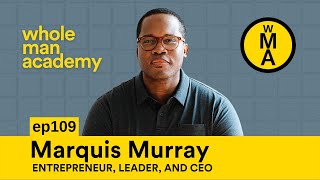
Podcast interview (Whole Man Academy, Ep.109) with Marquis Murray, founder/CEO of Ditto. Marquis discusses balancing family life and entrepreneurship, managing anxiety and introversion while creating content, the origin and evolution of Ditto (systems/processes, Asana/HubSpot implementations), team-building and delegation, leadership and mentorship, and the importance of showing up for family. Practical tips include a 4D time-management framework (do, defer, delegate, delete), delegating social media and routine tasks, and prioritizing presence over perfection.
Okay, guys, before we jump into this week's podcast, welcome also just to say, all the resources we've created over the last couple of years to help men do life better can be accessed via our link tree, which should be in our comments below or in our bio. So check them out and if you're not sure, feel free to ask me any questions. Anthonyolmanacademy.com Right, let's get on with the show.
Whole Man Academy. Because the world needs strong men, Wholeman Academy is changing the game for men around the world. It's for guys who want to live an epic life of fun and adventure. No matter what we believe, deep down, all men want to go in their only hero's journey to becoming resilient, confident, fearless and fulfilled. Listening to be inspired by guys who don't settle for living a life of mediocrity. This is your call to action and call to adventure. Are you ready?
Okay. So this is the Whole Man Academy podcast, episode 109. My guest today from a long way away is Marquis Murray. I hope I pronounce your name right. An entrepreneur, leader, father, CEO of Ditto, I think a founder as well. We're going to come on to that. Ditto is all about helping businesses eliminate burnout through systems, processes and plenty more. So we're going to talk all about business. Everything else we can get our teeth into today. But firstly, how are you and where are you?
I'm doing great. Thanks so much, Anthony for having me on. I am in Toronto, Canada, so up in the Great White North. I'm about an hour outside of the city currently, so yeah, we're right by Lake Ontario. I can see the lake for my office and it's great.
So you're not in the big city as it were, when you're out by the lake. But did you move out there or have you always been out there? Because I know you've got kids, which we'll talk about, but being out the open space is a bit nicer when you've got little ones running around.
Yeah, we moved out here about five years ago. Our kids are six. And so we were here about five years ago. We needed more space. We wanted to be by the water and we got all of that. And at this point in time, we are getting ready to move again. So like you'll see, Anthony, my, my, my shelves behind me are usually filled with books and other things and we're, we're relocating to another province. We're going to be going from Ontario to Nova Scotia.
Okay.
So we're we're going to be on the lake this time with much more property. And so we're just trying to get more, you know, back to nature and, you know, slow things down and live out our dream in what is essentially our dream house in a great location. So continuing to move, I think that's.
So important for kids as well, knowing from a. Working in the city. But you know, if we'd have stayed where we lived in London, we moved five years ago, pretty much maybe six years ago now. But we knew, Emma and I then that, you know, for the money that it cost us for a nice house in London, but it had a tiny garden, whereas we could move here and you know, fields around us. We've got a stream at the front. We've got all these different things happening that, you know, kids like to get into, especially two boys who have unlimited energy.
Of course.
Yeah, but, but we're gonna get onto that. Well, look, one of the funny things I saw to start with was on your, on your Instagram where you did a video about how having kids in the house when you're trying to create content.
Yes.
I wondered for you, what's it been like? Because what kind of content do you create and what's it like trying to do at home? Because I know it's plenty of the guys listening, you know, trying to do anything from home, you know, work wise, when you've got kids or sometimes it's dogs or what have you can be challenging.
Yeah, absolutely. Well, I mean, you'll recall there was this viral video that went out several years ago now of this, you know, this person who was a news anchor or they're being interviewed, I think, for a news segment and then the kids came in and someone came in and was pulling them out and everyone was all, you know, they didn't know what to do and everyone thought that was hilarious. Little did we all know that months later we'd all find ourselves in similar situations with the pandemic coming up. And so I think we've all had experiences like that. But for me, the kind of content I create, I have my own podcast, it's called In Systems We Trust. And I have a YouTube channel called Asana Solutions. So that's more on the project management side and operations side of things. And so I, I try to do it during the day when they're at school. That video happened to be one of the days that, you know, one of my kids came home sick. Yeah, really? They just, they just wanted to watch TV all day and they Got that. But, yeah, I was trying to record a video intro for YouTube and he was calling for his brother, and it's just like, I couldn't get in any moments of silence, so I had to, like, just keep waiting. Eventually my wife took them out of the house and it was fine. Usually it's not an issue when. When they do come in, it's on. I'm on a podcast. They just got home from school, they want to say hi and they'll burst in the door and they want to show me what they made at school that day. And, you know, the guests are always so gracious. Clients are always so gracious and understanding because they get it. We're all at home. We got families, we have lives. But that's usually what it looks like in my world.
Now, I know plenty of guys we spoke to on the podcast, either in this country or abroad, have found that where, you know, it's trying to juggle because not all of us have got massive houses where you can be in a different wing of the house. It is like, look, I'm up, box room with a towel over my head, trying to get some good vibes going on. Would you say that because you're used to doing a lot of kind of, you know, content creation that you're quite good at, kind of a one take? Because I found that. But then once my concentration is gone, then you have to. Then you start overthinking it.
Sure. On the blanket over the head thing, there's a time years ago when my kids were infants and they were sleeping in the next room and, you know, getting to bed, I was recording a podcast and I literally had a blanket over my head. There was no video, and I'm sweating buckets under this, under this blanket. But I had to get it done. I had to, you know, deaden the noise. But for me, and I just lost track of the question. But can you just repeat it?
Yeah, well, I just wondered because that's one of the things in these last few years where people have either been forced to work from home or they decided to. That, you know, it's not the working environment that you're used to. And even when we started the podcast prior, you know, that was just before kind of lockdowns happened in. What was that? 2020. Yeah. So we had two years of our life taken away and freedom's ripped from us left, right and center. But that's, that's another story. But. But I remember we were about to kind of do it in a studio in London. So I'd never planned to be in all different rooms of my house trying to, you know, keep the chickens quiet, keep the dogs quiet, keep everybody else quiet. But. But we adapt. Now, next question was talking about, I know you'd said in your, you know, when I was reading some of your posts about a battle with anxiety. And that's something I think a lot of guys have had at various times, either with work or performance relationships, you know, producing content, etc. But how have you managed to manage that with creating your content? Because it's. You're not creating it for fun. It's for business.
Yeah. And I'm remembering your question now, and I'll answer the both of them with this. But, you know, when it comes to recording in one go, I mean, like, I. And this does tie into my anxiety. It's like the more that I, like, have to do it over and over again, it's the more that I think about it, the more that I, like, internalize and like, I start doing this negative talk and that leads to this more and more anxiety. So it depends on what I'm doing. It's like a how to video on YouTube. I can usually get it done in one take. That's no problem. I know what I'm doing. It's the intros where the kids are home or the wife needs something, or, you know, there's something when I'm thinking about work and, you know, I get tripped up. I'm overthinking everything that I'm doing, and so that's a bit more difficult. There's actually a video on my Instagram where I had some bloopers, right? Some behind the scenes of what it actually looks like to create this content. But for me, it's difficult. Like, I have to, I have to block off those days if I am creating content, because to have, you know, sales meetings and team meetings and client meetings coupled with YouTube content creation and podcasts, like, like, after those exercises, I am drained. I am an introvert. I'm the definition of an introvert, right? Like, after one meeting, I am drained. I need to go lay down. And like, if I know that I'm gonna have a few of those sessions back to back, I'll do my best to, like, stay off camera or not speak as much as to preserve that energy because that ties into it. And like, for me, at the end of the day, my kids get home, I want to be there for them. I want to be, you know, responsive. I want to be on for them. But what's happening Internally is I've just been depleted of all my energy, number one. So that's the introvert side of things. And then I'm thinking about all the things that I have to do right now. I have to be on as a father, I have to be on as a parent. I have to finish out my day and round things out. I got to get some sleep at some point, and then I got to do it all again the next day. And I'm thinking, that's what anxiety does to you, right? You think like 10, 20 steps ahead, and you're thinking about all the different outcomes and possibilities and all the things that you have to eventually do. And the reality is that you just need to focus on what's happening right now and focus on right now. So I'm trying to get better at that and talking myself down, but you'll see in the bloopers video that I start saying things like, man, what's wrong with you? Why do you keep doing this? You know, just talk, you know, and. Exactly. You just start getting in this loop of, you know, you're not good enough. And then all the other emotions come along with that. So it's definitely a daily battle. Some days I finish work and I'm feeling great. I want to go for a walk with the kids and take the dog out and talk to my wife. And other days I want to curl up in a ball on the floor and not talk to anybody, and my body's vibrating just because I know I've overdone it. Right. So I look for more of the. The. The. The days, like the former example versus. Versus the latter. But, yeah, it's definitely a daily struggle.
Daily struggle. It's interesting because, you know, I'll speak to, say, different guys from different backgrounds, but most guys always have something that will create some level of anxiety. And, you know, for a lot of people, is that public speaking and. Or, you know, speaking out in a meeting and what have you, which I generally find easy. But, you know, you said about it's draining. I find if I do a corporate talk. Because you're concentrating the whole time when I finish, like, say I'm knackered. And I always advise people like to. To go outside if you can and go. And like, you know, I usually take my. If it's not freezing cold, but take my shoes off and go for a walk on the grass. And, yeah, press. Because if you go from meeting to meeting, it does kind of deplete you. But let's talk about podcasts then as well, because you know, guys listening. We know. I said many times I felt like podcasts saved my life just because it pushed me in the direction of personal development and learning more about myself, etc. So firstly podcasting, who do you listen to and what's it like for you creating a podcast?
Who do I listen to? Cameron Herald is probably at the top of my list who I listen to. He is the founder of the COO alliance, so he works with what he calls the second in command to the CEO and so he's talking about operations and systems quite a bit and interviews some fantastic guests. So I'm talking to him. Carrie Newhoff is another one, talks on leadership as well. I love the. The series from Startup, a podcast.
Yeah.
Gimlet Media. And Alex. Was it Alex? Not Alex, Bloomberg. But anyways, I can't remember. So Startup is another great one as well that I listen to and then like anything like True Crime right there, listening to it. Yeah, that's typically what I'll put on first. And then I'm a big audiobook guy, so if I'm not, if I'm not sitting down and reading, I'm out for a walk with my dog and I'll put on an audiobook and, and listen and it's usually a business book as well. So anything that I can do, you know, on the self development side of things or gain some insight as to how to move my business forward, I'm all for that.
It's really interesting because I would say in the UK there's very little personal development platforms, whereas in the US we know we've got Tony Robbins as an example and there's, you know, that I always found in the US there's a, it's like the home of personal development. So you can find something for you. What about for yourself out there? Are there events from people in kind of your area or is it always the, you know, for us it's always the, the Americans coming over, as it were.
Yeah, yeah, I think you said it already. Like for me, my experience has been when it comes to this stuff, like Canada's not good at it. I'm not good at it. Right. Like they don't want to hear from Canadian speakers. There aren't really events here. All the good conferences are down in the States and so I've attended a lot of those virtually at the time. So I think it was April 2020. I was set to go to a conference in New York, would have been my first in person conference. And I was super excited for. And then I Spent the next several months trying to get my money back from Air Canada and I didn't attend. And so, yeah, I think that from a geographical perspective, yeah, the big draw is to go to the States. Like, they have the resources, the space. People want to hear from them for whatever reason. And here I am up in Canada. I'm also a speaker. I'm applying for these gigs in the States. And I don't know if it's because I'm not a resident or my platform's not big enough just yet, but, yeah, the opportunities seem to go towards people that are there and events that are there.
I think it's. I always encourage guys to find their own way into personal development because I just think it can really kind of propel you on to either being, you know, better in business or better, you know, physically, mentally, or a better dad, better partner, or the. All these different things. And, you know, I always think we call it, like, becoming a whole man, because, yeah, most guys, you know, not every man, has got every level kind of sorted. There's always, you know, I know guys that have got lots of money but have got, you know, need to work on their health and their fitness. I know guys that are super fit, that, like, I haven't got much money, I need to work on that. Some people that have got all that but haven't got a relationship with a partner and they're desperate for it. It's always different things. But that is where, you know, you said about finding the different podcasts or the audiobooks, there's no excuse to not consume stuff. I don't watch normal TV anymore. I hardly watch sport anymore either. I used to watch it so much, but now I just enjoy learning from different guys around the world.
Yeah.
Now let's get on to ditto, because I know you're the founder of IT as well, and I find this interesting. Talk to guys not just for their company, but the entrepreneurial journey. So tell us how you started it.
Wow. Yeah. Let me take you back a little bit so you'll notice that I know this is the whole man podcast. And so I'm going to talk about family a lot because that's the reason why I do anything. And so my story goes back. I used to work in the corporate space, and so I was a manager at a health facility up in Canada. And I'd been there for three years, doing really well, climbing the ranks, or being groomed at least to climb the ranks. And the hours were just really strenuous and, you know, unpredictable, and, you Know, when it came to sales and things like that and goals we had to achieve, it just took. It took all of our weekends. And at the end of the month, if you were off track, you're in the club, you're working, and you're driving. And so we didn't have kids at the time. But I remember when I told my. My boss that, you know, we were pregnant, you know, my wife and I had made the decision that I'd be taking an extended leave. And I know in, like, parts of the world, this is unheard of, but I had the opportunity to share some time with my wife. And so ultimately, like, she was home for about a year, a year and a half, and I ended up taking on my own about seven months off of work. And it was initially supposed to be four months. And the reason why I did that is because based on the hours that I was working and, you know, the conversation I had with my boss was, you know, I want to be home to be with my kids. I want to bond with them. I want to be there to watch them grow and take care of them and enjoy these times. And I let him know that at the time that I might not be coming back because I knew that because of the schedule, because of the what was required of me at work when the time came, I wanted to be the dad that was dropping them off at school in the morning, picking them up from school, or being available when they got off the bus. I want to be at the school plays and the soccer games and all of that. And I knew if I stayed in this job, I was going to miss all of it. I was not going to be home, I was not going to be present. So fast forward, the kids were born. I had been in the digital marketing space, kind of like moonlighting as a freelancer, doing some digital marketing stuff, SEO, building websites, social media, that kind of thing. And to make a long story short, I went back to school in my time off for digital marketing management, got my certificate, started building on my client base, and eventually found a remote job working in digital marketing, working for another agency. And it wasn't long before I realized, oh, you know, agencies hire freelancers like me, so why can't I do that same thing? And so I decided this is going to be a new direction. The agency moved from a model where I could be remote to them wanting me in the office every single day. And that's not what I signed up for, right? My, I needed to be at home with my kids, end of story. And so I Resigned from that. And prior to that, I would say.
Easy decision, but I know there's always a, you know, there's a financial aspect to it all as well. Bills to pay and mouths to feed.
Yeah, it was. It was tough. And, yeah, like, what I left out of that, you know, little story there was that, you know, I went home and I had a few clients, and I was tallying it up, and I think I had four clients at the time, and I'm getting like 500 from this client, a thousand from this client. So I'm like, I need one more client paying me this much money just so we can cover our bills. And it was actually my wife that encouraged me to quit the job because without telling you all the details, it wasn't a good fit for me. You know, I knew that there wasn't potential there for growth. And so she said, why don't you quit? And I looked at her and I said, I'll tell you two really good reasons why I can't. And, you know, our kids were seven months at the time. They're crawling around on the floor in our kitchen. I'm like, how are we going to pay for bills? How are we going to pay our mortgage? How are we going to pay our car payments? And she said, we'll figure it out. And we did. We did. And so, yeah, to get back to, you know, ditto and how it got started, I'm in this space now where I'm an agency owner. I got a few clients, started building up over time, and as I brought people on, needed to train them, I was training them on a lot of the same things over and over again. I was repeating myself over and over again and touching on the same things and, you know, having to be the one that had all the answers and providing support. And so I'm like, why don't I just, like, write this stuff down or why don't I do a screen recording and show you how to do it? So next time you have a question, you can just watch the video and I don't have to do the same thing over and over again. Yeah, exactly. And so I'm like, oh, my gosh, I think I got something here. And then I realized not only the need in my business for this, but any of my marketing clients also needed this. So we started this offering, we just called it Systems and Processes at the time, where, like, any way that they needed to manage the work they were doing, we were helping them get started with the project management tool. And that was Asana. If they needed to organize their leads and their contacts and stay on top of all of it. We were recommending a CRM HubSpot for them. So we were delivering marketing, but we're like, you're probably going to need this and you're going to need to start writing down how you do things so that you can, like, grow and scale and get yourself out of the day to day. And so I was doing that as a sub offering of this marketing thing. And then March 2020 came. All my marketing clients said, we're done, we're out, we're not spending anything. Yeah. And I had been chatting with my mentor for a while and telling him about this sub offering that I had, and he's like, I think there's something there. And so within about eight hours, I launched a website. We had the name kind of floating around. I called it Ditto. And I got the website up and I told everyone, hey, I'm doing this thing now in operations, you know, and thankfully, a lot of people were displaced and remote for the first time ever. And, you know, didn't know how to use tools like Zoom. Imagine that. You know, they didn't. They didn't know what Slack was. They didn't know what a project management tool was. And so I spent the beginning days of Ditto helping companies and teams get set up with these tools. And it's really just evolved from there. And I'm so thankful that, that it did, because it could have gone many, many different ways.
I always think it's important to, you know, be okay taking some risks in life, because if you just play safe all the time, I mean, I guess for some people that's just what they want to do. But, you know, moving away from one thing and having a partner say to you, you know, you say, will figure it out, is really powerful words. Because if you've got someone saying, well, what we can, how are we gonna do this? What we do? You're like, well, but to someone say, do you know what? We haven't got all the answers, but we will, we will get there. So what was it like for you? Because in that entrepreneurial journey, you've also got to, I mean, to state the obvious, you know, stay fit, healthy, sleep, eat, see your, you know, either not just partner, but friends, have a social life, kids. Plus you end up having to do a lot of, you know, when you're an employee, I think it's. For some people, it's easy because you turn up, do your job and go home. You're not doing the account, the people, the tax, the, all the different stuff. So how did you manage, especially to start with, to juggle all of that and stay and stay sane?
Oh, man. Yeah, good question. I mean, I really had to rely on my people. Right. Like, I think business owners get in a space where. And I, I was a perfect example. I was my, I was my prime customer for Ditto because I was the freelancer turned agency owner that thought that they had to do it all themselves and, you know, no one else could do it like they could. And so I had to get out of that mindset really quickly and realize that my time was best spent on revenue generating tasks. Right. Whether it's doing sales, prospecting, writing proposals, having sales calls, doing marketing so that you can bring in new activity, you know, building and increasing efficiency in your operations. Like, I knew that my time was best spent there and I had to really rely on the intelligent, you know, skilled people that I hired, you know, to help me grow it and start to delegate those things. Because nothing's worse than having a, an unending task list and a calendar of back to backs.
Yeah.
And you know, you're doing all the delivery and answering all the questions, but the business isn't growing. Right. And today, like my calendar is full. Yeah. But it's like I have two podcasts I'm on today. I've had sales calls, I had one internal team meeting. But I know that by putting in this energy and this focus into these spaces, I'm growing the business and my team is taking those things off my plate. That need to get done are so important, but they're not important for me to have to do them.
I find it so interesting when you talk to people on their entrepreneurial journey because they have to become so many different people. And funny enough, if you are at home, then you have to go from being dad, partner, entrepreneur. It's like putting different hats on. And I know there was a saying of time well spent and one of the things I've seen, I think you were summing up there, especially as an entrepreneur, there's so many things you could be doing. I guess it comes down to like, what is priority for you. And also is it priority because it's going to bring in money or new leads as opposed to, oh, I'll just tweak some logo designs because it feels nice.
Yeah, yeah, it's good. I mean, sometimes I get stuck in that space where, because I've been doing all the revenue generating stuff and all the stuff that's needed of me Sometimes I just want to like do some admin, I want to delete some emails, I want to reorganize the Google Drive. You know, sometimes I just need that mind numbing stuff. Yeah, but like if that is your main focus and that's taking precedence over the tasks that are required of you, then you're setting yourself up to fail. One thing that I do is I follow a 4D time management framework where all of my tasks get put into one of four buckets. It's urgent and important, right. So I tag it as something I need to do. Like I need to do it. It's important but not urgent. And I can defer it. That's the second D. And then the third one is urgent but not important. And I can delegate those things to someone else and then if it's neither urgent or important, I can delete it. Right. So that's typically an email that comes through and I, I skim it at first and I think I'll get back to it, I take another look, it goes into that bucket, I just delete it, I get rid of it. Or it's a task that comes across my desk that I'm like, this is not important, it's not relevant anymore. Get it out of here. I don't want to look at it. And I only work on those, like do those urgent and important things first and then I look at the things that I've deferred and then I can make decisions along the on the way. If this is something that I actually don't need to do and I, and I reassess it, I can delegate it and I give it to someone else to do.
I think that's great. Might be applying that to my, my workload. And I think especially as these days, probably like all of us, you can quite easily get so many emails coming in and you end up kind of reacting to things as opposed to being able to do what you need to do first and then kind of move on. And I'm as guilty of that with, as anybody. You know those days where sometimes I would say, you know, you'll think, oh, I just need to look up something on Instagram. And then you find yourself.
Yeah.
What was it like? Oh, 10 minutes later, what was it doing?
And you like, time for dinner again.
You've got me again. Because it, yeah, it's brilliant at it. So I wonder, how do you manage your own social media? Especially when you've got YouTube's, Instagram, you know, along LinkedIn, maybe Facebook or any.
Of those different Things, Yeah, for the most part, I get someone else to manage it. I've had to do that. Or like, yeah, for my, like my. I have a personal Instagram and a personal TikTok and like the Tick Tock I'm not as active on, but for Instagram, like, that's my family space. I'll occasionally share like work stuff on there. But for the channels that matter, like our LinkedIn, Twitter, you know, the podcast Instagram or the Ditto Instagram, I have someone else on the team that manages that. And so they're managing the schedule. They're working with our video editor and the person who's writing all the captions and the descriptions. I don't even look at the posts before they go out because ultimately, like, as long as it's there and it's getting attention and people are engaging, that's all that matters to me.
That's really, that's so interesting because I've had this conversation with different guys, you know, not just necessarily podcasters, but guys who've got, you know, I know they don't like the term influences, but have got a big following and therefore what they do and say gets watched. But it is that. How do you let go of control of saying, yeah, I would find that hard for the whole man Academy because everything written is through, through my. Exactly how I would speak. So if you interact with the whole man Academy, you are going to get the same as you will if you met me in the street. But I would find it really hard to then say, right, I can let these people do that because you'd find yourself kind of look, I say, what was that like for you?
Yeah, yeah, I think a lot of like, what I do at Ditto is around that and educating people in the need to let go of it. And to delegate, our slogan at Ditto is duplicate yourself. Right? Duplicate your efforts, duplicate your output without having to duplicate the input or the effort required from you. And so you have to let go of it. And I'm a perfectionist to my core. There's stuff that we put out now, there's landing pages, there's, you know, ebooks and emails and stuff that goes out decks we're sharing with our customers. I don't love them. They're not perfect. Right. But they don't have to be. And like, once you're okay with that, that's when you can really grow because if you are spending your time looking at all those things and making sure it's polished and pretty, you're gonna, you're gonna launch way too late. Right. You're gonna take too much on and. Right. You're not going to, you're not gonna have a happy team at the end of it. Because, and this is the, the real point that I had to come to terms with is you hire these people and you say, hey, I'm the leader of the business. I want you to do exactly like this. And there is space for that. Right? Like, that's why franchise, that's why succession planning works so well. It's because you're teaching them the basics, you're teaching them the getting started. But if you continue on in that way, you become a micromanager really quickly and then it removes the room for innovation. You removes the space for people to want to be a part of the process. It removes the sense of ownership that a team member could have over that process or over that program or over whatever it is. Right? And essentially what you're doing, and I had a guest on my podcast that said it like this. They said, you're creating an army of mini me's, right? And so, and I just put out a quote on my Instagram that said, just because it's always been done this way, it doesn't mean it's the right way. You're going to have other people on your team that are smarter than you, that have better ideas than you, and you have to be willing to let them flex that muscle so that you can realize their potential and then see the growth of the business happen. Because so many things that I develop, yeah, it came from me, but like, the version that it's on right now is 20 times better than the one that I made. And I could have never thought of that. I brought this product or this service as far as I could take it. And it's my team that's helped me grow and take it to that next level to improve upon it. Taking feedback from customers and people online to grow it. So you just, it all comes down to goals. We just have to be okay with just letting go. It does not have to be perfect and done is better. Right?
So sometimes you hear things at the right time. Because I spent a few hours creating a new kind of a new version of one of our pages today. And it was that thing where I found myself looking over it, over it, and I'm like, I know I'm missing stuff. You know, it's not going to be perfect. I'm not a professional designer, but it is that going. Do you know what? I know there's the old Saying like, don't get it right, get it down. And I guess it is that thing. I remember when we had a kind of a launch party for the whole man academy and someone said to us, I had a few ideas of products and they said, you know, if you wait until you're ready to launch, it's too late. I think that was. Yeah, that was the saying which, which reminded me of that. But a lot of it comes into leadership, I guess, for you as well. Because, you know, I think that the state of leadership in the UK is a joke worldwide. If you look around at who the people at the top are. And I always worry about young men looking up and going, oh, this is who I aspire to follow. And you're like, not there. But I just wanted. Because you need to be a leader in your company and for your family as well. So you mentioned the word mentor. Who's your mentor? Where did you find them? How have they helped you?
Yeah, I don't currently have a mentor. I am seeking a new one. At the time, it was a friend turned agency owner, partner. And so they had a marketing agency. They still have a marketing agency. And at the time that I was getting going, I was seeking out a mentor. And like, you have gurus like Tony Robbins and, you know, you see Gary Vee and I think it's Tai Lopez and Dan Henry and all those guys and they're all like, make money, drive fast cars, wake up at three in the morning and work, work, work, and, you know, exercise 10 times before 10am and it's just like, that wasn't realistic for me. And so I was looking for someone who understood me. And so my mentor also has twins, was also a successful agency owner. And I wanted to hear how he did it. Yeah, how he grew this team and gained all these clients and attention. And so, so I reached out to him and it was a simple ask. Hey, this is where I'm at. I don't know what I can offer you. I'm in this marketing space and they're running a web development agency. So I thought, can I help you with your marketing? Is there anything that I can do and look at? And in exchange, I would love to, you know, take you out for lunch, you know, once a month and talk and ask you questions. And that turned into a really fruitful relationship for, I hope for them because, you know, they became a client and I was assisting them. But also for me, I got some really great insight and I was able to, you know, share some ideas. And so it was Nice that I had that personal connection because I was getting a perspective from someone who understood where I was at in life, where I was at as a father and as a husband and as an agency owner, and recommended, you know, resources that I could, you know, consume to take it to the next level, which is how I got onto Cameron Herald and people like Kim Scott, you know, who are leaders in organizations. And, you know, I was starting to learn from them. And so you have people that are close to you, you have the people that, you know, are of influence in these, in these corporate spaces and, you know, so there's definitely no shortage. But, yeah, I'm seeking out a new mentor currently because I feel like my business is at. At a turning point. We have some big goals for the next few years, and I want to connect with some leaders who have been there and done that and can take ditto to the next level.
I think that's really important. There's. There's so many points that you said that I kind of want to touch on. One of them is, you know, I get asked, even when I was working in the city and I was leaving, it was like men would say, now how can I find a mentor? And like you just said, it's like, find someone. For me, it was like, find someone that's kind of, you know, has done what you want to do or is where you want to be. And like you said, it's that level of realism because, you know, if you have got two kids and you've got a partner and, you know, you've got all this other stuff going on, you can't realistically be like, right, well, I'm going to get up at really silly o' clock and I'm working here and I'm doing this, this, this. Because you're like, yeah, but trying to juggle everything. So, you know, I think that's so important for guys. But you said also sometimes just asking. I mean, I've done it myself in the past, but also I've encouraged guys to say, if you've got something in mind, you know, think about how to approach them and then ask them. But use of the important thing was try and add some value to them. So it's just, yeah, can you help me? Tell me everything. You know, it's like, how, you know, how can I add some value to you? And if I can't, then maybe I could introduce you to someone or I can do something for you in the future. Because that mentorship can kind of really drive things forward.
Yeah, absolutely. Like If I had someone come to me now and ask me to mentor them, like, I don't have any time, I can't do that. Yeah, I'll meet with you once a quarter, maybe take me out for lunch. But there's got to be that exchange. There has to be. And if you can present that, where the person on the other end can see right away that not only you're willing to invest in either services delivered or pay them a little bit of money every time you meet or take them off for lunch, if there isn't that commitment from you, it's harder for the mentor to see the potential or the benefit, an upside for them, and they're more likely to say no at that point. So, yeah, go in with your best foot forward and kind of go from there.
I like it. And, Jo, we touched on something earlier which was about trying to find that balance, especially as a father. And I noticed you'd written a post, or maybe it was a video where you spoke about your dad, where your dad had said that he'd worked for many, many years. If I could take it all back, I'd spend more time with my family.
Yeah.
And that, that really, that really touched me because I know that's one of the reasons I couldn't have done the job I used to do when I worked in the City, in London, it'd be like working on Wall Street. There is no half days, there's no leaving early. And I know that I would just hardly ever have seen my kids. And maybe of a night I might not wanted to see them because I'd been pissed off because the day hadn't worked out how I wanted to. So I thought that was a really powerful thing to say, to admit also to say, you know what? Because a lot of people say, oh, I wouldn't change anything. You're like, well, actually, how cool for your dad to say, you know, what if I could take it back, I'd spend more time with my family.
Yeah, yeah, it was, it was huge for me to hear that because that's the last thing I ever expected him to say, you know, I mean, and he traveled quite a bit when we were growing up. And what was his career? He was in. He was in finance. And so he would travel to different locations around the world for one of the big banks and, you know, audit how they were doing things and, you know, make decisions at a. At a branch level. And so, yeah, he was, he was on the road quite a bit. It was an important job. And he, he did really well, but, you know, when. When he was home, you could kind of tell, like, he needed that time and that space. And he might listen to this, so I won't give you all the details, but, like, I remember he'd come home from work, you know, most days, and he would sit in his office, like, computer. Our shared computer room, and he would play Scrabble online or, like, against the computer, and, like, that would be his evening. And, like, it was fine because, like, you knew that's just what dad did, right? No one thought twice about it. But being a father myself, now it's like, when the kids go to bed, there's time when I'm hanging out with my wife and we're catching up and, you know, building on our relationship. But then if she goes to bed, it's like, okay, now it's my time. Like, I need my time alone. I need to recharge. I need to do what I want to do now, not what I've been required to do all day. Not what everyone else has asked me to do. Yeah, exactly. It's like, now I just want to watch the office three hours, and I want to laugh, you know, or I. You know, I don't really work out as much anymore, but I would go and go to the gym at night, you know, and, you know, that's my time to do what I need to do so I can recharge. So it was definitely a respect, A new respect for him because I finally understood what he was maybe going through at the time and how, like, the stress and the travel and all of it was. Was impacting him.
I think there's two parts of that, but I think it's so important for a guy, you know, I know it's. It's never easy to be like, right, I'm going to change careers. But there's. There's a guy who'd been interviewed on the podcast before. He's an English guy based out in the States, but he's got a podcast called Mindset by Design. And I remember he was one of the first people that said, not straight to me, but through the podcast, you know, it's about designing the life that you want, you know, and it might take years, it might not happen overnight. And that was one of those things you like. You know, what? If you're gonna have kids and you. And you want to spend time with them, then you better have a career where it has some kind of flexibility or something like that, because Otherwise you get five, 10 years in or whatever it is, and they'll be grown up and you'll think, like, where's that gone? And I know people, that one person I know, you know, and this is female, but she. She put her kids straight into, like, nursery when they were like 12 weeks old as a baby and dropped them at 7 in the morning and picked him up at 7 at night. And I was like, why the fuck did you have kids? Like, what was the point? Especially it wasn't. Money wasn't necessary, if that makes sense. So it takes balls, though, to admit, like your father did and say, if I could change things, I would go back and, you know, spend more time with the family. But one of the things there is about showing up daily, and I know you shared one of the infographics, which is, you know, showing up daily isn't showing up as 100% every day, because it's pretty hard to do that. I just wonder if you could talk about your thoughts on that.
Yeah. Yeah. I think this is for leaders of companies and their employees. I think this is just for people, like, when it comes to that. I mean, we're all. We're all going to have good days, we're all going to have bad days, but I think it's like showing up is the most important thing. Whatever capacity that looks like within. Ditto. I mean, we. I like to think that there's like a certain level of autonomy within the team where you can do what you want when you want it. I don't care when you work, just get it done. If you need to take time off, just take the time off and just go. Right? And so I think that is super important when it comes to working with teams, because, you know, for me, I have the ability, and this is kind of why I started this business. I have the ability that if I want to work in bed one day with my camera off, you know, and the TV on in the background, I can do that.
Yeah.
You know, and I would expect that, you know, anyone else should be able to do that. Right. So. And there's days when I'm 100%. I'm at my standing desk, I got my. My hot drink and I'm ready to go, and I'm in the zone and I'm giving a hundred percent, but we need time as people to recover, to recuperate. And I think one of the big traps of, I'll just say corporate America, because I can't think of a better term right now, but the job field in general or the workspace in general, is that you get into A role. And you're working for this company and you've devoted your life to them and our parents would understand this because they went through this. But like, you work your job and that's the thing that you do until you don't and you retire and then you live out your life and you wonder, what am I going to do now? I think that's one of the biggest traps because the second you remove someone from that environment, you lay them off, a pandemic comes in and they're forced to go home. Or, you know, they make choices in their life and they, and they don't have that job anymore and they're removed from that. You see how their world crumbles, right, because their identity is defined by the job that they do and the company has sold them this lie that this is what you do and you know you're going to get paid this much for it and this is what you're worth to me. And I don't agree with that at all. I think it's such a danger for people to think that way and believe those lies that these companies tell them. And, and I hope that I'm not that way. Right. Like this job does not define you. There is a human being on the other side of that screen. There's a family. There are parents that become ill that you have to take care of. There is mental health issues that come up that are either undiagnosed or, you know, the person is suffering in silence, right. And they feel like they can't talk. And so if you need a day, you go take it. Who am I to tell you how to live your life? Yeah, right. Like, I just think, like, it's just, it's just so heartbreaking to see sometimes. And again, the generation before us had to go through it because they didn't have any alternatives. No one told them about work, life balance. No one told them about the importance of being there for the family. No one offered them remote jobs where they could work all day with a button up shirt on top and basketball shorts down below. No one. They didn't have those opportunities. So like now we're here and like we have those opportunities. Why are we focused on life and mental health? Like we're more than just our jobs. So sorry, that was long winded, but it's just like, it just pains me so much when I see that.
I think, you know, I've said on quite a few podcasts that it is changing slowly because, you know, five, six years ago and I left working London like Companies didn't give a shit about your wellness and any mental health issue. So the only mental health help they gave was probably either a chat with the manage or a helper line, which no one was going to call. Whereas now these companies spend money on having, you know, speakers come in and providing opportunities for people to, you know, live healthier, take some more time off. And the big word I was going to say is decompress. And that was what I was going to say from when you said, for us guys, sometimes I find it where my partner will go to bed maybe at half past nine because she gets up at five, but I'm tired, but I just need like half an hour, an hour. I might just allow them to sort of. And I'm just watching some sports stuff or just something and it's like I just need that little bit of time on my own just to, you know, just to ease down. So for the guys listening, I think don't, don't worry if sometimes you need a little bit of time just to, just to decompress. Well, I know we've covered a lot of different topics, which has been great in this time. I was going to ask you, I was asked a question a few months ago at an event and it was if, basically, if you could have the ears of all the women in the world and you could tell them one thing, what would you tell them? Them? And I was like, man, that's a good question. So I throw a random question at the end. If you could speak to other women in the world, what was it doesn't have to be the most, you know.
Oh, man.
What would you say?
Oh, man, that is a tough question. Sorry. Is this like my wife? Women in general, it's just women in general. Okay. And I'm a man. Okay. Thinking father, business owner. We are trying our best. There's so much going on in our heads, challenges we're facing that either we haven't identified yet, there isn't a space to talk about them in, or, you know, societal norms don't allow them to be, you know, brought up, you know, and we are, we are navigating the best we can, I think. I think is the main message. Right. Like, I'll use me as an example. Like, I'm very public about my struggles with anxiety. And daily I have different thoughts and different feelings. And I've had a therapist and a business coach and I'm on, I'm on medication, you know, and there's times where I'm really good and there's times where I'm really bad and my wife has seen both of them.
Yeah.
And all. And all the in between. And sometimes I share with her what's going on and sometimes I feel like if I share with her what's really going on, it would scare her. Right? It would scare her. And so I think like, like the message is we're trying, we're, we're, we love you, we are doing our best and there's a stuff that we need to work through, so be patient, be patient with us.
It's a good answer, especially when I tip it in at the end because I found if I send it over, someone will come up with a beautifully scripted answer. Whereas coming from the heart, always is always.
Yeah, that was a good one.
I'm impressed. Bit. Bit more gritty, but I know you've got more stuff coming on this afternoon. So what time is it there right now?
It's about 2:00pm 2:00pm yeah.
So it's, it's dinner time for me and the boys after this.
Okay.
It's. It's still sunny here, so I'm not complaining. But, mate, I appreciate all your time and it's been a really interesting chat. I know the guys that listen, you know, from all the different countries are going to enjoy it, sitting down, hopefully with a coffee and listening to it. So, yeah, all your time.
It's been a great chat. Anthony and I didn't even cry once, so we did all right. Yeah, exactly. Thanks so much for having me here.
Thanks for listening. Remember to sign up to our game changing weekly E letter that's read by men around the world. Sign up@homeanacademy.com forward/movement. Until next time.










