EP111 - BRAD HART - MASTER MIND | WHOLE MAN ACADEMY
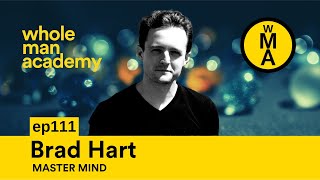
Brad Hart, a former hedge fund manager from Long Island, discusses his shift from Wall Street trading to coaching and masterminds. He breaks down his money philosophy using three buckets: security, growth, and risk. Hart is bullish on crypto long-term but warns against high-fee managers and pushes financial literacy over outsourcing your money.
Questions this video answers
Episode 111
San Diego, California
Around 2007–2008
106% (2013 year, trading options and equities)
Over 200 houses (through foundation projects in Mexico and other philanthropy)
Whole Man Academy. Because the world needs strong men. Whole Man Academy is changing the game for men around the world. It's for guys who want to live an epic life of fun and adventure. No matter what we believe, deep down, all men want to go on their own hero's journey to becoming resilient, confident, fearless and fulfilled. Listening to be inspired by guys who don't settle for living a life of mediocrity. This is your call to action action and call to adventure.
Are you ready? Okay. So this is the Whole Man Academy podcast, episode 111. My guest today I'm excited to be speaking is Brad Hart. We're going to be talking all about entrepreneurship, money, impact, masterminds, which is a big one. And also delve into crypto, which I know he's got fingers in pies there as well. But firstly, how are you and where are you?
Thank you so much for having me on, Anthony. My name is Brad Hart and I am in San Diego, California at the moment. And this is episode 111. That's an abundant number. Exciting.
Yes. I think back to when I was episode one and episode 10. When we got to episode 25, I was like, this is, this is good stuff. So now we've gone past 100, it's, you know, I always say my network, and I'm sure when we talk about masterminds, your network expands so much when you start getting around, we're going to talk about guys, but getting around people generally. And that's one thing the podcast does, I think is really, you know, bring new men into your kind of circle of, call it circle of trust. But let's, let's get on to things. I mean, there's so much to go through with you, but I wonder if you could kind of in a potted history of your early story, because it's a really interesting one because so many guys we speak to maybe are in a particular career that they've been in for a phase. And then I just, like, I'm sleepwalking through life.
Sure, yeah. I'll give you the very quick version. So I grew up on Long Island. You know, my pronouns are you and use. You know, I. My love language is sarcasm. And, you know, my, my dad and my mom, you know, they were working class people. My dad was a lumber truck driver. He got hurt when I was 2 years old. My mom was working in a deli. She had to leave to go support us and they ended up breaking up and I had to grow up real fast. I was the only kid and you know, how to kind of figure stuff out. So I became entrepreneurial at a very young age. You know, had a lot of responsibility, had to grow up quick. And I guess around 10, 12 years old, I started realizing, like, hey, if this money thing could be solved, maybe everything would be happy. I can remember, like as young as four, being locked in my room and having my parents scream at each other about money. And, you know, as a kid, you. You get that in your brain, like, oh, if money is, is lacking, then everybody's not going to get along. And if money is plentiful, then people will get along. And it took me many years to break that, that association. So, you know, fast forward. Went to school, college, all that great stuff.
Graduation.
Graduated in like 2007, 2008. Worst possible time to be graduating into the job market. But I made the best of it. I got a job on Wall Street. I worked there for a while. I worked in real estate for a while. And my dad passed away. I moved back to Long island and became a trader. That led to me joining my first mastermind group. And that's where things really started to take off. Because now all of a sudden, I was surrounded by peers, not even peers, people that were actually a lot further ahead than me. And I was like 24, 25 at the time. I was surrounded by people in their late 30s to, you know, maybe late 50s that had already had a lot of success. Seven, eight, nine figure success. And that was what I had always wanted, right? So I ended up, you know, networking with them. I got a few cool opportunities. I got to travel and spend time with some of my heroes. And that kind of led to me being able to be published in forbes about this 3D printing that was just getting started. 2012, right? So one of the first people to really write about it. And that article got shared by Tim Ferriss, who I had met previously. And it went crazy. Like 300,000 people read it, and the stocks went really nuts. And that wasn't really the intention was to like, pump up the stocks just to kind of share what I was excited about. But nonetheless, that happened. Within 18 months, the stocks had gone up 10x. And some of the people that I knew that had looked at those stocks and invested in them, they were like, hey, how do we give you money to manage? At this point, I had not ever managed other people's money. And I was like, hey, you know, let me ask some smart people. I'm not dismissing it out of hand, but it was kind of like a surprise. I didn't expect it. So I asked around and they said, okay, cool, here's a third party administrator, here's your lawyer. You're going to start a hedge fund. I'm like, a hedge fund? What the hell is a hedge fund? And like, what do I need? Like, do I need the Pope to wave a wand and say, I'm hedge fund? Like, no, here's what you need. So I did what I knew how to do. I reached out to all the people I knew at that time, which, you know, maybe it was like 200 on a list. And 17 of them were crazy enough to give me some money. And a year later we had doubled it. We had 106% year trading options and equities in 2013. So that was exciting. We4XED what the market did that year. And then I went to raise money, like serious money, like tens of millions of dollars. And everybody said, well, you're up 106%, you're probably gonna be down 50% next year. And I'm like, that's such ridiculous logic. But I get it now in the grand scheme of things, realizing, and I'm sure some of you Wall Streeters or city folks would understand, it's like, hey, there's people that have more to gain than to lose. And there's people have more to lose than to gain. So when you've had a big exit or you're worth eight figures, nine figures, you don't necessarily need crazy returns. You need stable, consistent, risk adjusted returns that keep your portfolio from declining. You're good with market returns in a lot of ways. So that was a hard lesson and it kind of led me to eventually wind down the funds. And I had always been playing games up at that point in my life, like real estate and finance, whereas like Hungry Hungry Hippos grabbing for all the marbles. And I realized one day I'm like, I just want to make more marvels. And I was like, that has a nice ring to it. So I called my blog that, which became a company, which became coaching and masterminds and all this other stuff around, this idea of like, we don't need to just grab for what's already there, we can create more. And I'm still a capitalist at heart and I believe in capitalism because it's the best system we have so far. But just like feudalism was at one time the best system and mercantilism was the best system, capitalism will eventually be supplanted and I think it will have something to do with collaborative. If we're just competing. Competing is awesome. It makes you better, sharper, faster. But there's no sustainability. It's kind of a zero sum game. Whereas I believe collaboration can really heal a lot of the problems of the world. And if we can incentivize collaboration, we're then beginning to. I don't pretend to be the smartest economist in the world, but I pay attention to this stuff. I think that's the next level for humanity is how do we incentivize mass cooperation. I look at what people are doing with these decentralized autonomous organizations. They're going to eat the lunch of the Fortune 500 company in 10 or 15, 15 years. Like, Mark my words, you're going to see it. And I've been pretty on trend. Like I was in bitcoin very early, under 100 bucks. So looking at bitcoins when they're 5 cents. So I was buying Ethan as $8. I was buying Tesla at 22. And I was right about a lot of my bets. I didn't have the balls to go big enough and hold it forever on a lot of those bets. But I'm getting better over time. So now my strategy is more like hold on forever and find these things and do that. So I'm very bullish on crypto. I'm very bullish on future technologies, which we can go into more in depth.
Oh, it's great. And this is why I find it so interesting to talk to get a mixture of guys from around the world. Because I often think, you know, we go through phases of life and I wondered what it was like for you when you, when you started working at Wall street or. Because, you know, that is a, it's an iconic place. But you were a young guy back then and you know, often the pressure is like, well, how it's all about how much money can I make. But then you look around at one point and be like, it's not all about the money.
Yeah, it was weird too, because I had a strange experience like the whole world was coming apart. And I had heard that saying, right when everybody's running out of the room, you should be running into the room. So I literally was like pounding payment, looking for a job for two weeks and finally ended up at 44 wall on the 9th floor, E1 Asset Management. And they hired me as like a cold caller. And I would cold call 500 people in the morning and 500 people in the afternoon, take a 30 minute break and then people would stay at night and cold call people at night and I was like, I'm gonna get my real estate license and kind of back it up. But I can remember very distinctly being in a room with no windows on Wall street, technically. And I wasn't lying, but, like, it wasn't very glamorous. And these guys walking around with earpieces, pitching Visa stock, and I'm like, I don't know if this is where I want to end up, you know? But one funny story that came from that was, you know, one day, one of the trainees asked one of the senior brokers, hey, if you woke up Tomorrow, I had $10 million in your bank account. What would you do? And he's like, well, first I'd wonder where the rest of my money went. It's just a different kind of world.
You know, I was just gonna say I was talking to a guy last week who, you know, has no concept of what it's like working in, let's say, Wall street. Orphan me in a city over here. And he loves hearing the stories of, it's not just about the money, but I always find, and I kind of miss that. The. The fun of having big groups of guys together. And it would be high energy. And, yes, there was a lot of money involved, so you could do some really stupid. And it didn't matter because you wrote.
Didn'T matter because there's more money the next day.
That's it. And. And that's what I think. Sometimes people that haven't been in that situation can't quite understand that. You're like, yeah, we spent five grand on a night out or whatever, but the next day the guy gave us 50 grand, so who cares?
Yeah, the Wolf of Wall street really nailed it. That scene with Matthew McConaughey, it's like, we just want to keep him on the ride. You know, we get cold hard cash. They take all the risk. And that's really true, like, Wall street is a system of products and services that are so confusing that most people don't understand them. They feel stupid for not understanding. They never get to a place where they do understand, but they're really just like, how can we wrap up your money, Take zero risk of our own, get an annuity stream for ourselves, and put up no money of our own, essentially.
Right?
That's. That's essentially what it comes down to. And the sooner you can get out of that mindset and start to understand that finance isn't that complex really, when you break it down to its fundamental elements, it can be taught, and you can manage your own money. With a much better result than giving it over to somebody else. And there's a diametrically opposed incentive structure between like every, every person you have to compensate within a deal. There's less room in that deal for you money.
Right.
So, so you add fees and, and performance. And then on the fact you know you can lose 70% of your money over time. Right. Like a 4% fee over 30 years, the 70% of your gains are gone. And on top of that, 96% of money managers don't actually beat the market.
Yeah.
And if they do, they don't do it consistently. And the ones that do beat the market and do beat it consistently, guess what? They don't want your money. Yeah. The Ray Dalios of the world, the Warren Buffetts, they got plenty of their own money and people lining up to give them money. They're not looking for your money. So really your only choice, your only rational choice, in my opinion, is to become your own money manager and to learn how to do it well enough. That doesn't mean you need to be insanely sophisticated and study for 20 years. You just have to understand the basic fundamentals and get exposure to markets for a very cheap cost. And there's a lot of ways to do that. So that's what I teach is like, hey, you want to eschew the financial system and all the bullshit, Cool, I'll teach you how to do that.
I think that's so important because especially the more guys I speak to again in different sectors, but a lot of them don't understand, like money's a, for them, a hard thing to understand because we're not really taught it at a young age. And I would suggest that the powers that be don't want you to understand how, how money works because then you give it all away in tax and all the shit that goes with it.
Yeah, there's taxes, there's. I mean, and there's just the mindset, right. There's, there's a mindset that is required to develop an ability to earn money. And that's one type of mindset and skill set. And then you build your assets around that, businesses, what have you. And then you have to almost completely change that mindset and skill set and the assets that you accumulate afterwards. It's very difficult. In fact, if you do the same things that got you to where you earn the money and you go and try to manage the money with those, those same mindsets and habits, you're going to lose the money.
Yeah.
Because you're using your Emotion to make it. You're driving towards the. The creation and then to maintain it and protect it and grow it. Totally different mindset. You have to be hard, cold and logical and consistent. And that's hard for most people. Most people never get there.
I find this really interesting, especially with the world of crypto now as well, which we'll get onto, because I think that has added a completely new dimension also, because that takes it away from the big establishments because then they can't have all their fees and stuff like that if you're able to deal with each other. But I was going to ask you also, one of the big things for the whole man Academy is about encouraging guys to find, call it coaches or a mentor, be it someone older than, or sometimes it could be someone younger who's just doing, you know, who might be where you are. But I wanted to. For you, you know, going through life, I know you said obviously your dad had passed away when you were, you know, a certain age and did you have. Because you can have virtual mentors now, obviously as well, like, let's use Tony Robbins for an example. But I just wanted for you how you've kind of, you know, created that yourself through life.
Yeah. And I use the mentor term loosely. It's kind of what you said. It's like somebody who's got something figured out that you want to have figured out.
Right.
Somebody has results in their life that you want in your life. And to that end, I've had so many mentors, it's, you know, I can never list them all, but the people I've actually gotten to meet and spend time with in real life, people like Tim Ferriss, Sarah Blakely, Tony Robbins, Igor Aziosi, Neil Strauss, Rick Schifrin, who I was just connected to recently, but I'm getting to know, you know, I could go on and on. Like, they've had an unbelievable impact on my life because I just, I see that they think about things a little bit differently and they get outsized results. So when you picture, you know, what most people are doing, because that's the path of least resistance, and then you see these outliers are getting outsized results. Well, I want to. I want to distill that.
Right.
And that's one of the reasons I like Tim's work so much, is because he's always seeking the highest performers and trying to distill down what they're actually doing differently.
Yeah.
And I think that's so important to. As a skill to cultivate and people come to Me all the time. They're like, how do you know? I don't know. Oren Clapper. How do you know this person? How you, how did you get to meet these people? It's because I'm not trying to get anything from them. I'm trying to actually add value to their lives. And I'm pretty good at that at this point.
Yeah.
And it took me a while to get there and I had a lot of failures along the way, but that's such a valuable skill set to be able to like slow your roll, you know, Think about how many people come up to a famous person and ask them for shit all day long. Hustle. Just don't be that. Be the person that's like, how are you?
Right.
What are you working on? What are you excited about? Like, what's important to you? And then as you start to pull those conversational threads and get excited about what they're up to, it becomes easy to either solve those problems yourself or find somebody that can and just make that your M.O. and you naturally will build relationships. People need allies at every level, you know.
Yeah, we saw.
I don't, I don't see it as that complex, but I guess it can be complex if you're not used to it because I'm unconsciously competent at this point, I guess.
Also like yourself, the more you're around those people, the more you're. How can I put it? You understand how to treat them like a normal person because they might be not doing normal things, but ultimately they are a normal person. And that's what I saw with. I kind of been to Tony Robbins events in. I saw him unleash the power within in the uk, which was my first, let's call it personal development event. And this is why. Awesome Vin.
And I tell you what, better seven of them.
Well, the big difference between and I had a conversation today with a lady who's. Who has been to lots of personal. But we were talking about difference between the English and the Americans, that the Americans generally really embraced the, the energy. And I remember being at the first event and it was like 8 o' clock in the morning and you know, you're nursing a coffee, queuing to get in and there was people high fiving everyone. And I said to Emma's oh hell, like they better not try and high five me, you know, because the English are just so much more shut down than the Americans. But you know, fast forward two hours and I was up on stage, you know, moonwalking around. So it just, it takes US English guys a little bit more time to kind of open up to it.
And that's a cultural thing, but humans are humans, right? We're all wired relatively the same with minor differences. I can remember my first Tony Ross about, Like I said, I've been to 15 events. I've been to seven UPWS. That's the one. We walk on fire. My first UPW, first event ever. I had that same experience where I'm like in the chair and everybody's like, what? Jumping up around, banging in each other and music super loud. Where the hell am I, right? And there's this one lady that's just sitting there looking at the floor. And I'm like, what's going on with this lady? Because she stood out, obviously. And I went up to her, I asked her like, hey, what's going on with you? She says, hey, I shouldn't be here. Like, what do you mean she shouldn't be here? It's like, my kids are at home. I don't know how I'm going to pay rent this month. I don't know how I'm going to feed them. I was gifted a ticket. I don't have the money to be here. I don't think I should be here. I'm like, that sounds awful. I'm sorry that that's going on for you. Let me ask you, like, do you feel like you're in the right place at the right time? Like, do you feel like you're here for a reason? She's like, yeah. I'm like, well, I can't solve all your problems. Sounds like that guy on stage has some experience, right? Doing stuff like that. But I'm not gonna let your kids start. So I pulled out my phone and I'm like, hey, tell me your address. And I sent her one of those prime, you know, prime pantry boxes. Like Amazon does. Like, there's basically just all this non perishable food that was healthy. I'm like, hey, you know, it's not the fanciest stuff in the world, but I filled that box, I sent it to her house and said, here's me on Facebook. Let's connect. If you run out of food again, you just let me know. I'm not going to let the food issue be a thing, right? And I didn't think anything of it. I went on with the event, I went on with my life. And like a year later, I get a notification on Facebook. She's crying in her car on like a live video saying, relating the story. I just told you that this guy that she had never met before just. Just decided to help, and it totally shifted her. And, like, she was thinking about ending her life at that point and just totally put her on a different path. And she's doing much better today. And I was like, holy shit. I didn't realize how little that meant to me, meant everything to her. It was the difference between life and death for her. And I'm like, whoa, what am I doing with my life up until this point where I didn't even realize, like, something that's so meaningless to me could make such a difference. So I started to shift my perspective as far as, like, the impact you can have on people. Not just through the make more marbles and the coaching and the people who pay me, but, like, just being able to build a house for somebody, for example.
Yeah.
Could change a whole family for generations. Like, we go down, we build houses in Mexico, you know, three, four times a year. And through our foundation, we've built over 200. And we've worked on school projects and water projects and, like, anything to do with food, utility, shelter, and education. We call it lighting the fuse. I believe if you can give people the basics.
No.
And there's, like, no floor through which they can fall. Like, we've got you up to here. It's not like, hey, we're going to give everybody a Lamborghini. That's ridiculous. But, you know, at the end of the day, like, if we can give people some basics and they don't fall any further, well, won't they spend their time less on just surviving and more on thriving and creating more abundance? I think overall, and by and large, they will. I think most people want to work, but if they're spending 90% of their time just surviving and they're exhausted after that, and their. Their kids are, like, you know, fighting them, and they got all these. These. These headwinds against them, it's gonna be really hard to make real progress. That's above and beyond what's expected of them. I think we don't give people enough credit, as shitty as they can be. They can also be really wonderful if we give them the right tools and a reason to do something that I think that.
I mean, after going to the Tony Robbins events and hearing about him, you know, providing meals for now, you know, hundreds of millions of people, almost a billion people.
It's amazing.
And you're just like, it all starts with 1 and then 10 and then what have you. And I always call that, like, a little big idea.
But we don't need to even do it like Tony does. If Everybody just did 1% of that.
Yeah.
Over the course of their life, which is totally doable. I mean, you know, he's, he's a very special person. But, you know, he's, he's a guy like he wakes up every day and puts his pants on one leg at a time. He just decided to be different. And, you know, we can all do a part of that.
Right?
We could all do part. And if everybody did just create a little more than they consume, just that.
Right.
I think the whole world would shift. And that's the mindset I really want to put out there in the world with this make more marbles thing is like, hey gang, we don't, we don't have to be Jesus, Buddha, Allah, saints, you know, Tony, Oprah, freaking, you know, do what you can. Just help a person today and then tomorrow and then the next day. And like at the end of the year, you've helped 300 people. That's pretty amazing.
That's. That's where from when I. The last role I had working in London was just outside of the city and there was a guy who, I mean, there was, you know, full of homeless people around there. And it always used to amaze me how, I mean, over here probably like the US but like our government will spunk money on unnecessary stuff left, right and center. And you could probably solve a lot of the homeless issues, you know, with one fell swoop, but it's like they don't particularly want to. And I remember talking to one of the guys who, you know, he'd be outside the office and he'd be selling the big issue, you know, which is the magazine over here where they get paid. And you'd have a good conversation with him. And then I, I remember saying something really stupid which was like, oh, what are you up to after this? Like I might say to you, and he said, well, actually I'm going to go and look for a place to sleep tonight. And if I can't get into a shelter, which is like £25 or something, then I'll have to sleep under a, you know, a bridge or something. And it just hit home because, you know, like you, I'd go back to the office where everybody was roughly near a six figure salary, and you'd probably spend £15 on lunch. And if you didn't like it, you might put it in the bin and you were just like, wow, like you realize that so close to us, there's so many people that need. And especially in this next year or two where inflation, I mean, in the US I'm guessing it's nuts as well, because over here, you know, energy prices have gone bonkers, food prices have gone nuts, and a lot of people that are already struggling won't be able to cope.
Yeah, yeah. And the inflation numbers were bad already. You know, they were saying it was 2% until they couldn't say it was 2% anymore. 10%. It's like maybe 15 or 20.
Yeah, right.
I mean, just look at, you know, if you've been alive for, you know, 30, 40 years, you've seen, you know, when I was a kid, $20 to fill a grocery bag or grocery cart in some cases, depending on what you're buying now. $100. Like, I just got a nice note and a gift for my birthday. My mom sent me 100 bucks. I'm like, that's so nice, Mom. And it didn't even cover one bag of fucking groceries.
I'll get some cheese.
Yeah, yeah. What is going on here? And it's, you know, I buy nice stuff, but at the same time, it's like our money is just really being devalued.
Yeah.
And that's the story as old as time. It's as old as fiat currency. All fiat currencies return to their true value, which is zero. This one's got a little bit of legs left, but it's not for long.
Right.
And you know, when you see, if you start reading stuff like Ray Dalio talks about, you know, the rising and falling empires, this happened with the Dutch Empire and the. And the British Empire and the American Empire. And now the Chinese are on their way up, and it'll eventually happen to them, too. It's like, we're at a very interesting point in history where it's. It's easier than ever to. To make money, and it's also harder than ever to. To keep and grow it.
Yeah.
Because of all the forces that are. Are attacking your wealth, essentially. And if you don't own assets, you're. You're gonna have a really hard time. If you do own assets, you might be able to stem the tide.
Yeah, well, you know, and that brings me on to saying, like, make more marbles. I was listening to a podcast a while ago where the guy said, I suggest instead of people trying to do little things to save money at the moment, you're better off spending your energy making more money than you are trying to say, you know, you might be able to save 5% with little bits but better to.
You can only save your way to zero. But earning is technically unlimited.
Right?
It was a, was, you know, it's like an egg timer. It's going to slowly run out. So I just wanted with you with make more marbles because I know one of the big things about like create a collaborative community as well as helping people. And is it. I might get it wrong. Generate, grow and give more money.
Oh, you're great, man. You really nailed it. So thank you. And I appreciate you looking into the messaging and everything beforehand. That's awesome that you're so prepared. But yeah, so, so that's our whole philosophy is like we want to help entrepreneurs, investors and philanthropists to generate, grow and give money in a way that, that ideally is aligned with their values. And I know that's not always possible. Sometimes we make compromises to make money and I'm hip to that. But at the end of the day, like if you can find that, what do they call the Japanese, the EK guy. Like, this is something the world needs, something I'm great at, something.
Yep.
Yeah, that sweet spot, like that's worth striving for in my opinion. And then to kind of backtrack a little bit to what you said before, you can add a zero to your income with much more ease and certainty and control. Then you can hit grand slams in the market consistently because you don't have any control over here. So somebody who's making 10 million a year is going to get rich way faster than somebody making 1 million a year, even if they make a lot of mistakes with investing. So that's why I tell people, try not to get into the allure of trading and oh, I'm doing options and crypto and all this stuff. That's all fine. Get exposure to those assets. Not options specifically. That's a very specific derivative tool. But you know, get access to stock market cheap and index funds.
Right.
Access to a good basket of crypto. Because no particular one Crypto I'm sure is going to win. Right. We have no idea. Real estate, same thing. Like have some exposure to all those. And you'd be way better off doing that and like set it and forget it and then going over here and adding a zero to what you're already doing versus the other way around. Right. So I think most people, as soon as they start to make a lot of money and this is what I work on with my clients, they feel like, well, I'm smart, I'm gonna go figure out this trading thing and I'm gonna double it or triple it. And it's like you're way more likely to cut it in half, you know, because you're up against the smartest people in the world with the most information technology, with all the algorithms, all the quants, all the money in the world to like manipulate the markets and they're gonna take you for a ride. You know, I've seen it happen more, more than one time. And having been the David on the side of that Goliath, David and Goliath, you know, transaction equation, I know what I'm up against and I don't even trade for a living anymore. It's like not even worth it to me because even if you have an edge, it's not a consistent edge and you know, it's a full time job. Like what's your job? Is your job to grow your business? I think it should be not go and start figuring out how to trade because 96% of traders don't make money either.
I think that's the important point because you know, I've got different friends who with the greatest respect have, have kind of got excited about I'll do some trading. And you're like, listen, you've either got to completely dedicate your time to it and be, you know, a, that's your job now. That's it. Not like I'm going to chuck some money and have a little play with it. And I had one of them that said to me, and this is probably a year ago, but like, oh yeah, I'm going to do this, this. And I was like, listen, do you want my honest opinion? And they thought I was going to say use this account or use this trading platform. I was like, just don't, like for fuck's sake, don't do it. Whether he has or not, he's probably living under a bridge now.
And I, I argue with these people all the time and, and it's nothing, it's nothing wrong. They just weren't taught, they don't understand like the, the two sides of that outcome because in order to learn the lessons, you got to pay the tuition. I've already made and lost and missed out on the millions. So I can tell people for, for a certainty, you know, I've done trading successfully, I've been a passive investor, I've been an entrepreneur. Here is what is most likely to win and if you can just have the discipline to do it, you'll be happier. It won't be as dopamine fulfilling right. It won't hit you in those, those Cool buttons in your brain that make you want to do stuff. But, like, literally getting rich is a boring process to do it.
Right.
It should be slow and steady.
Win slow and steady. That's it, you know, and you go where you have the most control and the most of a competitive advantage, and you, you exploit that to the max.
Yeah, right.
That's another thing that happens with, with early entrepreneurs. They get to like, five, six, you know, seven figures, whatever, and they're like, I'm going to do X, I'm going to do Y, I'm going to do this. And it's like, if you just double down, triple down, 10x down on what you're already doing, you're going to get rich so much faster. It's like, you know, if you found a. An exploitable opportunity in the marketplace and you don't, like, ring every last drop out of it, you're foolish, because they don't, they don't come around all the time. And I'm actually in a down cycle in one of my businesses, and I'm realizing, like, wow, I wish I had gone so much harder when it was working because I would be in a much better position instead of now. Like, I'm playing defense because it's not like you trading or entrepreneurship. It's not like you're flat, like, you're in a job and you're just, like, treading waters now. You got bills that are going the other way.
Right.
The bills keep coming regardless of whether you're making it. Doesn't matter or not. So it's like you got to decide, what, am I going to cut and run too? So, you know, there's different things to think about, and it's humbling to go through cycles and realize, like, oh, you got to get while the getting is good and play defense when it's not.
You know, that's where I'm gonna. Again with the podcast. We're gonna love to talk about masterminds now, which, you know, is the reason why I first kind of, you know, you came into my sphere of influence, what have you. Because one of the guys who was helping with the whole man academy, and it was about, you know, how can you not just reach more men, but how can you create opportunities for some good impact and change? Because doing just events is all very well, but do people go home on a Monday morning? They're like, yeah, I've got really pumped up. And then like, what do I. What do I do? And then they're scrolling on social media. So it was about A year and a half ago I read the, you know, you Mastermind book and was like, yeah, this is great. And at the time I felt like it was, it wasn't the right time because of what was going on in the world. You know, I spoke to a few guys who are like, I'm interested but you know, there was lockdowns and people were focusing on other stuff. But we are looking to launch our Mastermind virtual one in the next, you know, next couple of months.
That's awesome.
And that's why it was just great when, when I saw you done the updated book as well, which I've already, already consumed. But I just wonder if you, when did your first Mastermind and then if you could talk to the guys about what it's become now because I think it's like an awesome opportunity for guys to connect, learn, take action.
Yeah, yeah. And so the first Mastermind I joined was called the Society. It was run by a guy named Neil Strauss. He wrote the Game and a bunch of follow up books, I think 10 New York Times bestsellers. So like Neil's a beast of a writer and he had built a great following over the years. And that first mastermind was like, how do you be like Don Juan, Jason Bourne and like, you know, whoever all wrapped up into one, right? So we went on cool trips, we hiked the Inca trail, we did survival training and learned how to do parkour and break into, you know, pick locks and break down doors and like hotwire cars, all this crazy, right? It was super fun. Like, I remember one time we're in Los Angeles and my buddy Justin was one of the trainers, God rest his soul. He actually went missing in, in the Himalayas or sorry, in Upper Pradesh in India. And he was driving the van and we're all hooded and handcuffed and zip tied in the back of the, of the van. And we're in the middle of Los Angeles and he's a little hungover, so he makes a wrong turn and then he hits a cone and he gets pulled over by the cops.
So here we are, we're, we're in.
A van with no windows getting pulled over by the LA fucking pd, the people who beat people to death, right, for stepping out of line. And he's just like, you know, six dudes couldn't handcuff in the back. We're not trying to get him trouble. So we're all being like, quiet, yeah, right now we can explain this. And somehow, by the grace of God, they didn't look in the back of the van, but they let him go. And that was just like one of those moments. Like, wow. So, yeah, we went on that day to get waterboarded and all kinds of crazy stuff, but it taught me like a few different things. It taught me that there are so many different things you can learn in this life. There's so many different skills you can acquire. And the base level of what it should be to be a man today, I think, is to have some exposure to things that stress you out. Because when they actually happen in your life's at stake, you know, they can be as bad as your mind makes them.
Yeah, yeah.
It's uncomfortable to be beat up. It's uncomfortable to be waterboarded. It's uncomfortable to be thrown in the back of a van.
Right.
But if you can survive it and live tell, that's the better thing.
Right?
And, and to inoculate yourself against that type of stress, I think is what most men are missing. And that's why people get so alarmist and extremely stressed out and agitated and have a ton of anxiety about things of which they have no control. Well, why don't just go and get some, some experience with them and then have a plan for, in case, God forbid, they happen to you. And I hope I go my whole life have an experience like that. But I'd feel like at least I had a little bit of a sense. I spent a lot of time on military guys, I never served in military, but like, I have a little bit of a sense of like, I would probably keep my cool better than the average person if shit went down. That's, that's really what you're trying to get to because it gives you a different way of walking through the world. Like, you ever meet a professional fighter? Like people who know they can take you apart if they want to. Yeah, they don't get really stressed out about stuff anymore because they're literally trained to get kicked in the head or getting kicked in the head.
The podcast that we release actually in one and a half hours of the, the last week's one was with a guy who's a three time Mai Thai world champion. And for me, I, I said to him, he's a one man wrecking machine, but actually he's so interested in family, being calm, just doing that. So, yes, he's got that, he's got the two sides of it, which I think a lot of men are. I'm not saying you have to be a world champion fighter, but a lot of men are lacking these days because life is so for many of us, life is. Can be so easy. You know, you get your. Your coffee delivered to your front doorstep and, you know, you're just like, where's the opportunity to get out of your comfort zone?
Yeah. We were meant to struggle and strive for things, and we don't need to do that for a lot of things anymore. We take them for granted as a result. It's like human nature.
Right?
Yeah.
You. You tend to value things in direct proportion to how hard you had to work for them. I'm not saying that's the best mindset, but there is an element of that in our DNA, and if you're not satisfying that need, then it's going to come out in other ways.
Yeah, I think that's. That's a good message because for me, it's very much about, you know, when I worked in the city, it was really cushy because, you know, your hardest days were only the days where you didn't make enough money. There was nothing. You know, that. That's as tough as it got now. Mentally, it was tough because, you know, one day I say you were a king, you walked out. I've made loads of money. You know, it's like next day, you either made nothing or you've lost it somehow. And it was like that. But then I looked around the real world, and even at Tony Robbins events, I think I was at Date with Destiny in Miami. And that was the year before it was filmed, where it was. I'm not your guru. And, you know, I met some people there that had terrible, terrible hardship. And I was embarrassed to be like, to tell my pathetic story because I was just like, it's important to me. But you're just like, wow. Like, I haven't gone through anything of the hardship. But that's where you're talking about masterminds for me. Sometimes it's about, how do you. I know masterminds are great, but if someone asks you what are the kind of main benefits of being involved in a mastermind? Because over here, I don't think it's very. It's not common at all.
Yeah. And they might call it different things. They might call it a peer group, they might call it a roundtable, they might call it a. Whatever. It doesn't matter what you call it.
Right.
It's a group of people that come together to get clarity on and solve their biggest challenges, whatever they are.
Right.
It could be life, it could be business, could be relationships. You know, pick one.
Right.
Health. It could be anything. If you don't have that support network. It's really challenging to get clear on what's actually going on. That's like the number one goal of a mastermind, in my opinion. Have a community to support you through it and then ultimately learn something new that you maybe didn't know before. What we don't know that we don't know tends to hold us back. So that's really the three core elements in my mind is like clarity from the hot seats, right? Asking clarifying questions, community and content. If you have those three things, you have a mastermind. You can add all the bells and whistles you want on top of that. That's fine. Customize it however you want. That's really the three main things. And you call whatever you want. I don't care. I'm not like, you know, I just use the word mastermind as a blanket term because it's probably the most well known. But generally speaking, that's what I'm thinking of. And if you could do that and get paid to do it and bring in experts and start to really make a kind of CNBC group that people want to be a part of, you can get paid really well to learn from the best in the world. That's why I do it, is I want to surround myself with the best in the world. I don't want to come out of pocket to make it happen. I want to engineer that and become, you know, you become the leader of that group, even if you're not the star of the show, so to speak. Like, you're known as the facilitator, the person who makes it happen. And there's a lot of value in that from an evolutionary perspective. People want to be close to the people who can get shit done and know people, you know, Also, I think.
There'S a part of it, I mean, more so in the last two years where so many people have been, you know, kept apart. And to say loosely, I wasn't a fan of lockdowns, let's put it that way, because I think, you know, I know enough people who don't say, are.
They really a fan of the lockdown? Like, this is great. I don't want to go outside.
Unfortunately, I probably know one or two people, but you'll find that they were being paid to not work. And, you know, they had a big garden and stuff, so it wasn't quite so bad for them. But it's also that thing about, you know, we're big on men, men getting together to talk, but not just talk, but have Some structure to it. But you know, I know in the, in the UK, you know, 75% of suicides are male. And you know, I put a lot of that down to. We're not bought up to when things are either going well or badly. Because in this country, if things are going well, you shouldn't talk about it because people think you're showing off. And if things are going badly, you shouldn't talk about it because people like you're, you're showing weakness. And I just wonder if it's kind of, if you felt similar in the, in the States as you've kind of grown up.
Less so in the States and less so being in California, where I think people's emotions are celebrated more than where I grew up in New York. So I've had both experiences. New York is like, nobody's got time for that, right? They just don't.
Right.
It's a busy place. There's a lot going on. When you go to California, it's a little more, you know, a little more woo woo. It's more feminine, it's more, you know, it's more available to you. But I think there's a dangerous thing that happens when you ignore your emotions. They're still there, they still want to be expressed and they're going to be expressed in a different way. So if you transmute that energy, which is, that's all it is. Emotions are just energy into a different form. It shows up as cancer, it shows up as, you know, illness, it shows up as anger, it shows up as resentment, it shows up as bitterness, it shows up as anhedonia, meaning you can't feel pleasure anymore. And we're not here to just live and then die and feel nothing. We're here to have the full range of human experience, including all the emotions. So if you're going to stifle those emotions on a consistent basis, and that's your norm, I don't recommend it. It's just, it's not a good way to live life. And there's so many possible outcomes that are negative and detrimental. And it's just silliness, right? It's just what we have to let go of that old depression to baby boomer mentality of like, you don't talk about it because what the hell else are we here to do is except to talk about it? Like, why wouldn't we have an experience? Like, I understand if you went through World War II or Vietnam and you had a horrible experience and you came back and nobody's willing to have A conversation about it. Well, that's a different world. But nowadays you can get help. You can get talk. You can talk to a ton of people about it.
Yeah.
You know, I think even the average person is more open to having those and going there with you, at least in my experience, than ever before. So you can. You have two choices. You can bottle it all up and maybe end up offing yourself and, you know, maybe there's some, you know, ridiculous sense of nobility in that.
Yeah.
Or you can just talk it out, get over it. I don't know, talk to people about doing psychedelic drugs or having a lot of breakthroughs. They're starting to come back on the scene as potential tools. I know that helped me. I'm not a doctor. I'm not recommending that. It's also not financial advice if we're doing disclaimers, you know, like, at the end of the day, like, there's tools out there and there's ways to go about it. I know I've been in really dark places.
Yeah.
Where my dopamine was off and, you know, oxytocin, serotonin, endorphins, all the things I needed to feel good were just off or my hormones were off. So if there's some physical issue, find a way to fix the physical issue. But there's also been times that I just wasn't pushing myself. You know, that eustress, there's distress, which is negative stress, and there's eustress, which is like the positive pushing, striving. You know, there wasn't enough of that to really make me feel like life had meaning and purpose. And the sooner I got back on the path, the better. So I feel like God, the universe, you know, the flying spaghetti monster, whatever you believe in, is here to. To push us, to make us grow so we can contribute. You know, as Tony says, like, there's. There's needs of the personality, needs of the spirit. If you can focus on the needs of spirit, the growth and the contribution. If you're always growing and always contributing, are you going to feel pretty certain?
Sure.
You know, are you always going to have variety? Yes. Are you going to feel significant? Of course. And are you going to feel loved and connected to people? Of course. So, like, if you just focus on those two needs, how can I grow and how can I contribute? Your whole world starts to change.
Yeah.
And everything else falls into place when you fall out of that. If you get, like, I don't feel significant. Oh, I don't want to feel important. Or if you're like, oh, I need to be certain. Oh, everything needs to be just the way, like life starts to lose a little bit of its luster and eventually you end up shrinking instead of growing.
You know, this, it's a really important message because I think, you know, it. Everything comes down to mindset. And we, you know, talk about that a lot because we know, you know, if your mind's not right, then often you're kind of out of kilter with everything else in your life.
Yeah, it's the one thing that everybody needs and nobody wants to buy.
Yes.
Every time I get somebody says, I want to start a mindset mastermind, I'm just like, let me just slow you down. Slow your own. I know they need it. They know they need it. They will not buy it. Yeah, they will buy. I want more leads, I want more clients, I want better systems. I want to scale my business to a bajillion dollars. I want to have perfect kids and, you know, like a racehorse. I don't know, whatever they want, right. That's what they want to buy. And then at the end of the day, that's what they buy. And then you give them what they need.
Right.
Which is all that more.
That's why I enjoy talking. Because when I worked in the city, I, you know, I was, I wasn't a. A businessman, I wasn't an entrepreneur. I couldn't even spell entrepreneur properly, even though I kept trying. And then when I came to kind of start the whole man academy, it was a massive learning curve for me because you were trying to do everything, you know, you didn't have a particularly big. No, I was doing social media, doing replying to everybody, et cetera, et cetera. And that's why I enjoyed talking to people like yourself, who sometimes you can listen to a whole hour's podcast. You might get, you might take away one snippet here and there, but that might be the thing that you go, that's what's, that's. I'm implementing. But let's talk about crypto, because I know you said you were in it very, you know, you kind of, you know, found out about it very early on. I would say that it was about 2000 and I think it was 15 that I first heard about it. And we got told that one of the guys who was one of our clients had bought, I think, literally, like it was very, very rich guy, but he bought, I thought, 100 grands worth back then. And we were like, what's all that? Sounds like funny money. Then it was 2000. Can't remember what it was when I read some books on it and was like, oh, this is interesting. And I bought a tiny amount because I think you have to dip your toe in it, get some skin in the game.
Yeah.
And then it wasn't until it dropped to 4,000, you know, on the. What was that? Two. Two years ago?
You're speaking specifically about bitcoin.
Yes. Talking of bitcoin, that I was like, okay, let's. Let's put some money into it. But from there, I. I then went on that journey of trying to understand not just what is it, but why is it important? And I found the why is it important? Was probably more important than knowing what it is. So tell me about your crypto story.
So one thing I'll just mention is, like, being a part of Masterminds and starting Masterminds is kind of like it's the next best thing to having a time machine. Because I learned about this so early, because I was around people that understood it.
Right?
Yeah.
And that was the reason I got into it early. So I first learned about bitcoins. I was making apps on the App store back in 2008. And back then, you could basically write a long essay and somebody would code it into an app and you could put it up and for two bucks and people would buy it all around the world. It was really easy to make money. I was like, this is the first internationally distributed product where people are paying me in all these different currencies. I thought it was the coolest thing ever. So I made a bunch of apps. And the guy who was making the apps, I went to him like, hey, what would be the killer app that you would build if you had the money you needed? He's like, I built a bitcoin trading app. This is 2009. I'm like, what the f is bitcoin? What is that? And he explained it to me. I'm like, that sounds cool. And there were five cents at the time. And I'm like, how much you need? He's like, five grand.
Here you go.
And he went on to try to create Coinbase on a shoestring budget, which didn't work, obviously, and that failed. But had I just taken those $5,000 and put them into 5 cent bitcoins that have 100,000 bitcoin worth $11 billion or something? I don't know, some crazy amount of money. Multiple billions. And of course, I didn't do that. I waited a little longer. It got to be like 100 bucks. And I bought some under there. And I think that one of the first bitcoins I got was from a friend of mine, Tom Hubson. Shout out to Tom, gave me bitcoin, helped me set up a wallet and gave me bitcoin in exchange for a time meal in New York City, which was like a quarter of a Bitcoin or 0.27 Bitcoin or something at the time. And it's like, that's a five figure time meal now.
Yes.
Like, all right, cool, right? And then time went on and I heard about Ethereum. Like, oh, this is like Internet money plus utility, right? It's like we build stuff on this. That's cool. I like that idea. Let me buy some of. That was eight bucks at the time. So I bought a bunch. And that was probably my best trade ever, right? So Ethereum has gone up as high as $4,500 or 46 or whatever. Crushed it, sold a bunch last year. Buy a house. Like that was a really good trade because, you know, at one point crypto became like, you know, from, from humble beginnings became half of my net worth. At one point it was like, that's the thing. 5% a day. This is kind of a lot. Maybe I should slow, I should take some off the table here. But I'm very bullish long term. Around 2015, 2016, people started to get excited about again. They would just ask me about it because I had the finance background. They're like, what is this about? And I would explain to them I was writing these long essays and that became a cheat sheet. And 10,000 people downloaded the cheat sheet. You can check it out at Marbles Link Crypto. That's Marbles Link Crypto for the cheat sheet. And then I ultimately created a course which I don't sell anymore. But we had this course out for a while. We did a launch. And then from basically 2017 when the market started to crash again to 2021, I was like, okay, I've seen this movie before. It's going to be about three, four years. This takes off again. You know, we had tried a bunch of projects anyway. I just dollar cost average for the most part from like 2017 to 2021. And in 2020 I was up like 700% that year. Just went nuts, which is great, right? And like if you look at the chart and like, okay, it went from to 1 trillion a little under. And then it went to 3 trillion a little under. Well, if it just kept doing that, it would be at 9 trillion next time. So you're at 1 trillion now, you potentially have a 9 to 1 upside. That's an asymmetric bet buying now. And I'm not saying to buy anything.
Right.
This is not recommendation to buy securities or anything else, crypto or anything. I'm just saying like if you kind of just pay attention to the patterns, it makes sense that a dollar now could eventually be more than a dollar later. If you're willing to risk that capital and potentially lose.
Right.
That's an all or nothing kind of bet. Because crypto could go away, could get regulated, any millions of things could happen. But it's been through four cycles now. People are still building stuff. I was going to say eventually win.
So many big companies who maybe poo pooed crypto early on are now adopting it. Yeah, and that's where I think, you know, when you, when you've got like PayPal and companies like that that are adopting it, you realize it's never say never, but it's not going to suddenly disappear.
But I got, I'm sorry, it's, it's hard to ignore as well that traditional assets are only pacing the money supply. If you look at the US money supply from 2022, it's gone up about four times now. The Fed is starting to back off and raise interest rates and quantitative tightening and all that. But for that 22 years, we quadrupled the money supply. Well, the stock market also went at 4x and so did the real estate market. So dollar for dollar, pound for pound, your money's about worth what it was and the assets are about worth what they were. The crypto market on the other hand, came out of nowhere 10 years ago and has already gone up an insane amount. You know, we're talking sometimes, you know, 7x8x10x100x depending on when you got in. Right. So you know, you gotta go where that money is, right? So you, you can build a business from scratch and hopefully grow it and do a big exit. That's one way you can make a bunch of cash on a business or you can invest in stuff that potentially could be massive while it's still early and small. You know, $1 trillion versus maybe $1, quadrillion, 1,000th of all the money in the world could be, it could be a big win. Like let's say half of the assets in the world could eventually be on blockchain or NFTs or smart contracts. Like eventually that could be the way we transact. It's a better system.
Right.
It's less Friction.
Yeah.
More trust, more scalability. Yeah. Less fees, less middlemen. Like, it could work that, you know, real estate and IP and licensing and legal contracts and all these different traditional assets. The stock market, why does the stocks only trade, you know, six and a half hours a day, four to five days a week? It's ridiculous, right? To be trading for 24, 7. That's just, you know, it's. It's incentivizing bad behavior, in my opinion.
There's so much of that. And there's a guy, you might not have heard of him, guy called Max Wright, who has got a YouTube channel and does a lot of fun, you know, all crypto stuff called the Contrarian dude, as it were. And I spoke to him on the podcast probably a year ago now, and he's based out in Chicago. And his big thing was about how, even if you didn't understand how crypto worked, understand that it's trying to take it away from the. The broken banking system, to use a very kind word. And I find it interesting how he and many of the other people I speak to feel like there's a very good chance of a black swan event at some point in the not too distant future, which you'll see one or many banks suddenly implode, and therefore your money, if it's sitting in your bank account, is at a huge risk. And at least if you've taken some off the table and put it in, not just crypto, but other assets. But, you know, be aware that your money, or there was a guy we spoke to in Australia who said, only keeping your bank account the amount you're happy to lose, because. And I was like, yeah. So I just wanted, you know, for your network of guys out there, are they feeling anything like that as well, where, you know, the banking system, I think, is flashing red at the moment.
It'S hard to say. There's benefits to traditional banking. I call it like web 2.0 banking versus web 3.0 banking. You know, if I go to Mexico and I get kidnapped and rolled and beat up and they pull my fingernails out and my teeth out, well, they can call Chase bank and demand money all they want. They'll never get it.
Yeah.
But if they do the $5 wrench hack, you know, break my kneecaps for my Bitcoin passwords, well, they're probably going to get it.
You have it.
Yeah, right.
And it's. I'm not inviting that, obviously. Cancel. Cancel.
Yes.
The ultimate. The ultimate idea here is, you know, there's. There's A benefit to having web 2.0 banking. There's a benefit to having web 3.0 banking. So I don't not going to that that one is necessarily better than the other. I just think it's different. Web3 banking requires a lot more responsibility on behalf of the, the end user which most people do not have. They just, they can't even like get their life together. They can't remember passwords, you know, they can't get it together. So you know, it's not right for those people. But if you can utilize, you know, some way to get in the game a little bit with some risk capital, it might be good tail risk in your portfolio. But you got to know yourself too. It's like some people, all they do is invest in real estate. It works out great for them.
So yeah, sometimes it's just timing as well, isn't it? I mean you could have been an idiot. I spoke to some the other day and said, you know, with crypto, because she was asking me about how it works and I was trying to give her the, the very basics. And then I explained to her, you know, if you'd have bought some at that point when I did it was, you know, put four grand in and then you know, two years later sell it at 40 grand. And she couldn't comprehend that. And I think what that made me realize was it is still so early on that you ask, I would say 100 people on the street in where we live and I RECKON, you know, 50% of them might have heard of bitcoin but they wouldn't really understand anything about it. And probably only 2 out of 100 would actually own any, would hold anything of any crypto. And you realize it is still so early on.
Yeah, 1998 is where we're at as far as comparing blockchain to the Internet. We're about 1998 as far as user adoption. What was happening in 1998 in the Internet? Well, Amazon was four years old, you know, Google was like three years old or one year old. I forget, you know, like the systems and the projects that are going to win or the platforms that are going to win. We can't even pick them out of a lineup right now, even if they exist already. Right, yeah. So Also what happened three years later, 1998 is the whole thing crashed again in a big to do way which finally got everybody's attention as the dot com crash because everybody was in it. I think we're just coming up on that cycle in crypto now is my Hallucination is like, this is going to be the big one where everybody gets a piece and everybody gets real hurt. That's when it goes up to 9 trillion or 10 trillion and everybody blows their wad and then it crashes again to like 3 trillion, which is where we are where we were at the high last time. So I'm watching the cycles and I'm kind of throwing darts at a board. But to me, I want to be in it when everybody's not talking about it. I want to be slowly socking it away when everybody's not talking about it. That's when I want to get excited and I want to get a little fearful when everybody's running into the room and saying, oh, crypto sounds cool. Let me buy a bajillion dollars worth of it at the top of the market, you know, because it's a zero sum game. I hate to break it to everybody, but in order for me to make a profit, you got to lose and vice versa, you know?
Yeah.
That money has to come from somewhere.
Have that instilled. When I first started working the city because, you know, one guy be on the phone who just bought something and he just, you know, like crying because he's completely missed the, the move. And this guy that sold it is like high fiving everybody. And you're like, okay, that's. You're the man in the middle and you've got to kind of maintain zero emotion until you put the phones down and then you celebrate.
But, yeah, I think you got made a commission on both trades.
I said yes. Yeah. And that was one of the big things I remember for me, it wasn't too long before I, like, I'd been in one role for a few years, but the commissions were ridiculous. And I remember just picking one phone up and let's say I had deutsche on one phone and city on the other. And I literally had like a one minute conversation and it was like, you know, I've just made 20 grand. And you're like this, there's something wrong in that, you know, that you haven't, you haven't taken any risk, you haven't done ever. And then my friends would be like, get over it. You'll. You'll survive.
But yeah, well, and hey, it's what you do with the money. Like to be blessed enough to have easy money coming to your life.
Yeah.
And just don't go wasted on actually do good in the world like that. That's worth it.
Right.
The other thing is to be, to make it and then Give it.
I don't mind people making a lot of money. I think money is ubiquitous and abundant, and they're printing more all the time. Like there's trillions of dollars sloshing around in the markets. I hope it lands in your lap, and I hope you're worthy and equal to it. I hope you can do good with it, because that's what it's there for. It's a tool.
Right.
Nobody should be ashamed of making a lot of money. They should only be ashamed if they waste money or they don't or they're not a good steward of the money.
Well, you can do, obviously, a bit like you said, with, you know, either homeless people or helping people out. It is great when you can, you know, if you can make money and do good with it. I think that is. That's where the. One of the keys lie in life. But. Well, I'm going to let you go because I know I've already taken up an hour of your time.
No, this is great. I've been having a great chat. So is it right if I talk about my books real quick? Yes.
I was going to ask you just quickly because for me, I mean, we'll write about it in the show notes, but I wanted to ask you also about, you know, writing the books. What was it like for you, writing them?
Yeah. So my system for writing a book. I have a. A friend, I wrote for his Forbes column years ago. People know him a lot more now. His name's Ryan Holiday.
He.
He apprenticed under Robert Green, who wrote all, like, the 48 laws of power and all that. And what, what Ryan says is you shouldn't write a book until it's, like, bursting out of you. Like, it's. It's like you can't not write the book.
Yeah.
And wait until that happens. And I think that's true because when I wrote my books, I actually wrote them in like two or three weeks.
Right.
I just. I sat in my bathrobe and I tapped away on my laptop and I would just kind of shift around the house. You asked my girlfriend like, I was a total zombie. I just wrote the damn book. I got it done, and then I gave it over to my ghostwriter, who made it pretty and put it out in the world. And, you know, each of them is like 30, 40,000 words. And they're good. They're the best I could do at that time in my life. And then I go and I update them. They're not a done product. Like, I've actually updated one of them four times, I've updated the other one two times because I feel like we have such an opportunity with the tools that are available today with like KDP and LULU and all these different things to. To put out great work and then to update it as we learn more. Like, why wouldn't you, you know, build, do the best you possibly can in that niche then, and then also update it over time? I think you deserve to. People deserve to get your best stuff.
So.
So that's kind of my process. I would love to put a book out every year. I think it's gonna be more like every two years. But, you know, in 20 years, if I wrote 10 books, I'd be really satisfied with that.
Yeah, well. And can you tell us? Because for me, you know, I've read the One Minute Master. Sorry, the Eight Minute Mastermind, but the Money Manager. Tell me about that.
Yeah, so there's two sites. You can check them out there. Eightminutemoneymanager.com is the money book, and there's eight minutemastermind.com you can spell it either way, which is the Mastermind book. So either way or both, check them out. But the Money Manager book is really about how to become your own money manager. How to kind of think about your money in buckets. And different buckets have a different purpose. Like, you might have three buckets, for example. You might have a security bucket where your goal is just not to lose.
Right.
It's just to keep that safe. And then you have a growth bucket, which is to at least pace inflation at the very least, which might be very high at certain times and not so high at other times, but, you know, just grow along with the money supply at the very least. And then the risk bucket, that's your stuff, like crypto and whatever. And you fill them like an ice cube tray. Like, you fill one, then the next and the next. Yeah, because at the end of the day, what's most important is not going backwards. You know, if you can accumulate the wealth and then grow the wealth, like $1 at 8% for 60 years on compound interest becomes a hundred dollars. And so many people are thinking like, five years, 10 years out, like, just don't waste the money. Pick a level of spending you're comfortable with and you're like, you're good with your lifestyle, then earn that more money and create that delta. And put it into these buckets.
Yeah.
And let them grow. And try not to get squirreled out on a whole new job. Like, I'm going to flip houses I'm going to be trader. Like, why?
Right.
You already made money over here. Just do more of that or go sell a company or do5.company. I don't know, whatever. Like, do something. But the. Yeah, I think that's kind of the premise is like, hey, if we could get you to a point where in four hours a month, you've got your money managed and you're not paying anybody a percentage to go manage it for you, which may be a detriment. More often than not, it's a detriment. There's very few money managers I've met that are really good. And, you know, they tend to be. I've talked to so many of them at this point, they're either ignorant or greedy or both.
Yeah.
And they want to sell you. Like, I literally had a client email me. The subject line was, my financial advisor fired me because I gave him like five questions to ask about this plan she was trying to sell them into. And I wasn't necessarily against the plan. I was like, here are my questions. And she fired them. And I'm like, this is the people we're dealing with. Like, the second you push back and you're like, well, why does this make sense? Or why should I lock my money up like this? Or what about that? Yeah, they like throw up their hands, like, oh, no. You know, you're a difficult client, can't work with you. You won't just hand over your money. It's their money. It's like, come on, guys, ask some questions.
I'll tell you why I find that really funny. Someone who will remain nameless, but about a year and a half ago is a lady who's got lots and lots of money or, you know, multiple millions. And had. I was told that she'd spoken to her financial advisor, who's probably a dude in his 60s, who, you know, he's just creaming some fees. And she said to him, do you think crypto would be a good thing to put some pint, you know, some of the pot in? And I would guarantee he knew nothing about it. So he said definitely not. And. And it's funny because for him that just meant he wouldn't get any fees from it. But I think, you know, bitcoin at the time was about like 8 or 10,000 pounds or dollars. And it's just funny how you, like, he only said no because he didn't know what he was talking about.
Yeah. And that's what I tell everybody is like, if you're going to get a money Mentor, for example, not a manager. Not somebody who's like, you know, I got my license and all that. But, like, if you're going to have a mentor, have it be a relationship where there's like, hey, you're paying for their time and their expertise.
Yeah.
Not to sell you products.
Right.
They don't get a percentage. They don't get to sell you products. They don't get to obfuscate what it is. They just, they give you advice. You take the advice. You don't take the advice. They explain things to you in ways you can understand. They make analogies. Like they're more of a mentor than a manager. Like, I don't want to manage people's money. I won't take anybody's money to manage. People ask me all the time. Unless you're going to invest in my fund. And that's only for, like, people with a $2 million net worth and above, qualified clients and above. I'm not going to touch that conversation. It's not worth it to me. But if you want my advice and you want to hire me, I have a firm that does that and I have my license to do that. And I can give you advice, but you're going to pay me a flat fee. And if you make a bajillion dollars, you're going to pay that same fee. Yeah, that's it. And that's how I do it. And I think that's. That's fair and that's honest.
Right.
I don't think there's many people that are fair and honest in the game. That's the problem.
And I tell them, like, sometimes there are conflicts of interest where, like, life insurance, license. If I say, go get a life insurance policy and you buy it, I'm going to get paid. I can't give you that money back. It's against the law. Because you're not licensed. I can't share that commission with you.
Right.
But you're not paying any more because I get that commission. It's built into the policy. They'd get it either way. It just. Half of it comes back to me or whatever.
Right?
Yeah.
So, like, I explain these conflicts of interest to my clients, and sometimes they get it, sometimes they don't. But they appreciate that I'm trying to, you know, educate them about the way the system works. It's the same for real estate agents and other things like that.
Just that's one of our big messages, usually is, like, in all things, in life, in fitness, in health, in mindset, in business, is like, spend some time educating yourself so you're not just sitting there blind. I mean, and especially in this last, you know, the last two years where a lot of people weren't traveling as much, you're like, listen, a lot of people have got a bit more time maybe to, you know, to educate themselves more on this stuff. So that's one of our big messages, is for guys like you, you want to be in control of things yourself and not necessarily ideally.
And you can't know everything. And I'm not trying to recommend that that would make you crazy too. But you got to find that balance between, like, you know enough to be dangerous and you know enough to ask the questions of the experts to get to the right answer for you.
Yeah.
Because everybody's got a different path, you know, I like Anthony. This has been a pleasure. Thank you everybody for listening again. Check out the books. 8minutemastermind.com 8minute money manager.com. my name is Brad Hart. You check us out and make more marbles. I'm on the talk, I'm on the insta. I'm on all that stuff. Check us out. We'd love to hear from you.
Yeah.
Thanks so much for your time.
It's been a pleasure, mate. Thank you very much.
Cheers.
Cheers.
Thanks for listening. Remember to sign up to our game changing weekly E letter that's read by men around the world. Sign up@wholemanacademy.com forward slash movement. Until next time.










