EP113 - TIM HAYES - REINVENTING YOURSELF | WHOLE MAN ACADEMY
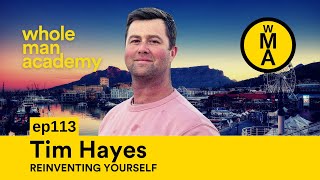
Tim Hayes went from corporate sales and addiction to building a fitness business that hit £250k annually, then raised £500k for an app before moving into coaching. He now helps men through what he calls fearless communication, practices meditation, and maintains a bonsai collection of about 150 trees from his base in Cape Town.
Questions this video answers
2005
About £250,000 per year
£150,000 for 15% of the business
Just over £500,000 (around half a million pounds)
Cape Town (overlooking a nature reserve)
Whole Man Academy. Because the world needs strong men. Whole Man Academy is changing the game for men around the world. It's for guys who want to live an epic life of fun and adventure. No matter what we believe, deep down, all men want to go on their own hero's journey to becoming resilient, confident, fearless and fulfilled. Listening to be inspired by guys who don't settle for living a life of mediocrity. This is your call to action action and call to adventure. Are you ready?
Okay, guys, before we kick off the podcast, just to use a reminder to sign up for a game changing weekly E letter that goes out to hundreds of men around the world, just go to www.wholemanacademy.com movement. Right, let's jump in. Okay, so this is the Whole Man Academy podcast, episode 113. My guest today is Tim Hayes, high performance business coach and mindset mentor. Also bonsai tr, donut and bongo drum player. We'll come on to that if we get time, but we probably won't. But firstly, how are you and where are you?
Thank you so much for inviting me to do this. I am fabulous. Very excited and originally from London, but I sit in Cape Town today. That's where I live now, overlooking a nature reserve.
So it's a million miles away from your kind of, let's call it, let's call it former life. Well, one of the questions I want to start with, we can jump into your, your story because there's so much to unpack, which I think guys will find really interesting. But I just wanted for you, what's your lands? What's. What's your take on the landscape for men at the moment? Because I think it's a really challenging time for men to know what they can and can't say what they should or shouldn't be doing. Especially if you're white, then you're really. But so I just wonder what your thoughts were on that.
Gosh, big question. We probably need about half, half a day for me to answer that. You know, I, I was, I was sitting in a meditation this morning and, and, and the. What was coming to me is we know, we know, we know. Right? And I think that it's wonderful that men are having the opportunity to be vulnerable and, you know, just, just be themselves really. And I think the pendulum will kind of start to. Is. Is starting to equalize masculine and feminine energy. Is. Is. Is prevalent in everyone. It's a spectrum. And it doesn't mean we are one of more and less of the other. It means that we get to move through that spectrum on any given day. So I, I see quite a lot of kind of pots poxic toxic, positive toxic positivity around this and we just need to start being honest. We just need to start being truthful and, and then see how things play out from there.
So is it is an issue that comment of or that saying toxic positivity? I, I saw that a couple of months ago and I thought it was so interesting because we hear of toxic this, this but positivity is one of those also I was talking to someone where you said, you know, you can, I think having a positive mindset is very important and you want to be around people like that but sometimes you maybe need a smack of reality as well. Especially with the landscape of what's coming in the next six months or year. I think with, with the economy and food and everything else. So I think it's going to be a really challenging time for guys. But that's why it's important to talk to guys like you who have been through a whole mixture of different stuff. And I'll read this quickly. You said I transitioned from high flying corporate sales consultant to recovered addict fitness expert, multiple six figure business own. I launched and raised half a mil for an app and I self sabotaged my human potential in every way you can think of, which I thought was great. So let's start talking about your transition from the corporate sales because that's a job that I'm sure a lot of guys, you know, probably well paying but long hours and stressful. What took you from that to say, you know what, I'm done with this drug addiction?
Actually I, you know, I didn't really want to get it to university but my brothers did, they went to Oxford, they studied law. I kind of positioned myself as the black sheep which was a convenient label that allowed me to be naughty. And I was very good at being, you know, I was very good at that. That was kind of, that was my identity. So I ended up going to Bournemouth University to do an IT and business degree. I didn't have any interest in it. I think I kind of wanted to read philosophy and my parents were like no, you're going to do a degree that's useful, no disrespect to people that are reading philosophy. And I came out qualified in, in 2000 and someone said well you're good at selling your natural salesperson, you've done an IT and business degree, why don't you go and sell tech? And that's what I Did. So I went into the city in 2000. I was young, I wanted to, you know, I kind of watched Boiler Room and that's what I wanted to do. Right. I wanted to make loads of money and take loads of drugs and that's what I did. And I got sacked from my first job in 2002 for doing too much coke. And they, he said, like, you're very good, you're very good salesperson, but we don't know where you are anymore. Then I got another job and it kind of, I won't go into it, into the darkness. But it got dark, it got worse. I moved over to crack and that kind of tends, you know, the wheels come off quite quickly. So I went into rehab in 2005 and when I came out, didn't really want to, I didn't want to go back into sales. It wasn't very, it wasn't fulfilling for me and I wanted to be of service to others. That's, that's kind of what excited me. I thought about being a teacher, a therapist. I don't think coaching was kind of Mainstream back in 2005. Yeah, but because I had like a fitness background, it was, you know, I could do my PT diploma in six months and so, so that's what I did.
Yeah. I think that it's important to realize that you've. What I've seen through your stories that you've reinvented yourself several times and, you know, plenty of guys I know that will be stuck in the same job and kind of worried that what else can I do? And it's a reminder when you speak to guys who've done have multiple careers, either run different businesses or said, you know What, I spent five or 10 years doing something, but I then moved on to something else. So what was it like when you went from the, the corporate sales, which is basically a desk job, to then being in, in kind of the fitness industry. And then we'll talk about the, the, the app as well in a minute.
It was hard because, you know, I was 30 then and all my friends were kind of settling down, getting married. You know, they, they were, they, you know, their careers had, you know, hit a good point by the time that they were in their 30s. So, you know, and I was, I was in London cleaning fitness equipment at a sport or on the Finchley Road. And you know, I was just, you know, a kind of entry level pt. So it was hard. But I've always been entrepreneurial. I always knew I wanted to grow my own business. So I Just sort of put my head down and, and, and did that.
Did you have at that point a kind of a plan as to what the next. You know, I'm sure now you've, you know, a lot more focused on, you know, we know about setting goals and vision boards and etc. But I just want, at that age, when you leave a job, that basically the way I saw it, you know, when I worked in the city, I turned up, did my job, and I was living kind of like, you know, I was just living for the moment. I was never looking ahead five or 10 years until I got to my 30s and got interesting personal development. I was like, is this what I want to do for the next, you know, 20 years or something? But I just wanted, at that stage, when you're, say, 30 and you've already been through that job and then the kind of drug addiction, were you still kind of just working on? You know, I'm just here, I'm doing what I'm doing, and that's it.
I didn't have a plan. In fact, I never really have a plan. I, I think some, I think sometimes that can get in the way of just doing what we should be doing. I think intentions are good, but I think setting firm, set goals can lead us down, you know, feeling guilty that we're not doing enough. But I knew that I wanted to be great at what I did. I knew that coaching clients in the fitness world was really important to me. I think it's a privilege whether you're a fitness trainer or a business coach, whatever type of coach you are, Someone comes to you with their body, their mind and their spirit, and they say, here's my money, now help me. So I've always taken that very seriously. And I think that's why I, I did so well with, with that business, which, which I just kind of built up through, through referrals. So that was really, that was my goal, really was just to serve my clients in ways that they've never experienced it before. Right. You know, and I think in 15 years as a, as a fitness trainer, there were maybe one or two clients that I was in front of that didn't sign up with me. And I remember saying to one of those clients once, she said, I'm not sure about this. I need to speak to my husband. I said, well, that sounds like that. No. And she laughed. And I said, I don't understand. And she said, what do you mean? I said, like, you not working with me is a really, really bad idea. She just started Laughing. She thought I was being cocky, but it was, I just believed so much. Not that I was the best, but I believed that I could be really great in people's lives.
One question. I think there's so much to unpack about this, but I wondered for you because we always know you can give people the, the greatest plans or ideas and things to do, but they've ultimately they've got to go off and do it themselves. You know, you can't do someone's press ups for them or you can't kind of, you know, be watching what they eat all the time. So I wondered if you ever got frustrated about, you know, clients that aren't doing what you're telling them will work to do. I mean that, that applies to coaching or personal training, to be honest.
Yeah, I, I definitely did in, in, in the beginning because I think in the beginning people came and they said they, you know, they need to lose a stone in a month or whatever it was. And that was the goal. And I was the trainer that said, yeah, no problem, but of course it takes longer than that. But as I, as I kind of got more skilled as a coach, I, I attempted to get people to zoom out a lot more and, and look at, look at the bigger picture. Ultimately it's why I left the fitness industry because fitness is about image. Regardless of what anyone says, people just want a nice ass and, and they want to look, and they want to look good. They might dress it up as being strong, but that's why I transitioned into coaching. And in the coaching space now I get people to dream a lot bigger than they're dreaming and then I turn that into, into a reality. I don't get frustrated if it doesn't happen, but it hasn't happened yet that they haven't got that. So I'll let you know when it doesn't.
And how do you. I'm always interested because sitting down with someone to get them to kind of dream bigger than they were. Like where do you start with that? I mean literally in a notepad and a pen and a big whiteboard or.
Yeah, you know, I mean I coach coaches so most of the people that come to me, they're looking to refine the way that they work with their clients, get, create a deeper and more profound coaching experience for their clients to build up the referrals and then they want to expand their business which is a, often a revenue aspect. But many people when they dream, they dream based on their current reality and their current stories that they've been Telling themselves so those dreams are not accurate.
Yeah.
So my job is really to probe beyond that and to get people to look deeper and in a different direction that they haven't looked at before. That's fundamentally what coaching is. So I always just start with a blank canvas I don't have. My agenda is to get the client to, to step into their truth.
Do people show resistance to that? Because I always think with an exercise like that, you know, when you grow up that just, you just don't get taught that in school. And you know, even as you're growing up, most people kind of go to university and, or just go and get a job and they're kind of just in the daily grind. And at no point do you have any kind of self reflective tools to say, well, what do I want, you know, my life to look like now are changes. So do you find that people easily kind of let themselves go and open up to that?
A lot of the people who come to me have, have maybe seen me or they know me before. So they, I think they kind of have a rough idea of, you know, the experience that they'll get. And I typically spend two hours with people before we decide whether we're going to work together or, you know, one of the ways that I coach. So in answer to your question, generally, no. But I do have people. In fact, I had someone that I spoke to two days ago who had a very scarcity mindset. And so when he was telling me about his dreams, they were nowhere near what I could see. His, you know, his possibilities were right. His potential. Yeah, so, and again, that's my job is sometimes to have really uncomfortable conversations and ask and call, call out the bullshit.
You know, I guess for so many people, you know, after 112 episodes of the podcast and you speak to so many different men from all different backgrounds and then men through the whole man academy and you realize that so many of us are kind of running a story in our mind usually based on what we've done in the past. And you trying to remember that that doesn't equal what your future is going to be. But we just said that word potential and I was trying to think where I saw it on either your website, something you've written about scaling your human potential. And I just wonder because for most guys, they, I would guess that they don't have any idea of what is possible. And I take you back to even 10 years when I was working in the city, if you'd have said 10 years later that I'd been Living in the Cotswolds with a couple of kids, you know, running the whole man academy, helping people with all this stuff and not going out getting drunk, you know, completely different. I'd have probably laughed in your face and just been like, that's just not possible. And I wonder for most guys, they don't realize where. Where they'd start with scaling their potential.
Yeah, I think. I mean, if I look at my peer group, you know, I'm 45, and a lot of them are still in the careers that they got into when they were in their early 20s, and now they've got married and they've got kids, and they're kind of realizing that the next chapter doesn't really want to look like their current chapter. So I think a lot of men do know, but I think they mask it with a lot of fear around whether it's possible. And I think that's the space that I really like to play in, is because it is. I mean, I have the privilege of drug addiction. I have the privilege of losing, you know, that fitness business that I. I built up. So. And. And leaving the app and. And starting a coaching business with nothing really, and then building it up to being very successful. So, you know, I have a proven track record myself. So, you know, and I'm not special and different. If I can do it, anyone can do it.
Yeah, I think that's such an important point because often people look at others and either think they've been lucky or, you know, don't get me wrong, some people, and I would say some people like work in the city, can just happen to bump into someone and get talking and turns out to be a great client and their colleague who's a great broker or something, you know, just doesn't get that. So there is luck involved in some respects. But like you said, it's about also hard work and taking that risk. And I was thinking, talking to you, I realized myself, it takes balls to do it because it's very easy to stay in a job where you get paid for turning up and trading time for money and not going out and taking that risk. So I take my hat off to you. Well, let's talk about. I'm always interested in also the business side of things, where you said, I launched and raised half a million for an app. So tell us about that, because I find that really interesting.
Yeah, I mean, that's a classic example of what we were just speaking about, is about just doing it. And just to comment on what you just said, I don't think it is easy just staying in a job and ticking the boxes and living a life that's fairly beige. I think that's actually quite, really uncomfortable. More uncomfortable than shifting into something that's potentially very exciting. But with the app. So I built up a very successful business in London, personal training business. It was doing about 250 grand a year. I was working with like, Amy Winehouse and Rolling Stones, royals, presidential families and. And I got to a place where I ended up relapsing back into drug addiction because I taken my eye off. Why I. Why I was a fitness trainer and I wasn't serving my clients, I was just signing them because they were rich and famous, right?
Yep.
So I moved back to Cape Town and someone said, why don't you do an app? Because I wanted to franchise my previous business. And it was literally, this is how it went. It was, all right, I'll do an app.
Yeah, that was it.
Right. And I knew nothing about apps. Because of my relapse, I had no ways of raising money or investment. My credit rating was gone in the uk. And then a friend of mine called me up, he wasn't happy in his career. And I said, look, I've got this, I've got this thing. I think it, I think it will fly. Do you want to put some money in? And he was, all right, I'll put some money in. He put 15 grand in. And then that was it. We. We built an app. We went to investors that. One of the first investors we met, we asked for 150,000 pound investment for 15% of the business. We valued the business at a million pounds, even though I've just offered a PowerPoint presentation in a spreadsheet. And he, and he gave us the 150 grand and that was it. You know, it was, it was, it wasn't that hard. I didn't find it that hard. I mean, you know, my business partner, I brought him in because he was good at that stuff and I wasn't good at that stuff raising. So I think that's important to, to honor him. And, and then, and then that was it. We were kind of off, off and going. And we ended up, in four years, we raised, yeah, around half a million, just over half. Half a million pounds. And it was just, it was crazy.
I think that's great when it shows that it's not, you know, trying to do it all yourself doesn't always. Because we've all got our strengths and weaknesses. And, you know, I've spoke to so many guys through the whole man academy that understandably you think you can do it all yourself. And then you realize that someone else that say, maybe has got different contacts or different experience. So being okay, asking for help is always, you know, something that a guy should remember. And I wondered for you because the whole man academy is all about, you know, several things, but one is encouraging guys to get together to talk. Because I had a conversation this morning with someone who spoke about their father, who I guess is in his late 60s and of course is retired. So he hasn't got the business and he hasn't got the interaction. And she said he's got no one to talk to because generally men of that age especially don't have, they're not getting together with lots of other men and even when they do, they don't talk about stuff. So you've obviously had some challenging times. Have you had anybody at that time that you've, you know, spent your time either talking to either a mentor or even, I mean, I don't know if you, if your dad's, if you had a relationship with him or something like that, but someone you can talk to, to kind of lay these things out and work through them.
Yeah, I have. I mean, it's funny, isn't it? Because when we're children, we always, we, we ask for help. I have a six year old stepdaughter, you know, she comes and asks me for help. I teach her how to ride, I've taught her how to swim, how to ride a bike, and she asked for help. Right. So when you're learning something new, that principle doesn't change. Learning something new means you don't know how to do it. And when you do it for the first time, you fall off your bike. Yeah, you and on your ass and it hurts and you cry and you get back up and you try again and if you ask for help, it's, it's going to happen a lot faster. That thing doesn't change when we're adult. In actual fact, the thing that does change when we're men, when we grow up is the ramifications of not asking for help are far greater because they affect our money, our jobs, our relationships. So we actually need more help when we grow up. I was lucky. My dad, he's been sober for a long time, so he's been down that path. So, so I would talk to him. I have two older brothers, but I also, I had good friends that kind of wrapped around me through those times. The first two businesses that I did, the fitness business and the app. I didn't ask for help and I didn't get a coach. And, And I found that quite difficult as a, As a, As a result this time. Now, as I sit here today, I've got, I've got a coach, I've got a mentor, I've got a social media manager, I've got a LinkedIn manager and, and a spiritual advisor. I've, I've. I've got a lot. And my part. Yeah. And my partner that I are. My, My, My beautiful relationship I'm in. Lisa, our mantra is fearless communication. So it's. And, And. And one of the things I found so difficult and I talk about this is for a man to say, I don't know and I need help. Those are very, very powerful things that men can say. Because I think what I found over the time and I've mentored a lot of people in drug addiction and alcoholism is people don't know. They know they need help. They don't know why, and because of that, they don't ask for it. You know, so sometimes I will say to Lisa, my partner, I have this feeling. I don't know how to express it. I don't even know where to begin. Right. And then I just. That's it. And that's me saying, that is enough to open a conversation to get guidance and support around that. So, yeah, just simply just, you know, checking in with people, strangers, friends, people like you, people like me, whoever it is, and saying, I need help. I don't know what I need help with. And I don't know. I don't. I don't know. Beautiful place to start.
I just, I'm just going to say I think that's great because for, I mean, let's take, you know, as a. What's the word? Looking for as a. As a focus group. But, you know, all the men in the city that we used to work with in various shapes and forms, if you looked at all of them, most of them wouldn't be particularly open to their partner. And I knew plenty of guys that, you know, basically kept most things from their partner. So what was the term you said? Fearless communication.
Fearless communication.
This communication. Because I know myself. And again, I've worked with a couple of guys who, when they're saying, I've got this, this, and this going on, you'd be like, okay, I'm not saying you should unpack all your stuff necessarily to your partner, because some partners don't know how to react to that. But you say, what does your partner think? And they'll say, I haven't told her that the business is going under or I haven't said this. And you're just like, maybe that's adding an extra layer of pressure because you're hiding that completely. So I'm going to write that one down and probably write about it in our e letter about fearless communications. I think that's, that's a powerful one. Now let's talk about, I mean, we talk about personal development being so important for guys. I know you're big into meditation, so my first question is, when did you start doing it? Second question is, did you find it easy and now where are you with it? Because so many different guys you spoke to are like, I didn't find it until I was 30. 40 other guys started young. So what did it look like for you?
I started about a year ago. Yeah, I tried it before, didn't really work.
I.
It took me about six months to really get into it. Yeah, it's a bit like fitness, right? It's exactly the same, you know, if you want to go and run 10 miles or whatever and you've never run before. When you start running, it's really uncomfortable, it's painful, it's horrible. You don't like it, you know, you're sore off towards this is. It's the same mental fitness, spiritual fitness, but, you know, it's the same deal, right. In the beginning it's, it, it's just a bit annoying. It's not, you know, you're not, you're not going to be able to clear your mind, you know, for 25 minutes and sit on a velvet cushion, which is what people think. In the same way as you can't run 10 miles if you've run a mile before. Yeah, you know, it's the same deal. So. But for me, I actually needed my motivation, was I right? So I'm. I want to build a seven figure coaching business. That's my focus because I live in Africa and there's a lot of people that need help and I want to give back. Right. I also want to be able to say that I've done it, you know, so that I can help and motivate other coaches, but actually really done it. Not, not the scaling coaches that say, make a million pounds in four days. Right. So. So that's my motivation because my primary purpose as a coach and as a human is to love others, is to serve others, to show up in my truth and just be honest with Lisa, my partner, my stepdaughter, my dogs, you, whoever it is my clients just be Tim, right? Because I spent so much time being someone else. Now in order for me to do that, I need to spend some quiet time with myself. I have goosebumps talking about this because it was so painful for me to present a different version of myself to the rest of the world. It was just exhausting. So I get, hey, just acting the whole time, just pretending, just, you know, just because, just assuming, you know. And so now I get up at 5am in the morning most days, four or five days a week, right? I listen to an app that plays sounds and I just. Some days I quiet in my mind. Some days I don't. Some days I go into manifestation and future vision where I think about me walking onto a, you know, doing a TED Talk and millions of people are cheering and I, and I play around with it. You know, I don't force anything and, and it's quiet time for me. And that's, that's how I, how I, that's how I view it. And some days it's, I'm great. And some days it, it's, you know, it's, it doesn't work for me, but, but I do it. It's this, you know, it's, it's, it's, it's the discipline of it is, is also an important aspect for me. And I just, I'm just a better human when I do it.
I was just going to say just starting the day the right way. You know, we've always been not saying that a morning routine is gonna, you know, suddenly sort all your problems out in the world, but if you can start the day with a, with a decent, you know, easily achievable morning routine to just kind of start your day off right can help you kind of make those, you know, better decisions through the day. And talking of, I mean, one of the biggest things now, we met through LinkedIn as well, and I just wondered. I always find interesting to understand a guy's relationship with social media. So primarily, I know you're on Instagram as Well, but for LinkedIn, because LinkedIn for me is like, I've been on it for four years but never used it. You know, I had a profile, but that was it. And then someone said to me, you know, maybe six, seven months ago, like, why aren't you using LinkedIn for the whole man academy? And I was like, to be honest, I'm spinning so many plates. We used to use Instagram and that's it. So I wanted for you, what's your relationship like? With social media especially, as you said, you have a social media kind of coach or.
I, I don't. I mean, I'm 45. I don't come from the. You know, I didn't grow up. I didn't grow up with it, so it's never been that natural for me. I've been on Instagram as a profession, you know, under this business for a couple of years. I like talking, I like doing videos, and then I get someone to make it look nice and add all the hashtags and, you know, do that thing. Yeah, and then LinkedIn. LinkedIn has changed a lot recently. You know, it used to be quite boring and it's suddenly become very interesting. So I've been on there, I think, two, two months now, and I got someone to help me, you know, kind of navigate the, the. The processes, you know, how to post, when to post, what to do in order to get better, better engagement. And I love it. I love LinkedIn. I get. I mean, we met on LinkedIn, like on Instagram is a bit, I don't know, just. It's just a bunch of people dancing around miming, you know, wise people's words. And, and that's a bit judgmental, but do you know what I mean? It's not, it's not. I. I found now with Instagram that I just do my thing. I don't have to feel pressured to do stories and stuff. Like, I'm just gonna do my thing with that. And if people like it, cool. Same with LinkedIn. But I'm just. I like people commenting, I like what people write, what people say, I follow people that I'm genuinely interested in. Like, it's like I'm genuinely interested. And the people that I connect with, it's because I like something that they've said. It's not necessarily to sell some product to them. It's because, you know, who knows what will happen? Yeah, like this.
I always think, also it's that I saw a great post the other day, which had multiple bits, but it kind of said, you know, be okay kind of selling every day. And that's not to mean it meant to be like a hard sell of things, but it's like, be okay mentioning what you do and, you know, letting people know. But one of the things I find interesting about LinkedIn is, or just generally social media, is the amount of arguing that goes on, you know, and I could pick 20 different topics. You know, we could go through Ukraine, vaccines, masks, COVID lockdowns, abortion, all these different things. And you could search for it and you'll find people arguing backs and forwards. And that's one thing I just look at. I'm like, man, like LinkedIn, maybe that's made it more interesting. But the amount of times that people get triggered by stuff is, is I find it quite amusing. I wondered if you saw the guy who, what was he labeled? The crying CEO who had, who had taken a photo of himself crying because he'd had to lay some people off and he got absolutely slaughtered for it because. So it just looked so fake and disjointed. But what I found funny, forgetting whether he did or didn't, was you've got him posting a picture and crying and you've got John saying to him, mate, that's really pathetic. Like, we can see that. Someone arguing with John, John, that's really unfair. Somebody arguing with that person. That's not nice to tell John that it's unfair. And it was like a vicious circle. And I was like, yeah, hell, like it's, it's like a cesspit of. So I guess half the issue is being able to separate yourself from that, be in business and just be like, I'm just posting what I'm posting and concentrating on the people that I read your posts and I enjoy reading them as opposed to getting dragged into the rabbit hole of, like, nonsense that goes on.
Yeah. I never saw the actual post of the crime CEO, but I saw other posts, other people that had talked about it. And, and, and I've seen a lot of men posting, not actually since then, but prior to that, there were, there seemed to be this theme of men posting pictures of them looking sad or crying.
Yeah.
And, and this is what we would talk about earlier. It's the pendulum, right. People always kind of go full kilter and then they get. And then it kind of finds its, it finds its, its, its way. So I like, I like reading all of that, all of that, you know, the arguments. I've learned my lesson over the years that, you know, if you're going to comment, be prepared. Right. Because there are people on there who, who are angry and they're triggered and they're going to come back at you. So, but, but typically now I just kind of, I, I just read. What I do love about LinkedIn now is that it appears the business world is becoming more conscious, more aware, and, and I think all relationships are built on the same, which is just truth, trust, being kind, being honest. You know, the business world, you know, is so attached to ego and the external that, you know, we have to present, we, we, we think that we have to present a different version of ourselves, you know, and, and it's just not true. You don't, you don't, you don't have to. Most of the, like, I work with coaches. I also work with leaders. And a lot of the leaders, you know, they, they do, they're in big deals at multimillion deals. They talk to me and they're like, there's this and this and this and what do you think I should do? And I'm like, well, what do you really want to say?
Yeah, crazy.
Crazy, right? And yeah, you know, just, why don't you say what you've just said to me to them? And they're like, what? I can say that? Yeah.
What?
Yeah, I can actually be myself and tell the truth?
Yeah.
You know, and so I do like the way that business and LinkedIn is evolving at the moment because of this. And yeah, I mean, good, good PR for the crying CEO, whoever, whoever is. Maybe I'll, maybe I'll do it myself.
Yeah, I might do a couple. Yeah, we do. Patrick, we do want to get a crying on camera. I found funny. There's a guy who I know that lives locally and I always think jealousy can be a good thing because maybe it can drive you on to doing. You know, you might be jealous because someone's got the lifestyle you want and as opposed to saying, well, you shouldn't be jealous, you might be like, well, actually, at least that means you might take action to get where you want to be. But it was funny because a few weeks ago he's got a local business, he pays himself really good money and he has zero social media. And I was like, oh, wow. You know, because he's got a local business and he doesn't need social media for that. It doesn't have LinkedIn, doesn't have Instagram, Facebook, any of that. His business is fine. A little bit was like, ah, life goals to be able to have no social media or you can use if you want to, but not feel like you should. So even for me with the whole man academy, I realized, like you said, we. I can't stand Facebook. Instagram is all very well, but I don't think people read the posts and I would. Then you might write something that hopefully is thought provoking, interesting, and most people just like your picture and just scroll on. Whereas at least LinkedIn is more professionals in theory sometimes and it gives you more of a chance to kind of write and, and create a bit more. I don't know, impact and feeling. So now, last question then before we let you go. I know you've got to do, but bonsai trees. What's going on?
An ex girlfriend bought me a little one. I don't know how. Six years, seven years ago and it was dying and I took it to this bonsai center and, and I ended up buying a couple of trees and you know, I guess it's better than smoking crack. Right? You know, I do, I do have quite an addict, although it can be as expensive as smoking crack. But I do have a tendency to go all in on things and I've got about, I don't know, 150 trees in my garden. Bonsai trees. Like yeah, some, Some are like 60 year old elms. I'm, yeah, I'm thinking they grow so a bonsai tree. A lot of people think bonsai trees are special trees. They're not. They're just normal trees that you've made small. The definition of a bonsai tree is a miniature tree in a pot. So they can be as big, as small as you, as you want. I have some that are like half a foot. I've got some that are like four, five foot tall. So yeah, I, I love them. You know, they, they, I just like playing with them and there's all sorts of analogies that I can throw in for growth and, and potential. But it's just a really lovely hobby and it's proper geeky. Like you don't generally meet old people, people typically that sit around talking about soil and fertilizer.
It'd be very important to know how to grow things very soon, so.
Exactly.
Yes, exactly. I think that's important. Well, on that bombshell of bonsai trees, it's not often we finish on something so extravagant as that, but I would say hopefully at some point we'll, we'll meet in person for a man hug.
Yes.
Are you planning on being back in the UK at any point or.
Yeah, I am. I was over in March and I will come back. Most of my clients are in the uk, so. And I've got some people that I haven't hugged and hugging. I, I do like a, a man hug. What's the difference between a man hug and a woman hug?
I think you squeeze harder when it's a man.
Right. And a little noise.
Yeah. And a little, you might forget an accident. You slip in a kiss as well. And you didn't mean to.
Right.
But yeah, with my, my best mate Tom, you know, if I hug him, it's a proper bear hug. Whereas if I did that to my partner, I'd probably break one of her ribs. So it's. Maybe it's. It's a softer touch for the feminine side.
Right.
But. Right, well, I will let you go. I appreciate your time. I'll put all your links on in the show, notes for the work you do and. And hopefully we will speak to you soon.
Amazing. I really. I really appreciate it.
Thank you, Tim.
Bye. Bye.
Cheers.
Thanks for listening. Remember to sign up to our game changing weekly E letter that's read by men around the world. Sign up@homeanacademy.com forward/movement. Until next time.










