EP117 - ADRIAN SHIEL | ESCAPE THE 9-5 | WHOLE MAN ACADEMY
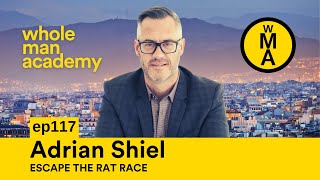
Episode 117 of the Whole Man Academy podcast (host: Anthony Astbury) interviews guest Adrian Scheele, a Barcelona-based digital entrepreneur and LinkedIn specialist who left corporate life to build coaching-focused businesses. The conversation traces Adrian's decision to quit his 9-to-5 in/around September 2015, his use of mentors and personal-development practices, the founding of coaching/marketing ventures, and practical LinkedIn-driven customer-acquisition and product-creation tactics (audience-building, content strategy, low/high-ticket offers, and simple tech for courses). The episode targets men interested in escaping unsatisfying employment, personal growth, entrepreneurship, and earning online.
Questions this video answers
Episode 117
Adrian Scheele
November 10, 2022
51
September 2015 (noted in the interview)
Whole Man Academy. Because the world needs strong men. Whole Man Academy is changing the game for men around the world. It's for guys who want to live an epic life of fun and adventure. No matter what we believe, deep down, all men want to go on their own hero's journey to becoming resilient, confident, fearless and fulfilled. Listening to be inspired by guys who don't settle for living a life of mediocrity. This is your call to action. Action and call to adventure. Are you ready?
Okay. So this is the Whole Man Academy podcast, episode 117. My guest today is Adrian Scheele, all the way from Barcelona, digital entrepreneur, LinkedIn expert for coaches, lover of personal development. We're going to Talk escaping the 9 to 5 applying optimization that he's learned into your life, social media and plenty more. But let's start off with how are you doing?
Great. And thank you so much, Anthony, for inviting me. It's an honor. I love what you're doing and if I can contribute in any way, then, then I want to. And that's why I'm here.
Music to my ears. And I say that because, you know, I've written on LinkedIn and on, on other social media platforms how my network has really expanded since I started doing the podcast. And also one of the things there is so many guys say, you know, it's if there's someone I can introduce you to or there's something I can help you with, which I always, I'm always happy to take help as opposed to go, no, no, I'll do it on myself. But like yourself, we're going to talk about LinkedIn and how things like if you can expand your network in theory, if they're the right people, that can really help. But tell me firstly, and we jump back to was it September 2015 and you quit your 9 to 5 now?
Yes.
I don't necessarily think, I'm not saying that everybody wants to or should quit 9 to 5, but I certainly know a lot of guys who have thought they're in a certain role and they're like looking around thinking, is this it? So what were you doing? And how did you get out of that? Because it's not an easy thing to do.
No, it wasn't. And I'm a late comer to the party. So I was in my 40s then, almost in my mid-40s. I know I don't look it, but, but I'm actually, I'm actually 51.
Yep.
But, yeah, so I, you know, I've been in the Corporate world forever. Since leaving school, you know, climbed the ladder, you know, humble BO from. From Birmingham, and I did what everyone thought they're supposed to do. I built a career. You know, I had ambitions, I wanted to do well. I actually had the opportunity to move to the U.S. i lived in the U.S. for five years, and, you know, I just kept climbing the ladder, basically. And I got to a position. I was actually a product manager, and I had a big team of people working for me all across the. I had this great job, really well paid, you know, great bonus, bonuses, company BMW, you know, fly everywhere business class, all that kind of stuff.
Yeah.
And. And I was miserable. I was absolutely miserable. I would wake up on a Monday morning and just struggle to get out of bed because I couldn't face the drudgery of the week ahead. And. And I felt guilty as well, because I got this job that people coveted. You know, other people were envious of me, and everyone was like, your job. You know, I want your job. Your job's so good. It's so easy. And it was. For me, it was easy. I could do it, my eyes closed. But it was. It was awful because I was just so unfulfilled. And, you know, I just knew I was supposed to be doing something else. And I knew I wanted to. You know, I was really clear that I wanted my own business. Yeah, I wanted to help people, and I wanted to do something online so I could have the freedom, you know, but I didn't know what. And, yeah, that's. That's actually when I discovered coaching and mentoring and, you know, I was always a fan of personal development, but it kind of. It was a secondary thing for me, but it really shifted to the forefront of my life. And. And it wasn't until I started working with mentors, you know, so basically, I got a big redundancy package from the company I was working from. It gave me a buffer, but actually, it gives you a false sense of security. It gives you this safety blanket that.
Yes.
That actually keeps you in your comfort zone. And I pretty much, you know, I had more than a year's salary, and I pretty much squandered that year salary. Just messing around, like, trying to figure out.
So many people are. Guys say the same because, like, you say, it's like, there's no urgency, because it's like a month salary. I'll get on with stuff.
Yeah. And it's. In a way, it was. Was. Yeah, it was one of the worst things I could have done, you know, getting that payout but anyway, it's all good. But it wasn't until that money started to run out and I realized I don't know what I'm doing. I need to find someone to help me. So I, you know, that's when it, that's when it all changed. So I hired, you know, I, I found mentors, I hired coaches. I, I figured out what it was I wanted to do. And yeah, the, the rest is kind of history.
It's such an interesting story because a lot of what you, I mean, especially the, the redundancy giving you the buffer, which is good because then, you know, you're not without money. But like you say, it gives you that kind of security blanket. I know what that's like. You know, I've been made redundant twice and been very lucky both times to get a good payoff. But I've spoke to plenty of other guys who've said the same, that, you know, it's that kind of. If you quit your job and you had to start creating money, and in theory, by positively impacting people as soon as possible, you take massive action. But it's quite easy. Like, I'll ease myself in.
Yes.
And also I wondered within that time, having that lack of, kind of purpose when you've not got anybody to tell you what to do, what time to get up, where to be, what to do, what was that like?
It was a really big shock to my system. And, you know, I took a, actually took a contract in South Korea for three months, like working in a similar field to where I was. So that work that sort of took the, the, the, the force out of the blow a little bit. But when that finished, yeah, I was like, okay, now what? You know, what do I do now? And so, you know, I get up, I'd still get dressed for work. I, you know, because I was in the corporate world, I still put, you know, a nice shirt on and just make myself feel like I was working. But then I sit down on my computer and be like, what do I do now? Yeah, so, yeah, it was, it was a real shock to my system. And it was, yeah, it was, it was actually quite a tough year because not having a purpose and not really knowing what I wanted to do and where I wanted to go. Yeah, I was floating in space a little bit. So, yeah, it wasn't, it was, it wasn't easy.
I mean, I would say that I've seen. Spoke to guys that felt like it kind of is a quiet drain on you because you kind of, you know, you want to feel like you're making progress, moving ahead, what have you. And it is very hard to snap out of it. I always laugh when I got made redundant for the second time when I was leaving the city, you know, and I wanted to be. So it all went, worked perfectly. But I used to get up at half five with Emma to walk her to the station because she still worked. And I walked to the station and then I'd walk, turn around and walk home and I'd get in the door at 6 o' clock in the morning and then you'd be like, it'd be pitch black. Like, what do I do now? Because I was so used to 20 years of the markets open at 7, speak to clients, pick the phones up. Yahoo people read this to that and suddenly it was like, it's just you. And you're like, I'm not sure about this. So how would you bring that back to the current day? And we're going to get onto the kind of the LinkedIn and coaching side, but so many guys have been affected by lockdowns, etc. Etc. And some being forced to work from home. So how have you now managed to become, you know, more focused and productive? Like just day to day when you're sitting at your desk because again, when you haven't got anybody else, kind of not say you should have people standing over you, but it helps when you've got other people around you to kind of get on.
Well, I had a little bit of a head start with that because I used to work from home a lot anyway before. Before I, you know, got made redundant.
Yeah.
So I had a little bit of practice, but of course I always had someone else's agenda to follow. You're right. When you have your own agenda, it is, it requires a lot of self discipline and it's just something. Yeah, I mean, I've had to build it over time and personal development has helped with that, you know, really? Okay. Figuring out who I am, what I want to do, where I want to go, you know, you have to keep that front and center and keep moving towards it. And yeah, you know, now, you know, I'd say I work harder now than I did when I was in the corporate world, but it doesn't feel like work most of the time. You know, it feels, I'm just having fun, I'm doing what I want to do on my terms, so. Oh God, yeah. And when, when you're creating stuff, you know, I'm building, you know, building things at the moment, making content, it's just it doesn't feel like work. It's fun, it's energizing. Obviously when I'm, you know, doing the finances at the end of the month, that's not so much fun. But that, I consider that part work, but I don't consider the rest of it work. You know, when I'm working with clients and, and doing this kind of thing and meeting new people and networking, it's just fun.
That's priceless feeling, I think, to. I know there's the old saying, well, I'll get it wrong. But you know, if you enjoy what you're doing and it's your work, you'll never work a day again. But I'm the same. You know, last night I was sitting up till 10 o' clock finishing stuff off, but it's not like I'm like, oh, I've got to go. I'm like, hey, I'm really enjoying what I'm doing. Whereas before, you know, I loved it for many years, but after a while it became painful. And I've spoke to enough guys on the podcast who have had those, you know, it's not saying they always hated their job, but maybe they got to a stage like you say, is this it?
Yeah.
But one of the things that, you know, lockdowns and in this last two years I think, I think have driven a lot of people to realize is that having some kind of digital, sorry, ability to earn money online, you know, and, and I, I don't necessarily like the term, you know, passive income because there's, there's a shitload of work you do beforehand. Yeah, a lot of guys are interested in doing that kind of stuff. And you obviously say like a digital entrepreneur. So what is digital entrepreneur for you and how would a guy be able to kind of implement it?
Well, I think I did it. I, I put the, the cart before the horse. So what my journey was, you know, I cut all ties from the corporate world. I was, But I, I actually think that was a mistake and, and I'm kind of, you know, it's great. So I've learned along the way. But what I did was I moved into the, you know, the high ticket world straight away. So I focused on creating a high ticket offer, you know, for several thousand dollars and working on that and really slugging out to, you know, build this funnel, this thing where, yeah, you know, people get enrolled and you get them on a call and you have to learn how to do so. You know, my background is not sales, so it's really painful for me to do that. So it was, I caused myself quite a lot of pain by doing that. But, you know, I was successful. I built, I built two businesses now that are successful doing that. But I realized by just, I, I just looked around and, you know, I found people like, I know we, we're both fans of Justin Welsh. Yeah, yeah, I saw what he was doing and he did it the other way. He eased himself in with a, you know, low ticket and he focused on content and building his audience and then, you know, having a big enough audience that they're interested in buying something from you. So if I was going to give some advice to someone, you know, who's still in a job maybe and thinking either about starting their own business or just having a side hustle, I would do it. I would do what I'm doing now, which is focusing on building a bigger following and just figuring out, okay, what, what knowledge do I have that can be beneficial to other people that's going to help someone and then who is that someone? You know, find out what your niche is, who can help and then figure out what knowledge you can provide to them. And even if you just go on something like gumroad instead of $10 product like getting started and doing something, that's, that's what I would do if I, if I had to do it again. Yeah, I'd probably keep working, work on a side hustle. Because what, and what I found is when you, when you do something like this, when you're working on something that you, that is fun and energizing, it actually spills into other areas of your life and you become more productive at work, you become more, you know, so that, that would be my advice. Anyone who's thinking of, of making a big change and perhaps getting out of the corporate world, that's the way I would do it.
Yeah, you said something really important there. I know there's always different thoughts on how people should, you know, if they, if they're looking to lead their nine to five. But I'm a very big one for if you can keep your 9 to 5, which pays as long as you can just cover your bills, you know, it doesn't have to provide you with a lavish lifest or if you can go and get, if you hate what you do, then maybe you do need to leave, but go and get a job that just covers the baseline of bills whilst you work on everything else as opposed to saying shove it to your, your boss, walk out and then go right. Making money online and then you realize it's not as easy as people.
Other people will tell you otherwise, but they're like to. And some people have that kind of personality when they, you know, my, my co founder in my other business in high performing, Coach is like that. He's the kind of person they can say, up yours, I'm going to do this tomorrow. And he'll do it. You know, he will. He's such a performance focused, you know, but he's in the. He's. He's so rare that.
Right.
But most of us aren't like that and we need to figure out and, you know, take it step by step. So, yeah, I think for the majority of people, do it your way.
Yeah, that's. I know. I see some guys who again, will either be on our email list and will ask me advice and I always say I'm no expert. I've. I've got years of experience in what to do, not to do. And I'm trying to get around more guys like yourself who just give you. Sometimes it's simple stuff that you need to just be like, right, I'm focusing on this instead of trying to do all this different stuff. But I wanted a few with the personal development world in general because I didn't get into it, basically, which sounds pathetic. Until I was about 35 and I started listening to podcasts and then I started listening to, you know, like Tony Robbins and people. Like that was an obvious name that comes up. But I look back and I'm like, where would I be now if I'd have started listening when I was 20, you know, or in my third, in my early 30s? And I've met guys who are, you know, 20 years old and they're already taken, you know, a lot of thoughts and ideas from these people and I'm like, that's where the money is. And when I say money, I mean in development in yourself as much as the proper actual currency wide. But at what point did you get into it and who were the people that you looked up to at that point?
I mean, you know, I've always, I've read books and always sort of, like I said, had a loose interest in personal development and, you know, more, more, I guess, focused on, on management, you know, what I was doing back then. But honestly, it wasn't until, you know, you say you're a late comer. 35. I was 44 when I really realized, hang on a minute. If I'm gonna get anywhere in life, and I don't mean financially, I just mean if I'm gonna feel you know, and don't get me wrong, I've done so much in my life, I've traveled, I've had been really fortunate but something was missing. And if I'm going to find that thing and I'm really going to be able to look back on my life one day and say that was a life well lived, then I need, I need something more because the tools I've got aren't working. And yeah, you know, people like Tony Robbins and you know, discovering landmark and discovering meditation through various people, you know, following a lot of what mindvalley do. I know that's a bit more woo woo. But just bringing all this stuff together and really, you know, focusing and learning about myself, about life, about what's actually possible.
Yes.
And I didn't do that till I was, I was 44. And you know that that's the thing that's made the difference for me. It's the thing that has made it possible for me to, to be where I am now, to be, you know, successful. How you determine however you want to define success. But.
And I think you said the age of like let's say 44, I assume you know, or do you know who Daniel Priestley is?
Yeah, yeah, I, he's actually in my other business, he's our coach. We actually hire him as our sort of one to one coach.
Okay. So I interviewed Daniel, God, I don't know, about 100 episodes ago or something like that, you know. Yeah, I think it's where you end up being on, on for about hour 45 or something like that.
Yeah.
And then I went to one of his events and anyway, so I've always.
Got the key person of influence event.
Yeah, it was, it was one of their kind of one day seminars and then I went to the, the roundtable mastermind thing he was doing and I, and I learned to, you know, if you, if you want to go after someone and learn from them, you want to just not follow them but get around them. So I basically hung around to the end. Then me and him got in the lift together, walked to the station together and had some little ideas on things. But I remember him saying, you know, most kind of is it, you know, most people don't start their businesses on average till they're like early 40s or something like that. Which gives the average guy that's listening to this, I would guess average age is probably about 40. It gives you hope that it's like, oh, it's not. You see 20 year olds that are doing this super cool Stuff online with lots of followers and you're like, yes, but for lots of guys, starting at wherever you are now is just as good.
Yeah. And what, what people don't realize is when you start at that age, past 40, first of all, generally you've got a big professional network and a lot of people that actually already have trust in you and just, just through being older, you have more authority, you have more credibility because you have more life experience. And yeah, it's never too late. It's never too late. And you know, thank God or I'd still be stuck in a job that I hated.
Doesn't that. No, again, I know what that's like. You know, that's like. And I know lots of guys that, that have that. And it just gives them hope that it's not easy to go off and find the other thing. I had plenty of people that told me, you're mad for doing it and you won't earn as much money or you won't do this and that. And I'm like, listen, it doesn't, you know, money's important to one level, got bills to pay, but ultimately you're sitting there for 10 hours a day going, I don't want to be here. You're never going to get those 10 hours or, you know, 10 years back that you're wasting.
Yeah, yeah.
Which, which I think should be a wake up call for people. But I wondered for you, I mean, the whole man academy is big on getting guys together to talk and, you know, hence why we create a podcast so that guys can listen to others. But who have you kind of talked to through the years? You know, that you're certainly, I mean, like, let's call it sometimes we say either father or father figure or just mentors or just friends or what's going to work for you?
So I've, Yeah, I mean, I've hired various different coaches and I think for me it was just, just finding the right person at the right time. So I haven't necessarily hired any big name coaches except for, you know, except for Daniel Priestley maybe. Yeah, I worked with a guy called Peter Sage way back when.
Yes, Peter Sage. I wrote to him in prison.
Yeah, yeah, yeah, he's. He's actually. Yeah, I know. I know him pretty well. I worked with Peter for a while. They're probably the two well known names that I've worked with.
Yes.
But, you know, just even, just like when I first realized that I needed to learn digital marketing inside that I just hired the person that I could see Was, you know, three or four steps ahead of me, who I knew, who I knew was getting results. And I just paid him three grand and said, teach me everything, you know, And I've kind of done that. I've always found, like, who. Who's around me and ahead of me and is in reach. And now, you know, right now, unofficially, Justin Welsh is my kind of mentor. He's the person I'm learning off most.
Yeah.
And a couple of others. But, you know, I tend to do that. And yes, I just kind of look for who can I see and who's. Who's close by, who's attainable, who can I get to guide me? Whether I pay them or not, it doesn't really matter, but.
Well, you said something important there, you know, giving someone, if you can afford it, a few thousand pounds. I would say that's firstly where I probably made mistakes early on because you kind of think, I'll do it all myself. And then you realize you could have, you know, folded time and massively increased your by. By kind of. When I say throwing money at a problem but, you know, trying to solve it. But that kind of led me to. With LinkedIn because like you say with someone like Justin Welsh, who were going to come on as well. But when I was reading your content, it was in like, in a great way, it was simple and effective and it was just telling to do kind of one thing at a time instead of trying to do everything. So talk about your relationship with LinkedIn because at what point did you realize, and we'll come on to the numbers that you and I talked about the other day, but at what point did you realize what a powerful tool it could be?
So I. When was it? It was 2000. I think it was late 2017. Or was it 18? I can't remember. A few years ago, we were starting. I'd met my business partner then, Max, and we were. We actually had an agency. We were doing digital marketing for coaches and a few different niches actually. But we decided, well, we realized that done for you. Digital marketing for coaches was really a struggle because most people that were hiring us wanted to pay for a problem to go away and they didn't want to be involved. And any business you have to be, you know, especially when you're a solopreneur and it's about you. You've got to be involved in your marketing.
Yeah, it's.
It's half of your business is your market.
Yeah.
So. And people were paying us to just take it away. So we Were obviously struggling to get them results because trying to drag them into. Back into their own marketing. So we decided, look, the way to go here is to teach people how to, how to be involved in their own marketing, teach people how to do this, and then maybe on the back of that, we'll get clients who get that and we can work a better way with them. So we decided we were going to create a program to, to do this. And, you know, we figured all that stuff out. We took courses, hired, you know, who needed to hire to figure it out. And we realized we, we wanted a coach, we wanted a mindset coach to work on this as well. Because, you know, we've already said so much of business is about mindset, and if you don't have that personal development base, it's really tough to be successful in business. And. And then we met Ryan, who was actually a client of ours, and he had the same idea. He wanted to start a business and he needed people who knew the digital marketing side. So we did. We cut a long story short. We set the business called High Performing Coach.
Yeah.
And it was to help coaches, specifically life coaches, to grow, to turn their hobby of coaching, which it is for most coaches, into an actual business. Had to get the business off the ground. And, you know, we knew all this. We knew what to do, we knew how to do Facebook ads, build a webinar, everything. But for that particular niche. And we've done it so many times before, but for that particular niche and using Ryan as the face of the business because he was a coach. Excuse me. We fell flat on our faces. We got some results, but not big enough results to feed three mouths and, you know, build our business quickly.
Yeah, and live well.
And live well. Yeah. And we were like, we need to get back to the drawing board here. So, okay, what's the quickest way to get people interested in what we're doing? And. Well, the quickest way is to go and bang on doors and tell people what we're doing. So we figured out, well, let's look at LinkedIn. LinkedIn. You know, a lot of coaches are on LinkedIn and a lot of the planets on LinkedIn actually. So let's just go and have a look. So we got on LinkedIn, we started connecting with people, just getting into conversations and inviting them to have calls, like turning that into a sales call. And straight away we started getting results. And I was like, wow, this is incredible. LinkedIn is a gold mine. And within, I don't know how many months it was, but so There was three of us as co founders, we hired one VA just to help us with the volume of stuff we were doing. I figured out how to systematize all that and I completely fell in love with LinkedIn on the way. And we were, we started hitting $100,000 a month with just three of us and one VA. So I was like, there's really something in this. And yeah, that was kind of where I realized how powerful LinkedIn is, you know, and it's. I love it for many different reasons, you know, not least that reason, but also because the level of conversation, level of, you know, I know you still get some crap in your newsfeed if you, you know, if you want to follow the wrong people, but. Yeah, yeah, generally the, the conversation happening on LinkedIn is just way more intelligent, way more, you know, useful and beneficial. And I know you still get fake news, you still get the normal negative news on there, but filter that out.
If you want to, can't you?
Yeah, exactly. You choose who you follow and, you know, get, you get the stuff in, in the news feed that you actually want to see.
Isn't that. I mean, you know, we've, we talk a lot about social media because again, guys like us, I'm 44 now, I didn't grow up with social media like you didn't. So thank God, because knows what it had been like for me in my 20s and especially, you know, I was thinking on nights out with some of the stupid stuff you did and that someone could whip a phone out and video you and then broadcast it to the world. That would not have been over. That's it. Not an attractive thought for me. But what I, you know, very quickly realized with LinkedIn was like, you say you're going to get numpties on there like you do anywhere with their SAG selfies and cat videos and what have you.
Yeah.
The difference on there, what I've seen between like LinkedIn to Instagram or Facebook is I just don't like Facebook at all now. I mean, I hardly used it, but years ago. It's just like, it just, it's, it's in the background. But we seem to build up. Not a big following, but have a good core of guys on Instagram. But my frustration was it is so, you know, it was made for pictures, not words.
Yeah.
And for me, I don't want to be taking loads of selfies of myself, you know, find to share pictures of you so people kind of like you, resonate with you, etc. But I like trying to write about things. And Instagram, I just don't think people even read the posts. People go, like, next. Like, next.
Yeah.
The psychology behind that. I know there is, as I've read from your stuff, but what I saw on LinkedIn is that I really enjoy reading and learning from guys like yourself and Justin, etc, that you. I just don't get on. On, like, Instagram.
Yeah, yeah, yeah. I like to think of LinkedIn as, you know, the thinking man's social media platform. And it's funny because LinkedIn tried to introduce video in a big way, probably 20, 19, 2020, even 21, but they've just realized that people don't really want to watch video on LinkedIn. And you gotta remember that the average LinkedIn user is probably at work.
Yeah.
So if they, if they get, you know, if they're on LinkedIn. Yeah. So if they put a video on, the sound comes on their bottle.
Yeah.
So people. Whereas if they just have their phone there, they can read through stuff. It's. It's more. Yeah. It works better. So. So, yeah, I mean, I, I agree. And I love writing as well. I love writing and, and I'm not, you know, I'm not a fan of selfies. And although I have found. I published this terrible photo of me, you know, thinking and stressed out and that got so much traction on LinkedIn. I was really surprised.
So it's kind of, it's kind of sad, isn't it? And I saw a. I'm trying to think what the, what the channel is on YouTube where they talk about, like the School of Truth or something like that.
Yeah.
One of them is a great example of a girl who has got like a chart and she's looking in the mirror and she's like, I can share about, you know, let's say personal development and mindset meditation. And I'll get three likes. If I share this, I'll get about. But if I just twerk on camera with my ass out and my boobs out, I get all this. And that's the sad thing, isn't it? Is that you're like, you can put outstanding content out, but a lot of people are so kind of drawn to the jazz hand stuff.
Yeah.
Slightly more sordid or CD stuff that you like. You go, sometimes you can share some great stuff and then you put a picture of you just going like that. You know, I've got 20, 20 more likes.
Yeah, yeah, exactly. It's a sad truth, you know, So I think there has to be, you know, you have to Find a balance of how much of the, the jazz hand stuff you use and how much, how much genuinely, you know, useful content you're putting out there. But if you think about it. So my kids are on TikTok, right. Biggest mistake I ever made them go on TikTok, but they're on TikTok. My son is 13 and my daughter's 11.
Right.
So. So I have a TikTok account to keep an eye on them. But of course you end up getting drawn in. Right. And I, I don't know, hey, I don't know where this comes from. Disclaimer. But I always seem to end up with these twerking girls. Right? Yeah, I'm not, I'm not doing anything. I'm ask daughter why does this keep happening? She's like, are you liking that stuff?
Yes, algorithm.
I'm not liking anything, I promise. Yeah, I mean I do like it, but I'm not liking it. So if you imagine, you know, someone on Tik Tok, for example, if they're scrolling through and seeing all these working girls and then they come across something, you know, from me telling them how to do something on LinkedIn, they're probably going to scroll straight past because they're in that mode of, you know, so you've got to find a way. And TikTok's an extreme example, but you've got to find a way to, to, to break their pattern.
Yeah.
You know, to stop that, stop the scroll basically. And it could be anything. But when you're competing with twerking girls, it's not easy.
Well, you've. So it's always funny sometimes because I'll write a kind of a list of things that, you know, bullet points of what I want to talk about. And, and it so often happens where the guy will mention something that is linked to what I'm just going to talk about, but use about stopping scrolling and that's where it becomes an art form because again, I always think now you know, you can create the best products in the world, but if no one knows about them because you don't know how to explain how good they are and why someone should, you know, spend their hard earned money on them and spend the time, then it's a waste of time. So how much of that you learn about because is the psychology of what you're writing and how you're writing it, if that makes sense.
Yeah, I mean my, my strategy is always to provide value and that build authority over time, you know, let people see that you actually know what you're talking about. And then so I always have. Everything I do is a call to action, more or less. So if I put a short post on LinkedIn, normally there'll be a call to action to say, hey, if you want to know more about this topic, click here. So then they go click here. Then they go to a longer piece of content. So when someone, the psychology behind it is when somebody is spending more time consuming your content or anything that you do, it might be reading, it might be watching a video of you or opening an email. There's a statistic, actually I got this from Dan Priestley, that if someone consumes seven hours of your content on at least 11 different occasions across four different media.
Right.
Then they switch. Yeah, yeah, this is Dan Priestly. They switch from being an acquaintance to actually being a friend in their minds.
Okay.
So the more you can get people to absorb and consume and just see you as the go to person, the more they're going to trust you in the end. And that's always been my strategy with content, is just give people value, show them that I'm know what I'm talking about. I'm the go to person, you know, for what they need. Of course, my niche is very focused. It's coaches, consultants generally and, and eventually, yeah, they just want to work with you somehow or other, whether it's buying in digital products or one to one coaching or, you know. Yeah, whatever it is.
I've heard, funny, I heard a term a while ago which I'd, I'd not heard expressed how completely out loud before. But one of the guys I was working with had been following someone else and he said, I really like this stuff. I want to give them some money. Like I want to spend some money with these guys. And I realize now you need to give people the opportunity to. Because if someone like, for you now, they can look at your stuff, be like, hey, this guy's got some really hot stuff he's talking about. What, what has he got available? Oh, he's got a course on optimizing or whatever it is, or you can work one to one, I'm gonna do it. And that's where I probably was in the city. Not necessarily with the high ticket stuff, but I was buying courses left, right and center and books and actually doing them. But I always think guys don't realize what a mountain of knowledge they're sitting on these days and how you can tie that up, you know, into some kind of digital money, if that makes sense.
Absolutely. And, and everyone, everybody has a subject that they are an absolute expert in, whether they realize it or not. And, and even if there are bigger, better experts than them, it doesn't matter because you only have to be one or two steps ahead of your audience to be considered an expert by them. That's the, that's the.
Just to help you solve a problem or something.
Yeah. If you can just help solve, solve some small problem for someone somewhere.
Yeah.
You know who that person is, you know who to go after. Then you have a product, you have something to offer, you can make money.
Isn't that important to know? Because then once you've got, you know, you don't have to have all the answers. Like you say, it's like, even if you can have that idea in your head of, I've got this product, then it's like, now I can go to people or buy courses and get them to. I mean, you can pay people to do that stuff for you. Yeah, but, but let's go on to the numbers, because this is why we spoke on one of the posts the other day and you'd said there's like 800, you know, roughly 850 million users on LinkedIn. And I said, wow, you know, half of that assuming is men, therefore there's a lot of customers and guys you can impact. And you said, actually, it was more like 57 men, therefore that came out at 484,500,000. So I've learned not to. There's nothing wrong with thinking big, but sometimes, to be more realistic, I realized that if I, if I. My target was to just impact half a percent of those men, that would still be 2,000,422, 500, which would be more than enough people to fill my bank account, make great events with guys coming to and create impact. So just one of those things, I want to reach all these people, go, what about if you said, I'm going to try and reach or impact half a percent of all the men on LinkedIn? It feels a lot more doable and less pressure than everybody. So how about yourself? Because, I mean, there are a lot of customers around, but I know there's lurkers and then there's people that are actually going to spend money and do what you suggest.
Yeah, well, there's, you know, my niche right now, so I work with coaches and consultants, and part of the reason for that is because, you know, I kind of want to pay it back because coaching has got me to where I am from being coached. So I want to help coaches, you know, get, get to Their goals and. Right. You know, that's right now. But I'm also kind of passionate like you are about just helping people. You know, whether it's quit their mind to find me for me is quit their nine to five.
Yeah.
And. And doing something different. So I don't know if there's something there in the future for me to go down that road or not. But even if I stick with coaches, it's. There's a million of them just on LinkedIn.
Yes. And nuts, isn't it?
You know, I don't, you know, I have a digital product that's, you know, it's. I'm just finishing it off now. It will cost a couple of hundred dollars.
Yeah.
If I just sell, you know, 10 of those per month, there's $2,000 for doing nothing. And it is so easy to sell 10 of something a month to. You know, I already have. I think I have about 21 and a half thousand followers on LinkedIn.
Yeah.
I just realized I have about 10,000. No, 15,000 on Facebook as well. I never use Facebook. I never, ever use Facebook, but Somehow I got 15,000 followers. I didn't realize.
Yeah.
So I've got a lot of, you know, a big audience to market to, something that's very affordable. A couple of hundred dollars for a product, you know, and so it's very easy for me to just make a comfortable living, do something that I love without. You know, like you said earlier, a lot of work goes into creating something like that, but now that it's created, you know, it's on autopilot. And there's nothing more satisfying than waking up in the morning just looking at Stripe and seeing that you've made like three or four hundred dollars while you're sleeping, which is great.
That's a feeling that maybe everybody should have. I've just wiped my white board, which I've got a big whiteboard behind my. In my office. But there at the time, I had. I think it's the. It's the 27th of July, 2021, which is the first morning I ever woke up and I'd sold a online course and, you know, 97 had been put into my Stripe or PayPal or I hate PayPal. But anyway, PayPal account. And it's like sometimes, you know, I've read different guys that said once that happens, it gives you the belief that you're like, okay, I've done. I'm doing something right. How can I optimize it, scale it and. And improve it?
Yeah. You know, it's funny because I have a high ticket offer for several thousand dollars where people pay me and a lot of work goes into creating clients. And then I have this program that isn't finished, by the way. And I've sold, you know, like 30 or 40 of them now to something that doesn't even exist yet.
I love it, but.
And I'm selling it half price for $100. And I get more of a kick at seeing those hundred dollars come in on their own than I do out of, you know, enrolling somebody into my program for several thousand dollars. Because it's like, it's just, it's because I can see that that's something that can build and, and you know, run on its own and, and yeah. Generate what is now passive income.
I tell you what, I mean, I think for so many guys, again, they don't realize how. It's not that it's simple to do, but it's easy to get started on, you know, any kind of online course which can generate some income coming in. And again, it doesn't have to be little amounts. It could be big amounts depending on what you're doing.
Yeah.
But you know, I've got, I'm in a. We call it mastermind because for. Want to get a group of guys who, who are all. I mean certainly they're all ahead of me in a digital course world. But one of the big things we talk about is the completion rate of your courses and how frustrating it can be that people will spend money on these things and they just don't do any of it. And it just reminds you sometimes that you can put blood, sweat, tears and any other body fluids you want into creating these courses and someone will spunk for born of a better word. But we'll spun thousands on it and guess what? And like look at the intro and then be like, oh, I'm gonna watch Love island now and not do anything or watch the football or something.
Yeah.
Reminds you that you're like, you know, you can, you can create all this stuff but sometimes you won't. You can't decide on the impact it'll have because some people just won't bother with it.
Yeah. And you gotta let go of that because, you know, I mean it's different in a, in my program because a lot of it's live coaching and group calls and stuff. But still when I look at. And I'm telling them, you know, gotta do this this week. But when I go and look at what they've done.
Yeah.
Few of them do more than 50 of the, of the online training. It's, it's an online. But they're getting results, you know, so, okay, something's working. Yeah, but, but yeah, of the, the purely digital products, I'm expecting maybe 10, 20 of people actually, you know, make it to the end and do stuff. But that's, it's, it's human nature, you know, you can, you can take a horse of water, but you can't make it drink.
Well, I was wondering, I'd say for you, because I know I have bought courses and not done them. I spe 5 grand or 6 grand, I can't remember on a course when I left the city and I realized I didn't have anything. Like it was about creating a digital online kind of, you know, what do you want to call it, like, product and what have you. But I didn't really have the idea of what I was going to niche in. So I basically like worked through the course without me knowing what I was focusing on and then never logged in again, which my partner obviously never let me forget to stay on because that was back when five or six grand was a lot of money and it wasn't just a tank of petroleum. Have you ever done that where you've bought, you bought books or you've bought courses and then you're like, I haven't actually done anything.
Yeah. Yeah. Because in that, in that moment, with all good intentions, like, yeah, I'm gonna do that. I'm gonna do it, I'm gonna do it. You do it.
Yeah.
But then, you know, things change, life happens, whatever. But yeah, I think everybody. Well, I, I've certainly done that. Yeah. More than once. I've got, in fact, I've paid for things I probably haven't even logged into once. Maybe have logged into once a couple of times, which is rather embarrassing.
But yeah, but yeah, it is amazing. And it just. So with our energy protocol course, I think I remember looking the first 70 people that bought it, we had a completion rate of about 35 or something like that.
That's really good.
Which I didn't have a clue. And I was pissed off because I was like, why the aren't these people working through it all? Or these guys. And then guys would be like. And you know, some of their crazy courses that were saying to thousands and thousands and thousands of people were getting like 5% completion rate or something. So here's what I did. Sometimes I'd see the guys that completed the whole lot, and because I wasn't selling it at scale it's not like there was millions of them and I'd actually emailed someone, hey, just want to give you like doff my cap to you and say well done for completing it because most people can't be asked. But let's talk about just quickly on tech because I know you're, you're. I'm rubbish with tech. You're good at tech. How have you found it with creating a digital course? Because I think that's where a lot of people get kind of a bit flustered with like got all these systems and what have you, what have you found?
So, so for me the, the hardest part is the creation of the, doing the videos and stuff. And yeah, that's really the, the hardest bit and you know, then editing the videos and all that stuff, but the actual platform to, to deliver stuff, I find that really, really easy. So it's not the bottleneck for me. But, but I think just keeping it simple, you know, not, not people like. And I've been guilty of this, you know, I haven't got the right lighting in my office or I haven't got the, you know, I don't have a camera. But you don't need all that shit. People don't care about, you know, high level production people care about is this, what's the benefit of this to me? And they don't care as long as the sound is good and they can hear what you're saying. So I have this, you know, and even this mic is only, I don't know, cost me like €60 or something. And that's about the most expensive thing I bought. I use my, I figured out now that I can use my phone as a camera, which is a bit better than this FaceTime camera. But I think, yeah, just keeping it simple. I'm not trying to do anything too flashy. And now so a lot of my, my module, you know, my training lessons are screen sharing. So I just use loom, which is like $10 a month. It's an online, you know, screen recording thing. It has my little face in the corner. It's not great, but it's sufficient. And I'm so much more productive when I keep it simple, you know, because I'm not worrying about everything being perfect and that, yeah, that's, that's made a huge difference. But the hardest part I find is yeah, actually just get to doing it and just, you know, getting and doing the content, like take all the, the barriers and the restrictions and the obstacles away, just make it simple as you can and then Just do it.
Do you find that? And I, I know the answer to this myself is because I'm guessing primarily you work on your own at home. Do you think you'd be more productive if you worked in an office with let's just say 10 other guys but you had a room to go into that because you kind of, I know you have more. Is it accountability or maybe there's different energy or. I wondered what your thoughts are on that.
Yeah, sorry about that. I think it's the truth. So that is me, right? Apparently I've got something coming up. I thought I'd silence my reminders, but apparently not. I think a combination of both because, you know, I definitely. So I'm an ambiver. Right. So I can sometimes be introverted and sometimes extroverted, which serves me well because when I'm trying to focus I just shut myself off from the world and get done. But I also get energy off of other people, especially obviously the right people. You don't want to be hanging around negative people. But, but yeah, it makes a big difference to have a team around you. And I, I've, you know, when I was, I mean, I'm working on my own in the links coach project, but I still have a kind of a team in the other business if I need to pull on anyone to help and. But yeah, I really made traction when I got myself a business partner and just had someone else to bounce ideas off and yeah, not necessarily being in the same room as them, but at least having someone to reach out to and bounce ideas off. Yeah, but it's a combination. For me there are times where, you know, this week I've just been on my own creating content, you know, creating, finishing the, the online course off and stuff like that. But yeah, you know, I think both. But you definitely need to have a network of people around you. You've got to have other people that have the same mindset as you, around you to talk to, talk to. I'm not saying you need to drop all your other friends, but I try and spend as much time as I can with like minded people, people who want to do more in the world and because when you hang around with, you know, the average person, they want to go down the pub, drink beer and talk about how the news is, you know, football, I mean I love football, but I don't want to talk about it all the time and stuff like that, you know, and it doesn't, that doesn't really push me forwards. So I try and spend as much time as I can around the right people. And if you can get in the same room as the right people, even better.
I was going to say, at least these days, you know, there's always the positives, negatives of the digital age, as it were. But, you know, you and I would never have been able to sit down and have this conversation if we weren't on Zoom stuff.
Absolutely.
And like I say, nothing can replicate the. That's why a whole Man Academy dinners were good. And events, because you've got the guys in the room.
Well, the next one's in Barcelona. Right.
So, yes, that's why I put it on my, on my whiteboard and I'll tell my partner. Obviously, it's definitely men only and I can only fly. But this is one of the things, again, looking around for other men that. And it doesn't have to be other men, but since we're at the whole Man Academy, men talk about men's stuff is. And you said the, the name Justin Welsh. Now our e letter this morning that went out is about him, although I haven't because this will go out after. But I, I talk about the fact that I got some unsolicited feedback the other day about a term I used and I was told, oh, that wouldn't be well received by certain people. And the thing was, those people aren't the people I'm trying to appeal to. Yeah, I'm not trying to attract. So I shared where he said, promote yourself online every single day. Your work, brand, opinions, how you think, people either love you, customers, hate you, care. Who cares, join you network, follow you students, or ignore you already. And I was like, I think that in life, not just on a LinkedIn or whether you've got a business is really important as well. But at what point did you first kind of see Justin Welsh's stuff? And I'll, I'll drop in just quickly. The funny thing is you and I mentioned him the other day when we spoke, I had screenshot that tweet, I think it was. Without knowing who this guy was, I just didn't even know. And when you told me about him, I was like, this is the tweet that I printed out. So I just wonder where it started with you.
So you mean we're Justin Welsh?
Yeah. Like, at what point did you start reading his content?
Actually, I, When I create this, that my, my high ticket program for Linked Coach earlier this year, I was doing a lot of research. You know, I actually paid for other people's courses and programs, spent a lot of Money on researching it and just figuring out the best way to. Not, not that I need to learn more, but I just wanted to make sure it delivered in the best possible way. And actually one of the people in my high ticket program put me onto Justin Welsh and said, hey, take a look at this. So I bought his, his course, the LinkedIn operating system and just realized, wow, this is so simple. And so, you know, and what he's doing is so simple. And then I started looking at his content like, this is so impactful, you know, and, and it opened my eyes to. And also I knew that up until then, quite honestly, my weak point was content.
Yeah.
You know, from. So to be. To be successful on LinkedIn, you know, there's three pillars. There's your, Your profile's got to be set up in the right way, so it pulls people in. You need to know how to grow your network and connect with people in the right way. But also you need content, valuable content. And I was putting content out there and yeah, it was valuable, but it was such an onerous thing. You know, it was taking so long for me to create this content. I would literally screen like one. One post would take me hours and hours and hours, you know, and I was posting, trying to post twice a week and just, you know, procrastinating on it, trying to come up with content. The last minute, it's like, oh, yeah, it was, it was painful. And then I, I realized there's another way. There's a, there's a better way. And I learned that from Justin and it's transformed how I, how not necessarily the content itself, but how I produce it and how efficient it is now. So. Yeah, but I've only been following just Justin myself for, for about six months.
Yeah, I think it's, it's rare that I, how come I always try and find I'm again, like yourself. I would read your posts and I was like, right, I need to, like, I'll look at everything. And I think I said to you, I was screenshotting your stuff and put it in a folder because otherwise it just goes. And sometimes you might. I need basic, simple reminders of. And you, you know, you've helped me think about my banner, which was shy to start with. It's getting better slowly. But I always say to guys, even if. So here's what I did about a week ago is I said, you know what, I needed to focus more on LinkedIn. And I am doing that, you know, as a plan now as opposed to just our post. Some bits on it. But one thing I realized was, like, I needed to unsubscribe to loads of stuff that I was. You know, after this, I would open my email and there'll be stuff from Brian Tracy, stuff from Tony Robbins, and I never look at any of it, but it just clogs up my brain. So I was like, right, I'm subscribed for about 30 different things. I've subscribed to your E letter. And I'm like, if I just focus on, let's say, your stuff, Justin stuff. Have you. It will help me reach more men through LinkedIn than me around with all of this stuff.
Yeah, and that's exactly, you know, I. I was the same at first. You know, I would follow. He looks good. I'm gonna follow him. She looks good. And I ended up following. You know, I have all these bloody emails in my inbox and just not able to read them all. And it's like, where do I start? So now I just decide, okay, what am I trying to achieve right now? And who can. Who can help me get there? And if. If they're not. If someone's not on that doesn't fit that criteria. I lovingly unsubscribe because it just clutters up my inbox. Or sometimes I will. I'll set up a tag, you know, in my Gmail inbox and, you know, store them in a place where if I want to, I can go and read their stuff one day. But not many people make it to my actual inbox these days. And it's generally just the people who are going to get me to the next stage where I want to go that I'm the same.
It reminds me that I'm doing the right thing by that. Because, yeah, sometimes you're like, you know, I don't mind if people unsubscribe to my. I'd rather a guy unsubscribe to my content and go off and go after what he wants. 100. Than adding to things that doesn't really get read. And I never understood about email open rates. So, yeah, we have a average rate of about 50 of.
That's really good.
And again, I would be like, why isn't everybody reading it? And then the guys with me, like, no, B, that's okay. You know, that's. And now if I get one that's like 45, I'm like, I look at like, what did I do wrong? Is it this or that or something? But you realize that you're like, it just shows. You can put amazing content out and basically at least half the people just won't even read it anyway or won't even open.
Yeah, well, the industry standard of any marketing or newsletter Type email is 20 open rate.
Oh really? Okay.
That's the industry standard. So if you're getting 50, I'm, I'm getting 50 as well in Linked Coach, but not in high performer coach because we're way more commercial and a lot more marketing messages. But we're getting, I think we're getting about 32% in high performing coach, but I'm getting 50 plus. But that they're really high open rates for, for the industry. So. So don't beat yourself up. Just remember that you are two and a half times above the average.
Especially if I've been making up as I go along. But. Well, that's why if you're. I know it's 11 o'. Clock. Are you good for another 5, 10 minutes or.
I actually have another call starting now, so.
That's all right. I was gonna say, I sense we'll have another, we'll have another podcast at some point hopefully. Yeah, My last question was just about like kind of getting a network of guys around you. But I mean it's, it's great for guys to be able to listen to what you said about LinkedIn because I just think a lot of people won't realize either that the importance of being on it or what you, you know, what's possible on it, to be honest.
Yeah.
And hopefully we'll, we'll kind of be sharing some more of your content through the whole Man Academy letter and stuff like that.
That would be awesome. And just to leave you with a gin Jim Rohn phrase, your net work is your net worth. So the more, you know, the more good people you surround yourself with, the, the more your worth is going to increase. That's how I always look at it and LinkedIn is perfect for doing that.
Something good to remember. We're also going to be sharing the link to your, your course as well, just in case guys want to optimize their LinkedIn, which could lead to a, you know, bigger, bigger money tree as much as anything else. I absolutely appreciate your time. I'll continue to read your content. Hopefully you've, you've enjoyed your hour of chatting to me as well.
Yeah, it's been great, it's been fun. So, yeah, thanks for inviting me on and let's, yeah, let's do something else another time to be great.
Sounds like. Lovely. Right. I will let you go. I'll speak to you soon.
Awesome. Thank you.
Bye. Bye.
Thanks for listening. Remember to sign up to our game changing weekly E letter that's read by men around the world. Sign up@homeacademy.com movement until next time.










