EP119 - UNSTUCK AND UNSTOPPABLE | JIMN KYLES | WHOLE MAN ACADEMY
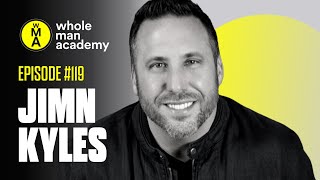
This YouTube podcast episode (Whole Man Academy, EP119) is an interview between host Anthony Astbury and guest Jim Kyles (pastor, author, motivational speaker). They discuss Jim's journey from entrepreneurship (real estate, restaurants) into full-time ministry, his conversion experience, writing the book Unstuck and Unstoppable, and practical coaching for men on identity, purpose, vision, paradigms, habits, accountability, and coping mechanisms. The conversation covers balancing family and ministry, rhythms for managing busy seasons, discipling men, cultural concerns (fatherlessness, cancel culture), and community-building initiatives (events, men’s nights).
Questions this video answers
Episode 119
February 7, 2000 (around 12:30 a.m.)
2013
45 years old (said '45 years old or 45 years young')
Started at ~110,000 words and was reduced to 52,000 words for publication
Whole Man Academy. Because the world needs strong men. Whole Man Academy is changing the game for men around the world. It's for guys who want to live an epic life of fun and adventure. No matter what we believe, deep down, all men want to go on their own hero's journey to becoming resilient, confident, fearless and fulfilled. Listening to be inspired by guys who don't settle for living a life of mediocrity. This is your call to action action and call to adventure.
Are you ready? Okay, guys, before we jump into this week's podcast, use your reminder to sign up for a game changing weekly letter goes out to hundreds of men across the world on a Monday, Wednesday and Friday. Link will be in the show notes. If not, it's wholemanacademy.com forward/movement. Right, let's jump in. Okay, so this is the Whole Man Academy podcast, episode 119. My guest today is Jim Kyle's pastor, author, podcaster, motivational speaker, speaker, father. We'll get on to that as well. Now, first of all, we'll kick off with usual question. How are you and where are you?
I'm doing really well. I am in Texas. I'm actually in a suburb of Houston, Texas. And so life is great, man. I love it. Weather's is nice. It's finally cooling down here in Texas.
Bit warmer than here. Well, I mean, we're going to get on to books and, you know, men's stuff and podcasts, motivation, etc. But I just wanted for you, what's the landscape like for men in, let's say in Texas at the moment? Because I know we've got, you know, the voting going on. I mean, recording this kind of midway. What's the date today? The 10th, is it? I don't even know.
Yeah.
What's it like? Because I never really used to take much interest in US elections or anything kind of political. And then I have in the last few years and it just, it's like over here, it ends up being a bit of a circus.
Yeah. Oh, absolutely. Well, I think that, you know, with political, the voting and politics, I think it's so interesting that people can say one thing but then live something totally different. And it feels like a bait and switch. And I think for us, even for me, I was talking to a group of people the other day and just said what we got to do is elect political people and in office that hold the values that we hold dear, you know, and so it's been good. Texas, I feel like, is kind of a place in and of its own. You know, a little bit isolated. I think we're in a suburb of Houston, and so I feel like we've got a pretty good grasp of what's happening. And even regardless of whether they're on the Republican side or the Democrat side, it seems that the values tend to be closer aligned than in other places. And so I'm grateful for that.
I think the one thing I think, I mean, be it the US or over here, could do with this stability at the moment. And instability causes confusion, stress for people arguing and infighting. And that's why it's always interesting to. Because I know Texas is one of those that a lot of people move from other states because it had a more kind of, how I would say, a sensible, relaxed attitude to certain things. So. But it sure is divisive.
Oh, it is. Well. And here's what's interesting about that. People moved here because they like what they see, but the problem is if they start voting like they voted where they were at, where they moved from, they're going to create what they left here. And so that's always the interesting thought process because you actually have to realize, why is it that I like where I'm at now? And then say, okay, these are the policies, these are the ideas. This is what got us there. And so it's been very interesting because we're seeing a tug of war in that the ideologies of people, people liking something, but actually voting and believing something else that is a little bit different, that will produce something radically different.
So that's a. It's a podcast in itself, to be honest.
Yeah.
You know, this country we've got, you know, some might say problem with kind of, let's say, people coming across from different countries. And you look at the spike of, you know, in 2019, we had like, we're talking of hundreds of, let's say, illegal immigrants, as some people might call them, coming over. I mean, we're like close to like 40,000 this year. So the graph goes like that and people understand, think that's great and we should welcome everybody. But you realize, you know, if you take lots of people from a totally different background, community values and what have you, and put them in somewhere completely different, that will change the landscape as.
Sure.
So. But yeah, that's. That's another podcast, but maybe we'll touch on that another. Another time. Well, let's jump into. Because I think you've got such an interesting story and I'm gonna. I've looked at your book and I've taken there's so much to get through, but snippets of it. But I saw you wrote before stepping into full time ministry, you spent the bulk of your twenties at entrepreneur, working real estate and restaurants. So what took you from where you were then into what you're doing now? If you could explain what your kind of title is, if that makes sense.
Yeah. Well, it's fascinating. As a just a young adult, I just had a tenacity to start something, to be a part of groundbreaking work. I actually at the age 14, started working construction and realized quickly, three, four years into that, that, that I didn't want to do that the rest of my life. I wanted to do something where I could build something that was my own. And I think that was the catalyst that got me moving forward. Then my parents owned restaurants and so I come from a family of entrepreneurs. And what's interesting is that that just was bred into me is hey, you can make anything, you can do anything. All it takes is hard work, focus and some, some grit. And what I realized was I don't have to be the smartest, I don't have to be the best. I just have to be diligent, work hard and find great people around me. And so we ended up starting a real estate investment company. It was fascinating. My brother and I were 21 years old. We bought seven properties by the time we were 24. And then in that we had the opportunity to open up a restaurant. And so my wife and I opened it up because we were, you know, from the restaurant business. And then I, you know, I'm a believer, I'm a pastor. And for me it was very interesting. We found great success in what we were doing. But my marriage was falling apart, my life was unraveling. And it just seemed like what I thought would bring satisfaction, joy, the fulfillment of life actually didn't. And I found myself just searching desperately for answers. And then, you know, and I talk about that in, in, in the book of how I actually became a Christian. I was out, we've been partying. My marriage wasn't doing good. Business is doing good. But I'm just unfulfilled. I'm unsatisfied, I'm frustrated even, because you can grow. But how many know growth creates discomfort too. It's, it's, it's a challenge in and of itself. And we turned to drugs and alcohol and partying. And then one night I was in my bathroom. We've been partying for days. And everybody was about to go out. It was late, it was 12:30 at night. It was February 7, 2000. And the only way I can explain it is that God visited me in the bathroom. I had just a real divine visitation. I saw a fork in the road. Heaven or hell? Choose. Which do you want? And having been raised in church, I of course wanted heaven. And I actually responded in that moment and God saved me. And from that moment on I, I committed to give the rest of my life to whatever God wanted me to do. Well, the next seven or eight months it was still restaurants and real estate. But what was fascinating is about seven months later the landlord of the restaurant that we were leasing the building for ended up shutting me down illegally and we took him to court. It took three to four months to get a settlement, which of course is a fraction of what you lose. But what God did was he shut down the restaurant. And then within a year later we were doing full time ministry, developing, coaching, raising up leaders all across the nation that would go into world missions. And so it was fascinating how God probably knew that I would not quit. You know, I'm gritty, I'm like no, I'm never going to stop that. He almost it just shut the door shut. But that door shutting is actually the catalyst for this book because As a successful 20 something year old entrepreneur with real estate and restaurant, when you lose everything, it makes you really wake up and say who am I? And so that's one of the stories that I talk about for identity. I didn't realize back then almost 20 years earlier uncovering who I am would actually be the compass and the true north of my entire life. And so I talk about that, that there are really four areas of your life that if you'll discover, focus and work on. You may get stuck for a moment, but you'll never stay stuck. And that's your identity, your purpose, your vision. And then the last one is paradigm. It's really the subconscious pattern of thought. And that's what I thought the whole book was actually going to be about. People talk about identity and purpose and vision, but I don't hear people talking a lot about the subconscious paradigm, the filter with which we see life and respond to the, the light, to life around us. In fact, we don't see the world as, as it is, we see the world as we are. And that's what's so fascinating is so it took me on the journey, then I ended up in full time ministry, never thinking. In fact here's what's funny. I actually told God I'll never pastor, I'll do Anything for you. But here's my caveat. I'll never pastor. I want to. I want to travel the world. I want to. And lo and behold, here I am. We started this church in 2013, almost a decade. I have now been, you know, 10 years pastoring this church. So it's pretty funny how that journey started and where we're at today.
I tell you, I love this story also because it reminds people, especially guys, you know, that who knows what your life is going to take a fork in the road. You know, whether you get a, you know, something that comes to your way one day, you just wake up or you watch something on YouTube, who knows what it could be? But, you know, I know from my own experience, but also from other guys, sometimes they can be stuck in what they're doing, and it doesn't have to be. They hate it, but it's just unfulfilling, as you said. It's not. And it. And, and, you know, it's not necessarily like a light bulb moment or a lightning strike, but once you have that realization that this isn't what I want to do, you know, we're big on. Even if you're not just quitting what you're doing, but you're saying, right, okay, well, let's, you know, keep doing what I'm doing, but whilst doing that, how can I focus on, you know, what I really want to do?
That's right.
But you know what?
When I love that, you know, what I was even going to talk about, you know, through the pandemic, we've seen, and over here in the States, in America, we, we've. They've published articles on what they're calling the great resignation. And it's very fascinating that the majority of workers, through this global pandemic, have reevaluated what I'm doing. Do I like it? Does it make me happy? Not. Not, hey, am I making more money? Am I moving up the corporate ladder? It's really, hey, is my life really worth living? It was almost as if there was a pause, and that pause caused people to reevaluate and say, hey, that's not what I want to spend the rest of my life to. Because otherwise we get in this. This hamster wheel, you know, we just. And you don't really evaluate your life until you're at the end of your life. And I think it allowed people to evaluate it. I love. That's one of the things I love about your podcast. And, you know, I was listening to the guy that does martial arts. I Forget his name. Yeah. But even with that, I think he shut down one of his karate houses and now he's doing coaching and he's doing some different things that, when I was listening to it, I just thought that's what people are doing. They're evaluating. Am I fulfilled? Is what I'm doing, what I was created to do? And I love that. And I love that about what you're doing at the whole man Academy, man. I love the fact that you're helping people evaluate. Hey, it's never too late to start. Start whatever it is, and then you figure the rest of it out. If you got a great support system, there's going to be good days and bad days. I'm sure you've had some good days and bad days, but you got a great support system. And here's what I know. You didn't stop, you kept moving forward. And then we always know this, that especially people that have found their passion and living it out, money always follows passion. You know, people make a decision many times like, hey, I can't do it. I can't afford it. That's the wrong, wrong reason to make that decision. What do you love? What are you passionate about? And what can you get really good at? You know, and then money always follows, you know, that that's, I think sometimes the easiest part of it once you make your decision.
I like it because you, I mean, you nailed several points there that we try and say, like, push through the whole mountain academy again, you know, the old never too late to start something. And, you know, I knew guys I worked in the city that would kind of consider because they're in their 40s, that it'd be hard to have another career now. It might be hard to have another career that paid you so much money to start with. But even for me, when I left the city, I didn't give a. About the money because I just wanted some freedom in my, you know, and. And joy in my career and what have you, which I now have. But yeah, that's one of the big things for guys I think you can get easily pigeonholed into, we all said, the trappings of success. You know, you get a. The house, the mortgage, I mean, which is, you know, with interest rates, a moment is a. Is a. Is, you know, is another trap in itself because you've got some people that now, you know, with interest rates going up, I don't know what they're on the States at the moment, but you're talking of, you know, 5%, 6% over here, then you're trapped in that. And then the car loans and the kids at private school and all those things. So, yeah, it's a big one. Like you said, it's. We see the whole man academy is trying to help a guy reflect on where he is, what he's done right, what he's done wrong, where he wants to go, who he hangs around with. And most importantly for me, it's like who he talks to. You know, for me, I mean, again, this is podcast 117. If you think it's 117 guys who've got super interesting stories and a network of people that I can tap into, which is why we're going to come on to the book, because I know several or loads of the guys have written books, and some have found it really hard, some have found it a. I can't think word, you know, a transformation experience. So why did you decide to write the book and what was it like doing it?
Yeah, well, the reason I wrote the book, I really felt I'm a pastor, as you know, and you've already mentioned. And so the first off, I didn't intend to write a book. That was never my goal. I was stuck. Yeah. You know, at the end of 20 or the summer of 2020, I think just like everybody else I'm evaluating. For us here in the States, even here in the suburb of Houston, we were not able to gather as a church for over five months. And as a church, we were reportable. And so we were meeting in a high school, setting up, tearing. And then we had actually, before COVID happened, had started the process to purchase our first campus, which now that's where I'm recording at, which is amazing. It's a miracle story in and of itself. But I found myself very frustrated, very stuck, feeling stuck. So here I am, someone trying to help people get unstuck, motivate people, inspire people, lead people. And I was just feeling stuck myself. And so this book never intended to be a book. I was like, hey, what is it that I need to do to get out of this funk? It was probably the worst funk I had been in since launching the church. And through that I began to find what I believe are great tools and resources, almost like trip tricks and tips and hacks and. And really some areas that you can focus on. And I began to teach them. And as I did, there was an overwhelming response. I mean, I'm telling you people, hey, this has helped me. And I felt like the Lord really spoke to me that this is the book you need to write. And as far as the process goes, I had a great ed that I worked with. She is, she's a best selling editor and ghostwriter and author herself and she's a dear friend of mine. But the process is just arduous in making sure that you get the best in the book. We ended up having 110,000 words and dropped it down to 52,000.
How hard was that?
It took me a year. So it was a year to get it and then, then getting it to market. So I think just all of that. But it's been really a great experience for me personally to now see the response. We've, we've got it even last year they handed it out at a national conference. Had over 4, 600 pastors and leaders. And so we've got leaders that are listening and reading and, and so it's been great to hear the stories and just the life change that's taking place. So it's kind of like having a baby, right? It's never fun. Now I've never had baby, but I know my wife going through the birthing process is never fun. But what you get after it is always the joy of life. And I think that's what we're see today. It's one of the benefits of being here on your podcast.
Oh, I love it. And, and funny. Talking of partners, so of course I randomly say to my partner Emma, oh, I'm interviewing this person, this guy, this guy. And she has always say to me because I expect her to know who I'm talking about because I have, I've researched you or the other guys. So. And the other night I was reading the, trying to think what chapter it was of your book, chapter six or something like that will come. Oh, it's life's battlefield. That's the one.
That's right.
And, but so she said, I said, oh, it's really good because this. And she said just tell me what the book's about. And I took your thing, which was I literally went unstuck and unstoppable. We'll give you practical tools that will help you get unstuck and help you become unstoppable. And she's like, that's all I need to know. Thank you.
That's awesome.
That's it. So that's why we're going to come on to a couple of those. But I just wanted for you because also you've got, you know, a large family, you've got four kids. So like juggling, you know, being let's say doing your role in the church, doing dad work, also staying, trying to stay fit, healthy, sane, write a book. At the same time, it's been, you.
Know, it's been a challenge. I think at the beginning it was more of a challenge than it is now. I. I think as I have grown and mature, now I'm 45 years old or 45 years young. I think at first I didn't, probably a decade ago, didn't do a great job. But now what I've learned is it's more about managing rhythms of my life. And so even as I wrote the book, it wasn't a whole year of just, you know, unbelievable pace. Got it. There was about six weeks. And so in those six weeks, the way I've learned to try to bring my family along is say, hey, for the next six weeks, dad is finishing the manuscript. I've got a couple of things. How can I spend time with you? What do you need from me over these next six weeks to get you through, to feel like I still love you, I'm still there for you, and still allow me to be able to do what I need to do. And so I think that conversation and then at the very end here was something that we were able to do. And as I find busy rhythms that I try to do is then celebrate. So I took them to a real expensive restaurant, bought them all gifts, and then said, hey, we are celebrating the fact that Dad's manuscript is done and that this season is complete. And so finding that those rhythms, communicating beforehand, checking in in the middle and celebrating at the end has really helped me. Now I'm not at all going to act like I've got everything perfect or all right, but I think I'm learning to bring them with me because before, you know, even when we first started the church, it's just, I'm gone plowing. You know, they're younger and I'm just. But I. I had a mentor of mine just say, hey, listen, just make sure you bring them with you. Otherwise they won't celebrate with you. They'll resent you.
I love it.
So I just have tried to do that and implement it. And of course, you know, it's all busy. Here's another thing that I've learned is going to rob from anywhere I rob from myself. And so I learned this. And Andy Stanley has a great book called Choosing to Cheat. Just what I'm going to do is I'm going to give them the after school dinner time, and then I'm going to stay up late at night, you know, and so I'll crank away to one or two in the morning, get up at five. But I let the deficit be in my life, not in their time. So yeah, I'm sure these are all.
Things you do, you know what. But you've, you've kind of summed up, I guess, what I've been trying to do and I've know plenty of guys who, you know, even during lockdowns, which was a really challenging time for a lot of guys, I mean for everybody. But you know, when you're trying to juggle work and home life and everything else that goes on. But yeah, that's what I realized I've tried to do recently because I've taken on a lot more things to do and I'm trying to, to optimize LinkedIn as a kind of in, of a way to reach more men as well. But you know, if you're going to use that, you can't just pretend you can't play at it. You have to do it properly. So I have started doing the same now where I'll, you know, get up early, maybe an hour in the morning on my computer and then I try and make sure that with boys, so our two are like three and five. So they're little, little tiddlers, still Hudson and Bowie. But I'll try and make sure that I have dinner with them and then if I can, I'll do, you know, bath time, reading them stories and then when they finish, they'll be in bed at like 8. I will then spend an hour with Emma, she'll go to bed at nine and I'll go back on my computer. Now long term, that's not ideal. But when you say when you've got to crank something out and you've got deadlines and stuff, that's the thing. So your kind of story of it I think would help a lot of guys realize they either what to do or that they're doing the right thing.
That's right. Well, and I always look at this, it's rhythm, not balance. I think there's a fallacy with people. So I'm just trying to be balanced. Well, think about this. If you're a college student, there's nothing balanced about your, your life is focused on college. It's not balancing college and social life. And no, you don't need a social life. You need to be in school, you need to get an education, you don't need to be focused on work. You gotta. So I always just look at, I Think that's a foul if you try to balance it. You're trying to make all things equal at all times. I'm looking for rhythms. I need to keep this plat moving and spending, but I'm really focusing my energy. And then I often think, how many things can I focus on it one time? Well, it's one or two. Yeah. So I've gotta, I can't focus on all of it. Here's something else that I learned a long time through a mentor of mine is the 777 principle. And this is something that really works well with your family. Works well even where you guys are at with your three and five year old and Emma. Here's what we do. Every seven days we have a day off together. Every seven weeks we do, we do a weekend away and every seven months we do a week of vacation.
Right.
And so the 777 principle is every seven days, every seven weeks, every seven months. And it just gives the, the rhythm of my family's going to stay in this rhythm regardless of how busy this season is in my focus, you know.
Because it is little things like that. I know guys, me as much as anybody else can get, get stuck. Like you say, we're trying to keep everything balanced and actually, you know, sometimes your energy, if you've got loads of money in the bank, maybe you can take your eye off your business a bit and, and, and spend more time with family and doing stuff. But if you haven't got much money in the bank, then maybe the family, as you say, needs to have enough for that. They need. But you focus on the other stuff. So this is all, this is all good stuff. Well, first thing, I'm not. We could work through all the chapters of the book. We'd be here till midnight, which would be great. But, but first one was about like, help, I'm stuck. And I think for a lot of guys they might feel like that moment. So where do you start? Let's say someone comes to you, you know, professional, as a friend and says, I'm feel like I'm stuck? Kind of. Where do you start with that?
Yeah. Well, first I would identify where do you feel stuck? What's the area of your life that right now you're saying I feel stuck? I think you got to identify, you know, because you could be, you could keep six or seven areas of your life moving forward, but you got one area that feels stuck. So you know, you have your marriage, you have relationships, you have career, you have health, you have finances, you have spiritual life. You have emotional health. I mean, there's tons of different areas of your life. And so I think you got to identify. You may. Your career is doing great, finances, doing well. But man, I feel stuck in my marriage. You know, I feel like we're just, we're at a place where it's. It's either not healthy or we're just in a rut. And then I begin to identify. Okay, if you were to get unstuck, what would unstuck look like? So now you've got to identify. This is the part of really identifying. Okay, you saying it's stuck, what would unstuck look like? Well, my marriage, you know, we'd go on date nights every week. We would, you know, be intimate three to five times a week or whatever your goal is, or we'd communicate. We would not be fresh. So you just identify and you're creating really a vision for where you want your marriage to go. Because if you're, if you're not careful, being stuck ends to feeling stranded. And stranded is without hope. So you'll start to say things like this. And this is where I really try. We try to step in before people feel this. But my marriage will never get better, my health will never improve, my career is going nowhere and will never go. When you start to say those words now, you're losing hope. And that's where the spiral out of control begins in my, like many times, drugs or any kind of substance abuse or just, just hyper coping. You know, how many people have said, man, it's. And so they go veg on TV all day, every day, and they become a recluse, so you don't even have to turn to drugs or, or alcohol or any. It's. What are you coping with? Because you can't move forward in an area of your life. And, and that's what I begin to identify. And then here's the next question that I would say. And look, you're getting all my coaching questions, but it's what's three things that I can do right now that would, if I did them, help me get to where I want to go. And this is what I found. The answer is not really from me. Everyone knows the real answer if they just pause and go within themselves, which I know, you know this as a. I mean, my job is not to tell people what to do. It's to help them discover what they really already know and then help be an accountability as they do what they know they need to do to get to where they know they need to get to. And I think people feel isolated for so long. They feel hopeless for so long. And then, you know, you're talking about life's battlefield. What a great chapter that is. Because it talks about the power of thoughts. Where your focus is, your, Your energy goes, that's your, Your flow. And if you keep saying it will never, can never, it' fulfilling prophecy, you will lose that job, you will lose that marriage. You will. Why? Because you're going to fulfill the prophecy that you're speaking within. And so I always tell people, it's not, I can't, it'll never, it's how. That's been the greatest question that I've learned. Okay. Something seems impossible. My finances seem impossible. So the question is not, you know, can they. The question is, how do I get debt free? Free. Which is what I love about you. Talking about getting out of the rat race of life. I can imagine many men right now, they resonated with what you're saying. They're like, listen, Anthony, I'm there with you, but I owe too much. And we got a house and we've got a, you know, car payments and we've got the private school. So the question I would pose to them is not, can you financially afford it? The question is, how can you financially afford it? And that, what that does is that unlocks the possibility. That's like, okay, now there's. There's actually a possibility. And what's very interesting is your mind subconsciously and unconsciously will begin to work to solve those problems. And you'll wake it up and you'll have an idea and it'll be like, wow, if we sold the car, we could buy this. We got some equity in this house, we could downsize. And you'll start to solving problems. Go to solving problems than being stuck in a rut or feeling hopeless in the situation you're in.
And you said a word, accountability, which is about four more sentences down or list on my list of things. Because I think for. For guys, if I'm asked about what the guy's biggest challenges from what I've seen often it is lack of focus. Not having basically anyone to be accountable to is how can we. And procrastination is the other one. With the rise of we know, you know, I talk about a lot mobile phones, you know, it is a drug in itself. And as you said, with the coaching, you know, I see sometimes the people that are really great at coaching ask the best questions. But also like they say, it's about having someone to kind of Run ideas through, check in with, say, what's gone well, what hasn't, because otherwise you're just left on your own.
That's right, yeah. 100. And I love what you said. The focus, accountability and the procrastination. Those are three things that, without a doubt that as men, I think it's easy to struggle with, right, because you got your wife pulling on you, got your boss pulling on you, got your kids pulling on you. But when you can put that bullseye and say, hey, this is the life that I'm called to live, designed to live, created to live, and there's a focus and what we got to do, it's like, it's like eating an elephant, right? You don't need an elephant all at once. It's one bite at a time. I mean, that's how you got to where you're at. I love the podcast. Over 100 different episodes. How many episodes is it now?
It's like 117, 100, 1800 19. Because sometimes I do different ones in different. But I remember when I got to. So I did a podcast course. There's a podcast called London Real, which is, which is really big and has interviewed some of the top, you know, people around the world. So I realized if you want something, you might as well go to who's doing it really well. And if you can pay them, you know, they're not doing it for free because it was a big course. But I was like, why not learn from someone? That's where you already are. So I paid a couple of grand for this kind of six or eight week intensive course. And that really helped me, me stop procrastinating, Focus, have accountability and all the.
Things you just said.
And actually the other one I forgot was clarity because, you know, there was so many options around. But I remember he said something about, he said, he said, because they're up to, I mean, you know, maybe a thousand episodes or something like that and you know, half a billion views now. But he said, people come to me and say, I've got a podcast. He said, I go, great, how many episodes have you got? He said, and they go, oh, three or five. And he said, and he said something like, you haven't got podcasts that he can say at least 25 or, you know, something like that. So I remember thinking 25 was good. And then when we rolled off 100.
But well, and I love it. Here's what I. My brother said something to me a long time ago that I love it talks. It goes to procrastination. Sometimes we don't start because we want it to be perfect. But he told me something a long time ago. He said, if it's worth worth doing, it's worth starting badly, right?
Yep.
And it's like, I bet your first episode is a lot different than this one. And there's some things you're like, oh my God, please don't go back and watch that one, you know, and. But you're learning. And it's like, wow, okay, it's worth starting badly. And. And I love the advice that you got from that guy. Hey, you just. Because that's the reality. The problem with social media is everybody sees the result, but nobody sees the process, nobody sees the journey. And so we want to go from nothing to instant success. And there are no instant successes. Everybody had a journey and a process and it's just one step at a time, one day at a time. And my whole goal is just to get better just a little bit today than I was yesterday. Move one thing forward just a couple of steps either today, this week. And it's one of the things I love about what you're doing.
You just said, I mean, that's one of the important things. I think we touched on it a couple of podcasts ago. You know, I've gone through a lot of the Tony Robbins events and I've been out to Miami to Date with Destiny and you know, gone to some really great events. And in a way it doesn't really matter who is putting on the event. It's about who you become when you're there, you know, and who you meet as well. But I know that was very much about taking massive action and I think that was great. But also there's great value in taking tiny little bits of action, you know, consistently. It's like someone said to Dan, say, you know, if they're unfit and you're like, well, could you just go for a 5 minute walk or do 10 press ups a day and then build on there? Because I think a lot of, like you just said, social media can be very much about, you know, you see what people have achieved, but you don't see the really hard slog of the weeks and months and days and hours and late nights that people have put through it. But you know what that comes on to. One of your topics was Temptations, Traps and hacks, which is one of the later episodes. And I wonder for you also through the church as well as the book, I mean, there are so many temptations for men, and I call them kind of coping mechanisms. So you've got drugs, you've got alcohol, you've got porn, you've got working too much, exercising too much. You know, all those things. Have you seen the rise of that or the change in that through the church or the. The men that you deal with? Because 10 years ago, social media wasn't around, online porn wasn't around, and, you know, we never had the things of working from home. So I just wonder what you're seeing in the landscape of men around you at the moment.
Yeah, I think. Well, the challenge now is. I think there's more coping than there was even before. I think it's easier to. To access. And here's. Here's the challenge. And the problem and the sadness of what I'm a partner, a part of is that in the church, unless you're intentional with discipling men, spending time with men, developing men, the stats are almost equal, which is what's heartbreaking, because you would expect at a church, they found God, they've got community. But many times that has not been the case. And so one of the things we're focused on is discipling men is that we're going to spend time with them because you got to get to the. Here. Here's what I would say is the challenge with coping is that the. You got to get to the root. What we're seeing is just the fruit of. Of what's going on inside of them. And it's seen through the actions of their life, whether, like you said, they're coping with drugs, alcohol, porn, working, working out. Sometimes it's even womanizing. Right. It's relationships. It's. It's anything to get my mind off of the pain that I'm feeling. And as the man, they've got to go in and do the hard work. As to the. Why am I coping? What are the triggers? You know, in the book, I talk about trauma triggers, what, Which I've been in counseling, which is pretty funny, but my mom was and is a counselor right now. So growing up, she'd have the feelings chart and we'd have a hundred different emotions. And she's like, how are you feeling? I'm like, fine. And she's. She'd say, well, fine is not a feeling. Pick a feeling. I'm said, frustrated, you know, anxious, mad. And what, What I found is that as a guy, nobody wants to be in touch with your feelings, because usually somewhere in our childhood, we shut that part of ourselves down and we said, no, I don't want to feel Because I'll experience great sadness and frustration and disappointment because of a situation. And then men tend to live numb when you were designed to live numb. And I, the Lord really spoke to me in my heart, and it's part of what I write about, even in the book, is that if you cannot experience the depravity of pain or the depth of pain, you're never going to be able to experience the greatness of joy.
Joy.
And so you rob yourself when you go just on an even kill. I'm going to numb myself. I'm not going. Well, you rob yourself not only of the emotional pain that you. You're trying to get out of your life, but you rob yourself of the great joy that you can experience in your life as well. And so your life just becomes this. And many of a wife has said that, right? My husband just doesn't have any emotions. No, he does, but he suppressed him. He pushed him down. And we've got to do some of the hard work. Otherwise we do. We live through life just coping. And that's been the challenge for me, as I'm sure it is with you, is getting to the deeper layers as to why am I coping, why am I dealing with it? And it takes time, it takes effort. It takes true love and unconditional acceptance of a person not judging them, but just loving them and saying, hey, listen, I've been where you're at. You know, if you read my book, I. I don't know there's anything that people have experienced I've not experienced myself. And it's always made me very tender to people. People. And we're a church that people often say when they walk in, what's the one thing that you would say describes our church? And overwhelming. The response is, I feel loved. I feel loved unconditionally. And I think that's the first step to make a man feel disarmed, to be able to go deeper into father issues, mother issues, someone's coaching issues. Coach, they had said you were no good. And you know, it is. You just got to get to the deeper layer. And even as a church, if we don't do that, we're going to be ineffective in helping men become. Become who they should be.
Because I know, and I'm going to ask you in a second about your. I see you have men's night, which I always think is really important, but you said kind of about going deeper. And I think that's one thing that for most guys growing up, we don't have anyone. You know, we're not taught about personal development and even from a, you know, morning routine and coach hours type way or the wheel of life as opposed to going deeper and being why are we here? What we here for? Etc, who do I serve? Blah, blah, blah. And, and that's one of those things I've, I've just seen so many guys I've talked to who can just use those coping mechanisms to kind of flatline and, and, and that could go on for years like you say. And then some of them suddenly kind of get, I call it is a bit like as if they've had in their head water in a. Sorry, they had their head in water upon. Someone's lifted them out and been like, look, this is, this is what can happen, you know, this is what life can be about. But we just not talk about as kids as you grow up. I mean maybe we are if you, I. Other men, men can facilitate and I call it an environment to build inner strength. But it's, it's a job, it's a full time job in itself.
Oh, absolutely. Well, and I think here's the other challenge. We're living in a generation that has been fatherless and so masculinity has been lost. How to have great healthy male relationships has been lost. We've just seen the deterioration of family across the board. And I'm sure I can speak for America. I'm sure it's the same where you're at. And that is really the challenge when you, when you see a breaking of the family unit. Well, now you got men that grew, grow up and their moms have raised them well. Now they become feminine. They're, they're, they've lost their masculinity. You know, the other day my wife and I, my oldest son Kaden is 16, driving, you know, he, we call him a man child. He's taller than me. He wears a size 13 shoe. I mean he's just a big old boy. And the other day his mama was, was babying him or mama and him and I just told her, I said, well, you got to stop. No, Kaden, you need to grow up basically as well. I said, you need to do this. And she got a little flustered with me later, came and talked to me. She's like, I don't agree with you. I said, well that's okay and I respect that. I said, but he needs a daddy in this moment, not a mom's opinion in love and that tough love when you miss it growing up now there's this massive gap and Deficit. And how do I, how do I exchange that as well? How do I live it out? And I think you run that all the way across. Did they, did their dad love them? Do you know? It's, I want to say it's 82% of men have never heard their dad say I love you. Fascinating study that. Here you have men that have never had a father say I love you. Well, if you've never heard those words, how do you tell your kids? How do you tell your wife? And so it really is an epidemic that, that you and myself and all of us, we've got to just continue and we're just going to help them one person at a time. And I love what you were talking about, pulling their head out of water. What I have found is that typically that happens in a crisis moment. Something has happened. My wife said she's leaving. My boss fired me because otherwise coping is, you know, there's no crisis. The pain of where I'm at has to be greater than the pain of change. And so we almost pray for the crisis moment as long as someone's there to help guide them through the crisis, you know, and that's what we're, we're hoping that we can be the one to help them through it and that then as they're doing, I, I love what you were talking about, helping people do things to become who they're supposed to be or the dream that's in their heart. Here's what I would say that James Clear talks about in Atomic Habits. Habits, which is so fascinating to develop a brand new, brand new habit takes about 30 days. And all you got to do is show up for 2 minutes, minutes a day. So whatever habits you want to produce in your life, if it's reading, read for two minutes. If it's lifting weights, which is so counterintuitive, I gotta go to the gym for 30 minutes. One of the things that I did on my journey to get fit when I was 40 was just show up for two minutes for 30 days. Some days I'm like, hey, that's it. I did 10 push ups, sit ups, whatever. And then here, here's the switch that gets flipped if you'll do that. It's not about doing physical exercise. It's about being a person who is healthy. I'm healthy. I am an athlete. It's about becoming a reader. So like, hey, it's not about building the discipline of reading. It's like, I'm a reader. That's what I do. It becomes who you are. And that's the way you get the habits to stick. Like podcasting. It's not about you just getting someone on a podcast show. You are a podcast podcaster. Like, you've done what your dream was. It's who you are. It's what you think about it. But it starts with the decision of, I'm gonna show up every day for two minutes, you know, whatever that is, or every week.
Doesn't that make it our conversation there makes it more achievable for a guy, like we're saying, instead of trying to like, say, even with the gym. Good example. You know, I always went for an hour because I loved the gym. I didn't. Other guys would be like, what, an hour, five days a week? And I'm like, yeah, well, I'll go six, seven if you. I can. And about those achievable steps. But our moonwalk back to, I mean, again, really important topic, you said was basically the deliberate destruction of the family unit.
Yes.
And you can then flip that back with men's testosterone levels, which are being manipulated by our environment, by what we eat, etc. Etc. Mobile phones, EMFs, blah, blah, blah. And what that is creating is a see a slow decline in the family unit. And it's very sad because like you say, boys are growing up. I'm not saying all boys, but are growing up kind of emotionally confused. And then let me give you a great example of. Let's say you're a young footballer. And I know there's all different types of. What's the word? Causes and movements around at the moment, and people have their own views on them. But I'll just paint this picture from. For you. And I've got an article in me that's coming up about it, which is, let's say you're a young professional footballer, so a soccer player. And you're like, right, I've, you know, I've stayed fit. I've got all my skills, I'm healthy, you know, I'm fast, I'm strong, what have you. You go, okay, great. Right. Also, don't forget you've got to take the knee before a game. For Black Lives Matter or for any cause they want. You go, right, okay, right. So technique. Oh, yes, good. Also, you have to then wear rainbow laces to say that you're. You're, you know, down with pride. And you go, right, okay, so I've got. Take the knee and I've got my rainbow laces. And you say, okay, good. Also, if you're the captain, you have to Wear a rainbow armband as well, right? So I've got with the knee, the laces and the armband. And then they had it where a few weeks ago they said they want basically all professional footballers to take kind of mandatory don't rape women training for want of a better word. So you're like, right, so okay, I've got my knee, I've got my mandatory don't rape women swimming, I've got my rainbow stuff. And then the classic was they then made some footballers where on one ring of their football jersey lots of colored rings to, to show the changing global climate change temperature, just in case. So you're like, right, okay, have a great game, focus on the game. But remember the knee, the rainbows, the climate change stuff, the don't rate people etc and you're like, great example. That boy has got so much, much on him already without being thrown all the, how can I put it? You know, you've got to support this, this, this, this, this. And I wonder in the US because I think it was the NBA that just got incredibly woke and you're like, can you focus on the sport instead.
Of virtue signaling 100 well, and that's the challenge we live in is cancel culture. Right? You have these minor voices being the loudest, not the majority, but the loud, loudest. And I think everybody's afraid to be cultured be canceled. And here's what I would challenge with. Look, if, if those are your values, great, do it. But don't allow someone's values to be put on you just so you can get a position. I, I think that's where for me, you know, you have to evaluate am I playing the game for me, cool. But if they're making me associate who I am with what I do, maybe I don't agree with it it then I don't know if this is the sport for me. God, give me another platform. Allow me to do something with the gifts you've given me. And, and like you said, focus on being me. And it is a challenge. Here's the other deal. It's interesting. You said go through a mandatory men don't rape women class. You can't legislate morality. Morality is in the heart. So that in and of itself shows you that they're trying to band aid a A, you know, behavior a fruit of really the root be. Hey, there's no men with values. And it's not even whether or not you're Christian or not. It's man, there was a day even here in America where people Just had values that the nation in America was founded on Judeo Christian values. But not everybody was a Christian, but everybody. You could almost trust them. It was like it was, it was uncommon to have people that were doing deviant things and trying to rob and steal and manipulate. You know, of course there were always those people but there was a core fundamental, you know, value system that we all agreed to and believed in that we just don't have it today. And all of that again boils down. I think there's a whole lot of things I think you look at media television is tell the vision. So everything you're watching, they are telling you their vision instead of us evaluating what do I believe, what's, what's, what's important to me and then from there building a base of what you allow to influence you. And I think there's coming a day in age where the cancel culture is actually going to be turned upside down. I think you're going to find people that stand up for what they believe in begin to be shouted from the rooftop shared go viral. Whether or not people believe in what they're saying or not, it's the fact that people are bold enough to say I'm, I'm not okay with that. Here's my values, here's what I believe. And I'm not going to bow a knee or cave to peer pressure just to please a few people.
So, so that's, it's music to my ears because I, I get so frustrated when you know, I've seen people that I follow have their entire social media platforms deleted because they having a, the wrong view, if that makes sense. And of course what happens is, you know, we know that all the newspapers are funded by certain organizations that are pushing their own agenda. It's not difficult to, to work that stuff out. And I see at the moment I think next year is going to be, I mean if we think the last two years have been crazy, I think next year, year. And I've talked about it before with you know, whether you know, it's a deliberate create creation of a food crisis. But you know, I've spent a lot of time researching it and I'll tell you what, I've, I've woken up a lot in the last couple of years to how things work. You know, I think before I was too busy in the system of. I was nothing wrong with chasing girls because I was trying to find the right, the right woman to settle down with. But you know, it was girls, it was gym, it was working the city making Money. Watching football. That was basically it. Whereas now I never watch football. I don't care about the World cup coming up. Couldn't give a about it. And you know, I've got a happy, steady home life and I have more brain space to consider for me. God, you know, I'm rubbish with religion. I've hardly touched dip my toe in the water. So I'm, I'm so new to it. But you see, with so many guys that I think they are in the hamster wheel, the circus of watching soaps, watching the news, looking at social media, they don't have time for the, the deeper stuff.
That's right. No, I 100 agree with you. I think it's men really saying, hey, I got to cut the noise out. Which is one of the things I try. Hey, what's all the noise? What's, what's all the extra. And then just begin to now allow only certain things in. And I think it does. It gives great clarity. I think when everything is coming in, nothing is clear. Clarity comes in simplicity. So it's like what's the right things? And then you allow it and you begin here. Here's what I find too. You start to think for yourself that, that what will happen if you're just running, everybody's telling you what to think. Well, that you just become a part of the propaganda. You continue. You just, you're just perpetuating the, the narrative. But when you pause, get some clarity on the situation. Now you can actually have a informed decision and some ideas on your own. And here's what I love, and I love this. I'm sure you've seen it right or wrong. At least it's still your thoughts. Right. It's like some people, yeah, they're so worried about getting it right. Right. But at least you thought about it. At least you can go back and say, well, this is why it might be right or wrong. So my correct you. That's great. But it's independent thought. That's what I love.
There's so many points this podcast I'll need to try and snip and for people to, to remember. One of them is what I've seen in the last few years is, is I think it's really important for people to share their opinions and I'm sure you know of a man of faith and a man of God, you're going to have people that think you're talking rubbish and others that, you know, devote their whole life to it. So I guess you've seen the, you know, both ways. But what I was talking about this morning, actually with someone, what I love is the. How can I put it? I see some people that have such strong opinions on something, but they're absolutely clueless about it. And sometimes I. I've made a statement and someone was saying, you're totally wrong. You're talking rubbish. And I say, listen, I appreciate your opinion. Have you done any research on what you're talking about? Because I have. And they'll say no. And you say, okay, then it's an. It's a most welcome. But it's an uninformed opinion. And I think that is what has spread across social media as well, is people don't want to say that they've done any research or anything. They just want to shut you down from giving your opinion.
Oh, absolutely. It's bully.
They.
They've got. Got a bully pulpit, and so they're going to shut it down. And it's one of the challenges that I'm finding today. Nobody wants to have a conversation. So I'm like you, hey, first off, I hate religion, too. If you read my story, I was raised in church. God radically saved me. And it's one of the things that I love here is it's not about religion, it's about relationship. And I also know people are on a spiritual journey. So you may not be where I'm at today, but can we just move forward one step, step. And the challenge where I see is in conversation. I'm a conversationalist. Let's talk about it. Like you said, you're well informed. You've got a differing opinion. A bully says, I'm going to tell you wrong, shut you up, because I want to silence you. And that's where I have a problem is we're silencing debate, we're silencing conversations. Well, real men, it's like, man, let's have a conversation. But I think some of that comes in the fact that they're insecure. Insecurity always lashes out. And there are triggers that people lash out because maybe something happened that that view has touched a nerve inside of them. And instead of doing the hard work of saying, why does it touch a nerve? Is what I believe accurate? It's easier just to be a bully, to force your view and then to try to shut people down. And it's a fallacy, it's a challenge. And it creates, in my opinion, just the. The hate anger, frustrated, you begin a mob mentality. When you look at mobs, they don't think they're emotional. And so what you're doing is stirring an emotion instead of really seeking for deep change. And that's what frustrates me, you know, because I'm open. Show me I'm wrong and I'll change. I've changed my ideas many times. And then here's the thing that I'm sure you found too. If someone changes my thoughts on it, I'm great. Hateful. I'm like, man, wow. That you. That is.
Thank you.
Yeah, thank you. I didn't know. Now I know and I'm better because we actually had a conversation. But that goes back to what you were talking about with accountability. It goes back to relationship. I have friends with people or I am friends and have accountability with some people that we totally have. Like a couple of them aren't even Christian. So I don't fully agree with their perspective, but I love the fact that they challenge me outside of my few and no more more mentality. It's like I got people from all aspects, all areas. And then it just allows, I think for us to have a deeper sense of, of relatability, impact and the ability to really foster something that can literally change the world.
You know, it's. I love, I honestly love talking to you because there's so many different ways that we could go and one of them I wanted to, if you've got time as well is, is to state the obvious talk about religion. But I was reading where there was, I'm trying to think the document that talked about bringing in a one world religion, which is interesting seeing as they want to bring in a one world government and what have you as well. And I just wanted for you, are you seeing the numbers in the church grow, stay the same decline, especially maybe in the last couple of years. Just wondered what you're seeing on your side because in the uk, a friend of mine who haven't spoke to him for a while, but he is very kind of much into the church and had told me about how much the declining numbers and, and that in a projected X amount of years in the uk because people are too busy doing other stuff, they're not going to church. And I just want for you, you, you're in a perfect position to talk about that in the States.
Oh, absolutely. We've seen the same massive decline. Churches by the thousands are shutting down, pastors are reevaluating. Is this what I want to spend my life doing? Do I feel like I'm being effective? But what we found and this is what we're working to solve even Here in our church is that through this global crisis, people got out of a rhythm. So they may have had a salvation moment, given their life to Christ, committed themselves to, to a relationship with God. But the pandemic got them out of a rhythm. And once they got out of the rhythm, they felt like, or feel like, hey, my life is pretty church. You know, I'm at the lake, I'm going to the beach, I still have my job, my family, we're still married. And the fallacy of that is they're reaping the life they sowed year after year after year in the past. There's going to come a day where they've got no seed in the ground and they're going to sow of the life that they've been living right now. So I feel like they're going to end up in crisis. Some have actually turned away and they just said, well, I'm just evaluating God. And so the thing that I realized was, was that I believe for us, evaluating are we creating consumers or are we creating disciples? Are we creating people that were part of a crowd or are they a part of a body? And that's where our whole focus has been. Because of the deterioration in church, we actually are seeing a growth in ours. We're growing really almost every week. But I think part of that is we're hitting the niche of authentic relationship, true life change, change and encounter with God. You know, really having an encounter with God, not just a religious service where we sing a few songs and have a self help, you know, converse, you know, seminar, which is what I feel like some of the churches are. It's just like, man, you came to a self help seminar with singing songs.
Yeah.
Like it. I want you to encounter God, hear what his word has to say, and then find a way that we can apply it into our life and, and then from there build the church. But I, I actually think we're in a great decline. The Bible talks about a great falling of away and I think that's what's happened. The great falling away of. And, and the numbers will reflect it over the years. We've already seen it.
Because, you know, we. So we went to the. We've got a beautiful, I mean, God knows how many years old it is church in our village. And we went for harvest festival festival. And here's what's sad. I mean there's 300 people in our village and there's surrounding villages and there was 21 people that went to the harvest festival. And myself and Emma were the Youngest people there, apart from our kids and, and everybody else was over 60 at least. And I said to Emma, the sad thing is, I said fast forward 10 years. Harsh it sounds. Half the people in here are dead and, and we're the only ones left in here.
That's right. Abbott. Well, it's, it's your, you're speaking what many churches have and are already experiencing. And most of the churches that shut down through Covet it was for that reason. It's an elderly crowd. There's a couple of hundred people. I think there's a couple of things. So to speak specifically to yours, it's about us allowing a new generation to, to lead the church. Some of the highest level leaders that I have here, there might be my age, a couple older, but the ones that are actually leading are actually late 20s, early 30s, and they're running things and they're creating ideas where our goal is to, to start mentoring. This is what we've been working on from the age of 9, 9 to 11. We call them little leaders. We have 12 and 13 year olds, which are the, the tweens. These are the early teenagers. Then we have 14 to 18 and then 19 to 21 and then adults. And I think, I think if you can start discipling them in segments at a young age and then empowering them to start doing the work of God. I love the disciples. If you read the Bible, Matthew, Mark, Luke and John is, the Synoptic gospels. If, if you hadn't read them, I love it. It's the life of Jesus. It's, it's amazing to see what he did. He took a group of teenagers, 13 to 15. Peter may have been 16 and he flipped the world upside down. And what's my, my point is that somehow in modern era we have said teenagers should shut up, sit down, go to school, let adults run it. And the truth is that's, that's an old mentality. You're already behind the eight ball. No wonder kids are leaving church. It's irrelevant for them. They, they don't feel like they have a part of it. So I think part of it is the ownership of. And then I reserved a long time ago. I don't make any decisions based on design. And look, I let a new generation do it. And if we're going to see whether it's a business, whether it's, whether it's a church, whether it's an organization that you lead, you've got to find a way to value young people, empower them and to implement their Ideas, because their ideas here. I did a study and I would encourage you if you've got a business, you know, because I, I have a business as well. I'm an entrepreneur, author, I have real estate still to this day. But one of the things that I did here, even at the church, I got ideas from a different adults. I, I did a focus group with adults, young adults, teenagers and then 9 to 11 year olds. And we talked about all the problems that we have and it was so interesting. The adults were irrelevant, the young adults were okay. Teenagers were pretty good. The 9 to 11 year olds, we implemented 80% of the ideas that they had because they have no bias, they have no kind of pre programming and they were so intuitive. If I could, if I could take you to that room. What they saw was unbelievable. And I think that really taught me to start. How do we start discipling at a young age? Value them, implement ideas. So if I had a business, that's what I would do. Hey, can you walk into the door? What do you feel? What do you see? What are you hearing? And here's another question, question, what are you not seeing? What are you not feeling? What are you not hearing? And it'll change the way you do business, it'll change the way you operate and it's, it's bringing them into the, you know, it brings us into the now.
I think, yeah, well that, that's one of the big things for us. I mean understanding the ed education system again, that could be another half an hour discussion because the education system is just absolutely wrong. And so we're home educating our kids and some people can't get their head around it, other people are like, oh I'm really interested. But of course, even forgetting the last two years, but now the economy is on its knees and it's going to implode soon in the US and in the UK and all around, believe me. Is that what it's forcing? Of course is people to like, let's say the dad goes to work and the mum would stay home, look after the children which let's face it, for thousands of years was the dad went out hunting and the mum nurtured babies and kept the campfire going. And it's as if women were kind of subjected to feeling like they should be going out to work and that staying at home and keeping the home fires burning for want of their phrase, wasn't a job. But actually that is a full time job in itself. But now you've got the economy and you know, the fuel and Everything else, the food is so expensive. Expensive that you're going to see Mummy and Daddy both have to go to work just to stay afloat. Therefore, the children have to go to school even if they didn't want them to.
Yep.
It's an interesting one to go down the old rabbit hole.
Oh, yeah, you're right. We could talk about it for days. I mean it really. And people are having to make tough decisions. I think that's. And here's what I would challenge if someone is making a decision. Just go back to your values, go back to your vision. Where do we see ourselves? Ourselves? Let's make decisions that are not for the now, but that are for the future. They may be painful now, they may hurt now, they may cause us to reduce our level of living, what we're doing at this moment. But if you'll do that, that's part of even what I talk about in the book is I think people don't have a vision for where they're going. And then you make impulsive decisions now that cause you to end up being stuck. And so getting that, where are we going? Here's. And then here's the other deal too. Right. The couple needs to make decision together. I mean, you and I both know that. I mean, I'm sure Emma, she's been a part of this podcast. She may never show up on the podcast, but she has been behind the scenes cheering you. Yeah, yeah, absolutely. And so when you do that, I think it does help, but that people got a lot of tough decisions and I'm glad you're here to help them with, with the podcast, with the coaching, the mentor. I love the groups that you're doing as well because I think that's how you win in. It's, you know, it really is breaking a massive idea. Thought podcasts are great, but let's break it down into groups, build connectivity, relationship. And I mean, you're doing it.
The power as. As you know, with your events, you know, digital is great, but the power of being in the same room as someone is always something that, you know, it's very hard to replicate. We've actually got our next top Academy dinner next. It's either next week or the week after. I don't even remember. The date is next next week. And I think there'll be probably 16 or 18 guys in a private room and a real mixture of guys from all different, you know, guys from like, Aston Martin, you know, or Formula One and. And productivity coaches and all these different things. But you never know what Connections and for me, all the guys generally are local around here. There's a few driving, few hours. But one of the big things that you know, whether it's the church or anything else, brings his community together. Together. And I see in the last couple of years that's what people are lacking is community. But yeah, I as, as you say, I think we've got several more podcasts in us at some point.
But yeah, I would love it.
So last question because I appreciate your time also, but you obviously with podcasting as well. So I just wondered what's your podcast experience been like? And also who do you listen to on podcasts if, if anyone at all?
Yeah, no. Well, that's great. I'm like you. I mean I just broke through the 25 mark five months ago. I just felt like I just like you. I want to help people get unstuck Some of the topics I'm talking about from the book. But now I'm starting to break out and do some interviews, things like that. It's been great. I listened to. My twin brother actually has a podcast about mortgages. And so he has, I mean he's getting an unbelievable. He's in the top 30 finance podcasts in America. And so he's the one that really helped help me really digest. Okay, what are some things that we can do? And then I love, I mean some of mine are just pastors like Craig Groeschel has an amazing, amazing Maxwell. John Maxwell is a great leadership guru that I, that I love and listen to. So those are some of the ones that I love to digest. There's also a guy named Jim Quick. If you haven't listened to him, have you listened to him? I love.
So he's got, I know, I mean he's got content everywhere. So I somebody stuff ages ago and it was just, you know, great old content never gets old, never gets old.
And he's such a brilliant person with the memory and mind and he reads all kinds of books and just fascinating. But I like, he's. He's broken some of his down into 8 minute segments and so, so doing some of that has been, you know, really great. And then like you were just. We're just getting content out, trying to figure out what people are enjoying and then just trying to make a difference one, one person at a time. We can help one person, then it's worth it.
That's. That's all we can do. Well, I, I totally appreciate your time. It's been an app. This is what I love about the podcast is that, you know, you and I, the likelihood is maybe, maybe would have done, but we're likely never, never met. But I feel like I consider you a friend where you can sit and have a conversation. If Emma and I ever happen to be venturing over towards Texas, I will be knocking on your door.
Absolutely. Well, I love it. And I'm gonna have to have you on my podcast. I was thinking about that today, so I'm excited to have you. We'll get that scheduled. I want you to speak into us here, even in the US And I'm excited. I'd like to stay connected. And I love, love, love. In fact, that's how I found you with social media. Your message just resonated and, man, I just, I love it and I want to encourage you. You're doing a great thing and a great work and you're making a huge difference. So thank you for impacting me me because I'm better because of what you're doing. So thanks.
I appreciate it. Any good feedback is always much appreciated.
You're doing great, man.
Well, I appreciate all your time and this won't be the last podcast we do, I'm sure, and. And I will speak to you soon.
Okay. Have a great day. Bye, Anthony.
Cheers.
Thanks for listening. Remember to sign up to our game changing weekly E Letter that's read by men around the world. Sign up@wholemanacademy.com forward slash movement. Until next time.










