EP122 - BYRON MORRISON - BE MORE EFFECTIVE | WHOLE MAN ACADEMY
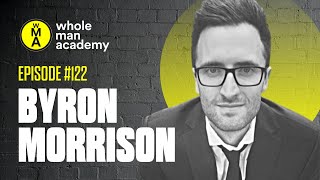
Episode 122 of the Whole Man Academy podcast (host Anthony Astbury) interviews Byron Morrison, a bestselling author and mindset/performance coach. The conversation mixes personal anecdotes (an intentional phone/technology detox in Cancun), coaching frameworks for CEOs and founders (audits, scheduling non-negotiables, reclaiming wasted time), mindset work to overcome self-sabotage (identity shifts, daily reminders, targets vs. vague goals), practical tactics for goal-setting and writing (90-day targets, one page a day), plus notes on social media comparison and plans to expand into speaking. The episode closes with CTAs for the Whole Man Academy newsletter and promo details.
Questions this video answers
June 27th.
Okay guys, before we jump in to the podcast, welcome to season three for 2023. Before we get started, remember to sign up for a game changing weekly E letter. It's powerful insights to maximize your mindset, body and performance. Link is in the show notes or it's www.wholemanacademy.com forward slash movement. We've got some epic guys coming up this year looking forward to delivering some more powerful content for you. Right, let's jump in.
Whole Man Academy because the world needs strong men. Whole Man Academy is changing the game for men around the world. It's for guys who want to live an epic life of fun and adventure. No matter what we believe, deep down, all men want to go on their own hero's journey to becoming resilient, confident, fearless and fulfilled. Listening to be inspired by guys who don't settle for living a life of mediocrity. This is your call to action action and call to adventure.
Are you ready?
Okay. So this is the whole Mad Academy podcast, episode 122, first one of season three. My guest today is Byron Morrison, best selling author, speaker, mindset and performance coach. Plenty more we're going to get all into that. Firstly, how are you and where are you?
Hey, I'm doing fantastic, thanks. I'm based in sunny today Warwickshire in the uk and yeah, I'm excited to be here.
I think it's funny because I, you know, we said before we start recording I didn't realize exactly where you lived and now we realize we're probably about 30, 40 minutes from each other. So at some point it'll probably end up with us doing something where we meet for a coffee, which is always one of the big things. The whole mountain cab is getting guys either virtually or in person together to talk. But we've got loads of bits to get through and I just want to touch on first, we're about actionable tips for guys to do life better and lead their own version of epic life. But I saw that you went to Cancun very a short while ago and you wrote loads of fun memories. But leaving my phone behind is definitely the right choice. For the first time in eight years I was able to fully disconnect and switch off. I bet that most of the guys here listening doesn't matter where they are across the world would be like, it's so hard to leave your phone alone even for a short amount of time, let alone for, you know, a longer period. So what was that like for you?
To be honest, initially it was very uncomfortable. Um, as Anyone who runs a business who has a high stress job knows like you're on 24 7. Like it gets to that point where you're constantly thinking about work. And I've had various times I've spoken quite publicly about my business where I've just become burnt out. It's like, were you working relentlessly? You're pushing. And I just reached a point where I was exhausted. And then coming into 2023, I knew that with the new book coming out and everything going on, it was going to be a really long year. So I was like, I have to be fresh. So I made a decision. I was like, you know what? I'm going to book a trip to Cancun and I'm also going to be highly intentional and leave my phone behind. So I've got zero access to email, social media or anything else. Because I know because even though I'm a high performance coach and interpersonal development, I'm also very aware that at times I can be my own worst enemy. And it's one of those things that your phone said, you're like, I know I shouldn't check it, but you still go do. So I was like, if I leave it behind, I can't. So the first kind of eight hours was a little bit weird. And then after that was the best thing I've done for my headspace in years. Looking back on it, a lot of the time when I'm thinking I'd work and ideas when we were away, I actually didn't. I had various times where I'd just stop and think. I haven't thought about work for three, four hours and then I could immediately just let it go. A lot of challenges I stopped worrying about and I was actually present. I was in the moment with my partner. We were having fun and yeah, it's now my non negotiable. Even if her and I go away for a long weekend or just a night, I'm just going to leave the phone behind and just be highly defensive with it. But going back to actual tips. So one thing I would love to share with you that I think if anyone's thinking of doing this, the reason why I was able to is I knew a month out that that's what I was going to do. So I communicate to all clients in a month's time, you're not going to have access to me for three weeks. Let's make sure you're set up so you have everything that you need. I also got very intentional with what I was doing, especially in the final couple of weeks I kept asking myself going into my days and weeks, what do I need to get done so that I can switch off next Friday and not have to worry about it. And then I also pre scheduled everything that needed doing. So all my social media content, all of my emails, everything was scheduled for from 9th December until 3rd January. So nothing neared my attention.
So that's so important. Yeah, because a guy might listen to this and depending on what role he has or whether he's running a business or working a business, but would be like, there's no way I can do that. I have to be on. And you're like, well you know, there is, there is ways to do it. Like you say, with scheduling tools, if you have to do stuff. And the big thing I think is letting people know so you don't come back and have, you know, you switch on your emails and your phone and you've got all these, you know, missed messages from disgruntled people. But that's a big challenge for guys to start with. Could you start with, you know, eight hours where you just switch your phone off? Not. It's not an easy one.
It comes down to boundaries and expectations because if you have people thinking, oh, if I call him, he's always going to answer. Then obviously it's that little bit of uncomfort. But if you set the expectations, communicate, you know what, I'm not going to have my phone for a day because I'm going away. So there will be a delay getting back to you because people generally, I find, are not as having the same expectations of us as we put on ourselves. I've got one client I work with who feels like he has to respond instantly. Like if he gets an email, he needs to get back to him. It's like if you were reversed and a customer, you don't expect an instant response. It's like you've built that because you've done it. Which yes, it's great from a customer service standpoint and you want to be responsive, but you also have that balance of people know that you're trying to live your life and you're busy. So you just have to communicate that and then just plan in advance. What do I need in place? Do I need a member of my team to take ownership of it? Do I need to schedule everything? What needs to happen for you to be able to do it and then you just have to do it. Like for me it was just literally a case of okay, let's leave it on the desk and just go to the airport. And then once we're driving away. I was on the M5 and I was like, no turning back now.
I bet. It's such a weird experience. And it's something definitely I'm trying to kind of do more of, which I do find difficult, especially when you've got, you know, social media and you've got email and all that different stuff. But I guess that links then into if you are a CEO or a founder of a company or you know, something like that, you're probably at the moment switched on all the time, it would feel like. And I wonder for you with or when you started working with CEOs let's say, and we're talking male CEOs here for the fun of it. What were their kind of common issues or challenges or problems that they had?
So I find that the people that I work with, their businesses are going through a period of growth, which is amazing. But a lot of the time these guys are fantastic at what they do, whether it's developing a product or a SaaS or a tech company. But they've never really run a business before. So they're thrown into uncharted water because now they have to lead and manage a team, they have to keep stakeholders happy, they have to overlook day to day operations. So it's a huge amount to stack on top. So understandably they're in a situation where they're stretched thin and overwhelmed by everything that needs to get done. So a lot of the time they then start second guessing themselves. They overthink, they procrastinate, they avoid the things they know they need to do, like having to feel conversations. And inevitably they become the bottleneck in the business. So I'm not a business coach. It's not my job to come in and tell someone how to run and grow their business. It's my job to come in and put the focus on them and be like, how are you showing up in everything that you do? And so we look at how they manage their time, how they deal with reactive problems and fires and communicating to their team and it's really look at how do they perform at higher level. But then I think this will tie nicely into the first thing you brought up. We also look holistically at the rest of their life because I find with most of the clients that I work with, they just don't disconnect. Like even when they do try and take time off, they're there physically, but they're thinking about work and attached to their phone so we then have to optimize their energy, their sleep and their work life balance because if they're exhausted or having problems in the relationship, they're not going to show up properly in their career. So it's really about looking at how are you thinking and feeling in every area of your life so that you can then actually get to the next level.
Isn't that important that it's, I mean, we always call it like becoming a whole man because you can have, let's say, loads of money in the bank and you know, your business is thriving, but you're really unhealthy and you'll have terrible sleep or you can be super fit and healthy and the business is, you know, not going well and you need to work on that side. And, you know, we've, I've spoken to different guys, I would say, who. There's always something that they, they could do with working because it is very hard to find some kind of balance. So where would you start? If someone, let's say a guy contacts you, do you then is it sitting down with him and pretty much going through everything that he's going through at the moment? If that makes sense.
Yeah. We start by auditing and figuring out, okay, this is what your life looks like. These are your current commitments, this is what you got going on. Where do you actually want to be, what are the changes you want to make? And then from there, look at, okay, this is how we could break it down and really structure it. A lot of people really overcomplicate it. Ultimately it comes down to effective planning and then proper communication. And one thing I always do with clients is what I call ideal life creation. Because when it comes to work life balance, most people do it the wrong way. They get up and they're like, hopefully I'm going to get time to go to the gym today or hope they'll have time for date night, whatever it is. But that's just setting you up to fail because you're leaving it down to chance that you're going to get time for it. So the way I approach it myself and with clients is we figure out, okay, what are those ideal life creation things that are really important to you? Schedule them first and then build everything else around that. So I know there's varying degrees of effectiveness for this. With someone who's tied into a 9 to 5 job, they'll have to do it differently. Someone who's got in a business and got time, freedom, but you can still use the same things. You can look, okay, nine to five. I'm busy. But what are the other non negotiables? I need to build around it, but then take it a step further. That's where the effect of planning comes in. So as an example, I had one client I was working with who he kept trying to schedule date nights on a Wednesday night with his wife, but he kept having to cancel. And the reason being was he scheduled a board meeting directly before that date. So either Ed would run over and he wouldn't make it home, or in the times he did, he'd be so stressed that he would be sat at the table thinking at work and wasn't present with her. So I said to him, like, you can't structure it like this. You've got to make sure that, that if date night is that important to you, what are you doing directly before? How do you defend your energy and bandwidth so you can then make sure not only do you make it, but you're there and present in the moment. So that's why for me, when it comes down to planning and scheduling, you can't just look at, okay, I've got a free slot there. I'll put it in. You've got back. Okay, how's your energy or focus, your stress? How do you build out your calendar based on that? And that allows you to feel so much more control. So just get very intentional figuring out what you want and then scheduling accordingly.
I think that it's so important as a little reminder because it's. It's simple stuff to do, but I guess not many people do it. I remember trying to think which podcast it was I listened to years ago where the guy had a thriving business and, you know, say three or four kids and said, you know, you literally had to schedule things in because otherwise the big issue is often it's easy to say, well, I have to work, but the family or the relationship can wait if that makes sense. And then you know, that that's kind of taking away from probably what is the most important thing. But for you, I just wonder also with, you know, the word sabotage comes in because sometimes we've seen it where, I mean, there's coping mechanisms, but men end up sabotaging themselves by doing certain things. And what's your take on that?
So this is something that for most of my life, I was my own worst enemy, right? I was like, it was very much I knew what I needed to do, but I get my own way sabotaging everything from relationships to my health to my professional success. And over the last decade of working with people 15 different countries. Now, I've seen that this is a characteristic that pretty much all of us share. We all have this tendency to get stuck in our own head to put things off, to avoid what we need to do. And that's why a big focus of the work I've done and going into my new book, maybe you should give up. It's all about focusing on how to get someone to get that under control. Because you can have the perfect plan in place, you can know what you need to do, you can do all of the personal development stuff, but if you don't follow the, it doesn't matter. And that's why for me, it's really figuring out what do you need to do to get the results that you want? And then how do you create a shift within yourself to make it happen? Because one of the biggest reasons why people struggle with this is on an identity level. Because who you are today and the habits and behaviors and routines that you've developed, you've become comfortable in that. Whereas the next level of you and the growth you want to create, that's going to require a new person. And, and this is why we have that internal battle. Because our unconscious mind likes things to be safe. It likes comfort and security, because it's been programmed in a way that it wants to keep you secure with all of your new goals, your ambitions, the changes you want to make. That is uncharted territory. And this is why you have that internal battle where you doubt yourself, you procrastinate, you talk yourself out of these things that you want to go after. And this is why, if you actually want to achieve your goals, you have to figure out, okay, who's the person you need to become? Who's that version of you who's made it happen? And this is where you can then reverse engineer. You can be like, okay, that version of me who's achieved that, what were they doing? What was he doing? Every single day, the non negotiables, the routines, the behaviors, you figure that out and then push yourself to show up as that person in everything you do. And this is, for me, where the really powerful stuff comes in. Because on the days that you don't feel like getting up, where you don't want to get out of bed, where you're feeling unmotivated, you have to take how you feel and your behaviors out of it. You've got to be like, no, what would that version of me who got those results do right now? Would he sleep in? Would he put it off or Would he just get out there and make it happen? So it's holding yourself to that higher standard and expectation of who you want.
To become, I think that's so important because it's, you know, it's quite easy to do the right things when you're feeling motivated and energized and you've had a full night's sleep. But it is those mornings, I mean, maybe know, like you, like I am in the uk, where it's still dark at the moment till about half past seven and it's cold and, you know, some mornings, especially in January, I, I spoke to some guys and I've found it myself where you, you wake up and you know what you should be doing, but for some reason you didn't. And I guess that's where it's showing up on the days when you can't be asked to do something, basically. And, and even if you're taking some kind of action, as you know, it might not be that you achieve a massive load, but actually, are you still moving up kind of, you know, what can you do to push the needle?
Anyone can take action on the days they feel mur, but it's on the days that you don't. That's what really matters. And this is why I find for a lot of people, the reason why they struggle following through is on a deeper level. They don't know why they're doing it. Because if you don't have a bigger purpose that's pushing you to make this happen, you're always going to be struggling with willpower and motivation. Whereas if you've got a why, that's bigger than your excuses, that's how you can show up, regardless of what's in the way. So if someone's struggling and they keep saying that they want to do something but putting it off, they need to firstly figure out, okay, why do you actually want it? And then you need a constant reminder to keep it top of mind. Because if you take New Year's resolutions as a perfect example, people get really motivated, they set all these big goals and ambitions, but then they get pulled into everyday life, things start to happen and they forget about what they wanted. And this is why one thing I always say to clients is you have to revisit your goals at a minimum, every week, but ideally, every single day, I advise to the guys I work with that it's something I do myself. One of the first actions in the morning is be like, okay, reminding and reconnecting with my goals. What is the reason I need to Take action on this today. What is it is I'm working towards. Like if I use myself as an example. One big thing we're working on at the moment with my new book is I want to use it to launch my speaking career. So I've set a target. If we want to hit some of the big lists, Wall Street Journal is the first one. New York Times is the stretch goal. That's a little bit uncertainty. Was even if we sell enough, we may not make a business done by panel. But I've got a picture of the New York Times bestseller in front of me on my desk and it's just there as a visual reminder. So because I have days where I don't want to film videos right on a crate content, I'm just like, I don't feel like this right now, but I see, yeah, and I see that I'm like, you know what? This is why I'm doing it. Six months from now I will be glad that I followed through and stay consistent because that's when we've hit the goal. So you have to have that conscious reminder. If you don't have it, you're just going to be fighting with yourself. And it goes back to I said about being your own worst enemy. So you've got to have it. You've got to figure out bigger than yourself what is it that you want? You need to keep a top of mind. And then you have to push yourself to show up as the person who makes it happen.
Jo, you said something really important there, which was about a lot of people get told to create their goals, etc, but it's about revisiting them reminding because it's easy, let's just pick January for mar sake. It's easy to say, yeah, right, I'm going to get pumped up and write all these goals. And then, you know, by mid February, like what were the goals? And people like, well, don't know, they're on a spreadsheet. And I've done it before, I think, when I never even looked at goals or even considered them for most of the time when I was working the city because I was too busy basically on the hamster wheel. And I turned up, did my job and my basically my only goal really was to make as much money as possible. And that was it. But I didn't look at the goals of my life. It was just the goals, like the monetary goals, if that makes sense. And it wasn't, I don't think, till I started going to personal development events where people would encourage you to revisit them and refresh them and in a refocus and you'd be like, yeah, that's really important. So again, you know, we'll talk about actual things for guys. I was thinking if you start with goals that are, you know, try and start with some fairly simple ones, maybe to start with and keep revisiting them is one of the important things. Now if you're going to write a book, you have to have goals because that isn't a quick process. So I was going to ask him, there's a couple of books you've written as well. So what's it like? And I ask you this because I've talked to lots of different guys that have written books and I've also talked to a lot of guys who would like to write a book. Some of them don't exactly know what it would be about, but they feel like they've got a book in them. So what was it like from the first time you wrote it and what kind of support did you have?
So it's kind of evolved as I figured out what I was doing, because truth be told, with my first book, I had no clue what to do. I was still in the corporate world. I'd gone through this big journey of transformation where after my dad's cancer, I'd gone and learned everything about nutrition and I'd lost 50 pounds and learned everything about health and mindset. And I got to a point where I was like, I've learned all of this stuff. I see so many other people struggling. I want to write a book passing on what I learned, really great idea and principle. But looking back, I was very naive. So that book took nearly two years to write and it turned out to be like the thickness of an encyclopedia. It should have been three books. And I very much overdid it. And I learned the lesson like it needed to be honed in and focused because at that point, to be honest, that book was an absolute disaster to write. I was still in corporate marketing at the time, so I was getting up at 4:30 in the morning to work on the book, then going to the gym from 7 to 8, going to the office, getting home, writing again till 10 and then going to sleep. And I massively burnt myself out doing it. So I would do it very I needed to be done. It was what I really wanted. It was my big focus at the time. But I learned the lessons for the future. I then condensed the books down and my latest book, though, that took 15 months to write, to develop, and that was taking a good 20 to 30 hours a week. It was essentially a job on top of what I'm doing with coaching everything else. So that was a huge commitment. But it really depends what you want to do. And it goes back to talking about what are your goals? Because my other CEO books, I did those in three months. And for me, they weren't big legacy passion projects. They were, okay, this is, I've got some really great ideas here. I want to use this to help people, but also as a business development tool. So I going back to my focus of, okay, this is how I'm going to generate business for myself. And that's exactly what I did. I put aside the time, released the books and now they've been my primary source of getting clients in. So from a business standpoint, I didn't have to go crazy with those. There was still had to be a high standard. Don't get me wrong, I'm not saying Russia, they needed to be good. But it wasn't the same as like the new book. I was like, you know what? I want this to be my next big legacy thing. I want this to really go out there, help millions of people, may have a positive impact on the world. That was why it took 15 months. And I had a team behind me helping me. I had two different editors, a publisher supporting on it. It was a very intense process. So I think going back to your question, to anyone thinking of doing it, you just need to figure out why you want to do it. Is it because you want to do something that hits the charts and is in stores and is a very polished thing, or do you want to do something from a business standpoint or do you just want to share your ideas because you don't want to put unnecessary pressure on yourself? It's meant to be fun as well.
Yeah.
But the one thing I will say to anyone listening to this, if you're thinking of writing a book, however long you think it's going to take, I times it by at least five.
Yeah. Be realistic in that.
But it's just, it's that expectation that doesn't set you up for failure because a lot of people just get disheartened. But this is why I would just say if you think you want to write a book, just start with a page a day. Because so many people overthink it. They're like, oh, I'd love to get around to writing a book, but I don't have time. Well, it's then free up the time to spend 20 minutes a day. And just do a page. After six months, you'll have a big chunk of it done, rather than just having on the bucket list of, oh, I'd love to do it eventually, but because it seems like some big, daunting, overwhelming task, you just never get to it. So just start small and don't overthink it.
I was just thinking how much what you've just said applies to so much in life that men will be trying to, you know, might be starting a business or losing weight or, you know, starting a family or all these different things. It's like, it can feel overwhelming. And I would say if I. I wrote a post, I mean, probably six months ago, but if. If you just said, you know, back in 2018, when I did the first Wholeman Academy event in London, that by now you'd have, you know, 120 podcasts, you'd have 300 plus E letters. I think I've written 300, 000 words on Men's Health, you know, 12 events, dinners. You've just been like, it blow your mind. And you'd be like, there's no way. I can't. It was actually. You realized there's chipping away at things and, you know, you haven't always got to know the full outcome, if that makes sense. It's like, like page at a time would be a start.
Yeah. There's two things I'd love to add to that. Like, the first one is when any. Whenever anyone comes to me saying that they're overwhelmed, 99% of the time, that overwhelm is be, say, under planned. They've got seven, like, hundred racing thoughts. They're stuck in their own head, and they're almost paralyzed by it. And this is why the advice I give to clients constantly, and this is so simple, is to get a pen and paper and just write down the way that you're feeling and all of the thoughts going on in your head, because getting it down in front of you, then you consciously disconnecting from it. You can take a step back and be like, okay, these are all the things I need to get done. And you can go through it point by point and figure out, okay, what's the next step? What do I need to do for this? And all of a sudden you've taken 10, 15 minutes and you've got a game plan and you've got it out of your head, and it feels manageable. So whenever you're feeling overwhelmed in those moments, it doesn't feel like you could stop, but you have to. You need to slow down, figure out what's actually going on here, get a plan and then move.
Good.
The second thing, going back to the goals and I wanted to add this in before and I think it's a perfect time. My big problem with goal setting is it's a little bit too fluffy. People are like, oh, I want to lose weight, I want to start a business, I want to do whatever. Like that doesn't mean anything. And this is why the reframing that I always use is instead of setting goal, set targets, set something with a tangible outcome. You want to make X amount of money, you want to generate X amount of sales, you want to get lose X amount of weight. When you have something to a target to aim for, it makes it a lot more likely you're not going to miss. But then also instead of focusing where you want to be a year from now, focus on 90 day stints. Because for me a year is too long. If you go back to the start of the pandemic, people set their goals in January and a couple of months later the entire world was turned upside down. Like you can't predict what's going to happen. Whereas 90 days feels manageable. So if you think, okay, that's what I want to do in a year to five years, great, but where would I have to be in 90 days to be moving forward? Then you can break it down and then every single week you can get hyper focused, you break, okay, what do I need to get done this week to be one step closer. And you can track the journey, you can monitor your progress, make sure you're on target. And it also feels more manageable. So a lot of the advice we're giving here is a little bit simple. But this is where people over complicate. Everyone thinks they need the less hacks and the trends and all these things. And yes, once you've got to a certain level, you can optimize and tweak and do all the fun stuff. But for most people listening to this, the biggest impact on their results is to do the basics, figure out a proper plan, stay consistent with them, push yourself to take action and that's going to get you maybe like 80% of the way there.
I like it because I mean again, it's simplicity is one of the things that sometimes I see people try. It's like they feel like it needs to be or it should be complicated and you're like actually like a lot of things if you start getting the simple things right to start with, I know with we're going to talk about public speaking a minute. When I've done talks for different companies, one of my big things is about saying you want something that's simple, memorable and achievable. Because for all of us, if you give someone, you know, a 50 step plan, they're gonna fail very soon and then kind of get pissed off about it. But I know you're looking to move into, I guess talking about the book as well, but more into kind of the speaking side of stuff. So what, what is your kind of message going to be? Let's say if someone now says, right, you've we're going to book you for a speaking gig, what is your kind of topic you're going to talk about? Yep.
So yeah, we're splitting my business into two different halves. The main focus is still going to be my CEO and mindset coaching business for clients. So none of that's going to change. But the speaking wise is going to move more into the self sabotage of getting out of your own way. Because whether it's a CEO running a billion dollar company or a guy in a corporate job, I find the biggest barrier in most people's way is themselves. They get stuck in their own head, they overthink, they avoid the actions that they know they should be taking. So this book and the speaking angle, it's very much focusing on where I was a decade ago. Like if I look back to that guy who was stuck in that corporate job, who knew he was meant for so much more, but whether it was fear, comparing myself to other people, worrying about problems that hadn't happened yet, all of that was just keeping me stuck. So the message, it's still very much aligned with the coaching work I do. But it's just instead of being directed at CEOs, it's going more of a mass market because as I said before, I think it's something every single one of us struggles with to a certain degree. So it's looking at, okay, how can we go and have a positive impact on as many people as possible? Because that's what really is for me. It's like how can I help as many people take control of the life that they want? So I think speaking is going to be a great avenue to get in front of and reach these people.
I think with the speaking, what I missed when lockdowns happened was, you know, I'd spoken at companies and it was so great to be face to face and kind of feel the energy in the room and you know, you might speak to people before and After. So I've done lots of the virtual talks, but of course generally it's like they switch you on and, you know, they wind you up and say go and you talk for 45 minutes or an hour and then it's kind of thanks for goodbye and. And I, I hope that many more places open up the, you know, in person speaking gigs because I think that can be one of the most powerful, I mean, in the, in all the companies that I worked in, we never even had. There was never any kind of corporate speaker come in, you know, in the company at all, as far as I knew. So would your one be looking to go into companies or doing events or. A bit of both.
So the companies is what I was actually busy doing a fair amount of before the pandemic hit and I was having a ton of fun. We were going in talking about mental health and that aspect and then that all got shut down. So at that point I was looking at launching the speaking side of the business and that all got put on hold and I went and did the new book instead. So it's going to be a mix for me, it's more events. I do love the company side of it and that I can go in and talk about everything from like burnout to time management and basically the stuff I do with clients. But for me it's more the events of where I want to go. That's what really excites me. But I'll no doubt end up doing a mix of both.
Yeah. What I loved was sometimes the conversations you'd have before or after, especially after when, you know, you might have delivered a talk and someone would come up. And I laughed many. Probably three years ago I did a talk in London and here's how, like you said, you can sometimes like sabotage yourself with your own thinking because There was about 30 odd people in the room and it was kind of at one of the private members clubs and one of the guys at the back of the room, whilst I did my 20 minute talk, spent the whole time just looking at his phone and I, in my head I was doing my talk but I was busy being like, he hates me. He's, he's not paying attention, he's not, you know what, it must be something I'm doing. And at the end he was the first one to come up and say, hey, I really enjoyed that. I took loads of notes on my phone and it's just so funny how, you know, you've run that movie in your mind of. He obviously doesn't like it. And that's what kind of opens you up to, I don't know, your own mind of whether you can control it as such. But I wonder if you also, what's your relationship been like with social media? Because it's such a big kind of part of a lot of people's lives, especially when they're having to, you know, post content and etc. I just wondered what your thoughts are.
So I'm a little bit mixed on this from a business standpoint. Beyond my past books, that's how I've grown a company. LinkedIn has been my primary source of business. So I really like social media in that regard. But I also have a lot of problems with it. And I actually talk about this extensively in the book where most people go on social media and they just go into this comparison cycle and they just start feeling bad about themselves. I had a conversation with a client recently and she was just like, everyone's winning and we're not getting enough business in. And she sees all of her competitors winning projects. I'm like, you don't know what's going on in their world. You're making an assumption based on what you're seeing. And this is why it's so important to recognize that people only show what they want you to see. So you're essentially comparing your everyday life to someone else's highlight reel. And you don't really know what's going on behind closed doors because that person who's on their dream holiday could have maxed out their credit card. That guy who is in the gym at 6am posting selfies, he could hate his home life and not be getting on with his wife. So this only escape. So that's why he's doing it. You never know. But then you're just making assumptions based on what those people are doing. And this is why I'm such a big believer. We have to have a level of empathy and compassion because every single person is fighting a battle that you don't know. Another perfect example is I've got one client who you go on his LinkedIn. It's just awards and ceremonies and all of this recognition. And when him and I first started working together, he came to me. It's like, I don't know if I can do this anymore. He's like, it's been such a push to get to this point. We're about to double in size again and I don't know if I've got in me. And so many of the guys I work with, they feel like they have to Put it on this facade, showing everyone they've grown all together, but internally they're falling apart. And it's just recognizing that it's never as black and white as it seems. And this is why you have to be so careful of what is actually going on here. And that's why I'm a big advocate of social media. I think it's really good if it's not causing you to compare yourself and feel bad about what you're doing. You have to have that balance.
I think one of our events, and you mentioned really good points there because the comparison thing, and we spoke on the podcast about it before. One of the events we did back in 2019, which was at Geese and Hawks in Down Savile Row in London, and we spoke about, you know, what is what you wear and you know, how you dress, does that affect how you feel? But also for me, it's about like who you follow and what you're looking at. Because like you say, we've all done it where you can look online and you'll be like, oh, that person's got this or that, they're here. And like you say, you don't actually know what is going on. It is such selective sharing. But that's I was looking at. I saw you said on Instagram that you'd always wanted to go to a upw, unleash the Power within event, and you did the virtual one. And for me, you know, it reminds guys that there's lots of different ways to kind of develop yourself personally. It can be online, it can be in person, it can be reading books, YouTube videos, podcasts, whatever. But what was that experience like for you? Because it's very different. I've been to the UPW Tony Robbins events in London in person and I wonder what it was like for you doing the virtual event.
I've really enjoyed aspects of it, to be honest. I wouldn't go to an in person one because the I love Tony Robbins and I love his message, but the way amps up the crowd and just goes, I'm not into a lot of the woo woo stuff and it's just like everyone like dancing and going crazy. I was just like, this isn't for me. I couldn't think of anything worse than being in that arena, enjoying that for 14 hours a day. So I didn't know fully at the zat for the in person ones. So I just got lucky that the pandemic hit and he did the virtual one. Otherwise I would have been in Birmingham because they were meant to do the event, they're, like, surrounded by all those people. So if someone's into that, fantastic. But you've just got to figure out what works for you. Because even though I'm not into that, doesn't mean someone else can't be. And it's just going back to that comparison thing. It's figuring out what you actually enjoy and then allowing yourself to go and do it. And it's just also as well, not dismissing something before you've tried it. It's just there's so many new opportunities out there. And if you go and try something and you don't like it, that's not a big deal. But if you just talk yourself out of it, you could actually have really missed out a huge opportunity there. So I think a lot of people just get too comfortable and they hold themselves in a little bubble and you're never going to grow. So it's just all figuring out, okay, how do you have new experiences and open yourself up to new things? And actually, it's just maybe think of a perfect example of this. Going off on a little bit of a tangent, but growing up, I was never into fitness, hated PE at school, couldn't think of anything worse than stepping foot into a gym. And I always just dismissed it. As for people that I didn't like and didn't want to be like and refused to ever do it, it was only when I was trying to get my health on track that I pushed myself to face that fear and went in. I discovered, actually, I quite enjoy this. And it's now become a staple part of my life where I train six days a week. I'm really into weightlifting and working out. But if I hadn't have pushed myself to face that fear and try something new, I never would have got to where I am today. I never would have written my first book. I never stopped my business. I never. You and I wouldn't be talking right now. So it's like a little kind of catalyst that pushed me off. And a lot of. If you see it in films all the time, people talk about the butterfly effect and how if you go back in the past and you mess something up, it can completely alter the future future. But people don't realize that the butterfly effect is real. Any decision you make today can completely change your life. And for me, it was just going to the gym and just pushing myself to try something new. So going back to your point of personal development, it's like if someone's listening to this and even, like, you were at the beginning where you said, oh, I don't have time for podcasts. All of those things, regardless of where you are, just going in with an open mind, seeing what can you try, what can you learn. If you don't like it, no problem. But at least then you know, and it can open you up to a whole new worldview of what's going on and who you are.
That's. It's really important because. Exactly that it's a bit of a, you know, it's a sliding doors, butterfly effect thing. If I think back at the time when I was basically pissed off working in the city and just disillusioned with it all, firstly, it wouldn't have mattered if people have doubled my salary. That. That wasn't the driver. You know, you still spending 10 hours a day at a desk doing something you, it's not that you hated it, but you were just like, I don't want to do this. So it's a good reminder. I've met so many guys that seem to think that if they don't like what they're doing, but if they could achieve a higher level and earn more money, then it would change. And often you're like, actually there's a, there's a root cause of it and it's not, you know, it's not your lack of money. But I think it's really interesting when you talk about going back to writing books, because if I look at the podcast again, when I first had it suggested to me that I should listen to podcasts, it was just the right time. But I, in my head, I was like, I'm too busy. And I did start listening to it. And that took me on that journey, like you say, personal development, learning more about myself. And it's funny because I realized if I hadn't have just started listening to podcasts, I wonder where I might be. Still in the city, working in another role that paid me roughly the same and still kind of sleepwalking through life. And I just wonder if you're working with CEOs, is that is one of the biggest issues for them, where they're trying to find the work life balance? Because, you know, if you're a startup CEO or you're working for a big company, the likelihood is that you're expected to put in the hours. But how do you juggle the, you know, keep the family happy and stay fit and healthy as well? I know you said about blocking timeout, but do you feel like Companies are supporting CEOs enough at the moment?
It's a little bit mixed. A lot of the people I work with, they, they run and own the company. I do have some who've been promoted to the role, but generally I'm working with the founder and they've got a little bit more flexibility there. But I do find work life balance is always one of the things that people struggle with, especially when you're growing a company and you have to work 60 hours to get it done. So it is part of what we do. It's not my main focus. Like my main focus is on the performance and the mindset and getting them out of their own head and how they're navigating problems. So the work life balance is an aspect of it, but I'd say It's maybe like 10%. Like our main focus is how they're showing up and what they're doing. But what I find is as a result, when you get out of your own head and you become more productive and efficient, you actually get more done and that's how you free up time to then go enjoy life. So I've had a guy recently who we got back at least 15 hours a week of wasted time just because him getting defensive, like not getting involved in meetings, he shouldn't being more effective. And I find average clients take back anything from five to 15 hours. It's just like once you fix the areas of where they're lagging behind, that's how the work life balance becomes easier. So it just goes back to what we spoke about at the beginning of just auditing and figuring out, okay, where are things not working the way that you want to and just figuring out, okay, this is broken, this is not getting you the results that you want. What do you then do there to turn it around? Yeah, because ultimately if you're just doing the same thing over and over again, you're not going to fix it. So you have to then be highly intentional of, okay, this is not operating how you want it to. How do you then turn it around?
I guess part of also what you do is, you know, we say it's important for guys to get together to talk and that can either be in a group or one to one. But what we've seen is the guys that are higher up, the, let's call it higher up in the company, as it were, have less people to talk to. Because often some of the guys I spoke to will be like, it's hard when you're, let's call it the top of the tree to then, you know, be honest and be Vulnerable about what isn't working if the people below you looking up to you for your leadership. So I wondered for you also, who have you spoken to, you know, in your journey from, you know, the last 10 or 15 years of kind of, you know, launching your business? What have you. Has there been one person? Or have you had a group of friends or mates or someone that you can be completely honest with?
Yeah, it's a really tough one because running a business is incredibly lonely. And just to add one point into what you said before I answer your question, like, with the CEOs I work with, I've lost count how many, like, application calls I've had where someone's got on the phone with me, like, shared everything and be like, I can't believe I told you that. Like, I've never told anyone this. And it's just like, you can see the relief on their face. It's just taking that weight. Because when you're at the top of the business, you have to, like, show that you're strong. People don't want to see it, sense any weakness, so they bottle it all in. And even though I'm not a therapist, at times like our sessions can feel like therapy. It's just people just sharing, like, this is going on. I just need to talk to someone.
Yeah.
And it's why I primarily work with men. And for a lot of them, they just so used to bottling it up. So it's just having a safe place for someone who's disconnected. And that's why I highly advise anyone who's listening to us now, regardless of where you're at, find someone to talk to. Like, there's a reason why men's mental health is in such a disastrous place. Because as guys, we think it's a weakness to share how we're feeling. Was actually, it's a strength. And if anyone listening to us takes nothing else away, it's just like, please, it's okay to talk and share how you feel. Like, holding it in is not helping anyone. So going back to me, like, it's one of the things I did struggle with in my business because none of my friends. Well, actually, only one of my friends is an entrepreneur. The rest of them are in corporate jobs. Like, they don't get the challenges I'm going through. Like, they don't understand it. So it's just like, one of those things. I'm incredibly lucky. I've got a very supportive partner, so she's the person that I'll go to and talk about, like, this is how I'm feeling. But I've had so many times in my business where I felt knocked down, where I'm just like, I don't know how I'm going to get up from this. Like, especially in the initial first few years, like, anyone who's trying to run a business knows how tough it is.
Yes.
And I know you can have times where you've done everything right and you still come up short. And yeah, like, the amount of times like I had in the past where I had campaigns that I was like, this is it. This is going to launch everything for us. And it's completely bombed. And I've just had, like, moments where you just like, falling apart and you just like, like break down. But the problem is you have no choice but to get. Pick yourself back up. Because it's just like, if I don't do this, I'm gonna have to go get a job.
So it's just like, what's the alternative?
Yeah, yeah, I've had.
Yeah, I think that there's. Because guys that running their own businesses will totally get where you're coming from, where you can. And I've had that as well. Because if you think we. It was just after 12 big. You know, our events were getting bigger, more popular and we started doing dinners in London. Of course, then lockdowns. Completely. It absolutely. And you know, like I said before, going online is all very well, but part of the thing was getting guys together. But the more, you know, for the years that I've been running the whole man academy now and trying to build it up. Yeah, you do have those where it's like a, you know, sometimes it's like two steps forward, one step back, and sometimes three steps back. And I wondered how. How did you also juggle the, the expectation of the other people around you when they know you're. You've left like a job and you're working for yourself because. Not that people want you to fail. Well, some people do, but sometimes it's hard to explain to them, like, what you're trying to do because they don't understand. They're not in your head.
So for me, you just have to ignore it. Like, I remember when I first had the idea for my business, there was a couple of friends at the time that I told, this is what I'm going to do. And they're like, no one's going to pay for that. That's never going to work. And it's just like, if I had taken that face value and just been like, oh, they're right. I wouldn't be here today. So for me, I just don't care. Everyone's entitled to their own life, their goals and things. Amazing. I'm a big believer in building people up, but also I'm not going to take anyone's negativity, so I just ignore it. And this is also why I'm very selective of my circle and who I keep around me and who I share with. Like, I still have some friends who I regularly play warzone with. It's something that I like to relax and unwind with, but at the same time I'm fully aware that they're guys from my past. We don't connect on the same level kind of business and career wise. And there's nothing wrong with that. Not every single person around you, like, a lot of like, coaches and gurus are like, you need to cut all of those people out. And I'm like, no. Like, you don't have to limit yourself just to the people who are like you. But you're in a circle and the people that you share and help build up, that's where you need to be selective. But you can still be social with other people. Like, there's nothing wrong. Every single person got their own different life and things that they want. So it's also not judging other people because I think this is also where that kind of you can isolate yourself. So just being open and knowing, okay, in this environment, this is who I'm talking to, this is what's going on and being a piece of that. But I just don't take any of that to heart. I'm just very, I have zero expectations for any of it.
I think that's right.
Yeah.
Because it is very hard. I knew several guys who, and I've spoke to them since, who wanted to start something, but it's very hard when you've got a, you know, either family or other people saying it won't work. I mean, I had it myself, obviously when I was leaving the city, people were like, well, you know, you, you won't earn, ever earn as much money. And at the time I was like, but it's not about that as well. Even if you didn't earn as much money, the point is that you want to go off on a journey of doing something that you enjoy. And I do see so many guys, I speak to you through the whole man academy or that reply to E letters, podcasts and stuff that aren't quite where they want to be in life. And sometimes they need a. Like yourself. Or if I'm supporting guy just to kind of be by their side and say, close out the noise from other people. Because, you know, otherwise if you just listen to those that say you can't do it, you'll start to believe it.
Yeah.
Question for you.
Sorry. I just love to add one thing there because I think this is a really important thing that a lot of people need to hear. Like, you need to stop comparing yourself to what other people are doing. I talk about this in the book where there was a point in my business, I was a couple of years in and we're still going through the struggle of trying to get things right. And at that time, a lot of my friends were doing really well. They had now advanced in their career, they were getting married, they were buying houses, they were settling down. And I remember just feeling like I was failing. I was like. Compared to them, I was so far behind. And then I realized, you know what? I didn't want any of that. I started a business because I wanted freedom. I wanted to work my own hours, I wanted to travel the world. I didn't want to be tied to a mortgage with kids. But because I was comparing myself to what they were doing, I felt bad about myself. Whereas it was completely uneven playing field. And this is why I'm such a big believer. You need to block all of it out. Everyone's on their own path and journey. There is no timeline for life that says by this age you need to have achieved this. But everyone's always in such a rush to get there that they overlook the process. And this is why you need to really, on a deeper level, understand what is it you actually want and why is it going to take to get there. And then just be patient with yourself. Because if you're constantly feeling bad, oh, so and so is earning this amount of money, so and so is getting that promotion. You're always going to feel like you're failing because someone is always going to be ahead of you, which you're not comparing yourself to the people behind you. I had this conversation with a client and he's running this amazing business. They're doing incredibly well. And we had a coaching call, need to start breaking down. It was like, I'm failing. I'm. So everyone's ahead of me and doing better than me. And I was like, who is ahead of you? And he just couldn't give me an answer. And then he was like, Tim Ferriss. I was like, you're comparing yourself to like an absolute anomaly. Like, yes, Tim is doing amazing but like he was just seeing all of these people who were incredibly successful and feeling like he wasn't at that level, he was failing and he was overlooking the fact that he wasn't even 30 and he built a multi million dollar business. He was everyone in his circle. He was ahead of, he was the guy at the top of it.
But yeah, but he's looking like a.
Failure because he was looking up. So you need to just firstly block it all out and then just focus on your own journey and how far you've come because you're probably doing a lot better than you're giving yourself credit for. And if you're not, then you need to just be like, okay, what do I need to do to stop moving forward? Like, if you're feeling stuck and you're not where you want to be, you need to start to sit down, be like, okay, this is why I want to change. How am I going to do it? Because what you tolerate, you're never going to change. So you need to put yourself in a situation like, okay, this is what I need to do to move forward. And then if you're in a full time job or you've got all of these commitments, maybe it's going to take longer, maybe you need to stay 30 or 60 minutes every single day. But then stop putting that pressure on yourself to change it overnight. Like it's okay to make gradual progress and it goes back to like being your own worst enemy and sabotaging yourself because your pressures of other people, of yourself, what you should be doing, where you should be at this point in life, none of that's real. It's just something you're placing on yourself.
Are those expectations that like you say, either we place in ourself or the comparison through social media. I mean, I've done it where, you know, you can compare yourself in likes or followers or you know, subscribers or all these different things and then you realize you'll have a guy message. You say like, hey, how you know up to 120 podcasts, like, how do I start my podcast? And you're like, wow. You realize how far ahead you are of other people who are looking at you and thinking you're far ahead. So there's always, there's always someone. And what does the next year hold for you? Because as you say with speaking and the book coming out in. Is it in June? The book comes out?
Yeah, the book is coming out June 27th. So for the next six months, our big focus is on pushing the book. I really want to get this in the hands of as many people as possible because this is basically the last 10 years of my life have been building up to this. I'm so excited and proud of it, to share it with the world. So that. Hitting stores June 27th. Beyond that, I. I actually haven't planned beyond that. If I'm completely honest with you, I do have some big targets. I want to launch a speeching speaking career, continue growing the coaching business. But I'm a big advocate of honing your focus on what you're doing. So, yes, I've got other things I want to be moving on to, but this is also where you get stuck in your own head and you get distracted by shiny objects. So I've just set myself. Okay. For the next six months beyond my coaching. This is my primary focus. Let's get the book out. Then I'm gonna take two weeks off because I know how stressful it is. I'm gonna leave my phone behind, and I'm gonna go somewhere warm and sunny, and then I'm gonna recalibrate back. Okay, what's next? Because I can't predict the future. Yes, I want to launch the speaking career, and I want to continue growing the coaching business, but my focus is, let's get through these six months, and then we can build that out. But that sounds like a little bit of a doesn't know where I'm going answer. But I do have plans. I want to launch a speaking business, probably take on a team of coaches. I'm going to grow and do a new offer and expand and scale the business that way. So I do have a plan for where I want to go, but my whole focus is, let's get through these six months.
I look forward to seeing how that goes. And also, I mean, we're lucky that, I mean, we already. We had our first event in the Cotswolds, just outside Stratford, actually a really nice, like, pub, and had, I think, 12, 14 guys there. So we'll. We'll invite you down to that next time one's coming, because it'll only be a short drive for you because we're always, you know, trying to connect with guys all around who have got, you know, golden nuggets and ideas and books and resources that guys can use, basically. But, yeah, I'd love to come.
I grew up in Stratford, so that would be. Yeah, I went to college, then lived there for, like, a good, like, 10, 15 years of my life. So it's only recently I've moved across to Warwick. Well, as I've been Stratford before, so.
Yeah, no, there was guys from Warwick that drove down. We had guys from Birmingham, from some from further south. So it's, it's, you know, it's big about getting guys together and seeing what you can all learn from each other, to be honest. But. Right, well, look, well, I will let you go. I appreciate all your valuable time and hopefully I'll be borrowing bits of your book and a couple of bits we said in the podcast and releasing them online so people can read them in the. In the E letter and join them from there.
Yeah, amazing. I appreciate the time. This was a lot of fun. So hopefully people have got some good takeaways and yeah, great speaking to you.
No, it's great. All right, I'll speak to you soon.
Thanks for listening. Remember to sign up to our game changing weekly E letter that's read by men around the world. Sign up@wholemanacademy.com forward/movement until next time.










