EP125 - IRON SHARPENS IRON - CHRIS WILSON | WHOLE MAN ACADEMY
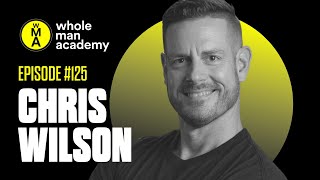
Anthony Astbury talks with Chris Wilson, a fitness coach and content creator, about training, mentorship, and handling criticism. They discuss how podcasting builds real connections and reference influences like Charles Poliquin and Jay Cutler.
Okay chaps, before we jump into today's podcast, it's a belter, but a few things to go through first. Firstly, we had a couple of weeks off in the pod because I like to record them fairly close to release date. But we had two guys who had to not cancel but postpone. So that's why we had a bit of a break. But also it gave us a chance to line up some other belters for you. So Chris Wilson, today is a really good one. You're going to enjoy that. Apart from that, you will all notice that our new snazzy website is up and running. Feel free to go and have a look. It's wholemanacademy.com let us know what you think of all the new new bells, whistles and branding. Also, of course we've moved to the Whole Man Journal which instead of being E letter A sounds sexier and B, it goes out on a Monday, Wednesday and a Friday to men all across the world. And it's powerful insights to maximize your mindset, body and performance. Who doesn't need that? So if you haven't signed up already, feel free to do that. Upgrade your life straight away. And it go just go to the website or it's wholemanacademy.com forward slash journal. Right. Lets jump in.
Holeman Academy because the world needs strong men. Wholeman Academy is changing the game for men around the world. It's for guys who want to live an epic life of fun and adventure. No matter what we believe, deep down, all men want to go on their own hero's journey to becoming resilient, confident, fearless and fulfilled. Listening to be inspired by guys who don't settle for living a life of mediocrity. This is your call to action and call to adventure. Are you ready?
Okay. So this is the Whole Man Academy podcast, episode 125. My guest today is Chris Wilson. I'm looking forward to breaking a few things down with him. He is, I mean let's just give you some labels, but a lifelong fitness and health advocate. He's worked or been, you know, around people like Charles Poliquin, who we've mentioned on the podcast before, really interested to talk to him about Mr. Olympia Jay Cutler, who also was part of his part of his life. He also oversees the Strong by Design podcast show. So we're going to talk pods. Also the Critical Bench YouTube channel with over 1 million subscribers, which is about 995, 000 more than we've got at the whole Man Academy. So I can learn from him. We're going to cover performance, leadership, mentorship, food, faith, family, God knows what else. So let's get you started. Chris, how are you and where are you?
Oh, man, I'm doing great, Anthony. Super great to connect with you. And we are down here. Critical Bench is based in Clearwater, Florida. So we are on the west coast on the Gulf of Mexico about halfway up. And it's just a beautiful area, kind of a tri city area, actually. Clearwater, St. Petersburg and Tampa, the three cities are up against each other and it's a wonderful, wonderful part of Florida.
I, I've been to Florida twice and both times just to Miami, although I've got friends that live in Tampa who invited me out there. So one day, you know, I, I need to get out there. But the last time I went there was for one of the Tony Robbins events, Date with Destiny.
Oh, wow. Yeah.
And that was a really, really powerful event. So I stayed with some mates. You know, we got a big kind of Airbnb house and stayed there for like, I know, 10 days and went to the event, so. And then, you know, took a few days to head down to the beach.
Wow.
And it's. What a place. And we stayed at the, I went with my partner and stayed at the Fontainebleau for, for a week and a bit, you know, that amazing hotel as well. So I know it well and I, I need to get back there. But funny as we're talking, I mean, it's been raining all day here and it's, you know, it's March, so I'm desperate for some sunshine. And I, I've spoken before and I wonder your thoughts. Let's start off with, you know, how much easier it makes it to stay kind of motivated when it's sunny and warm most mornings. Because over here, you know, it's, it's cold and it's raining and it's been snow in the last two weeks. So what's it been like for you? Have you. Because are you always been from that area?
Well, no, I actually grew up in the Northeast. Much similar, much more similar to the weather that you experience on, on a regular basis. I grew up in New England, which in Connecticut. And so I would say that's probably on the same level where, you know, you can go months without seeing much sunshine and quite a bit of, you know, icy rainy weather. But I mean, I've been in Florida now for over 20 years, since I was 26 years old. So since 2002, so it's been, I'm a true Floridian at this point, you know, after, after you hit a few decades, you're, you're in, you're in, you.
Know, what was it like relocating there? Because, you know, I've spoke to guys that have moved across the world or something, but, you know, not just changing an area, but also changing going from a climate which is, you know, what we've got here, to, to being warm all the time.
Oh man, it was a real welcomed change, I'll tell you. You know, no more defrosting your windshield in the morning or, you know, having freezing cold hands. And you know, listen, I love all the seasons. I love elements of cold weather. I love, I mean, we still drive up and go up to North Georgia, North Carolina to get into the mountains and enjoy a different, you know, the change of weather, the change of seasons, the, the hiking. Pardon me, my alarm, my, the hiking in the cold, that's my meeting alarm as a reminder that the meeting that I'm missing right now on purpose. But you, you know, I love it now on my terms in terms of, you know, my family and I can decide when we want to enter the cold, so to speak. This sunshine, absolutely. It's, it, it does something for your spirit. There's nothing like, I mean, we go out regularly as a, either by myself or with one of my team members or a group of us will go and we'll walk around the area, the building and the surrounding buildings just to be outside in the sunshine and the warmth, the fresh air. Especially the certain times of. The best time of year in Florida, in my opinion is from November through about now into about April. In terms of the weather. You get these cool mornings, cool evenings. The humidity is not nearly as severe as it is from May through October.
Yeah.
And it really, it lends to you being able to do so much activity outdoors. You know, even during rainy season, which is approaching, you know, the rain is not all day. The rain is for maybe an hour or two in the day and it kind of comes and goes. We don't have these like all day rainy days. And when we do, it's very, very.
Strange because it can really affect your mood, can't it? I mean, we know on those freezing cold mornings, and I've spoke about it before, when you wake up and you know your bedroom is cold and it's dark out and it's frosty out and what have you, you know, it takes that little bit extra to get out of bed and get to the gym, go for a run or something like also it might just be pitch blackout but that's why I often say to guys, you know, sometimes you don't need to beat yourself up if through the winter you find it harder than the summer to get. To get going. But if we said, like, you know, you're a lifelong fitness and health advocate, where did that start for you? Because. Was that because a father, you know, your father was interested, or big brothers, or just used to read some Men's health type magazines and got into it? Where did it come from?
Yeah, it's a great question. And you nailed it when you said big brothers. I mean, I guess you could say it's. It's partly. My dad was always very fit, and.
We.
We worked outside a lot. We. I was one of three boys. I was the baby, and my dad was always on the go, always doing something. His professional career, he was a hearing aid specialist, so he actually fitted people for hearing aids. He was an audiologist. But he. When he was home, he was out. We were out splitting wood, we were out cutting down trees. We were out doing landscape work or building fences or doing something with our hands. During the winter. He. He had. We had multiple trucks with snow plows, so we would plow snow. So, you know, my dad was a real worker and into fitness and activity. He would play racquetball, was like one of his favorite things to play. And he would work out at the fitness center at the racquetball club. I mean, this is back in my childhood, in my Youth, in the 80s, I distinctly remember where he would go, and it was important to him. But honestly, the passion I think I developed for exercise activity, being strong, being tough, was from my brothers. My older brothers are identical twins.
Right.
Five years older than me. So they were obviously a monstrous influence on my young life.
Yeah.
And still are to this day. One of them, unfortunately passed away 10 years ago already. But my. My other brother and I, he lives fairly close to me, him and his family. So we're in constant communication with each other. And their athleticism, their desire to be fast, to be strong, to be better than average athletes, was, you know, major influence in me. So by the young age of, you know, 8, 9, 10 years old, I was seeing them lifting weights and trying to get ready for sports and in high school.
Yeah.
And so that obviously dripped right down to me. So I always prided myself on being a stronger kid.
And I wonder, because at what point did that go from you being interested as part of a lifestyle thing in a youngster to actually saying, you know what? I want to make a career out of this or have you had any other career apart from the fitness and health side? Because I know some guys that have. I mean like me, I, 20 years of in the city, got really bored of it and was like I'd always been interested in it. So I went to what my passion was. But yeah, for you was that straight into it out of college or.
Yeah, that's a great, great question and a really important distinction because so many of us, right, we have these passions, but yet we get stuck in the, in the grinds of life and kind of the, the must dos versus the, the want to dos. And so I would say, you know, through college I really enjoyed my college. I loved the school I went to. I lived in a house off campus with my two of my bro, my two brothers and another roommate. And I was just, that's when I really developed more than ever like this love for strength and weightlifting. Like I was just putting myself through the ringer in college. All this free time, right. Like outside of class I only worked on weekends. So Monday through Friday I just lived in the gym. I lived in my garage gym. I had converted the back half of our garage. We didn't park a car in it or anything and we. I had a heavy bag, I had modest amount of weights and dumbbells and the, the top of the gym at the top of the, the garage was open so I had all these two by fours accessible for doing pull ups. Right?
Yeah.
So I would honestly, I mean this really dates me and makes me sound like an idiot, but I don't care. I was, I grew up. Rocky was like my favorite movie series growing up and I was actually born the year Rocky won the Oscar in 1976. And it was always one of the more powerful characters for me. And I would listen to Rocky soundtrack music and just train.
I still do.
Okay, so I'm not the only one, right? And especially leaving even just like the Rocky 4 one because it was just. The music was always so inspiring for me and I would just kick my own butt when I wasn't on, on campus. Kicking my butt in the, in the, the gym there I was, I was just at home skipping. Right. That's where good at skipping rope, eating the heck out of a 70 pound heavy bag, overhead presses, you know, curls, you know, whatever I could do for my legs. And then pull ups all day. Just how many pull ups can I do? And, and so I would say that those four years were really formative and just my passion for being fit, being strong.
Yeah.
And then coming out of college I thought I was going to be in. Everything about college was about communications, tv, radio. I thought I was going to be working at a news station or espn. And I end up befriending a guy that is a manager at a World Gym. And I'm like, well, I need a job like immediately while I look for like the job I really want, I need some source of income. So I started working for this World Gym chain as a, like the front desk guy and started taking some clients as a trainer.
Yeah.
And I just got kind of like deep into that lifestyle and then met a guy by the name of Ben Prentice who has a really high level hockey performance center up in the northeast. He's really made a name for himself. He works with NHL athletes as well as your everyday average Joe. And he, he took me under his wing at this great place where I came into contact with guys like a Charles Poliquin and some high level people that I got to rub shoulders with and learn from for a three year period. And that's when I went through my, my most massive transformation in, in this world of personal training.
Yeah, it's great to hear because that's what I was thinking. A path that someone takes, you know, you, you can never map it out too much because you, you say you just might be chatting to someone or you know, I, in the city you had a guy that might bump into a guy in a coffee shop and it turns out to be a great client who, you know, makes him, you know, a millionaire. So yes, planning is great and setting goals is great, but sometimes life can just throw you these curveballs that you can't expect. So what about, so what is your day to day now? Because I know you said about, you know, you, you're, you've got the podcast stuff, you've got the YouTube stuff with millions of subscribers, what have you. So do you have an average day? Because one of the big things for me when I worked in the city was the monotony of you had to be at your desk at 6:45 in the morning. You stayed there until 5 or 6 and you went out with clients or you went home or to the gym. But every day was kind of the same and I really missed that. You know, I know we all love certainty, but we all love variety as well. So what does your average day look like now?
Yeah, that's good. I would say my average day. Okay. So you know, I did the trainer average day for about 15 years. Some years were, it was more of a secondary thing, but over the course of 15 years, that daily grind, getting up early, you know, working clients throughout the day with breaks, having long days, and it was exhausting as much as I enjoyed it. And then 10 years ago I started working for Critical Bench. And it's, I've always been on the content side of things in, in the business. And so I, I show up every day really interested in creating or being part of the content that's getting put out to the world. And that's through our products and our programming, that's through our membership sites, that's through our YouTube channels, through the podcast, through, you know, various social platforms and things. And it's. We say TGIM here. Thank God it's Monday. Just because honestly I, I guess it might be rare, but you know, when you talk to a lot of people, they don't necessarily love what they're doing and they, they're living for the weekends. I live for, I love my invite. You can see I've action figures all around me. Behind me is only a little bit of what I have in my whole office. The whole office is just decked out. I love my, my man cave here at work. I love just my space. I love the people I work with. I love the work that we do. Every day is a little bit different. Some days we have a filming day where we have visitors, guests, coaches coming in to film. We just did a try, big fun tryout event earlier this week where we had random people from the area coming to try out to be on our YouTube channel. And that was a lot of fun to judge auditions. Sometimes we're right in the midst of creating or finalizing a big product or program that's about to go live and be launched. And then sometimes it's just a little bit quieter so we have, you know, more free time. I have a 4,000 square foot gym right outside that door that's our own private facility. And I, I can go work out whenever I want, depending on my schedule. So I have great freedom while making even more impact than I did in my first 15 years. When you're really only impacting the people in your bubble.
Yes.
Now I can impact, have an impact globally, which is really feels. I almost don't grasp it sometimes, you know, and it's not, it's not necessarily the number, it's, it's just the, the diversity of reaching people. Just not here in our country, but in all of North America, in the uk, in Australia, in countries, you know, that don't really speak much English, you know, so it's it's, it's really, it's a real powerful kind of feeling. Really feels good.
It's a very strange feeling, I guess when you start off with podcasts, YouTube channels, what have you, when you'll get messages from or you look at analytics and you'll see that people are listening to it in, in countries that you can't even pronounce properly. Never heard of. And like you say, that makes you realize that you could impact many instead of one. Which I was thinking is nice. But what about. So let's go on to the, let's say with the YouTube channel where you've got like a million followers, you're always going to get some people that don't, like, are going to criticize what you're doing. So what's. I know over the many years of you dealing with either, you know, one to one clients or that you're going to deal with criticism, what are you like at dealing with criticism generally?
Yeah, great, great question. I sucked at it in the beginning. Like most people. I would be very confrontational and super defensive. Right. If someone critiqued me, didn't like something I did was hateful.
Yeah.
You know, we, we do a pretty good job with our team. We have a great team of men and women from all over the world that are part of our team. We have like seven or eight, like in house. But then we have another, you know, 15 people that were plus that work for us in some capacity all over the world. And we filter out obviously the real abusive language because there's just no place for it. Yeah, but in the beginning I was really bad. I mean, I'll be the first one to say probably My first hundred YouTube videos were awful. If you go back and look at stuff I was making 10 years ago.
Yeah.
You're like, oh yeah, I would almost, I'd have trouble watching it. But that it's like anything in life, you know, with experience and with reps, you know, you get better, you develop a presence that in authenticity, you know, because I think a lot of times in the beginning people really struggle to kind of just be themselves.
Yes, Massively.
Yeah. And they want to put on a Persona, on a facade and that's what they feel is necessary, but it really isn't necessary. I think people connect much better when they feel like, wow, that's. I wonder if they're really like that. But they seem, they seems like that's what they would really be like.
I would say it's tiring for people because if you're Kind of. You're basically acting. The danger is then you'll listen to. I would say for myself, what I'm like on my podcast will be just like if you met me down the gym or we go for a whole man academy dinner. It's not going to be like, oh, he talks differently and he doesn't swear. And is this like, this is me and you're going to resonate with some and some people aren't going to like you. Probably the 8020 rule, maybe.
Exactly. Right.
Yeah.
You can't try to make everyone happy. I think that's a great takeaway from anyone, any content creator. Don't try to make everyone happy. Be yourself. And certainly, you know, don't hold back, be bold. But you know, it's a good thing if you're pissing someone off. I think just in it. Obviously not, not to the degree of where you're being hateful or where you're being a jerk, but you polarizing. But yeah, take a stance on something. Stand for something or you. Or stand for nothing. Right.
Yeah.
And, you know, so. And I think in the, in today's climate, it's that much more important for people to stand for something and to speak up and speak the truth.
Yeah.
And certainly I struggled with that in the beginning because I wanted everyone to like me. I didn't want one negative, not one thumbs down. You know, now I could care less. I don't even look at that stuff. I really don't. We have other people that monitor comments and, and deal with abusive stuff and moderate the channel for us and. But we're so long on video kind. We have 4,000 to 5,000 videos on YouTube over the years and you know, I, I don't have time to sit there and sit through all the videos and see all the negative, like whatever. Half the time the, the funnier, odder, somewhat controversial comments are the ones that really create the engagement.
Yeah.
And then your own fans and followers start to support you and defend you anyway, which is also really fun. You don't have to say anything because people come to your, to the rescue for you.
It ends up like a bit of a circus. And you know what? One of the. I was talking about it the other day, but I went to an event, I don't know, six, seven years ago where it was about online content and creation and the guy got asked, or one of the segments was about, you know, dealing with criticism and the guy played everybody in the room. There must have been a hundred people. It's a certain TED Talk of a woman who apparently it's a very famous one. I'm rubbish with details, but it was the one about her where she'd had, I think like a brain tumor. And basically what she said was, it was a beautiful story where she said, I was diagnosed with a brain tumor, they cut it out of me, blah, blah, blah. But it was the greatest gift because it made me appreciate my kids, my life, my work, my what have you. And at the end of the 20 minute video, you know, it's like, oh, it's lovely. And he said, he said, have a look at the comments. And the first 20 comments were like, oh, she's making it up, she's milking it. And he's like, listen, none of you are ever going to create as beautiful content as that. But. And even she got completely slated by 5% of the comments. So he said, you know, for you lot, if you're going to be bold enough to put your opinions in line, expect that more likely you'll get negative comments than positive because people are often more likely to put a negative on than I'll sit and go, hey, that was great. But I don't put a comment on saying that was great.
That's right.
It's like, you're absolutely right.
It's kind of like I also oversee customer support for our company and who am I going to hear from, the happy people or the pissed off people? Right. I'm going to hear large in part. 90% of the feedback we get is going to be people who are frustrated, pissed off, want to cancel, want to refund, you guys stink, that type of stuff. And yeah, so it's like pulling teeth to try and get good ratings and good surveys back from people and responses. But that's just life.
That I was going to say that that kind of, you know, you said about it earlier, it's like a good life lesson to, you know, as you're growing up, reminding yourself that. But that leads on to my next thing, which is the whole Man Academy was founded initially to get guys together to talk because we know how generally rubbish guys are at talking. And that wasn't to mean that you've got to sit there and spout all your woes out online to everybody because most people couldn't give a anyway. You know, there's that old saying of 80 of people, don't care about your proper 20% are glad you've got them. I've always loved that. So what we're talking about is like building inner and outer strength. And you know, I Say outer strength being your body and your muscles, but the inner strength being your kind of mindset. And I just wanted for you because you've worked with some really great people. I mean, training as well as what, learning from them. So I just wonder what your kind of take on how you build inner and outer strength.
Yeah, it's a, It's a work in progress, I'll tell you that much. And I feel like one thing is to have, to have the humility to know that you still have room to grow and to improve. Yeah, I think anyone. And, you know, I'm. I'm getting near 50 years old, and I feel like I still have a long way to go in terms of working on myself inside. How do I become a better husband, a better father, a better supervisor, leader, co worker, friend? How can I improve my, my reaction and response to people like, I tend to have a short fuse. How can I be more patient? How can I manage my emotions better? And my, My enthusiasm and my passion for the. Even the way I coach youth baseball sometimes gets in the way. And so we're. I'm always working on that. The outside parts, Anthony, honestly, comes so easy.
Yeah.
You know, the outside part, and not for everybody. I know there's some people that like, really kind of have the, the, the other. It's the other way around. They really seem to manage their emotions well and really seem in check with things and. But they, they stink it. You know, motivating themselves to move and to get the physical activity. I'm. I'm very much the opposite. Exercise and, and being strong and, and getting my butt out there to get a good sweat. That comes easy. I do that every week at minimally three, if not five times a week. And then I'm active with my family on the weekends and getting a lot of steps. I'm always, always getting a lot of stuff. You know, these stupid smart watches, you know, they're good for something. They at least, they kind of. At least. At least substantiate like, okay, I am an active person.
You're doing.
I have proof here. Yeah, I like, I'm not. I'm not a slug. And so that. That's good. But I feel that I have been so fortunate to have rubbed shoulders and been around, you know, the, it's. It's almost cliche. It's used so much. But the, the iron sharpens. Iron is, Is so very much a part of who I am and has shaped me and molded me and mentors and friends, people I look up to, people I Learn from people I admire, whether that's in person or even online in some degrees. But I've been so fortunate, even just with the podcast, for certain people that I've followed and then come to know because I. Because of the podcast, like, I can actually form a relationship with this person by getting them to be guests on the show. And now it's not just me being a fan and a follower. I can become like a. Almost like a peer or somebody. I can have direct contact with these people. How nice is that? And that's the power of.
You've really nailed it there. Because that's one of those great times when I get asked about, oh, people think, oh, should I start a podcast or not? I'm like, listen, it's really hard work. Like, if you're going to do it properly, you know, we're in 125 episodes. It's scheduling, it's lighting, it's editing, it's this, it's that, blah, blah. But it does mean that sometimes you might reach out to someone that you kind of hold up here, and then you get. It's like us. We've never met, but I would sense we're already kind of friends in the fact that we've had a good chat. And. And I'm like, sometimes you. You sit there and you realize that you would never have got another chance to have a heartfelt, honest, raw, open conversation. But that's what a podcast can bring to you. And suddenly they'll say, hey, if you ever need any help or anything, reach out to me. And you're like, yep, I will.
Some of the best conversations, Anthony, I've had in my life, and certainly in the last five years, have been because of this show.
Yeah.
And I mean, powerful ones, meaningful ones, ones that have. Where I've teared up, ones that have left me, like, buzzing afterwards, ones where I've thought about it for days or prepared for it for days.
Who.
Who does that? No one. No one sits around. Right. In everyday life, like, really thinking about, you know, a conversation they had with someone for an hour and studying it or going back and listening to it again or. Or preparing for it or, like, there's a lot that goes into this emotional energy besides the fact that we're just, you know, you hit record. And I look at this as one of the more powerful tools that we have today is. Is. Is being able to have the. And I've said this past, past podcasts on. On our show, you know, meaningful, purposeful, powerful conversations that really matter and that can really change someone else's life. Just even if it's just one person on the other side who, who, who gets a few gold nuggets, a few takeaways, and, and maybe that's the one conversation they were able to eavesdrop on and they got something out of it that was so powerful that the next day it changed them to be that person that they've desired to become. You know, it made that goal more attainable for them. It moved them in some way. And it's like, that's the power of words.
And you sit there, I mean, you know, talking about. The other power of, let's say podcast is, you know, I'll look at the analytics and you might have a podcast you did a year and a half ago that someone's just listened to. And I can't even remember doing it, but that's right, I'll message you and say, hey, that thing that you or Chris or Blubber said, and you'll be like, I can't remember it. But you'll realize that, you know, that, you know, that kind of content, hopefully, you know, impactful content lives on and keeps affecting people. Great example. One of the most popular podcasts we've done through comments alikes was a guy called Neil Kramer, who's an English guy that lives out in. Where is he? In Washington state.
Oh, wow.
And he's very, very, you know, is it Oregon near there. But very, very deep thinker, you know, esotericism. And he's a very, very switched on man to how the world works, let's put it that way. But I've read his books and honestly, I was like, people used to say to me, if you could have anybody on your podcast, who would it be? And they'd expect you to say, I don't know, someone that's famous or an actor. I could give a. About people like that, you know, that, you know, they're acting their whole life, basically. And I used to say, it's this guy. I've listened to hours and hours of his stuff. He blows my mind. So when we did the podcast, you know, I spent two hours with someone that I, when I say love, you know, I just, I love listening. And at the end he was like, oh, if you ever come over here, like, we'll go and record some stuff together and everything. And look at that. And you're like, I could never have thought that, you know, you'd have a proper two hour conversation with someone and make that connection. And it's like us, if you were Coming to the uk, I'd be like, Chris, I'll come and meet you in London, let's get a drink and a steak or whatever it is that you're eating and enjoy ourselves. But well, on that, I mean we mentioned it earlier about Charles Poliquin, so I just wondered, could you say a few words about that? Now I interviewed a guy called Steve Nichols who is a strength coach that works in New Jersey and he followed him for three to five years. I think I might have get that wrong. I'm rubbish with, with, with real data, but you know, I remember him saying what a big impact he had. So what was it like for you?
Yeah, Charles impacted a lot of people. You know, fortunately, obviously passed years ago now. And I, my first impression. So I mean I could, I, I could talk about Charles probably for like an hour. My first impression was, you know, this is back in like 2000, right, that I met him. You know, he had the kind of prototypical like polo collared shirt with his forearms massive, like overdeveloped, ridiculous Popeye forearms with veins hanging off of them and his, his old gym pants that made the sound as he walked with his oversized fanny pack.
Yeah.
And I remember meeting him and he was very, very low key, very mild mannered, very kind of soft spoken. But when he spoke, he really, he had something to say. You know, he was a thinker. Right. He was obviously highly educated and had, you know, credential on top of credential behind him at that point when I first was exposed to him and he was, he was, I forget how he ended up being in contact with my boss at the time, Ben Prentice. But they formed. Ben became like a mentor of his and would go out to his, his out to Arizona and was working with high level pro athletes out in Arizona and was really connected to Charles for several years and the work he was doing. But Charles would make a point to come down to our facility in Little Darien, Connecticut called Body Tuning. And he would work with the team there showing us things. So I remember one of these funny things that he did. He wanted to show us the power of spinal alignment while training, in the midst of training. So he's like, let's take just a basic seated dumbbell curl. He's like, oh, so pick up some heavy dumbbells that are like, you know, like 70 to 90% of your one rep max. Right. So, so I, I picked up a, you know, a fairly heavy set of dumbbells and he said, okay, so go ahead and do some curls. Fatigue the arms A little bit. And watch what happens to your body. Your body mechanic, your posture as you're curling. And sure enough, you know, as guys, when they start to. When something get heavy, it gets heavier, what do they start to do? They start to, you know, their neck moves, their head moves, they. They kind of bury their chin and, you know, all these, like, they kind of contort their bodies into these kind of weird postures to, like, get that one more rep. And he said, okay, put them down. And then he said, you know, rest for a moment. And he said, next, I want you to, you know, pick them back up again and. And do some curls, but I'm going to come behind you and I'm gonna. He told me what he was going to do before he did. Did it. He put his hands around the back. He was standing right behind me, put his hands around my. My chin and my jaw, and he pulled up on my neck to really straighten and lift my whole. I just actually cracked my spine doing just that. But he was putting my body into much better spinal alignment. My. My cervical. Spinal alignment. Obviously the. One of the. The nerves that run into our arms, where do they go? Through the cervical spine. Right? So he's trying to teach us a lesson, and he lifts up, he says, okay, do a couple curls, and I'm going to apply more pressure and really manipulate your. Your head posture while you're curling. And I just felt extra strong, like in these reps, these lat. As like the. You would think, you know, okay, I'm getting tired, but I'm like, I feel like more capable. I feel more strength, more power through those. Those harder reps as I'm fatiguing. And it was just a really cool indicator of, you know, and this is back when I was a hack, you know, I was like early mid-20s, and I just wanted to lift, to get strong and look good for. For girls, you know. Yeah, curls for the girls, bro.
Yeah.
I always pride myself on having good arms, you know, and. But he had, like, really massive arms himself, you know. And so anyway, that was a lot of fun. And one other thing I'll say about Charles. Well, two other things really quick. He. He. I remember him making carrots the enemy at lunch. I. I think I was. I was. I got a salad or something, and he got a salad. And I remember him saying, no carrots. I don't want any carrots. He's like. And I. I'm like, why now? What? Why are you not getting carrots? And he's like, yeah, it's. It's like extra. It's carbs I don't need. It's like a sugar. Why would I want, you know, so he was like, he was a hater of carbs. He did not like carbohydrates. And so, I mean, this is back in the day, you know, so he was heavy protein, heavy, heavy protein. I'm not sure what his fat intake was like back then, but I was like I said I was still a hack and still learning and, and, and then lastly, I think it was the probably second or third time I was around him or exposed to him for any length of time. He was conducting a full day workshop, mobility workshop down in like in New York, which wasn't very far from where we were in Connecticut. And our whole team went down there and we did mobility and stretching with Charles for like eight hours. It was probably one of the most sore. My body's never felt like this. I mean, holding positions like for like extended periods of time. It was almost like an eight hour like advanced yoga class, if you will, and just put your body into a pretzel and all these weird crazy positions we were in, you know, but it was stuff that he, you know, was teaching and doing with high level athletes to get them to, you know, to, to, to perform at their very peak, at the, at their best. And. But he was. Yeah, I'd never been really around somebody that that was, that that had an answer for seemingly every question and it was very insightful and very, is so educated and so, so brilliant.
Yeah, I love it because, you know, I've, I've listened to one of his interviews on a podcast quite a few years ago on, on, on the London Real podcast, if you even know what that is. But yes. Yeah. And when I did their podcast course, so I met Brian and been to their events and stuff like that because he had the similar path to me of leaving the, you know, like the Wall street and then the, the London city and going into it. And then when I spoke to Steve and like yourself, I just find it really interesting because guys like that, you know, you just want to be around them to pick up stuff that. It might not sound very sexy, but it's really effective. It's little things like that. But that, that led me on to. It's funny because it was only a while ago I watched the Ronnie Coleman documentary and I saw there where very much the thing of Jay Cutler was, was kind of his, you know, they were kind of battling against each other. I just wondered what your take was on say your take on Jay, but like what your experience was with him, like how you interacted with him.
Sure, yeah.
If people don't know he was what, four time Mr. Olympia, which is no more time.
Mr. Olympia probably would have been more had Ronnie not been around. You know, there might even be once or twice there where he should have won and not Ronnie. But you know, it's one of those things like once you're, once you've already, you know, paved. Paved the way. It's hard for them to, to give that award to, to the young, newer guy.
Yeah.
But anyway, I mean, Ronnie obviously was, was legendary. Is legendary. I met him too actually. But old, I met old Ronnie, not young Ronnie. Yeah, but Jay. I met a very young Jay. Jay was in my NASA workshop. So I, I was around him for probably like a three day stretch and he, he's from Connecticut, he's from the same area I'm from. And we were at a live in person, like say three day workshop for working towards our certification. And he was in a. I remember it's probably in a room with say 30 to 40 people and he's one of them. And I remember no one really knows who this guy is. You know, he's just like an amateur bodybuilder at this point. But I remember how wide and thick he looked. I was like, gosh, that guy's freaky big. And you know, but not like I'm, I'm closer to six feet than he is. So I always was like, you know, I'm pretty big in my own Right. Like 220, 230 pounds. But this guy's like five, eight, three, you know, 300 pounds, you know, high. Two hundreds. Yeah, just a wall. And so he was, he just was like a normal dude, you know, normal guy just in, in learning like everybody else remember having small conversations with them here and there. But I remember the. One of the instructors was like, all right, everyone's wondering, everyone wants to see Jay. Could you please just stand up and, and take your shirt off and flex for everybody. And so sure enough, he did because, I mean, what the heck, right? You're like. So he's, you know, had like an eight pack, of course, and just, just ungodly large. I mean, and this would have been right before he really was kind of coming on the scene. So this was like 19, 1999 and just an absolute beast. But nice guy. Just a normal everyday dude.
Yeah, I think that's, it's always nice to, I mean, in all walks of life or all sec. Sectors of life. I like talk to people who have met people or work in industries so you can really get a good feel for what people are like or what different jobs are like. And it's funny, one of the big things I'm not, one of the guys I interviewed on the podcast maybe 100 episodes ago was a. Is an amateur bodybuilder and he, he spoke about, you know, it's not a fun existence being a very, very low body fat. You know, people think it looks good and you're like, yeah, I've got down to very low body fat, but not that level. But I was probably a miserable because I was eating boring stuff. I was turning down parties, blah, blah, you know, just protein shakes and dry things were my, my life. But when I spoke to the bodybuilder over here, it wasn't long after that the lockdowns happened. And of course so many guys, me formally as well. A lot of our identity was linked to going to the gym and working out and for our mind and body. And I would wonder what was it like for you, A business wise and B, for your kind of your personal mental health when lockdowns happened?
Yeah, it's a great question. Obviously everyone initially, you know that March, April of 2020 was like, what the hell is going on now? This is pretty scary stuff. And took it very seriously. As we should have. Right. Because we're all concerned for each other's well being. You know, we're fortunate where we are. First we're in Florida and you know, Florida obviously has always taken a pretty relaxed, rigid stance on a lot of this stuff because we have really good leadership here in this state.
Yeah.
And, but so once it was decided, we were all working from home for the first few months of COVID all through April, pretty much all of May, and we were doing workouts every day. We rotate through coaches. So I would do like, like a Monday and a Wednesday live workout for my house or something. And then coach Brian, one of our other contributors, would do it on Tuesdays and Thursdays and then Tanya was doing it on other days. So like every day there was a live workout on our Facebook page and we still had stored so much YouTube content up like because we're pretty heavy on content here. So we had plenty of content pre recorded to continue uploading videos on our YouTube channels. And then we determined because we're such a small private business that we said, well let's we can start coming back into the office. A few of us anyway, and we started doing that. That kept Us, I think mentally that kept us, you know, in pretty good shape. You know, we, we were still complying with everything, you know, avoiding large gatherings and everywhere. You still to wear a mask, Any, any building you entered or, you know, any, anything, anytime you were around other people. But here inside our own little business, it was like a little family. Anyway, we, we operated kind of as normal pretty quickly, which I think for our sanity was really powerful. Yeah, because I know there's a lot of people that, you know, went a year or more, maybe even two years with their business or whatever and you know, how, how is it sustainable at all? Again, so fortunate here in Florida, we were kind of back to regular life by fall of 2020 in terms of, you know, with some obviously limitations, but not too bad. Life seemed to just resume. Our kids were back in school wearing masks. My wife was back working in animal medicine. But they just wouldn't allow people in the building. They would have to go out and get the animals and bring the animals into the building, that kind of thing. But our, our life here at Critical Bench, we got back to bringing our video team in on filming days so we could still make content and film, film products and, and do all the things we needed to do.
It's so important. I think it's great when you hear. Because so many people had, I mean, we were affected because we'd been running events, you know, we'd done 12 events in London for men. And you know, our biggest event had 65 guys come along, which was a decent number.
And it's great.
And we just done our first or second just dinner event as well because, you know, doing events are great and I, I love them when I feed off the energy. But of course, if you do an evening event in London, then you're limiting it to the people that probably work in London and you've got other guys that you know to get trains in and out or a pain in the ass. Then if you do a full day event, you've got a family. I have for some of the guys they like, I want to come along, but I've been at work all week and then I'm saying to my wife, hey, I'm going back to London and I'm going to be there all day and it's really hard. So we started doing just my idea of like just a casual dinner so you haven't got to buy a ticket. You can come along and you, you know, if you didn't make it, you didn't make it. And we'd, we built that great momentum, and then that all got ruined. And, I mean, I literally sat there and was like, good, good stuff. So, you know, adversity, we always know, you know, you've got to kind of adapt or die, as the situation goes.
Yes.
And that's why it's always interesting to speak to different people who had managed to get their businesses carrying on. Because there was a lot of legal wranglings in this country about gyms being open because they're like, well, hold on, you're allowing McDonald's to stay open, you're shutting the gyms and you're saying McDonald's.
Is essential, which isn't really even food, but a place where people can actually go get healthy.
Yeah.
And train their bodies. That's not essential. Interesting.
As if they didn't want people to. If, you know, didn't want people to be healthy, which I guess you can make a lot of money out of people when they're sick. You can't make a lot of money when they're healthy, so.
No, because those people are accountable to themselves and to others. Healthy people are probably more dangerous people.
Yes.
In some really weird way, if you want to analyze it.
Yeah. The big drop in testosterone levels. I mean, I've been, you know, I've read a lot about it. My partner's a naturopathic nutritionist, so she's, you know, in that field as well, of understanding it. And when you understand how much of what is around us in our environment, you know, the plastics and the. The aerosols and, you know, who knows what WI Fi is doing to people and blah, blah, blah, and what's in your water and what's in the air and God knows what. But it's interesting. I, you know, I speak to guys like yourself, will be. Nod their head to be switched on. It's amazing how most people can't be asked to. They're not just like, I'm just too busy. Which is why it leads me on to my kind of last topic, which I know we touched on before we started recording, was about, like, men and faith and whether they don't care about it, they've switched to it. They've always been part of something. So at what point did you have an upbringing where you were kind of, you know, you went to church, what have you. Or did that come on as you were, like, later in life?
Yeah, no, it's. It's a. It's a great transition because I think that's really what helps sustain all of us that are part of our business. We're not a Christian business by any means, but we're a business largely made up of Christians in terms of our beliefs and our values and how we treat each other, the culture we've created here. We have seven core values that make up our company, and faith is one of the seven. It's not a mandatory thing. We don't. We. We won't. You know, if you're not Christian, it doesn't mean that we wouldn't consider hiring you. You will believe it, but you will believe. No, but you have to at least be okay with it and open to it and okay with the fact that we pray before our team meetings. We pray. What are we praying for? For. We're praying for our business to make an impact, for our. For our team members to. To. To be healthy for their families, for their friends, for us to be good support system for each other and. And that we have a good week. You know, like, that all sounds pretty good to me, you know, so I don't. I'm not offended. And so anyway, it's. It's the way we. We conduct ourselves and our business. But where does it come from for me? You know, I grew up in the church. I was exposed to just a really good church family. I was part of the youth groups. You know, some of my friends were. Were at my church. You know, we went every week and we went on some trips and helped people. I mean, that sounds pretty, you know, after a devastating hurricane, I think it was in South Carolina, this would have been back in, gosh, like 1990 or something, we went down and tried to help repair people's homes and stuff. And so, you know, so a little bit of ministry and stuff there, which was always good. So I always had really good feelings about the church and, and faith and God is real and he. He loves you, he cares about you, those types of things. And so that was always good. But I would say, as a lot of people kind of. Kind of go their own way, their own path. Those later teenage years, and certainly into most of my 20s, where I would say I really didn't have a relationship with. With God. It wasn't. Wasn't a. I was avoiding Him. I wasn't seeking Him, I guess you could say, and making him part of my daily practice.
And.
And I would say when I started to. I told you prior to. I think prior to the start of the show that I had lost a. Or no, maybe it was earlier in the show. I lost my. My older brother.
Yeah.
Brain tumor.
Well, it was a brain Tumor.
Brain tumor. Yeah. Ten years ago, he passed, but obviously prior to that, we knew what he had and what he was dealing with.
Yeah.
And so I would definitely say I had that little bit of. A little bit of that anger towards God, but also knowing I needed him and needed his strength during this very challenging time. Why, you know, why is my brother, who's only 40 years old, dying of brain cancer? You know, and seeing him go through that very long, just really tough to. To. To watch process of, like, losing his life. It's. It's very. Took about a full year for it to really. Once it was inoperable and nothing more they could do. It was almost a full year of him and my mom devoting her life to taking care of her, her son with his wife. It was a unbelievably tough period. But I'll tell you, I was leaning more and more on God. And then my mom going through her own struggles, and she eventually also passed to cancer about three years later. And so. And then also being part of this team and, you know, the owner of the business, the founder of the company, Critical Bench, we are longtime friends. We. We went to high school together, played high school football together, and we've been friends ever since. And he kind of came to faith late, I would say, probably in the 2008, 2010 time frame. And. And I was. So once I started working for. For him in critical bench in 2013, it became kind of part of our daily habits. Reading devotional or reading some scripture or incorporating prayer and meetings and.
And.
And things like that. So it was very uplifting and. And it felt good. It felt right.
Yeah.
To kind of reconnect and to be bold in our content, to not hide that part of our ourself to, you know, so many of us, we kind of shy away from really letting people see our. All of us, our. Our wholeness. What really makes up a hundred percent of who we are. And I. I would be lying if I said that, you know, faith or Christianity or church or belief in God, if that. If I. If I didn't talk about that. You. You. That's. Now. Now I'm hiding part of me.
Yeah.
And so we. We've gone out of our way to not hide it. Certainly the podcast really makes it more of a platform for talking about it. Prior to that, it would show up certainly in some of our YouTube content, and we would even go as far as hiding it, not hiding it, planting it in our. In our product content. Sometimes we'd pick a song that was maybe Actually a religious Christian. Yeah. Christian music without, without vocals that would be maybe embedded into our products or we would have some, some, some item that was placed purposely in the, in within view of the recording for like some type of follow along routine or something or just little things like that. Yeah. Almost like it was like blessing, like a little blessing for, for the, for the product. But yeah, I, I've, I've made it a real point as I've gotten older. You know, you do gain some wisdom as you get older. You do think about the world, about things more than you did. There's more reflection. There's, there's, and there's more like, you know, the things that mattered in my 20s and my 30s don't matter as much now.
Yeah.
Because other things that are matter more that are more meaningful and should carry more weight. And, and I, and I think just the more I'm exposed to the tr. The truth of the Bible and mentors and people in my sphere of influence that I can learn from, I just, I want more people to know that it's okay to walk in your faith.
Yeah.
To put it out there, to be bold and to hopefully empower other people to, to do the same thing. You know, I mean, we need more people talking about God because God in, in our country here in the US has been slowly stripped away for like the last century. Any way they can do it. And it's, it's, it's really, it's really not good.
We, I think you would enjoy the podcast with Neil Kramer because he delves quite deeply into that topic during the conversation. But the, the other part of, you know, such that one of the biggest parts of your life. My life is of course family and you know, not just partner children, parents and what have you. And I always like to ask guys about fatherhood because it is a massive change. Some guys I know, I mean, we've got another baby arriving any day now and we've got two boys already, so you know, we'll have three soon, which will really mix things up a bit. But some guys that I know of course have kids when they're young and their kids at our age are now like 20, whereas mine are only three and a half, five and a half and you know, not quite day dot yet. So what's been the most difficult part or challenging part of fatherhood? Because it's easy to say about all the good times, but often people forget that, you know, when you're running a business and you've got a family trying to stay fit and healthy and these incredible little beings coming to your world, it's like, wow. It can. It can mix things up a bit.
Yeah. Wow. I would say, what's one of the more challenging, difficult parts of fatherhood? You really do. I was just thinking about this the other day. You. You really do get stuck when you reflect back. My son's 11, my daughter's turning 8 next month. And it's really hard to think about the tough moments and the bad. The bad moments, because really, it's almost like your brain. It's. It's a wonderful thing, the way our brains work. Our brains. When it comes to kids, children, our own children, our brains really just want to go to the good stuff. We don't get stuck on the tough moments. The tough times, we just really go back to, like, why are they so wonderful and beautiful and gifts from. From God? But I would say as a father, what the. One of the more difficult things really is. I think a lot of guys are really have structure in their life, and the baby throws that all out of whack. There's things, you know, making time for things. It's like you're squeezing now. You're squeezing, like, filling gaps. Like, where can I exercise? Because, you know, or where can I even. Like, my wife. I know my wife wants to get back to working out. I don't know how we're going to make that happen. I'm barely able to squeeze out any time. It's, it's having the time, I think, to, to still do the things that you enjoy that, you know, make you a better person and, and being in the frustration that comes with, like, I gotta. Now the baby. It's like the baby, the baby. The baby is the focus. Like, I, I gotta do this, I gotta do that. And then just sheer exhaustion.
Yeah.
Of, of, you know, just around the clock. And I'm sure, I mean, I can only speak for myself, but, you know, it's even more exhausting for, for mommy because, you know, those first few years, Mommy is what matters most. I mean, let's face it, we dads, we can think that we're pretty important and we're pretty cool, but, I mean, mommy's the. Yeah, Mommy's top dog man, by far, you know, But I would say frustration of a lack of structure and, and, and, and time enough to do the things that you did in your life prior to kids.
Yeah, I'm absolutely on that one because I, you know, I always joke and say, you know, some Saturdays before we had kids, or say, Sundays, Emma And I would get up, basically go to the gym together. She, you know, she'd go and do her thing, I'd do mine. But you'd come back, cook a really nice breakfast or brunch, go for a walk in the woods, come back, have a late, you know, whatever, then probably in the afternoon just like sit on the sofa and just watch a film and just do nothing. And I was like, wonderful. Never wonderful, never do that anymore. But one of the, it's funny, one of the things about kids is of course I think for some guys it makes you. Maybe for me I became more risk averse. You know, I, I drive slower when I've got my kids and I had no interest in doing dangerous things things. And I, you know, I competed in the obstacle course racing world championships in Ohio for the, for Team gb, which was great. And sometimes you'd be up the top of a very, very high thing with no, you know, no safety harness or have you. And you think if I fall from this, you know there's going to be a problem. But I just wouldn't do that stuff now because I've got, you know, I'm responsible for them. But I just wanted as a, as a quick question was like, what's the last thing that reduced you to tears? Because you know, for men we know that most of us don't show much emotion and you know, we keep it locked up and often that's why I would say suggest one of the things why mental health for men, the suicide rate is so high because they just keep it all locked in.
Yes.
So what about you? What's the last thing that kind of, you think that touched you and reduce you to tears?
Wow, Anthony. Well, I, Dude, I'll tell you what. My dad is much of a strong kind of disciplinarian. My dad was, my dad was a, a Marine Corps drill instructor for a period of his life. He was an alcoholic. He's the oldest of four boys, so he was, he was very much prided himself on being a tough man's man, you know. But my dad was one of the first ones to, to show you his emotions if something really touched him or moved him. I know there's a lot of men out there, young men or boys who will say, I've never seen my dad cry. You know, I can't say that I, I, there's, I can't even countless occasions where I saw my dad like tear up or get emotional when I was a kid. So I never felt, and I know this is unusual probably because I'm unique in this way. I never felt I had to hold back my emotions. And so I think that was always what led to me maybe just feeling better, being healthier. I don't know. I've never struggled with depression or any, anything like that. I've always been. I wear my heart on my sleeve. I'm. I'm the, as you said, the star. You know, I'm very much the guy. I'm talking right now. This is who I am. I can cry watching a commercial at home. I mean, with my kids right there, you know, and they'll be like, daddy, are you crying? Like, yeah, that was, that was, you know, if I hear a real powerful song or, you know, lyrics that really mean something, usually it's worship music. And I have blaring in my car on the way, crossing the bridge on the way to work or something that, that'll get me or I'll read a post or something, you know, that's really, you know, really emotionally charged and that'll get me. I was, I do podcasts all the time and sometimes someone's story is like, yeah, oh my gosh. Like someone went through a podcast with somebody who was actually, for a short time, a contributor for us here at Critical Bench. She was an identical twin. She lost her sister to breast cancer.
Yeah.
And she was telling this story, and I'm hosting this episode and she's crying. I'm. I'm crying. I'm trying to hold together. I'm hosting. I'm like, I'm like, I'm like, tears are like streaming down my face and I'm like, I can't speak. She can't speak. I'm like, how the heck are we doing a podcast? No one can talk.
Yes.
Yeah, but so I, I think it's, it's one of those things that if you're not willing as a man to show vulnerability and, and that you actually have a friggin heart and you, you care for other people. I've had this conversation before with past guests. Then you're, you're just, you're not a real man, in my opinion. If, if you think that tears or crying or showing emotion or sensitivity to something is, is not masculine or manly, then I think you've missed the boat. You got to go back and do some more research.
I think it's really important because let's say if we posted some photos of you with shirt on, a shirt off, or what have you, people look and be like, hey, Chris is a big guy. He's strong. He's mentally strong, he's got a business, he's an entrepreneur, blah, blah. And it's important to hear that story sometimes where guys are like, yeah, do you know what? But I, I still show emotion because that's just. Is better to get it out than it is to kind of hide it in. That's where, that's where we see guys then go to coping mechanisms because they, maybe that's their outlet instead of actually just being. I mean, it's finding the right people as well. I, when people posting sad selfies online and stuff. Right. Like, come on, you know, let's, that's it, let's not do that. But.
And I'm not talking about being a sniveling, sobbing, you know, baby about something. I'm talking about something that's heartfelt, felt that really matters. You know, if, if you hear about a story of loss, it could even be someone's animal, you know, but you know, typically it's a, you know, a sibling or a parent or a child, God forbid. And if that doesn't, if that doesn't hit you in some way, then, then I'm almost like, well, geez, I don't know if we're going to be able to connect because that, you know. Right. Like I, I almost. Right. Question somebody's, somebody's humanness if, if, if something doesn't touch them or move them.
Yeah.
And so I mean, I, as I said, I coach baseball. I've been coaching youth baseball for years now and we had a, just an incredible comeback victory the other day. And I remember just feeling electric at the end and trying to like, compose myself, walking up to the team, all taking a high knee and right field afterwards to just talk about the game and, and what we just all learned and went through together after losing the entire game and to come back and to win at the end. And I had to kind of. I held back. But I mean, there was a part of me that was like, man, I just want to let these kids see how, like how emotional Coach just got.
Yeah.
In that effort at the end of the game. And, but it's, you know, there's a time and a place for it. Certainly don't cry in an interview, I'll tell you that much. Because if you're crying in an interview, they're probably going to go look for a different candidate. But other than that, if you got the job secured, you can, you know, let the, let the tears roll.
Yeah, no, it's, I think that's why it's great. To talk about because, you know, I've spoken to marry warriors, special forces guys, Olympic or, you know, Paralympic athletes, what have you. And they've all got their own story of sometimes, as they've grown up, not being allowed to show emotion. And one day you realize, you know what, like, life's too short to try and look tough and cool all the time, where you're like, you know what? It's actually okay to kind of let. Let things go a little bit.
Totally is. I. I'm in 100 agreement with that. Yeah, I just. I just. I just. It's like a sneeze. Right. Some people, when they sneeze, they go. And then they hold it. Right. When I sneeze, I let. Everyone in the office knows when I sneeze. Right. I don't hold back in the same way with my emotions. If something. I don't fake it, I don't force it, but if it hits me a certain way, then so be it. That's just. That's just what's going to happen.
I laugh because I get told off for sneezing too loudly. And it was like, do you have to sneeze that loudly? But. Well, on that. On that deep and meaningful topic of sneezing at the end, we'll. We'll wrap things up. So I know you've got stuff to do.
Yes.
And I've got to go and feed the chickens before they all go to bed. We're prepped, ready for the apocalypse of the food shortages. So we've got the chickens.
Do you have your own chickens?
Yeah. So we. Well, we. You'll laugh because, man, being from the States, you'll laugh at this. But one of our chickens, we let the boys name our chickens, and we got them in 2020. Was it 2020 or 2019? Just before the last election in the. In the States, or selection, as some people call it. So we allowed the kids to give the. The. The chickens their name. So they named it, like, you know, Liberty and Freedom and. And Iris and Eileen. And one of them, they called Donald Trump, which is. Which is great. So I had to. Unfortunately, Donald Trump got ill two weeks ago, so I had to phone the vets up. And they were like, right, you know, we register your name and email and could you give us the chicken's name? And I was like, yes. And I just. I couldn't get it out because I was like, it's the. It's Donald Trump. And she's like, you can imagine her being like, donald Trump. Right. Okay, good stuff.
Okay.
Unfortunately, Donald Trump has, has left this earth and has gone to a special place now. But it was just, that was a gift that kept on giving when, you know, when you've got Donald Trump at the vets and they're like, right, who's next? And Donald Trump. And you're like, yep, that's, that's us.
Oh, man, that's the best thing I've ever heard.
Yeah, it's a real, a real Donald Trump.
The chicken.
Yeah.
Unfortunately has succumbed to, you know, a nasty case of ringworm.
Yeah. Has gone to the higher, higher levels of where, you know, the chickens in the sky and stuff. But I knew podcast Chris.
Oh, this is, this has been great. You never know what's gonna happen, what's going to be said in a podcast. Right.
Yeah, it's picked up nicely. But, well, I, I appreciate all your time and your, and your wisdom and your thoughts. And I always say if I'm, or next time I'm in the States, when, when restrictions have become a bit more sensible for certain things, I'll, I'll hopefully I'll be over there, maybe come and find you for a man hug and a coffee.
No doubt. We are open arms here in Tampa, Clearwater, Florida, my friend. And, and you are a welcome guest. You can come, we can get a workout together. Go for, go for some food and coffee. I'm, I'm game.
Sounds like a plan. Lovely. Well, it's good to speak to you and hopefully we'll speak to you soon.
I hope so, too.
Bye, mate.
Thanks for listening. Remember to sign up to our game changing weekly E Letter that's read by men around the world. Sign up@homeacademy.com forward/movement it until next time.










