EP128 - PORN IS DESTROYING MEN - FRANK RICH | WHOLE MAN ACADEMY
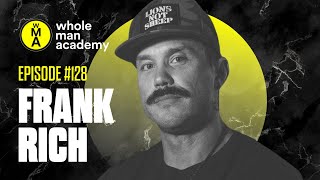
Episode 128 of the Whole Man Academy podcast (host Anthony Astbury with guest Frank Rich, dialing in from Tampa, Florida) covers Frank's background as a bodybuilder and content creator, his YouTube growth strategy (daily posting, short-form video), and his early steroid use and estimated peak monthly cost (~$500–$700). The conversation pivots to men's health issues: falling testosterone levels (environment, sedentary lifestyle, diet), and an extended, candid discussion of pornography use — prevalence, harms, recovery framing (identity change, community, accountability) — plus podcasting experiences and plans.
Questions this video answers
Episode 128
Tampa, Florida
About $500–$700 per month
Okay, guys, before we jump into today's podcast, just a reminder, we send out our Whole Man Journal, which is insights to maximize your mindset, body and performance. We send that out every week to hundreds of professional men all across the world. So if you haven't already get on board, start reading it. It is www.wholemanacademy.com forward/journal or I'll put the linkarooni in the show notes if you haven't hit it already. Also on there, we will be very soon or in a couple of weeks time releasing our kind of next big idea for the whole Man Academy, which hopefully will be bringing more men together to include more events, a strong network, real concrete kind of selection of men across the world who want to, you know, live an epic life. So make sure you're reading that because we'll be announcing it there first and you'll get first dibs on whenever we release. Right, let's jump in.
Hole Man Academy. Because the world needs strong men. Wholeman Academy is changing the game for men around the world. It's for guys who want to live an epic life of fun and adventure. No matter what we believe, deep down, all men want to go on their own hero's journey to becoming resilient, confident, fearless and fulfilled. Listening to be inspired by guys who don't settle for living a life of mediocrity. This is your call to action and call to adventure. Are you ready?
Okay, so this is the Whole Man Academy podcast, episode 128. My guest today is Frank Rich, epic guy. I like this chap a lot. Former bodybuilder, men's health recovery coach, CEO, founder of Rebuilt Recovery. He hosts the Superhuman Life podcast, which I've just been on. We're going to talk porn addiction business, building greatest body and knows what else. So, Frank, how are you and where are you, brother?
Hey, I'm doing good, brother. I'm dialing in from Tampa, Florida. And that's a. It's called quite a resume there. Quite a, quite an intro. Hopefully I can live up to that introduction here today, man. But yeah, had a great conversation with you on, on my show and looking forward to where we go today, man.
It's great because it's having, how can I put it? Real and raw conversations with men and, and porn as we're going to get into is one of those ones that, you know, to state the obvious, not many people are like, yeah, yeah, just be wanking a bit early before I came out for lunch and stuff like that. So it'll be an interesting one to talk about. But first off, I was just looking up because you've got a really, a big, big YouTube channel. You know, so many, like, great videos on there with a whole range of stuff on, you know, men's fitness and strength and bodybuilding. And you've got like over one and a half million views on, on YouTube. I don't know if you, if you know that. So it's, it's. I doff my cap and I'm impressed already. But what's it been like, your journey of setting up a YouTube channel? Because I know myself, unless you're going to be paying people to do like, ads and stuff like that, sometimes it can take, you know, it takes a while. And I've listened to people that have got hundreds of thousands of subscribers and they're like, for the first six years, it, it, you know, people think it blew up overnight. Often it took years and years. And what's that been like for you?
Yeah, it's, it's been exactly that, man. You know, I started randomly uploading YouTube videos back in the early teens, you know, like 2013, 2014, like, we just, you know, we had a flip camera in the, in the gym. I was kind of early stage in my bodybuilding career. We'd catch a wicked set. We'd be like, oh, yeah, there's a. Not knowing what YouTube was eventually going to become for me. I just looked at it as like a library where I could kind of catalog some things. Those are kind of the early years. And then in 2017 was really the launch of my fitness, my online fitness presence. You know, I'd worked in gyms and been a personal trainer and d competitive bodybuilding for about a decade prior leading up to that. But 2017 was when I really looked at and said, okay, I think that there's an opportunity for me to maybe build a name, build a brand, build a presence and following on YouTube. And that's when I got very intentional first about speaking. So it's interesting. I've been very fortunate to actually work with another very large channel you mentioned. I have one and a half million views across my channel. I have roughly 10 million views for another video fitness channel. I've had three of my videos all individually break the 1 million view per video for a channel called for a channel called Critical Bench, Massive fitness publishing company based out of the Tampa Bay, Florida area here as well. So in 2017 is when I got connected with the Critical Bench team, Mike and then the head of their content, Chris Wilson. I've probably shot close to a thousand videos for, for their channel. And that was really what helped me in the beginning is having a team like that and having mentors. Now they weren't the team that was running my channel, but the time I got to spend in shooting content for them really was like a fast forwarded education in like keywords, how to link videos together. They invest a lot of money into the education and getting coaching and because I was a part of like their content team, they would share a lot of things, you know, just sidebar conversations. We'd be out at lunch, like their doing this strategy, they're doing that strategy. You know, they got two channels, few, few million subscribers over there. But for me it was looking at it as the opportunity to build the brand. Back in 2017 with the Fitness, I had to work on speaking. So big thing I did is in 2017, I don't know if you're familiar with Toastmasters. I think they're, they're a global organization, but they're a public speaking organization. And, and I remember hearing Lewis how talk about it. So you and I obviously have a relationship through the podcasting space. We're both, you know, probably connoisseur of this type of content.
Yeah.
For me, Lewis Howes was one of the early people that I followed. I remember him talking about the impact that Toastmasters had on him. So I joined that and for almost 18 months, Anthony, I showed up every single week to a Wednesday night meeting and it was just to work on speaking in front of an audience. Now speaking for an audience is a little bit different than speaking in front of a camera, but a lot of the same principles and tactics and just, just how you can carry a message, the, the use or not use of small filler words, pauses, how to weave stories through information, so forth and so forth. So I put a lot of time into my development as a speaker in the early years. Now with the fitness stuff, it never really took off and I think for a few reasons. One was my lack of consistency. Anybody that's built a massive media following a brand will tell you it's going to come down to consistency. That's going to be one of the biggest, you know, pillars of your success, really doing anything. I mean you could probably speak to this in a lot of the years that, that you coach in. But on the fitness side, I, I struggled with even producing two videos per week. I had a lot going on at the time.
Yeah.
And maybe I didn't life running other businesses and not really knowing as much as I know about entrepreneurship in business back back then, like I was like, oh yeah, like I can do one here and there. Once again not really understanding like what YouTube really was going to be come for me. So if we fast forward, you know, I know come getting really kind of, kind of long winded here. I had a pivotal kind of moment in my life in January, I'm sorry, July of 2020. It's about six months after me starting my coaching business on the porn addiction side. I had started to use YouTube to talk about some of the porn addiction recovery stuff. But it wasn't something I was all in committee. It was kind of, I was treating it the same way. I was on the fitness side. Maybe a video once a week, I'd miss a week here and there. Not really super consistent with it. Through just a series of of events in my life. I woke up in a brand new apartment on July 28, 2020. This was breaking and ending a four year old long term committed relationship. It was kind of like feeling I was resetting my life all over again. And I remember literally waking up in this empty apartment. You know, I have a year lease. I just walked away from a marketing agency really going all in on rebuild recovery. I'm like, this is if, if I don't go all in now, like you're not going to make it happen. It was kind of the conversation I was having with myself and then I wake up in this new apartment. I said, okay, you got a year, you're going to be sleeping in this building. What are you going to do? How are you going to change your life so that in 12 months from now you're in a different position? Because I left a very successful job and I wasn't really making great money yet in rebuilt recovery. It was kind of one of those things, like I felt the call, I felt like this is where I was supposed to be. But it wasn't something I could really like stand on yet. Like, you know, like struggling at the end of the month, like how do I kind of tie all these things together? And I remember Russell Brunson, founder of ClickFunnels, saying, if you can commit to putting one video per day on a social media channel for one year, 365 days, you will never struggle to get a lead again. It was in some type of class he did or some video. I just, I just, I remember specifically saying if you could truly commit to doing one thing every single day for 365 days, your life will be radically different and you will never struggle for Lead. So I sat there that morning and I said, Frank, you have 365 days gonna be living in this apartment. You can put a video on YouTube every single day. It's not going to be that hard. And that was the beginning. And July 28th of 2020 through January 31st of 2023, I never missed a day. It started at five days for the first four months. Then after four months it went to seven days. Then after 18 months it went to seven days. Two times per day. One like longer form video, five to seven minutes. And then this was kind of the introduction of the YouTube shorts, the, the vertical style video. So we really double down on that. And that was what really took us to like the 10k plus that we're at now, the million plus subscribers was the addition of some of the short form stuff. But yeah, man, I don't know if that answered your question. It was, you know, it was, it was investing into the skill in the beginning, understanding that it was going to be something I was going to have to learn and improve upon and then was just truly committing to it. And it slowly, slowly grew. I mean, you know, it took me over a thousand videos to hit 10,000 subscribers. I've had a handful of them that have, you know, somewhat broken through. Nothing has gone massively viral. A few hundred thousand on, on a, a channel, a video here and there, some of the 4050k. What I realized quickly though is that there was a small segment. You know, I'm in a very niche market you mentioned at the beginning. It's a conversation a lot of people want to have. But what I did quickly realize is there was a small cohort of men, like there was a small tribe that was looking forward to those videos every single day. So I just, I talked about what was going on in my life. I, I literally, I mean if somebody wanted to invest the time and energy, they could go through every video and probably piece together my entire course. I've given away all the secrets. Anybody that's successful at coaching knows that people don't hire you for coaching for like the information. A lot of times it's the accountability in the, the community. But all my information is, is right there on YouTube. So yeah, super long winded answer, but that's good.
I think it's so interesting. I mean there's, there's multiple points I'd probably want to go through there. And I think like you said about consistency, as, as you said, not just with trying to create your own, let's say YouTube channel, or if it was Instagram or TikTok or whatever. But like, if you're trying to build a great body, and I know when you and I spoke on, on your podcast, you know, we said it's a bit like, and we're going to come on to steroids, but just because, you know, if you want to build a great body, you can't just like pop to the gym now and again. You know, it has to be consistent and, you know, overloading your body, rest and recovery and all the different stuff. And like you said, it pretty much breaks down. If you want to be good at anything, you're not going to play at it. It means, you know, doubling down. And that thing of when you said about doing like, you know, video every day for 365 days. One of the guys I interviewed on the podcast who's based in the uk, friend of mine called Darren and he'd is a few years older than me and he basically has basically built a following of about 50,000 people on Instagram because he dresses really well and he just, he's effortlessly stylish, if that makes sense. You know, he's not dressing up in suits or something. It might just be a jumper, trainers and some jeans. But the way he puts it together. But I think it was for, I can't remember, but it's something like three years. He did a post every single day on, on Instagram. And I said, what was that like? And he went, it almost fucking killed me. And I was like, yeah, because I, I wonder what your relationship was like with social media because when you're under pressure to do that every single day, it can sometimes become a bit of a drag, if that makes sense. So what, what was that like for you?
Yeah, I, very quickly, you know, because I would have people ask me all the time, frank, how do you do it? You know, it's like how you never miss a day. Very quickly I was able to shift my perspective and look at it as my job. Like I said, I'd walked away from kind of the full time salary. I was helping build a marketing agency and I was making my living off of trying to build an online coaching business. You know, part of that is the social media, the marketing component. So I looked at, I looked at YouTube and Instagram as the marketing arm for the company that I was trying to build. And in the early stages I was an army of one. And, and you know, it's been interesting, Anthony, because I've had this conversation with a lot of people. You know, I've done a lot of business coaching in my life with like early stage entrepreneurs, people that are trying to do what you and I have done. And these are the guys that are like, you know, maybe they're working in a gym and they're trying to get their online business off the ground, or maybe they're working somewhere in corporate similar to your story, they're trying to get a fitness business off the ground. And I would, you know, I'd coach these people on a weekly or bi weekly basis and we'd give them a series of action steps to take and then they show up two weeks later and they wouldn't take the action steps. And I would ask them like, do you perform like this in your, in your day job? Like, you know, if you have a boss and your boss ask you to do something, do you not do it because you don't feel like it? Like, no, I'm a great employee. And like, well, you, if you're going to be a successful entrepreneur, what you have to begin to look at yourself as, especially in the early stages, as the employee of your business, your shitty employee in your business, you're going to build a shitty company. So that was, that was the perspective very early on is the job I had to do every single day, especially early on. I didn't have a lot of clients, I didn't have a lot else to really do other than market and try to get clients. So for me it was like, okay, I have a seven day a week job right now and that's okay. Like I wasn't scared of doing something every single day. I'd been a bodybuilder for 10 years, so I had to know what you're doing.
You know, you had a job.
Yeah, exactly, yeah. You know, as a bodybuilder, you don't take Saturday and Sunday off. You know, you got to eat your meals, you got to get your cardio in, you got to get your workouts in. So the, the work, the daily commitment to doing something wasn't something that I was really scared of and it wasn't something I was unfamiliar with. The perspective change that kept me consistent was that it was my job. And, and I would feel bad going to bed at the end of the night not fulfilling my obligations as the employee within my company.
It's so important because I think it's great to hear guys like yourself talk about that because it's very easy to get the old shiny object syndrome of getting excited about doing some stuff online or whatever for a bit and then, you know, Something Sunday comes around, you're like, oh, I just won't bother today. And I often think the goal there for I try and not that I have some huge following, but I remember hearing the, the concept of a thousand true fans and that very much, you know, when I had it explained to me and the guy said listen, if you could find, instead of trying to have millions and millions of views and etc, etc, if you could find a thousand men across the world that resonated with your stuff and those thousand men bought one product a year for a hundred dollars, you know, you've got a hundred thousand dollar business there. And not to say that you wouldn't want to earn more necessarily, but that's pretty, you can live a good life on that. And I remember that kind of took the pressure off me a bit because you realize that you know, you're not trying to have millions and millions and millions of people interact with you. If you can find, you know, a hundred and do ten of that, then you could have a good business and you could conceivably know everybody that was your customer, if that makes sense. But, but how would let's say for you, I mean I wanted to come onto the bodybuilding as well because that's how you, you know, that's where your knowledge was to start with. So what, how and why did you get into bodybuilding? Because I always think that's there's a difference between going to the gym and getting a bit muscly and then getting in outrageously good shape like you did.
Yeah, great question, man. And, and I think my, my journey and story into bodybuilding is probably the same as 99 of the people that compete in that, I don't want to call it a sport but you know, compete in the world of bodybuilding. Like you think about really, really what is it? So I going to punish myself physically, mentally, emotionally, I'm going to get somewhat unhealthy, right. You know, like I look amazing. But the people on stage are not the, like they're not the pinnacle of health oftentimes like you're, you're actually doing harm to your body to get to that level of conditioning. Most of us, man, and, and here's the thing is I'm probably would be one of the few people that actually talk about it this, this way. It's rooted in like deep insecurity and it's rooted in probably some body issues from, from, from early on. For me I remember very pinnacle moments. I think I was 13 years old growing up, so I had A cousin that's about a year ish older than me, 10 months older than me. So I was 13, he would have been 14 that summer. And I got a chance to spend a, a little bit of time during that summer with him. We lived in Tampa, he lived in Miami. That's about a four hour commute for anybody that doesn't know, right, the state, the state of Florida. So it was cool, you know, we, we were close, you know, because we were right around the same age in our family. We had a very close, big, big family. But that one summer I got to spend like two weeks at their apartment complex, basically staying and just doing everything that he did was a 13 year old boy hanging out with a 14 year old boy. What comes with that during the summer is going to be 14 year old girls and summers in Florida a lot of time is spent outside and it's spent at the pool. And I was an athlete, you know, I was, I was, I was an athletic child and I was a decent athlete. But we weren't like the healthiest of family, you know. And I don't blame my parents for any of this. I think we ate the traditional kind of 90s American diet, you know, box dinners here and there, you know, we would have some home cooked meals, but we just ate kind of what was taught, you know, the food pyramid, which we know is complete garbage now. So yeah, I just, I was a little bit overweight, so to speak, especially around the age of 13. My body is probably going through some kind of hormonal changes. And I just remember Anthony, that summer at the pool, like I was too insecure to take my shirt off. And what came with that was a lot of, I don't want to say it was bullying, you know, because nobody bullied me, but it was like poking fun, right? It was like that boys do. It's like not saying that it traumatized me, but it definitely set me down. A catalyst. I can remember returning home and beginning to purchase and look at the bodybuilding magazines and stepping foot into a GYM Just about 18 months later, you know, World Gym here in Tampa, Florida. Not never super committed to it through high school because I was more focused on sports and partying. But that first summer after high school, man, I, I left the town where I went to school and moved a little bit away because I was ready to reset my life. In that first summer, man, I, I experienced uh, the power of like a physical transformation. I became the two day workout guy. Like I just, just fully surrender myself to the information, man, you Know, Arnold's bodybuilding encyclopedia, the bodybuilding.com forums were kind of becoming a thing. Like any free moments I had, I was either at the gym or I was learning about fitness and training. And it's just something I quickly ate, fell in love with because of the power of being able to change my body. But things became like it. I don't want to say it came easy to me because I definitely don't have amazing genetics. But it's like I got it, you know, I got the physical side of things, I got the research side of things. Like it just clicked. It's like, okay, all this makes sense. So I started getting certifications, I started working outside of the fitness space early in my 20s. I had some amazing opportunities and like sales and coaching and leadership. So that's where I was making my money. But I was like any, once again, any free time I had in the gym learning about it. And then at 25, man, you know, I was working at a gym by this point and one of the trainers there was a very successful bodybuilding coach. He took a couple of cylinders wing and you know, helped prep us for, for our first show. And I just fell in love with the process, man. And the more I've learned about myself, I, I had a conversation with a genetics expert yesterday and the more I'm learning about like my wiring and my DNA and genetic makeup. Like I thrived in the bodybuilding culture because it's very structured, having a day to day plan, having like two workouts a day, having to track food, track workouts, like that's the way that I'm wired is that kind of like do reward kind of structure and setup. So the world of bodybuilding just made a lot of sense to me and it really, I, I really think it probably saved my life in a lot of ways because had I not had that anchor in my life, I know I would have fell probably a lot deeper into addiction. You know, I think the porn would have gotten probably a lot worse and I think substance addiction probably would have been a path that I probably would have fallen down to had I not had that structure. So yeah, that was it, man. I think I was just made, made for it.
It's so interesting because I often look at, you know, I would say that I was addicted to exercise and what I mean, I just really loved it. So it's not necessarily saying I couldn't live without it. I just, I loved going to the gym or you know, working out or going for a run or playing football so much. Even As a kid that you just wanted to do it all day, every day. But I. I kind of smiled when you said, you know, like, you were kind of wired to do that and. And it gave you structure. Because I think back to when I worked in the city, you know, I got in what I would consider really good shape, you know, cover model, body shape. But what I loved was that I had that routine instruction that that gave me. And it. And it meant that, you know, on a weekday, I would wake up, I would go to work, but I would have protein shakes if I needed to, and then I would leave, get the train, get home, walk straight in, put my stuff on, go to the gym, do one hour, come home, eat all the right foods, rest, go to bed. And it was like, eat, train, sleep, repeat, and just. That was it. And the weekends, wake up, you know, I'd probably have a steak and two eggs and some spinach for breakfast. Then I'd go to the gym and do weights and I'd come home and. And it was like that for me, gave me structure to my life. And then when I had that taken away from me, especially when we had kids and what have you, I found it quite hard for a while. And you'll laugh because I had a big argument with a girlfriend many years ago, an ex girlfriend. And to show you how much she knew that the gym meant to me, we had a big, big argument. When I went to the fridge later, she'd throw my. She tip my protein shake down the sink. And that was her way. She knew that that would piss me off more than anything else. And I remember going, going like, getting my protein, like, where's this gone? And she gave me that look as if, like, huh? I was throwing it away. And I went mental. And I was like, wow. I realized that I. I'd kind of. A lot of. My identity was based around my. Or as we said, doing the curls for the girls and getting yourself a cover model body. So for you, I'm interested. Know, what was it like when you first started to compete? Because there's the difference, I guess, between, you know, just wanting to get big and look good, and suddenly you've got to drop the body fat as well to be completely kind of, you know, shredded.
Yeah, great question, man. And I resonate so much for that protein shake down the drain, like, the emotional kind of feeling. I think I probably had a moment where I realized, like, I was too far down the rabbit hole when I was. I was in the break room at a company I was working at. One time and I had my Tupperware ready and I just pulled out of the microwave and like, it was like the Tupperware got really, really hot and my hands, like, I, I wasn't expecting it and, and ended up dropping all my food on the floor. And it was the last meal I had of the day before I had to get to the gym. And, bro, I'm like, I'm going to share this. I was like 26, 27 years old. I'm literally scooping rice off of the floor of a break room, going to rinse it and eat it. Like, that's. I was that far down the rabbit hole. The first, the first show, man. Dude, I had no clue what I was. I had no clue what I was signing up for, man. I didn't realize, like, the work and the, the, the pain and the discipline that it was going to take. But one thing I knew is, like, I was going to do whatever I had signed up for. Like, I hired a coach and I said, okay, for 16 weeks, you tell me what to do and I'm going to do it. And I never deviated from the plan. You know, those 5am double cardio sessions, like, like, just draped over a step mill because I'm running on zero caffeine, zero energy. I haven't had a carb in 72 hours, and I busted six workouts in the last 72 hours. It's like, it was, it was dreadful, man. What was cool, though, is there was like, a group of us. Like, so, you know, you talk a lot about community and, and, and, and, and how we need that as a part of our life. Working in a gym and having a coach that worked at the gym and having other people at the gym. Doing it with you probably was. Carried me through that first show. It was like, okay, well, I don't want to be the one guy that, like, drops out. I don't be the one guy that, like, doesn't, you know, look the way that we're supposed to the, the day of the show. So having that accountability and community there definitely, definitely helped. Early on. After going through the first one, though, it's like, I, I don't know, man. It's. I never knew I was going to be. I never, I always knew I wasn't going to be a pro. Like, I, I wasn't going to be Mr. Olympia. Like, I wasn't structurally built to become the best bodybuilder in the world. But the pro process, man, like I said, it just made sense to me. Like, it just Made everything a whole lot easier. So it's like, great, let's just keep, like, let's do this as long as we possibly can, while still remembering, like, this is just a hobby or a lifestyle. It's not going to be my main business. So I was always focused on keeping some business, making sure that I'm learning from bodybuilding, developing character traits, developing discipline, developing structure, and then carrying that over into other things that can progress my life forward. I knew that early on, which I, I see a lot of people not pick up on. Like, I see too many people put all their, all their eggs in the fitness basket. But for me, man, I think what really helped, like I said, was that that community aspect in the beginning, it's.
Massive and it's a big thing of funny, you know, in the last, I don't know. I've always wanted to create a whole man membership because I got, I got asked once, you know, what is it you're trying to achieve with the whole man academy? Because I know the value of community and, you know, a strong network. And I realized that really I was trying to replicate what I had in the city, which was hundreds of guys. And you spent a lot of time messing around, laughing, talking about girls and sport and money and stuff, but, you know, family, whatever it was. And that community thing I'm seeing in a lot of guys, especially, fun enough. I literally spoke to someone today who was kind of forced to work from home for, for the last, you know, since the COVID bullshit started. And, and when I spoke to this person I know about six months ago, I noticed that their tone had gone from, oh, it's nice to work from home because I don't have to, to commute, to I'm, I'm at home on my own a lot. And today's the first time that person said to me, I need to go and get another job because I'm lonely, because I'm just at home on my own. And I was like, that just reminds you that this person, just like a lot of other people I know, you know, prior to all the lockdowns, were thriving in their, in their head and in their community. And then they'll have you. And then suddenly being forced to just sit on your own in isolation hasn't, hasn't worked. But, yeah, that's a, that's another rabbit hole to go down. But okay, let me ask about steroids, because again, I said I wanted to talk around. But also, at what point in your, let's call it, bodybuilding career did steroids come in. Was that fairly early on, which helped you gain some size or was it like at some point you thought, no, I need to raise my game and you know, get bigger and therefore I'm going to load up on these.
Yeah, man, I've, I, I've talked openly about this man, and I appreciate you, you asking it. For me. It started way too early and I'm, you know, I've, I've openly admitted that at this point, I think 21 was probably around the time when I, when I started. So I was maybe like two years into really, really serious training and I had acquired, you know, a small group of guys. Like I wasn't in university at the time, so I, I only did two semesters at the University of South Florida here and then quickly realized like my path wasn't going to be the education, it was going to be getting into sales right out of the gate. But a lot of the guys I was kind of hanging out with were kind of like the frat guys and like, you know, partying, like kind of living that life. But I was working and then, you know, balancing that all back and forth. So for me it started way too young. You know, if I could go back and have a conversation with the younger Frank, I would and I would advise him, you know, to go, to go an alternative route. I'm not one that, you know, like looks at it as cheating. You know, even when I was competing people like you're cheating? I was like cheating against who? Like I'm not, I'm not Barry Bonds. Like I'm not playing in a sport where it's against the rules. Like I competed in a non drug tested federation here in the States, the npc. So something that the vast majority of, you know, my peers were doing. What I would tell younger guys that are, that are, that are contemplating it and thinking about it. Yeah, think, I think long term, right. Like I think it's challenging as a young man to have a 20 year kind of thought process or even a 20 year kind of time span that you think on. You usually think, you know, 24 hours in advance. But if you could really, you know, take a step back and really think about the long term ramifications you're doing and like why are, why are you doing it? You know, for me, knowing that bodybuilding wasn't going to be a career, I probably would have maybe done things a little bit differently. Have wrong about steroids is that it's just like the magic like that every person that takes steroids wakes up the next day, like jacked and strong. And that's not the case. I would probably argue that the people that are taking steroids actually have to train. You got to train even, even harder. And there's, and there's actually been some research from, like, natural bodybuilders. I'll talk about. It's easier for a natural competitor to get shredded than it is for somebody that's enhanced, because once you begin to start taking enhancement, now there's the manipulation of hormones. You have to kind of look at a lot of other variables. Like, like there's, it's an uncontrollable thing. So, you know, think long term. Think about what, what it is and why it is you're doing it. And I would tell most young men, you get five, seven, ten years, like natural training, that you could really make a significant amount of progress, because the minute you introduce it, yeah, you'll, you'll, you'll grow quicker, but you're probably blunting a lot of your natural growth. I think I probably could have gotten bigger had I had I maxed out my natural potential and then introduced something. I introduced it before I had fully maxed out my natural potential. So. Yeah, I mean, anything else you want to ask about that'd be open for it, but.
Well, I was gonna ask you, like.
If I could have the conversation with the younger Frank.
I was just gonna say it's really interesting because, you know, there might be guys that are sitting there at any age and thinking, oh, you know, maybe I should. And as you said, you know, you got to think long term. But I wondered also if you like the cost of it, because I have no idea about it. So at that age, how much would you think that the, you know, at the peak of it, you were kind of spending in dollars per month on steroids.
Good Lord, man. I got my peak peak. You know, I was taking, you know, a couple ius of growth on a daily basis. You know, we're talking about a cycle there. I'll be, you know, I'll be fully open here. Like, you know, I wasn't going like through a clinic back then. 5, 600amonth, maybe. Yeah, it may have even been a little bit more. Yeah, because growth is not cheap. But that would also be, you know, like, do this the right way, guys. You know, if you're going to go this route, get your, get your regular blood work done. It's easy enough. Especially here in the States now with all these TRT clinics, most people, men are low enough that you can get Prescribed, you know, trt at least testosterone, like that's the thing guys like start with getting blood, blood work done like a 20 year old. Frank probably had testosterone through the roof. Like there was no reason for me to do it. But a lot of young men these days, and that was 20 years ago, like I'm so I'll be 40 this year. So it was a different world back then. Most, most young men today are probably, are struggling with low T. But I would probably say before you, if you are struggling with low T, don't go to the, the solution first with trying to get it with trt. Fix it like fix your lifestyle, look at some other variables that can, that can increase testosterone. But yeah, probably somewhere between 500 and 700amonth at, at the peak.
It's interesting you've just brought up the, the phrase or the term testosterone because I wanted to jump into that in a little bit. But maybe we'll jump into that now just because it kind of seems like good timing because I know that the levels of testosterone in men have dropped dramatically even if you look in, I mean the charts. But let's say in the last 50 years, I think that the level is literally halved or maybe even worse than that. And you know, if you follow that trajectory, it's not, it's not very good for sperm counts and masculinity or you know, depends turns on how you define masculinity. But I wonder for you, what do you think is causing the reduction in testosterone levels in men and, and therefore sperm counts as well?
Yeah, yeah, no, I think, I think the, the numbers that I've, that I regularly Hear, the average 20 year old today has the testosterone of a 60 or 50 or 60 year old just 40 years ago. So 1980, you know, what a 50 year old would have had in terms of his test levels is what the average 20 year old here is today. I mean it's not my opinion. I think, you know what's, what's the driving factors behind this. Number one, it's, it's our environment, right? It's, it's environments we live in. It's, it's the things that we consume. It's the plastics, it's the pesticides, it's all the stuff that is in our area, in our food that we breathe in, that we put on our skin. All of that is having a slow process into generating some of these, some of these levels I'd add on top of that. It's, it's, it's a lot of inactivity you know, the sedentary life of so many young boys. You know, when you and I were growing up, like, dude, when I was a kid, like the only time I was inside was when I was eating breakfast in the morning, watching cartoons, when I was eating dinner with my family, when I was sleeping, like if I was awake and not at school, like I was outside side playing. Now we live in a different world. I understand that. I have a nephew that's 12 years old. I used to ride my bike 10 plus miles when I was that age. He doesn't leave his neighborhood. I understand it's a different world, but too many kids live a, live a sedentary life behind the screen. What drives testosterone in adults is, is movement. We know that. Well, it's going to be the same mechanism in, in a, in a young child of theirs as well. But yeah, lack, lack of movement. So it's sedentary lifestyle, lifestyle, our food, so what we eat and then the environment in and around us.
Yeah, and I was trying to explain to people that, you know, we're going to have, I guess, a general decline in testosterone as we get older anyway. But you know, how, what a big part of it, doing slow heavy weights can, you know, can, can take or if you don't do it, you know, that's going to affect it as well. And I think for me, you know, the older I've got, so I'm, I still don't know. I think I'm 45 or I'm 44, I'm one of the two. But anyway, I've got five or six, five or six years on you, but I don't work out as much as I used to because I'm busy and I've got kids and what have you. But I'm very mindful the fact when I do, I do very slow heavy weights because I know that that is a benefit and I enjoy it. And also it's less, less impact on your joints, if that makes sense. But we're talking of impact on your joints. Let's talk about porn. You can see how I've, I've linked into that one because, you know, I said it's funny because it's one of those topics that people don't want to talk about. I, I get it because generally it could be embarrassing and it's very private and what have you. But also I was just before we jumped on the zoom, I was thinking, you know, if, if your partner comes across, pardon the pun, if your partner looks at your Internet history and you've been watching Lamborghini Racing on YouTube or whole Man Academy conversation on YouTube. It's very different to. If she's finds you looking at videos on how to stop looking at porn all the time, then I thought it was an interesting one because you wouldn't be sitting in the office looking at, you know, the thumbnail of, like, you know, how to stop masturbating or something and be like, yeah, I'm just watching some stuff on this.
Yeah.
Yeah. So. So how have you managed to navigate kind of when I say in a great. Normalizing the conversation about it.
Yeah, man. Because when I. When I have a setup like that, it's like, duh. Okay. So if there's something that we're consuming in on a regular basis and we're too worried about somebody finding out about it, that tells me that that is the conversation that we need to have. It just makes a whole lot of sense to me. Right. Like, if I'm doing something and I'm worried about other people knowing about it, then this thing has some type of power.
Yeah.
And there's. And. And there's a reason that we need to address it. You know, it's interesting. I spoke to a church men's group on Tuesday night. About 150 men show up to this group on a weekly basis. It's a pretty large church here in Tampa, Florida. And what I did at the beginning is I had every guy stand up. I said, every guy in this room, I want you to stand up. They're all broken down into kind of small tables, you know, four to ten. Four to ten men per table. So everybody stand up at the beginning. I said, if you had a table that has four or less people, one person sit down. Okay? Now, if you had a table that has five to seven people, I need two of you men to sit down. If you had a table that has seven to ten people, I need three of you men to sit down. So roughly had about 30 of the room sit down. I said, okay, I want everybody to look around, look at every single guy standing up in this room right now. This. I'm speaking to a church. I'm speaking to a men's group at a church. Right. I said, what these men standing up right now signify is the men here within this room. Based on data and statistics that have looked at pornography this month.
Right.
70 of men ages 18 and older look at pornography on a monthly basis. Speaking to a church. I said, we can look at this as a major problem. Obviously, we're all aware of It, Right. It's not a secret that there's men struggling with porn addiction. Everybody knows about it, but I see it through a different lens. The fact that 70% of you are standing up right now tells me that if you are struggling with it, you're not alone. Speaking to the community aspect, speaking to that. We need people in our life. It's such a big problem right now because we have swept it on a dog. The only way we're going to change it is by bringing it to the surface. The only way that we're going to begin to change guys lives is by getting them the community, providing a safe place where they could have the real conversation. You know, it was interesting, Anthony. I was asked on a podcast probably six months ago about it. I launched my podcast because I felt called to have the conversation about what I struggled with for 20 years. And I. And I struggled to answer that question on the podcast because truthfully, I didn't struggle with anything. Because what happened in my life is the minute I started to talk about it, the minute I began to find freedom.
Yeah.
From it. I struggled with it for 20 years and never talked about it. The day that I opened up and started to talk about it, the day that I felt I could get control of it. So for me, it made a lot of sense. Talk about this thing, find freedom from it. 20 years of holding it back. I became a slave to it. So for me, when it comes to like, how have I navigated having the conversation, I truly see it as my obligation and responsibility. Speaking to how I looked at my job as a YouTube creator, like that was my job as the company, I feel a deep burning desire inside of me that this is actually what I'm here to do. This ties, obviously I'm, you know, I'm a man of faith. I do believe that there's purpose on each and each and every single one of our lives. I feel at this time in the, in the world, in the universe and space and time, whatever you want to call this, Frank Rich is here right now to be a force leading this conversation. So I wake up every day with that level of responsibility. So when I don't have the conversation, when I don't answer the question. Authentic, authentically, when I don't reach out, when I don't respond to a, to a message, it's like I'm not fulfilling my obligation to the world.
Yeah.
So for me it's once again, I think so much of what we do, so much of what we don't do, so much of the success that we have and so much of even our mental health is dictated by the, by the box that we see the world through. My frame of reference and how I see the world is. Frank Rich is here to lead and navigate this conversation.
I love it. I think, you know what, even if you said it, I think that's, it's such a great point to make because even sometimes it's like all of us, like running the whole man academy, and I've been doing it for quite a few years, and sometimes it, you don't want to do stuff. You know, sometimes podcasts will be late at night or you've been kept up all night by the kids and what have you. And then you realize when you get messages from guys from various countries or just from the UK and saying, hey, that thing you did, or that I've implemented it, and you're like, wow. Because you, you don't know who's watching and you know who's looking at stuff. But so, so on that, I mean, I always find it interesting because let's say a guy's listening to this and they're like, okay, yeah, I'm looking at porn. Wherever they're doing it, be at work or at home or whatever. It's like. And they want to stop. Well, actually, let's reverse it. Like, why should they stop to start with? Because, you know, I've done loose research on the fact that obviously it's, it's kind of numbing your senses and it's kind of, you know, affecting your brain, but you've obviously know a lot more about it. So if a guy was like, well, what does it matter? Why should I stop? What would you, what would you say to that?
Don't stop. Like, I'm not here to tell anybody what to do or what not to do with their life. I mean, I would, I would, I probably wouldn't say it in that way. Right. I probably actually ask him some, some follow up questions. But you know, the men that I talk to, the men that we work with, like, they're the ones that are actually looking to get it out of their life. You know, I, I don't try to come on these shows and speak to it from like a moral kind of perspective. Right? Like good versus bad. Like people wrestle with that. Like, we all have an internal conscious. We all have things that we're struggling with. You know, I, we, we could kind of point to some of the things we talked about earlier in the conversation. Right? Like, okay, well, you're doing it secretly. Why Is it a secret in your life? There's no big deal. If it's not harming you, why aren't you sharing it with the entire world, what it is that you're doing? I think most men know deep within their core that there's something off about it because they're not going around, like, bragging about it to the rest of the world. Like, nobody, like, puts it at the top of their resume. Like, I've accomplished, you know, I got. I hold a Series six, Series seven security license, you know, I. I hold an MBA from Harvard, you know, and I. And I watch pornography on. On pornhub for three hours on Saturday afternoon. Nobody's. Nobody's doing that information. It's. It's not the highlight of anybody's week. And in fact, I would ask you, when are you watching it? Are you watching it after the end of an epic day where everything felt perfect and you crushed it, and you felt deep intimacy with your relationships and your partner, and you crush it at work and you close that deal And. And he had an amazing workout, and the dinner was just off the charts. It was a tomahawk ribeye, and he had the potatoes and a nice glass of wine. You don't end an epic day like that with drowning yourself in pornography. Most often, it's used as a release. I need to escape something. I'm stressed, I'm anxious. I got an argument with my fight, my wife, and now I need an outlet. So if you could understand. Okay, well, I'm not using when things are good. I'm using as an escape. Okay, so if I'm using it as an escape, what is it that I'm escaping from? Okay, well, why have I built a life that I need to escape from? So it's just a series of questions. But it's not my job to tell anybody that they need. They need to quit. You know, in terms of addiction, like, I think guys struggle with it in different ways. Just like with any substance, you know, addiction, the way that I see it, is defined by Dr. Arnold Lemke, who's the head of Stanford's addiction department, author of Dopamine Nation, an incredible book. For anybody that wants to understand some of the science, the dopamine, how it's kind of hijacking some of these systems within us. Addiction would be defined as the continued or repeated use of substance and. Or behavior despite the negative consequences.
Right?
So if a guy's out there and he's like, I love my life. Things are amazing. Great. I watch porn every day. And it's having no impact on me. I would challenge that. That's probably a real case scenario, but it's not having a negative impact. And I don't see it as in. In an addiction. The guys most men, though, that are using as an escape don't have deep intimacy with their partner. They don't feel connected to their purpose. They're probably struggling with energy. They're probably not at the peak of their physical or mental health. Like, so the other areas in life will reveal, like, hey, we're actually running from these problems. We're using this just as a. Just as a crutch. But. But men, no, like, internally, there's something eating away at you. That's why you're not sharing it. So it's not my job to tell you that it's wrong.
It's. It's so interesting because I. I remember listening. I don't know who it was I listened to years ago on one of the podcasts about, like, the effect it's going to have on, like, on a man's brain. And also then when you do come to have sex with your. Your partner that you're going to be, you know, you're gonna. It's going to be over very quickly because you've kind of trained yourself assuming that when you know someone's watching porn, they're doing it as quickly as possible, that to replicate in their actual love life, which, let's face it, unless someone's after a quickie, isn't ideal. When you're like, yeah, I've finished, and how are you getting on over there? So I just wondered also if a guy said, hell, you're right, you've nailed it. I really want to stop. Like, where. Where should he start with trying to stop or at least cut down. Asking for a friend.
Yeah. Actually committing to it. Right. You know, it's like, yeah, I've identified that this is a problem. Not that maybe it could be. It's like, yes, there's a problem with my life and I need to change it. Like, accept the, Accept the reality of the situation that you've created for yourself and take 100 ownership for it. I've done this to myself, and I'm going to be the only one that is going to get myself out of it. Now, I believe the statement to be true, that all successful transformation is rooted in an identity change first. So if we're looking at transformation, right, we're struggling with an addiction. We need to transform our life. We need to transform who we are. So we're no longer struggling with it or we're struggling with weight loss. And we need to transform our body, transform our life so we're no longer overweight and obese or we're struggling financially. We live paycheck to paycheck. We don't chase our, our purpose. We're just getting by a 9 to 5. We need to transform our life. We need to begin to pursue high performance. We need to probably develop some high income skills. So all transformation is rooted in that identity change first. So once you accept the responsibility for being the one that's going to change your life and you accept that this is the reality of where you are now, you must begin to get clear on what the identity is of this new person that you must become. So if I'm into the porn right now, in the path for me to doing it is to become the man that's no longer addicted to porn. Well, what's different about that guy versus me today? What's different about the time that he goes to bed? What habits does this guy have? What thought patterns does he possess? What conversations does he have? What conversations does he, does he not have? Who are his friends? Who are, who are his mentors? Who are his accountability? What time does he go to bed? What time does he wake up? What does he eat for breakfast? Like get hyper clear on everything about that man is because if you're going to shape a new identity, you need to know where the hell, where the hell you're going. It's like you got to, in order to create the road map, you got to have the clear end of the destination in mind first. Right. So accept the responsibility on. Yes, this is actually where I am today. Paint a vision on who it is you can actually become. And then it's going to be that process and a lot of this addiction is going to be rooted in like the dopamine pathway. Right. It's like we're seeking pleasure. Well, if you understand that dopamine is going to be tied to pleasure or reward one of the two. So if we're struggling with getting dopamine from the pursuit of pleasure, we have to build a life that we get rewarded on every single day. And this is where I told you, for me, living the life of a bodybuilder made a lot of sense because every day I had a lot that I needed to do.
Yeah.
To wake up, had to go get my cardio session, had to make sure I ate six meals a day, had to get my extra workout in, had to take a progress For I had to weigh myself. It's like just in the bodybuilding world there were seven things I needed to do every single time I did one of those and I acknowledged it. Reward, not pleasure seeking, but reward because I'm doing things that are aligned with a bigger vision for my life. So if you're struggling in any area of your life of constantly seeking meaningless pleasure, chances are you don't have a life that's set up that's rewarding you enough.
Guys, it's really interesting and I, I know with, I haven't written about this much on the whole man academy, like the journal or the E letter that we send out, but I would be really interested to know the numbers of how many men. I'm sure they would reply to me for us, but how many men are affected by this? And do you have any stats? Because I went to a, like a startup business event about, I think it was in January before all the lockdowns happened and one of the guys there developed kind of an app which talked about the use of porn. And do you have any stats at all of like, like in the US or what kind of viewing figures or things like that there are for like the, or the percentage of men? You said it was 70. You thought.
Yeah, yeah. So the ones that I shared with you, I want to say those come out from a 20, 19, 2020 Barna. Barna research study. Here's the problem. I see. I'll share the numbers that I know, but as you and I have been discussing since the beginning of this conversation, like the kind of taboo nature of the conversation, even in kind of a research study, like you have to have willing participants. They're going to talk about these things, right?
Yeah.
But a lot of data I've seen is that 70 of men admit to consuming it on a regular basis. 35 ish to 40 of of men probably in the US probably, probably globally. And I think that number is going to be drastically rising because we, we had the first generation with generation Z Z I guess it would be that's kind of had access to the Internet, you know, since they were, you know, basically children. So you're seeing a lot of younger, younger men with it now inside the Christian space. You 55 to 60% of pastors admit to struggling with it. You know, 65 of youth pastors admit to struggling with it. Yeah, the numbers are pretty, pretty alarming.
It is, is alarming and I think it's definitely something like you said, whatever figures we think there are, there'll probably be More because it's not like you're filling in a form on, you know, how many eggs you eat a day or something like that. So people are going to keep that quiet. But yeah.
And I would even say that there's a large amount of men, you know, this was me for almost 20 years that are probably caught up in it, aren't hearing these conversations, right? Like, they're maybe outside of, like, the personal development space. So they're just kind of navigating. Like, these are kind of your, you know, your grocery store clerks. Like, these are kind of your. Your everyday guy, you know, like the guy that's not out there, like, consuming the information to get his life to the next level. He's, like, living just kind of like the everyday kind of mediocre. Right. Like, he shows up for his job, he pays his bills, but he's like, when you ask him how he's doing, I'm getting by, type of way. Like, that's the guy that's impacted and doesn't even see it. Right. So he's not going to, like, admit it in a conversation because he's never even heard the conversation about how it could truly impact his mental health, because he's not having those conversations about how I can take my life to the next level because he's just kind of getting by. And I think that there's a large majority of those men, that guy. I don't know how we reach them.
Yeah. And it's funny, you know, they're not even aware of it or having the conversation, which is why I think, let's say, us talking about it on the podcast, you know, we're not trying to be secretive about it, you know, that a lot of men have got a. Let's call it a problem or an addiction. They might not think it as a problem. And that's why I always say with podcast, I want to be able to have. And, you know, I said to you before, before we press record, like, there's. And when you interviewed me, there's no topic I won't talk about. Or, you know, I like to have bold conversations because there's been so much censorship in the last, especially the last two or three years, which is going to become apparent, I think, within the next year of how damaging that has become and the collateral damage there. But to get onto kind of the podcasts, because you've done a lot of podcasts, and also you've interviewed some famous guys as well. And it's funny because people always think, oh, you must only want famous people on, but I know it can often be a pain in the ass. So what's the kind of podcasting journey been like for you? And then what's it been like with kind of who are the guests you've kind of the bigger profile ones that you've spoken to?
Yeah, man, it's, you know, I, I mentioned it kind of beforehand. You know, I called myself for a long time like a connoisseur of podcasts. And I was listening to podcasts back in 2014, when, like, nobody even knew what a podcast was. You know, I remember attending Lewis Howe's first ever summit of greatness in Columbus, Ohio, 2016, because I was listening to his podcast every single day, and I was like, this guy's throwing event, like, I need to go hang out with these people. Like, it just became like my community. Like, if I was in the car listening to a podcast, if I'm on a walk with a dog, I'm listening to a podcast. It's like, to me, it just became this type of content that I never experienced before. I was never Facebook, Instagram, outside of like having Instagram for my business. I was never somebody that spent a lot of time on those apps. But being able to listen to a conversation with two other people that were like, trying to improve themselves, I always felt like I was just kind of implanted in their way room, like, oh, wow, I'm just kind of have, like I'm listening to a conversation with my friends that was always. I viewed it, man. So I probably late 2016, man, that I was gonna one day have a podcast. And through, you know, the launching of Frank Rich Fitness, there were probably 20, 30 different ideas that I had scripted out on a whiteboard. None of them ever felt like truly, truly, right. It wasn't until I barked upon this journey that I've been on, you know, really in early 2000, in 19, did I feel okay. Now I have maybe a message and now I have a story. Now I have a conversation that is unique that I could bring. I had studied personal development for 20 years. I had had a somewhat successful amateur bodybuilding, I don't want to call it career journey, hobby, whatever, right? You know, I had a background in sales, leadership training, you know, running corporate teams of 100 plus people, building small companies of, you know, three employees doing $7 million plus topically revenue per year. Like, I had, I had a lot of different kind of unique skills that I thought, okay, this could make for some really interesting conversations to a podcast and we could hook it with we're going to help guys find freedom from pornography. So that was always the beginning kind of vision is like I want to have a place from addiction but bring it from these other entrepreneurship, fitness, mental health, personal development, like at that kind of like frame as which we talk about it. So the early story was, you know, my, my journey bringing a lot of other people that I was just connected with. You know, I'd been in Masterminds, I knew the team over at Critical Bench. They had a great network. So getting guest early on wasn't too difficult, at least in terms of like interesting, interesting people. Yeah, you know the first like I guess famous person that I had on was Steve Weatherford. Episode 58. It's funny because I in this up talking about the summit of greatness, I actually met Steve. He was a guest speaker and he ran one of the workouts or anybody. There's no Steve Weatherford. It is. He's an NFL player in won the super bowl with the New York Giants. He was the punter. He was also recognized twice as the fittest man in the NFL. The NFL created the award, put him on muscle fitness. So like a fit dude, sharp looking guy, very intelligent. Also very entrepreneurial minded. So I met him at the early morning workout, it was 4am workout just outside of Columbus, before the summit of greatness. And I remember Steve had launched a fitness program called Armageddon. At the time I was three weeks post show. So I was about 20 pounds bigger and leaner than Steve at the time. So I stood out to him. So I remember him coming up to me at the opening party for that night and he grabbed me by the arm like I had no clue who he was. He grabbed me by the army. He said, dude, I just launched a fitness program on helping people build bigger arms. What are you doing here? Because you make me look like a shrimp. We just had this kind of like connection right off the, right off the gate because we're both like big and jacked. So we had stayed in touch a little bit, you know, after that event. So three years later when I launched a podcast, he was one of the first people I reached out. Steve, I just launched a podcast. Man, I'd love to have you on, you know, let me know, let me know if you can make it happen. He replied. He said, dude, I love doing man. I love seeing my friends kind of go out there, chase their dreams. He's like realize I get reached out a lot to do these type of things and I can't take them all. He's like, so I want to make sure you're committed. He's like, you do 50 episodes. You get 50 episodes on the book, and I will come on your show.
Excellent.
So it spoke to that consistency, right? It gave me something to aim at. So when we published episode 50, man, that day, I screenshotted it, I sent him another message. I said, brother, let's get you on the show. So that was cool. We were able to get him, you know, a few weeks later. The journey with getting, like, some of the other bigger, you know, bigger people. Like, you know, we've had Dave Asprey on, you know, he's the founder of Bulletproof Coffee. Three, four, five time New York Times bestselling author. Truthfully, man, it's literally just been me, like, scouring the Internet for emails and just sending messages to people. I've had very few people not reply to an inquiry. I've had a handful of them say, no, not at this time, or, hey, send us some of your number screenshots. You're not big enough yet. The truth, Anthony. 80 of the people I've asked have just come on. So I've gotten really good at just, like, finding interesting people and just, I guess, crafting an email with the right wording because it's right, you know, they want to. Obviously, they want to hear what you're about. So we'll tell them, you know, what the show's mission is. The fact that I've had some other really interesting people on now gives us some leverage because, you know, a lot of times in this space, you realize, like, certain people are connected to certain people or they've been on similar shows or. So if I can say, hey, I know you and you know you and so. And so did this show together. Well, I had him on my show and we talked about this, and I'd really like to discuss these things for you. So it's showing that you're interested. It's showing that you know what you're doing, and it's giving them an opportunity to maybe have a conversation that they haven't really had before, because that's always been my goal. You know, when you kind of go. When you get these people that go on these circuits, what you realize, I'm sure you've. You've noticed this in some research, is some people come with, like, scripted, like, agendas, right? Like, we're all business people. We all are trying to market, sell our products, services. But when it comes to podcasting, because, like I said, I feel like it's an intimate conversation when it's really agenda driven. I'm not a fan of that. So my goal has always been every time I interview somebody, my one goal with that conversation is I want them to talk about something on my show that they've never done discussed anywhere else. Yeah, and I think a really good.
Job of that's so important because you just literally kind of nailed exactly what I always have. You don't want them to come off and be like, oh, I basically just answered the same questions over and over again. And often I think, you know, you and I said on, on your podcast. But also when you have like an hour long podcast, it gives you time to unpack a few more things and go down some routes. Because I had it where I was interviewing someone for the podcast who's got quite a big following in the uk and basically I was told, can you submit all your, submit all your questions before we sit down? And I was like, no, it's an hour long conversation. They said, I said I can submit the topics because we'll, you know, it could be sport, fitness, porn, it could be this, that. But they literally, oh, well, no, can you send us through like all your sample questions? I was like, no. So, so then I just made some up and didn't stick to them at all. But I realized that wasn't what I was looking for. That was not going to be a fluid, organic conversation. And, and people think you want famous people all the time, but what you realize is that you're never going to have a really true, honest conversation because they are controlled by, I couldn't say this or I shouldn't say that because I've got sponsors and I've got this and I've got that. So I, I just wonder if you've kind of ever felt like that as well.
Yeah, it was interesting, man. A couple weeks ago I had my first experience where I had had a media team reach out pitching, you know, pitching one of their, one of their clients, which I've done a lot of work with this team and I always appreciate and respect what, what they bring. They seem to have a good idea of, of our audience, the type of conversations we have to have. So looked at the, the pitch, looked at the guests that they were offering up and I'm like, I love what he's, what he's about. Then we booked a show and it becomes a day of recording. He jumps on and then within seconds two people from the media team jumped onto the show and they said, hey, we're just going to Be here in the background during this recording. I hope that's okay. And I was like, sure. I've never had this, and I didn't know why they were there, and I never really got a. Got an answer. But that, that, that felt weird because I felt like I was being watched the entire, the entire time. Yeah, I'm just like you, man. You know, I, I show up with an idea and, and as I've done more and more, I've gotten further and further away from like, real pre scripting, any type of questions. Like, I do a lot of research, like, I know who the person is before they're coming on, so I know where I can navigate the conversation. But I want my curiosity to guide where the conversation goes. So I'll have same thing, an idea based upon what the area of expertise is based upon what I want to bring to the show. If there's something new that they're launching, we obviously want to tie that in there as well. But I want the answer that they gave me to the last question to dictate where the next part of the conversation is going to go. I hate listening to. And that's why I don't watch a lot of mainstream, like, interview stuff. Right. Because it's like, ask a question, answer, Close that box, ask another question. No, it's a conversation, like, because I, I'm thinking about the listener. Well, if they, if I asked a question and they gave me this answer and there's something that's like, like, doesn't really click. Like, let's explore that a little bit deeper. Well, can you, can you kind of go a little bit deeper? So, yeah, yeah. I mean, I really let the curiosity try to guide where, where everything goes.
I, I tell you why I laugh. Two things here. One, you said exactly what happened to me, which was we jumped on the call on Zoom, and suddenly, like, two other boxes pop up and you're like, what do you want? And it was, yeah, do you mind if we, we're going to stand the call? And what I didn't realize is I didn't know how to get rid of those, those boxes because obviously this goes on YouTube. And the person said, oh, I, I don't want to do video either. Even though I've explicitly said, and all my podcasts are video. So I was in a real weird position because I was like, I want the person on, but now they're not on video. And now the two of their team are sitting with, like, black boxes next to it. And I was just like, you know, what's going on here. So I, I always find that interesting and I can't remember what the other point I was going to make, but it was going to be, it was going to be a real cracker. But I just think it's funny with the podcast because like you said, you know you, you make such great connections and this is one of the big things we've said about with the whole man academy is like connecting with men close to you or across the world or wherever, but finding your tribe and a bit of a brotherhood and, and guys that you can kind of say pretty much whatever you is what I think after, you know, you and I have now spoken for two hours and I know that if we were meeting up on a Saturday for a lunch or a gym sesh together, you would have a bloody good laugh. But so for you, where does the podcast go from here? Because you're up to how many episodes.
You up to 192 published.
Yeah.
With airing to, to a week right now.
So where, where do you take it from here? Is it, is it kind of just continue with the, you know, getting great guests and kind of do you, do you monetize it the podcast with adverts and stuff like that as well?
We have small pre and post roll ads that run right, right now just through our distribution platform that, that, that we use don't make a ton of money there in conversation with like real branded sponsors at this point. That'll probably be a later 2023, maybe even 20244 thing that we do because from the beginning it was always about the mission and the service. Now obviously running a coaching business, running a service oriented, you know, organization like a lot of what we do is just a value add to our existing client base. The long term vision is like really building a media, you know, somewhat of a media platform. You know, I, I, I, I see this long term being an in person kind of interview style show, you know, for, for me I don't know if we'll ever you know, get to the point where it's you know, a five day a week type of show. You know two is a lot of work right now. You know, I've, I bounce around like ex, like branching off and having like sub kind of shows within like the main show, you know, like a, like a five minute fitness Friday or something like that just to, just to bring in different parts of kind of my area of expertise. But for now we'll continue with you know, the, the long form interview style because that's what I really, really love. And then the, the goal being to, to be able to do a lot more of the in person stuff eventually. Either having a studio here in Tampa where people drive or fly into, or one day maybe taking a show on the road and kind of doing like a, like a road tour.
But that's, that's exactly what I, you know, obviously I started the podcast during lockdown, so there wasn't going to be any, you know, traveling around anyway because they shut every thing in the country. But you know, for me.
Have you done any in person interviews?
No. And it's, and it's funny because people won't know this, but because we were about to do the podcast, we were going to launch it anyway, like before lockdowns happened. And, and it was pretty much around the same time, but we'd been offered like one or two studios in London, so it was supposedly, supposedly going to be in person. But I realized then that I would only have ever had podcast. I probably wouldn't have had the video because of course to pay for video and editing and all that production would have been a lot, lot kind of, you know, I couldn't have afforded all that. Didn't have the budget for it. So actually me just doing stuff from my home when the kids are in bed, so you got some peace and quiet. Enabled me to have the 127 hours of video content as well, which I probably wouldn't have had before. So. But it's not to say I would like to do some in person stuff and I have that vision of one day sitting opposite you with a microphone both and doing some kind of stuff.
Yeah, brother. No, I think you'll, I think you'll really enjoy it, man. I think it adds a deeper layer of intimacy to it. And, and you'd be surprised, man. We, we aired an episode a few weeks ago that was shot in person. It was filmed on three phones though, Right. With three phones on tripods. And that was all the video content that we needed. We then had a soundboard that kind of recorded all the audio stuff. But the modern like iPhones and galaxies nowadays are just as good as like, you know, a five thousand dollar camera.
Yeah.
That you would have so done on a budget.
I definitely want to. And my last question for you was, have you been to. Or are you planning on coming to London at all?
I've never been, man. And I would truly, truly love to go because I heard it's like New York, but with like an old like feel to it. Like the. Obviously the city is a whole lot older than, Than New York City. I would love to, but no, I've never. I've never been.
Yeah, no, it's. I do know what, funny, I haven't been to London since August last year, considering it's the longest I've had a break from London because, you know, I didn't need to travel various reasons. And usually I would stay at my. My partner Emma, her parents live in London, so I've always got a place to stay. But they've had family living there for a while. So. Yeah, I haven't been to London since August last year and I'm. I'm desperate to get back for various things. One is great coffee, two is great steak, and also three is great sushi because live in the countryside is all very well, but there's not a lot of all that stuff around, to be honest. But, well, it's. Well, it's on my. I always say it's on my vision board, then that one day I am either over there seeing you or you are over here seeing me at some point. So whenever we do, there's a. There's an open invitation for both sides.
Absolutely, absolutely, brother. No, if you guys are ever in, in Tampa, Florida, man, I mean, you talk about steak, sushi, great beaches, you know, some of the top beaches in the world are, you know, 30 minutes from my doorstep. So, yeah, man, it's, you know, maybe, maybe, maybe the day that I'm sitting across Brian Rose, you know, well, the same week I'll be sitting across you somewhere in London as well. So.
Yeah, sounds good. Well, look, I, I always say. Well, I don't always say this. I say this to guests that I've really enjoyed their time because I don't always want everybody back on. But I'm sure this won't be our last, I'll tell you that. But, you know, sometimes you're like, it's been good, but I don't. I'm done. Whereas for you, I feel like we've got probably a bit more. It's a bit like with Chris as well. Felt like he had some more to unpack, maybe about the current events of the world and where things are going. So who, who knows where that might be in the next. In the next couple of months.
So, dude, we could have, we could have that conversation every three months with the way that shit's happening right now. So.
Yeah, it does, it does make me laugh. But I find it hard sometimes to kind of keep on a tangent because I'd love to talk about, you know, the. The kind of. When I say the real world problems, the current issues that are going on. But. But, yeah, I think that's. That's a podcast. Another day, but. Right, brother. Well, I will let you go. This will go out, and I'm sure the guys will enjoy it. And hopefully we will speak to you again soon.
Thank you, brother.
Thanks for listening. Remember to sign up to our game Changing weekly E Letter. It's read by men around the world.
World.
Sign up@wholemanacademy.com forward slash movement. Until next time.










