EP134 - CARNIVORE UNLEASHED - DR. ANTHONY CHAFFEE | WHOLE MAN ACADEMY
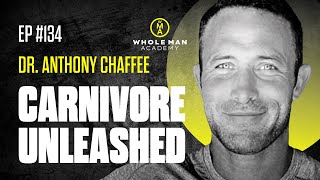
Dr. Anthony Chaffee discusses the carnivore diet's effects on testosterone, hair loss, and recovery from plant-based eating. He covers raw milk legality, tallow versus commercial skincare, and why animal foods matter for children's development.
Whole Man Academy. Because the world needs strong men. Whole Man Academy is changing the game for men around the world. It's for guys who want to live an epic life of fun and adventure. No matter what we believe, deep down, all men want to go on their own hero's journey to becoming resilient, confident, fearless and fulfilled. Listening to be inspired by guys who don't settle for living a life of mediocrity. This is your call to action and call to adventure. Are you ready?
Okay, so this is the Whole Man Academy podcast, episode 134. We're racing up towards 150, but today I've got a really special guest, Dr. Anthony Chaffee. I think all the way from Australia, but you're originally American, unless I'm mistaken. We're going to come into that. And the basics of today is basically about men's diets, men's health, optimizing. Because I know you're, you know, you're a specialist, let's say in one subject, but I know you've a shitload of knowledge and information about other stuff as well. But I was, I was looking online, I know you're often, you know, be written, you're like the plant free, MD or carnivore diet doctor I saw written. But for you, how do you like to be known these days.
Anthony? It's good, you know, I mean, it's, I'm trying to get the, the word out there on proper, on proper nutrition, just proper human nutrition, something that's biologically appropriate, species specific, something that's going to improve our health. So my whole, my whole reason for, for doing all, everything that I do online is, is really just to help people understand how much of a role nutrition can play in their health and how it's completely backwards to what we've been told for the last 50 years. And you know, it's completely backwards because the last 50 years we've become the fattest and sickest that human beings have ever been in the, the existence of humankind. So that's wrong. Whatever we were doing before is wrong. And so people need to know this and they're being hurt, they are being killed, they are getting sick and suffering for decades and then dying decades early. And this is happening by the billions. And so that's very important to me. And so as long as I can just get this out there and, or help get this out there, you know, that then, then I'm happy. I mean, I don't, I'm not doing this as a job. It's not my profession. I have a job. It's. It's actually very difficult to juggle the two. But I do it because I think it's very important. And I get a lot of people that message me, you know, some things, saying, hey, look, this, this really changed my life. I had all these problems and all these issues. I was basically on the way out. People that were very suicidal because of their issues or because of just major depression, and they had a new lease on life, you know, so that, that makes it worth it to me, you know, even though I, you know, I'm trying to stick, you know, all these different sorts of interviews and podcasts and times that, that I normally wouldn't. I don't even really have. I'm just sort of making time for it because it's important. And so, you know, I don't, I don't necessarily need to be known for anything. I just want people to know about this stuff. And if that means that they have to know about me in order to know about what I'm talking about, that's fine. But, yeah, I'm, you know, I'm not, I'm not too worried about that. I just want people to know the truth and so that they can use it to their. To their benefit.
Yeah, and you've done really well with that. I mean, I think I was going to ask you. Funny at first. I know, obviously we'll talk about meat, carnivore diet, et cetera. But also your. Your relationship with, like, social media. Because, you know, 20 years ago, none of us grew up with any of this. And, you know, I'm 45 now, so I obviously didn't have all that around when I was young, probably, thankfully, to be honest. But it is beneficial in one way because of course, you know, the bigger the following, you can get the message you want out. But I just wondered, what's your relationship like with social media? Because I know with what you're talking about, you know, it triggers some people because obviously, you know, I met some of this, like, everybody should be vegan. And I was like, why, why do you feel it's so important, like, to tell everybody that they should be it? Like, when she didn't actually have any benef in the head, it was like, well, I saw this thing on Netflix and it said it was. And I was like, okay, but so I wonder, what's your relationship been like with social media? Because it's a tool, but you're always going to get people saying, you're wrong. I've seen this, you know, this study or what have you. So how's it been for you?
It's mostly, mostly a hate, hate relationship. I can't stand it. It's such a, it's such a time suck. It's, you know, it just takes you, you know, and even when you, you don't necessarily have something to do with me. So many messages. There's so many things and you're just thinking, I need to check my message. And there's like 19 different apps, there's 19 different platforms. You have to be on top or I should check this one and this one and this one. And you just sort of like there's so many things to check. There's so many different, you know, spinning plates that you have to keep an eye on that, that even when you don't have anything to do and you could do something else, you're thinking, there's something I'm missing, there's something I'm missing. And so I find that, that it takes a lot of time that I really don't have and that I would like to be spending on something else. But at the same time, it does get you a larger audience. It does let people find your, your stuff and you can put it there and it stays there. Yes, for now. Until they cancel you and take down all your life's work and be platformed. Yeah. And they, and they just make you, you know, just an ex human and just, you just cease to exist on the planet sphere. But it's, it is very helpful in that. And so, yeah, there, I mean there are, there are, you know, you know, people out there that are quite obnoxious and quite rude and just have, you know, everyone's a keyboard warrior. It's very easy to get very, you know, get very strong worded when you're hiding behind a keyboard. Thousands, Everybody, you know, but you. But if you actually, if you actually have to talk to somebody and say that to their face to a point that they, there could be a physical altercation. It actually, it actually brings about a measure of civility where people aren't just running their mouth and cursing and this thing because you might get popped.
Yeah.
You might be pissed off and they just like take your face off, you know, or you're in, or you're in a fight or something like that. You know, people talk trash as if nothing was going to happen to them. And it's no more apparent than on, on the Internet, you know, and so obviously they're just, you know, people can be very vitriolic Whereas you know, in person, well, maybe, maybe that's not a good idea. So but you know, that I think is the, the least of the messages that I come across. The majority is very positive. The majority are people who, this has dramatically changed their life, this is dramatically improved things. And, and even like a lot of vegans that are just curious, they say well hold on a second, what about this? And they're having honest engagements, they disagree or they don't or they want to know more. But they're like, well hold on, what about this? How can you say that? And we talk about, I, I, I have a lot of time for those people. I've got all the time in the world for those people. And you know, I spent, I spent a lot of time messaging with them and talking to them and saying, hey, well this is the evidence, this is what it is. And you know, a lot of times they go like damn it, I didn't know all that. And maybe I'll give this a try. And then they try and yeah, this changed my life. Oh my God. The majority, and I would say the large majority of people that follow me online and follow me on YouTube and are now doing Carnivore are former vegans.
Really interesting.
It's the same mindset. You're trying to, you're trying to optimize your health, you're trying to optimize your life, you're trying to do the right thing for the planet. And it's, and the motivations are all good. It's just that they've just been steered away. They've had people take advantage of those good motivations and steer them into the wrong direction. But when you show them the information, you show them the facts, then those same motivations lead them right over to Carnivore. Yeah, no, the vast majority, I mean at least 60% of people that I, that I interact with that are carnivore now have at least tried plant based or been an ardent vegan for years and it destroyed their health.
Yeah.
And so it's, oh, you have to go plan. If you go even more plant based. There's one gentleman, he's in his early 30s and he was vegan for a while, then he was getting health issues. So he's all have to go raw vegan. That's really the way to go. So he got more health issues, double down carrying. Yeah, so yeah, more of the same. That, that's going to make things better. And so, and then he was raw fruitarian for a while. He's just getting Sicker and sicker and sicker until finally he had such profound neurological dysfunction, probably from, you know, non existent B12 and, and appropriate fatty acids and cholesterol, that he was bedbound, he was crippled, he couldn't walk. And so he's just in bed on his phone talking all on all the vegan forums about how great veganism, oh, this is going to pull me through, my diet's going to save me and all this stuff. And eventually his neurological function got so bad that his hand wouldn't work. He couldn't even text on his phone. And that's when it just clicked and he said, my diet's killing me. And then he switched and he just went boom. Carnivore. That next day looked into a lot of things and completely revitalized his life. He is not neurologically impaired anymore. He's walking around, he's going to the gym. Sort of six months into it now, he was on dialysis. They destroyed his kidneys. His perfect wonderful diet destroyed his kidneys. The vegan diet destroyed his kidneys. So he's on, he's on dialysis at 33.
Yes.
You know, and so, and it's like.
What are the long term effects of that as well, isn't it? Because, just because, you know, it's like, what, what damage have you done that even if you start eating meat, you'll see benefit? But like can those things negate the stuff you've already done?
Yeah, I mean to, to a certain extent. I mean you can certainly get gain background. I mean he's walking again, you know, he's moving, he's, he's able to use his phone. So he's being more functional, he's much more healthy, he is making more urine. So his kidneys are starting to wake up. Will they, will they be able to recover enough that he won't need a kidney transplant? Only time will tell. But they are improving already.
Yeah.
And direct contravention of all the people that say, oh, more protein, the worse for your kidneys. No, actually the studies show that the more protein, the better your kidney function. And so things like that. So people that have had, you know, serious medical issues, they go vegan and they just, eventually it's just killing them and they say, okay, this is, this is wrong, I have to, I have to stop this.
That's what you see is when people say, oh, I'm, you know what, I'm gonna kind of improve my diet so I'm going to cut down. And obviously the media has such a lot to play in this, don't they? Because when they put out, I mean, you remember years ago, especially the uk, they said eggs were bad. And you know, you saw a big downfall in people taking it. And if you are brainwashed by the media, which a lot of people are, you will just kind of take whatever they say as well. That's what is good. And you know, if it's read in the Daily Mail, then therefore it must be, it must be true. And I think sometimes they kind of put out conflicting stuff because they'll drop in a few good stories and then maybe they'll use it as propaganda. So I'm a big one on, you know, following the people that resonate with you, like yourself, that you can listen to their stuff sensibly with an open mind if it goes against what you previously believed. But I know with you, your own kind of journey, because obviously rugby is a big part of your life as well, and you're a solid chap with probably low body fat, decent muscle, and I would wager that's what most men want to be. No man wants to be weak, pathetic, feeble, if that makes sense. I know some that are, but that's neither here nor there. And I wonder what kind of. Because guys listening, some of them will just be like, just tell me what to do. You know, I just, just give me the basics of what it's and like what works for you. Like what would you, like your current week? What would you have for breakfast, lunch and dinner? Because a lot of guys will be like, okay, I'm interested, but give me, give me some ideas.
So the majority of what I do of what I eat is beef at this point. I feel the best on beef and red meat in particular. But beef specifically, lamb's fine. I feel best on beef. So if I'm having eggs or I'm having bacon or something like that, I hardly ever have chicken or you know, every now and then I'll grab a salmon or something like that. The vast majority of what I eat is beef and, and nothing. I never eat any non meat. I, I, I never cheat. It's not even a cheat to me. It just doesn't make sense. Like I have no interest in eating anything that's not meat. You know, a bit of dairy, cheese and things like that, rarely. But I use it as a condiment. I use it sort of like melt some cheese like in an omelette. Yeah, or on a burger patty or something like that. Butter, things like that, you know, they increase the fat content.
Would you have raw butter or will it be like trying to get grass? I mean, we, we, we're lucky where we are. You know, we're in the countryside. So there's farm, there's local farms around that do great meat. I mean we literally had 28 steaks delivered, you know, last week because I'm doing an event for men. So I was like just shipping all the, all the, all the steak you can, you can have. And I wanted to ask you, you know, kind of things like not just butter because you and I obviously know that there's qualities of stuff. I mean, you know, when people still think that they're doing good for their heart by having like margarine and stuff, and I'm like, oh, okay, good stuff. But so you would have butter and therefore what kind of quality would it be as well? And what about milk? Like we drink raw milk.
Yeah, I mean if you're going to drink milk, raw milk, whole raw milk is, is the way to go. I, I tend to avoid milk just because of the lactose content. So it has enough, you know, carbohydrates, it's going to raise your insulin and take you out of your metabolic system. Your normal metabolic pathway. People call it a fed state in a fasting state. I don't think that's correct. I think the so called fasting state is our primary metabolic state. That's the primary metabolic state of nearly every animal in the wild. Carnivores, because they eat animals with fat and they go for the fat first. They don't, they don't eat a bunch of carbohydrates. So they're getting fat and protein and so they're in that ketogenic state. But also herbivores because they eat. Well, the ones that eat fiber. I mean, God knows what a hummingbird's metabolism looks like or a bee. But the animals that, that eat, that eat fibrous plants, they don't break down fiber. So fibrous strings of glucose. So people say, oh, they're getting all this carbs. No, they, the bacteria in their guts either go. Not even termites can break down cellulose. No animal can break down cellulose. It's the microbes and microorganisms in their gut that do that. So the microorganisms eat the fiber and as a waste product they produce saturated fats. And then the bacteria or the protozoa or whatever they have break down and die and they get broken down and absorbed as protein. So they eat fiber. But what they absorb is again fat and protein. So they're not getting a carbohydrate. So they're all in the so called ketogenic starvation state. It's not a starvation state. It is our primary metabolic state. So I like to, I like to stay in that. If I were to have milk, it would be, you know, like raw milk's illegal in Australia. So every now and then I'll go back to the US and yeah, get some raw milk and, and I might, you know, have, have some raw milk. But I tend to like, my sweetness senses are so much more sensitive now. And so it's, it tastes like I'm drinking ice cream and I'm like, oh, oh God, I want that. And so there's that sort of addictive nature to it. I'm saying like, okay, maybe I should.
Just, can you explain to people? Because I, I know, I didn't realize it's illegal in either Australia or in different parts of the world. Because I know here, you know, they've made it, they're very like raw milk we talk about here or any raw products, you know, trying to make it as hard as possible for people and make their, you know, different legislation or loopholes. So we, we source from a local farm who, you know, we, we get a massive, we'll be like 50 liters of it and lots of our community will then like, we'll spread a little bit around because a lot of them saw, you know, with their kids, if they're going to drink milk, as you say, at some point you're like we or make things with milk you want them to be having raw. But can you explain to people that be like, what do you mean it's illegal? Why would they make it illegal? This is where it gets interesting.
Yeah, well, yeah, it's very interesting. I don't know exactly why it was passed, but yeah, it is illegal. You cannot get raw milk and unpasteurized dairy products. And there was, there was something, there's like cold pasteurization where they just have like really cold and like they press a lot of pressure and that was able to do it. So the, I don't know what that does to the different enzymes and nutrients in the milk, if that damages them or destroys them in the same way that pasteurization does. But the idea was this was still raw, but it was pasteurized and it's just a different pasteurization modality. But they, they sort of went out of business. I don't think they're around anymore. And. But yeah, the Australian government does not allow you to get to get raw milk. And there's, there's a number of states in America, they're making this illegal as well. And you know, you have these things that like, that are just not fit for human consumption. And yet these are fine. There's something that I was talking to a patient about the other day. She, she was doing just a meat only diet, feeling really good. I lost a bunch of weight, everything was great. She was at like a dinner party and just, you know, big function and there was like these, just these hors d' oeuvres and chips and there's like these veggie chips there. And she'd had her steak and she felt good. Oh, you know, I'll just have. It's not veggies. What's wrong with the veggies? What's worse? Yes, right. So it's like, you know, God knows what's in there too. And so she has a handful of these things. She starts feeling very unwell and she didn't really feel too good. She sat down for a while, really feeling awful. Told her husband, hey, you know, we need to go. And the next day she felt better. And she looked into it, she's like, what the hell was that? So she looked at the veggie chips, she looked up the ingredients. She's like, what is in here on tapioca powder, which is from cassava. This has cyanide in it. People don't know that. And so people are like, what? Why? Exactly.
Yeah, yeah.
And so, so she found that this, this, this veggie powder, this, veggie chips, had tapioca, had cyanide, had an acceptable range dose of cyanide in it. Almonds do too. Other things you do, you know, 70, something like 750 million people around the world have cassava root, which is high in cyanide. That's their, their staple diet. That's the number one calorie source for 750 million people.
Where would that come? Like, I've never heard of that. Which countries would that be?
So the tropics.
Okay.
So you go to like Indonesia and they'll have like chips like, like potatoes or root, you know, and so it's like, it's like potato chips, but it's cassava chips. And so, you know, and they'll just have these, the stuff there. And then they're boiling it and doing like, so you can, you can treat it. There's bitter cassava and sweet cassava. Sweet cassava is low enough cyanide load that it, that it won't kill you, unless you have a ton of it, bitter cassava can just kill you. And so if you don't prepare it properly, it can be a toxic dose. And cyanide damage directly damages the mitochondria, which is very important for disease and function. And so it directly damages it. So there's really no safe dose. It's doing some damage. Even low grade chronic exposure can cause neurological dysfunction and thyroid damage and organ damage around your body. And so the WHO says that you can have as much as like 10 milligrams. That's a safe dose. And like, I wouldn't really say any dose is a safe dose, but they're.
Just keeping you safe.
Well, it's a tolerable dose. Right, okay, well you can tolerate this much. If you're not doing it all that often, fine. But long term, you're still going to get neurological dysfunction, you're still going to get thyroid dysfunction. And but the problem is, is that like with this tapioca flower that's in the ship, she took, took a look and found that other people around Australia were getting sick as well. And that was because there's like these batches had had a lot more cyanide than that had something like 160 milligrams of cyanide in the bag. And so she got 16 times the upper limit of what the WHO said was safe. And that made her feel quite unwell. And where does it say on that bag that you can only have this amount and that's your maximum dose of cyanide that day? Yeah, it doesn't say that anywhere. You know, these are known limits and the WHO talks about this, but they just, they don't actually put, well, yeah, you can have this much or whatever and then, but then if it is contained in a food, no one's, no one's supposed to, to put that on there. And with almonds, say, like this is how many almonds you can take until it's unsafe, an unsafe amount of cyanide. No one even knows that there's cyanide in almonds.
Yeah.
You know, no one knows that there's.
That on the packet.
It's definitely not on the packet. You know, so like this, it's like if anyone had ever had a packet that said, you know, only one packet per person per day, or, you know that, or you'll exceed your, your maximum limit for cyanide. I mean, no one's going to buy that, of course. Well, that's the thing. It's, it's like you, you, why the hell aren't you telling people what the hell is in your nasty, shitty product? You know, it's just like if there's cyanide in there and there's a maximum dose of that, you have to tell people that they don't know. And, you know, people can get sick, so, you know, it's really bad. But just, just to answer your, your first question briefly on what do I eat? I basically eat towards the end of the day. I'm generally not hungry in the morning, but I eat fatty beef until it stops tasting good. I do that at least once a day. And then if I'm working out, I'm more active. I do that. I'll do that twice a day sometimes. And I just, I eat intuitively. So it's not that, that the amount of food you eat doesn't matter. And I, I don't use the word calories because I think, I don't think that's a good model on, on, you know, nutrition. Calories are heat energy. They don't weigh anything. Heat doesn't weigh anything. If you go into a sauna, you don't come out weighing 30 pounds heavier. You know, when your body temperature goes up. So it's like it's, that's not a good model. But the amount of food you eat, of course it matters. But you don't have to count your macros, you don't have to count your micros, you don't have to calculate this thing externally because your body does it for you. If you're eating what you're designed to eat, if you're eating the food that your species is designed to eat, then you can listen to your internal signals, which is satiety and hunger. They're very different. Once you get rid of carbohydrates, because carbohydrates and insulin derange your hunger signals and make you overeat. But koalas don't need a calculator to figure out their macros. Cows don't have a trainer saying, oh, no, that's enough. You know exactly. You're not on an app. So animals in the wild, including humans, know somehow exactly when to start and when to stop eating. And you don't have obesity problems, you don't have chronic disease problems, you don't have diabetes, unless they're eating the things that they're not supposed to eat, like dogs and cats or irresponsible zoos that, that, you know, cheap out on the food given to their animals. So the same thing goes for us. So if you're eating what you're designed to eat, then your body's going to work the way it's designed to work and you're going to get these satiety signals the way that they're supposed to be. And so if you eat intuitively, if you're eating fatty meat and you keep eating, and if it tastes good, you're getting a positive signal, your body's saying, that's good, keep doing that. You actually have negative feedback. Every bite you take tastes less good and less good until finally it doesn't taste good at all and you just take a bite and go, yeah, I don't really want to keep eating. You can force feed yourself past that and that can be a problem. But it's hard, it's very hard to overeat on a carnivore diet. It's really easy to undereat because it's because you feel satisfied when people say, like, well, I don't need to eat, because that's what we're used to doing. You have to stop when you hit that point or else you'll get fat. You don't want to overeat, but you'll always sort of feel that way on a carnivore diet because, you know, you're not, you know, the comparison, the, the, you know, the, the comparison between, like when you were eating carbohydrates and sugar and, and how you are now is very different. So you're chronically feeling starving because you're getting these starvation signals now. You're not getting that. It's very slow, subtle. And so it actually always feels like you're satiated when you were eating carbohydrates. So it's very easy to undereat. So you, you have to eat enough, you want to eat enough until it stops tasting good. And I saw one person say, hey, you know, it's been six months and, and I'm, I think I'm gonna stop doing Carnivore because, like, you know, I didn't really lose all that much weight, you know, and that was, and that doesn't always happen right away. Sometimes it can take a long longer than that. But also people say, oh, well, you were. I was, I was chronic. I was constantly hungry. I never felt like I had enough. Right, so you weren't eating enough.
Yeah, just eat more.
Exactly. And so the thing is, if you under eat, you'll suppress your metabolism. So, you know, you lose weight initially and then it'll sort of level off. And then your body says, okay, there's there's not much coming in unless it's going out. Your body's very fiscally responsible. If you get your hours cut at work, the last thing you want to do is start blowing out the credit cards and blowing out your savings account. Right? And so you know what does is you just trim sales and survive and say, hey, less is coming in, less is going out. And then when you get your hours back at the work, you say, oh no, we're going to save this now. And so your metabolism stays down. So people get very frustrated. They go back to eating. They're not getting the results they want. They go back to eating and they slam up. That's what yo yo diets. So you lose some and then you gain back more than you then you lost. And that's because you suppress your metabolism. On a carnivore diet, you want to encourage your metabolism. So this, this person was under eating almost certainly if sometimes when people eat more, that's when they actually, their body says, oh hey look, we're not in a famine. We don't need to hold on to this stuff. And so we'll just start using it and then. And you see that the fat start dropping off of them at that point. And so you want to encourage your metabolism. You want to eat enough. You want to let your body know that you're not in metabolism, your hours are not cut at work, you're only getting promotions, everything's great. And so it's just like, okay, you know, look, we don't, we don't need to, you know, sit on this nest egg as, as much as we did before for I would say that's where.
Yeah, you know, eating more because you'll often have people think that that means that you're just eating little snippets of meat. But again, it's like I want to bring back to, you know, it's primarily men. The whole man academy is all about helping men. And I wonder with the benefits maybe for men specifically. Obviously you've got issues with testosterone depleting over the years, you know, naturally for men, but also like, you know, you look at the historical testosterone levels of men has gone down considerably. And I think there's not much made of it, but that's a significant impact maybe of, you know, the men in the world. If they have less testosterone, you may say they're slightly less likely to fight back if things happened that they needed to, you know, if that makes sense. And I just wanted for you, I know we want to talk about hair loss Briefly as well, because I know there's lots of kind of benefits, but talking about testosterone and hair loss, there's two of the benefits that you see for men of kind of, you know, a carnivore diet.
Yeah, well, I mean, certainly for testosterone and, and, and, and hair loss as well. I mean, hair loss can be depending on when, when you get it. Sometimes it's not that typical androgenic male pattern, but it may be in that pattern, but it's not specifically just from testosterone or specifically the dihydrotestosterone, which testosterone turns into dihydrotestosterone, which is the more active form of testosterone. And that can damage hair follicles. That can happen. But a lot of times if you're, if you're losing your hair before you're 40 or 50, it's, it's probably more to do with insulin resistance and, and having high insulin, eating a lot of carbs, eating sugar. Your insulin is going up and that is, is causing problems throughout your body. And it can actually disrupt your hormones as well. And it can cause different problems. The hormonal diff problems, fertility problems, especially in women. The women and men make testosterone first, and that's converted into estrogen. And, and high insulin levels block the conversion of testosterone into estrogen in the ovaries. It does sort of the opposite for men. It doesn't. We end up having less testosterone in men and more testosterone in women basically just deranges things. It just flips things around. And so women can develop polycystic ovarian syndrome, which is the leading cause of infertility in women. And, you know, so they're having too much testosterone, not enough estrogen, and they get infertile, fertile. And for men as well, it can, it can drop your testosterone. All these other things can drop your testosterone as well. So, and your growth hormone, so ins will block the secretion and the action of growth hormone. And so you make less growth hormone at the pituitary and it's less active throughout your body. And so that's, that's a major, major problem for health in general. Growth hormone is, you know, obviously we, we hear of it as a substance of abuse that bodybuilders and things like that take, but it is, it is one of the more important hormones in the body. It helps your tissues rebuild and regrow and maintain themselves. Otherwise they're just sort of breaking down. And if the breakdown process exceeds that of the rebuilding process, you age, you know, and so if you, that's, you know, part of it anyway. And so if you're, if your growth hormone level is, is too low, you're, that's going to accelerate that process. And so, you know, you look at progeria, you know, they, they just, they have, you know, very, very serious problems. They're just precocious aging and they like, you know, they look like they're 70, you know, by the time they're 10, you know, it's just pretty nasty. And so, so these are these different sort of processes but I see all the time in my practice, you know, I normally work in neurosurgery, but I also have a side practice in functional medicine, preventative medicine. And I, I cannot tell you how many, how many men have put on like a carnivore diet or even just like ketogenic diets, but mostly carnivore diets and it just dramatically changes their health and also their testosterone levels. I have 60, 70 year old men that double or even triple their testosterone levels and you know, come in, you know, like, so they feel totally different. Totally different is one, and this is with no hormone replacement therapy, anything is purely dietary. Right. And maybe you have some zinc and some supplements, B12, things like that that they're deficient in because their diet has been deficient. But once you, once you sort of correct these things and then they're on a proper diet, they don't need to keep taking supplements. And so, you know, a few months later he comes in and he's just bouncing off the wall. He's like, I feel amazing, I feel like a teenager again to have all this energy. 72 year old man and I have patients in their 20s or late teens that have the testosterone that you'd expect to see in the 90 year old man. I mean, you know, literally this 20 year old kid had probably, I would say a sixth of the testosterone level of this 72 year old man after, after he had been on carnival for a while and you know, wasn't feeling great, you know, wasn't able to put on muscle at the gym, you know, wasn't having, you know, wasn't happy in general and he wasn't really as compliant with the carnivore diet and all these different sorts of things and but he mostly was, he was eating a lot more meat, he's eating a lot less junk.
He's improving at least.
Yeah, just, just getting rid of the junk and eating a lot more meat and mostly just eating meat. He, he over doubled his testosterone in, in like six, eight weeks. Yeah, it was dramatic and he was just like super happy. So I was like, okay, yeah, all right, I can get behind.
Yeah, I get this now. Yeah.
Seriously? Yeah. And so, you know, you do see that, you know, there's massive improvements in testosterone also. Just real quickly you get rid of things that disrupt your hormones as well. There are a lot of hormone disruptors and phytoestrogens and things like that in plants and in the products that we use that, that are estrogenic and can cause disruption of your hormones very significantly as you eliminate all these things. There are a lot of hormones, molecules that mimic hormones in plants as part of the native plant defense chemicals that they use. If they disrupt your hormones, if they just erupt an animal's hormones, they're going to feel sick, they're not going to feel great, they're not going to be able to reproduce and so they're not going to thrive. They're not going to be, they're not going to win that survival of the fittest. They're not going to be able to reproduce and make more little bastards that are going to come eat that plant and it's, and its relatives, right? And so that's in the plant's best interest to make sure that you aren't fertile if you eat it. And so you get rid of all those sorts of things and it changes that. And like you said, you know, the, the testosterone levels have just been coming right down. Fertility rates have been coming right down. You know, women are getting, going through precocious menopause, you know, early menopause in their 20s and 30s. I mean, this is completely abnormal. And you know, there was an article in, in 2000, around in the 2000s that said, you know, men nowadays, men in their 20s now are not half the man their grandfathers were. And it showed that the testosterone, average testosterone levels in the 2000s in America was half of what a 60 year old man's testosterone was in the 1970s. Right? Massive difference. What's the difference between the 70s and now or even the 80s? That was this massive change in our dietary guidelines and recommendations. Eat a lot more plants, eat this processed food, eat this crap, stop eating, stop eating fat. I think that's the, the main driver of this.
It's, it's so interesting because I know we could kind of go off on different tangents there because I know there's, you know, when they introduced over here, like meat free Monday, I think it was, and there's these little drives that kind of try to nudge a bit like the last three years, you know, nudge units that understand the psychology to nudge people in to do things that they wouldn't normally do. Because you go, oh, right, oh that's that. I think that's beneficial. And I see it also with, with kids now again, I've got three boys who are, you know, nine months, four years old and six years old example. We, we understand also like jaw development, eating meat when people are giving their little ones just pureed stuff, you know, each their own. But for us we were like, I think the first actual, you know, non breast milk that our little one had was an organic, organic chicken liver. I think it was to start with, just to get them started on that stuff. And now he'll be eating little bits of steak as much as we can and that jaw development as well. And sadly the other day I was, I was at an event where there were some boys who were like, I know 11 and 9 and I was talking to them with our little ones and they said, oh, we're, we're both vegetarian. And you know what was sad was firstly that's not their choice, it's mummy's choice. And I bet she doesn't really understand what she's doing. She's probably thinks she's doing well. And like you said, it's frustrating because they're making the effort but realizing they're kind of running enthusiastically in the wrong direction, if that makes sense. But you know what with the boys, when I looked them, they looked very solo, very, you know, just like they didn't. They looked like they needed some iron, they looked like they needed a good steak. And I just wonder for you, a lot of the guys, at least it will have not just boys but kids from babies up to, you know, teenagers, how important it is for the, you know, the youngsters be having that stuff early on and cutting out the shit as well.
Yeah, I think it's, I think it's the most important time in life is to eat properly, is when you're developing, you know, in the womb. Mom's nutrition is the most important thing. Mom's nutrition when breastfeeding, you know, just the next most important time and then, you know, the child eating properly after that. I mean those are the most important times is when developing you only get one chance at development. Unfortunately, you and I, we're never going to get another chance to develop stuck. We can optimize where we are, we can improve how we feel and how our bodies perform, but these are our bodies now and so, you know, we're not going to get a chance I mean, I would have loved if my mom was at carnivore and breastfeeding and, and through conception and all this sort of stuff and because I, you know, when you look at pre and post agriculture, I mean, we drop by five inches. Our brains got 11% smaller in men and 17% smaller in women. Our jaws are smaller, teeth are crooked, getting poor wound healing, shorter femurs, all these sorts of different signs of poor nutrition and, and not being able to fight off an infectious disease. More evidence of tuberculosis inspection infections in people's spines did not exist before agriculture. So this is, this is something that's, that's very, very important. You, you don't get a chance to develop again. The Native Americans, the Plains Indians that were just eating bison up until the 1800s when they, the late 1800s when the bison populations were wiped out on purpose in order to stifle the, the Native Americans for the, you know, the Native American, American Indian wars, when they were just eating meat. There was a study in 2001 that showed that they were the tallest population of humans on earth and they did not get any of these chronic diseases that we get nowadays. Now we're seeing that in real time. You know, any, anywhere is a page out of a, of a paleoanthropology textbook from Cambridge that showed the disparity of pre and post agriculture. Man, how all these sort of changes, the height and all these things and the, and the blurb at the bottom that says since the, the advent of agriculture starting around 10,000 years ago, regardless of location, regardless of the time, regardless of the type of crop that people move to, the same thing happened. The height and health of the population declined.
Yeah.
And this is due to malnutrition and then rise in chronic or infectious disease. And so we're seeing that in real time with the Native Americans, with Native Australians, Native Americans with, when just eating meat, the tallest human beings on earth, bigger brains, better jaws, no teeth, deformities and crooked teeth and cavities. They didn't have dentists, they didn't have toothbrushes or floss or any of these things. And what animal in nature does. And they all have their teeth. Because you lose your teeth, you lose your life. That's all there is to it. You can't eat, you can't live. And so you, you had to be able to do that naturally with your normal, normal oral biome. We're just getting cavities and our teeth are rotting. That means you're eating the wrong things thing and you're not going to survive. This is not good. And so we saw this in real time with the Native Americans. We're seeing it right now where they were the tallest human beings on Earth, and now they are not. And they have four times the amount of chronic disease that, that the rest of America has. So. But that's the thing, you know, when you, we have that clear disparity when you're, when you're feeding a child what it's supposed to eat, it will grow taller, they'll have better bodies, they'll have better brains, they'll be larger brains, and they will be, they will work better as well as well. So it is so important. I mean, if you look at every single mammal on Earth, there's a very specific pattern. They drink their mother's milk, they get weaned onto what the mother's eating, and they eat that for the rest of their life. They teach their kids how to eat it. That is what happens. And so when people say, well, you know, in the, in the early age, maybe you should have the mushed peas and carrots, because that was the staple diet in the last ice age, right? And so, you know, that's them, you know, and then, and then they can sort of go into. Eat these other things and other things and other things. No, they're supposed to eat what mom and dad are eating from weaning for the rest of their life. And it's just a matter. It's just that we're not feeding them the right things is. We're, we're. None of us are eating the right thing. So it's most important. That's kids.
That's why it's funny when, when you tell people, you know, they'll, they'll ask you about, like, your babies and ask, you know, what. What did they eat? And you'll be like, oh, yeah, the first thing had was, you know, organic liver or, you know, or just be. Or what have you. And because they're, they're like, but, you know, what about all the mushy stuff? And you like, listen, you know, the quicker you get them also, like holding their own stuff and eating themselves, they can kind of. Instead of you poking in all the time, sometimes out, you know, you see them kind of push it away after a while, you're okay, he's full now. It's not that he's got to finish something. So I, I think this is really, it's interesting because I learned so much about it over the years that what I thought I knew was total bollocks basically you know, absolute rubbish because I just didn't look at alternative stuff. And then the more you realize I would say now everything you know is wrong. You know from the mainstream is mainstream generally with health like seems to be so inverted but it's, it's like a triggering subject. And I've noticed in the last three years, you know, Covid masks, vaccines, massively triggering subject for people, you know, me eating etc. Etc. And circumcision is another one of those that you don't hear about it spoken much. But I always find it interesting. Again with a high, you know, percentage of male audience. I just wonder what your take was on that. For some people it's a. It's. You just do it. You don't question. Other people think it's highly barbaric. So I just wonder where your take on that is. I.
Well I certainly don't think it's necessary. I mean if people want to do it for religious reasons or personal reasons, I mean they're, they're welcome to. I don't think that they should do it because it provides any health benefits because it doesn't. That was, that was dogma pushed out by actually Dr. John Harvey Kellogg who he and his brother made Kellogg cereals. He was a Seventh Day Adventist church member. Seventh Day Adventist Church are religiously anti meat. This is why he made the processed food companies and industry was to. To make plant based alternatives because they thought that meat caused lustful feelings and lust was a sin. Therefore meat was a sin. And this was all wrapped up in the temperance movement where any sort of masturbation or fornication was. Was deemed to be just the. The epitome of evil. And so his. The. One of the prophetesses in the Seventh Day Adventist Church was a lady named Ellen G. White. She wrote dozens of books. He was her typesetter as a little 12 year old boy in the. In the 1800s and she wrote a book called A Solemn Appeal to Mothers. And in that book it says if your child masturbates even once it is like putting a gun to their breast and pulling the trigger. They are dead in that instant. And so they took this very seriously. And he took this very seriously. This was, this was the prophetess saying this and he's like oh my God. This is the word of God coming down. So this was really ingrained in him. He ended up growing up going to medical school becoming Dr. Kellogg's was. Was head of the Battle Creek Sanitarium in Michigan. Was an extraordinarily famous Doctor in America, presidents would go to him, Rockefeller would go to him, Henry Ford would go to him, Carnegie would go to him. I don't know if you know a gentleman named Will Durant, but he was a very famous historian, classicist. I, my father was actually friends with his grandson. They went to Pomona together. And, and he met him once. But he, I remember see, reading a passage from, from a speech of his and that he gave, you know, a century ago maybe. And, and in it he said, well, there's these two sort of factions and these people believe this and these guys believe this, but you know, Dr. Kellogg's goes with this and you really can't go wrong with Dr. Kellogg's. I was like, oh, okay. I had no idea that this guy was, that, was that influential. But, but then I learned more and he was very influential. He was obsessed with people having sex and with people having masturbating is just, he was married for something like 60 years. He never had sex with his wife. They adopted all of their kids. I mean he, they did, they just broke this poor young man's mind. He was clearly a very smart person. He wouldn't have been as influential as he was if he was, didn't have something going for him. But he would treat, quote, unquote masturbation with plant based diets, vegan diets, putting them on corn flakes and things like that, and multiple enemas a day. He would give himself high power. He invented a machine to give himself an animal that had like pumping like 60 liters of water in and out in like less than a minute. So he wouldn't have sex with his wife, but he gave himself two high powered enemas a day. So, you know, you draw your own conclusions. But he was, he was obsessed with his idea of masturbation. And so he would treat this with, you know, parents would bring their kids in, they have a masturbation problem or whatever, and he would circumcise them, boys and girls, without anesthetic. Or he'd use caustic materials like acids to burn and scar the clitorises of young girls in order to make it painful, to make that a painful association. Hey, you did this and now you're going to suffer for it. And you know, the old fire and brimstone idea of religion coming through and, and then they, they would be painful and uncomfortable and they wouldn't want to do that anymore. That was his idea of, of treating this. So he would, you would cut off the foreskins of boys without anesthetic Right, absolutely. That is barbaric. That's sick. And in order to punish them, in order to make it painful, in order to have it hard for them to do this in the future. And that. And that was why. So he convinced the medical establishment, he convinced America that it was actually hygiene issue, that boys that. And men that didn't have circumcised foreskins, that this was a, that this would be dirty and they could get other problems. It's true. Insofar as you are just a vagrant and just don't wash yourself. You know, there are higher rates of penile cancer, which is, I mean this is completely non existent anyway, you know, outside like hp, HPV and things like that. And that was not a thing back then. So triple minuscule number is still a minuscule number. And you know, I honestly don't know how accurate that is too because I mean, we've had circumcised penises forever. You know, I mean this is just, this is just our natural anatomy. But either way, even then, even if you were to believe that, which I'm not, I'm skeptical of if you just wash yourself, just normal hygiene, no difference. Difference, Absolutely no difference. So, you know, it's not a cleanliness issue, it's not a hygiene issue, it's not a health issue. But that's what he said. And you still hear people say, no, no, no, it's about hygiene. It's about. No, it's not. That was Kellogg's, you know, propaganda in the first place. Yeah, exactly. And he tried to get this passed through for, for women as well. He tried to convince the medical establishment that it was a better health. But I don't know what his arguments were, but he tried to convince him that, that you should, we should circumcise young girls too and cut all their clitoris off as babies. And it's just like truly sick sort of stuff. So people want to do that. Sorry.
Very warped people. You know, you very. If they were alive these days, you'd want their hard drive checking, wouldn't you?
Yeah, yeah, exactly. You know, well, that was the thing, you know, in the 1800s and during the temperance move. It. It was, it was, it was part of that understanding that if you ate a bland plant based diet that this would suppress your sexual urges. What's it doing? It's suppressing your hormones, it's suppressing your health. You're making you unhealthy and unfertile and your body's saying, look, you're not, you're not healthy enough to have kids. So we're just going to shut down your sex drive. And you see animals that they're unhealthy, they lose their interest in mating and that's a, that's a clear sign that they're unhealthy. And so we were doing to our, that to ourselves intentionally because of course lust is a sin and sex is a sin and masturbation is a sin. No, it's, it's how, it's how we exist. You know, it's through reproduction. And so that's, that's, I mean, from the early 1800s, possibly even beyond where, you know, you want to, you want to suppress your sexual urges by eating a plant based diet. Sylvester Graham, who invented Graham crackers In like the 1850s, he again was saying this as well. LNG White was, you know, you know, very interested in his sort of teachings and things like that. And then so, you know, like, like the, you know, clever person she was, she realized that if she codified this in religion and say that God said it, this was a commandment, people were going to sit up and take notice. For basically a century or so people have been sort of playing around, but it had to be then, well, I want to suppress my sexual urges, so I will do this. No, she's like, God said it.
Yeah.
And so whether she feels she had a, an actual vision or not, that's what she did. But she had, I mean she was, she, she was certainly a plagiarist in a lot of other respects. She would say that she had these visions and God told her something. It'd be like a quote from, you know, some pope in the 4th century or something like that. She did this thousands of times. She has this lady, Belinda Fetke, F E T T K E did an amazing set of lectures on this. She's done a ton of research on this and she showed that she had over a thousand points of plagiarism, of identified plagiarism that she claimed to be visions from God. And so, you know, could be that she had a vision, could be that she just imagined it, could be that she's a plagiarist and just was clever enough to say, hey, people will listen to this more if God said so. Either way, that was the origin. And so in America, that's why.
Far.
More men in America are, are circumcised than pretty much anywhere else. And we think, well, that's the normal thing. No, it's not the normal thing. If you want to do that and you think that's the right thing to do, you go for it. But that's the origins. You know, if it's a religious thing, fine, you know, but it's that those are the origins of the American circumcision practice, was that this was supposed to be a health issue. It is not a health issue. The who. I don't know why, but they had. They had this. God, how long was it awful? It was like 63 pages. And it was all about how it's better if you circumcise and help with different health issues and STDs and transmission and things like that. That was a conclusion. That's what it said. That was a title. Most people just stop right there.
Yeah, I read it.
Yeah, I thought it was. And so I actually read this damn thing. And anytime these places, especially the WHO, if they have it up on the WHO's website, it was just up and it has a link. So, like, here's what, here's their conclusion and here's the links for it, probably on the up and up. Every time they bury that and you cannot find a link for it and they don't provide the link, you're like, okay, something's up. And I've tracked down every one of those that, that I came across and everyone was just like, no, your. Your own body of information does not support the conclusion that you made. And the same is true in, in the. Their paper for recommending circumcision. It absolutely did not show that there were lower rates of STDs in people that were circumcised. And it did not show any sort of benefits of cleanliness or disease or anything like that. It absolutely did not show that. But that was some weird conclusion they drew. So that's. That's the origin of that. And I don't think it's not necessary, you know, especially if you just wash yourself, you know, which we have soap now. Yeah, it's not really.
And we were given our body parts for a reason, weren't we? You know, when. So when people are. Is a bit like with, you know, some of the people I speak to who, let's say when you go to the medical establishment and some people are. Any. If anything's wrong with anything, they just want it taken out as if that's just. And you're like, listen, I understand if it's like life threatening, but have you considered any other options, like diet, you know, are you exercising? Are you sleeping? Are you. You know, what. What are the chemicals around you all the different stuff. And that's why with the podcast I've enjoyed speak to guys like yourself who just even like to talk about circumcision. You just don't hear much about it and people will go, oh, I didn't realize all I saw was on the BBC or CNN or something or that, you know, there'd be something on there. And you realize that there are alternative ways of doing stuff. Which kind of leads me on to the last two questions, really. I know you've, you've, we've got times of the efforts, but we would talk about body products. And I, I find it interesting now when I think back to, you know, I've been trying to use healthier, more natural products over the years, but when I think back in the old days, you know, you just, whatever was in the supermarket for a deodorant, for like a face moisturizer, and you realize it was oil based and, you know, the crap that it had in it, women with hairspray, you know, all the different products that generally, I don't think you need nearly any of them. Firstly, none of them are natural, and secondly, it's just to sell products, you know. So I know we talked before we press record about like, like tallow as example. So can you kind of just briefly tell us the benefits of that, thoughts on that and what you can use it for?
Well, yeah, so I mean, I, well, first of all, tallow, as I understand it, the, the word tallow comes from the Latin for sebum, which is our natural oils. And, and they thought that this was, this was so similar that they called it tallow because it resembled our sebum and our natural oil. So I personally have never found a moisturizer for my skin that was, that worked better than animal fats. And tallow in particular, emu oil is a bit more spreadable. You can get ostrich oil, emu oil, and I find that works really well. Tallow is amazing. I've never, I've never gotten more compliments on my skin. I was just like, just glowing, just a bronzed, shining statue of skin, you know, so it was, you know, that was the best thing I've ever found. And, and you know, these different sorts of scents, they may smell nice, but you know, look, there's, there's studies that say anything, but there are, there are plenty of studies that, that show that there can be endocrine disrupting properties to these different scents. Even like those, you know, air fresheners that you plug in, they can, they can actually Mess up your hormones just by smelling this stuff and then putting these things on your skin. I, I remember hearing a very, very interesting phrase from a doctor who said, never put anything on your skin that you wouldn't be willing to eat because within 20 minutes it's going to be in your bloodstream. And that's, that's true for a lot, a lot of these things. It does soak into your body. You do get a lot of this stuff. You know, they put benzene in sunscreen. It's a known carcinogen, right? Protect against skin cancer by putting on a known carcinogen onto your skin. Or even vitamin E. That was taught to me by my, my. I don't have a reference for this. This was just from a class. But our professor of dermatology said that, you know, never use a skincare product like a sun product that has vitamin E in it before you go in the sun because the UV lights mutate the vitamin E, change it and actually becomes very carcinogenic. So you increase your risk of skin cancer by 20 fold by putting vitamin E oil on your skin. And so. And she also said that you should never use anything more than SPF 15 because SPF 15 already blocks 98.5% of the UV light and it has a lot of chemicals. And you go up to SPF 15 or, sorry, to 30 from 15. And now it's blocking 90, you know, 99. And you're using triple the amount of chemicals and you're getting 99.3, 99.5, SPF 90. It's like 10 times the chemicals all soaking into your skin. It's horrible for you. And you got 1% extra protection. It's very, very quickly diminishing returns. You know, but then there's other, other weird products. Like this was something I heard. This is someone I was speaking to. And they, and they had looked into this and they said that there were certain hair care products and certain shampoos that, that were shown to actually damage hair and actually cause hair loss. And so obviously people want that. But now this is whole industry of Rogaine and Minoxidil and all these, like, hair, you know, medications that can help you retain your hair and, and special shampoos and all these sorts of things. And so apparently Johnson and Johnson, who owns Rogaine, they bought up a lot of these shampoos actually cause hair loss. So you're there, you're washing your hair, it's making your hair go out. And then you're buying their product that try to Definitely keep this stuff together. So, you know, you have these very predatory practices out there, and you just need to be mindful of that. You know, if you, if you just again, work on the principle, you know, I said that, you know, like the, you know, the mushed peas, you know, that was what we were eating during the last Ice age. Obviously, you know, very facetious. The reason I said that is because our biology, our genetics are still 50,000, 300,000 years old. Our genetics really haven't changed in the last few hundred thousand years. Very minorly in certain ways, but largely we're the same. And so what you should be eating, what you should be putting on your body and in your body is what was around 50,000 years ago during the last Ice age. That's basically it. You know, animal fats, you should eat meat, you should eat fat. You know, even fruit. Whether. Was there fruit available in the Ice Ages? No, there was not. Not in most of the world. You'll say, well, maybe people were just going towards the equator and running away from the ice. They weren't actually, you know, Homo habil as far back as Homo habilis, you know, 2, 2.5 million years ago or so when the ice sheet started coming down, they actually migrated up into the ice, presumably because they were apex predators now, and that's where the megafauna was, and that's, that's where their game was, and that's what. And that's how they survived. We became the most dominant species on Earth during the Ice ages because of the ice ages. And so if you, if you sort of use that litmus test. Okay, Was this available 50, 000 years ago during an ice age? Well, or something akin to it, like tallow, animal fat, something like that, then probably don't need it. There may be things that are pretty neutral, but you don't know. And there are some studies that say, well, lavender and tea tree oil, they can actually act as endocrine disruptors. There are case studies where boys going through puberty have actually stalled their puberty by using these products. They stop using them, and their puberty progresses. And then there's others that say, no, no, no, no, that's not true. Well, you know what? Fine. Do we have perfect studies? No, we don't. The thing is, is that when you have. And we have, like an industry pushing out, you know, the, the study saying that, it's very easy for them to say, well, we look, we have 30 studies that say it's good, 30 studies that say it's bad. Oh, I guess we have to. Yeah, I guess we need more studies, you know, but that defaulted to them getting to sell their product in perpetuity. Right. And so, you know, what you can, you can default that into is not using the product because you don't need it. You don't need something that's lavender scented or tea tree scented. You can just use tallow soap for your hair and your face. And you can just use tallow moisturizer as well. It works amazing. You can just use an abrasive like, you know, baking soda, wet your toothbrush, put it in, brush your teeth with that, your, your breath will be fine, your teeth will be perfect. And so, you know, you can use all of these things, get as good or better results and then you don't run the risk of exposing yourself to these potential endocrine disruptors or these microplastics or these nanoparticles that forever. Chemicals that get in your body, your body has no idea what to do with them because they're, they don't exist in nature. Something like a million different chemicals have been patented since the 1970s. These things didn't exist before then and now we're just, we're just throwing it all over the place. Plastics, all these sorts of things. Plastics like the BPAs, they, they're known endocrine disruptors. They've been shown to, to reduce the penis sizes in the next generation of males if mothers have been exposed to this stuff. So cooking in plastic Tupperware, microwaving in that, having a hot meal and a plastic thing, you know, the coffee cups, they have a liner of this stuff everywhere. It's everywhere. And so, you know, mothers that have been exposed to this stuff and then they get pregnant, even within months after exposure to it, they have children, their males have smaller penises and their children have smaller penises as well. It's not until the second generation that it comes back. So there's, there's multi generational knock on epigenetic effects. And you know, a lot of these are done in animal models calls obviously, you know, but. And so how well does that translate to humans? We don't know. But this is, we shouldn't just just thumb. Oh, well, I'm sure it's fine. You're messing with a lot of stuff here. You know, you're messing with your health, you're messing with the health of your children and their development. And so, you know, it's, it's very easy to just default and just say, okay, look, I'll just use tallow Soap, it exists, it works great. It doesn't need a scent. You know, you want to use some less offensive, you know, deodorants or this thing, fine. But you know, the more you minimize this stuff, the more you minimize the exposure to your body and your skin, you know, just the healthier you're going to be in general. It may be that a lot of this stuff doesn't really do anything to you, but there are things out there that can and will and so just minimizing those is, is going to be beneficial.
This is why it's great talk to you because I know there's so many different kind of areas of life that can be optimized. And the first thing I think for me is like awareness because if you don't even know, then you just carry on buying whatever's in the supermarket and spraying stuff all over you. And you know, we've had it where people, let's say, would stay, you know, guests would stay at our house. And when you go in afterwards, you can smell the deodorant like they might have left an hour ago and you can still smell it in the air and you're like, how much of this are you spraying on? So, yes, it's, it's interesting times. Lastly for you, how I know you're a lover of rugby and obviously play it, you know, to, to a high level and that's assuming like one of you probably, or your great love, but what does your training regime look like now? Because how old are you?
44.
So a year younger than me. What does your training regime look like now? Because obviously as we get older, you know, a lot of guys I know, I don't have as much time because they've got kids and businesses and what have you. Was when you're, you know, maybe when you're single in your 20s, I was at the gym like five days a week and now it's, you know, it's a lot less. But what kind of things do you work on? Is it, is it generally kind of strength training? Is it compound lift, etc. Etc.
Yeah, so it'd be the same sort of things I'd be training in rugby. So I do, I do, I do sprinting work, high intensity interval training and like sprinting hills, sprinting stairs, things like that and weights. You know, I, I still have my same lifting schedule. I sort of built up a lifting program over decades, you know, from different trainers and coaches and, and players that I played with, saying I like these things. These, these, you know, do well for Me and just sort of added all these sorts of things in. So I have a routine that I've been doing for a long time and I sort of change things up different, different ways of attacking different body groups. And when I have the time to work out, I, I do that. I just step right back into that at least four days a week, if not five to six days a week if I have time. I, you know, the last couple years, you know, with work and then my, my side practice and functional medicine, preventative health and, and then, you know, starting my podcast, you know, a couple years ago and just try to stuff in. Yeah, I mean, every, every week I was doing something. Yeah, exactly. I had no free time for myself and so it was difficult to balance and, and to get exercise in there. So I mean, legitimately, I probably haven't worked out regularly for about 18 months at this point. But because of my diet, I maintain a low body fat percentage and I keep my musculature so I can get in a lot better shape. I can get much more muscular, much more lean, but I generally stable low 10% body fat without exercising at all. And I never get out of shape. I can get in better shape, but I never get out of shape. So this is, this is like the worst I ever get. So this is me out of shape. Yeah, I've been back in the gym two weeks now. This is my third week back in. I feel great for it. I really love him. I really love doing sprints. I've started, you know, summer here in Australia. So sorry guys, it's, it's like, you know, it's like 40 degrees every day. Out of shape. Yeah, I've been back in the gym two weeks now. This is my third week back in. I feel great for it. I really love being Jim. I really love doing sprints. I've started, you know, summer here in Australia. So sorry guys. It's like, you know, it's like 40 degrees every day, so. And I just try to wear myself out and, and then I'll go to the gym, same thing. So it's five days a week I'll be in the gym and, and I'll, I'll try to just do something or, you know, four days in the gym lifting and then, you know, three days a week doing sprints, you know, and so those are the sorts of things that I, that I like to do. That high intensity, high impact sort of routines that are just short and sweet and just get it done. I think those are the best because you're doing that anaerobic exercise you do, the anaerobic training, the weight lifting, the sprinting, that's going to raise growth hormone. And men, it will raise testosterone in both men and women. It will reduce cortisol, which is the stress hormone. And so this is very beneficial to your health and to your physique and how you feel. Chronic cardio, running a bunch of marathons and just, just jogging ad nauseam. It just, it does the opposite. It can actually suppress growth hormone, both men and women, suppress testosterone in men and raise cortisol in both men and women. And you can get what's called tofis, thin outside fat inside the skinny fat, where they're very slender, they're very slim, but they have a ton of intra abdominal fat around the organs. It's called visceral fat, which is really bad for you. Just, just having it there's is a bad sign because you've done something wrong. You've had high cortisol, you've eaten a lot of sugar, you've eaten a lot of carbs, drank a lot of alcohol. You have myostatosis, which is, which is basically human marbling. You don't have steaks that have marbling. They're eating a bunch of, you know, grains and carbs and all that stuff. And the cows get marbling. We get marbling too. It's called myosteatosis. And anybody who looks at MRIs as much as, as I do, you know, you'll see this, you'll see this myostatosis. So commonly, it's not even always commented on by radiology because it's just, it's just always there, you know, unless you say, like, hey, I'm looking for my steatosis for this patient. They're like, oh, yeah, it's all over the place. But you just see this. And it's associated with chronic disease. It's associated with poor outcomes and surgeries, associated with significant back pain and spinal surgery not recovering from surgeries as well, or having, if you have a lot of pain in your back, you have some sort of fusion that you have to do. The people that have higher levels of myostatosis, they're much less likely to get reduction in resolution of their pain from that fusion as well. So it's, it's something that, that you see. So doing that chronic jogging and running marathons and things like that, that can actually, even though you're working out, you're very slim on the outside, you can actually build up that stress amount of fat in your, in your abdomen. And that can be quite detrimental. So sprinting does the opposite. You just, just melt away that visceral fat. You'll melt away your, your subcutaneous fat as well. And you actually put on muscle. I mean, look at sprinters. You know, this is an exercise. Look up the, the Kenyan, you know, marathon runners in the Olympics. Yeah, exactly. And then look up the Olympic sprinters like Hussein Bolt and, and Michael Johnson. They look like bodybuilders. They look like they could walk, walk onto a stage at a natural bodybuilding competition and win. Yeah, they don't do weights, they just sprint. It stimulates your body, it stimulates your upper body. It's one of the best full body workouts that you can have. So those are the type of things I like to do, anaerobic activity and that's what I recommend to my patients as well.
It's also that thing, you just said it there. You know, what kind of man do you want to be later in life? Let's say, you know, let's say 40 onwards, which you might consider. Let's say we're going to live to 80 odd, then 40, you're looking at being, am I halfway through my life and do you want to be that guy that has got broad shoulders and a bit of muscle and can pick his grandkids up as he gets older and still do weights? Or are you going to be the guy that's, you know, wizened and, and hunched over and like it or not, but who do, who do women want to sleep with? You know, and I said this on a podcast interview I was on a while ago and had several guys message me being like, hell, you're right. Like, you know, sometimes you need someone else to remind you of. It's not just you that's looking at you in the mirror, if that makes sense. It's, you know, especially if you're a single guy, if you're either fat or you're skinny or you can be, you know, have a muscular frame. Which one do you think the average woman who's probably, you know, the V formation is, is in, built in her as someone that can protect the woman and father a child and, etc. So it's like, look, whatever it is that gets you to the gym, lift some, lift some weights and stuff like that, it gets you going. But well, I, I think I've really enjoyed today because when I was looking at your stuff, I just, I knew there'd be. There's so much more than just the meat eating that is part of your, your knowledge. So I Love that. And I think having that big platform, you know, I think, you know, is it YouTube? You've got like a quarter of a million subscribers or something like that, which I think is fantastic. It gives you that, like you said, that opportunity to give your views. And some people are going to disagree and some people will throw other studies around. You like, great, you do you, but the people that resonate with it, you come and, you know, I'll, I'll help you basically. So, yeah, I appreciate your time. And what, what do you do after this? Have you got, do you do like a day of interviews or is it all spread around?
It is all spread around. You know, I work pretty much six days a week and so I have to, I have to pack in interviews and consultations. And, you know, I don't, that's not like my job or a business or anything like that, doing online consultations, but I sort of do it as like a service. So some people just need extra help. I try to make all, everything available for free. I'm not doing this for money. It does, it does earn revenue. So, you know, I'm not going to pretend that it doesn't, but, you know, and as the channel gets bigger, it does. And then that's nice, you know, it's nice to have a second stream of income. But that's not why I do it and it's certainly not my main source of income and neither are the consultations. But I try to make everything available for free. Just, I just want people to know about this. I don't want them, I don't want it just for people that, that can access in that and can pay for it. To know that it should just be common knowledge. Everyone should know that humans are designed to eat meat and not designed to eat plants, and that can actually harm them if they get that turned around. And so I make everything available for free. But there are some people that just have special issues that, that, that they need to sort of talk to somebody about it and see how this works in the context of their life. And so I sort of do those after work. And so I'm generally working, you know, from the morning until, you know, 10 or 11 at night every night with interviews and consultations. And then if I, you know, on the odd day, I do have a day off, it's generally just full of interviews and things like that.
Yeah, I know the feeling. Only after, you know, after 134 episodes of the podcast. And I've interviewed guys all across the world, so in it, sometimes it's different time zones and they'll be like, look, I can only do 10 o' clock at night. And I'm like cool, like if it's someone I really want to speak to and I think they've got impactful information, I'm like, I'll stay up and, and do that. So I think it's, you know, it's good to connect with other men that are trying to make a difference in, in one way or another but. Well, I appreciate your time and maybe I know there'll be more stuff that I'd like to talk about so maybe you know, in, in round two, might be in a year's time or something like that if we haven't got it's gone through the apocalypse or something like that and, and bring you back on at some point. If you wouldn't mind, that would be great.
Yeah, look forward to it.
Perfect. I appreciate your time, Anthony.
Not a problem. Thank you for having me.
Thanks for listening. Remember to sign up to our game changing weekly E letter that's read by men around the world. Sign up@wholemanacademy.com forward/movement until next time.










