The Price of Growth: Business, Burnout, and What Men Forget - Simon Watson - Ep143
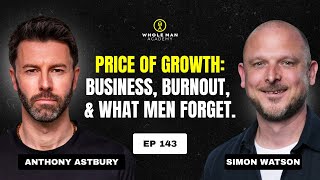
Episode 143 of the Whole Man Academy podcast (Dec 18, 2025) — host Anthony Astbury interviews Simon Watson (founder of Revenue and Beyond). They cover: Simon's background building, scaling and selling companies (including an IPO onto the NYSE), his work advising founder-led teams on revenue and "land-and-expand" strategies, and his views on the UK economy and hybrid work. A substantial portion discusses burnout (Simon experienced burnout around 2020), recovery strategies he adopted — breathwork (Wim Hof method), cold exposure, sleep hygiene, exercise, phone/social-media limits — and how those practices support leadership performance. They also discuss AI as an augmentation tool (large language models, risks of "hallucination" and loss of human voice), money and exit mechanics (earn-outs, transition risks), and the importance of planning how to use time/money after exit. Simon directs listeners to his LinkedIn (Simon Watson — Revenue and Beyond) for follow-up.
Chapters
Welcome to the Holeman Academy podcast. We cut the bullshit and get real about building your ideal life. If you're done with settling and you've got the guts to aim higher, you're in the right place. We bring you ideas, strategies, straight talk and real stories from guys who are living life on their terms, men who refuse to settle for mediocrity. They're here to share the raw truth about what it takes to break free from the mundane and step up your game. Why? Because the world needs strong men now more than ever. And it all starts here at the Whole Man Academy.
Okay, so before we start, come January 2026, some of you will know the network was launched about two years ago, which was a membership for basically the ambitious men that want to get together and work on things together and also connect with each other. And that's grown to 30 men over the last couple of years. But what I realized was that there's different levels of desire to invest, different levels of desire to have proximity to me and do your own work. So come January, there will be three tiers of dementia, or definitely two. And then we'll work on the other one. And one will be called the Spark, which is for guys who want entry level personal development without the chords, without everything else. So the best way to find out about it is, if you haven't already, just fill in the quiz, which is under the video or somewhere on the links, and just get on the Whole Man Journal kind of email list and all the details will be coming out on there as and when they happen. And for me it's just really important because what it will do as the world descends into some interesting times and interesting situations is help the men connect, help you take advantage of all the tools I've created for through the Whole Man Academy and also connect you with the other guys in the movement, regardless of whether you're in tier one, tier two or the. The biggest tier will be the business one, which we'll do at some point. So, yeah, the only action you've got to take now, if you haven't already joined email list, is just fill in the quiz, get your whole man score with a link below or somewhere in the show notes and we will go from there. Okay, so this is the Whole Man Academy podcast, episode 143, I think it is, which will probably be the Last1 of 2026, 2025 before we get into 2026, which I have got various guests lined up for that. But today is a chat who I found on LinkedIn stalking LinkedIn for interesting people and his bio came up. So today I'm talking to Simon Watson and I'll read your quick bio which was I've helped build, scale and sell three companies, advise dozens of founder led teams and coached execs across assas agencies and tech enabled services, generating hundreds of millions in enterprise value along the way. So mate, firstly, where are you? How are you? But then what would your title be?
I think you can buy titles nowadays, so maybe I'll go for something like that. But no, it's good to, good to be. We've been talking about this for a while so it's good to actually be on the podcast and share some of the stories. So yeah, where am I based? I'm a London boy, south of the river. Yeah. Grew up in London and grew up in Hampshire. So born in London, grew up in Hampshire and I've been living back in London for the last 15 years with my wife and kids and I guess my title, well my title essentially for my practice is just my founder and the principal consultant, which sounds very posh but essentially it just means working with typically with, with founder led businesses and certainly the CEOs of the companies and senior leadership teams of those businesses to really support them on their journey to growth. And that's typically through revenue acquisition. So whether that's through acquiring a new customer or sets of new customers or working with their account management team to expand the current relationships that they've got within those businesses, a land and expand kind of strategy. You know, they might have an agency with, with only one client and they want to tap into the other nine clients within that agency. This is sort of strategies to, to kind of deploy against that and then right the way through to sort of fixing leaky buckets as I call them. So you've got lots of customers coming into the bucket, but they kind of fall out the bottom for various different reasons. So that's a spectrum. And obviously within that spectrum there are tens, if not hundreds of different things that I could get involved in to support that business.
Yeah.
But the business is called Revenue and Beyond. So it's about, you know, helping them to secure or build new revenue. And then the beyond piece means, you know, making sure that revenue is profitable and allows them to grow into the directions that they need them to go, need the businesses to grow into.
I was thinking as you saying, it's probably not a more important time maybe in our lifetimes or I'm 47 or 48, one or two. But with businesses having to navigate the the tyrannical government, the, the businesses with AI obviously coming up and them having to navigate that and taxes and everything else that's going on. You know, I was walking around a local town center the other day and noticing when you see companies like Debenhams that were empty because that had gone, and lots of different, smaller ones. So I feel like with the economy where it is, and we were, we're recording this in, in mid December 2025, the economy for me is kind of blinking red or flashing red, as it were. What's your take on the, the kind of the UK economy at the moment? Because obviously, if you're dealing with businesses, it's not just necessarily about the business. I guess it's about what's happening externally as well.
Well, if you read the headlines, it's all pretty dismal reading, you know, and there's, there's this, it, it appears to be that there's a mass exodus as well. People want to leave and maybe go to a different country that, that maybe treats entrepreneurs or business owners or those that are creating wealth a bit more fairly, you know, that. And, and, and, and there's a lot of truth behind some of that. But I, I think there is still a level of optimism. I think the thing is with the UK particularly, we, it's easy for us to forget our roots and our heritage and some of the things that we've been responsible for in terms of innovation, whether that's, you know, whether that's things like music, we, we forget, we forget about the arts and the music side of things or know whether that is, that, that is more upto date. AI and, you know, we've always been a melting pot. We've always been a, a catalyst for, for growth, whether that's internally or externally around the world. And I think people forget about that. So there is a, there is. When you, when you tap into, when you start having meaningful conversations with people that are actually running P&Ls and paying people salaries, there is an underlining optimism that I think it's just innate in any founder, any person that leads a business. Like, there's this, this is always on optimism. And I, I do think that spark is still there. And I think the brand that, that is England or that is the UK or is Great Britain, I think that brand will live on regardless of, of whether. Whether we're in a bit of a rough patch right now or whether we're in a purple patch, you know. So, you know, that being said, the government are making it really tricky to Be liked, aren't they? And, and what, what really gets my back up with the government is where, not just this government, but just governments in general is where, you know, certain business policies are being made by people that have never run a business. Now I know they're running a country. You could argue that the country is some form of a business, you know, based on the sort of the structure of it. But you know, I, I, I would challenge, you know, Rachel Reeves or challenge any of these mps to go and spend, you know, a week or two weeks living in the shoes of a small business owner. Someone that's really, you know, struggling to make ends meet. And, and, and not only spend a day or a week with them in their businesses, but go home and have dinner with them and their families in the evening, you know, and live, live their life because they'll realize that the, the restrictions that they're putting on the additional taxes and the squeezing of, of, of, of all of our budgets is, it's having an genuinely detrimental effect on people's livelihoods. And not to mention, you know, we don't necessarily need to go down the route but of this topic, but not to mention their own stress, their own personal anxieties, their own mental health that comes as a result of running a business and being responsible for feeding other people's mouths and paying other people's mortgages. Right. So that would be what, you know, that would be if I had one message to send to, to, to the power, you know, to the people that run, run the country is, is genuinely go and spend time with those, with the small medium sized businesses that prop up the entire economy.
Yeah.
And actually see what these changes that you make, what they actually have, the, what they actually make to people's, the food they put on people's plates or lack thereof.
You know, it's, it's, and that's where funny enough knowing that you've worked on, I think we said you've like helped build, scale and sell three companies. I'd love to talk about that because I speak to some the other day who has a company that was considering selling it. It's a very long story, but we were just discussing, you know, is it a good time to be cash rich? You know, when you're, when you're selling company and most people won't have an idea they'd understand maybe how to build a company and maybe how to scale it, but, but less so how to sell it. So like how have, how have you managed to start off by getting experience in that Was it that you learned to build them first, then scale and then sell or you helped sell one first and got gained insight from that?
I think it just goes back to making a ton of mistakes as a youngster just growing up and that those mistakes started very, you know, at school, quite frankly, maybe by selling things that I probably shouldn't have been selling.
Yeah.
And you know, and then, and then you kind of grow up a little bit and you realize that there's a bit of a structure to this. I mean I've had loads of businesses that were, you know, I used to be a DJ as well, so I DJed a lot. And anyone if my friends and stuff are listening to this from, you know, from the ages of 18 to 28, I do a lot. And within that I had various different businesses, whether that be being a self employed dj, which in itself is a business and making sure that you got, you know, regular gigs, but going through to running events and you know, hiring the biggest. You know, we hired Judge Jules at his peak as well. Like I wish I was on his money at that time. I tell you what, I paid him, but we paid him a lot of money just to turn up and play two hour set. So I guess what I'm saying is like these things don't happen overnight. Right. And I think my first real exposure to big business and success came in between the years of 2010, 2015, right. When I joined a technology business in London that was selling. In broad terms, it was a marketing based business. So it would help some of the biggest advertisers in the world to invest their marketing budget more effectively. So this is on things like Google pay per click again I can, I'll keep out of the weeds. But it essentially means that, you know, business that might be spending a million pounds a month or even a week in some cases on Google advertising can just squeeze more return on investment from that budget in its most basic description. Right. And so the, that five years, you know, I joined, I joined as an account manager actually and very quickly grew, I guess professionally and up through the ranks and kind of left there as a senior director or just under vp. But during that time, you know, we, we grew that company significantly from you know, I was like the 10th person and when I left we had 650 globally. And so the, the trajectory, you know, a lot of these people talk about, they read these books about hockey stick growth where you kind of go along a little bit and then suddenly it just shoots straight up. Well, I've been through that and it's, it's a wild ride and it's not for the faint of heart. And it certainly suits a younger man. Yeah. That doesn't have kids. Well, I mean you have, you can.
Have kids, but the juggling of. Is that because. For someone that wouldn't understand, like, because you'd. People would think that hockey stick growth is great because up means good. But as you said, I guess there's. Can you cope with that? Is the team around you? Is the systems in place?
Exactly. It's 100% to do with the team, obviously you got to have a good product. The market's got to be ready for it. That's the other huge. So timing, timing, number one element to any of this stuff is the number one without timing, without the market being ready, without the person, without. Without the thing being ready, like nothing will take off. So the, the planets have to align. That's why it's quite a rare occurrence. But, but, yeah, but you need to be ready. You need to have the team. But I can tell you that it was cray like, like the stories that we would share amongst our teams. We'd come in and I remember speaking to a guy called James and he was on the professional services type, so not even on the sales side, but he was on of it. And we joke because last night he had a dream or he regularly, he'd been dreaming about onboarding clients and going through the process. And I was like, dude, I've been dreaming the same really intense, you know, really like. And, and everyone loved it. And everyone, everyone had kind of gone through something personally, which meant that actually they just wanted to focus on this job because it kind of gave him a distraction from some of the crap that was going. Going on in their lives. Yeah. And that just was just the perfect melting pot. And so we grew that company and in 2014, 15, we.
We.
We were successful in ipoing that business onto the New York Stock Exchange. And so our CEO rang the bell. You know, all the leadership team were a part of it. But that just gave me an insight into what really needs to happen in order for fast growth, in order for any business to scale. Yeah, but that was, yeah. Baptism of fire. And it was, it was incredible.
Yeah. Would you find then as well, we're going back to, let's say 2015 even that these days, obviously people are working so much more remote that you can in theory have a team that never really meets because they're dotted all around the world. Like, were you obviously back then, it was less so and it certainly wasn't AI involved like it is now. But did, did you find that, that that has obviously changed over the years, that now. Because I've spoke to some people that say they've never met their colleagues, but you know that you can have one in San Francisco, one in wherever, one in London.
Yeah, yeah. No, this was five days a week in the office. This was, you know, those days. I remember there's a book actually called the Four Hour Work Week by a guy called Tim Ferriss. I read that book in 2014 for the first time and it changed my world. I was like, oh my God, you can operate like this. And so, you know, if you haven't, if nobody's read it, the premise is basically, you know, four hour work week is like condense all of your work into four hours and then you can do stuff that you enjoy or brings you into, you know, enlightenment. Outside of that, the reality is doing a four hour work week is folly. It's not realistic. But actually the first step in that was to have negotiate working from home one day a week. That's like the first steps. If you, if you read it, that's kind of like the bit that the coaches you want in the beginning and then you kind of like, you know, you build up to four hours working wherever. Anyway, the reason why this is important to your question is that it, it gave me the confidence to go and negotiate a one day a week working from home when this was just a not a thing. Right. And the, and the premise behind that was let me work from home and I will double my output, like literally, because avoiding all the distractions. Don't have a, you know, a commute in and out. Yeah, I'll double me up. And I did and I smashed it. And it was very lucky for me, you know, the team, the line manager at the time said that, you know, managed to negotiate and got it signed off and it worked. Now the reason why that's an important point because you fast forward to today and like the working, the, the fact that you can't work from home is just, it doesn't exist. Everyone has is it's almost a privilege. It's almost, it's not even a privilege anymore. It's almost a given.
Right.
Everyone has to work, but we've gone completely the other way. I think certainly this year there's a bit of a course.
Correct. Yeah.
And there are businesses now that are, in fact there is one business which will rename Remain Nameless who are enforcing five days a week. And I think that that's recipe for disaster. And I think they're not, they're not going to be able to attract good talent and I've been quite vocal about that. But most businesses now adopt a mandatory two to three days in the office. I haven't heard of any business that has reprimanded or disciplined someone for not adhering to that. It's kind of like slap on the wrist, come on buddy, we need you in, in thing. But I think what, what businesses are failing to communicate with their staff is the benefit, the true benefit of camaraderie and in person interaction.
Yeah, massive.
And all this, all the peripheral benefits that come with that, that are quite difficult to measure.
Yeah.
And you know, an obvious one is like, you know, to coin an American phrase, like the, the water cooler conversations. Right. Or the coffee machine chats, or you bump into someone physically or metaphorically in the corridor and it sparks a reminder to go and talk about that one thing that you thought about in the shower three days ago. Yeah, right. Like those, those, those are the, the, the, the supplementary or, or peripheral benefits that come with working in an office and working in an in person environment. And I don't think businesses are doing a. Well, not, they're not doing a job anywhere near good enough to promote this. Going back to the younger generation that are coming through and even people in the 20s and 30s that have probably forgotten what the benefits are.
You're right, it's the, of course people shouldn't say, oh, well, I just want to work in the office because the social aspect. But you're right, you know, I've had, obviously I speak to a lot of guys in different forms and interesting. I was at, I was at the, one of the Formula one teams last week and they had a specialist talking there about optimization and when he talked about working from home, he said what they found is that the sweet spot for, again, this is an average because you'll have some people that hate working from home, some that love it and will argue either way. But he said, you know, if you can have that hybrid where you worked, you know, two and three, either two days the office, three days at home or three days in the office, two at home, if that makes sense.
Yeah.
And of course some people listen to this, like when I worked in the city, you could not work from home. We had, you know, we were brokers, you needed to be around. But one thing I found also, and I wrote about this on LinkedIn, was just like you said, you missed the social aspect of it also. The commuting in. I used to stand talking to friends on the train and what have you. Also about dating, because I know so many people that met their partners and I met Emma at work and I met other partners at work, and I had lots of friends in the city that were with boyfriends, girlfriends, husbands, wives, or maybe other people's husbands and wives. But that's neither here nor there. And you're right, it's. It's that kind of thing. If you're just stuck at home on your own, yes, you can be productive, but do you miss out on other parts of life?
Yeah, yeah, yeah. I mean, the commute is funny now. The commute is. It was frowned, you know, it was frowned upon. And, and, and I find it odd that you were speaking to people on a train in London, Anthony, that you must be one of those weirdos that.
It was just a friend I knew already. Yeah. When we were hungover.
I'm one of those as well. I've had. I've had brilliant conversations on the train, but they very rarely happen, do they? But, but no, the commute, the commuting is a really interesting topic because now. And I'm one of these. I will, you know, I've got a dog and I will, I will walk like, I'll finish my day and I will need to before I get the, the barrage of, you know, can I play with. Play. D'oh. And do. Can you help me with some coloring with all the kids? I will kind of bypass that, take the dog out and do a lap around the block.
Disconnect.
Just to disconnect. And that's almost my commute. And I've. I bumped into my neighbor recently, bless her, and she was walking towards me and it was a weird time for her to be out because it was morning. And I said, what. What you up to? I'm. I'm walking to work. I said, but you live. We live next door to each other. She's. I know, but if I don't get this walking now. Yeah, I'm stuck to my. I'm stuck to my machine. I mean, back to backs. And, you know, before I know it, it'll be, you know, five o' clock and I'm in mum mode again.
We called it the fake commute because like you said, you know, one of the guys that was in the Network James said about, you know, before you go from bed to laptop, you. You miss that brain disconnect from the work and the home life and as you said rightly so, to just go out and even if it's, you know, a five minute stroll. Also the importance of getting natural light. I know in the UK and it's dark till about 8 o' clock in the morning now, but before you go into natural light again heard about this a lot of the formula one place, you know, getting daylight natural light into your eyes, not behind glasses, not behind contact lenses is important. And I was going to ask you because obviously over the years you've, you'll have worked, I would guess long hours, had stressful times. What have you, how have you managed to navigate? Obviously family, but your own kind of. And I, I frustrate myself by using the term well being because it's, it's encompasses so much but you know, a lot of guys can get stressed, overworked, you know, whatever. How have you managed to navigate all of that?
Yeah, and, and it is, you know, it is, it is stressful. I think the Marin days for me were a great kind of teacher, if you like, or it kind of taught me about being resilient, you know, or being able to cope under stress. I think the, the next level of stress does, does change the moment you become the owner of a business that's responsible for employees. You know, depending on your demeanor or how, you know, how your mindset is, it does, it does play, you know, it's a difficult thing to, to, to manage. And so the, the stress element of, of running a business is huge. I mean, unfortunately, you know, I've been through some, you know, been through a burnout period and you know, during just, just start or just during 2020 and it really kind of opened my eyes up to like how, how fraught, you know, it can be to go through this process.
And so what did that look like to you? Like, let's say if someone said what do you mean burnout? Because obviously I guess it can mean different things that people like. What do you think led you to it and what did it show up like in you, as it were?
Yeah. Oh, I mean there's load. There was loads of things I've written about it. Help. There's a little plug for the book.
Yeah.
But this is, I mean this is like four, three or four years old now. But you know, I've written, I've written about this stuff quite, quite Openly and on LinkedIn as well. But, but no, I mean it, it creeps up on you. It's kind of, it creeps up in blocks and it kind of builds its wall and then suddenly it smashes you over the head with it and it all, you know, everything can just come crumbling down. So it's a, it's a, it's a sinister thing that, that, that, that creeps and grows over time and you don't really recognize it until it's sort of hit you. I mean, I. Reflecting on it, I would have, you know, if it happened to get. If, if it were to happen to me or to someone else, I would be able to see some of the signs, I believe. Yeah, but a lot of it is internal. A lot of it is. You don't. It's very difficult to project burnout because it's all happening within your head and within your tummy, typically, you know, kind of feeling, you know, the naughty tummy and, and the feeling of anxiety and so on. And, and really it just, it just grows until the point. For me, at least, it grew until, you know, I was like, well, I, you know, physically can't do this. I was unwell. Obviously that, this, the sleep deprivation or the, or the, the ability, the inability to sleep or to remain asleep, that was the thing that I, that I really struggle with. And it would, that would be a compounding effect. And I'm sure if you've got people listening here, that the dreaded like 3, 4am Wake up for no reason whatsoever other than you wake up and you start thinking about the problem, the business or, you know, whether that deal is going to land or not. You know, like that, that's, that's a really big tell. And, and that, you know, that the stress is. There's an imbalance in stress because stress is. There is some level of healthy stress or, or things that keep you on your toes, but when it. Balance it, when it goes sort of the other way, that's, you know, that's a good tell. You know, lack of sleep or really poor sleep. And I think the, you know, thing for me, the kind of the, the, the nail in the coffin, I guess was, was, I think it was back in 2020, it was probably this time of the year actually, and we'd had snow and I remember just. I was awake. It was like 3 or 4am and I, I had to leave. I was just awake in bed and I just got up, I just had to go outside and I was just. It was snowing, you know, it was. And, and I was just in my shorts and T shirt. Barefoot.
Yeah.
And I was just like standing there. Just didn't know what the. To do. It's like, what's going on? Yeah. And my wife came out, bless her, and she, you Know, and she, we, we kind of like talked about it and that really, for me that was, you know, in fact it was weird because it kind of helped because the coldness going through the feet, actually there was this cold therapy that actually kind of really helped actually and kind of sparked my head into kind of thinking a bit clear, clearer. But it was a moment of like, what, what are you doing, dude? You need to sort this out. So, you know, so I, I did seek some help, you know, work with a therapist who I'd never been work, never worked with a therapist in my life, but she was brilliant and you know, just understood kind of where I was and helped me to work through a bunch of stuff. And what do you think you, you.
Changed around of your either environment or working hours or what, what do you think would be like a few key things that you made a change?
Well, there was loads and I was, I wasn't planning on plugging this.
No, carry on.
But this is, I think you can probably get it for like 99p in a. In Amazon or whatever. But, but they start this stuff in here that like give, you know, to go back to your point, like you asked, what would you do to sort of balance it or to, to relax, you know, to kind of get over the stress. And so what I was sort of leading up to, to answer your question is that there are certain strategies that even today I still deploy to make sure that I don't revert back to that.
Yeah.
And like really basic things such as, you know, not checking your, like not checking your phone until a certain time. So, you know, I won't open my phone until 8, 8am for example. So I, I mean, I'll put up at half five most days in the gym. You know, I'll check my, I'll open my phone to get the, the sport, the, the, the fitness app open and work through that. But I won't, I won't check emails, won't check in, you know, won't do WhatsApp. I just. Because as soon as you start getting into that world, suddenly your brain's ticking over. So that's like practical. Step number one is don't check social media until a certain time. In my case it's 8am because it's.
So hard for men. I've said before, 10 years ago, if you'd have said to men, what are the top five struggles you have? Yeah, social media would never ever scrolling would never be one of Those, let's say five to 10 years ago, whereas now so many men I know, and I find myself doing as well. I've said it on so many podcasts, you know. Yeah, I might go to message you on LinkedIn or it could be anything. And then five minutes later, you're scrolling, you're like, what was I doing?
Yeah, and you're right, it's nonsense as well. Like half the time you're reading through it and it's just absolute nonsense. But, yeah, I mean, you know, I think. I mean, I can just read these off from here, but these were like, transformational for me. They genuinely helped. You know, obviously, sleep being one, exercising regularly, it's a given. But I mean, I've taken my health really seriously this year. Certainly my, My fitness and I'm in the best shape of my adult life, really. You know, taking holidays sounds obvious, but making sure that you do actually take. And a holiday could be a weekend, you know, in an Airbnb, just in the countryside, you know, half hour down the road.
Right. Change your scenery and.
Yeah, change your scenery and. And I think the other, the other. I mean, this one for me was, Was. Was probably the biggest one. And that was. I discovered the Wim Hof method. I discovered Wim Hof. And everyone, if you're listening, you've probably heard of Wim Hof today, but back when I discovered him in 2020, it was literally transformational. So for those of people that don't know Wim Hof, it's a. Oh, he's a guy, He's a Dutch guy, lives in Poland, but he's. He's developed a breathing method that essentially allows you to get lots of oxygen into your body and it releases all sorts of endorphins, makes you feel pretty good, can make you feel a bit giddy, but it essentially flushes your body with, with, with oxygen. And, and what that does, it has a. Has a. A mechanism for killing bacteria. It has a mechanism for, you know, fueling certain parts of your body. If you've got aches and pains, it can help to regenerate some of those and it can. And it forces more oxygen into the brain, which can help you to think more clearly. And so the breath work was pivotal in not only just rehabilitating myself, but building that ongoing sort of relaxation or mindfulness capabilities within my work, because it suited me as a bit of a geezer who would never do, you know, meditation and all that sort of stuff. Well, this gets you into medit. Meditated state with. Within 30 breaths. And you can do it lying down on a sofa, right?
Yeah.
And then layered on top of that, depending on how far you want to go, is like cold water therapy. So he's. He's considered the iceman, if you go and Google him. And he does some really extreme things with ice. And so you don't need to go that far. But just having things, having a. A moderately cold shower, like having a shower that's colder than you normally have, it would be a great step in that. That direction.
Yeah.
Or having a, you know, a shower that's on all the way onto cold and standing in that for 30 to 60 seconds. It's remarkable how healthy it is to do that because it forces blood flow to go into your vital organs because it goes into a bit of a shock state. And all those things just help to maintain our engines, essentially. Yeah, that's like. I mean, we're talking like entry level Wim Hof here. This is like, you know, five minutes on a sofa, maybe seven minutes on a sofa.
Yeah.
60 seconds in a cold shower. And like, those things had a transformational effect on me. And then that opened the door to like, oh, what is this kind of meditation? So I got into a bit of meditation and again, there's like nice apps, like the Mindful app. Yeah, Mind that or Calm Sorry App. But there's all. And there's loads of free stuff on YouTube. So, you know, you can just spend a little bit of time. You can just. Just the door sort of opens slightly and you get some of these things. And I, you know, I'd say that that combined with making sure that, you know, I get outdoors and just enjoy the nature and that sort of thing, like, has just given me a fresh perspective. And I carry these things through, you know, with me, you know, since 2020 to today.
It's. It's one of those things where I was trying to explain to guys, no one's telling you to do all of these things at once. And like you say, and one of the big realizations I had after years of helping men was that sometimes you weren't even giving them new information. You were reminding the stuff they'd forgotten to do that they knew was beneficial and it would be, you know, I was on a call with the other guy with the other day, with the guy that joined the network, and when we talked about, like, what. What does he enjoy doing that's good for you, good for you and good for your mind and body? And he'd said about he loves swimming. And I said, when was the last time swimming? It was months and months and months because Just so busy.
Yeah.
I said, you know, if. If you take nothing else from this call, book a swimming lesson, a swimming block and go to it. There was another guy who joined, who I had a conversation with. And again, it's so easy to try and do some of these things. Then life gets in the way of kids and emails and work, what have you, and then feel about it and not go back to it. And in a way, this is like our reminder to say, yes, it's transformative, but B, like you said, it's is entry level. Start with one and you can build up from there.
Yeah, yeah, exactly. That's it. I think you just, You've just got to start. You've got to be willing to. To make a bit of a change. Really just change a habit or two. Yeah, that's what it is. I think it's impossible to redesign your entire life in one go, but I think, yeah, making small little steps, small little adjustments, skip away at it. Yeah.
I was going to ask about, I mean, in a way, going back to, you know, money is such an important part of all our lives. And it always makes me laugh sometimes when I've known people that have got loads of money, that's our money, doesn't mean much to me. And you say, well, you know that you're in a. You're in a position to be able to say that because you're not scrabbling around for stuff. And I know, you know, again, we talked about the economy earlier, but I wonder. I wanted to talk about AI only briefly in the fact that, of course, yes, we've been told it will take everybody's jobs. Then some people will say, obviously it depends how you use AI. And for me also, it's. I don't want people to become so reliant on AI that they forget that they have their own skills and capabilities. What's your overarching thoughts on, like, how you. You've seen businesses implementing AI into kind of your, you know, your area.
Yeah, there's probably a whole podcast on that. But I think in. In summary, I think it's a. What, what people have to remember is that it's not AI versus human. Right. It's. It's AI plus human. Yeah. Or human plus AI, depending on. Depending on your. Your. The ring walk. You want to take stance. Yeah, yeah. So. So you just got to remember that. And I think the thing with AI generally, certainly today at least, is AI is certainly these large language models. You know, the ChatGPT is the kind of the consumer led or easy access AI models, they are a, an accumulation. They've been trained on human data that we've all created and all that they're doing is they're pooling that data and they mine it in a clever way and come back with something cohesive that looks like a sensible answer that might be true. Right. And I'm talking specifically about these chat models, but they are just replicating human, they are just copying, stealing human IP essentially. And I think people need to be very clear on that and to remember that. And then once, and then once they've understood that it's then treating these machines as they, as, as you would any other kind of like Google search where you might cross reference, double check, make sure that the, suggest that it's, that it's come up with is actually, is actually correct because they do hallucinate and.
They are wrong details.
Yeah, yeah. And the thing is, if you read it, you know, and LinkedIn's rife with it, you know, every, every person is, is, is taking verbatim, you know, things that a model has created and they're copy, pasting it into the, into LinkedIn and it makes them sound really smart. And you can, you can read this stuff and it just stinks of chat GPT instantly. You know, no, no, there's no spelling mistakes. There's no like personality, there's no, you.
Can smell it when you read it, can't you?
Exactly. Yeah. You know, and, and, and we like a mistake, you know, we like a little error. We like to know that there's a human behind it that's typed it and you know, and they've, they've spelled, they've got a couple of letters around the wrong way, it doesn't really matter because we know that we're talking to someone and so, you know, that's, that's it we're talking about, I mean, obviously AI is a really deep topic, but we're talking about consumer bots at the moment, which Is, which is 95% of how people are consuming AI consciously. There's a subconscious level to this topic as well. And I think people that, and businesses should I say that are making the best use of this are those that understand that this is an augmentation of how human beings react or work in the workplace. So from a sales and marketing perspective, there is an unlimited use case for these chat bots. So whether it is writing content or the supporting of writing content, whether it's, you know, using the computing power to, to crunch numbers in a spreadsheet, yeah, you know, to do analysis on data, to come back with, you know, just to surface insights that can then be led on to make, you know, changes to your marketing strategy or to make like it's, it's unlimited. And it, and it has to a degree cannibalized a lot of what people would do normally. But it's also meant that what, what was taking ages or what, what was a job that people didn't really like to do can now be done in a couple of seconds by a machine. So the question therefore leads on to, well, what next for human beings? Right. So if, if mundane shitty tasks are being taken care of by the, by the machines and to a degree it's pretty accurate, where does that leave us? Well, where that leaves us is in a place of more ideation, more creativity, more room to breathe and to come up with new ideas that quite frankly AI is going to copy in the future, which is what they're doing currently. And so the people that are today investing in themselves or investing in the arts, the creative arts, the kind of creating something from nothing. And that could be with the use of the tech piece of technology like AI, but being able to feed it with the initial concepts or the thing that you're, that you're looking to bring to life. That's the bit that I can't replace because it's not sentient yet and who knows if it ever will be. Yeah, but even if it does become that we're still going to have, there's still going to be the nuance of human beings that can't be replicated. The pausing, the mirroring of people on the other side of the screen or the call, you know, the, yeah, the, the kind of the ebb and the flow of how a conversation might go.
And it's, it's interesting you say that because I, having published 800 and something like articles and I also enjoy reading other people's stuff because you take ideas from, you know, no one has new ideas. It's all just regurgitated generally. But it was really disappointing that actually some of the people I think followed who I held their ideas and, and the way they wrote, you know, the stories they come up with in high regard. Then one day it was like that and you could just, you could just tell it had all been spat out by AI and like you said, it completely lost. You didn't realize, you didn't feel like you were listening to them anymore.
Yeah.
And it kind of, you know, I guess you could argue if the information's valuable does it matter? But for me, you're right. Part of it is the personal experience of when that email drops in from that person. I'm looking forward to hearing them. Not a robots. Oh, you know, not, not a robot generation of another idea, if that makes sense. But no, I agree. You know, AI could be a topic that you can go kind of deep on and it's only going to get more interesting as things develop. And just as you said, I try and remind guys, don't rely on it to be creative for you necessarily, but do use it to save you time. I mean, even with the whole man academy, you know, I've done it where we've got quiz with lots and lots and lots of data and you can imagine it take me like a week to analyze it. But you can download it, put it into AI and it will, you know, bring up the 10 and you're like, wow, that is, it is game changing, to be honest. Well, I wanted to talk about, I mean, when we go on to talk about money scaling businesses, selling businesses, the identity of ambitious men because clearly you spend a lot of time, you are one and you spend a lot of time around them. I just wonder. It's an interesting time to be a man, but also when you're trying to juggle the pressure of money and family and expectation and everything else, like what, what have you seen the last five to ten years for men who are juggling the landscape, as it were, you.
Know, it's quite a big question, I guess. I think, I think, I think men that are generally the happiest, I would say, if that's, if that's one way to answer the question, I would say are those that have not, have not lost their inner, inner child, like they're in a sense of fun.
Yeah.
And to not take themselves too seriously because it's, you know, we all live busy lives and we're all doing, you know, important things in terms of, through our lens, they're important, but to everyone else, it's, it's, it's nonsense. You know, maybe not, not, but it's less important.
I mean. Yeah, yeah.
And, and I think, I think the people that, the happiest entrepreneurs that I know are those that put everything into perspective and, and don't lose their sense of fun and, and have a balance. I mean, you know, again, everybody's different. I mean, everyone's sense of happiness or achievement or, or the sense of fun can relate to very different things. You know, I think if you asked Elon what his sense of fun is, I mean, I'd like to. I'd like to know the answer to that question, actually. But it's probably, you know, it probably is, you know, working 90 hours a week.
Yeah.
Building and, yeah. And, and, you know, and getting himself to Mars across these five massive entities that he's, you know, that he's running, you know, Whereas, you know, for me particularly, like, if I, if I don't have a. If I think if I don't have the sense of, you know, I do a lot of what I do to give me and my family freedom to do the extracurricular things that we enjoy doing. So for me personally, it's about spending time at big wild lakes fishing for. For the biggest carp that, that we can find in either in this country or across. On the continent.
Yeah.
And I'll travel a lot. I'll travel a lot with my, you know, my little doggy who's surprisingly. Hasn't barked yet. And I'll do that by myself or I'll do that with friends and in some cases we'll go with the family and we'll take a camper van. Right. So those things I place with a lot of importance and a lot of value to them. And there's obviously some. There's a certain amount of money that needs to achieve to do those things. But it's, but it's surpr. You know, it's. It's just, it's affordable for most. Right. So that's kind of my point. But, but that's sort of the thing that is really important to me. So I think for anyone that's either on the path or thinking of getting onto the path or further down the path and looking to exit. It's like, what are you actually going to do with your time once it comes back to you? Because you can get into this trouble with, you know, people that retire or people that talk about retiring and they get to the, the grand old age of whatever it is now, 65 years, and. And they retire and suddenly, you know, they, they go into revert like they've got nothing spent. Sorry. They spend the first three. The pattern is it's like one to three months of an impeccably clean house and a mattering garden. Yeah. You know, you do everything that you need and then you suddenly go, what we're meant to do now. And it's the same if you sell a business. You know, I've seen people that have kind of grown massive businesses or grown businesses to a certain size.
Yeah.
They've exited them and Then realized that actually it wasn't the accumulation of wealth or gain the wealth, it was the road to wealth that they enjoyed the game. Exactly. Yeah. And there's a, you know, famous. Well, it's a famous phrase. I guess it's famous in our sector. But there's a, there's a, an entrepreneur in the business, in the fishing industry that or, you know, always reminds us to smell the roses along the way because, you know, if you, if you don't and you get there and, you know, sudden you exit the company and all that, and all that's gone. It's like we haven't enjoyed the journey that it might sound a bit cliche depending on what books and what, what, you know, what sort of people you, you follow or the listeners follow. But, but, but the, the road to wealth is paved with the goal and it's. You enjoy it along the way versus when you get there and you've got this realization of I've got this massive pot of money but nothing to do in the morning.
Yeah.
Which is quite dangerous depending on the, the, the, the, you know, the individual in case. Because they could, you know, they could decide to go on a slightly different, you know, slightly different path with their time that might be, you know, less favorable for their health. So, yeah, be careful what you wish for. I think there's other businesses that I've seen that have. They've thought about an exit and then they've, you know, they've had that realization and actually what they've done is they've either sold apart the company or, you know, they've had a part, you know, management buyout or they've, they've managed to kind of free themselves away from it and they've really just sat and become chairman or they become, you know, the, you know, kind of overviewing the com. Overseeing the company versus running it, and that's enough for them.
Would you say, obviously that at some point, you know, more money doesn't make a difference if you're, you know, if we're talking of millions here. And it's interesting, I was on a call the other day with a chap who asked me about, you know, if you came into a massive load of money now, how would it change? And it's always a really interesting question, how would it change you? And I said, honestly, I would not stop running the whole man academy because I love doing it. And that's why I'm happily get up early and start late, because it's not. I've got to go to work It's, I love it. I said what it would change for me is your ability to, when I say scale, it's not just to make things bigger to, but to like branch out and have, you know, like pilot things around the country where you had men connecting, stuff like that. But I guess it's that and you rightly said about it, it's a bit like the why of why are you doing it? Because you don't want to get to the top of the tree and look around, realize that your family hate you or they don't even know who you are.
Yeah, exactly. I think there's a, there's a, there's a research paper that they interviewed like, you know, four billionaires on their deathbed and they said, you know, what was the one thing that you regret? And it's the exact, said that exact same thing. I wish I'd spent more time with my family and loved ones. That's that number one regret for every single billionaire on the deathbed. And I get to that, that level of wealth, it takes an extreme amount of, you know, give and take. Right. Extreme amount of compromise to get there. And, and that for them is maybe the thing that gives them happiness on that road to wealth. But yeah, but you, you, you have to sacrifice a lot. And I think that's probably that, that is probably the difference I would say between, you know, those, you know, that create extreme wealth is they've just got extreme views on, you know, things that they're willing to cut out of their life to get there.
It's such an interesting topic because again, I, you know, I think I said to start with most people would have an idea of how to build and scale but not necessarily sell. How easy is it? I know this is open question because it depends on this, but like, like let's say if someone had a medium sized company now and they're thinking of selling it, where do you start? Are there obviously agencies or you know, organizations that you can go to that they will then act like a broker to people that are potential buyers? How does that work?
Yeah, it, very, it does vary depending on the size of the organization, obviously the sector, the, the age of the business, who, who's already invested. So, you know, there's all these different questions. I think what I would encourage anyone that's looking to, to do if they are, if they've got a business and then they're eyeing some kind of exit and that exit could be a partial exit as well. That's something else that people may, may not know Exists, but is understanding what they want, like the why. The why that they want to sell. And there's loads of different reasons. And one of the reasons for me at the time, for when, for wanting to sell my business is that the, I could see the market shifting and it, you know, it wasn't. And it kind of tied in with the burnout. The burnout didn't help, but, you know, but I could. I could just see that the writing was on the wall from a certain perspective. And I was like, right, well, I'm. I'm done. I've built. This business is kind of where I want it to go.
Yeah.
And so I actively begun kind of having conversations with larger versions of my agency to see if they'd be interested. Right. Incidentally, and this is kind of a bit. This is an interesting sort of side topic is that the. The company that bought my business found me weirdly. And so you can kind of like, you could. You can align that to luck, if you believe in luck, which, you know, yes and no. I'm on the fence on that topic, but I do certainly believe that the universe rewards you depending on how you think and what you want. So at the time, I was very clear, like, I'm done. We're getting out. And, you know, and so I had two offers on the table. And the one offer, the Sorry, then the inbound I got through LinkedIn was like, hey, are you thinking, Would you consider selling your company? So going back to my original thing around timing, timing was perfect because I was.
But you don't want to go.
Yes, well, no, exactly. But that comes down to the negotiation. I guess being in sales and, you know, having an agency that did sales on behalf of other companies, I was maybe a little bit of an unfair advantage. So. So that's how I did that. And we did a deal and it went through and it got sold to a larger group. And that was, you know, that was fine. But there are, to your point, there are brokerage firms that specialize in doing this. And so, you know, anyone that's thinking of doing that, you know, well, I can kind of point in a few directions, but there's. There are companies that are set up to do that, and there are businesses that are aggressively looking to acquire other businesses of similar ilk. So, you know, one of my current clients, you know, they sold their company last year and, and, you know, to an American firm, you know, and so they bought, you know, America do this quite often. They come to the uk, snap up the, you know, the profitable businesses and that gives them a foothold into the uk. So that's quite a common method. So there's obviously businesses outside of the UK that would, would. Looking for entry points in, you know, there's. I got, I'm talking to companies in Bulgaria actually, which is on the up and up in terms of their affluence and their ambitions. And there's loads of companies there that are already doing business in the UK but want to do more. So there's these kind of connected with the Chamber of Commerce there. We're talking about doing lots of different things, but, but that's like an example of you might not think, you know, an Eastern European country or, you know, that is that they could have the capital to essentially buy out or, you know, to buy you out or to certainly buy a portion of the company out. So that's one, that's one way. And then again, you know, when I said it depends on the size of the company and how they're funded, if they're, if they're private equity backed or they've got venture capitalists within the, within the business, you know, no doubt. Well, they've invested in that for two to five years in order to get some kind of return. And so they will be proactively looking at how do we get that return, as well as making sure that they're, you know, they're providing the relevant sort of coaching levels to, to make sure the senior leadership, leadership team are well equipped to deliver on that. So it sort of varies, but yeah, I think depending on where the business is. Sorry. Regardless of where the business is, one just needs to become very, very clear on the intention and the unit, you know, sounds a bit woo, but the universe sort of takes, will take care of it after that. But the intention needs to be clear, unwavering, like this is what we're going to do or this is why I want to do this.
Yeah.
And then, and then. Yeah, and then the, you know, the universe will start to bend around you accordingly.
What was it like then, as you said, obviously, with selling your own company or also you've seen with other, you know, guys that were selling theirs. The moment when you're, you're waiting for, you know, for want of a better phrase, like the money to drop into the account. Because I assume there's a period before that where you're thinking if things. There's a snag or things go wrong.
Yeah.
What. Talk to me about that because it must be an interesting time if you think that that's going to Happen. Especially if you're selling something you've worked on for could be decades.
Yeah, yeah, yeah. I mean the moment, I mean from, I can talk about it from my perspective, the, it is, it is a lot of stress. It's like any, any deal though really. You're used. Again, it's probably a bit unfair because I've, I've sold, you know, reasonably large deals in sort of seven figures in the past. There's always this, I mean whether I'm selling a, you know, a three grand deal or a million pound, there's always that like you kind of get yourself into the mindset of like, have I done everything? Have we have we set out our store in the best possible way for there to be success here? And it's the same with, with, with selling companies. So I would recommend if you're going through that, to have to get a good advisor. You know, if you're using a brokerage, talk to a few, make sure that they're the right fit. But, but yeah, it's just managing that process. But when it, you know, when it, when it does hit, it's, there's, it is exhilarating. I mean when my wife and I, we went for a drink. So it happened, it was 17th of September, 2021.
Yeah.
And we, that day, yeah, we only had the one kid named, but I'm not sure where the kid was actually. Maybe we just put her in the TV room, I can't remember. But anyway, we went for a drink and I just, you know, we went to, you know, local barge up in Crystal Palace. I remember, sat there, we ordered two, two mojitos or mojito each and we sat there. We were outside in the garden and it was, you know, it was, it was reasonable weather and I remember just got the, got the kind of cocktail, sat there and I was just like, I just slumped onto the desk like this, hadn't even taken a sip of it.
Yeah.
And, and then just kind of got up and said we've done it. And she's like, yeah, we have. And we kind of celebrated and it.
Was just what now?
Yeah, well, it was a case of what now? It was also a case of like, you know, this is, this is the new chapter. Because there was an earn out period. Don't forget like these things, they don't just, there's no. Well, what I'm familiar with is it's not like money hits and then it's the end of it. There's, there's often an earn out period.
Yeah.
And in in this case it was relatively short. I mean, can you explain what that.
If someone's like, I've never heard of an earn out period. I mean, I don't fully know. Yes. Can you explain briefly what it is?
Yeah, so let's, let's just say like keep it round figures. Let's say you sold the business for a million. Right. And, and again there's, there's literally 10, you know, tens of ways that you can structure these deals. But let's say that it was valued at a million. So whoever's going to buy it is going to pay a million for it. Right. What they'll often do is they'll say, right, we'll pay you. Or what a common way is like we'll pay you 500k up front. Right. And then the other half million we're going to hold in reserve and we're going to pay you over a certain period of time based on hitting certain revenue milestones. There's normally, it's normally revenue and EBITDA driven. So EBITDA is essentially a measure of profitability without taking into consideration tax and insurances and stuff like that. So they'll say look, hit, you have to hit a, you know, a certain number of sales at a certain revenue, you know, hit a certain revenue target and you need to be at a certain profitability. Profitability target. And each year on a given date, you know, we'll pay you a bone, we'll pay you the rest of that million. You see what I mean?
Yeah.
And then if you, if you fall slightly short of that target, then you'll get paid less as a result. If you exceed it, you might have some sort of accelerator built in. So if you, you know, if you, maybe you hit the target in a year and you might bring the earn period from two or three years down to one. Yeah, there's all the honest. And this is where it gets really complicated and you do need experienced brokers to kind of advise it. But, but yeah, so that's, that's often what happens is there'll be an earn out period. So you get a chunk of money and then, and it's, and it's a sensible thing to do for any acquirer because often with most businesses, you know, certainly small to medium sized businesses, a lot of the intellectual property is, you know, a lot of it, although you're buying it, the goodwill of the company often sits with the founder and CEO and a lot, some of the IP will actually live in their heads as well. And so, and, and as, and Customers have got to know this particular leadership person or team. And so if you went from day one to day two and you've turned that, that, that leadership team off in the space of 24 hours and suddenly you've flown in, you know, the big cheeses from America to start running it, there's a danger there that you're going to put off clients and you know, and, and big change. Yeah, yeah, big change. And the clients could get upset or worried and they might churn, they might stop spending money with you. So there needs to be a trans, this transition period is probably the best way to describe it. And, and during that transition, you know, you're a, you are transitioning out of the role. So you're bringing somebody new in, but you're also overseeing the, the additional sales and revenue to make sure that targets are being hit. Yeah, so it's, it is still an ongoing, still an ongoing job, quite frankly.
It's so interesting if you haven't, you know, obviously I worked in the city for years but I was, knew everything about what I was doing. But sometimes you'd have other desks that were putting large deals together. Took months or could be years. And it was just interesting to see how the, you know, when we executed a trade immediately you earned 100 of the brokerage and the brokerage was paid to each month and that was it, that was done. But the other people dealing with long term stuff like you say it would be split up and there was performance related numbers. But I was going to ask you how did you celebrate like when you had that initial, I assume like chunk of money paid into your account, whether it was, you know, monetarily you celebrated or what, like what was in your head at the time.
It was that cocktail.
That was it.
Yeah, I mean I, you know, I didn't do, yeah, I didn't do anything crazy because I kind of knew what, what I wanted to do with, with some of the money afterwards anyway, you know, so I bought, you know, bought a car and I just, you know, little things like that. Yeah, yeah. But there was no, no big, there was no party. No. Or anything like that. It was like you were going to.
Tell me a Lamborghini story that isn't about Lamborghinis, so.
Well, that's it. Yeah, exactly. Yeah. So the Lamborghini, the non Lamborghini story that I've got is, it's funny because I mentioned this to, I was coaching some startups recently and I was talking to them last week and, and I just said it's It's. It's funny, like, when you reach a point where you've got enough money to buy the Lamborghini and you know how hard it took to get that money, suddenly having the goal of buying a Lamborghini, but when you've got the money to actually afford it, you're like, you don't really want it.
Yeah, yeah.
And so the first time I ever had that situation where I was like, oh, I could actually buy this, but I know the blood, sweat and tears that's gone into accumulating this. And also, you know, buying any sports car, unless, you know, is it really not a great investment necessarily? It's going to depreciate. Yeah. And you can, you know, you can buy them in different ways using lease agreements and stuff like that. But it was just. It was just very early on in my career and I had this. This goal of. I wanted to. My only goal, really, which was just, you know, very hollow and shallow, was just, I want to buy a Lamborghini. And, you know, I don't want to. I don't want to draw. I don't want to test drive one. I don't want to drive. I'm just gonna. Soon as I got enough money, that's what I'm going to buy. I'm just going to go. And then when I got there, I was like, oh, yeah, yeah, yeah. No, yeah, I'm all right, thanks. Yeah. Reinvested.
You know what? I was. I was talking to a guy, this would be last summer now of. Of 2024. And he bought a bright orange Lamborghini Murcielago, I think it was, or anyway, one of them. It wasn't a Gallardo, but it was one of the others. And he'd. He was in his 50s, and he'd. He said that he'd said to his wife, look, I've always wanted a Lambo. Let me buy it. You know, we've got the money, the business doing well. Let me buy it, but I promise we'll keep it for. I think it was either one or two years, then I'll get rid of it. So, you know, I know it's inconvenient. And he said. She was like, oh, God, okay, fine. He said, so I bought it. And he. He broke down on the way home on the M40, and he said, the classic where you have to phone your wife. It was already slightly, you know, retro. Reticent. Is that the word?
I don't.
What about buying it? And you're like, I'm on the M40. I've already broke down, he said. And also, you know, you've got the, all the, all the bits open and people are kind of driving past honking their horn and you're like, good, good stuff. I agree. No, I. When I first worked at Glencore and we started getting, you know, small bonuses but in, in the thousands. I remember one of my friends took me aside and said, listen, my advice is get 90 of it and you know, bank it, invest it, whatever, but spend 10% of it on, on some, you know, on you like, so you enjoy it. And, and it's a good, it's a good reminder is that, you know, don't spunk it all up the wall, but don't, you don't have to save all of it. You could enjoy yourself with something or other.
Yeah, yeah, I'm all about enjoying it. As I said, you know, some of it, you know, I did buy a car, it wasn't a Lambo, but, you know, just do things for your family. You know, redid the entire kids bedroom. You know, we sat there, I think actually one way we did celebrate just a small thing which is important, but with my daughter at the time. And I said, so we're going to kit out your bedroom. We can design it however you want. And we were on, on Etsy and we're all, in all these places and we just had this funny, it was just a funny game of like, add to basket. It's like. You like that? Yeah, add to basket, gone. And we ended up like adding like loads of stuff. It was just like. And that was probably my way. That was, you know, and we're not talking silly money, but it was just that thing of like, I'm just gonna do this. My daughter, treat yourself. Yeah. And we bought like, you know, little things for a room and stuff like that. So yeah, I'm a relatively modest guy. I think I'm sort of sensible with it really. I think my, you know, my passion is, you know, I enjoy, I enjoy sort of property as well. So my, you know, kind of investing in that side of things for the long term was, was sort of the strategy really. So, you know, that was, you know, that, that's interest.
What does. I mean, we're at like basically at the end of 2025 now. So what does 2026 hold for you? Like business wise and personal wise, but.
Business wise, especially business wise, I'm fully focused on revenue and beyond. This is my, the, the thing that's bringing me a lot of joy. I wake up in the morning, every day is different. I work with really smart entrepreneurs, CEOs and I just help, I get to help them build their businesses. Yeah, I kind of get, you know, get to help them see round corners and that, that could be again, anything related to how we generate additional revenue and profit for their business, whether that's through sales or expansion with existing accounts and, and everything in between. So I'm just purely focused on that. You know, I'm working with some really, really innovative businesses and I'm working with some, dare I say it, really boring businesses that are just, they, they haven't, they've never worked with somebody like me before. And so I'm injecting some of this like best in breed lead generation tactics or, you know, bringing in someone from my fractional SDR community that I can kind of parachute into the business to help generate lots of lead. Some cold outbound, but using really best of breed, like the cutting edge methods and technologies and data sets to help them do. And so these boring businesses, which I love. Yeah, it's like, oh, this stuff works. I'm like, yep, told you. And so, and so they're happy, you know, and I get bits of feedback on Slack or whatever. And so, you know, that's, that's the thing that I'm like all in on, focused in on that. And interestingly, it's, it's, it's not a scalable business. It's me. I'm building a, a very tight network of trusted advisors and people that I can bring in when I don't have the expertise. I can bring the, and you know, I can bring them in so I don't have to pretend to know everything. It's like, no, speak to Bob, speak to Sue. You know, they're way better at this than I am and that, you know, so it's just me. So I'm building, I'm, I'm aiming to scale the, the most unscalable business that is just me.
Yeah.
And, and just work with, work with businesses to help grow and help, you know, help to grow what we do. Not just in the uk, but across Europe, America and Australia as well.
I love it. And also, as you said, it's a good reminder that, you know, none of us know everything. And I'm the same even with the guys in the network because there's a whole mixture of men in that work for your Vodafone and NHS and, and former special forces types or in the military, and a whole mixture. And I would say I love getting bits of Knowledge and ideas from all of them. Because you know, one thing you learn in the business you're running can help someone else in theirs. It doesn't have to be in the same field. Yeah. And that's the whole point of us all connecting and doing podcasts and events or ever it is. We all kind of learn from each other, if that. And maybe learn from each other's ups as well, which is always a helpful thing. As you say. We could do another podcast on that. Well, to finish because it's been great. But how can guys find you if they were interested in either reading, book, working with you, connecting with on LinkedIn, whatever. What's the best place to get hold of you?
Best place is LinkedIn. I'm pretty prevalent on there. I put out lots of content. It's designed to be really helpful for businesses that are particularly founder led. That's sort of my current thing at the moment. Yeah. So tons of content, you can read it, you can digest it, you can, you can ask me questions, you can implement lots of it yourselves. And then if you need help implementing it, then that's where you can bring me and hire me and I'll come in and help. But it's just Simon Watson. If you just Google or go onto LinkedIn, Simon Watson, Revenue and beyond. There's only one of me.
Yeah.
So you'll find me.
Great. I'll, I'll make sure I put the link in below so they can. It's always trying to make things as simple as possible.
Yeah.
Fantastic, mate. Well, it's been great to talk. I know we talked in and stuff but I, you know, the more, more I still feel like I'm new to business even though I've been running the whole man academy and you know, other kind of coaching business alongside. But you know, like you say, it's very different when you're a one man band or I have one or two people that help me compared to when you're talking to 10 staff, 30 staff, 300 staff and up. So I'm always learning about this stuff and hopefully the men who listening can have learned as well. But. And what does the rest of the day hold for you?
I am one minute late for my client call and then, and then. Yeah, it's just, just more of the same really. Just. Yeah, just got some, some delivery work to take care of this week. Speaking to some new companies that potentially want to bring me in and support them, what they're in terms of what they're doing.
Yeah.
And then Friday I'm off so, yeah, Friday is when, when Christmas, the festive period starts for me and the family and we're off visiting my folks, both in on the south coast and then up in north in Hull as well. So, yeah, I've got lots of training.
It's the same for us, mate. It's. It's time to enjoy a bit of family time as well. But, mate. Well, I'll let you go into your next meeting, but it's been an absolute pleasure and I will speak to you soon, brother.
Thank you, Anthony.
Welcome to the Whole Man Academy podcast. We cut the and get real about building your ideal life. If you're done with settling and you've got the guts to aim higher, you're in the right place. We bring you ideas, strategies, straight talk and real stories from guys who are living life on their terms. Men who refuse to settle for mediocrity. They're here to share the raw truth about what it takes to break free from the mundane and step up your game. Why? Because the world needs strong men now more than ever. And it all starts here at the Whole Man Academy.










