S250:E4🎙️LIVE 🇺🇸America 250: President Barack Obama (Multi Tracks Audio)

In this special 40‑minute episode of the Leadership and Success Podcast, host Coach BZ (Bob Fabien Zinga) celebrates President Barack Obama’s 65th birthday and uses Obama’s presidency as a case study for high‑stakes leadership. The episode opens with gratitude and audience well‑wishes, then shifts to a structured analysis of Obama’s leadership traits—absolute composure, tactical empathy, preparation over improvisation, analytical decision‑making, and deliberate deliberation. Drawing on the 2024 Presidential Greatness Project, the hosts explain why historical rankings focus on durability of decisions rather than daily news cycles. They illustrate each trait with concrete examples (the 2014 “tansuit” media distraction, crisis response in cybersecurity, and the 2004 DNC keynote). The conversation moves through four interconnected pillars: (1) calm, no‑drama composure as a strategic competency; (2) empathy as rapid intelligence‑gathering; (3) vision‑driven storytelling to unite diverse teams; (4) moral courage and candor to build psychological safety. The hosts then discuss lifelong learning, mentorship, and the importance of leaving a legacy that outlives the leader. Biblical metaphors (hope as a gyroscope) and Obama’s own writings are used to frame hope as a disciplined force multiplier. The episode concludes with a call to action for listeners to apply the principles, a preview of upcoming guests (military and intelligence leaders), and promotion of curated reading lists on Black History and Obama‑recommended books.
Chapters
Hi, I'm John Maxwell. When the top companies in the world are looking for trainers, speakers, and coaches, there's one name that stands above the rest, and that's Maxwell Leadership. Our certified team members have gotten proven results for companies all over the globe, and our reputation I'm proud to say, is second to none. Some of our members have risen to the top of their profession, including the one you're going to meet today. I proudly introduce you to my friend, Bob Fabien Zinga.
Welcome to the Leadership and Success Podcast with your host, Coach BZ, where we help you lead with purpose and succeed with impact. If you're ready to grow into the kind of leader others want to follow, follow, this podcast is for you. If you're determined to elevate your success and leave a lasting legacy, this podcast is for you. As my mentor, Dr. John C. Maxwell, reminds us, everything rises and falls on leadership. Our goal is simple: to inspire you, challenge you, and equip you with insights that can transform the trajectory of your leadership journey. Welcome aboard to another episode of the Leadership and Success Podcast. Podcast with Coach Biz.
All right everyone, welcome to this, uh, special edition of the Leadership and Success podcast. This is season 250. This is where we celebrate what we call the Black History Year. The way this started is because, uh, in America, February is Black History Month, and it's only 28 days. It's the shortest month in the year. That's the one they gave to African American, and I felt like it just wasn't enough to celebrate Black history. So I started this Black History Year newsletter, and almost every day I, I write something about African American history, which is American history. And yesterday we had a very special article about this, uh, President Barack Obama. He turned 65 years old, right? Uh, the, uh, 42nd President of the United state of America. And sorry, the 44th president of the United States of America. And I felt like today we are going to have a special episode of the Leadership Success Podcast to celebrate his birthday. So before we get started, as is our custom here, we like to start with what we call moment of gratitude. This is where we take just a moment to be grateful every single time that we meet. And I want you to ask yourself, what are you grateful for right now? What are you grateful for? So if you would maybe close your eyes and put yourself in your happy place and maybe take a deep breath and think about one thing you are grateful for right now in this moment. And first of all, I am grateful that I am still alive. I'm grateful that I am healthy right now. And I'm also very grateful for the life and the legacy of people like President Barack Obama, because they have really impacted so many lives and given hope to so many people and really changed the world in many ways. So to get started, I'm going to read just a few of the well wishes I got from people all around the world. This is from Monique. She said, I can't tell you how much I appreciate the Obama Presidential Center. I have already been there twice, and it has given me joy to be in a place of unity and peace during times of such chaos, division, and disruption. You continue to be a leader that ignites hope in our communities and among our youth. Thank you, and HPD, happy birthday. Isn't that very, very sweet. This is just how many people across America feel about our president. Happy 65th birthday, President Obama. Thank you for your enduring leadership, hope, and dedication to inspiring the next generation. May this milestone year bring you joy, good health, and continued inspiration. This is from Sherlyn from Brooklyn, New York. We have another one from Carolyn, Pittsburgh, North Carolina. Happy birthday, President Obama. Your museum has inspired me to remain hopeful for the state of our democracy. Our vision is an inspiration. Your vision is an inspiration. And I am honored to share my 65th birthday year with you, as my birthday is November 23rd. Okay, let's do one more. This is from Joseph from Kansas City, Missouri. Thank you so much for all you have done for our country and the inspiration and hope you provide every day. We visited the Presidential Center last weekend and it is wonderful, so well thought out and displayed. Congratulations and happy birthday, Mr. President. With gratitude, Joe and Berzy Lecluse. And finally, one more from Maika from Rancho Palos Verdes, California. Hey, from my home state. Here we go. Maika says, I visited the Presidential Center yesterday with my 14-year-old sons. You and Michelle inspire me to be better and to keep hoping. Happy birthday, Mr. President. I thank you for you. All right. That is so, so wonderful. Definitely President Obama represented hope and change. And by the way, my middle name, it's African, it's Minu, and it means hope. It means faith in English. And it's always wonderful to have a reason to be hopeful no matter how the world looks. Around us. Okay, before I start the podcast, let me know where are you guys joining us from, what city, what state, and if outside of the US, which country. And also, what are you grateful for today? Type it in the comment. And as you listen to the podcast, let me know 3 to 5 takeaways from today's lesson, because every podcast I do, since we are the Leadership and Success Podcast, I always like to think about some leadership principles. So let me know which principle resonates with you and which one you think you are going to be able to work on and apply on today, this following week. And yeah, let me play a quick video about President Obama's birthday, and right after that, uh, we're gonna start the podcast. It's gonna last about 40 minutes or so. And again, let me know as you listen, 3 to 5 takeaways, and if you have a question for me type it in the comment as well. So I see you in about 40 minutes.
Happening tonight, a 65th birthday celebration for former President Barack Obama, and for the very first time, a birthday party being held at Chicago's newly opened Obama Presidential Center. NBC 5's JC Navarrete was there for the milestone celebration for our nation's 44th president.
Happy birthday, President Obama!
A celebration fit for a commander-in-chief. Dozens making their way out to Jackson Park to wish our 44th president a happy birthday and a chance to check out the brand-new Presidential Center.
And it's just a fantastic atmosphere.
The Obama Foundation asking anyone and everyone to celebrate by singing karaoke.
Thank you.
It's really about citizens, average folks, visitors to our campus just stepping up and using their voice.
Happy birthday to Obama. What they do.
An extra special birthday for Symphony, who shares a birthday with her former president.
Being from Chicago, growing up on the South Side as well, like, it's just, it's only right to celebrate here.
She's turning 29.
Obama's 65.
And on his birthday, former First Lady Michelle Obama writing, "65, never looked better. Every day you make me a better person, and I'm thankful for all the ways you show up for our family and our country. Love you." Those at his party with their own message.
Happy birthday, Barack Obama!
And for the little ones, a chance to soak in what's possible.
He is brave.
He never gives up.
And for the adults, an opportunity to reflect on the values that have helped shape this country.
For them to honor everyone, no particular people, just honored everyone that have laid the foundation for us, for this country. Don't make me cry, okay?
It's really, really—
I'm really touched that we had an opportunity to come out and experience this. First time, but not the last time.
Happy Fourth of July!
The Presidential Center will be hosting a back-to-school movie night on Tuesday, August 11th. On the big screen, they'll be showing Encanto. All they ask is that you bring your lawn chairs. JC Navarrete, NBC 5 News.
Happy birthday to the former president. Thank you, JC.
So if you've ever been in a room when, uh, when a true existential crisis hits an organization, you know exactly what I'm talking about.
Oh yeah, the physical space actually changes, right?
It's not just a mood.— it's like a literal atmospheric shift. I'm talking about, you know, a massive server breach where data is just actively hemorrhaging or a catastrophic PR disaster.
Or a structural failure. I mean, the air in the room genuinely feels thinner. Yes. Human vision actually literally narrows. Like, tunnel vision is a documented physiological response to that kind of stress.
Wow, really?
Yeah, you can practically hear the collective heart rate of the room spiking. It's this primal biological response to an overwhelming threat. And, you know, our bodies, they don't really differentiate between a physical predator in the wild and, like, a catastrophic drop in quarterly revenue.
Right, right. It's just pure fight or flight.
Exactly.
And in that specific moment, that moment of just absolute paralyzing chaos, every single pair of eyes in that room darts instinctively to one person.
The person at the head of the table.
The leader.
Yeah.
Yeah. And what that leader does in those next, I don't know, 5 seconds where they take a slow, deliberate breath, or whether they slam a hand on the desk and just raise their voice, that dictates the psychological trajectory of the entire organization for the rest of that crisis.
Because the second the alarm bells go off, you are no longer just managing the crisis itself, right? You are managing the psychology of the people who are actually required to fix the crisis. And those are— well, they're two entirely different skill sets.
They really are.
We tend to teach leadership as this this very sterile strategic exercise in a vacuum, you know, like moving resources on a spreadsheet or optimizing workflows. Yeah, but when the pressure spikes, leadership is just profoundly, unavoidably emotional, which is exactly what we are going to tear apart in our deep dive today.
We're looking at an absolute masterclass in this, this specific kind of high-stakes pressure cooker leadership.
Yeah. And to understand how to navigate that, we're looking at a really unique stack of sources today.
We really are. So we have 3 deeply detailed articles written by Bob Fabien Zinga. He goes by BZ. And, you know, his vantage point on this whole topic is something you just rarely see.
It's incredibly unique.
Right.
BZ is a United States Navy information warfare commander, and simultaneously, he is a high-level Silicon Valley cybersecurity executive.
Yeah, he's held major roles at huge tech firms like pivotal group on Trevontes.
So he lives, breathes, and operates in the literal crucible of crisis management, both wearing a military uniform and, you know, sitting in a corporate boardroom.
He operates precisely at this fascinating intersection of national security and private sector technological vulnerability.
Yeah.
I mean, in cybersecurity, especially at the level of a, a chief information security officer, you're dealing with invisible, highly sophisticated adversaries, people who can dismantle a whole organization in minutes.
Just terrifying stuff.
It is. It's a relentless, unforgiving environment for a leader.
But so the twist here is where BZ actually looks for his ultimate framework on how to lead in those crazy environments, right?
He isn't just pulling from like military field manuals.
No. Or quoting, you know, tech billionaires. He's actually extracted this incredibly comprehensive practical operating system for executive leadership. From the career, the writings, and the administration of the 44th US President, Barack Obama.
Yeah, and it's worth noting these pieces were written to coincide with a very specific milestone, which is President Obama's 65th birthday on August 4th, 2026.
Exactly. Now, before we really get into the mechanics of this framework, mm-hmm, we do need to establish a very clear, non-negotiable ground rule for you listening today.
Yes, this is crucial because our source material centers entirely on a modern political figure. And while it touches on the administrations of Presidents Barack Obama George W. Bush and Joe Biden. I want to be extremely explicit here.
Absolutely.
This deep dive is strictly analytical. We are not taking any political sides. We aren't endorsing or litigating or debating the political policies of the left or the right. That's not what we do here.
Not at all.
Our singular objective today is to impartially unpack the author's historical analysis and just extract the objective mechanics of leadership that he identifies in the text. We're exclusively focused on the how and the why of leadership under extreme pressure.
Okay, let's unpack this. So to to understand why a Silicon Valley tech executive and a Navy commander is looking to this specific presidency for like a blueprint on how to run a team, we first have to look at how history actually processes leadership, right? We have to look at the historical baseline.
Yeah. The author makes this critical distinction very early on between news cycle leadership and historical leadership. Yeah. Because it, it is almost impossible to accurately judge a leader's effectiveness when you're just living inside the daily churn of their tenure. You are simply too close to the noise.
Yeah, I mean, human beings react to immediate stimuli. Every single day is a new headline.
Exactly. But as decades pass, that daily noise, it evaporates, and only the actual structural impact remains visible. The, uh, the load-bearing walls that the leader either built or maintained.
And BZ points to the 2024 Presidential Greatness Project to kind of anchor this idea. And for you listening, this wasn't just some random internet poll.
Mm, not at all.
This was a massive, highly structured survey conducted by Professors Brandon Rottinghaus from the University of Houston, and Justin S. Vaughn from Coastal Carolina University.
They surveyed hundreds of presidential scholars, political scientists, and historians. And out of 47 US presidents, they ranked Barack Obama as the 7th greatest in American history.
Which is— I mean, that's incredibly high placement, especially for a relatively recent president.
It really is. To put that in context, that ranking places him ahead of massive historical figures like Dwight Eisenhower, Lyndon B. Johnson, John F. Kennedy.
Wow.
Yeah. The scholars placed Franklin Delano Roosevelt as the overwhelming first choice overall, but Obama finished as a clear second among contemporary scholars when they were asked who should theoretically be added to Mount Rushmore.
Yeah, the source material actually includes this artistic reimagining of a sixth president Mount Rushmore. It places him right alongside Washington, Jefferson, Lincoln, Teddy Roosevelt, and FDR.
That is some heavy historical real estate.
Seriously heavy. But what we need to unpack here is the why. BZ breaks down exactly what these historians are actually weighing. They aren't looking at who won the most news cycles.
Right, or who had the highest daily approval ratings. That doesn't matter to history.
Exactly. They're attributing historical weight to the navigation of massive structural crises. They're looking at the mechanics of guiding the nation through the worst global financial collapse since the Great Depression.
Yeah, passing the Affordable Care Act.
Authorizing and executing the bin Laden operation, which was insanely high stakes.
Restoring diplomatic relations with Cuba, pushing major climate initiatives, and, you know, expanding societal opportunities, fundamentally shifting the American understanding of who can even occupy the highest office.
And the key metric here for a leader is durability. During his presidency, every single one of those actions was intensely debated.
Right. Well, that's the inherent nature of a democracy.
Exactly. But historical ranking systems, they don't measure the absence of debate. They measure the durability of the decisions that were made during that debate. They look at the preparation, the emotional discipline, and the execution required to navigate, say, a collapsing global financial institution on a Tuesday.
And then a complex, highly classified overseas military operation on a Wednesday.
Right. And the author's premise is that history judges leaders by their lasting influence and their ability to keep the organization structurally intact and moving forward while it's under existential threat.
It's a great way to frame it.
Let me use an analogy here because I think it helps visualize this. Think about looking at a stock market chart, right? You open your phone and look at a stock chart day to day or even week to week. It looks terrifying.
Oh, it's incredibly volatile.
It's completely reactive to emotion, algorithms, whatever the latest headline is. It's just these violent spikes and crashes. And that is exactly what news cycle leadership feels like, right? But if you take that exact same stock and you zoom out to a 10 or 20-year chart of a company with solid fundamentals, all of those terrifying daily spikes compress. They smooth out into this very clear, undeniable upward trajectory of growth and resilience.
Yeah, the daily volatility is just noise. The 20-year chart reveals the underlying fundamentals of the company's operating system. And what B-Zai is arguing is that if you want to achieve that long-term upward trajectory, if you actually want to survive the daily volatility without your team fracturing, you have to utilize a very specific, deliberate day-to-day operating system.
And for this specific administration, BZ identifies the core component of that operating system.
Yeah.
It was defined by one overarching strategic trait, which is absolute composure.
The famous no drama Obama management style.
Yes, exactly. But I wanna be really clear here because BZ isn't looking at this as just some neat personality quirk. Through his lens in cybersecurity in the military, He views this no drama approach as a hard strategic tactical competency.
I mean, it's a totally deliberate engineered choice. The author breaks this competency down into 3 specific preferences that a leader absolutely must enforce.
Go, what are they?
Valuing preparation over improvisation, valuing analysis over emotion, and valuing deliberation over impulsiveness.
That makes a lot of sense.
Yeah, because when you're dealing with two ongoing overseas wars, a collapsing economy, soaring unemployment, global terrorism, the overwhelming psychological temptation for any leader is to react quickly.
You just want to do something.
Exactly. You want to show the public or your board of directors that you're taking action. Improvisation feels like action. It temporarily relieves the anxiety in the room.
But it's a trap.
A huge trap. In high-stakes, complex environments, improvisation without obsessive preparation is usually a fatal error.
And BZ highlights a specific specific moment from the presidency that illustrates this contrast just perfectly.
Yeah.
It is— it's simultaneously kind of ridiculous but also profoundly revealing about human psychology.
Oh, yes. August 28, 2014.
The media event that became known as the "tansuit scandal." A truly fascinating case study in cognitive focus. It really is. Okay, let's set the scene for you. The president steps up to the podium for a nationally televised press briefing. He is there to discuss incredibly grave national security issues.
Heavy stuff.
Very heavy. He's talking about complex military options against ISIS in the Middle East. He's detailing serious, rapidly escalating geopolitical developments with Russian incursions in Ukraine.
World-altering life-and-death information.
Right. But he happens to be wearing a light tan suit.
Yep.
And what does the media ecosystem do? The entire news cycle, the dominant conversation across major networks for days, fixates almost exclusively on the color of his suit.
I mean, it became an absolute firestorm. Now, BZ isn't bringing this up to analyze sartorial choices.
Right.
He's not a fashion critic here.
No. He is using this event to expose a profound mechanical truth about leadership and distraction. Like, why did the media focus on the suit?
Why?
Well, from a cognitive psychology standpoint, people and the media apparatus built by people, they often focus on trivialities because complex existential threats are just too cognitively overwhelming to process.
Oh, wow.
Yeah. Confronting the reality of ISIS or a potential conflict in Eastern Europe requires a massive cognitive load. Having an opinion on a tan suit, that requires zero cognitive load. It's easy.
So as a leader, you're constantly going to be surrounded by people focusing on the tan suit simply because they can't handle the reality of the server meltdown or the geopolitical crisis.
Exactly. The lesson here is about the intense contrast between the seriousness of the actual burdens a leader carries and the absolute triviality of external noise.
And in the author's world of cybersecurity, this translates one-to-one, doesn't it?
Oh, perfectly. He points out that during a major incident, let's say a ransomware attack where a foreign entity has locked up a hospital's patient records, there is going to be deafening noise.
Right. The board members are panicking about the stock price.
The press is demanding instant answers. Executives are screaming to just unplug the servers. In that moment, yes, your technical expertise matters. But Beezy argues that the executive's composure is the organization's greatest stabilizing force.
He writes a line in the text that, honestly, it should be on the wall of every boardroom. He says, "Panic spreads quickly through organizations. So does confidence." It's so true. Okay, but wait, I need to challenge this premise just a bit because I completely understand the theory of being calm, but in practice, let's say I'm a junior engineer.
Okay.
And I am staring at a monitor showing active malicious data exfiltration to a foreign server. My adrenaline is maxed out. If my chief information security officer walks into the room, slowly sips a coffee, and looks completely detached and analytical, I'm going to think they've lost their mind.
You'd think they don't get it.
Exactly. I think they don't understand the severity of the threat. How does a leader actually balance being emotionally steady with proving to their team that they recognize this is a 5-alarm fire? Doesn't no drama just look like apathy?
This raises an important question, and it's the exact trap of the no drama approach. If your calmness is just an icy, stoic mask, it will shatter your team's trust immediately.
Right.
They will think you are aloof or worse, incompetent. The author addresses the specific friction point by pulling a thread from Obama's memoir, A Promised Land. The bridge between being calm and being disconnected is empathy.
Empathy.
Yes, but we have to define empathy correctly here.
Yeah, because empathy isn't usually a word you hear thrown around in military war rooms or during tech server meltdowns, you know? It sounds a little soft for a crisis.
It sounds soft if you define empathy as just feeling bad for someone, but in high-stakes leadership, empathy is a tactical tool.
A tactical tool?
Yeah, it's rapid intelligence gathering. BZ notes that Obama consistently demonstrated the discipline to listen before speaking. Empathy is active listening.
Okay. I see.
So when that CISO walks into the panicked server room, they don't just stand there silently sipping coffee. They look the panicked engineer in the eye. They listen to the frantic data report and they validate the reality of the threat.
They say, I see exactly what is happening. I know how bad this is. Now here is how we are going to work the problem.
Exactly. Mission first, people always, as Beezy phrases it in the text. So the calmness isn't ignoring the fire. The calmness is acknowledging the heat, but refusing to let the heat dictate your operational checklist.
It is the difference between a deer frozen in the headlights and like a commercial airline pilot calmly executing an emergency engine failure checklist.
That's a great analogy.
Both are experiencing a life or death adrenaline spike. But the pilot has a preconditioned operating system designed to metabolize that adrenaline and turn it into focused action.
Yeah.
Tactical empathy allows the leader to absorb the fear of the room without being infected by it.
Spot—
Okay, that makes total sense. You absorb the panic, you stabilize the room, but stabilizing the room, staying calm in a crisis is fundamentally just playing defense. It keeps the ship from sinking today.
Mm-hmm.
But to play offense, to actually move a team forward, to get them to innovate when there isn't an active crisis.
Right. That calm, methodical energy has to be attached to something bigger.
Yes, it has to be attached to a driving vision.
And this is where the author pivots from the mechanics of managing a crisis to the mechanics of human motivation. Because the reality of leadership is that 90% of it is just getting people to care deeply about the mundane, day-to-day, unglamorous work that actually prevents the crises from happening in the first place.
Right. And Beezy tells a really compelling story about his own evolution here. He talks about his early career as newly commissioned Navy ensign. Yeah, he describes his younger self as the geek in the wardroom. He was highly technical, deeply focused on the raw data, very comfortable just hiding behind a computer screen analyzing cybersecurity metrics.
He was a classic individual contributor.
Exactly. But as he moved up in rank, he faced this massive friction point. He had to transition from managing technology to actually leading human beings. Yeah, and to explain how he made that mental leap He leans heavily on a specific quote from President Obama.
And this is a powerful quote. Obama once said, focusing your life solely on making a buck shows a certain poverty of ambition. It asks too little of yourself.
Ooh, poverty of ambition.
It is a piercing phrase because it challenges the default corporate mindset. You know, totally. What the quote is getting at is the limitation of transactional motivation. If your only driving force or your team's only driving force is personal promotion or a slightly higher rank or hitting a quarter weekly bonus, you will inevitably hit a wall.
Dopamine from a paycheck is fleeting.
Extremely fleeting. Both you and the people working for you will eventually burn out when the work gets truly difficult. To sustain effort over a long period, leadership requires hitching your team's daily actions to a purpose larger than their individual advancement.
So let's ground this in the reality of the text for you listening. Beezy gives a highly practical and honestly painfully relatable example of this. As a leader, he was tasked with overseeing the overhaul of an outdated network security protocol.
Oh yes.
Which, let's be honest, sounds like the most mind-numbing, tedious bureaucratic nightmare you could possibly assign to a team.
It is exactly the kind of task that destroys morale. It's highly technical, incredibly repetitive, and almost guaranteed to be met with intense resistance from the sailors who actually have to implement it and change their comfortable daily habits.
Yeah, there is zero glory in updating network protocols. None. So how does a leader actually get genuine buy-in for something so dry? You can't just, you can't just yell at people to be excited about firewalls.
You can't.
BZ says he didn't just walk in, hand his sailors a technical checklist and say, execute this because I outrank you. He recognized the poverty of ambition in just completing a task. Instead, he painted a vision. He connected the tedious, what of the job to a vital emotional why.
He changed the framing entirely. He explained to his team that tightening those specific cyber defenses wasn't about satisfying an inspection checklist for some grumpy admiral.
Right.
He framed it as a fundamental act of protecting their shipmates.
Wow.
Yeah. He explained how a single vulnerability could compromise the entire vessel, endangering lives, safeguarding the nation's classified intelligence. He took a dry technical chore and elevated it into a tangible act of patriotism and mutual protection.
He writes that he literally saw the physical posture of the room change. The skeptical, bored faces turned into determined ones because suddenly, cognitively, they weren't just configuring firewalls. They were actively standing watch to defend the people sleeping in the racks right next to them.
That is the exact moment an individual transitions from being a manager to being a leader. A manager uses authority to ensure the checklist is completed. A leader uses vision to ensure the team understands why the checklist exists in the first place. Whether you're leading a tech startup in Silicon Valley grinding out code for a new app, or you're in a military unit doing repetitive, exhausting drills, human neurology demands purpose. Without a deep connection to the why, the what eventually becomes unbearable.
It's so relatable. But okay, let's look at the reality of modern teams. Having a grand unifying vision is great in theory, but it is completely useless if your team is hopelessly fragmented.
This is very true.
Like, you can have the most beautiful blueprint for a cathedral, but if half your team hates the other half or they fundamentally misunderstand each other's roles, you aren't building a cathedral. You're just building a pile of expensive rocks.
Which introduces one of the most complex challenges any leader faces today. Creating unity in highly diverse environments. How do you forge a single, cohesive, high-performing unit out of individuals who come from vastly different cultural backgrounds, hold different religious beliefs, and possess entirely different life experiences?
And BZ points to what is arguably the defining moment of Obama's political career to answer this. He looks at the 2004 Democratic National Convention keynote address.
Ah, yes.
This was the speech that absolutely catapulted Obama onto the national stage. And the absolute core thesis of that speech was a total rejection of fragmentation. It's that famous line, "There's not a liberal America and a conservative America. There's the United States of America." Right.
It was a direct rhetorical assault on the cynical view that a population is permanently divided by its differences. He was asserting the premise that shared ideals can and must supersede deeply entrenched demographic differences.
And what the author does here is fascinating. He takes his macro-political philosophy and applies it directly to the micro-level of leading technical teams.
Because BZ's reality is leading incredibly diverse teams.
Yeah. He writes about leading Navy sailors who hail from every conceivable corner of America, different races, different religions, rural farms, inner cities.
And then later transitioning to Silicon Valley, he is leading elite engineering teams that span different nationalities, languages, and global cultures. You cannot rely on shared background to create unity in those environments.
You really can't. And the author shares a very personal, poignant milestone to anchor this concept. In February 2006, under the administration of Commander-in-Chief George W. Bush, Beazy became a naturalized United States citizen.
Yeah, he writes about the profound realization he had standing at that naturalization ceremony, that his unique African-European story became part of the larger American story.
It's a beautiful concept. Your story is forever woven into the larger story. But as a leader, how do you actually execute that?
Yeah.
Tactically, on a Tuesday morning in a conference room, how do you take a brilliant engineer from Mumbai, a conservative veteran from Texas, and a liberal designer from Brooklyn and weave them into a single cohesive narrative? You can't just read them a speech.
No, definitely not. According to Beezy's analysis of Obama's writing, specifically the audacity of hope and a promised land, The mechanics of forging that unity come down to two primary interwoven tools, which are strategic communication and narrative storytelling. Here's the mistake most technical leaders make. They rely exclusively on data to persuade their teams.
How guilty, right?
They assume that because they are leading rational engineers, facts alone will align the team. They think, if I just show them the latency metrics, they will all agree to change the protocol.
But that doesn't work.
No, because Beezy notes a profound realization that Obama utilized. Human beings are not moved by data. They are moved by emotion.
Facts inform the brain, but emotions compel the body to act.
Precisely. Beezy provides a fantastic tactical example of how he changed his own leadership style based on this. He admits that he used to give these incredibly dry, boring technical demos.
I can imagine.
He would just dump data on his sailors during safety briefings. But once he grasped the psychological power of narrative, he completely overhauled his approach. Instead of presenting spreadsheets, he started using hypothetical stories.
The Siemens-Schmucke tell stories. I found this so interesting in the tech.
They're brilliant.
Instead of walking into a room and saying, attention, protocol 4B implementation will reduce network latency by 12% and decrease vulnerability to SQL injections, which puts everyone to sleep. He would tell a story.
A very relatable story.
Yeah, he'd say, "Listen up. Imagine Seaman Schmucketelli is on watch at 0300. He is exhausted. If we don't implement this new policy, here is the exact cascading failure that is going to ruin his night and potentially compromise this ship. But if we do implement it, here is how this policy acts as a shield to keep him safe." He put a human face, a narrative arc, onto a bureaucratic policy.
Let's look at the mechanism of why that works. By placing a relatable hypothetical character at the center of the communication, he bypassed the analytical resistance of his team and engaged their empathy. Storytelling is the cognitive bridge between abstract strategy and daily reality.
It's just so effective.
Let's move away from the cliché orchestra metaphor for a moment. Think about how unity works in computer networking. In a mesh network, you have hundreds of different nodes, different devices, different hardware, different locations. They are completely diverse.
Right.
You don't create unity by forcing every node to be physically identical. You create unity by installing a shared routing protocol. The protocol allows all these different devices to translate their unique signals into a unified coherent transmission.
Oh, wow.
Storytelling is the shared routing protocol for human beings. It allows a diverse group of people to align their individual motivations into a collective output.
That is a brilliant way to visualize it. The narrative is the protocol. But let's push this further. What happens when the network fails? What happens when a node goes down or the leader makes a massive miscalculation? Because creating a unified team is one thing, but maintaining that unity requires immense, unbreakable trust.
Yeah, and trust is not forged when everything is going perfectly and the metrics are green.
No.
Trust is forged in the fire of failure, which brings us to what the author identifies as a paramount non-negotiable leadership trait: moral courage, the daily willingness to choose the hard right over the easy wrong.
He extracts this lesson from Obama's specific perspective on American exceptionalism. Obama argued that loving your country or loving your organization, your team, your company does not mean blind allegiance. Yeah, it doesn't mean standing around pretending there are no flaws, right? True exceptionalism, Obama stated, is having the Courage to look at the thing you love and say, this isn't as good as we can be, we are falling short.
It is the absolute rejection of organizational complacency, and BZ shares a highly critical, high-stakes anecdote from his own career that puts this philosophy into sharp operational relief.
What happened?
Early on in his career, his team discovered a significant cybersecurity vulnerability. Now, the context here is vital. Reporting this vulnerability up the chain of command was going to make his specific unit look very, very bad in the short term. Oh no. It was going to expose a law that occurred on his watch.
Here's where it gets really interesting, because it is the classic terrifying bureaucratic dilemma.
Exactly. And because of the potential fallout, he was explicitly advised by some individuals around him to just sweep it under the rug, to fix it quietly or just ignore it in order to preserve the unit's short-term reputation and avoid the wrath of higher command.
All right, I have to push back here. In theory, honesty is the best policy. We all learn that.
That.
But let's look at the reality of cutthroat environments. Whether you are dealing with the military's strict up-or-out promotion system or the hyper-competitive venture capital-driven world of Silicon Valley tech, doesn't openly admitting a mistake put a massive target on your back?
It feels like career suicide.
Right. If you are the leader who is constantly raising your hand to point out where your team is failing, aren't you essentially writing your own pink slip? How does a leader actually survive being that vulnerable?
It is a completely rational fear, and it is exactly why so many modern organizations suffer from toxic positivity or chronic coverups. People are terrified of the punitive nature of the system.
Absolutely terrified.
But the author explores why he chose to report the vulnerability anyway. He leaned heavily on the core Navy values: honor, courage, and commitment. He didn't just report it. He took absolute personal responsibility for the flaw.
And the result wasn't the firing.
No, the result was a massive increase in trust from his superiors.
He calls this principle choosing candor over comfort.
Yes, because here is the harsh operational reality that BZ is pointing out: a vulnerability swept under the rug doesn't magically disappear, right? In cybersecurity, an ignored flaw just becomes a ticking time bomb waiting for an adversary to find By prioritizing candor, a leader exposes operational flaws before they become fatal to the entire enterprise. But there is a secondary, equally important mechanism at play here.
What's that?
By openly admitting mistakes, the leader models a behavior that fundamentally transforms the psychological safety of the entire team.
Oh, I see. Because if the boss, the person with the most to lose, is willing to stand up and say, I messed up, this is on me, let's fix it, it sends a signal down the chain.
Exactly.
It means it is suddenly safe for the junior engineer to raise their hand and say, "Hey, I think I wrote a bad line of code. I need help." Precisely.
Beezy draws on Obama's habit of openly reflecting on his missteps and miscalculations in his memoirs. By doing so, leaders give their team explicit permission to be candid. Vulnerability in leadership is not a weakness. It is a highly strategic tool for risk mitigation.
That's a huge mindset shift.
In the military, this concept is actually institutionalized through the practice of the after-action review, or AAR. After every single mission, drill, or incident, the team sits down and ruthlessly dissects what went wrong. But the ironclad rule of the AAR is no blame.
No blame at all.
None. You leave your rank at the door. The focus is strictly on systemic growth, identifying the root cause of the failure, and preventing organizational cynicism.
It's about aggressively attacking the problem. While fiercely protecting the person. What could the system do better next time?
Exactly.
That is a profound shift in mindset for most corporate cultures, and it requires a leader who is secure enough in their own ego to admit they do not have all the answers, which, you know, naturally forms the foundation for the next crucial pillar Beezy discusses, right?
Lifelong learning.
Because if you possess the humility to admit you don't know everything, it opens the door to the necessity of constant growth and relentless endless intellectual curiosity.
The author points out that one of the most consistently observed and documented traits of Obama's presidency was his deep intellectual curiosity. Mm-hmm. He did not want to be surrounded by sycophants. He didn't just want briefings from people who already agreed with his worldview. He actively sought out opposing viewpoints.
He rigorously challenged the underlying assumptions of his own trusted advisors.
He wanted to understand the deep historical context next, and the second and third order effects before making major strategic decisions.
He built a team of rivals. He intentionally surrounded himself with brilliant people, many of whom had previously been his political opponents or harsh critics.
That takes a staggering amount of self-confidence.
It really does. It requires leading with humility before relying on authority. In fields like cybersecurity, AI, or modern military strategy, where the technological landscape fundamentally evolves every 6 months, The leader who stops learning today will be obsolete tomorrow.
Humility, the acceptance that you have blind spots, is actually a competitive advantage because it actively prevents organizational stagnation.
But Beezy takes this concept of learning a step further. It isn't just about the leader accumulating knowledge for their own personal growth. It is about what the leader actively does with that accumulated knowledge.
Right.
He shares a profound realization he had later in his career. During the tenure of President Joe Biden. BZ had reached the rank of commander, which is a very senior officer position, and he realized that at that level, his ultimate job was no longer hitting specific technical targets or writing code or managing budgets. His primary mission had fundamentally shifted.
His mission shifted from operational execution to shaping the next generation of leaders.
Mentorship became the ultimate metric of his success.
Yeah.
He details how he completely restructured his one-on-one meetings with his staff based on this realization. Instead of sitting down and immediately asking for project updates or going down a status checklist of what they accomplished that week, he started asking one primary defining question.
Where do you want to be in 5 years and how can I help you get there? That is a profound pivot in management philosophy because, as BZ notes, truly great leaders build systems. They do not build personalities. If a department completely falls apart the moment the manager goes on vacation or retires, that person was not actually a great leader. They were simply a highly effective bottleneck.
Oof, that's harsh, but true.
The ultimate test of leadership is whether the organization thrives when the leader is permanently absent.
And he writes so passionately about the joy of stewardship, the feeling of watching a junior officer he trained take command of their own unit, or watching a mentee in Silicon Valley rise up to become a global chief information security officer at a major corporation.
He views leadership not as the accumulation of personal achievement, but as an act of stewardship. You are deliberately holding the door open for the people coming up behind you.
Yeah.
As he notes, pulling from the Obama Foundation's core mission, leadership is fundamentally about connecting, inspiring, and empowering others to lead.
Which is such a powerful reframe for you listening to this right now. Think about your own legacy at your job. The greatest legacy you leave at your company is not gonna be a successful product launch.
No.
It's not gonna be a brilliant line of code or a record-breaking quarterly earning report. The market will forget all of those things.
It really will.
Your actual enduring legacy is the people you trained, the people you mentored who go on to surpass you and do even greater things because of the foundation you helped them build.
The ultimate multiplier effect of leadership, but we have to be realistic here.
Okay, let's be realistic.
Doing all of the things we've discussed, maintaining unnatural composure in a crisis, constantly communicating a unifying vision to diverse people, possessing the moral courage to admit your own humiliating mistakes, and constantly pouring energy into mentoring the next generation.
It's a lot.
It is exhausting. It takes a massive psychological and emotional toll on a human being.
It really does. The burnout rate for executives and military commanders is astronomically high. You cannot pour water from an empty cup. To maintain the sheer stamina required for this level of sustained leadership, you need a deep internal well to draw from.
You need a stabilizing mechanism.
Yeah.
And this is where the author's analysis introduces a deeply personal yet universally applicable framework. In a section he titles Think on These Things, B.Z. connects ancient biblical principles to modern executive leadership.
He is looking for the spiritual or philosophical mechanisms that sustain a leader when the external operational environment is entirely unstable.
Let's walk through these because applying these ancient texts to modern crisis management is fascinating. The first one he pulls is from Hebrews 6:19, which describes hope as an anchor for the soul, firm and secure.
Now let's look at the mechanics of this. We often use the metaphor of an anchor, but let's upgrade that to something more dynamic: a gyroscope.
A gyroscope.
Yeah.
In modern aerospace engineering, a spacecraft relies on gyroscopes to maintain its orientation. The gyroscope spins rapidly inside the ship. It does not prevent the ship from being buffeted by solar winds or struck by micrometeorites.
External turbulence is still very real.
Very real and very dangerous. But because the gyroscope maintains its internal spin, the ship always knows which way is up. Up, allowing the thrusters to autocorrect and keep the vessel on course.
Oh, I love that.
In leadership, hope serves the exact same mechanical function as that internal gyroscope. It doesn't magically fix a ransomware attack or win the war, but it stabilizes the leader's cognitive orientation inside the crisis. It prevents the psychological panic we talked about at the very beginning of this deep dive.
It gives you the baseline to autocorrect.
Exactly.
And he ties that internal stabilization directly to the ability to execute transformational change, referencing Romans 12:2, which which talks about being transformed by the renewing of your mind.
The insight there is that meaningful change within an organization requires a leader who is willing to constantly rethink defaults and challenge the prevailing norms. You cannot lead a transformation if your own mind is firmly conformed to the status quo. You have to renew your perspective daily.
But the most powerful connection he makes, the one that ties this entire philosophy right back to the Obama ethos, is how he views the famous slogan, "Yes, we can." Ah, yeah. He looks at verses like Philippians 4:13 about drawing strength from a higher source and Ecclesiastes 4:9 about two being better than one.
He is establishing that "yes, we can" is fundamentally about faith-fueled collective power. True success is never about individual heroism or a single genius saving the day.
No.
It is about teamwork. It is about relying on a strength beyond oneself, whether you define that as a spiritual faith, or simply the collective synergistic strength of a unified team.
And this completely reframes the entire concept of hope.
Oh!
Because let's be honest, often in hard-nosed business or military settings, if you stand up and say, hope is my strategy, you will be laughed out of the boardroom.
Oh, absolutely. People interpret hope as naive optimism, just crossing your fingers, closing your eyes, and wishing for a good quarterly report.
But the author is arguing the exact opposite. Through the lens of this administration's leadership, hope is a strategic force multiplier.
It is not naive. It is the disciplined, gritty, fiercely held confidence that tomorrow can be better because the team is going to do the brutal hard work required to build it together.
It is a highly active posture, not a passive one.
Precisely.
It really ties this whole deep dive together beautifully. If you think back to the beginning when we discussed the No drama, calmness. That emotional discipline doesn't come from a lack of feeling. It doesn't come from icy detachment. It comes from having this unbreakable internal gyroscope of strategic hope. You can be calm while the servers are melting because your internal orientation is set.
Exactly. The external calmness is just the manifestation of internal hope, and the communication of the vision is the leader extending that hope to the rest of the team.
And the moral courage to admit mistakes. Is driven by the belief that the truth, no matter how painful it is in the short term, will ultimately lead to a better, more hopeful outcome.
It is a completely integrated, self-sustaining leadership system.
Let's take a breath and just look at the massive territory we've covered. We started by looking at how history actually judges leaders, not by the daily noise, the dopamine hits of the news cycle, or the color of a tan suit, but by their structural ability to navigate existential crises.
We unpacked the strategic necessity of the no drama composure and how tactical empathy is the vital intelligence gathering tool that keeps that calm from becoming aloof.
We saw how a leader must transition from being a task manager to painting a compelling vision that cures the poverty of ambition.
We explored the cognitive mechanics of forging unity out of diverse teams through narrative storytelling, giving everyone a shared protocol to operate on.
We saw the vital importance of moral courage. Choosing candor over comfort, utilizing the after-action review mindset to expose systemic flaws before they become fatal.
We discussed the profound pivot from personal achievement to stewardship, ensuring the organization doesn't just rely on a bottleneck but thrives long after the leader is gone.
And finally, we saw how every single one of these actions is powered by hope, not as a passive wish, but as a disciplined gyroscope topic force multiplier.
It's an incredible framework.
And for you listening today, I want to emphasize this. Whether you are managing a cybersecurity incident response team in Silicon Valley, leading a military platoon, running a scrappy startup out of a garage, or just trying to navigate the incredible complexities of managing a household, these mechanics apply to you. Leadership is not a title reserved exclusively for presidents and Navy commanders. As DZ puts it in the text, Next, leadership is simply about helping everyone in the room become better.
The foundational principles of human psychology and motivation are universal. Only the scale and the context of the mission change.
So we want to leave you with a final lingering thought today. We spent a lot of time talking about what happens in the room when the crisis hits. We talked about how you manage the panic and the pressure. But I want you to think about what happens when you eventually leave that room for good. If the truest, most historically durable measure of your leadership is what happens after your tenure is over, who are you actively preparing right now to take your place?
And what larger story are you inviting them to be a part of?
That is the ultimate defining question for anyone who aspires to lead. Thank you so much for joining us on this deep dive into the source material. We always love unpacking these complex ideas and finding the hidden mechanics with you.
You.
Until next time, keep learning, keep leading, and keep looking for the signal through the noise.
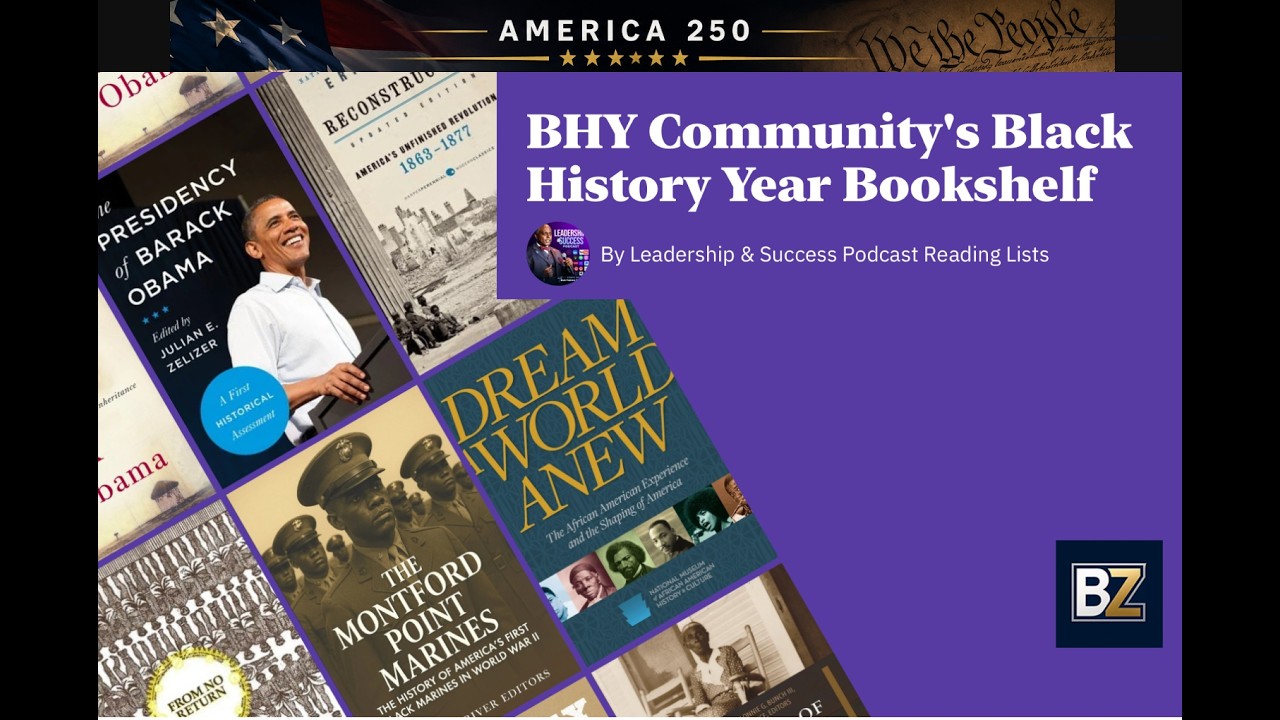
All right, thank you so much for watching this special broadcast about, uh, President Obama's 65th birthday. But as you've noticed, I've added a whole bunch of leadership principles and lessons into the podcast as well. I guess that's, that's who I am, that's what I do, you know, whether I'm when talking about a biography or reading a book or whatever it is, I always find a way to ask myself, what can I learn from this? What is it that I am learning right now that I can actually apply to improve my life, to be a better human being, to be a better leader, to be a better husband, to be a better father, to be a better employee, to be just a better person? Uh, what can I learn from this moment or from this challenge? So So hopefully what I've shared is going to be helpful. Let me know which leadership principle resonates with you and which one action you are going to take this week to improve your leadership. And I'm really grateful you've been here. Now I'm going to have a great podcast tomorrow. Actually, for this week, our friend in the spotlight is General Mark Hertling, US Army retired. I'm trying to get him on this podcast. Hopefully we're going to be able to to make that work here soon. Really a true American hero, great, great leader. This is really a leader of leaders. Somebody like that I'm going to be speaking to. I have quite privilege and honor of talking to Admiral Mike Studeman, U.S. Navy retired, is the best-selling author of Might of the Chan. It's going to be right here tomorrow afternoon. We're going to be talking about leadership, intelligence, and integrity in the age of great power competition. And just yesterday I found out that Admiral Stedman is actually the second admiral in his family. His father, Vice Admiral William O. Stedman, uh, is really a legend in intelligence circle. He used to be a CIA director and director of the NSA as well. Just, uh, amazing. So we're going to be talking to him tomorrow, and then the day after tomorrow I'm gonna have great privilege of speaking with Lieutenant General Larry Rich. We're going to be talking about from private to 3-star general, and this best-selling book, Shirts Off Our Back, Boots Off Our Feet. That's going to be quite a very intellectually stimulating conversation. And like I said during the podcast, I encourage everybody to get the book, the memoir, A Promised Land, It's a big, big book, but so many lessons you can get from that. And Obama also wrote, when he was running, The Audacity of Hope, right, fought on reclaiming the American dream. And of course, his very first book, which he wrote when he was a student at Harvard, Dream from My Father: Barack Obama, A Story of Race and Inheritance. And as you guys know, we have the digital bookshelf for this podcast, and you're going to see all of those books there. You're also going to see a special bookshelf just for President Obama. Since last year, I've been following the book recommendation he gave. I think it's about 21 books so far. You're going to see all of the books that President Obama recommend. Plus, it's on— and then I also have the Black History Year. Actually, let me, let me just show that to you really quickly. It's only going to take a second. Let me see if I can, uh, share my screen. Just a moment. Screen share. This way you guys would know exactly where to go, um, so many books that I recommend because we, we do read a lot of books here. Myself, I've read probably over 3,000 books now. But let's give it a moment. Here we go. Yeah, I think a book can definitely change your life. That is part of the reason why I have started a new newsletter. I called it BBB, Best Busy Books, where I kind of give you my thoughts on some of the books I have read and books recommended by members of the audience. But here, if you go to President Barack Obama bookshelf, you are going to be able to see again his free books plus all of the books that that he recommended. Every summer, President Obama recommends America to read, and one book he recommended this year I didn't know anything about, but really, really taught me a lot. This Land Is Your Land. I highly, highly recommend it. Beverly Cage actually wrote a, uh, ABC Best Book review for that one too, so check it out on my newsletter. And, uh, like I say, if you go back to the podcast list. One that I want to highlight is the most recommended book. These are books that have been recommended by people on my podcast over and over again. So far, it's about 60 of those. And I also want to highlight my Commander's Bookshelf. These are books I have read and I recommend to people who are in the military or in tech, those who want to be promoted to accelerate in their career, books that have really helped, helped me. Of course, uh, "Presented by My Books" is one of those too. I also want to recommend the, uh, Black History Year, uh, essential books. So this is a Black History Year podcast, so these are the 10 books— actually, it's about 13 now— that I recommend everybody to read in order to understand, uh, Black history, just the essential. And then we also have over 300 books now for the comprehensive bookshelf we are building for Black history. And if you have a book related to Black history that is going to help, whether it's about the military or civics or civil rights or history or whatever it might be, let me know and I'm going to be glad to add it there. That's also where I get the, the idea of which article I need to write, which Black history person I need to highlight in my daily news later. So I also have a mentorship bookshelf. It's about 38 books here. These are books that I recommend all of my mentees, people even in military or in cybersecurity. Again, people may not be able to read, right, over 300 or 400 books like, like I have on my commander bookshelf, but they can probably start with the first 38 or 40. So about 10, 10% of what I recommend, the essential one to really help you become the best leader you can be. For example, The 21 Laws of Leadership, Developing the Leader Within You, The Leader's Greatest Return by my mentor, Dr. John C. Maxwell. And, uh, yeah, I believe those are the ones I wanted to highlight. And here I have also a flag officer's bookshelf. These are books written by flag officers, admirals, and generals, uh, live.
So if you've ever been in a room when, uh, that's really true existential crisis hits an organization.
That has really impacted my life, leaders of leaders. Okay, that is all I wanted to share. Thank you so much for being with us this hour. This is the end of the podcast. And again, I hope to see you tomorrow when we have the great honor and privilege of speaking with Admiral Mike Studeman, bestselling author of Might of the Chan and the Vientiane Day After Tomorrow, So if you can join us too on Friday, we're going to be speaking to General Larry Rich from Private to Freestyle General and his best-selling book, Shirts Off Our Back and Boots Off Our Feet. All right, bye for now.
Oh, freedom. Oh, freedom. Oh, freedom over me. And before I'll be a slave, I'll be buried in my grave and go home to my Lord and be free. Oh, free.
Thank you for tuning in to the Leadership and Success Podcast with your host, Coach BZ. If today's episode added value to your leadership journey, be sure to subscribe, share, and join us again for more wisdom nuggets on how to lead better and achieve greater success. Remember, leadership is the most critical skill of our time. The The world will always need leaders to inspire others, drive innovation, and execute meaningful strategy. So why not count yourself among the bold leaders shaping the 21st century? Until next time, stay inspired, stay committed, and keep leading with excellence.
More from Bob

S250:E4🎙️LIVE 🇺🇸America 250: President Barack Obama Leadership, Service, and the Power of Hope





S5:E157🎙️ LIVE with CMD CMSgt Dennis L. Fritz, USAF (Ret.)(Multi Tracks Audio)



S5:E156🎙️ LIVE 🇪🇸 Leadership Lessons from the FIFA World Cup 2026 Champions (Multi Tracks Audio)

S250:E3🎙️ LIVE Leadership Lessons from America’s First Documented Family of African Descent 🇺🇸📖