S5:E156🎙️ LIVE 🇪🇸 Leadership Lessons from the FIFA World Cup 2026 Champions (Multi Tracks Audio)

Coach BZ celebrates Spain's 2026 World Cup win, then launches a Black History Year podcast series with daily episodes and a curated reading list of twelve essential books covering Reconstruction, redlining, and the Great Migration. He also honors his mentor General Colin Powell, whose mentorship movement grew from 200,000 to over 4 million relationships.
Chapters
Hi, I'm John Maxwell. When the top companies in the world are looking for trainers, speakers, and coaches, there's one name that stands above the rest, and that's Maxwell Leadership. Our certified team members have gotten proven results for companies all over the globe, and our reputation I'm proud to say, is second to none. Some of our members have risen to the top of their profession, including the one you're going to meet today. I proudly introduce you to my friend Bob Fabien Zinga.
Welcome to the Leadership and Success Podcast with your host, Coach BZ, where we help you lead with purpose and succeed with impact. If you're ready to grow into the kind of leader others want to follow, this podcast is for you. If you're determined to elevate your success and leave a lasting legacy, this podcast is for you. As my mentor, Dr. John C. Maxwell, reminds us, everything rises and falls on leadership. Our goal is simple, to inspire you, challenge you, and equip you with insights that can transform the trajectory of your leadership journey. Welcome aboard to another episode of the Leadership and Success Podcast with Coach BZ.
All right, the World Cup is over as of yesterday, and we do have a champion, and that's Spain, everyone. They beat out Argentina, and I have a few leadership lessons from FIFA World Cup. 2026 champion of the team of Spain. I think there is a lot they can teach us about leadership. Uh, somebody had asked me the other day, well, Coach Bizzy, how come everything you talk about is leadership? How come you find leadership in everything? Can't you just enjoy the, the game and be done with it? Well, I kind of can, but I think, I feel like that's what leaders do, right? We find leadership principles and lessons in everything, uh, we do, everything that surrounds us. I remember I was a junior officer when, um, One of my best keepers at the time, he was a commander, Commander Scott. He is one who taught me to look for leadership in everything, in movies, in books, in everything we did. And since that time, I've been looking at the world just a little bit differently. So I think the, uh, the team of Spain can definitely teach us a lot about leadership, and we are going to get to it in just a moment. Before we do, as is our tradition, I'd like to take a moment for gratitude, right? I think gratitude is extremely important, especially in the military, because so many people, it's about 21, 22 service members and veterans commit suicide every single day. And as you know, we are in the midst of a war here with Iran, and there's been more death, and it's a lot of bad news, but I want us to just be centered and think about one thing that we are grateful for. And for those who've been watching the show since, uh, June 10th, 2026, I've really been grateful for freedom every single day, and today is no different. So if you would, uh, you know the drill, maybe close your eyes and put yourself in your happy place and, uh, uh, think about one thing that you are grateful for right this very moment. And for me, it's freedom, because freedom is so precious. Pat Henry said, right, give me liberty or give me death. If I can't be free, you, you may as well just kill me, right? But the thing is, freedom is not free. Freedom is not free. There is somebody that paid the price for you to have the freedom that you have today. And some people pay the ultimate price. So I want to remember all of the service members who gave their life starting in the war with Iran. Officially, we know of 13 initially, and since then there's been at least 2 more. First, Lieutenant Tyler James Friant, and also Private Isabella Gonzalez. Private Gonzalez really breaks my heart. She's only 19, 19 years old. My youngest daughter is 18, she just graduated from high school. Just think about my little Zoe, one year older, going to fight for our country and dying like that. Really, my heart goes out to her family and the family of all of the young people who have really sacrificed their life for America, for our country. I am in mourning. Today, and may their sacrifice not be in vain. That's one thing when you join the military, you really put your life at risk for your country, for your people. And I just want to take one moment of silence for all of those who have given their life for this country during the Iron Wall.
CENTCOM statement on recently fallen, missing U.S. service members. Story by— for the U.S. Central Command Public Affairs, Tampa, Florida. On July 17, 2 U.S. service members in Jordan were killed in action as U.S. Central Command and partner forces defended against Iranian ballistic missile and drone attacks. Additionally, 1 service member is currently missing in action. 4 American service members were medically evacuated to Jordanian hospitals. They have since been discharged. Other personnel who were evaluated for minor injuries have returned to duty. Out of respect for the families, CENTCOM will withhold additional information, including the identities of the fallen warriors, until 24 hours after the next of kin have been notified.
So I must say, may God bless America and its armed forces. And, uh, holy my heart goes out for all of those young people who have given their lives. For this country in 2026 since the Iron Wall started. Um, all right, so let's now talk about leadership. I am going to play the podcast. It is based on the article I just wrote this morning about leadership lesson from FIFA World Cup 2026 champion. Really, it's about system over superstar, and I think that's a big, big difference. Argentina has had one very, very big star, right? The superstar, uh, Messi is bigger than life, but that wasn't enough for Argentina to win, uh, this time. There is something that the Spanish team can really teach us about leadership. So let's get into it. This is gonna last about, um, looks like about 30 minutes or so. So as you are listening, uh, take notes and, uh, tell us in the, uh, comment, uh, where are you guys, uh, joining us, uh, from. What city, what country. And I invited all of my friends on LinkedIn who's connected to me from Spain and from Argentina as well. Let us know that you are watching. Let us know what you are grateful for today. And also let me know as you listen to this podcast, 3 to 5 takeaways from today's lesson. And I will be back right after that. So see you actually No, it's gonna be 30 minutes. It's gonna be almost an hour. So, uh, here we go.
So picture the scene. The date is July 19th, 2026. You are watching the FIFA Men's World Cup final completely unfold.
Oh man, what a game.
Right. It is Spain versus Argentina. We are talking about two absolute undeniable titans of the sport, and they are just carrying the weight of their respective nations on their shoulders.
Yeah, the pressure is just unimaginable.
Completely. And we have long passed the standard 90 minutes of regulation time. The match is completely deadlocked.
Just entirely frozen.
Exactly. The tension in that stadium is so thick, so palpable, it feels like it might actually, you know, crack the concrete. If you look closely at the broadcast, you can literally see the exhaustion just etched into the players' faces.
Oh yeah.
Lungs are burning, muscles are cramping.
They are running on absolute empty, fueled purely by adrenaline and willpower at this point. It is the 106th minute of extra time. The margin for error is absolutely zero.
None.
One mistake and it's over.
Right. And then, in a flash of movement, it happens. A breakthrough. A goal. The stadium absolutely erupts into pandemonium.
It's cinematic. It really is.
It is.
But, uh, if we peel back the layers of that cinematic moment, there is a very specific detail that matters more than anything else for our deep dive today.
Yeah, the identity of the goal scorer.
Exactly. The player who manages to break that deadlock, the one who scores that championship-winning goal, is not the marquee superstar. It's not the guy whose jersey is currently hanging in millions of storefronts around the globe.
Right, it wasn't the face of the franchise.
No. It is Ferran Torres. A substitute. A player who, if we look back just a few weeks prior, actually lost his starting position during this very tournament.
Which, I mean, that completely shatters the conventional narrative we usually expect in moments like this.
It really does.
It wasn't the focal point saving the day. It was a player who was essentially relegated to a supporting role, coming off the bench exactly when the collective unit needed him the most. And he delivered at the highest possible level under unimaginable pressure.
And that reality right there, that is the launching pad for our mission today. We are not here to give you a sports recap or, you know, a breakdown of soccer tactics.
Mm-hmm.
No, definitely not our lane.
Right.
We are looking at this entire event through a fundamentally different lens today, thanks to an incredibly rich piece of source material we are unpacking.
Yeah, this is a great one.
It is. We have an article written by Bob Fabien Zinga. He goes by BZ, and he brings a fascinating dual perspective to this. He is a US Navy information warfare commander.
Wow.
Yeah.
And he is also a high-level cybersecurity executive.
Mm-hmm.
So he is a guy whose entire professional life revolves around managing complex systems, neutralizing catastrophic threats, and coordinating massive groups of people in these incredibly high-stakes environments.
So he's looking at this game totally differently than a sports pundit would.
Exactly. He watched that exact moment in the 2026 World Cup final, and he didn't just see a great goal. He saw an absolute masterclass in human leadership and organizational structure.
That is such a cool way to look at it.
Right. So our mission today is to extract the profound insights Zinga observed in Spain's victory and map them directly onto your everyday life.
Yeah, because this applies to everyone.
It does. Whether you are leading a massive division at a Fortune 500 company, or maybe you're trying to organize a hyper-local community event, or you're just fascinated by how highly effective groups of human beings manage to function. Without tearing each other apart.
Right. Which is a miracle in itself.
Honestly, it is. But there is a blueprint here for you.
And, you know, the cross-pollination of ideas is what makes Zinga's analysis so potent. I mean, he is bridging worlds that most people keep in totally separate mental compartments.
Yeah.
You don't usually mix those up.
No. Elite international athletics, high-stakes military operations, and corporate cybersecurity.
Yeah.
But by overlapping them, he isolates the absolute core denominator.
The human element.
Exactly. He reveals the underlying mechanics of how human beings combine their efforts to achieve things that are, quite frankly, impossible for any one person to accomplish alone.
Okay, let's unpack this right out of the gate, because I have to admit, my immediate reaction pushes back against this a bit.
Oh, really? How so?
Well, I think a lot of people listening might feel the same way. As a society, we are utterly obsessed with the concept of the hero leader.
Oh, absolutely.
Right. We are fed this cinematic narrative from childhood. We love the story of the one charismatic visionary CEO who parachutes into a failing company, fires the dead weight, and single-handedly turns the stock price around.
The Steve Jobs narrative.
Exactly. Or the superstar athlete who supposedly puts the entire franchise on their back, scores 60 points, and wins the ring through sheer individual brilliance.
Right. The Michael Jordan effect.
Yeah. And from a purely pragmatic resource allocation standpoint, I have to ask, isn't relying on a genius superstar actually the most efficient way to win?
I mean, it seems like it would be.
You go out, you spend the money, you find the most talented, brilliant person on Earth, you put them in charge, you give them the ball, and everybody else just gets out of their way. Why overcomplicate it?
Well, what's fascinating here is it's completely understandable why we are drawn to that model. Yeah. Because like you said, it is intellectually simple.
It's a clean story.
Exactly. It provides a very clean, easy-to-digest narrative. But the problem is that relying on that hero is, in reality, the most profoundly fragile way you can possibly structure an organization.
Fragile?
How so?
Zinga's central thesis fundamentally rejects that Hollywood narrative. He calls it system over superstars. When you architect an entire ecosystem around one singular entity, whether that is a brilliant founder, a rainmaker salesperson, or a star forward on a pitch, you are intentionally designing a massive, glaring single point of failure.
Oh, I see. A single point of failure.
Right. The entire organization becomes incredibly brittle. That hero, no matter how talented they are, inevitably becomes a bottleneck.
Because everything has to run through them.
Exactly. And the rest of the team realizes that their input is secondary, so they just stop taking initiative. They stand around waiting for the genius to issue directions.
Which kills momentum.
It absolutely does. And if we look at the reality of life, what happens when that the hero gets the flu? Or they experience severe burnout?
Or they just quit.
Right. Or, in the context of our World Cup example, what happens if they suffer a severe ankle sprain in the first 10 minutes of the match?
Game over.
Game over. The hero goes down, and because there is no system underneath them, the entire collective apparatus instantly collapses. Spain's victory is not a story of individual brilliance overcoming the odds.
Right, because it was a bench player.
Exactly. It is the ultimate case study in engineering a resilient system that does not require a hero to save it.
Okay, I see what you're saying. The hero model works brilliantly right up until the exact second it doesn't, and then it is a complete catastrophe.
Big brain nightmare, yeah.
Which naturally pulls us away from just looking at that 106th-minute goal and forces us to look at the structural philosophy that allowed Torres to be in that position in the first place.
Right, the system that produced the moment.
Yes.
And this brings us to the first major pillar of Zinga's observations: the necessity of building a framework that is exponentially stronger than any individual contributor.
Which is easier said than done.
Oh, for sure.
Now, we need to be very clear here so we don't distort the reality of the situation. It is not that Spain lacked talent.
Oh no, they were stacked, right?
They were not a ragtag group of underdogs. They had massive generation-defining world-class talent on that roster.
Yeah, guys like Rodri, Lamine Yamal, Nico Williams.
Exactly. These are superstars in their own right. But Zinga makes a crucial distinction here. Their ultimate competitive advantage wasn't just the raw sum of their individual talents, right? It was a property that emerged from how they interacted. And he uses a very specific word for it. He calls it coherence.
Coherence. I love that. It's a brilliant way to frame it because it moves away from the vague idea of just teamwork and describes a really tangible, state.
Right.
Teamwork is on a motivational poster. Coherence sounds mechanical.
Exactly. In physics, coherence refers to waves that are perfectly aligned and working in phase with each other, amplifying their power.
OK, I'm with you.
In a human system, coherence means that every single member possesses a deeply internalized shared understanding of the overarching mission.
They aren't just doing tasks.
Right. They don't just know their specific job. They understand the entire architecture of what the team is trying to accomplish.
Which changes how how they play entirely.
It changes everything. They understand the philosophy of how they want to play. They implicitly know how they are expected to react when the environment suddenly shifts or pressure is applied.
Yeah.
And they have an intuitive sense of where their colleagues will be at any given moment. They can operate at maximum speed because they do not have to pause, look to the sideline, and wait for a manager to micromanage them with isolated instructions.
I love that distinction. They aren't waiting for permission to make the optimal choice.
No, they just make it.
It reminds me of the difference between an orchestra waiting for the conductor's baton for every single note versus a jazz ensemble.
Oh, that's a great analogy.
Right. A jazz group knows the core progression so well they can improvise and adapt to each other in real time without anyone explicitly telling them what to do.
That is a phenomenal comparison, and it aligns perfectly with how Zinga connects this sports achievement to high-level military strategy.
Oh yeah, tell me about that.
Well, he explicitly references General Stan McChrystal's concept of a team of teams.
Right, the book.
Yes, the book and the philosophy. McChrystal developed this while commanding special operations forces in incredibly complex, hyperfluid environments.
Where things are changing by the second.
Exactly. And he realized that the traditional rigid military chain of command, you know, where information slowly trickles up to a general, the general makes a decision based on old information, and the order that slowly trickles back down, was completely failing.
Because the enemy was moving too fast.
Right. It was failing against decentralized, adaptable networks. Success in a fast-moving environment, whether that is a volatile battlefield, the final moments of a World Cup, or a rapidly shifting modern corporate market, requires abandoning that rigid hierarchy.
So what do you replace it with?
McChrystal argues for cultivating what he calls shared consciousness.
Shared consciousness.
Yeah. You empower your people with radical transparency. You ensure everyone from the top down to the newest recruit understands the broader strategic intent.
Okay.
And once they have that shared consciousness, you trust them to execute and adapt within that framework in real time.
Which, I mean, that fundamentally redefines what leadership actually looks like on a day-to-day basis.
It really does. It flips it on its head.
We often fall into the trap of confusing leadership with a title on an organizational chart. We think the leader is the person with the corner office or the captain's armband.
Yeah, the person at the top.
But Zinga argues that leadership is a behavior. It's an action. It's a state of taking ownership. And to achieve that shared consciousness we just talked about, you have to create what he calls leadership density.
Yes, at every single level of your organization.
I want to pull an analogy directly from Zinga's world of cybersecurity here because it makes it so, so clear.
Oh, let's hear it.
Think about the difference between a legacy centralized server architecture and a modern decentralized cloud network.
Okay.
Yeah.
Imagine you have a massive global enterprise and every piece of data, every transaction, every communication routes through one massive central server sitting in a basement somewhere.
Right. One big machine.
That server is your hero leader.
Mm-hmm.
It is incredibly powerful.
Yes.
Mm-hmm.
But if that one server experiences a power surge, or like a critical hardware failure.
The entire global company goes completely dark in an instant.
Exactly. It is a total operational catastrophe. Yeah. But if you build a system with high leadership density, you are building a decentralized mesh network.
Right. A cloud.
You have autonomous nodes of capability distributed everywhere. So if one node goes offline, the network doesn't panic. It just seamlessly reroutes the data through the other capable nodes.
And the end user barely even notices a stutter.
Exactly. Zinga points out that a naval command cannot possibly function if the commanding officer is required to make every single micro-decision.
It would paralyze the ship.
Completely.
Yeah.
And we can bring this right into our personal lives too. Think about a family unit.
Oh, that's a good point.
If a family relies on just one person to carry 100% of the emotional labor, the logistical planning, the financial stress, and the crisis management—
That person is eventually going to break.
They will.
Yeah.
It is just an unsustainable architecture.
It is deeply unsustainable. And if we connect this to the bigger picture, it highlights a fundamental misunderstanding of power.
How so?
In insecure systems, leaders hoard power because they think it makes them indispensable.
Oh, job security.
Right. But in mature systems, leadership is entirely about multiplying capability. Zinga anchors this idea with a quote from the well-known leadership author, John Maxwell.
Okay. What does he say?
He famously stated, "Everything rises and falls on leadership." Now, people often misinterpret that quote to mean that the person at the very top is the sole determinant of success.
Right.
The hero again.
Exactly. But the deeper, far more actionable implication of Maxwell's statement is that if an organization's survival depends on leadership, then the only logical way to ensure long-term resilience is to drastically multiply the volume of leaders you have operating within the system.
Because one leader isn't enough to hold up the whole building, right?
You do not want a massive herd of passive followers who are just standing by waiting to be rescued or told what to do. You want a dense concentration of professionals who intuitively take ownership of the problems in front of them.
So let's pause here and really apply this. I want you, the listener, to think about your own daily environment for a second. Yeah, let's bring it home and ask yourself the incredibly pointed coaching questions that Zinga poses in his analysis. First, does your team actually understand the overarching mission beyond just the mechanics of their individual daily tasks?
That's a huge one.
Meaning if you went to your junior analyst or, you know, your newest volunteer, could they articulate why they are doing what they're doing and how it connects to the big picture?
Most of the time the answer is no.
Sadly, yeah. And here's the truly uncomfortable question, the real stress test. Would your organization, your department, or your community group continue to function effectively tomorrow morning if the most visible, high-profile leader was suddenly and unexpectedly absent?
Oh, wow. That question is the ultimate mirror for any organization.
It really is.
If the honest answer to that question is no, then you have to face a hard reality. No, you do not actually have a system. You have a dependency.
And dependencies break.
And dependencies are always inevitably exposed by time and pressure.
Okay, so this brings up a really fascinating friction point. If we agree that a highly functioning system requires this deep, dense network of capable leaders everywhere, we have to ask who exactly is being allowed into this network, right?
Who gets to be a leader?
Because historically in corporate environments, leadership density just meant promoting the people who'd been sitting in a chair the longest.
Pure tenure.
Purely based on tenure.
Yeah.
But Zinga points out that a truly resilient system requires blending vastly different perspectives. Which forces us to look closely at how a system handles the generational divide.
This is arguably one of the most compelling and frankly universally applicable observations in his entire analysis.
I couldn't agree more.
If we look at the demographic makeup of that victorious Spanish roster, the contrast is just staggering.
It's wild.
On one side, you have Lamine Yamal. This is a young man who is playing in Euro 2024 and this 2026 this World Cup while he was just 17 years old.
17. I mean, I was barely passing algebra at 17.
Right. He is a literal teenager carrying the expectations of a nation on a global stage.
Mm-hmm.
And sharing the pitch with him, you have deeply experienced, hardened veterans like Rodri.
Who is an absolute legend.
Right. A player so profoundly impactful that he won the FIFA Golden Ball for his influence across the entirety of the tournament. So you have raw, unprecedented youth operating simultaneously alongside seasoned mastery.
And here's where it gets really interesting, because the translation from sports to our daily lives is so vital here. In the modern workplace, the friction between generations is absolutely explosive right now.
Oh, it's everywhere.
You see it in almost every industry. You have the veteran employees, the boomers or Gen Xers, who often feel that the incoming generation is you know, entitled, lacks discipline, and refuses to respect the institutional knowledge that took decades to build.
The nobody-wants-to-work-anymore narrative.
Exactly. And on the exact opposite side, you have the Gen Z and millennial professionals who look at the veterans and see people who are completely stuck in the past, entirely resistant to new technology, and clinging to outdated methodologies just because that's how it's always been done.
Right. OP boomer.
Yes, it is a recipe for constant exhausting conflict. But Zinga observes something incredibly insightful about how Spain managed this. He notes that experience, when it is stripped of openness and curiosity, simply metastasizes into rigidity.
It becomes a barrier to growth.
But conversely, innovation and youth, when stripped of context and historical understanding, just becomes recklessness.
That dichotomy is so precisely stated. Rigidity on one end of the spectrum, recklessness on the other.
Right.
A system dominated entirely by veterans becomes too slow and predictable to survive in a changing landscape.
They can't pivot.
No, they can't. But a system dominated entirely by youth burns itself out making catastrophic, easily preventable mistakes.
Because they don't know the history.
Exactly. The antidote to that friction, the mechanism that Spain utilized so effectively, is something we can call reciprocal mentorship.
Reciprocal mentorship. I like that.
It completely dismantles the traditional top-down hierarchy where the older generation simply dispenses wisdom downhill to the grateful, silent youth.
Right. It's not a one-way street.
No, it requires treating mentorship as genuinely a two-way street. Let's look at what the experienced players like Rodri actually bring to the system.
Okay. What do they bring?
It isn't just physical skill. It is profound pattern recognition. An experienced veteran has seen every tactical trick, every shifting momentum swing, every cheap shot, every high-pressure scenario imaginable.
They've been there, done that.
Exactly. They possess a deep tactical maturity and perhaps most importantly, emotional regulation. When the environment becomes chaotic, their central nervous system does not panic.
Which calms everyone else down.
Right. It exerts a stabilizing force on everyone around them.
Right. So they provide the anchor. But if they are the anchor, What is the 17-year-old providing that the veterans cannot? Because a mentor relationship usually implies the older person is the only one giving value.
Well, the 17-year-old brings elements that inevitably erode with time.
Like what?
They bring absolute, unadulterated fearlessness. They aren't burdened by the memory of past failures because they don't have any.
That's true. They don't know what they don't know.
Right. They bring physical attributes like explosive speed. And crucially, they bring unorthodox emerging skills and perspectives that the older generation literally never had the opportunity to learn during their formative years.
They're natively fluent in the new way of doing things.
Exactly. They challenge fundamental assumptions that the veterans might not even realize they are making. The true job of the leader, the primary function of the system itself, is to architect an environment where that extraordinary disruptive young talent is completely trusted, respected, and unleashed.
But within boundaries, right?
Yes. This is the critical balancing act. The system must ensure that the youth are never expected to carry the structural weight of the entire institution alone.
Because that would just crush them.
It would. You do not place the ultimate fate of a nation or a multimillion-dollar corporate initiative squarely onto the shoulders of a teenager or a recent college graduate.
Right.
That's just irresponsible.
It is. You design a system around them that allows their brilliance to shine and innovate, while the veterans provide the invisible structural integrity that prevents the whole thing from collapsing when a mistake is inevitably made.
Wow.
Yeah.
That requires an astronomical level of self-awareness and frankly, ego removal from everyone involved.
Huge amounts of ego removal.
The veteran has to admit they don't have all the answers, and the rookie has to accept they don't have all the context.
And neither wants to admit that.
No. So translating this to your own life and your own organization, Zinga pushes you to ask some very difficult questions.
Let's hear them.
First, are the senior, highly tenured members of your team actively and generously transferring their hard-earned wisdom to the next generation? Or if we are being brutally honest, are they quietly hoarding their knowledge and guarding their status because they are deeply terrified of becoming obsolete?
Oh, that hits hard. A lot of people hoard knowledge.
They absolutely do. And looking at the other side of the equation, are you cultivating a culture that actively invites and rewards younger professionals for respectfully challenging outdated processes?
Do they have a voice?
Right. Or do you just pat them on the head and tell them to wait their turn until they've paid their dues?
It is incredibly difficult to achieve because human ego naturally gravitates towards self-preservation.
Exactly.
To get these vastly different generations with entirely different communication styles and values To actually collaborate, take risks, and step up to cover for one another, you have to engineer a highly specific psychological environment.
You can't just mandate it in a memo.
No, you cannot just say, "We're a team now." Yeah. You have to build the mental infrastructure that makes it possible.
Which perfectly sets up the next critical layer of Zinga's analysis.
Yeah.
The deep psychology of high performance and the intricate art of managing the bench.
The bench is so important.
It really is. Let's dive into the concepts of psychological safety and reserve readiness that he identified. Zinga makes a profound distinction when discussing how a high-performance culture operates.
What's the distinction?
He emphasizes that being highly demanding is fundamentally different from being demeaning.
Oh, wow.
We often conflate the two. We assume that to achieve elite results, a leader has to be ruthless, abrasive, and, you know, publicly punishing the whole tough love coach trope. Right. But you can absolutely maintain incredibly exacting standards. You can be a fierce, unrelenting competitor while still cultivating an environment where individuals feel completely safe to admit a mistake without the paralyzing fear of public humiliation or vindictive retaliation.
That psychological safety is not a soft, HR-driven luxury. It is a hard neurological prerequisite for elite performance.
It's biological.
It is. And it connects intrinsically to the concept of managing the bench or the reserves. Let's trace this back to the catalyst of our entire conversation, Ferran Torres.
Right.
The guy who scored the winning goal.
Exactly. He is the man who scored the winning goal in the 106th minute. Historically, he is only the second substitute in the entire history of the Men's World Cup to score a winning goal in the final match.
That is an insane statistic.
It really is. So I want us to really pause and analyze his internal mental state leading up to that moment. He began the tournament as a starter.
Right.
And then he lost that role.
Ouch.
Yeah. In the hyper-competitive, ego-driven stratosphere of elite international sports, losing your starting position on the global stage is a devastating psychological blow.
It's publicly embarrassing.
It is. It is a direct hit to your identity.
Yeah.
Under normal circumstances, in a standard fear-based culture, a player in that situation would emotionally check out.
They'd just disconnect.
Right. They would retreat inward to protect their ego. They would sit on the bench, silently sulking, radiating negative energy. And if we are being completely honest about human nature, they might even subconsciously hope that the player who took their job makes a catastrophic mistake just to validate their own worth.
Oh man, that's dark. But it is so true. We've all seen that happen in the office.
Yes.
But the reality is he didn't do that. He didn't check out. When his number was finally called in the most critical, high-leverage moment imaginable, he was entirely, completely engaged in the mission.
He was ready.
He was mentally sharp, physically prepared, and emotionally aligned with the team's objective.
Exactly. And we have to ask why. Why didn't he mentally abandon the team?
Was he just a really good guy?
Well, it wasn't just because he happened to be a uniquely selfless person. It was because the system's culture actively prevented that isolation.
How does a culture do that?
The neuroscience behind this is fascinating. Fear literally and biologically narrows human attention.
Really?
Yes. When our brains perceive a threat, whether that is a physical predator or the social threat of humiliation and retaliation in a workplace, our amygdala hijacks the system.
Fight or flight.
Exactly. Our vision becomes tunnel-like. Our cognitive flexibility plummets. We stop looking for creative solutions and we start hiding problems, hoping nobody notices.
Because we're just trying to survive.
Right. But a culture of psychological safety communicates a radically different message to the brain. In Spain's case, the culture communicated a definitive, unwavering message to Torres: your specific role on the pitch may have temporarily changed, but your intrinsic value to this organization remains absolute.
I wanna highlight that phrase because it is incredibly powerful. Your role changes, but your value remains.
It changes everything.
It really does. If a leader can genuinely instill that belief in their team, the potential is limitless. I was trying to think of a way to conceptualize this idea of deeply developing your bench, the people who aren't the star players right now. And it strikes me that it's fundamentally similar to the logic of carrying a spare tire in your vehicle.
Oh, okay. Let's unpack that.
Think about the behavior of a responsible driver. You do not wait until you are driving 75 miles an hour down a crowded interstate, hear a massive violent pop, and completely lose control of your vehicle to suddenly think to yourself, "Wow, this would be a really fantastic time to drive to a mechanic and purchase a spare tire." That is absurd.
It is vastly too late.
Right. A mature system requires that you purchase the spare tire, you actively check the air pressure in that tire every few months to ensure it's viable, You memorize where the jack is located, and you learn the physical mechanics of changing the tire on a sunny afternoon in your driveway long before the crisis ever occurs.
Before you're on the side of the highway in the rain.
Exactly. Translating that to a professional environment, a leader must be proactively developing their backup responders. They must be aggressively cross-training responsibilities so multiple people understand critical workflows, and they must be actively identifying and nurturing successors during periods of relative calm and prosperity.
That analogy captures the mechanics perfectly because it emphasizes preparation over reaction.
Right.
Zinga articulates a principle here that every manager needs to internalize. Never confuse not starting today with not mattering tomorrow.
That's a great line.
It is. Almost every organization on earth claims that every single employee matters. It is a standard corporate platitude.
Yeah, you see it on the website.
But if you look at their actual resource allocation, they almost exclusively dedicate their visibility, their premium coaching and their developmental budgets to the small core group of current starters or top performers.
The golden children.
Exactly. The bench is effectively ignored. Then inevitably, a crisis hits. A top performer resigns or a massive new project lands and leadership frantically turns to the bench demanding that someone step up immediately.
And when they can't.
When that neglected employee inevitably struggles or fails to perform at an elite level, Leadership judges the employee as incompetent or unprepared, but that is a massive misdiagnosis.
It's the leader's fault.
Yes, it is not a failure of the employee's latent talent. It is a profound structural failure of leadership. The system failed to prepare the asset it claimed to value.
So bringing this directly to you, the listener, who exactly is the Ferran Torres in your ecosystem?
Who's on your bench?
Right. Who is that individual sitting in the background? Maybe they aren't the charismatic presenter. Maybe they are quiet in meetings. Maybe they aren't in the spotlight today. But who possesses the latent capability to absolutely determine the success or failure of your most critical project tomorrow?
We all have someone like that on the team.
We do.
And more importantly, are you providing them with genuine, meaningful coaching and developmental resources right now, or are you just stringing them along with empty, vague promises about future opportunities while entirely ignoring their actual growth?
It is a question that reveals the true integrity of a system's leadership.
It really is.
And it naturally propels us into examining how a system reacts when the pressure isn't just internal ego management, but external, unmitigated adversity.
Oh, this is fascinating.
We have established how this system treats its individuals when their roles shift. But how does this dense, How does a psychologically safe, highly coherent network handle a collective failure?
Because it is important to remember that Spain did not just effortlessly waltz through this tournament untouched.
No, they absolutely did not. And this brings us to a crucial phase of Zinga's analysis, focusing on the mechanics of resilience and the philosophy of proactive defense.
Let's look closely at the concept of resilience first.
Okay.
Spain's opening match of the 2026 World Cup was against Cape Verde, and it ended in a 0-0 draw.
Wow, which is a shocker.
Right. Context is everything here. For a historical powerhouse like Spain, possessing that level of generational talent, playing to a scoreless draw in their opening match is perceived as a massive, humiliating disappointment.
The media must've been brutal.
Oh, you can only imagine the external pressure. The international sports media was undoubtedly tearing them apart, questioning the manager, doubting the roster choices, predicting an early exit.
Complete panic.
Yes, panic. But Zinga makes a brilliant observation about the nature of true resilience in the face of this kind of setback. He notes that we often mistakenly define resilience as mere toughness, just clenching your jaw, suppressing your emotions, and stubbornly pushing through the pain.
The macho view of resilience.
Exactly. But organizational resilience is vastly more sophisticated than that. It is the systemic ability to absorb a significant disruption, process the incoming data to learn from the failure incredibly rapidly and dynamically reorganize your resources to address the flaw.
All without losing your core identity or panicking.
Right.
They absorbed the shock without fracturing.
They didn't panic. They didn't fire the coaching staff in their minds. They didn't suddenly abandon the entire tactical philosophy they had spent years building just because of one statistically poor outcome.
They did the process.
They trusted the system to self-correct. And that deep systemic trust ties directly into the next major concept, the reality that great defense must start early.
Oh, the proactive defense.
Yes.
When we think of defense in soccer, we usually picture desperate last-second tackles inside the penalty box, right next to the goal.
Goalie making a diving save.
Exactly. But Spain's defensive structure didn't operate in a state of constant emergency near their own net. Their defense initiated all the way on the opposite side of the pitch, essentially in the offense. Defensive zone.
Defending while on offense.
Yes. It began with the discipline of maintaining possession of the ball, executing highly coordinated positional structures, and aggressively applying pressure to the opponent long before the threat could even materialize into a dangerous situation.
Which chokes the opponent out.
Precisely. This philosophy of proactive, disciplined containment is precisely what allowed them to systematically dismantle heavyweight opponents like Austria, Portugal, Belgium, France, and eventually Argentina.
Okay, I have to jump in here because while I totally understand how that works on a soccer pitch, translating a high-press soccer defense into the reality of a normal Tuesday morning at an accounting firm or, you know, a marketing agency feels like a bit of a logical stretch.
It does sound a bit abstract.
So what does this all mean? How does a normal team implement a proactive defense? Without just constantly looking over their shoulders in fear.
Well, it does sound abstract until you process it through the specific lens of Zinga's professional expertise in military cyber warfare and enterprise cybersecurity.
Ah, right, the cyber angle.
In the realm of cybersecurity, if you define your defense as the actions you take the moment you detect a malicious hacker actively rummaging through your sensitive databases and exfiltrating client data—
You're already screwed.
You have already completely lost the war. That is not defense. That is postmortem damage control.
Wow.
Yeah.
True. Robust defense begins in the realm of governance. It starts with the meticulous design of network architecture, the strict enforcement of identity and access management, and the relentless ongoing security awareness training of every single employee.
Yeah.
Years in advance.
Months or even years prior to a threat actor ever targeting the organization. In a highly mature system, the incident response effectively begins long before the actual incident ever occurs.
I see. It's the philosophy of building the firewall before the fire actually breaks out. It's anticipating the vulnerability before it can be exploited.
Precisely. And if we want to translate that out of the IT department and into the broader office environment, proactive defense is essentially extreme operational foresight.
Like what?
Well, in an HR department, proactive defense means establishing clear, equitable conflict resolution protocols before two key employees develop a toxic relationship that threatens a project.
Oh, that makes sense.
In a supply chain context, proactive defense means auditing your vendors and securing backup suppliers, even when your primary vendor is delivering perfectly, so you aren't held hostage by a sudden global shipping crisis.
Right.
You're not scrambling at the last minute.
Exactly. The ultimate unglamorous takeaway that Zinga presents here is a hard truth about human psychology. The best crisis is the one your preparation prevented from ever becoming catastrophic.
But nobody rewards you for that.
That's the problem. We have a severe societal tendency to underinvest in preventative preparation because prevented disasters do not generate thrilling headlines, right? No one throws a parade or awards a medal for the catastrophic crisis that quietly didn't happen on a Tuesday.
True.
But mature leaders understand that quiet, rigorous, almost boring preparation is the exact mechanism that creates visible, awe-inspiring resilience when the inevitable storm finally hits.
I think that is a concept that demands some real introspection from everyone listening. You really need to sit with that idea and ruthlessly audit your own systems.
Yeah, take a hard look.
What specific failure in your life, your project, or your organization are you comfortably assuming will simply never happen? Where are your hidden single points of dependency?
We all have them.
If a highly specific third-party vendor suddenly goes bankrupt tomorrow, or if a niche piece of software that you rely on suffers a catastrophic outage, or— and this is a big one— if the one key employee who actually knows how to run the legacy billing system decides to quit, does your entire operation come to a grinding, chaotic halt?
Because if the answer is yes, right?
If the answer is yes, your defense isn't starting anywhere near early enough.
Yeah.
You're waiting for the attacker to be inside your penalty box.
It is a phenomenal diagnostic question.
It really is.
And while having that tactical preparation, the cross-training and the proactive strategy is absolutely crucial to survival, There is a binding agent that holds all of these disparate elements together. You can possess the most sophisticated tactical playbook in the world, but if you do not cultivate the correct overarching environment, the entire structure eventually corrodes and collapses.
Which brings us into the profound realm of overarching culture.
Exactly. And perhaps more importantly, what that culture represents to the wider world.
Okay. This moves us into a fascinating exploration of culture and representation. Let's look at Zinga's observation that culture inevitably beats talent when talent refuses to operate cohesively.
It's the classic talent versus hard work debate, but on a systemic level.
Right.
He makes a point that we really need to internalize.
Mm-hmm.
Culture's not a catchy focus group-tested slogan plastered on a break room wall.
No, it's not a poster.
It is not a slide in an HR onboarding presentation that everyone ignores.
Yeah.
True culture is the living, breathing pattern of repeated behaviors.
Yes.
It is explicitly defined by what behaviors get celebrated and rewarded and what toxic behaviors get quietly tolerated by leadership.
That last part is key. What you tolerate becomes your culture.
Exactly. And to engineer the winning culture that Spain displayed, their manager, Coach Luis de la Fuente, had to oversee an operation that was exponentially larger and more complex than just the 11 highly visible athletes running on the grass.
Oh, absolutely. The players on the pitch are merely the tip of a very large unseen spear, right? To achieve that level of performance, Coach De La Fuente was essentially managing a sprawling multidisciplinary corporation. He was coordinating tactical planners, sports psychologists, advanced medical teams, data analysts, and logistical coordinators.
So the entire army—
it is— you have dozens, perhaps hundreds of professionals whose quiet behind-the-scenes precision directly enables the loud public performance. Yeah, a truly mature leader recognizes that cohesion cannot just exist among the stars. It must permeate the entire support structure. The leader must ensure that the equipment manager and the data analyst understand exactly how their specific localized tasks directly impact the ultimate mission of winning the World Cup.
I was trying to find an analogy that isn't just the standard corporate jargon, and it makes me think of, um, the production of a massive Broadway theatrical show.
Oh, I like that.
When you go to a theater and look at a brilliant stage production, everyone in the audience praises the lead actors. They get the applause, they get the reviews. They are the highly visible performers in the spotlight.
Sure, they're the faces of the show.
But behind that proscenium arch, there is an incredibly complex, high-stakes system operating in the dark. There are stage managers calling hundreds of cues, Lighting technicians, costume designers, and riggers moving massive set pieces inches above people's heads.
If they mess up, someone gets hurt.
Exactly. The lead actor can deliver the greatest monologue in the history of theater, but if the rigger misses a cue and a set piece doesn't fly in on time, the illusion is completely shattered. The show fails. The culture of the production has to value the precision of the stagehand just as much as the talent of the actor, or the whole thing falls apart.
That is a remarkably accurate depiction of how a true system operates. It relies on the absolute interdependency of visible and invisible roles.
It really does.
And when you build a system that is that coherent and that deeply connected, this raises an important question about who is actually permitted to be a part of it.
Ah, yes.
This is where Zinga introduces a profound sociological observation regarding representation. He incorporates insights from Coach Erin Kareem Johnson, an entrepreneur and community builder operating out of Barcelona.
Right.
She pointed out something really special.
She drew attention to an incredibly poignant, quiet moment that occurred after Spain secured the Euro 2024 championship, which obviously laid the groundwork for their 2026 run.
Yeah.
There is this widely circulated, deeply evocative image of the young phenomenon, Lamine Yamal, just sitting on the pitch entirely absorbed in celebrating with his little brother.
And to provide the necessary demographic context for why that image resonated so deeply, Jamal is of mixed heritage. He has a Moroccan father and an Equatoguinean mother.
Right.
And he is sharing the pitch and the global spotlight with his teammate Nico Williams, who was born in Spain to Ghanaian parents.
Exactly. Now, on a purely superficial level, the image of Jamal and his brother is just a touching, humanizing snapshot of family love after a victory.
It's a nice photo.
But Coach Erin expands the aperture to point out that within the sociological context of modern Europe, that image carries immense structural weight. It fundamentally challenges longstanding narratives about visibility, belonging, and national identity.
Because they don't fit the traditional mold of what a Spanish player looks like.
Right. These players, excelling at the absolute highest echelon of their profession, reflect a beautifully complex, diverse reality of modern Spain. Zinga actually draws a parallel between this multiethnic, highly unified Spanish world champion roster and the structural philosophy behind Reverend Dr.
Jesse Jackson's Rainbow Push Coalition, which emphasizes the central idea that diversity within a system is not a liability to be managed, but a profound compounding strength to be leveraged.
Exactly.
And I wanna be mindful of how we discuss this because BZ Zinga frames this analysis with great intentionality.
Yes, he's very careful.
We are looking at this strictly through the lens of his sociological and organizational observations. He makes a very grounded, realistic point. He notes that simply having diverse representation on a team does not possess magical properties.
It doesn't fix everything overnight.
Right. It does not instantly eradicate systemic inequities or historical friction. However, What it does do is act as undeniable visual evidence within a system.
It is the concept of cognitive modeling. Representation is not the finish line of progress. Rather, it serves as tangible evidence that progress is actually possible.
It shows what can be.
Yes. Coach Aaron delves into the psychology of how young human beings construct their internal framework of reality. Children do not build their understanding of what is possible for their lives purely based on what well-meaning adults adults tell them.
No, they watch what happens.
They build it based on the patterns they repeatedly witness in their environment. When a young child, whether they are sitting in an apartment in Madrid, a neighborhood in Malabo, a street in Accra, or a classroom in San Francisco, witnesses an individual who shares their physical background, their heritage, or their lived experience, not merely participating on the fringes but actively leading, excelling, and being celebrated on the world's most prestigious stage.
A fundamental neurological shift occurs.
Exactly. Their internal boundaries of reality expand. The subconscious narrative shifts from "that world is closed to me" to "perhaps I inherently belong there as well." And Zinga makes an equally sharp, perhaps even more critical point about the inverse of that phenomenon. Oh yes.
The core argument is not just the positive affirmation that people need to see someone exactly like them to feel inspired. The deeper, more insidious reality is that persistent, systemic absence communicates a deafeningly loud message of its own.
It's toxic.
It is.
If you grow up and you never ever see anyone from your demographic background occupying spaces of authority, excellence, or leadership, the system is quietly, subconsciously implanting the suggestion that high-level achievement in those spaces is biologically or socially reserved for someone else.
It erects an invisible, artificial ceiling on human potential.
Exactly.
When an organization actively expands its representation, it acts as an interruption to that negative, passive programming. It structurally communicates, "You are a vital part of this picture." Which is so empowering. It is. However, Zinga is meticulously careful to include a caveat here: superficial visibility alone is entirely insufficient.
Right.
Tokenism.
Yes, if representation is not structurally reinforced by genuine access to resources, equitable developmental coaching, and actual, tangible decision-making authority, it devolves into mere window dressing, a PR exercise.
Just checking a box.
Exactly. A truly great leader operating a mature system does not just focus on climbing to the summit of the mountain for their own glory. They dedicate an equal amount of energy to clearing the debris and widening the path up the mountain to ensure it is accessible accessible for the capable people coming up behind them.
Which is such a deeply resonant, timeless philosophy of leadership. In fact, it is so profoundly timeless that it transitions us beautifully into the final major exploration of our deep dive today.
Yeah, this is where he ties it all to history.
Exactly. Zinga actually concludes his incredibly modern analysis of a 2026 soccer match by tracing these exact management and organizational concepts all the way back to ancient historical texts.
Thousands of years old.
Yes. He meticulously maps these leadership lessons onto 4 specific biblical passages, demonstrating that this core concept— diverse, interdependent parts subordinating their ego to work together for a unified mission— is not some novel framework recently invented by sports psychologists or Silicon Valley organizational gurus.
No, it is a concept that is deeply, fundamentally embedded in the bedrock of human history and sociology. Right.
And I think it's vital to note that regardless of a listener's personal faith tradition or secular belief system, analyzing these texts offers profound, universally applicable sociological insights into how human beings have historically managed to thrive and overcome tribalism.
Because the human condition hasn't really changed.
It hasn't. Zinga breaks down 4 specific frameworks. First, he examines the principle found in Ecclesiastes 4:9-12, which centers on the concept that two are better than one, which sounds simple, but it's deep. At its core, this is the ancient foundational acknowledgment of the necessity of teamwork and mutual reliance. A system that is built upon genuine mutual support and distributed load-bearing will mathematically and psychologically recover from a catastrophic setback significantly faster than an isolated, hypercompetitive high performer working alone.
He then moves to a very famous text, 1 Corinthians 12:12-27.
This is the passage that uses the metaphor of the human body possessing many distinct parts, arguing that the eye cannot logically say to the hand, "I don't need you." This maps absolutely perfectly onto his overarching thesis of "system over superstars." It is the exact antidote to the hero-leader myth, and honestly, it provides the perfect philosophical framework for Ferran Torres's entire experience on the bench.
It is a stunning parallel. The sociological argument being made in that text is that all parts should have equal concern for one another because they share a single nervous system.
Yeah.
In the context of our discussion, it means that the substitute player on the bench, the analytical staff crunching data in the back room, and the medical staff taping ankles are intrinsically just as vital to the holistic survival of the organism as the star striker who scores the final goal.
Because if the ankle isn't taped, the striker can't run.
Exactly. The system simply cannot function, let alone achieve greatness, if it amputates or devalues its constituent parts.
Third, Zinga incorporates the philosophy outlined in Philippians 2:3-4, which explicitly advocates for valuing others above yourselves and actively looking out for the interests of others rather than just your own ambition.
Servant leadership.
Yes.
In modern corporate terminology, this is the absolute essence of servant leadership.
And Zinga provides a crucial clarification here because servant leadership is frequently misunderstood in aggressive corporate cultures.
People think it means being a pushover.
Right. Servant leadership is not synonymous with weakness. It does not mean being a passive doormat or refusing to hold people accountable to high standards. It is in fact a highly disciplined, incredibly robust form of psychological strength.
How so?
A leader who operates with genuine humility, A leader who constantly asks the collective, how do we adapt to win this together? Rather than scheming, how can I ensure I get the maximum individual credit for this? Is a leader who bypasses transactional compliance.
They get buy-in.
Exactly. They inspire an extraordinary, fierce, almost irrational level of loyalty and commitment from their team. The team executes at a higher level because they possess the deep psychological security of knowing the leader prioritizes their collective wellbeing over the leader's fragile ego.
And finally, he points to Romans 12:4-5, which reiterates the concept that while we have vastly different functions, we form one unified body.
Right.
It is an ancient celebration of the strategic necessity of diverse gifts. To build a world-class system, you desperately need the explosive, paradigm-shifting fearlessness of the 17-year-old.
You absolutely do.
And you equally need the calming, deeply analytical patience of the veteran. You require the friction of vastly different backgrounds, cognitive approaches, and lived experiences. That intentional combination of diverse strengths is the only reliable engine for collective sustainable success.
These ancient sociological blueprints really just act as a historical confirmation of everything we witnessed play out on that pitch in 2026.
It all comes full circle.
It does. The mechanics of human triumph remain remarkably consistent across millennia. It requires a highly coherent, unified system that actively values the dignity of every single part, that is rooted in the disciplined humility of its leaders, and that aggressively leverages its diverse strengths rather than suppressing them.
So as we begin to pull all of these incredibly rich threads together, we have covered some truly expansive ground today.
We really have.
We started our journey focused on a sweaty, exhausting, adrenaline-fueled 106th-minute goal by a player who had lost his starting job.
Seems so small in retrospect.
Right. And by using B.Z. Zinga's brilliant analytical framework, we expanded that single moment outward to dissect the architectural necessity of leadership density.
Decentralizing power.
Yes. We looked at the profound resilience of decentralized systems, the neurological importance of psychological safety, and the delicate art of reciprocal mentorship between deeply contrasting generations.
The young and old teaching each other.
Exactly. We redefined the concept of proactive defense as rigorous, unglamorous preparation. We explored how expanding representation literally expands the cognitive boundaries of human possibility and recognized how these fundamental truths about human cooperation have been echoing through thousands of years of ancient wisdom.
It is a massive masterclass in systems thinking. And as we bring this deep dive to a close, I want to anchor us one last time with Bob Fabien Zinga's core mantra that emerged from this entire analysis.
Let's hear it.
It is composed of 3 very short sentences, but they encapsulate a comprehensive, life-changing philosophy of leadership. He says, "Mission first, people always, system over superstars." Powerful. So the challenge I want to issue to you as you head back into the complexities of your week is this: what is one tangible behavioral change you can implement starting right now within your own specific sphere of influence to begin architecting a stronger, deeper, and vastly more inclusive system.
That is the perfect takeaway. But to leave you with one final, slightly provocative thought, to really mull over something that pushes the boundaries of everything we've explored today.
Oh, I'm ready.
Throughout this deep dive, we've spent a massive amount of time examining how to architect a system that is prepared for failure.
Right, the proactive defense.
Exactly. We discussed building a resilient bench for when someone loses their spot. We talked about engineering a proactive defense for when the inevitable cyberattack or market crash occurs. We analyzed the organizational resilience required to absorb a deeply disappointing 0-0 draw against Cape Verde.
All crisis management.
All of it. But what about the psychological burden of preparing your system for unprecedented massive success?
Oh, wow. That is a wildly fascinating, often completely ignored angle of systems theory.
Right.
Think about it. If your team, your startup, or your community group suddenly achieves its wildest, most impossible goal tomorrow, if you figuratively or literally lift that World Cup trophy in front of millions of people, is your system actually resilient enough? And is your overarching culture grounded deeply enough to survive the poison of victory?
Wow.
Can you win it all, achieve the ultimate validation without letting inflated egos, the sudden glare of the media spotlight, and the intoxicating desire for individual credit tear apart the very coherence and mutual trust that allowed you to win in the first place.
Because success can destroy a team just as fast as failure.
It can. The historical reality is that sometimes, surviving catastrophic failure is easy because it unites us in survival. Surviving unprecedented success without losing your soul is often the most brutal, unforgiving test a human system will ever face.
That is an absolutely brilliant, deeply challenging question to leave them wrestling with.
Thank you so much for joining us on this deep dive into the hidden mechanics of true systemic leadership. Keep critically analyzing the structures around you, keep asking the difficult questions, keep doing the quiet work to build your systems before the crisis hits, and most importantly, keep exploring. We will see you next time.
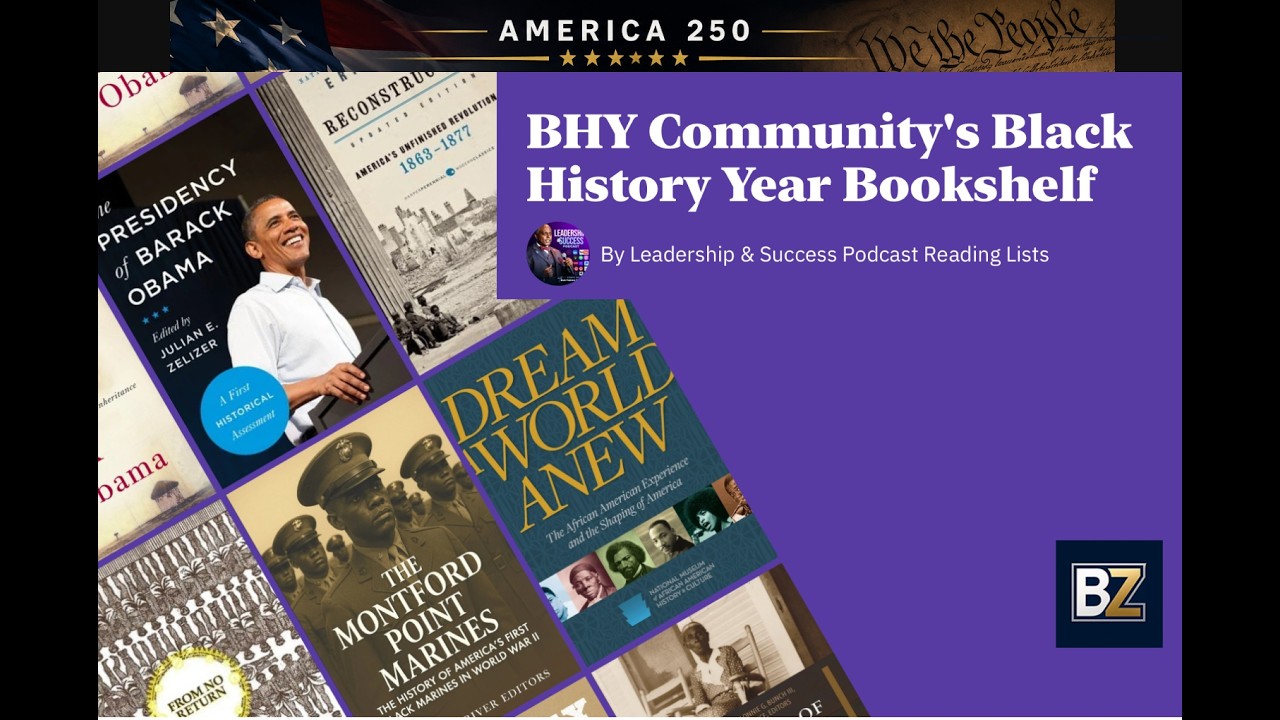
All right, so these are the leadership lesson, uh, from, uh, yesterday, when, right, 2026 FIFA World Cup. Uh, congratulations to Spain, uh, that was quite an achievement. So let me know in the comment where you are watching us from, what city, what state, which country, what you are grateful for, and also 3 to 5 takeaways from today's lesson. So that's it for now and for our Black history portion of the podcast. Uh, today we are celebrating, and, uh, really, uh, the life and the, uh, legacy of General Colin Powell. I've written an article, uh, about him. I think it takes about 20 minutes to read it, so I encourage everyone, uh, to do that. And I'm gonna play a short, uh, video from the general as we get offline. And I have decided to start a brand new podcast, which I think the premiere episode is going to be today. It's going to be Season 250 for America 250. It's going to be about Black History Month— so Black History Year, since we're going to be doing this every single day this year. So celebrating the life and legacy and achievement and accomplishment of African Americans in the United States of of America. So the first episode which I'm going to be recording today will be why is Black history important. So I'm going to be talking about the nation's scar, not the political wedge, right? This is not about politics, uh, it's why Black history matters, right? We need to remember, we need to learn, we need to lead and build a more perfect union. This is our history, our responsibility, and our future for all Americans, because Black history is American history. And the second episode, which I think I'm gonna publish today as well, will give you a dozen books to get started. So it is 10 books initially, but then I added 2 extra books, just bonus. I love to give a little bit more. I think I got the idea from Steve Jobs. Whenever he had a presentation, he would be done and he would say, "Oh, one more thing. Oh, one more thing." So 10 books, I think that should get you started on your journey to learn about Black history, and then I've given you 2 additional, um, bonus. That's going to be the second episode. But really, the truth is Black history is all around us, right? Uh, nothing is hidden. Uh, it's almost like it's, it's hidden in plain sight. It's right there for everybody to know if you would just do the research. So every time I end one of those articles for Black History Year, I will give you a list of places to go to learn more about your history, about American history. So the 10 books that are essential, I believe everybody should read, are here. One is, um, uh, let me see, The Miseducation of the Negro by Carter Woodson. He is the father of Black History Month. Actually started as Black History Week, and then it was expanded to Black History Month. And for our podcast on our platform, we're going to be doing it for the entire year. And then I have two books on Reconstruction. Reconstruction is so important. It was really like a rebirth of the United States of America. That's really when America really started to live up to its founding ideal, right? 1776 Declaration of Independence, we say all men are created equal. That's good. That's who America is. But in reality, Black African Americans were slaves. They were not equal to white people. They didn't have any freedom. And during the Reconstruction, that's where we got the 13th Amendment, the 14th Amendment, and the 15th Amendment. And Black people were freed and they started becoming full citizens of this country. But unfortunately, that didn't last very long. So we need to know that history. Then I have another book, Stamp from the Beginning. I also have a book, Self-Taught, which is going to be one of the articles I'm going to add on the podcast too. For example, I was surprised to find out that in the South it was African Americans that really developed the education system that became public school for all of the southern states, including white people. Really, it was architected by African Americans. I think it's a very important story to understand. And there is also this book you guys should already know about, an example for all the land. And caste, I love that, that one, because it really shows that America for the most part has really been known as a white republic and apartheid state, right? Whites at the very, very top of the caste and then Blacks at the very bottom, and then everybody else is kind of in between. If you look at it through that dimension, it really makes a lot of sense why Blacks have been aided and really relegated to the lowest form of living in this country without any expectation for success, or definitely for leadership in society. I think it's just a good framework that makes us understand why many things have happened the way they have, why the law— by law, uh, it was disadvantage to Black people, but benefit for white, uh, service members who returned from war, but no benefit for the Black who went through the same exact experience, who put their life on the line for their own country, right? Redlining— why some homes can appraise highly and other homes will not get much contribution from the state government and the federal government. So we pay taxes, but we don't get those benefits for our school segregation and all that. So it just makes, uh, understanding America much It makes the American history make a lot more sense. Okay, and the other one is the Golden 13. I really owe so much to them because without them, those were the first 13— well, it should have been 16, but the first 13 Black naval officers. Without them, there is no Commander Bob Fabien Zinga. So I owe so much to the Golden 13. That was in March 1944. My father was about 1 year old at the time. So this is not ancient history, right? Some people like to say, oh, don't talk about Black history, that's not from the 1700s, 200-plus years ago. No, no, this is only 80 years ago. It is not that, that, that long ago. And our society is still, uh, dealing, uh, through the effect of that racism, that separation, that discrimination. We still live the effect of that today in 2026. So I think if you are in the military, it kind of gives you a better understanding of why there is so much disparity between the white male service member and Blacks and everybody else. Actually, women, women too, right? Because women also didn't participate in our society or even started to vote until after Black men had the right to vote. So pretty much all of the marginalized groups in America, including women, really got their civil rights through the struggle for African American civil rights. So I think that, again, that explains a lot. And I have The Warmth of Other Suns, that's another book by Isabel Wilkerson that really talks about the Great Migration within the US. Today we are talking about having the US government ICE, you know, deport millions of people out of the country who might be illegally, but really there was a great migration deportation within America from the South for Black people to the North, going to Chicago, to Boston, to New York, and that really led to a lot of great things for American culture. For example, the Harlem Renaissance, jazz, blues, and that kind of thing. And when you talk about Detroit, we talk about Motown sound and music, Michael Jackson and so forth. That only happened because those people left the Deep South because of so much racism and Jim Crow and discrimination, and they migrated within the US, mass migration toward the Yankee state, and that really enriched our culture. Now, people like Diana Ross or Whitney Houston, we wouldn't have known them if their parents, their grandparents, their ancestors had stayed in the South where they were pretty much lynched every day and didn't have any protection from the law. So again, that explains a lot. And then I also have this book, From Slavery to Freedom. So I think these are 10 books every American should read to understand our history. And the 2 extra books I have added on the list is this one, Black AF History: The Unwhitewashed Story of America by Michael Herriot. This is a great book that pretty much summarizes, uh, it's pretty comprehensive, no, the entire experience of African Americans in the U.S. And the other book which I highly recommend is this one, uh, African America: Celebrating 400 Years of Achievement. No, it has more than 500 biographical essays on America's most important lives, from music to religion to science and to sport. I actually, I think I took a picture of this book yesterday, but anyway, it is a great, I guess, anthology that goes through 400 years of African American existence here. In the United States, Africa in America. Highly, highly recommend that. So again, I, I will have a new, a new podcast which I am going to premiere today. I think I should be able to publish the two episodes today. Episode number one, again, I'm going to focus on why this is important, why Black history matters in America for all, all Americans, not, not just African Americans. And then the second one will be about this digital bookshelf we are building about Black history. Actually, I changed the name. Instead of Commander Bob Fabien Zinga Black History Year, I think I'm calling it Black History Year Community because I am going to need your help. I think we have almost 200 books now. When I first started last week, I only had about 125 books. Now we have over 200, and I'm getting a lot of recommendations. So I would need your help if you can recommend a book about Black history that should be on this curriculum, on this bookshelf, I will highly, highly appreciate that. And it is going to keep going in time. And ultimately, I would hope to have a pretty comprehensive list of books that really represent, you know, the entirety of the young Black experience here in America. And if there is any book that's not on the list that should be there, please let me know. I will be glad to add it. All right, so as we end, uh, today— this podcast has been long enough— we are going to end with a tribute to my mentor, a true American hero, uh, General Colin Powell. So this is going to be about the man, not the myth. It's still a tribute to my mentor. You can read the article, but I'm going to play a quick video, and that's going to end this episode. And again, right after this I will premiere the podcast for Black History Month. Thanks again for watching.
My two parents, immigrants from Jamaica, came here in banana boats 90 years ago. I grew up in the South Bronx, having been born in Harlem, with no expectation that I would be anything other than a soldier for a couple a couple of years, and I became Chairman of the Joint Chiefs of Staff after 30 years. So the dream is still there. It hasn't gone away. But for some kids, they don't see that dream. They don't see it in their life. They don't see it in the neighborhood. They don't see it in their home. But it is there if we bring that dream to them in the person of mentors, in the person of a quality education, healthcare, and get them to believe. And what it takes is for those of us who have have the ability to do so, to get into their lives. And that's what has made us successful for the last 20 years. When we started this, there were roughly 200,000 people who were in mentoring relations with kids. It's now over 4 million. Uh, Governor Jeb Bush of Florida at that time joined our movement. He said, I want to have 200,000 mentors in Florida. And he said, it starts with me. So the governor became a mentor. And every week, the same kid would come to see him. And I launched that program with him, and 5 years later, I was privileged to go back down to Florida and note that 200,000 mentor relationships had been created.
The President's Summit for America's Future. The living presidents, 30 governors, 90 mayors, and 3,500 community leaders Leaders convened in Philadelphia on April 27th. Their mission: to change the future for children who grow up outside of America's mainstream.
This is an alliance between government and corporate America and nonprofit America, but especially between individual Americans.
Americans are starting to take it upon themselves to point our kids in the right direction on the road that leads to to the American dream. The President's summit challenged all of us to volunteer our resources to turn the tide for America's 15 million at-risk youth. To help do so, the summit launched a new organization, America's Promise.
We want you corporation leaders and nonprofit leaders and community leaders and individual Americans all over this land to make a promise to a child, make a promise to your community. Make a promise that you will execute.
Sitting, sitting in a work session.
Oh freedom, oh freedom, oh freedom, oh over me. And before I be a slave, I'll be buried in my grave and go home to my Lord and be free. Oh, freedom!
Thank you for tuning in to the Leadership and Success Podcast with your host, Coach BZ. If today's episode added value to your leadership journey, be sure to subscribe, share, and join us again for more wisdom nuggets on how to lead better and achieve greater success. Remember, leadership is the most critical skill of our time. The world will always need leaders to inspire others, drive innovation, and execute meaningful strategy. So why not count yourself among the bold leaders shaping the 21st century? Until next time, stay inspired, stay committed, and keep leading with excellence.
More from Bob

S250:E4🎙️LIVE 🇺🇸America 250: President Barack Obama Leadership, Service, and the Power of Hope






S5:E157🎙️ LIVE with CMD CMSgt Dennis L. Fritz, USAF (Ret.)(Multi Tracks Audio)



S250:E3🎙️ LIVE Leadership Lessons from America’s First Documented Family of African Descent 🇺🇸📖