In this presentation, Bob London explains what makes a conversation with a customer strategic rather than routine. He contrasts everyday Quarterly Business Reviews (QBRs) and other operational meetings—where the focus is on documented, day‑to‑day product usage—with strategic conversations that aim to get inside the customer’s mind and understand the broader business context. He emphasizes using a true dialogue (open‑ended questions) instead of a transactional interview or survey, allowing customers to expand on what matters to them. London introduces his Customer Value Framework, derived from over 2,000 customer talks, which splits value into two zones: the explicit, documented expectations below a horizontal line (contracts, statements of work) and the implicit, unspoken opportunities above the line—where the real “gold” lies. By probing the three key areas he calls the 3 Ps—Problems, Perceptions, and Priorities—practitioners can surface hidden insights and shape the right strategic approaches for their SaaS business.
Chapters
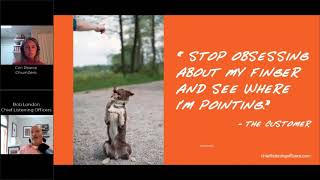
Since nearly 1,200 of you registered for a topic called How to Have More Strategic Customer Conversations, how about if we start by quickly defining strategic customer conversation? So think of it this way: you spend a lot of time in QBRs, having other operational meetings with customers, and that is a fantastic way to get into their shoes, to understand how they interact with your product and the value they get from it, and it's, it's very much I won't say in the weeds, but it's very much of a routine conversation. What we're talking about today are strategic conversations that really are supposed to get you into the customer's brain. What's that pie chart look like of the stuff that's going on with them? Because it's on their list, it's on their proverbial whiteboard, or it's things that line up with corporate initiatives or objectives. So a strategic customer conversation is taking Think of it as taking a step back from the day-to-day, or a step up, if you will. And you may have noticed that I use the word conversation. I don't say interview or survey or anything else like that. Interviews and surveys can get very transactional. I think they sound transactional. Ask, answer, ask, answer, kind of going through a list of questions. And what you really want to do is ask open-ended questions and let the customers expand on their answers so you can go back and forth in a dialogue. Because if they're talking, it means it's important to them, and we'll talk about all this in much more detail. Beg your pardon. The last point I'll make here is just another way to think about it. As SaaS companies, and particularly in customer success, we do obsess about the day-to-day and the literal aspects of what our customers want and need. I'm not sure we really have enough time to do the critical thinking, and maybe that explains why this is a popular webinar topic, the idea of having strategic customer conversations. It's what you want to do, in addition to being what customers want to do. So this dog analogy, of course, is that the owner is basically the customer who's saying, don't look at my finger, look over there, that's what I want you to see. So their point— they want to point you in a direction, but you have to ask the right questions. So if you look specifically at what I mean by looking where the customer is pointing, not their finger. So everything below this horizontal line, this is the, the customer value framework that I've developed based on these 2,000+ conversations with customers, what's important to them from their perspective, not ours as vendors. Everything below that line is what I would refer to as explicit. It's written down, it's in a contract, it's in a statement of work. Everyone knows, both vendor and customer know that that's what the product is basically, and what it's expected, what's expected of the product and what level of support is needed. It's all documented somewhere. So everyone's trying to sort of live up to it or maybe add value. When you go above this line and the farther above you go, the more the case, that's the stuff that's unspoken and oftentimes unexpected and undefined by both parties. That is where the gold is and that's what a strategic customer conversation is for. It's— this is going to be about your ability to understand them above this line, not by asking them, tell us what you need. That's, that's not their job. They're experts on their own problems, perceptions, and priorities. So if you probe those problems, perceptions, and priorities enough, those are my, the 3 Ps, if you will, you'll be able to get insights that can translate into the right approaches that your company should take.