Bob London Interviews ActiveNav CEO & Co-founder Peter Baumann on the Value of a Strategic Narrative
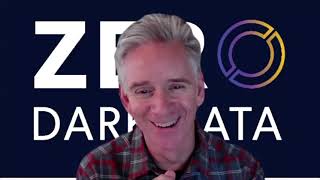
In this interview, Bob London talks with Peter Baumann, CEO of ActiveNav, about the company’s focus on tackling the massive challenge of unstructured and "dark" data—information that resides outside traditional databases and often goes unnoticed. Baumann explains why this problem matters to board members: security risk, regulatory compliance, and costly data storage and transfer. He describes how market shifts—particularly GDPR, high‑profile data breaches, and a flood of new competitors—created a groundswell that forced ActiveNav to reset its strategic direction. The company engaged Bob as an external facilitator to develop a shared strategic narrative, a multi‑year North Star that would align leadership and the broader organization. Baumann outlines the process: selecting a cross‑functional team, encouraging open disagreement followed by commitment, and iterating on themes until consensus was reached. The outcome was a concise three‑word theme, “Zero Dark Data,” which captures the goal of eliminating unknown, toxic, or “wild” data to improve security, efficiency, and cost. The narrative was rolled out internally through all‑hands meetings and embedded into team goals, helping employees understand and champion the vision. Baumann shares advice for other CEOs: listen to instinct, revisit the narrative when it feels off, and ensure the story is owned collectively but championed by the CEO. The conversation highlights the importance of a strategic narrative as a living, company‑wide compass rather than a static marketing tagline.
Chapters
Peter Baumann, welcome. Thanks for spending a few minutes. I'll stipulate that you and I have worked together recently. We, we teamed up to develop a strategic narrative for your company, ActiveNav, but I don't want to talk about that yet. First, I'd like you to just introduce yourself and talk about your company and what your role is.
Yeah, sure, Bob. Good to see you again. So my name is Peter Baumann. I'm the chief executive of ActiveNav. Obviously British origin, but I've been based in the US now, Northern Virginia, for nearly 8 years. And we're a software company to enable customers to deal with this huge problem of too much data, and specifically too much unstructured data. Unstructured data, for those who, who aren't in the know, is largely data that sits outside of databases. So all that stuff that we are creating and trying to review and then be inundated with every day, whether it's email, PowerPoint, Excel, about 2,500 different types of data.
Let's say I'm a board member. I'm not a technical person, but I'm a board member of a significant company that makes heavy use of data of all types, maybe Fortune 500 or a large government agency. Why do I care about this? Why is this even a problem?
Oh yeah, this is a good question there, Bob. Thank you. You care on a number of fronts. The kind of more important drivers today, which are around risk, security. Here we're talking about in the advent of a breach, you don't want the hacker or the intruder, if you like, to find the wrong information. What I mean by the wrong information, if they find information that that's core to your business activity, then that's bad news. But it's potentially not as bad as the reputational damage of them finding information that isn't core to your business that has been left out there. And so you should only be preserving the content and data that you need to preserve for the appropriate period of time. And so security risk, sensitivity of data is super important. You're going to care about the cost of all this data sloshing around, whether it's just good old cost of storage, which is less of a thing with cloud. However, cloud is extremely expensive when you want to draw the content back down. Whether it's the cost of the infrastructure, if you're— you've got too much data syncing up across a small pipe, maybe globally or nationwide, that can be quite costly. So the kind of efficiency side—
I was fortunate a while back to get a call from ActiveNav about the company's desire to create a strategic strategic narrative for the company. Some people refer to it as vision and mission. Some people call it a North Star. Uh, but the strategic narrative as I defined it, and I think you guys too, is a little bit more of a narrative, a longer form narrative that talks someone through, whether it's a new employee, a current employee, or investor, or, or, you know, vendor partner that helps them understand the company's role in the, in the bigger context. So I was thrilled to get that call, but what I really want— curious about is if I if I tip the dominoes backwards that ended up with me getting that call, what's the origin story? Where did that come from? Why was it a business thing? Was it a fluffy marketing thing? Where does the need for a strategic narrative come from?
Again, I love the question because you don't often have time to stop and think about these things. There wasn't like one, one thing, one person saying to us, hey, hey, Peter, you really need a new north star. In a way, it was a groundswell. It was a groundswell of lots of things that Like pitchforks and torches?
What am I thinking here?
The market changed a lot. The market had— with the advent of all these privacy requirements and regulations, in the space of 3 years, the whole market changed. And you had a coalescing of all the different factions within the buying market, either talking to each other or having their drivers start to overlap. And it happened pretty quickly. It happened largely in the lead-up to GDPR and as a result of a number of large breaches. They kind of complicated our marketplace. It's quite a fragmented market, but it complicated the marketplace. And inevitably what happens is when you get a buzz, you get a lot of new entrants. So we also suddenly had a lot of new competitors who personally I don't think really understand the market, but they were very well funded trying to address privacy without really understanding that privacy is about all kinds of other things. And so there's confusion. There's confusion with customers, confusion with the analysts, the commentators, confusion with partners, everybody piling in, existing incumbents like ourselves who had a certain slice of the market and plenty of others that had other slices of the market and all with a little bit of overlap. It was difficult to cut through that noise, if you like, Bob London. And when I say cut through the noise, both cut through the noise to our customers so they knew what it was we were trying to do for them, and then internally so that we all had the same, you know, parade. We're all pushing and driving on the same parade and we're not going off in different parades. But it was certainly the moment it all reached an apex, we had to come together and we had to establish a new, in our language, new North Star. That we could all pull against and we could also help our customers to determine what it was we were trying to do for them over a long period of time.
Am I correct? This was not, hey, our customers need more detail on what we do. It was something bigger than that.
Far bigger than that. It was a reason to believe. It was bigger than the reason to get out of bed on the Monday. It was the reason to go on the journey for a few years. Okay. And it's quite exciting, you know, it's proved very valuable, very exciting for us, but it was very necessary. And in a way, it's only having gone through the whole process, we can now look back and say, wow, how were we doing it without that? And, you know, often when you set a business up or you get involved in a new product or a new market, you put a lot of energy in and you have the time to do some of this thinking. And maybe because of past experience, you say, that's what we're going to do. We're going to create new plastic bottles and they're going to be more recyclable, cheaper, et cetera, or shippable or something. And then 5 years later, the market's all changed. And you don't always have that chance to stop and reset. And effectively, that's where we've been. A lot of our previous North Stars had been overtaken by events. In, in the marketplace. Yeah. So this is an opportunity for us to, to reset and give ourselves a 5-year, minimum 5-year timeline.
Got it. So what you said is, and the way you said it was interesting to me because I think I have this, this phrase that I've used in the past called customer rediscovery. And people say, well, I know what customer discovery is. It's the thing that when you're a startup, everyone knows you're supposed to talk to 100 customers or prospects and find out what they really need. And then make sure that, you know, that validate what you're doing. But then there is no equivalent level of effort to that 5 years later. It's just always sort of iterating on what we've done before. So I appreciate that you guys recognize that. I think that a lot of companies don't force themselves to take a step back, even if it's for a week or two to do the work.
Well, Bob, if I can, just to that point, If it does happen once you're up and running, it's because there's an event. There's something that's triggered the need to do a reset or refocus. And arguably now, just in this conversation, looking back, there were events that triggered us to action it, if you like. Some of those were new products and moving to cloud, massive shift in approach strategy. Some of it was what was going on in the market. If you're going into a funding round. You're going to have to get these things squared away and straightened out, and you're going to have to give your potential investors confidence that this is what you're trying to do, and this is why you're doing it, and this is the magnet that's pulling you there. And so I think even in normal times, if you like, events come along that either force you to do these things or make it really clear that you'd be wise to take a pause and do it. And so inevitably, there are a bunch of things that coalesced for us that also triggered us to get on with it and do it.
Can you just talk people through the process so they understand what's involved in something like this?
I think there's some common stuff, and then there's some other stuff which is flavored to the individuals and the business, etc. I think the common stuff is largely driven by, first of all, an appreciation of what you're trying to get to and why, and then about who are the right people to bring in the room. And, uh, you know, we, we probably spent— I don't know if it's disproportionate amount of time— we spent a lot of time thinking about who those right people were. We wanted to get representation across the group, and we needed representation that reflected both really broad, um, holistic understanding of our business and the market and customers, etc., and partners, as, as well as representation maybe from people that didn't have that, but had very strong views. And you're trying to marry those two knowledge sets and experiences together so that everyone agrees ultimately that this is your North Star, this is your vision, that's why you're going there. One of my team has a wonderful saying he introduced into the business, which is, um, disagree and commit, but don't disagree and leave the room. And, and, and so we, we had to do that, but we didn't want to do it through force. We wanted to do it through the journey and hence bringing in a third-party expert such as yourself, Bob, somebody that could guide us on that journey. One of the processes, the CEO, I think, not to be the dominant voice. You can do some lobbying around the meetings and in the meetings, but not just say it's this way and everybody needs to follow me now. How do we, how do we make that work? And so my own personal style and what I felt was appropriate for the business was I wanted the team to get there. I think that was one of the biggest accomplishments that we, we pulled off, actually, Bob. Not only are we really happy with our end results. But I think the process to get there was a real success. It was very empowering. Everyone understood why we chopped some things off and added some things into the mix. And when we got there, everyone looked at each other and said, "Oh my God, we got there." And that's continued since the 2, 3 months since we kind of engaged with you, that's continued as we presented it to the broader company and the team. And having those people on side means that they support the, uh, the story as you go wider.
Does it then become, uh, a deliverable, an initiative, this strategic narrative or North Star that, that comes from a shared ownership place of the leadership team? Or is it, nope, this is the CEO's— ultimately the CEO has to own it? Or how do you think about that?
Well, I think maybe it's different for different businesses. In our case, it became the group thing. And the CEO presented it. So in our case, you know, the group came up with it. I literally didn't go into this session knowing what it was going to be. We knew we needed something, and we knew it was going to be really difficult because it could be so many different things, and the market was changing so fast around us. But at the end of the day, I wanted the team to agree. A bit of a consensus management approach, if you like. I wanted the team to agree because I felt anything less than that probably wouldn't work given our history and where we were in the market and the business. But ultimately then after that, it was the CEO to present it, that this is what we're doing and we're not veering off it.
So you've become the steward, the voice and face of it so that everyone understands that this is important, critically important.
That's right. Yeah. Mountbatten and the steward. I think that's nice. Yeah.
What did make you reach out to— it doesn't have to be me, but just say we need outside help because like, I always think about what doesn't a company have that they need to get something done? What is the outside person going to add that the company can't do itself? Do you have a sense of how you would answer that one?
I've been the guy that's often thrown rocks at, we don't need to bring a third-party expert in, why are we going to waste our money doing that? And then I've been the guy sometimes that's too fast to say, I think we need to get somebody else in. This time it felt pretty natural. I knew it was going to be really hard. To get team agreement. And I didn't actually know what the final agreement would look like. I knew I could paint a vision of what the box would look like, but I couldn't write the words in the box. And therefore, I thought, this is going to be really tough. And then we got some very strong characters. I wanted everybody on side. The best way to do that sometimes is to bring a third-party expert in. Sometimes you just need that expertise. You just need it. And it's because you could be stuck, you could be stuck in a quagmire, you could be frozen, status quo limbo, because so many things are hitting you. You need something to come and break the impasse. And in our case, you know, that was definitely part of it.
I'll chime in with something I heard both right after I was fortunate enough to be selected, and then I heard it during the process of working together. I heard at the end, which was Look, I'm not a yes person. I'm not going to come in and just tell you what you want to hear. There may be some pushback, tension, whatever. And I was told right after the decision was made to hire me that that was important because of the dynamics of the team and because of where the company had been and wanted to go. And then at the end, I picked up some signs throughout the process that I had been hired because I'm not a yes person and the expectation, expectation had been set. And therefore that empowered me to do what I do. I wouldn't have done anything differently otherwise, but at least I knew that it wasn't going to be, uh, you know, a minefield right away. And then at the end, I found I got some of the same feedback was that it was, uh, it was helpful to have someone who just wasn't waiting for direction and wasn't waiting to just take orders or, you know, write the report you wanted. Amongst the many stages we went through. So just for the anyone watching this, You know, there's a process of listening. I talked to each of the team members one-on-one. I think I talked to some other folks one-on-one just to sort of map out what the different perspectives were. I looked at a lot of information that you guys provided. I looked at some independent information to formulate a perspective and to start to understand what is the company better at than anyone else. Even if it's just where we want to be versus where we are today. And it wasn't really about a competitive landscape, which I find is not it's never as important as we worry it's gonna be in these processes. I sort of went into the process of developing some themes. I liken it to playing, plucking strings on a harp. When I come back and this theme sounds like this and looks like this, this one looks like this. And you sort of looking for, you know, reactions, engaging reactions. And what happened at one of those theme meetings was that there was definitely some positive reaction But at some point, your Chief Revenue Officer, Dean, said, "You know, I like it. I sense that people like it. Bob, is it big enough?" And I will tell you, I don't think it was. And I think he made it better and whoever else agreed with him. So I think that speaks to the comfort and collaboration or the safety of being able to have that conversation. I am so happy that he said that. I'm not sure he had to, but he did. And he caused another round of activity that then got us where it seems like into this good place.
100%. And I remember when we were interviewing you, if you like, Bob, it was one of the requirements. I didn't want someone— I needed something more than someone just coming in and kind of whiteboarding strategy on how we get there. We actually need somebody to pick up the pen. And write stuff down. This was a strategic requirement we couldn't fail on. And Bob, that's where that was fantastic with you. You were literally presenting stuff back to us before the meeting and then in the meeting. And as you say, you know, there was a moment when we thought we were nearly there. It wasn't quite exciting big enough. And Dean felt comfortable saying it to you, and you felt comfortable with him saying it to you. We've got to go another round. We would have ended. We would have said, oh, that's good, but we wouldn't have been quite excited enough.
When you do a strategic narrative, this one happened to be over 10 pages of— and it's a story. Where are we today? Um, where do we see the market being? What are our customers' problems? But it's written in a very friendly way and engaging way. It's supposed to be. But there is a tip of the spear where if you come up with a theme, uh, well, you should come up with a theme not a tagline, but something that is memorable and shareable that is relevant to the target audience and other constituencies. We get to this sharp tip of the spear on top of the strategic narrative and woven into it that ended up being 3 words that turned out to be very powerful, and they're right behind you: Zero Dark Data. Why don't you tell us about what that means?
We wanted to incorporate what the problem was that our market was suffering and at the same time what the end result would be of resolving that problem. And dark data, it's a nice collective approach, if you like, to all the data that sits in an organization that they shouldn't have, and often data they don't know they have. Privacy data, PII, sensitive, toxic. Um, toxic's really important. Toxic could be things like password files. That have been inadvertently saved and they've been forgotten about and left in, in the wild. And so that's another term we use, wild data, data in the wild.
Just for context, uh, for people, is this 10% of your entire data? 10, 20, 50, 90?
So unstructured data is typically 80% of an order. 80%, okay. But you might only need one file that could result in irreparable damage on a business. It doesn't have to be 2 billion files, which is right, right. But, uh, but dark data is an all-encompassing term to describe all the information that you don't know about that's out there in your organization across your networks, and that you need to find, you need to control, you need to eradicate it, and ultimately take it down to zero. If you get your organization to a point of zero dark data it's like a dream. It's like everything becomes beautiful, but nothing is thrown and shredded anymore. And so now we need a new system, a new way of addressing that. And if you can eradicate all that data, then everything else in the organization becomes more efficient. It becomes a force multiplier, massive force multiplier, because you're not dealing with— you don't have to keep bringing in compensating techniques i.e., symptoms of the disease, you're actually dealing with the disease at source. And organizations literally spend hundreds of millions dealing with the symptoms, and they, they put, uh, effectively Band-Aids on all these things. Oh, we need more document records management, we need more content management, we need better search, we need more storage space, we need redundancy, duplicates. Et cetera, et cetera, et cetera. We need better insurance policies to cover the risk. And what are they all doing? They're all trying to deal with the data, which is out of control. And if the data were in control, all those other things, which you probably still need, become far more efficient and cost-effective.
Beautiful. You guys started pretty early on before this was— I mean, I think it was sort of agreed to but not really launched. You were— there were some instances where folks inside the company, perhaps you but maybe others, were talking to customers and just floating the concept, maybe even an analyst or two or a reporter. My recollection is that they— there was sort of an eyebrow-raised moment that on the other side of the table that was a positive.
Is that correct? Yeah, I, I'm not aware of any negatives actually. You know, we had the benefit of spending a few weeks doing it, so by the time we got there it was like Duh, zero dark data, what else would it be? For people that never heard of it before, it's a bit of a slap around the face. It's like, whoa, what do you mean? And not so much because obviously we're talking to people that generally know the space, so they probably get what dark data is, but they can't envisage zero dark data. They just think it's a thing they have to suffer and deal with. Yeah. And, and so, you know, they, they, it's quite a, quite a heady concept to get your, your head around, but generally within the enterprise commercial space, it's been extremely well received.
I know you announced it to your team internally, uh, in an all-hands meeting. Uh, did it have an impact there as well?
Apparently so, yes. And then what we've also tried to do is start to find ways of implementing it through other parts of team structure through meetings and groups and write down, say, for example, the development team, services team. What does it mean to you? How do you bring this to life? How does it affect your day job and your interaction with the market?
I was reading in the Wall Street Journal an article about the gentleman Hubert Joly, who joined Best Buy in 2012 at the height of the Best Buy will never survive Amazon mania. And he did some of the things you would expect. He went around and walked the floors of the stores and listened. But he got some interesting feedback and prodding from the blue shirts, they're called, the people who work in the stores. And one of them was, when customers ask us why they should buy from us, we don't really know. His recognition quickly was obviously, if the employees don't know, customers will never know why we're different and better. And so this same idea applies in the strategic narrative and the vision. Which is to say that it becomes shelfware unless people embrace it inside the company and can internalize it. But what's clear from that article and other work I've done, and I think in your example, people want to know.
Yeah.
And they want to be given, not handed a message to read, but they want to be given something that feels like a higher order impact. And when they do get that and it clicks, it really does put people on the same page, not because they're uttering it every 5 seconds and wearing the, the, the swag, but because they feel like the— everyone's, as you've put it, everyone's rowing in the same direction kind of thing. But, but the point remains, customers will never understand why a company's value proposition is unique unless the, the team can articulate it. Unless you're GEICO or Nike and you have half a billion dollars a year to spend to tell the world directly what, you know, what to think. It seems like the employees are becoming engaged in this effort to pick it up and internalize it.
100%, Bob. And you can, you can dissect every role and function in any business, but in our software business, you know, where it's the sales guy at the front and trying to bring the customer on with the vision, you know, the excitement of this, and don't worry about your short-term project of you've got a— you've got some M&A activity and you need to separate the data and you need to remove the toxic, you know, that, that's just now. Think big, think about the next 50 M&A data separations, migration, you know, the, the bringing in of new, new, new assets. Um, that's where Zero Dark Data comes in. All of those things come to play. If you're someone in finance, invoicing and accounts payable, accounts receivable, you know, why are you doing that every day? What's— you know, you're just doing a job, you're just churning bits of paper. But if you're doing it because you believe that you're on a journey, and even your customers are there, and that's why they're going on this journey with you, and that's why you're processing, it's empowering. Yeah, I don't want to overstate it, but it is still empowering. Imagine not having that. Oh my gosh, the drudgery of the day versus having it. And then, and then finally, in our business, the guys writing the code you know, they're not at the coalface talking to customers every day. Right. They're literally locked away, particularly in COVID, and just writing lines of code. We want them to write the smartest, the best code. We want them to be thinking differently. We want them to be thinking about what the end goal is that the customer is trying to get to as they write that line of code. And that's where this becomes such a valuable asset to the business.
That's great to hear. Thinking about the audience of folks watching this, at least some of them will be people like you, founders, CEOs, entrepreneurs. So what advice would you give them about the need for strategic narrative, the process, anything that you've learned that you think might help other people?
If you don't feel comfortable with what you've got, then you probably need to do something about it.
Now, that's— so does that refer to the starting point or If you're halfway through and you don't love what you have—
I think both. Yeah, either, either, both. If your instinct is telling you it doesn't work, it doesn't feel right, it doesn't corral the team in the right direction, then you're almost certainly right and you need to deal with it. And whether it's a tweak because you're only a few degrees off, a reset, you know, refresh, or whether it's a complete rethink, it almost doesn't matter. The point is your instinct's almost certainly right, and therefore it's hurting your business and you need to get to it. And too many times in my career I've put it off.
Yes, someone else I spoke to in a similar situation to yours said it was something that had been bothering him for a while, and then he started to realize that when he heard other people describe his own— his company, the company that they worked in, yeah, yeah, it, he would cringe. And he realized that it was, the analogy was, it was sort of an invisible anchor holding them back when it really should be more of a sail catching the wind, the messaging and the strategic narrative. So I think the way you said it and the way he said it so far are my two favorite ways of saying what the, what the challenge and the opportunity are of tackling this. So thank you. So I was in a meeting the other day with, it was sort of a roundtable with some technology founders and CEOs. And when the subject came up of vision, there were at least two of the folks on this Zoom meeting said, yeah, you know what, execution and traction solve all those questions about vision. Now, if you had been sitting there on that same call, would you have agreed with that? Or would you have counseled them a little bit like, well, you know, let me just give you our experience. I didn't say much. I was not there to pitch anything. But I did find myself wondering, how would someone like Peter respond who's been through this process?
So with respect to the guys that said that, who I don't know, I think I've been in that misplaced place previously. Okay. And they're wrong.
So they're about to hit some quicksand or something that you've already been through.
That's right. All right. And I'm— so therefore—
Now I can send them this video.
That's right. I'm thinking exactly. So I'm thinking back to why did I react that way? Probably because I didn't have the space to think differently. And it could be because you're too in the weeds, things are moving too fast, or the last thing in the world you want is to get involved in, you know, in, in that kind of brain space, uh, whiteboarding thinking session, because you might be fearful of where it's going to land. And so maybe it's just a point in time, but there's certainly been points in my last 10 years of this journey where I didn't want to entertain that discussion. I've literally never thought about it until you bring it up, Bob. That said, I always knew, if you like, I always understood the theory was probably right. You still need to have a clear vision, an idea, supporting mission that everyone's pulling against the same direction. Sometimes it was hard to get to it.
It's always very fun to talk to you, and I hope we'll catch up again soon and you'll keep me posted on things.
You got it, will do. Thanks very much, Bob London.
More from Bob




Matt Bowe, fmr. Senior Director of Member Success, Leading Hotels of the World



Beyond Words: The Art of Unveiling Customer Intent Ft. Bob London and Rijuta Bhagwat | Thinkly Talks

How to find out if your product or service is indispensable to customers. (Spoiler: Just ask them)


E21 | Uncovering the Secrets of Deep Listening: A Conversation with the Uh-MAYZING Bob London!
