How to have more strategic customer convo's, featuring Sheila Bowman, Head of Account Management
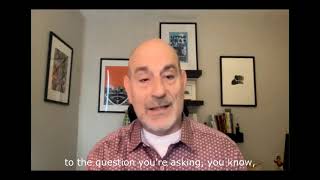
In this interview, Bob London talks with Sheila Bowman, Head of Account Management at the non‑profit health‑tech organization CAQH, about how the company is improving its account‑management practice to have more strategic, business‑level conversations with customers. CAQH’s mission is to lower administrative costs in healthcare by enabling electronic transactions, and its account‑management team is tasked with ensuring clients fully adopt its solutions and stay loyal. Bowman explains that the biggest risk is “quiet” clients whose silence can mask dissatisfaction, and that the pandemic forced a shift from in‑person relationship building to remote interactions, exposing gaps in connection. To address this, London delivered a series of three workshops focused on cultivating curiosity, asking disruptive questions (e.g., the “magic wand” prompt), and sharpening listening skills. The training emphasized being genuinely curious, letting customers guide the conversation, and avoiding scripted, solution‑first responses. Participants ranged from junior reps to senior managers, each with varying confidence levels. Homework assignments required them to use the new questions with real customers, leading to unexpected insights, deeper engagement, and even accidental revenue opportunities. The interview highlights concrete outcomes—clients feeling heard, higher NPS, and positive feedback from a customer who appreciated the listening approach—demonstrating that strategic, curiosity‑driven conversations can improve retention, uncover new business, and strengthen brand perception.
Chapters
Sheila, thank you for joining me today. We've had the chance to work together. You engaged me to come in and talk to your team and, and do some training and workshops on the topic of how to have more business-level conversations with customers. And we'll talk more about that, but I wanted anyone who's watching this to understand the context here. First of all, tell me about CAQH briefly and then your role.
Sure. So CAQH is a non-for-profit that's been in the D.C. area over 15 years. You think of the banking industry, you can go anywhere in the world and take your credit card and go up to an ATM and get money out, wherever you're at, Italy, United States, the same technology. We're working on that from a healthcare transaction. So our goal is to reduce administrative cost And that ranges from implementing software to replace paper-type processes, along with looking at transactions. So there's a lot of electronic transactions out there.
If you're actually a part of the solution of making healthcare systems and data work better together, then that seems like an incredibly important area these days, because what I see working with some healthcare technology companies is that everything is becoming consumerized. So patients are very demanding, they want answers quickly, they want accurate information obviously, and they want great treatment. And that does depend on systems talking to each other and data being accurate.
Correct. I joined CAQH roughly 7 years ago. I was the 22nd employee. I'm in charge of account management and managing all the clients that have purchased our solutions to reduce administrative costs. So there's a lot of activity, and, you know, we've grown over the 7 years from the 22 people when I started to over— it's a little over 125 people today and still growing.
What are the outcomes that account management is responsible for? What's their role?
We're responsible for ensuring clients are utilizing our solutions to their fullest potential, but also to be kind of advisors to these organizations. There's something that we could possibly not be doing today, but it may make sense for us to help those organizations. Account management is an advisor. We make sure clients are happy, they stay with us. We have products that we've never had anyone leave us on. So I mean, that's pretty unheard of, but once again, I think it's a strong account management. We have to be in the day-to-day, you know, connect people and other people in the industry. But in Hall, we're responsible for the relationship building and then of course client retention.
There's a consultative aspect to it. Correct. I'm gonna ask you a question that might sound familiar. If I gave you a magic wand, and of course that's one of the questions that we used in the workshop that folks can ask their customers. If I gave you a magic wand, what's the area in your world that you would wave it at and make a problem go away or solve it quickly, or just that you didn't have to deal with it?
The biggest thing that keeps me up at night are clients that are super quiet. I'd rather know what, what's going on with my clients. If I have a client that's silent, people tend to get into kind of a relaxed state and think, well, we're great. When in reality, we may not be great in their moving their service somewhere else in 6 months. So if I had a magic wand, I would figure out like what's the best way to build relationships and build relationships with all of our clients.
That's very interesting. And so you, you don't assume that the quiet ones are really happy or really unhappy. I look back at my notes and you said any insight is better than ignorance. Does that relate to the whole like if you don't know what they're thinking and if they're quiet, that's ignorance and that that's not as good as having some connection with them.
Exactly. I, I, I have multiple, you know, examples of where we thought we were in a good place and come to find out we were not because we weren't asking questions. We assumed no response was a good thing for us. And, you know, I think maybe 15 years ago, I think out in managing accounts, I've been in this field for a very long time that It was good if you didn't hear anything, but nowadays people want to be engaged. They want to be listened to. Now people want a relationship with the person they're doing business with. And that's what we're trying to do here. And that's the reason why we hired you to help us kind of on this continuum to how do we ask the right questions, open-ended questions to get deeper and build these relationships.
All right. Well, you, you did a great job of not only segueing into my next question, but you started to ask the question. I wanted to know what was on your whiteboard that, that was sort of one of the things that you said, this is something we have to tackle that did lead you to connecting with me and agreeing that you needed some help in this area of, let's call it, you know, again, having more strategic customer conversations. What was the outcome you expected or what was the problem you were identifying?
This probably will be no surprise, but the pandemic itself really turned things for us in that we used to be able to travel and meet people face to face, and you can gather a lot of information in person, the body language. And now we've been doing everything remote and through phone for over a year now. And the one thing that came up to us is that we we didn't have as strong of relationships as we thought we had. And we wanted to pivot to say like, what does the team need? What training to kind of get us to the next level to learn in this new environment that's not going to go away for a while? How do we build these relationships? So I think a bit of the pandemic, and then of course, you know, there's always examples of clients where we thought we were in good shape and then find out we weren't. And, you know, you start looking at all the signs. Everything was great. They were quiet, gave us high scores on NPS, but then come to find out there's other layers we were not in touch with that were not happy, that, you know, really controlled the budget for those products.
So you're looking for sort of virtual relationship building. In other words, I've had some other really senior folks like you talk about this, that you used to be able to go sit and sit back and talk and talk about other things. And, you know, you get to know people, you get to know each other and it's a lot harder to do remotely. And as you said, I think you're right. It's not going to— this phenomenon is not going to go away anytime soon because companies, a lot of companies have realized they can get by just fine this way. But to your point, they need to have the skill sets to kind of, you know, level up so that they can do, you know, not let the relationships lag or build them even better than before. What was the baseline with the team? We did 3 actually sessions together, 3 workshops. So before the first one, what do you think their mindset was?
The span was from probably a little insecure to some that are extremely confident in talking to whoever, right? You can put them in front of anyone and they're willing to talk. So I have a wide range. I think it probably would help to level set a little bit about my team as well. Please. So I have folks that are extremely junior, like first, first job out of college. So those folks tend to be a little more unsure about, you know, how to ask certain questions. And then I have senior account managers that have been in this type of business for over 10 years that have greater confidence and are more willing to ask the questions that we need to ask to get deeper relationships and to find out what's really going on.
So you're a very empathetic person because when you said— this is a digression— when you said it would help to level set about the team, That, that helps. I didn't even think about that. That's perfect for the people who are watching this and me, but, but really for them. So thank you for doing that. And so you're saying there was a range of sort of hesitancy and insecurity to confidence because folks have been doing it before. You know, there's some folks who are more practiced at asking more penetrating, disruptive questions and getting more insights, right?
Correct.
Okay. You had gotten obviously a preview of some of the content that I present, and we're going to look at it here in a few minutes, but There are some questions that I recommend that people ask because they're more disruptive. They get into people's heads a little bit more. And they also are, some of them are disarming, like the magic wand. It shows some personality, like it's okay to go outside the box with your answer. Don't give me a cliché answer. Then there's sort of the way you listen and process as an account manager. Have an open mind, try to put aside your biases, things like that. Of those two things, the questions and the listening approach was Did one feel more important to you and your team than the other?
I would say both were important. There was value in both sides. The simplest way to put that is curious. Be curious. Ask questions. And so, using the workshop, I think it showed the team that you can ask simple questions that will get you to various places. It's not always that you're trying to go to one particular spot. But you just want to know more. You want to know more about the people you're meeting with, what business they're doing, how do we fit into that or not fit into it. I think that was one component of it. The other piece is, I think, relationship too. I feel like that's a huge miss on us sometimes. We often go in talking all about ourselves and do not so much of the listening. Right. And so I think asking the questions, one thing, but the listening skills too, about— you have to let— this is their time to tell us about themselves, not for us to interject and tell them how we can solve all their problems. But since, you know, attending the workshop, we've actually in the last, you know, couple of months have started to pivot when we have someone come in to complain. All the time before, we would jump right to solutioning on that call. Right. Let me fix that for you. But what we're doing now is the whole time is for us to listen. That's it. We may, if they ask a question, we'll answer it. But we do none of the let me solve this for you. Let me tell you this, that we just, it's a place for them to feel safe and give us feedback.
It's so interesting because you had me interview one of your customers in advance. And we recorded it and I used it for demonstration purposes to hear, you know, when you ask certain questions that someone will really open up and just share things that you wouldn't have thought they would share. Not secrets, that's the whole point, they're not secrets. They're things that they don't mind sharing. In fact, they kind of want to make the relationship better. It kind of reminds me of this other challenge that many CS teams and account management teams have had, which is don't just ask the questions, but as you said, you kind of go where they want to go. You know, where does that answer take you next? Instead of just saying thanks and look at the next question. It's natural for you to see a list of questions in front of you as an account manager and just ask them. But it requires— we talked, used the word consultative before— it requires a little bit of thinking, but it also doesn't— I think this whole idea that you have to know the answer to the question you're asking, You know, there has to be comfort with— it's like curiosity. Like, I'm— when I'm 6 years old, I'm digging in the yard. I don't know why. I'm just curious, you know, like, what's down there? And you have to have that almost childlike curiosity and let go of the idea of solving the immediate challenge. The team had at some point some homework. We asked them to go ask a couple of these more disruptive questions, which we'll show in a moment, to at least a couple, 1 or 2 customers. I think you were even on some of those calls. Like, what did you observe and what happened? Did you learn anything? Did customers open up? Were they sort of engaged in the process?
They were. Believe it or not, at least 2 or 3 times we heard people say, "Wow, no one's ever asked me that before." Right. And it's like, it took down a little bit of a wall because then they loosened up and gave us more information And in some cases went off into a place where they were wanting to know more about a product that we have not sold them yet. Right. So it's not like these questions are intended to like try to upsell. It's more about us finding out more about them. But in some cases it took us to a place of, well, we have something that could help you with that. And it spurred on more conversation and additional meetings to be set up. So I think there's some unintended things that come out of just conversations and that curiosity is that we found out that if we had not asked, we wouldn't have gotten to those.
Right. And I confess that, and we talked about this, when I started doing these workshops, I wasn't positioning it as, oh, you can grow revenue. It was more about, as you say, relationship building and retention. And more insights to understand the customer better and to serve them better, add value. But when we went around and talked about the homework people had done with your— on your team, several of them cited, if I remember correctly, potential new revenue opportunities based on just hearing more about what's going on with the customer. Is that accurate?
That's true. You know, one of the staff was upset because they said, I think I failed this, this, this mission, this, this assignment, because I asked the question, but then it turned into more sales and it was okay. It worked. You're on the right path. But just asking the question loosened up the whole conversation enough. The customer took her down that path, not her dragging the customer.
Oh my goodness.
But it's okay if it goes in that direction. But I do think, um, when we did round one is that some of the staff were nervous. Like, I'm afraid of the answers I'll get. And sometimes that prevents us from asking the question because what if they ask me to solve for X and I can't? So there's this fear of we might, might hurt the relationship, but what we have found is that every one that we've done so far has been extremely positive. We've had good outcomes and we may not have found the information we wanted to find out, like we may have found some bad news for us, but as you mentioned, I mean, to me, any insight is better than being ignorant. So once again, those are the things that I lose sleep at night about, is the customers that are just quiet. I'd rather have someone yelling at me and knowing they're in to fight for this relationship and we can solve for that versus someone quiet.
Right. So this makes me think of a truth that I've learned And I think it's true in personal lives too, although I'm not as good at it at home as I may be at work, which is a lot of times, especially if someone's— if things have gone crossways with a customer, especially, you know, the reason you don't jump into solving it is because most of the time they want to be heard. They want to make sure someone understands the problem. I think we as consumers can relate to that, that, you know, we have an issue in a store or with an online transaction or something. Well, do you even understand why I'm complaining before you go solving it or worse defending it? And I've seen so many situations where I'll do a customer interview and they sound like they've got a lot of issues, but the reason they stick around is with that particular vendor, my client, is because, you know what, they've got my back. They do a good job of listening. So I want to go through a few of the slides that we used in one of the workshops. This happens to be the third of in the series of 3. I want to look at the questions. Was there something on this page that you thought resonated with your team and that jumps out at you?
The one that I hear used the most is the magic wand. Um, after that, I would say, you know, what was like on your whiteboard, number 2. Yeah. And then if we're talking to, um, you know, I've actually used these questions myself in talking to several vice presidents and I generally go to number 8, if you could talk to our CEO, what would you say? That tends to get a bigger picture, you know, information out of, you know, particular clients so that I can share that with others. But I would say those are the top ones.
Let me go here. Now I know this looks like Jeopardy or something. I suspect there are a couple things on here that you and maybe the team agreed were things that were challenges. So is there anything on here that jumps out at you if you were talking to one of your peers in another company? Like, what's something you would focus on?
Right now, my biggest theme is be curious. It's worse if you're trying to script it. It's better if it, it comes up in conversation. And, you know, back to like the Magic Wand question, we haven't set up particular meetings to just ask that question. It just really has been, you know, based on scenario. You know, I have some check-ins and I've been able to kind of weave it into just kind of other agenda items. But to me, being curious about what we're hearing, kind of processing that and then asking questions, you know, ask more questions about what the answer they've given you. And then of course, you know, my team has talked about like starting with a quiet mind. We often are so busy, you got the phone ringing, you've got someone pinging you through Skype or Teams, and then you've got emails and you're trying to interview someone. If you're distracted, it's very difficult to gather information and really be a good listener and to find out because there are quite a bit of nuggets of information that are given that if you don't pay attention and you don't listen to the cues, you'll miss it completely.
Right, right. I kind of knew you were going to say curiosity because you've mentioned it before. Is there one other that you want to talk about that's important to you and your team?
The other one that we're really focused on also is go where they want to go. Yeah. We tend to be— I'm sure you've never ran into this before, but we think we know best. Yeah. And we try to steer people all over the place. Our PowerPoints have tons of information. Right. And we're trying to take that all away and Let the customer tell us where they want to go. What's important to them? They're the experts. They're in this all day long. Right. We're really trying to change the game and go where they want to go.
I like that a lot. I mean, I like, obviously I like the slide because it's my slide, but the way you said it reminded me of, I just posted about this today on LinkedIn, that there's this selfie-style epidemic in the way companies communicate. Like, Hey, look at me, you know, like it's not, it can't all be about you and your features. At some level it is important, but in the beginning, the way that you gain trust is through transparency. And the way you do that is getting them to open up about the things they are expert on, which is their business and their problems. They're not supposed to be experts on your product or your service or your solution. That's your job. Your job is to hear what their problems are and challenges and synthesize into something that is going to add value for them. So I love what you just said. I always tell people, like, how do you know these conversations are really working as you're taking notes and listening? It's when people, they have to think for a second and they might even say, that's a great question. And they say, no one's ever asked me that. So as much as we think we're burdening them or digging too deep, maybe, or the customer might think, why do I, why do I have to answer this? This is showing that we are probing in the right places.
The other thing is we've had long pauses because you could tell they were really putting effort into a response. It wasn't— I mean, a couple people quickly answered. I would say 50% of the time it's a pause, and then we either get an answer related to the work that we do here at CAQH, and then the other half is we get an answer related to the business that they're in and what is important to their company. Oh my God. So it's been fascinating that some people come into the mindset that we're asking these questions related to CAQH, and others think of the question as, oh, you're— oh, about my world, my business, and what I'm doing here. So it's been interesting because if we have someone go down the CAQH path, we'll go back and we tend to ask additional questions to try to get them back to like their world. On the ones that they go right into what's important to them, I generally listen to everything they have, then we go in and ask more questions about the information they've given to us, and then we may ask an additional question to see if we get anything CAQH-related. But generally, that's what we've seen so far over the last couple of months.
Got it. And sometimes it is hard to resist that pause and, and then solve it by jumping in and saying Well, you don't have to answer that one, or, you know, or over-explain. And I've had that challenge for myself. I have to count to 5 or 10 sometimes. My comment, having heard you talk about this even more than we've talked before, is that I think you just have a really enlightened approach that I hope more companies will adopt and listen to. I mean, I think that's what I'm trying to accomplish with these videos, is when I find someone who's committed to getting more information out of customers that's important to customers, that's then important to us as vendors. I just really like to shine a light on that because I think it's so important and I think companies benefit from it. You yourself said that there may be some new revenue opportunities, unintentional revenue coming, accidental revenue coming out of this process, which I'm thrilled to hear about. Just to close out, so is there anything we didn't talk about that you want to share additionally or any, any words of advice for folks in your situation?
Yeah, the one thing that was really nice feedback that we got, so you interviewed one of our, you know, one of our NICE clients, and he sent a follow-up email to me after you interviewed him. I just sent him a nice thank you email saying, "Thank you for participating in this process with us. You know, we wanna do better and listen to clients." And he was thrilled and just said, It just makes, basically he loves us even more knowing that we are spending this money and time to invest in getting to know our clients. And I thought that was just very telling that he provided that feedback and it meant a lot to him and just once again resonated that he was in the right place and working with the right people. So I thought, I think that would be nice to know.
I love hearing that. And I've heard that before. And now that I think about it, I remember that call and I remember him saying it.
I said to him the same thing.
Is there anything else we didn't cover? Anything else you want to add? And he said, no, but this is really good. I said, what do you mean? He said, because essentially it's that he felt listened to and being connected to the company. And not a lot of companies do this. And if you're a customer, if you're a vendor selling something, it's, as you said, it's very easy to get hung up on, let's tell them, if we just tell them how great we are, that's our job. No, you have to understand their perspective. So I'm glad that this conversation that I had with him that we used as a demonstration in the training. I'm glad it had that kind of ancillary benefit that made him feel connected and listened to. And he— it's sort of for your brand, you know, for the company's brand. It was a good thing. This has been a delight. I can't tell you how wonderful it was for you to share all this for me. I will look forward to hearing updates, as you know, occasionally from you. I'll check in with you, but I'm glad to hear that. Sounds like you guys are doing great things, getting good insights, and it was really fun working with you. So thank you.
Same to you. It's been wonderful.
More from Bob




Matt Bowe, fmr. Senior Director of Member Success, Leading Hotels of the World



Beyond Words: The Art of Unveiling Customer Intent Ft. Bob London and Rijuta Bhagwat | Thinkly Talks

How to find out if your product or service is indispensable to customers. (Spoiler: Just ask them)


E21 | Uncovering the Secrets of Deep Listening: A Conversation with the Uh-MAYZING Bob London!
