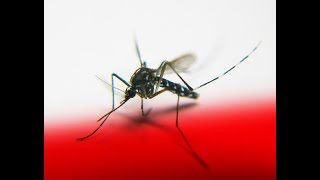
Bob London tells how Dr. William Gorgas convinced President Roosevelt to spend $1 million eradicating mosquitoes blocking the Panama Canal. The lesson: salespeople need to understand what their customer really wants, not just the problem they state. Frame your solution around their top priority, not the task itself.
Chapters
Hey, it's Bob London here. I want to let you know that great stories about understanding customers, really decision makers, are everywhere. You can find them everywhere. This story starts with a mosquito, or more correctly, a mosquito infestation in the Panama Canal, which almost kept the Panama Canal from being built. There was a doctor, an Army doctor, who was responsible for eradicating those mosquitoes. And they were actually killing workers to the point where the canal was not going to be built, or if it was gonna be built, it would take 20 more years and 80,000 lives was one projection. It's just horrible. What does this have to do with understanding your decision makers, your buyers? So I was watching a documentary on the PBS about the building of the Panama Canal. It's a fascinating story. The Panama Canal, if you don't know, slices through this little isthmus in the country of Panama, connecting the Atlantic and Pacific Oceans and enabling, by some estimates, $270 billion in economic value per year. And it's been in operation since 1914. Fun little trivia fact, my dad in the US Navy during World War II sailed through the Panama Canal several times. It's very cool. This army doctor made the Panama Canal possible by killing the mosquitoes that were just completely infesting and making people's lives miserable and killing workers, these unfortunate workers who were trying to build the canal. The story is interesting because the doctor took a look, Dr. Gorgas, at the situation in Panama and he put together a proposal, which is some customer language, some business language there. He decided it would cost $1 million to eradicate the mosquitoes. The United States, in its brilliant wisdom at the time, and I think this was mostly those who controlled the purse strings, so this would be the people people around President Roosevelt at the time, uh, and the legislature said, well, you can have $50,000. $50,000 was not nearly enough to achieve the objective. What was the objective? Not to eradicate mosquitoes. The big objective was to build the Panama Canal. The French had tried to build it and failed. The United States would look very silly if it was investing all this time and money taking over the canal project and not getting it built. So when Roosevelt got wind of this and said, okay, you're thinking $50,000 to eradicate mosquitoes, I'm thinking $1 million to achieve all this economic value and national pride in building the canal. Give Dr. Gorgas what he wants, give him the million dollars. It's, it's a lot of money, but in the scheme of things— so what Gorgas did and what he convinced other people to do was to get the decision maker Roosevelt to understand the equation. And that's what happens with all of us. I don't care what business you're in, what you're selling. We focus on what's right in front of us. What is the customer— what does their problem look like? But we look too narrowly. We have to understand what their company's objectives are and how we can help align with that. That's the beauty of customer discovery when done right. You're not only understanding the stuff that's literally right in front of you that customers are telling you is the problem, but understanding their why. To what end? What are they trying to accomplish? What's their company trying to accomplish? That's why one of the best questions you can ask in customer discovery is one that I recommend, which is, so let me ask you this. If I could sneak into your board meeting, Mr. Customer, Mrs. Customer, what's the number one thing they're wrestling with? And if you can identify that, and they will tell you, if you can identify that and figure out how what you're doing can help align with that and help achieve that, you're gonna get what you want. You're going to get what you want. The Panama Canal is a great success story. All the fumigation, all the kerosene that was poured on standing water to kill mosquito larvae, all of that seemed very mundane until it was framed in the context of building the Panama Canal. And this is what it looks like today. This is just US trade and how important the canal is to US trade. Not to mention travel, tourism, and trade from all the countries around the world that rely on the canal to get things from here to there. So that's a great story in my view. And just remember, a lot of these great stories are not related to business blog posts. They come from other places. This PBS documentary on building the Panama Canal was fantastic and it sparked this. So I hope the story is useful. Take care.