"You Are Not Your Customer" -- Bob London's Talk at the Mid-Atlantic Marketing Summit
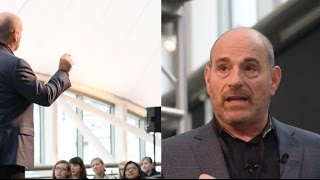
In this presentation, Bob London argues that marketers habitually view products through their own lens of features and benefits, which makes messaging forgettable. He illustrates the problem with a humorous opening about giving a self‑portrait as a gift, then shifts to real‑world examples that show the power of truly listening to customers. He recounts how T‑Mobile’s CEO John Legere turned the carrier around by hearing customers’ “elevator rants” and eliminating contracts, and how a struggling enterprise‑software startup pivoted to the single‑problem solution ParkMyCloud after learning that customers only wanted one clear benefit. London shares a set of “magic questions” (e.g., “What would you get fired for not doing?” and “What would make you a customer for life?”) that surface the priorities that matter most to buyers. He also cites a McKinsey report on B2B firms talking past their customers. The talk concludes with tactical advice: practice agenda‑less listening, use the exact language customers use, keep website copy focused on the buyer’s problem, and avoid unnecessary narrative. By aligning marketing strategy with the customer’s perspective, companies can create memorable, effective campaigns and drive measurable business results.
Chapters
Looking forward to this session by Bob London, President of London Inc. I periodically have breakfast with Bob, and he is such a big thinker about marketing. He has so many insights. Whenever I leave our breakfast, I always have days and days worth of ideas and thoughts. So he's going to share some of his ideas with this presentation, "You Are Not the Customer: How to Improve Your Marketing by Learning the Customer's Perspective." that has been Bob's passion for years and years about listening. So with that, introduce Bob.
Before we get started, I always try to think of what would be a nice little gift to give the host of the event. What could I bring the host? In this case, I selected Paul Dunning. What could I bring that from my perspective would be meaningful? And I thought, I know, I'll bring Paul a picture of me, Bob London. Why? Why did I bring him this? Because from my perspective, this picture has tremendous features and benefits, and because I've been a marketing consultant for a long time, I know it's important to tell you the features and benefits. Here they are. It's in full living color. It has my patented casual jacket thrown over the shoulder pose, and it also comes with this great teak frame. These are features and benefits, ladies and gentlemen. And I also signed it. From my perspective, this is a great gift. Paul's thinking, I don't— I don't get it. I don't know why this knucklehead would bring a picture of himself. Well, what's Paul thinking? He's thinking, you know what would have been nice, Bob? As long as you're giving away pictures, why don't you give a picture of me? That way I can have a picture of myself. This requires no explanation of features and benefits. It's obvious and intuitive to Paul that from his perspective, he's immediately thinking, I can use it on my phone as a screensaver. I can use it in the worldwide headquarters of Capital Communicator. Any room in his house he could put this picture of himself. And just— I didn't put it on the slide— imagine a picture of me at his bedside. It just wouldn't make sense. I'm very comfortable, based on the research I've done and the experience I've had with clients and some third-party research, in saying that so much marketing is forgettable, instantly forgettable, and it's therefore not effective because we're using too much of our perspective as marketers not enough of the customer's perspective. Now we're gonna talk about some examples. In 2012, John Legere stepped into a giant pile of poop. He came into T-Mobile at a time when the company was, let's just say, not doing very well. They were mired in fourth place in the US wireless carrier wars. They were selling a commodity. They were losing customers left and right. It was a very difficult situation at the time. 2012, let's think back. What TV commercials were running. It was the battle of the network maps. We have more coverage. No, we have more coverage. We're red. No, we're blue. Maybe they thought that was meaningful from the customer's perspective. Who are these companies talking to? I think they're talking to each other. The point is, John Legere looked at that and he said, okay, well, I'm not gonna start running network maps ads because our, our map sucks. So what did he do? He went into the T-Mobile call center, he put on a headset, and he decided that I'm gonna hear straight from the customer what is really going on out there. I'm glad he did that because it made a great opening for my slide presentation. And it's a great story. When he was listening on the calls, people were talking about call quality? Anyone? Network maps, network coverage. Here's what he heard. First he heard, he found a visceral window into the public's angst. None of the technology mattered, he said. Then he heard, there's a plethora of hatred for this industry. All of us, all four big carriers. And there was this never-ending list of things people wanted to change. People wanted things to change. So do you think they wanted to change the network map and the coverage? Maybe, maybe not. So he said, my head exploded at that point. And he said he went on a rant with his team about the wireless industry and how he didn't get it. He was hearing there were things that wanted to change, but no one was advertising about the things that consumers are really saying. People hate contracts was what he learned from consumers. They hate it. So So he said, "Let's not have contracts." And you know what the people on his team said? "We can't do away with contracts because everyone does it that way." And he said, "Why?" or "Why not?" Essentially, "Why can't we change?" By the way, I nicknamed this thing, this complaint that people have that isn't listened to, it's the elevator rant. What is an elevator rant? An elevator rant is what your customers are saying about you before or after the meeting, but not during the meeting. They say it when they're on the elevator. And they're saying stuff that's very real and very important, but marketers aren't maybe sometimes making enough of an effort to get that perspective. We're getting into now the marketing of it, but the marketing of it is only relevant and impactful and successful because of the listening that John Legere insisted on. What does it say? It says, "Only T-Mobile breaks the rules to break you free." So immediately, remember that angst, a plethora of hatred? He's just drilling right in on that. And he made a gamble that consumers would respond to that. No more 2-year service contracts, no more data overages, because guess what? This wasn't just doing away with contracts. This was, hey, we're gonna have data rollover, man. All the things people are pissed off about as wireless customers, we're gonna do away with. Now, what is that woman doing? She's stomping Sprint's ass. She is kicking Sprint's ass. And by the way, when you're in marketing and you really want to live the message and the brand, Does it say click here? Nice gentle call to action. Or learn more? It says break free. So the— again, the only reason this marketing was successful was because tapping into all that angst. The angst in the wireless market is an analogy for whatever is happening in your market that people are sick of. What's the outcome of this? Stock price has skyrocketed. This is the point: the customer's perspective, to me, is what is behind every success that's ever happened in business. And marketers need to make sure, and I bet some of you are very good at this, make, make sure you're embracing it before you go off and develop campaigns, products, channel strategies. All of this stuff rests on being in touch with what the customer really wants. McKinsey Consulting, they published a report, B2B companies are talking past their customers. They defined it as the themes that many companies use in their marketing appear to have minimal influence on what the buyer's perception is. So I'm gonna read it again because it's important. The themes that companies appear to use and think are important have minimal influence on the buyers' perceptions. And I've done hundreds and hundreds of interviews with B2B decision makers over the years. This is exactly what's at the root of a lot of problems with sales and marketing in B2B. So now what? What do we do? Companies hire me to come in, find out what really matters to their customers, and then design a marketing strategy around it. And I'll just say parenthetically, and I really don't mean this to be immodest, but when you're a marketing generalist and you're a consultant, I mean, it's really nice and I have control over my schedule and I work with clients I really enjoy, but my income went up by 250% when I started doing this work, because not a lot of people do it, not enough people, number one, and number two, it's important. It's valuable. So there are sort of these magic questions. I think of them as being magical just because for so many of them, they seem obvious, but when you ask a customer, they'll say, "Huh, that's a good question," and then they proceed to give you an insight. What might you get fired for not doing? Now, that might seem invasive, but people will answer this question. And the point of the question is— think about this for yourself— everyone has a job description. There are 3 things that are so important that you might get fired if they don't go well. Then there are 3 other things that are in the job description But if you don't get them done, it won't be a problem because they're not the most important thing. So if I ask a customer or prospect, they're answering this and giving me a clue into what the world looks like from their side of the table. I don't care what my client's point of view is at that point. I just want to know what's on the customer's mind. What would make you a customer for life? When I ask that question, and it's my favorite question, when I ask that question of a decision maker, I can hear them kind of kick back a little bit and go, huh. That's a, that's a really good question. Let me think about that. And then they say, no one's ever asked me that before. So who doesn't want a customer for life in this room? So we all want customers for life, but no one's being asked that question. What would it take? This is one of the miracle questions. Now the hard part is acting on it. When you hear the answer to that, you as a, as a marketer, an executive, an agency might feel defensive. Well, we could never do that. They want this to be a customer for life? You can't say that. You have to internalize it and think about what they really mean when they're asking that. A run-of-the-mill software company that had sold nothing for 2 years. Imagine the immense pressure that the CEO must have been feeling. Imagine the anger that the— the plethora of hatred that the investors felt at the time. 2 years, why haven't we sold anything? I'm the guy who sometimes gets that call. We need an outside perspective, someone who understands buyer behavior, etc. When we were going to market with that software, The statement was, "App Platform helps you get visibility and control over your public, private, and hybrid cloud so you can reduce costs and run the cloud more efficiently." When I would talk to the people in their target audience, they said, "Wow, that's just a really big thing you're asking us to decide on with a lot of features that may or may not match our requirement. You're trying to do too much in one piece of software." They said, "Well, just like tell us, is there one problem it can solve really well?" Just convince us of that. We'll tell you all our problems. We'll tell you the top 3, the things that we'll get fired for not doing, and then you tell us if you can solve any of them. So we said, well, there is this one feature that people seem to like. We call it parking your cloud. In other words, it's like hitting the pause button so that you're paying for your Amazon Web Services 24 hours a day, 7 days a week. Well, this is basically a programmable light switch, like Nest thermostat, if any of you are familiar with that. You set it, and between midnight and 7 AM, when there's no developers using the servers, it goes off, and you can save 20 to 60%. And you know what they said? They said, "That's really cool." So they went from being like this to like this. The eyebrows go up and all the good stuff. "We'd love that. That sounds really cool. Can we buy that?" So now they're asking if they can buy it. And the sad answer at the time was, "No." We can't just tell you that, you have to buy the whole thing to get that. And they said, well, that's the dumbest thing I've ever heard. The elevator rant here is, please stop trying to solve all the problems that you think I might have and just solve one really well. So at that point, we were happy to hear that there was something there, but unhappy that we had this 2-year-old company that wasn't focused on that one thing. We pivoted the company, so we took it from this kind of blandly named enterprise software company that had sold zero in 2 years, which had a short fuse on it because the investors were angry and I don't blame them, to ParkMyCloud. And 10 months later, I'm very happy to report, and this is just such a heartwarming story too for the people involved, they have 35 enterprise customers in 10 months once they pivoted. Having customers is great, and having revenue is important. What that helped them do was go out and fix their fundraising problem, because 2 years with no revenue, you go to talk to an investor, and the investor, I mean, you can't even get in the door. How much have you sold again? And why not? How come? What's the problem. So you have to know what's going on in the customer's mind. You have to do anything you can to get their perspective. Someone who has certainly had failures in marketing, someone who's had a reasonable number of successes, and someone who 5 years ago just converted my whole consulting practice to talking to my clients' customers to get inside their heads, I can tell you that all the great stuff happens here. Go talk to the customer. Just listen. Listen in on sales calls. Hear what they're really saying. And also learn the real language they use. Marketers are putting too much stuff, too much narrative, too much storytelling in the way of the guts of our message. Most people are at your website to do research. They're not there to hear the flowery philosophical stuff. There is a place for that. It's called the About Us. The rest of the website is about them. And when you go out and talk to people, don't sell them anything. I call it agenda-less listening. Ask them questions and don't react. Don't go, "Well, we can't do that," or "We can never do that," or "That's not how everyone does it." And then you can use this to make your marketing more reality-based. There are some very tactical things you have to do. You have to tell people what you're great at, and you have to prove it. You have to emphasize it in the lens of their problem. How does their problem beg for a solution like the one you're great at? Prove that you can do it. Just try and use your customer's language. Why, when we hear something from a customer and they say something in plain English that, that, that's a problem, even if it's technological, why do we have to go back and think about what our copy should say very much? There are too many filters and barriers between what the problem is and the way marketers express it back to the market. Remember, especially on the web, people are doing research. They want facts and figures and substance. If they want narrative, they can go to the About Us section. But if I'm 3 levels down on a website and I see 2 paragraphs of narrative about why I should care about that web page, that's not where marketing's headed. My call to action: please go out and get a perspective that lines up with what the customer's is, and then you can transform your marketing using that perspective. All the things in marketing that go well are because we're in tune with what the customer really wants.
More from Bob




Matt Bowe, fmr. Senior Director of Member Success, Leading Hotels of the World



Beyond Words: The Art of Unveiling Customer Intent Ft. Bob London and Rijuta Bhagwat | Thinkly Talks

How to find out if your product or service is indispensable to customers. (Spoiler: Just ask them)


E21 | Uncovering the Secrets of Deep Listening: A Conversation with the Uh-MAYZING Bob London!
