Boost Art Sales Online (If You Have A Small Following)
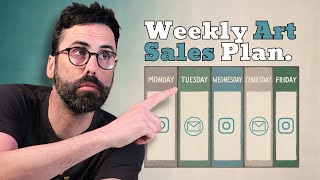
Lennon Bone walks through a weekly system for artists with small followings to make sales. With 500 followers, aim for a 2% conversion rate (10 sales) using three content types: six posts weekly split between attention-grabbing work, personal stories, and direct offers. Test what works, rotate unsold pieces, and message followers to find who's actually interested.
Chapters
Welcome to the Stop the Starving Artist podcast. My name is Lennon Bone. I'm so glad to have you here with me today. We're talking about making sales to a small audience, but not just doing that. Doing it in a way that also grows your audience. So today, I'm going to lay out a plan that you can use every single week to be able to not only grow your audience, but be able to sell to them. Because here's the deal. If you can't sell to 500 people, what makes you think that you're going to be able to sell your work to 5,000 or 50,000? Right. It just doesn't work that way. And a lot of you are wanting more and more followers, but if I just handed you a bucket of 15,000 followers right now, you wouldn't know what to do with them. And you might be overwhelmed and you might feel afraid of, like, how do you even handle the pressure? Right? Which means you're just not quite the person you need to be yet to be able to make that business work. And that's okay, because the biggest thing I see artists do is they get hung up on overwhelm. It's like, oh, my gosh, I don't know what to do next. And I get it. I also get questions based on these episodes. And so at the end of this episode, I'll actually be answering the most frequently asked questions about these things. So you'll want to stick around to the end because we're going to go even deeper on the stuff that maybe feels a little confusing. Right. If you focused on the three things we're going to talk about today, you're going to be good to go. Okay? So I am so, so proud. So our community has made, as of today, $136,014 since January 1st. We're on a road to a million dollars this year as our community, and I am so pumped about it. It's a big ask, but we're moving and it feels really, really exciting. And they're doing these things and we're talking about these things inside the community. And so, yeah, I'm giving you the goods here. All right, so what do we need to do to take our real life sales online with a small following? The first thing I want you to consider is how many followers do you have? Okay, now I'm going to pretend like you have 500 people at your disposal, meaning this could include your follower count and your email list. Let's just start there. We're going to keep it really, really, really simple. And 500 is a nice, simple, round number. Okay, so that's why we're going to start there. Let's say that, you know, your hope is to sell to 2% of those people. So that means that we will make.
Ten sales out of this, right? 2, 4, 6, 8, 10. Two for every hundred. Great. So if we're going to make 10 sales from these 500 people, what do we need to do? Well, we need to let these 500 people know that we have something to sell. Right. And we need to do this, obviously, with our content. Okay, I know that dirty word, that stinky word, content. Okay, here's the secret to content creation. Are you ready? Everything is a test. Everything you make is a test.
Everything you make is a test. Don't go into social media and content creation with this feeling like everything needs to be perfect. Come into it as if you are scientist. Right? What can you do to test these methods and see what's working for you? Right. And this is what I teach my community every day. Because when you start to understand what's working, that's when you know what to do next. Okay, so we have 500 people. We want to sell to 2% of them. That means we now have 10 sales as our goal. Beautiful. So what do we need to do? We need three types of content that lead them to the sale. We don't want to start with the sale. Right. Because here's the truth, only about 10%. Actually, I think it's like more than like 8% now of your audience will ever see one post that you do. Crazy, right? Okay, so if 8% of your audience are going to see a post, that means we need to be putting some posts out. We need to be figuring out how we're getting them to come along for the ride a little more. So the first level is what we call attention. Right? Just getting attention. The second level is connection. And the third level is sales. And in the connection bucket, we want to think about one big thing. Who is your buyer as a human being? Now, this is big because most artists have the biggest issue with just reaching other artists. Why is that? Well, it's because when you put out just process videos or things that talk about technique and stuff like that, people come to social media to be educated, entertained and inspired. So what educates, entertains and inspires artists? Process videos, they love that. Right? So it's normal for them to get excited by that and it's normal for you to get those kind of followers because the algorithm says who is the most Likely person to love this style of content, and they put it out to them. So in the attention phase, we want to broaden our bucket. We don't want to just go so narrow. We want to go broader so we can talk about things like our values. What do you believe in? Right? What are you excited about? What frustrates you? You know, and these could be things within the world. This could be. I mean, there's a lot of ways that you can go with this. So start with the value content. Okay. And you're going to do this. Let's say you're posting six times in a week. And I know some of you are like, that sounds insane. We're going to get to that in a second. Okay? So of the six times, three of your posts are about that value. So you're speaking to a regular person, not an artist. Put a little bit of your art stuff in there, but don't, like, overdo it. Make it about the person and the idea. Okay, Next is connection content. This is going to be about two pieces per week. Okay. And in connection content, it's more about you. This is where we could have one. One of these posts could be like a personal story about who you are and what, like, where you come from, why you believe in these values and things that you've been talking about earlier in the week. So these can subsequently, like, talk. Like, you can talk about each thing as it goes. Like, it could be today I want to talk about this television show and blah, blah, blah. And then, well, here's why I value that. And then here's a story that talks about, you know, how I got to that value. That's your connection piece. Now we're getting deeper into it. So for me, a. An example of that is like, this week, you know, my. Unfortunately, my daughter went to the emergency room. She's totally fine. But, you know, I did a little post about that because I didn't really have time to do anything else. And, you know, I wanted an opportunity to just kind of speak direct to my people and say, like, this is what I'm going through. This is what is happening. You know, And I got so many beautiful, sweet comments from you, all from followers, you know, and that's like, it's the best. You know, this is our opportunity to really connect. Another one of those could be like, all right, now let me tell you a personal story about me creating and, like, what's going on in my creation world. Right? So that could be your. Your connection content. Then you have your sales content. So One post a week could be simply, here's what I have to offer. Here's where you can get it right. If you just started that way and that became your plan, I guarantee you that if you get good at those elements, you will grow and you will make more sales. Because there's only two things that you need to be focusing on to grow your art business. Getting in front of more people and making more offers. In other words, saying like, hey, this is what I have available. If you'd like it, here's how you get it. Okay, so how then do we keep up with six posts? Well, again, think of this as.
A test. Okay? It's like everything you do on social media should be a test. So what we're looking to do here is make things fast, move through it, and then pick the things that resonate most and get better at those. I know a lot of people will try to sell you on the fact that, you know, you need to get really good at editing. You need to get really good at all these, like, all the hashtag things, the hook and all that stuff. Yes, it's true. Like, those things are good, but those are like the cherry on top. What you really need to get good at if I'm going to be very direct and frank, is being yourself. You know, my hope is that when I show up here, you see me speak, and then if we spoke in real life, they'd be like, that's the same dude that I talked to or that I listened to on the podcast. Like, this is the same dude I'm watching on YouTube. That's what I want. Because.
The problem is most people are so afraid to be themselves that it never works. The most important thing is the messenger, and that's you. The second most important thing is the message. That's these elements that we're talking about here. You know, that's where we get into, like, the strategy of the offer. What can we do to make the offer juicier? That's where we get into the strategy of telling a better story. Right? That's where we get into having a better hook. Right? But we can't have a great hook or a better story unless we know what we're trying to even say.
And that's really important. So that's why I love to start with this idea of your values. What do you believe in? What are you excited about? And that is a beautiful place to start, and that can lead you down the road to help all these other things and knock all the other dominoes over. So make your posts really simple, put them out into the world and then once a month go in, look at your analytics, see what's working well and do more of those. Now when I say see what's working well, I really mean like make sure that it's doing what you want it to do. Because if you're getting followers, but it's just more artist followers, well, maybe it's not doing what you want it to do, right? But if it's getting you more followers that are potential buyers, now we're getting into a place where we know it's doing what you want. So to recap content that showcases your values, who are you as a person? What do you believe in? What are you excited about? What are you into right now? What's inspiring you? Right? Then we have content that shows connection. This is the deeper story of how you came to those values. This is the deeper story of why you make your art and what you're making right now. And then we have sales content and the sales content is saying, hey, I got this thing available. If you want it, here's how you get it, let me know, I'll make sure I get you taken care of. If you do those three elements over and over and over again and then go back and look at the data and see what works, see what doesn't, you will be blown away at how much you grow. Alright, so as I said earlier, I'll get questions about these types of things. And so I polled and I saw these questions come up and so I want to go ahead and take a stab at answering them off the cuff. So the first one is how do I know which of my followers are actually, actually interested in buying? Right. So I'm getting likes and comments, but I don't know who's serious. So how do I figure out who my hottest leads are and the way that I can do that at like a booth? Right? Because when you're out in the real world selling your art, it's a lot easier to tell who might be interested. Okay, this is great. One of the things that I teach in the program, Heart Based Sales Accelerator is to just be in conversation with your people. When you're doing it in real life, you're in conversation with the people. That's what lets you know if they're a hot lead or if they're interested in like buying your stuff. So online, be in better communication with your people. A simple way to do this is to DM them, right? Just everybody that kind of comes into your world and starts Engaging. Drop them a dm like, hey, what's up? Just wondering, you know, if there's anything I can help you with. Wondering why you're here. Would love to know, you know, what brought you here. Just simple questions like that can go a long way and have a real conversation with them. You'll be blown away at what you learn doing that. Okay, it says, what if I've already shown the same piece to a few times and it didn't sell? Is there a point where I should just move on or am I doing something wrong in how I'm offering it? This is a great question. So I don't know if there's a time that I would ever really move on. I like having things sort of in your back pocket that you can keep showing. If you have multiple pieces that are sort of sitting in the background and you're waiting to sell them, I would consider rotating through those. So if you're following the structure that we talked about today, rotate through those. Like every month, let's say go through four pieces, you go back to the beginning, you try again, right? Because the idea is that you're getting in front of new people every time. And so that gives you more opportunity, you know, if you keep going and you find things that are working like a style or a specific format or structure or.
Just, you know, a specific piece of art that works well, you know. You know, if you need to make money, like obviously I'd say make more of that stuff, you know, and then put more of that out there. So it's really up to you. But I think rotating it in is still a good opportunity. So how often should I post about a piece that I'm selling? So you mentioned six posts in a week, you know, is one a week enough? Is that too much? Won't people get annoyed? Listen, you know, in the heart based sales accelerator, the way I actually teach this and what I recommend doing is having three versions of selling happening all the time. You have soft sells, which is what I'm talking about in this video. It's like, how do you just sort of like put something out there a little bit, you know, every week? You can also do this through in your emails and things like that. Then you have automated sales. Automated sales are more like you're doing those inside your email list and you're pushing people through, right? Then you have specific releases or big pushes. And in those big push times, I want you selling for at least a whole week, every day straight. And because of what we've talked about today, which is that most people don't see your post. And if they do get annoyed, then, you know, let them get annoyed and let them get out of your way. You know? Like, that's. I know that sounds harsh, but, like, you're trying to run a business here, you know, like, that's. That's the goal. And you want people that want to be in your world. And if people are just looking for an excuse to get out of your world, just let them go. It's totally okay. You know, I. I don't know. I just. I feel for this. This situation, but I also just think, like, if you're being pushy and mean and, like, that's a different story. That, like. But if you're just making an offer and saying, hey, this is available, if you're interested, let me know. People are getting annoyed and they're like, let them go. You know, that's my thing.
All right. What if I'm already burned out? This will be the last question. I'm really excited about this one. What if I'm already burned out on content and social media? I'm tired. I'm trying to keep up online. How can I do this in a way that doesn't drain me? This is a great, great question. The best thing you can do is start to ask yourself, why are you burned out? What parts are getting you burned out? 9 times out of 10, you're burned out because you have a big expectation. A lot of clients come to me and they'll say, well, Lennon, I need to make this work right now. There's no guarantees that you'll make it work right now, you know, and let's tout out some average numbers so you can see how much better you might be doing than you think. If you're selling 2 to 3%.
Conversion on your website, meaning out of 100 people, 2 people buy, you're doing really well. That's amazing, right? If you are growing your social media by upwards of 10 to 20% per month, you're doing amazing. You are doing amazing. So I'm not talking about all. I'm only getting 200 views. Like, I'm talking about you went from 200 average views to 240 average views. That's 20% growth, right? Like, that's. That's like, we have to look at ourselves and say, what do I need to do to continue to grow? Really, really important. And then you have to say to yourself, like, what is the part of the process that is burning you out? Because it could be that you're again expecting this really high quality thing. And the more high quality your expectation is, the more energy you're burning because you don't know how to do that yet. So my goal with every client of mine is always to say, like, don't start with the highest quality expectations. Start with, you know, this is what I can do right now. I can show up, I can make a little video on my phone, I can talk about this in this way. And I give structures. It's like, here's a story structure, here's a framework, right? And when you have those frameworks and story structures, you kind of fill in the blanks and that makes it a little easier. But it's still crazy how many people won't even do that because they're so afraid of like, oh, well, it won't work or it won't be perfect. I can guarantee you that if you just show up and get better at telling stories and being a communicator and being yourself and you don't even worry about edits, like it's going to get better. Like if you notice, I do very, very few, very little edits on this video version of this podcast because I don't have time for it. But I know that if I show up and I be authentically me, I'm gonna find the right people, right? And I have good quality stuff. But I've escalated that as you go. If you go back and watch old stuff, you'll see there's some videos that are pretty shoddy and that's okay. They still got some of those, got the most views of any others. It's crazy. So don't set too high of expectations. Meaning. I guess what I really mean is like set high expectations, but don't expect it fast. That's a better way to put it. And then don't set, don't be a perfectionist. Don't expect that everything has to work like this is a testing ground. This is an opportunity for you to test things, gather data and then go back and pick the best performing stuff and do that again. I mean, when I'm working with artists, I want you to have a boring frickin business. I want this to feel simple, that you are repeating the same things over and over again. Because once you get your business up and running and you can just repeat things, that gets you all your time back and you can get back into creating. So that's how I would answer that question. Now, when it comes to making content and putting your workout in this way, there are three huge mistakes that I see artists making all the time in the next episode, which you can find right here if you're watching this on YouTube, and I will be talking about that very thing. So click on this if you're on YouTube. If you're not on YouTube, it'll be coming, coming out next week if it isn't already out. You can listen to that now. Sending you tons of love. Remember, you don't make art. You are the.