Friday night hang... let's make something?
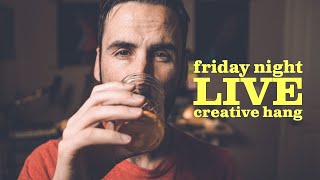
Lennon Bone hosts a live session on creativity and personal branding, talking with viewers about how creatives can actually make money from their work. It's part hangout, part workshop on the real challenges artists face.
Chapters
Hey, guys. We are live, and it is Friday night. It's 8:18pm Central Time, and I don't know. I don't know how long this is gonna be here. I was gonna show up and do my video thing this evening, and then I was like, you know what? I would much rather just show up, actually live, and just be here with you guys for a little while than to spend the same amount of time plotting out a little video and doing it. That way, we could just have a chat and talk about what we're going through here. So we're talking about creativity tonight in all forms and facets. I know we got Jeremy here, Susan. Adventures in Dirt.
Karen's here. Ingrid's here. Susan's here. I know we got some others here, too. Tech for your needs. Good to see you. Tech for your needs. He asked, do I work for Tim? I do. I mean, I would, you know, I would like to say that he works for me, but that's just not true. I do work for Tim. That's right. Yeah. Adventures in Dirt is here.
Cool. Yeah. So I don't know what you guys are up to tonight, but we are. Yeah. Like I said, we're talking about creativity. I figured this would do. We just do a little creativity hang a little opportunity for us to kind of get to know each other a little better. If you don't know me yet, my name is Lennon, and I'm a creative strategist. So a lot of what I do for creatives is I help them to really figure out what it is they're trying to do with their creativity in terms of doing meaningful work. So what does that mean? Well, it's kind of the idea of we all want to do something that we really love. And I think as creatives, we tend to struggle a lot with our value and what we're worth. Meaningful work to me, is something that not only gives us meaning as creators, but also brings meaning to someone else so that we can exchange value and in different ways. And money is a part of that. And so I'm all about helping creatives figure out how to make a living doing what they love, how to make a side hustle out of what they do, and how to really clarify their genius, how to really clarify what is their most valuable traits, and then turn that into essentially a brand.
I don't like that term for creatives because I know that that feels really icky.
And it kind of feels icky for me too, sometimes. But, you know, taking that idea, helping somebody turn that into a brand, and be able to reach more people, grow their audience and grow their business in turn. So super excited to be able to. Yeah. Talk to you guys. I want to start with wins. So the first win. And I want you guys to type your wins in the chat, please. So let me know what your wins are.
This evening. So we got, let me see here. So I'm trying to deal with both chats at the same time. So you'll have to.
You'll have to kind of bear with me here.
Okay, so the wins for this week. Yeah, I'm getting them now. Okay. The wins for this week for me is one. I have a bourbon here. This is a Knob Creek. It's actually the maple flavored bourbon, which is super tasty. I haven't really.
The first time I got this, I got it because I'm also an old fashioned fan and I like to make them with a little bit of maple syrup sometimes. Or I'll do my own like burnt brown sugar syrup, but with this, with the maple kind of in it. I don't even need any of that syrup. It's definitely pretty sweet, but it still tastes really, really good.
So yeah, I would recommend it. It's worth having. So cheers to you guys.
Win number one. Win number two for this week is, if you don't know, we launched a workshop and a lot of people here inside the chat are inside that workshop with us as well. And the workshop is about helping creative people to learn how to show up more as themselves and just feel more natural in front of their audience. How to really start to dig a little deeper. I feel like.
Our issue sometimes is I'll just kind of go on a little, a little soapbox here.
As creative people, we want to grow things on social media because we know it's important. Right. We know that it's important to grow stuff on social media. And the problem then kind of becomes that.
When we try to do that, we have. This is still such a like wild west landscape that we don't have a lot to look at except for all the stuff that exists already. And what's the stuff that kind of shows up for us typically? Well, it's all the tutorial based stuff. It's all the like how to content. Because a lot of what is taught in terms of social media and those kinds of things is bring value to your viewers. And I agree with that. I think that is incredibly important. But I think a lot of people have just dumbed down the idea of value, boiled it down to how do I just teach something That I know. I think value comes in a lot of different forms. Hey, Tiffany. Hey, Karissa. Oh, cool. Glad you guys are here.
I think value comes in a lot of different forms. And I think the highest forms of value, if you look at even something like Maslow's hierarchy of needs, Right, the bigger forms of value come in motivation, inspiration.
Connection, community, those kinds of things.
Just being able to become sort of the highest version of ourselves. And how does that happen? I think that happens through connection. I think that happens through vulnerability. And so I have a lot.
I have a lot of thoughts about how from a social media standpoint, as creatives, when we just dumb it down to teaching these very functional things like how to use a certain plugin for your production software or how to do this. Not that those things aren't valuable and not that those things can't get eyes in front of you, but. But if that's really all it's about, then we're lacking a little more substance. We're lacking an opportunity to really connect with people. And so that's really a big part of where I'm at right now. And I've been thinking so much about it, and it can be hard. People grow their YouTube channel. And so I feel like I've been walking this line recently of helping people that want to get views to get views, but also just constantly reminding us like, hey, views is not the end all be all. Like, that's still just a piece of the puzzle. Let's look at what we as people really want. What's the heart behind what we want? And views are amazing. And getting more subscribers and getting more followers on Instagram and growing our email list, all that stuff is really important to try to build a creative business. But it's not the end all be all to have the most of all those things. As Seth Godin says, we don't need more, we just need better. We don't need more followers. We don't need more subscribers. We just need better ones. Right? Okay, so we got some wins coming in. It looks like Adventures in Dirt says when I took advantage of the Black Friday deal from video creators, we'll jump into the 30 days this weekend. That is awesome. Yeah. Please come hang out in the community with us there. Karen says, I had a very impactful email that really reassured what I'm doing is the right thing. Yeah, Karen, that is so cool. And.
Those that may be watching this later or are here that don't know. Karen had such a sweet email from somebody that's been following her that actually, I think fairly recently started following her, but found her through one of these more discoverable videos and then got to one of these heartfelt pieces of content that we're talking about here and how much that resonated with her. And so what a cool win, Karen. I thought about that a couple times today, so cool.
Great. Let's see here.
Ingrid says I'm digging in with some patrons and email responses and realizing that a lot of my audience is stuck more than I realize, really learning about them.
With myself, I'm getting vulnerable in my content. Big breakthrough for me. Yeah, big win. That's so cool. Yeah. So Ingrid is.
Trying to figure out what the next step is with her community in terms of her subscribers and what she can do to help them more. And this is a lot of what I'm talking about when I say that we have our creativity and we have an opportunity to grow businesses. And I know so many people that watch this. Not that the audience here is big by any stretch, but the people that watch this are artists, they're musicians, they're creatives in that way. And if I'm being completely just frank about the whole thing, I think the arts industry is incredibly behind in terms of what they see as availability, in terms of what they see as potential money making opportunities, all these kinds of things. And I think the reason for that is because we started to look at it from a very all or nothing perspective. You're either in the camp of, I want to grow my audience, I want to be really big, I want to be known for what I do, etc. Etc. Or you're like, I just make it. And I know this is very generalizing for people, so forgive me, but often the way I see it is you're in that camp of like, you want to get real big, or you're in this camp of, ah, listen, I just do it because I love it. That's it. And I don't see enough people that are looking around at the way all these other industries are, where it's like there is a complete middle ground. There's an absolute middle ground of being able to take what you're good at, finding a way to turn it into a business and solve problems for people. And the romance comes because we just want to make. We say, well, I want to make my art and I want people to buy it. But then the pushback to that is that as creative people, as artists, musicians, whatever, we have devalued our own creativity to the point that now we complain and say Nobody wants to pay for this stuff. And which makes us then afraid to ask for money because it's like, oh, you know, well, nobody in my industry pays this much. Or, oh, they can just stream it on Spotify for free. And that's true. So that work has devalued itself in many ways. And I don't think that's bad because to me, what's cool about that is now you have the opportunity to make the work little bit for you and a little bit for them, and then you can use that work to connect to this other value opportunity to then bridge the gap. Excuse me, bridge the gap with a business that then serves these people in some way. And I think that that's such a fun idea to think about. If you guys have questions about this, I'm just, like, kind of going on a whim here.
Am all about talking deeper about this, but another win. Susan says, posting several pieces of my art.
Oh, awesome. Not what people expected from me. And getting overwhelmingly positive responses. And a sale. Boom. That is what I'm talking about. This is what happens when we start showing up. And not just.
For me, but for, you know, or not just for your people, but for you, too. Like, showing up as you for them. Right. That's what starts to happen. So cool.
Okay. Jeremy says, well, a lot of people say only to do it for themselves because the motivation has been kind of taken away for a lot of us. It's about time to build this back up again, though. Yeah.
And if I go back, if I may, to go back to that. That is an awesome point, Jeremy. Thank you for making that. If I may say to that point.
I'm learning that motivation is such an intrinsic thing. You know, we had a meeting today where a guy was asking, like, how can he find more motivation? And my response to that is like, if you. If you aren't motivated, then you've lost touch with why you're doing it. That doesn't mean that you can't be tired. That doesn't mean that you can't just all of a sudden be like, you know, I'm kind of done for a minute. And if I'm like, the reason I'm here this way is because I was tired. I was just like, I don't really want to make a video right now. I don't feel up to it, but I still want to, like, do the thing. And so I showed up this way. But because I'm still motivated, there's still an intrinsic motivation of, like, talking about this stuff, prying into some ideas. And I used to, even for me, battle with the thought of looking at creativity in this light of like trying to do more heart level marketing or heart level ideas instead of this surface level bullcrap that we see a lot of art marketers talking about. I'm all about the connection, heart level marketing type stuff. And I used to think, well.
That'S not creative. But what I'm learning is that my favorite creatives are really thinking about a lot of that stuff a lot of the time. Like, how are things connecting with people? How are we resonating? How is our stories coming together? They may not put it in terms of marketing or those things. And that's totally cool. But that's what started to motivate me personally is when I was able to again look for the right way to come in as myself. And so, yes, that's where we are doing it for ourself because we do have to start with our own intrinsic motivation. But you know, as Seth Godin says, and I'm gonna probably quote him a lot tonight because I am like just knee deep into a lot of his stuff. He says that a big, you know, if we're gonna show up and have a hobby, that's self serving, A hobby is self serving. And I totally agree. So if we just want to make something because we just want to make it, that's cool, do that. We should do that still. That's a hot. That's a hobby though, right? But if you want to have any sort of business, then you have to show up for somebody else. But the motivator still has to be our own motivator. How are we motivated to help people? So it does still start with us. And I know that maybe that is too much of a gray area, but I hope that it's actually freeing. I hope this is like a concept that more creatives start to jump in on because I think it's so cool.
Classic Enrique. Well, I definitely don't know the middle ground. So, Enrique, what do you mean when you say you don't know the middle ground?
How can I help you potentially with that? I'd love to, but I'm so glad you're here.
So Karen says there's always someone willing to do it for free. And I'm done doing things for free. Yeah, when it comes to creativity, actually. Drink Break. Cheers, guys.
So when it comes to doing things for free.
Yes. There is always somebody that will do it.
And.
What we have to remind ourselves is that an exchange of money is a two way street, because it puts both people on the hook. It for the giver of the money, for the purchaser. They're saying, okay, I like this enough. I feel like this does something for me enough that I'm willing to give you money for it. And when they do that.
They are way more likely to enjoy it, to respect it, to.
If it's like a learning opportunity to act on it.
You know, it puts us on the hook. And then the beautiful part about that is now they've set the expectation to the seller to say, now I want you to deliver on the thing that you've said you're going to deliver on. Right? And I think that's an amazing exchange because now, as the seller, you get to show up and you say, now I know I'm going to do my best work because I don't want to, like, make this thing what it is. Every free thing I've done for, like, friends or other, like, beginning clients when I was first getting started ended up in just a huge ball of stress because the expectations were blurry, the lines were blurred. There was never a clear depiction of what. What I was going to do as a producer and what they were going to do as an artist. I was like, well, let's just kind of see what happens. Blah, blah, blah. And there were no lines drawn, no value exchanged. And then all of a sudden, we'd get toward the end of the project, and they're asking me for all these revisions, all these different ideas to be tried, and then they end up not even putting it out. And we've spent weeks or months working on it, and they just don't ever release it. At least if somebody paid me for it and they didn't release it, which has happened also many times. A lot of the reasons I'm in this space actually in more of, like, trying to push creatives in this way to go after something, is because I got tired of seeing a lot of artists not know how to take the next step, to not know how to take action. And so all my favorite conversations that I'd have with people in the studio ended up being these conversations of like, well, here's what you should do next. Right? But that happened because there was an exchange in value. And so if they didn't release it, I was like, well, I got paid, so they still appreciated it. And every single time that I got paid, they walked out of there so much more excited about what we had done together. There was something that had happened because.
They'D put skin in the game and they had gotten way more pumped about what it was we were doing together, and it made it so much more fun. And, you know, the thing to remind all of us, because I'm having to remind myself of this sometimes, is like, if it doesn't work, we just give them the money back. Like, you know, we're not out to skeeze anybody. We're not out to try to take anybody, take advantage of anybody, you know? So I think it's kind of as simple with that. I love that, Karen, like, forget that noise, you know? Ingrid says the fear around money is so real, but I'm realizing I'm just approaching it with the right perspective. Yeah. Bridge the gap. Definitely want to hear more on that. Okay. Yeah.
Cool.
But you still showed up, and I think we all love that. Yeah, I appreciate that for sure.
Susan says it was hard when I was writing to tell people that they had to pay me when so many people were anxious to get published that they would do it for free. Yeah. I remember the early days of.
Doing music stuff and our band kind of getting going, and.
We did so many things for free. So many things.
And then when I started working on my own and doing more of freelance work, I did a lot of work for free. And you know what happened? If you've heard this phrase, I've said it many times, it's that. That phrase of when you change the way you look at things, the things you look at change. I think I said that. Right. When you change the way you look at things, the things you look at change. So.
When I heard that phrase, I was like, okay, I'm going to start to change the way I look at money. I'm going to start to change the. And I just want you guys to know I am not great with money. I still have so many walls around money and something my coach and I are working through right now. But in those first moments of starting to charge, it was like, okay.
If I change the way I look at things, will they change? And the first step to that was just starting to turn down all the people that I was doing for free. And so what I told them was, you know, hey, I just want you to know I love working with you, but currently, like, I'm shifting. I've had. I don't have as much time now, and so I have to be more cautious with how I do things. And so now I've had to put a rate on what I do. And I just started with that conversation. And did I. I'd like to say that that meant all these people were like, oh, cool, well, we'd be happy to pay you. No, 90% of those people were like, oh, okay, cool. Yeah, well, I don't have any money, so I'll see you later. So I was like, okay, I guess that's what this is. And it was terrifying because I felt like I had lost all my. What I realized is that those weren't clients. Those weren't clients. That was people that were taking advantage of a situation. You know, I got tired of getting paid in gift cards and pats on the back. Like, not because those things don't matter, but because, again, what I said before, it's the idea that we need that exchange in value so that we can draw those lines. When I pay a friend, I'm so pumped because I get to then tell them, okay, now here's my expectation. And they love that because now they're like, oh, okay, yeah, this is exactly what you want. Great, let's go do that. And there's something so freeing about that. I think it's just a lot more. A lot more fun.
Let's see here.
Is this Dave Grohl, the musician Walshy? Yes, my name is Dave Grohl, actually. I'm glad that you're here, and I really appreciate that. What are your thoughts about signing deals for revenue sharing for your art in exchange for significant promotional exposure? Did it have an influence on all the art that you were creating? What are your thoughts about signing deals for revenue sharing for your art in exchange for significant promotion, promotional exposure?
Yeah, so I was on a record label where we did some of that, where it was like.
You know, there was obviously some revenue sharing in exchange for promotion.
And on the back end of that.
I.
It's so gray because you're not. You're never really sure, like, where that lands. But here's what I would say to anybody that's starting.
This is the honest to goodness truth, and this is the way that we did it, too, is that in those early days, we didn't even get on with a label that had promotion or did any of that other stuff for some time.
A few years. And the reason that they even signed us on was because we had grown an audience and had shown some sort of promise and being able to kind of go further with that.
So what was. You know, what that comes down to then, is that if you're just starting and you want to make money.
Hands down. Hands down, I would go and figure out a way to make the money yourself first, because it will Be a lot faster to do it yourself to get those startup costs. And then once. And I know that that sounds like, oh, that's, you know, like, that sounds so romantic, but when we talk about this idea of bridging the gap and maybe we can go deeper into that in terms of, like, how to bridge the gap with, you know, making a business that like, supports your art or works alongside it, even freelancing or doing any of that stuff. Like, if you can freelance in the same industry that you're making your art in, that's great because then you can start to develop more connections in that. And so, you know, if you just need to make an extra $2,000 a month, then, you know, what is that? 20 people paying you a hundred bucks? Like, that's not that hard to do. Even easier to get, you know, 10 people paying you $200. Like, if you can provide a good service.
Then, yeah, you can make that happen so much faster than what it would take for you to get somebody to give you the promotion. And the promotion is great, but the promotion doesn't always equate to sales. And now we're in this place to where promotion overall is cheap. Like, if you got a good thing going, you can run Facebook ads against your stuff on your own and you can hire somebody way cheaper online than you would ever have to. Like, you know, give half the revenue to some sort of management company or a label or something like that. I just think that you stand to make more money up front and then as you got bigger, you have more leverage then to say, hey, I already make this much. I'm not going to go away without at least having this to start. And then we can start to move on and have a bigger conversation here.
Yeah.
Had quite a few tracks shelved as well, Jeremy. Yeah, but I've been paid for them. Oh, man. Yeah, Been there, done that. Mill St. Fleur. I've been wanting to do music since I was 16. Now I'm 20. Is it too late? Nope. Not even close to too late. Not even close. I didn't start.
I didn't start touring until I was 22. So, yeah.
Question. How do you draw the line between how connected.
To how connected to our community? For example, they communicate to a lot through us, with us, through messages. And we need to build the community, but we need time to create. I mean, how much do we give to our community and build it? Yeah, that's a great question. Okay, so to kind of summarize how I hear Karen's question is, how do we.
How do we make sure that we're building our audience or our community and still have time for creativity?
I wish I could give a great answer here. Right now, I'm having issues with this too, which is honestly why I'm showing up the way I am. Because to Jeremy's point.
When I lost my own spark, if you guys don't know this.
I essentially strategized all the life out of everything I was doing. I took the heart out of it because I was trying to make it perfect and everything I was doing was focused on an end result, right? And so that took all the heart out of everything I was doing.
Which made me not want to show up anymore. And so now, recently, I've kind of found this new rhythm that feels a lot more honest to me. I'm not afraid to not show up anymore, which is really cool. I mean, I am a little bit, but it's like, it's getting a lot better. And so to Karen's point, with that in mind now of how do we balance those two things, I think it's really important to set boundaries. And we often, as creative people have.
A big heart. Like, we're big heart heavy feelers. A lot of us, like, we feel it. It's like what we want. We just want people to like us so bad and we just want to, like, show up and do what they need and we just want to like, do that thing. And.
There are ebbs and flows. There's times where I think we have to just block it out and say, no, this is my time, this is my time.
Nobody else gets this. And you turn them off. What's so cool, though, and what I've learned? And honestly, I do this to my friends and sometimes I feel really guilty about it because they'll call me and I just won't answer it. And these are close friends, the same way that I won't answer emails. But that's usually after a day where I've put out a lot of energy, where I feel like I've given a lot and so I have to just let that go.
And just not even show up for them at that time. I just cut it off and say, no, this is my time. Because I ride that line between extrovert and introvert. And so I thrive on just going inward. And I'll be doing actually a lot of that this weekend, just hanging with my family and my kids. And so I get real excited about that because I'm a thinker. I like to sit and ponder on stuff and Then go inward. And so I'm just learning the same way you are, Karen, to just block off time and get really precious about it and say, you know, I know that I need this much time to create, and I know that my community still needs me. And when we start to say, again, what's the goal? If the goal is I need to make money to support my family, then, you know, you kind of start to go from top to bottom. It's like, my family's first, my business is second. Right. My job is third. And then.
Everything else, like, then real close friends, and then everything else comes below that. And the only reason that the job kind of comes in, you know, second and third is because. And above my friends is just because that supports my family. So I have to. That has to have a priority right now. But because those also are such big passions of mine, those feed me personally, and so they then feed into my family. So then it's like my. Within the business, though, isn't always the community. That's a piece of it. But the community building is still kind of down here at the bottom. And so sometimes I just have to say, okay, I just don't have time for that right now.
And I think that's okay.
I don't know, Karen, if that helps. I'm sorry.
Okay. Or. Yeah, right there with you. I get so many messages, and answering them takes our prime creative time. Yeah, if it's taking your prime creative time, then don't. Then don't. Just don't let it, like, give yourself the permission to just not answer it, you know, right away.
Okay.
Need to save this to remember that language.
I did freelance for a company for many years and never got paid. I did so much for them. Finally left them. Now they're not paying people to do lives. Not cool. Absolutely not cool.
Walshley says, I love your drumming and songs. Thanks, man. Yeah, I mean, you know the Foo Fighters thing, ever since we did that whole, like, show, I wasn't really proud of that work, but it was a good idea for me. I want a lot more leverage before I get into deals of any kind. As soon as I have brand and I'm recognized a little bit, I'll start thinking more about deals. Yeah. And, Forrest, Neil says, thank you, Lynn, and I appreciate your answer because my question is about record labels. Yeah. So, Forrest, that's great. And it's not to say that record labels are bad, but you.
The truth is that their exposure may or may not even work. Right. We were on a label for three years before Any of the exposure started to click, and we were a ban for four years before that. So it's like, yeah, man. I mean, there is no promise to any of that stuff. So to give them half the money right away. I think it's better for you to prove a concept first, even on a smaller scale, and then expand it from there.
I'm an introvert who's very good at taking or faking. Being an extrovert. Yes, that's how I feel. Josh. June, do you have any experience with vocal training as an adult or finding good practice spaces for vocalists? That's a good question, Josh. I wish I was a vocalist. I sing, but I don't sing well. And.
Yeah.
Good practice spaces for vocalists, but I am a drummer, so I know the plight of having a practice space and how difficult that is because I'm definitely, like, the loudest person ever.
The loudest instrument that takes the longest to set up. I always felt like the drums were like the instrument that was so loud because it takes so long to set up. So it's just like by the time they get the damn thing set up, they're just pissed and angry. And so it's the one thing that they get to do is just be louder than everybody else just to kind of like.
Shove it at them or something. So, Josh, I would say, you know.
Consider.
I would say consider contacting. If I was going to help somebody out to find a practice space, the first place I would go to look is a university. I would look at the university because two things will happen here. One, ask the university, hey, I know you guys have.
Vocal spaces or whatever for your students. I'm not a student at your university, but I would.
Love to be in touch or here's how I would do it, actually. Sorry, I'm thinking about this as I go. I would consider contacting the university, getting a hold of their music department, and then saying, I'm considering auditioning for your vocal department and I need a space to practice. Do you know of anybody that has a space locally? And I would start there and just say, like, you know, free or cheap. Because universities and schools and all those. All those kind of connections have a lot of great opportunities where maybe it's paid for by the city or something like that, and they'll get you something that.
They just have a lot more connections in that world for people in that space for educational purposes. And so, you know, maybe you're not going to audition, but it's really just about, like, getting that lead for the practice space. And seeing what happens or.
You know, ask them if they can put you in touch with some other vocalists inside the program and see what they have to offer. That can be a great way to think about that too.
Yeah. So as an adult, I know is maybe the turnaround like, oh, I'm an adult. They don't necessarily know that on the phone, so I think that's fine. Or through email even.
Introverts can be extroverts too.
Okay. I have always been introverted in a way and a massive thinker. My parents made fun of me when I was a child. A daydreamer. I'm just very good at acting extroverted, but it drains me as well. Yeah, yeah, absolutely. Lifted noise what's up bro? I'm wondering about your channel. I was wondering about your channel a while back, man. Yeah, thank you. Hadn't seen it in a while. Didn't have the bell clicked. Change your channel name. Yeah, so I did. So. Lifted Noise just to. Yeah, if some of you are here from, you know, some time ago, I used to do everything for musicians and I had a couple friends come to me that were visual artists. My wife, we grew her stuff, she's a visual artist. A couple other just creative people and they're like, man, what you're saying and what you're talking about is not just a musician thing. It's just a creative people thing, it's just an artist thing. So I just opened it up to artists in general and it's made me really excited to see that the medium.
While it does have its own problems depending on what the medium is, it's not the real problem when it comes to trying to make a living as an artist. Whether you're a musician or a visual artist or a photographer, we all have the same internal fears. We all have the same struggle with asking to get paid. We all have the same issues of having enough self confidence to put ourselves out there. None of us want to be sleazy. Most of us don't want to be famous. We just want to like make enough money to survive and support our, our habits, our artist habits. And so yeah, so I just kind of pivoted to that. I appreciate you asking. That's super cool. But everything I'm still saying is completely a thousand percent relative or relevant rather for musicians. And so yeah, follow up to my question. Karen says I have people wanting to hang out in zooms and other chats. Should we hang out with our community in a non work related way? That's a great question. Karen.
I think that that's a. I think that is something that I would be cautious about. If you're trying to eventually get them to.
Pay for something, then I do believe I would be cautious of that. That I think if you're showing up as the authority in that space, then I think that's. That's different.
But that being said, there are still people that you'll work with that you'll just end up resonating with and have connections with. And so I'm not saying that it's wrong to do that, but I wouldn't make it. It's kind of like being in a, you know, like a love relationship with trying to be. Trying to be like somebody's boyfriend or girlfriend or whatever. It's like somebody's partner. Sometimes you get so deep down that friend path that then to ask for money or to ask for the exchange just gets awkward. And so I would just be a little bit aware of that. From your perspective, know your own lines and limits and. And where you can draw that. But if you're already having issues with not having enough time for your creativity, I wouldn't do it. I'd make it like an every once in a while thing maybe. But do it from a perspective of you're setting it up, you're putting it together, it's on your time, and other people can kind of join in. You give them options and make it happen that way.
Jonathan Anderson, violin. Hey, what's up, man? Good to see you. Yeah. Long time no see. I'm so glad you're here. Thanks for showing up. That's awesome.
Let's see.
Very cool. Josh says thanks for the advice. Finding practice spaces. I was actually curious because I'm wanting to start learning how to sing at 21 years old. Amazing. That's so cool. Yeah, I mean, just like, I don't know, you know, there's. I want to start playing piano, and I'm 39, you know, I know how to play, like, basic triads and very little else. So. Yeah, man, I say go for it. Pretty cool. Oh, El Perez, the president of Chickenlandia, is in the house. The party can start now. Dalia, thank you for coming.
Okay.
It's all in our heads and should be in our hearts. Yeah, Agreed.
Lifted noise. Thanks for the response. Respect. Yeah, man. Nothing but respect for you as well. I mean, I hope that it never.
I hope it never goes unnoticed. I hope that it's easy for me to see how much I appreciate the people that are here. I truly do. So thank you.
Susan says, I do a once a week live. That's my free visit time with people. And that's it. Yeah, I think that's cool. Even that, though, you know, like.
If you're trying to lean into something that's paid.
The free visit time is cool. Like, this is great. Right. And am I going to offer a product to you guys? Yeah. And some of you have already gotten a product, and I am extremely grateful for that, you know, So I think some of this is good. I think that, you know.
The question that you have to ask is, like, if what they're going to be paying for is access to you.
As a person, then you do want to be a little more thoughtful about how you're offering that access. Like, how easy is it for them to get that access? I think having that access, and you may think this feels, like, slimy, but here's the truth, right? It goes back to this relational thing.
The people in my life that I fully respect as, like, mentors and leaders in my life, Tim Schmoyer being one of them. Right. I would say we're friends, you know, like, we've stayed in the same hotel room together, but.
It'S not like we just hang out. You know, I'm not just. While I could give him a call or shoot him an email or something like that, there's still a line that exists there that's like, I work for him, and that's, you know, that's the relationship. And so I think that's incredibly healthy because for me, it.
In many ways, the things that he says and the lines that he then draws, I respect so much more because I know where he's coming from. It's always from a place of, like, okay, you know, I'm here to serve you. I'm here to help you. Because this is, you know, this is the position that we're in. I hope that makes sense, that it's just like. Just be a little bit cautious about making sure that if access is part of what you're trying to offer as a service, that, you know, they can't just get access to you as simple as they like. So I hope that makes sense.
Dolly says a lot of my people in my community want to be friends on Facebook with me, and I've stopped accepting. I feel like they need that I need some boundaries. Yeah. So I get a lot of people that try to friend me on Facebook, and I do not add any of them. I do not add any of them. So if you try to friend. Tried to friend me On Facebook. Don't take it personal, you know? Yeah. Like.
It'S the same thing we talked about. I have so much love for everybody in this community, but, you know, I'm still here to serve a certain person. I'm still here to, like, help a certain person. And I know my time is valuable and I've set a value on that. And if we're not careful, we lose that time really, really, really fast. Really fast. It does not take long. I did an inventory today, before today.
Of my time because I was feeling so drained this morning. And over the course of just four days, I interacted directly with over 60 people and had some like 15 one on one, like very sort of intimate style conversations. And for me, as a, you know, still leaning on the extra or like the introvert side, that was a lot. So it was no wonder that I woke up. If you watch my video from yesterday, I am like, I am done. I am just completely cashed.
And that's because there are certain things that I haven't set boundaries for yet. And so I'm rethinking that. So, yeah, I agree with Dalia on that. I think that's great.
Yeah. Ingrid says I think boundaries are important, though. Sometimes it's just awkward. Yeah. I think it's only awkward. It's probably more awkward to us than we think, than they think.
So.
Karen says some of those that want to hang out are already members of my YouTube channel. Right. And that's cool, Karen. So, you know, that makes sense. But at the same time, is that as far as you want to go with them, is them paying you like eight or ten bucks? You know, so I don't know. You know, it's just. It just. Just points to, like, think through, that's all.
Yeah. Dalia says if it feels good, then it is good. Yeah, agreed.
Dalia says yes. I really screwed myself this way. I have so many people who feel like I should just be available to answer questions all the time. Yeah, yeah, it's. You gotta be cautious of it. Cause it will happen. It will happen. And you'll notice as I'm trying to sort of rally on this channel, I'm answering every single comment right now because I know that I want to. I'm developing relationships with everybody. I want to because I do want to serve people. But I also need people to see that I have a lot of value to offer. And I think that's a little bit different. But again, it's like, like you said, if it feels good, it is good. But there are Boundaries. It's like in this space, this is a safe place for us to do that. You want to have a 20 minute meeting with me? I've set that up. But you got to take the effort to do that. And that's just for you guys watching. If that is something that you want to do, if any of this stuff that we've talked about, you're like, well, how can you help me go further with that? I do free 20 minute meetings, but it's the same thing that if it's 20 minutes, it's 20 minutes. Like, we're not gonna go necessarily over that. You know, maybe 30.
Maybe 50, I don't know. No, you know, but you get it. It's just like, I think the more mutual respect there is for that kind of stuff, the better. It's not a bad thing. It's just not a bad thing. We always just want to over serve. That's all I think it is.
Karen says it's the same with our relationship with you. Yeah, Karen. But you know, again, it's like with you guys, you guys have done some stuff at a really high level with us.
And because of that, the relationship becomes more intimate because we have more time together in that way. And I think that's fine. I don't think that that's the same as somebody paying $8 and you're like, hey, I would like to take you further. I know I have more to offer you. So again, it's the perception. It's not that it's wrong or right or that there is a right answer. It's just that, like, how far do you want to take somebody? And you just got to be thinking about that.
Let's see.
Yeah. Ingrid said, I've had them too, Dahlia. I've given too much in the past. I had to walk that back.
Yeah.
Feel really bad not responding when someone messages me and I don't answer, but I just can't. Yeah.
Don'T feel bad. It's not something to feel bad about.
Susan. I've been slowly unfriending people from my publishing life on Facebook. It's hard, though, because publishing pushes that interaction online, but no boundaries. So I've had to relearn some things. Yep. Jeremy, for me, I don't care about Facebook. If someone adds me on there, I just say yes. For me, it's not that personal. I'm much funnier about phone numbers, etc. Yeah. So for me, Facebook, though, is.
If you don't live in Kansas City, you're not in close Proximity to me, you know, because I'm posting stuff about my family, more about my kids and stuff like. So.
When I was growing business on a local level to do production work and stuff in the studio, I accepted a lot more stuff. But yeah, otherwise. The other thing is that what you find is the deeper it goes that people will start to blur those lines. Because I've had a number of people.
Reach out to me on my personal accounts for video creators. And I'm like, sorry, please don't email me here.
Email me at the video creators thing. I don't do video creators work here. Because then they start to feel like it's all the same. This is not video creators. Right. And that's. I'm very open with Tim about that and the way that works and. And we're totally cool with that.
Yeah. Facebook drives a lot of traffic to my shop and YouTube. I need to figure out how to do better on Facebook. I've been thinking about. And so this is a question to you, all those of you that use Facebook. Do you think that these sort of rant videos that I've been posting, that I should be putting those on Facebook? Any advice on how to start to roll that out? I have a page with like three people have liked it. Yeah. Thoughts? I'd love to have them.
Yeah, let's see here.
Okay, bye, Dalia.
Yeah. And then Karen says, right, but I know that I shouldn't be emailing you for any little thing. It's just common sense. Yes, Karen, and you know that. But some people just don't know that. That's the unfortunate thing is that some people just feel like.
They'Ve earned the right to just take whoever's time they want. And most of us know the difference, but some of us don't. That's just true. Til we make it. Something that helped me with these kinds of boundaries was putting little things in place. Like I answer all voicemails on Fridays. Yeah, that is a great point. That is a great point. And I'm trying to figure some of that stuff out. For me, what's been happening a lot with me recently is that I'll set a lot of things in place and then something will grow and then I'll have to rechange, like change a bunch of stuff. Because then all of a sudden, like everything shifts based on my workflow. And so I'm constantly having to revitalize that sort of schedule, which is frustrating. And then with my wife's work and like doing illustration and stuff, and then our kids and Everything, it's just like a constant shift. So.
Yep.
So I have just a few more minutes here before I'll probably head out. And so if you guys have any more questions, please let me know. I'd love to answer them. Karen says I stopped using Facebook as personal. Okay, yeah.
Yeah.
Have a private Facebook group and add people there so I can post videos and have discussions. Yeah. And that's the thing I'm trying to figure out is like, is it worth doing a private community on Facebook.
You know, as it kind of grows? So.
And Susan says, yes, this sort of rant is perfect for Facebook. Okay, cool. The other thing for me is like, I can go live through this in the same way on Facebook. I just haven't yet till we make it. About posting videos to Facebook. I remember hearing some time ago that every piece of content you make should be used three times. So maybe it works on YouTube, but cross post to Facebook and then IGTV. Yeah, I think that there's something to that. I don't think it always translates the same way for every platform.
And that's okay.
But yeah, you're right. There's some of this stuff I'm trying to put on IGTV also. We're trying to figure that out. So I have a virtual assistant that she's helping me do all my Instagram stuff. So because I don't really like Instagram, I do all the messaging and the commenting, but she does all the posting stuff. And so.
Because I just want to focus on this on YouTube and my email list and growing the community in the business. And.
So, yeah, in those situations, I'm like, just let me be the contactor. I just there. I just want to build the connection. It's not about the content. So you're probably right. I should utilize that stuff more.
Ingrid says you're so natural on lives. Any advice for getting over that the first time to your YouTube channel? The nerves so you can be your best self to your community.
In the beginning.
What I started doing was.
Really coming prepared with something and treating it honestly. I treated it a lot like how I film a YouTube video, but with the same. The only difference was that the expectation was that I didn't get to stop and say a line over. So if I, you know, if I was saying something, I would just have to push through. And so for you, Ingrid, you know, you're really natural on your YouTube videos and especially on these ones where you're just kind of showing up recently, like, that stuff just feels great. And so I would Consider. Yeah. How can you have something that's prepared enough in the beginning that you can just show up and do it that way as if you're filming the video? And then initially, what I did was not really look at the chat, which you kind of see me do here, where I'll just take breaks to look at the chat. And that way it's almost like if nobody's here, then I don't have to worry about it for a while. I can just let it roll and I just start getting in a flow of speaking, and then it becomes more natural the longer that I'm kind of doing it. So that's the way I thought of it in the beginning, was just having a plan and treating it just like I did filming a YouTube video. Because I thought the worst that could happen here is that I could then take this content and repurpose it and make a YouTube video out of it. So if nobody shows up, I'll at least have this content. So why not try to just do it in the same manner? I think that was really helpful for me. And then when people started asking questions and talking, I was like, oh, well, this is way more fun now. And then it just gets cool. So I hope that's.
A good start.
Whoa. If this, then that can post your videos automatically to Facebook, Pinterest, and ig. Karen, you just blew my flipping mind.
Wow.
Yeah, well, okay, I got to think about that, because I just started using if this, then that fairly recently.
Okay, cool, guys. Well, I just want to say thank you so much to everybody for coming in here and hanging out with me. This has been really fun for me. If you guys don't have any more questions, then I'm going to roll. Because.
All I wanted to do in the same way that I hope that I've encouraged you guys to do is just show up a little bit. And so just to let you know if you're confused about your creativity, if you're like, I want to do something with my creativity, and I don't necessarily know what my strengths are. I have a quiz, and you can go and check that out. Go to www.stopthestarvingartist.com stopthestarvingartist.com and you can see there. First thing you'll see is take the quiz. And it's all about finding your genius, figuring out what it is that you have that's valuable and how you can start to decipher those values and turn them into content ideas.
Start to find some bridges there. The middle ground that we talked a little bit about in terms of business. I go over some of that middle ground based on. So each depending on what you get, what your results are, you get a different result. You'll get different examples of other creatives that you should go follow that are in the same zone as you. And I think it's really powerful. I'd love to know what you guys think about it. If you take it and you feel like it was helpful or even, especially if you don't, please let me know, send me an email, let me know how I can improve it. But I think it's a great start for people that are just like, I know I want to do something with this. I know that what I have to offer isn't necessarily the most valuable right now. So what can I start to figure out that is a little more valuable? So stopthestarvingartist.com and you'll see a thing for the quiz there. You can go check it out and then over the next two days I'll send you some emails for you to check out based on what your results are. So I'd love to hear what you guys have to say.
Is this a different quiz than before? I don't know, Karen. I'm not really sure what quiz you took, so it's the one I've been talking about for a while now. So it's the genius creative genius quiz. Kind of find your creative genius.
Cool. Thanks guys. I'm sending you all tons of love. Thanks for hanging out with me. I'll be back probably on Sunday with another video. My guess is that I'm not going to show up every single day like I have been coming up and that's totally okay with me. And I, yeah, I'm figuring it out. But right now I'm gonna go inward for the next couple days and I'll hopefully see you guys on Sunday. And yeah, Karen, it is the one about life changer. So if you got a life changer, then yeah, same quiz. So yeah, no problem. Thank you guys so much. I hope that this was helpful in some way, shape or form. I hope that you guys got some.
Something out of this. I know that I really enjoyed it. I always love hanging out with you guys and I will see you guys then next time.