7 Ways Unhealed Trauma Affects Your Body And Behavior (PTSD & Post Traumatic Stress Disorder)
Brad Schipke explains how unhealed trauma shows up physically and behaviorally: chronic fatigue from constant fight-or-flight activation, pain and headaches, compulsive habits like skin picking, digestive problems, and addictive behaviors as numbing mechanisms. He argues healing the root trauma resolves all these symptoms.
Chapters
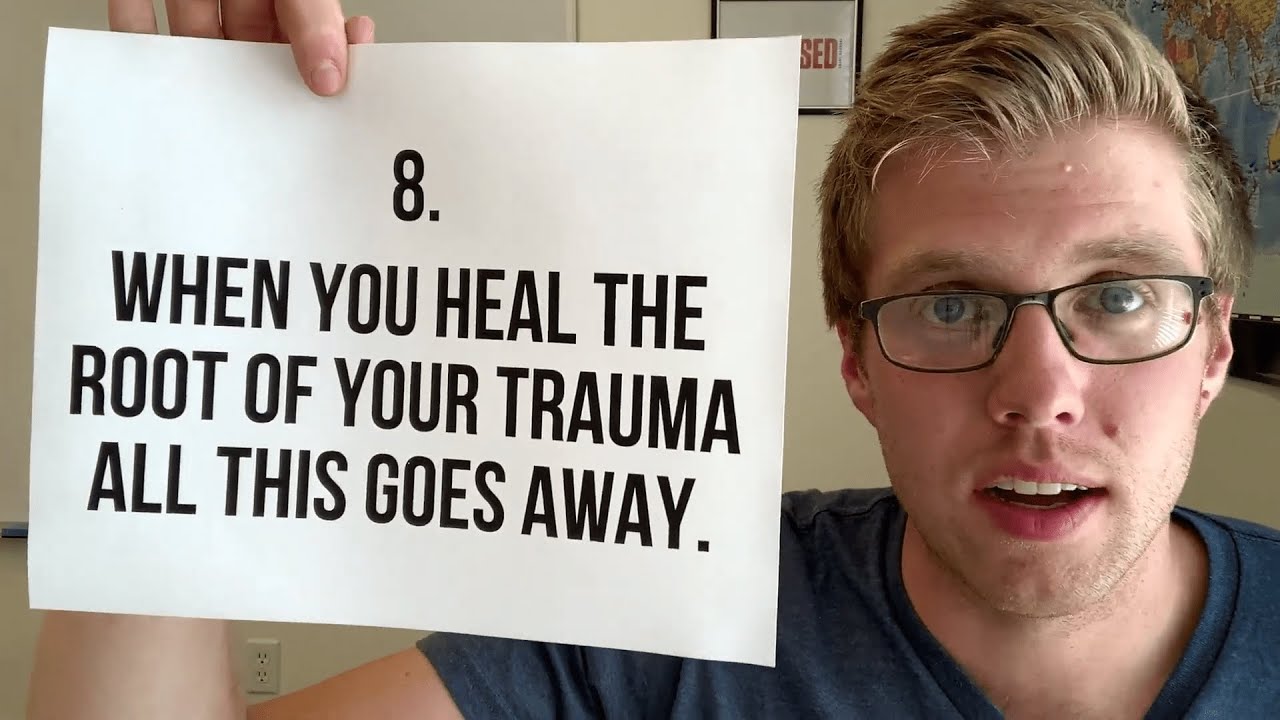
Hey everybody, Brad Schipke here, and today I'm going to be talking to you about 7 ways unhealed trauma affects your body and your behavior. Now, this is really, really important because a lot of people go throughout their life just going through these really, really destructive cycles and never really know what that root cause is, which usually is trauma. So my goal is to bring awareness to these things so you can start healing these areas. Now, we'll jump right on into this first one right here, which is chronic fatigue. So chronic fatigue basically just means you are tired all the time. You're just exhausted. Maybe your body's like a little achy all the time. And this is caused by the trauma because your body is constantly on red alert. You're always in this fight-or-flight mode scanning for threats in your environment. So when you go through a trauma, you're just always in that mode where your body is constantly using up your resources. So you're always tense, you're always scared, you're always using up all your energy and all your resources. And a way that you can kind of discover that you are suffering with chronic fatigue is if, you know, you, you have a, like, a long night's sleep, or you sleep for hours and you wake up exhausted. You go throughout your whole day and you are exhausted, and you, right before bed, you are exhausted, and you just cannot get motivated no matter how many motivational videos you watch or whatever. You just cannot get yourself to take action and move forward, and that's because of this chronic fatigue. And a lot of times this is caused by a trauma. Now, the second one here Is pain or headaches. So the second thing that happens inside of your body is pain and headaches. So for a lot of people, this can be like shoulder pain, this can be back pain, this can be like headaches. And for me, I didn't personally struggle with this, but I know that Kayleen, my girlfriend, when she still had PTSD, suffered with this severe, severe, severe back pain. So She would literally be put out, put out for days, and she like couldn't even leave her bed because her back hurt so much. And like, I had to like bring her food and like help her. And, you know, no matter how many pain medications that she took, like, she was still in pain. And she went to doctor after doctor after doctor after doctor. She got all these scans done, all these tests done, but nobody knew what it was. And the back pain did not go away until she identified the root cause of her trauma and healed the trauma. And we didn't know this at first, but That all that pain in her back that literally probably took, literally probably took months of her life where she was just laid out on bed was caused by a trauma. So when she healed that, her back pain went away. And a lot of people don't know that. They go to doctors, they try these medications, they just don't really know. And in a lot of cases, it can be caused by trauma. And that's a really important thing. Because a lot of people focus on the effect of the pain, try to fix the pain by going to a doctor or trying this medication, and just doesn't really work. Or it might give you some short-term relief from it, but it doesn't really work long term. Now, the third thing here is a behavior that I see and I hear a lot of people go through, is skin picking, hair pulling, and cheek/nail biting. So this is a stress response for people Um, when you are in a stressful situation, it's like a, it's like a little tic to kind of, uh, um, distract yourself from the pain in the moment. So when you're, when you're picking your skin or you're biting your nails or you're like the inside of your cheek, it distracts you from the pain that, um, you're going on right now, or that's going on right now, maybe when you're triggered or whatever else. And this can kind of, um, cause a lot of shame for people, and then eventually this can build into like A habit, and sometimes people have to break it even after they resolve the trauma, but that's a sign of unresolved trauma that exhibits itself in different behaviors. So this next one here is— sorry for that— is digestive issues. So this means things as simple as just like your gut isn't working correctly. Your body doesn't process food the way that it should due to all the stress that your body is going through. Now, this could be things like diarrhea or being constipated or nausea and throwing up. And I knew this person who had PTSD that when triggered, they would get really, really nauseous, right? So they would get really, really nauseous, and then they would actually throw up almost every time that they got triggered. And again, they would go to doctors, they would try all these different things to try to fix it, change their diet, but none of that worked until they healed the root cause of their trauma and resolved that, which also resolved that digestive issue for them. Now, the 5th one here is, I think, something that I don't know anybody who does not suffer from this, and I know that I did a lot, and so did Kayleen, is addicted to substances. So a behavior, a very strong and very calm behavior, is being addicted to substances. And I define substances As, you know, it can be like alcohol or drug, like the typical thing, but also things that are destructive activities and behaviors that are what I call addictions. They may not be called addictions in the DSM-5, but destructive behaviors that are ruining your life. So for me, an example would be I would eat tons and tons of food, watch tons and tons of movies, and play tons and tons of video games. So Literally, back when I was hurting, when I had PTSD, I would drive to Walmart, which is like 20 minutes away. I'd grab a cart. I'd always keep my head down going through the store because I didn't want to interact with anybody, and I put my earbuds in to listen to a podcast or something. I'd go to the back of the store to the junk food aisle and just pick out Doritos, the Nacho Cheese, the Cool Ranch, and then I'd go through back, pick up a ton of ice cream until my whole cart was Pretty much full, just one person with a full cart. And I'd go to the self-checkout. So again, I wouldn't have to talk to anybody because I was just in such a painful part of my life. I didn't want to interact with anybody. And then I drive home, fill my whole kitchen with this stuff, and then proceed to go into my bedroom and open my laptop and binge watch TV or just play video games for hours and hours on end. And the only breaks that I got were to go to the bathroom and to go to the kitchen. So whenever an episode on TV stopped, I would go into the kitchen and, you know, grab some more food. And I was just stuck in this cycle of pain and addiction. So when I say addiction or addictive substances, that's kind of what I mean, is anything that keeps you stuck in the cycle of pain. And usually why this happens, why these addictions happen, is because of a response of pain. So, and a lot of times the trigger for an addiction is the actual trigger from PTSD. So when you get triggered, you feel all this pain and you want to numb that pain. You want to run away from that pain through instant gratification of a substance. And for me, it was TV, video games, and food. But for some people, it's alcohol or drugs, sex, or any other thing that removes them from that pain. And that just becomes like this destructive cycle because you feel pain, you engage in this destructive habit which gives you short-lived pleasure, but once that pleasure is over, you are back in a state of pain and shame. So you feel ashamed of yourself for engaging in that behavior, which causes more pain, which causes you want to want to run away from that shame and from that pain, and that causes you to go back into your addictive behavior again. And you just go through that cycle of pain and short-lived pleasure again and again and again. Now, this 6th one is kind of one that we already covered, but it is you are stuck in a chronic fight-or-flight mode. So this is just— I wanted to reiterate this again. When you're always just stressed, you're always tense, Because a lot of people who don't know that they have PTSD, and I was like this for a long time, Kayleen didn't know she had PTSD for a long time, but if we told her, hey, you are— if you are chronically stuck in fight or flight mode, like your body is just always tense and you're always like jumping, you're always waiting, you're always just waiting, waiting for something to go wrong, waiting for, you know, anything to happen to scare you, and you're just always waiting tense for something to happen, you're stuck in this fight or flight mode and you are likely suffering for Um, from a trauma back in your past, and you would likely have PTSD. So I just wanted to touch on that one again. And this last one here— I actually have one more bonus after this one. I love giving you guys bonus— is being quick to anger or even blacking out from that anger. Now, this is a big one that I see a lot that hurts a lot of people's relationships, is, you know, being so quick to anger. And it can be the smallest of things. That just triggers somebody's anger and causes them just to lash out and to be crazy. And then again, they feel shame for being that angry too, but they don't realize that it's all because— it's not even because of the moment or because of what somebody else did, but it's because that they went through an extreme amount of pain. And a lot of it's confusion and fear. It's not really anger. It's like you're just scared of being hurt again, and that just comes out as anger because you don't want to be hurt again. So like, if you're angry, then you can't really be hurt, right? Like, so it's really like this defense mechanism. Once you understand that you're not this bad person, you're just this, this hurt person, that you are able to— then you're able to forgive yourself a lot more for these anger. And you know, some people, like, they get so overloaded that they actually black out from, from the anger. And, and I've seen that happen, um, in people before, and I've heard stories about that happening for Um, for people before. And that's just another sign of unresolved trauma and how trauma can affect your body. And it's all psychological. Your mind just gets overwhelmed and tries to again protect you. Like, your mind and your body is always trying to protect you, whatever it's doing. And it believes that the best thing for you in that moment is to, to black out because it's trying to— it's doing its best to protect you. Now, this would happen to me a lot too, where, you know, You know, as a simple question, like my dad would ask me, like, hey Brad, how's, how's, how's the job going? Or how's, how's, how are things going with your job? And, you know, at that moment in my life, I didn't have a job. I felt super ashamed of myself for not having a job. I felt like a failure for not having a job. And like I said before, I was— all I was doing was, you know, going to Walmart, eating ice cream, and watching TV and playing video games. So I wasn't even trying to get a job. So I was so ashamed of myself. So when he asked me even that simple, simple question that was so honest and so genuine, just, you know, wanted to know how I was doing and maybe even wanted to help. I, you know, I got really angry. I didn't lash out at him, but like, I, like, I said something. I was really short with him. Then I went away and I just got like furious, furious, furious. And I was able to forgive myself for that moment. And that's really important to be able to look back and forgive yourself because I realized that, you know, I wasn't a bad person. I didn't react angrily. Because I was bad. I reacted angrily because I was in a lot of pain and I was really, really scared. I was really, really ashamed. And, you know, if I saw somebody else who was really, really scared, as scared as I was, and really ashamed, as ashamed as I was, I wouldn't like beat them up like I was beating myself up. Like, I would tell them like, hey, it's not your fault. Like, just, just like keep working, keep trying to get better, and you will eventually get there. You will heal the root cause. You will heal that core. And, um, You won't be lashing out like this anymore. So that really helped me forgive, and I hope that little story and tip helps you as well. But that's the 7th thing here. But like I said, I have one more special one for you, and it relates to all of these 7 things. And you know, if you have been listening and be like, yes, I have this, yes, I have this, yes, I— this— I have this, I want you to know this last thing here, which is when you heal the root of your trauma All of this goes away. And this is something that you might not be hearing anywhere. You might be hearing, you know, you're just going to have to have this chronic fatigue forever. You're going to have to be tired forever. You have to be, you know, this stressed and this tense forever. And you're going to be, you know, this unfocused and you're not going to be able to hold a job because you can't even focus on anything forever. But that's just not the case. Because when you heal the root of your trauma, all of this goes away. And really how you start, start healing is by taking your focus off of these 7 things that I told you about, taking it off the chronic fatigue, taking off the digestive issues and the anger issues and whatever else that you are suffering from right now. You stop focusing on that because that is the effect That is the effect. Listen to this. That's the effect of a deeper root cause that you are struggling with. And that's where a lot of people go wrong, is that they keep— they work so hard to fix the effects. So like, if they're having a lot of anger in the relationship, you know, they go to relationship counseling or they whatever. They try to read all these relationship books and they try to heal their relationship. But you shouldn't be trying to heal your relationship. You should be trying to heal your trauma because that's why You are being so angry. Um, and the same— it could be the same thing with your back, you know, like the case with Kayleen. Like, if you have back pain, you know, maybe you're going to these doctors, and I'm not saying that's a bad thing, you know, but you also need to be focusing on the root cause of the trauma. Because once you heal the root cause of the trauma, all of these problems go away, and, you know, you get to live a life that is pretty much unimaginable. I assume by you right now, because it— like, the way that I'm living right now was unimaginable to me, and I know that the way that Kayleen is living right now was unimaginable to her. Um, so that's all I have for you today. I hope that you really enjoy this. I hope this brought you some hope and some inspiration and brought awareness to a lot of these things that are going on. It helps you start focusing back on that root cause, because that's really your biggest leverage point in honestly all the problems in your life. If you start focusing on that trauma, start healing and really put a lot of time and effort into that, all these other problems will melt away. So if you like this video, just give me a little thumbs up and give me a comment below if you have any questions or liked anything that I said today. And also, if you want to see some more from us, make sure to hit that subscribe button and click the little notification bell so you get a notification when we release a new video. We release videos like this 3 times a week. So I usually do one on Monday, Kayleen does one on Tuesday, and then we usually do a team one on Friday. Actually, Monday, Wednesday, Friday. I said Tuesday, but Wednesday. So I hope you enjoyed this. Thank you so much for showing up for this, and I will see you again in the next video. Bye.










