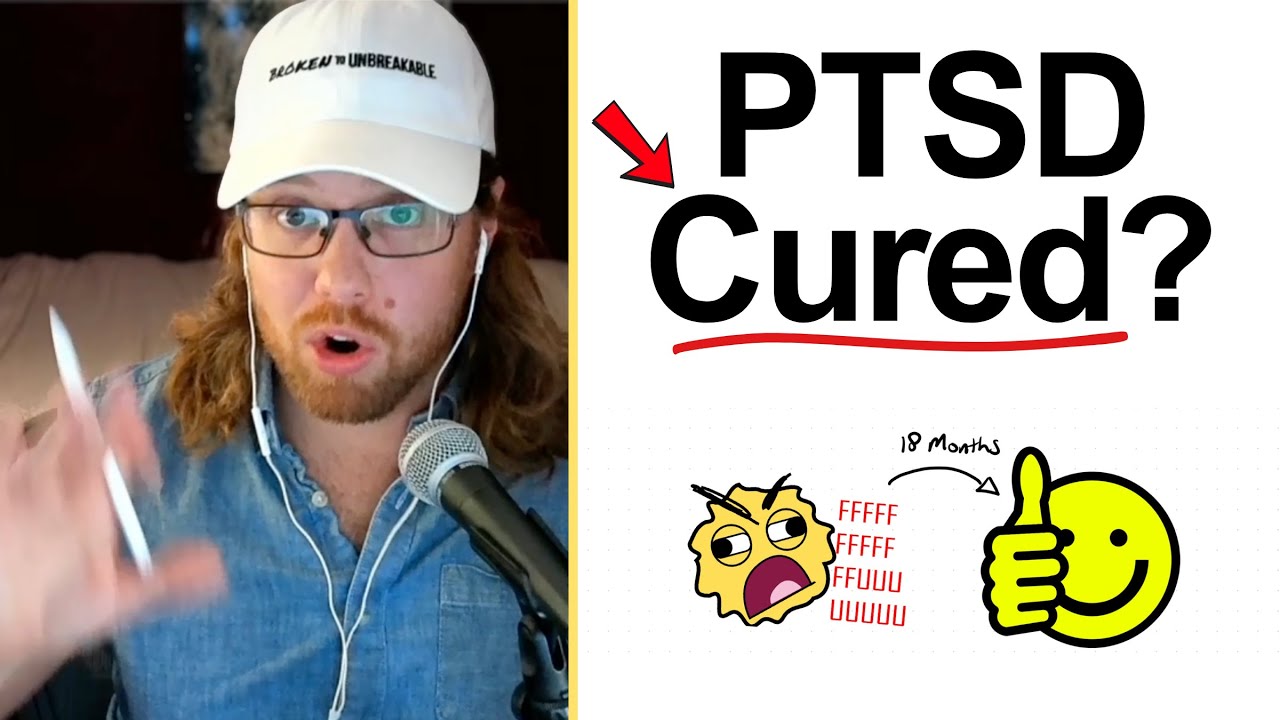
In this video Brad Schipke shares his personal journey from severe PTSD, suicidal thoughts, and debilitating anxiety to full recovery within 18 months. Drawing on thousands of hours of research and work with over 2,000 trauma survivors, he outlines a five‑domain framework for healing trauma: (1) Biological – optimizing brain and body health through sleep, exercise, nutrition, and medical interventions (with sleep highlighted as the most critical biological lever); (2) Physiological – emotional and somatic processing, encouraging natural releases such as crying, shaking, vocalizing, and body‑based tension discharge; (3) Psychological – logical processing that targets thoughts, interpretations, beliefs, actions, and results in a feedback loop, emphasizing belief change as the key lever; (4) Relational & Environmental – improving relationships, attachment repair, community support, and minimizing environmental triggers; (5) Theological – reconnecting with faith, purpose, prayer, and spiritual community as an accelerant rather than a requirement. He rates each domain on a 1‑10 scale for trauma processing effectiveness, giving physiological and psychological domains a perfect 10, relational/environmental a 6.5, biological a 4‑5 (higher if sleep is optimized), and theological a variable ~5. The video concludes with a call to explore deeper resources on emotional and logical processing and an invitation to subscribe.
Chapters
I had PTSD for a very long time. I struggled with severe anxiety, panic attacks. I couldn't leave the house. I never wanted to get out of bed. I even had suicidal thoughts. And I was able to cure my PTSD in just 18 months. And in this video, I want to really lay out what I have learned to really help me go from that place where I just wanted to end everything to where I am now, where I'm, I'm very happy. I'm waking up calm and at peace. And I'm in a place in life where I honestly didn't believe was possible. So I want to show you what I've learned and From over thousands of hours of research, hundreds of hours, if not thousands of hours of personal processing and helping 2,000 other people fully heal from their trauma as well. And after all of this research and doing all this processing myself, I found that there are really 5 ways, 5 different ways that people heal from trauma. And I want to walk through them with you in this video here. The first one's biological. The second one is physiological. The third one is psychological. The fourth one is relational and environmental, and the last one is theological. So I'm going to walk you through down here these 5 different ways to heal trauma. And then at the end, I'm going to give you my own kind of personal rating on each one and how you should really be splitting up your time and channeling your focus into these different areas. So the first one here is biological. And the really what this has to do is with your physical body, how your physical body is working, how your brain is working, how your heart is working, the hormones, everything inside of your biological system, how that is all working to heal you. Now, a lot of people, they'll spend a lot of time trying to optimize the physical body in order to heal from their past trauma. And there are some benefits to that. But what I found is that when people focus too much on the biological, they aren't able to make the progress that they're hoping to. Yes, it does have a positive impact on their life and overall life. And yes, the biological does have a big impact on trauma, but it will not heal the root of trauma. So the different elements of biological healing is optimizing for your brain health, your physical health in your body. Like I said, optimizing your hormone— hormones and things like that. And the various tools or methods that people use to optimize their biological healing is via sleep. So optimizing your sleep, Exercise, nutrition, and medical intervention. And you could also put supplementation under nutrition as well. Now, what I would say out of all of these, the most important is sleep when it comes to processing trauma, because sleep is actually one of those areas in the biological healing system where your brain actually naturally processes trauma. So I would say that the number one thing to focus on in regards to optimizing your biological system and biological healing would be sleep, but obviously exercise and nutrition are essential pillars to your physical health, which obviously impact your mental health to a very, very high degree. And if your biological body and your biological system is not in tune, if it's not working correctly, it can have very adverse effects in the other areas here. So that's the first one there. The second one here is all about physiological. And when I say physiological, it's very similar. to biological. But when I say physiological, I'm really talking about emotional and somatic healing. So dealing with your emotions, releasing your emotions via your body, via your physical body, right? So this really is— when I'm talking about physiological healing, is all about emotional processing. So this is one of the core pillars to processing trauma. There's emotional healing and emotional processing, and there's also logical processing as well. Now, what does this look like? What does actually emotionally processing trauma look like? The first thing it can look like is crying, shaking or twitching, releasing of tension, vocalizing, so like screaming or making strange sounds, and really whatever your body needs to release that emotion. So we're not forcing any of these things here. We're just allowing our body to release Any of the emotions that need to happen. And like I said too, this physiological, aka emotional somatic healing, is an essential pillar for trauma processing at the root. So this is definitely one of the most important pieces here. The next one here on the list is psychological healing. And when I say psychological, I really am talking about the logical side to processing trauma. And like I said, this is the logical. Processing aspect of everything. And there are 5 different elements that make up logical processing that I'm gonna walk you through very quickly. The first thing here at the top are your thoughts and interpretations, which then go through and create your beliefs. Your beliefs then go and dictate your actions, and your actions over here go and dictate your results, which then feed back around and are interpreted by your thoughts. Which then create your beliefs, which then dictate your actions and your results. So this really is a feedback loop that just goes around and around and around and around and around that strengthens these beliefs here to either be positive or negative. Because ultimately, when it comes down to logical processing, it really comes down to changing your beliefs because beliefs are the biggest lever when it comes to logical processing, because it creates your actions and it creates your results. So the more that we can change our thoughts and interpretations, the more we can change our beliefs, the more we can change our actions, and the more we we can change our results here, which is what we are looking for. So that's the third piece here is the psychological. The fourth one here is all about relational and optimizing your environment. This is where people will focus on their community, where they try to surround themselves with more positive, healthy people, where they work on trust building within relationships, where they work on attachment repair. And I did put a little asterisk here because Attachment repair happens in relationships, but honestly, most of it happens up here in the psychological and physiological processing, the emotional and logical processing. So it does happen in relationships, but a lot of it honestly happens on an individual processing level. And the last one is environment optimization, which includes minimizing triggers and really just making a calmer, more healing-focused environment. Now, the last piece here is what I call theological healing. And this is where people reconnect with God, faith, meaning, and a higher purpose. And different tools that people use for this is prayer, meditation, spiritual texts, and church/community. Now, to really holistically heal across all areas of life, you really do need all 5 of these: the biological, physiological, psychological, relational, and theological. But I would also say that they're not created equally. If the goal is healing trauma, there are some that matter more and that are more efficient in doing this. So when it comes to biological, I would probably give this like a 3 or a 4 out of 10. Because yes, it is important. And yes, if your biological system is out of whack, you will not be able to process trauma. But it's not the main lever when it comes to actually processing trauma. Like I said, maybe besides sleep, sleep might bump it up to a 5 or 6 if we're really focusing on sleep, because sleep is very important. I don't want to minimize sleep, but you can go a very, very long way without optimizing your biological system 100%. And I'm not saying it's not important, but in terms of the goal of processing trauma, biological, I'd probably give a 4, maybe a 5 again with the sleep. Now with the physiological, Again, focusing on the emotion and the somatic release, a.k.a. the emotional processing. I would give this a 10 out of 10 when it comes to processing trauma. This is one of the core pillars that you cannot, you cannot avoid. You cannot get around having to emotionally process your trauma. So this is definitely a 10 out of 10. It is a necessity if you want to process trauma. Now, this third one here with psychological, a.k.a. the logical side of healing or logical processing. This again is a 10 out of 10 because these 2 here, number 2, number 3, emotional processing and logical processing, they're really 2 sides of the same coin. You need both of these to process a trauma successfully. And most people have a bias to either the emotional side or the logical side. But what I'm telling you is that you need both. You cannot heal without doing both of them. And that's why both of them are a 10 out of 10. These are required. If you're going to do one thing and nothing else, they are these 2 things here. Now, in regards to the relational and environment, the relational aspect of healing is important because if you are surrounding yourself with negative people or people who have traumatized you in the past, it's going to be very hard to heal. And if you're not optimizing your environment and minimizing the triggers in your environment, it's going to be, again, very hard to heal because you're always going to be triggered and you're not going to really have that stable baseline. which is required for really deep processing. Yet at the same time, it's not as important as these 2 here. So stabilization, I would say, is very, very important. But you also don't need, let's say, healthy people in your life. The more important part of the equation is eliminating the negative. So I would, I would say eliminating the negative in, in regards to the relational and environmental aspects is the most important. Removing negative people and removing negative triggers from your environment. And obviously the positive is a very important piece, but if we're solely optimizing for what is most important for processing trauma, I would probably put this at like a 6.5 because it's not completely essential. This again, these 2 up here definitely take the cake. They're the most important things. And this, it's not that these things aren't important, but your focus should definitely be on these 2 right here. Now, in regards to the theological, again, this is, this is a big topic and not everybody is spiritual, but the more that I've lived my life and the longer that I've gone on, I've found that this aspect to life is getting more and more important for me personally. And it's been able to help me find deeper and deeper levels of peace that I've just been unable to find otherwise. So the theological is important. And the big caveat, at the same time, Is it required? Is it required for processing and for processing trauma? No. And that's because, you know, my— I can say, let's say my spiritual or theological skills when I was healing was not very strong. I was not very good at the theological, spiritual side of things, yet I was still able to fully heal. And I know plenty of people who have zero theological aspects and They were able to heal. Now, I do see this as a very important underpinning that can accelerate healing in a massive way and can give you levels of peace that you would never otherwise have. So I'm not, again, minimizing the theological sides of things, but in regards solely for trauma healing, I would probably give this— I would give this— it really depends on the person because it can really accelerate healing. And I have a hard time putting a number on this, but if I had to, I would put like a 5 on it. But really what I would say from a bird's eye view is that these 2 are the most important and the rest of them, I would say maybe the, maybe the ratings aren't as important. They are more supplements to healing and to full recovery. Now, if you want to learn how to do these 2 things, check out this video right here. But I hope you enjoyed this video and subscribe if you want some more.