I Cured My PTSD By Tracking These 3 Things (Steal My System)
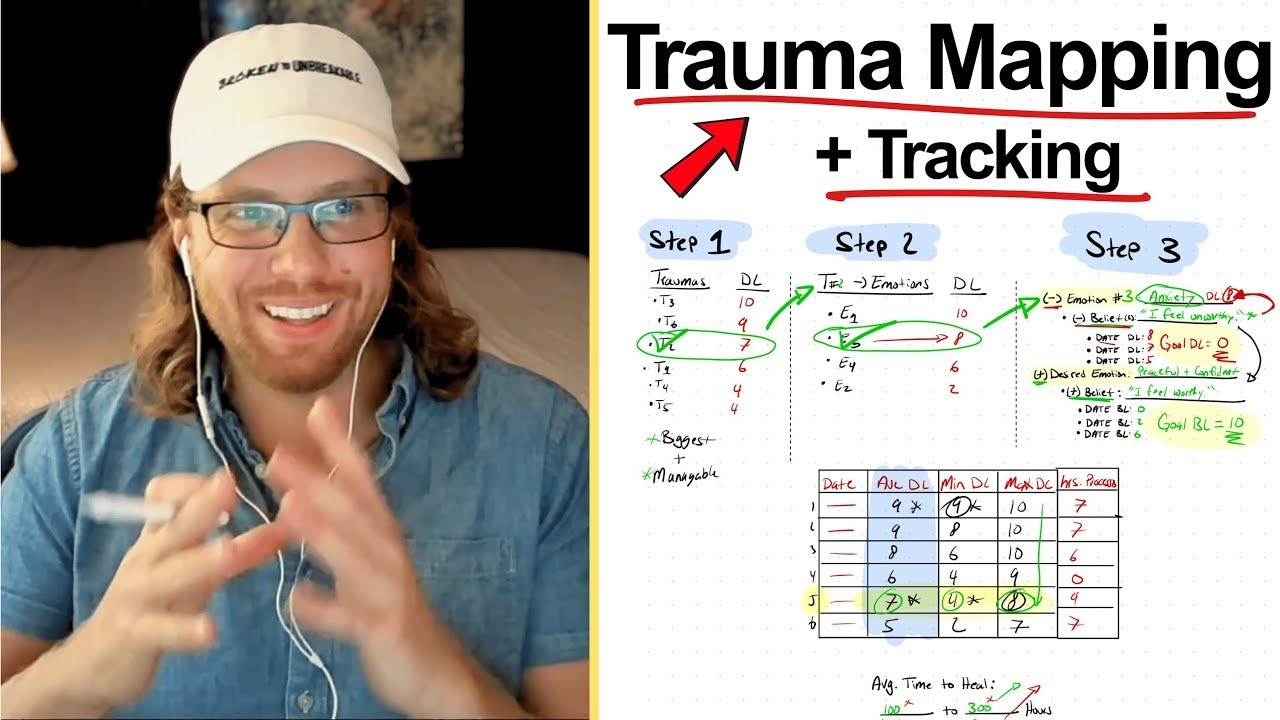
Brad Schipke used three metrics to heal his PTSD: weekly distress levels on a 0-10 scale, trauma mapping ranked by severity with positive belief tracking, and hours of processing work. He found 100-300 hours of focused self-directed work typically heals trauma in under six months, far more than traditional therapy's 25 hours yearly.
Chapters
Hey everybody, Brad Schipke here. And today I'm going to be walking you through 3 different metrics that I personally used to heal my own PTSD. And I also used these 3 metrics with over 2,000 of my clients over the past 8 years to help them heal as well and really demystify the entire recovery process. Now, when you know the metrics for healing, Recovery becomes simple and predictable. 2 things that I personally never saw or got in any therapy session I had. It was always very chaotic. There was never any goal or anything else. But when you know the exact metrics to track for healing, it really does boil things down into a very simple process and a very predictable process. Now, you don't try to lose weight without tracking your calories or your weight, right? And you don't try to save money or get out of debt without tracking your expenses or your income. But when it comes to PTSD and trauma recovery, nothing. We don't get any metrics. We don't get to track anything. And if you don't have metrics to track things, there's no way you'll be able to tell if you're making progress or regressing or plateauing. You're really just shooting in the dark and you have no idea if what you're doing is working or not working. And that's why metrics are so important. So when it comes to PTSD and trauma, there really is no order. There's no goal. There's no tracking. There's no metric. No metrics, and there's no path. There's no clear path to healing. And that's why I really built this system in the first place. I spent hundreds, if not thousands of hours thinking about how to track things accurately for myself and for my clients. And when I did this, it really just unlocked newer and deeper levels of healing that I never thought were possible. So in this video, I'm going to teach you my full system. I'm going to walk you through the 3 different elements of tracking, 3 different metrics that I like to track, and most importantly, how you can use these and actually implement them easily in your own life and on, in your own recovery. And at the end, give you a full dashboard of metrics that you can use to track things and ensure that you are on the right path. Now, for those of you who don't know me, my name is Brad and I healed my own PTSD after 18 months. And over the past 8 years have helped over 2,000 people heal as well. Even faster than I did. So I make these videos really just to share what I've learned and hopefully it can help you heal. And honestly, a lot of people never heal from trauma and I don't want you to be one of them. I want you to be one of those people who actually beats this thing. So without further ado, let's jump into the first metric here, which is global distress levels. Really what distress level is, is a subjective measure of the level of distress that you are feeling. And we measure that on a scale from 0 to 10, 0 being no distress and then 10 being an extreme amount of distress. Now, when it comes to global distress level tracking, there are 3 different components that I personally like to track with my clients. The first one being the average distress level. The minimum distress level and the maximum distress level. And the reason why I like to measure these 3 is because it really does give you an accurate picture of someone's overall macro journey in recovery. It gives you the average, it gives you the lows, so you can actually see if something's working because sometimes the average doesn't move and the maximum doesn't move. But if you track the minimum, you can see like all-time lows in a good way, like all-time lows of distress level. So it really gives you a clear picture. And when I track this for my clients, I like to put it in table form just like this. And this is something that you can do. Like if you can just track on a macro level how you're progressing over time, this is kind of like the bare minimum that I like to recommend. And this is a very easy way to do it. So here at the top, the things that go up here would be the date, the average, average distress level. The minimum distress level and the max distress level. So these would be all the dates. And I recommend looking at distress levels over a week-to-week time horizon. It can be done daily if you want to, but I find that a week gives it enough kind of room to really know what the average is, know what the minimum is over the past week, and know what the maximum is over the past week. So you don't have to go crazy with it. Week to week is good enough, and that's what I do with all my clients. And then each week you would just log all your data here. So the average might start at a 9, 9, 8, might drop down to a 6, might jump back up to a 7, down to a 5. And the minimum, again, it might be like a 9, 8, a 6, a 4, 4, 2. And these obviously are just examples. And then we'll do 10, 10, 10, 9, 8, 7. And the cool thing is when you have all these numbers, you have multiple areas that you can look at for your own progress. And I know for me personally, when I was going through traditional therapy systems, they didn't give me any metrics to tell if I was doing better or worse. And really I just had my subjective feelings day to day. To really know if I was getting better, and if I was having a good day, I felt like I was on top of the world and everything was great. If I had a bad day, which happened more often than not when I had PTSD, then I would see my entire life and my entire recovery through that bad day. But when you have the metrics, you can actually see the hard data and look back and say and see even if you had one bad day. Let's say you had a bad day here at one week. 1, 2, 3, 4. Let's say you had a bad day on week 6, right? Or week 5, right here. If you look back over this week, you can see that, okay, maybe I had one day that was a max of a 10, but then I could reflect back on all the other metrics and be like, well, when I first started this journey, I was at a 9 on the average, but today, or Or this week, I'm down to a 7. So that's a 2-point difference. Or even there, if like I wasn't really happy with that, I could look at the minimum and say, oh my God, this week I was down to a 4 when at the beginning the minimum that I had was a 9, was a 9. So I got a 5-point reduction in distress just in the past 5 weeks. So instead of just focusing and hyper-focusing on this 8 right here, you get to look back and see. Well, I actually was improving right here, and I actually am improving here. And overall, this 8 has been going down, right? So it started as a 10, 10, 10, 10, 9, 8. So it still is the all-time low of my max distress level, even though 8 is just objectively high. Like 8, like when you're having a distress level 8, that's terrible. Like it feels awful. But when you can compare it to the overall picture, Of your recovery, you don't get thrown off by this. You don't get thrown off and start to spiral and you know start to do all these other self-destructive behaviors. You can actually look back and be like, you know what? Even though I had this one bad day, I'm still making progress because I am tracking my recovery, and I can see that all my numbers are going down. So I might feel subjectively feel that I'm not doing any better today. But objectively by the numbers, I am. And this is how tracking numbers can really just prevent a lot of bad things from happening. Like it can really hold you on the rails and prevent you from self-destructing and doing a lot of self-harm, whether it's actual self-harm or self-destructive behaviors, because you can, you have objective data to look back on to know that, hey, I'm actually improving, even though I feel like I'm not. I can, I can have faith in the data because I'm actually tracking this. And this is something that every single one of my clients loves. Like when we, when we track these numbers, they always have those moments where it's like, I feel like I'm not making progress. So I'm like, okay, well, let's just pause for a second, look at the data. And every single time we can see that they are making progress, or if they're not making progress, we can then troubleshoot, which in later in the video, I'm going to walk you through the 3rd thing that we track, which will be the lever that you can actually pull to ensure that you actually are making progress. So that is the first one here, global distress level. We track the average, minimum, and max. And this is here how you can track it in your own life. Now, the second metric here is going to blow your mind because we kind of take this— this is like a global macro view on your recovery, what we did right here. But the second, the second metric and tracking system that I use here Really gets very granular and starts breaking things down and allows you to track things at a very, very minute and micro level. So the second thing here is something that I'd like to call trauma mapping and tracking. So this is when you actually map out all of the traumas that you went through. You, you map out all the subcomponents of those traumas and you track things at a very granular micro level on each trauma, on each emotion. So you can see at a micro level how you're making progress on each individual trauma and each individual emotion. So I'm gonna walk you through my full system here. There's going to be 3 steps. Um, so let's just start and dive in right at the beginning. So step 1 is going to be to list out all of your traumas. And all of the distress levels associated with those traumas. So you just want to go in here and basically just do a brain dump. Now they can be traumas or you can put them as problems. So it can be specific traumas where like this event in my past, this memory from my past, or it could be, let's say, a specific problem like that you're currently experiencing or a specific symptom that you're currently experiencing, like social anxiety or isolation or agoraphobia. So these can be traumas or they could just be problems, whichever makes the most sense to you. But I'm going to use traumas just for this example here. And then in here, you just want to list out all your traumas. T1, I'll put it as, so like trauma 1, trauma 2, trauma 3, trauma 4, trauma 5, and so on and so forth. And you just want to make an exhaustive list. Now, we're not going to work on all of these traumas at once. We're just doing this to get a map and see, like, see the field. We want to see what's there and what are all the problems that we have. And then once we have all of these traumas listed out, what we want to do is then go through here and really map out the distress levels. We want to rate the distress levels of each one of these so that we can then order them and focus. So this first one, maybe it's a 6. 7, 10, 4, 4, 9, right? And then from here, what we can do is we can start to, we can start to rank order these, right? So from here, we want to develop a hierarchy of traumas based on the distress level. So, oops. So obviously the 10 here is going to be the first one. So we're going to have 10 at number 1, and then we'll have this 9 trauma here. We'll have the 7, the 7, we'll have the 6, and then we'll have the 2 4s, right? So then we have everything rank ordered from, from highest down to lowest. And from here, the way that we, then we, from here, we want to pick one trauma to work on, one trauma to focus on, because again, one thing that a lot of people get wrong is that they try to solve everything all at once. And by doing so, they only make a little bit of progress in all of these different traumas. When in reality, the best way to go through this and process PTSD and traumas, and this includes PTSD, CPTSD, or any other thing that you're going through, the best way to go through it is to focus. So we want to focus down and pick one of these. Now, the way that I recommend my clients picking a trauma to work on first is picking the biggest one that is also manageable, right? So we want to pick the biggest, but also one that is manageable. So if you are processing your first trauma, maybe this 10 up here is too big. Maybe the 10 is, or the 9 is too big. Maybe the 7's too big. Maybe the 6 is too big. So maybe you would want to start at the 4. So that would be the biggest one that's also manageable. For most people, they usually pick something between in the 6 and 8 range. So let's say for our example here, we're going to pick T2. Whoops. T2, trauma 2, which is a 7. So this is going to be the one thing we focus on. And then this is the, this is the trauma that we're going to bring into step 2. So trauma 2, we're going to bring over into step number 2, which is when we list the trauma that we picked, which in this case is going to be trauma 2. So trauma 2's negative emotions and distress levels. So this is when we take trauma 2, our problem 2, And we break it down even further into its subcomponents. The first subcomponent that we're breaking it down into are emotions, right? So we map out all our traumas, we put them into a hierarchy of highest to lowest, we pick the biggest one that's also manageable, and that's the one that we focus on. So we focus on trauma 2, we bring it over here, and now what we do is list out all of the negative emotions associated to that problem, problem slash Trauma, and also we're going to relate the distress levels, right? So then we're going to go through here, and we're going to rate the emotions: E1, E2, E3, negative, negative emotion 1, negative emotion 2, negative emotion 3, E4. And we're also going to rate the distress levels. So this one might be a 10, this one might be a 2, this one might be an 8, and this one might be. Right. And then also with these emotions, the same thing we want to do, the same thing here is we want to rank order these from highest to lowest. So in this case, we're just moving that 2 down to the bottom. And then we have the same thing here where we have emotion 1, 3, 4, and 2 rank ordered from highest down to lowest. So the same process that we did on the traumas, we're doing here with the emotions. Because, and then what we're going to do is we're going to do the same thing. We're going to pick the biggest emotion that is manageable to do at the time. So maybe it's the 8 right here. And this 8 is going to be the thing that we then bring over to step 3 and break it down even further. So you can see that there's multiple layers of focus. And you can really break this down as simply as possible. And this is how you take something as complex as PTSD or CPTSD and break it down into components that are chunked small enough that anybody can deal with. So there's always a way to chunk trauma down into smaller and smaller components that make it manageable for you to break it, to you to process and you to work through, right? So first we started with the traumas here in step 1. We brought that over to step 2, and we broke that, that trauma, in this case trauma 2, down into its 4 emotions, negative emotions here. And these emotions could be anxiety, it could be shame, anger, fear. And then those are the very, those are the emotions that we're going to work with. We, uh, organized it into a hierarchy. And then what we're going to do is bring this emotion, emotion 3, over here to step 3, where we break it down into its other subcomponents. So we have trauma, emotions, and now we're going to be breaking it down into the core beliefs and also mapping the distress level for those beliefs as well. Okay. So, so in this case, we have emotion number 1. I don't know why I put number 1 there. So it's going to be emotion number 2, because emotion number 3, actually, my mistake. And maybe here, For this example, we'll do emotion number 3 is anxiety, right? And you can also get specific with the anxiety as well. So it could be like anxiety around social situations, anxiety around whatever you might be going through. But the very first step is to map out the negative emotion, right, that we took from step 2, put it here, and then The next piece here is we want to come up and identify the negative belief or beliefs. Um, to keep it simple, I'm just going to talk about one core belief that's driving the anxiety because the anxiety is an emotion, but it's hard to, I mean, if you know how to work with emotions, you can process that emotion on its own, but it's very, very useful to then break that like amorphous emotion down into A belief, which is in language form. And basically what a belief is, it's a representation of the emotion, right? So the belief here might be like, when you go into the emotion of anxiety, and typically when you do a belief, it's good to put it in an I statement. So it might be like, I feel, in this case, unworthy. And that might be the core I statement belief that is causing the anxiety. Now, what I'll say here is that it can take quite a long time of questioning to really identify what that core belief is. But once you have it, you know it. You have like this aha moment. And what you'll find is that it's— when you, when you identify the belief that correlates with the negative emotion that you're trying to change, you'll find that there's a very strong emotional resonance with that core Emotion. So what does that really mean? I'll break it down in simpler forms. So over here, emotion three had a distress level of eight, right? So the DL of this emotion was an eight, right? Now when we're identifying this core belief, we when we say this core belief, what we want it to do is to emotionally resonate with this anxiety and spike this distress level up to an eight. Because what can happen sometimes is you, you say this belief or you come up with this belief and maybe the distress level is like a 4. So if you, if you come up with a belief and it's a 4, 4 is not 8. So there's not a strong emotional resonance. So you want to keep working with that negative belief until that emotional resonance, until that distress level is an 8. And that's what we're aiming for when we're Determining negative beliefs, because and this is where so many people go wrong with identifying negative beliefs—is that they'll just say any sort of negative belief, or they'll go off beliefs that maybe they they read online or their therapist told them. But there's no actual emotional resonance with that belief. So, like the belief itself doesn't matter; it only matters if it is resonating with that core emotion that we want to change. Because we are going we are going to be spending a lot of time. Processing and changing this belief. And if we're changing a belief that does not resonate emotionally with the core negative emotion, then we are going to be doing a lot of work that's going to do absolutely nothing. So we have to be working on it, make sure that we're working on a negative belief that resonates emotionally so that the work that we put in to change that belief actually changes the core emotion. So this part right here might be one of the most important pieces because a lot of processing happens around challenging and changing core beliefs. And if you're changing the wrong core belief, you're not going to be changing the core emotion. So like the only purpose of challenging core beliefs is to change the emotional state. And that's why the emotional resonance is so powerful. So that's kind of this first element here is we have this negative emotion, right? We have a negative emotion. And in this case, the emotion 3, which is anxiety, has a distress level of 8. We determined that the negative belief here, uh, was I feel unworthy. And we also determined that it has a strong emotional resonance with the distress level. Of the negative emotion, so it it spikes this distress distress level eight. And then down here, this is just over time we're going to track it with the date and the distress level. So then as we process it, as we process things, we can continue tracking this again and again over time so that we can see how this distress level moves with the processing. That we're doing, right? Now, this is just one half of the component or of the process, as you can see. So up here, you can see there is the negative emotion, right? But we also need to map the positive side of the equation. We want to map the desired emotion, the positive emotion that we're aiming towards. So a lot of people, they get hung up and confused or they get stuck because they only focus on the negative side and they never have the goal. They never have the thing that they're aiming for, which is the positive emotion or the desired emotional state that they're aiming for. So what we want to do next is we want to ask ourselves, if currently we are feeling a lot of anxiety, what is, what would we like to feel instead of that anxiety? What is the desired emotional state that we have? So it might just be peaceful and confident, right? So maybe that's the goal state. Now, this is something that you come up with yourself. You ask yourself, right now in these situations, I feel anxious. How, or how would I like to feel in these situations? I want to feel peaceful and I want to feel confident. So then we have mapped out our desired emotion. And then we want to, again, reverse engineer This desired emotion by identifying a positive belief that if we believed it would cause us to feel peaceful and confident. So that's how you identify the positive belief that you want to install. You ask yourself, if I believed this thing, would I then feel this desired emotion, aka peaceful and confident? Now, this like crafting beliefs, there's a whole other like deep dive I can do in this specifically. So I'm going to go through it just very simply. But another good way, another very simple way off the, off the cuff is to take this negative belief up here and just invert it. So in this case, it would be, I feel worthy, right? And you can make that more complex, more descriptive. It can be like, I feel worthy in these scenarios, or when this happens, I feel worthy. So like, there's ways you can adjust this to make it more powerful for you. But inversion is always a very simple and powerful way to at least come up with your first belief hypothesis. And that's a very effective way to think about crafting beliefs is that we're not necessarily crafting the final belief. We're really just crafting the first hypothesis. So we don't know that if we install this belief that we will feel peaceful and confident, but we're making our best guess. And as we install this belief of I feel worthy, we'll be able to know with evidence of whether or not it's actually getting us closer to our goal of feeling peaceful and confident. And then over time as well, we're going to be tracking not the distress level, but we're going to be tracking the believability level. So really what believability level is, your degree of certainty that this new belief is true. So on a scale from 0 to 10, how certain are you in this belief? Now in the beginning here, it might be a 0, and it might go up to a 2, and then eventually it might go up to a 6. And then over time, the goal— so I'll put down here, the goal of the believability is to get believability up to a 10. So that's the goal. With every single positive belief, the goal is to get the believability up to a 10. And over here with the distress level, the goal, the distress level is to get that down to a 0, right? And when you have metrics like this, processing truly does become like a game because you get to know and you get to see your progress over time and you get to see if you're progressing towards the goal of Is my distress level getting closer to 0? And is my believability getting closer to 10? If it is, then great, I'm on the right track. I'm going to continue doing what I'm doing. If I'm not getting closer to the goal of distress level 0 and believability 10, then I'm going to ask myself, well, why? Why am I not progressing in that way? So again, this is the overall 3-step process for trauma mapping and tracking. This is huge. Now, you do not have to go this granular. With things to see results, you can still just track the global distress levels. And I encourage you again, at a bare minimum, just to track your global distress levels and at a bare, bare, bare minimum, tracking your average distress levels. So you do not have to go as granular as we did here. But if you want to get hyper, hyper granular and really drill things down into numbers, With specific goal points, then this process will absolutely transform your life. So again, basically how this looked is you have your traumas, you put them in a hierarchy, you take one, you break that one trauma down into the emotions, you take one of these emotions and you put it into this process and you break it down into the, the negative emotion, the negative belief. The positive emotion, the positive belief, and you track that over time until the distress level is 0 and the believability is 10. And once you get this emotion down to 0, distress level 0, believability 10, this is, this is done. You can check this off. You can check this off. And then you can move on to the next emotion. And then you take this. Emotion, you bring it over here, you map it out, you bring those distress level to zero, believability to ten, and then this one will be done. And then you go through and you do that with all of these emotions. And then once you're done with all of these emotions, this trauma is done. So then this trauma is done, and then you move on to the next one. You bring it through the entire process that I just brought you through right there. And that's how you work through systematically how to process every single trauma, every single component of trauma, and how you can take something as complex as CPTSD and break it down into something that is actually manageable and trackable over time and really kind of gamify it, which is fun. So you can see that I get excited about this because this, like, this took me so long to figure out and oh, it just brings so much clarity to the entire process. So I hope that was, I hope that was valuable for you because I've really like transformed my life. Now this last one here is really the thing that's going to take these first 2 metrics And it's the one thing that you like that will determine how fast you move through your recovery. And it really is the biggest lever in your recovery as well. So these first 2 pieces really are in-depth with metrics and tracking. But this last piece here, it might be the most important out of all 3, but it's also one of the simplest. So the third one here is hours processing. So hours spent processing. How many hours per week are you putting in with processing? Now, with traditional therapy, you typically go once per week and have a 50-minute session. And if you have a good therapist and you're doing like the right type of modality that actually processes trauma at the root, the best, like the best case scenario is 30 minutes per week, right? With traditional therapy. But when you know the tools yourself, and I have another video on my channel that walks you through the fundamentals of processing, but when you know how to process things yourself, You can put in as much time as you need per week. And honestly, I'm just going to be frank and upfront, 30 minutes per week here is not going to cut it if you're dealing with a problem as big as PTSD or CPTSD. Because if you think about this, this is really what, like 25 to 26 hours per year, which is, I mean, might sound good, right? But that's like one day, right? So you're getting like one day of actual processing. Per year. It's like it's a snail's pace. It's slow. And this is honestly why so many people, why so many people never heal is because just the math doesn't add up. Like you need much, much more time than 25 to 26 hours per year. Now it then begs the question, how long or how many hours do you need to put in to actually heal? Now, from my observations with my clients, again, I've coached over 2,000 people and I track all these metrics with them. The average time to heal is between 100 and 300 hours of processing time. Processing time, that's important. And the processing has to be done in the right way as well. But what I've observed with my clients is between 100 and 300 hours of processing. Obviously this is range, and obviously this is if you're using the right tools and you're doing things in the right way. And I've had outliers that are above this, and I've had, you know, outliers that are below this too. So this is just like an average range where like the average person will fall in between these 2 numbers here. Now, if we take this, these numbers here, and we put it into, we look at this over here, the 25 to 26 hours per year that you get with traditional therapy, it's going to take you at minimum 4 years to put in 100 hours. Or, So this could be 4 years or 12 years if you're on the higher end, or higher if you're one of the outliers. So I don't know about you, but 4 years— I don't want to wait 4 years for healing, and I don't want to wait 12 years. Definitely don't want to wait 12 years for healing. So really what this shows you is that if you want to heal at— in a reasonable time frame, really the only option that I've discovered so far, and it's worked for me, and You know, you can let me know what you guys think about it, but the only way that I've really discovered to actually heal in a reasonable amount of time is to learn the tools myself. Like, I had to learn how to process myself so that I could put in as much time outside of the mental health system. And honestly, the mental health system, it didn't— mainly because of this, right? Because I just wasn't getting enough reps. I wasn't getting enough time to actually process things. It failed me. So I had to learn things on my own. And that's the reason why my clients are able to heal relatively quickly as well, is because they know the processing tools themselves. We track everything from a very macro level to a very granular level, and we ensure that they're able to put in 100 to 300 hours whenever they want. And typically it's all under a year, honestly, typically under 6 months. So that's how you're able to compress this timeline. And really hours processing is the big lever. Whenever I see a client that stalls out in their recovery or gets stuck, since I'm tracking the hours that they're processing each per each week, I can see, oh, you only got in 1 hour this week. So it makes sense that your distress level didn't move at all. So if, if people are plateauing in their distress levels, whether it be in a macro level up here, Or at a micro level here, the biggest way that I problem solve why they are staying stuck, or the very first thing I look at, is how many hours of processing did you get in? And for 9 out of 10 times, if we just amp up the processing time— it's supposed to be an arrow— we just amp up the processing time, we solve the plateau, and they blast through it. Now, this is also with the prerequisite that they know how to process in the first place. But hours processing is definitely the biggest lever. Like, if you aren't healing, you have to ask yourself, how many hours per week of actual deep root processing am I doing? And that will reveal to you probably a lot. I know for me, at certain times in my life, I was always wondering, like, why am I not healing? Why am I not getting better? And then I asked myself this question, how many hours of processing, Brad, are you putting in per week? And for me, it was like zero. So I was like, Hmm, maybe I should change that. Maybe I should actually start working on processing things. Now, the best way that I like to track this, again, I like to take it in regards to, I like to add it onto this table that we have here. So just finish this table off real quick. So I like to put this at the end here. Hours processing. So I like to, I like to do this at a macro level week to week, because like I said too, like each one of these rows are going to be weeks. So I like to, I like to do the average distress level, the minimum distress level, the maximum distress level, and then hours processed over the past week. And then I get to really see like the full picture. Like I get the full dashboard of someone's recovery, how they're processing or how they're progressing. Just by taking a glance at this small table right here. So then I could see that they put in 7 hours, 7 hours, 6, maybe 0, and then 4 and 7. And really, that is the benefit of tracking, is that you get to see things clearly. You get to see when you plateau and you know why, or you can at least ask why. Why am I plateauing? I hope you guys enjoyed this video. Make sure to give me a like and subscribe if you want any help from me or want to get coached through this entire process here, I have a coaching program. There's absolutely no pressure. There's a link in the description if you want to check it out. I don't care if you click it or not, but the most important thing is that you get value out of this. Hope you have a great day and I'll see you in the next one.










