She cured 40 YEARS of cptsd in 300 hours??
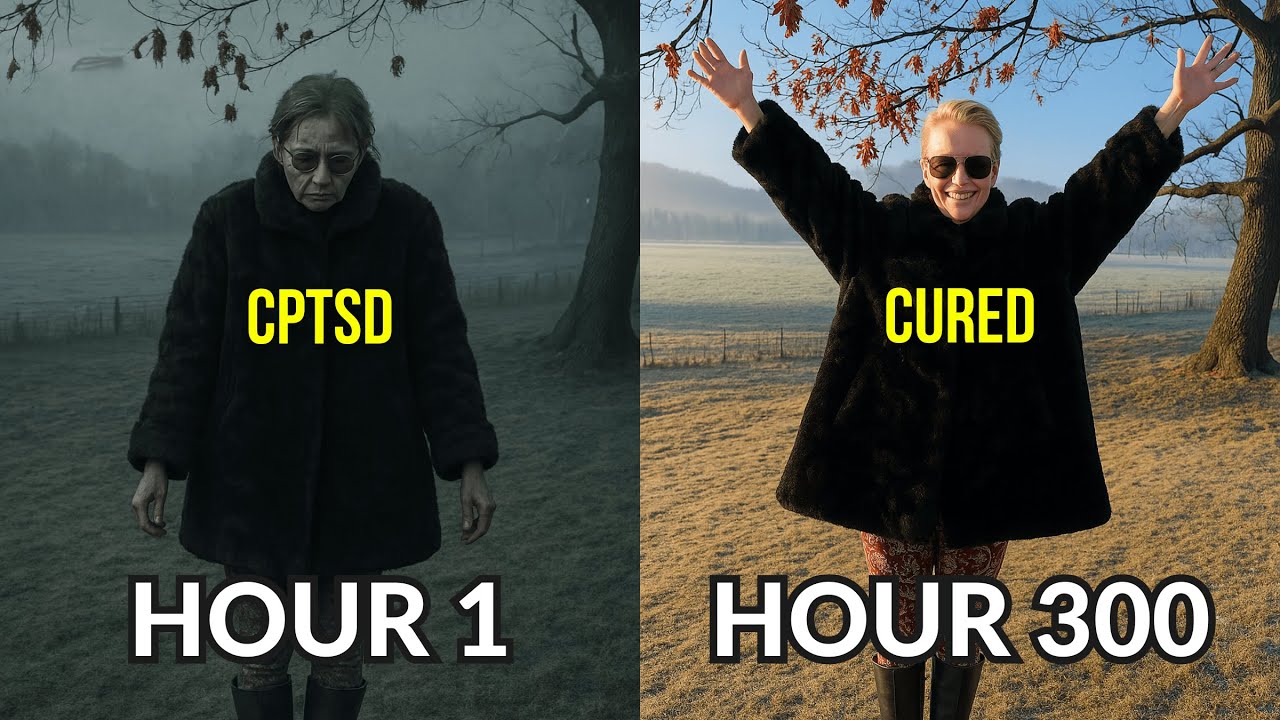
In this Overcoming PTSD podcast episode, host Brad Schipke interviews Dana Plumlee, a 59‑year‑old who survived extensive childhood trauma, multiple rapes, substance addiction, and decades of PTSD. Dana recounts how early abuse led to self‑medication and how the mental health system compounded her wounds through dismissive and harmful practices like false‑memory syndrome. A turning point came when she discovered the Overcoming PTSD / Broken to Unbreakable program, which combined EMDR, IFS, CBT, bilateral processing, and 12‑step principles into a self‑directed, experience‑based framework. She describes how she identified and dismantled core dysfunctional beliefs using a “beliefs table” and practical tools (journaling, self‑defense classes, skill‑building, prayer). With the support of a compassionate psychologist, a sponsor, and a community of peers, she completed roughly 200‑300 hours of processing, shifted from a victim mindset to personal agency, and now works as a counselor at the Salvation Army, sharing her story, faith, and gratitude. The conversation also critiques therapists who pigeonhole clients into a single modality, emphasizing the need for multiple therapeutic tools, and highlights the central role of challenging the lie that recovery is impossible as the seed of hope. Dana discusses her competitive drive to never give up, her plans to write a book—potentially exploring biblical counseling versus traditional therapy—and uses a data metaphor to view emotions and memories as objective information that can be reinterpreted. Future directions include deeper dives into specific topics like addiction, continued writing, and expanding her counseling work.
Chapters
Welcome to the Overcoming PTSD Podcast. My name is Brad Schipke, and today I have a very special interview for you with Dana Plumlee. Dana is somebody very special who was able to fully recover from her childhood trauma, multiple rapes, and drug and alcohol addiction. She's now going out there inspiring other people to heal and fully recover, and I really dug into her story to identify what are the things that allowed her to heal from decades and decades of PTSD. She literally suffered for most of her life with PTSD and has been able to fully recover in her 50s, proving that it doesn't matter how long you've had PTSD or how old you are, you can fully heal. So sit back and enjoy because this will really motivate you and inspire you. Well, welcome Dana. Welcome to the podcast. It's great to have you here.
Thank you.
First, tell, tell us a little bit about your, your story. So how did you initially, I know you went through a lot of childhood trauma that eventually led into some drug and alcohol addiction and where you are right now is where you're fully recovered. You're chasing after your dream job and helping and inspiring more people. So where did your journey start out? Like, how did that all happen?
Oh my goodness. I had, I had some things happen to me when I was, when I was young that set the table for early drug and alcohol addiction. Like, I started, I started using when I was 15. And at that point, um, things just, things just went sideways. Um, was— I was raped several times. Um, I was raped. It was a date rape when I was 17, or when I was 15 rather, when I was going to, um, fraternity parties, um, underage. And then, um, and that causes trauma, and then you want to numb the feelings with more, more alcohol in my case, and, um, partying more. getting with more and more violent people. So there was a gang rape. There was an incident where I had a gun held to my head and raped, these kinds of things. And then the biggest trauma of all though, Brad, I have to say, was the trauma of the mental health system.
Right.
And what being a person who participated in the mental health system did. I'm 59 years old now. I've been in treatment since I was 19 years old. My first psychiatric hospitalization was when I was 19. And I have, like, we'll get into it more, but I have, I still use this fantastic psychologist. He's more of a coach than anything else right now.
Mm-hmm.
But he helped me piece together some things along with Overcoming PTSD, the program. But he explained to me that when I was in treatment, back in the day, the people who were working at hospitals in treatment capacities had come out of state hospitals. There was this whole move historically to get patients out of state hospitals into the community, but there was still a lot of resistance among the community believing— like, I was told that I would never get better, that I was always going to get worse. I was actually told that. And along the line, in all the treatment I had with various therapists and psychiatrists, I had 2 providers tell me that my problems were too complicated for them and that they couldn't help me. And so, you know, it was just a lot of messages about that kind of thing. I had it really driven into my head by them and by other people that I'd never be able to take care of myself. And so the biggest part of my journey has been learning that, yeah, Dana has agency and Dana can take care of herself. Um, and it's been, it's been really exciting to get to the point where I'm at now.
That's amazing. So you had, you'd gone through all that trauma, you know, from, from your childhood, all that addiction. And out of that, you still say that the biggest trauma was from the mental health system itself, which is fascinating. Fascinating.
Definitely. I went through this whole thing. Like I was looking at, um, I went back, like I, like I know we use, we use terminology and stuff on the, on the platform for, um, overcoming PTSD. But I went back and I looked at an interview I did. I was 3 months in and I was reminded of it. The, um, gosh, how old would I have been? Um, probably in my 20s or 30s, something like that was about the time it was popular. This whole, this whole wave came on the industry. I call it the industry for a reason.
Hmm.
The whole, the whole thing came on the industry, um, called false memory syndrome. Um, devastating, devastating. This, this whole thing that, um, the victims were making up the stories. That, um, that, that we couldn't be believed. We were manufacturing these tales in our heads. Um, you know, and for a person who's experienced some pretty significant trauma, um, from a young age, um, you know, then it's this massive gaslighting thing that went on. So I'm like, oh, oh, oh, oh, oh, okay, I'm a horrible person. Okay. Um, and then happened to come out of that again. You know, it's like the— you think, like, I haven't calculated the amount of money that, that was spent on treatment and medication and all that, to get gaslit, to get my health back again, um, to be a whole person. And so now, like, in my capacity, I work for Salvation Army Adult Rehabilitation Center with adult men, and I, um, I, I work with them as a counselor. So I, um, I try to speak hope and love into their lives.
Hmm, that's awesome. And I definitely want to get into that now, like, or Uh, later, like what you're doing now with the Salvation Army. I think that's really cool. I'm really intrigued though about your experience, like with, with the industry itself and the false memory syndrome thing. That's wild. So you were told, like, I mean, the craziest thing too is like you pay these people money with the expectation that you're going to help, help me. And then you end up being told it's too complicated. You're going to be like this forever. You can't manage yourself. You'll never manage yourself.
Right.
And That the things that you actually went through didn't actually happen, right?
Yeah.
And you paid money for that. It's crazy. It's wild.
It really is insane. Yeah. And I just say, like, I've had, I've had good providers along the way, but I've had some like that, just totally disastrous experiences and left me really suspicious of providers. So like when, when I found the platform, for me, it was, it was an answer. It was a literal answer to a prayer. I was— I've had suicide attempts in the past. I was suicidal. This would have been back in 1920— or not, 2020 rather. I'm so sorry.
Hmm.
2020. It was when Broken to Unbreakable, when the first rollout came out with the program. And I was scrolling through Facebook in the morning. I had prayed the night before for God to give me an answer, to give me some relief from this. And, um, and, um, Broken to Unbreakable popped up in the newsfeed, and I was really intrigued by it, um, because I had— I had, like a lot of, a lot of people who are broken wind up getting into mental health. And I had worked as a certified peer specialist, and then I worked as a bachelor's level therapist, um, and then when I started getting massive breakthrough memories You know, that was when I was like, yeah, this false memory syndrome, this is like bogus. This stuff happened and getting confirmation from third parties and stuff like that. You know, so, um, so anyway, so I was really going through it and I was suicidal, um, scrolling. There's Broken Unbreakable and I recognized all these things that you do in the program. Um, you know what I love so much about the program is that it puts, it puts all the control in my hands.
Yeah.
No. That I'm the one who does the healing. And there were things in there that the internal family systems, cognitive behavioral therapy, all the stuff that really works, EMDR, is all in there. But it's done in a way that isn't like you dumb it down. It's like you just get to the essence of it and cut to the chase that you don't need an expert or somebody who has multiple degrees. To sit with you once a week and, and, and tell you in 45 minutes you get to process this and then you get to home, go home and be in misery until you come in next week. But I can't because something came up at home. So you're going to have to wait another week. Right.
You know, exactly. And you're right too. And the reason why the program even came out that way is because it's experience-based, because we went through it. It's like the reason why we have the essence of it is because like, that's the stuff that actually works.
Exactly.
You know what I mean? And a lot of it, like, yeah, so it was really cool. And I think that's, that's a big beneficial part of it too. You're not dependent on somebody else. You're not going to somebody else to save you or expect somebody else to save you. It's like you, you get all that power in your hands.
Yeah. Because that was the other thing, like I was going over my notes before, before we, we came on and, um, looking over my notebook that I kept, um, from all the processing and stuff like that. And I was really susceptible because of the amount of time I spent in treatment, um, as a— in mental health as a patient, um, to believing that I wasn't the expert on myself.
Yeah.
That these other people were, and somehow they had—
That you couldn't be.
Yeah. Or that they had some kind of unique vision into Dana's life, that they understood what was going on, and I didn't, you know? And, um, and so it was, um, it was just, like, amazing to get to the point where I'm working full-time now and I'm helping other people and I'm healthy. And it's just been through the grace of God and doing the program, definitely.
Yeah. And putting in the work because there's a lot of hard work on your end, right?
There's a lot of hard work, but then there's also been a lot of prayer, a lot of prayer at church and my belief in Christ and my practices as a Christian. It all comes into play. And what I love so much about the work I'm doing Now, as a counselor at the Salvation Army, is that I'm open about my faith. And like, the beautiful thing about biblical counseling is that we know that people get better. We know that people are inherently healthy. And, and that's like, that's contradictory to a lot of this stuff. You know, it's, it's funny because like, I, I go on, I go online just so I stay up, up on like the trends and stuff like that. And I'll participate in some of these webinars and And I was at one, I can't remember what it was on. It was on narcissism or something like that that I was attending. And the facilitator acknowledged that some people attending the webinar may be people who were in treatment, were clients or patients. And just so patronizing, just like immediately started talking down to people like me that might not understand all the terminology.
And it, Why do you think that is?
I think, I don't know.
Because it is kept at such a high level, you know, like for, for what purpose? There's no purpose. It's not that complicated. You know, like it really isn't. And then it's, it's like you take this very simple concept that's very effective, right? Like, and that's the thing too. It's like there's, there's no new fundamentals or like the fundamentals are the fundamentals. It's like, Same thing with, and it took me, it took me a while to kind of distill things down to the fundamentals, but why do you think the industry is so complicated? Do you think there's any kind of like ulterior motives or do you think like it's just, or what?
Um, you can talk about some really sinister stuff, um, you know, um, and then you can just talk about simply not, um, understanding and not having enough exposure to people like me and other people you've interviewed on the podcast to know that people do recover from PTSD. Like, um, like, just like historically, another thing, um, I, I, I think it's been within 10 to 12 years maybe that it's become common for women to be diagnosed with PTSD. Um, I've had it for like 40 years.
Yeah.
Um, but I was diagnosed with schizoaffective disorder, bipolar disorder, dissociative identity disorder, um, all kinds of crazy nonsense. And, um, and like when I got into the program, the, um, it's, it's the, um, all the, like, I have a great, a great psychiatric provider now because I still take, I still take meds. I'm, I'm getting off of my meds. I still take meds, and she's, she's like, Dana, most of your problems are going to be solved in therapy. They're going to be solved by you working through them. And, and, and she's on board with the program that I've done with overcoming PTSD, as is my, my psychologist. They believe that it's in my hands and that I can heal, you know, in the, in the, in the, and it is not in the pills. But, but that's unusual. People think that you're broken for life. You know, I hate seeing some of the press that gets out on PTSD, that you're always going to be living with this, that you're always going to be suffering. You're always going to be— you know, it's not true.
It's a self-fulfilling prophecy.
Yeah, it is.
It is. So you— I mean, we could go down the rabbit hole deeper. And I think like, it's really You, you have a very unique experience because you dealt with this for so long and you, you went right into the belly of the beast from a very young age, right? Like you said, in your teens, you went to a psychiatric hospital and the ways that that affected you were severe. It seems like the things that, and this is just my analysis of the situation, but it seems like the thing that probably affected you the most were The beliefs that were instilled in you during your stays there, you know?
Yes.
Um, I mean, I, I don't— like, we can get into more about, about like the, the actual trauma that you said. Like, what was more— you said that was more traumatic than the actual traumas that you went through?
Well, here, I'll give you, I'll give you one. I'll give you one. Okay. Because so, so like I was, so like I was gang raped, but when I was at a hospital stay one time, I ran away from the hospital and, um, they sent, um, security after me. They tracked me down. I was running down a highway, and, um, it took 5 of them to pull me into the van. And when I was doing my bilateral processing, um, like, you know how we do it, um, where you, you start out with a dysfunctional belief and the belief that, that you want to— the healthy belief— and then you do the, the bilateral processing in, in, um, in segments, um, and, and then do the installation of the new, of the new belief. Right. And I was jumping around in that. Like, initially I thought, wow, you know, gang rape. But what was coming out was how these people who were supposed to be helping me, what that was like and how I was treated and just what a betrayal that was. You know, so it really, really just dovetailed with the trauma. It just made it worse. Like, I think for people with PTSD who go inpatient, a lot of us have bad experiences because for security reasons they take away everything. You're locked in. You can't go anywhere. You know, it's all the stuff that when you're really in the grips of PTSD is just like super triggering. So then you get all kinds of bad behavior when you're in the hospital, and then they react to that, and then you get more trauma on top of it.
Yeah. Especially for you and what you went through. I'm sure A lot of the effects of the traumas that you went through was like lack of control. And then you go into this place where you have even less control and less freedom. Right. So I imagine it just compounded everything else that you went through.
And then you're in your ego that you can't handle freedom. Yeah. Yeah.
You can't handle it. You're too complicated. You're going to be like this forever. So yeah. So you actually, you experienced more acute trauma. While in there. And on top of that, they added on some very unhealthy, destructive beliefs as well.
Yeah.
Which is wild. So, cuz I think, I think your experience, I think a lot of people can resonate to maybe not specifically what, like what you went through, like obviously some people will. Um, but those beliefs that were built, you know, you're, you're not, you're, you're too compli— what you went through is too complicated. You're always going to be like this. You know, you can't take care of yourself. You're never going to be the same, right?
I'm a horrible person. Can't take care of myself.
And these were told to you, right?
It's always going to be this way.
They said that to you probably multiple times.
Or just horrible things, you know, look at what you've done. This kind of stuff. And like, and like, like you have to take— what I loved about it when I got into the program, Broken Unbreakable and Overcoming PTSD. Um, is like what I love so much was that all of the stuff, like all the, all the, all the nightmares, the rage outbursts, all the triggering, all the, all that, um, I was, I was told in the program that it was a normal response to an abnormal event.
Mm-hmm.
And that was such a load off, you know, that those were just symptoms. Those were just symptoms. But then with that, um, you were very clear in the program that once I had that knowledge, then I had responsibility to heal myself.
Mm-hmm.
And that's the challenge to all of us. And I think, like, what was I going to say? I had— okay, the psychologist that I'm working with now, he's been great explaining some things to me when I've run up against complicated situations in my own healing. And he explained to me that I had like a— I wasn't well equipped to begin with and I made poor choices, but they were the best choices I could make at the time, if that makes sense. So I take full responsibility for the choices I've made in my life and the destruction I caused in my own life. And I acknowledge at the same time that I was doing the best I could.
Yeah.
Doing the best I could, and now I'm doing better. Now I'm doing better.
And that's the balance between the two, which a lot of people struggle with. A lot of people.
Yeah.
It's like whenever I post about like that idea, the concept of responsibility, or like I, I post about it or I talk about it online or something, you know, a lot of people get it, but a lot of people still don't. They have a hard time holding those two, two seemingly conflicting ideas in their mind at the same time, which is like, I'm responsible. For my actions and, you know, my emotions and my problems. Well, that's because— and also it's not, it's not like I can't blame myself for it and I can't beat myself up for it. You know, I did the best I could.
That's getting churned out is the victim mentality.
Exactly.
Mentality that you're a victim, that you're always going to be suffering with this, that these things. And that's what's being fed to people. You know, it's keeping people in a state of helplessness. And, and like, I feel really blessed because I spent a lot of time around 12-step programs. And key to that is full responsibility for your behavior. You know, an arbitrary line and ask me when I started making adult decisions. And at that point, it looks like my connection is a little bit unstable. Can you still hear me?
Yeah. You, you, you cut out when you said Uh, you know, feeding the victim mentality. You have to take full responsibility for your behavior, like all of your behavior.
Yeah. And I had a sponsor who, who said that I, I, as an adult, um, are starting to make adult decisions, that the, um, I, I take responsibility for that. And people don't understand that when you step up to the plate and you take responsibility, that you have freedom. That's, that's freedom.
Yeah.
Um, you know, when you have agency, you can affect your, your world. That's freedom. Um, being, being told that you're a victim all the time and blaming other people and pointing the finger, um, you're always, you're always a slave to something.
Exactly. That's the exact word that came to my mind. You're a slave. You're a slave to somebody, some, somebody else, some other thing. You blame them, you give them all of your power. And that's like, it's, it's a powerful word, you know, because it really is. Because then your whole life is dictated by somebody else or some, like somebody else's behavior, what they did to you. It's their fault. It's their fault. It's their fault. When you say it's on me, yeah, then you have the power. That's you taking your power back. And that can be painful too, because you'd be like, oh my God, it was me. It's like, I, I made these decisions and that can, like, to come to terms with that sometimes is painful. In the short term. But it's also, like you said, freeing.
It's very freeing. And I think, I think you have to be clear, like, like some of the things that, that I experienced were criminal. You know, there's no doubt about it. Nobody deserves to be raped. You know, nobody deserves that. Um, I'll add that I was the one who picked up the drink. I was the one who made those decisions. And the consequences, like other people have free will. God's gifted us with free will. You know, I happen to get sandbagged by some people, but I have, I have my part to play in the whole thing. And, and the other piece that's been key, Brad, and I think has really taken me over the, over the line, has been my faith and the call to forgiveness.
Mm-hmm.
Um, and, and what that, what that means. Um, I, I had the blessing when I worked in the state hospital for a while as a sort of peer specialist, and I saw individuals, and, um, and it— the light went off at one point for me where I realized what some had been through as children, um, was just horrific, and it would have been a miracle for them not to commit the crimes that they did. And, um, and for me, like, once that, once that piece clicked, then, um, then all that, all that rage, all that blame, all that, um, finger-pointing just went away, you know? And I, um, and I, and I forgave that. And, um, you know, and I don't, I don't harbor any resentment or anything like that towards those people.
So you were able to see them, what they went through.
Yeah.
And then seeing that as a direct cause to, it's like, no wonder they ended up the way they did.
Their behavior.
Yeah. Yeah.
Yeah. You're just on a collision course. You're just on a collision course, you know? I think you mix alcohol and drugs in with it and it just, bad things happen. It's just, that's just what happens, you know? And, and then you just accept that and move on. Yeah.
What was the, what was the process of accepting that? Because what you, I mean, what you said about your responsibility in, and just to be clear, like you're saying that you had some responsibility, some in the events and the traumas that happened to you, the rapes that happened, right? It's like you, you, you took the drink, you put yourself into that situation. It's like, that is like a, for anybody who hasn't experienced— I know, I can imagine people turning this thing off right now. That's a very hard thing for anybody else. to say, but you actually went through it and you're saying it, right? And this is what I was saying before too, being able to hold 2 ideas in your mind at the same time, saying that I'm responsible for, for this, this part of it. They're responsible for this part, but I still am responsible for this. And this is, this, this is the part that I have power over. If you put all of the responsibility on the other party, then you can't Like you can't protect yourself from that happening again in the future because you had no part in it. It's just like, oh, this just happened to me and there's nothing I can do about it. But when you look for that, no matter how small of like responsibility is attributed to you, when you look for that, you have something that you can now control cuz you're no longer putting yourself into situations like that. You're no longer going out there.
Right.
Cuz like, it's, I'm, I'm, I'm, I'm sure we could all think of like a very dangerous part of town or a very dangerous city. It's like, now imagine going there at midnight to a really, you know, broken down or like bar, like a bar in the middle of the night and you get really drunk all by yourself. It's like, what's going to happen?
You know what I mean?
It's like, there's certain things, like if you put yourself in such certain environments, like certain things are going to happen. I believe it was Charlie Munger said something like, you know, if I, I wish I could know something like this. If, if If I knew where I was going to die, I just wouldn't go there. Right. So like so much of success is just avoiding where bad things are going to happen. So if you just don't put yourself in situations where bad things will happen or will very likely happen, those bad things won't happen. So I, but I think you being able to take responsibility for that is, is incredible. And that's a hard thing for people to, man, to, to, to accept. Right. And that's what you said. It's like, that's something that I had to accept. So what was that process like of you accepting that? And were you stuck in the kind of victim mentality for a long time?
Like, for real, for real.
So like, yeah, what did that look like?
Yeah, that was just horrible.
Because I think your story, like, I used to be like this, this is how I broke out of that. These are the realizations and the beliefs that, you know, had to shift, could really help people who Have experienced something similar or the same thing?
Yeah. Oh, for certain. Victim, victim, victim, victim. It was so funny. I was at work yesterday, and I was talking with one of the other staff members. And then, and I'm up to my chin in paperwork right now. And, and, and that's where I get— I'm like, ah, you know, I want to, I want to get through this. And so, so he said, oh, do you feel like the world, the weight of the world's on your shoulders? I said, oh, yes. You know, and he said, and And we're joking around. I'm like, no, I don't feel that way. Um, you know, but I can pull out my drama log is what I told him. Yeah, you know, because I used to, I used to definitely do that. Um, I'm trying to think what changed it. I think I, I, it's the, it was the blessing of, um, of 12-step programs back in the, back in the '90s and the early 2000s, um, with people who were, um, really influenced by the origins of the program and taking responsibility for your own behavior, um, that, um, you needed, you needed to cop to that. And, um, and working through the steps, um, just, just changed my life dramatically. Um, when I, when I got to— there's a process, and I won't, I won't turn this into a 12-step program.
Um, the, um, I mean, yeah.
Just knowing what, what you went through, regardless of, you know, where it came from, is Yeah, yeah, because the, the, um, there's a process when you, when you turn your life over, when you, when you admit how, how powerless you are over the substance. And I'm very clear, I can't, I can't drink. That's just out. Um, but the, um, and then you turn your life over to God out of, out of desperation in my case, and you keep moving forward to a point where you, um, inventory your, your resentments is where you start out. Um, and you do your fears and a sex inventory, but, but your resentments. And for alcoholics, and we're just so consumed by, um, Blame, and I've been harmed, and look what they did to me, and and everything. And so when you're when you're teasing it out, you can you can just like let it rip with what the other person did. But then you have to take your part in it, and it's a lot of self introspection. You know, on what did I what did I do? You know, and there are things that happened when I was younger that. Um, and I'll be clear for people here, when you're a child, you have no part in, in what's going on.
Yeah, absolutely.
That's like the child. Um, definitely not. Um, you know, it's what, it's what you, what happens with the material as you move for— as you move forward and start making adult decisions. But, uh, but I had to start looking at, at choices I was making. Um, just the simple fact, like, it just as a, just as an alcoholic, um, picking up a drink Is, is the ultimate act of responsibility because once I do that, then they, then all bets are off, you know? So I have a choice to do that. I have a choice to do that. Um, so that's, that's like when I look, like I explained to people today, when you're having a conversation, like, like right now we're having a conversation. So there are 2 parts, um, Brad and Dana. Um, and I'm talking more now and you're listening more.
Yeah.
But, um, but you have to look at a situation and the number of people that are there and the parts. And sometimes the part is like slim to none, and sometimes it's like 99%. But, um, it's always— there's always a part there, always a part there.
Very cool. So your desperation led you to seeking out help and really questioning things. So you got to this point whether you want to call it a rock bottom moment or whatever, where you're like, I need to do something about this blame and this resentment and all this, all these things from my past that are affecting me in such a severe way, which is, that's where a lot of people's transformations begin because it just gets to a point where it becomes unmanageable in your life. Unfortunately, us humans, we need to get to that point where it's like unmanageable. And sometimes that victim mentality, I know for me and in, in cases, you know, so strong and so powerful. Because you go through something horrible, right? Like you go through something genuinely horrible and evil, and it's very easy to put all the blame on them. And then you follow that strategy of putting the blame on somebody else and your life gets worse and worse and worse and worse and worse to a point where you get to that point of desperation, like you said, and you start to question it. You start to question the strategy of it's all their fault because It's led you to where you are right now. So that, that was your transformation. That point of desperation led you to the 12-step program, which then led you to— it sounded like you could— I think what you say is like, let it— you could let it rip on other people. So like you could, you could express how you truly felt about what these people did to you, right?
Yeah. But, but, but I would have affected my life. But, oh, here's the funny part. The first time I, the first time I did one of those inventories, I had this sponsor and I had to, I had to drive 45 minutes to see. She was very strict. And I was very excited. I got my inventory done and I drove out to see her and she took one look at it and I completely forgot to do my part. I was so consumed by victim mentality that I completely forgot to do my part in it. And she just turned me around, sent me home and said, do it or I'm just not going to talk to you. Wow.
That's a good mentor, a good, uh, good friend.
She was very good. Yeah. And so, so then I, so then I started looking at it.
Yeah. Yeah. When somebody can have that tough love and not just listen, because there's, there's in today's day and age, and maybe always, maybe this is just kind of human nature. There are so many people willing to complain and blame, and then so many people willing to listen so that they can then dump on them. So it's just a big dumping party. But it never, it never has that second part, which is actually the helpful part, because it is helpful to express what you truly feel. It's not about repressing those, those emotions, right? Like expressing that the, the anger and the hatred, whatever it is, expressing that, getting that out of you. But then, like you said, getting to that point and asking, what did I do? Looking for that, the responsibility, looking for, in another word, looking for the power. that you have over that situation. It's like, that's the, that's the next element, right? So it's like, it's okay to go through that and to express that. And it's actually healthy and it's actually good. And that's why I tell a lot of people too, when they say, what do I do with this anger? I'm like, well, first you need to express it in a healthy way, right? It doesn't mean yelling at your children or your family or your spouse or anything. Sometimes it's just writing it out. Purely just like writing out the anger, right? But then getting to that point where it's like, what can I do about this? What's the problem? How can I solve this? What's my part in this?
Right? Yep. Like some of the tools I love so much in the program are, um, like when I was going back over that interview, I remembered it as the, the, um, box journal where you, where you get to just like explode and just like, like unload everything on the page. And, um, I love emojis, phone emojis, emoji, emoji, emoji, emoji, emoji. Just go about your day, you know?
Yeah.
Um, but it's just like, because you got to express the emotion, the emotion has to come out. The emotion's valid. Um, you went through something horrible. You know, you've got to express that. But, but do you want to sit in it the rest of your life and get worse? You know, for me, like what happened, like I came in into Unbroken Unbreakable in 2020 and I hung around for about 2 years before I really started to dig in. And what happened was I got, I got, I got along in the program. I got, I started to achieve some wins. And then I fell back. At one point, I had a bunch of concussions and I couldn't do the work.
Yeah.
But what really got to me, I'm married and my husband of then 18 years said to me, Dana, I'm not going to leave you, but this is getting really hard. And I love him so much. And the thought of losing him and the state I was in, Um, in the, in the physical condition I was in. Um, I, I knew I was going to wind up in a group home if, if things kept going down that path. It was that bad. And, um, and, and so I dug in and I just went, I just went all in and did the work in the program and, and took responsibility for myself. And like some of this stuff, like the deep beliefs that I had about not being able to take care of myself. Boy, I worked, I worked the heck out of that, Brad. I really did with all the tools of the program. Um, I used, um, like the, um, the, the bilateral processing, or, um, what, what other people would be familiar with as EMDR, um, to, um, to work through the actual memories that I had associated with those things. I use, um, the introspective healing, um, being, being the reporter, asking the who, what, when, where, why questions, you know, on Situations. I use the, um, the protectors, the, the IFS stuff with my emotions, um, and the beliefs. I rock beliefs. I have, I have, I still saved, um, I had them here. I, I saved like all these affirmations that I came up with that I had to come up with, um, and, um, and just chipped away at it. And then I got to a point of just very practical stuff because I had, okay, like I'm still I'm still feeling it. I just, I can't take care of myself. And so, I'm like, okay, I'm going to do a self-defense class. I'm going to do a self-defense class. Why am I feeling I can't take care of myself? Okay, my computer skills aren't up to par. I need to bring my computer skills up to par. So, I got online and I got in with a service and I started regularly taking classes. This is all while I'm doing the Overcoming PTSD program.
Mm-hmm.
And so, it's real practical stuff too. That you've got to do. How much do you want to get well? Do you really want to get well? You have to ask yourself that question. And the, um, what are you getting out of being ill? What are you getting out of being disabled? There are perks to it.
Mm-hmm.
You don't have to do anything. You can blame everybody. You can have outbursts. Nobody calls you on it. I could go on. Yeah, they're perks to it, you know. So what do you want? Do you want— do you want that, or do you want a full life? What do you want? You know, and you really have to ask yourself the question and then follow through on the action. It isn't enough just to, to go in and talk to somebody about it. You have to do the work.
Man, so much wisdom right there. And I think a lot of people get stuck I think you, you pointing out there, there are benefits to being hurt, right? There are things that are keeping you there. I mean, obviously there's a lot of pain. There's a lot of fear that's preventing you from actually going through it to, to get to the other side of the pain. But there's also things that, that keep you there and to be honest about yourself with that too, and take responsibility. And like, that's like, that's one of the part of like a huge part of responsibility is being able to be honest with yourself. Yeah, there is. And being able to say to yourself, there is something, I am getting something out of this, right? And being able to acknowledge that and then saying like, I am, I am not, I'm not taking responsibility for this piece that I had in it.
And I don't want to help me out. Yeah. And the other part of it was the, um, when you talk in the program about, um, or maybe I'm using my own terms, I can't remember, but I I call them like second, third, and fourth order consequences to actions. Like every— I love the mindfulness aspect of the program, and I love to teach people to meditate, but being present and in the moment you have. God wants us to be in the moment and to make choices. And it's only in the moment that you're going to be able to affect your life.
Mm-hmm.
And the The second and third order consequences. If I like the example used in the program, if, okay, if I come home and I binge watch Netflix and eat a tub of ice cream, what's going to happen next? What's going to happen next? What's going to happen next? And when you play that out, it's terrifying. It's terrifying.
It is.
And I've lived most of it. I've lived most of it. And so it's always like, It's, it's definitely like everything I've learned in overcoming PTSD, I incorporated into my life in one way or another. And so I, I have a healthy lifestyle today. Um, I still do a lot of the stuff that I learned in the program. The planner. Um, I, I'd love for you to talk about the planner. That's like a, that's like an anchor for me. And I do, um, gratitudes. Um, the science behind it, I think you say in the program, is 5. And I do 11 a day because— and I did them. I told, I told the co-founder that I do 11 because my attitude was so crappy. I decided I would double it up and then throw one more in for good measure.
I love it.
And I still do them. And it's like I have— I'm very passionate about recovery and getting well from PTSD. But I have so much joy in my life today, Brad, and I love it. I have— I wanted to read just real quickly, like, I was sick for 3 days. I was out of work for 3 days because of a virus that was going around. I was negative for COVID, but there was a virus. And I came back and there were 7 cards in my inbox with multiple signatures. I work with 25 men, approximately 25 men. I had all these cards, and then one of them wrote this, and he said that God showed me his light through one of his miracles in the work of you. I felt the energy that came from you that gave me strength to push through. God spoke to me through you. It was the light of his glorious righteousness and grace. God showed me and put me into myself. Well, it felt like an epiphany, a state of mind, body, and soul. So thank you for the miracle you are, and thank you, Father God, for allowing your presence to be acknowledged by me through his grace. Seeing a miracle of his work. You're a strong-willed woman. May you continue to shine in God's light. Yeah, it's just like I wasn't that person.
That's amazing.
For years, for years. And, um, and it's just, it's just through the program and all the, all the prayer and the miracle of God's work in my life that I'm a different person today. Um, you know, and then like, I think you've got to talk about also maybe not professionals even, but family members or, um, people in your life who really don't want you to get well.
Yeah.
Because you have the people who tell you they want you to get well until you get well. Um, so it's, it's, it's quite a, it's quite a shift. There's some people who are, who are very invested in people being sick. Mm-hmm.
That's a huge topic right there. Very. But, uh, let me ask you this. How does it feel to now be, be able to actually, cuz the word you, you, yes, you, you said was, um, I feel so much joy. How does it feel to experience that joy and also get to a point where you're able to impact other people's lives in this positive way? Like, how does that, how does that feel? Is that something that you always wanted to do? Because it's amazing the, it's amazing the people that you can help, you know, like even, even to me here hearing that, it just like makes me, makes me a little emotional because I'm like, Like, I know, like, I had some part in helping you and now you're helping more people. And then now they, they're going to get better with the help from you and they're going to help more people. And that's on you and the work that you did. So like the people that you impact from helping yourself is just fantastic. And then all the people that you are helping right now, you know, who are, who are listening right now, who are feeling inspired, who have gone through the same thing. as you is incredible. How does that, how does that feel to be able to look back over your entire journey, over your entire life since you were, you know, a child to now, to be able to experience that joy and help other people?
I am. Wow. Um, there's so much, there's so much involved with that, Brad. Um, I think like I did, I did early on in sobriety, I did, uh, um, something called a spiritual gifts assessment. And there, there's certain gifts that we believe God has endowed us with, um, that we're all created uniquely. I believe everybody's created uniquely, um, and we all work together, so we're in community, and no, no gift is better than another gift. And I, I happen to be gifted in servanthood and helping, and that kind of put me on a pathway of out of, out of like total chaos. Um, okay, well, what can I do? I'll be helpful, do something helpful, do something helpful. And it led me into, um, human services. I was working with people who were intellectually disabled, um, people with, with mental illness in a shelter workshop environment. I was a supervisor. And at that point I was like, you know, I, I really am feeling called to work with people with mental illness. And so then I, I kept, I kept pursuing that. But the— so that was always the path that I felt like I was being called on. So it's just something that I feel like I'm supposed to be doing. And because I'm stepping into my gift, I get so much purpose out of my work. I feel so blessed that I love the work I do. And I tell the beneficiaries there, I say, you know, the You see, what you see is what you get. I'm— this is Dana from the time I get up in the morning to the time I go to bed at night. I'm just— this is just me. And the joy I have is just phenomenal. I don't take anything for granted at all.
Right.
I lost so much because of mental illness. I lost so much because of physical disability. I get, I get such a kick out of, out of just small things. And when somebody does something like, like in the, in the, in the rehabilitation center where, where I work, it's a residential facility. I do counseling. I also mete out consequences when there's been poor behavior or a rule has been violated, you know. And so I, I have that role too. Um, but it's always like when I see growth, um, I get so excited, Brad. It just, it's just mind-blowing, you know? And, um, and there's a song out now in worship music, um, 1, 2, 3, Up to Infinity. I can't count all my blessings, you know? It's just the, um, just— and, and like the, um, the thing that, that'd probably be totally mind-blowing for a lot of people who are listening now, um, I— and this is no joke. I am grateful at this point in my life, after all the work I've done, and I've done a lot of work. Like, I tried to figure it out. I think it was between somewhere, probably somewhere between 200 and 300 hours of processing to get through everything. But after all that work that I've done, I am grateful. I am grateful for all my experiences. Because I love my life. I love the person I am today. I'm so happy. I, I'm— I have this amazing life. And, um, and I wouldn't— none of it would be possible. You know, when you play out consequences and, and, um, chains of events and things like that and all this stuff, I wouldn't be the person I am today if, if I hadn't gone through all those things. And like, at the deepest bottom I had, where I was having the, the greatest existential crisis And having to ask myself, why in the world would God allow all of this stuff to happen to one person? And, and my psychologist was enormously helpful to me. He's a Christian. And we were able to have those deep conversations. And out of it, for me, like it's in, in Scripture, for me, he knew every hair on my head. He knows every hair on my head. He knew me in my mother's womb. He knew everything. He knew that I would be equipped. that I had choice in all these situations. I'm responsible for poor decisions I made and consequences that happened, but I'm equipped to handle all that. And he put things in my life, in my path, and he put Broken to Unbreakable and overcoming PTSD in my path. I latched onto it. I did the work, you know, but it was there. And, um, I, um, it's, it's just, it just, it blows my mind that, um, that I have the life I have today. Because it gives me so much joy. You know, I don't know if that answers your question. I just, I just love my life.
Yeah. Well, it's like you said, there's, there's, there are so many blessings in, in life and so many opportunities in life. And the way you said it too is like, I grabbed onto that. It's like you, you still play that part because you can choose.
Oh yeah.
You have free will. You, you get to choose whether you hold onto this opportunity or you seize this opportunity or this chance. To get better, or you allow this, like the people who are listening, you allow what Dana's saying to actually wake you up to to ask yourself what part did I have in my past? What responsibility do I have? And it is a choice at the end of the day to to wake up to seize those opportunities or not. But I was going to ask you, so it's interesting you said between 200 and 300 hours of processing. Which is just really interesting. And that's, and that's to like full recovery, right? Where you are right now, where you're experiencing true joy and you're giving back and you're helping other people. 200, 300 hours is not a lot of time. Like if you do an hour a day, that's less than a year. Because on the last podcast, when I was talking—
My commitment contract in the, in the program, when we do that commitment contract to ourselves and that we, that we're really, we're all in, uh, my commitment contract was January 26th, 2023. My last one.
Yeah, I love that. But it's not a lot of time.
Something else, something else I have to tell you about being all in and taking responsibility. Like when I, when I, when I decided that I was all in with overcoming PTSD and, and getting on top of the, the PTSD, um, I was 58. I'm 59 now. Um, I have, I have arthritis. I have, um, chronic pain issues. Um, I have, I have these things that come along with, um, with my, my circumstances, but it's not slowing me down. I, I take steps to address it because I want, I want it. I want it. I had, I had so much chaos and so much destruction and so much, um, ill health in my life that, that once you get a piece of it, once I just encourage people Just do the work. Just latch onto it and don't let go. Because when you get a taste of it, you just want more. And it's just the, like, knowing, like, I have this great Ticket to Work coach right now in Social Security, and she just is in my corner, you know, and we're just— I'm just rocking it.
That's awesome. So you say just do the work, latch onto it, just go. What advice would you give people who don't know what direction to go in? So, cuz that's where, like, that's where I found myself. It's like, okay, I want to do these things, but what do I actually do? And that's always the question for people. It's like, even if I'm inspired, even if I want to face my past, where do I even start? So like, what suggestions would you have for people in that case? Cuz you have a, you have a. Wide experience with a lot of different things. What would you, what would you say to somebody who's, who's confused and not sure, like, what direction to go in?
Pray for help. Pray for help. God loves that prayer.
Help.
Help me. And, um, that prayer is answered. And, um, and, and trust to move forward. And I, and I'm just like a megaphone for, for your program. I just, I just love what Overcoming PTSD has done in my life. You know, and, um, and I would just encourage people to make the investment in the program. I'm not here to do a commercial for you, you know, I just, I just know—
No, I—
I like to talk about it, you know, but it's like, um, that was my, that was my pathway out. And I have to tell people, if you make the investment in yourself and in the program, get involved in the community. Because I was, I was suspicious of the community. I was I had so much suspicion, so much paranoia.
Um, you know, good reason.
You know, it prevented me from, um, from participating in the community. I just stayed on the edges of platform. It's kind of like a social media platform. And, um, I stayed on the edges. But then when I went all in, um, I just started participating in the community. And so these are my, my good inputs. The, the positive inputs that I have in my life are people from the community. I I'm still going to some Domino calls. I'll go to Domino calls in the morning when I'm able to. Those are just check-in calls with the people in the community. And I have my goals for the day. I have an accountability partner. And I visit with her once a week and we stay on track for recovery and for personal and, you know, and do all that. And I hope someday— I have a friend from the community who lives in Australia. And, um, we Zoomed and, um, you know, and, and, and messaged on, on Facebook and stuff. And the, um, it's just, it's just been a joy. And these are the, these are the cheerleaders that you need in your life because there's so many people telling you you're not going to get well, especially if you're somebody my age who's been through a lot of trauma. You're not having a lot of people in your corner telling you that you're going to get well. And, um, and, and just like latch into the community, just plug in.
Yeah. Finding people who will support you. And my experience too is finding people like either people who have already done it right, or who are actively working on getting better. Because like, that's not like, it's hard to find. I found it was, it was challenging to find somebody who was supportive in that way. Even if you go to quote unquote, you know, support groups, a lot of them are like, are people who are, it's just trauma dumping on trauma dumping. Oh, you, you dump your trauma. Now you dump your trauma. And at the end of it, you just feel worse because you never address your problems. And then you just hear even more problems and they're all just left there on the surface and never really dealt with. So I found it very challenging, but the people that you surround yourself with is really powerful. And that again is something that you did.
Yeah.
Right? Because those are, those are still choices that you made to go out there and find those people and to connect with those people. And like relationships take work, right? Especially if they're like across the country, it's like you need to nourish those and look for those. And accountability partners, not everybody has those, you know, and that can be in the program or not, you know, like for anybody who's listening, like you can find somebody who's on the same journey, you know, who's, who's in your corner, who has that goal, who's looking to get better. It could be a partner, it could be a, like a, a local friend or somebody that even meet online. But having that support is very helpful.
The other thing is it doesn't even have to be a person that— I mean, yes, definitely make that personal contact. But when you're starting out, look for literature that's supportive. Look for inspirational stories. I did a lot of stuff with Viktor Frankl was mentioned in the program. And, and I'm just like, I'm having a blank spot on the, on the one guy. I have the biography on my phone and I've been reading it. But, but people who've been through really extreme circumstances.
Yes.
And overcame that with good attitude and, and grace, you know, and surround yourself with that. Just like pump that into your life. You know, you just got to have a lot of good, healthy stuff. I stopped, I stopped watching a lot of television. Um, I stopped, I stopped a lot of that stuff. Um, it was, it was encouraged in the program and then I, I kept it as a habit. Um, you know, and it makes a difference what you put in. Garbage in, garbage out, you know.
Exactly. That's a, that's a really good tip right there. And that, that's something that helped me and Kayleen as well in the beginning was like, you don't have references for success for people who have gone through tremendous hardship and come out the other side successful, which is why I want to do Interviews like this, because most interviews out there, even a lot of therapists, like I watch, sometimes I watch interviews with therapists or whatever, like a podcast, or I listen to a podcast and the therapist itself talk about their problems that they still have. And like, if I was there, I'd just be like, why, like, what are you doing about it to actually solve that problem? Like, why isn't that, why is that problem still there? Because they just accept that problem to be there. So there are very few, I mean, There are, there are a lot of success stories out there, but you have to find them, right? But I think there's a, there's few success stories with PTSD that are being told, which is why I want to do these podcasts because you're somebody who had, who has, who has completed their full story arc, right? A lot, a lot of people, it's just halfway, or maybe their full story arc is, you know, get hurt, get broken, stay broken for the rest of my life. And maybe that's their arc, you know? But for you, it's like you, you go through the full transformation and that's what people need to, to see and look for. But Viktor Frankl is a great one. He was a huge one for, for me. Louis Zamperini was one. There's a bunch of great ones.
That's the one.
Yeah.
That's the one. Reading his biography.
Yeah. Yeah. He's great. Yeah. His biography is great too. Um, but, um, yeah, I mean, you think about that, somebody who was a prisoner of war who got tortured, like prisoner of war in really crazy, like Like his story is wild. He was in the, the, the movie Unbroken. I don't know if you've seen that, but, um, I haven't seen that. It was a good, it was a good movie. Um, and then Viktor Frankl, you know, Holocaust, um, lost his, his wife and his children, came out the other side, inspired, you know, found meaning in the camp itself and was able to help people in the camp itself and then go out. In the same year that he got out, he was doing talks on the meaning of the Holocaust and how, and helping people through that is like just an incredible, incredible guy. Um, another great book that you might actually like, I, I finished it this year, was, uh, Eddie, Eddie Jack, Jack, Jacko. It was, it's another story of a man who was in the Holocaust, but crazy story. The book is called, I believe it's like The, The Happiest Man Alive or something. I'm gonna look it up right now.
Oh, neat.
It's really good. I would, I would recommend that. Where is it? But super, super good. It's not coming up, but it's like the happiest man alive, Eddie Jacko, Jacko or something, but super good again. Like somebody who can go through the Holocaust, lose family members, and then come out and be like, yeah, I'm the happiest man alive. Yeah, like what kind of reference is that? You know what I mean? Like it's it's. It's crazy. And those are like the inputs that people need to be feeding themselves. Get out of those support groups that are, you know, trauma dumping, get out of the, you know, stop reading and rehashing your own trauma and start inputting these, these positive stories of success into your mind. Cause that's what you need to heal, or that's what you need to hear to heal if you want to heal, right? If you want to even challenge those beliefs, cause in the first place, you need to be willing to put your front yourself in front of those, those inputs. That are going to challenge the current beliefs that you have, that are going to challenge that current victim mentality, that are going to challenge you to actually take responsibility for your life because that is a core thread to anybody who heals. But man, yeah, that's, that's incredible. But yeah, putting in, putting in that time for you, the 200, 300 hours, you said the program was, was very helpful for you. That was a turning point for you.
Very.
What specifically about the program itself? Like what work? Like, I know you said you did a lot of different processing tools too, and you challenged a lot of beliefs. Could you go into the process for you that helped you the most? It's, it like, it, it seems like when you were talking earlier, the process that helped you the most was identifying and challenging and changing those beliefs.
Right.
So could you go into the, like what worked best for you in that regard to How did you identify the beliefs that you held?
Right.
Because that really is the programming that dictates everything. And then how did you kind of work through that?
Sure. I had, I had this one therapist and she helped me. So this is what I meant about like, you just get, you just get like, oh, what are these people doing in my head? But like, I got, I got as far with cognitive behavioral therapy. You, you go through the different types of dysfunctional thinking, your patterns. You do logs, you do all this stuff, and you come up with your, your core dysfunctional beliefs. She left me with my core dysfunctional beliefs, and then I couldn't find anybody to help me, um, figure out how to get out of my core dysfunctional beliefs. And so I sat with like this, this heavy weight of feeling like I was a horrible person. I can't take care of myself. Everything's out of my control.
How did you identify those?
Um, it was going through like all my, my thinking patterns, um, catastrophic thinking, fortune telling, just all the, all the classic stuff that you do.
Okay.
And, um, and then like when I was doing it, like I was keeping really detailed logs of like when I was, when I was thinking things and what I was thinking and logging that and then trying to challenge it. But in the process, um, recognizing patterns. And so like, those were the, those were the 3 that, that came out. Those 3.
Okay.
Um, that I was a person, everything's out of my control and I can't take care of myself. Um, so anyway, so then I'm left sitting with that for a few years. Um, and then along comes, um, Broken to Unbreakable. And so, um, what I learned in the program was, um, I'm a very visual person and I love the, um, beliefs table. That you and Kayleen, um, the process that you share with that. And what it is, is just like the tabletop is the belief and the legs are the reference points. And so I, I have journals full of, um, of these diagrams where I would have the, the belief, um, I can't take care of myself, and what was supporting that belief, that negative belief. What were the, what were the supports? And, um, and then challenging those beliefs with, um, situations where I had taken care of myself. Um, because like, like ultimately, um, like I was reading through some of this stuff before, before the interview and this interview and, um, and I had one where, um, my, my last drink was a suicide attempt. And I, um, I prayed going under. I prayed, um, I was going through a lot of stuff at the time. I was looking into, I was looking into Buddhism. And so I was going through all this, all this stuff with past lives and, you know, all this stuff. And, and I was going under and I got this thought. I'm like, oh my God, I have to come back and live through this all over again. And I just said, God, help me. And I came to like really late the next day. And I, I knew it was a miracle. And I, I got up and I got to a meeting, found the old sponsor, said, I'm willing to do the work. And, and then just kept going. Um, but, but I am— my belief was that, um, even at my worst, um, I make good decisions because I called on God for help. And, um, and that was, that was like the ultimate. Best decision I ever made in my life. And then I think of little situations beyond that when I've taken care of myself. You know, I do self-care. You know, I shower. I do these things. I do this. I do that. But finding the one reference point that was the strongest and then making a statement out of that, I take care of myself because, and fill in the blank. And then What you do is, is then you say, this makes me feel, and you choose 3 emotions. Um, and they have to be— you can't just do them by rote. Um, they have to be genuine, and each day they're different. And, um, and then you really feel the feeling when you're, um, when you're going through it. Um, this makes me feel genuine, joyous, alive. What does that feel like? And then I write those words out and I just sit in them for a minute. I just saturate. Um, how does that make me feel? It's changed me as a person. It just, it just totally changed me as a person. But I, I challenged all those things, all the things about feeling like I was a horrible person. All the stuff that I did, um, was when I was acutely ill with, with PTSD and, um, or, or using and drinking, um, and just making very poor choices and very poor decisions. And some of the stuff I did was very destructive, you know. So, um, so yeah, I did horrible things. Mm-hmm. But I was, I was sick. And now I make fantastic decisions. So, you know, I had to do— I did that. Everything's out of my control. No. What's in my control? You know, and, and start challenging that belief. And so I kept working at that. And like the biggest one for me was that I couldn't take care of myself. And like I said, I was throwing— I was throwing the kitchen sink at it. I was doing everything because I can tell you I had the progress at one point. Um, before starting the, the, this process, the, the thought of taking a self-defense course was so triggering that I was carrying pepper spray in the house, locking myself in rooms, carrying pepper spray in the house.
Wow.
And, um, when I got to this point in the program and I was challenging my beliefs and I'm like, I gotta, I gotta take it up to the next level, I gotta kick it up to the next level, I, um, I pulled a self-defense class into my church and did a, did a self-defense course there. Um, you know, and so I learned some, I learned some basic moves and what I can do. Um, um, and that made me feel, that made me feel, feel better. You've got to take action. You've got to do the work, you know? Um, and, and like I said, doing the, doing the Microsoft Office classes, you know? Um, but, um, but yeah, that, that was my process with the beliefs.
That's awesome. So analyzing your thinking patterns, right? And then, yeah, just walking through what your process was. It's like you, you walked through your habitual thinking patterns, identified the patterns within those because the patterns were the, the beliefs, right? And then you took those and you made the table diagram, tabletop being the belief, the legs being the re— the reasons or the references for why that belief, why you believe that belief to be true. And then you challenged those, each one of the reasons, right?
Right.
Created the new belief and then just laid on all, as many references as you can. And like you said, you threw the kitchen sink at it, right?
Yeah.
And this was just stuff that you wrote down on a piece of paper, right? You actually wrote down these diagrams in journals. Yeah. Yeah. And that's the work, right?
Yeah.
That's what it looks like. And that's something that you did.
Yeah. There's science behind it that when you're writing, it connects with your brain. And so it's so important. I mean, people can do it on the computer. You've got to write it out longhand. You've got to write it out longhand. There's science behind it. Um, you know, and that, that makes the, that makes it really stick.
I love that. So what would you say your biggest piece of advice is for somebody who's listening, who is, might feel stuck or where, where you used to be? What would you say? What would you say to them? Or if you could speak to a younger version of yourself?
Don't believe the lie. Don't believe the lie. We do recover. Do not believe the lie.
Yeah, and that's that's huge. It's it's crazy how the things that we believe and the thoughts that we have really do what you believe you become.
What you believe you become. I have one of my one of my uh I have like. All these statements on my work stand. I had it all covered up because I had a lot of work on it. But it's like the one that I like the most was from, I think his name is Richard Bach. He wrote Illusions. And argue for your limitations and they're yours. Hmm. If you argue hard enough, that you have problems, that you're broken, that you're never going to get well, that you're a victim. You'll believe that and you'll become that. It's a nightmare. You create your own nightmare. Um, and you have to make— you have to make the changes in your own brain to work your way out of that. And, um, and it isn't just— It isn't just like an exercise on paper and just these words, because there are actions that go along with it. you start walking those things out, you start taking better care of yourself, you start treating people better, you start taking responsibility. And there's so many tools that you give us in the program, coping skills in the meantime, you know, and you're very clear that coping isn't going to be the end of your story. Like, I got so much from people, oh, you're just going to be coping the rest of your life.
Yeah.
Great, great. Thanks. But it helps in the short run. But it's just like you just, you just come through it. I still like, I'll come home from work and I do just because I'm very empathetic and I take in a lot. I'll still do like bilateral tapping on the outside of my legs and I get some somatic release from that. Just like that. By that, that's just the energy that your body's storing and just release some of that. And, and I do my meditation in the morning. I do my mind palace where I have the seasons. Visualization is huge for me. Visualizing your hand helps too.
Yeah.
But I have photographs on my phone for different seasons, and I spend 5 minutes in my mind palace, which is just like the happy space. And then I meditate for 10 minutes. I do my scripture and reflection. I do my stretching. And then the day's on. And then who knows what's going to happen? One of my other affirmations, I'm comfortable in chaos. Perfectionism almost killed me. And I have—
Yeah.
The pace of work is frenetic. It's frenetic. And there's always something going on. There's always— I'm putting out fires, I'm counseling, I'm doing this, I'm doing that. But Uncomfortable in chaos, and and I am today.
That's beautiful. Was it all worth it?
The work? The work definitely, definitely.
The pain?
Definitely.
Right? Was it painful to put in the work?
It was hard. I was looking over. I was some of it was hard. It was like I was looking over my notes, and I'm glad I kept everything because it's like I I I made notes. I would do the, the EMDR, when I do the bilateral processing with the— like, for me, I used audio. I used the, um, the eye movement was too distracting, so I used the bilateral audio and, um, and, and did the, did the reps and stuff. Um, but like, on a couple of them, I was like, I, I just totally broke down and cried.
No.
I lost it. Um, and but I would— but what I would do, I, I dedicated, um, just a couple hours a day to doing that processing. Just going to do the processing. And then on top of that, doing the beliefs work and the affirmations and like all the other stuff that I was doing. But the processing, the bilateral processing and working through those memories and your head just jumps around to different places. And but I was equipped for it. That's the thing is like you asking, was it hard? And yes, it was hard. But I had— I was equipped by the time I got to the processing. I had the relief tools. Um, I, I knew what I was doing. Um, I, um, I, I had the new beliefs that I, that I, that I installed. Like, I would process to the point where the new belief would just pop up and I had a huge smile on my face and like, yep, I'm done, you know?
Mm-hmm.
And so, so like, check that box off, you know? I had, I don't know, I think it was like 7 pages of things that I needed to process. Um, um, uh, like college-ruled lines, you know, this event, this event, this event, this event, this event. And, um, and just, just kept chipping away at it.
That's interesting. So it wasn't as scary or painful as hard or as hard as you thought it would be because you had the foundations in place.
Yeah.
Because you, you had the cope, you, you felt confident because you had the coping tools. You challenged some core beliefs around processing in your past, right? Which gave you confidence. You knew why you wanted to do it, right? And your reasonings for, like, you, you, you know, you did the commitment contract. You found your reasons why to, why, why was it was important to actually face these things and push through it.
Yeah.
And you had control over your mind. You're aware of, yep, you know, how your mind worked. And you're able to influence control over it. So with the foundations, it wasn't that scary, which is just, that's an interesting observation for me, which is cool. So it wasn't that hard. Once you had that in place, you put in 200 to 300 hours total. It was 100% worth it. You're now feeling joy. And you think about 200 to 300 hours of processing, even just 1 hour a day, that's less, less than a year. If you're going to do traditional therapy, that would probably take you 6, 7, maybe 8 years, right? If that.
If you can, if you can find it, because then they're always taking a break to get another degree.
Yeah.
So what are you going to do?
And assuming you're, you're actually doing productive work and you have a good therapist who actually believes in full recovery.
Yeah.
Right. So, and that, and the other thing too with therapy is like, they do kind of Maybe not all therapists, but a lot of them kind of pigeonhole you into one modality, right? So you have this one pathway to process your trauma. And what I found is that it takes multiple ways to attack it from different angles because different problems require different tools. That's cool. And your, uh, your piece of advice is don't believe the lie, which is huge. And that's just like the belief. And that's where, that's where most people start.
Yeah.
Is they believe this lie, whether it's told to them by somebody else or told to them by themselves, that you're always going to be like this. And you're 100% right. If somebody believes that, they will be that forever. Your beliefs become your reality. You become what you believe. Mm-hmm.
Yeah.
So challenging that would be the most important thing that anybody does to get start— started. And that's really where hope, hope begins and hope begins, or recovery begins where hope begins as well.
So, oh, hope is huge.
Yeah.
Never— I mean, always have hope. I never give up on people, ever. I never gave up on myself. It's funny. I'm highly competitive. And I didn't, I didn't want, I didn't want them to win. I didn't want them to win. Those people that were telling me that I wasn't going to get well, I didn't want them to win. And so I'm highly competitive. Yes.
Hell yeah. I love that. And on a different note, heard you're writing a book. Are you writing that now? Are you actively working on it?
Or I'm, I'm like, I'm like working on it now. I'm kicking around ideas for it. Um, I feel called to write a novel. Um, and I'm working on stuff, um, biblically with the, with the counseling and, um, my feelings about traditional therapy versus biblical counseling. I had people for a long time telling me that I should write an autobiography. So I have like a lot of books in me. It's sitting down and finding the time to do it. Yeah.
That's cool. Do you know which one you'd write first, or is it still all in the beginning phases for you?
It's still in the beginning phases. I'm really tempted to write something On, um, some of the, some of the therapies that are out there. And, and because like, I'm, I'm all about biblical counseling, um, and the hope that's, that's there and the responsibility that, that we take, um, instead of putting our spirit out there, our negative, our negative thoughts and our negative actions out there. Taking responsibility for ourselves and asking for grace and forgiving people. And forgiving ourselves for our past, you know, is huge. So I'd really like to see— I'm like, what I'm trying to decide right now is if I want to go on and get a degree and get certified as a biblical counselor, or if I want to do some writing. So I'm just kind of at a pause right now. Cool.
Well, that's, that's an exciting future. A lot of different directions, a lot of exciting directions for you to go in. Well, whenever that book comes out, we'd love to interview you again to go over that. Any last words?
Any last words? Yeah, I'm looking at something. Okay. On my work stand. This is from, this is from the program and, and you might have to explain it. It's just data.
Mm-hmm.
It's just data. We, we get told that in the program. For all the emotions and all the memories and all the things we've been through, it's just data. I think of my— I think of my brain as this massive, um, computer processor. I've been gifted by, by God with this remarkable imaginative creative force in my brain. And it's just data. Don't, don't get invested in it. Don't let it change your life. You can— you have control over it. It doesn't have control over you. It's just data is what I'd say. Cool.
Yeah. And that's, and that's like, I remember that was something that I said just like kind of like off the cuff.
Yeah.
And then it like people like caught on to it. Yeah, yeah, exactly. But basically it's, it's like looking at things objectively, like the inputs. Like if you think of it, like we have 5 senses, that's how we, you know, interact and interpret the world. So all the information that, that's being inputted into our brain is from those senses. So those sensory organs, right? And there's no interpretation. It's literally just information. It's literally just data coming into you, which then is processed and interpreted in your brain.
Right. Right.
So the raw information coming in is completely objective. There's, you know, I mean, whatever, no meaning to it, no inherent meaning to it. Right. I mean, maybe like that, that, that's like a higher level conversation, but yeah, just in general terms, no meaning. It's just objective. And then it's how we interpret it. It's, and it's our interpretation that then creates our beliefs and then our beliefs that then create our reality.
Right.
Exactly. So by just viewing everything, your past as those data or everything that you're experiencing now just as data allows you to take that step back and actually view it more objectively and to reinterpret it because such a large part of recovery is reinterpretation, going into your past and reinterpreting it, reinterpreting the events, reinterpreting the emotions, reinterpreting the memories, reinterpreting other people, right? It's all challenging the current beliefs and interpretations that we have, even forgiveness. It's like I have to reinterpret. The way that I'm perceiving what this person did to me or what I did to myself. Right. So I love that. It's just data. It's something for us to view and look at objectively. And we choose how we interpret it, or we don't, we don't choose. And maybe we just allow life to affect us and maybe we are just victims for the rest of our life, or maybe that's just how we interpret it. So. That's cool. I love that. Awesome. Well, I had, I had a great time. This was an awesome conversation. I would love to do it again too. Um, either on the book or get an update with how things are going with the, the Men in the Salvation Army. There's just, I know we could also do like a deep dive into like addiction or something specifically, cuz I know this one was kind of broad, so it would be kind of cool to, you know, maybe pick one topic and go deeper into something like that cuz you're a wealth of knowledge. And, uh, your story is amazing. You know what you went through and how you went through it with so much grace. And now you're going on to help, help even more, more people. It's, uh, it's amazing. It's inspiring. You're a beautiful person. You deserve all the joy that, you know, that all the joy that you're experiencing right now, you deserve it.
And thank you very much, Brad. Thank you.
Those are, those are some lucky guys that you're helping out too, because you know your stuff. And their lives are going to get so much better and you're such a blessing on this earth. So thank you, Dana.
Thank you. Thank you, Brad. It's been a joy talking to you. I really enjoyed this conversation.
Me too. Yeah. Awesome. Thanks for listening. And Dana is 100% right. Do not believe the lie that you cannot recover from PTSD. It doesn't matter how long you've struggled. And Dana proves that, that no matter what you've been through, how long you've been struggling, You can fully heal and never forget that. Now, if you want to learn more about how we can help you fully heal, check out some of the links in the show notes, but keep believing in yourself. Keep moving forward. Never give up and know that recovery is there for you and possible for you. I'll see you in the next one.










