The Power Of Your Environment | PTSD & Trauma Recovery
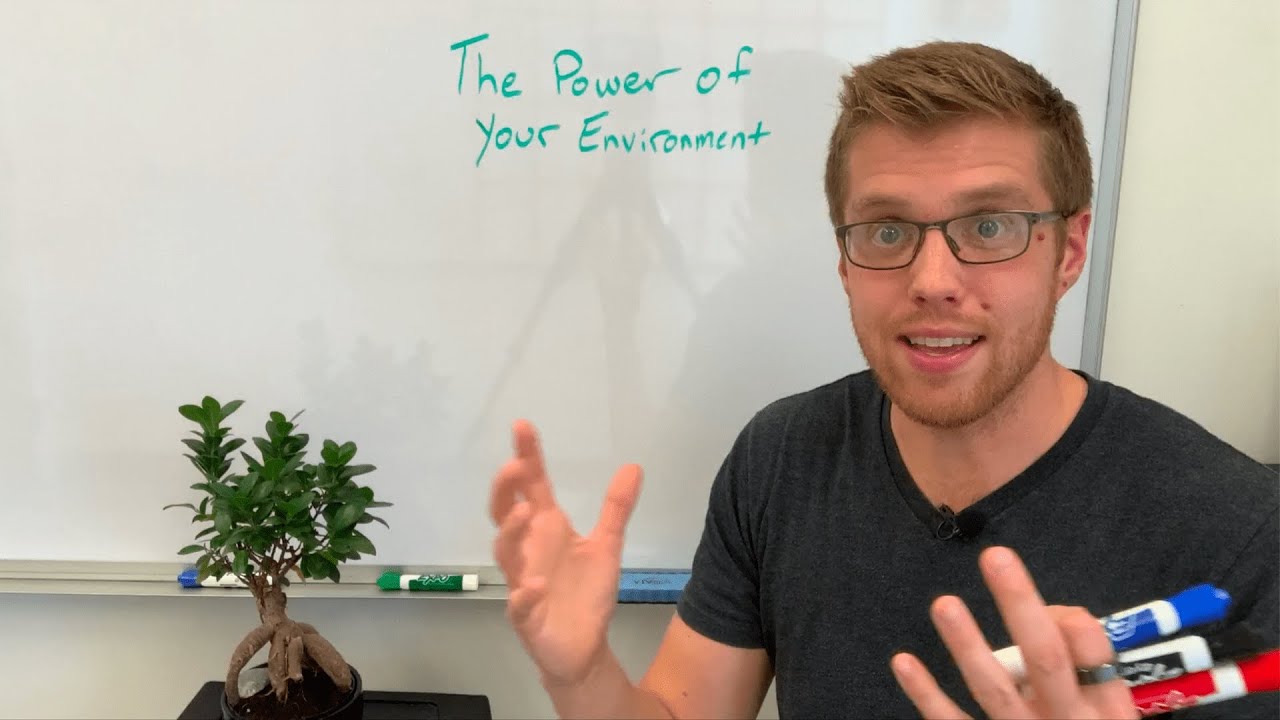
In this solo talk, Brad Schipke explains how a person's physical and social environment profoundly influences recovery from PTSD and trauma. He breaks the environment down into three categories—people, places, and things—and presents three practical tools for optimizing it: (1) pattern interruption, where simple changes like rearranging furniture, painting walls, or moving a bed disrupt automatic habits and create space for new choices; (2) designing for optimal defaults, which involves arranging the surroundings so that desired healthy behaviors (e.g., morning exercise, reading, meditation) are the easiest options while removing or minimizing negative cues such as a large TV or junk food; and (3) conducting a comprehensive environment audit, systematically reviewing every object, room, vehicle, and digital app to decide whether it supports recovery, eliminating negatives, and adding positives like books, plants, and healthy food. He illustrates the impact of pattern interruption with a client story (Joe) who, after radically redesigning his bedroom, eliminated nightmares and anxiety. Throughout, Brad emphasizes personal responsibility for shaping one’s environment as a high‑leverage, low‑effort change agent in the recovery process. The video concludes with typical calls to action for likes, subscriptions, and comments.
Chapters
Hey everybody, Brad Schipke here, and today I'm talking to you about the power of your environment and why it is so essential for you to optimize in your recovery. Now, your environment and the surroundings around you have a massive impact on how you feel and how you behave. So what we want to do ultimately is remove as many negative things in your environment and stimulate all the positive things in your environment, because if you're trying to recover And you are surrounding yourself with a bunch of negative people, or even worse, abusive people, it is going to be very, very hard for you to change your mindset, process your past, and alter your habits and routines to support your new life. If you are trying to, you know, build a habit of reading every night to expand your mind and to work on learning new things to help you in recovery, but you have this massive 72-inch TV in your living room and your bookcase is like in your basement somewhere, it's gonna be very, very hard to build that habit. So what we really wanna do today is optimize your environment in such a way that supports you in your goals of recovery, because it's very, very easy to be bogged down by our environment and feel like a victim. But what we wanna do is take responsibility for our environment, change it, and optimize it so it's supporting us in our goals. And it's such a simple thing that we can do. And that's why I want to shoot a video on it, is because it will have such a massive, massive impact on how you feel and how you behave, and can really be the change agent. If you've been stuck, if you have been even stuck in bed, like I went at my worst, at my rock bottom, I was stuck in bed in my basement because that's where my bedroom was, playing video games, watching TV, and eating junk food all day, 24/7 for months on end. And that's really where I was. And one thing that really helped me get out of that funk was radically changing my environment around me and the people that I associated with and the different inputs that I was inputting into my body, in my mind. So that's what we're talking about today, and I wanna give you 3 practical tools, 3 things that you can do to help you optimize your environment to support you in your recovery. And I have a little cheat sheet here, so I'm gonna be referencing this. But really, again, your environment really is broken down into 3 things, which is people, places, and things. So you can just think about your own life and ask yourself, you know, what are the people that I associate with, right? What— where are the places that I go? And what are the things that I come in contact with? And you can even just look around the room that you're in right now and just look at the different objects, the things that are in your room, or the different people, even if there's people with you or animals, and ask yourself Are these things supporting me in my recovery? Are they making me feel better? Are they positive or negative? And just right off the bat, you'll be able to quickly analyze your environment around you and tell whether or not it's positive or negative. But what we're going to do again is we're going to eliminate as many— eliminate as many negative things as we can and stimulate and add as many positive things as we can. So the first thing that changing and optimizing your environment does Is it acts as— it acts as a pattern interrupt. So what does that mean? So that basically means that all of us in our current environment right now, we have this certain set of behavior lists that we go through every single day. We have this certain routine, we have these certain habits that we partake in. On autopilot every single day. So we wake up, we do a certain thing, we wake up at a certain time, we do a certain thing, we think a certain way, and we kind of just go through the motions automatically. And we all kind of fall into this kind of rhythm and routine and our environment, and we get very used to our environment where everything is, the people in it, and we react to it in the very same way. But when you're able to radically change your environment. It actually doesn't have to be that radical, but if you change your environment around you, it could be as simple as rearranging the furniture, painting the walls, cleaning things up, getting rid of stuff. Things as simple as that just break the pattern, break your automatic behavior up just enough so you have to rethink your choices. And really what that does is it gives you an opportunity to make a better choice. Because like I said, we are just so ingrained to do what we've always been doing. And when we change our surroundings, we're basically just like, hey, that's different. I need to actually think about what I'm about to do now. So like, even as simple as like changing your bed from one side to the other, like you're used to getting out of the bed, doing the same routine, um, and going through the motions that way. If you just move your bed to the other side of the room, you're going to Wake up and like just be like, well, we're just like for a second, you'll be like, where am I? And you have to think for a second. So, and that's really, really important if you want to change your ingrained habits. And it might seem like a really, really small thing, but I want to give you a story and an example of this and how it massively, massively affects someone in their PTSD recovery. So one of our clients was going through a really hard time. their PTSD was massively affecting their relationship, and eventually they had to break up with the person that they loved because the PTSD was negatively affecting the relationship so much. They used to live together. They used to, you know, sleep in the same bedroom and things like that. But now this person— I'll call my client Joe, right? So Joe isn't this person's name, but Joe's wife had to move out, and Joe was all alone in his bedroom. So Joe reached out to us and was like, "I'm having a really, really hard time sleeping. I'm having I'm having nightmares at night. I'm having all this anxiety. I'm waking up really, really stressed because we used to have fights in our bedroom. We used to have fights all over the house, and I just I just can't sleep." And the thing that we suggested. to Joe was to rearrange his bedroom and radically change the environment, just the physical environment that he was in. So what he did is he moved his bed around, he got new, like, new sheets, new comforters, new pillows, things like that, moved the furniture around and stuff, got rid of stuff, and even painted the walls of his room as well. And He basically made it like his own sanctuary and it looked nothing like it did before. And, you know, he kind of talked to us and then a week later he came back and said, oh my God, I am sleeping. I did all these things and I'm sleeping through the night. I no longer have nightmares. I no longer wake up with anxiety and I'm actually calm when I wake up and it's amazing. And that's because Joe had so many negative associations to that environment, and when he radically changed it, he radically changed his behavior, his mood, and his thoughts around his past and around the negative things that happened with his wife in the bedroom. So that is just one example of how radically changing the environment interrupts your patterns and can really just totally change your mood overnight. And that's why I said changing your environment is one of the biggest, leverage points that you can have in recovery because it's so simple, right? Like, move some stuff around, get rid of some stuff, clean it up, paint the walls if you want, and you'll feel radically different, right? And it really gives you that clean slate as well, because like I said before, when you interrupt a pattern, um, it's kind of just like giving you another opportunity to rethink what you're going to do and gives you another opportunity to make a new choice. So if you're really looking to change your behavior, if you're really looking to break some bad habits or build some new ones in your life, optimizing your environment, changing your environment is such an essential piece because it gives you that little split second to make a better decision. So that's the first thing right there that optimizing your environment does is it interrupts your pattern, and that can be massively, massively impactful— impact— Impactive. I don't know if that's a word— on your recovery, like about, like I said, with the story of Joe. So Now, the second thing that you want to do here— oops— is you want to design your environment for optimal defaults. I don't know if you can read that, if my head will get in the way, but you want to design your environment for optimal defaults. So what does that mean? That means that, let's say I gave this example earlier. Let's say you wanna build the habit of, or you wanna, let's say you wanna build a morning routine, right? So every morning you wanna wake up at 6:00 AM, you wanna exercise, you wanna maybe run a mile, you want to read, and you want to meditate, right? So you wanna build this new routine, this new habit. Of you want to build this new morning routine in your life, right? So waking up at this time, working out, reading a book, and meditating. That's the— those are the new behaviors that you want to build. And what you want to do when designing your environment is you want to design it for those optimal defaults. So you want to make it as easy as possible for you to wake up at 6:00 AM, as easy as possible for you To run and exercise, run a mile, as easy as possible to read that book, and as easy as possible to meditate. So with that example in mind, what you want to do is you want to think through and ask yourself, how can I design my environment to support those goals and to make those goals as easy as possible? So in the case of working out in the morning, Right? If that's the first thing you want to do, something you can do is lay out your exercise clothes ahead of time. You can map out the route you're going to do ahead of time. And you can, you know, if you have a TV, maybe like your old pattern is like, I wake up, watch TV. You either throw away the TV, which is an awesome choice, sell it or give it to a neighbor or whatever. So you don't have that distraction. So you have it mapped out, you have the clothes ready, and everything else ready that way. And if you want to read a book, maybe you have your book on a table next to a really comfy chair with a really nice light, so it's very inviting. And maybe you even get a cup of coffee that you drink while reading the book to make it even more enjoyable and easier to do. And with meditation, maybe again you have your timer set out and you have all the things that you need to To make that routine as easy as possible. So that's really what I mean when I say design for optimal inputs. You wanna, so like if your old pattern, like I said, when waking up or doing anything is like sitting down, watching TV, playing video games, something like that, you wanna take those negative inputs and you wanna chuck them. You wanna eliminate them. You wanna ruthlessly get those things out of your life because they are dragging you down and just turning your life into a very negative mess. So you wanna eliminate the negative things and add in the positive things that you wanna do, and you wanna make those positive things as easy to do as possible. So that's designing for optimal inputs. And then lastly, the last thing that you wanna do is do an You want to do an environment audit. So what this is, is kind of taking these other 2 concepts right here and going through your house, going through every single object in your house and asking yourself, does this support my goal or does this get me further away from my goal? So you want to go through your everything in every single room. You want to go through every single room, every single drawer, every single item in your house and ask yourself, does this thing support me in my recovery or does it get me further away from my recovery? And you even want to go as far as analyzing your relationships and the people that you hang out around. And I'm not saying that you need to eliminate all the negative people in your life. There's some people in life that, you know, we are family members that, you know, maybe kind of negative, but we still love them and we want to hang around them. But maybe just being aware of like the negative input, you could either limit that or work around it in some, some way to make it less of an impact on your life. But you want to audit, like I said, everything. Everything in your house, everything in your car, everything on your devices. So I can't show my phone because I'm recording on it right now, but you want to go through your phone and look at all the apps on there, like social media, and ask yourself, is this supporting my goal or getting me away, further away from it? And really be honest with it too, because sometimes we're like emotionally attached to things that we think we need, but in reality you don't actually need them. So what you want to do is you, you really have to be ruthless with this. You have to go through and be like, this junk food is not getting me closer to recovery. It's a really bad habit. I need to eliminate this. Um, so you want to go through, audit everything, eliminate all the negative things, and then You want to stimulate the positive and add more positive into your environment as well. So some things that you could add are like a bookcase with books, right? So to make it that much easier to pick up a book versus watching TV, buying, you know, healthy food versus not healthy food, you know, adding plants to your environment to give fresh air and a nice environment to be in. But all those things kind of add up. They're kind of like little 1% differences, but then overall, when you look at your environment after you optimize it, you feel so much better, and you can just hit the ground running with your new behaviors, your new routines, and your new goals, um, to help you get to full recovery and beyond. So that's really all I have for you guys today. I hope you guys enjoyed this video. I hope it helps you in your recovery and designing your environment. If you like this video, hit that like button and hit the little subscribe bell for any future notifications. But again, I hope you enjoyed this video, and if there's anything else you'd like me to cover in the future, just let me know in the comments box below, and I will see you next week.










