This ONE Diagram Explains PTSD Better Than Any Therapy
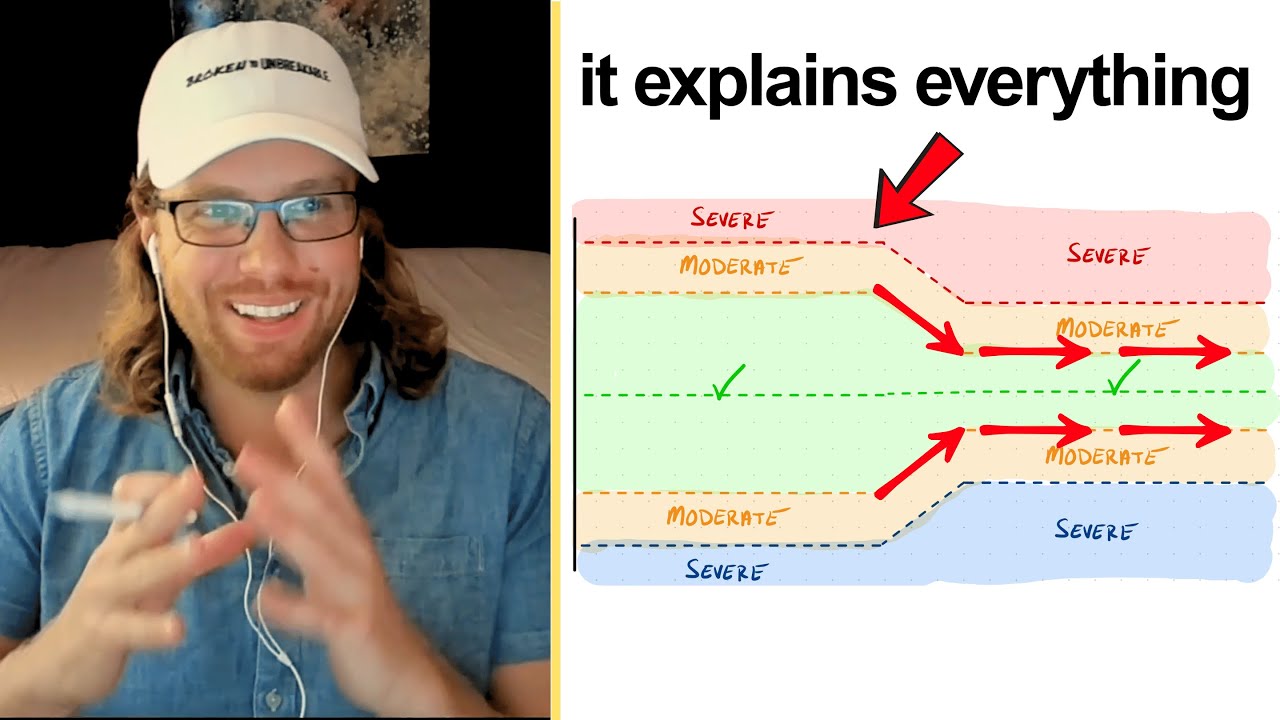
Brad Schipke explains how PTSD shrinks your "window of tolerance," the range of emotional intensity where you stay regulated. Trauma pushes everyday stressors into extreme reactions. He teaches coping tools like deep breathing and the butterfly hug for immediate relief, and processing tools that address root causes and permanently expand your tolerance over time.
Chapters
Hey everybody, Brad Schipke here. And in this video, I'm going to be showing you one simple diagram that finally makes PTSD symptoms make sense. And I'm going to give you 5 simple tools that you can use today to stop your symptoms before they spiral. Now, for those of you who don't know me, I healed my own PTSD in 18 months. And over the past 8 years, I've helped over 2,000 trauma survivors do the same. And I really make these videos to share what I've learned in hopes that it can help you just like it's helped me. I know that a lot of people never heal from trauma. And I don't want you to be one of them. I want you to be somebody who actually overcomes this. So without further ado, let's jump on in. The first graph here is going to be a graph of what things look like before you've gone through any trauma. So this is when you're not traumatized. I'm also going to walk you through after trauma and what it looks like when you are fully healed. But the very first thing is going to be what it looks like before trauma. So on the left-hand side here in the Y-axis, we have emotional intensity and we also have 3 zones. So the first zone here is what I like to call the safety zone. It's also called the window of tolerance, and this is where you feel things like you're calm, you're focused, you're alert, you're present, you're grounded. So this is where everything's good, you're in control, and life is good. The second zone here— there are two right here— are where the emotional intensity starts to get into a moderate level. This is where you are still in control, but You are starting to lose control. And once you get past the second level here and you get into the third level, this level is where the severe level of symptoms are. And at the top we have where you're not in control and you're stuck in fight or flight. And the symptoms here look like rage, anger, anxiety, and fear. And at the bottom, you're also out of control, but you're stuck in freeze mode. And the emotions here look like dissociation, numb, shame, hopelessness, or helplessness. And depression. Now again, this diagram here is for people who have not experienced a trauma. So how this would look on a day-to-day basis is that they would start out here and they would experience some some levels of emotional intensity. It might go down here, might come back up, might even go into the moderate range. But then they feel confident enough to come back down and control themselves. And most of their life is spent in the safe zone here, so nothing gets too crazy. Now things start to look a little bit different when we look at the after trauma graph. Graph, which is down here. So after trauma, this is what it really starts to look like. So as you can see in this diagram, there are 3 distinctive parts to it. This first section here is where the window of tolerance is normal. So this is— this represents what life would be like before experiencing a trauma. We have this middle section here where we see a shrinking of the window of tolerance and also an increasing of the size of Of the severe levels. And then we have this after part, which shows what life is like after trauma, where the window of tolerance or safe zone is smaller. And this, again, the severe zones are much bigger. So let me show you what this would look like in graph form. So if I draw just an example graph over here, where everything is staying within the safe zone and the emotional intensity isn't really going too far and they never get into the fight or flight or freeze mode. They stay within the safe zone and also in the moderate range. So if I take this graph here and I duplicate it and move it over to the traumatized safe zone, what we can see is that what used to be in the moderate zone is now in the severe zone, and what used to be in the safe zone is now in the severe zone, and what used to be in the safe zone is now in the moderate zone, and what used to be in the safe zone is now in the moderate zone. So what this really means is that things that would be completely normal and basically a non-issue for somebody who hasn't been traumatized starts to become an issue. Or things that may have been, again, completely normal over here are now throwing you completely out of control. So if you're over here in the traumatized zone, what are you supposed to do? How do you actually manage yourself? Well, to regulate back into the safe zone, you use Coping tools, and I'm going to walk you through my three favorite tools here that I love to use in combination that actually work with the majority of symptoms. The first one here is deep breathing, so just breathing and filling your lungs up as much as you possibly can. So truly filling them up until you can't inhale anymore, and then you hold it for a few seconds and then release very, very slowly. The second tool here is as you're doing the deep breathing is doing a tool called the butterfly hug. Where you cross your arms across your body like this and you start tapping beneath your collarbones. And this might sound and look kind of crazy, but what that does is that it stimulates your left and right hemispheres of your brain, which simulates REM sleep. And REM is rapid eye movement sleep, which is a sleep cycle where your brain does most of the processing while you're asleep. And the last one here is visualization. So as you're breathing and doing the butterfly hug, you want to visualize a relaxing scene, whether it's from real life or completely imagined. Now I'm going to make more videos on the different relief tools for specific symptoms. So if you want to be notified when I release that, just make sure to hit that subscribe button. Now let's move on to the final graph here, which is the healed graph. And again, you can see that there are 3 distinct sections here. This first section is where somebody is traumatized, where you can see that the window of tolerance here is very narrow. You can see the center part here where the window of tolerance starts to expand. And you can see that this final part here is where it's fully expanded. And things are back to normal. To expand your window or safe zone, you want to use processing tools. And processing tools, instead of up here like a coping tool— what it would do, it was take— it would take this peak and it would bring you back down to inside your safe zone, but it wouldn't expand your safe zone over time, right? So this regulates you back to the safe zone. Processing tools expand safe zone. That's the big distinction here, because processing addresses the root cause of the problem, which causes a permanent expansion of the safe zone here so that what used to bother you in the past no longer does. So again, if we take an example graph here and we just start here— so if I take this graph and I copy it over, what you can see is that what used to be severe is now moderate. What used to be moderate is now a non-issue. So when you actually go through and you do the processing, your window of tolerance expands permanently. And when that happens, your quality of life improves, your performance improves at work, and your effectiveness of processing improves as well because you're able to withstand and expose yourself to more and more levels of trauma. Now, there are 2 fundamentals here of processing that I'm going to walk you through. If you want to see a full breakdown of what processing is and how to process in your own life, you can search on my channel for a video called How to Self-Cure. PTSD, but for now I'm just going to give you the base fundamentals. And these are the only 2 things that you need to do in order to expand your window of tolerance here. So the first one here is the logical journey, and what this is is a change of beliefs. And the second one here is the emotional journey, and that is a release of emotions. So those are the only 2 things. You have the logical side of things where you're questioning your beliefs, you're identifying your beliefs, you're challenging them, and you're changing them. And you have the emotional side, which is where you are physically releasing and feeling the emotions from your body. So it's when you are actually allowing your body to feel the emotion, to release the emotion, to cry, to shake, whatever it needs. If you enjoyed this video, just give me a like and subscribe. And if you want to coach with me, there's a link in the description. I don't care if you click it or not, but if you want more help from me, feel free to check it out. But I hope you have a great day and I'll see you in the next one.










