This Wasn’t Fun, but It Cured My PTSD
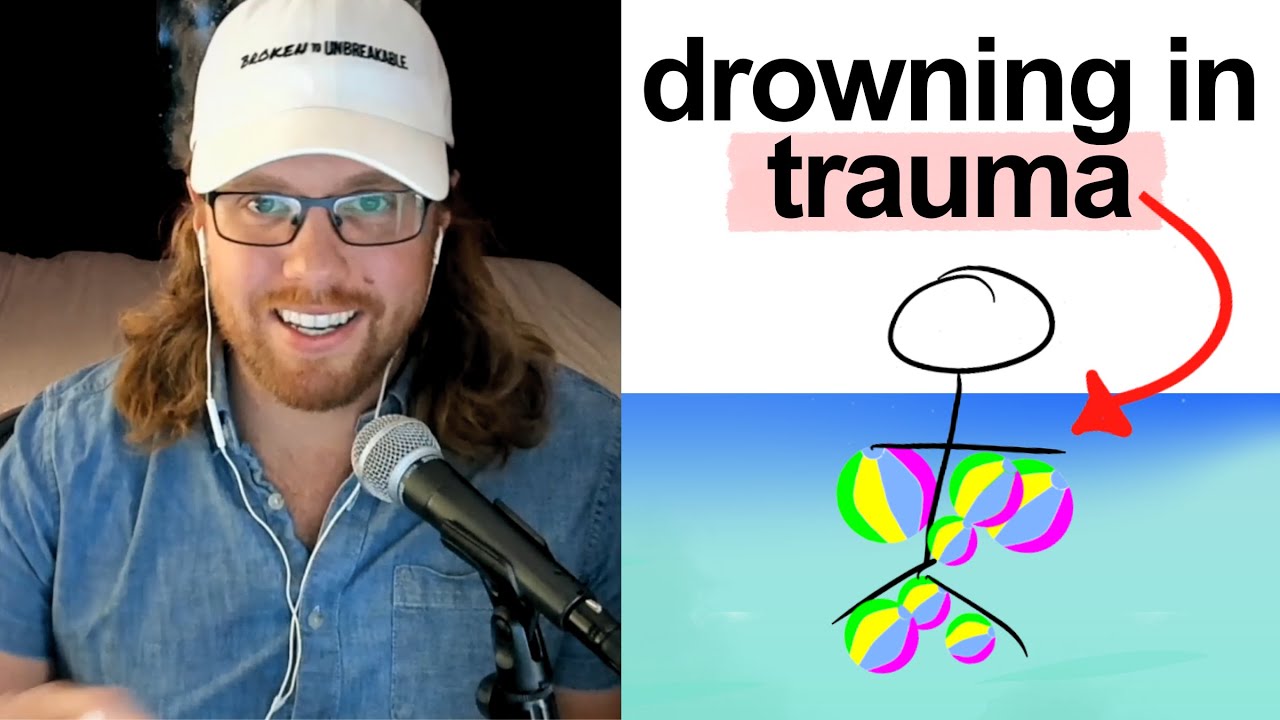
Brad Schipke describes a trauma-processing method he says healed his PTSD and helped over 2,000 survivors. He uses a beach-ball metaphor: traumas are pushed underwater into the subconscious, and when triggered, they surface with overwhelming emotions and beliefs. The protocol involves deliberately bringing one trauma to the surface, releasing its emotional pressure, and changing the limiting belief attached to it.
Chapters
All right, so I'm going to walk you through something that definitely was not fun for me to do, but it did cure my PTSD. I'm going to walk you through a very high-level and advanced processing tool that I used to probably heal 50, 60, if not 70% of my own trauma. And I want to walk you through that step by step and explain it through a very simple metaphor. Now, this was something that I personally learned from thousands of hours of research on my own end. Hundreds, honestly, actually thousands of personally processing my own trauma and helping over 2,000 other trauma survivors heal as well. And this is one of the key theories, one of the key methodologies or tools that I teach my clients to process their traumas. So what I want you to imagine is this down here being the ocean in this metaphor. This is the ocean and beneath the water, will be your subconscious mind, and above the water will be your conscious mind. And then over here we have beach balls, which are going to be representing traumas, right? So I want you to really think about this as you in your life here. Obviously your head is above water and you are swimming. So as you go through life and you experience a trauma, how this is represented is that one of these beach balls, a trauma, is something that you keep underwater. So basically what makes a trauma a trauma is that it bypasses your conscious mind here and it goes straight into the, into your subconscious mind because by, by nature, a trauma overwhelms your conscious mind with all of the emotions and all of the physical reactions that you have from the trauma. Your conscious mind can't comprehend or fully process it in the moment. So what it does in an attempt to protect you is shove it down into your subconscious mind. So basically going along with this metaphor here, since your conscious mind could not process this trauma in the first place, it automatically shoves it down. Whoops. It automatically shoves it down into your subconscious mind and you are forced to hold it there, right? So either from repression where you are pushing it down yourself or suppression where your mind is doing it for you, regardless, either way, it's down in your subconscious mind here and it's forced underwater. Right? So what can happen with this beach ball, again, going along with this metaphor, if a wave comes by or if there's somebody who kicks the beach ball from out underneath you, what will happen is this beach ball will then rise to the surface. And when it does come to the surface, it'll be in your conscious mind and it will have and bring forward all of the previously unconscious beliefs, all the negative beliefs, and all the previously unconscious negative emotions. And what we call this is a trigger, right? So when something in your life happens, basically in this metaphor, how I'm explaining it is you lose control of the beach ball, it flies to the surface here, and then it triggers all of the old beliefs and all of the old emotions. So when you just have one trauma here, it's very easy to manage, right? You can go throughout your life, you can avoid different triggers, and you can move through the water. You can swim through the water just fine because you're just carrying one beach ball. Right? You're only trying to keep one thing underwater. So it's very easy to kind of deal with that and manage that. But what happens with PTSD and CPTSD is that it isn't just one trauma. It isn't just one beach ball. Over time, you go through another trauma and you have to hold 2 beach balls down. And then it's another one, you have to hold 3, you maybe shove it down underneath one of your legs, and you have another one and another one of various sizes, different traumas. And eventually you were just completely overwhelmed where you can't Even move, you can't make one move left or right. You can't swim. You can't. You have absolutely no freedom. You can't do anything because you are just basically spending all of your energy to keep these beach balls underwater, aka all of these traumas underwater. Now this is where most trauma survivors find themselves stuck, right? They're in this place where they feel completely stuck. They can't move around because they have all of these traumas that they're trying to just hold down and manage. They isolate themselves because they're unable to even leave their house because simple activities just either require way too much energy because all of it's being expended to hold these beach balls down, or there are so many different stimuli in the environment that remind them of the traumas, which cause these traumas to be triggered, right? And what can happen too when you have multiple traumas is that one triggered isn't necessarily just going to trigger one beach ball. What can happen here is that one trigger can bring up multiple beach balls. So one small thing can cause, cause multiple traumas to come into your conscious mind and cause you to get completely overwhelmed. Now, this begs the question, right? What do you do? What, what is a trauma survivor supposed to do when you have all of these traumas down here that you have to manage and keep track of? Well, basically, again, going along with this metaphor, what you'll have to do is to get yourself into a safe environment where you are not at risk of being triggered, right? And what we would want to do is to intentionally and in a controlled way, bring one of these beach balls up to the surface into the conscious mind so that we can start to work with it and process it. Now, processing is defined by 2 core variables. There are 2 core variables that are present in every single processing tool. And these are a release of emotion and a change of belief, right? Because the 2 core elements of a trauma here are emotions and beliefs. So we need to release the emotion from our body, which is the equivalent of releasing pressure or air out of this beach ball here. And we also need to change the belief as well, which will also be indicated by releasing pressure from this beach ball. So as you do each one of these processing sessions, you bring the beach ball out a above the water into your conscious mind. You release some of the pressure because you're not going to release all of it at once. And then you bring it back down, live your life. And then in the next processing session, again, you bring the beach ball back up, you release some more of that pressure, you bring it back down, live your life. And then with each processing session, each time you bring it up into your conscious mind and release the emotions and change the beliefs, each time you do that, the beach ball just gets smaller and smaller and smaller. Until— won't let me delete it— it disappears, right? So then, and this is the importance of focusing on one trauma at a time as well, because if you bring multiple traumas up to the surface and you try to work on multiple traumas at once, you're going to be making a little bit of progress in a lot of directions. And for most people who have PTSD and CPTSD, there are a lot of different traumas that you need to go through and process. So the most efficient way to go about processing these traumas or multiple traumas is to pick one, to focus on one, bring that one up and process that again and again and again until it's done and it's processed. And then you can move on to the next biggest one that you're focusing on. Now, one of the biggest questions that I get when I teach people this process here is, how do I go about and actually identify the quote unquote beach balls? How do I identify my traumas? How do I know what they are? And there's this one core principle that I always go back to again and again and again, and it's what helped me and it's what's guided me to full recovery. And it's one word: pain. So pain is your compass. Pain is your best friend when it comes to recovery, not because pain feels good, but pain is basically your body's notification system telling you, alerting you that there's something wrong and that there's something that needs to be healed. So we want to use that pain, not as something to avoid, but as something to embrace. That our brain is trying to tell us that needs fixing. So what you will realize is that each one of these traumas here, they will be sending out signals of pain, right? So what we want to do is go straight towards that pain, obviously in the right mindset, but we follow the pain until we find the trauma. And then we isolate that one trauma we want to work on. And that's the one that we keep bringing up to the surface and processing and releasing the emotions and changing the beliefs of again and again and again. We bring that up and down in this cycle over and over and over and over again until this trauma here is done, is fully healed, and then it's gone. So each one of these traumas here again will have their own beliefs and their own emotions. So really each one of these traumas here again have their own beliefs, their own emotions, just like they are a different person. And this is where it gets a little bit more advanced. So hopefully you can stick with me. But each one of these traumas here, each one of these sets of beliefs and emotions are another part of you. Another way to put it is that they are a subpersonality within you. Now, this isn't me saying that you have multiple personality disorder, but it's a mental model to really think of trauma in a very productive way. Because if we think of this trauma as an individual being with its own thoughts, with its own beliefs, with its own emotions, then we can speak to it As if it's a different person, and we can see it as if it's another person. So that's what I really want you to do here when dealing with and processing trauma is I want you to think of each one of these beach balls here as another part of you, right? And once you see it as a different part, this might sound super weird for those of you who are hearing this for the first time, but when you see this as a different part, as its own being that has its own beliefs, that has its own emotions, You can then separate from it. You can see it as if it is another person, get distance or altitude with that emotion, and speak to it and almost have a coaching or therapeutic relationship with this part. And this is how, this is like the magic. This is like the secret sauce. When you are able to see that each one of your emotions and each one of your traumas is an individual part like this, then you can talk to it as if it's another person and not be flooded by the emotions. So this is how you are able to gain control and stay in control when you are processing. Because what happens to most people is that they don't see this. They don't see this as a separate part. They see this trauma as them. So they don't see any difference between themselves here and this trauma. They both think that they are themselves. And in a macro view, obviously, like, it's still you. But the perspective of seeing this as a different part Allows you to gain that separation. So when these people attempt to bring the trauma to the surface, what happens is that they get flooded with it, and they believe that they are this trauma, right? So they get flooded, and instead of this trauma being a different part that they interact and communicate with, they see it as themselves. So they are merged with the pain; they are one with the pain. And when you are in that state where you are flooded with that emotion, when you're merged with that emotion, it's very hard to deal with that emotion and process it. To process a trauma successfully on your own, you need to be able to have that altitude. You need to be able to have that separation between you and the part. You have to be able to see it as a different part of you. So when you go and do your own processing, see each one of these emotions that you're experiencing as a different part of yourself, and then you can communicate with it. You can hear its thoughts. You can, you can ask and discover what it's Beliefs are, and you can challenge those beliefs. You can identify and see the emotions that this part has, and then you can help it release those emotions. You can challenge those beliefs and you can help it see and think differently and think in a more positive way. Now, if you want me to walk you through this process one-on-one with you, there's a link in the description where you can learn more about how to coach with me. I don't care if you click it or not. The main thing is I want you to get value from this video here. But if you like this video, hit like and subscribe for more.










