$10M Closer Reacts to HARMFUL High Ticket Sales Advice
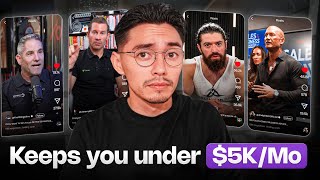
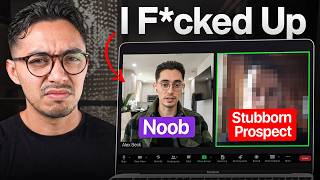
In this YouTube reaction video, high‑ticket closer Alex Beck critiques popular sales advice from figures such as Jordan Belfort, Grant Cardone, Andy Elliott, and Alex Hormozi. Beck argues that many widely‑circulated tips are either incomplete or outright harmful. He emphasizes that high‑ticket sales is fundamentally a volume game—more calls increase the odds of closing—so salespeople should quickly move past “not interested” prospects, log them in a dedicated CRM list, and run automated email sequences or periodic redials. Confidence, not a scripted pitch, accounts for roughly 80% of a sale; authenticity and personal charisma protect that confidence. Beck stresses the importance of frame control, asking discovery questions, and using restatements to secure agreement. He advocates solution‑selling through storytelling rather than feature‑selling, and distinguishes professional pressure (used sparingly to overcome fear objections) from sleazy scarcity tactics that erode trust. Throughout, Beck shares personal anecdotes from his work with Gym Launch, Iman Gadzhi, and other high‑ticket programs, illustrating how asking good questions, staying authentic, and leveraging CRM automation helped him close nearly $10 million. The video concludes with a call‑to‑action for a free 5‑hour training that expands on these frameworks.
Chapters
I spent the last few days doomscrolling through social media, seeing what type of advice is being given in the high-ticket sales space right now. And honestly, there's a mix of everything. Some genuinely good advice that will help you progress faster and some straight up bad advice that's just going to butcher your results. So I thought it'd be valuable to react to some of the most popular sales tips out there. That way you have clarity on what's actually worth following. If you don't know who I am, my name is Alex Beck, and as a high-ticket closer, I have closed nearly $10 million in sales for people like Alex Hormozi, Tim Launch and Iman Gadzhi's Educate, along with a couple other notable names. So you could be sure that what I'm about to tell you comes from experience, not theory. With that being said, let's jump into the good stuff.
I'm in and out in 14 days because I made 3 days of phone calls that were brutal. Hey, I'm coming to San Antonio, man. Will you give me 5 minutes? And this is before anybody knew who I was, right? No books, no, no kind of notoriety. So they're like, no, no, don't come by. But see, that was interest. To me, that's interest. No, no, I'm not interested. Not interested. You're not interested.
To you, it's interest.
Well, it is.
It says not interested. Not is an adjective to describe interest.
Okay.
Right. So it's a level of interest.
So if someone says they're not interested—
On a scale from 0 to 10, what interest level do you have? None. That is a level.
Right.
Okay. And then 1, 2, 3, 4, 5.
You with me?
A few minutes ago, he didn't know he had no interest. At least I'm on it. You see what I'm saying?
You get it?
Well, I wouldn't do that. I disagree with that, but I must say that reasonable minds could differ. I'm more about hitting massive numbers. I would move on to the next guy. The problem I see is with salespeople, a lot of people, they have a fear of cold calling. So they'll use as an excuse to not cold call to talk to someone for too long they know is not going to buy. They get into casual conversations. They go to fucking Pluto. They don't pick up next call. So that's what bothers me about doing that.
Yeah, well, then they're not trained.
So I agree with Mr. Wolf of Wall Street, Jordan Belfort. I disagree with Grant Cardone, and here's why. Number 1, sales is a volume game, meaning the more volume that you're able to put in, let's say into an 8-hour time frame, the higher likelihood you have of getting more sets, closing more deals, and making more money. And so the last thing that I want to do is spend 1 out of the 8 hours that I'm working today wasting my time speaking with someone who clearly isn't interested in what it is that I have to offer. And so let's say I'm cold calling or I'm dialing someone and they say, hey, Alex, yep, not interested. Respectfully, fuck off, stop calling me. I am going to say thank you very much. Have a good day, hang up and move on to the next lead. Now, that doesn't mean that we could get rid of that lead and pretend like they never existed. Here's exactly what I did whenever I had someone tell me they weren't interested. Inside of my CRM, which is your customer database, whether it's GHL, Close.com or whichever, you could create a lead list that's called not interested. Every person that you dial that says, hey, Alex, not interested, stop calling me, I could add them to that lead list. From there, you could create a lot of automated ways to work those leads while you dial people who are actually interested in working with you. You know, for example, when that would happen at Gym Launch, I would create a 14-day email sequence that presented a lot of testimonials and who we did and how we could help them scale their gym. And I would blast that email sequence to everybody who's in that not interested lead list. Typically, for the people who those emails hit with, they would respond back to them or send me a text or give me a phone call and say, hey, actually, I want to chat about what what you guys have to offer. On top of that, hey, if it's a Friday or Saturday and I have a bunch of free time, I could go into that not interested lead list and redial all those people again. But the last thing I'm going to do if I'm working, let's say, 7 or 8 hours that day is waste an hour, 30 minutes, even 15 minutes of my time speaking with someone who's not interested, because I understand that volume negates luck. Meaning the more volume you put in, the more money you make, and the higher chances that you have to just get better at sales in the first place. Now, the second thing, and I'd argue this is most important, sales is a game of confidence. Confident closers need no script, meaning that is literally 80% of the sale. I'm sure you could remember a time where, you know, maybe you went to a restaurant and it was really, really good. And so you recommended it to a friend. I could almost guarantee, you know, it's not like you had a sales framework or sales script in front of you to convince your friend to go to that restaurant. You spoke with pure conviction and confidence, saying things like, dude, I went to this restaurant on Friday. So good. The pricing, Perfect. The food was delicious. And the next thing you know, you closed your friend on going to that restaurant just based off pure confidence and conviction. And so how this applies to this video is, hey, if you are dialing people and wasting your time trying to go back and forth with these people who are disrespecting you or just not interested at all in what you have to offer, all it's going to do is ruin your confidence and it's going to affect the rest of your workday and the rest of the calls that you're going to take throughout the remaining of the day. So remember, volume negates luck. And if someone says they're not interested, just move on to the next lead. Add them to a not interested lead list because, hey, let's not ruin your confidence, your charisma, and the enthusiasm that you have to speak with the next person. Clip 2 is this Andy Elliot video. Let's check it out.
Sir, Andy Elliot. What's your name?
Ashton.
Ashton, nice to meet you. You're here for sales or service?
I would say sales.
Nice to meet you, Ashton. Would it be okay if I had the honor of serving you today? Are you here to see someone else? Show me what you got, my man. Again, Ashton, my name is Andy Elliott. Just put a name with the face now that I'll be dealing with you. My job today is to give you world-class customer service and take care of you and your family and all the highest levels that are important to you. What brought you in today? What are you looking for? New truck. New truck, awesome. Come on this way. By the way, what can I get you to drink? Something hot or cold to drink?
I'm good.
Oh no, I got to get you something. Listen, if you come to my house, my wife's going to feed you, okay? So I'll get you something hot to drink, cold to drink. I'll get you an empty cup, I don't care. I got to get Get yourself what you want.
I guess I'll take a coffee.
What did I do? Number one, I just completely paradigm shift him. And now, number one, he sees that I care. Also, number two, I just took control. I mean, I'm 30 seconds into the deal and I own this guy. Now listen to me. I know a lot of you say, well, I wouldn't let that happen. Trust me, I do it every single time. When a sniper takes you out, people like, I would never let that sniper take me out. You would never know there was a sniper there.
All right, so I half agree and I half disagree with this clip that you're seeing here. The reason why I disagree is because I feel like what it's communicating is in order to succeed with sales, you need to be this overly enthusiastic, overly extroverted type of salesperson. And it's just not true. You know, this is why sales has a bad stigma in the first place. And I even fell victim to that. Over 6 years ago, I was completely against becoming a commission-based salesperson because of marketing material just like this. I felt like it just didn't match my personality. The way people project it is like, hey, if you want to be a good salesperson, you almost need to put your sales cap on like acting, right? Drink some coffee, pump up the enthusiasm and have this like jacked testosterone type of personality in order to close more deals. And if you've watched any sales call recordings of mine that are on this YouTube that you could check out, you'd realize that is far away from my approach and my personality trait on sales calls. And hey, maybe this works well for Andy Elliot because that's the type of person he is, but it's not true for everyone else. People could tell if you're being authentic or not. Buyers are getting smarter. Not only that, again, sales is a volume game. So if you're taking 8 calls per day, 6 days per week, 12 months per year, it is extremely difficult to pretend to be somebody that you're not and still succeed at a high level. And it took me a while to figure this out. You know, I'm not going to lie, when I was working at Gym Launch, what I did was mimic the best sales reps on the team. It wasn't until I went to Iman's team where the CEO of the company reviewed one of my sales calls. I was wearing a preppy button-up. I had my sales cap on. My sales personality, and he told me, Alex, you look and you sound like a douchebag. He said, man, what do you wear on your day-to-day basis? And I remember saying, like, usually just like a black t-shirt. He said, cool, go to your room, change into a black t-shirt, and be yourself. You'll close more deals. Now, that's what I disagree with. What I agree with is frame control. At the very tail end of this clip, he talks about the importance of taking control of the conversation. And I agree with that because in order to impose your will and your ideas and get somebody to buy from you, you need to have frame. Think of it this way: when your mom or your dad gives you a piece of advice, most people are very quick to sit there and listen. Why is that? Because they have a higher frame, they have a higher status than you. And it's the same thing on sales calls. Yes, you need to lead and direct the conversation and have frame control, but you don't need to pretend to be somebody that you're not. Be yourself, take control, lay the foundation for the sales call, and you'll close more deals.
All right, this is this Hormozy if they have no context, that's why like low-level transactional sales, like if you're doing B2C supplement sales over the phone, you really don't need to have an exquisitely knowledgeable rep. It's more about a very transactional process that's gonna be very highly scripted, minimal variability, right? Whereas if you're talking about a complex business deal, right, then you need to have a very good understanding of their business, where there's potential opportunities, etc.
Good closers ask good questions. I think this is very common that I experience a lot since I work with so many salespeople, is they feel like in order to succeed with sales, they need to sell something that they already have knowledge with. Mini story, uh, when I sold Gym Launch, when I sold for Iman, when especially when I sold for Thach Nguyen, the Asian real estate gentleman, I was selling to real estate investors who had sometimes 5 to properties. I had zero. I knew nothing about real estate, right? But I closed my very first deal on the very first call that I took and was a top-performing salesperson within the first 2 months of working at the company, simply because I knew how to ask good questions and then shut up. And the reason why I learned this was because I worked for Hormozi. He's probably going to talk about this right now. I remember when I was working at Gym Launch, they used to play this game that if you could close a deal without saying a single statement, they would give you like a $1,000, $2,000 bonus. And it was just to hit home that your goal as a salesperson isn't to treat the call as a coaching call or to mini pitch throughout the process. It's to ask really good questions. That's how you place yourself as an expert, no matter what it is that you're selling. Let's get back into the clip.
And so sometimes it can be difficult because you may want to switch. And this is especially true when it's, uh, if you're the owner of the business or you're you know, integrally involved in just a couple of salespeople, you may get into the mode of trying to teach, which is one of the biggest, A, mistakes, but B, one of the biggest hard things to not do. There's some good words. As a salesperson, right? 'Cause if you're trying to close a deal, you wanna educate the person, but the reality is, that's not, they're not going to listen to you until they buy. And so there's no actual point in quote teaching, but you do want to coach. And that's something that I was talking about with my team yesterday, is the difference between, uh, teaching and coaching. And so fundamentally, there's only 3 types of statements that should come out of your mouth when you are selling. Number 1, and most likely to be coming out, is questions. All right, so if you don't know what types of questions, um, like for us, I, I prefer question-based frameworks for more complex sales. And the reason for that is these are the types of questions that we would need to know the answer to in order to work with someone.
My question framework is pretty pretty simple, right? I follow the roller coaster analogy. You've probably seen me talk about this a lot. At the start of your discovery process of the sales call, you want to talk about their current situation. So if you're selling B2C, I'm asking questions about what are you doing for work, where are you based out of, how long have you been doing that, do you enjoy what you're doing, right? If I'm selling B2B, I'm asking a lot of questions about their business just so I could get a general understanding of their business, because that's important. From there, I am going into their future state goals. The whole goal of this is at the start of the conversation, we want to raise their emotion high. At the end of the conversation, we want to take it low and talk about their current state problems and how shitty things are going by asking questions, not by giving statements. That way, when we pitch, we could pitch to their problems. And so again, the framework that I use is number 1, a couple current state questions at the start of discovery. Number 2, I'm going to pivot into future state goals by saying something something like, awesome, so Mr. Prospect, before we start talking about all your problems, right, uh, what's the actual vision that you have with your business? We're gonna dive deep into that, get really granular, figure out what the numbers look like, and so forth. From there, I'm going to pivot back down to their current state problems. So for example, if I have a business owner that says like, hey Alex, I'm currently making $20K a month, I want to get to $100K per month with my business, how I'm going to pivot down is by asking something like, cool, by the way, I know you want to make $100,000 a month. You just told me why. We just dove super deep in that. How long have we been trying to get to $100,000 per month with your business? Okay, cool. And so what have we tried in order to get to that point? Why haven't we tried anything? Why didn't that work for you? We are getting towards the tail end of our discovery by asking questions to dive deep in their current state problems and what they've tried. From there, the last piece, so technically section 4, would be asking closing questions. So now that I have them go that emotional high and then bring them to that emotional low by talking about their current state problems, I'm going to ask closing questions, a.k.a. tie-downs and micro-commitments, by saying things like, cool, Mr. Prospect, you just told me you want to get to $100K per month. You're currently making $20K. Here's all the problems that you're experiencing and what you said you need help with. If we could provide those things to you and solve that problem, would you be ready to move forward today? And if so, why? So instead of giving a ton of statements throughout the call and trying to coach them and teach them about what's going wrong, I'm going to make them tell me, I'm going to ask a lot of questions and then get a lot of micro-commitments to get them to commit to moving forward and fixing the problem today, then I'm going to take it to my pitch. Let's get back to the clip.
Also, the only way that you can get someone to change their beliefs about something, because ultimately the person, especially the more complex, the higher level the sale, the, the more the person has to come to the conclusion on their own that they should work with you and less feel forced or suggested. Hopefully that makes sense. And so we should ask leading questions that lead them to the conclusion that they should work with you and you can solve their problems. The second type of thing is a restatement, which means after they say something, you say it back to them, which means that you understand and you are listening. Alright, so it's like, so what I'm hearing is this is the primary issue that you've been trying to solve, this is what you've done so far, and this is why it hasn't worked. Does that sound about right? So that would be an example of restatement. Notice.
So yes, very true. Restatements, right? Essentially, like he said, like Hormozi said, the reason why you give a restatement is to show that you understand and get them to agree to that problem. What else I'd add on to that is it makes them add on additional context, right? So if someone tells me, hey, Alex, this is the problem I'm experiencing, ABC, I'm going to say, cool. So it sounds like what's stopping you from getting to $100K "Per month with your business is ABC. Is that correct?" 99% of the time, not only do they agree with you, they start adding on additional context that's important for you to get the sale by saying things like, "Exactly. Plus, this is what we're going through and this is what we've tried." Now, this is especially important restating when you're talking about someone's goals and someone's problems, right? Reason being is if they tell me the problem and I repeat it back to them and then and they agree and add additional context. We just said 3 times, this is the problem we need to solve. They told you, I told them, they agreed.
None of these things are declarative statements of fact. I'm not teaching them anything. All right, which is the same reason that people get in trouble when they do presentations to try and pitch. They try and teach. The thing is, is person has to have their beliefs broken in order to take action. And you're not providing value in a real way because the reality is they're not going to execute on anything you teach them. They will only execute if they have their beliefs broken and believe you can help them, and then that they can trust what you are saying. This is like— this was so hard for me to learn because in the very beginning—
side note, Hormozy looks swole in this video. He must be eating a lot of protein.
I'm sorry, Jim Launch, I just wanted to go in and get on the phone with Jim. No, no, your pricing is all wrong. You got to do this, you got to do this, got to do this. And they were just like, take lots of notes, and then end up getting off the call not buying, and then be like, well, uh, I don't even know who this guy is, I'm just going to ignore it. And so I didn't actually help them. I thought I was helping them, them, but I was not actually helping them. And I actually heard this from Taki Moore, a good friend of mine. Um, he said, uh, everyone gets benefits from breaking beliefs. Only 10% of people get benefits from tactics. And so you actually are providing more value on the call by questioning their beliefs because you're actually servicing 100% of the people providing value compared to trying to give tactical advice that only 1 out of 10 people may or may not use. And likely the people who will use it are not buying from you. So either way, you're not benefiting your business and you're also not benefiting theirs. That was a huge thing that I had to break with my own beliefs. And so then you might be wondering, well, if I'm only asking questions and restating things, how do I close the deal? Great, great question. Glad you asked. Alright, and so what I like are short stories. And so the reason we do this is that— so we'd ask a question, ask a series of questions. Hey, why are you here? What are you struggling with? Where you at right now? Where you trying to go? What have you tried so far? How's that working for you? Um, why is this important? Does it matter like within the bigger context of, of your life and what you're trying to do? Okay, great. This is what I'm hearing. I think this is why, uh, you haven't been successful. Would you agree with that? Does that make sense? Fantastic. Do you want to hear how our program works? Right. So at that point you'd enter quote the pitch, right? Which is where you're going to explain how the services work. This is where most guys and gals will just blab, right? They'll just talk and talk and talk and talk and talk. And try and teach about how they have this secret system. And they— and really, I think Russell Brunson calls it techno babble. It's like you talk about your periodization, you talk about your plan, or you talk about your programs, or talk about the softwares, or whatever, right? And the reality is they don't care. And so all we have to do realistically is tell a story that illustrates what they're going to experience as a result, right?
So you want to solution sell, you don't want to feature sell, is another everything that he's saying, right? So instead of using your pitch to list out ABC product and everything that's included and the free t-shirt that you receive when you buy, you want to utilize stories to showcase, hey, there is a person just like you. This is what we did, this is what's included, and this is how it solved the problem for them. People do not care about your features. They care about how whatever it is that you have to sell is going to solve their problem and help them reach their goals. Another thing to add on is storytelling is such a good way to keep people, you know, locked into whatever it is that you're talking about. For example, I remember when I first started selling my own offer, so the sales agency and placement offer that you guys see in the bio here on my YouTube, I became victim of, uh, you know, selling the features of my product for my first couple sales calls. I sat down with a buddy of mine and he listened and read out the pitch that I had typed up on a Google Doc, and the one change that he made was to start off the pitch by telling a story and giving an analogy. And so instead of saying like, hey, I would love to break down how we're going to help you, is that okay? They say yes. And I go into, cool, this is what's included. Instead, I would start with a little bit of an analogy and I'd say, listen, so to give you a little bit of a breakdown of how this works and what's included, really quick, quick question for you. Did you ever play any sports growing up? Once they say yes, I'd say, cool, what was your sport of choice? From there, I would go into my analogy or story, I'd say, awesome. So I'm sure, you know, let's say they pick basketball. Name any basketball player that's the pinnacle of their craft that's making a ton of money. Let's say LeBron James, right? So the reason why I say this is the same process that LeBron needs to go through to become really good at basketball and make a ton of money is the same process that you need to go through as a salesperson to get really good at sales, but also make a ton of money with sales. Where for LeBron, the 3-step process looks like this. Number 1, he shows up to practice and gets really good at basketball. Number 2 is he has a trainer or coach to put him on a continuous feedback loop. So if he plays a game yesterday, his trainer sits with him, hey man, this is what you did wrong, what you need to get better at, this is how we need to execute it. He implements it, LeBron gets better. And number 3 is LeBron's agent. And his agent is there to make sure he's in the best position in the place, in the marketplace, to make as much money as possible with basketball. Now I'm not gonna dive fully into the analogy, but making that simple, That small change made people understand what's included and how this product is going to help them make more money and succeed with sales compared to me just listing off features. And if you didn't notice, I just used the same tactic on you, right? Instead of just listing off why stories are helpful, I used a story to tell you why stories will help you make more money as a salesperson. All right, number 4 will be this Grant Cardone video.
So the pressure, man, pressure is great thing. I don't know why all the confusion about the pressure. People write me constantly, "Well, Grant, I got a tweet." Somebody tweeted to me this weekend, they're like, "Do you think pressure is necessary if a salesperson has done all the rest of his job correctly? He shouldn't need to pressure anybody." I'm like, "Are you nuts, dude? Pressure is one of the greatest commodities on planet Earth." Okay, pressure is what makes a diamond. A piece of coal can sit in the center of the earth for millions of years without the right amount of under pressure, it ain't becoming a diamond. If you really believe in your product, your service, your idea, your concept, you are willing to pressure a customer to do it. Let's say your brother is about to bounce an 8-ball into his left freaking arm right here.
He's about to pop it and kill himself.
Would you pressure him to go to rehab? Would you pressure him not to do that? Sure, man.
When you believe completely, totally, have 100% To refer back to the clip you just saw, right, he just used a story so that you understood the point he was trying to make. Crazy story. All that to say, please don't bounce an 8-ball into your arm. But let's keep watching.
Conviction, you'll take a customer by the throat, throw them down on the freaking table and shut them down. That's not a bad thing, man. I don't talk about pressure as, as a force that you would use with somebody, but rather something internal that says, "Hey, let's do it, man. It's time to do it. You know it's the right thing." "Well, Grant, I don't know. I've got to think about it." "Sir, you've been thinking about this for 3 years. Thinking doesn't move you forward, man. Let's roll." "Are you pressuring me?" "Sir, when I start pressuring you, I promise you, you won't have to ask the question, okay? Let's roll. Let's do it. It's the right thing. You're going to do it sooner or later. You know you're going to do it sooner or later. Right now is the time to do it." invested enough time in doing this. Let's roll.
See, that's the kind of pressure I'm talking about.
Professional pressure where you're well trained, you know how to execute, and you know how to push for ink.
Alright, so again, let's not bounce any 8 balls into our arm here. But yes, professional pressure does matter. So if we connect all these little bits and pieces of sales advice that we've been talking about throughout this video, number 1 is to be yourself, right? Don't pretend to be somebody that you're not. Be a authentic to you on your calls. But yes, even if you're the most introverted person in the world, there is a time at the end of calls where you do need to apply a little bit of pressure. Sometimes the best way to get past someone who has like some type of fear objection is to just be straightforward and tell them, listen, man, you will crush it, right? You have been afraid and not taking action the past 3 years. It is time to move forward and fix this problem. Now. So professional pressure is totally okay, but types of pressure you want to avoid is using sleazy sales tactics like, oh well, there's only a discount today, or we only accept 3 spots. In fact, I remember I was on Dak Nguyen's sales team, right? One of the salespeople, he used this pressure sales tactic at the start of every single call by saying, hey, by the way, Mr. Prospect, we only have 3 spots left at this $2,000 discount. So at the end of the call. I need a yes or no today. Is that okay? And hey, sometimes it would work for him, but that's the type of like sleazy sales pressure that you want to try your best to avoid because it's not going to get you far. And the higher up the ladder, the more sophisticated buyers that you deal with, the more expensive products that you sell, because you want to sell something expensive to people with money, the less you're going to make because most people see through that sleazy type of pressure. But again, the best time to use pressure and press someone about move forward is if it's a fear objection, in my opinion. If you found this video helpful, I made something for you that you will find infinitely more helpful. It is a 5-hour free training where I walk you through the exact frameworks that not only helped me land multiple 6-figure remote sales roles, but also close nearly $10 million with high-ticket sales. It should be linked somewhere on the screen, if not in the description. And by the way, if you're tired of watching these videos and just want to work with me directly, that way I can that can teach you sales, but also help you land a high-paying 6-figure remote sales job, go to learnsales.us, click the link in the description. And as always, once you learn to sell, you will never starve. Thanks.
More from Braden

How She Quit Her 9-5 and Now Makes Money From Anywhere in the World (High-Ticket Sales)