$10M Closer Reacts to His WORST High Ticket Sales Call Ever
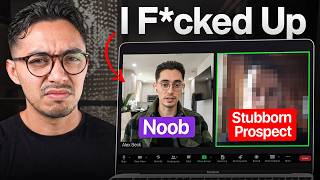
In this reaction video, Alex (the host) replays a 2021 high‑ticket sales call that he now considers his worst performance. He interleaves the original dialogue between himself (Speaker A) and the prospect (Speaker B) with real‑time commentary, dissecting each segment. The analysis covers his natural tonality, the misuse of scarcity and payment‑plan tactics, mishandling of the money‑back guarantee, failure to surface the prospect’s true objection, and poor framing of worst‑case/best‑case scenarios. Alex also reflects on better ways to position the guarantee, set commitment expectations (1‑2 hours daily), and close the deal with genuine confidence rather than surface‑level pressure. Throughout, he critiques his own approach, offers corrected scripts, and highlights key sales principles such as active listening, objection handling, value articulation, and strategic framing for high‑ticket B2B/B2C agency clients.
Chapters
Before I closed $10 million in my sales career for the likes of Alex Hormozi and Iman Gadzhi, and well before I helped hundreds of closers make $10,000, $20,000, and even $52,000 months with high-ticket sales, I wasn't the best salesman. So in this video, we're going to break down what might be the worst call of my sales career in complete detail. And let's use it as a learning opportunity. That way you don't make the same mistakes that I did. And, you know, extra emphasis on the last point because because my team and I, we review 50+ sales calls every single week and the same mistakes show up on almost all of them. So as always, let's get into the good stuff. All right. Now let's jump into it. There's typically 4 things that I look for at the start of every single sales call review, whether I'm reviewing my own or someone else's. You should be able to identify these things in the first 60 seconds of the conversation. So write these things down. That way, if you ever review your own sales calls, you at least have an idea of what to look for. Now, I will say The biggest leaps that I've ever made with my sales career skill set is always when I have someone else review my calls on a consistent basis who knows what the hell they're talking about. You know, reason being, it's pretty hard to point out your own mistakes, number one. Number two, if you knew what mistakes you made, you wouldn't have made them in the first place. You know, more specifically, the person who helped was Sean Boccaccini. He was my sales director at Gym Launch. He was consistently the top rep by a lot on the team. He's been in sales for like 20, 25 years older guy, and he's now one of the trainers inside of Learn Sales Group. So you could have Sean, my very first sales mentor, review your calls twice per week in Learn Sales Group. Now granted, this call's from 2021. I was selling Iman Ghazi's offer. So for me, it's pretty easy to point out my own mistakes in this call. But the 4 things that I look for at the start of every single sales call is very simple. Number 1 is frame control. Whoever owns the frame wins the game. Essentially, am I controlling the direction of the conversation or is the prospect walking all over me and attacking me with questions at the very start of the call? So let's see if I have frame control, number 1, in the first 60 seconds. Number 2 is, am I showing up as sharp as a tack? Meaning, am I showing up the best version of myself? That's all that means in my opinion. Number 2 is, am I enthusiastic as hell? Now that does not mean that I'm portraying a fake persona or overly energetic or pretending to be somebody that I'm not. All it means is, can we clearly tell that you want to be there and have the conversation? Are you smiling? Are you personable? Right. That stuff matters. So number 3 is, am I enthusiastic as hell? And number 4, am I portraying myself as an expert in the field that I'm selling? People will not buy from you if they don't feel like you know more than them in the niche that you're selling, or else why the hell would they buy from you? Right. So you need to portray yourself as an expert. Let's see if I knock these 4 things out. In the first 60 seconds here.
Hello.
All right, what's up, bro? Hi, how are you, man? I'm doing well, nice to meet you.
Meet you in person as well. How's everything?
Everything's been good. Monday morning for myself is going well. How's your Monday been?
Oh, it's good, man. Just busy with work, little meetings here and there, but not too much else.
Busy is a good thing. I try and tell myself to keep me pushing here. So where are you calling from, man?
Oh, Chicago.
Chicago, okay. That's Central Time? What was that, Central Time in Chicago, correct?
Yeah, Central Time. Yeah, it's around—
oh my bad, didn't mean to cut you off.
Yeah, yeah, I can hear you fine.
Can you hear me? Oh, okay, cool. Yeah, I can hear you good.
Okay, perfect. Perfect.
All right, cool. Well, Chicago, are you born and raised in Chicago?
Pretty much the same area, like north of the city. Been here for about 20— I mean, pretty much my whole age. I wasn't born here, I grew up here. I was born in Iran and then my family moved here when I was about like 3, 4 years old. So yeah, so I think the majority of my life I pretty much grew up here.
All right, well, very cool, man. Well, let me know, starting off here, I do always like to ask, I like to keep these meetings as tactical as I could, you know, what was your goal with the call today? Just so I can start pushing us in the right direction here.
Absolutely. Well, my goal—
what was your goal with the conversation? That's always the first question that I ask. Realistically, what I'm looking for when I ask that question is I I'm looking for help with ABC, right? If they don't say that, then I need to re-ask the question. Like for example, right? If I say, hey, what's your goal with the conversation? And like, oh, you know, I saw you guys' website, I saw an ad, it looked cool. So I'm just checking stuff out. That's what we don't want to hear, right? That's called a tire kicker. We want to frame the prospect right away as in like, well, I'm here because I need help with ABC. And so if you ask like, hey, what's motivation for booking the call? What's your goal with booking the call? And they give you some like runaround BS, like, oh, I'm just here to waste your time, you need to follow up with asking, okay, cool, man. I mean, listen, you could have always just looked at the website for more information or Q&As, but what do you actually need help with when it comes to running your agency, right? Let's pivot the conversation right away into I need help with ABC. Super important. Now the 4 things, I think I checked all 4 of them off. Let's see if you remember them. Number 1 was, do I have frame control? The best way to hold frame, you'll notice this, right? Look at any of the sales call recordings that exist on my YouTube. All I do when someone joins the call is just bombard them with questions. I hold the frame right away. As soon as they join in, hey, nice to meet you. Where are you calling from? Cool. How's the day been going? Awesome. What was motivation for booking the call? Prospects will intuitively pick up, okay, this guy's in control. Let me just follow his lead and follow his process. So frame control, I think I checked that off, number 1. Number 2, sharp as a tack. I do think I'm showing up the best version of myself. Granted, this was from 2021, so I look young, skinnier. Now, number 2, number 3, sorry, enthusiastic as hell. I clearly wanna be there and have the conversation. I'm personable, I'm smiling, right? So enthusiastic as hell, checked off. Number 4, am I portraying myself as an expert in the field that I'm selling? The best ways to do that is by number 1, and most importantly, asking really good questions about the niche you're selling throughout the call, right? Number 2 is by holding frame. So there's a lot more of the call to go for me to continue portraying myself as an expert, but so far, I definitely think I have. Now let's see what he responds back to my question of, hey, what was your goal with booking this call today? And remember, what we're looking for is like, you know, Alex, I'm here because I need help with something and I feel like you guys could help me.
Goal is to just get more— how do I say it— more in-face on how do I get clients for my business. So about 7, 8 months ago, I left one of my old MSP jobs. So, you know, I work in IT pretty much, and a managed service provider is a company that provides IT services for other companies. So that's a job that I left and I didn't really enjoy working for someone else. So it really pushed me to build my own business at the time. So I opened— I started pretty much my online business on Wix. I didn't get far because I was targeting— I have like the business card and everything, which I'll get into a little later. But I didn't get really far because I was targeting individual consumers. So I had this like marketing scheme where I pretty much would get these business cards and then I would have a good business— I'm sorry, like a discount on the back with a code. And I would give like 10 cards to like a specific friend of mine. And if I saw that friend like gave out my business card and someone used it, I would give them like a $5, like pretty much every time they used it I'd give them like $5. So it didn't really end up working out. And then I started my next job, which kind of like put my schedule in like a loop, so I couldn't really continue it. But, you know, I was watching Iman's videos, I'd say about a week or two ago, and I just, you know, that's really enticed me to like see what, like if I have the proper guidance, maybe I could get clients. And my goal is to, instead of focusing on individual consumers, maybe focusing on small businesses that have a need.
Okay, makes sense. So like B2B.
There we have it right now. In my opinion, he just said a bunch of ring around stuff. He kind of laid out his current situation, which is cool. But again, what I'm looking for is like, Hey, this is a problem I'm looking to solve. And so what I should have done, but I did not do, and what I would do today is follow up with like, okay, that makes sense. Uh, anyways, sorry, but what's the problem you're looking to fix when it comes to growing your agency? Right? And I did not ask that. So that's something that I would ask today that I didn't 5 years ago. Now, another thing I'll say is, can you guess what his objection would be, you know, based off what he just said? I don't remember what the objection is, but with what he just said, I could pick it up pretty quickly. Comment below if you can what you think the objection would be. If anything, rewind back and re-listen to it again right now. What I know the objection will be, or what I think, is that, hey, I feel like I could do this on my own, right? So what this guy just did was basically make it seem like he has a successful business that he started that's making money, when realistically He has nothing. He has no clients. His way of marketing the business was handing out cards and paying someone $5 for getting him referrals, which is a horrible way to market, by the way. And what I should do is sit this guy back down, right, and make him realize, hey man, your business does not exist. This is super important because at the end of the day, if they feel like they don't need help, if they feel like they don't have a problem, or if he comes in acting like a know-it-all, like, what are the chances he's going to get to the end, pay me, you know, $4,000, $5,000, $6,000 for something very, very slim, you know. So of course I should follow up with like, what's the biggest problem you're looking to face or fix with your agency? But another thing I should do is just point out and do a little jab and be like, bro, sorry, so you were trying to get clients by handing out cards for $5, right? Or just say, okay, so dude, I mean, it sounds like you, you have zero clients, so you're just starting this out. Is that correct? Right. Just to sit him down and make him realize Yeah, yeah, yeah, I don't have clients. I don't know what I'm doing. That's why I'm looking for help. Now let's continue the call and see what happens next.
Is your plan, is it still to go the IT route or were you looking more so at the marketing side of things or what did that look like for you?
Well, I was thinking IT mostly because it's what I'm good at. I haven't done marketing research before. I wouldn't say I'm the best marketer, but you know, I already have the IT skills. I know how to fix computers and, you know, do a lot of stuff with it. So I kind of want to brand myself based off my skill sets and IT is the thing that I'm good at.
All right, well, there you go. We'll chat about it a little bit, man. Did you happen to see those videos that we sent over to you as well? The resources?
Yeah, I did. I watched the one that was like about 40 minutes long. He kind of described like how the whole business is set up and how there's like 3 different models. Like there was a first model, the second model, he just kept enhancing it, making it better. But I was watching mostly the videos on YouTube and he really went in depth on like how to create your own agency. And then like, you know, he kind of described that this Agency Navigator will get you up to $10K. And beyond that, there's like different phases in the programs that you guys offer on the websites. But, you know, $10K a month for me is like a lot of money. So if I could even get that, that's, that would be amazing for my first business.
Okay, cool, man.
Well, I mean, just so with that right there, right? $10K is a lot of money. It would be amazing if I could get that with my first business. He basically just said, I don't know what the hell I'm doing and I'm just starting this off. I should have just followed up with like, yeah, okay, man, that makes sense. I mean, listen, $10K is not a lot of clients, but I mean, it sounds like you're just starting off with this thing. So it sounds like, you know, it's hard to see what's possible. Just a little jab. Sit down. You don't know what you're talking about, right? That's why you're here. And again, it's to get them to pivot their mindset into I know what I'm doing from I know what I'm doing into I need help. Now, last thing I'll mention is I always ask about pre-call content if you have it. right? If your company is sending out or your offer, if you're a business owner, if you guys are sending out marketing material, make sure they consume that, right? It's just going to heat them up. It's going to make them easier to close on one call. It's going to raise their interest level from I'm just curious about this thing to I'm highly interested, which is way easier to close.
You know, overall as well, like the goal for me with the call is just to make sure this is a good fit for you. Also to tackle any questions that you do have. So first, I do want to see like what you've tried with the business as far as getting clients. That way I can make sure this makes sense and it is a good fit, and then we'll pretty much go from there. Is that okay?
Yeah. Do you want to start by looking at it?
I just—
I pretty much relaunched it yesterday. I went on Wix and I had to pay for it again, but I can give you the domain address and then you can see it and I can kind of describe what I'm offering.
Don't let them screen share. Don't let them take control of the call. Right. So I actually do the right thing here, which you'll see right now where I tell them like, oh no, man, don't send me your website. Just give me a breakdown of what your business looks like. The last thing I want, especially if I have back-to-back calls, is to have this guy start screen sharing and walking through, you know, his website or show me his pitch deck. Things like that. You know, that's just a way for them to take frame and take control of the conversation. And you're losing your route on the straight line of the sell. So Jordan Belfort talks about this all the time. Straight line selling. The way to view it is like your job as a salesperson is to be the security guard to, you know, let's say a famous person walking them down the red carpet. And our goal is to get them to the end of the red carpet, a.k.a. close the deal. But along the way, There's going to be people trying to interview them to get their attention, people trying to take pictures of them, and we just gotta get them down the red carpet. So don't let them screen share all that to say or show you their pitch deck. Just say, nah, we're good. Just gimme an explanation. What are you looking for help for? Break down your business for me.
I mean, feel free to pop the website in the chat, but as well, I, I would like a breakdown, like what is the exact service that you're providing to these businesses? Sure.
So pretty much I offer services ranging from like pretty much if they need help like updating their computer or like their application doesn't work, their webcam, something. There's just a bunch of stuff. I can't really go into detail, but if there's something wrong with their computer, I'm trying to solve it basically remotely. So I can't really do anything pretty much where I go on site because I don't want my business model to be that way. But I can solve any problem remotely.
He said there's a bunch of stuff and he can't go into detail. The reason why he's saying that is because his business doesn't exist, right? So I'm treating this call horribly. I'm treating it as a B2B conversation with someone who has a business. When I should be treating it as like a B2C conversation with somebody who's just looking to start off because, you know, they have big aspirations with their life or maybe they want to get out of their job and so forth. I'm taking this call down the wrong red carpet. My first question should have been like, hey man, so I know you told me like you have zero clients and you have nothing going on with your business, so to speak, right? But, but what makes you want to start an agency? What's motivating you to really make this work? Instead, I'm treating it as a B2B call. Which is the wrong way to take it because he's just going to feel like he knows what he's doing when he doesn't.
So if it's software related, I could probably fix it.
Okay, makes sense. So remote IT services, is this, you know, something that you have like IT guys that will be helping you with fulfillment or starting off? Are you kind of bootstrapping it and doing it yourself?
I mean, as of right now, like I don't have much money starting off, so it would just be me and then I would have to kind of work in with my work schedule. So, you know, with my current schedule, it's really, it's a little bit flexible because I get to do my job when I, when I can. And I'm usually working 3 days from home. So it's a lot easier for me to maybe work those days. So hopefully like maybe if I could get like at least $5K, like a few businesses started or like a few business signed up with me, then I I would probably hire someone and that's where I looked at Upwork. And then there's a lot of people offering like cheap services, right? I think some of them are like offering $10 an hour or something, which still, if you add up, like if I get only 4 hours a day, that's still a lot of money. But if I have 4 or 5 clients, maybe we can make something work. So like, you know, you want to talk about this a lot. Like you said that there's people that are in Slovakia or like Romania or something where you pay like $400 or $500 a month and then they'll pretty much work full time, which is great.
Yeah, 100%. I mean, what's been, you know, out of curiosity, like what's been the issue with getting this business up and running? Is it strictly finding clients or, you know, what did that look like for you?
Yeah, I would say just because before I was targeting individual consumers, like literally like these business cards, I'm like, hey, give them out to your friends, see if I get anything. As far as that guy was, people looked at my website and that was it. You know, like I tried the whole Instagram, I tried that, but I didn't go past. I didn't do like cold calling. I didn't target like individual businesses. I didn't really try to sell myself. So I wouldn't say I was that committed towards it only because I didn't really know what I was doing. You know, so it was my first time doing anything like this, but that's, that's normal, right?
Like if it's your first online business or your first time doing outreach, a lot of times IT guys, it's like, hey, you get your clients handed to you, right? So you don't necessarily have to sit here and look for them. I guess like—
Right. Instead, what I did, which is horrible, is I okayed bad behavior. You never want to do that on a sales call, right? So you never want to tell someone, oh man, like your current situation, that's totally okay. Everyone starts out like that and so forth, because all we're doing is okaying bad behavior rather than making them realize they need to make a change. So what he told me was like, oh yeah, I haven't been committed and I haven't done anything to grow this business. And I said, yeah, that's totally okay. That's how everyone is. You know, you're just starting off, I'm being way too passive. I should have went the other route of saying like, all right, man, I mean, you know, if you're serious about this thing, like, why haven't you done anything? Or what makes you committed now to actually make this work? Obviously, you're on this call, but you know, what's going to make you actually put the work in and get clients in a market this thing?
What shifted for you? Like, what makes you want to be committed to it now?
Well, I would say my current job, like, I'm very happy with it. But the way the economy is going, you know, the way I'm seeing people get like, they're not really getting promoted in my company, especially IT guys that have been working there 2, 3 years. Like, it makes me think that, hey, is this like the future of this like working for someone because I don't think you'll ever get rich working for someone. Like, you don't look at the Lambo that someone drives in the street and you're like, oh, that guy must be like a great lawyer working for someone, or that guy must be like, he probably went to college and did this, this, and that. Now he's a Lambo. Like, it's never, it never really works that way. Like, everyone that's been successful that has like the money that like, you know, you can get that kind of stuff, they did it building their own businesses. So when I looked at like Iman's videos, I saw that he was, he's a lot younger than me. He's like, I think 23, 24 maybe, and I'm 26. I'm like, hey, this guy could do it. Was born in the year 2000. Like, that's just crazy. Now he lives in Dubai, makes millions every year. So it's it opens your eyes, you know. And then, you know, I've been pursuing a lot of— like, I have 3 tenets. I, I wrote them on the board behind me. Um, pretty much it says expand your knowledge, expand your power, expand your horizons. So, you know, I pretty much try to expand my knowledge by reading a lot of books. Uh, this one's called Human Nature by Robert Greene. I expand my power through sports. Like, I'm very— I'm a jiu-jitsu practitioner. I compete, I do a lot of stuff. And then I also like traveling the world, so that's where I try to expand my horizon. So I'm very ambitious towards this stuff. And every year I try to do something different where I can expand myself, almost like how do I level up? It's like a video game, you know, like how you level up your character. And this, this, this, and that. So that's, you know, I just can't stay stagnant. I'm not satisfied making $70,000 to $100,000 a year. I'll never be satisfied with that. I think I'm made more for that. Yeah.
So what's the big point of focus for you? A lot of times when I do speak with people and it's maybe their first online business or they're looking to start an agency, usually it's one of three of those freedoms that they're looking for. Either like, hey, financial freedom, I just want to make more money, time freedom, also location freedom. You know, I guess like what's most important to you with coming into the online space?
I would say definitely location because I want to be able to go anywhere in the world that I want to.
Like if I I think that's a good question. I like using that. You could use it in B2B or B2C. For B2C, it's the 3 freedom question, meaning like, hey, what I just said, out of those 3 freedoms, what do you feel like is most important to you? The reason why it's a good question to ask is like, you got to think about it. Most people you speak with have never had conversations like this with anyone in their life where they're talking about their goals and their problems and where they want to end up. On top of that, most people don't even know what goals they have, so you got to help them uncover it. And so that question is a really good way to help people uncover the goals they have. Meaning, hey, you know, most times when I speak with people, it's one of three freedoms they're looking for: financial, time, or location freedom. What's most important to you? Once they say financial, you could say, cool, what does that mean to you? Right? And then they start drawing the picture of what they want their future to look like and what their goals look like. AKA, we're helping them uncover the goals that they may not know they have. For B2B, you could ask something of like, Let's say I'm selling like B2B lead gen, right? You know, hey man, when I speak with, you know, a lot of businesses just like you that are trying to scale and they're struggling to get clients, it's usually one of three problems that they're facing. Either one, lead gen, you know, like testing new ways to market and get consistent leads for your business. Number two is sales, meaning you're getting leads but you're not closing the deals. Number three is fulfillment, meaning like, hey man, I'm getting a lot of leads and I'm closing a lot of deals, I just can't fulfill on these guys? Out of those 3, what do you feel like is holding you back? Then they say, oh yeah, lead gen. Okay, cool. What do you mean by that? Could you break that down for me? So really good question to ask. But you know, if I could change anything on this, it seems like this guy just wants to quit his job and have his business pay him enough for that. And so I probably would have just asked like, hey bro, so it seems like you're starting this agency, like you want to get this up and running so that you can leave the IT job. Is that correct? Yes, that's correct. Okay, cool, man. How much do you need to make a month to make that happen? And just really dove deep into like the immediate reason why he wants to start the agency and paint out what that picture looks like.
Spent a month in California because the weather's nice. And, you know, I don't know if you've ever been to Chicago, but the weather's trash here over the winter. You don't want to be here pretty much like past November all the way to like March. So like, I want to be able to travel wherever I want and have my business like pretty much running like wherever, you know. And the second thing is I don't want to be working for someone where, you know, the next day I could be fired for like whatever reason, like the company goes from public to private or something happens. And, you know, like, oh, we got to let go of, you know, pretty much 20% of the company for just to make profit or something. Um, so I don't want to be a victim of that. I want to be in a position where I'm making my own money, I'm supporting myself, and I don't have to rely on anyone else. So I would say, you know, that's not one of the 3 things that you said, but I guess it could be financial freedom, but I don't want to answer to anyone like for the rest of my life. Like, I can do it for now while I'm learning, but, you know, I want to be doing it beyond that.
Yeah. And, you know, out of curiosity, I guess, like, why is that important to you to go like the online route to get those freedoms?
Because I could do it from anywhere. I don't have to be at a specific location. I don't have to, um, I mean, that's pretty much the most important thing. Like, I could be anywhere. And because Iman also talks about this, when you're online, your business can be anywhere you want it to be. You can be anywhere, the business can be— I could be helping out people in London or UK if the hours align. Eventually my business expands where I'm having people go 24/7, that would be great. So that's the most important thing. There's an influx of cash inflow. It's like there's no limit on it. Whereas if you were working in a specific location, hey, you can only target these markets. This is how much they can pay you and you got to be at the location to help them out. So I think that's most likely.
I always say that if somebody gives you a vision for their goal, you need to attach a number to it, right? So my follow-up question should be like, how much do you feel like you need to make so you could accomplish those things? Leave the job, you know, and be able to have those freedoms. On the flip side, if someone gives you a number, attach a vision to it. And so if I were to ask him, hey man, what does financial freedom look like for you? And he says, well, making $30K a month, I'd say, okay, why $30K? What's the vision? Attach a vision to it. And then again, if he gives me a vision, which is what he just did without giving me any numbers, I'm going to attach a number to it. And it's so that we could attach emotion to the sale, right? Because we don't want him buying to be about making $30K a month. We want him buying to be about traveling or helping his mom or whatever the vision is that that $30K is going to do for him.
There's no cap essentially to what you can make. So your current job, are you in IT currently?
Yeah. Yeah. So I'm a tier 2 desk analyst working for a company called Meltwater. They're a software— they pretty much sell software. The sales guys will pretty much say what they need, but they basically do like what I think Iman's agency business does, where they sell like marketing agencies and software where it helps businesses improve how they target their audience or their clients.
Correct. Okay, is, is that in person for you or is that something you're working from home with?
Yeah, yeah, so my job is both, it's hybrid and in person. So I do 3 days online from home and then 2 days out of the week I go in office. But they're like super flexible, like if I'm sick or whatever, if I'm very busy or something happens, like I could pretty much do my job on from home without any issue for the most— the majority of the week at least.
Okay, makes sense. So I mean, with that, it seems like the goal is to be able to transition out of these jobs that you've worked and kind of focus more on the online business. Like what would be the goal as far as income from the online business that would give you that option towards like, hey, you know, bro, I could focus on this more.
So yeah, I would say, I mean, I'm making about like $70K a year now, which adds up to $5,800 before tax. After tax, it's like almost $4K. So dude, if I'm making like at least $8K a month with this business, that'd be perfect. I could quit my job and pretty much work off with that. So that's what— yeah, but if I'm doing like at least $2K to $3K, that's nice, that's great. But I don't think I'll be able to quit my job because, you know, I need my full-time income as well. I need the health insurance and everything else that comes with it.
Yeah, I mean, even $8K per month, that's 100% attainable with an agency. You know, if you think about it logically, it's like 4 or 5 clients would realistically bring you up to that point, $8K per month. But cool, so $8K per month is like that first step for you getting there. Now, what's like the bigger picture that you have for the business? You did mention you're not satisfied making $70,000 to $100,000, which being from the States, I totally understand why. So what's like the bigger goal that you have for the business?
For the business side, I like how you phrased that question because it feels for me like I'm happy having a very nice car and maybe like a townhouse or something. But for the business, man, like as far as it can go, like I want to be able to hire people and manage the business on my own. I think that's like something really cool I could do, you know, like how it— like it's like almost like a plant. You water it and it keeps going and growing. You never really know when it's going to stop, but eventually it's a blossoming tree and then like it has apples or whatever. So, you know, I don't know yet. I'm just— trying to figure out how to plant the seed first and, you know, get it to grow. So $8K a month would be perfect for me to quit my job and do it full time. And then beyond that, like, I want to start hiring people. Like, if I'm making $20K a month, that's for sure. I need at least one person helping me out, at least part-time. So, and you'll see, man, like, we'll see where it goes. But I think I have a great idea. I think I have the motivation and drive behind it to do it. And I also have discipline. So day-to-day thing, like, every day I wake up, I want to just move. I was like a shark, you know, can't stop.
I like it, man. $20K per month as well. What I guess what makes you Why $20K per month?
Why $20K per month to hire the first person?
In general, you know, I guess like, or what would change on your—
There's a better way to phrase that question, right? I should have just brought back what he said earlier and be like, okay man, I understand not everybody knows where they want to end up completely and you just want to make this as big as possible, but you did tell me you want to be able to travel the world and work from anywhere. You know, I'm sure you realize $8K a month, it's going to be kind of difficult to do that. So how much do you need to make to make that happen, right? And then once he says like Well, let's add it up. You know, I'd probably need to be making around $15-20K per month. I could say, cool, quick question for you, don't hate me here. Do you think you'd ever be able to achieve those things if you just stayed in the same position you're in now and stayed in that IT job? Which is an obvious no, right? But we're asking that because we're trying to make him realize through question asking, not statements, that he needs to make a change, take action today, so that way he could start trending towards the vision that he has in his head, right? Because right now, based off what he said and where he's at, he's not aligned with where he wants to end up at all.
You're in with making $20K per month from the online business.
Well, let's see this. If I have $20K— if I'm making $20K a month, then at least I probably have like, what, like 10 to 15 clients? And that's, you know, it's not bad. I could definitely manage it because my old company, I was managing 750 companies in a room of 100 people. And, you know, sometimes it would be 100 people, like 20 or 30 people. So I would do that like 5 times a week. So I could do— I can manage like 10 to 15, but And after that, I probably have to start hiring someone, like maybe a close friend that does IT, and then kind of show them the ins and outs and go from there.
Yeah, 100%. And that tends to be like the first hurdle that people run into, especially if you're going the IT direction. It's like, hey, there's only so much time in the day for you to sit here, look for clients, sign the clients, and then service the clients as well. So usually you want to be proactive with that and like, hey, make sure that you have at least a couple guys that you could outsource the work to. That way you could focus on like the money-making activities, right? I find the clients, I close the deals, and then from there, have your contractors, so to speak. Deliver the actual service. So, um, I mean, with that, is this something that you're looking for help for as far as helping you grow the agency and look for clients?
Yeah, I would say that's my biggest thing is kind of getting the boat to flow, like getting in the ocean and getting to row. So that's pretty much all I need. I mean, for the most part, I built the website. It's, you know, I can show it to you later if you have time. But, um, like, I know the ins and outs a little bit. I could probably start doing the cold emails, sending those out. I don't know if I'm comfortable doing cold calls yet, but I'd probably do cold emails, see if I get any initiative from that, maybe a few Zoom calls. But, um, beyond that, like, I need a little bit of help. Like trying to close a deal. I don't like have any paperwork to sign. Like, I don't know, like how to sign a retainer or whatever. And I think Iman's agency can help with that a little bit. So it's just, you know, getting on the right path and having someone that's done this for years and made millions tell me how to do it because I don't know better, honestly.
Yeah.
I mean, getting clients and closing deals are definitely big.
He doesn't know what to do because he doesn't own a business and, you know, he's never had a client before. I did a bad job on this call making him realize that he's he's a newbie, right? Instead, I almost treated it like a B2B call, especially at the start where I'm asking him, you know, how is he getting clients now? What's the service you're providing? Do you have any contractors hired? It's obvious he doesn't if we just listen to the first 30 seconds. And instead, I should have just made him realize at the very start, hey man, we're not having a B2B call. Like, you're literally brand new to this, is that correct? Okay, cool. So what makes you want to start the agency in the first place? So Let's jump into it.
Part of running any business, especially an agency. So yeah, we'll touch on that. But I mean, on my end, I don't have any other questions that I do need to ask. Was there anything else that you did wanna share about your plans with the agency or anything that I missed in the past couple minutes? What you need help with?
No, that's pretty much it. Actually, I do have one question for you. Do you think I need a business phone number or do you think a business email is just enough for cold calling in specific? Or yeah, like emails in general.
Yeah.
Should have laughed right now. I would've been like, ah dude, come. Yeah. Come on. No, you don't need a business phone number, right? Well, we'll help you and set that up. I know you're brand new to this, you know, and just subtle little jabs to set my frame higher and set them more on like, all right, I need help and I'm brand new to this thing. But discovery is over. And that was, in my opinion, a horrible discovery because I did not dive deep at all. Right. And there's two really big things that I missed. Granted, I remember I had a lot of back-to-back calls this day. And so sometimes you can't, you know, you got to show up to your next meetings as well. So there's times where I look at the clock and I realize like, okay, cool, I'm taking a little long here. I got to cut this short. Now what's missing in this discovery? Two things. Number one, really honing in and getting commitment at the end of the call, committed that he's ready to start and ready to take action today to make his goals happen. And number two is tie-downs. Basically layering in questions of, you know, hey, if we could help you achieve XYZ goal and sign 4 or 5 clients over the next 2 months so you could start making $8K per month and leave your job, is this something you'd be ready to move forward with with our team today? Now, those 2 things are super important in a call like this that's B2C, because some of the biggest objections you get are people with lack of commitment and then people who get scared of a high price point because maybe they've never spent money like this before. And so they tell you at the end of the call, you know, $5,000, I'm not, I'm not sure. Let me think about it. And so the two ways you want to pre-handle these objections on like a B2C call like this, or even B2B as well, right? You still want to do the same thing is by asking commitment questions and asking tie-downs, asking something like, hey, listen, man, do you mind if I say something that may be a little hard Once they say yes, you could say, listen, bro, so you told me where you want to end up, that you want to be making $20,000, $30,000 per month and be able to travel the world and so forth. You're obviously working a job right now that's never going to get you there from what you told me. Is this something that you feel committed to today, whether it's with our team or not, to start taking action so you could achieve these things? Once they say yes, I'd follow up with a tie-down question. Once he says, yeah, Alex, listen, man, I'm totally committed. That's why I'm here. You know, I really need to make this happen. For myself, I'd say, cool. And Bronil, listen, if we can make it happen with you and get you those next 4 clients signed over the next couple months so you could quit the job and continue scaling from there, is this something you'd be ready to move forward with our team with today? I'm basically layering the yes, right? I'm trying to pre-handle those I need to think about it and get commitment throughout the call. I do think people are more inherently good than bad. That's how I view the world. And so if I could get Bronil to tell me 3 or 4 times before I even pitch and say the price, yes, Alex, I'm committed. Yes, Alex, if you guys could help me, I'd be willing to start today. Yes, I'm willing to give you a yes or no answer at the end of the call. The chances of you closing the deal raises so much because people do want to stick to their own word. And so you have to ask commitment and tie-down questions.
You could, you could set up a free business phone number through Google. So we'll have students do that. We teach how to do that in the program. And then when it comes to actual cold calling, like even something you could do on your own with or without us, there are quite a few different cold calling softwares. For example, one of them is called PhoneBurner. I believe it's $70 per month that you pay. And then every time you give someone a call, the call they receive is actually in an area code right next to them in the same city as them. Right? So the thing is, even if you get a business phone number and you start phoning people from, let's say, a different state, New York and so forth, the chance of them answering a call from Chicago, it dramatically declines compared to them receiving a call in New York from somebody from New York. So business phone number, not Necessary, man. It's not going to make or break anything. And then for cold calling, we put you in the direction like, hey, let's set up like a good cold calling software to use, if that makes sense.
I see.
I see.
Cool.
And then I don't know if you have time maybe to look over the website, maybe skim through it, or if you don't have time, I could give you the website domain and maybe give me some feedback on it. I really appreciate it if you maybe take a look. It's not complete, like I said, and you know, there's some changes I want to make, especially after watching Iman's videos. But if you give me some feedback on that, that would also be great.
100%, man. I mean, just so you know as well, like these calls are, they're not necessarily supposed to be coaching calls. It's more so to see if you're a good fit to have a coach.
I would just say this time, like whenever someone asks you questions like that, always subtly let them know that the team or your coach or your account manager will handle that for you. We're basically assuming the close while still answering their question. And so if he'd say like, hey man, could you actually review my website? Or, hey Alex, could you look at the last trade that I did? Or, Alex, could you look at my Facebook ad manager? Let's say if you're selling lead gen, I'd say, oh yeah, man, listen, we could do that right now. We don't have a lot of time. I'm just going to have your coach do that on your very first call that you take as soon as we enroll.
You.
I'm still answering the question, and I'm also assuming the close and layering in those commitments and yeses before I pitch the product.
To help guide you with the website, building out the agency, signing clients, and so forth. I mean, where would you like to go from here? Is this something that you want to— I'm assuming you have questions. We could just sit here and tackle questions. Option 2, I could also give you a breakdown of the program, explain how we'd be helping you with that with the coaching team. So, you know, either or, up to you.
I think let's, let's do the latter, where you mentioned that how you guys would support me. I think that's a better idea.
Too passive. I used to do that on all my calls, and I'll let you know my reasoning, right? When this is transition, so we intro, frame, discovery, and transition is like the very short piece of your sales call before we move to the pitch. One thing I always used to do was say, yeah, man, I mean, listen, two options. Either I could allow you to ask questions, you know, we could tackle questions you have, or I could just explain how we could help you, a.k.a. Hey, I'm going to pitch you, right? And the reason why I used to say that was because I wanted them to feel like they're in control. And pretty much everybody picked the pitch option anyways. And even if they said like, oh yeah, I have a question. As soon as they asked it, I'd say, oh man, I'm actually about to answer that in the pitch. So do you mind if I just break that down? Now, the reason why I hate it and I wouldn't do that now is because you do want to have— I'm just being too passive in the sales call, right? Prospects are looking for confidence. Confidence throughout the call, right? This guy doesn't know what he's doing on any sales call, right? Whether it's B2B and so forth, they're looking for you to be a beacon of light, to be confident, right? And to piss confidence on them that, hey, this is the guy I need to move forward with. They could definitely help, right? And so what I would do instead is just eradicate, you know, that, you know, pick questions or pitch. And I would just say, bro, listen, man, with where you're at, we could definitely help you, bro. I mean, this is what we do. We'll be able to get you a good amount of clients over the next couple of months. I would love to explain how we could help. And once he says yes, I would just move directly into the pitch. Before that, though, I would ask my yes, no, or maybe frame question, which is probably what you'll see here.
Okay. Yeah, we could do that. And that'll probably tackle questions you have too, and then we'll answer the rest right after.
Perfect.
And then I do always like to preface, bro, I know at the end of the call there's like 3 things you could say either. Alex, let's do this type of thing. No, which I'm 100% okay with the no. I do want to avoid like the, I don't know, let me talk to my dog about it and, you know, and try and keep it between a yes or no. Is that okay with you?
Sure, I do want to let you know.
Too passive, too friendly. It's a great question. The yes, no, or maybe frame, if you don't use that on your sales calls, you definitely should. It goes back to my theory, my framing, my belief that people are more inherently good than bad. And so, you know, if we could get them to say multiple times, yes, I'll give you a yes answer, yes, I'd be ready to start today, your chance of closing just increases. I just need to be a lot more straightforward and less passive. In this call. Another thing I don't like is my camera angle. Small thing, but if you're selling on Zoom, I think having the right camera angle does help. Because I'm very squared up inside of the call. And I think it's easy as a man for that to be perceived as like you being combative. I think what's better is like turning my camera up a little, a little bit more and just showing like my chest up and a little bit of the ceiling. But let's see what he says to the yes, no, or maybe frame question.
That I do need a little bit of time to collect the money. Cause I know the agency is $1,500, which is a lot of money, but you know, again, if this is something that within 6 months I'm making $4,000 to $5,000 even, that's a great start. That's a return on my investment. So I still do need to do a little bit more research, but you know, like the fact that you guys even take your time to do a Zoom call with me, that definitely makes me consider it. I just need a little bit of time just to put them together.
Yeah, no, and I get that as well. I mean, is it more so like what's holding you back right now? Like strictly pricing or more so like needing more clarity or figuring out if this is something you want to commit to?
I would say all three. It's, it's like I said, it's very expensive. I do have the money. That's something I don't— it's just like, based off what you told me, is this something I'm ready to commit that much for? Or is it something like, do I need it? Maybe I could do it on my own.
See, there you go, right? There's the objection that I guessed, and that's the exact thing he has in his head. It's not about money. He has the money. His whole thing in his head is that I did not do a good enough job at getting commitment and making him realize he needs help of diving deep into the problem. And so now here before the pitch, I'm saying I need a yes or no answer. And he's saying like, well, I don't know, like I need to do more research because I'm not sure if I even need this thing.
Like I could probably do it on my own, which like I say, I don't really know. But you know, based off what you tell me now is kind of— we'll determine that.
Yeah. Well, I mean, the big thing with us, it's not necessarily that we have some secret sauce that we're going to hand to you that's just going to get you rich overnight. The way we look at things is like, hey, how could we cut down what usually is a year to a 2-year process making mistakes such as contacting B2C businesses when B2Bs are the money's at, and chop that stuff down to 3 to 6 months, right? And start getting your clients quickly. So the big thing that we do with that within the program is connect students with their own agency coach.
All right, so I'm going to skip the pitch. I'll post another video on pitching. I'm sure my pitch isn't good. In my opinion, I would be doing it a lot differently. It's probably a very feature-based pitch, but again, deals get closed in discovery, right? So all the objections that I'm about to get at the end of this call, because this is an objection call, plus the fact that he told me that, you know, I'm not sure if I want to do this, maybe I could do it on my own, is because my discovery section of the call was not up to par, right? I didn't dive deep into the problem. I didn't make him realize that he needs help. I didn't ask commitment and tie-down questions. And so now he's unsure if he even needs to buy this in the first place. Now I am going to skip the pitch and get to the objection handling.
Is there like any way you guys provide a monthly, like, well, pay monthly instead of the whole year upfront?
Yeah.
I mean, let me know, bro.
Is this like pretty much just figuring out how to make it work with your finances at this point?
Pretty much. Because I mean, like I said, it's like a big time commitment to just drop $1,500 while I'm still in this phase.
Like I said, what I'd say instead, right, if someone says like, hey, yeah, okay, it's $5,000, could I split it up into, you know, do you guys have payment plans? What I always say now is, uh, I mean, you know, most people do pay in full, right? And then see if they'll pay in full. If they say they can't, my follow-up is always, okay, listen, man, I don't want you to put yourself in a bad spot financially. If we could figure out a way to split this up for you, is this something you'd be ready to move forward with right now? And now, so essentially, before I explain the payment plans, I'm asking a tie-down question to get them to say, yes, Alex, if we could split this up, I'd be ready to move forward right now. On the flip side, if they say no, if they're like, well, you know, even if you guys have payment plans, I'd still want to think about it. There's still like a doubt or fear objection that we need to handle and back this conversation up before we even talk about payment plans. Meaning if I would ask that and say like, hey, yeah, man, we got payment plans. I mean, if we could figure this out, would you be ready to move forward right now with a payment plan? And if he says, well, no, I'd still need to think about it, I'd say, okay, let's take a step back What exactly is coming up that's making you want to think about it? Just to see if I could help. That way I could figure out what the real objection is and handle that before I try and close again. And if you handle it correctly, there's a strong chance that he won't need a payment plan at all. I closed this guy on a payment plan and he could have paid in full, but because I didn't pick that up and realize that there's a real objection and it's not a money problem, I was only able to close him on a split pay.
I said, I still need to get the email going, I have to get the phone number going. I have to get the website in order before I even start doing any of that. It's just like, I think it's like a month or two process before I put myself out there, I think, before I start.
Here's how you look at it, man. I mean, like realistically, that stuff should only take you 5 to 7 days to get set up. That way you could start with outreach. Even with us, man, like you'll have those things set up relatively— 2 months is far too long, you know? So getting that website built, getting all the small things and systems set up so that way you could start putting yourself out there, contacting clients. I mean, you'll get that done in 5 to 7 days. But yeah, man, I mean, ultimately, like if I could Most people do pay in full upfront. I mean, if I could like work something out that way you could divvy up the payments, would that be something that you want to do?
It would help a lot more.
Yeah, well, let me know, man. I guess like, what do you have set to the side?
He didn't answer my question directly, right? He said, yeah, it would help a lot more. I should have followed up with like, I understand it'll help, but is this something you'd be ready to move forward with right now if we could split it up?
Or it's like, Alex, like, this is what I'm comfortable with investing outside of my bills. I could still buy food if I put this in.
Open wallet, right? If you're, uh, setting up a payment plan the best way to do it isn't by saying, okay, cool, so we have 3 options. You could do 2 months, 3 months, 4 months, right? The best way to do it is you want them to feel like you are on the same side of the table as them. Like, we're shaking hands and saying, like, cool, bro, let's figure this out together. Listen, man, I know you have bills and so forth. Like, what do you currently have saved, right? We want to figure that out first before we present the payment plan, because then they feel like you're actually trying to help them and we're coming from the same side of the table. But to back this all the way up right now, I'm still handling the wrong objection. I think this is a money objection on this call back in 2021. Realistically, it's not. It's either like fear or doubt or feeling like he could do it on his own, and that's what I need to handle. And I probably could have got the pay in full, but because I didn't, I only closed this guy on a split pay. And then even when I show him the split pay, he still doesn't want to move forward.
I could do— let's see, I mean, let me do some math real quick. $1,500 a month?
Just a one-time payment, by the way.
Yeah. Are you guys okay with doing like $125 a month or $150? Yeah, but you know, the $150, like, I would pay— I would end up being paying more by the end of it, uh, end of the year, more than the one-time payment. But is that something that would work with you guys?
I mean, it wouldn't for a big reason. Like, we have to pay our coaches, you know. All of our coaches are doing at least $20 to $30K per month, so it wouldn't make sense to divvy up into that. And then on top of it, the times where we have people just don't take it seriously because they're with the program. I What I can do, I mean, how about we just cut it in half for him so that way you could get started?
Right, so my follow-up should have been like, hey, Brunel, I get it, man, you know, everyone wants to split it as much as they can. You told me you could pay in full, right? You told me you have all the money saved. So let's back this up because I feel like it's not even a money problem. What exactly is making you feel like this isn't something that you should move forward with, right? Or the correct way to do it would be asking like, hey, Brunel, let's back this up. Like, do you actually feel like everything we what we have here will help you achieve XYZ goal? And then once they say yes, I'd say, cool, man, I know you said you have the money. So like, what's giving you doubts right now? Just to see if I could help. So I could get the real objection, right? Of like, I'm just scared. Or like, hey, man, I just feel like I could kind of do this on my own, or whatever it is. That way I could handle that objection before I go back into payment plans or paying in full.
With the first half, coaching the program, the Monday through Friday calls, and then we could just come up with a date, whether that's like a month from now and where you could pop in and pay the remaining. Is that fair?
That could work. So what do we do? It's like $750 or something?
Yeah, it'd be $775.
Yeah.
Yeah, that would make more sense. Okay. Can you give me a little bit of time to decide on this? I still like— I know you mentioned at the beginning, like, you know, talk to your dog or whatever, but I still— I want to know, like, before I make this commitment, this is 100% what I want to do. That way I'm comfortable. Hey, like, I don't care if it's $750, like, I'm going to do this. You know, that's—
is that okay? Right. He's not willing to move forward because there's still some doubt or objection in the background that I'm not handling. Instead, I treated this as a money objection when it's clearly not. This guy could have paid in full.
Yeah, yeah. Well, you know, that's why I did mention like, if I could split it up, would this be something you want to do? So, you know, at this point, like, you kind of wanting to think, is that more so still pricing or more so like, hey, I'm just not sure if this is something I'm ready to commit to?
I don't know if I'm 100% ready to commit to it. That's it. I don't want to— how do I say, like, again, I really appreciate your time. I just don't want to be forced into it yet, if that makes sense. Like, I want to do this. It's just like, give me some time to think about it, a week at and I'll come back, email you, because, you know, once I sign up for it, that's it, you know.
So if that's okay about forcing you, bro, not about forcing you to do anything, but I think I had a— I mean, put it this way, is this your first online business for yourself technically?
Yes, I've never done anything else before. So I've always, like I said, I just started my IT, first official IT job a couple years ago. So yeah, I'm only 26, man. So that's, you know, I want to be like— any decision I make in my life, I need to know that, you know, it's right. And this is one of them where I believe it's the right decision. I just need to take time 100%, man.
Well, I mean, with that, it is natural to have a little bit of nervousness or like, hey, you know, nervous of the outcome and so forth. But I think the big thing, bro, is, you know, you wouldn't necessarily be on the call with me if it was something that you weren't committed to, right? Like, I think the big thing is you're committed to this, an idea. It's more so just committing to yourself. And, you know, bro, we have 17, 18-year-old kids that are crushing it with their agency while in school still and so forth. So, I mean, don't you think like if you do want to position yourself that way, you could be able to have the location freedom you want or build up to making the money that you want. Like, it is something that you should commit to yourself for.
Yeah, 100%, man. Just give me at least a week to think it over. That's it. That's pretty much the time I need because it'll probably be an S. I just need— I need to be sure about it. That's it.
Okay. And is that more so just kind of like scared or nervous?
Oh, I'm not scared or nervous, man. No, I'm fine. I mean, even if I lose out on the $1,500, which I doubt, it's not like that I'm scared. It was just like, let's say I'm going to, um, I'm going to buy a car, you know, they say for a dealership, it's like, all right, just let them know, like, hey, I'll think about it, I'll come It's not to get the price dropped or anything or waste any time. It's just like, hey, let me think about it. I'll come back next week. I got the $1,500, $750, whatever it is. Let's do this. That's, that's pretty much the only thing I need right now.
I get that, man. I mean, big thing, like it kind of like think of it logically, bro. If you've tried this already and it didn't work out the direction you wanted it to, and now you kind of have someone that could literally guide you throughout the entire process. You'll have an agency coach that's already running their agency. I mean, don't you feel like this is kind of a logical direction that will make sure that you succeed with this?
Yeah, 100%. Like I said, it's not a no. It's just give me a little bit of time.
That's it.
Okay.
It's not new with the way—
I'm starting to get on the wrong side of the table as him, and we're starting to get a little bit more combative. What I would do now in hindsight would be back up. Whenever I get an objection, I always ask the same questions. Number 1 is like, hey man, I totally understand that you feel like, you know, you want to take a look and research or figure out if you're committed to this. But number 1, Let's re-remind you why you're here. Do you feel like everything we have here today will help you make X amount per month, achieve X goal, and solve X problem? We want to re-remind him why he's about to buy. Whenever you're in the heat of the moment and you're dropping a $5, $10, whatever price point it is for like a high-ticket product, people suddenly forget why they're on the call because all they hear is money now and they got to pay. And so when you receive an objection, you need to re-remind them why they're on the call. So with Bronio, I would have said like, Hey man, commitment aside, like, do you actually feel like this will get you to achieve XYZ goal and solve X problem? Once he says yes, I'd follow up with like, okay, so when you say like you want to think about it, what exactly is coming up? Just to see if there's anything I could do or help, right? And with that, he should give me his real objection. Right now he's giving me a bunch of smokescreens, basically a bunch of BS excuses just to jump off the call. And there's a real reason behind everything he's saying as to why he's not willing to buy right now for some something so cheap or splitting the payment up. And so we got to figure out what that is so we could handle the real objection. And right now I'm just going back and forth with him on things that he's saying and it's getting a little bit combative. And so that's what I do differently.
Like, I've done it. I don't know how to do it. It's just I need a little bit of time. I'll come back to you, email you, or have your phone number on WhatsApp. So, oh, hey, let's do this. Can I do that? Is that fine with you? I come back next week. Like, I'm ready for it now. Yeah.
I mean, bro, you could always buy this through the checkout cart. You don't need to speak with me on a call, right? Like, we have a whole landing page with all the information you need and so forth. It just doesn't include any of the coaching spots. So that's what we use these calls for, is to make sure you're a good fit, make sure we can help, and then you get an agency coach as well. And I know you'll be a good fit for it, bro. I know that we'd be able to help you and help you position yourself out of that job, focus more on this, hire contractors, you know. I mean, I guess what's, uh, holding you back from committing?
Oh, I'm just— I just need time and just to think about it. That's, that's pretty much it. Like, um, there's nothing holding me back. Like I said, I just need time to think over my finances.
We remind him why he's on the call.
In order. And that's, that's it.
Okay, is that gonna be like a, you need a week or a month or a year?
Give me a week.
Okay, well, bro, I don't think it's more time that you need. Most people need— they use this to get more information to be able to make a decision, right? So I guess like, what information do you feel like you're lacking here to be able to make an actual decision? Well, I would say that it's a good question because like, what's time gonna do, bro? It's just gonna kind of doing a disservice to yourself, right? Maybe you overthink it, you're going to push it off, you're just, I'm fine with what I'm doing now.
No, I agree with you, man. I mean, if I get started now, I might get a client by the end of the month, so you never know. Instead of the week. But like I said, man, I just— if I come to you next week, you already said like we already had this call, we already had this conversation, and I'm like, hey, let's do it, Alex. Would you be able to give me the same thing pretty much that you got me now? The coaching?
Remember, I'm not the type like, like scarcity stuff or takeaways. Like, I wouldn't be able to get you the coaching, right? You would just have to get it through the checkout cart for the full price. But that's part of the reason why it's like, hey, If there is information that you're lacking or something that you feel like a question that you have, that way you could make a clear-cut decision, let me know so I could give that to you.
Okay.
Yeah, I mean, tonality is good. I will say that. Uh, I think that's something I've always had kind of naturally, just like using the right tone so people don't feel like I'm combative or they, you know, feel like I'm listening to them and so forth. So I will say that.
So are you basically asking me to make a payment now, or would I be able to make it Like, would I be able to text you next week, hey, let's do it now? Does that make sense?
Yeah, I mean, bro, that's why I asked, like, hey, if I'm able to kind of get you a better payment option, would that be something you want to do? And you did say yes, um, but ultimately I'm fine if you wait a week, man. You just— it's not going to include any of the coaching, which is a big thing you were looking for, was I'm going to give you guidance, help you build a game plan.
Okay, so what it sounds like, if I don't do it now, I won't get the full benefits, whereas if I message you in a week, um, I won't have those benefits, if that makes Yeah.
So I'm closing this deal using scarcity right now when realistically I could have paid in full and got this guy to piff on this deal if I just found out what the real objection was and then handled that. But because I'm so surface level at the end of this call, it's combative. I'm using scarcity. I'm using the payment plan to get the deal closed when it could have been a pay in full. I could have made more in commission. He probably would have taken it more seriously if he paid in Yeah, no, it just doesn't include any of the coaching spots.
But, you know, ultimately, man, we do have— we have literally a money-back guarantee, right? It's good for transparency. We have a 2% return rate. But reason being is because we quite literally hold your hand throughout the process. So, you know, worst case scenario, bro, if you jump in the program, you meet with your coach, you come to the coaching calls, an emergency comes up, you get a full refund. That's worst case, right? Best case, you'll line up with our student average in 40 to 50 days from now, sign your first clients, and we just help you continue pushing from there.
I love using that, but I used it in the wrong way. What I would have said was like, all right, let's sit down, man. Let's look at the worst and best case scenario here, right? So I would have said nothing about the guarantee. I just would have brought it up, worst case or best case scenario, you know. So what I did first was I told them like, hey, you know, just so you know, we have a guarantee, a money-back guarantee. Again, like using scarcity because I didn't handle the real objection, or not scarcity, but trying to use like every tactic or weapon I can. When instead what I should have done was handle the real objection. If I had to use a guarantee, I just would have said this. Cool, Brunil, man, I could tell you're super hesitant. If you don't mind, like, let's look at the worst case versus best case scenario. Okay? Your worst case is that you come into this, you pay money, you stick with it. For some odd reason, it doesn't work out for you. And so we literally give you a full refund because that's our money-back guarantee, right? That's your worst case. Your best case scenario is you come in here, it works out exactly as you planned and is exactly as you told me it will work because you told me it'll work for you because I reminded you while you're on the call and you sign your clients, you grow the agency, able to travel and do this full time. What are you scared of? Right. And for him, he probably would have been like, yeah, you're right. I didn't know you had a guarantee. And then I would have took it to the close. Cool. Let's get this rolling. But I did it a little bit opposite, right? I listed the guarantee first and then started talking about the worst case, best case scenario. Instead, I just talk about that first.
So, all right, so if we do, um, you said 14 days back money guarantee? Yeah, I don't like—
if I see it's not a good fit or whatnot, and that won't happen, but it's still good to have there. So you'll still have that money back guarantee.
Okay.
Yeah, because I don't want to— like I said, if I'm going towards this, like, this is something 100% deal, you know? I don't want to— I want to be making that money. That's it.
I know you do, bro. I know this is something you want to do. We have your back at the end of the day.
Okay.
Okay. What are your thoughts? You ready to rock?
Um, how many— let me ask a question. Since I'm working right now, how many hours would you have to be committed towards this every day?
Yeah, usually I tell people if you don't have at least 1 to 2 hours a day Monday through Friday, 10 hours a week is a sweet spot, which was for myself. I would definitely rethink if it's something you should do.
But no, I do have that time. It's just, again, like those days I work in office, a little tricky. But all right, let's do it.
All right, let's go, bro.
Boom.
Deal closed. 6 out of 10 sales call, right? If we're looking back and how this could have been better, number one, I should have made him realize from the start of the call he does not have a business. He's brand new to this and that's why he's here. I also should have pivoted the conversation right away into like, hey, you know, what's the biggest problem that you're facing when it comes to starting your agency? Because you obviously don't have one right now, right? Also, my discovery was completely lackluster. I didn't ask any commitment or tie-down questions. I didn't dive deep enough into his problem. And then with the objection handling, I just handled the wrong objection. I thought it was a money objection. Granted, this was 5 years ago when realistically there was a real objection behind that. This guy could have paid in full, and if I handled the true objection, which was probably fear or probably lack of commitment, I could have just got him to pay in in full, right? And so what I would have done differently is when someone said, yeah, like, Alex, I still need to get the money together, give me, you know, a little bit of time, I'd say, cool, let's back this up, man. Just to remind you why you're here, you know, money aside, do you feel like this will actually work for you to get you to XYZ goal and solve X problem? Once they say yes, I'd say, cool. And you said you got to get the money together. You also told me you have the money. So like, what's, what's actually coming up, man, just to see if I could help? Right there, he should give me real objection of like, well, you know, I bought something in the past, didn't commit to it. Or like, hey man, I just feel like I could do this on my own. Or like, hey, I'm just afraid to spend the money. And then you could handle that real objection, then take it back to the close and go for the pay in full. If he still gave me the money objection at the end, then I could have talked about payment plans. But I was handling the wrong objection. Granted, I will say what was good was like my tonality, my frame control, but I do think I was a little bit passive on this call. 6 out of 10 sales call. I think the deal got closed because I was selling for a good offer, to be honest. And with that, you have now seen one of the worst sales calls of my entire career. If you'd like to get the same level breakdown of your sales calls, check out the link in the description to take a look at my sales community where I help people like Jay. Jay just had a $52,000 month in commission take-home this past November. Or even Samuel. Samuel in the past 6 months has earned over 6 figures in commission take-home, and he was brand new to sales. Or, you know, even the lovely Lorelei. Lorelei was a business owner, jumped into remote sales. We helped her land the role and she made $14K on her second month. But, you know, if you're not ready to commit to yourself as of yet, totally cool. I have a free 5-hour course that goes over quite literally everything you need to become an elite meat closer. It should pop up on the screen somewhere right here. And as always, once you learn to sell, you will never starve. Thanks.
More from Braden

How She Quit Her 9-5 and Now Makes Money From Anywhere in the World (High-Ticket Sales)