Brad Hart Interviews Anik Singal. How He’s Transitioning From Entrepreneur To Investor.
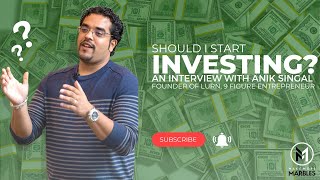
Anik Singal talks about losing $1.7M, rebuilding as a publisher, and now moving into SaaS investing. He argues execution beats ideas, and that recurring-revenue businesses exit at higher multiples than publishing. His wealth framework moves from skill to income to cash flow to assets.
Chapters
Foreign.
Recording locally. Welcome to make more marbles. My name is Brad Hart and today I have a very special guest, Mr. Learn himself Onyx Singal. How are you sir? So great to have you.
I am doing amazing. Thank you for having me. Pumped, excited and looking forward to where this conversation is going to go.
Yes, sir. Yes, sir. So I would love to just spotlight you and your story to start out with. So why don't you start out by telling us who you are, where you're from, how you got to where you are today and what you're passionate about.
Oh man, that could take, that could take half the day.
Do it in three minutes. No, I'm just kidding.
Yeah, I got, I got started, man. I was just telling you like it's 21 years ago would be the first time I actually thought about making some money online and looking around when I was in college took me forever. 18 months. We didn't have all these trainers and all these programs and stuff back then. You had to figure it all out on your own and you know, but by the time I graduated I was making over a million a year. So I never went and got a job. Stayed in it, stayed with it, rode many waves. As I was telling you before we started, I've been, this is my fourth economic cycle in this industry. I've been through multiple recessionary type moments. I have, you know, I just, I kind of laugh at some, some of us in the industry have been around this long. We're like, we're survivors, man. We just like, we're getting like, we get slapped around. We just like stay. But with that staying, lots of wisdom comes. But what do I love? I love, love, love. And I say this and it's weird but I love information marketing. I am very passionate about changing the educational systems or at least offering an alternate. And so I think the future is all about this peer to peer education where you know what, Brad's really good at something. So I can just go to Brad, pay him a portion of what I would pay an institution, make Brad a bunch of money and learn from someone who actually directly knows that I, I'll end up being five times, 10 times as good at something in 5% of the time at 5 to 10% of the cost. So it's like this peer to peer education is kind of where my brain and my soul really has lived for 20 years. And I think it shows with the name of my company. Learn Everything is about education for me. So that's my passion outside of that love. Lately I really feel like, there's a season change happening in my life. I. I'm a little tired. I'm going to be. I'm 39. Just had, you know, just had our first baby, so maybe that's why I'm a little tired.
Congratulations. Yeah, I would imagine you're a little tired. Yeah.
Yeah. Thank you. But it's like, you know, actively running businesses and all of that is fun. It's interesting. I did it. I've done it. But investing is even funner. It's much better, in my opinion. So now that I've put all these resources together, these connections together, and I think it's time for me to pivot my next season of my life. I think starting soon, now, Q3 of this year, I'm going to start really pivoting towards that direction. So lots going on. I don't know, man. I mean, the story itself could take forever, but I just feel like I've been through a lot. I've had 1.7 million in debt. I've had multiple businesses fall apart on me. I've had multiple businesses scale. I've sold a business last year. So I've kind of done all the stuff that an entrepreneur is supposed to do. It's been. It's been a great journey. I love it.
I love it. And I actually came to entrepreneurship the opposite way. So I got started out in investing. I was on Wall Street. I worked in real estate for a. I started trading. I started my hedge fund. And I recognized that, like, I had success in a place where most people don't. Right. A lot of people become entrepreneurs, they make money, and then they have to figure out how to completely do the opposite things they were doing from an emotional and habit standpoint. Like, let's just. Let's just compare and contrast. So if you're an entrepreneur, you use your emotion to go out and do things. You do a lot of things, you make a lot of shit happen. You make a lot of money.
Right.
When you're an investor, it's almost like mostly sitting on your hands, looking for the right deals, not being super overly emotional and just sticking to the program for a long time, which is very hard, negative, against human nature to do. How have you found the transition for you so far?
Okay, what a brilliant question. And that question and that designation can only come from someone who's done both and understands both, because it is absolutely the hardest thing about being an investor. So here's what helps me, because I think if you ask me, hey, Anik, at your core, at your Bloodline. Who are you, an entrepreneur or an investor? I'm an entrepreneur, dude. I'm a go get it. Strategize. Take something that doesn't exist and tornado through the market and make room to make it exist. Now, when you bring that mentality to investing, you're incredibly reckless and you're going to lose a lot of money. And we've seen a lot of entrepreneurs do this over the last year, year and a half, go dumping into crypto because entrepreneurs are gamblers. That's kind of the blood, that's kind of the makeshift mind that we have. And investors are not great. Investors are patient, are calm, are quiet. They're like the settled sea. And entrepreneurs are like the waves and the tsunamis. My wife is basically, she manages all of our investing side, and she's the opposite of me. So I'm serious. When you see a movie that I'm like, I love that movie. I could sign in blood that she will not like the movie. Like, it's total opposite. So we have a joke in the family. I'll go out and hunt. I want to go hunt for the deal. I want to go find an investment deal. And I already know 75% of what I bring to her. She's going to throw out. No, no, no. And that's okay. I'm cool with it. But I want to buy them all. Like, if you call me and say, anik, I've got a great real estate product, I don't even know who you are. And I'm like, I'm in. Let's do it. I want to do this. This sounds amazing. I haven't done any due diligence. I just like you. You've got a nice smile. Let's go.
Yeah, no, call Anik for my next deal.
Yeah, yeah, seriously. And my wife comes in and she's like, whoa, whoa, whoa, whoa, whoa, whoa, whoa. I'm gonna look 17 layers behind. I want the due diligence. I want this report, that report, this survey. So here's how I've managed it. I came to learn that there's one trait that I'm very good at that is very powerful for both sides, entrepreneurship and investing. And that is, wait for it, business development. I love it. It's my favorite. And you know what? I'm going to tell you right now, for anyone listening, the greatest gift that you can have in your journey, in your career is figuring out what you hate and figuring out what you love and having the kahunas to build your business life and income source around what you love. It's not hard to do. It's hard to have the discipline because in doing so, I've had to start restructuring my whole company. I've had to walk away from projects, I've had to shut down things I was emotionally attached to. Here's what I love. I love doing business development. I love being on the phone all day. But I don't want to do sales calls. I want to do biz dev calls. I want to talk to Brad. I want to spend an hour with you on the phone figuring out what are your goals, where are you moving towards, what are you looking for? Is there an intersect? How can I help? How can I support? Who do I know? That energizes me because I know if I talk to 20 brads, there is no chance that two or three of them aren't going to become a killer deal for us. But then once Brad says, hey, man, this is where I am, this is what I love. I want to do this. And I say, brad, I got the perfect thing for you. I want to, you know. And Brad says, I'm in. That's when Anik needs to be out now fulfilling on that, following up with that. So my team has to be built around that so that I can go off and find the next person. And so in the investing world, that is a very useful talent in finding deals and finding money. And I love it. I love when a bank says, nah, we're not going to finance you because you just said no to me. I don't take no for an answer. This is going to turn into a three month hunt now. I'm going to convince you otherwise. So I think for someone to do both, what they should do is exactly what I just said. Find the common element in both of them that becomes what you do. Everything else. Build a team around.
Oh, I love that so much. And that actually gave me some really good ideas. So thank you for sharing that. And I hope everybody is blessed to have a wife or a partner just like yours because I think it's so important to have somebody that balances you out. You know, Jasmine and I have been together two and a half years. She's way more like integrator numbers driven than I am. I'm also very passionate. I love hunting deals. I'm like a truffle pig, but I'm not a five star chef. I gotta hand it off to the five star chef and make sure the meal gets made properly. Right?
So that's, you know, this was a very recent, like revolution revelation. For me, though, because it was like two or three weeks ago, I was talking to someone, I don't remember who it was. And when I explained how we do our investing and how my wife does what she does, he's like, oh, so you have the COO wife? I'm like, holy crap, you're right. I never even thought about it that way. I was like, she's the COO of MAR Investing. And that's literally what I went and told her that same evening. She's looking at me like, what are you talking about? I'm like, this is. This makes perfect sense. Like, this is why this works. So you're right. I think it is a true blessing. Now, I don't think working with your spouse is like, for everybody. I will also say, agree, it works for my wife and I, but it isn't for everybody. Yeah.
So have you ever done like any of the wealth dynamics tests or any of those that kind of tell you what type of entrepreneur you are because you smell like a supporter? Like, if it walks like a duck and it quacks like a duck, I'm wondering if you've ever done that particular test.
So I've done something called Culture Index, which I'm a, avid, avid follower of. I love that if you want to get hired by us or work with me or partner with me, you're going to go through it. And in that, I am the most extreme entrepreneur that an entrepreneur can be. So when I wear my dots, they have these dots that define you. And I went to their conference, they have their consultants walking by and checking, and they would all look at mine and go, whoa. And they would just say, you are unhirable. And. And I was like, I would take that. It was kind of offensive. And I'd take that as a compliment too. But they're like, yeah, if your profile ever came up in one of our companies, like that we consult to hire for any position in the company, we would reject you hands down immediately. And that's just because. So when you said supporter, that's actually how they defined me. So I am very ambitious. I will run, fight, but I love helping the person who. But all I need in return is that person to show me some effort, work and some talent and I will go to war for them. But also the first time they disappoint me or do something unloyal or do something wrong, I'm done. Right? But they actually define that. I've done enneagram an 8, 8, 7 with a 3 wing and that also an 8 is always said to be the person that, you know is like this, like, ruthless leader, but loves to support the underdog. And sounds.
I love it. I could geek out about this stuff all day. My question is, how has this evolved as you learned about yourself through the different iterations over 21 years? How did your company start out? What was your original idea? Why did it succeed or fail? And what does it look like more today? I think we have a certain sense, but I would love to hear some of the offers that didn't work, some of the systems that some of the hires didn't work, et cetera, that really color in the journey.
Happy to talk about it. I got super relevant. So when I first started, I didn't know what I was doing. I just wanted to make money. I mean, honestly, right? So I really started enjoying Internet marketing. I like teaching it. And then I quickly realized I don't know everything and I don't want to know everything. But I realized I have an audience, and when I have an audience, I can sell other people's stuff to them, right? Because I would do affiliate marketing. And I sat there and I looked at numbers and I was like, okay, so If I sell 100% of. If I sell something of my own, my own education to this audience, I make 100%. If I do an affiliate endorsement, then I make 50%, but they get to keep all the back end. So actually I make maybe make 20%, 25% of that relationship. And as every time, as time goes on, I make less and less and less because they keep monetizing that audience, and that would keep me up at night. And I was like, well, what if I publish people? So now I end up making 70, 80% instead of the other. So as time went, I went into the publishing business. So I went from having my own courses and by doing the publishing business, it allowed me to really be able to bring other talent, other skills to my audience that I could never bring, that did really well. And then I was on this elliptical machine one day and I was thinking about education and how useless I felt college was for me and my life and how so many people are burning so much money in it. And I started thinking, you know, I was thinking about this one, my one interaction with this one professor I had that I remember so clearly till this day. It was sophomore year. My marketing professor, marketing 101. I went up to him and very like, like a joyous, happy, go, lucky kid. I love marketing. I was, like, enjoying my marketing and psychology classes so much. And I'm like, doctor, blah, blah, blah. I'm like, what companies have you run marketing for? You, you're so smart, you know, marketing so well. And he looks at me and he's like, what? I was like, what companies have you like, done marketing for? He's like, none.
Whoa.
And for me, that was like taking a big balloon and stabbing it with like this like, knife. And like the air just fiddles out. And I was like, what? And he's like, none. I'm like, but you've got a lot of white hair, dude, you're old. Like, what the hell? Like never ever. And he's like, I've been at this university for 25 years.
Wow.
So you teach it, but you've never done it. And you're in the textbooks. And I just kept thinking, I'm like, why am I learning? Well, why am I paying you? Like, I don't understand, like, if all you're doing is reading me the textbook, that textbook cost me like, I don't know, 300 bucks, but I'm paying like three grand for the class. So it just, I got to a place where, you know, two plus two should equal four. And like at that moment the traditional educational system started becoming two plus two equals three. And it just was not computing for me. So I went back to that moment and I was like, man, we should really build something that, you know, will help, like peer to peer education. So I was like, hey, this is what, 2,000? I don't know, four, five, five, maybe six. And at this like the time when like, you know, outsourcing is huge, everyone's going to India and like technology companies are being built left and, and all this. And I was like, hey, I'm Indian, I'm brown, I know the language, I can hop on a plane and go to India. And I got an advantage over everybody. So I did, I went to friggin India and there was an outsourcer there who used to do some work for me. I just showed up at his office. Turns out I didn't even know he has a bunch of people there. Next thing I know, a few months later, I bought his company. And I was like, we're gonna build a tech platform. We are gonna build this company that people can publish content onto and then other people will just buy that content and we make a sliver and we build this marketplace and it was like this brilliant idea, right? And we're gonna have a fake and we're doing all this cool stuff and we're going to kill college and Only one problem. I don't know. If you put a gun to my head right now, Brad, and said get a website up on the Internet, I would tell you pull the trigger. Because unless you give me a phone, I can't do it. I'm not technical man. I don't understand engineering, technology, coding, computers at all. And I don't have a co founder. I don't have anyone else that understands that stuff. So here I am, off to build a tech company where the core competency of that company is going to be technology. And I have zero, zero experience in that. And neither do I have anyone representing me on my side that has experience with that. Years went, I probably poured a few million bucks into it. And what we built was total rubbish. It wouldn't work. It was bubblegum patched together. In that time that distraction, my publishing company completely fell apart. And then 2008 happened. And so by 2010 I'm 1.7 million in debt. I have to shut down my India operations and my U.S. operations. And I had to take this code that I then had reviewed by my best friend who happens to be a brilliant coder. Go figure. Could have just asked him to check things along the way, but I didn't. He messages me and he's like, I am so sorry, but this, there's. I just throw it, throw it out, dude, there's nothing here. So that's. I have it on a hard disk still in my parents basement somewhere. It's like, wanted to hold on to it just as like a. Something to remind me of what not to do in life. So the best thing that came out of my tenure in India was that I met my wife. My now wife at that time was head of hr. Totally inappropriate for us to be doing anything or dating. So eventually had to fire her. That's the joke. I eventually had to let her go because I was like, I want to date you and eventually marry you so you need to be out of my company so that we could. Because in India it's very common for companies to have rules that are like no inter office dating. So we had that. So I left India same way.
Jasmine and I have been together two and a half years. She was my client for a year before that and I had to fire because. Hashtag integrity. So she'd be with my girlfriend. She was very confused. She's like, I'm a testimonial. Why do you want. You want my money? And I'm like, you'll see. I didn't leave her hanging for too Long though. But that's awesome that you got the same way.
That's so fun. Yeah, yeah. So, so we, so, so at this point I had to like rebuild the company because I had to go from like almost 95 people, two offices down to like six people. I was 1.7 million in debt, my health was falling apart. So we rebuilt the company and I actually went into the personal development space and I went back to the simplicity of like, I'm just gonna sell my own information. And then I revisited the idea of the platform. The platform wasn't dead for me, right? I revisited then I was like, well, by the way, this is the irony of this whole story. So the last, this is like the last week of the India office. We're getting ready to shut down and my wife now at that point, she comes running into my office, she had a laptop in her hands and she's like, have you seen this? And she shows it to me. And I hadn't. And what she has on the website was Udemy.
Wow.
And I'm like, what the heck is that? And I start looking at it and I'm like, where is the camera? Who has been watching me and listening to my ideas? These three guys sitting in Turkey had literally built the exact company that I had dreamt of and tried to build for years. That company is now worth well over $10 billion, I believe. So I take great comfort in knowing that, you know what? The problem wasn't my idea. The problem was execution. Execution is something I'm learning and getting really good at now. Ideas I've got plenty of. So I'm like, alright, Anik, let's not get depressed about this. Let's get excited about the fact that you have billion dollar ideas inside of you. You just need to learn how to execute on this them. So eventually it turned into me wanting to build another platform, but building that platform for the sake of just entrepreneurs. So I saw at this point, Udemy has been out for years. I see their wins, I see their losses, I see the goods, I see the bads. And I'm like, you know what, I don't want to build that. I want to build something that just brings entrepreneurs together. Made the same mistake pretty much again with the tech side. You know, this time I thought I could hire my way. So I hired more smarter people to lead. The tech doesn't work. You can go get the most brilliant VP and all. But you know what I've discovered now after, in hindsight and everything, see your business, what is the core competency of your business? Is it sales? Is it marketing? Is it content? Is it technology? What is the main thing that makes your business valuable? And make sure that that thing is either your expertise or the expertise of another equity owner in your business. And I cannot stress this lesson enough. So if I want to build a technology company like I am right now in the process of building a technology company, I stepped into it. I'm taking a big equity role in one of them. Pretty excited about it. And my first conversation with the founder was, do you have the tech and product? He loves the tech and product. He's like, all about it. And I said, here's my deal. I never want to be in a meeting about tech and product. I am useless. I bring no value. It makes me fall asleep. It's painful. I will be out selling this thing. I will be out talking to customers. I will be bringing them to you. You handle that. Are you good? And he's like, I love it. I never want to talk to a customer. I want to focus in my black, dark room and build this tech. So whatever it is, let's say you have a great tech and you need it to be marketed. So if you have a great technology, marketing and sales is a core. It's a core thing, right? Like, the product is, go get yourself an equity. They don't have to be equal partners, but they need to have equity and they need to have past experience. Being an entrepreneur, that's really important, too. So my next try at the platform was got much further along, and we built something very cool. But it's become so difficult, so expensive to maintain and run, that in hindsight, it's like, is this really going to ever have the return at the opportunity cost? Last but not least, okay, let's go back to being a publishing company, and I'll tell you exactly, because I had a call recently with a very, very, very known marketer, great guy. He called me and said, hey, I'm thinking about doing what you're doing, Anik. I'm thinking about becoming a publisher. Can you give me some advice? I was actually driving, and I got an audio message from him. I stopped, I pulled over, and I called him. And he picked up. He's like, what? And I said, I'm pulled over on the side of the road. I wanted to stress to you the urgency of this. I cannot wait even 35 more seconds of you thinking about this. Don't do it. And he's like, what? And I was like, here's the deal, bro. When you build a publishing company and you're gonna go publish multiple people, you are gonna by nature have multiple distractions. You're never gonna be able to get very good at any single one of them. Or if you want to get very good at every single one of them, you're gonna have to have such a deep staff. Your expense structures, your overhead, your costs are gonna be so high that your margins are going to get so squeezed that the day will come when you're like, why am I doing this? Even better or even worse, you can't just hire anybody. Or you have to hire the most brilliant people. Because building funnels and optimizing funnels and running publishing businesses is hard. It's not that easy. And guess what? It's not a very prevalent industry. If I want to hire someone in SaaS, there are literally tens of thousands of SaaS companies. When you go to the main SaaS conventions, there are literally 45,000 attendees at those conventions. The talent pool is much bigger. Publishing. I've actually had to hire positions at Learn, which I confidently feel there's about 15 people in the country that are qualified to do that role. 15 total. I have to convince one of those 15. So imagine what I have to pay them and imagine how hard I have to work to retain them. So building a very scalable publishing company is fun. It's great. I've done it. But it's not the direction I'm going to keep going in. Because now with the cost of advertising, with the cost of running business, with the legal risks of running these businesses, you get to a point where your margins don't justify any of that. So honestly, right now, in the publishing space, I really dig in the whole know what you're very good at. And instead of horizontal expansion, focus on vertical expansion. Offer more and more services to that audience. Go deeper with that audience. You will have a profit margin that is 10 times. By going horizontal, you'll have happier customers, easier life, and a marketing spend that is literally 20%, if not 10% of what it would be if you go horizontal. That is my full spiel. No, that's perfect because I've been living in this dude. I have been processing and dissecting what I've done, what decisions I'm making, and where my next season is. And I've been looking at it from like this 40,000 foot overview and I'm like, oh my God, I get it. I see it. I see the current landscape, why I should not do this and why I should do this.
So this is so helpful. And I Want to dig in deeper and just get a little bit of clarity after you get some water. So how would you define a publishing company versus a traditional coach, consultant, Internet marketer, influencer, whatever you want to call them? Where does that distinction live in your mind?
Yeah, because technically, if you're selling your own content, you're still a publishing business. When I say publishing company and I say being a publisher, I'm talking about multiple brands, multiple topics.
So, like, Agora would be a good example.
Agora is a prime example.
Exactly.
Agora is a prime example. Yes. I mean, they're. They're. Exactly. And for a while, that's what Learn was becoming. Learn was like, hey, we're going to be basically the Agora of the entrepreneurship space. And we not were becoming. We did become, and we're rocking it. But, Brad, I'm just gonna be honest. I was waking up every day with just massive stress, and it just stopped being fun at some point because margins are getting super squeezed right now. So, you know, I'm talking to another buddy of mine who does ads to webinar to, like, a 2K program. He's killing it. They're scaling like crazy. And he's in the same industry as that we would be in. And I'm like, this is like a few months ago. And I'm like, I'm hurting, dude. As are most people. The model of ad to webinar, Evergreen webinar to. It's not hurting. It's doing fine. But to scale it, you're starting to have to rejig the numbers. Like, okay, fine, If I can get 70% of my capital back right away, I'll be happy, and then I'll make it back in the back end. That was not something we had to do two years ago. But I'm talking to him, and his numbers are just playing out differently. Well, you know what? He is the most obsessive focuser I've ever met in my life. This guy will run a split test between using the word is or not using it. Like, he will split test the crap out of everything. And so he says, I don't want to waste my time on anything else. I don't want to launch new offers. I don't want backends. I don't want this. All I want to do is split test every single minutia part, this funnel, and optimize the crap out of it so that I don't care what Facebook and Google are charging. I'm always kicking butt. And honestly, that's brilliant. That's the way you should think. But when you've got 17 funnels, trust me, there ain't enough time in the day to think at that level for 17. And if you think you're gonna hire your way to, it ain't gonna happen.
Yeah. Because they're never. Nobody's ever gonna care as much about your business as you do, because you don't have. As they don't have as much incentive. Even if there are a minority equity holder, they're just never going to take away.
You know that.
That's the price of being an employee. You get to turn your brain off. At the end of the day, you don't have as much upside, you don't have as much certainty. And you can get fired and have to move around, shuffle around, but at the end of the day, you could turn your brain off and be with your family.
Yes, 150%. So that is, you know. So when I listen to him talk, I'm like, I hate. Because he gave me that advice years ago and I didn't follow it.
Right.
So I'm like, I hate you, you stupid son of a. You're right. But I'm also inspired by it. And that's right. So for me now, kind of the direction we're moving in, I'm like, what do I love to do? What do I want to teach? What am I the best at? What can I walk into a room and have a swagger about and just be like, yo, I'm better than you. I'm better than you. I can teach you. I'm like, well, pick that topic. And I'm going to make it so that my funnel is so deep and I offer so many amazing services to that person that at the top of it, I can pay Google and Facebook whatever the hell they want for eternity and never stress about it. And that has been awesome. It's been one of the most like. Right? And now also, of course, you know, if I create simplification in my life here, I'll create complication here. We're launching a SaaS company now, and I launched a consulting company, and I'm going much more into investing. But tell you what, even though there's all that work and all those hours, I wake up every morning and I'm like, let's go get it. This is awesome. And this is what I tell entrepreneurs. And I'm going to tell everyone listening to this. The easiest litmus test, if you are on the right track, is look at yourself when you wake up in the morning. Are you Thinking, oh, another day. Or are you thinking, hell, yes, I get to attack this day? And until you're thinking, hell, yes, I get to attack this day, keep changing what you're doing in your life because there's a factual reason that's happening.
Yeah, it's not worth it. It's not worth it to keep living the life you hate even if you're making money.
I don't know, man. I'm 39, and I'm starting to say, like, I'm looking at some friends of mine that are 25, and I'm like, dude, please. What would I tell myself, Holy crap, I wish I could go back in time? Just two or three simple things I tell myself fundamentally have changed my life by now. But, yeah, absolutely, you have a different perspective and everything. And the perspective I have now is, man, listen, time and health are really, like, those are the most important things. Time is limited. And every day, every hour, every second that you're alive, that means you have one less of that in your life. You should spend as much of it being happy, excited, and you know what? Not even happy. Listen, Brad, you can be excited and not happy. I don't believe in all this. Like, let's always be happy. That's. It's bullshit and it never happens. But let's always be excited. Let's always be hopeful. Like, if you don't have hope, you're not gonna have anything else.
Yeah, agreed. No, that's really, really wise. So it's interesting how you've come kind of full circle. You've tried all these different things, and you're just like, hey, just give me a simple funnel. I'll tweak it until it's perfect. That'll be a cash cow. I don't care. You know, it's super deep. I don't care how much they charge me for. For the traffic. Have you ever thought about starting your own traffic platform? Because if I feel like a guy like, you could really make a dent in that industry too. I mean, why do we have all of these. Yeah, these lords and masters that. That basically give us all our traffic. You know, there's only a few platforms.
Sounds like a lot of technology stuff that I just wouldn't know how to do, probably. Here's. Here's why I went full circle, because I actually have a very mathematical reasoning behind it. So now that I'm turning my head more towards investor. Right. So everything I'm looking at. Because the way I said this recently, it was my own realization. I was making a short video and I'd end up saying it and I'm like, well that's brilliant. Like there's four stages to wealth creation. Stage one is skill. So it's where you gain a skill. This is why technically we go to college or whatever, right? It's like you're supposed to get proficient at something that you end up becoming much better at than most people in the world and hence someone will choose to pay you. Second is income, so you need to accumulate high income. This is assuming you're not coming from a rich family or a lot of money. You need to get money. Third is cash flow. You need to take that income and invest it in such ways that it generates cash flow. So you have to be very focused on cash flow like you want an actual immediate return. So you actually should not be buying some of the crypto that you're buying or some of the other stuff you're buying because you should actually be focusing on building cash flow that is there for you regardless of your job or not. Last step is what I call asset accumulation. That is the step stage at which all you are doing, you don't care about cash flow because you have enough, more than enough money in your life income. You are now trying to buy things that you feel will appreciate the most, hence increasing your net worth the most. I am now in my place in my life where I'm kind of between stage three and four. So I'm in between like cash. Look, I got enough cash flow now that like I would live a very good life, but not quite like the rich life. So I'm still working on cash flow, but I'm also starting to look towards asset accumulation because now I have a daughter and I'm looking at, at like multi generational wealth. So when you put that hat on, let's talk about a publishing business. If I run a publishing business with multiple authors and multiple experts, I'm going to make a lot less money right now. My margins are going to get squeezed out and I'm going to work a lot harder. Well, why the hell would anyone do that? You would do that because you think eventually I'd like to sell this thing. So I'll take some of the, some of the dinging now only to build that asset value. Well, here's the problem. The way the markets are reacting nowadays, valuations of companies are starting to pull way apart. So a publishing business is going to carry the multiple that is far, far, far lower than a SaaS business or a marketplace business or hell, even an agency business. Anything with recurring revenue. So if I'm going to put all this time and energy in, why not put that into a business that, that eventually has the ability to have a valuation factor that is 10x that of a publishing business, while at the same time building a simplified publishing business that I treat as a cash cow. I never intend to sell it, but it's simple, it's a few people, it's very profitable, makes a ton of money. I use that money to keep investing, building up my cash flow and I take all that extra time and energy and I build a company that I believe will have a lot more asset value in the future. That's probably another one of the big reasons why it's like, well, Anik, you've been looping around in the publishing space. How come now you're kind of exiting the loop? It's because, oh, my time now has finite value. Like time is a limited resource. So I'm done messing around with that time. Every single minute of my day now I'm like, hey, am I getting the most out of that? And so that's another part of the reason why I'll be doing what I'm doing.
No, I like that, I like that approach because you're really thinking about it strategically instead of. Most people are just throwing an idea against the wall, see if it sticks. It's like it's going to take you the same amount of energy, the same amount of years, the same amount of aggravation, maybe more aggravation to launch one type of company versus another. It's better to just start with the end in mind. What are the valuations for the different companies I could create? What are my core competencies? Who do I have in my network that I could partner with or become equity partners with and, you know, help them to become wealthy along with us. Like we're building blockchain companies right now because basically web3 is just needing and screaming for all the tools that Web2 has already built. So all you have to do is be smart enough to find a tool that hasn't been built or built well in web 3 yet and go build that and you could theoretically have a nine figure exit in five years. Right? Because guess what? Crypto is not going to zero. Blockchain is not going to zero. It's going to have some tumult. But we generally go on four year cycles. So if you can be building now for the next big cycle, you could potentially have a huge output there. So it's just interesting to hear you say that too.
Thinking Strategically. Exactly. And that's why the SaaS company I took an equity role in right now, I came in and I told the guy, this is exactly what I told the founder. I said, hey, listen, I'm not doing this for the rest of my life. This is a three to five year. And he looks at me and he goes, well, how if you can sell it in one year or two years, I'll be game. I'm like, nope, not going to sell it in one or two because the valuations suck right now. But that's going to rebound. I want to be back and have a juicy company when these VCs are or when the private equity shops or when the markets are going crazy again, looking for, you know, good companies with reliable revenue and recurring revenue. So you're 100% right, that strategic side, I think younger entrepreneurs especially, whether it be young in age or young in their experience as an entrepreneur, because we're all, we're all blood and drive and raw energy. Right. And so now I would say a lot of that is tamed. So a lot of my ideas, like I put them in buckets and I make sure, is this worth my time? Right. Someone offered me recently to do some consulting for them and I was like, I haven't done consulting forever. And they threw a number at me and I was like, well that's interesting. And I went back and I did the math and I'm like, shit, that's worth it. I'll say yes to that. Like, that's a good use of my time. But I'm like strategic about it. It wasn't like emotional. I wasn't like, I don't want to deal with consistency clients. And I was like, hey, what's the logical strategic plus that person is someone I want on my inside because of like some other strategic reasons.
So yeah, it's almost like you're getting paid to build relationship capital. It's kind of nice, you know, and you're getting paid well. So there's, there are a few unicorns though that don't sell. So like famously recently, Russell got a crazy offer for clickfunnels, I'm guessing in the ten figure range. And they said no. Right? They came together and said no, that's not the reason we're in for this. We're actually going to build ClickFunnels 2.0. What do you think goes into a decision like that for you versus a decision just to sell and get out when the getting's good?
Sure. Actually I had, I can't get into the specific details of it. But I had a pretty large offer to exit one of my businesses. That the decision in the end was no. And for me, the decision was no for two reasons. One was not feeling like I was done with the business, you know, so there was still a part of me felt, there's something more here, there's something more I can do here. But the second bigger part was the acquiring party. And did I feel that the business would be able to sustain and survive under that leadership? And that, by the way, not a knock at them because they might be watching this thinking, what's he saying? We're bad? No, no, no, no. Not at all. Like a great CEO for one type of business does not mean that they're a great CEO. Like the CEO of American Airlines cannot run one of the companies that I'm doing. Like, they could learn to run it, I'm sure, but like, it's a very different business. Right. So I would just see what people don't realize is this. So, Brad, I'll come to you right now and I'll say, hey Brad, you own company xyz, it does a million a year in revenue. And you're like, yeah. And I'll say, brad, I'll buy your company for a billion dollars right now. And you're like, that's awesome. Let's do it. But then I'll say, great. So Brad, I'm going to pay you $1,000 today and I will pay you 10% of all of what your business generates in revenue up and until the business hits 10 billion in revenue, and if it's generated 10 billion, you'll be paid a billion dollars.
I got it. Yeah.
So now you can go around saying, I got a billion dollar offer for my one million dollar a year company. But it's like what most people don't realize is ain't the numbers do not matter. For anyone who's ever been in the buy and sell world, they'll tell you the numbers don't matter. No one gives a shit what the offer is. What are the terms of said offer? Yeah, what, what, what are you paying me up front? What do I have to do? So I, I don't know in Russell's case at all. I've not talked to Russell about it. You know, but in my case I can say that I read the terms and I was like, eh, I kind of feel like I'm still gonna have a job. And the problem with me now is I have enough money. Like if I took that money, it would Be nice. But like, my life would not change at all. Like, there would be not one change to my life. So it's like, well, I don't really need it and I'm not like excited about it. And I feel like there's, there's like 17 ways this could go down the pitter for me and not in a good direction. So I'm not going to do it right. And I think that's why a lot of deals fall apart from the founder side is what I've seen.
Yeah, that makes sense, right? Would you. If you got a big check, you can walk away. That's a whole different conversation than, oh, you got a big check, but now there's all these hooks in you and you only get certain amounts at certain times and you got to keep.
And that almost never happens, man. Yeah, I would say like 1% of acquisitions are the way people think acquisition positions are. People think, oh my God, some of such company got bought out for, you know, $500 million. That's what the press release says. But it's like they don't talk about the terms. It's very rare. And by the way, that's my dream. So my. I learned so much in the last couple years about building an exitable business. Is the, the best way to build an exitable business is when the customers of that business have no freaking clue who the CEO of the business is.
Right.
Because otherwise it's dependent on you. And trust me, when you sign over that business to somebody you're going with, you're signing yourself over too, because they're smart. They're not gonna let you go. So, yeah, I've learned a ton. So the next companies I build, yeah, I want to build them in such a way that hopefully they're like, hey, just stick around for six months to help transition and then get out.
So I just want to point out for the audience as well, folks that aren't familiar with Onyx, some of the mindset things that we've seen along the interview here. So one was the idea of like, hey, I have billion dollar ideas. I just don't understand billion dollar execution yet. That was thing one. I really thought that was great and a great thing to take home. It's all about the boat that you're rowing, right? It's. It's about the vehicle that you choose and the valuations you potentially get to because your life force is limited and you only have so many at bats. If you will, maybe you'll get four or five chances to start a company. In your lifetime for real. So you better do it right. Um, and then finally, like you mentioned, kind of aside, like, hey, my lifestyle wouldn't change one bit if I made more money. Well, that basically means also that you've scaled your lifestyle to a point where you're comfortable and you're not continuing to scale it the more money you make, which is also a skill.
Right.
It's a difficult thing emotionally to handle for people. They start making money, they want to spend more money, and they never actually get wealthy. So it's finding that level. You're like, oh, this is good, and then just earn above that and invest the rest, essentially. Or do you have a different philosophy? Have I misrepresented any of that?
No, I find it. It's weird. Like, my relationship with material objects is just strange now and I don't understand it quite. And so sometimes maybe I'm just getting old, I don't know. Right. But 20 years ago, I'm only two.
Years behind you, by the way. So if you're old, that means I'm old. You're not old.
All right, so good. So I'm just saying, you know, 20 years ago, I want that watch, you know? Okay, so I have a beautiful watch collection. I've got. My most expensive piece of. My most expensive watch is 40 grand. Do you know which watch I'm wearing right now? This is my brand. This is a company I started with. And this brand targets our military. It targets people, certain sections that I have a great love and deep respect for our military. I wear this watch non stop. This Watch is like $450 because it means something to me. Right? So it's like, it's my decision making and my desires are so different. I haven't bought a watch in like five years, but I spent the last two trying to build a watch company. Right. And you start to think different. And so cars, like, I love cars and I have all the cars I want. I know I want more cars. I don't have any garage space. But for that I have to like convince my wife to move. And that's like an uphill battle. So we're not, you know, I'm working on it. But if I want to move tomorrow to a bigger house with a larger garage, like, I can do it. Can I buy the $30 million mansion cash? No. But then do I really want that? Because the amount of maintenance I have to deal with on my House Times whatever, 10 or whatever it would be, I want to deal with that. So I think lately it's more like I'm trying to simplify some things so that I can keep my mind focused on the bigger things. I've become very, like, focused on, like, legacy impact and, like, using my time and money to do something that can really help for other people. And that's also why I'm, like, looking at a lot of things I'm doing, and I'm like, hey, man, that might make me a lot of money, but I don't really like the leg. I don't like the impact it's creating. It's not creating enough or it's creating bad impact or, well, not bad. I've done anything that does that, but that's not creating enough impact. So, yeah, you stop being about material things at some point now I might go through a period where I jump again. But, yes, you're right. What I won't do, Brad, this became. I became incessant about this a few years ago, and I think it was a couple of different things. Grant Cardone said to me that kind of got me ticking, but I was like, yeah, I will not exceed my ability to live beyond my passive cash flow.
Like it.
Yeah, I will not exceed my ability to live beyond my passive real estate cash flow. So if I want to live a certain way, great, go make a crapload more money, invest it, and make sure your passive income coming from those investments is covering that new style of life you want to live. So I wouldn't do it till then. So once that happens, maybe I'll upgrade.
Okay, I got a few more questions and we can wrap this up. I want to be respectful of your time. Have you found any other unique passive cash flow assets that. Or not real estate, I guess, is a great question. Most people think real estate.
So I made this video on YouTube that, like, it's getting so much hate and people are just, like, losing their minds over and which was. I said, I refuse to invest in stocks. I only invest in real estate. And here's why. And one of the things I talk about is, like, leverage, ability, cash flow. And of course, all the people are coming in. They're like, you dumbass, you've never heard of, like, dividend paying and you've never heard of, like, you know, margin loans? I'm like, yeah, I have heard all of those. Dividends pay, like, 3 to 4% and that in a downturn economy, that's gone. And then margin loans are some of the scariest things on the planet. Right? They scare me a lot. Especially, like, anyone who's gone through a margin Call in the last couple months can vouch for that. No, man. Short answer to your question. Real estate, you've got. You earn money in four ways from real estate. That's just. There's only one there. You got cash flow, you got appreciation, you got debt pay down and you've got tax savings. There is no other asset I found that pays you in four different ways. And I like to do a lot of commercial real estate. I love to do like triple net and stuff like that. So right now the economy is tanking and I can feel there's no effect because those things are. Now, of course, I don't get those 500% appreciations either. But slow and steady is kind of how I like to go. What else is there, I think compares to real estate? It doesn't mean I don't do other stuff. I love crypto.
I have no. I get it, I get it. I just. I'm trying to think of like, are there any other really strong cash flow assets that don't require the type of capital that real estate does? I know there's way to leverage and ways to bring out partners and things like that. But if you start thinking about like tokenizing real estate is one. Or even like smaller real estate properties like vending machines that produce cash flow or something. Could be.
So I was going to say, you know, there's. God, what is her name? She's like blowing up on TikTok and stuff right now. Code? Cody.
Cody Sanchez.
Cody Sanchez. I like what she's doing. I like what she's teaching. I want to learn more about that stuff. I think that's a. Definitely a great place to go. Boring businesses, as she calls it. I think there's a great play for me and the future of private equity buying existing businesses that are running that you just keep the main person in place and run cash flow and make profit. Something there. I haven't done any of it.
Yeah, here's my play. And if you want to get involved, you're more than welcome. Be my guest. I'll send you a text. I think finding boring cash flow businesses that don't require a lot of skill to run and then partnering up with a younger entrepreneur, somebody maybe went to Babson where their only degree is entrepreneurship. They want to be an entrepreneur. They've already built businesses in their, in their company. You just give them like, here's the capital. I own 51%. You earn your equity, go build this. Build this boring ass business. And then they get an exit and they get to be wealthy after five or ten years or whatever. And in the meantime, you get a ton of cash flow, but you're not running another business. I think that might be the best way to run an entrepreneurial venture that produces cash flow, in my opinion.
Love it. Yeah. I mean, it's theoretically, I love where you're going. I do. See, that's one area where I can see myself in maybe a few years after I've really mastered the real estate game, which I'm getting close and closer to. That's an area where I start to see like an uptick in return because I think you can get a higher returns, higher margins. I just don't know anything about it.
Yeah, fair enough. I'll keep digging. And if. Cody, if you're listening to this, I'm a fan as well. I just got into your stuff. I was recommended to you by another investor friend of mine, Mike Brown. So would love to chat sometime, Anik, where can people find out about what you're working on, what you're excited about? Oh, one more question before we get into that. I'd love to hear about your charitable giving strategy, if you have one.
I don't have a strategy. I just give. So, yeah, we have a foundation, we have our own foundation called Singol Foundation. You can see it@cingal.org, s I n g a l.org we are really into, we have a heart for kids. So most of our projects tend to do with kids or abandoned seniors. So we've built, we've helped build a hospital. We've built multiple schools in India. We helped save an orphanage that was about to go out of business in Nepal. So we tend to, you know, tend to focus on stuff like that. And really, it's just when the right project comes along, we kind of pray about it and we get a voice that says, you know, give the money. So we don't really have a per se strategy, but we do give a lot.
Well, my, my monthly donation is going to single.org I give 1370amonth right now. It's going to be up to 1800 something. I increase it 37% a year, every year. So that's where it's going this month. And I appreciate it. I was actually looking for an idea, so I'll send it over. And then finally, where can people learn more about learn. Where can people learn more about your projects?
Where should, where should they do listen? Follow me on social media. I would tell you right now you'll see a lot of what I'm working on. There's huge shifts going on and if you kind of want to track those shifts and see how I manage them, go to YouTube. That's what I would say. Go to YouTube and find me Anik Singal, A N I K last name Singhal. S I N G A L. Lots of great content there. I'm tripling down on my podcast. I'm gonna have three episodes a week starting in July. I'm gonna have two shorts a day starting in July. I'm going full blown on social media and through that, you're going to see some big changes I'm making to Learn, which will be launching in September. So fun stuff. So I'll leave that. Otherwise you can go to learn.com but I think you'll. That's. You're going to. If you go to learn.com you're going to see more of what like we were doing. If you want to see more of what we are about to do, go to YouTube and follow me there.
I love it. I'd love to be involved. Let me know how I can help everybody listening out there. Please reach out to Anik and get involved with the various initiatives he's doing. Check out learn.com. check out his social media. Is it all just Onyx single? Is that your handle for everything? Okay, cool.
Yeah.
Thank you so much, man. It's been a pleasure. It's great to connect again and we'll talk soon.
All right, thanks so much. Bye.
All right.
More from Brad

The #1 Reason AI Isn’t Working for You (Yet) #AI #businessowner #founderenergy




What tasks would the best assistant ever be able to do for you? #BusinessSystems #BusinessOperations



Nobody expects you to use a harder way when there's a better way. #AI #businessowner

Which side of the table will you be on in 2026? #AI #Mastermind #BusinessOwner

