Cameron Herold On Vision, Values and How To Create an Organization That Outlasts You
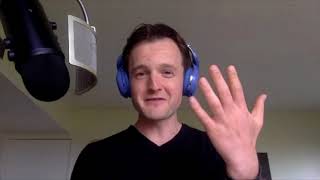
Cameron Herold, founder of the COO Alliance, talks about building organizations that last through systems like Vivid Vision and Commit to Three. He mentors younger entrepreneurs like Connor Blakely and emphasizes the five Fs: family, faith, fitness, friends, and finances.
Questions this video answers
~$3 million annual revenue and ~30 employees.
A 4–5 page document describing the company three years in the future (leaned out to December 31 three years from today).
Five events per year; members select three of the five; events held in Scottsdale, Arizona.
Website: CameronHerold.com. Meetings Suck is available on Amazon, Audible, and iTunes.
Chapters
Welcome to Make More Marbles. My name is Brad Hart and we're here to interview the game changers, the future makers, the co collaborators and creators who are here to collaborate with one another towards a better future for all of us. Enjoy the show. We've got a great guest coming up for you right now. Welcome to Make More Marbles. My name is Brad Hart. Today I am thrilled, I am seriously thrilled because I'm with a titan and a legend in the industry of entrepreneurship, Mr. Karen held. I am so, so excited to have you. Thank you so much for being on the show.
Hey, Brad. Thank you very much. I appreciate it. I'm not quite sure on the Titan intro, but great to be here.
Well, you know, I'm always looking for people in the industry who really blow me away and I just know have so much valuable wisdom and insights to share. And you know, the whole point of what I'm trying to do here. Like, I ran a pretty successful hedge fund and three years ago I made a shift was to make the game of entrepreneurship more winnable if we collaborate together. Right. I saw all these zero sum games being played and all this competition, which really wasn't serving everybody, and I thought, well, what if we could find a way to work together and really pull the biggest and best nuggets out of, you know, what people have learned, like yourself, building COO alliance and all the things that you've done to help people who are just getting started. Because I really, truly believe that entrepreneurship can change the world, get rolling in that direction. So just very grateful for you to take your time today and sit with us.
You're welcome. Let's dive in.
Right on, brother. So first and foremost, if nobody's heard of you before on the show, what would be one or two things that you're excited about or passionate about that they should know about?
I guess what I'm most excited about is the launch of the COO Alliance. You know, there's a million groups for entrepreneurs where you got YPO and EO and Vistage and Genius Network and Mastermind Talks and Maverick and gobundance, all these Baby Bathwater and Summit, all these amazing places for entrepreneurs to go learn. And then there's groups for marketers and engineers and lawyers and everybody else, but there was never a group or a place or a mastermind for the second in command, the COO. So we created the COO Alliance 12 months ago and have had huge success in the startup of it. So that's really my core focus and what I'm most passionate about on the business side, I guess outside of that, it's my four kids and my wife and family and, you know, right in the thick of summer and enjoying stuff. So heading up to Worcester. Heading up to Worcester with the kids in about 12 hours.
Beautiful. And I love Vancouver. I get up there quite often, actually. One of My biggest mentors, 100 Millionaire plus, owns the third largest rolling paper company in the world, lives right up there. So I'm up there quite often visiting and, you know, hopefully I'd love to connect to some wonderful people up there as well. They're doing incredible things in the world. And then as far as impact, so we talk about being more, doing more, but also giving more. Right. The giving is the key part to the having. Most people want to have, but they don't want want to give. I know you're a giver. What are some of the most impactful things that you're doing right now as far as giving back?
I guess some of it right now. Well, I am focused a little bit selfishly on family right now. I've got four kids that are 10, 12, 14 and 16. So I'm in the thick of me really being a little bit uber focused on my children and making sure that I'm there for them. So that's probably the core focus. But I'm doing a lot of pro bono stuff with some youth that are just doing some pretty exciting things in the business world and just trying to help them grow instead of charging them. Just really trying to give them the time and mentoring and coaching them. I think outside of that, probably light on anything that's really charity or so I would say I'm probably light on that at this point. I also believe that you've got five Fs, you've got faith, friends, finance, fitness and family, and you can't be in perfect sync with all five of them at all times. So I let two slide and I focus on two to three and I go really hard on two to three for a couple quarters and then I recalibrate and pick a couple more. So that's clearly one that I'll pick up next quarter. But right now it's business and family.
No. And there was no judgment from my end. I'm just really interested and curious, like, how do people are really doing a lot for a lot of people in the world prioritize what they decide to do with their time and energy and attention and money? Ultimately, I'll tell you.
One was a guy named Connor Blakely that reached out to me about A year and a half ago, he was 15 and a half years old and he asked if I would mentor him. And I said, so what does that mean? And have you thought about it? And he gave me the list of stuff he wanted help in. And I'm like, okay, you're one of the first people who's actually come out and ask for it in the right way. And I said, I really don't mentor people because that's what I do to make money. I charge for my mentoring and coaching, but I said, I will mentor you. And this kid has gone on to become known as the Generation Z guy. He's being brought on by all the top brands to teach them how to market to the 4 to 20 year olds. And he's now just turned 18. So literally sprint has them on a big retainer, Pepsi has them on retainer. He's done stuff for Disney, Damon Brown, Daymond John. It's unbelievable who he's doing work with. He's meeting with a major retailer, fashion retailer this week that I can't name. But he's become somebody that I'm excited about helping because he's just giving back and doing. And he's become so referable with his. He delivers what he says he's going to deliver. And he's just such a good kid.
And I can see you light up when you talk about him. And that kind of brings me to a really great point, is that people always wonder and they wonder about reaching out to mentorship because the mentor, apprentice, model, or whatever you want to call it, has been around since the dawn of time and it obviously works, but they're worried or they're afraid, like, what do I have to give to this person that's going to invest so much in me? Well, look at how much you lit up just by the sheer fact that this kid, when he came to you, he's 50 and a half, he had the right stuff and you were able to connect him into his life's work and purpose. Now he's 18, he's meeting with these juggernauts, these incredible people doing work.
He's getting big, big retainers. But now, like, I've done phone calls and text messages with his dad over the last year about, you know, him, him and his school and making sure he finishes school and can we get him a bookkeeper? And like, it's been fun helping this kid turn into someone who the big brands are paying big money for now.
Yeah. And you hit on a really important point, is that a leader doesn't create more followers, they create more leaders. And, you know, I'm proud to say.
That job is to grow people. A leader's job is to grow people.
Absolutely. And I have a similar story, actually, because I met a girl at Traffic and Conversion last year. Her name is Savannah, and it was her and her dad. And I just knew she had something. She had built a business in high school, and I, you know, I kept in touch, and about six months later, I put out a post that was like, hey, you know, I need somebody on my team. And she reached out and I've been mentoring her ever since. It's been an incredible opportunity to see just her go crazy and crush it. So the next year, I send her to Traffic Conversion instead of me. I go surfing with my buddy, and I went to all the parties and I just said, hey, meet these five people. And pretty soon she's on Tai Lopez's Snapchat and she's meeting all the organizers and she's figuring out all the different. She's an incredible networker and star personality. So I will never not be proud of her.
Like, it's like, let's connect her and Connor Blakely because it sounds like it.
Would really, really hit it off. Because, like, just the magnifying star power that these people have, like, talking about ideas to people is all they should be doing. And then just everybody look out and support them as much as you can, because they're going to create huge waves in the world.
Yeah, it's pretty cool.
Right on. So, all right, so if you're a coo, which is a chief operating officer for a company, I mean, the types of services that you guys provide, like, what can people expect to get? Is it if you want to be a coo, you join the COO alliance, or is it if you're already a coo or you just jumping in, like, as opposed to a CEO network, it's now a COO network, or it's a.
COO network, the companies need to be doing a minimum of 3 million in revenue and have a minimum of 30 employees for the COO to qualify. It's the second in command. So you can be a vp, a general manager, director of operations, or coo. It doesn't really matter the title, as long as you are truly the second in command to the CEO and they work together to learn the skills of actually building a company for entrepreneurs that tend to be a little bit add a little bit bipolar and on the spectrum for Tourette's mostly. So they're kind of Learning how to work with the entrepreneur and how their personality profiles work better. So they're learning a lot of the operational systems. They do presentations to each other on their businesses and get feedback from the group. So it's very much the group learning from the group and mentoring with the group. Smallest company in the room is about 3 million. The largest is around 300 million. Smallest company with employees is around 30. Largest is 3,000. Youngest members, 26. Oldest is 62. And there's about a 30% female, 70% male split. We've got members in four countries.
That's beautiful. And what type of kind of onboarding process or how do you kind of get to know what these people's strengths are like? We're really geeking out. I just had a great interview with Alex Charfen. The entrepreneuriality type. Yeah, Alex is great. And we were talking about wealth dynamics and the different pieces. What are some of the tools that you use in your organization to really understand who people are, what their strengths are, what ponds they should play in, who needs they need to support them?
Well, really, right now, the one I'm using more than anything is Colby, and it's just because I want to know how people start their projects and how they initiate things and then how they'll work well together. So there's a real difference between the entrepreneurial archetype and the COO archetype, and it comes out very strongly in those personality profiles. So we actually bring in personality profiles each year to work with the group and teach them more about each other. So the way the model is set up is we have five events a year, and they select three of the five events to come to. They're all held in Scottsdale, Arizona. And then at those events, they're working together, one event per year. We're allowing the entrepreneur to come as well, and we'll have marriage counselors and communication specialists and personality profiles to teach them how to build stronger relationships with their second in command.
That's awesome, actually, because I was just thinking about your five Fs before and how you pick three. And that seems to be a theme throughout your life. So.
So.
All right, great. What would be like two or three systems? So people listening home are, you know, they're different entrepreneurs, investors, and they really. I think they all share the desire to be more, do more, and give more. What are maybe two or three systems? Because I know you're the systems guy that every single business needs. Do not pass go, do not collect a million dollars before they can really start to Take off.
Yeah. The first one is called a vivid vision. Now, you know what a vision statement is or a mission statement, right? It's that one sentence that we mash up our favorite words and we say that's supposed to align our team. Well, it doesn't work, and it's never worked. And everybody knows it doesn't work. But we didn't really have anything else to align people. So every entrepreneur can kind of see what their business looks like three years from now. They almost have this mental movie playing in their mind. What I do is have them lean out into the future three years from now. So they lean out to December 31, three years from today, and they start describing every aspect of their company. And they start by doing a mind map and then getting maybe three bullet points, four bullet points for each functional area of the business. So they describe marketing, three or four points. They describe finance, they describe it, they describe engineering, they describe sales and operations. And they literally start thinking about every aspect of their company as if they're standing in the future. And they talk about what the customers are saying about their company. They talk about what the media is writing about their company. They talk about what the employees are saying and how the business runs and what the culture is like again, as if they've almost built the company and they've been teleported or they've gone into a time machine. Three years from now, the final product is a four or five page written document describing the company in vivid detail three years from today. And that's called the Vivid Vision. I cover the whole concept and pretty good content in two of my three books. The first book is called Double Double. And then the second book is called the Miracle Morning for Entrepreneurs. And I cover the Vivid Vision concept in both of those in good detail. But that four page, five page document gets shared with everyone. It gets shared with potential employees, current employees, potential suppliers, current suppliers, potential customers, current customers. And every quarter, you have everyone read it and they start thinking about the future, but they focus and execute on today. And that literally gets everyone on the same page. Now every employee can see what the entrepreneur is thinking. And it gets easier to align people because everyone's seeing the same movie. So that's the first, most important and huge impact tool. It's being used in 26 countries around the world. Now, the second one is really the interviewing systems, the selection systems. So I'm not sure if you're familiar with a company called 1-800-GET-JUNK or College Pro Painters, but I helped build both of those. Companies I was the chief operating officer for 1, 800 got junk. So I took them from 14 employees when I joined at the head office. When I Left, we had 3,100 employees system wide. I learned the interviewing and recruiting systems though, at college Pro Painters. And every year we had to go out and recruit and train 800 franchisees and they had to go out and recruit and train 8,000 painters. So when a company is recruiting 8,800 people every single year, they really do know how to do interviewing better than most companies on the planet. There's probably only 20 companies worldwide that hire 9,000 people a year. It just doesn't happen year after year after year. It just doesn't happen. So the interviewing systems to make sure that you're hiring people that are both a cultural fit and have the skills to do what you need them to do are critical. And most companies don't do it. Nor do they look to get rid of the wrong employees. They often keep the C players for far too long. And your culture is not about the free stuff that you give away. It's not about the we room and the massages and the free lunch. It's about alignment so everyone knows where they're going and having true A and B players working on it and getting rid of the Cs. You don't have any cultural cancers in the organization. So that would be the second systems is the interviewing, recruiting and hiring. Then I'd say the third is around focus. It's really getting your key employees to really truly be focused on a quarterly, monthly, weekly and daily basis. So I actually even use an app called Commit to three. It integrates with nothing and it's perfectly set up to just force me to focus on three things per day. So I have a business accountability partner, Joe Polish. He and I set our daily top three goals with each other. And then I have a personal accountability partner and I set my personal top three goals with that person and he sets his with me. And just that simple act of staying focused on a daily basis to get at least three critical few things done that will really propel your company forward, especially when you're driving towards that vivid vision.
That was probably the best, most succinct, most focused answer I have ever received on a podcast. I've done dozens and dozens and dozens and dozens of these. So thank you, Cameron, for just setting the bar so high. And I just want to kind of pick a few threads from those, if that's okay. I was taking a whole page of notes while you're talking, by the way, Josh Green at 1-800-get-JUNK friend of mine also, I know Joe a little bit. We've run into each other quite a few times. So really grateful that you guys are connected. Do you know Teresa Larico, Hal Elrod, all those people?
Well, Hal and I co authored the Miracle Morning for Entrepreneurs. Right.
So now. Yeah. So anyway, that's, that's a sidebar, but okay, just checking in. So you talked about your vivid vision, your interviewing systems and you're committing to three. So you could start commit to three today. If you're an entrepreneur out there listening.
You'Re an idiot if you don't. By the way, if you don't do that, you shouldn't be listening to podcasts because you're getting all the random shit. You got to get focused on the critical things. That's one thing everyone can do today.
Bingo. Everybody I've ever spent time with who's mega successful. Tim Ferriss spent 10 days in Africa with Tim. He said three things on an index card, I tear it up.
Done.
That's my morning. Anything else happens the rest of the day finish. You know, I get up at 6am I don't work till 9am I spend those next three hours doing those three things and I don't talk to anybody until noon and that's it. And people think it's all these things and going crazy. It's really get in the state, crush your three things and then everything else, even this, which is still important. I'm not saying it's not important, but.
It takes care of itself.
Yeah, the top, top brain power stuff needs to be front and center first thing and then the rest of the day is yours. So that's beautiful. Thank you for.
You've got 250 business days a year. If you just get three highly impactful things done a day, that's 750 impactful things in your business that you're getting done a year. Most people don't get anywhere close to that because they're so busy being busy and they're busy on social media and they're busy checking emails and they're working, they're working, they're working. They're so busy, but they don't get anything done.
And then finally setting people a course by which to run on like, one of the biggest challenges I have as an entrepreneur is really getting that vision clear in a way that is articulated well. And I'm not the most creative, you know, diagrams and spreadsheets and mind maps kind of guy. But I can articulate it in words. And the more I can do that and get it to a place of vision, that's going to be something I implement immediately, right away. And then finally, the interviewing systems. Oh, my God. Is it so important to have people that a have the values in alignment that really get the mission and want to be there? They've got their what and their why. And then finally they have the how, which is, hey, I can actually do the thing that you're hiring me to do and getting those people out, they can't do it.
And it's not that they. It's not just that they can do it, but they've done it before.
Yes. Track record.
Let's say I wanted to hire a great swimmer, but I need to hire someone that has won Olympic records, someone that has broken world records in four events, somebody that has won in individual and team events. Well, I'm not going to hire the guy who knows how to win a world record. I'm not going to hire the guy who knows how to swim all four events. I want to find the guy who's done it. And those are very, very different skill sets. Again, most companies won't spend the time looking for the proven experience, nor will they even spend the time to find out what are they really hiring for.
Or will they really spend the money to hire the right people and incentivize them. Because if necessity is the mother of all invention, incentive is the mother of all execution.
Yeah, I think you have to poach great employees. A players are never looking for a job. They're already working. There's also nothing wrong with the freelance economy and finding great freelance specialists that have done this stuff before and getting the best people to work on your stuff.
I love that. So much value and gold there, guys. This is a podcast.
Business is really, really simple, but we overcomplicate it. You know, all the God and grandmother rules work. You just have to follow them.
So what was the thing that, you know, I love to connect this back to story because really, people relate to stories. But what was like the key defining moment in your life that you're like, I'm going to be this guy that you are today, or you saw that vision for yourself, maybe created a vivid vision in your own life. And what was the kind of key turning point pain or pleasure that made that happen for you?
Well, if you go, so my. I did a talk seven years ago that's on the main Ted.com website. If people want to watch it. It's about raising Kids as Entrepreneurs. It was originally subtitled Raising Kids as Entrepreneurs instead of Lawyers. But my whole TED Talk was about the fact that I was raised as an entrepreneur. I was told that having a job was a bad idea. So by the time I was 16, I probably had 20 little business ventures. When I was 21, I had 12 full time employees. So I was really groomed to be an entrepreneur. My dad, both my grandfathers owned companies. My brother and sister and I are all CEOs of our own companies. I married a woman who was an entrepreneur, her brother's an entrepreneur. Both her mom and dad were entrepreneurs. That's all I've known. So I think my defining moment was that I was groomed to be entrepreneurial and to think in an entrepreneurial way and to take control of my own destiny and to see that being an entrepreneur gave me my time. It was less about money and it was more about the control of my time. So, like, I didn't really do that much work yesterday and I worked about a half day today. As soon as you and I are done, I'm heading off to yoga. And then tomorrow I'm taking the day off and I'm going to Whistler with my kids and I'll be. I won't work, I won't read any business books and I don't like to have that. Free time is really, really precious. Right. So that was probably the defining moment for me, was just recognizing that that's what I was being set up for and then being taught the value of being an entrepreneur.
And was there ever a time you resisted that calling or a time that you really felt like, this isn't for me or you were kind of wavering?
No. My dad took me to a golf course when I was about 15 years old and we went out at lunchtime at 12 o' clock and he showed me each person coming onto the course. He's like, that guy owns this company, this person owns this company. She owns this company. That guy owns this company. And it was a real lesson of they own their own company, they have their own time. We then went and played 18 holes of golf. We were sitting up on the patio at 5 o' clock and I'm eating my fries and gravy and drinking my cherry Coke. And my dad's showing me all the people coming out to the golf course at 5 o'. Clock. He goes, that guy works for this company. This guy's an employee at this company. This guy's a lawyer, he's a doctor. None of them control their own time. And at that point I was like, I want my time. I just got it. I really understood it. So, no, there's never ever been any wavering from it.
What a great dad. I just want to commend you. Is he still with us, by the way?
Yeah, he is.
Wonderful. Yeah. I lost my dad 7 years ago on Mother's Day, actually. I was going to visit my mom and I was on the train and I got the call. And that was really the moment when it all shifted for me where I'm like, wow, life is not guaranteed. 61 out the door. Okay, let's get serious here. And a lot of things shifted from that moment forward.
Yeah, my mom passed away at 60, and it was the same kind of thing that was 15 years ago. But, boy, it's. You know, money is great. I make a lot of money. I do really well. But it's the controlling of my passions and being able to work on the stuff that I want to work on. You know, no one has to delegate the tasks to me. I get to delegate all the stuff I don't like or all the stuff I get bored with, and I get to say yes to what I want to work on and not everything else.
And that's a really great transition because I believe the capacity of humanity, not just individuals like yourself who have the game figured out, but also in general. Like, we're getting so much leverage on things, we're able to create so much more with so much less. You know, if you talk to Joe, you're also talking to Peter Diamandis and those kind of guys who are talking about the future, what it's going to look like, and how we're wired to think linearly and locally. But the world is going exponential. So I'm always asking the question. Sorry to interrupt. No, always asking the question, you know, what does the new world look like now that we're no longer just spending all our time, energy, attention on survival and just paying the bills? We have this space to create. What does that world look like to you? And what kind of world would you like to create?
It's starting to look to me. And it has been for the last probably 15 years that it's no longer about being the smartest person in the room. It's about knowing all the smart people and it's about the networking and knowing who has the information and knowing how to problem solve and connect the dots. So I invest pretty heavily in my own growth. Evan Pagan and I had dinner together 10 years ago and we were talking about investing. And he said that he's investing in relationships and spending time with really smart people to get to know them. And I, at that point was still investing in the stock market. In fact, that same year, Tim Ferriss was at my home in Vancouver. We were hanging out with his brother for the weekend at my place, and we were talking about investing and Tim and I started talking about investing in relationships. So I took Tim to Burning man that following summer for his first time at Burning man and Garrett Camp. The founder of Uber was in my camp. And I realized that you can go to these events and hang out with these people and get to know them. Chip Connolly from Airbnb, that was in my. Like, we were at a camp together. You get to know these people by going to the events where they are. So now I go to the main TED Conference every year. I've gone for six years. I'm a part of the Genius Network that Joe Polish started. I'm a part of Mastermind talks that Jason Gaynor started. I've gone five years in a row to that. I'm in Dan Sullivan's 10X program for strategic. Coach Peter Diamandis is in my class, so is Joe Pollard. So I spend time to be at the right events with the right people and build relationships with them and get to know what they're good at so that I can call on them, but also get to help them with what I'm good at. So when we were in school, we were kind of messed up. We were told to memorize everything and to be the smartest kid. And you had to be. To be the best, you had to be the smartest. Now to be the best, you just have to know the people and you have to have good relationships with those people and you have to be able to quickly delegate and move and project manager. So I think that's really where the world is going, is it's about relationships. It's not who you know, or so it's not what you know, it's who you know. I joined. I joined the Arizona Country Club and I joined Marine Drive in Vancouver. Like, to be in the right clubs with the right people.
You know, that. That kind of really hits home for me because I was a kid, I was beat up a lot, and it led me to be that relationship builder because I wasn't the fastest or the strongest. I couldn't beat anybody else up, so I had to be the quickest and on my toes. Yeah, that's what's in it. Plus my. My weird love for Black and white animals, especially penguins. You said a couple things that really hit home for me. And I think a lot of people that focus on this community is like, you don't need to know everything. If you know everybody and you add value to everybody and you have a good relationship with everybody, and that's really the key. And, you know, Burning man is one of those types of things where it's like, we're going to go into the desert and we're going to create something, but really what we're creating is a community to remember who the heck we are. And you don't have to put up any walls. You don't have to be something. You don't have to have some identity out here. You could be anything you want to be, and we're cool with it.
And that's actually the way that the real world works. If we can just let our guard down and let our humanity back in and realize that people are people. And at the end of the day, no one really wants to talk about work.
Thank you.
We're just kind of like, if that's all we have to talk about, it's kind of boring. And this is just what we do to make money. And none of us are getting out of this alive. So it's about connecting with people and their passions and their hobbies and their insecurities and their fears and realize as well that every single one of us, everybody today, is struggling with at least one thing. There's something that we're suffering with. Either there's a pain point or a frustration or a worry or an insecurity or a fear or something. That's hard with us and our family, but every single listener right now is struggling with something. And if we can just stop posting all this shit on Facebook and Instagram to pretend everything's so perfect and maybe just connect with people, man, that stuff goes miles.
Yeah, people. People respect you for your successes, but they'll love you for your failures.
Well, they just love you for being real. You know, like when you hang out with somebody and you just realize, like, so I'm very against, in a lot of ways, taking a lot of these photos when. When I'm out for dinner with people and, hey, can I snap a photo? I'm like, you know what? No, let's just hang out. Let's not tell anybody we're having dinner. Let's just have dinner. Let's spend three hours just connecting. I was out last night with a guy who was the second in command to one of the richest People in Canada in the top five and be a guy that you typically would take a picture of, hey, here I am with this guy. But we hung out for three hours together and we just had drinks and had dinner and talked about relationships and family and kids and lives and passion and business and we didn't have to tell anybody. And there's a trust that's built up with that when you realize you're just there to hang out. Yeah.
And it's really true. Like I've had the great fortune and I, you know, I'm not bragging or impressing anybody. And they're saying like this is a fact to hang out with some really high level people like billionaires that you heard of. And the, you know, what do you get? The person has everything. You get a trusting listening ear. You really just listen to what's going on for them and let them kind of tell you like what they're really excited about and maybe you can help them, maybe you can't, doesn't matter.
But if you could just helped by someone. So everybody successful has been helped by a couple people. So they're at times willing to give back because it feels good. Like the reason I'm mentoring Connor Blakely is it feels great to mentor this kid. Turns out he's actually introducing me to people now that are starting to help me as well that I wouldn't have ever expected from an 18 year old.
Absolutely. And that's the key distinction. It's like now it's not about your age, it's about how fast you want to get in the game and how good you want to get. Because there's 12 year old kids, 14 year old kids out there closing five and six and seven figure deals. Because why not? We have just Shark Tank, we all have access. You're just one connection away from the next big thing. So people need to stop thinking like scarcity exists because it just doesn't.
I mean, some places, every one of this kid's contracts is six figures. Every one of these big companies that have him on retainer, they're six figure retainers.
That's beautiful.
It's crazy. His, his revenue this year will be, I think he'll hit a million dollars as an 18 year old. And he was close to that at 17 or. Yeah, at 17. It's crazy.
And people get in their heads, they think, well Cam, you know, well Brad, you guys got to figure it out. But what about me? It's like, guys just get in the game, just make it okay for you to fail.
Go talk to people and, you know, work on the critical few things. Right? Yeah. Get in the game.
Absolutely. So, Cameron, I know you have time to spend with your family. I want to kind of just move this towards completion, and I want to shift gears to ask something that I never really give people a heads up about, but I think it's really important is this community that we're building here is not just about getting something right. It's about giving. And you've been so kind and generous and valuable to us by just sharing your wisdom and your experience and just having this conversation, agreeing to take your time. We're always about planting seeds and growing crops. And crops is a very specific acronym. It means connect resources, opportunities, people, and systems together. So in that way, how can we provide you with a connection or resource, an opportunity, a person or system that will help you get to the next level in your mission or vision?
Well, I guess it would probably be related to my second book, Meetings Suck. I was getting tired of entrepreneurs complaining that meetings sucked. I was getting tired of their employees complaining about meetings when I realized that none of them had really ever had any training in meetings. So the big thing that I'm doing right now is trying to get that book into all companies, because it's really the one that all employees at all companies should read. 30% of the book is about how to run meetings. 30% is how to participate and attend meetings. And then the last 30% is all the core meetings that you need to grow a successful company. So any introductions on where I can get my book into big organizations to stop people complaining about meetings would be great. So the book is called Meetings Suck. It's available on Amazon, Audible, itunes. That would be probably the big help right now.
Right on. And you're with a publisher already, I take it?
Oh, yeah, yeah. Do you know the name Tucker Max?
I sure do. I'm interviewing him on the show soon.
There you go. So I'm an advisor. I'm one of Tucker's advisors. I'm an ambassador to his company. I'm also have an equity position in Book in a Box. So their COO is a member of the COO alliance.
And Charlie is a very dear friend of mine. We almost got trampled by donkeys. The world gets ever smaller. Oh, man, he just had a baby.
By the way.
Congrats, Charlie. This is the second time I said that today. That's beautiful. All right, so, yeah, check out Meeting Suck for sure. I will be in touch on a sidebar. I'll follow up because I have a few interesting connections in that world that have just been kind of without needing them or anything, just cultivating over the years. I'd love to see if I can make a good fit for you partners at various Fortune 100 companies and things like that. So that could be really interesting for sure.
Obviously is the co alliance any companies that have a good second in command that either I can interview on a podcast that I'm going be to be doing just to interview second in commands or that would be good members of the co alliance, just introducing them to me would be great.
Absolutely. So anybody at home, what's the best way to get in touch with you? Cameron, if somebody has that connection for you?
So the website is CameronHerald.com and then my email is CameronameronHerald.com It's H E R O L D. Right on and.
Thank you so, so much. I'm going to let you go. I know you want to spend time with your family. Get up to Whistler, enjoy the crap out of it. Live every single moment of it just to its fullest. Don't take any pictures, don't share with us, but tell us how it went when you're back.
Appreciate it.
Thank you Cameron. Have a beautiful day.
Thanks for having me. See ya.
Thanks so much for listening to the Make More Marbles podcast. For more tips, hacks and strategies to create an amazing abundant life in your health, wealth and relationships, whatever that means to you, head on over to makemoremarbles.com check out our cool explainer video about what we're about and join our community of entrepreneurial game changers. We want to help you level up your life in every possible way. And don't forget to subscribe to us on icon itunes, Stitcher or Google Play wherever you're listening to your podcast. And please do leave a review. Thank you so much and we'll see you on the next podcast.
More from Brad

The #1 Reason AI Isn’t Working for You (Yet) #AI #businessowner #founderenergy




What tasks would the best assistant ever be able to do for you? #BusinessSystems #BusinessOperations



Nobody expects you to use a harder way when there's a better way. #AI #businessowner

Which side of the table will you be on in 2026? #AI #Mastermind #BusinessOwner

