Chris Reynolds Talks About What He’s Learned from Interviewing 40+ Location Independent Millionaires
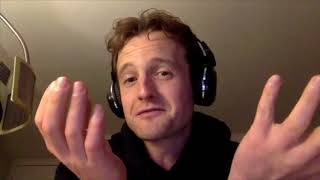
A transcript of a Make More Marbles podcast interview (host Brad Hart) with Chris P. Reynolds covering Chris’s entrepreneurial journey from real estate collapse to location-independent business, founding the Entrepreneur House, podcasting lessons, productivity and routines, leadership and hiring (relinquishing control, hiring a head of sales), charity travel projects, and upcoming retreats/events. The piece is conversational, informal, and aimed at entrepreneurs interested in location independence, scaling, and personal development.
Chapters
Welcome to Make More Marbles. My name is Brad Hart and we're here to interview the game changers, the future makers, the co collaborators and creators who are here to collaborate with one another towards a better future for all of us. Enjoy the show. We've got a great guest coming up for you right now. Welcome to Make More Marvels. My name is Brad Hart and I am joined by the inimitable Chris P. Reynolds today. How are you, Chris? What's going on, buddy?
I'm amazing. Thank you, Brad. Thanks for having me. I'm honored to be here and happy to be here. Let's rock and roll, buddy.
Yes, sir. I was just on the Entrepreneur House not too long ago. We were chatting it up about punching waves and stuff. It was super fun. I still have yet to be arrested for assaulting the ocean, but I know that's coming. Thank you so much for having me on on your show and I'm super excited to have you in marble making land. So welcome. Tell the people all the things. Go well.
We're reporting live from Thailand this morning and we just finished up an event with the Entrepreneur House podcast or with the Entrepreneur house is a 12 day productivity get stuff done workshop, which was awesome and amazing. Yeah, we had about 25 attendees and it was a lot of fun. Been podcasting, rocking and rolling and just kind of enjoying life in Thailand. You know, you get massages for less than $10 here and enjoying life, man. So.
So you're. What you're saying is I should be in Thailand right now and not in San Diego?
Well, it depends. Wherever your heart is.
So where Brad Hart is, as they say.
Yeah.
Chris, tell us how you got to where you are. I mean, you have the cool podcast, you got the cool productivity stuff going on, but let's get into the, like the hero's journey of Chris Reynolds and figure out how he ended up here.
Yeah, man. If I were to start with a defining moment, I was in grad school and my mom bought me the book Rich Dad, Poor dad and a Cash Flow Game. And it kind of started to change my thinking. Actually, before that, I wanted to be a farmer because all my family were farmers and they were my heroes. Right. And so it opened my mind and changed my thinking and I thought to myself, well, I can always go back to doing that. So fast forward a couple years. I ended up in Phoenix in the real estate game. This was like late 2006-2005-2006-2007, when the big recession happened. And so I had a business going and it just absolutely crashed the business. And I got to the point in my life, Brad, where I was just barely getting by. So I had like a nice sports car, I had a nice apartment in Scottsdale. I lost the sports car, couldn't afford the payments. I had a beat up old truck that was my only vehicle that I had and I couldn't even afford to get it licensed. The apartment, I couldn't pay payments on the apartment. So it was a really tough time. To the point where I had to donate plasma twice a week so I could afford food. And there was a point in my life where I had this meal and I ate a can of corn and a can of green beans for dinner one night. And I thought to myself, like, part of me was like, okay, I've got an mba. Why am I doing this? Why am I making myself suffer? But part of me knew that that was the right path for me. And I knew that like this experience was going to help other people someday. And so I, even though, like, you know, at this time I had less than $100 a week coming in, I still kept moving forward. And I didn't, I didn't give up. I kept going and going. I came across a book called the Four Hour Workweek and I indulged into it. I read it four times and then I listened to the audio version at least 12 times. And I used it as a manual to create a muse as you're familiar with, or a type of business that can really create money online so you could liberate your location. And that was what I was really doing. I was working hard in Phoenix, Arizona because I really wanted to get to the point where I could travel the world. Well, I did that with Four Hour Workweek. I started building niche websites online, getting a little passive income that was coming in and got to the point where in 2011 I bought a one way ticket to Costa Rica and I landed in Costa Rica. And the month that I landed was April 2011. That was the same month that Google wrote an algorithm that changed all the SEO rankings and it wiped out the income that I was having online. So I was like, what am I going to do? So at this time I kind of started blogging and I also started doing some contracting work. But I'm in Costa Rica. I had a great life. I'm living in this apartment that I could walk to the beach, monkeys were swinging in the trees in our yard in the morning, and it was just a really cool life. So at that time it was great because I didn't need a lot of money to get by. So I started doing some blogging and charity Adventure Travels at this time. And we did three main charity adventure projects. One where we climbed the tallest mountain in Costa Rica to raise money for children with developmental disabilities in San Jose. And then we did a project to build a farm for malnourished children in Peru. And also we did a project for slave children in Ghana to build a home for them. And so these adventure Travels and the contracting work kept me going while I was traveling the world. Got me to a point where, and we can talk about that later, but got me to the point where I created the Entrepreneur House because I had been traveling for four years. Created the Entrepreneur House because I wanted to bring entrepreneurs together to excel their business and growth and travel at the same time. And that was three years ago. And here I am, Thailand, six and a half years later, after leaving the US and continue to help entrepreneurs and podcast and connect with amazing people like you and love life.
Sounds great, man. And honestly, like, I think we have a very similar story with a few differences. Well, let's just start with the similarities. So monkeys in Costa Rica, these little howler monkeys sound like demons. And you wake up at like 4 in the morning, you're in the trees.
Going.
I'm like, oh God, what is this? Gets his 800 pound gorilla. It's this little tiny monkey up in the tree. That was kind of fun. It sounds like you and Russell had the same issue with Google changing their algorithm covered upsells, which saved his business and yours kind of tanked and you had to go start blogging. I've read the 401 seven times and I've recommended it highly. I ended up spending 10 days in Africa with Tim Purse. And you've done a ton of mission work around the world. That's really awesome. Like going and helping these kids and these farmers and these people that are starving in random communities throughout the world. I totally get that. And that's part of our mission as like, you need a way to generate money, certainly you need a way to grow your money, certainly a way to give it back. And that it seems like you found a way to do all those things. And, you know, I guess maybe could we dig into a little bit about what business means to you? Right. Why is it such an important vehicle for people to learn how to do and how do you see it changing just in the, in the time you've been doing it, but also in the near future?
So what it means to me is what Business means to me is the opportunity not only to control your own personal growth, but also live and forge a life of your dreams without having to answer to other people or be controlled by other people because of finances. And I think we're, you know, being an entrepreneur, I don't believe is a sacrifice. There are sacrifices, but I believe it's more of a privilege than anything because we get to create the life of our desire in a way that most people won't ever get to. And especially nowadays with the way that technology is, we can do it from any place on the planet, wherever we want to be. And it is the most. One of, for me, one of the most abundant times in my life, but I think one of the most abundant times in history to be able to connect and create this way that we'd never been able to before. And where it's going is even more exciting. And I'm very curious about where it's going because nobody really knows. I mean, seven years ago we had no idea bitcoin was going to be where it is. Five years ago we had no idea that iPads were going to be a household name. Ten years ago we had no idea smartphones would be where they are today. That's what's incredibly exciting about it, because none of us really know what's in store for the next 10 years. But at the same time, if we look past, look, look back to what happened in the previous 10 years, we're more connected than we've ever been before. And just in the past decade, we're more. It's easier to create the life that we want on different ways that we've. In different manners that we have before. And so that's what's incredibly exciting because it's like an. Just a whole realm of infinite possibilities that we're going to tap into. And the world's changing and it's going to change fast. Especially for entrepreneurs. Those entrepreneurs that are adaptable and continue to roll with all the changes are going to see some really exciting times.
Yeah, it's fascinating to me because, I mean, as easy as it's become to live and do anything and be anywhere, it's also changed the world in other ways that I'm not such a fan of. It's like kind of homogenized culture in a little bit. I think that's going to continue to. To speed up. Right. So Highland, you know, and enjoy now. Well, it's not going to stay the same. Right. The economics of it will eventually even out. And then there's A lot of different pieces that, you know, like, for example, every time I go to New York City, something is closed that I used to love. Like, I used to frequent all these places, and certainly I'm not frequenting them anymore. But it's just nice to know that that old feeling is still there if you want it. And, you know, more and more it's. It's changed. And I think the longer you live, the more you lose. The only thing that's constant has changed. But it'd be nice if certain things did say the same. You know, tap into those parts of your past that are still relevant. But I think the world's changing. The rate of change is changing exponentially, Right? Yeah. But you have this. This rate of change is becoming faster and faster. So if you're experiencing that as an entrepreneur, I mean, what can you rely on is staying the same? You know, what are the tried and true methods? Like, we talked about bitcoin, we talked about all these pieces. I've had experiences myself where I've been on the leading edge of 3D printing and blockchain and a couple other pieces that. That I just happened to be in the right place at the right time. And now, you know, I try to think of, okay, what are the lessons I've learned so that I could spot the next one of these.
Yeah.
And be ahead of it.
Yeah. So just. Just to make sure. Your question being that, what are the things that. That stay the same and stay constant in our lives so we don't constantly feel that. That feeling of change. Right. Was there.
And how do you kind of. How do you, like, what are your rules for picking the trend, if you will, or being able to stay ahead of the game? Right. So leadership, you know, if it's a moving target. Right. In order to hit a moving target, you got to lead it. If you shoot out of your behind it. So you gotta be able to lead it. How do you lead it?
Yeah, good question. So. So the first question, what stays constant? And so for me personally, like, I. My routine stays constant, but at the same time, it is adaptable. So my routine being, like, as long as I'm grounded in my daily meditation, that's going to be one of my constants in exercise, in the things that are really important. Staying connected to the people that are important to me. So those are three major things. Exercise, meditation, and connected to healing, either my family or chosen family, the people that really matter to me. Those constants will, for me personally, keep me grounded when change is happening all the time. And I feel the exact same. Like you mentioned New York City. I'm in a city right now called Chiang Mai, Thailand. Every time I come here, every October, November, every time I come here, it seems like everything's almost changed. And then I go back home for the holidays. Same thing. It seems like everything's almost changed. But those are the physical things as opposed to the internal things. If you can keep that balance within yourself, even those, if those external things change, at least you have your peace of mind and your balance within yourself. So that being said, how do you get on the front cusp of the change that is happening, the good change? For me personally, I find my personal top five or ten people that I want to be like and I just listen to them because I know that they have a top five or 10 people that they want to be like and they're listening to those people. So it's a bit of a trickle down to me because some of those, either the people that I want to be like or they're people that they strive to be like, are the people that are on the top running of the cusp and the change and know what's going to happen with cryptocurrency or technology or what's the best niche to be in for entrepreneurship in the next five to 10 years, so to speak.
I love that I have a follow up question because you Talked about your five to 10 people that you listen to. Who are some of those people? And if you had an opportunity to ask the question of them, I assume these are like celebrities, influencers, people that you want to be more like. What would be that question? If you could pick one or two.
So I'll give a few that are in my personal circle and then I'll give a few of people that I follow. So one person that I follow of course is Tim Ferriss, Richard Branson, I like Jim Rogers, Robert Kiyosaki. So there's a handful of people that all read their books or their blogs or hop on YouTube and see what they're doing to really lead the path of transformation for themselves and for entrepreneurship entrepreneurs around the world. Personally, I have a few very close friends that aren't so as famous, but they're incredibly successful. One would be a guy named Paul Levine who runs a business called Everweb app and very successful location, independent entrepreneur traveling the world, brilliant business mind and fortunate enough to be a good friend that I can call up whenever I want and ask him what he's doing and what's next. Then the next person would be a guy named Dan Andrews, who runs a podcast called the Tropical mba and an inner circle of entrepreneurs called the DC or Dynamite Circle. Good friend who I meet with regularly just to talk about business, entrepreneurship, and what's happening in the world. And then the third person would be a guy named Steven Vanderpel, who is a partner in a business called KV Social, and also a good friend, location independent entrepreneur who I get to follow around and hang out with and just kind of talk to him about what's going on with business and everything.
Sorry about that. There were some kids outside. No worries. Close the window. They're doing their thing out there. It's sunset here, so they're all playing out in the yard. That's super cute. Okay, so you got Paul, you got Dan, and you've got, obviously the Tim's, the Richards of the world. And I've met a few of these people. I definitely follow them as well. So what would be some of the. And Steven as well. What would be some of the questions you'd ask a Tim or Richard Branson or Robert Kiyosaki if you had the opportunity?
I would ask him a few things. I would ask those guys what they're doing for business in the next. Their plans for business in the next five to 10 years, and of course, investments. That would be a great question. But also, like, what's really important to me is how they balance their lives and keep their vision for what's important in their lives while maintaining the successes that they've had. Because I think, like, no matter how successful we get, how much money we earn, what we do, how famous we are, none of it matters unless we have our health, our sound mind, the people that are important to us. So I want to know what those guys are doing to keep their life in harmony with themselves internally.
Yeah. I think Richard and Tim especially, they seem to be very busy guys. And Richard has the greatest life balance. I mean, he just lives in an island. It's a beautiful island. As people come visit, he flies wherever he wants to fly. And he's aging. You know, he's getting up there. But he's super young and youthful and just full of life and doing amazing stuff in the world. And I remember meeting him, it was a really special moment because he made everybody in the room feel like a superstar.
And I was like, I remember you saying that.
Yeah, you feel it's important. It matters that you're here. So that was really cool with Tim. You know, he can really beat himself up. He can outwork anybody. That's his whole thing. But even he has the capacity issue, you know, like the 24 7, you know, framework. And I think he's really done well. What I admire about Tim the most is that he's got laser focus. And when he's on laser focus, his ability to promote something is in, right? Whatever he's got coming out, he's already done the work to create it. And the promotion cycles are just endless. And I find myself creating more and more and promoting less and less. And that seems to be a problem. Like I need to promote more and create less. And that's. That's one of the lessons I'm gleaning from him, like maybe from your podcast or the last thing you've launched. What are some of the lessons that you've learned as far as creation versus promotion? I really feel like in an 80, 20 type of role.
Yeah, that's a good question. Because I've had too much promotion, for sure, and I've had less creation and I've had too much creation and not enough promotion. So one of the lessons, especially with my podcast and this is really relevant to you, and I'm sure you can apply it. I didn't set my podcast like I did. I dove headfirst into podcasting and doing interviews without kind of doing the research of, like, how to get it ranked on itunes and how to make sure reviews were coming in and that sort of thing. So my. When I started out, it was like, content, content, content, content, content. Who can I get on the show as fast as possible and how much. How much can we put out there? And looking back now, I learned that lesson that I would spend some more time to making sure that we got the new and noteworthy, making sure that the rankings were doing well and this sort of thing. So something that I'm now going back and working on. And as far as, like, over promotion, like, I've had, I've done it one event in a year's time that I put all my time and energy towards that one event. And it didn't turn out the way that I wanted it to. And actually we had to change the event completely. So I spent like six months, nearly six months, maybe five months, just promoting one event. And then after five months, I realized, like, it was just, it's not going to work. And so I had to re. Change the events, the type of event that it was, create a new niche of entrepreneurs that it was for, and just really kind of adapt myself and change my thought process that it's not really Going to work out like this. So when I was over promoting and didn't have enough product or service being, and this was a really good lesson that I learned from Damian Lupel was to be adaptable as much as possible to flow like water, because things are going to change always. And the more adaptable that you are, the more successful that you're going to end up being. But also you're going to be at peace of mind when that happens.
Yeah, that's huge. And actually, Damien's gonna be on the show soon. He sent me a really nice care package with all his books and stuff. I thought that was really nice. Yeah, he's a sweetheart. Yeah. And that's. That's what it is. Like, I think we even knew, like all these different pieces, new and noteworthy, getting ranked, all this stuff and just the execution just kind of fell flat, you know, and having everybody who's on the podcast team on the same page and have, like, real incentive and vision and understanding and knowledge about what to do and why to do it, like, it doesn't matter. That's just in your own head. Like, this is a leadership lesson that I'm learning consistently over and over again. It's like, it doesn't matter how clear it is to you, doesn't matter how many times you said it, until people get it and then they're incentivized to act upon it, then you have nothing.
Right.
Because they're just okay, you know, it doesn't matter. It's not their baby.
Yeah.
Does to you. So maybe that's a quick good question for you, is like, how do you find. Because I know you don't do all this on your own. How do you find those people that A, you know, are in line with your mission and vision and B, you know, how do you incentivize those people to consistently perform at a high level? I've just been lucky, I think, so far in attracting the right people. But now as I go to scale, it's like harder and harder to find those people that have been enrolled into that vision as well.
Yeah, that's a good question. Good question. So how do you find the people that are consistently at a higher level and reward them? And the first question, could you rehash it for me?
Yeah. So I'm just thinking, like, from a leadership perspective, so you're the visionary, right? You're setting the tone. How do you find those people, attract them, and then ultimately support them and get them aligned incentive wise to, you know, achieve the outcome that you see in Your mind.
So for me, like, it's definitely a very internal thing when it happens. When I connect with somebody, if they're going to be the right person on the right page with the same vision as mine. So. And I think they feel that too. So I have another business that I'm a partner with back in the U.S. and when we started working together, we just knew that we were on the same vision and we were going the same place. We knew that a partnership together would be the right balance between each other. And it was something that was very internal, you know, and. And I think when you're in that state of mind, Brad, that you're just naturally going to attract the right people at the right time. Now sometimes, you know, if you think it's the right person and they're not willing to be on the same page with you, then it's probably not the right person. You know, you could look up to somebody and be like, ah, this is the guy. This is the girl that I want to partner with. This is the man or woman that needs to be on my team. And then you reach out to them and they don't have that feeling. And maybe it'll come back later, maybe not. But I think like, if you're in that space, like things naturally happen and they do so for a reason and the right people are going to be attracted to you at the right time for the right reasons. When you're in the right mentality.
Yeah. And that's important. And then just understanding that you go through ebbs and flows and cycles. Right. And not letting your general mood. Right. I'm pretty good at keeping myself in a good state. I really am. Yeah. And just understanding that sometimes, even despite all my best efforts, life is going to pile on. Or I'm just not going to feel good one day and just not allowing that to derail the progress that you made. Because I'm of two minds. Like, I used to shy away from conflict. I used to not get into it with people. I'd do this shame, blame, guilt thing. And now what I'm realizing is like, that needs to come out. That needs to be put out there in the world and just say, hey, like, you know, this is the support I need. This is the problem we're having. This is how I suck. This is how I'm going to fix it, if I can fix it. And this is how I need support to step into the gap and solve the problem. So I'll just use an example. Like, growing a sales team has been exceptionally challenging I did it before as a young man, so I foolishly assumed that it would be really easy. I could just do it the way I did it before. Right. When I was 23, I had a sales team of six people working in New York City, just kicking butt and taking names in real estate. And now 10 years later, I'm thinking to myself, like, oh, this should be really easy. Really easy, really easy. And it's like, I got the commission structures, I got all the workflows, I got all the pieces, I got all the recorded calls, like, all of this. And nobody on my team knows what the hell's going on. And I'm like, what's going on here, guys? Like this. So clear. And I laid it out for you. We do all these calls and we're on twice a week and still nothing's happening. Nobody's reaching out, nobody's doing any of these pieces. And what I realized is, like, I'm not the best person to be doing this. I'm too close to the problem. Yeah, right. I need somebody who's completely like, just. Just completely emotionally detached from the process to come in, like, okay, what are, what are the things that need to happen for these people to be enrolled in this vision and actually go and do it? And it was just so clear to me at that moment. I'm like, I can't. I'm too close to this. I care too much about this. And I'm literally suffocating because I'm like, oh, it's this.
And it's this.
It's like nobody has any clarity.
Uh huh.
Or they have paralysis by analysis. Therefore they won't take action. And actions all I want, even imperfect, I'd rather have them go out and fail and fall on their face and do nothing.
Yeah, so what'd you do?
So I went, I hired a head of sales, and that's it. Now they're gonna take over that piece. And I'm like, just let me know if you need some. Otherwise I'm gonna stay the hell out of your way.
How did you know that was the right person?
Since somebody's been working for me with me for a while, who I view as a partner in the business already. And it was just a matter of, of formalizing that. Right. And just saying, hey, this is your opportunity. Now I'm relinquishing this to you with the hopes that you can do a better job than I did. Having understood and been in high ticket sales for a long time, and having closed $10 million plus, and you know, that's all well and good. And then additionally, what came out of that sales meeting that I told you about was somebody stepped in and said, hey, I think you need also somebody in addition to what Frank is doing, to come and take care of leadership. And now that's a new opportunity that I wouldn't have considered before. And now we're working together, thinking about ways we can make that work. Because I need to be up front leading the charge on content. I need to be creating relationships. I need to be spreading the message. I can't be doing all the nitty gritty stuff that even if I'm good at it, this is like the piece. Right. I was just talking to somebody about this earlier. I know what I suck at. I know what I'm really good at.
Right.
Here's the rub is I'm not doing the stuff I suck at anymore, but I'm doing too much of the stuff that I'm good at and getting down all these rabbit holes and stuff that I am objectively good at, but just doesn't scale. I need to be doing the bigger picture stuff and creating that space, that piece, so that can come and make big decisions for the company.
Yeah.
So that's the next sense.
Yeah. I love it, man.
It's exciting and it's scary. And relinquishing control is always an issue. And I don't realize I'm doing it. Like, this is the kind of stuff I tell people not to do, and I'm doing it and I need to stop doing it.
Yeah. I find myself doing the same, you know, not taking my own advice enough. If I'm giving business advice or coaching advice or whatever it is telling people to do this, and I. And when I'm telling that, I think it to myself, I need to do more of what I'm telling this person to do.
And it's like, oh, I'm also an idiot in this regard. This is also advice I need to follow myself. And I'm just being accountable by saying it out loud. And it's good to work it out because ultimately, if it sits in your head and festers, it doesn't serve anybody. But by bringing it to the surface, you give other people an opportunity to support you as you support them.
I agree.
That's kind of the long and short of it. I didn't mean to, like, derail there.
But, you know, that was great. That was great. That was great.
I think it's a valuable lesson because anybody in any organization is going to come into this piece. It's Just a leader problem. You're too close to the issue. Step the hell back. Let people do their job.
Right? And you've seen it, and I'm sure we've seen it so many times. When people do that, they're their own bottleneck for their own business. And when they step away, the business starts to flourish, and they're like, oh, I cannot do as much, or anything at all and still have a successful business thriving.
But our ego wants us to struggle to earn it or whatever the hell the story is. Right. It's like if you're not struggling super hard to make it happen, it means you didn't do anything. You know, it's like, that's the. That's the magic of it, is I stepped back and it worked and I was able to do nothing. And it's like Tim, in his book, he talks about the machine and the dog.
Yeah.
Guy. And the dog's job is keep the guy from fiddling with the machine. And the guy's job is to take care of the dog. And the machine just does its job. So, yeah, I mean, I find lessons don't sink in. Even though I read that book, like, seven years ago, the lessons didn't really hit until just now, I guess.
Right.
So here's a good question for you, Chris. What's. What's a lesson you wish you actually learned seven years ago? What's the lesson you forgot and had to relearn through painful experience? Hmm.
You know, so I go over this lesson, and this isn't. Well, I mean, it's relevant to seven years ago, but also relevant to today. And I currently, all the time, reiterate it in my mind, is that this problem will pass. This will pass. This will pass. This will pass. And so I do a weekly morning routine, or, excuse me, a weekly routine where I plan my week out every Sunday night. And I'll find myself, if not every week, but every other week, reviewing what happened and realizing that I got stressed out or worried or had some anxiety about a problem or issue that came up. And instead of just realizing that this problem will pass, that I got engulfed and surrounded in it for some reason. So every week, almost, I write that down in my journal. Lesson for the week. These things will pass. These problems will pass. And it's funny because, I mean, I think the more I review it, of course, the better I get at it. But we're always going to have problems and new issues that arise in being an entrepreneur that are not the same old problems or different new problems that are Coming up and challenges. And so with that constant change that's happening, I have to just tell myself over and over and over, this will pass, this will pass, this will pass. So that's probably actually one of the most important lessons that I can continue to learn and relearn over and over and over again. Due to the fact that we're always having new challenges in our life that we have to face and encounter.
Problems are a sign of life.
Yeah. People.
No, problems are dead people.
It's true. That's true. It's a good point.
So, you know, I mean, what, what do you. What's your reward for solving a big problem? You get a bigger problem solved and.
Then you decide you want to take on more problems, you know? Yeah, exactly.
I'm bored. Let me get some more problems. That's a beautiful thing. Chris, what is something that we can support you with. You've been so grateful. We're so grateful. And you've been so generous with your time and sharing your kind of wisdom and all the things you're learning as you're building your business. We just want to support you back. So how can we do that? What's a connection, a resource, an opportunity, a person, a system? Crops. We can help you to move your mission forward faster.
Well, the biggest project that we're working on now is the Entrepreneur House and we have an awesome podcast where Brad, of course, was on the podcast and amazing episode, but now we're interviewing seven figure location independent entrepreneurs. We're interviewing a series of 100 of them. We're about 40% of the way through or so. So check out the podcast. The podcast is really good. Some of the listeners have such great content or, excuse me, the guests have such great content and they're just dropping value bombs. And they're not everyday people that you've heard of in mainstream entrepreneurship. They are the people that are behind the curtain so much doing the work, creating these amazing businesses while traveling the world. So, amazing podcast. We do events and retreats around the world. We have one coming up this year for 2018, one in Brazil. Thinking about doing one in Medellin, Colombia. And then of course, we'll do another one in Chiang Mai, Thailand, possibly one in Barcelona as well. So check out all the information@theentrepreneurhouse.com that.
Would be really rad, Kris. And how can people get in touch with you if they want to get involved and, you know, maybe they have something for you as far as an event or an opportunity that they want.
To connect you to same thing. Just hit the contact page up@the entrepreneurhouse.com and it'll come to me.
Easy peasy.
I love it.
Well, Chris, what would be, like, something that you really want the marble makers out there to know? You know, like, what do you, you know, we know our mission a little bit. It's like we want to collaborate, make more for everybody instead of competing with each other. I think that's dumb and lame for a lot of reasons. I think we're reaching the end stage of where that's really a viable strategy moving forward. Yeah, you know, the age of AI and robotics and just there's not going to be a way to compete with that. Like, you're just not going to have, you know, that typical, you know, work a day world. So where do you see this world going? What do you think people should know going into it?
I think, you know, it all comes back to really you, what's happening internally inside of you, because that's going to reflect the experiences that you're. You're having that's happening externally. And the most important thing really is to find out what you truly desire, what you truly want in life, what your heart truly desires, and go after that. Because, like we mentioned, man, the world's constantly changing. It's going to change faster and faster and faster and faster. And to keep that grounding and that balance in your life, people really need to look internally. The solutions to the world are more internal than they are external. And the solutions to you listeners following their dreams or wanting to change their life are going to be found internally and not externally first. So that would be my. My final words is to find out what you truly want deep inside your heart and go after it.
Okay, Sounds good. I love it. Chris, you're a rock star. I appreciate you. Thank you very much. And thank you for being on the show and on behalf of everybody. And Make More Marvels land you rock. Thank you, thank you, thank you for being here.
Thank you for having me, Brad. It was an honor, man.
Thanks so much for listening to the Make More Marbles podcast for more tips, hacks and strategies to create an amazing, abundant life in your health, wealth, relationships, whatever that means to you. Head on over to makemoremarbles.com, check out our cool explainer video about what we're about and join our community of entrepreneurial game changers. We want to help you level up your life in every possible way. And don't forget to subscribe to us on itunes, stitcher or Google Play, wherever you're listening to your podcast and please do leave a review. Thank you so much and we'll see you on the next podcast.
More from Brad

The #1 Reason AI Isn’t Working for You (Yet) #AI #businessowner #founderenergy




What tasks would the best assistant ever be able to do for you? #BusinessSystems #BusinessOperations



Nobody expects you to use a harder way when there's a better way. #AI #businessowner

Which side of the table will you be on in 2026? #AI #Mastermind #BusinessOwner

