Combining Starbucks and WeWork to Create Collaborative Coworking Concepts with Chris Cromwell
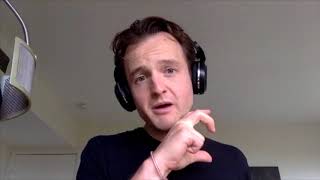
Chris Cromwell built E3, a hybrid coworking space that combines Starbucks' casual vibe with WeWork's collaboration model. Members work from business pods, attend weekly masterminds, and form joint ventures. He plans to scale through licensing and franchising.
Chapters
Welcome to Make More Marbles. My name is Brad Hart and we're here to interview the game changers, the future makers, the co collaborators and creators who are here to collaborate with one another towards a better future for all of us. Enjoy the show. We've got a great guest coming up for you right now. Welcome to Make More Marbles. My name is Brad Hart and today I am with Mr. Chris Cromwell, who is currently competing for the top spot on Google for Chris Cornell. Because they think that every time he gets Googled that it's actually. They didn't mean that. But no, Chris Cromwell is the guy we were looking for and he's doing some amazing things from Alberta, Canada, in Calgary. I want to say I have a lot of friends in Calgary, so thank you so much for being on the show, Chris, and welcome to Make More Marvels.
Thanks so much for having me. Really excited to be here. This is a really cool opportunity and yeah, I'm excited, man. This is awesome.
Well, right on, brother. Well, let's jump right into it. I mean, thank you so much for being on the show and let's kind of give people a sense of where you're at now and how you became who you are and some of the hero's journey along the way.
Yeah, I mean, ultimately, you know, I've been an entrepreneur from the time I was a kid. My first venture was a toy stand at a yard sale and I stood on the street for several hours just yelling, toys for sale. You know, there's not a car in sight. But I was determined. So I mean, I started really young. I was probably about 4 or 5 years old with that kind of entrepreneurial fire. And it just always continued. I mean, I got into dancing in high school and I was a competitive break dancer while I was there. And then I got into dance.
That's rad.
Yeah, true story. I won't be break dancing on the show today, but. But yeah, that's kind of how I started. That was a very entrepreneurial experience for me and I just kind of started organizing events and doing all this stuff and it just led me down a path. I've been pursuing creative arts for the last decade of my life. I got involved in real estate in the last few years and things have really picked up, man. Doing a lot of really cool things in the world, helping a lot of people.
Congratulations. So tell us about E3 and kind of what's going on with that right now. And this is a collaborative community. It's a co working space for entrepreneurs and people who Kind of want to do more with their lives.
Yeah, exactly. I mean, if, if I can give a visual for the people watching this, I'd love to give you the idea of what it would look like if Starbucks and WeWork came together and had a baby. The objective is to create a community and a physical space where entrepreneurs can come together to still be able to sit, have coffee, chill out, but also have the resources and the community that they need to achieve success and fulfillment in their life and business. And so we're currently in the development stage of that. It's a commercial real estate project, but it's also, it's really about the people. Like we've kind of built the entire community and the entire philosophy around the people that are in our community. So we're ultimately trying to create a resource for people that are just like you and me, that might just be, you know, in between where they are now and where they want to be. And we just want to bridge that gap and make sure they can get what they want out of life.
I love it. So give me some examples of some people that have come into your community. Maybe their little journey is through, you know, they were doing X and now they're doing Y. And how they became, you know, they're. Sorry, I kind of flaked for a second. We'll go back and edit that out. That's not a problem. We can fix that in post. You know, tell me about some of the people that use your community and to what effect and what their stories are.
Cool. So great question. I mean, we ultimately work with entrepreneurs from every different type of industry. You're looking at people who are in the real estate game, people who are in the creative industries, everything from artists to musicians to designers. And then we're also looking at people that provide B2B. We're looking at people who provide marketing services or web design things along those lines. We've also got salespeople who might be working in different multi level marketing organizations. And yeah, it's just kind of a cool sort of concept where anyone from any industry can come in and find everything that they need to become a better entrepreneur and a better person in the process.
So do you guys have like masterminding, do you guys do events? Do you guys kind of have collaborations among community members or just like, hey, here's the tools and you guys go and figure it out?
No, all of the above. Ultimately we, I mean, we do have system inside of E3, it's called the business pod. And we have a weekly kind of Mastermind accountability session that we do. So there's a dozen individuals that are involved with that and ultimately we get together every Monday and we just talk about what's going on in business, what are the struggles that we're faced with, what are the things that are going right, what can they use help with and just try to find ways to collaborate with each other directly in that space. Some of the other cool things is that we've had different members of our community just kind of click. You know, they come into this space, they're working together and it just happens that they, you know, are magnetic and they end up coming together, building collaborative projects. They might start a business together or start a project, some kind of collaboration. And there's all kinds of JV opportunities and collaboration things that are happening within the community at E3. So yeah, it's, it's kind of all the above.
I love it. Yeah, that's, that's a model I want to see more of in the world for sure. Like for example, I run a little weekly local mastermind at WeWork, which is not We. I'm sorry, unicowork, which is kind of a competitor locally to WeWork, which is great. They have a big facility downtown San Diego that's like a 40 minute drive without traffic. So you know, we just do our own little one and it's great and people show up and they do their thing, but it can be a little cost prohibitive. Like they want, you know, 100 bucks an hour for that space and you know, you could charge people but then that less people show up and it's just kind of finding that. So do you guys sponsor the events or do you like just let people kind of just rent it out and use it for whatever they want to use it for or like what's the business model there and how do you foster that type of community?
Yeah, great question. So ultimately we believe that collaboration is the foundation of everything we do. We're all about like working together, finding venture opportunities. And we've actually partnered with a different co working space here in Calgary and they give us their space absolutely free of charge. I love that they know that we're bringing people into their space and for them it just makes good business sense to be able to provide a space for entrepreneurs to come and do good things. And it's just filling their space with people all the time. So for them it's a good business move. They do charge for that room, but we built relationships with people. Ultimately. I've been blessed with so many Opportunities to get free stuff. Because I just, like, I help people. Like, my mission in life and my purpose is to empower people with the tools they need to achieve fulfillment in their life. And, you know, when you do that and you're genuine, when you're really like, actually trying to help people to achieve their true potential and to be more fulfilled, you're just going around doing favors for people, like, all the time. You're just like, trying to help someone else, trying to get them unstuck, trying to get them to the next level. And when you're doing those good deeds for people constantly, people want to give back to you. It's, you know, call it the law of reciprocity, the law of attraction, what have you. But it's just the way that things work. People, when you do something good for someone, they want to help you back. So I just try to help as many people as is humanly possible with what we do.
And I think we're very much aligned in that regard. Chris. You know, honestly, that's how I got started, is I was so miserable and I focused on myself. And then the only way to fix that was to focus on other people and their stuff. And I got really good at it. And maybe, yes, that's my strength. If you kind of take like a Wealth Dynamics or MBTI test, my flow is very much. People, what has the journey been like for you? I mean, you seem like a very open and aware, empathic person from that. And is that born of pain or is there a traumatic, you know, kind of give us a grounding story of why you're like this and why we may not be so different.
Sure. Thank you so much for the question. I think there's. I think there's a lot of things that go into that. First and foremost, I was really fortunate to grow up with parents that encouraged me. And I know that for a lot of people that are out there that might be watching this, you know, your parents might not have been as supportive of your creative adventure or your entrepreneurial journey. And I was really blessed. Like, growing up, I always had parents that were super, super pumped on what I was doing. Whether it was joining, you know, a hard rock band or if it was promoting an event or break dancing, they always encouraged me and they told me to do what I love and to pursue that with, with intensity. I had a really big wake up call in 2011. I lost both of my parents, my mom in March and my dad in September. And that was obviously a really difficult thing for me. I was 25 years old, still trying to figure life out. You think you've got it all figured out, but you're really a jackass trying to say that he knows everything. And it taught me that life is really, really short. And if you're not pursuing the things that you love and leaving a legacy, leaving an impact in the lives of others, you're. You're missing the mark big time. Because it was. It was really powerful, I think, for me to be at, you know, for example, my mom's celebration. When we went there, there were people who came up to me and, you know, they're obviously upset. They're in tears. It's a, you know, funeral. And they said, your mom changed my life. Like, I can't. I can't thank her enough for all the work that she did in my life to help me and to help me get through kind of this journey that I was on. And that really struck a chord with me. And I think that's obvious. I mean, it was a pretty. I don't say traumatic experience, but it really just taught me to look at life on the bright side and to leave a legacy. Like, pursue the things you love. Help other people. Like, we're here to help other people and serve other people. So that's just my belief system. And I was fortunate to have good parents that encouraged me and, like, told me, you know, look at the bright side and always try to help as many people as possible and follow the golden rule, you know, do unto others as you would have them do unto you. And, yeah, in 2011, it all just kind of came together, and it was like, holy. I'm really lucky that I was given all these tools from the time I was a kid. And so it's just. I think it's just kind of natural for me. And I hope that answers your question. That was a long answer.
No, it's a great answer because it kind of gives people a sense of who you are and why you are who you are, you know, And I think everybody will respect you for your successes, but they'll ultimately love you for your failures or your struggles. Right. Because everybody can relate to failure and struggle, but not everybody can relate to success.
Fair. Yeah.
As entrepreneurs, you know, it can. We can be regarded as, like, the ones that are outside the box or, you know, we look at the big ones, like the Steve Jobs of the world and Elon Musk and, you know, just understanding that those people don't have anything that you don't also have access to in your way. Right. The Ability to serve others at a. At a grand scale, I think is a capacity within all of us. And it shows up in your language. It shows up in the way that you kind of describe even just what you're describing, the celebration of life as opposed to a funeral or a sad event.
Sure.
You know, and just the way you carry yourself, you know, it's just these little things you pick up these nuances between. It's the same event. Your mom passed away. It was a horrible experience. And I went through it with my dad at 24. He passed away and, you know, to be able to celebrate his life versus mourn his loss.
Yep.
And certainly we mourn, but just to be able to create something positive out of any situation. Right. That the event doesn't change. But our perception of the event or the story we create about it is either empowering or disempowering as a result. And these are like the little tangible bits, you know, everybody wants practical and tactical, but these are the pieces that you can sink your teeth into that keep you going through the toughest times and create something out of nothing.
I think sometimes it takes a real kick in the face from the world to tell you that life is important and you're worth something. And it's just. You have to recognize that your perception creates the reality in your life. And if you're looking at the world in terms of this bad thing happened to me, I'm a victim. You know, life is hard. Life's unfair. Like those. Those things affect you and they compound over time. So if you're. If you're fortunate enough to understand what that means in your life and the impact it can have, it's never too late to start. You can always start thinking better thoughts. Just gotta get in the habit of it.
Well, I appreciate you being open and vulnerable with that and just giving people a target to aim at, you know, and whatever you want your life to be is a function of what you create. And we're creating all the time. We're creating with our words or habits, our deeds, our thoughts, our actions, and with regard to other people. You know, it's not until you truly understand the lesson. And usually it's with a lot of pain or loss that you learn this lesson that life isn't really about you.
Right.
It's the summer that you know, it's. It's. Yes, you're part of it, but it's not about you. It's about what you can do for others, and that's your legacy. Nobody's going to Care that you're some selfish dude that lived and died. And when you zoom out far enough, I mean, none of what we really do matters in the grand scale of all things, right? This planet will live and die and will be forgotten. But guess what? While we're here right now, it matters to us. And it matters to the people whose lives we change. And when you can look somebody in the face or they can look you in the face and say, you changed my life and it's better because of you, that's more satisfaction and fulfillment, like you said, than anybody could ever achieve. So where do you think most people miss the mark? And we've talked about a few pieces, but where do you think most people miss the mark on fulfillment? And why success seems to be decoupled from it. You know, we talk about this science of success or strategies or practical or tactical, but what is, like, the art of fulfillment? How do you find the fulfillment that you do? And then also, how can people take a few key takeaways from that mindset? Wise? Because the right strategy in the wrong mindset won't yield the same results. And the strategy will always change as life changes.
Right?
So I'd love to hear your thoughts and takeaways on that.
Oh, man, I love this question. This is like. This is the really, like, important stuff. I feel like a lot of people that have been in my life that are entrepreneurs are stuck in their. I think, to answer your first question, I think the biggest thing is what is your definition of success? Right. My metric for how successful I am is how many people can call me or email me or tell me in a day that I changed their life in a positive way. It doesn't matter how much money is in the bank, okay? That's not my currency. I don't believe that money is a currency. Money is a vehicle through which we provide and exchange services and goods. However, it's not like time is my currency. And my measure of success is based on how many lives I can impact. And I can tell you, just for anyone watching this, it doesn't. Your mindset is not going to be there overnight. You have to be conscious as an entrepreneur and as a human being to understand that, like, you're not just going to be Rome overnight. And, you know, I've spent, without exaggeration, hundreds of hours consciously thinking about who I want to become as a person in terms of my values, in terms of the character traits that I want to possess, in terms of the way that I want to look at the world, and a Lot of people that I bumped into, in my experience, have never even thought about who they want to become as a human being, let alone where they want to go and what they want to do and what impact they want to make. I think it starts here. You have to start with yourself. A big percentage of the people that we work with really struggle with the idea of being selfish. But the fact is, if you are sick and depressed and tired all the time and you're broke, you're not going to help anyone. You're not going to leave any impact. And I prioritize myself and not to say, like, oh, I'm the most important person in my life. I've got so just some context here. I have four step kids, and these four step kids are a huge part of my life, and I make it part of my value system. I take responsibility for my values and how I interact in the world. I take responsibility and make it a value of mine to be present for them. You know, you got kids, anyone who's at home right now who's given their kid a phone to babysit them, you know what you're doing, and you're creating a disengaged kid who's got to go out in the world. These are adults that are going through childhood right now. And I see, like, you know, this is such a distraction for kids because they don't know any better. We've got to teach them and we've got to be present for them. Like, kids need communication. They need you to be present for them. So I won't go on a tangent about the kids, but, like, that's just an example of where I see my priorities. I, again, measure how much of an impact can I make in people's lives? Well, if I'm a disengaged parent and I give my kid an iPhone to play with while I'm doing work, is that kid really going to respect me for that, or are they just going to be totally disengaged and, like, lacking socially when they grow up? And I see that as being an impact in their life. And they're like, immediately in my life. So, you know, are the kids happy? Is my wife happy? Are my friends, like, do they respect me? Do they actually, like, say good things about me behind my back? I'm going to say one more thing about this, but there's a book, I have it on audiobook. I don't have it right here with me, but there's a book called the 7 Habits of Highly Effective People. For anyone who hasn't read it. It's my top three of all time. Great. It's amazing. Amazing book. And in that book, he talks about envisioning a funeral and then looking in the casket, and it's you. And then you look at all the people in your life and you think about, what are they going to say about you? And that one, that. That concept for me, just completely threw me off a cliff. I had no. There was no. I wasn't ready for it at the time. But I read it, and it never left me. I always remembered that. And it's been really important for me to just kind of, I think, review that and think about, like, what are people gonna say about me when I pass away? Will I be celebrated or will I be forgotten? And that. That's been super crucial. So, again, to come back full circle to your question, the definition of success, I think, is what a lot of people are really struggling with, and that's ultimately what's creating your perception of the world that you're involved in and how you interact in it. If you're focused on becoming a better person yourself and making more of an impact in people's lives, then that ultimately is going to create the circumstances and the environments for you to be able to do that. And ultimately that leads to fulfillment. I think fulfillment is something that's very internal, and if you have a definition of what that looks like, for me, it's leaving an impact. I think that that will really change the way that the world shows up for you. If you're looking for opportunities to impact people's lives, then that's what you find. But if, you know, on the other side, it's like, yeah, I'll leave it at that. I've talked enough. That's my thing.
That's great. I like that. I can wind you up like a top and let you go.
Dude, I could go with me. Great. I love it. I love. That's my favorite question so far.
Thank you. Thank you. And I'll keep asking great questions. You keep answering them. I appreciate you. We talk about on the show a lot, like, what are your principles? What are your values? What are the things that if you were to put in a book, if you had the ability and the time to do so, would be read for 100 years after you're gone? Like Stephen Covey's book, for example, that's Seven Habits of Highly Effective People. And actually, I never read the book in its entirety, but I listened to an interview with Dr. Stephen Covey, with Tony Robbins, actually, who I really Loved. And, you know, just the. You could just tell a person by the gravitas of their values and how they show up in the world. And I don't Shadow this man 24 hours a day, but you just know, like, that's where it starts. It starts with your values and beliefs. And, you know, this is how we shape reality. And it's a real chain that actually happens. You start with what you value. What you value becomes what you believe about the world. What you believe becomes your thoughts. What you think becomes your words. What you say becomes your actions. What you do becomes your habits. And your habits ultimately become the thing that shapes your reality.
Right.
It's not a function of what you want your life to be. It's what have you programmed, what have you wired and fired in your nervous system so many times that you do it as a function of who you are effortlessly with very little cognitive use. Because this thing is. It gets tired quick. But your habits are what takes you through most of the day. And shaping those habits are the difference between success and failure.
I believe. I would suggest for anyone watching or listening. Go back and listen to that again. Okay. That was impressive. That chain of things. Your values turn into your beliefs, turn into your words, turn into your actions, turns into your legacy. That's it. That's what it's all about, my friends. I hope that lands for some of you. Just take two minutes and just think about what was just said there. That's really, really powerful.
I might have adapted that and added a few little colorful pieces to it. I think. I thought a lot of this. A lot. But it really comes down to Lao Tzu. This is knowledge that hasn't existed. If you read the Tao, Tao Te Ching, you know, he's talking about this thousands of years ago. So, you know, we. We tend to forget more than we think we know in as humans. And I think that the trick is not to add more content, although that's what we're doing here. We're creating more content. It's just to remind ourselves of what we already know as humans. Like, this is fundamental to our species. This is our collected oral history and tradition, just in a new format.
Yeah, 100%.
So, you know, there isn't a situation that exists until humans fundamentally change what they are that hasn't been encountered in some way, shape or form before. And then you can model those behaviors and those habits that those affected people had at that situation and apply it to the new ones today. And the people who do that, they tend to do really well. Like Ray Dalio studying history, for example, in order to create his principles. With this book. I love Right. By the way, this is the best thing I'm reading in the last five years. I recommend it highly. And you familiar with Dalio? Do you know who that is?
I do, yes. Actually, that book just came up in my recommended reads in so good.
Get on that. Oh God, I love it. So what are some other principles that have kind of guided you and shaped you along the way that people might want to pick up and you know, R and D, as I like to say, I learned from another Canadian, Dan Martel. Robin Duplicate. If it's working, use it.
Yep. I mean, I'm a huge, huge, huge believer in optimism. I don't think enough good things can be said about having a positive expectation for the outcomes of things. A lot of people call that faith. A lot of people call that other things. But I think optimism, grounded optimism, not like flighty, you know, everything's going to be okay, just like wash it out with thoughts. I'm talking about real grounded faith in the fact that something good is going to happen to you. And that's a habit that you've got to build. It doesn't happen overnight. You might be lying to yourself at the beginning. I'm a firm believer in building. I don't know if you're familiar with like brain science or like neurochemistry or, you know, neuro linguistic programming, but anchoring ideas in your mind that empower you. If you can get into the habit of choosing how you look at the world because there's a space between stimulus and response. So when something happens, you have a choice about how you react to that and that ultimately is what creates your reality. I love how we're having a philosophical discussion in a business setting. This is fantastic. I believe that optimism has given me more with that single belief about the world, with that single value that has served me more, I think, than just about any other value. And obviously, I mean, I try to love on people as much as I can. Dude, if I can get a hug rather than handshake, I'm in. I'm going to go in for the hug. Every time I try to love people, I think if you haven't already thought about love in your life and where it stands, give that a reconsideration. Really think about how much do you love people? How much are you giving love to the world? Gratitude is another huge one. I think that if we're not able to recognize the good things that are already happening in Our life, it just impedes the future good things from coming in. So I would say love, gratitude, optimism, those are my three biggest and most important for sure.
Love, gratitude, and optimism. Or log if you like acronyms and alliterations like I do.
Yeah, there you go. Exactly.
I love it. And I love the Viktor Frankl quote, by the way, the stimulus and response, you know, and if you guys haven't read Man's Search for Meaning, it's about a man who survived the Holocaust and the one thing he noticed that separated the people who passed away and didn't survive that ordeal and the people who did was their outlook. It had nothing to do with their relative strength or ability or who they knew or what they knew is what Goosebumps.
Just heard you talk about this, man.
What meaning could they make that was empowering versus disempowering? And that's our core strength, is that we have free will, you know, to decide what we mean, what we make things mean. Just knowing that is so powerful big time. And then catching yourself when your ego takes over and says it means this because it happens to everybody. You think I wake up every day feeling like a million bucks? Of course not. I go and I run and I scream and I jump in the ocean and blah. And I get into a good state and I wire and fire that. And then it gets easier and easier and easier. And I'm sure you have. Let's talk morning rituals. Like, what are some of your morning rituals that get you in a peak state? Because you're obviously a high energy guy. I want to know how that happens.
You know, I'm, I just got turned on to this thing. Mel Robbins is the person, the five second rule.
So I can't wait to have Mel on the show we've been trying to schedule.
Five, four, three, two, one, go. And man, I'm telling you, that is like, it's a game changer for me. I had never been exposed to it. Someone actually just turned me onto this, like within the last month. So my morning ritual consists of ultimately, like waking up and I take an hour for myself. I'm not, I don't answer emails, I don't answer phone calls. I don't do social media. I don't, I really don't do anything, man. I sit there with a coffee, I have some water. I like, might grab like a quick bite or something or have a shake or something, but I don't do anything. I'm not trying to like wake up and meditate or exercise or look at affirmations I give myself time to wake up. I'm not a morning guy, never have been. I'm not trying to rewire my whole life in that sense. It's been very difficult for me. I have worked on it. It's just not my thing. So with that being said, I take an hour. For me, I just do anything that I feel like. I usually just kind of chill out and then I'll usually either read or listen to a podcast within that first, like after about 45 minutes or so I'll start reading and that just kind of inspires me. And then I'll actually like once I go through and read something new, then I'll review my goals for the day. I'll look at my goals for the week, for the month, for the quarter, for the year, for the next three years and just really tune into what it looks like three years from now and figure out who am I going to become, how am I going to feel, what's my day going to look like, who am I spending time with, where am I traveling to, those types of things. And I try to dial in as much as I can into that experience of being there and use all of my senses and really just kind of internalize what that's going to look like and how that's going to feel. And then from there it's usually like go, go, go until 5pm so I'll usually get up like 8 or 9, take an hour for myself and then by like between like 10 and 4 o' clock, I'm usually just like hustle, hustle, hustle. A lot of emails, a lot of phone calls and right now we're actually doing some really cool stuff with E3 that requires a lot of my attention. We're doing some video marketing stuff for different companies here in Calgary. So we've been constantly on the phone, constantly talking to different organizations. A lot of hotels right now are having us come in and do 360 photos for them. We're also going in and doing video stuff. So a lot of times I'm actually going out and filming, doing videos for people and then come home by four and I get to spend time with my kids for the rest day the of the night. We'll usually like eat dinner and talk with each other. No phones at the table and then yeah, just hang out with the kids for the day.
I love it. And you obviously prioritize filling up your own cup first, which is so important because what do you have to give to anybody if your cup isn't full and that's like that, you know, selfish to be selfless type of thing that people don't seem to get. You know, if you're not in a good state, if you're not fed well, if you're not energized, if you're not hydrated, if you're not reading and doing the things you got to do, what are you going to be to anybody else?
Big time. It's really powerful. It's funny, I did this naturally when I was young, and then as I got older, society told me, that's bad, you shouldn't do that, that's wrong. You should think of other people first. And it's like, it's good to be altruistic. And then I started to research and study my own mind and my own habits and I learned again that actually you're pretty important if you're sick and you can't do anything, you can't make an impact in people's lives. So again, it just came. Came back full circle.
I think people need the reminder. There's people out there listening that have so many struggles that they create just for lack of self care.
True story.
And those take away from the. Yeah, so have I. I'm not beating up on anybody. Certainly, you know, we all fall off the wagon from time to time. I was just remarking to a friend yesterday that I'm like staying up too late on Saturday. Even though I wasn't drinking or doing drugs or anything. You know, I'm still wiped out on Monday and I feel good until today, which is great because now I have a whole day full of podcasts. So I need as much energy as I could possibly get record in a row. People are like, are you crazy? I'm like, no. It's just how I have to manage my time. I have to focus on one thing at a time. If I can't do that, then I'm not of service to anybody if I'm diverting focus time. I had to delete Facebook from my phone. I delete messenger from my phone, you know, and I have to be really clear, like what is my mission here to do? It's not to say on Saturday, it's to nail these podcasts on Tuesday.
Yep.
And just kind of finding those little efficiencies in your life that allow you to do that and focus and be really clear about how you direct your energy will change your life in ways that I can't even describe to you.
It's pretty powerful.
Night and day we did. I'll just share one More anecdote. And then I want to turn it back on what you're doing in the world. My friends and head of sales at Make More Marbles. Frank made a video about two and a half years ago. I was living in Santa Monica in my apartment. We just had a few hours to kill. We're like, we're making a video about something. What do you want to talk about? Well, you quit drinking and I quit drinking. Let's talk about our experience. We made a 21 minute video. We didn't think anything of it. It went on to become the most popular video on quitting alcohol on YouTube for those keywords, quitting alcohol for like a year and a half. So, like, a lot of people watched it. And it's a great video still up there. You can check it out. It'll be like top five if you check it out now. And it was just us explaining our experience and went on to change thousands of lives. I get messages still about it all the time. Like, I quit for 30 days, 60 days, 90 days, 100. You have no idea what you've been through and how it could change somebody's life if you're just willing to put it out there. But that would have never come if I just didn't, you know, decide to take a stand for something and present way, which I'd heard nobody else present it of. It's like, you know, alcoholism versus social drinking versus no drinking. Like there's no middle ground there at all of people who just for performance reasons or whatever, want to maybe quit drinking for 30 days and see what their life is like. And how do you message those people and don't make them feel like horrible people. So I guess all of this is a long way to say that the amount of impact you can actually have is relatively high. Especially nowadays we have supercomputers in our pockets that can connect you to anybody in the world. And yes, they can disconnect us just the same. But just like any tool, a hammer can build a house, it can cave somebody's skull. And it's how you choose to use it. So I guess our, our main thrust of this message would be, you know, use the tools at your disposal in the best and highest way for yourself and for others that you possibly can.
100%. 100% what you do matters. You can have an impact in the world. And sometimes you don't even know how much of an impact you're gonna have. In your case, you know, your video went pretty viral. You're a top hit for Those keywords, it's like, how many lies did you impact? What's the compounding effect of that? How many other people did they share it with that it affected? You know, you never know. So it's just.
That was accidental, right? And you can't plan for that. But you know, with it, with some thoughtful, careful planning and goals. And one of the things I got this conversation was, you know, having this clear path towards a goal that I can review on a daily. And like everybody talks about goals. It's almost cliche at this point, but it's so important to know what you're aiming at if you're planning to hit it.
You know, there's a common thread in just about every self help book that I've ever read and that is clarity. You know, without that, you're. You're kind of. It doesn't matter which way you go, right? If you don't have clarity on where you want to go, you go in any direction, it doesn't matter.
So let's talk about some of your goals. Let's talk about some of the things you want to create with E3. Is this going to be a franchise model? Is this going to be something that you bring to more countries with? What's the story for you?
Yeah. Thank you. So ultimately our objective with E3 when we first got started was to create a community. And really it was kind of all built around that. We've actually got a lot of feedback and a lot of insights from people who want to be involved with what we're doing. And I think at this point a franchise model or a licensing model would work best for us. Typically hotels will license their name to organizations and people that can afford it. It's not a franchise, but it's more like a license. So we're kind of balancing between those two and looking at ways to either E3 certify people and have a licensed name scenario or franchise model where we control it corporately and then, you know, distribute whatever franchise we decide to do. So that's kind of where we're aiming at right now. Got to start with one though first.
I like that. Yeah, if you can nail it, you can scale it.
Yeah, if you can nail it, you can scale it. I like that. I haven't heard that before I made.
It up or maybe I heard it somewhere and I just don't remember where. But I'm pretty sure I like it. So, you know, we're all about creating systems that serve more people. If you have a better mousetrap, then it's just a function of connecting you to the resources, the opportunities, the people and the systems, the crops, if you will, to get to more people more quickly. So, you know, you've been so generous with us, Chris, you know, creating a space where we can learn and grow with you. What are some of the ways that we can help you do that and move your mission forward faster? So you talked about this franchise licensing model. I got some people for that. I got some ideas for that. I don't know if they'll translate as well across the border as they do here.
We got our eyes on San Diego.
Oh, get out of here. Okay, cool. Yeah, I could definitely help with that coffee shop concept down here. And you know, you said the baby between WeWork and Starbucks. Well, I know people, they're doing both kinds of things and I think would love to have a chat with you about that. So that's one thing. But for people at home, what do you think you need the most right now to move your mission forward?
Yeah, that's a great question. Thank you so much for the opportunity to speak to your audience in this way. So I think that for anyone watching, ultimately, I've kind of explained what E3 does and why we're here. And our objective, our mission as a company is to empower people just like you, entrepreneurs, with the tools, the education and the physical resources that they need to achieve success and fulfillment in their life and business. And that's the one liner. That's my elevator pitch for E3. So if that sounds like something that you'd like to be involved in, reach out to me. Get ahold of us. We've got opportunities for you to join our community. You can just go to e3spaces.com and you can come visit us there. You can join our email list. And again, it's just a landing page. There's nothing special about it. It's just a short video explaining kind of what we do and why we do it. And yeah, get in touch with us. I'd love to have a further conversation. If you're, you know, like our friend Brad here who's like, yeah, man, we can hook you up with this person or that person. If you know someone who might be an asset to our company or who might want to collaborate, or if there's a joint venture opportunity somewhere where you are, reach out to us. If this is something you want to build in your hometown, let us know. I mean, we're all about empowering people. So if you want to be a leader and you want to step up to the plate, then. Yeah, let's. Let's get in touch, let's hang out.
Hit us up, and then I'll make a very specific Calgary recommendation is to look up a guy named Jay Fizet. Because you said JV is like, three times. And I don't know if you know Jay, but he runs.
I do know Jay. Jay's a good friend of mine.
Yeah. So he's out. Yeah, I've been myself a couple times, so that's awesome. Well, hey, it's been amazing having you on the show, and thank you so much for the amazing interview, Chris. Anything you want to share with people on the. On the flip side, like, you know, what are the things you'd like to leave our audience with?
Yeah, if I had to say one thing, I would just implore anyone that's watching this video or listening to this in terms of a podcast, please consider that your life is going to end one day. I hear Gary Vee saying this all the time, but, like, one day you're gonna die. And if you aren't conscious of your life while you're alive, then it may very well be that you don't get to create the impact that you always wanted to. And the biggest regret when people are on their deathbed is that they didn't. They didn't love enough, they didn't spend enough time with their family. They didn't create the impact that they wanted to, and they didn't get to do the things that they wanted to. So, you know, live a life with no regrets. And I hope that when it comes to your day, you're able to look back and say, that was awesome.
I love that.
And I'll leave on that. That's it for me.
Yeah, that's awesome. And I appreciate you being a marvel maker out there in the world. Chris, you're amazing. I appreciate you. I'm grateful for you. On behalf of everyone at Make More Marbles, thank you for being here.
Thank you so much for having me. My pleasure.
Thanks so much for listening to the Make More Marbles podcast for more tips, hacks and strategies to create an amazing, abundant life in your health, wealth, and relationships, whatever that means to you. Head on over to make. Makemoremarbles. Com. Check out our cool explainer video about what we're about, and join our community of entrepreneurial game changers. We want to help you level up your life in every possible way. And don't forget to subscribe to us on itunes, Stitcher or Google Play, wherever you're listening to your podcast, and please do leave a review. Thank you so much and we'll see you on the next podcast.
More from Brad

The #1 Reason AI Isn’t Working for You (Yet) #AI #businessowner #founderenergy




What tasks would the best assistant ever be able to do for you? #BusinessSystems #BusinessOperations



Nobody expects you to use a harder way when there's a better way. #AI #businessowner

Which side of the table will you be on in 2026? #AI #Mastermind #BusinessOwner

