Confessions of a Sales God: Stefan Aarnio on Charisma, Entrepreneurship and Life
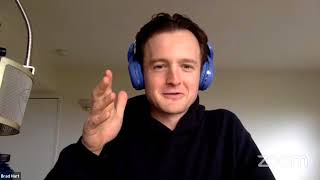
This content was created by Brad Hart. This content was uploaded by Brad Hart. This is a YouTube interview episode (Make More Marbles) titled "Confessions of a Sales God: Stefan Aarnio on Charisma, Entrepreneurship and Life," recorded January 25, 2018. It's a live, interview-style conversation hosted by Brad Hart with guest Stefan Aarnio. They discuss entrepreneurship and real estate investing, negotiation (including lessons from George Ross), sales and marketing tactics (note-taking, empathy), abundance vs. scarcity mindset, cryptocurrencies/blockchain, economic shifts toward entrepreneurship and e-commerce, and related personal stories and strategies. Metadata: YouTube content, created_time 2018-01-25T14:22:18Z, last edited 2026-01-17.
Chapters
Welcome to Make More Marbles. My name is Brad Hart and we're here to interview the game changers, the future makers, the co collaborators and creators who are here to collaborate with one another towards a better future for all of us. Enjoy the show. We've got a great guest coming up for you right now. Hey, welcome to Make More Marbles. We are live on YouTube. What is happening, everybody? And I'm here today with a good friend of mine, Steven Stefan Arnio, who You live up in Manitoba, right?
Manitoba, man. Where it's. Where the. It's cold.
Is that recalling it from today? Are you on the road?
No, I'm. I'm. I'm in my house here. This is one of my paintings behind me. I'm just here chilling out, trying to have a day off. But here I am, entrepreneur on a day off. We're doing interviews, we're doing negotiations on a couple buildings, we're closing deals, talking to lenders, I'm getting loan proposals. Go. And all these things. You know, day off is never a day off.
I love it, you know, and when you're living in flow and you're living in your purpose, like, honestly, I don't know what to do with myself when I have a day off. Like, I always want to just jump in and do some content or help somebody or whatever. It's hard to really stay away and actually unplug. So I totally get it. What are you most excited about right now that's going on in your business?
We got a couple things, Brad. My. My trading company. Company. My information company is. We're expanding right now. So I think we're going to be doing a big tour in the fall across the country, launching an E Commerce. Right now I'm looking at buying a warehouse and getting into the storage business. So we got a lot of interesting things. And then I've got a bunch of new products coming out. I just. I don't stop, man. I just keep going and going and going. I'm like the energizer bunny over here.
I love it. That's why I'm so attracted to your message, especially because you're a true grinder hustler. Never stop. I've read your book. I want to read your new one. Got to respect the grind, brother. I love it. You have a goal to write 20 books. Are you up to number three now or is this number two?
I've written three. So we got self made. I think you have a copy of it? Yep. So you got a copy of that and then $5 million book money, people, deals, all about raising money, I think. Do you have this one?
I haven't yet, no. Send it out to me. I'll give you my address.
All right, cool. And then this one. Ten Commandments in negotiation. And I've got George Ross right now, Donald Trump's negotiator who did all of his big deals. I'm getting him to write the forward right now. This is a pre run copy, so people get the pre run and hopefully we have George write the forward because that'd be awesome. George got me going in negotiation years ago when I saw him speaking.
That's legit.
Yeah.
What would you say, one or two things you've gleaned from George that are applicable to any kind of negotiations right now just to give a little bit of a tidbit for the audience?
Well, right here on the back of the book, I wrote this. This is what George says. He says, you know, there 150 top CEOs were contacted and asked for three personality traits desired in companies. Top negotiators. Number one, personality. Number two, knowledge of human nature. Number three, ability to organize information. So those are the three things, you know, you have to have great personality. That's something everybody can work on. You have to understand human nature. And human nature is. I say real estate. I'm mostly in real estate. Real estate's a human nature business. And then you ought to be able to organize and collect information. I've got my little black book here. I'm actually coming out with some journals and a black book this year. This is for organizing information. There you go. Look at that. You know, the good negotiators, they carry these books around. And I keep a log. There you go. Every single person you talk to, you write it down. I should even write it here. Brad Hart. Look at that. You know.
Yeah, for me, man, we got the whole make more Marvel notebooks thing going on here. I got a bajillion of these. I had a. You know, I worked in real estate in New York City. I don't know if you ever talked about that, but I got hired by a guy named Bruno Riccioti. Who? It was him and his partner Noah. Just two grinders from Philadelphia came in and became the eighth largest real estate brokerage in New York in like five years, six years. Right. And they're competing with Corcoran and Prudential and all these really established firms. And one thing I gleaned from my time with Bruno, I actually wrote it right here. It's my Bruno book. J, F, D. I just effin do it. And he had a book on his desk at all times, a marble notebook and a pen. He would always write down all the deals that were going on, all the phone numbers, everything. It was just like that was his bible. And he had a bunch of them just lined up in his office. And I still do it to this day. He taught me how to hustle. It was great.
Yeah, you got to have a deal book. And, you know, I have salespeople in my office now. We have a little phone room and salespeople. And, you know, you got to take notes. The guys have to take notes. The difference between somebody who can close the deals, there's the easy deals and then there's the unclosable deals, and then there's all the ones in the middle. And somebody who can close those middle deals is somebody who's taking good notes. And, you know, they. They get on the phone with somebody, they flip right back to the last time they spoke. They could say the wife's name, the dog's name, where they were. Was it sunny outside? Was it raining? Every single detail is written down. And it makes you very powerful, and it makes you close those deals that, you know, average salespeople can't.
Well, and I think the underlying theme here, I've been kind of playing with this idea that the best marketers, the best salespeople are the most empathetic humans, really. And we all have this desire to connect with people at a deeper level. And one of the tricks or the hacks or whatever is to be able to remember, you know, people's names, birthdays, wife's name, dog's name, that kind of thing. But it's not coming from a place of like, oh, I'm trying to game you or manipulate you. It's actually coming from a real place of I want to serve you at a higher level. And most of sales negotiation is overcoming the objections that people have to get out of their own way. Right. So this is a high level influencer, you know, understanding of what it is to be a great marketer, salesperson, negotiator, versus just an average one or not one at all.
Yeah. I say genuine interest in other people. You know, you have to be interested in them. Are you interested in Mr. Smith and Mrs. Smith and what's the dog's name and does the dog like a bone and, you know, what's the baby's name and all these things? It's just a genuine interest in other people.
Absolutely. So, Stefan, you've Run a lot of different companies. Now what would you say really attracted you to double down on real estate? I mean, I read your book, but I'd love to have you kind of tell the story for the listeners at home and where you're at today.
Well, I used to be, when I was 16, I wanted to be a rock star. I wanted to be rich and famous. And of course when you're 16 and you watch much music or you watch MTV, everybody who's rich and famous is a rock star. So I pursued that as far as I could. And then when I was about 22, I was broke and I was living at my mom's house and my band really sucked and you know, nobody liked my band and we weren't making very much money. And I said this is not very good. And I looked out at the landscape in the music industry and the music industry is no different than any other industry today. It's a brand business, it's all about building a brand and then you have products and a lot of bands don't have any products. So I got into real estate because I wanted money. I wanted to move out of my mom's house, I wanted to own a car, I wanted to be able to travel. You know, I was a guitar teacher. I was making a little bit of money, but I was never able to leave. I was never able to leave town or go on a trip. And so I started studying real estate. And for the first couple years I really screwed up. I went right into the investor game. I never got into being a real estate agent, but I would crush if I was a real estate agent. Went right into the investor game. I started developing properties, I started flipping properties, I learned to raise money. I worked for a private equity firm, learned to raise money even better and got myself into near bankruptcy a couple times, bailed myself out of bankruptcy and, and here I am years later. I'm about 30 now. I started was 22, self made millionaire. I own quite a few properties. I also now I'm in the training and information business for real estate investors who want to follow what I did. And it's, it's a really interesting game because my business is a multi income stream business. It's diverse. We're taking advantage of the information age, we're also taking advantage of the industrial age and real estate and where that is. And it all goes together. It's, it's a, it's an ecosystem of money and building My organization, we have, I think we have 10 employees, but we're going to go up to 13 or 14 pretty soon, and we just keep growing and growing and expanding.
That's beautiful. And, you know, one of the things that kind of ticked the box for me is like, I see these guys that are really going all in on one industry. Right. I see, like, Sam Ovens buying, you know, consulting dot com. And I'm going to be the guy for consulting. I'm going to teach you how to do a consulting business. Do you want to be kind of like that? Like the penultimate resource for real estate investors?
Well, I'm not really a real estate guy, Brad. I mean, it's deceiving. I'm more of an entrepreneurship guy. Sure. The product happens to be real estate. So, you know, we teach real estate to people and teach people how to flip a house or flip 10 or 12 houses, because a lot of people don't have a product. A lot of entrepreneurs don't have a product. A lot of guys teach people how to be coaches. But if you don't have any skills to coach people on. Yeah, there's no sense in doing that. Right. So, you know, anybody can go buy and fix and sell a house. So I have a little entrepreneurship academy, and my entrepreneurship company focuses on sales, marketing, negotiating, raising money, and then buy, fix, sell. So a little bit of production. And my goal with my information company is to build out a great curriculum so someone can make their first hundred grand, their first 300 grand, and their first million dollars. That's my goal. And I want people, I say this. We have this right on the wall in the office. It says, give a man a fish, give, he's fed for a day. Teach a man to fish, he's fed for life. And the third line, teach a man to teach fishermen end world hunger.
Yes. I love that. That's really great. And that comes from kind of an abundance mindset. I remember reading your book. There was a story about how you were going to go eat McDonald's and be the sad guy alone, and instead you spent that money in a different way. Could you tell us a little bit about that story about how you shifted from that scarcity mindset to that abundance mindset? I think it's really important for the people.
Good story. Thanks, Brett. So in Self made, years ago, when I was just getting out of music and into whatever this is, you know, real business, real estate, entrepreneurship, I went to a conference. I think I had 100 bucks cash. Like, that's all I had, man. That was it. And I was doing the math. I had to eat at this conference for Two or three days. I had to get three meals a day. I had to go to, you know, figure out how am I going to live on 100 bucks for three days? And you're in an environment at conferences, you're going out for lunch all the time. You know, it's. It's 100 bucks is not going to last you three days. So I thought about. I thought, I can either go to McDonald's and I can sit by myself and eat the dollar menu, or I thought, you know, why don't we just do the opposite? Because I heard Tim Ferriss book for our workweek. He said, if you're not successful, try the opposite. So I said, okay, rather than being a miser, I'm going to be extremely generous. So my first night, I spent 40 bucks, bought dinner for the people who brought me to the event. I bought like, pizzas and salads and wings and Coke or whatever we had. And the next morning, you know, I was just really grateful. I was thankful. The next morning, they got me into the conference for free. It was a $500 ticket. Now it's free. And then the conference was catered with breakfast and lunch every day. And then I was saying, like, wow, this is amazing. So I went up to every speaker and I thanked them. I said, thank you so much for being here. Thanks for giving a great talk. Every speaker gave me a book. So now I got like 10 or 20 books from this event. And I thanked the event organizer. I said, thanks for putting this on. I've been to a lot of events, and this one's fantastic. He said, come to my house for dinner tonight. So now I'm eating dinner with the organizer and his staff. And, you know, the moral of the story is I came home. I think I had like a spare 40 bucks at the end of the event because I was just thankful. I was abundant with people. I was giving freely. And there's a lot of value to thanking people. There's a lot of value to appreciating people and just thankfulness and abundance that can be transmuted into real cash. And I think on the way home, I think I just gave the money to the people who were getting me to the place.
Gas money.
I said, here's the rest of the money. Here you go. And I came out ahead and with a real lesson that, you know, appreciation and. And generosity and being thankful goes a lot further than trying to just pinch your pennies and. And have a scarcity mindset and hold onto this little bit that you have.
Well and what's the value of that money? That $100 versus the relationships that you would be foregoing?
Right.
It would just not even make any kind of sense. But it's really hard when you're on the other side of the abundant line to understand that, to get it right. It's almost like you can't connect the dots looking forward, but you can only connect them looking back. And really, gratitude and money. It's like every time I pay a bill on PayPal, I write somebody a note when they say, oh, could you pay this? Okay, cool. Paid with gratitude and also money. Because I really feel like there's multiple currencies in the world. And money is really like. When you give somebody your gratuity, for example, it's a way of showing how grateful you are for their service or their product or whatever. So that's what makes the world go around, is like, we can't live. No man is an island. Nobody can live in a world without others to bring the things. Like, the whole economy is based on this. We all have a certain thing to contribute, and as the result of all that and this gratitude of everybody serving each other, we all make more money. The most wealthy people have created the most value in society, have the most gratitude coming their way in the form of dollars. So really, like, if you were to create a currency, if you would, that money could stand in for as a metaphor, right? Because money is just what we decided it is, right? Could be Bitcoin in the future or any other number of things.
It could be seashells. It used to be seashells in some country, right?
Gold. I mean, like, anything that we derive value from or decide is going to be a store of value really comes from that gratitude that we have for each other, for serving each other, and that's it. And if we want to make more money, it's just value added times, leverage. That's it. That's all. Well, at the end of the day, so anybody who's out there listening, that might just be kind of like, oh, I don't know, I don't get it. You know, you guys are already successful. Whatever story that you make it up right now, just let's leave that aside because you're not going to get any different results from that story and just maybe adopt a new mindset, which could be, for example, what if I gave. What if I focus on what I could give instead of what I could receive and see what happens?
Well, I used to work for a man, Brad, and this man was that promoter at that event. And he had the 40th fastest growing company in Canada. And his goal was to give the most free education to the market out of anybody else. And the market reciprocated. And when you can give more, you typically get more, right? Because there's. Have you ever heard of four levels of exchange? There's abundant exchange, there's fair exchange, partial exchange, and criminal exchange.
Interesting.
This is in my book, you know, ten commandments of Negotiation. The abundant exchange is where I give you a dollar or I, you know, I give you a dollar, you give me two back. You know, it's an abundant relationship. You give, somebody else gives you more. You give, someone else gives you more. It's just this virtuous cycle. Then there's fair exchange. I give you a buck, you give me a Coke. You know, a buck for a Coke, you're not going to tell your friends. It's not exciting. Then there's partial exchange. I give you a buck and let's say you give me 50 cents back. Well, I'm not coming back to that restaurant. You know, we've all been there. And then there's criminal exchange where I give you a buck and you give me zero back. And that's where you stole from me. And you know, with abundant exchange, when you give abundantly, it's abundant, it's abundant, it's abundant, it's abundant. But if people don't reciprocate with you, it becomes criminal on the other end. So you need to be abundant, but you also need to watch when people aren't giving back to you. You got to say, okay, those people, those are not the right people, and move to some different people.
I really like that. And that kind of calls to mind. Another story about wealth is the king and his castle, right? The king has a pile of gold. He wants to make a castle to protect his serfs and his family and create an asset. So he hires some artisans and masons and brick builders and layers and soldiers and all these different people and he gives them all some gold and they build him a beautiful castle. And now the castle, the property has increased in value, right? The land underneath, it's worth more. There's a cash flow asset. There's protection from various threats that the serfs and everybody can use. But the gold, it still exists. It's still out there in the hands of the community. It hasn't diminished in value, but more value has been created. So where does the wealth come from? Where does the value come from? It's through our intention and Our service coupled with that, that we create, it's an incredible thing. And there's more being created all the time. It's a beautiful thing. So if you're looking at the world in this way as, oh, it's a zero sum game, well, that's what's going to show up for you. Life's a big mirror for whatever you believe. But if you are acting in abundance, life comes back to you. And it's not like abundance, oh, I give Stefan a dollar, he gives me one back or two back. It's abundance in the sense of, in aggregate, all of the generative relationships I'm investing into, all the different things I'm investing into, will eventually pay me back 20 fold.
Mm, mm. Absolutely. You gotta, you gotta sow and you gotta reap and you gotta sow and you gotta reap. And I think it's interesting, like when you take a $5 bill and you buy something from a guy, that $5 goes to the next guy, then he buys something, goes to the next guy, goes to the next guy, the five dollar bill goes to ten guys, there's fifty dollars of value created in the economy. But if, if the money stops, if, let's say, the money goes to one guy and he stops spending, that's how a recession happens. Because now that $5 isn't turned into $50, it's just $5. Or in fact, it's $0 now because the money is not moving anywhere.
So basically what you're saying is that the economy is one big game of hot potato plus gratitude.
Yeah. Yeah. Well, it can be. I mean, it's, it's, it's crazy, man. Money's got to move to be valuable.
Yeah, it's a beautiful thought. It's currency, right? It's currently an exchange. Okay, great. So let's say you got. What are you most excited about as an investment opportunity? Because you're always looking at different stuff. Like, I'm big into the crypto space right now. I think it's fascinating. But more importantly, blockchain, do you have any thought about that? Have you really gotten smart about that yet?
Well, I know a little bit about it. I don't claim to be an expert, but what I do think is interesting about cryptocurrencies and bitcoin and stuff is the banks can't get it, the banks can't play, and the government has a very hard time playing. So what's really cool about it is it's money minus the government, minus the banks, and the banks don't like that and the government doesn't like that. And I think that they're going to try to find a way to tax it. They're going to try to find a way for, you know, the big banks like Goldman, he's going to try to get a piece of it. But it's kind of like, it's like the original Internet right now. It's this free no man's land, it's the wild west. And people are doing all this cool stuff and people are exchanging it and it's working. And the question is, can they tax it and can the banks get a piece of it? Because right now the government and the banks are in bed in, in every country and they print money and they, they enslave people with the printing of money. And this is a, a new currency. It's a way of having freedom. It's a way of people being able to freely exchange. And it's awesome. And, but just like the Internet, I mean the Internet started out totally free and now it becomes more and more and more regulated. And I'm in Canada, I can't even watch some YouTube videos because of the geography. And you know, now you got Apple pay or you got Apple music, you got to pay for music now. So it, the question is, how long is it going to work before the government gets in there and before the banks get in there and make it like everything else.
Yeah, and there's some serious power structures. We're Talking about like 300 year old families that essentially make the puppets dance behind the scenes. I mean, every country in the world almost has a central bank and the central bankers kind of control the playing field. And crypto and bitcoin and all that blockchain stuff is not even an incumbent or a threat to them yet. But I think if it becomes that way, my thesis personally, and again, this is not investment advice. Consult a financial advisor. I am not your financial advisor. But my personal thesis is if crypto could even become 1% of the world's monetary supply. I mean, there's still ridiculous upside from where we're at just 1% and if it becomes bigger than that, forget it. I mean that's like ridiculous. But I think the really cool thing about it, and you kind of touched on this, is the decentralization aspect. It's that no one person could really control or game this thing. I was talking to some really high level crypto experts and they talked about how in order to hack that system, you'd have to simultaneously be able to hack 50 million computers around the world, because they all are updating the blockchain at any given time. And it's a public ledger, so everybody knows what's going on and what transactions and who has what with the private keys and the public keys and all that stuff. But they have to be able to do it inside of 10 minutes. Now, I'm sure there's some kid in his basement somewhere saying, I wish I could do that. I would be the greatest hacker of all time. But it would also collapse the integrity of the entire system immediately, right? Something that was created out of love. Now it moves to the power players. They want to control it, right? And then ultimately, if their greed wins, it destroys the entire system. Because you could steal all the bitcoin in the world, but if you started, if people knew that, it would immediately lose its value. So it's like this funny kind of system of trust and love and power and all these pieces that allow things to be created and also destroyed based on what we intend as humans. It's a really wonderful. An interesting puzzle, right?
We live in an interesting time, Brad. Like, my father's from Sweden, so I have a Swedish passport. I have a Canadian passport. And Sweden went cashless. So what happens in Sweden is they got. They got crazy taxes. The taxes are insane in Sweden. So people went cashless. It's a very, very taxed society. And what the average man does now is instead of carrying, you know, Swedish crowns, he carries Euros. So everybody's money, rather than investing in that currency that's all encumbered and all weird, everybody goes into a different currency, which is Euros, which they can pay cash. And when they pay cash, they cut out the government. So I think that, you know, that same thing could happen with cryptocurrencies where the taxes are so bad, the currency is so weak. You know, you're. You're getting monitored by the government, and people just say, screw you, government, screw you, banks. I'm going into cryptocurrency and start using that. Like, I have a PayPal account, and I'd rather use my PayPal account than my credit cards, because my PayPal account, it's easy to move money around my credit cards. I have to get two signatures on a check to load the credit card. I have to move all these things around. There's the bank. The bank doesn't answer the phone. It's a huge pain in the ass. PayPal is like a little freedom island for me. And I think people are always looking for freedom. They're always looking for a way. And I Could see down the road Bitcoin or gold or silver, or all these alternative currencies becoming a real choice compared to American dollars and Canadian dollars and Euros because of the tax and because of the government and the banks getting their fingers in it all the time.
Yeah, I agree 100%. And that's actually the opposite experience I have. I always get crazy about PayPal because they're always holding up money and transactions, and if I get refunded, it takes six days to post. It's like it's a whole thing. Whereas my credit card has been super easy. So I'm interested to learn more about that. Maybe I can sort you out with that. But additionally, I see a brave new world coming where no one person, especially with ubiquitous information and information, wants to be free, can really put their finger on the button and say, I control this. We're seeing a giant upending of massive power structures that literally can't be stopped. Eventually, humans want to be free, and they're going to find a way to be free.
Yeah, well, I mean, I don't want to get political, but you can look at the US election. I thought that was totally rigged, and I thought Hillary was going to take it because the media was so powerful. But, you know, Trump doing his six to eight speeches a day, and the guy was just running and gunning for it. He actually won. I couldn't believe it. He won. Good for him. He won. But, you know, that's. That's another example. I thought that thing was rigged, and I almost wasn't even paying attention to it. But I think that people, the average man on the street says, I've had enough of the. I've had enough of the taxes and the banks and all these people. And. And they got to say a big fu to the system and put Trump in there, who probably shouldn't have been in there, but he's in there now, and it should have been Trump or Bernie. And, you know, they silenced Bernie. They got rid of him. So then they brought in Trump because the average man, he's had enough of the bullshit.
Yeah. And it's funny, it's funny you say that because, like, I actually read about how that kind of happened. And one of the things that the Trump campaign was new and using, kind of like what Obama did with social media was psychometrics, right? Really, really understanding, going deep, like AI deep on data with what people were saying, what they were wanting, and then dialing into that message. Hillary was talking right over their heads about stuff they didn't care about, about issues that didn't concern them, you know, but he was talking right to the pain and the fear and the frustration of, like you said, the average person. And even though these people weren't en masse talking about their opinions, they all felt this way and they expressed it in the voting booths, which put them over the line. So it's a really interesting thing.
Yeah. And I think one thing that people forget about with Trump is he's a brilliant marketer, he's a brilliant brand, or he understands customers and what they want. He is a self made billionaire, which is not very easy to do, you know, statistics. A rich kid who's born rich is typically going to zero, not to billions. So he's a very smart guy. And what I love about Trump versus Hillary is he made an offer. He offered the people something. He said, here's my offer, you're getting screwed. I have an offer. Hillary had no offer. She didn't have a package for them, she didn't have a thing. She said, hey, more of the same. And everyone's kind of like, oh, the same is not very good. And Trump said, hey, I got this offer for you. And they say, well, I'm going to try the offer because just like any marketer, you have to have an offer, you have to have a call to action. And Trump said, here's the offer, and, and let's run with it. And people said, yeah, I like that offer. That offer is better than the one we're getting from the other team.
Well, yeah, and it just comes down to, again, like, how do you empathize and spread that message, the message that people want to hear if you want to be effective in life, influence and impact are a key part of that. Right. So, like, you talk about, you know, Trump is a brilliant guy. You don't have to agree with his ideology or his personal values or his integrity or whatever, but the fact that he's able to do that at such a high level and really just dial, that's like a masterful, masterful understanding of how people think and operate. And like, I used to live in New York. I actually literally lived in an apartment on 56th street between 5th and 6th Avenue where I could look out my window and there was Trump Tower. So, like, I know who I is. And then I'm listening to, and I worked in real estate and I followed him and I read his books and then I, I see all the stuff he'd been doing in the past, and then I see the way he's behaving on the campaign trail. And I'm like, this is not the same guy. Like, this is a New York Democrat pretending he's like a hardline Republican. And he just basically crafted the exact message that needed to be said to get the result at that time. And you can call that shady or manipulative or whatever you want to call it, but it was effective. And, you know, if the laws of influence, the Sun Tzu's of the world and the Machiavelli's of the world are right, well, I mean, the ends justify the means in that particular result. Right. He wanted to become elected president. That was the thing he set out to do, and he did it. So you can't argue with that.
The other thing is, if you live in New York, you pretty much have to be a Democrat. You don't have a choice. That is also true.
That is also very, very poignant. Right on. Okay, well, let's get off the political track because that can go down a couple of rabbit holes. But I'd really love to hear more about kind of what you're up to in the world, you know, who you would really love to serve at the highest level, and, you know, just kind of what your thoughts are on the state of entrepreneurship and. And the things that are missing so that people can thrive in this new game. Because I believe having a job that's over, that's on its way out, right? I mean, unless you're useful right now to a corporation, there's no reason to hire people. And with AI and robotics catching up and all these different pieces, we're starting to see a massive shift in society to where entrepreneurship's the only game in town. If you're not creating your job and participating in the marketplace and understanding how to craft messages and all these pieces, you're going to be left behind very quickly.
Yeah, well, I think what's happening, Brad, in the economy is we're returning to 1910. So if you look at 1910, most people lived on the farm. Most people were entrepreneurs. They all had their. Like, one guy made shoes, and one lady, she was knitting sweaters, and they were trading. And somebody like, he was growing potatoes, and he traded some potatoes for some sweaters. And the family would have three generations living at home. You had mom and dad, you had Grandma and grandpa, you had the kids. Kids. They all lived in one roof, and everybody was on the farm, and everybody had little businesses, and the family had to look after itself. It had three generations under one roof. And I think that we're returning to that Time where you have to be an entrepreneur to survive and you have to get some sort of side hustle, as the millennials call it. And you probably have to live at home forever because the real estate's so damn expensive. And you have to have this intergenerational family again because it's just expensive to live. And I think that this is where the world's going back to the industrial age, you know, in the 50s and 60s. They had factories and, you know, minimum wage. I don't know if, you know, this index to gold. Minimum wage in 1968 is like $83,000 in today's money. Wow. So if you worked at McDonald's in 1968, you made 83 grand. Your wife could stay home. Everything was great. You owned a house and a car and a cottage. Life was good. But nowadays, the currency is weaker and weaker. Millennials, they make like a quarter of what they made in 1968. Millennials are saying, you know, screw you to the system. They're saying, I don't want to be a part of this. They're saying, it makes no sense to have a job. I'm getting 30 grand. I have a degree, I have school debt. This makes no sense. And I think we're returning back to this time of. We're going to see farms coming back. I think agriculture is going to be a big trend pretty soon. Yeah. Vertical farming, E commerce is coming back. Like, it's. It's getting huge. E commerce is destroying Walmart right now. It's taken down Walmart. It's taken down American retailers, Canadian retailers. So there's an entire shift here going back to 1910 and how people live back there in their little farms with their little businesses. And I think that that's. That's how it's going to go now, because that's where the economy's at.
Okay, interesting. So it's like 1910 plus technology of 2016 or 17, you know, and I really agree with you about the E. Comm. But I think there's also an opportunity for any individual that chooses so to participate in a larger economy. So the only key difference, really, is the speed and the efficacy of which you could communicate back then. Back then, if you were in the place you were in, that was kind of it. You had influence over events that kind of concerned you. Now it's like you can connect to any human on the planet through your little.
You know, And I'll say this, Brad. Yes. In theory, right. A hundred years ago, you'd have a little plot of Land and a little village and you take your potatoes to this, to the stand by the road, you'd sell some potatoes to the 10 guys who walk by. And I think that where E. Commerce is at and these little businesses, these little Etsy stores and these little side hustles, I think it's the same thing. There's still 10 guys going to the Etsy store. Because to get the exposure in the channels that we have nowadays still costs money. It still takes, you know, it still takes time. Like, you know, on my, on my Instagram I think I have 1800 followers. Well, if I'm a 19 year old girl in a bikini, I'm gonna have 19,000 followers. But for me with my little store to get that exposure, I have to buy that exposure. And so I think with these little businesses, like I know this girl in Vancouver, she's selling these little candles. So she's cooking candles on her stove and making these little candles. And I don't know what her sales are like, but my guess is it's about the same as her going down to the road and selling them by the road. Because she can't get the exposure online. Yes, in theory she can get the exposure, but there's a million billion people selling candles or a million billion little stands and everybody's just getting a little piece of exposure. Unless you get a big marketing machine going, which most people aren't smart enough to do.
Right. So you kind of almost have to flip the model on its head kind of like Tesla did. They got to start with the high end niche. You know, we're going to sell 2500 cars before we can even think about going mass market because we're going to get killed and it's too much for marketing. So like with my business, for example, you know, I couldn't play the game of the $97 online course. I didn't want to. I don't think people are served by that.
Yeah, your ad spend would be crazy.
To move that product. Yeah, it just would make no sense. So instead I went with a super high touch, super, you know, one on one experience which I then, you know, kind of cultivated my, my shop there and I enrolled people there and I worked with them directly and I charged a lot of money. And then I started doing masterminds and we have like 75 paying mastermind members from, you know, Australia all the way to Oman, you know, and then that kind of leveraged it out some more and it allowed me to generate more content and amazing stuff and then I could kind of package that into that. And then we do more trips and we go to China, we go to this place and go to that place. And now I can begin to invest in some of these pieces. But if you're starting like you don't have the capital or the expertise to really do that, and as you love to say, spending money on Facebook when you don't know what the heck you're doing, you don't have a process and a funnel and all this pieces figured out is like setting a wheelbarrow money on fire. And I want to set a wheelbarrow money on fire, especially if I don't have the money to set on fire. So you got to be able to capitalize properly, to accept the kind of slings and arrows and risk along the way to figure those pieces out. But that's not where you start. You start by going deep and serving people at a high level for a high dollar amount, starting from there. And then you'll generate the cash flow to continue to grow and build more relationships with more people.
That's exactly how I did it, Brad. You know, my first year in my consulting and my, I guess, coaching business, I was making multi six figures, like right out of the gates. We're selling high end offers. And it's not that I engineered that or came up with that. It was just that's what the market was asking for. So I had a couple high end clients that cash has parlayed into other high end offerings. And now this year I'm focused on $25 T shirts and $10 wristbands. And I'm focused on how can I build out the consumer products and the lower stuff because I still do the higher offers and I'm focused in my business on the very high end customers and then the consumers in the middle, there's really not a lot of money in the middle. So I kind of avoid the middle because that's the people in the middle, they would like to be high end and maybe they can get there with financing or maybe they just stay down as consumers. But I don't want to serve the middle. The middle, as 50 Cent says, he says that in the ghetto, it's always a recession. The people have recessions. Are middle class in the ghetto, the recession doesn't matter. So I prefer to serve the consumers and I prefer to serve the high end people and the middle. Like the guy who's like, oh, you know, it's, you know, $5,000 for that product and he's like, oh, five grand's a lot of money. I don't want to talk to him. I want to talk to the $60,000 person and I want to talk to the $20 T shirt guy.
That's the really important distinction. And also, people need to understand that when you're getting into any business, you got to really take the time to perfect your art and not starve along the way. So you almost have to learn like the parable of the seasoned hunter. Like everybody wants to be the sexy hunter that goes out and bags a deer and feeds the whole village and the women love him and, and all that great stuff. But that's a skill it takes time to develop, right? How to not scare the deer away, how to create and use arrows and bows, how to, you know, scan and hunt and do all these different pieces. It's a very complex skill. But what's not a complex skill? What the seasoned hunter would do would take the novice hunter and go to the river and say, here's a net. Learn how to fish so you don't starve while you learn how to hunt. And most people want to be the sexy hunter. But guess what? It takes learning how to fish first in order to get there. So really the five levels would be, alright, Start with, you know, done for you services, right? Start with free, just to get in the door, work for somebody for free and do something for them in that business that is valuable to them on a contingency basis. If I, if I deliver the results, I can promise, cool, move on to you the next thing. Then it's like, done with you services. I'm going to collaborate with you as my client to get a certain result and then it's coaching and consulting, right? It's like, I'm going to tell you how to do this and you're going to be responsible for the results. And that's on a one, on one basis. Then you can move to a group model, group coaching and consulting. And then, and only then can you begin to productize all of that system. Because you've taken people from A to B so many times, you get it and you understand all the ins and outs and you got all the client testimonials, you got all the pieces where you can start to say, all right, I'm going to create online courses and programs. Because, you know, beyond a shadow of a doubt that, you know, when people start here, they end up here and they have the support and the structure in place to do that. You have the results. If you don't have that, you're just selling a Scam. It doesn't matter how good at sales and marketing you are. There's so many marketers out here and so many scammy people that you can't, they can't survive. And I call these people out all the time. I'm like, show me the damn money. And they can't produce it. You know, I have one guy that says, making millions, and he shows me his bank accounts. He's making 15 grand. He's got 15 grand his bank accounts. I'm like, these two things don't jive.
Was gonna say he's burning. He's burning a lot of money if he's only got 15.
Yeah, right. And that's probably the more likely scenario. Yeah. For me, it's. I'm not the richest guy. I'm not the smartest guy in the world. I'm not trying to be. But I just want to live where I'm at and I want to serve people where I'm at, which is a high level. Right. And I have a lot to bring to the conversation. And I think people need to understand how to live and learn and love that journey instead of trying to be king on Turd Mountain from day one. It's just not feasible. It's not living in integrity.
Yeah. Well, you know what I say to, I have this salesman in my office right now. He's working in my phone room. And when we hire our salesman, we say, okay, you want to make 100 grand a year, this is the place for you. Because my salespeople can make over 100 grand easy. I've got one guy, I don't know what he's going to make. It's probably way more than 100 grand, maybe double that. And so I recruit and I advertise 100 grand sales position. And I had this guy come in and he's striking out, he's striking out, he's striking out every day, just striking out. And my sales manager said, you know, this guy's so busy trying to make 100 grand, he's forgetting to make 100 bucks a day. Right. He's going right to the highest offers, he's going right to the highest stuff. And he's not just selling a guy a book. He's not just selling a guy a package or just these little easy cash flow items just to cash flow it. Because those cash flow little items, they turn into the big items at some point. But he just keeps. He's hunting elephants and elephants and elephants, and he's never getting a rabbit. And he's starting to starve. Right.
Well, it's the same thing as going up to a girl and saying, hey, you want to. Like, she's never going to you. I'm sorry, and I hate to be blunt, but you got to start somewhere, right? Hey, what's your name? Hi.
What? What's your name?
Right. Smile at somebody. Start. Start where you're at, you know, like, it takes time. So here's that. I borrowed this from Roger James Hamilton, who's a really brilliant guy. He's got wealth dynamics. I recommend you check out his stuff.
Yeah, I know him.
Yeah, we had dinner in LA recently and he said something really poignant. He said, first people will spend their attention with you, then they'll spend their time with you. And then and only then, when they spend some time with you, maybe they'll spend their money with you. But it's like that. Like, if you want to cultivate more money, you got to start with attention. It's like ATM machine, right? It's like if you can cultivate the attention, people give you 8, 10 seconds. If they like what they see, they'll start to spend the time and then if they like what they see, they're going to start to spend their money. So having that free content like you talk about is like part of that funnel and it's also correlated to knowing, liking and trusting. People will not do business with you until they know, like, and trust you.
Absolutely. They. What do they say in bni? I was never a BNI person, but it's visibility, credibility, profitability. Right? Same kind of idea. Yeah, it's.
It's solid. So, you know, these are just little things, guys. And the strategy, I always talk about this, how you can have the right strategy in the wrong mindset and it won't do you a lick of good. I give you the best strategy from Apple or one of these big companies. Won't matter if you're not the exit. The executor of the mindset. If what's happening between your ears is not supportive of that, because if you have a what and a why, it's really solid, like the strategy. The house shows up and you can shift with the demands of the marketplace, but if you're. If you're bankrupt, as far as what's in between your ears, it's not going to help you. So all of these marketing deals and I'm going to get you this result and that result at that time, in that place, maybe they got that result if they're not lying. But guess what? The Whole marketplace has shifted since then, and I'd rather cultivate the mindset to be able to go out and make money and understand and be able to capitalize on opportunities that are happening right now in the present moment that the strategy may not exist for. Because we're on the bleeding edge.
Mm. Mm. Absolutely. The mindset's everything, man. I'm doing a two day weekend this weekend where I'm training some people. We spend the first half of the first morning or the first half of the first day just on mindset. And then the other day and a half is, is real estate and business model. I say real estate because it really isn't. It's mostly just general business. But people get pissed off about the mindset. They say, well, when are we going to get into the deals? I just want to know how to raise money. I just want to know how to do this one thing. And, you know, it's not about that. It's about the mindset. And my highest level guys that I Coach are doing 20 deals a year or 30 deals or whatever. I have one guy who's done 80 deals. They're doing lots of real estate deals. All we talk about is mindset the whole time. It's mindset, it's mindset, it's mindset. You know, coming back to Mr. Trump there, what makes him so special is he has a mindset that says, hey, let's go do this, this building that's never been done before. Let's go do a deal that's bigger than anybody else. And to have the mindset and the, and the mental fortitude and the emotional heart and the intestines to go through that, so many people don't. Right. You know, the technical doesn't matter. It's really, do you have this and this? It's that wealth comes from the heart and the mind.
And wealth is a, is a very divine and creative pursuit. And if you're committed to that path, walking that path, life is going to show up and test you. It's going to show up and teach you. It's going to show up and make you fail. But you really can't fail unless you give up. Right. You can only win and learn along the way. So, you know, reframing that and getting to failure faster and learning the lessons is really just the key. Right. And now you can plug yourself into, like if you weren't Stefan, the guy who's doing what you're doing, you could plug yourself in any corporation. It'd be an exceptionally valuable employee. You can be a partner, you can be a board member, an advisor, an investor, and anything you want, because you have the basics covered. You understand what the real metrics are. You've made the time to invest in the skills and the mental capital and the relational capital and the actual capital. What you now have that's flows from all those things to where you can now go and create anything you want in this world. And that's the freedom that we all want, is the freedom to worry about hoarding and grabbing for all the marbles. But to know that we can always make more.
Yep.
Leads me to my next question, which we'll kind of wrap up with. And I want to thank you for being here, and you're just an amazing resource. I always love our conversations. Thank you. This is the Make More Marvels podcast. We're all about finding out how we can connect resources, opportunities, people, and systems together. And we want to take it and put it on you and say, hey, listen, what's your next biggest goal or vision? And for anybody listening, how can they serve and support you to get one of those things that you need next? You know, need, want, or desire connections, resources, opportunities, people, etc. That you would love to have landed in your lap?
So the question is, what do I want?
What do you desire right now? How can we help?
That's a. That's a really good question, Brad. I didn't really come on this call thinking about, what do I want?
Or what do we surprise people with this? This is. You're not the person to say that.
Yeah. What do I. What do I want to get out of this? Well, you know, I think that the biggest thing is I'm always looking to be valuable, to give as much as I can to people and protect myself in the process. I think the hardest thing is you can give, give, give, and then sometimes you lose yourself in the process. But, you know, I want to be able to give to as many people as I can, and I want to be able to provide the people who maybe they think that maybe what they're doing isn't working that well, and maybe they want to go somewhere different, and maybe they want to do something different and provide that guidepost for them, because it's kind of like, what's his name? Gary Vee says. He says, don't create, document. I'm documenting my whole journey. I'm documenting the whole process. And so, you know, what I'd like to do is meet more people who would like to go down the entrepreneurial journey and meet more People who want to follow a proven path. I always say this. There's one way to succeed and a million ways to fail. So you can be very creative with failing, but ultimately there's. There's one way to win. And if you want to follow the one way to win, I'd love to meet more people who would like to totally change their lives and. And be able to have the freedom that you enjoy and that I enjoy.
That's awesome. Thank you. And what is the best way for people who are on that path to contact you if they resonate with your message?
You know what? I think that they can contact me through Stefanarnia.com that's SD T, E, F, A N, double A, R, N, I O, A, A, R, N, I O. Or they can come check out my. My store, Respect the grind dot com. That's kind of my store. That's my movement. I. I own it. So, you know, we have these Grinder shirts and Grinder manifestos, you know, the poster for your wall. And we got some journals coming out this year, some grinder journals and wristbands and all that. So if somebody wants to get in touch with me, it's either they can do it through the website or through Respect the Grind or even social media. I'm the only Stefan Arnio on Google. I got the first hundred pages, so. Nice.
Love it. Right on, man. Well, any parting thoughts for us?
You know what? I think the. I think the biggest thing that I always say to people is you got to respect the grind. It's going to take you 10 years, it's going to take you 10,000 hours to be a master. You got to respect the process. You can't cut the line. There is no silver bullet. There's no magical unicorn thing. All that there is is there's a proven path. And everything costs. It takes time, money, effort, energy. Success is painful. You got to pay in full, and you got to respect the process. I think that people try to disrespect the process, they try to cheat the process, they try to get something for nothing. The only way you can get ahead is to respect the grind.
I appreciate that. Thank you so much, Stefan. And check out Stefan Arnio dot com. Guys, get in touch if you have any interest in what he's doing. Absolutely. Reach out, follow his email list. Stephen, I just want to say thank you so much for being on the show and we look forward to having you back sometime. Thank you.
Thank you, Brad. Appreciate it.
You got it. Thanks so much for listening to the. Make more Marbles Podcast for more tips, hacks and strategies to create an amazing, abundant life in your health, wealth and relationships. Whatever that means to you. Head on over to makemoremarbles.com check out our Cool Experience Explainer video about what we're about and join our community of entrepreneurial game changers. We want to help you level up your life in every possible way. And don't forget to subscribe to us on itunes, Stitcher or Google Play wherever you're listening to your podcasts. And please do leave a review. Thank you so much and we'll see you on the next podcast.
More from Brad

The #1 Reason AI Isn’t Working for You (Yet) #AI #businessowner #founderenergy




What tasks would the best assistant ever be able to do for you? #BusinessSystems #BusinessOperations



Nobody expects you to use a harder way when there's a better way. #AI #businessowner

Which side of the table will you be on in 2026? #AI #Mastermind #BusinessOwner

