Creating a Wealth Factory: Garrett Gunderson on Your Greatest Asset Now and What’s Coming Next
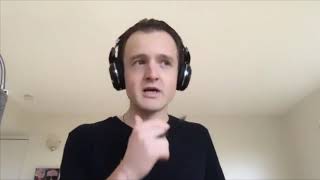
YouTube interview (Make More Marbles) with Garrett Gunderson (founder of Wealth Factory, author) discussing his background from a coal-mining town, the origin of Wealth Factory, and his books (Killing Sacred Cows; What Would the Rockefellers Do?; Five Day Weekend). Garrett outlines his views on crypto (speculative, currently a store-of-value more than transactional), AI and rapid economic change (creation, connection, adaptability as key currencies), distinctions between capitalism and free markets, entrepreneurship vs intrapreneurship, and the concept of the "Ignorance Tax" (wealth transferred through lack of knowledge). He also describes personal projects (stand-up comedy, filming a Wealth book multimedia package), social missions (supporting coal-mining towns and youth entrepreneurship), and practical CTAs (book promo and contact info). Recorded/published January 2018; Five Day Weekend slated for March 2018.
Questions this video answers
March 2018.
Text 801-396-7211 with subject line 'WWRD' (Garrett offered to pay for the book; recipient pays shipping for physical copies).
Wealth Factory.
January 2018 (recorded/published 2018-01-24).
Chapters
Welcome to Make More Marbles. My name is Brad Hart and we're here to interview the game changers, the future makers, the co collaborators and creators who are here to collaborate with one another towards a better future for all of us. Enjoy the show, We've got a great guest coming up for you right now. Welcome to Make More Marbles. My name is Brad Hart and I am joined today by one of my heroes, my mentors. He might actually be Jesus. I'm not sure, but we're gonna find out.
Financial Jesus. Financial Jesus. Financial Jesus. I like it.
Alright, cool. And it's Crypto Christmas coming up, so you can maybe give us what's coming. Since you can walk on water and turn water into wine, why not? When you're done walking on it, turn it into wine.
Yeah.
Garrett is the founder of Wealth Factory. He's the author of two books, Killing Sacred Cows and what Would the Rockefellers Do? Along with another mentor of mine, Mike Isom. We're both in the Mavericks community and I've had the great pleasure to meet and spend time with Garrett. And he's hilarious and a genius and I'm looking to dig into this interview, so let's get out of the way.
A lot of pressure, man, a lot of pressure on me here. I have another book coming out too called Five Day Weekend. I've been filming for it all day. So this isn't my normal office. I have a TV studio just a couple offices away. So I just grabbed one of my licensees offices and another a co author, future co author of another book. So here I am, man.
I love it.
I love it.
Well, let's get right into it, Garrett, for the people that don't know about wealth, factor your work so far, can you give us a little bit of a snippet of the hero's journey so far that's gotten you to this point?
Well, look, man, I started my first business at 15. I came from a coal mining town and actually my first business was detailing cars that came from repossessed vehicles at the credit union where my mom worked and surface vehicles at the mine when the bosses would come into town where my dad worked. And then I won $5,000 for being young Entrepreneur of the Year. And I wanted to get the hell out of Price, Utah. So I wanted to invest that money. And you know, $5,000 isn't much to invest. And if you're not 18, you needed someone to sign off as a custodian, which my mom wouldn't do. So when I was 18, I invested in the first thing that they called an investment, which was a vul, which is a really, really crappy insurance product that they showed 18% returns every year, which was statistically impossible. So three months into it, I figured out that was no good, wasn't going to happen. So I started asking more questions and got offered an internship, which is kind of a fancy term for hey, bring your family and friends so we can sell them life insurance and mutual funds. In the year 2000, the market started going down, so I had to repent and admit that I didn't know what the hell I was doing. And now I really look at mutual funds as kind of one of the least efficient and effective tools in the world of finance, has very little to do with skill and has a lot of restrictive parameters. But that's where I started to ask different questions about finance. And I went on a two year, two month journey with Michael Isom, who you mentioned, where we flew everywhere we possibly could to interview the best minds every single month, started to really dial in on this whole world of finance and learn there was a completely different set of rules that were being abided by than what we were teaching at that time for the super affluent and wealthy and decided to form a company together called Ingenuity, which later became an Inc 500 company. And along the way, dude, I've made plenty of investment mistakes. I've invested in oil and gas IPOs, I had a hard money lending fund, had over 100 doors in real estate at one time. And what I found out was my best investment was in my biggest skill set, which is distilling financial information in a way that is common sense. All of a sudden when it's heard, entertaining to a certain degree, and immediately puts cash into people's lives and treats them as their greatest assets. So ultimately Wealth Factory became a firm that I built because when my great grandfather left Italy in 1913 because he was being taxed too much by the government and the mob, he ended up coming to a country that invented a new tax with US Revenue act the same damn year. And so I'm passionate about saving people on taxes because my grandfather had to be away from his family for seven freaking years and he did something to make my life better. So now I'm out to make my life and my family's life and the clients we serve better so they don't have to be separated from their family and they can build a legacy that really lasts and matters and they're liberated by becoming economically independent. So we, we do personal finance for entrepreneurs. And we do it pretty damn well.
Yeah. And it doesn't sound like you're passionate at all, by the way.
No, I'm totally bored with it.
No, and it's important because, like, for.
Example, this is Del. Hey. Dell just walked in. I just saw his office for a brief moment to do this. What's up, brother? Welcome to the show. Is my future co author of Budgeting Sucks. We're doing a book together and I just, you know, took over his office here for a minute. So when's the book launching? Thanks, man. Yeah.
When's the book coming out, Garrett?
Well, five day weekend comes out March of 2018. When that wave gets at the peak, we'll probably come out Budgeting Sucks. Shortly after, maybe six, nine, 12 months afterwards. We've got the manuscript done for a while. We'll revise it. We're working on some fintech for it. Just like some really easy five things to help people change their financial behavior at a click of a button. So that's what's taking so long for Budgeting Sucks, not the actual writing of the book. I want to have it really make a massive impact in the simplest way.
I love that. Because it doesn't take a genius to make things more complex. Anybody can More complexity. It really takes a genius to chip away at the marble until the angel appears.
Right.
And there's nothing left but the most simple, easy, applicable. You can't screw this up solution. I'm sure you've experienced this recently, especially with all this crypto craze. We have people who have never invested before. Eight out of 10 people come to me and ask me questions about crypto. I ask them, have you ever invested in anything before? They say no, that's.
It's speculation for them. Like actually my co author, Five Day Weekend, he has a. He does the whole mining of it. He's got a big place in Iceland because he's got enough volcano power and it's cold enough there that, you know, he's been mining this for a long time. He's been doing crypto stuff since 2013. He actually used to have one of the Bitcoin ATMs and all that kind of stuff.
He lost money on that club, the one that you're talking about. Yeah, I'm familiar. I may or may not be a small investor in that. Not the whole thing, but like, you know, going into the mining portion and I've got some crypto back. I mean, who knows? I think they're all maybe Ponzi schemes.
But this One seems there could definitely be some of that I'm feeling. And it's pretty exciting, enticing, but it's very speculative. And I think a lot of people, like, we have more people becoming millionaires that smoke weed and play Xbox all day than ever before in history because they bought crypto at some point. And whether that becomes realized or what happens, it's fascinating to think about a deflationary currency and a different way to store than just Federal Reserve notes. So it's an exciting time. It's a pain in the. At the same time to learn about to a certain degree. And it's the number one googled item right now is bitcoin. That's the number one item. It surpassed porn. Who would have thought?
That's amazing. If you think about it like, I thought 70% of the Internet was just porn and crazy, but apparently bitcoin is even more important. Just goes to show you what people care about the most. Yeah, I've been seeing some pretty crazy things happening and I just, I advise everybody and I'll just reiterate, only be investing with money for to lose completely 100% overnight with no recourse. There's no way to like, there's no FDIC for crypto. It's crazy, you know, so yeah, Nick.
My co author, he actually had a bunch of it hacked and taken from him back in the day, twice. That's why he got completely out for a while. So it is something he was talking about one of his buddies that put some on YouTube. You could see the actual, you know, wallet codes and someone just took 150 coins from him. So it is, it's just a very interesting time and fascinating. I mean, you look at how much change we've had just in the last little while. We're just in a place where artificial intelligence is going to redefine economics at a level that we've never seen in history. And we're going to see more happen in the next three to seven years than we've seen in human history as far as where people have to adapt and start to figure out new skill sets. And I think it's going to be a lot of people in pain wishing that the past would stay the same and other people that are going to really be able to grow quickly if they're willing to be focused on creation, connection and being adaptable. And those are three main currencies that are going to be big in the new economy. And in the past, loyalty was a big thing working for a company. And then we watched that get dismantled. We watched people say getting a college education improved your overall income. And we're continuing to watch that deteriorate. So they don't have the same advantage that they had in the past. But the bottom line is this. We're going to be in a value creation economy, but value is not going to look the same because technology in some ways levels the playing field. Another way decimates people that haven't embraced it. So I just, I feel like part of the message really has to be like, look, it's time to become a lifelong learner and to have a beginner's mind where you don't dismiss things because they're different. At the same time, you don't think you've got everything figured out because it's just going to change too quickly. And those people that really value relationships and connect with people are going to be the ones that can kind of navigate this in a different level. I love that.
And, you know, you kind of hit on something that's really important. It's that fifth agreement that Don Miguel Ruiz Jr. Wrote about. You know, you had the four agreements. Be impeccable with your word. Don't take anything personal personally. Don't make assumptions, always do your best. But the fifth agreement is be skeptical. But listen, don't throw out the baby with the bathwater. There might be something to it, but it's likely. Most of it's crap and you can ignore it. It's what you ignore and what you pay attention to that's really important. And then you also touched on AI I had Kevin Kelly, the founder of Wired magazine, on the show not too long ago. Great, brilliant man. And he started talking about how AI it's really only good at pattern recognition. It's only thinking like humans think faster and spotting patterns faster. But there might be a thousand ways to think that AI hasn't even touched on yet. And he's really excited about as a possibility. Right. Just because we think and experience the world in a certain way doesn't mean there aren't other ways to approach it. You seem to be interested in the subject. Do you have anything that you've noticed with AI or any of these technologies that you think is really exciting or is going to change the world in ways we haven't anticipated.
Well, what's exciting about it is this. Like in the past, you get to a certain size and then you can kind of bully others and just buy people out. So it kind of stifles creativity and technology. Now it's even easier with no capital to start a business and to have something that begins in a basement or a garage or, you know, in a shared office space or anything like that, that ends up becoming substantial and making a real difference in how we operate and live. So what this means for investors is the s and P500 will be more disrupted in the next seven years than it's ever been disrupted. More companies will fall off and have fallen off, and yet it will be misreported. Because once that company loses or goes out of business or is disrupted, that should be a zero on your money. But what they're going to do is put a new company in and then act like that becomes your average on what the new company gains. But you might not have many shares or they're not just. They're not showing the shares that you've lost. And so people are going to wonder why they're not further ahead, even though the percentages look like you should be, it's because of misinformation and the way that we report. So I think that it's a scary time to just be buying and holding and sitting on things for the long term. The long haul, when it moves so slowly, wasn't as detrimental. Even though it let people down. It's been a failed financial experiment to set your money aside, scrimp, save, sacrifice, and hope compound interest will get you there. People get to retirement, finding themselves enslaved to interest rates being extraordinarily low, taxes being higher than they anticipated initially, and then finally inflation confiscating their wealth. So what's been sold as a retirement dream has been more about missing out on life along the way because of budgetary constraint and scrimping and then getting there and finding out that the golden years aren't as golden as that they were promoted. So I believe instead, we've got to start living life on better terms along the way. Enjoy life, treat ourselves as our greatest asset. Invest in what we know. Don't invest in things we don't know. And it's tough, man, because the greed line kicks in with crypto where you hear about these people doing so well, and if all of a sudden you get caught up in it and speculate not knowing what you're going to do, which coins are going to make it, we know the blockchain is here to stay, but what coins get utilized, that's a completely different story. And actually utilizing them is a different story. So stick to what you know, grow that and invest in yourself. Because if you invest in things you don't understand It's a gamble at best. And you're going to watch your wealth be transferred through the Ignorance Tax, but reported as. As if it was a loss you and I know. Money doesn't just evaporate, it gets transferred into other people's accounts. And many times that's nameless and faceless, but real nonetheless. And so people think, oh, crap, poor luck, bad timing, whatever, no, no, no more intelligence confiscated your wealth and transferred it to their account. So we've got to be critical about the Ignorance Tax. And the only way to defeat it is invest in what you know. And if you don't know what to invest in, invest in your education and yourself. Keep on the sidelines.
That's a really beautiful summary of kind of my best principles, like, where do you start? Start with yourself. And everybody thinks that's a cliche, but it's really true. I've spent north of $700,000. When you add up all the travel masterminds, personal development workshops, et cetera, and I'm sure you're further ahead than I am in that regard as well. But if you see one thing, one thread throughout all successful people's lives, and I've interviewed close to 100 people for the show so far, and many privately, is that they all invested in themselves heavily and. And they continue to do so at regular interviews intervals, rather. Sorry, There's a great saying by Winston Churchill that democracy is the worst form of government, except for all the others. I feel that's the same with capitalism, right? Just like we don't use feudalism anymore because there's something better or socialism obviously failed in many ways. What do you think is going to be a better system that serves more people financially and economically in the future? Or what are some of the high probable events, highly probable events, that you might think.
I wrote a book that I never really released or I did a very limited release called the Money Tree. And in the final chapter, the Money Tree, I talked about there's a difference between capitalism and free market economies. Capitalism was named by its enemies, first of all, and has a lot to do with what you can access as far as capital. And when interest rates remain extraordinarily low, capitalism begins to fail. If interest rates go to zero, how will capitalism work? Because there's no reason to allocate it or to share it or to give it to other people. So free market is where we start to learn lessons through exchange privately, rather than hoping that the government will take care of us, because when we put all that reliance upon the government and even within capitalism require massive amounts of legislation and regulation, then there's a discouragement for the small person to get involved. And when the small person doesn't get involved now the best that they kind of hope is, I guess, that they're going to get a job and trade time for money. That's an antiquated philosophy that really came from the industrial age and assembly line level of thinking. And now people are paid a lot more for thinking. That's the most leverageable skill, vision, thought processes, procedures, those kind of things. And free market is what allows that to thrive when we overregulate. Because I get it, there are bad people that do the wrong things. And we hear about these corporations that do this, but eventually they become powerful enough that the government almost acts as a subsidiary. And capitalism gets a really damaging name because you go, here's these people with massive capital and they have so much power and everybody else has such a hard time because of the major obstacles to get involved. And, you know, like, they just need too much capital or you need so much bandwidth or so much power, when all of a sudden technology starts to advance at a more rapid rate. And now we can have teenagers and young kids that can make money. Because it's not about brawn, it's about brain. And now it's about reach. And there's efficient and effective tools for reach. It means that it's more competitive on the front end to get there, but there's more opportunity for more people, which is the healthy part of competitiveness. And so in a free market economy, the way that you thrive there is through coopetition, cooperation with competition. People put the very best foot forward. They do everything they can. And it's not just because of who you know. It's not just because you're part of a good old boy network. It's not just because of the color of your skin. It's not just because of the privilege in the blood of your family. Instead, it's because of the value creation that you can bring. And value creation is a great catalyst within a free market. People still lose, people still get harmed. But guess what? The bigger harm is when we take away that incentive or that opportunity and it ends up getting in the hands of far too few people. And so I almost feel like socialism, communism, capitalism are very similar in some ways, right? And communism, though, it feels more like a dictator and a tyrant that's running it saying, hey, I know what's best for everyone, give it to me. And then everybody else can be equal on the Socialism side, it's more maybe spread amongst a few people and then the rest of society kind of is equal. And in capitalism, it's the business people that end up being the tyrants instead of the government. And then everything spread equal amongst everyone else. That's the minions that serve them. Free market says, well, what if we believe in that everybody's born with equal rights and then it's unequal as to what you achieve based upon the value you're willing to commit. And yes, their choices are going to be part of that. And some people are going to have a lot more than others, but they're going to choose that. Other people might choose to spend more time with their family, other people might choose to spend more time at the beach, or other people might choose to do something that's a passion project for them that isn't that profitable because it's just who they are at the core. Maybe it's about meditation for them more than it is about money. And you know what value is perspective. So what they believe and what they truly want, they'll have the consequence of those choices. And if we allow capitalism, communism or socialism to dictate, that's like the helicopter parent that says, I don't want my kids to ever go through pain or be harmed. And that they prevent them from ever learning the lessons when it's most valuable, because then they end up coming out to the world with very little utility or very little value because they were always hovered over and they never got to have that experience. It's difficult to watch people be in pain. That's what we try to prevent. But the problem is if we prevent the small pain, we create long term suffering. And in order to alleviate that suffering, people have to have consequences, which means that we have to be in free market economies. If all of those rights are taken away in the name of preventing pain, we never have the pleasure or the profitability or the growth or the opportunity. And yes, maybe there will be a little less pain, but overall there will be this huge void within humanity where we never get to experience and have people express the greatest gifts they have to offer.
Thank you, Garrett. Yes, I'm right on with you. And you're actually tweaking some things that I've been thinking about for quite a while. So we talked about the kind of movement from the linear economy, right? I'm not the best in the world at farming. The guy that's the best flower isn't 50 times better than the next best flower. Then we move to the multiplication economy. Which is, okay, I have capital and can work for me in lieu of my service, or I can use it to invest in real estate and own assets or whatever. And now we're in the exponential economy that you kind of talked about, which I'm a big fan of, Peter Diamandis and yourself, and talking to guys like Ryan Moran about what is capitalism? Why do free markets and free choice work better than any other system that we found so far? And then ultimately, what are the incentives of those games that allow those to work and propel forward? Right, that pleasure, pain, duality. My question for you is how can we thrive as individuals in the exponential economy through coopetition or through cooperating over just win it all sum, zero sum game competition? Because that's something I think about quite a bit in the make more marbles community.
So there's two sides to this coin. The one side is entrepreneurship, which is a world of creation and building new products, processes, structures, and opportunities. And on the other side, and part of where there's a limitation in entrepreneurship, is entrepreneurs feel like everyone should be an entrepreneur or they're nothing to a certain degree. It's an undertone. They don't fully express it verbally, but it's almost like I'm better than someone else if I'm an entrepreneur. But the reality is some people are better intrapreneurs. They're better to improve within a structure. So the entrepreneur will start a new structure. An intrapreneur will improve an existing structure. And when those two forces join and cooperate together, that's where we get a lot more value. See, I think that this I wrote, when I wrote Killing Sacred Cows, my wife was in a study group, or not a study group. That's, that's, that's making it sound much better than it was a reading club where they drank and critiqued books or talked about or whatever Ellie did. My book was one that they read and hated because some of them said, everybody knows you want to get a job and do the least possible, right? That's a time and effort economy. That's an antiquated philosophy. Intrapreneurs instead would say, hey, look, I don't necessarily want to go start my own business, deal with lawsuits, deal with, Deal with not taking payments during certain times and infusing capital and doing all the kind of stuff entrepreneurs deal with. But I do want to be paid and rewarded for, for the benefits I provide so that there's upside potential and the more intrapreneurs can connect to the bottom line so they have a true relationship to the value of the business, the more the entrepreneur will be rewarded and they can work hand in hand. So the entrepreneur might blaze new trails, but you know what, it's the intrapreneur that paves those trails so that more people can actually utilize them and benefit from them. It has to be a synergistic relationship. And so that's what I see as kind of the new economy. Yes, there are certain people that are going to be the trailblazers and the visionaries. But you know what, if those visions aren't pursued by the people that are inspired by them and say my abilities can bring that to fruition. Because here's one thing I know about every visionary. They don't have the capability to bring that vision on their own. They don't have like the technical ability to maybe write the programs or to build the systems, but they might have the audacity to think the thoughts. And sometimes thinking the thoughts is the hardest part because it's scary for some people. Or people are limited of thinking those thoughts because they don't know how to accomplish it. They don't have the resources, they don't have the personnel, they don't have the finances. But the future is going to be for people that are bold enough to think the crazy thoughts, but be committed enough to it that other people are inspired enough to actually come and assemble that right. So I think that the future belongs to the right container of vision and the people that want to work within that container, not because they're forced to, not because they're on a clock, not in exchange for a paycheck, but instead in exchange for something that matters to them. You see that within companies with great cultures, people are there because they love it, because they want to be part of it, because it matters to them and they happen to be paid for that. That's where power exists. I think we've been under the, hey, there's so many crappy jobs that now technology's taken over that we don't have to deal with some of the things that we dealt with in the past where you had to have someone forced into that type of workplace. Now we have an opportunity, as technology disrupts everything, to choose the better things, right? That the lower level things are now being taken over. Don't be afraid of it, don't fight it. Instead, ask what you can do at this point to evolve with it or to contribute to it that a human touch will be necessary.
That's brilliant. And I want to just lead this into the next question. Because we're really on a roll here. It all comes down to risk. That's one of my big theories. If you can manage the risk in life, the upside tends to take care of itself. And I didn't think of that. Obviously that's borrowed from Buffett and Graham. But typically, as humans evolve, the risk of being alive today is much, much lower and will continue to lower over time. And I have this brilliant vision. The make more marbles philosophy does end one day. When we've made enough marbles, that means everybody technologically will have been provided in a sustainable way. That means food, energy, water, shelter, just the basics, right? Not mansions and private jets for everybody. But they have access to an amount of food, energy, water, shelter, that's sustainable, that's cheap enough as is to be free. Whether it's free market or not, whatever. That kind of creates a floor through which nobody can fall. It also takes a lot of risk off the table, which I believe will then free up their time, energy and attention for bigger and better creative pursuits. And with the world moving more and more towards AI and robotics, how will individual actors be able to even compete or collaborate towards a free market system? When AI companies are thinking up ideas in the middle of the night and a billion dollar company exists the next day, I'm just extrapolating out into the future and thinking, where is this all going? What are your thoughts about all that? Where do people begin to find meaning in that type of a world? And is that a likely future? Or do you believe that it's a more dystopic future?
I think that it's very likely. I mean, I remember being in high school and hearing that 3D printing would exist. It was like baffling to understand, right? I remember the first time hearing about the World Wide Web and sitting in high school and having them demonstrate and show it and being confused about what it was or how it would work and now have it be commonplace. So everything's exponential, it's moving at an exponential rate. And so we've only seen, we've only scratched the surface with this whole thing. So what I do know is that some of technology has disconnected people. And in the name of connection, some people are more distant because of social media than when it didn't exist. They're less present with the people they're in front of and they're more worried about the number of people that are responding and commenting, which has a lot more to do with the dopamine responses than it has to do with the connection to actual human beings. So I think that the future will exist for those that can truly connect. Because as much as artificial intelligence might disrupt our life, improve our life, destroy our life, whatever it might be, the more it's gonna. Like I was in Italy, and in Italy, I feel like there's so much that's going on that is so antiquated, but it's some of the best of what Italy has to offer. Like, you just see families that are there for each other, and they're still really connected, and they're very regional there. And so all of a sudden, you don't see the level of addiction or I didn't see it. And I might have been in just nicer areas for the several months that I was there, but I saw people that had each other's backs. I saw places where people could go and rely on someone or where people were there to support them during down times. And I just saw a lot less drama, even though Italians are known to be relatively passionate. And so as I was thinking about that, in all this advancement with technology, what I hope isn't lost and where I think people can really gain is just to connect and take care of their relationships, to think quality over quantity, to think about really investing there without distraction, with putting their technology down and having the conversations that is going to be so meaningful in the future when things are so crazy and crisscrossed. And how do we even deal with this kind of rapid change? You deal with it by the people and the very things that we've dealt with since the beginning of times in humanity. Don't miss out on that just because you can talk to someone via a computer, or that now all of a sudden, you're in virtual reality. Great, enjoy that. But don't lose sight of that. It's going to be the people that get us through.
I love that. And by the way, I love Italy too. If I smell pizza or pasta, I'm on the next plane to go investigate. So I am 100% on board with that. And there's some of the most hospitable people in the world. I just got taken out my great grandfather's from Naples, and I have a very dear friend there, Marco, who actually showed me around Naples. Finally. Last time I was there, super fun. We were actually there at the same time, but you guys were doing your thing, I remember. So, yeah, 100%. And I do agree that despite the fact that we are becoming richer and richer as a society, and the individual has so much more access, even though it's relative and they don't realize it. The average person living today is wealthier than somebody who had all the gold in the world 500 years ago that couldn't buy the things that we have.
And that shows that zero sum games are not the reality of how we're working. Right.
While there might be like small zero sum games happening overall, the thing is abundant. Right. The same $5 can be $5 and move around or Bitcoin or whatever you want to talk about. So that's really interesting. I want to get your take, I think, on not just the future, but the current. Right. Which is now we have a truly working, at least in theory. Although the free market seems to be pushing it to infinity and it hasn't worked as a currency, but we have some now deflationary currencies. Can you talk about the difference between the current system? Because the Fed and the central banks obviously have utility and the system works and it's been stable for quite a while now, although it has its issues. What do you think are the pros and what do you think of the cons of these new systems and how do we get them closer to be more widely adopted?
Well, just the new systems and monetary like with crypto, it's just, it's a storage right now value, it's not a very good transactional value, you know, and that's, that's one of the things. And then it's such the wild west, like who's gonna make it? There's all these, you know, rising up, who's gonna make it? The other problem is you get hacked, you're kind of screwed. You know, there's not a lot of ramification. Now on the other side, imagine buying real estate with blockchain level technology and how many inefficiencies and how many additional expenses get removed? Why do you need title insurance at that point?
I think the only ones that would survive are the inspectors. Right? Because you can get rid of the brokers, you can get rid of the lawyers, you can use smart contracts, you can get rid of the title companies, you can get rid of all that and just have a buyer and seller.
With very little, which is the most painful process of owning real estate in most cases. Right. So that's, you know, that's exciting. But at the same time you also have, you know, decades and decades and decades and decades of this agreement with our current fiat system. And so money has nine divisible properties. Crypto seems to have 11 from what I could tell. So there is some additional benefit there. But until they make the transactions easy. Or maybe it's never going to be that way. Maybe it's just the new gold, maybe it's the new way to store value essentially. I'm not sure how that's going to shake up, but it seems like a lot of the efforts not in transactional value, it's in storage value at this point. Right.
And everybody's long and bullish and everybody's a genius right now holding their coins. Like for example, we launched a course this weekend that, you know, two people came to say, oh, we want to pay in crypto and then immediately change their mind. It's like we don't want to do what we're holding. So it seems overwhelmingly bullish.
You talked about, I think like 80% of people plan on holding their whatever their, you know, crypto they're holding long term. There's few that are actually, you know, trading it or just, you know, in and out.
So the market's really not there yet. It's very inefficient. So it's going to take time for those to catch up. Right. Things that used to work in the stock market, for example, before HFT and before everything got really regulated, are now working in the crypto markets. Well, which will not when the market makers come in with their billions of dollars in their sophisticated trading algorithms. You talked about divisible properties. Can you dive into that a little bit more as far as the difference between crypto and fiat?
I'd have to. The thing is, I've never talked about it, so I'd have to like, I'm not prepared to just talk it off the top of my head, but I'd have to look at my notes normally. Like I just memorize these things and I could just recall them. But this is like in the last few days that I've even said that for the first time.
This is a brand new model. I love it. This is cool.
Okay, cool.
We pulled on a fun string. Like I look at interviews, like pulling on those threads that unravel sweater to reveal the naked truth. And I appreciate you for just saying, hey, I'm still working this piece out and I haven't got it all figured out yet. What are you most excited about in your own life, your personal life?
I mean, I've got a lot of good things going on. I've been doing a lot of stand up comedy, which has been fun because last time I saw you, I said I was gonna do it. I probably done nine openers and an open mic and done a couple where I got up and did it. So I'm gonna end up doing an hour special, it looks like, at a local comedy club and filming it. I'm excited that I got the five day weekend book that will be coming out. I'm excited for. I've got this other multimedia technology package coming out called a Wealth book, which has a large kind of magazine workbook with a bunch of case studies and content videos and my three day workshop. And it's going to be a resource for people that join my program. I've been working on it for over a year. We've refilled multiple times, brought in new camera crews. I just wanted to have a flagship piece and I'm about to go film my origin story in my hometown, which I'm feeling really connected to right now. I'm looking forward to spend another month in Italy in the next year, probably another month in Vancouver and maybe up in the Whistler area so that I'm kind of traveling around and having those experiences with my family and taking a little bit of time away to relax and rejuvenate and come back all fired up and charged up. The organization Wealth Factory, the main organization that I'm an owner of, is really got a great solid foundation, is poised for great levels of profit without additional growth because we're keeping people around for a long time and if we don't up our marketing efforts and kept them stable, we would end up with more profitability if we up our marketing efforts. We just filmed the YouTube video, hired professional actors, directors, writers and everything. And I filmed 29 of the 31 segments, filmed the last two segments this week and we plan on that coming out here shortly. So I'm excited about that because I haven't really put like I hear people all the time, oh, I saw your YouTube video. I'm like, I don't even know if I have any videos on YouTube so I know what the hell they're seeing. So at least now I'm putting out a video that's kind of funny, at the same time educational that people can get a cash flow guide. Yeah, man. So that, I mean, I've got more projects on the table than I probably should right now, but I love the projects that I'm working on. So I would say last week was probably the best week of my life overall. Just watching my son, he just crushed it and dominated as the head villain, got the biggest applause, did my couple day workshop, spoke at the Capitalism conference, did a stand up gig that raised money for charity, had friends that flew into Town to go to dinner with us and watch it, you know, like, what else did I do that week? I mean, it was just. I had epic times with my wife. Like, just super connected dialed in. So, you know, things that. Things have been firing all cylinders and now I gotta be honest, I'm just a little bit tired. Like I need to take a break. I need to take a couple days. I got some more filming to do today. Got a couple more days of knocking a few things out and then I've got like four days off and then a couple days on and another four days off. So I think that's a little bit overdue. I've been burning it a little bit hard.
I get it. I understand. And thank you for taking care of yourself, by the way. Because as important as it is to add value to the world, it's also important to make sure your cup is full so that you, you don't die prematurely.
Really?
That's sounds like you're having a great time and I'm glad to hear it. And I'm glad that you're getting out and doing your comedy. That's awesome because we only talked about in August and that was a real thing, so that's great. Yeah, man.
I think it was two weeks after I saw you. You're pretty funny. So you had some good one liners while we were talking and I thought about doing my first gig there, but I decided to wait. Did an open mic and then my, my coach was like, hey man, I think you can open for us. And then I met Kazam.
Or is it somebody else?
No, it's. His name's Marcus, Mark Hardy. He, he was a runner up on Last Comic Standing. Just an awesome guy. We kind of get together every other week or every week and work on some of my material. And now I'm just refining the show, the material that's been killing it. I'm going to put on the side for now, work on some new material so that maybe somewhere in the next three to six months I'll do the hour long deal.
Garrett, what charities or causes do you support? Because as important as to generate and grow your money, I also believe it's important to give back and even start there sometimes with some people.
Yeah. So we're working right now like as a social mission on a couple things. So I have a company, Wealth Labs, where I do most of my speaking and consulting, kind of my active income. And what we're going to do there is start supporting like the coal mining towns that are totally struggling and Helping people and investing in building better skill sets so they can transition and still be extraordinarily productive and have a better job than a coal miner. Because there's not a lot of people passionate about being a coal miner yet. My father, my grandfathers, and my great grandfathers were all coal miners. So that's the first thing. The second social mission we're working on is aligning with charities and causes that help encourage entrepreneurship for young kids and giving them the money and resources to launch and start businesses and get that entrepreneurial education. So Those are the two main things moving into 2018, that we're going to start taking 1% of our gross revenues of each of those companies and allocating it towards those things. And then we might also have some additional windfalls of money that we put into there. But I love, like in the past, I've mainly put college courses in into a couple colleges and saw some really good feedback and benefit from that with the students that I talked to. But that was more just giving of my time and giving of, you know, education. I now want to give up my money in addition to that, and then, you know, so kind of have a combination and just seeing where my great grandfather came from and being a coal miner and then what opportunity that brought into my life, I want to give back to those people that, you know, maybe they're just doing a job that's starting to become obsolete, that isn't necessarily what they love to do, and that they're really scared about the future. If I can give them some resources, they could develop and become even more productive in society and enjoy their life along the way. It's very congruent with everything that we are and who and what we stand for.
Yeah, it sounds like you have a lot in common with some of the people we all hang out with. Dan Martell, do you know a guy named Phil Randazzo? He helps veterans transition.
Yeah, I went and spoke in Italy for Phil. We had American dream uis in Italy. So I spoke at one of the sessions there and then. Dan Martell is one of the best people in the world. He was the first person that read what would the Rockefellers do?
Wow. I love Dan.
I said it. He was on the first 10 people I sent it to. And by the by, like four hours later, when he landed off of a flight, he said it completely changed his mind on how he was gonna handle with his kids. So I couldn't sleep one night.
I wrote, I read the book in three hours. I've given away dozens and Dozens of copies. Mike told you a story about how I.
Totally, man. Yeah, yeah.
Insurance, license. Because I was like, I had no idea. I ran a hedge fund. Like, how many people don't know about this? So I give it away all the time. I'm always sending books out. Yeah, I think it's, it's. If you're gonna read one book about finance, that's the book to read.
Hey, man, we could give. We could give it to the people right now if you want.
Absolutely, I'd love that. What's the best way to streamline that?
Alright, they text 801-396-7211 and they put in the subject line WWRD. As in what would Rockfillers do? 8013967211 WWRD the copies on me. It'll show up in the. In the inbox. 801-396-7211. And then if you want a physical copy, you pay for the shipping and handling, I'll pay for the book, and we'll get it out to you. I think we might be on reorder right now, or we're in kind of limited supply, but I'll hit up Mike Isom, see if he has any if we run out.
Yeah, he's been sending me dozens, so I think he got a few kicking around. And you can't buy it. That's the thing. I mean, you can't buy it because.
I gave one to everyone at Capitalism Conference. I gave one to everyone at Capitalism Conference.
I was so bummed. I had so much FOMO because we went to Mexico. We built two houses for families in need. And Phil actually donated all the money for the second house because we were full.
Man, Phil's a stud.
So we just spent the weekend together. I love Phil and Jess and everybody at adu, so. All good stuff. Okay, cool. So, yeah, if you want to copy that book, I recommend reading it highly. If you get stuck or something, just shoot me a note and I'll make sure you get a copy. It's one of the best books on finance I've ever read. I went and got an insurance policy for, you know, it was really easy. Mike's a great guy. He'll walk you through everything. So, okay, who do you look up to in the world right now that you think is doing it right or that you. That you model?
Someone that's doing it right or. That's my model. Rich Christensen is probably the number one guy. He wrote Bootstrap Business, Zigzag principle. And recently toes turned purple. He's got five kids. All of them are entrepreneurial, extraordinary kids. He's got a great relationship with his wife. I've referred him several clients that he consults now. He sold 17 businesses. We're heading on Saturday to have brunch at his new house because I want his kids to influence my kids. And so, like, I really look up to him. He's just a great guy, high integrity, and a big advocate of mine, which doesn't hurt either.
I love it.
I love it.
And finally, since this is the Make More Marvels podcast, and we're all about connecting resources and opportunities, peoples and systems together to move your mission forward faster. And you've been so generous in helping us to understand what you know, and so passionate about finance and just living life to its fullest in general. What are the ways in which we can serve you, Garrett?
All right, so first off, if you can email buildersealthfactory.com if you know, great, like, great people that would be good on the phone. We need people that can reach out to those kind of people that are interested in Wealth Factory. We're looking for more what we call schedulers, like, just people that book people on the right calendars within our firm, so they're part of the sales process. We're absolutely looking for more. If you're wanting to promote Five Day Weekend, we've got 35,000 copies that are going to be in stores, so that's huge distribution. That's seven times what killing sacred cows was when we hit the New York Times that first time. And they place the second order. So I'm looking to get that book out there in the world. If you know other amazing podcasts that you feel like this message would be really good for, I'm definitely up for that. And if, you know brilliant financial minds that need to help us get a million people to economic independence, we are looking for one more financial architect at our firm just to be able to continue because so many people stay with us. We just want to have. I never want to go back to where I was in 2010. Massive revenue that year and massive letdown because we took on more people than we could actually serve. So we're looking at 12 months from now. That's how long we think it would take to train someone to be adequate, to really take care of our existing members and people that we work with. And so we're looking for someone that is absolutely passionate around finance, that would fit our culture and be willing to relocate to the thriving Metropolis of Salt Lake City for the right opportunity.
Yeah, I was gonna say right up until that point, you're.
I've had people that said there's no There. There's no way they're leaving Austin, Texas, that now live in Salt Lake. I've had.
That's why I can't leave, unfortunately for now.
Yeah, man, I gotcha.
Anyway, so, Garrett, what's the best way to be in touch if somebody has one of those things for you? You said builders@wealth.com wealthfactory.com Correct.
Okay, great.
Clarify and verify that. And then you mentioned that you need schedulers and people to reach out and get people on calendars. We are experiencing exact same problem. In fact, I am in a very enviable position if I have way too many leads, Hundreds and hundreds, hundreds of people that I literally do not have the time to reach out to, and nobody to really put them on the calendar. And I want to get your opinion on this just as a business owner, real quick. What do you think it is that either scares or doesn't fill the need for cold calling or warm calling in this case? Like, these are inbound leads. They want to talk to us. They're raising their hand. They're giving us their phone number. And I just can't, as a leader, like I'm asking, I can't seem to motivate people to jump on the phone and do it.
First off, it feels more like a community college than an Ivy League position, Meaning most firms are just looking for anyone that is willing to do that. So that. So the process, the prestige isn't there. It's not like how it used to be really prestigious to be a doctor. Because of all the obstacles it took to become a doctor by getting accepted into medical school, going through medical school, you know, finishing organic chemistry, doing a residency, there's such a high level of obstacle that to get to the other side, there's tons of prestige with that because it narrows things down. It feels like on the sales side, there's a lot of, like, used car salesman thought process and stigma. There's call center stigma where people are, like, overselling things. And so there's a bit of cesspool in some cases, but it only takes one small piece of shit to turn a blueberry muffin into an inedible thing, right? Essentially. Even if most of the people in that field are actually really good, there's been enough of the crap that actually kind of spoils the whole bunch. Right. And therefore, people see themselves as above that or more important to that and then it's almost like public speaking. Now you're going to call out and talk to someone that may or may not have invited the phone call. And maybe you heard from a family member or someone called you at a time that wasn't a good time to call. And all of a sudden you're putting yourselves in that one worst case scenario moment and somehow feeling like that's what you're going to start doing. But let's. Like when I started in financial services, I got referrals and I cold called them, you know, And I remember one time where someone said, why the hell you call me and yelled at me and it kind of shook me up. I was 19 years old. But then there are other people like, oh man, I've been waiting for this call. I'm so glad that you called. Right. And so I just think that a lot of people are afraid of rejection simply because they haven't done enough personal development or self development or they're too thin skinned. And we're in a place where even our president is super thin skinned. And that was be my number one gripe with him. As much as there's other stuff, it's like, well, I don't ever want a president talking about the size of their hands, right? Like that's not presidential. Like just go beyond it. And I think that we're in a world because of social media and because we've tried to keep people from experiencing pain, that people are overly sensitive and they're professional at becoming offended or feeling like other things are offensive. And now all of a sudden they're going to be calling people, oh my God. They're so thin skinned based upon how they've been trained for so long that unfortunately they're not willing to do it because of whatever stigma. So I probably gave 10 reasons and you were only asking for. No, no, no, no.
I want to get my 360° thinking around it. I've actually got a wonderful woman coming by today. We're gonna spend three hours hacking this problem. If I come up with any additional people that we just can't use for whatever reason, I'll be sure to send them your way and vice versa. If you have any rock stars that you just don't have a place for, I'd really love to hear about them because this is a problem. There's people I want to serve and I know you feel the same way that I just literally don't have the bandwidth to reach out to right now. And I know they would rock it in one of our programs.
By the way, the greatest lesson today of anything we talked about, we didn't talk about, we demonstrated. You asked me what you could do to serve me, and I gave you five items. Most people, if you ask them, they say, I'm good. They don't ever have anything to say. We always have something where people can support us, whether they can do it or whether the people that they know can do it. And because we don't ask, we miss out on way, way too much wealth. The tremendous amount of wealth. And so if someone asked me, I'm willing to. I'm willing to offer things I'm looking for. Just like if someone asked me for support, I'm willing to offer either connections or direct support, depending on the situation.
Life is a giving and a taking, and it's asking as a receiving. You have to be willing to ask. You have to be willing to receive. That's a beautiful way to end this podcast. And thank you so much for being on the show today. Garrett, any parting words of wisdom for the people at home?
Parting words of wisdom. Stay focused because focus will beat diversification. You know, put all your eggs in one basket, watch it like a hawk. That was Andrew Carnegie. So before you get overly diversified and it becomes diversification because you didn't become excellent at anything, make sure you get really amazing at something, build it up, and then you can look at the next opportunity. People prematurely shift to other opportunities, leaving the first one neglected, dilapidated, and therefore it becomes a problem rather than a profitable opportunity.
I like that. Nail it and scale it. Divide and conquer. Go big into one thing, get it right, and then you can spread out and diversify. I love that. Garrett, thank you so much for being here and on behalf of everybody in the Make More Marvels community, thank you.
Thank you, thank you.
I'm grateful to have you here.
Thanks for having me, man.
Thanks so much for listening to the Make More Marvels podcast. For more tips, hacks and strategies to create an amazing, abundant life in your health, wealth and relationships, whatever that means to you, head on over to makemoremarbles.com check out out our cool explainer video about what we're about and join our community of entrepreneurial game changers. We want to help you level up your life in every possible way. And don't forget to subscribe to us on itunes, Stitcher or Google Play wherever you're listening to your podcast and please do leave a review. Thank you so much and we'll see you on the next podcast.
More from Brad

The #1 Reason AI Isn’t Working for You (Yet) #AI #businessowner #founderenergy




What tasks would the best assistant ever be able to do for you? #BusinessSystems #BusinessOperations



Nobody expects you to use a harder way when there's a better way. #AI #businessowner

Which side of the table will you be on in 2026? #AI #Mastermind #BusinessOwner

